This is to fix a regression that only affect the stable (not for the mainline)
that the stable commit fdf9d86 was incorrectly placed dev->dev_link_magic check
before the *dev assignment in target_fabric_port_link() due to fuzzy automatically
context adjustment during the back-porting.
Reported-by: Chris Boot <bootc@bootc.net>
Signed-off-by: Nicholas Bellinger <nab@linux-iscsi.org>
Signed-off-by: CAI Qian <caiqian@redhat.com>
Signed-off-by: Greg Kroah-Hartman <gregkh@linuxfoundation.org>
commit 712ba9e9af upstream.
efi.runtime_version is erroneously being set to the value of the
vendor's firmware revision instead of that of the implemented EFI
specification. We can't deduce which EFI functions are available based
on the revision of the vendor's firmware since the version scheme is
likely to be unique to each vendor.
What we really need to know is the revision of the implemented EFI
specification, which is available in the EFI System Table header.
Signed-off-by: Matt Fleming <matt.fleming@intel.com>
Cc: Seiji Aguchi <seiji.aguchi@hds.com>
Cc: Matthew Garrett <mjg59@srcf.ucam.org>
Signed-off-by: Greg Kroah-Hartman <gregkh@linuxfoundation.org>
commit c903f0456b upstream.
At the moment the MSR driver only relies upon file system
checks. This means that anything as root with any capability set
can write to MSRs. Historically that wasn't very interesting but
on modern processors the MSRs are such that writing to them
provides several ways to execute arbitary code in kernel space.
Sample code and documentation on doing this is circulating and
MSR attacks are used on Windows 64bit rootkits already.
In the Linux case you still need to be able to open the device
file so the impact is fairly limited and reduces the security of
some capability and security model based systems down towards
that of a generic "root owns the box" setup.
Therefore they should require CAP_SYS_RAWIO to prevent an
elevation of capabilities. The impact of this is fairly minimal
on most setups because they don't have heavy use of
capabilities. Those using SELinux, SMACK or AppArmor rules might
want to consider if their rulesets on the MSR driver could be
tighter.
Signed-off-by: Alan Cox <alan@linux.intel.com>
Cc: Linus Torvalds <torvalds@linux-foundation.org>
Cc: Andrew Morton <akpm@linux-foundation.org>
Cc: Peter Zijlstra <a.p.zijlstra@chello.nl>
Signed-off-by: Ingo Molnar <mingo@kernel.org>
Signed-off-by: Greg Kroah-Hartman <gregkh@linuxfoundation.org>
commit f44310b98d upstream.
I get the following warning every day with v3.7, once or
twice a day:
[ 2235.186027] WARNING: at /mnt/sda7/kernel/linux/arch/x86/kernel/apic/ipi.c:109 default_send_IPI_mask_logical+0x2f/0xb8()
As explained by Linus as well:
|
| Once we've done the "list_add_rcu()" to add it to the
| queue, we can have (another) IPI to the target CPU that can
| now see it and clear the mask.
|
| So by the time we get to actually send the IPI, the mask might
| have been cleared by another IPI.
|
This patch also fixes a system hang problem, if the data->cpumask
gets cleared after passing this point:
if (WARN_ONCE(!mask, "empty IPI mask"))
return;
then the problem in commit 83d349f35e ("x86: don't send an IPI to
the empty set of CPU's") will happen again.
Signed-off-by: Wang YanQing <udknight@gmail.com>
Acked-by: Linus Torvalds <torvalds@linux-foundation.org>
Acked-by: Jan Beulich <jbeulich@suse.com>
Cc: Paul E. McKenney <paulmck@linux.vnet.ibm.com>
Cc: Andrew Morton <akpm@linux-foundation.org>
Cc: peterz@infradead.org
Cc: mina86@mina86.org
Cc: srivatsa.bhat@linux.vnet.ibm.com
Link: http://lkml.kernel.org/r/20130126075357.GA3205@udknight
[ Tidied up the changelog and the comment in the code. ]
Signed-off-by: Ingo Molnar <mingo@kernel.org>
Signed-off-by: Greg Kroah-Hartman <gregkh@linuxfoundation.org>
commit ab22541782 upstream.
Ensure that any setattr and getattr requests for junctions and/or
mountpoints are sent to the server. Ever since commit
0ec26fd069 (vfs: automount should ignore LOOKUP_FOLLOW), we have
silently dropped any setattr requests to a server-side mountpoint.
For referrals, we have silently dropped both getattr and setattr
requests.
This patch restores the original behaviour for setattr on mountpoints,
and tries to do the same for referrals, provided that we have a
filehandle...
Signed-off-by: Trond Myklebust <Trond.Myklebust@netapp.com>
Signed-off-by: Greg Kroah-Hartman <gregkh@linuxfoundation.org>
commit aacde9ee45 upstream.
Since:
commit b23b025fe2
Author: Ben Greear <greearb@candelatech.com>
Date: Fri Feb 4 11:54:17 2011 -0800
mac80211: Optimize scans on current operating channel.
we do not disable PS while going back to operational channel (on
ieee80211_scan_state_suspend) and deffer that until scan finish.
But since we are allowed to send frames, we can send a frame to AP
without PM bit set, so disable PS on AP side. Then when we switch
to off-channel (in ieee80211_scan_state_resume) we do not enable PS.
Hence we are off-channel with PS disabled, frames are not buffered
by AP.
To fix remove offchannel_ps_disable argument and always enable PS when
going off-channel and disable it when going on-channel, like it was
before.
Cc: stable@vger.kernel.org # 2.6.39+
Signed-off-by: Stanislaw Gruszka <sgruszka@redhat.com>
Tested-by: Seth Forshee <seth.forshee@canonical.com>
Signed-off-by: Johannes Berg <johannes.berg@intel.com>
Signed-off-by: Greg Kroah-Hartman <gregkh@linuxfoundation.org>
commit 0a9ab9bdb3 upstream.
The length parameter should be sizeof(req->name) - 1 because there is no
guarantee that string provided by userspace will contain the trailing
'\0'.
Can be easily reproduced by manually setting req->name to 128 non-zero
bytes prior to ioctl(HIDPCONNADD) and checking the device name setup on
input subsystem:
$ cat /sys/devices/pnp0/00\:04/tty/ttyS0/hci0/hci0\:1/input8/name
AAAAAA[...]AAAAAAAAf0:af:f0:af:f0:af
("f0:af:f0:af:f0:af" is the device bluetooth address, taken from "phys"
field in struct hid_device due to overflow.)
Signed-off-by: Anderson Lizardo <anderson.lizardo@openbossa.org>
Acked-by: Marcel Holtmann <marcel@holtmann.org>
Signed-off-by: Gustavo Padovan <gustavo.padovan@collabora.co.uk>
Signed-off-by: Greg Kroah-Hartman <gregkh@linuxfoundation.org>
commit d56268fb10 upstream.
Commit 23caaf19b1 (ALSA: usb-mixer: Add support for Audio Class v2.0)
forgot to adjust the length check for UAC 2.0 feature unit descriptors.
This would make the code abort on encountering a feature unit without
per-channel controls, and thus prevented the driver to work with any
device having such a unit, such as the RME Babyface or Fireface UCX.
Reported-by: Florian Hanisch <fhanisch@uni-potsdam.de>
Tested-by: Matthew Robbetts <wingfeathera@gmail.com>
Tested-by: Michael Beer <beerml@sigma6audio.de>
Cc: Daniel Mack <daniel@caiaq.de>
Signed-off-by: Clemens Ladisch <clemens@ladisch.de>
Signed-off-by: Takashi Iwai <tiwai@suse.de>
Signed-off-by: Greg Kroah-Hartman <gregkh@linuxfoundation.org>
commit 1adb2e2b5f upstream.
When the next beacon is sent, the ath_buf from the previous run is reused.
If getting a new beacon from mac80211 fails, bf->bf_mpdu is not reset, yet
the skb is freed, leading to a double-free on the next beacon tx attempt,
resulting in a system crash.
Signed-off-by: Felix Fietkau <nbd@openwrt.org>
Signed-off-by: John W. Linville <linville@tuxdriver.com>
Signed-off-by: Greg Kroah-Hartman <gregkh@linuxfoundation.org>
commit a3dc48e82b upstream.
On AR9300 the rx FIFO needs to be empty during reset to ensure that no
further DMA activity is generated, otherwise it might lead to memory
corruption issues.
Signed-off-by: Felix Fietkau <nbd@openwrt.org>
Signed-off-by: John W. Linville <linville@tuxdriver.com>
Signed-off-by: Greg Kroah-Hartman <gregkh@linuxfoundation.org>
commit 1626e0fa74 upstream.
During FT roaming, wpa_supplicant attempts to set the
key before association. This used to be rejected, but
as a side effect of my commit 66e67e4189
("mac80211: redesign auth/assoc") the key was accepted
causing hardware crypto to not be used for it as the
station isn't added to the driver yet.
It would be possible to accept the key and then add it
to the driver when the station has been added. However,
this may run into issues with drivers using the state-
based station adding if they accept the key only after
association like it used to be.
For now, revert to the behaviour from before the auth
and assoc change.
Reported-by: Cédric Debarge <cedric.debarge@acksys.fr>
Tested-by: Cédric Debarge <cedric.debarge@acksys.fr>
Signed-off-by: Johannes Berg <johannes.berg@intel.com>
Signed-off-by: Greg Kroah-Hartman <gregkh@linuxfoundation.org>
commit 4b05d09c18 upstream.
Running AIO is pinning inode in memory using file reference. Once AIO
is completed using aio_complete(), file reference is put and inode can
be freed from memory. So we have to be sure that calling aio_complete()
is the last thing we do with the inode.
Signed-off-by: Jan Kara <jack@suse.cz>
CC: xfs@oss.sgi.com
CC: Ben Myers <bpm@sgi.com>
Reviewed-by: Ben Myers <bpm@sgi.com>
Signed-off-by: Ben Myers <bpm@sgi.com>
Signed-off-by: Greg Kroah-Hartman <gregkh@linuxfoundation.org>
commit 318fe78253 upstream.
The IOMMU may stop processing page translations due to a perceived lack
of credits for writing upstream peripheral page service request (PPR)
or event logs. If the L2B miscellaneous clock gating feature is enabled
the IOMMU does not properly register credits after the log request has
completed, leading to a potential system hang.
BIOSes are supposed to disable L2B micellaneous clock gating by setting
L2_L2B_CK_GATE_CONTROL[CKGateL2BMiscDisable](D0F2xF4_x90[2]) = 1b. This
patch corrects that for those which do not enable this workaround.
Signed-off-by: Suravee Suthikulpanit <suravee.suthikulpanit@amd.com>
Acked-by: Borislav Petkov <bp@suse.de>
Signed-off-by: Joerg Roedel <joro@8bytes.org>
Signed-off-by: Greg Kroah-Hartman <gregkh@linuxfoundation.org>
commit e521a29014 upstream.
Aruba and newer gpu does not need the avivo cursor work around,
quite the opposite this work around lead to corruption.
agd5f: check DCE6 rather than ARUBA since the issue is DCE
version specific rather than family specific.
Signed-off-by: Jerome Glisse <jglisse@redhat.com>
Signed-off-by: Alex Deucher <alexander.deucher@amd.com>
Signed-off-by: Greg Kroah-Hartman <gregkh@linuxfoundation.org>
commit 568dca15aa upstream.
Patrik Kluba reports that the preempt count becomes invalid due
to the preempt_enable() call being unbalanced with a
preempt_disable() call in the vfp assembly routines. This happens
because preempt_enable() and preempt_disable() update preempt
counts under PREEMPT_COUNT=y but the vfp assembly routines do so
under PREEMPT=y. In a configuration where PREEMPT=n and
DEBUG_ATOMIC_SLEEP=y, PREEMPT_COUNT=y and so the preempt_enable()
call in VFP_bounce() keeps subtracting from the preempt count
until it goes negative.
Fix this by always using PREEMPT_COUNT to decided when to update
preempt counts in the ARM assembly code.
Signed-off-by: Stephen Boyd <sboyd@codeaurora.org>
Reported-by: Patrik Kluba <pkluba@dension.com>
Tested-by: Patrik Kluba <pkluba@dension.com>
Signed-off-by: Russell King <rmk+kernel@arm.linux.org.uk>
Signed-off-by: Greg Kroah-Hartman <gregkh@linuxfoundation.org>
commit 36224d0fe0 upstream.
Make BGA as the default version as we are supposed to just have
to specify when we use the PQFP version.
Issue was existing since commit:
3e90772 (ARM: at91: fix at91rm9200 soc subtype handling).
Signed-off-by: Jean-Christophe PLAGNIOL-VILLARD <plagnioj@jcrosoft.com>
Signed-off-by: Nicolas Ferre <nicolas.ferre@atmel.com>
Signed-off-by: Greg Kroah-Hartman <gregkh@linuxfoundation.org>
commit 15653371c6 upstream.
Subhash Jadavani reported this partial backtrace:
Now consider this call stack from MMC block driver (this is on the ARMv7
based board):
[<c001b50c>] (v7_dma_inv_range+0x30/0x48) from [<c0017b8c>] (dma_cache_maint_page+0x1c4/0x24c)
[<c0017b8c>] (dma_cache_maint_page+0x1c4/0x24c) from [<c0017c28>] (___dma_page_cpu_to_dev+0x14/0x1c)
[<c0017c28>] (___dma_page_cpu_to_dev+0x14/0x1c) from [<c0017ff8>] (dma_map_sg+0x3c/0x114)
This is caused by incrementing the struct page pointer, and running off
the end of the sparsemem page array. Fix this by incrementing by pfn
instead, and convert the pfn to a struct page.
Suggested-by: James Bottomley <JBottomley@Parallels.com>
Tested-by: Subhash Jadavani <subhashj@codeaurora.org>
Signed-off-by: Russell King <rmk+kernel@arm.linux.org.uk>
Signed-off-by: Greg Kroah-Hartman <gregkh@linuxfoundation.org>
commit 10b8c7dff5 upstream.
When it goes to error through line 144, the memory allocated to *devname is
not freed, and the caller doesn't free it either in line 250. So we free the
memroy of *devname in function cifs_compose_mount_options() when it goes to
error.
Signed-off-by: Cong Ding <dinggnu@gmail.com>
Reviewed-by: Jeff Layton <jlayton@redhat.com>
Signed-off-by: Steve French <smfrench@gmail.com>
Signed-off-by: Greg Kroah-Hartman <gregkh@linuxfoundation.org>
commit ee50e135ae upstream.
Errors in CAN protocol (location) are reported in data[3] of the can
frame instead of data[2].
Signed-off-by: Olivier Sobrie <olivier@sobrie.be>
Signed-off-by: Marc Kleine-Budde <mkl@pengutronix.de>
Signed-off-by: Greg Kroah-Hartman <gregkh@linuxfoundation.org>
commit f427e5f1cf upstream.
acpi_processor_get_power_info() has to be called before
acpi_processor_setup_cpuidle_states() to have the latest
information available. This fixes the missing C-state information
after AC-->DC transition.
Signed-off-by: Thomas Schlichter <thomas.schlichter@web.de>
Signed-off-by: Rafael J. Wysocki <rafael.j.wysocki@intel.com>
Signed-off-by: Greg Kroah-Hartman <gregkh@linuxfoundation.org>
[NOTE: the regression below is found only in 3.2-3.4 stable trees, so
there is no upstream commit corresponding to this patch]
The recent fix for the race at disconnection of usb-audio devices
(upstream commit 978520b7) triggers Oops when a device is unplugged
while playing on 3.2 and 3.4 kernels. The culprit is that the
shutdown flag check was wrongly added around the urb deactivation code
snippet. The urb deactivation code has to be performed even after the
device disconnected. Otherwise it remains undead and pokes the wild
access in the end.
The regression fix is simply reverting the shutdown flag check in that
code.
Reported-and-tested-by: Chris J Arges <christopherarges@gmail.com>
Signed-off-by: Takashi Iwai <tiwai@suse.de>
Signed-off-by: Greg Kroah-Hartman <gregkh@linuxfoundation.org>
commit 9f9c9cbb60 upstream.
The right dmi version is in SMBIOS if it's zero in DMI region
This issue was originally found from an oracle bug.
One customer noticed system UUID doesn't match between dmidecode & uek2.
- HP ProLiant BL460c G6 :
# cat /sys/devices/virtual/dmi/id/product_uuid
00000000-0000-4C48-3031-4D5030333531
# dmidecode | grep -i uuid
UUID: 00000000-0000-484C-3031-4D5030333531
From SMBIOS 2.6 on, spec use little-endian encoding for UUID other than
network byte order.
So we need to get dmi version to distinguish. If version is 0.0, the
real version is taken from the SMBIOS version. This is part of original
kernel comment in code.
[akpm@linux-foundation.org: checkpatch fixes]
Signed-off-by: Zhenzhong Duan <zhenzhong.duan@oracle.com>
Cc: Feng Jin <joe.jin@oracle.com>
Cc: Jean Delvare <khali@linux-fr.org>
Signed-off-by: Andrew Morton <akpm@linux-foundation.org>
Signed-off-by: Linus Torvalds <torvalds@linux-foundation.org>
Signed-off-by: Abdallah Chatila <abdallah.chatila@ericsson.com>
Signed-off-by: Greg Kroah-Hartman <gregkh@linuxfoundation.org>
commit f1d8e614d7 upstream.
As of version 2.6 of the SMBIOS specification, the first 3 fields of the
UUID are supposed to be little-endian encoded.
Also a minor fix to match variable meaning and mute checkpatch.pl
[akpm@linux-foundation.org: tweak code comment]
Signed-off-by: Zhenzhong Duan <zhenzhong.duan@oracle.com>
Cc: Feng Jin <joe.jin@oracle.com>
Cc: Jean Delvare <khali@linux-fr.org>
Signed-off-by: Andrew Morton <akpm@linux-foundation.org>
Signed-off-by: Linus Torvalds <torvalds@linux-foundation.org>
Signed-off-by: Abdallah Chatila <abdallah.chatila@ericsson.com>
Signed-off-by: Greg Kroah-Hartman <gregkh@linuxfoundation.org>
commit afd5e34b2b upstream.
scsi_register_driver will register a prep_fn() function, which
in turn migh need to use the sd_cdp_pool for DIF.
Which hasn't been initialised at this point, leading to
a crash. So reshuffle the init_sd() and exit_sd() paths
to have the driver registered last.
Signed-off-by: Joel D. Diaz <joeldiaz@us.ibm.com>
Signed-off-by: Hannes Reinecke <hare@suse.de>
Signed-off-by: James Bottomley <JBottomley@Parallels.com>
Cc: CAI Qian <caiqian@redhat.com>
Signed-off-by: Greg Kroah-Hartman <gregkh@linuxfoundation.org>
commit 6048e4c69d upstream.
dwc3_gadget_set_ep_config expects maxburst as incremented by 1. So, by
default initialize ep->maxburst to 1 for ep0.
Signed-off-by: Pratyush Anand <pratyush.anand@st.com>
Signed-off-by: Felipe Balbi <balbi@ti.com>
Signed-off-by: Greg Kroah-Hartman <gregkh@linuxfoundation.org>
commit 0f815a0a70 upstream.
This patch (as1644) fixes a race that occurs during startup in
uhci-hcd. If the IRQ line is shared with other devices, it's possible
for the handler routine to be called before the data structures are
fully initialized.
The problem is fixed by adding a check to the IRQ handler routine. If
the initialization hasn't finished yet, the routine will return
immediately.
Signed-off-by: Alan Stern <stern@rowland.harvard.edu>
Reported-by: Don Zickus <dzickus@redhat.com>
Tested-by: "Huang, Adrian (ISS Linux TW)" <adrian.huang@hp.com>
Signed-off-by: Greg Kroah-Hartman <gregkh@linuxfoundation.org>
commit d347e75847 upstream.
Use non-ordered workqueue for attention button events.
Attention button events on each slot can be handled asynchronously. So
we should use non-ordered workqueue. This patch also removes ordered
workqueue in shpchp as a result.
486b10b9f4 ("PCI: pciehp: Handle push button event asynchronously") made
the same change to pciehp. I split this out from a patch by Yijing Wang
<wangyijing@huawei.com> so we fix one thing at a time and to make the
shpchp history correspond more closely with the pciehp history.
Signed-off-by: Bjorn Helgaas <bhelgaas@google.com>
CC: Kenji Kaneshige <kaneshige.kenji@jp.fujitsu.com>
Signed-off-by: Greg Kroah-Hartman <gregkh@linuxfoundation.org>
commit c2be6f93b3 upstream.
When we have a hotplug-capable PCIe port with a second hotplug-capable
PCIe port below it, removing the device below the upstream port causes
a deadlock.
The deadlock happens because we use the pciehp_wq workqueue to run
pciehp_power_thread(), which uses pciehp_disable_slot() to remove devices
below the upstream port. When we remove the downstream PCIe port, we call
pciehp_remove(), the pciehp driver's .remove() method. That calls
flush_workqueue(pciehp_wq), which deadlocks because the
pciehp_power_thread() work item is still running.
This patch avoids the deadlock by creating a workqueue for every PCIe port
and removing the single shared workqueue.
Here's the call path that leads to the deadlock:
pciehp_queue_pushbutton_work
queue_work(pciehp_wq) # queue pciehp_power_thread
...
pciehp_power_thread
pciehp_disable_slot
remove_board
pciehp_unconfigure_device
pci_stop_and_remove_bus_device
...
pciehp_remove # pciehp driver .remove method
pciehp_release_ctrl
pcie_cleanup_slot
flush_workqueue(pciehp_wq)
This is fairly urgent because it can be caused by simply unplugging a
Thunderbolt adapter, as reported by Daniel below.
[bhelgaas: changelog]
Reference: http://lkml.kernel.org/r/CAMVG2ssiRgcTD1bej2tkUUfsWmpL5eNtPcNif9va2-Gzb2u8nQ@mail.gmail.com
Reported-and-tested-by: Daniel J Blueman <daniel@quora.org>
Reviewed-by: Kenji Kaneshige <kaneshige.kenji@jp.fujitsu.com>
Signed-off-by: Yijing Wang <wangyijing@huawei.com>
Signed-off-by: Bjorn Helgaas <bhelgaas@google.com>
Signed-off-by: Greg Kroah-Hartman <gregkh@linuxfoundation.org>
commit 9e16721498 upstream.
Right now using pcie_aspm=force will not enable ASPM if the FADT indicates
ASPM is unsupported. However, the semantics of force should probably allow
for this, especially as they did before 3c076351c4 ("PCI: Rework ASPM
disable code")
This patch just skips the clearing of any ASPM setup that the firmware has
carried out on this bus if pcie_aspm=force is being used.
Reference: http://bugs.launchpad.net/bugs/962038
Signed-off-by: Colin Ian King <colin.king@canonical.com>
Signed-off-by: Bjorn Helgaas <bhelgaas@google.com>
Signed-off-by: Greg Kroah-Hartman <gregkh@linuxfoundation.org>
commit a82b6af37d upstream.
The function aer_recover_queue() calls pci_get_domain_bus_and_slot(), which
requires that the caller decrement the reference count with pci_dev_put().
This patch adds the missing call to pci_dev_put().
Signed-off-by: Betty Dall <betty.dall@hp.com>
Signed-off-by: Bjorn Helgaas <bhelgaas@google.com>
Reviewed-by: Shuah Khan <shuah.khan@hp.com>
Signed-off-by: Greg Kroah-Hartman <gregkh@linuxfoundation.org>
commit 9067ac85d5 upstream.
wake_up_process() should never wakeup a TASK_STOPPED/TRACED task.
Change it to use TASK_NORMAL and add the WARN_ON().
TASK_ALL has no other users, probably can be killed.
Signed-off-by: Oleg Nesterov <oleg@redhat.com>
Signed-off-by: Linus Torvalds <torvalds@linux-foundation.org>
Signed-off-by: Greg Kroah-Hartman <gregkh@linuxfoundation.org>
commit 9899d11f65 upstream.
putreg() assumes that the tracee is not running and pt_regs_access() can
safely play with its stack. However a killed tracee can return from
ptrace_stop() to the low-level asm code and do RESTORE_REST, this means
that debugger can actually read/modify the kernel stack until the tracee
does SAVE_REST again.
set_task_blockstep() can race with SIGKILL too and in some sense this
race is even worse, the very fact the tracee can be woken up breaks the
logic.
As Linus suggested we can clear TASK_WAKEKILL around the arch_ptrace()
call, this ensures that nobody can ever wakeup the tracee while the
debugger looks at it. Not only this fixes the mentioned problems, we
can do some cleanups/simplifications in arch_ptrace() paths.
Probably ptrace_unfreeze_traced() needs more callers, for example it
makes sense to make the tracee killable for oom-killer before
access_process_vm().
While at it, add the comment into may_ptrace_stop() to explain why
ptrace_stop() still can't rely on SIGKILL and signal_pending_state().
Reported-by: Salman Qazi <sqazi@google.com>
Reported-by: Suleiman Souhlal <suleiman@google.com>
Suggested-by: Linus Torvalds <torvalds@linux-foundation.org>
Signed-off-by: Oleg Nesterov <oleg@redhat.com>
Signed-off-by: Linus Torvalds <torvalds@linux-foundation.org>
Signed-off-by: Greg Kroah-Hartman <gregkh@linuxfoundation.org>
commit 910ffdb18a upstream.
Cleanup and preparation for the next change.
signal_wake_up(resume => true) is overused. None of ptrace/jctl callers
actually want to wakeup a TASK_WAKEKILL task, but they can't specify the
necessary mask.
Turn signal_wake_up() into signal_wake_up_state(state), reintroduce
signal_wake_up() as a trivial helper, and add ptrace_signal_wake_up()
which adds __TASK_TRACED.
This way ptrace_signal_wake_up() can work "inside" ptrace_request()
even if the tracee doesn't have the TASK_WAKEKILL bit set.
Signed-off-by: Oleg Nesterov <oleg@redhat.com>
Signed-off-by: Linus Torvalds <torvalds@linux-foundation.org>
Signed-off-by: Greg Kroah-Hartman <gregkh@linuxfoundation.org>
commit c1bf08ac26 upstream.
If some other kernel subsystem has a module notifier, and adds a kprobe
to a ftrace mcount point (now that kprobes work on ftrace points),
when the ftrace notifier runs it will fail and disable ftrace, as well
as kprobes that are attached to ftrace points.
Here's the error:
WARNING: at kernel/trace/ftrace.c:1618 ftrace_bug+0x239/0x280()
Hardware name: Bochs
Modules linked in: fat(+) stap_56d28a51b3fe546293ca0700b10bcb29__8059(F) nfsv4 auth_rpcgss nfs dns_resolver fscache xt_nat iptable_nat nf_conntrack_ipv4 nf_defrag_ipv4 nf_nat_ipv4 nf_nat nf_conntrack lockd sunrpc ppdev parport_pc parport microcode virtio_net i2c_piix4 drm_kms_helper ttm drm i2c_core [last unloaded: bid_shared]
Pid: 8068, comm: modprobe Tainted: GF 3.7.0-0.rc8.git0.1.fc19.x86_64 #1
Call Trace:
[<ffffffff8105e70f>] warn_slowpath_common+0x7f/0xc0
[<ffffffff81134106>] ? __probe_kernel_read+0x46/0x70
[<ffffffffa0180000>] ? 0xffffffffa017ffff
[<ffffffffa0180000>] ? 0xffffffffa017ffff
[<ffffffff8105e76a>] warn_slowpath_null+0x1a/0x20
[<ffffffff810fd189>] ftrace_bug+0x239/0x280
[<ffffffff810fd626>] ftrace_process_locs+0x376/0x520
[<ffffffff810fefb7>] ftrace_module_notify+0x47/0x50
[<ffffffff8163912d>] notifier_call_chain+0x4d/0x70
[<ffffffff810882f8>] __blocking_notifier_call_chain+0x58/0x80
[<ffffffff81088336>] blocking_notifier_call_chain+0x16/0x20
[<ffffffff810c2a23>] sys_init_module+0x73/0x220
[<ffffffff8163d719>] system_call_fastpath+0x16/0x1b
---[ end trace 9ef46351e53bbf80 ]---
ftrace failed to modify [<ffffffffa0180000>] init_once+0x0/0x20 [fat]
actual: cc:bb:d2:4b:e1
A kprobe was added to the init_once() function in the fat module on load.
But this happened before ftrace could have touched the code. As ftrace
didn't run yet, the kprobe system had no idea it was a ftrace point and
simply added a breakpoint to the code (0xcc in the cc:bb:d2:4b:e1).
Then when ftrace went to modify the location from a call to mcount/fentry
into a nop, it didn't see a call op, but instead it saw the breakpoint op
and not knowing what to do with it, ftrace shut itself down.
The solution is to simply give the ftrace module notifier the max priority.
This should have been done regardless, as the core code ftrace modification
also happens very early on in boot up. This makes the module modification
closer to core modification.
Link: http://lkml.kernel.org/r/20130107140333.593683061@goodmis.org
Acked-by: Masami Hiramatsu <masami.hiramatsu.pt@hitachi.com>
Reported-by: Frank Ch. Eigler <fche@redhat.com>
Signed-off-by: Steven Rostedt <rostedt@goodmis.org>
commit 262b6d363f upstream.
In the slow path, we are forced to copy the relocations prior to
acquiring the struct mutex in order to handle pagefaults. We forgo
copying the new offsets back into the relocation entries in order to
prevent a recursive locking bug should we trigger a pagefault whilst
holding the mutex for the reservations of the execbuffer. Therefore, we
need to reset the presumed_offsets just in case the objects are rebound
back into their old locations after relocating for this exexbuffer - if
that were to happen we would assume the relocations were valid and leave
the actual pointers to the kernels dangling, instant hang.
Fixes regression from commit bcf50e2775
Author: Chris Wilson <chris@chris-wilson.co.uk>
Date: Sun Nov 21 22:07:12 2010 +0000
drm/i915: Handle pagefaults in execbuffer user relocations
Bugzilla: https://bugs.freedesktop.org/show_bug.cgi?id=55984
Signed-off-by: Chris Wilson <chris@chris-wilson.co.uk>
Cc: Daniel Vetter <daniel.vetter@fwll.ch>
Signed-off-by: Daniel Vetter <daniel.vetter@ffwll.ch>
commit 1ee4c55fc9 upstream.
vt6656 has several headers that use the #pragma pack(1) directive to
enable structure packing, but never disable it. The layout of
structures defined in other headers can then depend on which order the
various headers are included in, breaking the One Definition Rule.
In practice this resulted in crashes on x86_64 until the order of header
inclusion was changed for some files in commit 11d404cb56 ('staging:
vt6656: fix headers and add cfg80211.'). But we need a proper fix that
won't be affected by future changes to the order of inclusion.
This removes the #pragma pack(1) directives and adds __packed to the
structure definitions for which packing appears to have been intended.
Reported-and-tested-by: Malcolm Priestley <tvboxspy@gmail.com>
Signed-off-by: Ben Hutchings <ben@decadent.org.uk>
Signed-off-by: Greg Kroah-Hartman <gregkh@linuxfoundation.org>
commit 014b9b4ce8 upstream.
When shut down SPI port, it's possible that MRDY has been asserted and a SPI
timer was activated waiting for SRDY assert, in the case, it needs to delete
this timer.
Signed-off-by: Chen Jun <jun.d.chen@intel.com>
Signed-off-by: channing <chao.bi@intel.com>
Signed-off-by: Greg Kroah-Hartman <gregkh@linuxfoundation.org>
Signed-off-by: Bjørn Mork <bjorn@mork.no>
commit 2291dff02e upstream.
The driver description files gives these names to the vendor specific
functions on this modem:
Diag VID_19D2&PID_0265&MI_00
NMEA VID_19D2&PID_0265&MI_01
AT cmd VID_19D2&PID_0265&MI_02
Modem VID_19D2&PID_0265&MI_03
Net VID_19D2&PID_0265&MI_04
Signed-off-by: Bjørn Mork <bjorn@mork.no>
Signed-off-by: Greg Kroah-Hartman <gregkh@linuxfoundation.org>
commit 99beb2e968 upstream.
The driver description files gives these names to the vendor specific
functions on this modem:
Diagnostics VID_2357&PID_0201&MI_00
NMEA VID_2357&PID_0201&MI_01
Modem VID_2357&PID_0201&MI_03
Networkcard VID_2357&PID_0201&MI_04
Reported-by: Thomas Schäfer <tschaefer@t-online.de>
Signed-off-by: Bjørn Mork <bjorn@mork.no>
Signed-off-by: Greg Kroah-Hartman <gregkh@linuxfoundation.org>
commit 9174adbee4 upstream.
This fixes CVE-2013-0190 / XSA-40
There has been an error on the xen_failsafe_callback path for failed
iret, which causes the stack pointer to be wrong when entering the
iret_exc error path. This can result in the kernel crashing.
In the classic kernel case, the relevant code looked a little like:
popl %eax # Error code from hypervisor
jz 5f
addl $16,%esp
jmp iret_exc # Hypervisor said iret fault
5: addl $16,%esp
# Hypervisor said segment selector fault
Here, there are two identical addls on either option of a branch which
appears to have been optimised by hoisting it above the jz, and
converting it to an lea, which leaves the flags register unaffected.
In the PVOPS case, the code looks like:
popl_cfi %eax # Error from the hypervisor
lea 16(%esp),%esp # Add $16 before choosing fault path
CFI_ADJUST_CFA_OFFSET -16
jz 5f
addl $16,%esp # Incorrectly adjust %esp again
jmp iret_exc
It is possible unprivileged userspace applications to cause this
behaviour, for example by loading an LDT code selector, then changing
the code selector to be not-present. At this point, there is a race
condition where it is possible for the hypervisor to return back to
userspace from an interrupt, fault on its own iret, and inject a
failsafe_callback into the kernel.
This bug has been present since the introduction of Xen PVOPS support
in commit 5ead97c84 (xen: Core Xen implementation), in 2.6.23.
Signed-off-by: Frediano Ziglio <frediano.ziglio@citrix.com>
Signed-off-by: Andrew Cooper <andrew.cooper3@citrix.com>
Signed-off-by: Konrad Rzeszutek Wilk <konrad.wilk@oracle.com>
Signed-off-by: Greg Kroah-Hartman <gregkh@linuxfoundation.org>
commit d0b4d64aad upstream.
Commit 85ff6acb07 (xen/granttable: Grant
tables V2 implementation) changed the GREFS_PER_GRANT_FRAME macro from
a constant to a conditional expression. The expression depends on
grant_table_version being appropriately set. Unfortunately, at init
time grant_table_version will be 0. The GREFS_PER_GRANT_FRAME
conditional expression checks for "grant_table_version == 1", and
therefore returns the number of grant references per frame for v2.
This causes gnttab_init() to allocate fewer pages for gnttab_list, as
a frame can old half the number of v2 entries than v1 entries. After
gnttab_resume() is called, grant_table_version is appropriately
set. nr_init_grefs will then be miscalculated and gnttab_free_count
will hold a value larger than the actual number of free gref entries.
If a guest is heavily utilizing improperly initialized v1 grant
tables, memory corruption can occur. One common manifestation is
corruption of the vmalloc list, resulting in a poisoned pointer
derefrence when accessing /proc/meminfo or /proc/vmallocinfo:
[ 40.770064] BUG: unable to handle kernel paging request at 0000200200001407
[ 40.770083] IP: [<ffffffff811a6fb0>] get_vmalloc_info+0x70/0x110
[ 40.770102] PGD 0
[ 40.770107] Oops: 0000 [#1] SMP
[ 40.770114] CPU 10
This patch introduces a static variable, grefs_per_grant_frame, to
cache the calculated value. gnttab_init() now calls
gnttab_request_version() early so that grant_table_version and
grefs_per_grant_frame can be appropriately set. A few BUG_ON()s have
been added to prevent this type of bug from reoccurring in the future.
Signed-off-by: Matt Wilson <msw@amazon.com>
Reviewed-and-Tested-by: Steven Noonan <snoonan@amazon.com>
Acked-by: Ian Campbell <Ian.Campbell@citrix.com>
Cc: Konrad Rzeszutek Wilk <konrad.wilk@oracle.com>
Cc: Annie Li <annie.li@oracle.com>
Cc: xen-devel@lists.xen.org
Cc: linux-kernel@vger.kernel.org
Signed-off-by: Konrad Rzeszutek Wilk <konrad.wilk@oracle.com>
Signed-off-by: Greg Kroah-Hartman <gregkh@linuxfoundation.org>
commit 0ff8754981 upstream.
This patch adds [dev,lun]_link_magic value assignment + checks within generic
target_fabric_port_link() and target_fabric_mappedlun_link() code to ensure
destination config_item *target_item sent from configfs_symlink() ->
config_item_operations->allow_link() is the underlying se_device->dev_group
and se_lun->lun_group that we expect to symlink.
Reported-by: Sebastian Andrzej Siewior <bigeasy@linutronix.de>
Cc: Sebastian Andrzej Siewior <bigeasy@linutronix.de>
Signed-off-by: Nicholas Bellinger <nab@linux-iscsi.org>
Signed-off-by: CAI Qian <caiqian@redhat.com>
Signed-off-by: Greg Kroah-Hartman <gregkh@linuxfoundation.org>
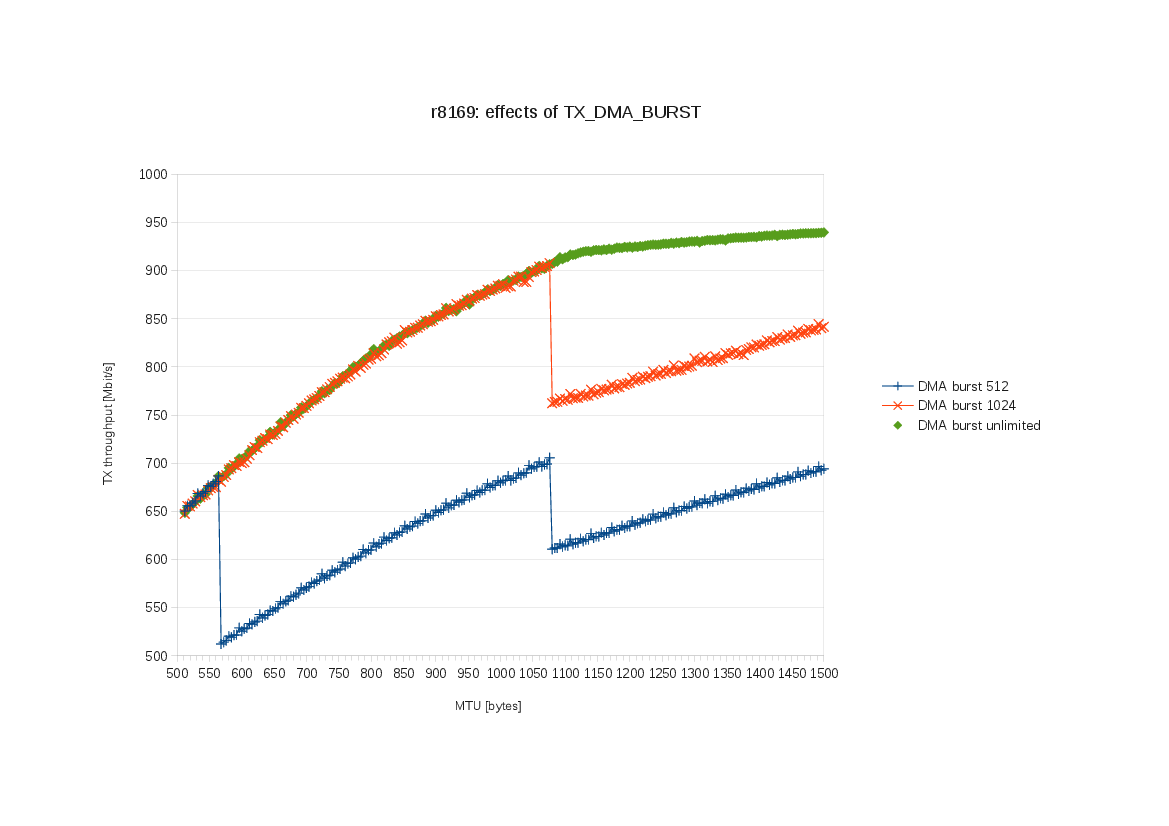
commit 7dbb491878 upstream.
While reworking the r8169 driver a few months ago to perform the
smallest amount of work in the irq handler, I took care of avoiding
any irq mask register operation in the slow work dedicated user
context thread. The slow work thread scheduled an extra round of NAPI
work which would ultimately set the irq mask register as required,
thus keeping such irq mask operations in the NAPI handler.
It would eventually race with the irq handler and delay NAPI execution
for - assuming no further irq - a whole ksoftirqd period. Mildly a
problem for rare link changes or corner case PCI events.
The race was always lost after the last bh disabling lock had been
removed from the work thread and people started wondering where those
pesky "NOHZ: local_softirq_pending 08" messages came from.
Actually the irq mask register _can_ be set up directly in the slow
work thread.
Signed-off-by: Francois Romieu <romieu@fr.zoreil.com>
Reported-by: Dave Jones <davej@redhat.com>
Tested-by: Marc Dionne <marc.c.dionne@gmail.com>
Cc: Thomas Gleixner <tglx@linutronix.de>
Cc: Hayes Wang <hayeswang@realtek.com>
Signed-off-by: David S. Miller <davem@davemloft.net>
commit 66bea92c69 upstream.
ext4_da_block_invalidatepages is missing a pagevec_init(),
which means that pvec->cold contains random garbage.
This affects whether the page goes to the front or
back of the LRU when ->cold makes it to
free_hot_cold_page()
Reviewed-by: Lukas Czerner <lczerner@redhat.com>
Reviewed-by: Carlos Maiolino <cmaiolino@redhat.com>
Signed-off-by: Eric Sandeen <sandeen@redhat.com>
Signed-off-by: "Theodore Ts'o" <tytso@mit.edu>
Signed-off-by: CAI Qian <caiqian@redhat.com>
Signed-off-by: Greg Kroah-Hartman <gregkh@linuxfoundation.org>
commit b98ae2729d upstream.
A patch in the 3.2 kernel caused regression with hotplugging the
M-Audio Fast track pro, or sound after suspend. I don't have the
device so I haven't done a full analysis, but it seems userspace
(both udev and pulseaudio) got confused when a card was created,
immediately destroyed, and then created again.
However, at least one person in the bug report (martin djfun)
reports that this patch resolves the issue for him. It also leaves
a message in the log:
"snd-usb-audio: probe of 1-1.1:1.1 failed with error -5" which is
a bit misleading. It is better than non-working audio, but maybe
there's a more elegant solution?
BugLink: https://bugs.launchpad.net/bugs/1095315
Signed-off-by: David Henningsson <david.henningsson@canonical.com>
Signed-off-by: Takashi Iwai <tiwai@suse.de>
Cc: CAI Qian <caiqian@redhat.com>
Signed-off-by: Greg Kroah-Hartman <gregkh@linuxfoundation.org>
commit a9acc5365d upstream.
SNB graphics devices have a bug that prevent them from accessing certain
memory ranges, namely anything below 1M and in the pages listed in the
table. So reserve those at boot if set detect a SNB gfx device on the
CPU to avoid GPU hangs.
Stephane Marchesin had a similar patch to the page allocator awhile
back, but rather than reserving pages up front, it leaked them at
allocation time.
[ hpa: made a number of stylistic changes, marked arrays as static
const, and made less verbose; use "memblock=debug" for full
verbosity. ]
Signed-off-by: Jesse Barnes <jbarnes@virtuousgeek.org>
Signed-off-by: H. Peter Anvin <hpa@linux.intel.com>
Cc: CAI Qian <caiqian@redhat.com>
Signed-off-by: Greg Kroah-Hartman <gregkh@linuxfoundation.org>
commit ed4f20943c upstream.
Converting a 64 Bit TOD format value to nanoseconds means that the value
must be divided by 4.096. In order to achieve that we multiply with 125
and divide by 512.
When used within sched_clock() this triggers an overflow after appr.
417 days. Resulting in a sched_clock() return value that is much smaller
than previously and therefore may cause all sort of weird things in
subsystems that rely on a monotonic sched_clock() behaviour.
To fix this implement a tod_to_ns() helper function which converts TOD
values without overflow and call this function from both places that
open coded the conversion: sched_clock() and kvm_s390_handle_wait().
Reviewed-by: Martin Schwidefsky <schwidefsky@de.ibm.com>
Signed-off-by: Heiko Carstens <heiko.carstens@de.ibm.com>
Signed-off-by: Martin Schwidefsky <schwidefsky@de.ibm.com>
Signed-off-by: Greg Kroah-Hartman <gregkh@linuxfoundation.org>
commit 5a3b6fc009 upstream.
When transport_lookup_tmr_lun() fails and we return a task management
response from target_complete_tmr_failure(), we need to call
transport_cmd_check_stop_to_fabric() to release the last ref to the
cmd after calling se_tfo->queue_tm_rsp(), or else we will never remove
the failed TMR from the session command list (and we'll end up waiting
forever when trying to tear down the session).
(nab: Fix minor compile breakage)
Signed-off-by: Roland Dreier <roland@purestorage.com>
Signed-off-by: Nicholas Bellinger <nab@linux-iscsi.org>
Signed-off-by: Greg Kroah-Hartman <gregkh@linuxfoundation.org>
commit 4a71997a32 upstream.
Ensure that the aux table is properly initialized, even when optional features
are missing. Without this, the FDPIC loader did not work. This was meant to
be included in commit d5ab780305.
Signed-off-by: Thomas Schwinge <thomas@codesourcery.com>
Signed-off-by: Paul Mundt <lethal@linux-sh.org>
Signed-off-by: Greg Kroah-Hartman <gregkh@linuxfoundation.org>
commit 36caff5d79 upstream.
This patch (as1631) fixes a bug that shows up when a config change
fails for a device under an xHCI controller. The controller needs to
be told to disable the endpoints that have been enabled for the new
config. The existing code does this, but before storing the
information about which endpoints were enabled! As a result, any
second attempt to install the new config is doomed to fail because
xhci-hcd will refuse to enable an endpoint that is already enabled.
The patch optimistically initializes the new endpoints' device
structures before asking the device to switch to the new config. If
the request fails then the endpoint information is already stored, so
we can use usb_hcd_alloc_bandwidth() to disable the endpoints with no
trouble. The rest of the error path is slightly more complex now; we
have to disable the new interfaces and call put_device() rather than
simply deallocating them.
Signed-off-by: Alan Stern <stern@rowland.harvard.edu>
Reported-and-tested-by: Matthias Schniedermeyer <ms@citd.de>
CC: Sarah Sharp <sarah.a.sharp@linux.intel.com>
Signed-off-by: Greg Kroah-Hartman <gregkh@linuxfoundation.org>
[bwh: Backported to 3.2: adjust context]
Signed-off-by: Ben Hutchings <ben@decadent.org.uk>
Signed-off-by: Greg Kroah-Hartman <gregkh@linuxfoundation.org>
commit 34ffb33e09 upstream.
The 'ni_at_a2150' module links to `cfc_write_to_buffer` in the
'comedi_fc' module, so selecting 'COMEDI_NI_AT_A2150' in the kernel config
needs to also select 'COMEDI_FC'.
Signed-off-by: Ian Abbott <abbotti@mev.co.uk>
Signed-off-by: Greg Kroah-Hartman <gregkh@linuxfoundation.org>
commit c43435d772 upstream.
comedi_auto_config() associates a Comedi minor device number with an
auto-configured hardware device and comedi_auto_unconfig() disassociates
it. Currently, these use the hardware device's private data pointer to
point to some allocated storage holding the minor device number. This
is a bit of a waste of the hardware device's private data pointer,
preventing it from being used for something more useful by the low-level
comedi device drivers. For example, it would make more sense if
comedi_usb_auto_config() was passed a pointer to the struct
usb_interface instead of the struct usb_device, but this cannot be done
currently because the low-level comedi drivers already use the private
data pointer in the struct usb_interface for something more useful.
This patch stops the comedi core hijacking the hardware device's private
data pointer. Instead, comedi_auto_config() stores a pointer to the
hardware device's struct device in the struct comedi_device_file_info
associated with the minor device number, and comedi_auto_unconfig()
calls new function comedi_find_board_minor() to recover the minor device
number associated with the hardware device.
Signed-off-by: Ian Abbott <abbotti@mev.co.uk>
Signed-off-by: Greg Kroah-Hartman <gregkh@linuxfoundation.org>
If client sends cap message that requests new max size during
exporting caps, the exporting MDS will drop the message quietly.
So the client may wait for the reply that updates the max size
forever. call handle_cap_grant() for cap import message can
avoid this issue.
Signed-off-by: Yan, Zheng <zheng.z.yan@intel.com>
Signed-off-by: Sage Weil <sage@inktank.com>
(cherry picked from commit 0e5e1774a9)
Signed-off-by: Greg Kroah-Hartman <gregkh@linuxfoundation.org>
__wake_requests() will enter infinite loop if we use it to wake
requests in the session->s_waiting list. __wake_requests() deletes
requests from the list and __do_request() adds requests back to
the list.
Signed-off-by: Yan, Zheng <zheng.z.yan@intel.com>
Signed-off-by: Sage Weil <sage@inktank.com>
(cherry picked from commit ed75ec2cd1)
Signed-off-by: Greg Kroah-Hartman <gregkh@linuxfoundation.org>
There is no check in rbd_remove() to see if anybody holds open the
image being removed. That's not cool.
Add a simple open count that goes up and down with opens and closes
(releases) of the device, and don't allow an rbd image to be removed
if the count is non-zero.
Protect the updates of the open count value with ctl_mutex to ensure
the underlying rbd device doesn't get removed while concurrently
being opened.
Signed-off-by: Alex Elder <elder@inktank.com>
Reviewed-by: Sage Weil <sage@inktank.com>
(based on commit 42382b709b)
In rbd_dev_id_put(), there's a loop that's intended to determine
the maximum device id in use. But it isn't doing that at all,
the effect of how it's written is to simply use the just-put id
number, which ignores whole purpose of this function.
Fix the bug.
Signed-off-by: Alex Elder <elder@inktank.com>
Reviewed-by: Josh Durgin <josh.durgin@inktank.com>
(cherry picked from commit b213e0b1a6)
Signed-off-by: Greg Kroah-Hartman <gregkh@linuxfoundation.org>
This shouldn't actually be possible because the layout struct is
constructed from the RBD header and validated then.
[elder@inktank.com: converted BUG() call to equivalent rbd_assert()]
Signed-off-by: Sage Weil <sage@inktank.com>
Reviewed-by: Alex Elder <elder@inktank.com>
(based on commit 6cae3717cd)
In __unregister_linger_request(), the request is being removed
from the osd client's req_linger list only when the request
has a non-null osd pointer. It should be done whether or not
the request currently has an osd.
This is most likely a non-issue because I believe the request
will always have an osd when this function is called.
Signed-off-by: Alex Elder <elder@inktank.com>
Reviewed-by: Sage Weil <sage@inktank.com>
(cherry picked from commit 61c7403562)
Signed-off-by: Greg Kroah-Hartman <gregkh@linuxfoundation.org>
In __unregister_request(), there is a call to list_del_init()
referencing a request that was the subject of a call to
ceph_osdc_put_request() on the previous line. This is not
safe, because the request structure could have been freed
by the time we reach the list_del_init().
Fix this by reversing the order of these lines.
Signed-off-by: Alex Elder <elder@inktank.com>
Reviewed-off-by: Sage Weil <sage@inktank.com>
(cherry picked from commit 7d5f24812b)
Signed-off-by: Greg Kroah-Hartman <gregkh@linuxfoundation.org>
This would reset a connection with any OSD that had an outstanding
request that was taking more than N seconds. The idea was that if the
OSD was buggy, the client could compensate by resending the request.
In reality, this only served to hide server bugs, and we haven't
actually seen such a bug in quite a while. Moreover, the userspace
client code never did this.
More importantly, often the request is taking a long time because the
OSD is trying to recover, or overloaded, and killing the connection
and retrying would only make the situation worse by giving the OSD
more work to do.
Signed-off-by: Sage Weil <sage@inktank.com>
Reviewed-by: Alex Elder <elder@inktank.com>
(cherry picked from commit 83aff95eb9)
Signed-off-by: Greg Kroah-Hartman <gregkh@linuxfoundation.org>
Add the ability to map an rbd image read-only, by specifying either
"read_only" or "ro" as an option on the rbd "command line." Also
allow the inverse to be explicitly specified using "read_write" or
"rw".
Signed-off-by: Alex Elder <elder@inktank.com>
Reviewed-by: Yehuda Sadeh <yehuda@inktank.com>
(based on commit cc0538b62c)
Josh proposed the following change, and I don't think I could
explain it any better than he did:
From: Josh Durgin <josh.durgin@inktank.com>
Date: Tue, 24 Jul 2012 14:22:11 -0700
To: ceph-devel <ceph-devel@vger.kernel.org>
Message-ID: <500F1203.9050605@inktank.com>
From: Josh Durgin <josh.durgin@inktank.com>
Right now the kernel still has one piece of rbd management
duplicated from the rbd command line tool: snapshot creation.
There's nothing special about snapshot creation that makes it
advantageous to do from the kernel, so I'd like to remove the
create_snap sysfs interface. That is,
/sys/bus/rbd/devices/<id>/create_snap
would be removed.
Does anyone rely on the sysfs interface for creating rbd
snapshots? If so, how hard would it be to replace with:
rbd snap create pool/image@snap
Is there any benefit to the sysfs interface that I'm missing?
Josh
This patch implements this proposal, removing the code that
implements the "snap_create" sysfs interface for rbd images.
As a result, quite a lot of other supporting code goes away.
[elder@inktank.com: commented out rbd_req_sync_exec() to avoid warning]
Suggested-by: Josh Durgin <josh.durgin@inktank.com>
Signed-off-by: Alex Elder <elder@inktank.com>
Reviewed-by: Josh Durgin <josh.durgin@inktank.com>
(based on commit 02cdb02cea)
If an osd has no requests and no linger requests, __reset_osd()
will just remove it with a call to __remove_osd(). That drops
a reference to the osd, and therefore the osd may have been free
by the time __reset_osd() returns. That function offers no
indication this may have occurred, and as a result the osd will
continue to be used even when it's no longer valid.
Change__reset_osd() so it returns an error (ENODEV) when it
deletes the osd being reset. And change __kick_osd_requests() so it
returns immediately (before referencing osd again) if __reset_osd()
returns *any* error.
Signed-off-by: Alex Elder <elder@inktank.com>
Reviewed-by: Sage Weil <sage@inktank.com>
(cherry picked from commit 685a7555ca)
Signed-off-by: Greg Kroah-Hartman <gregkh@linuxfoundation.org>
Ensure that we set the err value correctly so that we do not pass a 0
value to ERR_PTR and confuse the calling code. (In particular,
osd_client.c handle_map() will BUG(!newmap)).
Signed-off-by: Sage Weil <sage@inktank.com>
Reviewed-by: Alex Elder <elder@inktank.com>
(cherry picked from commit 0ed7285e00)
Signed-off-by: Greg Kroah-Hartman <gregkh@linuxfoundation.org>
We should not set con->state to CLOSED here; that happens in
ceph_fault() in the caller, where it first asserts that the state
is not yet CLOSED. Avoids a BUG when the features don't match.
Since the fail_protocol() has become a trivial wrapper, replace
calls to it with direct calls to reset_connection().
Signed-off-by: Sage Weil <sage@inktank.com>
Reviewed-by: Alex Elder <elder@inktank.com>
(cherry picked from commit 0fa6ebc600)
Signed-off-by: Greg Kroah-Hartman <gregkh@linuxfoundation.org>
A number of assertions in the ceph messenger are implemented with
BUG_ON(), killing the system if connection's state doesn't match
what's expected. At this point our state model is (evidently) not
well understood enough for these assertions to trigger a BUG().
Convert all BUG_ON(con->state...) calls to be WARN_ON(con->state...)
so we learn about these issues without killing the machine.
We now recognize that a connection fault can occur due to a socket
closure at any time, regardless of the state of the connection. So
there is really nothing we can assert about the state of the
connection at that point so eliminate that assertion.
Reported-by: Ugis <ugis22@gmail.com>
Tested-by: Ugis <ugis22@gmail.com>
Signed-off-by: Alex Elder <elder@inktank.com>
Reviewed-by: Sage Weil <sage@inktank.com>
(cherry picked from commit 122070a2ff)
Signed-off-by: Greg Kroah-Hartman <gregkh@linuxfoundation.org>
When ceph_osdc_handle_map() is called to process a new osd map,
kick_requests() is called to ensure all affected requests are
updated if necessary to reflect changes in the osd map. This
happens in two cases: whenever an incremental map update is
processed; and when a full map update (or the last one if there is
more than one) gets processed.
In the former case, the kick_requests() call is followed immediately
by a call to reset_changed_osds() to ensure any connections to osds
affected by the map change are reset. But for full map updates
this isn't done.
Both cases should be doing this osd reset.
Rather than duplicating the reset_changed_osds() call, move it into
the end of kick_requests().
Signed-off-by: Alex Elder <elder@inktank.com>
Reviewed-by: Sage Weil <sage@inktank.com>
(cherry picked from commit e6d50f67a6)
Signed-off-by: Greg Kroah-Hartman <gregkh@linuxfoundation.org>
The kick_requests() function is called by ceph_osdc_handle_map()
when an osd map change has been indicated. Its purpose is to
re-queue any request whose target osd is different from what it
was when it was originally sent.
It is structured as two loops, one for incomplete but registered
requests, and a second for handling completed linger requests.
As a special case, in the first loop if a request marked to linger
has not yet completed, it is moved from the request list to the
linger list. This is as a quick and dirty way to have the second
loop handle sending the request along with all the other linger
requests.
Because of the way it's done now, however, this quick and dirty
solution can result in these incomplete linger requests never
getting re-sent as desired. The problem lies in the fact that
the second loop only arranges for a linger request to be sent
if it appears its target osd has changed. This is the proper
handling for *completed* linger requests (it avoids issuing
the same linger request twice to the same osd).
But although the linger requests added to the list in the first loop
may have been sent, they have not yet completed, so they need to be
re-sent regardless of whether their target osd has changed.
The first required fix is we need to avoid calling __map_request()
on any incomplete linger request. Otherwise the subsequent
__map_request() call in the second loop will find the target osd
has not changed and will therefore not re-send the request.
Second, we need to be sure that a sent but incomplete linger request
gets re-sent. If the target osd is the same with the new osd map as
it was when the request was originally sent, this won't happen.
This can be fixed through careful handling when we move these
requests from the request list to the linger list, by unregistering
the request *before* it is registered as a linger request. This
works because a side-effect of unregistering the request is to make
the request's r_osd pointer be NULL, and *that* will ensure the
second loop actually re-sends the linger request.
Processing of such a request is done at that point, so continue with
the next one once it's been moved.
Signed-off-by: Alex Elder <elder@inktank.com>
Reviewed-by: Sage Weil <sage@inktank.com>
(cherry picked from commit ab60b16d3c)
Signed-off-by: Greg Kroah-Hartman <gregkh@linuxfoundation.org>
In kick_requests(), we need to register the request before we
unregister the linger request. Otherwise the unregister will
reset the request's osd pointer to NULL.
Signed-off-by: Alex Elder <elder@inktank.com>
Reviewed-by: Sage Weil <sage@inktank.com>
(cherry picked from commit c89ce05e0c)
Signed-off-by: Greg Kroah-Hartman <gregkh@linuxfoundation.org>
The red-black node in the ceph osd request structure is initialized
in ceph_osdc_alloc_request() using rbd_init_node(). We do need to
initialize this, because in __unregister_request() we call
RB_EMPTY_NODE(), which expects the node it's checking to have
been initialized. But rb_init_node() is apparently overkill, and
may in fact be on its way out. So use RB_CLEAR_NODE() instead.
For a little more background, see this commit:
4c199a93 rbtree: empty nodes have no color"
Signed-off-by: Alex Elder <elder@inktank.com>
Reviewed-by: Sage Weil <sage@inktank.com>
(cherry picked from commit a978fa20fb)
Signed-off-by: Greg Kroah-Hartman <gregkh@linuxfoundation.org>
The red-black node node in the ceph osd event structure is not
initialized in create_osdc_create_event(). Because this node can
be the subject of a RB_EMPTY_NODE() call later on, we should ensure
the node is initialized properly for that.
Signed-off-by: Alex Elder <elder@inktank.com>
Reviewed-by: Sage Weil <sage@inktank.com>
(cherry picked from commit 3ee5234df6)
Signed-off-by: Greg Kroah-Hartman <gregkh@linuxfoundation.org>
The red-black node node in the ceph osd structure is not initialized
in create_osd(). Because this node can be the subject of a
RB_EMPTY_NODE() call later on, we should ensure the node is
initialized properly for that. Add a call to RB_CLEAR_NODE()
initialize it.
Signed-off-by: Alex Elder <elder@inktank.com>
Reviewed-by: Sage Weil <sage@inktank.com>
(cherry picked from commit f407731d12)
Signed-off-by: Greg Kroah-Hartman <gregkh@linuxfoundation.org>
When a connection's socket disconnects, or if there's a protocol
error of some kind on the connection, a fault is signaled and
the connection is reset (closed and reopened, basically). We
currently get an error message on the log whenever this occurs.
A ceph connection will attempt to reestablish a socket connection
repeatedly if a fault occurs. This means that these error messages
will get repeatedly added to the log, which is undesirable.
Change the error message to be a warning, so they don't get
logged by default.
Signed-off-by: Alex Elder <elder@inktank.com>
Reviewed-by: Sage Weil <sage@inktank.com>
(cherry picked from commit 28362986f8)
Signed-off-by: Greg Kroah-Hartman <gregkh@linuxfoundation.org>
A connection's socket can close for any reason, independent of the
state of the connection (and without irrespective of the connection
mutex). As a result, the connectino can be in pretty much any state
at the time its socket is closed.
Handle those other cases at the top of con_work(). Pull this whole
block of code into a separate function to reduce the clutter.
Signed-off-by: Alex Elder <elder@inktank.com>
Reviewed-by: Sage Weil <sage@inktank.com>
(cherry picked from commit 7bb21d68c5)
Signed-off-by: Greg Kroah-Hartman <gregkh@linuxfoundation.org>
If we are creating an osd request and get an invalid layout, return
an EINVAL to the caller. We switch up the return to have an error
code instead of NULL implying -ENOMEM.
Signed-off-by: Sage Weil <sage@inktank.com>
Reviewed-by: Alex Elder <elder@inktank.com>
(cherry picked from commit 6816282dab)
Signed-off-by: Greg Kroah-Hartman <gregkh@linuxfoundation.org>
If a read-only rbd device is opened for writing in rbd_open(), it
returns without dropping the just-acquired device reference.
Fix this by moving the read-only check before getting the reference.
Signed-off-by: Alex Elder <elder@inktank.com>
Reviewed-by: Yehuda Sadeh <yehuda@inktank.com>
Reviewed-by: Josh Durgin <josh.durgin@inktank.com>
(cherry picked from commit 340c7a2b2c)
Signed-off-by: Greg Kroah-Hartman <gregkh@linuxfoundation.org>
This prevents a race between requests with a given snap context and
header updates that free it. The osd client was already expecting the
snap context to be reference counted, since it get()s it in
ceph_osdc_build_request and put()s it when the request completes.
Also remove the second down_read()/up_read() on header_rwsem in
rbd_do_request, which wasn't actually preventing this race or
protecting any other data.
Signed-off-by: Josh Durgin <josh.durgin@dreamhost.com>
Reviewed-by: Alex Elder <elder@inktank.com>
(cherry picked from commit d1d2564654)
Signed-off-by: Greg Kroah-Hartman <gregkh@linuxfoundation.org>
If an image was mapped to a snapshot, the size of the head version
would be shown. Protect capacity with header_rwsem, since it may
change.
Signed-off-by: Josh Durgin <josh.durgin@dreamhost.com>
Reviewed-by: Alex Elder <elder@inktank.com>
(cherry picked from commit a51aa0c042)
Signed-off-by: Greg Kroah-Hartman <gregkh@linuxfoundation.org>
When a snapshot is deleted, the OSD will return ENOENT when reading
from it. This is normally interpreted as a hole by rbd, which will
return zeroes. To minimize the time in which this can happen, stop
requests early when we are notified that our snapshot no longer
exists.
[elder@inktank.com: updated __rbd_init_snaps_header() logic]
Signed-off-by: Josh Durgin <josh.durgin@inktank.com>
Reviewed-by: Alex Elder <elder@inktank.com>
(cherry picked from commit e88a36ec96)
Signed-off-by: Greg Kroah-Hartman <gregkh@linuxfoundation.org>
Conflicts:
drivers/block/rbd.c
When we detect a mds session reset, close the old ceph_connection before
reopening it. This ensures we clean up the old socket properly and keep
the ceph_connection state correct.
Signed-off-by: Sage Weil <sage@inktank.com>
Reviewed-by: Alex Elder <elder@inktank.com>
Reviewed-by: Yehuda Sadeh <yehuda@inktank.com>
(cherry picked from commit a53aab645c)
Signed-off-by: Greg Kroah-Hartman <gregkh@linuxfoundation.org>
commit 5bb61643f6 upstream.
This was meant to be the purpose of the
intel_crtc_wait_for_pending_flips() function which is called whilst
preparing the CRTC for a modeset or before disabling. However, as Ville
Syrjala pointed out, we set the pending flip notification on the old
framebuffer that is no longer attached to the CRTC by the time we come
to flush the pending operations. Instead, we can simply wait on the
pending unpin work to be finished on this CRTC, knowning that the
hardware has therefore finished modifying the registers, before proceeding
with our direct access.
Fixes i-g-t/flip_test on non-pch platforms. pch platforms simply
schedule the flip immediately when the pipe is disabled, leading
to other funny issues.
Signed-off-by: Chris Wilson <chris@chris-wilson.co.uk>
[danvet: Added i-g-t note and cc: stable]
Signed-off-by: Daniel Vetter <daniel.vetter@ffwll.ch>
Signed-off-by: Julien Cristau <jcristau@debian.org>
Signed-off-by: Greg Kroah-Hartman <gregkh@linuxfoundation.org>
commit 74d44445af upstream.
... since finish_page_flip needs the vblank timestamp generated
in drm_handle_vblank. Somehow all the gmch platforms get it right,
but all the pch platform irq handlers get is wrong. Hooray for copy&
pasting!
Currently this gets papered over by a gross hack in finish_page_flip.
A second patch will remove that.
Note that without this, the new timestamp sanity checks in flip_test
occasionally get tripped up, hence the cc: stable tag.
Reviewed-by: mario.kleiner@tuebingen.mpg.de
Tested-by: Imre Deak <imre.deak@intel.com>
Signed-off-by: Daniel Vetter <daniel.vetter@ffwll.ch>
[bwh: Backported to 3.2: no loop over pipes in ivybridge_irq_handler(),
so make a similar change to that in ironlake_irq_handler()]
Signed-off-by: Ben Hutchings <ben@decadent.org.uk>
Signed-off-by: Julien Cristau <jcristau@debian.org>
Signed-off-by: Greg Kroah-Hartman <gregkh@linuxfoundation.org>
commit f8f2ac9a76 upstream.
I can't even find how I figured this might be needed anymore. But sure
enough, the value I'm reading back on platforms doesn't match what the
docs recommends.
It seemed to fix Chris' GT1 in limited testing as well.
Tested-by: Chris Wilson <chris@chris-wilson.co.uk>
Signed-off-by: Ben Widawsky <ben@bwidawsk.net>
Signed-off-by: Daniel Vetter <daniel.vetter@ffwll.ch>
[bwh: Backported to 3.2: open-code _MASKED_BIT_{ENABLE,DISABLE}]
Signed-off-by: Ben Hutchings <ben@decadent.org.uk>
Signed-off-by: Julien Cristau <jcristau@debian.org>
Signed-off-by: Greg Kroah-Hartman <gregkh@linuxfoundation.org>
commit 7e81a42e34 upstream.
Pin-leaks persist and we get the perennial bug reports of machine
lockups to the BUG_ON(pin_count==MAX). If we instead loudly report that
the object cannot be pinned at that time it should prevent the driver from
locking up, and hopefully restore a semblance of working whilst still
leaving us a OOPS to debug.
Signed-off-by: Chris Wilson <chris@chris-wilson.co.uk>
Signed-off-by: Daniel Vetter <daniel.vetter@ffwll.ch>
[bwh: Backported to 3.2: adjust context]
Signed-off-by: Ben Hutchings <ben@decadent.org.uk>
Signed-off-by: Julien Cristau <jcristau@debian.org>
Signed-off-by: Greg Kroah-Hartman <gregkh@linuxfoundation.org>
commit fcbc50da77 upstream.
Avoid constant wakeups caused by noisy irq lines when we don't even care
about the irq. This should be particularly useful for i945g/gm where the
hotplug has been disabled:
commit 768b107e4b
Author: Daniel Vetter <daniel.vetter@ffwll.ch>
Date: Fri May 4 11:29:56 2012 +0200
drm/i915: disable sdvo hotplug on i945g/gm
v2: While at it, remove the bogus hotplug_active read, and do not mask
hotplug_active[0] before checking whether the irq is needed, per discussion
with Daniel on IRC.
Bugzilla: https://bugzilla.kernel.org/show_bug.cgi?id=38442
Tested-by: Dominik Köppl <dominik@devwork.org>
Signed-off-by: Jani Nikula <jani.nikula@intel.com>
Signed-off-by: Daniel Vetter <daniel.vetter@ffwll.ch>
Signed-off-by: Julien Cristau <jcristau@debian.org>
Signed-off-by: Greg Kroah-Hartman <gregkh@linuxfoundation.org>
commit ecd67955fd upstream.
No functional change, but re-order the cases so they
evaluate properly due to the way the DCE macros work.
Noticed by kallisti5 on IRC.
Signed-off-by: Alex Deucher <alexander.deucher@amd.com>
Signed-off-by: Julien Cristau <jcristau@debian.org>
Signed-off-by: Greg Kroah-Hartman <gregkh@linuxfoundation.org>
commit 084b612ecf upstream.
Note that gen3 is the only platform where we've got the bit
definitions right, hence the workaround of disabling sdvo hotplug
support on i945g/gm is not due to misdiagnosis of broken hotplug irq
handling ...
Signed-off-by: Chris Wilson <chris@chris-wilson.co.uk>
[danvet: add some blurb about sdvo hotplug fail on i945g/gm I've
wondered about while reviewing.]
Signed-off-by: Daniel Vetter <daniel.vetter@ffwll.ch>
[bwh: Backported to 3.2:
- Adjust context
- Handle all three cases in i915_driver_irq_postinstall() as there
are not separate functions for gen3 and gen4+
- Carry on using IS_SDVOB() in intel_sdvo_init()]
Signed-off-by: Ben Hutchings <ben@decadent.org.uk>
Signed-off-by: Julien Cristau <jcristau@debian.org>
Signed-off-by: Greg Kroah-Hartman <gregkh@linuxfoundation.org>
commit 9d9740f099 upstream.
On IVB and older, we basically have two registers: the control and the
data register. We write a few consecutitve times to the control
register, and we need these writes to arrive exactly in the specified
order.
Also, when we're changing the data register, we need to guarantee that
anything written to the control register already arrived (since
changing the control register can change where the data register
points to). Also, we need to make sure all the writes to the data
register happen exactly in the specified order, and we also *can't*
read the data register during this process, since reading and/or
writing it will change the place it points to.
So invoke the "better safe than sorry" rule and just be careful and
put barriers everywhere :)
On HSW we still have a control register that we write many times, but
we have many data registers.
Demanded-by: Chris Wilson <chris@chris-wilson.co.uk>
Signed-off-by: Paulo Zanoni <paulo.r.zanoni@intel.com>
Signed-off-by: Daniel Vetter <daniel.vetter@ffwll.ch>
[bwh: Backported to 3.2:
- There are only two write_infoframe functions to be modified
- The other VIDEO_DIP_CTL writes are in entirely different functions]
Signed-off-by: Ben Hutchings <ben@decadent.org.uk>
Signed-off-by: Julien Cristau <jcristau@debian.org>
Signed-off-by: Greg Kroah-Hartman <gregkh@linuxfoundation.org>
commit 26fe45a0a7 upstream.
Selecting ATOM_PPLL_INVALID should be equivalent as the
DCPLL or PPLL0 are already programmed for the DISPCLK, but
the preferred method is to always specify the PLL selected.
SetPixelClock will check the parameters and skip the
programming if the PLL is already set up.
Signed-off-by: Alex Deucher <alexander.deucher@amd.com>
Reviewed-by: Christian König <christian.koenig@amd.com>
Signed-off-by: Julien Cristau <jcristau@debian.org>
Signed-off-by: Greg Kroah-Hartman <gregkh@linuxfoundation.org>
commit c07496fa61 upstream.
... we will botch up the bit17 swizzling. Furthermore tiled pwrite is
a (now) unused slowpath, so no one really cares.
This fixes the last swizzling issues I have with i-g-t on my bit17
swizzling i915G. No regression, it's been broken since the dawn of
gem, but it's nice for regression tracking when really _all_ i-g-t
tests work.
Actually this is not true, Chris Wilson noticed while reviewing this
patch that the commit
commit d9e86c0ee6
Author: Chris Wilson <chris@chris-wilson.co.uk>
Date: Wed Nov 10 16:40:20 2010 +0000
drm/i915: Pipelined fencing [infrastructure]
contained a functional change that broke things.
Reviewed-by: Chris Wilson <chris@chris-wilson.co.uk>
Signed-Off-by: Daniel Vetter <daniel.vetter@ffwll.ch>
[jcristau: adjust context for 3.4]
Signed-off-by: Julien Cristau <jcristau@debian.org>
Signed-off-by: Greg Kroah-Hartman <gregkh@linuxfoundation.org>
commit 0f91128d88 upstream.
During modeset we have to disable the pipe to reconfigure its timings
and maybe its size. Userspace may have queued up command buffers that
depend upon the pipe running in a certain configuration and so the
commands may become confused across the modeset. At the moment, we use a
less than satisfactory kick-scanline-waits should the GPU hang during
the modeset. It should be more reliable to wait for the pending
operations to complete first, even though we still have a window for
userspace to submit a broken command buffer during the modeset.
Signed-off-by: Chris Wilson <chris@chris-wilson.co.uk>
Signed-off-by: Daniel Vetter <daniel.vetter@ffwll.ch>
Signed-off-by: Julien Cristau <jcristau@debian.org>
Signed-off-by: Greg Kroah-Hartman <gregkh@linuxfoundation.org>
commit f01db988ef upstream.
I have seen a number of "blt ring initialization failed" messages
where the ctl or start registers are not the correct value. Upon further
inspection, if the code just waited a little bit, it would read the
correct value. Adding the wait_for to these reads should eliminate the
issue.
Signed-off-by: Sean Paul <seanpaul@chromium.org>
Reviewed-by: Ben Widawsky <ben@bwidawsk.net>
Signed-off-by: Daniel Vetter <daniel.vetter@ffwll.ch>
Signed-off-by: Julien Cristau <jcristau@debian.org>
Signed-off-by: Greg Kroah-Hartman <gregkh@linuxfoundation.org>
commit b03543857f upstream.
Currently i915 driver checks [PCH_]LVDS register bits to decide
whether to set up the dual-link or the single-link mode. This relies
implicitly on that BIOS initializes the register properly at boot.
However, BIOS doesn't initialize it always. When the machine is
booted with the closed lid, BIOS skips the LVDS reg initialization.
This ends up in blank output on a machine with a dual-link LVDS when
you open the lid after the boot.
This patch adds a workaround for that problem by checking the initial
LVDS register value in VBT.
Bugzilla: https://bugs.freedesktop.org/show_bug.cgi?id=37742
Tested-By: Paulo Zanoni <paulo.r.zanoni@intel.com>
Reviewed-by: Rodrigo Vivi <rodrigo.vivi@gmail.com>
Reviewed-by: Adam Jackson <ajax@redhat.com>
Signed-off-by: Takashi Iwai <tiwai@suse.de>
Signed-off-by: Daniel Vetter <daniel.vetter@ffwll.ch>
Signed-off-by: Julien Cristau <jcristau@debian.org>
Signed-off-by: Greg Kroah-Hartman <gregkh@linuxfoundation.org>
commit b7884eb45e upstream.
Empirical evidence suggests that we need to: On at least one ivb
machine when running the hangman i-g-t test, the rings don't properly
initialize properly - the RING_START registers seems to be stuck at
all zeros.
Holding forcewake around this register init sequences makes chip reset
reliable again. Note that this is not the first such issue:
commit f01db988ef
Author: Sean Paul <seanpaul@chromium.org>
Date: Fri Mar 16 12:43:22 2012 -0400
drm/i915: Add wait_for in init_ring_common
added delay loops to make RING_START and RING_CTL initialization
reliable on the blt ring at boot-up. So I guess it won't hurt if we do
this unconditionally for all force_wake needing gpus.
To avoid copy&pasting of the HAS_FORCE_WAKE check I've added a new
intel_info bit for that.
v2: Fixup missing commas in static struct and properly handling the
error case in init_ring_common, both noticed by Jani Nikula.
Reported-and-tested-by: Yang Guang <guang.a.yang@intel.com>
Reviewed-by: Eugeni Dodonov <eugeni.dodonov@intel.com>
Bugzilla: https://bugs.freedesktop.org/show_bug.cgi?id=50522
Signed-Off-by: Daniel Vetter <daniel.vetter@ffwll.ch>
[bwh: Backported to 3.2:
- drop changes to Haswell device information
- NEEDS_FORCE_WAKE didn't refer to Valley View anyway]
Signed-off-by: Ben Hutchings <ben@decadent.org.uk>
[jcristau: further context adjustments for 3.4]
Signed-off-by: Julien Cristau <jcristau@debian.org>
Signed-off-by: Greg Kroah-Hartman <gregkh@linuxfoundation.org>
commit cb05d8dede upstream.
Or at least plug another gapping hole. Apparrently hw desingers only
moved the bit field, but did not bother ot re-enumerate the planes
when adding support for a 3rd pipe.
Discovered by i-g-t/flip_test.
This may or may not fix the reference bugzilla, because that one
smells like we have still larger fish to fry.
v2: Fixup the impossible case to catch programming errors, noticed by
Chris Wilson.
References: https://bugs.freedesktop.org/show_bug.cgi?id=50069
Acked-by: Chris Wilson <chris@chris-wilson.co.uk>
Tested-by: Eugeni Dodonov <eugeni.dodonov@intel.com>
Eugeni Dodonov <eugeni.dodonov@intel.com>
Signed-Off-by: Daniel Vetter <daniel.vetter@ffwll.ch>
Signed-off-by: Julien Cristau <jcristau@debian.org>
Signed-off-by: Greg Kroah-Hartman <gregkh@linuxfoundation.org>
commit e43a028752 upstream.
When remembering the direction of a DCR transaction, we should write
to the same variable that we interpret on later when doing vcpu_run
again.
Signed-off-by: Alexander Graf <agraf@suse.de>
Signed-off-by: CAI Qian <caiqian@redhat.com>
Signed-off-by: Greg Kroah-Hartman <gregkh@linuxfoundation.org>
commit 539526b413 upstream.
We've originally added this in
commit 291427f5fd
Author: Jesse Barnes <jbarnes@virtuousgeek.org>
Date: Fri Jul 29 12:42:37 2011 -0700
drm/i915: apply phase pointer override on SNB+ too
and then copy-pasted it over to ivb/ppt. The w/a was originally added
for ilk/ibx in
commit 5b2adf8971
Author: Jesse Barnes <jbarnes@virtuousgeek.org>
Date: Thu Oct 7 16:01:15 2010 -0700
drm/i915: add Ironlake clock gating workaround for FDI link training
and fixed up a bit in
commit 6f06ce184c
Author: Jesse Barnes <jbarnes@virtuousgeek.org>
Date: Tue Jan 4 15:09:38 2011 -0800
drm/i915: set phase sync pointer override enable before setting phase sync pointer
It turns out that this w/a isn't actually required on cpt/ppt and
positively harmful on ivb/ppt when using fdi B/C links - it results in
a black screen occasionally, with seemingfully everything working as
it should. The only failure indication I've found in the hw is that
eventually (but not right after the modeset completes) a pipe underrun
is signalled.
Big thanks to Arthur Runyan for all the ideas for registers to check
and changes to test, otherwise I couldn't ever have tracked this down!
Reviewed-by: Jesse Barnes <jbarnes@virtuousgeek.org>
Cc: "Runyan, Arthur J" <arthur.j.runyan@intel.com>
Signed-off-by: Daniel Vetter <daniel.vetter@ffwll.ch>
Signed-off-by: CAI Qian <caiqian@redhat.com>
Signed-off-by: Greg Kroah-Hartman <gregkh@linuxfoundation.org>
commit 96e5d1d3ad upstream.
In gfs2_trans_add_bh(), gfs2 was testing if a there was a bd attached to the
buffer without having the gfs2_log_lock held. It was then assuming it would
stay attached for the rest of the function. However, without either the log
lock being held of the buffer locked, __gfs2_ail_flush() could detach bd at any
time. This patch moves the locking before the test. If there isn't a bd
already attached, gfs2 can safely allocate one and attach it before locking.
There is no way that the newly allocated bd could be on the ail list,
and thus no way for __gfs2_ail_flush() to detach it.
Signed-off-by: Benjamin Marzinski <bmarzins@redhat.com>
Signed-off-by: Steven Whitehouse <swhiteho@redhat.com>
[bwh: Backported to 3.2: adjust context]
Signed-off-by: Ben Hutchings <ben@decadent.org.uk>
Signed-off-by: Greg Kroah-Hartman <gregkh@linuxfoundation.org>
commit 55c1945eda upstream.
A high speed control or bulk endpoint may have bInterval set to zero,
which means it does not NAK. If bInterval is non-zero, it means the
endpoint NAKs at a rate of 2^(bInterval - 1).
The xHCI code to compute the NAK interval does not handle the special
case of zero properly. The current code unconditionally subtracts one
from bInterval and uses it as an exponent. This causes a very large
bInterval to be used, and warning messages like these will be printed:
usb 1-1: ep 0x1 - rounding interval to 32768 microframes, ep desc says 0 microframes
This may cause the xHCI host hardware to reject the Configure Endpoint
command, which means the HS device will be unusable under xHCI ports.
This patch should be backported to kernels as old as 2.6.31, that contain
commit dfa49c4ad1 "USB: xhci - fix math in
xhci_get_endpoint_interval()".
Reported-by: Vincent Pelletier <plr.vincent@gmail.com>
Suggested-by: Alan Stern <stern@rowland.harvard.edu>
Signed-off-by: Sarah Sharp <sarah.a.sharp@linux.intel.com>
Signed-off-by: Greg Kroah-Hartman <gregkh@linuxfoundation.org>
commit 07e72b95f5 upstream.
Some touchscreens have buggy firmware which claims
remote wakeup to be enabled after a reset. They nevertheless
crash if the feature is cleared by the host.
Add a check for reset resume before checking for
an enabled remote wakeup feature. On compliant
devices the feature must be cleared after a reset anyway.
Signed-off-by: Oliver Neukum <oneukum@suse.de>
Acked-by: Alan Stern <stern@rowland.harvard.edu>
Signed-off-by: Greg Kroah-Hartman <gregkh@linuxfoundation.org>
commit c52804a472 upstream.
The USB core hub thread (khubd) is designed with external USB hubs in
mind. It expects that if a port status change bit is set, the hub will
continue to send a notification through the hub status data transfer.
Basically, it expects hub notifications to be level-triggered.
The xHCI host controller is designed to be edge-triggered on the logical
'OR' of all the port status change bits. When all port status change
bits are clear, and a new change bit is set, the xHC will generate a
Port Status Change Event. If another change bit is set in the same port
status register before the first bit is cleared, it will not send
another event.
This means that the hub code may lose port status changes because of
race conditions between clearing change bits. The user sees this as a
"dead port" that doesn't react to device connects.
The fix is to turn on port polling whenever a new change bit is set.
Once the USB core issues a hub status request that shows that no change
bits are set in any USB ports, turn off port polling.
We can't allow the USB core to poll the roothub for port events during
host suspend because if the PCI host is in D3cold, the port registers
will be all f's. Instead, stop the port polling timer, and
unconditionally restart it when the host resumes. If there are no port
change bits set after the resume, the first call to hub_status_data will
disable polling.
This patch should be backported to stable kernels with the first xHCI
support, 2.6.31 and newer, that include the commit
0f2a79300a "USB: xhci: Root hub support."
There will be merge conflicts because the check for HC_STATE_SUSPENDED
was moved into xhci_suspend in 3.8.
Signed-off-by: Sarah Sharp <sarah.a.sharp@linux.intel.com>
Acked-by: Alan Stern <stern@rowland.harvard.edu>
Signed-off-by: Greg Kroah-Hartman <gregkh@linuxfoundation.org>
commit 65bdac5eff upstream.
An empty port can transition to either Inactive or Compliance Mode if a
newly connected USB 3.0 device fails to link train. In that case, we
issue a warm reset. Some devices, such as John's Roseweil eusb3
enclosure, slip back into Compliance Mode after the warm reset.
The current warm reset code does not check for device connect status on
warm reset completion, and it incorrectly reports the warm reset
succeeded. This causes the USB core to attempt to send a Set Address
control transfer to a port in Compliance Mode, which will always fail.
Make hub_port_wait_reset check the current connect status and link state
after the warm reset completes. Return a failure status if the device
is disconnected or the link state is Compliance Mode or SS.Inactive.
Make hub_events disable the port if warm reset fails. This will disable
the port, and then bring it back into the RxDetect state. Make the USB
core ignore the connect change until the device reconnects.
Note that this patch does NOT handle connected devices slipping into the
Inactive state very well. This is a concern, because devices can go
into the Inactive state on U1/U2 exit failure. However, the fix for
that case is too large for stable, so it will be submitted in a separate
patch.
This patch should be backported to kernels as old as 3.2, contain the
commit ID 75d7cf72ab "usbcore: refine warm
reset logic"
Signed-off-by: Sarah Sharp <sarah.a.sharp@linux.intel.com>
Acked-by: Alan Stern <stern@rowland.harvard.edu>
Reported-by: John Covici <covici@ccs.covici.com>
Signed-off-by: Greg Kroah-Hartman <gregkh@linuxfoundation.org>
commit 4f43447e62 upstream.
The port reset code bails out early if the current connect status is
cleared (device disconnected). If we're issuing a hot reset, it may
also look at the link state before the reset is finished.
Section 10.14.2.6 of the USB 3.0 spec says that when a port enters the
Error state or Resetting state, the port connection bit retains the
value from the previous state. Therefore we can't trust it until the
reset finishes. Also, the xHCI spec section 4.19.1.2.5 says software
shall ignore the link state while the port is resetting, as it can be in
an unknown state.
The port state during reset is also unknown for USB 2.0 hubs. The hub
sends a reset signal by driving the bus into an SE0 state. This
overwhelms the "connect" signal from the device, so the port can't tell
whether anything is connected or not.
Fix the port reset code to ignore the port link state and current
connect bit until the reset finishes, and USB_PORT_STAT_RESET is
cleared.
Remove the check for USB_PORT_STAT_C_BH_RESET in the warm reset case,
because it's redundant. When the warm reset finishes, the port reset
bit will be cleared at the same time USB_PORT_STAT_C_BH_RESET is set.
Remove the now-redundant check for a cleared USB_PORT_STAT_RESET bit
in the code to deal with the finished reset.
This patch should be backported to all stable kernels.
Signed-off-by: Sarah Sharp <sarah.a.sharp@linux.intel.com>
Acked-by: Alan Stern <stern@rowland.harvard.edu>
Signed-off-by: Greg Kroah-Hartman <gregkh@linuxfoundation.org>
commit 77c7f072c8 upstream.
John's NEC 0.96 xHCI host controller needs a longer timeout for a warm
reset to complete. The logs show it takes 650ms to complete the warm
reset, so extend the hub reset timeout to 800ms to be on the safe side.
This commit should be backported to kernels as old as 3.2, that contain
the commit 75d7cf72ab "usbcore: refine
warm reset logic".
Signed-off-by: Sarah Sharp <sarah.a.sharp@linux.intel.com>
Acked-by: Alan Stern <stern@rowland.harvard.edu>
Reported-by: John Covici <covici@ccs.covici.com>
Signed-off-by: Greg Kroah-Hartman <gregkh@linuxfoundation.org>
commit 41e7e056cd upstream.
If hot and warm reset fails, or a port remains in the Compliance Mode,
the USB core needs to be able to disable a USB 3.0 port. Unlike USB 2.0
ports, once the port is placed into the Disabled link state, it will not
report any new device connects. To get device connect notifications, we
need to put the link into the Disabled state, and then the RxDetect
state.
The xHCI driver needs to atomically clear all change bits on USB 3.0
port disable, so that we get Port Status Change Events for future port
changes. We could technically do this in the USB core instead of in the
xHCI roothub code, since the port state machine can't advance out of the
disabled state until we set the link state to RxDetect. However,
external USB 3.0 hubs don't need this code. They are level-triggered,
not edge-triggered like xHCI, so they will continue to send interrupt
events when any change bit is set. Therefore it doesn't make sense to
put this code in the USB core.
This patch is part of a series to fix several reports of infinite loops
on device enumeration failure. This includes John, when he boots with
a USB 3.0 device (Roseweil eusb3 enclosure) attached to his NEC 0.96
host controller. The fix requires warm reset support, so it does not
make sense to backport this patch to stable kernels without warm reset
support.
This patch should be backported to kernels as old as 3.2, contain the
commit ID 75d7cf72ab "usbcore: refine warm
reset logic"
Signed-off-by: Sarah Sharp <sarah.a.sharp@linux.intel.com>
Acked-by: Alan Stern <stern@rowland.harvard.edu>
Reported-by: John Covici <covici@ccs.covici.com>
Signed-off-by: Greg Kroah-Hartman <gregkh@linuxfoundation.org>
commit 8b8132bc3d upstream.
When the USB core finishes reseting a USB device, the xHCI driver sends
a Reset Device command to the host. The xHC then updates its internal
representation of the USB device to the 'Default' device state. If the
device was already in the Default state, the xHC will complete the
command with an error status.
If a device needs to be reset several times during enumeration, the
second reset will always fail because of the xHCI Reset Device command.
This can cause issues during enumeration.
For example, usb_reset_and_verify_device calls into hub_port_init in a
loop. Say that on the first call into hub_port_init, the device is
successfully reset, but doesn't respond to several set address control
transfers. Then the port will be disabled, but the udev will remain in
tact. usb_reset_and_verify_device will call into hub_port_init again.
On the second call into hub_port_init, the device will be reset, and the
xHCI driver will issue a Reset Device command. This command will fail
(because the device is already in the Default state), and
usb_reset_and_verify_device will fail. The port will be disabled, and
the device won't be able to enumerate.
Fix this by ignoring the return value of the HCD reset_device callback.
This commit should be backported to kernels as old as 3.2, that contain
the commit 75d7cf72ab "usbcore: refine
warm reset logic".
Signed-off-by: Sarah Sharp <sarah.a.sharp@linux.intel.com>
Acked-by: Alan Stern <stern@rowland.harvard.edu>
Signed-off-by: Greg Kroah-Hartman <gregkh@linuxfoundation.org>
commit 1c7439c61f upstream.
USB 3.0 hubs and roothubs will automatically transition a failed hot
reset to a warm (BH) reset. In that case, the warm reset change bit
will be set, and the link state change bit may also be set. Change
hub_port_finish_reset to unconditionally clear those change bits for USB
3.0 hubs. If these bits are not cleared, we may lose port change events
from the roothub.
This commit should be backported to kernels as old as 3.2, that contain
the commit 75d7cf72ab "usbcore: refine
warm reset logic".
Signed-off-by: Sarah Sharp <sarah.a.sharp@linux.intel.com>
Acked-by: Alan Stern <stern@rowland.harvard.edu>
Signed-off-by: Greg Kroah-Hartman <gregkh@linuxfoundation.org>
commit 92441b2263 upstream.
Commit 2a44e499 ("drm/nouveau/disp: introduce proper init/fini, separate
from create/destroy") started to call display init routines on pre-nv50
hardware on module load. But LVDS init code sets driver state in a way
which prevents modesetting code from operating properly.
nv04_display_init calls nv04_dfp_restore, which sets encoder->last_dpms to
NV_DPMS_CLEARED.
drm_crtc_helper_set_mode
nv04_dfp_prepare
nv04_lvds_dpms(DRM_MODE_DPMS_OFF)
nv04_lvds_dpms checks last_dpms mode (which is NV_DPMS_CLEARED) and wrongly
assumes it's a "powersaving mode", the new one (DRM_MODE_DPMS_OFF) is too,
so it skips calling some crucial lvds scripts.
Reported-by: Chris Paulson-Ellis <chris@edesix.com>
Signed-off-by: Marcin Slusarz <marcin.slusarz@gmail.com>
Signed-off-by: Ben Skeggs <bskeggs@redhat.com>
Signed-off-by: Greg Kroah-Hartman <gregkh@linuxfoundation.org>
commit 2ac788f705 upstream.
Commit 5c8a86e10a (usb: musb: drop unneeded
musb_debug trickery) erroneously removed '\n' from the driver's banner.
Concatenate all the banner substrings while adding it back...
Signed-off-by: Sergei Shtylyov <sshtylyov@ru.mvista.com>
Signed-off-by: Felipe Balbi <balbi@ti.com>
Signed-off-by: Greg Kroah-Hartman <gregkh@linuxfoundation.org>
commit 1d16638e3b upstream.
If we do have endpoints named like "ep-a" then bEndpointAddress is
counted internally by the gadget framework.
If we do have endpoints named like "ep-1" then bEndpointAddress is
assigned from the digit after "ep-".
If we do have both, then it is likely that after we used up the
"generic" endpoints we will use the digits and thus assign one
bEndpointAddress to multiple endpoints.
This theory can be proofed by using the completely enabled g_multi.
Without this patch, the mass storage won't enumerate and times out
because it shares endpoints with RNDIS.
This patch also adds fills up the endpoints list so we have in total
endpoints 1 to 15 in + out available while some of them are restricted
to certain types like BULK or ISO. Without this change the nokia gadget
won't load because the system does not provide enough (BULK) endpoints
but it did before ep-a - ep-f were removed.
Signed-off-by: Sebastian Andrzej Siewior <bigeasy@linutronix.de>
Acked-by: Alan Stern <stern@rowland.harvard.edu>
Signed-off-by: Felipe Balbi <balbi@ti.com>
Signed-off-by: Greg Kroah-Hartman <gregkh@linuxfoundation.org>
commit 036915a7a4 upstream.
Adding support "PSC Scanning, Magellan 800i" in cdc-acm
Very simple, but very necessary.
Suitable for all versions of the kernel > 2.6
Signed-off-by: Denis N Ladin <denladin@gmail.com>
Acked-by: Oliver Neukum <oneukum@suse.de>
Signed-off-by: Greg Kroah-Hartman <gregkh@linuxfoundation.org>
commit 8cf65dc386 upstream.
Simple fix to add support for Crucible Technologies COMET Caller ID
USB decoder - a device containing FTDI USB/Serial converter chip,
handling 1200bps CallerID messages decoded from the phone line -
adding correct USB PID is sufficient.
Tested to apply cleanly and work flawlessly against 3.6.9, 3.7.0-rc8
and 3.8.0-rc3 on both amd64 and x86 arches.
Signed-off-by: Tomasz Mloduchowski <q@qdot.me>
Signed-off-by: Greg Kroah-Hartman <gregkh@linuxfoundation.org>
commit 5ec0085440 upstream.
also known as Alcatel One Touch L100V LTE
The driver description files gives these names to the vendor specific
functions on this modem:
Application1: VID_1BBB&PID_011E&MI_00
Application2: VID_1BBB&PID_011E&MI_01
Modem: VID_1BBB&PID_011E&MI_03
Ethernet: VID_1BBB&PID_011E&MI_04
Reported-by: Thomas Schäfer <tschaefer@t-online.de>
Signed-off-by: Bjørn Mork <bjorn@mork.no>
Signed-off-by: Greg Kroah-Hartman <gregkh@linuxfoundation.org>
commit 94a85b6338 upstream.
In option.c, add some new MEDIATEK PIDs support for MEDIATEK new products. This
is a MEDIATEK inc. release patch.
Signed-off-by: Quentin.Li <snowmanli88@163.com>
Signed-off-by: Greg Kroah-Hartman <gregkh@linuxfoundation.org>
commit 5e20a4b530 upstream.
Recent versions of udev cause synchronous firmware loading from the
probe routine to fail because the request to user space would time
out. The original fix for b43 (commit 6b6fa58) moved the firmware
load from the probe routine to a work queue, but it still used synchronous
firmware loading. This method is OK when b43 is built as a module;
however, it fails when the driver is compiled into the kernel.
This version changes the code to load the initial firmware file
using request_firmware_nowait(). A completion event is used to
hold the work queue until that file is available. This driver
reads several firmware files - the remainder can be read synchronously.
On some test systems, the async read fails; however, a following synch
read works, thus the async failure falls through to the sync try.
Reported-and-Tested by: Felix Janda <felix.janda@posteo.de>
Signed-off-by: Larry Finger <Larry.Finger@lwfinger.net>
Signed-off-by: John W. Linville <linville@tuxdriver.com>
Signed-off-by: Greg Kroah-Hartman <gregkh@linuxfoundation.org>
commit 9c969d8ccb upstream.
wait_event_interruptible function returns -ERESTARTSYS if it's
interrupted by a signal. Driver should check the return value
and handle this case properly.
In mwifiex_wait_queue_complete() routine, as we are now checking
wait_event_interruptible return value, the condition check is not
required. Also, we have removed mwifiex_cancel_pending_ioctl()
call to avoid a chance of sending second command to FW by other path
as soon as we clear current command node. FW can not handle two
commands simultaneously.
Signed-off-by: Bing Zhao <bzhao@marvell.com>
Signed-off-by: Amitkumar Karwar <akarwar@marvell.com>
Signed-off-by: John W. Linville <linville@tuxdriver.com>
Signed-off-by: Greg Kroah-Hartman <gregkh@linuxfoundation.org>
commit a56f992cda upstream.
This is a very old bug, but there's nothing that prevents the
timer from running while the module is being removed when we
only do del_timer() instead of del_timer_sync().
The timer should normally not be running at this point, but
it's not clearly impossible (or we could just remove this.)
Tested-by: Ben Greear <greearb@candelatech.com>
Signed-off-by: Johannes Berg <johannes.berg@intel.com>
Signed-off-by: Greg Kroah-Hartman <gregkh@linuxfoundation.org>
commit 51861d4eeb upstream.
Those rn50 chip are often connected to console remoting hw and load
detection often fails with those. Just don't try to load detect and
report connect.
Signed-off-by: Jerome Glisse <jglisse@redhat.com>
Signed-off-by: Alex Deucher <alexander.deucher@amd.com>
Signed-off-by: Greg Kroah-Hartman <gregkh@linuxfoundation.org>
commit c0729eeefd upstream.
Éric Piel reported a kernel oops in the "comedi_test" module. It was a
NULL pointer dereference within `waveform_ai_interrupt()` (actually a
timer function) that sometimes occurred when a running asynchronous
command is cancelled (either by the `COMEDI_CANCEL` ioctl or by closing
the device file).
This seems to be a race between the caller of `waveform_ai_cancel()`
which on return from that function goes and tears down the running
command, and the timer function which uses the command. In particular,
`async->cmd.chanlist` gets freed (and the pointer set to NULL) by
`do_become_nonbusy()` in "comedi_fops.c" but a previously scheduled
`waveform_ai_interrupt()` timer function will dereference that pointer
regardless, leading to the oops.
Fix it by replacing the `del_timer()` call in `waveform_ai_cancel()`
with `del_timer_sync()`.
Signed-off-by: Ian Abbott <abbotti@mev.co.uk>
Reported-by: Éric Piel <piel@delmic.com>
Signed-off-by: Greg Kroah-Hartman <gregkh@linuxfoundation.org>
commit 34b55d8c48 upstream.
The minimum period was set to 357 ns, while the divider for these boards is 50
ns. This prevented to output at maximum speed as ni_ao_cmdtest() would return
357 but would not accept it.
Not sure why it was set to 357 ns (this was done before the git history,
which starts 5 years ago). My guess is that it comes from reading the
specification stating a 2.8 MHz rate (~ 357 ns). The latest
specification states a 2.86 MHz rate (~ 350 ns), which makes a lot
more sense.
Tested on a pci-6251.
Signed-off-by: Éric Piel <piel@delmic.com>
Acked-By: Ian Abbott <abbotti@mev.co.uk>
Signed-off-by: Greg Kroah-Hartman <gregkh@linuxfoundation.org>
commit 7d3135af39 upstream.
When a low-level comedi driver auto-configures a device, a `struct
comedi_dev_file_info` is allocated (as well as a `struct
comedi_device`) by `comedi_alloc_board_minor()`. A pointer to the
hardware `struct device` is stored as a cookie in the `struct
comedi_dev_file_info`. When the low-level comedi driver
auto-unconfigures the device, `comedi_auto_unconfig()` uses the cookie
to find the `struct comedi_dev_file_info` so it can detach the comedi
device from the driver, clean it up and free it.
A problem arises if the user manually unconfigures and reconfigures the
comedi device using the `COMEDI_DEVCONFIG` ioctl so that is no longer
associated with the original hardware device. The problem is that the
cookie is not cleared, so that a call to `comedi_auto_unconfig()` from
the low-level driver will still find it, detach it, clean it up and free
it.
Stop this problem occurring by always clearing the `hardware_device`
cookie in the `struct comedi_dev_file_info` whenever the
`COMEDI_DEVCONFIG` ioctl call is successful.
Signed-off-by: Ian Abbott <abbotti@mev.co.uk>
Signed-off-by: Greg Kroah-Hartman <gregkh@linuxfoundation.org>
commit 3b4bc7bccc upstream.
This patch fixes some code that implements a work-around to a hardware bug in
the ac97 controller on the pxa27x. A bug in the controller's warm reset
functionality requires that the mfp used by the controller as the AC97_nRESET
line be temporarily reconfigured as a generic output gpio (AF0) and manually
held high for the duration of the warm reset cycle. This is what was done in
the original code, but it was broken long ago by commit fb1bf8cd
([ARM] pxa: introduce processor specific pxa27x_assert_ac97reset())
which changed the mfp to a GPIO input instead of a high output.
The fix requires the ac97 controller to obtain the gpio via gpio_request_one(),
with arguments that configure the gpio as an output initially driven high.
Tested on a palm treo 680 machine. Reportedly, this broken code only prevents a
warm reset on hardware that lacks a pull-up on the line, which appears to be the
case for me.
Signed-off-by: Mike Dunn <mikedunn@newsguy.com>
Signed-off-by: Igor Grinberg <grinberg@compulab.co.il>
Signed-off-by: Mark Brown <broonie@opensource.wolfsonmicro.com>
Signed-off-by: Greg Kroah-Hartman <gregkh@linuxfoundation.org>
commit 41b645c862 upstream.
Cold reset on the pxa27x currently fails and
pxa2xx_ac97_try_cold_reset: cold reset timeout (GSR=0x44)
appears in the kernel log. Through trial-and-error (the pxa270 developer's
manual is mostly incoherent on the topic of ac97 reset), I got cold reset to
complete by setting the WARM_RST bit in the GCR register (and later noticed that
pxa3xx does this for cold reset as well). Also, a timeout loop is needed to
wait for the reset to complete.
Tested on a palm treo 680 machine.
Signed-off-by: Mike Dunn <mikedunn@newsguy.com>
Acked-by: Igor Grinberg <grinberg@compulab.co.il>
Signed-off-by: Mark Brown <broonie@opensource.wolfsonmicro.com>
Signed-off-by: Greg Kroah-Hartman <gregkh@linuxfoundation.org>
commit 7b4cf994e4 upstream.
This is a left-over from when udl_get_edid returned the amount of bytes
successfully read, which it no longer does.
Signed-off-by: Hans de Goede <hdegoede@redhat.com>
Signed-off-by: Dave Airlie <airlied@redhat.com>
Signed-off-by: Greg Kroah-Hartman <gregkh@linuxfoundation.org>
commit 242187b362 upstream.
The buffer passed to usb_control_msg may end up in scatter-gather list, and
may thus not be on the stack. Having it on the stack usually works on x86, but
not on other archs.
Signed-off-by: Hans de Goede <hdegoede@redhat.com>
Signed-off-by: Dave Airlie <airlied@redhat.com>
Signed-off-by: Greg Kroah-Hartman <gregkh@linuxfoundation.org>
commit c930812fe5 upstream.
udldrmfb only reads the main EDID block, and if that advertises extensions
the drm_edid code expects them to be present, and starts reading beyond the
buffer udldrmfb passes it.
Although it may be possible to read more EDID info with the udl we simpy don't
know how, and even if trial and error gets it working on one device, that is
no guarantee it will work on other revisions. So this patch does a simple fix
in the form of patching the EDID info to report 0 extension blocks, this
fixes udldrmfb only doing 1024x768 on monitors with EDID extension blocks.
Signed-off-by: Hans de Goede <hdegoede@redhat.com>
Signed-off-by: Dave Airlie <airlied@redhat.com>
Signed-off-by: Greg Kroah-Hartman <gregkh@linuxfoundation.org>
commit 436136cec6 upstream.
The USB recovery mode present in i.MX23 ROM emulates USB HID. It needs this
quirk to behave properly.
Even if the official branding of the chip is Freescale i.MX23, I named it
Sigmatel STMP3780 since that's what the chip really is and it even reports
itself as STMP3780.
Signed-off-by: Marek Vasut <marex@denx.de>
Signed-off-by: Jiri Kosina <jkosina@suse.cz>
Signed-off-by: Greg Kroah-Hartman <gregkh@linuxfoundation.org>
commit db04328c16 upstream.
If count is less than the size of a register then we may hit integer
wraparound when trying to move backwards to check if we're still in
the buffer. Instead move the position forwards to check if it's still
in the buffer, we are unlikely to be able to allocate a buffer
sufficiently big to overflow here.
Signed-off-by: Mark Brown <broonie@opensource.wolfsonmicro.com>
Signed-off-by: Greg Kroah-Hartman <gregkh@linuxfoundation.org>
commit 2bbf0a1427 upstream.
The Way Access Filter in recent AMD CPUs may hurt the performance of
some workloads, caused by aliasing issues in the L1 cache.
This patch disables it on the affected CPUs.
The issue is similar to that one of last year:
http://lkml.indiana.edu/hypermail/linux/kernel/1107.3/00041.html
This new patch does not replace the old one, we just need another
quirk for newer CPUs.
The performance penalty without the patch depends on the
circumstances, but is a bit less than the last year's 3%.
The workloads affected would be those that access code from the same
physical page under different virtual addresses, so different
processes using the same libraries with ASLR or multiple instances of
PIE-binaries. The code needs to be accessed simultaneously from both
cores of the same compute unit.
More details can be found here:
http://developer.amd.com/Assets/SharedL1InstructionCacheonAMD15hCPU.pdf
CPUs affected are anything with the core known as Piledriver.
That includes the new parts of the AMD A-Series (aka Trinity) and the
just released new CPUs of the FX-Series (aka Vishera).
The model numbering is a bit odd here: FX CPUs have model 2,
A-Series has model 10h, with possible extensions to 1Fh. Hence the
range of model ids.
Signed-off-by: Andre Przywara <osp@andrep.de>
Link: http://lkml.kernel.org/r/1351700450-9277-1-git-send-email-osp@andrep.de
Signed-off-by: H. Peter Anvin <hpa@linux.intel.com>
Signed-off-by: CAI Qian <caiqian@redhat.com>
Signed-off-by: Greg Kroah-Hartman <gregkh@linuxfoundation.org>
commit 1f1d06c34f upstream.
On COW, a new hugepage is allocated and charged to the memcg. If the
system is oom or the charge to the memcg fails, however, the fault
handler will return VM_FAULT_OOM which results in an oom kill.
Instead, it's possible to fallback to splitting the hugepage so that the
COW results only in an order-0 page being allocated and charged to the
memcg which has a higher liklihood to succeed. This is expensive
because the hugepage must be split in the page fault handler, but it is
much better than unnecessarily oom killing a process.
Signed-off-by: David Rientjes <rientjes@google.com>
Cc: Andrea Arcangeli <aarcange@redhat.com>
Cc: Johannes Weiner <jweiner@redhat.com>
Acked-by: KAMEZAWA Hiroyuki <kamezawa.hiroyu@jp.fujitsu.com>
Cc: Michal Hocko <mhocko@suse.cz>
Signed-off-by: Andrew Morton <akpm@linux-foundation.org>
Signed-off-by: Linus Torvalds <torvalds@linux-foundation.org>
Signed-off-by: Greg Kroah-Hartman <gregkh@linuxfoundation.org>
commit fb719c59bd upstream.
Incrementing lenExtents even while writing to a hole is bad
for performance as calls to udf_discard_prealloc and
udf_truncate_tail_extent would not return from start if
isize != lenExtents
Signed-off-by: Namjae Jeon <namjae.jeon@samsung.com>
Signed-off-by: Ashish Sangwan <a.sangwan@samsung.com>
Signed-off-by: Jan Kara <jack@suse.cz>
Signed-off-by: Shuah Khan <shuah.khan@hp.com>
Signed-off-by: Greg Kroah-Hartman <gregkh@linuxfoundation.org>
commit 0a41409c51 upstream, but doesn't
apply, so this version is different for older kernels than 3.7.x
blk_alloc_queue has already done a bdi_init, so do not bdi_init
again in aoeblk_gdalloc. The extra call causes list corruption
in the per-CPU backing dev info stats lists.
Affected users see console WARNINGs about list_del corruption on
percpu_counter_destroy when doing "rmmod aoe" or "aoeflush -a"
when AoE targets have been detected and initialized by the
system.
The patch below applies to v3.6.11, with its v47 aoe driver. It
is expected to apply to all currently maintained stable kernels
except 3.7.y. A related but different fix has been posted for
3.7.y.
References:
RedHat bugzilla ticket with original report
https://bugzilla.redhat.com/show_bug.cgi?id=853064
LKML discussion of bug and fix
http://thread.gmane.org/gmane.linux.kernel/1416336/focus=1416497
Reported-by: Josh Boyer <jwboyer@redhat.com>
Signed-off-by: Ed Cashin <ecashin@coraid.com>
Signed-off-by: Greg Kroah-Hartman <gregkh@linuxfoundation.org>
commit 721e3eba21 upstream.
Commit c278531d39 added a warning when ext4_flush_unwritten_io() is
called without i_mutex being taken. It had previously not been taken
during orphan cleanup since races weren't possible at that point in
the mount process, but as a result of this c278531d39, we will now see
a kernel WARN_ON in this case. Take the i_mutex in
ext4_orphan_cleanup() to suppress this warning.
Reported-by: Alexander Beregalov <a.beregalov@gmail.com>
Signed-off-by: "Theodore Ts'o" <tytso@mit.edu>
Reviewed-by: Zheng Liu <wenqing.lz@taobao.com>
Signed-off-by: Greg Kroah-Hartman <gregkh@linuxfoundation.org>
commit d096ad0f79 upstream.
When a journal-less ext4 filesystem is mounted on a read-only block
device (blockdev --setro will do), each remount (for other, unrelated,
flags, like suid=>nosuid etc) results in a series of scary messages
from kernel telling about I/O errors on the device.
This is becauese of the following code ext4_remount():
if (sbi->s_journal == NULL)
ext4_commit_super(sb, 1);
at the end of remount procedure, which forces writing (flushing) of
a superblock regardless whenever it is dirty or not, if the filesystem
is readonly or not, and whenever the device itself is readonly or not.
We only need call ext4_commit_super when the file system had been
previously mounted read/write.
Thanks to Eric Sandeen for help in diagnosing this issue.
Signed-off-By: Michael Tokarev <mjt@tls.msk.ru>
Signed-off-by: "Theodore Ts'o" <tytso@mit.edu>
Signed-off-by: Greg Kroah-Hartman <gregkh@linuxfoundation.org>
commit d7961c7fa4 upstream.
The following race is possible between start_this_handle() and someone
calling jbd2_journal_flush().
Process A Process B
start_this_handle().
if (journal->j_barrier_count) # false
if (!journal->j_running_transaction) { #true
read_unlock(&journal->j_state_lock);
jbd2_journal_lock_updates()
jbd2_journal_flush()
write_lock(&journal->j_state_lock);
if (journal->j_running_transaction) {
# false
... wait for committing trans ...
write_unlock(&journal->j_state_lock);
...
write_lock(&journal->j_state_lock);
if (!journal->j_running_transaction) { # true
jbd2_get_transaction(journal, new_transaction);
write_unlock(&journal->j_state_lock);
goto repeat; # eventually blocks on j_barrier_count > 0
...
J_ASSERT(!journal->j_running_transaction);
# fails
We fix the race by rechecking j_barrier_count after reacquiring j_state_lock
in exclusive mode.
Reported-by: yjwsignal@empal.com
Signed-off-by: Jan Kara <jack@suse.cz>
Signed-off-by: "Theodore Ts'o" <tytso@mit.edu>
Signed-off-by: Greg Kroah-Hartman <gregkh@linuxfoundation.org>
commit 261cb20cb2 upstream.
Currently we allow enabling dioread_nolock mount option on remount for
filesystems where blocksize < PAGE_CACHE_SIZE. This isn't really
supported so fix the bug by moving the check for blocksize !=
PAGE_CACHE_SIZE into parse_options(). Change the original PAGE_SIZE to
PAGE_CACHE_SIZE along the way because that's what we are really
interested in.
Signed-off-by: Jan Kara <jack@suse.cz>
Signed-off-by: "Theodore Ts'o" <tytso@mit.edu>
Reviewed-by: Eric Sandeen <sandeen@redhat.com>
Signed-off-by: Greg Kroah-Hartman <gregkh@linuxfoundation.org>
commit 6c1ecba8d8 upstream.
The VDCTRL4 register does not provide the MXS SET/CLR/TOGGLE feature.
The write in mxsfb_disable_controller() sets the data_cnt for the LCD
DMA to 0 which obviously means the max. count for the LCD DMA and
leads to overwriting arbitrary memory when the display is unblanked.
Signed-off-by: Lothar Waßmann <LW@KARO-electronics.de>
Acked-by: Juergen Beisert <jbe@pengutronix.de>
Tested-by: Lauri Hintsala <lauri.hintsala@bluegiga.net>
Signed-off-by: Shawn Guo <shawn.guo@linaro.org>
Signed-off-by: Greg Kroah-Hartman <gregkh@linuxfoundation.org>
commit 0602934f30 upstream.
If an LM73 device does not exist on an I2C bus, attempts to communicate
with the device result in an error code returned from the i2c read/write
functions. The current lm73 driver casts that return value from a s32
type to a s16 type, then converts it to a temperature in celsius.
Because negative temperatures are valid, it is difficult to distinguish
between an error code printed to the response buffer and a negative
temperature recorded by the sensor.
The solution is to evaluate the return value from the i2c functions
before performing any temperature calculations. If the i2c function did
not succeed, the error code should be passed back through the virtual
file system layer instead of being printed into the response buffer.
Before:
$ cat /sys/class/hwmon/hwmon0/device/temp1_input
-46
After:
$ cat /sys/class/hwmon/hwmon0/device/temp1_input
cat: read error: No such device or address
Signed-off-by: Chris Verges <kg4ysn@gmail.com>
Signed-off-by: Guenter Roeck <linux@roeck-us.net>
Signed-off-by: Greg Kroah-Hartman <gregkh@linuxfoundation.org>
commit 70e227790d upstream.
The timer appears to run too fast/race on 64 bit systems.
Using msecs_to_jiffies seems to cause a deadlock on 64 bit.
A calculation of (MSecond * HZ) / 1000 appears to run satisfactory.
Change BSSIDInfoCount to u32.
After this patch the driver can be successfully connect on little endian 64/32 bit systems.
Signed-off-by: Malcolm Priestley <tvboxspy@gmail.com>
Signed-off-by: Greg Kroah-Hartman <gregkh@linuxfoundation.org>
commit 7730492855 upstream.
After this patch all BYTE/WORD/DWORD types can be replaced with the appropriate u sizes.
Signed-off-by: Malcolm Priestley <tvboxspy@gmail.com>
Signed-off-by: Greg Kroah-Hartman <gregkh@linuxfoundation.org>
commit ab1dd99631 upstream.
Calling RFbSetPower with uCH zero value will cause out of bound array reference.
This causes 64 bit kernels to oops on boot.
Note: Driver does not function on 64 bit kernels and should be
blacklisted on them.
Signed-off-by: Malcolm Priestley <tvboxspy@gmail.com>
Signed-off-by: Greg Kroah-Hartman <gregkh@linuxfoundation.org>
commit e910d7ebec upstream.
Abort dm ioctl processing if userspace changes the data_size parameter
after we validated it but before we finished copying the data buffer
from userspace.
The dm ioctl parameters are processed in the following sequence:
1. ctl_ioctl() calls copy_params();
2. copy_params() makes a first copy of the fixed-sized portion of the
userspace parameters into the local variable "tmp";
3. copy_params() then validates tmp.data_size and allocates a new
structure big enough to hold the complete data and copies the whole
userspace buffer there;
4. ctl_ioctl() reads userspace data the second time and copies the whole
buffer into the pointer "param";
5. ctl_ioctl() reads param->data_size without any validation and stores it
in the variable "input_param_size";
6. "input_param_size" is further used as the authoritative size of the
kernel buffer.
The problem is that userspace code could change the contents of user
memory between steps 2 and 4. In particular, the data_size parameter
can be changed to an invalid value after the kernel has validated it.
This lets userspace force the kernel to access invalid kernel memory.
The fix is to ensure that the size has not changed at step 4.
This patch shouldn't have a security impact because CAP_SYS_ADMIN is
required to run this code, but it should be fixed anyway.
Reported-by: Mikulas Patocka <mpatocka@redhat.com>
Signed-off-by: Alasdair G Kergon <agk@redhat.com>
Signed-off-by: Greg Kroah-Hartman <gregkh@linuxfoundation.org>
commit 550929faf8 upstream.
This patch fixes a compilation failure on sparc32 by renaming struct node.
struct node is already defined in include/linux/node.h. On sparc32, it
happens to be included through other dependencies and persistent-data
doesn't compile because of conflicting declarations.
Signed-off-by: Mikulas Patocka <mpatocka@redhat.com>
Signed-off-by: Alasdair G Kergon <agk@redhat.com>
Signed-off-by: Greg Kroah-Hartman <gregkh@linuxfoundation.org>
commit 9366c1ba13 upstream.
The function rb_check_pages() was added to make sure the ring buffer's
pages were sane. This check is done when the ring buffer size is modified
as well as when the iterator is released (closing the "trace" file),
as that was considered a non fast path and a good place to do a sanity
check.
The problem is that the check does not have any locks around it.
If one process were to read the trace file, and another were to read
the raw binary file, the check could happen while the reader is reading
the file.
The issues with this is that the check requires to clear the HEAD page
before doing the full check and it restores it afterward. But readers
require the HEAD page to exist before it can read the buffer, otherwise
it gives a nasty warning and disables the buffer.
By adding the reader lock around the check, this keeps the race from
happening.
Signed-off-by: Steven Rostedt <rostedt@goodmis.org>
Signed-off-by: Greg Kroah-Hartman <gregkh@linuxfoundation.org>
commit 6491d4d028 upstream.
The dma_pte_free_pagetable() function will only free a page table page
if it is asked to free the *entire* 2MiB range that it covers. So if a
page table page was used for one or more small mappings, it's likely to
end up still present in the page tables... but with no valid PTEs.
This was fine when we'd only be repopulating it with 4KiB PTEs anyway
but the same virtual address range can end up being reused for a
*large-page* mapping. And in that case were were trying to insert the
large page into the second-level page table, and getting a complaint
from the sanity check in __domain_mapping() because there was already a
corresponding entry. This was *relatively* harmless; it led to a memory
leak of the old page table page, but no other ill-effects.
Fix it by calling dma_pte_clear_range (hopefully redundant) and
dma_pte_free_pagetable() before setting up the new large page.
Signed-off-by: David Woodhouse <David.Woodhouse@intel.com>
Tested-by: Ravi Murty <Ravi.Murty@intel.com>
Tested-by: Sudeep Dutt <sudeep.dutt@intel.com>
Signed-off-by: Linus Torvalds <torvalds@linux-foundation.org>
Signed-off-by: Greg Kroah-Hartman <gregkh@linuxfoundation.org>
commit 2cbba75a56 upstream.
Users of jffs2_do_reserve_space() expect they still held
erase_completion_lock after call to it. But there is a path
where jffs2_do_reserve_space() leaves erase_completion_lock unlocked.
The patch fixes it.
Found by Linux Driver Verification project (linuxtesting.org).
Signed-off-by: Alexey Khoroshilov <khoroshilov@ispras.ru>
Signed-off-by: Artem Bityutskiy <artem.bityutskiy@linux.intel.com>
Signed-off-by: Greg Kroah-Hartman <gregkh@linuxfoundation.org>
commit 87ed50036b upstream.
If the rpc_task exits while holding the socket write lock before it has
allocated an rpc slot, then the usual mechanism for releasing the write
lock in xprt_release() is defeated.
The problem occurs if the call to xprt_lock_write() initially fails, so
that the rpc_task is put on the xprt->sending wait queue. If the task
exits after being assigned the lock by __xprt_lock_write_func, but
before it has retried the call to xprt_lock_and_alloc_slot(), then
it calls xprt_release() while holding the write lock, but will
immediately exit due to the test for task->tk_rqstp != NULL.
Reported-by: Chris Perl <chris.perl@gmail.com>
Signed-off-by: Trond Myklebust <Trond.Myklebust@netapp.com>
Signed-off-by: Greg Kroah-Hartman <gregkh@linuxfoundation.org>
commit c6567ed140 upstream.
This patch ensures that we free the rpc_task after the cleanup callbacks
are done in order to avoid a deadlock problem that can be triggered if
the callback needs to wait for another workqueue item to complete.
Signed-off-by: Trond Myklebust <Trond.Myklebust@netapp.com>
Cc: Weston Andros Adamson <dros@netapp.com>
Cc: Tejun Heo <tj@kernel.org>
Cc: Bruce Fields <bfields@fieldses.org>
Signed-off-by: Greg Kroah-Hartman <gregkh@linuxfoundation.org>
commit cd6c596858 upstream.
There are SUNRPC clients, which program doesn't have pipe_dir_name. These
clients can be skipped on PipeFS events, because nothing have to be created or
destroyed. But instead of breaking in case of such a client was found, search
for suitable client over clients list have to be continued. Otherwise some
clients could not be covered by PipeFS event handler.
Signed-off-by: Stanislav Kinsbursky <skinsbursky@parallels.com>
Signed-off-by: Trond Myklebust <Trond.Myklebust@netapp.com>
Signed-off-by: Greg Kroah-Hartman <gregkh@linuxfoundation.org>
commit 6f2a6a5256 upstream.
It could happen (1 out of 100 times) that NAND did not start up
correctly after warm rebooting, so the kernel could not find the UBI or
DMA timed out due to a stalled BCH. When resetting BCH together with
GPMI, the issue could not be observed anymore (after 10000+ reboots). We
probably need the consistent state already before sending any command to
NAND, even when no ECC is needed. I chose to keep the extra reset for
BCH when changing the flash layout to be on the safe side.
Signed-off-by: Wolfram Sang <w.sang@pengutronix.de>
Acked-by: Huang Shijie <b32955@freescale.com>
Signed-off-by: Artem Bityutskiy <artem.bityutskiy@linux.intel.com>
Signed-off-by: Greg Kroah-Hartman <gregkh@linuxfoundation.org>
commit aeb1e5d69a upstream.
Commit fa77dcfafe introduces block bitmap checksum calculation into
ext4_new_inode() in the case that block group was uninitialized.
However we brelse() the bitmap buffer before we attempt to checksum it
so we have no guarantee that the buffer is still there.
Fix this by releasing the buffer after the possible checksum
computation.
Signed-off-by: Lukas Czerner <lczerner@redhat.com>
Signed-off-by: "Theodore Ts'o" <tytso@mit.edu>
Acked-by: Darrick J. Wong <darrick.wong@oracle.com>
Signed-off-by: Greg Kroah-Hartman <gregkh@linuxfoundation.org>
commit 24ec19b0ae upstream.
In ext4_xattr_set_acl(), if ext4_journal_start() returns an error,
posix_acl_release() will not be called for 'acl' which may result in a
memory leak.
This patch fixes that.
Reviewed-by: Lukas Czerner <lczerner@redhat.com>
Signed-off-by: Eugene Shatokhin <eugene.shatokhin@rosalab.ru>
Signed-off-by: "Theodore Ts'o" <tytso@mit.edu>
Signed-off-by: Greg Kroah-Hartman <gregkh@linuxfoundation.org>
commit b9fbb62eb6 upstream.
mfd_remove_devices would iterate over all devices sharing a parent with
an mfd device regardless of whether they were allocated by the mfd core
or not. This especially caused problems when the device structure was
not contained within a platform_device, because to_platform_device is
used on each device pointer.
This patch defines a device_type for mfd devices and checks this is
present from mfd_remove_devices_fn before processing the device.
Signed-off-by: Charles Keepax <ckeepax@opensource.wolfsonmicro.com>
Tested-by: Peter Tyser <ptyser@xes-inc.com>
Reviewed-by: Mark Brown <broonie@opensource.wolfsonmicro.com>
Signed-off-by: Samuel Ortiz <sameo@linux.intel.com>
Signed-off-by: Greg Kroah-Hartman <gregkh@linuxfoundation.org>
commit 9f4ad44b26 upstream.
The lockdep warning below is in theory correct but it will be in really weird
rare situation that ends up that deadlock since the tcm fc session is hashed
based the rport id. Nonetheless, the complaining below is about rcu callback
that does the transport_deregister_session() is happening in softirq, where
transport_register_session() that happens earlier is not. This triggers the
lockdep warning below. So, just fix this to make lockdep happy by disabling
the soft irq before calling transport_register_session() in ft_prli.
BTW, this was found in FCoE VN2VN over two VMs, couple of create and destroy
would get this triggered.
v1: was enforcing register to be in softirq context which was not righ. See,
http://www.spinics.net/lists/target-devel/msg03614.html
v2: following comments from Roland&Nick (thanks), it seems we don't have to
do transport_deregister_session() in rcu callback, so move it into ft_sess_free()
but still do kfree() of the corresponding ft_sess struct in rcu callback to
make sure the ft_sess is not freed till the rcu callback.
...
[ 1328.370592] scsi2 : FCoE Driver
[ 1328.383429] fcoe: No FDMI support.
[ 1328.384509] host2: libfc: Link up on port (000000)
[ 1328.934229] host2: Assigned Port ID 00a292
[ 1357.232132] host2: rport 00a393: Remove port
[ 1357.232568] host2: rport 00a393: Port sending LOGO from Ready state
[ 1357.233692] host2: rport 00a393: Delete port
[ 1357.234472] host2: rport 00a393: work event 3
[ 1357.234969] host2: rport 00a393: callback ev 3
[ 1357.235979] host2: rport 00a393: Received a LOGO response closed
[ 1357.236706] host2: rport 00a393: work delete
[ 1357.237481]
[ 1357.237631] =================================
[ 1357.238064] [ INFO: inconsistent lock state ]
[ 1357.238450] 3.7.0-rc7-yikvm+ #3 Tainted: G O
[ 1357.238450] ---------------------------------
[ 1357.238450] inconsistent {SOFTIRQ-ON-W} -> {IN-SOFTIRQ-W} usage.
[ 1357.238450] ksoftirqd/0/3 [HC0[0]:SC1[1]:HE0:SE0] takes:
[ 1357.238450] (&(&se_tpg->session_lock)->rlock){+.?...}, at: [<ffffffffa01eacd4>] transport_deregister_session+0x41/0x148 [target_core_mod]
[ 1357.238450] {SOFTIRQ-ON-W} state was registered at:
[ 1357.238450] [<ffffffff810834f5>] mark_held_locks+0x6d/0x95
[ 1357.238450] [<ffffffff8108364a>] trace_hardirqs_on_caller+0x12d/0x197
[ 1357.238450] [<ffffffff810836c1>] trace_hardirqs_on+0xd/0xf
[ 1357.238450] [<ffffffff8149caba>] _raw_spin_unlock_irq+0x2d/0x45
[ 1357.238450] [<ffffffffa01e8d10>] __transport_register_session+0xb8/0x122 [target_core_mod]
[ 1357.238450] [<ffffffffa01e8dbe>] transport_register_session+0x44/0x5a [target_core_mod]
[ 1357.238450] [<ffffffffa018e32c>] ft_prli+0x1e3/0x275 [tcm_fc]
[ 1357.238450] [<ffffffffa0160e8d>] fc_rport_recv_req+0x95e/0xdc5 [libfc]
[ 1357.238450] [<ffffffffa015be88>] fc_lport_recv_els_req+0xc4/0xd5 [libfc]
[ 1357.238450] [<ffffffffa015c778>] fc_lport_recv_req+0x12f/0x18f [libfc]
[ 1357.238450] [<ffffffffa015a6d7>] fc_exch_recv+0x8ba/0x981 [libfc]
[ 1357.238450] [<ffffffffa0176d7a>] fcoe_percpu_receive_thread+0x47a/0x4e2 [fcoe]
[ 1357.238450] [<ffffffff810549f1>] kthread+0xb1/0xb9
[ 1357.238450] [<ffffffff814a40ec>] ret_from_fork+0x7c/0xb0
[ 1357.238450] irq event stamp: 275411
[ 1357.238450] hardirqs last enabled at (275410): [<ffffffff810bb6a0>] rcu_process_callbacks+0x229/0x42a
[ 1357.238450] hardirqs last disabled at (275411): [<ffffffff8149c2f7>] _raw_spin_lock_irqsave+0x22/0x8e
[ 1357.238450] softirqs last enabled at (275394): [<ffffffff8103d669>] __do_softirq+0x246/0x26f
[ 1357.238450] softirqs last disabled at (275399): [<ffffffff8103d6bb>] run_ksoftirqd+0x29/0x62
[ 1357.238450]
[ 1357.238450] other info that might help us debug this:
[ 1357.238450] Possible unsafe locking scenario:
[ 1357.238450]
[ 1357.238450] CPU0
[ 1357.238450] ----
[ 1357.238450] lock(&(&se_tpg->session_lock)->rlock);
[ 1357.238450] <Interrupt>
[ 1357.238450] lock(&(&se_tpg->session_lock)->rlock);
[ 1357.238450]
[ 1357.238450] *** DEADLOCK ***
[ 1357.238450]
[ 1357.238450] no locks held by ksoftirqd/0/3.
[ 1357.238450]
[ 1357.238450] stack backtrace:
[ 1357.238450] Pid: 3, comm: ksoftirqd/0 Tainted: G O 3.7.0-rc7-yikvm+ #3
[ 1357.238450] Call Trace:
[ 1357.238450] [<ffffffff8149399a>] print_usage_bug+0x1f5/0x206
[ 1357.238450] [<ffffffff8100da59>] ? save_stack_trace+0x2c/0x49
[ 1357.238450] [<ffffffff81082aae>] ? print_irq_inversion_bug.part.14+0x1ae/0x1ae
[ 1357.238450] [<ffffffff81083336>] mark_lock+0x106/0x258
[ 1357.238450] [<ffffffff81084e34>] __lock_acquire+0x2e7/0xe53
[ 1357.238450] [<ffffffff8102903d>] ? pvclock_clocksource_read+0x48/0xb4
[ 1357.238450] [<ffffffff810ba6a3>] ? rcu_process_gp_end+0xc0/0xc9
[ 1357.238450] [<ffffffffa01eacd4>] ? transport_deregister_session+0x41/0x148 [target_core_mod]
[ 1357.238450] [<ffffffff81085ef1>] lock_acquire+0x119/0x143
[ 1357.238450] [<ffffffffa01eacd4>] ? transport_deregister_session+0x41/0x148 [target_core_mod]
[ 1357.238450] [<ffffffff8149c329>] _raw_spin_lock_irqsave+0x54/0x8e
[ 1357.238450] [<ffffffffa01eacd4>] ? transport_deregister_session+0x41/0x148 [target_core_mod]
[ 1357.238450] [<ffffffffa01eacd4>] transport_deregister_session+0x41/0x148 [target_core_mod]
[ 1357.238450] [<ffffffff810bb6a0>] ? rcu_process_callbacks+0x229/0x42a
[ 1357.238450] [<ffffffffa018ddc5>] ft_sess_rcu_free+0x17/0x24 [tcm_fc]
[ 1357.238450] [<ffffffffa018ddae>] ? ft_sess_free+0x1b/0x1b [tcm_fc]
[ 1357.238450] [<ffffffff810bb6d7>] rcu_process_callbacks+0x260/0x42a
[ 1357.238450] [<ffffffff8103d55d>] __do_softirq+0x13a/0x26f
[ 1357.238450] [<ffffffff8149b34e>] ? __schedule+0x65f/0x68e
[ 1357.238450] [<ffffffff8103d6bb>] run_ksoftirqd+0x29/0x62
[ 1357.238450] [<ffffffff8105c83c>] smpboot_thread_fn+0x1a5/0x1aa
[ 1357.238450] [<ffffffff8105c697>] ? smpboot_unregister_percpu_thread+0x47/0x47
[ 1357.238450] [<ffffffff810549f1>] kthread+0xb1/0xb9
[ 1357.238450] [<ffffffff8149b49d>] ? wait_for_common+0xbb/0x10a
[ 1357.238450] [<ffffffff81054940>] ? __init_kthread_worker+0x59/0x59
[ 1357.238450] [<ffffffff814a40ec>] ret_from_fork+0x7c/0xb0
[ 1357.238450] [<ffffffff81054940>] ? __init_kthread_worker+0x59/0x59
[ 1417.440099] rport-2:0-0: blocked FC remote port time out: removing rport
Signed-off-by: Yi Zou <yi.zou@intel.com>
Cc: Open-FCoE <devel@open-fcoe.org>
Cc: Nicholas A. Bellinger <nab@risingtidesystems.com>
Signed-off-by: Nicholas Bellinger <nab@linux-iscsi.org>
Signed-off-by: Greg Kroah-Hartman <gregkh@linuxfoundation.org>
commit 3100d49d3c upstream.
sata_promise's pdc_hard_reset_port() needs to serialize because it
flips a port-specific bit in controller register that's shared by
all ports. The code takes the ata host lock for this, but that's
broken because an interrupt may arrive on our irq during the hard
reset sequence, and that too will take the ata host lock. With
lockdep enabled a big nasty warning is seen.
Fixed by adding private state to the ata host structure, containing
a second lock used only for serializing the hard reset sequences.
This eliminated the lockdep warnings both on my test rig and on
the original reporter's machine.
Signed-off-by: Mikael Pettersson <mikpe@it.uu.se>
Tested-by: Adko Branil <adkobranil@yahoo.com>
Signed-off-by: Jeff Garzik <jgarzik@redhat.com>
Signed-off-by: Greg Kroah-Hartman <gregkh@linuxfoundation.org>
commit 3c989d7603 upstream.
The function iscsit_build_conn_drop_async_message() is called
from iscsit_close_connection() with spin lock 'sess->conn_lock'
held, so we should use GFP_ATOMIC instead of GFP_KERNEL.
Signed-off-by: Wei Yongjun <yongjun_wei@trendmicro.com.cn>
Signed-off-by: Nicholas Bellinger <nab@linux-iscsi.org>
Signed-off-by: Greg Kroah-Hartman <gregkh@linuxfoundation.org>
commit a394aac885 upstream.
When the qla2xxx driver loses access to multiple, remote ports, there is a race
condition which can occur which will keep the request stuck on a scsi request
queue indefinitely.
This bad state occurred do to a race condition with how the FCPORT_UPDATE_NEEDED
bit is set in qla2x00_schedule_rport_del(), and how it is cleared in
qla2x00_do_dpc(). The problem port has its drport pointer set, but it has never
been processed by the driver to inform the fc transport that the port has been
lost. qla2x00_schedule_rport_del() sets drport, and then sets the
FCPORT_UPDATE_NEEDED bit. In qla2x00_do_dpc(), the port lists are walked and
any drport pointer is handled and the fc transport informed of the port loss,
then the FCPORT_UPDATE_NEEDED bit is cleared. This leaves a race where the
dpc thread is processing one port removal, another port removal is marked
with a call to qla2x00_schedule_rport_del(), and the dpc thread clears the
bit for both removals, even though only the first removal was actually
handled. Until another event occurs to set FCPORT_UPDATE_NEEDED, the later
port removal is never finished and qla2xxx stays in a bad state which causes
requests to become stuck on request queues.
This patch updates the driver to test and clear FCPORT_UPDATE_NEEDED
atomically. This ensures the port state changes are processed and not lost.
Signed-off-by: David Jeffery <djeffery@redhat.com>
Signed-off-by: Chad Dupuis <chad.dupuis@qlogic.com>
Signed-off-by: Saurav Kashyap <saurav.kashyap@qlogic.com>
Signed-off-by: James Bottomley <JBottomley@Parallels.com>
Signed-off-by: Greg Kroah-Hartman <gregkh@linuxfoundation.org>
commit 072f19b4be upstream.
store_host_reset() has tried to re-invent the wheel to compare sysfs strings.
Unfortunately it did so poorly and never bothered to check the input from
userspace before overwriting stack with it, so something simple as:
echo "WoopsieWoopsie" >
/sys/devices/pseudo_0/adapter0/host0/scsi_host/host0/host_reset
would result in:
[ 316.310101] Kernel panic - not syncing: stack-protector: Kernel stack is corrupted in: ffffffff81f5bac7
[ 316.310101]
[ 316.320051] Pid: 6655, comm: sh Tainted: G W 3.7.0-rc5-next-20121114-sasha-00016-g5c9d68d-dirty #129
[ 316.320051] Call Trace:
[ 316.340058] pps pps0: PPS event at 1352918752.620355751
[ 316.340062] pps pps0: capture assert seq #303
[ 316.320051] [<ffffffff83b3856b>] panic+0xcd/0x1f4
[ 316.320051] [<ffffffff81f5bac7>] ? store_host_reset+0xd7/0x100
[ 316.320051] [<ffffffff8110b996>] __stack_chk_fail+0x16/0x20
[ 316.320051] [<ffffffff81f5bac7>] store_host_reset+0xd7/0x100
[ 316.320051] [<ffffffff81e55bb3>] dev_attr_store+0x13/0x30
[ 316.320051] [<ffffffff812f7db1>] sysfs_write_file+0x101/0x170
[ 316.320051] [<ffffffff8127acc8>] vfs_write+0xb8/0x180
[ 316.320051] [<ffffffff8127ae80>] sys_write+0x50/0xa0
[ 316.320051] [<ffffffff83c03418>] tracesys+0xe1/0xe6
Fix this by uninventing whatever was going on there and just use sysfs_streq.
Bug introduced by 29443691 ("[SCSI] scsi: Added support for adapter and
firmware reset").
[jejb: added necessary const to prevent compile warnings]
Signed-off-by: Sasha Levin <sasha.levin@oracle.com>
Signed-off-by: James Bottomley <JBottomley@Parallels.com>
Signed-off-by: Greg Kroah-Hartman <gregkh@linuxfoundation.org>
commit beecadea1b upstream.
The macro bit(n) is defined as ((u32)1 << n), and thus it doesn't work
with n >= 32, such as in mvs_94xx_assign_reg_set():
if (i >= 32) {
mvi->sata_reg_set |= bit(i);
...
}
The shift ((u32)1 << n) with n >= 32 also leads to undefined behavior.
The result varies depending on the architecture.
This patch changes bit(n) to do a 64-bit shift. It also simplifies
mv_ffc64() using __ffs64(), since invoking ffz() with ~0 is undefined.
Signed-off-by: Xi Wang <xi.wang@gmail.com>
Acked-by: Xiangliang Yu <yuxiangl@marvell.com>
Signed-off-by: James Bottomley <JBottomley@Parallels.com>
Signed-off-by: Greg Kroah-Hartman <gregkh@linuxfoundation.org>
commit 9d23734209 upstream.
This patch fixes both the transmit and receive portion of sending
fragmented mutlicast and broadcast packets.
The transmit section was broken because the offset for INTFRAG and
LASTFRAG packets were just miscalculated by IEEE1394_GASP_HDR_SIZE (which
was reserved with skb_push() in fwnet_send_packet).
The receive section was broken because in fwnet_incoming_packet is a call
to fwnet_peer_find_by_node_id(). Called with generation == -1 it will
not find a peer and the partial datagrams are associated to a peer.
[Stefan R: The fix to use context->card->generation is not perfect.
It relies on the IR tasklet which processes packets from the prior bus
generation to run before the self-ID-complete worklet which sets the
current card generation. Alas, there is no simple way of a race-free
implementation. Let's do it this way for now.]
Signed-off-by: Stephan Gatzka <stephan.gatzka@gmail.com>
Signed-off-by: Stefan Richter <stefanr@s5r6.in-berlin.de>
Signed-off-by: Greg Kroah-Hartman <gregkh@linuxfoundation.org>
commit b7c0c23889 upstream.
While AR_PHY_CCA_NOM_VAL_* does contain the expected internal noise floor
for a chip measured in clean air, it refers to the lowest expected reading.
Depending on the frequency, this measurement can vary by about 6db, thus
causing a higher reported channel noise and signal strength.
Factor in the 6db offset when converting internal noisefloor to channel noise.
This patch makes the reported values more accurate for all chips without
affecting NF calibration behavior.
Signed-off-by: Felix Fietkau <nbd@openwrt.org>
Signed-off-by: John W. Linville <linville@tuxdriver.com>
Signed-off-by: Greg Kroah-Hartman <gregkh@linuxfoundation.org>
commit 9c170e0686 upstream.
This reverts commit f74b9d365d.
Turns out reverting commit a240dc7b3c
"ath9k_hw: Updated AR9003 tx gain table for 5GHz" was not enough to
bring the tx power back to normal levels on devices like the
Buffalo WZR-HP-G450H, this one needs to be reverted as well.
This revert improves tx power by ~10 db on that device
Signed-off-by: Felix Fietkau <nbd@openwrt.org>
Cc: rmanohar@qca.qualcomm.com
Signed-off-by: John W. Linville <linville@tuxdriver.com>
Signed-off-by: Greg Kroah-Hartman <gregkh@linuxfoundation.org>
commit c060f943d0 upstream.
The current calculation in pfn_to_bitidx assumes that (pfn -
zone->zone_start_pfn) >> pageblock_order will return the same bit for
all pfn in a pageblock. If zone_start_pfn is not aligned to
pageblock_nr_pages, this may not always be correct.
Consider the following with pageblock order = 10, zone start 2MB:
pfn | pfn - zone start | (pfn - zone start) >> page block order
----------------------------------------------------------------
0x26000 | 0x25e00 | 0x97
0x26100 | 0x25f00 | 0x97
0x26200 | 0x26000 | 0x98
0x26300 | 0x26100 | 0x98
This means that calling {get,set}_pageblock_migratetype on a single page
will not set the migratetype for the full block. Fix this by rounding
down zone_start_pfn when doing the bitidx calculation.
For our use case, the effects of this bug were mostly tied to the fact
that CMA allocations would either take a long time or fail to happen.
Depending on the driver using CMA, this could result in anything from
visual glitches to application failures.
Signed-off-by: Laura Abbott <lauraa@codeaurora.org>
Acked-by: Mel Gorman <mgorman@suse.de>
Signed-off-by: Andrew Morton <akpm@linux-foundation.org>
Signed-off-by: Linus Torvalds <torvalds@linux-foundation.org>
Signed-off-by: Greg Kroah-Hartman <gregkh@linuxfoundation.org>
commit 7964c06d66 upstream.
when run the folloing command under shell, it will return error
sh/$ echo 1 > /proc/sys/vm/compact_memory
sh/$ sh: write error: Bad address
After strace, I found the following log:
...
write(1, "1\n", 2) = 3
write(1, "", 4294967295) = -1 EFAULT (Bad address)
write(2, "echo: write error: Bad address\n", 31echo: write error: Bad address
) = 31
This tells system return 3(COMPACT_COMPLETE) after write data to
compact_memory.
The fix is to make the system just return 0 instead 3(COMPACT_COMPLETE)
from sysctl_compaction_handler after compaction_nodes finished.
Signed-off-by: Jason Liu <r64343@freescale.com>
Suggested-by: David Rientjes <rientjes@google.com>
Acked-by: Mel Gorman <mgorman@suse.de>
Cc: Rik van Riel <riel@redhat.com>
Cc: Minchan Kim <minchan@kernel.org>
Cc: KAMEZAWA Hiroyuki <kamezawa.hiroyu@jp.fujitsu.com>
Acked-by: David Rientjes <rientjes@google.com>
Signed-off-by: Andrew Morton <akpm@linux-foundation.org>
Signed-off-by: Linus Torvalds <torvalds@linux-foundation.org>
Signed-off-by: Greg Kroah-Hartman <gregkh@linuxfoundation.org>
commit d99e79ec55 upstream.
The check to whom a device is reserved is done by checking the path
state of the affected channel paths. If it turns out that one path is
flagged as reserved by someone else the whole device is marked as such.
However the meaning of the RESVD_ELSE bit is that the addressed device
is reserved to a different pathgroup (and not reserved to a different
LPAR). If we do this test on a path which is currently not a member of
the pathgroup we could erroneously mark the device as reserved to
someone else.
To fix this collect the reserved state for all potential members of the
pathgroup and only mark the device as reserved if all of those potential
members have the RESVD_ELSE bit set.
Acked-by: Peter Oberparleiter <peter.oberparleiter@de.ibm.com>
Signed-off-by: Sebastian Ott <sebott@linux.vnet.ibm.com>
Signed-off-by: Martin Schwidefsky <schwidefsky@de.ibm.com>
Signed-off-by: Greg Kroah-Hartman <gregkh@linuxfoundation.org>
commit 5419369ed6 upstream.
Prior to memory slot sorting this loop compared all of the user memory
slots for overlap with new entries. With memory slot sorting, we're
just checking some number of entries in the array that may or may not
be user slots. Instead, walk all the slots with kvm_for_each_memslot,
which has the added benefit of terminating early when we hit the first
empty slot, and skip comparison to private slots.
Signed-off-by: Alex Williamson <alex.williamson@redhat.com>
Signed-off-by: Marcelo Tosatti <mtosatti@redhat.com>
Signed-off-by: Greg Kroah-Hartman <gregkh@linuxfoundation.org>
commit ce73ec6db4 upstream.
The locking in update_vsyscall_tz() is not only unnecessary because the vdso
code copies the data unproteced in __kernel_gettimeofday() but also
introduces a hard to reproduce race condition between update_vsyscall()
and update_vsyscall_tz(), which causes user space process to loop
forever in vdso code.
The following patch removes the locking from update_vsyscall_tz().
Locking is not only unnecessary because the vdso code copies the data
unprotected in __kernel_gettimeofday() but also erroneous because updating
the tb_update_count is not atomic and introduces a hard to reproduce race
condition between update_vsyscall() and update_vsyscall_tz(), which further
causes user space process to loop forever in vdso code.
The below scenario describes the race condition,
x==0 Boot CPU other CPU
proc_P: x==0
timer interrupt
update_vsyscall
x==1 x++;sync settimeofday
update_vsyscall_tz
x==2 x++;sync
x==3 sync;x++
sync;x++
proc_P: x==3 (loops until x becomes even)
Because the ++ operator would be implemented as three instructions and not
atomic on powerpc.
A similar change was made for x86 in commit 6c260d5863
("x86: vdso: Remove bogus locking in update_vsyscall_tz")
Signed-off-by: Shan Hai <shan.hai@windriver.com>
Signed-off-by: Benjamin Herrenschmidt <benh@kernel.crashing.org>
Signed-off-by: Greg Kroah-Hartman <gregkh@linuxfoundation.org>
commit 11ee7e99f3 upstream.
If we build a kernel with CONFIG_RELOCATABLE=y CONFIG_CRASH_DUMP=n,
the kernel fails when we run at a non zero offset. It turns out
we were incorrectly wrapping some of the relocatable kernel code
with CONFIG_CRASH_DUMP.
Signed-off-by: Anton Blanchard <anton@samba.org>
Signed-off-by: Benjamin Herrenschmidt <benh@kernel.crashing.org>
Signed-off-by: Greg Kroah-Hartman <gregkh@linuxfoundation.org>
commit cbbc0138ef upstream.
We were using wrong IRQ number so clearing wasn't working at all.
Depending on a platform this could result in a one device having two
interrupts assigned. On BCM4706 this resulted in all IRQs being broken.
Signed-off-by: Rafał Miłecki <zajec5@gmail.com>
Cc: Hauke Mehrtens <hauke@hauke-m.de>
Acked-by: Hauke Mehrtens <hauke@hauke-m.de>
Signed-off-by: John W. Linville <linville@tuxdriver.com>
Signed-off-by: Greg Kroah-Hartman <gregkh@linuxfoundation.org>
commit 596ab5ec3b upstream.
ieee80211_free_txskb() needs to be used instead of dev_kfree_skb_any for
tx packets passed to the driver from mac80211
Signed-off-by: Felix Fietkau <nbd@openwrt.org>
Signed-off-by: John W. Linville <linville@tuxdriver.com>
Signed-off-by: Greg Kroah-Hartman <gregkh@linuxfoundation.org>
commit ab48b03ec9 upstream.
If the restart timer is running due to BUS-OFF and the device is
disconnected an dev_put will decrease the usage counter to -1 thus
blocking the interface removal, resulting in the following dmesg
lines repeating every 10s:
can: notifier: receive list not found for dev can0
can: notifier: receive list not found for dev can0
can: notifier: receive list not found for dev can0
unregister_netdevice: waiting for can0 to become free. Usage count = -1
Signed-off-by: Alexander Stein <alexander.stein@systec-electronic.com>
Signed-off-by: Marc Kleine-Budde <mkl@pengutronix.de>
Signed-off-by: Greg Kroah-Hartman <gregkh@linuxfoundation.org>
commit 53a59fc67f upstream.
Since commit e303297e6c ("mm: extended batches for generic
mmu_gather") we are batching pages to be freed until either
tlb_next_batch cannot allocate a new batch or we are done.
This works just fine most of the time but we can get in troubles with
non-preemptible kernel (CONFIG_PREEMPT_NONE or CONFIG_PREEMPT_VOLUNTARY)
on large machines where too aggressive batching might lead to soft
lockups during process exit path (exit_mmap) because there are no
scheduling points down the free_pages_and_swap_cache path and so the
freeing can take long enough to trigger the soft lockup.
The lockup is harmless except when the system is setup to panic on
softlockup which is not that unusual.
The simplest way to work around this issue is to limit the maximum
number of batches in a single mmu_gather. 10k of collected pages should
be safe to prevent from soft lockups (we would have 2ms for one) even if
they are all freed without an explicit scheduling point.
This patch doesn't add any new explicit scheduling points because it
relies on zap_pmd_range during page tables zapping which calls
cond_resched per PMD.
The following lockup has been reported for 3.0 kernel with a huge
process (in order of hundreds gigs but I do know any more details).
BUG: soft lockup - CPU#56 stuck for 22s! [kernel:31053]
Modules linked in: af_packet nfs lockd fscache auth_rpcgss nfs_acl sunrpc mptctl mptbase autofs4 binfmt_misc dm_round_robin dm_multipath bonding cpufreq_conservative cpufreq_userspace cpufreq_powersave pcc_cpufreq mperf microcode fuse loop osst sg sd_mod crc_t10dif st qla2xxx scsi_transport_fc scsi_tgt netxen_nic i7core_edac iTCO_wdt joydev e1000e serio_raw pcspkr edac_core iTCO_vendor_support acpi_power_meter rtc_cmos hpwdt hpilo button container usbhid hid dm_mirror dm_region_hash dm_log linear uhci_hcd ehci_hcd usbcore usb_common scsi_dh_emc scsi_dh_alua scsi_dh_hp_sw scsi_dh_rdac scsi_dh dm_snapshot pcnet32 mii edd dm_mod raid1 ext3 mbcache jbd fan thermal processor thermal_sys hwmon cciss scsi_mod
Supported: Yes
CPU 56
Pid: 31053, comm: kernel Not tainted 3.0.31-0.9-default #1 HP ProLiant DL580 G7
RIP: 0010: _raw_spin_unlock_irqrestore+0x8/0x10
RSP: 0018:ffff883ec1037af0 EFLAGS: 00000206
RAX: 0000000000000e00 RBX: ffffea01a0817e28 RCX: ffff88803ffd9e80
RDX: 0000000000000200 RSI: 0000000000000206 RDI: 0000000000000206
RBP: 0000000000000002 R08: 0000000000000001 R09: ffff887ec724a400
R10: 0000000000000000 R11: dead000000200200 R12: ffffffff8144c26e
R13: 0000000000000030 R14: 0000000000000297 R15: 000000000000000e
FS: 00007ed834282700(0000) GS:ffff88c03f200000(0000) knlGS:0000000000000000
CS: 0010 DS: 0000 ES: 0000 CR0: 000000008005003b
CR2: 000000000068b240 CR3: 0000003ec13c5000 CR4: 00000000000006e0
DR0: 0000000000000000 DR1: 0000000000000000 DR2: 0000000000000000
DR3: 0000000000000000 DR6: 00000000ffff0ff0 DR7: 0000000000000400
Process kernel (pid: 31053, threadinfo ffff883ec1036000, task ffff883ebd5d4100)
Call Trace:
release_pages+0xc5/0x260
free_pages_and_swap_cache+0x9d/0xc0
tlb_flush_mmu+0x5c/0x80
tlb_finish_mmu+0xe/0x50
exit_mmap+0xbd/0x120
mmput+0x49/0x120
exit_mm+0x122/0x160
do_exit+0x17a/0x430
do_group_exit+0x3d/0xb0
get_signal_to_deliver+0x247/0x480
do_signal+0x71/0x1b0
do_notify_resume+0x98/0xb0
int_signal+0x12/0x17
DWARF2 unwinder stuck at int_signal+0x12/0x17
Signed-off-by: Michal Hocko <mhocko@suse.cz>
Cc: Mel Gorman <mgorman@suse.de>
Cc: Rik van Riel <riel@redhat.com>
Cc: Peter Zijlstra <a.p.zijlstra@chello.nl>
Signed-off-by: Andrew Morton <akpm@linux-foundation.org>
Signed-off-by: Linus Torvalds <torvalds@linux-foundation.org>
Signed-off-by: Greg Kroah-Hartman <gregkh@linuxfoundation.org>
commit 2f90b68309 upstream.
tm_mon is 0..11, whereas vt8500 expects 1..12 for the month field,
causing invalid date errors for January, and causing the day field to
roll over incorrectly.
The century flag is only handled in vt8500_rtc_read_time, but not set in
vt8500_rtc_set_time. This patch corrects the behaviour of the century
flag.
Signed-off-by: Edgar Toernig <froese@gmx.de>
Signed-off-by: Tony Prisk <linux@prisktech.co.nz>
Signed-off-by: Andrew Morton <akpm@linux-foundation.org>
Signed-off-by: Linus Torvalds <torvalds@linux-foundation.org>
Signed-off-by: Greg Kroah-Hartman <gregkh@linuxfoundation.org>
commit c24bf9b4cc upstream.
The inb/outb macros for CRIS are broken from a number of points of view,
missing () around parameters and they have an unprotected if statement
in them. This was breaking the compile of IPMI on CRIS and thus I was
being annoyed by build regressions, so I fixed them.
Plus I don't think they would have worked at all, since the data values
were missing "&" and the outsl had a "3" instead of a "4" for the size.
From what I can tell, this stuff is not used at all, so this can't be
any more broken than it was before, anyway.
Signed-off-by: Corey Minyard <cminyard@mvista.com>
Cc: Jesper Nilsson <jesper.nilsson@axis.com>
Cc: Mikael Starvik <starvik@axis.com>
Acked-by: Geert Uytterhoeven <geert@linux-m68k.org>
Signed-off-by: Andrew Morton <akpm@linux-foundation.org>
Signed-off-by: Linus Torvalds <torvalds@linux-foundation.org>
Signed-off-by: Greg Kroah-Hartman <gregkh@linuxfoundation.org>
commit fcc16882ac upstream.
The atomic64 library uses a handful of static spin locks to implement
atomic 64-bit operations on architectures without support for atomic
64-bit instructions.
Unfortunately, the spinlocks are initialized in a pure initcall and that
is too late for the vfs namespace code which wants to use atomic64
operations before the initcall is run.
This became a problem as of commit 8823c079ba: "vfs: Add setns support
for the mount namespace".
This leads to BUG messages such as:
BUG: spinlock bad magic on CPU#0, swapper/0/0
lock: atomic64_lock+0x240/0x400, .magic: 00000000, .owner: <none>/-1, .owner_cpu: 0
do_raw_spin_lock+0x158/0x198
_raw_spin_lock_irqsave+0x4c/0x58
atomic64_add_return+0x30/0x5c
alloc_mnt_ns.clone.14+0x44/0xac
create_mnt_ns+0xc/0x54
mnt_init+0x120/0x1d4
vfs_caches_init+0xe0/0x10c
start_kernel+0x29c/0x300
coming out early on during boot when spinlock debugging is enabled.
Fix this by initializing the spinlocks statically at compile time.
Reported-and-tested-by: Vaibhav Bedia <vaibhav.bedia@ti.com>
Tested-by: Tony Lindgren <tony@atomide.com>
Cc: Eric W. Biederman <ebiederm@xmission.com>
Signed-off-by: Stephen Boyd <sboyd@codeaurora.org>
Signed-off-by: Linus Torvalds <torvalds@linux-foundation.org>
Signed-off-by: Andrew Morton <akpm@linux-foundation.org>
Signed-off-by: Greg Kroah-Hartman <gregkh@linuxfoundation.org>
commit cae49ede00 upstream.
We weren't clearing card->tx_skb[port] when processing the TX done interrupt.
If there wasn't another skb ready to transmit immediately, this led to a
double-free because we'd free it *again* next time we did have a packet to
send.
Signed-off-by: David Woodhouse <David.Woodhouse@intel.com>
Signed-off-by: David S. Miller <davem@davemloft.net>
Signed-off-by: Greg Kroah-Hartman <gregkh@linuxfoundation.org>
commit e6ee4b2b57 upstream.
Commit 34ae6c96a6 ("ARM: 7298/1: realview: fix mapping of MPCore
private memory region") accidentally broke the definition for the base
address of the private peripheral region on revision B Realview-EB
boards.
This patch uses the correct address for REALVIEW_EB11MP_PRIV_MEM_BASE.
Acked-by: Marc Zyngier <marc.zyngier@arm.com>
Tested-by: Florian Fainelli <florian@openwrt.org>
Signed-off-by: Will Deacon <will.deacon@arm.com>
Signed-off-by: Russell King <rmk+kernel@arm.linux.org.uk>
Signed-off-by: Greg Kroah-Hartman <gregkh@linuxfoundation.org>
commit 7bf9b7bef8 upstream.
find_vma() is *not* safe when somebody else is removing vmas. Not just
the return value might get bogus just as you are getting it (this instance
doesn't try to dereference the resulting vma), the search itself can get
buggered in rather spectacular ways. IOW, ->mmap_sem really, really is
not optional here.
Signed-off-by: Al Viro <viro@zeniv.linux.org.uk>
Signed-off-by: Russell King <rmk+kernel@arm.linux.org.uk>
Signed-off-by: Greg Kroah-Hartman <gregkh@linuxfoundation.org>
commit 864aa04cd0 upstream.
When updating the page protection map after calculating the user_pgprot
value, the base protection map is temporarily stored in an unsigned long
type, causing truncation of the protection bits when LPAE is enabled.
This effectively means that calls to mprotect() will corrupt the upper
page attributes, clearing the XN bit unconditionally.
This patch uses pteval_t to store the intermediate protection values,
preserving the upper bits for 64-bit descriptors.
Acked-by: Nicolas Pitre <nico@linaro.org>
Acked-by: Catalin Marinas <catalin.marinas@arm.com>
Signed-off-by: Will Deacon <will.deacon@arm.com>
Signed-off-by: Greg Kroah-Hartman <gregkh@linuxfoundation.org>
[ Upstream commit 354e4aa391 ]
RFC 5961 5.2 [Blind Data Injection Attack].[Mitigation]
All TCP stacks MAY implement the following mitigation. TCP stacks
that implement this mitigation MUST add an additional input check to
any incoming segment. The ACK value is considered acceptable only if
it is in the range of ((SND.UNA - MAX.SND.WND) <= SEG.ACK <=
SND.NXT). All incoming segments whose ACK value doesn't satisfy the
above condition MUST be discarded and an ACK sent back.
Move tcp_send_challenge_ack() before tcp_ack() to avoid a forward
declaration.
Signed-off-by: Eric Dumazet <edumazet@google.com>
Cc: Neal Cardwell <ncardwell@google.com>
Cc: Yuchung Cheng <ycheng@google.com>
Cc: Jerry Chu <hkchu@google.com>
Signed-off-by: David S. Miller <davem@davemloft.net>
Signed-off-by: Greg Kroah-Hartman <gregkh@linuxfoundation.org>
[ Upstream commit bd090dfc63 ]
We added support for RFC 5961 in latest kernels but TCP fails
to perform exhaustive check of ACK sequence.
We can update our view of peer tsval from a frame that is
later discarded by tcp_ack()
This makes timestamps enabled sessions vulnerable to injection of
a high tsval : peers start an ACK storm, since the victim
sends a dupack each time it receives an ACK from the other peer.
As tcp_validate_incoming() is called before tcp_ack(), we should
not peform tcp_replace_ts_recent() from it, and let callers do it
at the right time.
Signed-off-by: Eric Dumazet <edumazet@google.com>
Cc: Neal Cardwell <ncardwell@google.com>
Cc: Yuchung Cheng <ycheng@google.com>
Cc: Nandita Dukkipati <nanditad@google.com>
Cc: H.K. Jerry Chu <hkchu@google.com>
Cc: Romain Francoise <romain@orebokech.com>
Signed-off-by: David S. Miller <davem@davemloft.net>
Signed-off-by: Greg Kroah-Hartman <gregkh@linuxfoundation.org>
[ Upstream commit e371589917 ]
Followup of commit 0c24604b68 (tcp: implement RFC 5961 4.2)
As reported by Vijay Subramanian, we should send a challenge ACK
instead of a dup ack if a SYN flag is set on a packet received out of
window.
This permits the ratelimiting to work as intended, and to increase
correct SNMP counters.
Suggested-by: Vijay Subramanian <subramanian.vijay@gmail.com>
Signed-off-by: Eric Dumazet <edumazet@google.com>
Acked-by: Vijay Subramanian <subramanian.vijay@gmail.com>
Cc: Kiran Kumar Kella <kkiran@broadcom.com>
Signed-off-by: David S. Miller <davem@davemloft.net>
Signed-off-by: Greg Kroah-Hartman <gregkh@linuxfoundation.org>
[ Upstream commit 0c24604b68 ]
Implement the RFC 5691 mitigation against Blind
Reset attack using SYN bit.
Section 4.2 of RFC 5961 advises to send a Challenge ACK and drop
incoming packet, instead of resetting the session.
Add a new SNMP counter to count number of challenge acks sent
in response to SYN packets.
(netstat -s | grep TCPSYNChallenge)
Remove obsolete TCPAbortOnSyn, since we no longer abort a TCP session
because of a SYN flag.
Signed-off-by: Eric Dumazet <edumazet@google.com>
Cc: Kiran Kumar Kella <kkiran@broadcom.com>
Signed-off-by: David S. Miller <davem@davemloft.net>
Signed-off-by: Greg Kroah-Hartman <gregkh@linuxfoundation.org>
[ Upstream commit 282f23c6ee ]
Implement the RFC 5691 mitigation against Blind
Reset attack using RST bit.
Idea is to validate incoming RST sequence,
to match RCV.NXT value, instead of previouly accepted
window : (RCV.NXT <= SEG.SEQ < RCV.NXT+RCV.WND)
If sequence is in window but not an exact match, send
a "challenge ACK", so that the other part can resend an
RST with the appropriate sequence.
Add a new sysctl, tcp_challenge_ack_limit, to limit
number of challenge ACK sent per second.
Add a new SNMP counter to count number of challenge acks sent.
(netstat -s | grep TCPChallengeACK)
Signed-off-by: Eric Dumazet <edumazet@google.com>
Cc: Kiran Kumar Kella <kkiran@broadcom.com>
Signed-off-by: David S. Miller <davem@davemloft.net>
Signed-off-by: Greg Kroah-Hartman <gregkh@linuxfoundation.org>
[ Upstream commit ae62ca7b03 ]
commit 35f9c09fe9 (tcp: tcp_sendpages() should call tcp_push() once)
added an internal flag : MSG_SENDPAGE_NOTLAST meant to be set on all
frags but the last one for a splice() call.
The condition used to set the flag in pipe_to_sendpage() relied on
splice() user passing the exact number of bytes present in the pipe,
or a smaller one.
But some programs pass an arbitrary high value, and the test fails.
The effect of this bug is a lack of tcp_push() at the end of a
splice(pipe -> socket) call, and possibly very slow or erratic TCP
sessions.
We should both test sd->total_len and fact that another fragment
is in the pipe (pipe->nrbufs > 1)
Many thanks to Willy for providing very clear bug report, bisection
and test programs.
Reported-by: Willy Tarreau <w@1wt.eu>
Bisected-by: Willy Tarreau <w@1wt.eu>
Tested-by: Willy Tarreau <w@1wt.eu>
Signed-off-by: Eric Dumazet <edumazet@google.com>
Signed-off-by: David S. Miller <davem@davemloft.net>
Signed-off-by: Greg Kroah-Hartman <gregkh@linuxfoundation.org>
[ Upstream commit e337e24d66 ]
If in either of the above functions inet_csk_route_child_sock() or
__inet_inherit_port() fails, the newsk will not be freed:
unreferenced object 0xffff88022e8a92c0 (size 1592):
comm "softirq", pid 0, jiffies 4294946244 (age 726.160s)
hex dump (first 32 bytes):
0a 01 01 01 0a 01 01 02 00 00 00 00 a7 cc 16 00 ................
02 00 03 01 00 00 00 00 00 00 00 00 00 00 00 00 ................
backtrace:
[<ffffffff8153d190>] kmemleak_alloc+0x21/0x3e
[<ffffffff810ab3e7>] kmem_cache_alloc+0xb5/0xc5
[<ffffffff8149b65b>] sk_prot_alloc.isra.53+0x2b/0xcd
[<ffffffff8149b784>] sk_clone_lock+0x16/0x21e
[<ffffffff814d711a>] inet_csk_clone_lock+0x10/0x7b
[<ffffffff814ebbc3>] tcp_create_openreq_child+0x21/0x481
[<ffffffff814e8fa5>] tcp_v4_syn_recv_sock+0x3a/0x23b
[<ffffffff814ec5ba>] tcp_check_req+0x29f/0x416
[<ffffffff814e8e10>] tcp_v4_do_rcv+0x161/0x2bc
[<ffffffff814eb917>] tcp_v4_rcv+0x6c9/0x701
[<ffffffff814cea9f>] ip_local_deliver_finish+0x70/0xc4
[<ffffffff814cec20>] ip_local_deliver+0x4e/0x7f
[<ffffffff814ce9f8>] ip_rcv_finish+0x1fc/0x233
[<ffffffff814cee68>] ip_rcv+0x217/0x267
[<ffffffff814a7bbe>] __netif_receive_skb+0x49e/0x553
[<ffffffff814a7cc3>] netif_receive_skb+0x50/0x82
This happens, because sk_clone_lock initializes sk_refcnt to 2, and thus
a single sock_put() is not enough to free the memory. Additionally, things
like xfrm, memcg, cookie_values,... may have been initialized.
We have to free them properly.
This is fixed by forcing a call to tcp_done(), ending up in
inet_csk_destroy_sock, doing the final sock_put(). tcp_done() is necessary,
because it ends up doing all the cleanup on xfrm, memcg, cookie_values,
xfrm,...
Before calling tcp_done, we have to set the socket to SOCK_DEAD, to
force it entering inet_csk_destroy_sock. To avoid the warning in
inet_csk_destroy_sock, inet_num has to be set to 0.
As inet_csk_destroy_sock does a dec on orphan_count, we first have to
increase it.
Calling tcp_done() allows us to remove the calls to
tcp_clear_xmit_timer() and tcp_cleanup_congestion_control().
A similar approach is taken for dccp by calling dccp_done().
This is in the kernel since 093d282321 (tproxy: fix hash locking issue
when using port redirection in __inet_inherit_port()), thus since
version >= 2.6.37.
Signed-off-by: Christoph Paasch <christoph.paasch@uclouvain.be>
Signed-off-by: David S. Miller <davem@davemloft.net>
Signed-off-by: Greg Kroah-Hartman <gregkh@linuxfoundation.org>
[ Upstream commit 143cdd8f33 ]
batadv_iv_ogm_emit_send_time() attempts to calculates a random integer
in the range of 'orig_interval +- BATADV_JITTER' by the below lines.
msecs = atomic_read(&bat_priv->orig_interval) - BATADV_JITTER;
msecs += (random32() % 2 * BATADV_JITTER);
But it actually gets 'orig_interval' or 'orig_interval - BATADV_JITTER'
because '%' and '*' have same precedence and associativity is
left-to-right.
This adds the parentheses at the appropriate position so that it matches
original intension.
Signed-off-by: Akinobu Mita <akinobu.mita@gmail.com>
Acked-by: Antonio Quartulli <ordex@autistici.org>
Cc: Marek Lindner <lindner_marek@yahoo.de>
Cc: Simon Wunderlich <siwu@hrz.tu-chemnitz.de>
Cc: Antonio Quartulli <ordex@autistici.org>
Cc: b.a.t.m.a.n@lists.open-mesh.org
Cc: "David S. Miller" <davem@davemloft.net>
Cc: netdev@vger.kernel.org
Signed-off-by: David S. Miller <davem@davemloft.net>
Signed-off-by: Greg Kroah-Hartman <gregkh@linuxfoundation.org>
commit 2bbf0a1427 upstream.
The Way Access Filter in recent AMD CPUs may hurt the performance of
some workloads, caused by aliasing issues in the L1 cache.
This patch disables it on the affected CPUs.
The issue is similar to that one of last year:
http://lkml.indiana.edu/hypermail/linux/kernel/1107.3/00041.html
This new patch does not replace the old one, we just need another
quirk for newer CPUs.
The performance penalty without the patch depends on the
circumstances, but is a bit less than the last year's 3%.
The workloads affected would be those that access code from the same
physical page under different virtual addresses, so different
processes using the same libraries with ASLR or multiple instances of
PIE-binaries. The code needs to be accessed simultaneously from both
cores of the same compute unit.
More details can be found here:
http://developer.amd.com/Assets/SharedL1InstructionCacheonAMD15hCPU.pdf
CPUs affected are anything with the core known as Piledriver.
That includes the new parts of the AMD A-Series (aka Trinity) and the
just released new CPUs of the FX-Series (aka Vishera).
The model numbering is a bit odd here: FX CPUs have model 2,
A-Series has model 10h, with possible extensions to 1Fh. Hence the
range of model ids.
Signed-off-by: Andre Przywara <osp@andrep.de>
Link: http://lkml.kernel.org/r/1351700450-9277-1-git-send-email-osp@andrep.de
Signed-off-by: H. Peter Anvin <hpa@linux.intel.com>
Signed-off-by: CAI Qian <caiqian@redhat.com>
Signed-off-by: Greg Kroah-Hartman <gregkh@linuxfoundation.org>
commit dd67d32dbc upstream.
A task is considered frozen enough between freezer_do_not_count() and
freezer_count() and freezers use freezer_should_skip() to test this
condition. This supposedly works because freezer_count() always calls
try_to_freezer() after clearing %PF_FREEZER_SKIP.
However, there currently is nothing which guarantees that
freezer_count() sees %true freezing() after clearing %PF_FREEZER_SKIP
when freezing is in progress, and vice-versa. A task can escape the
freezing condition in effect by freezer_count() seeing !freezing() and
freezer_should_skip() seeing %PF_FREEZER_SKIP.
This patch adds smp_mb()'s to freezer_count() and
freezer_should_skip() such that either %true freezing() is visible to
freezer_count() or !PF_FREEZER_SKIP is visible to
freezer_should_skip().
Signed-off-by: Tejun Heo <tj@kernel.org>
Cc: Oleg Nesterov <oleg@redhat.com>
Cc: Rafael J. Wysocki <rjw@sisk.pl>
Signed-off-by: Greg Kroah-Hartman <gregkh@linuxfoundation.org>
commit b0e4e606ff upstream.
This minor patch creates a more stricter conditional for the Z1 sytems for applying
the Compliance Mode Patch, this to avoid the quirk to be applied to models that
contain a "Z1" in their dmi product string but are different from Z1 systems.
This patch should be backported to stable kernels as old as 3.2, that
contain the commit 71c731a296 "usb: host:
xhci: Fix Compliance Mode on SN65LVPE502CP Hardware"
Signed-off-by: Alexis R. Cortes <alexis.cortes@ti.com>
Signed-off-by: Sarah Sharp <sarah.a.sharp@linux.intel.com>
Signed-off-by: Greg Kroah-Hartman <gregkh@linuxfoundation.org>
commit 68e5254adb upstream.
xhci_alloc_segments_for_ring() builds a list of xhci_segments and links
the tail to head at the end (forming a ring). When it bails out for OOM
reasons half-way through, it tries to destroy its half-built list with
xhci_free_segments_for_ring(), even though it is not a ring yet. This
causes a null-pointer dereference upon hitting the last element.
Furthermore, one of its callers (xhci_ring_alloc()) mistakenly believes
the output parameters to be valid upon this kind of OOM failure, and
calls xhci_ring_free() on them. Since the (incomplete) list/ring should
already be destroyed in that case, this would lead to a use after free.
This patch fixes those issues by having xhci_alloc_segments_for_ring()
destroy its half-built, non-circular list manually and destroying the
invalid struct xhci_ring in xhci_ring_alloc() with a plain kfree().
This patch should be backported to kernels as old as 2.6.31, that
contains the commit 0ebbab3742 "USB: xhci:
Ring allocation and initialization."
A separate patch will need to be developed for kernels older than 3.4,
since the ring allocation code was refactored in that kernel.
Signed-off-by: Julius Werner <jwerner@chromium.org>
Signed-off-by: Sarah Sharp <sarah.a.sharp@linux.intel.com>
Signed-off-by: Greg Kroah-Hartman <gregkh@linuxfoundation.org>
commit 4525c0a10d upstream.
The xHCI 1.0 specification made a change to the TD Size field in TRBs.
The value is now the number of packets that remain to be sent in the TD,
not including this TRB. The TD Size value for the last TRB in a TD must
always be zero.
The xHCI function xhci_v1_0_td_remainder() attempts to calculate this,
but it gets it wrong. First, it erroneously reuses the old
xhci_td_remainder function, which will right shift the value by 10. The
xHCI 1.0 spec as of June 2011 says nothing about right shifting by 10.
Second, it does not set the TD size for the last TRB in a TD to zero.
Third, it uses roundup instead of DIV_ROUND_UP. The total packet count
is supposed to be the total number of bytes in this TD, divided by the
max packet size, rounded up. DIV_ROUND_UP is the right function to use
in that case.
With the old code, a TD on an endpoint with max packet size 1024 would
be set up like so:
TRB 1, TRB length = 600 bytes, TD size = 0
TRB 1, TRB length = 200 bytes, TD size = 0
TRB 1, TRB length = 100 bytes, TD size = 0
With the new code, the TD would be set up like this:
TRB 1, TRB length = 600 bytes, TD size = 1
TRB 1, TRB length = 200 bytes, TD size = 1
TRB 1, TRB length = 100 bytes, TD size = 0
This commit should be backported to kernels as old as 3.0, that contain
the commit 4da6e6f247 "xhci 1.0: Update TD
size field format."
Signed-off-by: Sarah Sharp <sarah.a.sharp@linux.intel.com>
Reported-by: Chintan Mehta <chintan.mehta@sibridgetech.com>
Reported-by: Shimmer Huang <shimmering.h@gmail.com>
Tested-by: Bhavik Kothari <bhavik.kothari@sibridgetech.com>
Tested-by: Shimmer Huang <shimmering.h@gmail.com>
Signed-off-by: Greg Kroah-Hartman <gregkh@linuxfoundation.org>
commit 392a07ae33 upstream.
David reports that at drivers/usb/host/xhci.c:2257:
static bool xhci_is_sync_in_ep(unsigned int ep_type)
{
return (ep_type == ISOC_IN_EP || ep_type != INT_IN_EP);
}
The static analyser cppcheck says
[linux-3.7-rc2/drivers/usb/host/xhci.c:2257]: (style) Redundant condition: If ep_type == 5, the comparison ep_type != 7 is always true.
Maybe the original programmer intention was something like
static bool xhci_is_sync_in_ep(unsigned int ep_type)
{
return (ep_type == ISOC_IN_EP || ep_type == INT_IN_EP);
}
Fix this.
This patch should be backported to stable kernels as old as 3.2, that
contain the commit 2b69899934 "xhci: USB
3.0 BW checking."
Signed-off-by: Sarah Sharp <sarah.a.sharp@linux.intel.com>
Reported-by: David Binderman <dcb314@hotmail.com>
Signed-off-by: Greg Kroah-Hartman <gregkh@linuxfoundation.org>
commit 8b416b0b25 upstream.
Now that DaVinci glue layer can be modular, we must export cppi_interrupt()
that it may call...
Signed-off-by: Sergei Shtylyov <sshtylyov@ru.mvista.com>
Signed-off-by: Felipe Balbi <balbi@ti.com>
Signed-off-by: Greg Kroah-Hartman <gregkh@linuxfoundation.org>
commit 04aa530ec0 upstream.
Sankara reported that the genirq core code fails to adjust the
affinity of an interrupt thread in several cases:
1) On request/setup_irq() the call to setup_affinity() happens before
the new action is registered, so the new thread is not notified.
2) For secondary shared interrupts nothing notifies the new thread to
change its affinity.
3) Interrupts which have the IRQ_NO_BALANCE flag set are not moving
the thread either.
Fix this by setting the thread affinity flag right on thread creation
time. This ensures that under all circumstances the thread moves to
the right place. Requires a check in irq_thread_check_affinity for an
existing affinity mask (CONFIG_CPU_MASK_OFFSTACK=y)
Reported-and-tested-by: Sankara Muthukrishnan <sankara.m@gmail.com>
Link: http://lkml.kernel.org/r/alpine.LFD.2.02.1209041738200.2754@ionos
Signed-off-by: Thomas Gleixner <tglx@linutronix.de>
Signed-off-by: Greg Kroah-Hartman <gregkh@linuxfoundation.org>
commit a254616590 upstream.
Report only the position of the first finger as absolute non-MT coordinates,
instead of reporting both fingers alternatively. Actual MT events are
unaffected.
This fixes horizontal and improves vertical scrolling with the touchpad.
Signed-off-by: Christophe TORDEUX <christophe@tordeux.net>
Signed-off-by: Dmitry Torokhov <dmitry.torokhov@gmail.com>
Signed-off-by: Greg Kroah-Hartman <gregkh@linuxfoundation.org>
commit e25fbe380c upstream.
The following null pointer check is broken.
*option = match_strdup(args);
return !option;
The pointer `option' must be non-null, and thus `!option' is always false.
Use `!*option' instead.
The bug was introduced in commit c5cb09b6f8 ("Cleanup: Factor out some
cut-and-paste code.").
Signed-off-by: Xi Wang <xi.wang@gmail.com>
Signed-off-by: Trond Myklebust <Trond.Myklebust@netapp.com>
Signed-off-by: Greg Kroah-Hartman <gregkh@linuxfoundation.org>
commit 7007c90fb9 upstream.
With NFSv4, if we create a file then open it we explicit avoid checking
the permissions on the file during the open because the fact that we
created it ensures we should be allow to open it (the create and the
open should appear to be a single operation).
However if the reply to an EXCLUSIVE create gets lots and the client
resends the create, the current code will perform the permission check -
because it doesn't realise that it did the open already..
This patch should fix this.
Note that I haven't actually seen this cause a problem. I was just
looking at the code trying to figure out a different EXCLUSIVE open
related issue, and this looked wrong.
(Fix confirmed with pynfs 4.0 test OPEN4--bfields)
Signed-off-by: NeilBrown <neilb@suse.de>
[bfields: use OWNER_OVERRIDE and update for 4.1]
Signed-off-by: J. Bruce Fields <bfields@redhat.com>
Signed-off-by: Greg Kroah-Hartman <gregkh@linuxfoundation.org>
commit d5f50b0c29 upstream.
If the argument and reply together exceed the maximum payload size, then
a reply with a read-like operation can overlow the rq_pages array.
Signed-off-by: J. Bruce Fields <bfields@redhat.com>
Signed-off-by: Greg Kroah-Hartman <gregkh@linuxfoundation.org>
commit 57d276d71a upstream.
Very embarassing: 1091006c5e "nfsd: turn
on reply cache for NFSv4" missed a line, effectively leaving the reply
cache off in the v4 case. I thought I'd tested that, but I guess not.
This time, wrote a pynfs test to confirm it works.
Signed-off-by: J. Bruce Fields <bfields@redhat.com>
Signed-off-by: Greg Kroah-Hartman <gregkh@linuxfoundation.org>
commit 1f018458b3 upstream.
It is almost always wrong for NFS to call drop_nlink() after removing a
file. What we really want is to mark the inode's attributes for
revalidation, and we want to ensure that the VFS drops it if we're
reasonably sure that this is the final unlink().
Do the former using the usual cache validity flags, and the latter
by testing if inode->i_nlink == 1, and clearing it in that case.
This also fixes the following warning reported by Neil Brown and
Jeff Layton (among others).
[634155.004438] WARNING:
at /home/abuild/rpmbuild/BUILD/kernel-desktop-3.5.0/lin [634155.004442]
Hardware name: Latitude E6510 [634155.004577] crc_itu_t crc32c_intel
snd_hwdep snd_pcm snd_timer snd soundcor [634155.004609] Pid: 13402, comm:
bash Tainted: G W 3.5.0-36-desktop # [634155.004611] Call Trace:
[634155.004630] [<ffffffff8100444a>] dump_trace+0xaa/0x2b0
[634155.004641] [<ffffffff815a23dc>] dump_stack+0x69/0x6f
[634155.004653] [<ffffffff81041a0b>] warn_slowpath_common+0x7b/0xc0
[634155.004662] [<ffffffff811832e4>] drop_nlink+0x34/0x40
[634155.004687] [<ffffffffa05bb6c3>] nfs_dentry_iput+0x33/0x70 [nfs]
[634155.004714] [<ffffffff8118049e>] dput+0x12e/0x230
[634155.004726] [<ffffffff8116b230>] __fput+0x170/0x230
[634155.004735] [<ffffffff81167c0f>] filp_close+0x5f/0x90
[634155.004743] [<ffffffff81167cd7>] sys_close+0x97/0x100
[634155.004754] [<ffffffff815c3b39>] system_call_fastpath+0x16/0x1b
[634155.004767] [<00007f2a73a0d110>] 0x7f2a73a0d10f
Signed-off-by: Trond Myklebust <Trond.Myklebust@netapp.com>
Signed-off-by: Greg Kroah-Hartman <gregkh@linuxfoundation.org>
commit f259613a1e upstream.
In rare circumstances, nfs_clone_server() of a v2 or v3 server can get
an error between setting server->destory (to nfs_destroy_server), and
calling nfs_start_lockd (which will set server->nlm_host).
If this happens, nfs_clone_server will call nfs_free_server which
will call nfs_destroy_server and thence nlmclnt_done(NULL). This
causes the NULL to be dereferenced.
So add a guard to only call nlmclnt_done() if ->nlm_host is not NULL.
The other guards there are irrelevant as nlm_host can only be non-NULL
if one of these flags are set - so remove those tests. (Thanks to Trond
for this suggestion).
This is suitable for any stable kernel since 2.6.25.
Signed-off-by: NeilBrown <neilb@suse.de>
Signed-off-by: Trond Myklebust <Trond.Myklebust@netapp.com>
Signed-off-by: Greg Kroah-Hartman <gregkh@linuxfoundation.org>
commit 6bdb5f213c upstream.
If I mount an NFS v4.1 server to a single client multiple times and then
run xfstests over each mountpoint I usually get the client into a state
where recovery deadlocks. The server informs the client of a
cb_path_down sequence error, the client then does a
bind_connection_to_session and checks the status of the lease.
I found that bind_connection_to_session sets the NFS4_SESSION_DRAINING
flag on the client, but this flag is never unset before
nfs4_check_lease() reaches nfs4_proc_sequence(). This causes the client
to deadlock, halting all NFS activity to the server. nfs4_proc_sequence()
is only called by the state manager, so I can change it to run in privileged
mode to bypass the NFS4_SESSION_DRAINING check and avoid the deadlock.
Signed-off-by: Bryan Schumaker <bjschuma@netapp.com>
Signed-off-by: Trond Myklebust <Trond.Myklebust@netapp.com>
Signed-off-by: Greg Kroah-Hartman <gregkh@linuxfoundation.org>
commit 4f5f64cf0c upstream.
At one point acpi_device_set_id() checks if acpi_device_hid(device)
returns NULL, but that never happens, so system bus devices with an
empty list of PNP IDs are given the dummy HID ("device") instead of
the "system bus HID" ("LNXSYBUS"). Fix the code to use the right
check.
Signed-off-by: Rafael J. Wysocki <rafael.j.wysocki@intel.com>
Signed-off-by: Greg Kroah-Hartman <gregkh@linuxfoundation.org>
commit 0ac1b1d7b7 upstream.
The current acpisleep DMI checks only run when CONFIG_SUSPEND is set.
And this may break hibernation on some platforms when CONFIG_SUSPEND
is cleared.
Move acpisleep DMI check into #ifdef CONFIG_ACPI_SLEEP instead.
[rjw: Added acpi_sleep_dmi_check() and rebased on top of earlier
patches adding entries to acpisleep_dmi_table[].]
References: https://bugzilla.kernel.org/show_bug.cgi?id=45921
Signed-off-by: Zhang Rui <rui.zhang@intel.com>
Signed-off-by: Rafael J. Wysocki <rafael.j.wysocki@intel.com>
Signed-off-by: Greg Kroah-Hartman <gregkh@linuxfoundation.org>
commit e79cc615a9 upstream.
I think this is wrong since 72c973dd ("usb: gadget: add
usb_endpoint_descriptor to struct usb_ep"). If we fail to allocate an ep
or bail out early we shouldn't check for the descriptor which is
assigned at ep_enable() time.
Signed-off-by: Sebastian Andrzej Siewior <bigeasy@linutronix.de>
Cc: Tatyana Brokhman <tlinder@codeaurora.org>
Signed-off-by: Felipe Balbi <balbi@ti.com>
Signed-off-by: Greg Kroah-Hartman <gregkh@linuxfoundation.org>
commit 0f9df93938 upstream.
The "video->minor = -1" assigment is done in V4L2 by
video_register_device() so it is removed here.
Now. uvc_function_bind() calls in error case uvc_function_unbind() for
cleanup. The problem is that uvc_function_unbind() frees the uvc struct
and uvc_bind_config() does as well in error case of usb_add_function().
Removing kfree() in usb_add_function() would make the patch smaller but
it would look odd because the new allocated memory is not cleaned up.
However it is not guaranteed that if we call usb_add_function() we also
get to the bind function.
Therefore the patch extracts the conditional cleanup from
uvc_function_unbind() applies to uvc_function_bind().
uvc_function_unbind() now contains only the complete cleanup which is
required once everything has been registrated.
Signed-off-by: Sebastian Andrzej Siewior <bigeasy@linutronix.de>
Cc: Laurent Pinchart <laurent.pinchart@ideasonboard.com>
Cc: Bhupesh Sharma <bhupesh.sharma@st.com>
Signed-off-by: Felipe Balbi <balbi@ti.com>
Signed-off-by: Greg Kroah-Hartman <gregkh@linuxfoundation.org>
commit d185039f79 upstream.
The HS descriptors are only created if HS is supported by the UDC but we
never free them.
Signed-off-by: Sebastian Andrzej Siewior <bigeasy@linutronix.de>
Signed-off-by: Felipe Balbi <balbi@ti.com>
Signed-off-by: Greg Kroah-Hartman <gregkh@linuxfoundation.org>
commit 4c3de5920c upstream.
Incorrect use of usb_alloc_coherent memory as input buffer to usb_control_msg
can cause problems in arch DMA code, for example kernel BUG at
'arch/arm/include/asm/dma-mapping.h:321' on ARM (linux-3.4).
Change _usb_writeN_sync use kmalloc'd buffer instead.
Signed-off-by: Jussi Kivilinna <jussi.kivilinna@mbnet.fi>
Acked-by: Larry Finger <Larry.Finger@lwfinger.net>
Signed-off-by: John W. Linville <linville@tuxdriver.com>
Signed-off-by: Greg Kroah-Hartman <gregkh@linuxfoundation.org>
commit 8ae5865ec7 upstream.
Fix the quirk entry for HP Pavilion dv7 in order to make the bass
speaker working.
Reported-and-tested-by: Tomas Pospisek <tpo2@sourcepole.ch>
Signed-off-by: Takashi Iwai <tiwai@suse.de>
Signed-off-by: Greg Kroah-Hartman <gregkh@linuxfoundation.org>
commit b78562b10f upstream.
The workaround to force VREF50 for dallas/hp model with ALC861VD
was introduced in commit 8fdcb6fe42,
but it contained wrong pincap override bits.
This patch fixes to exclude VREF80 pincap bit correctly.
Signed-off-by: Takashi Iwai <tiwai@suse.de>
Signed-off-by: Greg Kroah-Hartman <gregkh@linuxfoundation.org>
commit f5f165418c upstream.
The commit [88a8516a: ALSA: usbaudio: implement USB autosuspend] added
the support of autopm for USB MIDI output, but it didn't take the MIDI
input into account.
This patch adds the following for fixing the autopm:
- Manage the URB start at the first MIDI input stream open, instead of
the time of instance creation
- Move autopm code to the common substream_open()
- Make snd_usbmidi_input_start/_stop() more robust and add the running
state check
Reviewd-by: Clemens Ladisch <clemens@ladisch.de>
Tested-by: Clemens Ladisch <clemens@ladisch.de>
Signed-off-by: Takashi Iwai <tiwai@suse.de>
Signed-off-by: Greg Kroah-Hartman <gregkh@linuxfoundation.org>
commit f2a07f40db upstream.
Recently I suggested using "mount -o remount,mpol=local /tmp" in NUMA
mempolicy testing. Very nasty. Reading /proc/mounts, /proc/pid/mounts
or /proc/pid/mountinfo may then corrupt one bit of kernel memory, often
in a page table (causing "Bad swap" or "Bad page map" warning or "Bad
pagetable" oops), sometimes in a vm_area_struct or rbnode or somewhere
worse. "mpol=prefer" and "mpol=prefer:Node" are equally toxic.
Recent NUMA enhancements are not to blame: this dates back to 2.6.35,
when commit e17f74af35 "mempolicy: don't call mpol_set_nodemask() when
no_context" skipped mpol_parse_str()'s call to mpol_set_nodemask(),
which used to initialize v.preferred_node, or set MPOL_F_LOCAL in flags.
With slab poisoning, you can then rely on mpol_to_str() to set the bit
for node 0x6b6b, probably in the next page above the caller's stack.
mpol_parse_str() is only called from shmem_parse_options(): no_context
is always true, so call it unused for now, and remove !no_context code.
Set v.nodes or v.preferred_node or MPOL_F_LOCAL as mpol_to_str() might
expect. Then mpol_to_str() can ignore its no_context argument also,
the mpol being appropriately initialized whether contextualized or not.
Rename its no_context unused too, and let subsequent patch remove them
(that's not needed for stable backporting, which would involve rejects).
I don't understand why MPOL_LOCAL is described as a pseudo-policy:
it's a reasonable policy which suffers from a confusing implementation
in terms of MPOL_PREFERRED with MPOL_F_LOCAL. I believe this would be
much more robust if MPOL_LOCAL were recognized in switch statements
throughout, MPOL_F_LOCAL deleted, and MPOL_PREFERRED use the (possibly
empty) nodes mask like everyone else, instead of its preferred_node
variant (I presume an optimization from the days before MPOL_LOCAL).
But that would take me too long to get right and fully tested.
Signed-off-by: Hugh Dickins <hughd@google.com>
Signed-off-by: Linus Torvalds <torvalds@linux-foundation.org>
Signed-off-by: Greg Kroah-Hartman <gregkh@linuxfoundation.org>
commit ad4b3fb7ff upstream.
Unfortunately with !CONFIG_PAGEFLAGS_EXTENDED, (!PageHead) is false, and
(PageHead) is true, for tail pages. If this is indeed the intended
behavior, which I doubt because it breaks cache cleaning on some ARM
systems, then the nomenclature is highly problematic.
This patch makes sure PageHead is only true for head pages and PageTail
is only true for tail pages, and neither is true for non-compound pages.
[ This buglet seems ancient - seems to have been introduced back in Apr
2008 in commit 6a1e7f777f: "pageflags: convert to the use of new
macros". And the reason nobody noticed is because the PageHead()
tests are almost all about just sanity-checking, and only used on
pages that are actual page heads. The fact that the old code returned
true for tail pages too was thus not really noticeable. - Linus ]
Signed-off-by: Christoffer Dall <cdall@cs.columbia.edu>
Acked-by: Andrea Arcangeli <aarcange@redhat.com>
Cc: Andrew Morton <akpm@linux-foundation.org>
Cc: Will Deacon <Will.Deacon@arm.com>
Cc: Steve Capper <Steve.Capper@arm.com>
Cc: Christoph Lameter <cl@linux.com>
Signed-off-by: Linus Torvalds <torvalds@linux-foundation.org>
Signed-off-by: Greg Kroah-Hartman <gregkh@linuxfoundation.org>
commit c8b74c2f66 upstream.
The system uses global_dirtyable_memory() to calculate number of
dirtyable pages/pages that can be allocated to the page cache. A bug
causes an underflow thus making the page count look like a big unsigned
number. This in turn confuses the dirty writeback throttling to
aggressively write back pages as they become dirty (usually 1 page at a
time). This generally only affects systems with highmem because the
underflowed count gets subtracted from the global count of dirtyable
memory.
The problem was introduced with v3.2-4896-gab8fabd
Fix is to ensure we don't get an underflowed total of either highmem or
global dirtyable memory.
Signed-off-by: Sonny Rao <sonnyrao@chromium.org>
Signed-off-by: Puneet Kumar <puneetster@chromium.org>
Acked-by: Johannes Weiner <hannes@cmpxchg.org>
Tested-by: Damien Wyart <damien.wyart@free.fr>
Signed-off-by: Andrew Morton <akpm@linux-foundation.org>
Signed-off-by: Linus Torvalds <torvalds@linux-foundation.org>
Signed-off-by: Greg Kroah-Hartman <gregkh@linuxfoundation.org>
commit b92b1b89a3 upstream.
Virtio devices may attempt to add descriptors to a virtqueue from atomic
context using GFP_ATOMIC allocation. This is problematic because such
allocations can fall outside of the lowmem mapping, causing virt_to_phys
to report bogus physical addresses which are subsequently passed to
userspace via the buffers for the virtual device.
This patch masks out __GFP_HIGH and __GFP_HIGHMEM from the requested
flags when allocating descriptors for a virtqueue. If an atomic
allocation is requested and later fails, we will return -ENOSPC which
will be handled by the driver.
Signed-off-by: Will Deacon <will.deacon@arm.com>
Cc: Sasha Levin <levinsasha928@gmail.com>
Signed-off-by: Rusty Russell <rusty@rustcorp.com.au>
Signed-off-by: Greg Kroah-Hartman <gregkh@linuxfoundation.org>
commit b66c598401 upstream.
If a series of scripts are executed, each triggering module loading via
unprintable bytes in the script header, kernel stack contents can leak
into the command line.
Normally execution of binfmt_script and binfmt_misc happens recursively.
However, when modules are enabled, and unprintable bytes exist in the
bprm->buf, execution will restart after attempting to load matching
binfmt modules. Unfortunately, the logic in binfmt_script and
binfmt_misc does not expect to get restarted. They leave bprm->interp
pointing to their local stack. This means on restart bprm->interp is
left pointing into unused stack memory which can then be copied into the
userspace argv areas.
After additional study, it seems that both recursion and restart remains
the desirable way to handle exec with scripts, misc, and modules. As
such, we need to protect the changes to interp.
This changes the logic to require allocation for any changes to the
bprm->interp. To avoid adding a new kmalloc to every exec, the default
value is left as-is. Only when passing through binfmt_script or
binfmt_misc does an allocation take place.
For a proof of concept, see DoTest.sh from:
http://www.halfdog.net/Security/2012/LinuxKernelBinfmtScriptStackDataDisclosure/
Signed-off-by: Kees Cook <keescook@chromium.org>
Cc: halfdog <me@halfdog.net>
Cc: P J P <ppandit@redhat.com>
Cc: Alexander Viro <viro@zeniv.linux.org.uk>
Signed-off-by: Andrew Morton <akpm@linux-foundation.org>
Signed-off-by: Linus Torvalds <torvalds@linux-foundation.org>
Signed-off-by: Greg Kroah-Hartman <gregkh@linuxfoundation.org>
commit 891348ca0f upstream.
We found a user code which was raising a divide-by-zero trap. That trap
would lead to XPC connections between system-partitions being torn down
due to the die_chain notifier callouts it received.
This also revealed a different issue where multiple callers into
xpc_die_deactivate() would all attempt to do the disconnect in parallel
which would sometimes lock up but often overwhelm the console on very
large machines as each would print at least one line of output at the
end of the deactivate.
I reviewed all the users of the die_chain notifier and changed the code
to ignore the notifier callouts for reasons which will not actually lead
to a system to continue on to call die().
[akpm@linux-foundation.org: fix ia64]
Signed-off-by: Robin Holt <holt@sgi.com>
Cc: Thomas Gleixner <tglx@linutronix.de>
Cc: Ingo Molnar <mingo@elte.hu>
Signed-off-by: Andrew Morton <akpm@linux-foundation.org>
Signed-off-by: Linus Torvalds <torvalds@linux-foundation.org>
Signed-off-by: Greg Kroah-Hartman <gregkh@linuxfoundation.org>
commit cdc87c5a30 upstream.
TEST_ALPHA() is broken and always returns 0.
[akpm@linux-foundation.org: return false for '@' as well, per Bjorn]
Signed-off-by: Alan Cox <alan@lxorguk.ukuu.org.uk>
Signed-off-by: Andrew Morton <akpm@linux-foundation.org>
Signed-off-by: Rafael J. Wysocki <rafael.j.wysocki@intel.com>
Signed-off-by: Greg Kroah-Hartman <gregkh@linuxfoundation.org>
commit 78f18df4b3 upstream.
ieee80211_free_txskb() needs to be used instead of dev_kfree_skb_any for
tx packets passed to the driver from mac80211
Signed-off-by: Felix Fietkau <nbd@openwrt.org>
Signed-off-by: John W. Linville <linville@tuxdriver.com>
Signed-off-by: Greg Kroah-Hartman <gregkh@linuxfoundation.org>
commit 576d28a7c7 upstream.
Recent versions of udev cause synchronous firmware loading from the
probe routine to fail because the request to user space times out.
The original fix for b43legacy (commit a3ea2c7) moved the firmware
load from the probe routine to a work queue, but it still used synchronous
firmware loading. This method is OK when b43legacy is built as a module;
however, it fails when the driver is compiled into the kernel.
This version changes the code to load the initial firmware file
using request_firmware_nowait(). A completion event is used to
hold the work queue until that file is available. The remaining
firmware files are read synchronously.
Signed-off-by: Larry Finger <Larry.Finger@lwfinger.net>
Signed-off-by: John W. Linville <linville@tuxdriver.com>
Signed-off-by: Greg Kroah-Hartman <gregkh@linuxfoundation.org>
[ Upstream commit 5e1f54201c ]
Add logic to verify that a port comparison byte code operation
actually has the second inet_diag_bc_op from which we read the port
for such operations.
Previously the code blindly referenced op[1] without first checking
whether a second inet_diag_bc_op struct could fit there. So a
malicious user could make the kernel read 4 bytes beyond the end of
the bytecode array by claiming to have a whole port comparison byte
code (2 inet_diag_bc_op structs) when in fact the bytecode was not
long enough to hold both.
Signed-off-by: Neal Cardwell <ncardwell@google.com>
Signed-off-by: David S. Miller <davem@davemloft.net>
Signed-off-by: Greg Kroah-Hartman <gregkh@linuxfoundation.org>
[ Upstream commit f67caec906 ]
Add logic to check the address family of the user-supplied conditional
and the address family of the connection entry. We now do not do
prefix matching of addresses from different address families (AF_INET
vs AF_INET6), except for the previously existing support for having an
IPv4 prefix match an IPv4-mapped IPv6 address (which this commit
maintains as-is).
This change is needed for two reasons:
(1) The addresses are different lengths, so comparing a 128-bit IPv6
prefix match condition to a 32-bit IPv4 connection address can cause
us to unwittingly walk off the end of the IPv4 address and read
garbage or oops.
(2) The IPv4 and IPv6 address spaces are semantically distinct, so a
simple bit-wise comparison of the prefixes is not meaningful, and
would lead to bogus results (except for the IPv4-mapped IPv6 case,
which this commit maintains).
Signed-off-by: Neal Cardwell <ncardwell@google.com>
Signed-off-by: David S. Miller <davem@davemloft.net>
Signed-off-by: Greg Kroah-Hartman <gregkh@linuxfoundation.org>
[ Upstream commit 405c005949 ]
Add logic to validate INET_DIAG_BC_S_COND and INET_DIAG_BC_D_COND
operations.
Previously we did not validate the inet_diag_hostcond, address family,
address length, and prefix length. So a malicious user could make the
kernel read beyond the end of the bytecode array by claiming to have a
whole inet_diag_hostcond when the bytecode was not long enough to
contain a whole inet_diag_hostcond of the given address family. Or
they could make the kernel read up to about 27 bytes beyond the end of
a connection address by passing a prefix length that exceeded the
length of addresses of the given family.
Signed-off-by: Neal Cardwell <ncardwell@google.com>
Signed-off-by: David S. Miller <davem@davemloft.net>
Signed-off-by: Greg Kroah-Hartman <gregkh@linuxfoundation.org>
[ Upstream commit 1c95df85ca ]
Fix inet_diag to be aware of the fact that AF_INET6 TCP connections
instantiated for IPv4 traffic and in the SYN-RECV state were actually
created with inet_reqsk_alloc(), instead of inet6_reqsk_alloc(). This
means that for such connections inet6_rsk(req) returns a pointer to a
random spot in memory up to roughly 64KB beyond the end of the
request_sock.
With this bug, for a server using AF_INET6 TCP sockets and serving
IPv4 traffic, an inet_diag user like `ss state SYN-RECV` would lead to
inet_diag_fill_req() causing an oops or the export to user space of 16
bytes of kernel memory as a garbage IPv6 address, depending on where
the garbage inet6_rsk(req) pointed.
Signed-off-by: Neal Cardwell <ncardwell@google.com>
Signed-off-by: David S. Miller <davem@davemloft.net>
Signed-off-by: Greg Kroah-Hartman <gregkh@linuxfoundation.org>
[ Upstream commit 1bf3751ec9 ]
ip_check_defrag() might be called from af_packet within the
RX path where shared SKBs are used, so it must not modify
the input SKB before it has unshared it for defragmentation.
Use skb_copy_bits() to get the IP header and only pull in
everything later.
The same is true for the other caller in macvlan as it is
called from dev->rx_handler which can also get a shared SKB.
Reported-by: Eric Leblond <eric@regit.org>
Cc: stable@vger.kernel.org
Signed-off-by: Johannes Berg <johannes.berg@intel.com>
Signed-off-by: David S. Miller <davem@davemloft.net>
Signed-off-by: Greg Kroah-Hartman <gregkh@linuxfoundation.org>
[ Upstream commit be364c8c0f ]
Trinity (the syscall fuzzer) discovered a memory leak in SCTP,
reproducible e.g. with the sendto() syscall by passing invalid
user space pointer in the second argument:
#include <string.h>
#include <arpa/inet.h>
#include <sys/socket.h>
int main(void)
{
int fd;
struct sockaddr_in sa;
fd = socket(AF_INET, SOCK_STREAM, 132 /*IPPROTO_SCTP*/);
if (fd < 0)
return 1;
memset(&sa, 0, sizeof(sa));
sa.sin_family = AF_INET;
sa.sin_addr.s_addr = inet_addr("127.0.0.1");
sa.sin_port = htons(11111);
sendto(fd, NULL, 1, 0, (struct sockaddr *)&sa, sizeof(sa));
return 0;
}
As far as I can tell, the leak has been around since ~2003.
Signed-off-by: Tommi Rantala <tt.rantala@gmail.com>
Acked-by: Vlad Yasevich <vyasevich@gmail.com>
Signed-off-by: David S. Miller <davem@davemloft.net>
Signed-off-by: Greg Kroah-Hartman <gregkh@linuxfoundation.org>
[ Upstream commit e196c0e579 ]
Race between bonding_store_slaves_active() and slave manipulation
functions. The bond_for_each_slave use in bonding_store_slaves_active()
is not protected by any synchronization mechanism.
NULL pointer dereference is easy to reach.
Fixed by acquiring the bond->lock for the slave walk.
v2: Make description text < 75 columns
Signed-off-by: Nikolay Aleksandrov <nikolay@redhat.com>
Signed-off-by: Jay Vosburgh <fubar@us.ibm.com>
Signed-off-by: David S. Miller <davem@davemloft.net>
Signed-off-by: Greg Kroah-Hartman <gregkh@linuxfoundation.org>
commit 878d7439d0 upstream.
Commit 29c00b4a1d (rcu: Add event-tracing for RCU callback
invocation) added a regression in rcu_do_batch()
Under stress, RCU is supposed to allow to process all items in queue,
instead of a batch of 10 items (blimit), but an integer overflow makes
the effective limit being 1. So, unless there is frequent idle periods
(during which RCU ignores batch limits), RCU can be forced into a
state where it cannot keep up with the callback-generation rate,
eventually resulting in OOM.
This commit therefore converts a few variables in rcu_do_batch() from
int to long to fix this problem, along with the module parameters
controlling the batch limits.
Signed-off-by: Eric Dumazet <edumazet@google.com>
Signed-off-by: Paul E. McKenney <paulmck@linux.vnet.ibm.com>
Signed-off-by: Greg Kroah-Hartman <gregkh@linuxfoundation.org>
commit 12f8f74b2a upstream.
Recently I build perf and get a build error on builtin-test.c. The error is as
following:
$ make
CC perf.o
CC builtin-test.o
cc1: warnings being treated as errors
builtin-test.c: In function ‘sched__get_first_possible_cpu’:
builtin-test.c:977: warning: implicit declaration of function ‘CPU_ALLOC’
builtin-test.c:977: warning: nested extern declaration of ‘CPU_ALLOC’
builtin-test.c:977: warning: assignment makes pointer from integer without a cast
builtin-test.c:978: warning: implicit declaration of function ‘CPU_ALLOC_SIZE’
builtin-test.c:978: warning: nested extern declaration of ‘CPU_ALLOC_SIZE’
builtin-test.c:979: warning: implicit declaration of function ‘CPU_ZERO_S’
builtin-test.c:979: warning: nested extern declaration of ‘CPU_ZERO_S’
builtin-test.c:982: warning: implicit declaration of function ‘CPU_FREE’
builtin-test.c:982: warning: nested extern declaration of ‘CPU_FREE’
builtin-test.c:992: warning: implicit declaration of function ‘CPU_ISSET_S’
builtin-test.c:992: warning: nested extern declaration of ‘CPU_ISSET_S’
builtin-test.c:998: warning: implicit declaration of function ‘CPU_CLR_S’
builtin-test.c:998: warning: nested extern declaration of ‘CPU_CLR_S’
make: *** [builtin-test.o] Error 1
This problem is introduced in 3e7c439a. CPU_ALLOC and related macros are
missing in sched__get_first_possible_cpu function. In 54489c18, commiter
mentioned that CPU_ALLOC has been removed. So CPU_ALLOC calls in this
function are removed to let perf to be built.
Signed-off-by: Vinson Lee <vlee@twitter.com>
Signed-off-by: Zheng Liu <wenqing.lz@taobao.com>
Cc: David Ahern <dsahern@gmail.com>
Cc: Frederic Weisbecker <fweisbec@gmail.com>
Cc: Mike Galbraith <efault@gmx.de>
Cc: Paul Mackerras <paulus@samba.org>
Cc: Peter Zijlstra <peterz@infradead.org>
Cc: Stephane Eranian <eranian@google.com>
Cc: Vinson Lee <vlee@twitter.com>
Cc: Zheng Liu <wenqing.lz@taobao.com>
Link: http://lkml.kernel.org/r/1352422726-31114-1-git-send-email-vlee@twitter.com
Signed-off-by: Arnaldo Carvalho de Melo <acme@redhat.com>
Signed-off-by: Greg Kroah-Hartman <gregkh@linuxfoundation.org>
commit ba2d8ce9db upstream.
Some devices (ex Nokia C7) simply don't respond at all when data is sent
to some of their USB interfaces. The data gets stuck in the TTYs queue
and sits there until close(2), which them blocks because closing_wait
defaults to 30 seconds (even though the fd is O_NONBLOCK). This is
rarely desired. Implement the standard mechanism to adjust closing_wait
and let applications handle it how they want to.
See also 02303f7337 for usb_wwan.c.
Signed-off-by: Dan Williams <dcbw@redhat.com>
Acked-by: Oliver Neukum <oneukum@suse.de>
Tested-by: Aleksander Morgado <aleksander@gnu.org>
Signed-off-by: Greg Kroah-Hartman <gregkh@linuxfoundation.org>
commit 50ce5c0683 upstream.
This patch (as1636) is a partial workaround for a hardware bug
affecting OHCI controllers by NVIDIA at least, maybe others too. When
the controller retires a Transfer Descriptor, it is supposed to add
the TD onto the Done Queue. But sometimes this doesn't happen, with
the result that ohci-hcd never realizes the corresponding transfer has
finished. Symptoms can vary; a typical result is that USB audio stops
working after a while.
The patch works around the problem by recognizing that TDs are always
processed in order. Therefore, if a later TD is found on the Done
Queue than all the earlier TDs for the same endpoint must be finished
as well.
Unfortunately this won't solve the problem in cases where the missing
TD is the last one in the endpoint's queue. A complete fix would
require a signficant amount of change to the driver.
Signed-off-by: Alan Stern <stern@rowland.harvard.edu>
Tested-by: Oliver Neukum <oneukum@suse.de>
Signed-off-by: Greg Kroah-Hartman <gregkh@linuxfoundation.org>
commit a6b5e88c0e upstream.
During resume from system suspend the 'data' field of
struct pnp_dev in pnpacpi_set_resources() may be a stale pointer,
due to removal of the associated ACPI device node object in the
previous suspend-resume cycle. This happens, for example, if a
dockable machine is booted in the docking station and then suspended
and resumed and suspended again. If that happens,
pnpacpi_build_resource_template() called from pnpacpi_set_resources()
attempts to use that pointer and crashes.
However, pnpacpi_set_resources() actually checks the device's ACPI
handle, attempts to find the ACPI device node object attached to it
and returns an error code if that fails, so in fact it knows what the
correct value of dev->data should be. Use this observation to update
dev->data with the correct value if necessary and dump a call trace
if that's the case (once).
We still need to fix the root cause of this issue, but preventing
systems from crashing because of it is an improvement too.
Reported-and-tested-by: Zdenek Kabelac <zdenek.kabelac@gmail.com>
References: https://bugzilla.kernel.org/show_bug.cgi?id=51071
Signed-off-by: Rafael J. Wysocki <rafael.j.wysocki@intel.com>
Signed-off-by: Greg Kroah-Hartman <gregkh@linuxfoundation.org>
commit 4000e62615 upstream.
Add a quirk to correctly report battery capacity on 2010 and 2011
Lenovo Thinkpad models.
The affected models that I tested (x201, t410, t410s, and x220)
exhibit a problem where, when battery capacity reporting unit is mAh,
the values being reported are wrong. Pre-2010 and 2012 models appear
to always report in mWh and are thus unaffected. Also, in mid-2012
Lenovo issued a BIOS update for the 2011 models that fixes the issue
(tested on x220 with a post-1.29 BIOS). No such update is available
for the 2010 models, so those still need this patch.
Problem description: for some reason, the affected Thinkpads switch
the reporting unit between mAh and mWh; generally, mAh is used when a
laptop is plugged in and mWh when it's unplugged, although a
suspend/resume or rmmod/modprobe is needed for the switch to take
effect. The values reported in mAh are *always* wrong. This does
not appear to be a kernel regression; I believe that the values were
never reported correctly. I tested back to kernel 2.6.34, with
multiple machines and BIOS versions.
Simply plugging a laptop into mains before turning it on is enough to
reproduce the problem. Here's a sample /proc/acpi/battery/BAT0/info
from Thinkpad x220 (before a BIOS update) with a 4-cell battery:
present: yes
design capacity: 2886 mAh
last full capacity: 2909 mAh
battery technology: rechargeable
design voltage: 14800 mV
design capacity warning: 145 mAh
design capacity low: 13 mAh
cycle count: 0
capacity granularity 1: 1 mAh
capacity granularity 2: 1 mAh
model number: 42T4899
serial number: 21064
battery type: LION
OEM info: SANYO
Once the laptop switches the unit to mWh (unplug from mains, suspend,
resume), the output changes to:
present: yes
design capacity: 28860 mWh
last full capacity: 29090 mWh
battery technology: rechargeable
design voltage: 14800 mV
design capacity warning: 1454 mWh
design capacity low: 200 mWh
cycle count: 0
capacity granularity 1: 1 mWh
capacity granularity 2: 1 mWh
model number: 42T4899
serial number: 21064
battery type: LION
OEM info: SANYO
Can you see how the values for "design capacity", etc., differ by a
factor of 10 instead of 14.8 (the design voltage of this battery)?
On the battery itself it says: 14.8V, 1.95Ah, 29Wh, so clearly the
values reported in mWh are correct and the ones in mAh are not.
My guess is that this problem has been around ever since those
machines were released, but because the most common Thinkpad
batteries are rated at 10.8V, the error (8%) is small enough that it
simply hasn't been noticed or at least nobody could be bothered to
look into it.
My patch works around the problem by adjusting the incorrectly
reported mAh values by "10000 / design_voltage". The patch also has
code to figure out if it should be activated or not. It only
activates on Lenovo Thinkpads, only when the unit is mAh, and, as an
extra precaution, only when the battery capacity reported through
ACPI does not match what is reported through DMI (I've never
encountered a machine where the first two conditions would be true
but the last would not, but better safe than sorry).
I've been using this patch for close to a year on several systems
without any problems.
References: https://bugzilla.kernel.org/show_bug.cgi?id=41062
Acked-by: Henrique de Moraes Holschuh <hmh@hmh.eng.br>
Signed-off-by: Rafael J. Wysocki <rafael.j.wysocki@intel.com>
Signed-off-by: Greg Kroah-Hartman <gregkh@linuxfoundation.org>
commit d7e14b375b upstream.
The Newport AGILIS model AG-UC8 compact piezo motor controller
(http://search.newport.com/?q=*&x2=sku&q2=AG-UC8)
is yet another device using an FTDI USB-to-serial chip. It works
fine with the ftdi_sio driver when adding
options ftdi-sio product=0x3000 vendor=0x104d
to modprobe.d. udevadm reports "Newport" as the manufacturer,
and "Agilis" as the product name.
Signed-off-by: Martin Teichmann <lkb.teichmann@gmail.com>
Signed-off-by: Greg Kroah-Hartman <gregkh@linuxfoundation.org>
commit f36446cf9b upstream.
The Huawei E173 will normally appear as 12d1:1436 in Linux. But
the modem has another mode with different device ID and a slightly
different set of descriptors. This is the mode used by Windows like
this:
3Modem: USB\VID_12D1&PID_140C&MI_00\6&3A1D2012&0&0000
Networkcard: USB\VID_12D1&PID_140C&MI_01\6&3A1D2012&0&0001
Appli.Inter: USB\VID_12D1&PID_140C&MI_02\6&3A1D2012&0&0002
PC UI Inter: USB\VID_12D1&PID_140C&MI_03\6&3A1D2012&0&0003
All interfaces have the same ff/ff/ff class codes in this mode.
Blacklisting the network interface to allow it to be picked up by
the network driver.
Reported-by: Thomas Schäfer <tschaefer@t-online.de>
Signed-off-by: Bjørn Mork <bjorn@mork.no>
Signed-off-by: Greg Kroah-Hartman <gregkh@linuxfoundation.org>
[Not needed in 3.8 or newer as this driver is removed there. - gregkh]
We get this from user space and nothing has been done to ensure that
these strings are NUL terminated.
Reported-by: Chen Gang <gang.chen@asianux.com>
Signed-off-by: Dan Carpenter <dan.carpenter@oracle.com>
Signed-off-by: Greg Kroah-Hartman <gregkh@linuxfoundation.org>
commit 387870f2d6 upstream.
dmapool always calls dma_alloc_coherent() with GFP_ATOMIC flag,
regardless the flags provided by the caller. This causes excessive
pruning of emergency memory pools without any good reason. Additionaly,
on ARM architecture any driver which is using dmapools will sooner or
later trigger the following error:
"ERROR: 256 KiB atomic DMA coherent pool is too small!
Please increase it with coherent_pool= kernel parameter!".
Increasing the coherent pool size usually doesn't help much and only
delays such error, because all GFP_ATOMIC DMA allocations are always
served from the special, very limited memory pool.
This patch changes the dmapool code to correctly use gfp flags provided
by the dmapool caller.
Reported-by: Soeren Moch <smoch@web.de>
Reported-by: Thomas Petazzoni <thomas.petazzoni@free-electrons.com>
Signed-off-by: Marek Szyprowski <m.szyprowski@samsung.com>
Tested-by: Andrew Lunn <andrew@lunn.ch>
Tested-by: Soeren Moch <smoch@web.de>
Signed-off-by: Greg Kroah-Hartman <gregkh@linuxfoundation.org>
commit 9a30a61f35 upstream.
commit 500a8cc466
Author: Zhenyu Wang <zhenyuw@linux.intel.com>
Date: Wed Jan 13 11:19:52 2010 +0800
drm/i915: parse eDP panel color depth from VBT block
originally introduced parsing bpp for eDP from VBT, with a default of 18
bpp if the eDP BIOS data block is not present. Turns out that default seems
to break the Macbook Pro with retina display, as noted in
commit 4344b813f1
Author: Daniel Vetter <daniel.vetter@ffwll.ch>
Date: Fri Aug 10 11:10:20 2012 +0200
drm/i915: ignore eDP bpc settings from vbt
Since we can't ignore bpc settings from VBT completely after all, get rid
of the default. Do not clamp eDP to 18 bpp by default if the eDP BDB is
missing from VBT.
Signed-off-by: Jani Nikula <jani.nikula@intel.com>
Tested-by: Henrik Rydberg <rydberg@euromail.se>
[danvet: paste in the updated commit message from irc.]
Signed-off-by: Daniel Vetter <daniel.vetter@ffwll.ch>
Signed-off-by: Greg Kroah-Hartman <gregkh@linuxfoundation.org>
commit fc4b514f27 upstream.
8852aac25e ("workqueue: mod_delayed_work_on() shouldn't queue timer on
0 delay") unexpectedly uncovered a very nasty abuse of delayed_work in
megaraid - it allocated work_struct, casted it to delayed_work and
then pass that into queue_delayed_work().
Previously, this was okay because 0 @delay short-circuited to
queue_work() before doing anything with delayed_work. 8852aac25e
moved 0 @delay test into __queue_delayed_work() after sanity check on
delayed_work making megaraid trigger BUG_ON().
Although megaraid is already fixed by c1d390d8e6 ("megaraid: fix
BUG_ON() from incorrect use of delayed work"), this patch converts
BUG_ON()s in __queue_delayed_work() to WARN_ON_ONCE()s so that such
abusers, if there are more, trigger warning but don't crash the
machine.
Signed-off-by: Tejun Heo <tj@kernel.org>
Cc: Xiaotian Feng <xtfeng@gmail.com>
Signed-off-by: Shuah Khan <shuah.khan@hp.com>
Signed-off-by: Greg Kroah-Hartman <gregkh@linuxfoundation.org>
commit 39141ddfb6 upstream.
After commit 846a136881 ("ARM: vfp: fix
saving d16-d31 vfp registers on v6+ kernels"), the OMAP 2430SDP board
started crashing during boot with omap2plus_defconfig:
[ 3.875122] mmcblk0: mmc0:e624 SD04G 3.69 GiB
[ 3.915954] mmcblk0: p1
[ 4.086639] Internal error: Oops - undefined instruction: 0 [#1] SMP ARM
[ 4.093719] Modules linked in:
[ 4.096954] CPU: 0 Not tainted (3.6.0-02232-g759e00b #570)
[ 4.103149] PC is at vfp_reload_hw+0x1c/0x44
[ 4.107666] LR is at __und_usr_fault_32+0x0/0x8
It turns out that the context save/restore fix unmasked a latent bug
in commit 5aaf254409 ("ARM: 6203/1: Make
VFPv3 usable on ARMv6"). When CONFIG_VFPv3 is set, but the kernel is
booted on a pre-VFPv3 core, the code attempts to save and restore the
d16-d31 VFP registers. These are only present on non-D16 VFPv3+, so
this results in an undefined instruction exception. The code didn't
crash before commit 846a136 because the save and restore code was
only touching d0-d15, present on all VFP.
Fix by implementing a request from Russell King to add a new HWCAP
flag that affirmatively indicates the presence of the d16-d31
registers:
http://marc.info/?l=linux-arm-kernel&m=135013547905283&w=2
and some feedback from Måns to clarify the name of the HWCAP flag.
Signed-off-by: Paul Walmsley <paul@pwsan.com>
Cc: Tony Lindgren <tony@atomide.com>
Cc: Catalin Marinas <catalin.marinas@arm.com>
Cc: Dave Martin <dave.martin@linaro.org>
Cc: Måns Rullgård <mans.rullgard@linaro.org>
Signed-off-by: Russell King <rmk+kernel@arm.linux.org.uk>
Cc: Ben Hutchings <ben@decadent.org.uk>
Signed-off-by: Greg Kroah-Hartman <gregkh@linuxfoundation.org>
commit 91ab252ac5 upstream.
On some systems, e.g., kzm9g, MMCIF interfaces can produce spurious
interrupts without any active request. To prevent the Oops, that results
in such cases, don't dereference the mmc request pointer until we make
sure, that we are indeed processing such a request.
Reported-by: Tetsuyuki Kobayashi <koba@kmckk.co.jp>
Signed-off-by: Guennadi Liakhovetski <g.liakhovetski@gmx.de>
Tested-by: Tetsuyuki Kobayashi <koba@kmckk.co.jp>
Signed-off-by: Chris Ball <cjb@laptop.org>
Signed-off-by: Greg Kroah-Hartman <gregkh@linuxfoundation.org>
commit 6984f3c31b upstream.
This reverts commit 8464dd52d3, which was a misapplied debugging
version of the patch, not the final patch itself.
Signed-off-by: Chris Ball <cjb@laptop.org>
Signed-off-by: Greg Kroah-Hartman <gregkh@linuxfoundation.org>
commit 18a2f371f5 upstream.
This fixes a regression in 3.7-rc, which has since gone into stable.
Commit 00442ad04a ("mempolicy: fix a memory corruption by refcount
imbalance in alloc_pages_vma()") changed get_vma_policy() to raise the
refcount on a shmem shared mempolicy; whereas shmem_alloc_page() went
on expecting alloc_page_vma() to drop the refcount it had acquired.
This deserves a rework: but for now fix the leak in shmem_alloc_page().
Hugh: shmem_swapin() did not need a fix, but surely it's clearer to use
the same refcounting there as in shmem_alloc_page(), delete its onstack
mempolicy, and the strange mpol_cond_copy() and __mpol_cond_copy() -
those were invented to let swapin_readahead() make an unknown number of
calls to alloc_pages_vma() with one mempolicy; but since 00442ad04a,
alloc_pages_vma() has kept refcount in balance, so now no problem.
Reported-and-tested-by: Tommi Rantala <tt.rantala@gmail.com>
Signed-off-by: Mel Gorman <mgorman@suse.de>
Signed-off-by: Hugh Dickins <hughd@google.com>
Signed-off-by: Linus Torvalds <torvalds@linux-foundation.org>
Signed-off-by: Greg Kroah-Hartman <gregkh@linuxfoundation.org>
commit fe04ddf7c2 upstream.
There were reports of users destroying their Fedora installs by a kernel
tarball that replaces the /lib -> /usr/lib symlink. Let's remove the
toplevel directories from the tarball to prevent this from happening.
Reported-by: Andi Kleen <andi@firstfloor.org>
Suggested-by: Ben Hutchings <ben@decadent.org.uk>
Signed-off-by: Michal Marek <mmarek@suse.cz>
[bwh: Fold in commit 3ce9e53e78 to avoid
conflicts]
Signed-off-by: Ben Hutchings <ben@decadent.org.uk>
Signed-off-by: Greg Kroah-Hartman <gregkh@linuxfoundation.org>
commit fe6e1e8d9f upstream.
If applications use flock to protect its write range, generic NFS
will not do read-modify-write cycle at page cache level. Therefore
LD should know how to handle non-sector aligned writes. Otherwise
there will be data corruption.
Signed-off-by: Peng Tao <tao.peng@emc.com>
Signed-off-by: Trond Myklebust <Trond.Myklebust@netapp.com>
Signed-off-by: Greg Kroah-Hartman <gregkh@linuxfoundation.org>
commit a51d4ed01e upstream.
This board is incorrectly detected as having an LVDS connector,
resulting in the VGA output (the only available output on the board)
showing the console only in the top-left 1024x768 pixels, and an extra
LVDS connector appearing in X.
It's a desktop Mini-ITX board using an Atom D525 CPU with an NM10
chipset.
I've had this board for about a year, but this is the first time I
noticed the issue because I've been running it headless for most of its
life.
Signed-off-by: Calvin Walton <calvin.walton@kepstin.ca>
Signed-off-by: Peter Huewe <peterhuewe@gmx.de>
Signed-off-by: Greg Kroah-Hartman <gregkh@linuxfoundation.org>
commit e7c0c3fa29 upstream.
When a replacement operation completes there is a small window
when the original device is marked 'faulty' and the replacement
still looks like a replacement. The faulty should be removed and
the replacement moved in place very quickly, bit it isn't instant.
So the code write out to the array must handle the possibility that
the only working device for some slot in the replacement - but it
doesn't. If the primary device is faulty it just gives up. This
can lead to corruption.
So make the code more robust: if either the primary or the
replacement is present and working, write to them. Only when
neither are present do we give up.
This bug has been present since replacement was introduced in
3.3, so it is suitable for any -stable kernel since then.
Reported-by: "George Spelvin" <linux@horizon.com>
Signed-off-by: NeilBrown <neilb@suse.de>
Signed-off-by: Greg Kroah-Hartman <gregkh@linuxfoundation.org>
commit 644c154186 upstream.
When a cpu enters S3 state, the FPU state is lost.
After resuming for S3, if we try to lazy restore the FPU for a process running
on the same CPU, this will result in a corrupted FPU context.
Ensure that "fpu_owner_task" is properly invalided when (re-)initializing a CPU,
so nobody will try to lazy restore a state which doesn't exist in the hardware.
Tested with a 64-bit kernel on a 4-core Ivybridge CPU with eagerfpu=off,
by doing thousands of suspend/resume cycles with 4 processes doing FPU
operations running. Without the patch, a process is killed after a
few hundreds cycles by a SIGFPE.
Signed-off-by: Vincent Palatin <vpalatin@chromium.org>
Cc: Duncan Laurie <dlaurie@chromium.org>
Cc: Olof Johansson <olofj@chromium.org>
Link: http://lkml.kernel.org/r/1354306532-1014-1-git-send-email-vpalatin@chromium.org
Signed-off-by: H. Peter Anvin <hpa@linux.intel.com>
Signed-off-by: Greg Kroah-Hartman <gregkh@linuxfoundation.org>
commit 1dc831bf53 upstream.
- The code relies on rc_pci_fixup being called, which only happens
when CONFIG_PCI_QUIRKS is enabled, so add that to Kconfig. Omitting
this causes a booting failure with a non-obvious cause.
- Update rc_pci_fixup to set the class properly, copying the
more modern style from other places
- Correct the rc_pci_fixup comment
Signed-off-by: Jason Gunthorpe <jgunthorpe@obsidianresearch.com>
Signed-off-by: Jason Cooper <jason@lakedaemon.net>
Signed-off-by: Greg Kroah-Hartman <gregkh@linuxfoundation.org>
commit 804cc4a0ad upstream.
The save struct is not initialized previously so explicitly
mark the crtcs as not used when they are not in use.
Signed-off-by: Alex Deucher <alexander.deucher@amd.com>
Signed-off-by: Greg Kroah-Hartman <gregkh@linuxfoundation.org>
commit 62444b7462 upstream.
- Stop the displays from accessing the FB
- Block CPU access
- Turn off MC client access
This should fix issues some users have seen, especially
with UEFI, when changing the MC FB location that result
in hangs or display corruption.
v2: fix crtc enabled check noticed by Luca Tettamanti
Signed-off-by: Alex Deucher <alexander.deucher@amd.com>
Signed-off-by: Greg Kroah-Hartman <gregkh@linuxfoundation.org>
commit d356cf5a74 upstream.
PMU interrupts start at IRQ_DOVE_PMU_START, not IRQ_DOVE_PMU_START + 1.
Fix the condition. (It may have been less likely to occur had the code
been written "if (irq >= IRQ_DOVE_PMU_START" which imho is the easier
to understand notation, and matches the normal way of thinking about
these things.)
Signed-off-by: Russell King <rmk+kernel@arm.linux.org.uk>
Signed-off-by: Jason Cooper <jason@lakedaemon.net>
Signed-off-by: Greg Kroah-Hartman <gregkh@linuxfoundation.org>
commit 5d3df93542 upstream.
Fix the acknowledgement of PMU interrupts on Dove: some Dove hardware
has not been sensibly designed so that interrupts can be handled in a
race free manner. The PMU is one such instance.
The pending (aka 'cause') register is a bunch of RW bits, meaning that
these bits can be both cleared and set by software (confirmed on the
Armada-510 on the cubox.)
Hardware sets the appropriate bit when an interrupt is asserted, and
software is required to clear the bits which are to be processed. If
we write ~(1 << bit), then we end up asserting every other interrupt
except the one we're processing. So, we need to do a read-modify-write
cycle to clear the asserted bit.
However, any interrupts which occur in the middle of this cycle will
also be written back as zero, which will also clear the new interrupts.
The upshot of this is: there is _no_ way to safely clear down interrupts
in this register (and other similarly behaving interrupt pending
registers on this device.) The patch below at least stops us creating
new interrupts.
Signed-off-by: Russell King <rmk+kernel@arm.linux.org.uk>
Signed-off-by: Jason Cooper <jason@lakedaemon.net>
Signed-off-by: Greg Kroah-Hartman <gregkh@linuxfoundation.org>
commit 8f7b8db6e0 upstream.
The channel switch command for 6000 series devices
is larger than the maximum inline command size of
320 bytes. The command is therefore refused with a
warning. Fix this by allocating the command and
using the NOCOPY mechanism.
Reviewed-by: Emmanuel Grumbach <emmanuel.grumbach@intel.com>
Signed-off-by: Johannes Berg <johannes.berg@intel.com>
Cc: Ben Hutchings <ben@decadent.org.uk>
Signed-off-by: Greg Kroah-Hartman <gregkh@linuxfoundation.org>
commit bf11315eed upstream.
The driver does not count space of radiotap fields when allocating skb for
radiotap packet. This leads to kernel panic with the following call trace:
...
[67607.676067] [<c152f90f>] error_code+0x67/0x6c
[67607.676067] [<c142f831>] ? skb_put+0x91/0xa0
[67607.676067] [<f8cf5e5b>] ? ipw_handle_promiscuous_tx+0x16b/0x2d0 [ipw2200]
[67607.676067] [<f8cf5e5b>] ipw_handle_promiscuous_tx+0x16b/0x2d0 [ipw2200]
[67607.676067] [<f8cf899b>] ipw_net_hard_start_xmit+0x8b/0x90 [ipw2200]
[67607.676067] [<f8741c5a>] libipw_xmit+0x55a/0x980 [libipw]
[67607.676067] [<c143d3e8>] dev_hard_start_xmit+0x218/0x4d0
...
This bug was found by VittGam.
https://bugzilla.kernel.org/show_bug.cgi?id=43255
Signed-off-by: Stanislav Yakovlev <stas.yakovlev@gmail.com>
Signed-off-by: John W. Linville <linville@tuxdriver.com>
Cc: Ben Hutchings <ben@decadent.org.uk>
Signed-off-by: Greg Kroah-Hartman <gregkh@linuxfoundation.org>
commit 9d7d6e363b upstream.
read_persistent_clock uses a global variable, use a spinlock to
ensure non-atomic updates to the variable don't overlap and cause
time to move backwards.
Signed-off-by: Colin Cross <ccross@android.com>
Signed-off-by: R Sricharan <r.sricharan@ti.com>
Signed-off-by: Tony Lindgren <tony@atomide.com>
[bwh: Backported to 3.2: adjust context]
Signed-off-by: Ben Hutchings <ben@decadent.org.uk>
Signed-off-by: Greg Kroah-Hartman <gregkh@linuxfoundation.org>
commit feadf7c0a1 upstream.
The EEH core is talking with the PCI device driver to determine the
action (purely reset, or PCI device removal). During the period, the
driver might be unloaded and in turn causes kernel crash as follows:
EEH: Detected PCI bus error on PHB#4-PE#10000
EEH: This PCI device has failed 3 times in the last hour
lpfc 0004:01:00.0: 0:2710 PCI channel disable preparing for reset
Unable to handle kernel paging request for data at address 0x00000490
Faulting instruction address: 0xd00000000e682c90
cpu 0x1: Vector: 300 (Data Access) at [c000000fc75ffa20]
pc: d00000000e682c90: .lpfc_io_error_detected+0x30/0x240 [lpfc]
lr: d00000000e682c8c: .lpfc_io_error_detected+0x2c/0x240 [lpfc]
sp: c000000fc75ffca0
msr: 8000000000009032
dar: 490
dsisr: 40000000
current = 0xc000000fc79b88b0
paca = 0xc00000000edb0380 softe: 0 irq_happened: 0x00
pid = 3386, comm = eehd
enter ? for help
[c000000fc75ffca0] c000000fc75ffd30 (unreliable)
[c000000fc75ffd30] c00000000004fd3c .eeh_report_error+0x7c/0xf0
[c000000fc75ffdc0] c00000000004ee00 .eeh_pe_dev_traverse+0xa0/0x180
[c000000fc75ffe70] c00000000004ffd8 .eeh_handle_event+0x68/0x300
[c000000fc75fff00] c0000000000503a0 .eeh_event_handler+0x130/0x1a0
[c000000fc75fff90] c000000000020138 .kernel_thread+0x54/0x70
1:mon>
The patch increases the reference of the corresponding driver modules
while EEH core does the negotiation with PCI device driver so that the
corresponding driver modules can't be unloaded during the period and
we're safe to refer the callbacks.
Reported-by: Alexey Kardashevskiy <aik@ozlabs.ru>
Signed-off-by: Gavin Shan <shangw@linux.vnet.ibm.com>
Signed-off-by: Benjamin Herrenschmidt <benh@kernel.crashing.org>
[ herton: backported for 3.5, adjusted driver assignments, return 0
instead of NULL, assume dev is not NULL ]
Signed-off-by: Herton Ronaldo Krzesinski <herton.krzesinski@canonical.com>
Cc: Ben Hutchings <ben@decadent.org.uk>
Signed-off-by: Greg Kroah-Hartman <gregkh@linuxfoundation.org>
commit 8ffeb9b0e6 upstream.
In get_sample_period(), unsigned long is not enough:
watchdog_thresh * 2 * (NSEC_PER_SEC / 5)
case1:
watchdog_thresh is 10 by default, the sample value will be: 0xEE6B2800
case2:
set watchdog_thresh is 20, the sample value will be: 0x1 DCD6 5000
In case2, we need use u64 to express the sample period. Otherwise,
changing the threshold thru proc often can not be successful.
Signed-off-by: liu chuansheng <chuansheng.liu@intel.com>
Acked-by: Don Zickus <dzickus@redhat.com>
Signed-off-by: Andrew Morton <akpm@linux-foundation.org>
Signed-off-by: Linus Torvalds <torvalds@linux-foundation.org>
Signed-off-by: Shuah Khan <shuah.khan@hp.com>
Signed-off-by: Greg Kroah-Hartman <gregkh@linuxfoundation.org>
commit 5260e458f5 upstream.
Make sure generic close is called at close.
The driver relies on the generic write implementation but did not call
generic close.
Note that the call to kill the read urb is not redundant, as mct_u232
uses an interrupt urb from the second port as the read urb and that
generic close therefore fails to kill it.
Compile-only tested.
Signed-off-by: Johan Hovold <jhovold@gmail.com>
Signed-off-by: Greg Kroah-Hartman <gregkh@linuxfoundation.org>
[bwh: Backported to 3.2: adjust context]
Signed-off-by: Ben Hutchings <ben@decadent.org.uk>
commit 70418e6efc upstream.
cmd is allocated in pn533_dep_link_up and passed as an arg to
pn533_send_cmd_frame_async together with a complete cb.
arg is passed to the cb and must be kfreed there.
Signed-off-by: Waldemar Rymarkiewicz <waldemar.rymarkiewicz@tieto.com>
Signed-off-by: Samuel Ortiz <sameo@linux.intel.com>
Signed-off-by: Peter Huewe <peterhuewe@gmx.de>
Signed-off-by: Greg Kroah-Hartman <gregkh@linuxfoundation.org>
commit 770f750bc2 upstream.
cmd was freed in pn533_dep_link_up regardless of
pn533_send_cmd_frame_async return code. Cmd is passed as argument to
pn533_in_dep_link_up_complete callback and should be freed there.
Signed-off-by: Szymon Janc <szymon.janc@tieto.com>
Signed-off-by: Samuel Ortiz <sameo@linux.intel.com>
Signed-off-by: Peter Huewe <peterhuewe@gmx.de>
Signed-off-by: Greg Kroah-Hartman <gregkh@linuxfoundation.org>
commit b03e66a6be upstream.
If kdump is triggered with pending IO, controller may not respond causing
kdump to fail.
http://marc.info/?l=linux-ide&m=133032255424658&w=2
During error recovery ata_do_dev_read_id never completes due hang
in mmio_insw.
ata_do_dev_read_id
ata_sff_data_xfer
ioread16_rep
mmio_insw
if DMA start bit is cleared before reset, PIO command is successful
and kdump succeeds.
Signed-off-by: David Milburn <dmilburn@redhat.com>
Signed-off-by: Jeff Garzik <jgarzik@redhat.com>
Cc: CAI Qian <caiqian@redhat.com>
Signed-off-by: Greg Kroah-Hartman <gregkh@linuxfoundation.org>
commit 6d1068b3a9 upstream.
On hosts without the XSAVE support unprivileged local user can trigger
oops similar to the one below by setting X86_CR4_OSXSAVE bit in guest
cr4 register using KVM_SET_SREGS ioctl and later issuing KVM_RUN
ioctl.
invalid opcode: 0000 [#2] SMP
Modules linked in: tun ip6table_filter ip6_tables ebtable_nat ebtables
...
Pid: 24935, comm: zoog_kvm_monito Tainted: G D 3.2.0-3-686-pae
EIP: 0060:[<f8b9550c>] EFLAGS: 00210246 CPU: 0
EIP is at kvm_arch_vcpu_ioctl_run+0x92a/0xd13 [kvm]
EAX: 00000001 EBX: 000f387e ECX: 00000000 EDX: 00000000
ESI: 00000000 EDI: 00000000 EBP: ef5a0060 ESP: d7c63e70
DS: 007b ES: 007b FS: 00d8 GS: 00e0 SS: 0068
Process zoog_kvm_monito (pid: 24935, ti=d7c62000 task=ed84a0c0
task.ti=d7c62000)
Stack:
00000001 f70a1200 f8b940a9 ef5a0060 00000000 00200202 f8769009 00000000
ef5a0060 000f387e eda5c020 8722f9c8 00015bae 00000000 ed84a0c0 ed84a0c0
c12bf02d 0000ae80 ef7f8740 fffffffb f359b740 ef5a0060 f8b85dc1 0000ae80
Call Trace:
[<f8b940a9>] ? kvm_arch_vcpu_ioctl_set_sregs+0x2fe/0x308 [kvm]
...
[<c12bfb44>] ? syscall_call+0x7/0xb
Code: 89 e8 e8 14 ee ff ff ba 00 00 04 00 89 e8 e8 98 48 ff ff 85 c0 74
1e 83 7d 48 00 75 18 8b 85 08 07 00 00 31 c9 8b 95 0c 07 00 00 <0f> 01
d1 c7 45 48 01 00 00 00 c7 45 1c 01 00 00 00 0f ae f0 89
EIP: [<f8b9550c>] kvm_arch_vcpu_ioctl_run+0x92a/0xd13 [kvm] SS:ESP
0068:d7c63e70
QEMU first retrieves the supported features via KVM_GET_SUPPORTED_CPUID
and then sets them later. So guest's X86_FEATURE_XSAVE should be masked
out on hosts without X86_FEATURE_XSAVE, making kvm_set_cr4 with
X86_CR4_OSXSAVE fail. Userspaces that allow specifying guest cpuid with
X86_FEATURE_XSAVE even on hosts that do not support it, might be
susceptible to this attack from inside the guest as well.
Allow setting X86_CR4_OSXSAVE bit only if host has XSAVE support.
Signed-off-by: Petr Matousek <pmatouse@redhat.com>
Signed-off-by: Marcelo Tosatti <mtosatti@redhat.com>
Signed-off-by: Greg Kroah-Hartman <gregkh@linuxfoundation.org>
commit 6d93592807 upstream.
Sometimes, warnings about ioctls to partition happen often enough that they
form majority of the warnings in the kernel log and users complain. In some
cases warnings are about ioctls such as SG_IO so it's not good to get rid of
the warnings completely as they can ease debugging of userspace problems
when ioctl is refused.
Since I have seen warnings from lots of commands, including some proprietary
userspace applications, I don't think disallowing the ioctls for processes
with CAP_SYS_RAWIO will happen in the near future if ever. So lets just
stop warning for processes with CAP_SYS_RAWIO for which ioctl is allowed.
Acked-by: Paolo Bonzini <pbonzini@redhat.com>
CC: Paolo Bonzini <pbonzini@redhat.com>
CC: James Bottomley <JBottomley@parallels.com>
Signed-off-by: Jan Kara <jack@suse.cz>
Signed-off-by: Jens Axboe <axboe@kernel.dk>
Cc: satoru takeuchi <satoru.takeuchi@gmail.com>
Signed-off-by: Greg Kroah-Hartman <gregkh@linuxfoundation.org>
commit c6fdd8e5d0 upstream.
The delayed work function int_in_work() may call usb_reset_device()
and thus, indirectly, the driver's pre_reset method. Trying to
cancel the work synchronously in that situation would deadlock.
Fix by avoiding cancel_work_sync() in the pre_reset method.
If the reset was NOT initiated by int_in_work() this might cause
int_in_work() to run after the post_reset method, with urb_int_in
already resubmitted, so handle that case gracefully.
Signed-off-by: Tilman Schmidt <tilman@imap.cc>
Signed-off-by: David S. Miller <davem@davemloft.net>
Signed-off-by: Greg Kroah-Hartman <gregkh@linuxfoundation.org>
commit a7227a0faa upstream.
dev_pm_qos_add_request() can return 0, 1, or a negative error code,
therefore the correct error test is "if (error < 0)." Checking just for
non-zero return code leads to erroneous setting of the req->dev pointer
to NULL, which then leads to a repeated call to
dev_pm_qos_add_ancestor_request() in st1232_ts_irq_handler(). This in turn
leads to an Oops, when the I2C host adapter is unloaded and reloaded again
because of the inconsistent state of its QoS request list.
Signed-off-by: Guennadi Liakhovetski <g.liakhovetski@gmx.de>
Signed-off-by: Rafael J. Wysocki <rafael.j.wysocki@intel.com>
Signed-off-by: Greg Kroah-Hartman <gregkh@linuxfoundation.org>
commit fae2ae2a90 upstream.
If a signal handler is executed on altstack and another signal comes,
we will end up with rt_sigreturn() on return from the second handler
getting -EPERM from do_sigaltstack(). It's perfectly OK, since we
are not asking to change the settings; in fact, they couldn't have been
changed during the second handler execution exactly because we'd been
on altstack all along. 64bit sigreturn on sparc treats any error from
do_sigaltstack() as "SIGSEGV now"; we need to switch to the same semantics
we are using on other architectures.
Signed-off-by: Al Viro <viro@zeniv.linux.org.uk>
Signed-off-by: David S. Miller <davem@davemloft.net>
Signed-off-by: Greg Kroah-Hartman <gregkh@linuxfoundation.org>
commit 25389bb207 upstream.
Commit 09e05d48 introduced a wait for transaction commit into
journal_unmap_buffer() in the case we are truncating a buffer undergoing commit
in the page stradding i_size on a filesystem with blocksize < pagesize. Sadly
we forgot to drop buffer lock before waiting for transaction commit and thus
deadlock is possible when kjournald wants to lock the buffer.
Fix the problem by dropping the buffer lock before waiting for transaction
commit. Since we are still holding page lock (and that is OK), buffer cannot
disappear under us.
Signed-off-by: Jan Kara <jack@suse.cz>
Signed-off-by: Greg Kroah-Hartman <gregkh@linuxfoundation.org>
commit 81b401100c upstream.
Set in the rx_ifindex to pass the correct interface index in the case of a
message timeout detection. Usually the rx_ifindex value is set at receive
time. But when no CAN frame has been received the RX_TIMEOUT notification
did not contain a valid value.
Reported-by: Andre Naujoks <nautsch2@googlemail.com>
Signed-off-by: Oliver Hartkopp <socketcan@hartkopp.net>
Signed-off-by: Marc Kleine-Budde <mkl@pengutronix.de>
Signed-off-by: Greg Kroah-Hartman <gregkh@linuxfoundation.org>
commit c9faaa09e2 upstream.
The skb->tstamp is set to the hardware timestamp when available in the USB
urb message. This leads to user visible timestamps which contain the 'uptime'
of the USB adapter - and not the usual system generated timestamp.
Fix this wrong assignment by applying the available hardware timestamp to the
skb_shared_hwtstamps data structure - which is intended for this purpose.
Signed-off-by: Oliver Hartkopp <socketcan@hartkopp.net>
Signed-off-by: Marc Kleine-Budde <mkl@pengutronix.de>
Signed-off-by: Greg Kroah-Hartman <gregkh@linuxfoundation.org>
commit 45171002b0 upstream.
The Intel 82855PM host bridge / Mobility FireGL 9000 RV250 combination
in an (outdated) ThinkPad T41 needs AGPMode 1 for suspend/resume (under
KMS, that is). So add a quirk for it.
(Change R250 to RV250 in comment for preceding quirk too.)
Signed-off-by: Paul Bolle <pebolle@tiscali.nl>
Signed-off-by: Alex Deucher <alexander.deucher@amd.com>
Signed-off-by: Greg Kroah-Hartman <gregkh@linuxfoundation.org>
commit b78a4932f5 upstream.
The check whether the IBSS is active and can be removed should be
performed before deinitializing the fields used for the check/search.
Otherwise, the configured BSS will not be found and removed properly.
To make it more clear for the future, rename sdata->u.ibss to the
local pointer ifibss which is used within the checks.
This behaviour was introduced by
f3209bea11
("mac80211: fix IBSS teardown race")
Signed-off-by: Simon Wunderlich <siwu@hrz.tu-chemnitz.de>
Cc: Ignacy Gawedzki <i@lri.fr>
Signed-off-by: Johannes Berg <johannes.berg@intel.com>
Signed-off-by: Greg Kroah-Hartman <gregkh@linuxfoundation.org>
commit aa10990e02 upstream.
Dave Jones reported a bug with futex_lock_pi() that his trinity test
exposed. Sometime between queue_me() and taking the q.lock_ptr, the
lock_ptr became NULL, resulting in a crash.
While futex_wake() is careful to not call wake_futex() on futex_q's with
a pi_state or an rt_waiter (which are either waiting for a
futex_unlock_pi() or a PI futex_requeue()), futex_wake_op() and
futex_requeue() do not perform the same test.
Update futex_wake_op() and futex_requeue() to test for q.pi_state and
q.rt_waiter and abort with -EINVAL if detected. To ensure any future
breakage is caught, add a WARN() to wake_futex() if the same condition
is true.
This fix has seen 3 hours of testing with "trinity -c futex" on an
x86_64 VM with 4 CPUS.
[akpm@linux-foundation.org: tidy up the WARN()]
Signed-off-by: Darren Hart <dvhart@linux.intel.com>
Reported-by: Dave Jones <davej@redat.com>
Cc: Thomas Gleixner <tglx@linutronix.de>
Cc: Peter Zijlstra <peterz@infradead.org>
Cc: Ingo Molnar <mingo@elte.hu>
Cc: John Kacur <jkacur@redhat.com>
Signed-off-by: Andrew Morton <akpm@linux-foundation.org>
Signed-off-by: Linus Torvalds <torvalds@linux-foundation.org>
Signed-off-by: Greg Kroah-Hartman <gregkh@linuxfoundation.org>
commit a8c32a5c98 upstream.
Request based dm attempts to re-run the request queue off the
request completion path. If used with a driver that potentially does
end_io from its request_fn, we could deadlock trying to recurse
back into request dispatch. Fix this by punting the request queue
run to kblockd.
Tested to fix a quickly reproducible deadlock in such a scenario.
Acked-by: Alasdair G Kergon <agk@redhat.com>
Signed-off-by: Jens Axboe <axboe@kernel.dk>
Signed-off-by: Greg Kroah-Hartman <gregkh@linuxfoundation.org>
commit 884162df2a upstream.
When a write to a replacement device completes, we carefully
and correctly found the rdev that the write actually went to
and the blithely called rdev_dec_pending on the primary rdev,
even if this write was to the replacement.
This means that any writes to an array while a replacement
was ongoing would cause the nr_pending count for the primary
device to go negative, so it could never be removed.
This bug has been present since replacement was introduced in
3.3, so it is suitable for any -stable kernel since then.
Reported-by: "George Spelvin" <linux@horizon.com>
Signed-off-by: NeilBrown <neilb@suse.de>
Signed-off-by: Greg Kroah-Hartman <gregkh@linuxfoundation.org>
commit 35f9ac2dce upstream.
If read_seqretry returned true and bbp was changed, it will write
invalid address which can cause some serious problem.
This bug was introduced by commit v3.0-rc7-130-g2699b67.
So fix is suitable for 3.0.y thru 3.6.y.
Reported-by: zhuwenfeng@kedacom.com
Tested-by: zhuwenfeng@kedacom.com
Signed-off-by: Jianpeng Ma <majianpeng@gmail.com>
Signed-off-by: NeilBrown <neilb@suse.de>
Signed-off-by: Greg Kroah-Hartman <gregkh@linuxfoundation.org>
commit ab05613a06 upstream.
This bug was introduced by commit(v3.0-rc7-126-g2230dfe).
So fix is suitable for 3.0.y thru 3.6.y.
Signed-off-by: Jianpeng Ma <majianpeng@gmail.com>
Signed-off-by: NeilBrown <neilb@suse.de>
Signed-off-by: Greg Kroah-Hartman <gregkh@linuxfoundation.org>
commit 5ffd3412ae upstream.
jffs2_write_begin() first acquires the page lock, then f->sem. This
causes an AB-BA deadlock with jffs2_garbage_collect_live(), which first
acquires f->sem, then the page lock:
jffs2_garbage_collect_live
mutex_lock(&f->sem) (A)
jffs2_garbage_collect_dnode
jffs2_gc_fetch_page
read_cache_page_async
do_read_cache_page
lock_page(page) (B)
jffs2_write_begin
grab_cache_page_write_begin
find_lock_page
lock_page(page) (B)
mutex_lock(&f->sem) (A)
We fix this by restructuring jffs2_write_begin() to take f->sem before
the page lock. However, we make sure that f->sem is not held when
calling jffs2_reserve_space(), as this is not permitted by the locking
rules.
The deadlock above was observed multiple times on an SoC with a dual
ARMv7 (Cortex-A9), running the long-term 3.4.11 kernel; it occurred
when using scp to copy files from a host system to the ARM target
system. The fix was heavily tested on the same target system.
Signed-off-by: Thomas Betker <thomas.betker@rohde-schwarz.com>
Acked-by: Joakim Tjernlund <Joakim.Tjernlund@transmode.se>
Signed-off-by: Artem Bityutskiy <artem.bityutskiy@linux.intel.com>
Signed-off-by: Greg Kroah-Hartman <gregkh@linuxfoundation.org>
commit 5a6ea4af09 upstream.
The pointer returned by kzalloc should be tested for NULL
to avoid potential NULL pointer dereference later. Incorrect
pointer was being tested for NULL. Bug introduced by commit fbcf62a3
(mtd: physmap_of: move parse_obsolete_partitions to become separate
parser).
This patch fixes this bug.
Signed-off-by: Sachin Kamat <sachin.kamat@linaro.org>
Cc: Dmitry Eremin-Solenikov <dbaryshkov@gmail.com>
Cc: Artem Bityutskiy <artem.bityutskiy@intel.com>
Signed-off-by: David Woodhouse <David.Woodhouse@intel.com>
Signed-off-by: Greg Kroah-Hartman <gregkh@linuxfoundation.org>
commit 949a05d034 upstream.
On Thu, 2012-11-01 at 16:45 -0700, Michel Lespinasse wrote:
> Looking at the arch/parisc/kernel/sys_parisc.c implementation of
> get_shared_area(), I do have a concern though. The function basically
> ignores the pgoff argument, so that if one creates a shared mapping of
> pages 0-N of a file, and then a separate shared mapping of pages 1-N
> of that same file, both will have the same cache offset for their
> starting address.
>
> This looks like this would create obvious aliasing issues. Am I
> misreading this ? I can't understand how this could work good enough
> to be undetected, so there must be something I'm missing here ???
This turns out to be correct and we need to pay attention to the pgoff as
well as the address when creating the virtual address for the area.
Fortunately, the bug is rarely triggered as most applications which use pgoff
tend to use large values (git being the primary one, and it uses pgoff in
multiples of 16MB) which are larger than our cache coherency modulus, so the
problem isn't often seen in practise.
Reported-by: Michel Lespinasse <walken@google.com>
Signed-off-by: James Bottomley <JBottomley@Parallels.com>
Signed-off-by: Greg Kroah-Hartman <gregkh@linuxfoundation.org>
commit e99ddfde6a upstream.
Commit 88a8516a21 (ALSA: usbaudio: implement USB autosuspend) added
autosuspend code to all files making up the snd-usb-audio driver.
However, midi.c is part of snd-usb-lib and is also used by other
drivers, not all of which support autosuspend. Thus, calls to
usb_autopm_get_interface() could fail, and this unexpected error would
result in the MIDI output being completely unusable.
Make it work by ignoring the error that is expected with drivers that do
not support autosuspend.
Reported-by: Colin Fletcher <colin.m.fletcher@googlemail.com>
Reported-by: Devin Venable <venable.devin@gmail.com>
Reported-by: Dr Nick Bailey <nicholas.bailey@glasgow.ac.uk>
Reported-by: Jannis Achstetter <jannis_achstetter@web.de>
Reported-by: Rui Nuno Capela <rncbc@rncbc.org>
Cc: Oliver Neukum <oliver@neukum.org>
Signed-off-by: Clemens Ladisch <clemens@ladisch.de>
Signed-off-by: Greg Kroah-Hartman <gregkh@linuxfoundation.org>
commit 49bd665c54 upstream.
SATA MICROCODE DOWNALOAD fails on isci driver. After receiving Register
Device to Host (FIS 0x34) frame Initiator resets phy.
In the frame handler routine response (FIS 0x34) was copied into wrong
buffer and upper layer did not receive any answer which resulted in
timeout and reset.
This patch corrects this bug.
Signed-off-by: Maciej Patelczyk <maciej.patelczyk@intel.com>
Signed-off-by: Lukasz Dorau <lukasz.dorau@intel.com>
Signed-off-by: James Bottomley <JBottomley@Parallels.com>
Signed-off-by: Greg Kroah-Hartman <gregkh@linuxfoundation.org>
commit b1a47aa5e1 upstream.
Reported by Tim Shepard:
I was seeing sporadic failures (wedgeups), and the majority of those
failures I saw printed the printouts in mwifiex_cmd_timeout_func with
cmd = 0xe5 which is CMD_802_11_HS_CFG_ENH. When this happens, two
minutes later I get notified that the rtcwake thread is blocked, like
this:
INFO: task rtcwake:3495 blocked for more than 120 seconds.
To get the hung thread unblocked we wake up the cmd wait queue and
cancel the ioctl.
Reported-by: Tim Shepard <shep@laptop.org>
Signed-off-by: Bing Zhao <bzhao@marvell.com>
Signed-off-by: John W. Linville <linville@tuxdriver.com>
Signed-off-by: Greg Kroah-Hartman <gregkh@linuxfoundation.org>
commit dd321acddc upstream.
When host_sleep_config command fails we should return error to
MMC core to indicate the failure for our device.
The misspelled variable is also removed as it's redundant.
Signed-off-by: Bing Zhao <bzhao@marvell.com>
Signed-off-by: John W. Linville <linville@tuxdriver.com>
Signed-off-by: Greg Kroah-Hartman <gregkh@linuxfoundation.org>
commit 0f905a43ce upstream.
Building for Athlon/Duron/K7 results in the following build error,
arch/x86/boot/compressed/eboot.o: In function `__constant_memcpy3d':
eboot.c:(.text+0x385): undefined reference to `_mmx_memcpy'
arch/x86/boot/compressed/eboot.o: In function `efi_main':
eboot.c:(.text+0x1a22): undefined reference to `_mmx_memcpy'
because the boot stub code doesn't link with the kernel proper, and
therefore doesn't have access to the 3DNow version of memcpy. So,
follow the example of misc.c and #undef memcpy so that we use the
version provided by misc.c.
See https://bugzilla.kernel.org/show_bug.cgi?id=50391
Reported-by: Al Viro <viro@zeniv.linux.org.uk>
Reported-by: Ryan Underwood <nemesis@icequake.net>
Cc: H. Peter Anvin <hpa@zytor.com>
Signed-off-by: Matt Fleming <matt.fleming@intel.com>
Signed-off-by: Greg Kroah-Hartman <gregkh@linuxfoundation.org>
commit f761b6947d upstream.
With gcc 4.7.x, the following warning is issued as the routine that sets
the array has the possibility of not initializing the values:
CC [M] drivers/net/wireless/rtlwifi/rtl8192se/phy.o
drivers/net/wireless/rtlwifi/rtl8192se/phy.c: In function ‘rtl92s_phy_set_txpower’:
drivers/net/wireless/rtlwifi/rtl8192se/phy.c:1268:23: warning: ‘ofdmpowerLevel[0]’ may be used uninitialized in this function [-Wuninitialized]
Signed-off-by: Larry Finger <Larry.Finger@lwfinger.net>
Signed-off-by: John W. Linville <linville@tuxdriver.com>
Signed-off-by: Greg Kroah-Hartman <gregkh@linuxfoundation.org>
commit b631cf1f89 upstream.
This is to change use of "0x%08x" in favour of "%p" as per ../Documentation/printk-formats.txt,
which also takes care about the following warning during compilation time:
drivers/scsi/aha152x.c: In function ‘get_command’:
drivers/scsi/aha152x.c:2987: warning: cast from pointer to integer of different size
Signed-off-by: Krzysztof Wilczynski <krzysztof.wilczynski@linux.com>
Signed-off-by: Jiri Kosina <jkosina@suse.cz>
Signed-off-by: Greg Kroah-Hartman <gregkh@linuxfoundation.org>
commit 5bc9ad774c upstream.
Gcc 4.6.2 complains that:
drivers/leds/leds-lp5521.c: In function `lp5521_load_program':
drivers/leds/leds-lp5521.c:214:21: warning: `mode' may be used uninitialized in this function [-Wuninitialized]
drivers/leds/leds-lp5521.c: In function `lp5521_probe':
drivers/leds/leds-lp5521.c:788:5: warning: `buf' may be used uninitialized in this function [-Wuninitialized]
drivers/leds/leds-lp5521.c:740:6: warning: `ret' may be used uninitialized in this function [-Wuninitialized]
These are real problems if lp5521_read() returns an error. When that
happens we should handle it, instead of ignoring it or doing a bitwise
OR with all the other error codes and continuing.
Signed-off-by: Dan Carpenter <dan.carpenter@oracle.com>
Cc: Milo <Milo.Kim@ti.com>
Cc: Richard Purdie <rpurdie@rpsys.net>
Cc: Bryan Wu <bryan.wu@canonical.com>
Signed-off-by: Andrew Morton <akpm@linux-foundation.org>
Signed-off-by: Linus Torvalds <torvalds@linux-foundation.org>
Signed-off-by: Greg Kroah-Hartman <gregkh@linuxfoundation.org>
commit da185443c1 upstream.
Fixes the following warning:
CC [M] sound/usb/caiaq/device.o
sound/usb/caiaq/device.c: In function ‘snd_probe’:
sound/usb/caiaq/device.c:500:16: warning: ‘card’ may be used
uninitialized in this function [-Wmaybe-uninitialized]
Signed-off-by: Daniel Mack <zonque@gmail.com>
Signed-off-by: Takashi Iwai <tiwai@suse.de>
Signed-off-by: Greg Kroah-Hartman <gregkh@linuxfoundation.org>
commit 8f321f853e upstream.
If remote device sends bogus RFC option with invalid length,
undefined options values are used. Fix this by using defaults when
remote misbehaves.
This also fixes the following warning reported by gcc 4.7.0:
net/bluetooth/l2cap_core.c: In function 'l2cap_config_rsp':
net/bluetooth/l2cap_core.c:3302:13: warning: 'rfc.max_pdu_size' may be used uninitialized in this function [-Wmaybe-uninitialized]
net/bluetooth/l2cap_core.c:3266:24: note: 'rfc.max_pdu_size' was declared here
net/bluetooth/l2cap_core.c:3298:25: warning: 'rfc.monitor_timeout' may be used uninitialized in this function [-Wmaybe-uninitialized]
net/bluetooth/l2cap_core.c:3266:24: note: 'rfc.monitor_timeout' was declared here
net/bluetooth/l2cap_core.c:3297:25: warning: 'rfc.retrans_timeout' may be used uninitialized in this function [-Wmaybe-uninitialized]
net/bluetooth/l2cap_core.c:3266:24: note: 'rfc.retrans_timeout' was declared here
net/bluetooth/l2cap_core.c:3295:2: warning: 'rfc.mode' may be used uninitialized in this function [-Wmaybe-uninitialized]
net/bluetooth/l2cap_core.c:3266:24: note: 'rfc.mode' was declared here
Signed-off-by: Szymon Janc <szymon.janc@tieto.com>
Signed-off-by: Gustavo Padovan <gustavo.padovan@collabora.co.uk>
Signed-off-by: Greg Kroah-Hartman <gregkh@linuxfoundation.org>
commit 782759b9f5 upstream.
Fix the following compilation warning:
fs/ubifs/dir.c: In function 'ubifs_rename':
fs/ubifs/dir.c:972:15: warning: 'saved_nlink' may be used uninitialized
in this function
Use the 'uninitialized_var()' macro to get rid of this false-positive.
Artem: massaged the patch a bit.
Signed-off-by: Alexandre Pereira da Silva <aletes.xgr@gmail.com>
Signed-off-by: Artem Bityutskiy <artem.bityutskiy@linux.intel.com>
Signed-off-by: Greg Kroah-Hartman <gregkh@linuxfoundation.org>
commit 261030215d upstream.
For some reason the declaration of ceph_con_get() and
ceph_con_put() did not get deleted in this commit:
d59315ca libceph: drop ceph_con_get/put helpers and nref member
Clean that up.
Signed-off-by: Alex Elder <elder@inktank.com>
Cc: Herton Ronaldo Krzesinski <herton.krzesinski@canonical.com>
Signed-off-by: Greg Kroah-Hartman <gregkh@linuxfoundation.org>
commit a4f743851f upstream.
This reverts commit 957ee7270d
(serial: omap: fix software flow control).
As Russell has pointed out, that commit isn't fixing
Software Flow Control at all, and it actually makes
it even more broken.
It was agreed to revert this commit and use Russell's
latest UART patches instead.
Signed-off-by: Felipe Balbi <balbi@ti.com>
Cc: Russell King <linux@arm.linux.org.uk>
Acked-by: Tony Lindgren <tony@atomide.com>
Cc: Andreas Bießmann <andreas.devel@googlemail.com>
Signed-off-by: Greg Kroah-Hartman <gregkh@linuxfoundation.org>
(cherry picked from commit 6285bc2312)
A pgoff_t is defined (by default) to have type (unsigned long). On
architectures such as i686 that's a 32-bit type. The ceph address
space code was attempting to produce 64 bit offsets by shifting a
page's index by PAGE_CACHE_SHIFT, but the result was not what was
desired because the shift occurred before the result got promoted
to 64 bits.
Fix this by converting all uses of page->index used in this way to
use the page_offset() macro, which ensures the 64-bit result has the
intended value.
This fixes http://tracker.newdream.net/issues/3112
Reported-by: Mohamed Pakkeer <pakkeer.mohideen@realimage.com>
Signed-off-by: Alex Elder <elder@inktank.com>
Reviewed-by: Sage Weil <sage@inktank.com>
Signed-off-by: Greg Kroah-Hartman <gregkh@linuxfoundation.org>
(cherry picked from commit d63b77f4c5)
If we encounter an invalid (e.g., zeroed) mapping, return an error
and avoid a divide by zero.
Signed-off-by: Sage Weil <sage@inktank.com>
Reviewed-by: Alex Elder <elder@inktank.com>
Signed-off-by: Greg Kroah-Hartman <gregkh@linuxfoundation.org>
(cherry picked from commit 9bd952615a)
The ceph_on_in_msg_alloc() method drops con->mutex while it allocates a
message. If that races with a timeout that resends a zillion messages and
resets the connection, and the ->alloc_msg() method returns a NULL message,
it will call ceph_msg_put(NULL) and BUG.
Fix by only calling put if msg is non-NULL.
Fixes http://tracker.newdream.net/issues/3142
Signed-off-by: Sage Weil <sage@inktank.com>
Signed-off-by: Greg Kroah-Hartman <gregkh@linuxfoundation.org>
(cherry picked from commit 588377d619)
If ceph_fault() is unable to queue work after a delay, it sets the
BACKOFF connection flag so con_work() will attempt to do so.
In con_work(), when BACKOFF is set, if queue_delayed_work() doesn't
result in newly-queued work, it simply ignores this condition and
proceeds as if no backoff delay were desired. There are two
problems with this--one of which is a bug.
The first problem is simply that the intended behavior is to back
off, and if we aren't able queue the work item to run after a delay
we're not doing that.
The only reason queue_delayed_work() won't queue work is if the
provided work item is already queued. In the messenger, this
means that con_work() is already scheduled to be run again. So
if we simply set the BACKOFF flag again when this occurs, we know
the next con_work() call will again attempt to hold off activity
on the connection until after the delay.
The second problem--the bug--is a leak of a reference count. If
queue_delayed_work() returns 0 in con_work(), con->ops->put() drops
the connection reference held on entry to con_work(). However,
processing is (was) allowed to continue, and at the end of the
function a second con->ops->put() is called.
This patch fixes both problems.
Signed-off-by: Alex Elder <elder@inktank.com>
Reviewed-by: Sage Weil <sage@inktank.com>
Signed-off-by: Greg Kroah-Hartman <gregkh@linuxfoundation.org>
(cherry picked from commit 5ce765a540)
In write_partial_msg_pages(), pages need to be kmapped in order to
perform a CRC-32c calculation on them. As an artifact of the way
this code used to be structured, the kunmap() call was separated
from the kmap() call and both were done conditionally. But the
conditions under which the kmap() and kunmap() calls were made
differed, so there was a chance a kunmap() call would be done on a
page that had not been mapped.
The symptom of this was tripping a BUG() in kunmap_high() when
pkmap_count[nr] became 0.
Reported-by: Bryan K. Wright <bryan@virginia.edu>
Signed-off-by: Alex Elder <elder@inktank.com>
Reviewed-by: Sage Weil <sage@inktank.com>
Signed-off-by: Greg Kroah-Hartman <gregkh@linuxfoundation.org>
(cherry picked from commit 6d4221b537)
Because the Ceph client messenger uses a non-blocking connect, it is
possible for the sending of the client banner to race with the
arrival of the banner sent by the peer.
When ceph_sock_state_change() notices the connect has completed, it
schedules work to process the socket via con_work(). During this
time the peer is writing its banner, and arrival of the peer banner
races with con_work().
If con_work() calls try_read() before the peer banner arrives, there
is nothing for it to do, after which con_work() calls try_write() to
send the client's banner. In this case Ceph's protocol negotiation
can complete succesfully.
The server-side messenger immediately sends its banner and addresses
after accepting a connect request, *before* actually attempting to
read or verify the banner from the client. As a result, it is
possible for the banner from the server to arrive before con_work()
calls try_read(). If that happens, try_read() will read the banner
and prepare protocol negotiation info via prepare_write_connect().
prepare_write_connect() calls con_out_kvec_reset(), which discards
the as-yet-unsent client banner. Next, con_work() calls
try_write(), which sends the protocol negotiation info rather than
the banner that the peer is expecting.
The result is that the peer sees an invalid banner, and the client
reports "negotiation failed".
Fix this by moving con_out_kvec_reset() out of
prepare_write_connect() to its callers at all locations except the
one where the banner might still need to be sent.
[elder@inktak.com: added note about server-side behavior]
Signed-off-by: Jim Schutt <jaschut@sandia.gov>
Reviewed-by: Alex Elder <elder@inktank.com>
Signed-off-by: Greg Kroah-Hartman <gregkh@linuxfoundation.org>
(cherry picked from commit d1c338a509)
The debugfs directory includes the cluster fsid and our unique global_id.
We need to delay the initialization of the debug entry until we have
learned both the fsid and our global_id from the monitor or else the
second client can't create its debugfs entry and will fail (and multiple
client instances aren't properly reflected in debugfs).
Reported by: Yan, Zheng <zheng.z.yan@intel.com>
Signed-off-by: Sage Weil <sage@inktank.com>
Reviewed-by: Yehuda Sadeh <yehuda@inktank.com>
Signed-off-by: Greg Kroah-Hartman <gregkh@linuxfoundation.org>
(cherry picked from commit f0666b1ac8)
Avoid crashing if the crypto key payload was NULL, as when it was not correctly
allocated and initialized. Also, avoid leaking it.
Signed-off-by: Sylvain Munaut <tnt@246tNt.com>
Signed-off-by: Sage Weil <sage@inktank.com>
Reviewed-by: Alex Elder <elder@inktank.com>
Signed-off-by: Greg Kroah-Hartman <gregkh@linuxfoundation.org>
(cherry picked from commit 6139919133)
We drop the lock when calling the ->alloc_msg() con op, which means
we need to (a) not clobber con->in_msg without the mutex held, and (b)
we need to verify that we are still in the OPEN state when we retake
it to avoid causing any mayhem. If the state does change, -EAGAIN
will get us back to con_work() and loop.
Signed-off-by: Sage Weil <sage@inktank.com>
Reviewed-by: Alex Elder <elder@inktank.com>
Signed-off-by: Greg Kroah-Hartman <gregkh@linuxfoundation.org>
(cherry picked from commit 4740a623d2)
This function's calling convention is very limiting. In particular,
we can't return any error other than ENOMEM (and only implicitly),
which is a problem (see next patch).
Instead, return an normal 0 or error code, and make the skip a pointer
output parameter. Drop the useless in_hdr argument (we have the con
pointer).
Signed-off-by: Sage Weil <sage@inktank.com>
Reviewed-by: Alex Elder <elder@inktank.com>
Signed-off-by: Greg Kroah-Hartman <gregkh@linuxfoundation.org>
(cherry picked from commit 8636ea672f)
The ceph_fault() function takes the con mutex, so we should avoid
dropping it before calling it. This fixes a potential race with
another thread calling ceph_con_close(), or _open(), or similar (we
don't reverify con->state after retaking the lock).
Add annotation so that lockdep realizes we will drop the mutex before
returning.
Signed-off-by: Sage Weil <sage@inktank.com>
Reviewed-by: Alex Elder <elder@inktank.com>
Signed-off-by: Greg Kroah-Hartman <gregkh@linuxfoundation.org>
(cherry picked from commit 7b862e07b1)
We drop the con mutex when delivering a message. When we retake the
lock, we need to verify we are still in the OPEN state before
preparing to read the next tag, or else we risk stepping on a
connection that has been closed.
Signed-off-by: Sage Weil <sage@inktank.com>
Reviewed-by: Alex Elder <elder@inktank.com>
Signed-off-by: Greg Kroah-Hartman <gregkh@linuxfoundation.org>
(cherry picked from commit 4f471e4a9c)
Revoke all mon_client messages when we shut down the old connection.
This is mostly moot since we are re-using the same ceph_connection,
but it is cleaner.
Signed-off-by: Sage Weil <sage@inktank.com>
Reviewed-by: Alex Elder <elder@inktank.com>
Signed-off-by: Greg Kroah-Hartman <gregkh@linuxfoundation.org>
(cherry picked from commit 8007b8d626)
If the connect() call immediately fails such that sock == NULL, we
still need con_close_socket() to reset our socket state to CLOSED.
Signed-off-by: Sage Weil <sage@inktank.com>
Reviewed-by: Alex Elder <elder@inktank.com>
Signed-off-by: Greg Kroah-Hartman <gregkh@linuxfoundation.org>
(cherry picked from commit 4a86169208)
Rename flags with CON_FLAG prefix, move the definitions into the c file,
and (better) document their meaning.
Signed-off-by: Sage Weil <sage@inktank.com>
Signed-off-by: Greg Kroah-Hartman <gregkh@linuxfoundation.org>
(cherry picked from commit 8dacc7da69)
Use a simple set of 6 enumerated values for the socket states (CON_STATE_*)
and use those instead of the state bits. All of the con->state checks are
now under the protection of the con mutex, so this is safe. It also
simplifies many of the state checks because we can check for anything other
than the expected state instead of various bits for races we can think of.
This appears to hold up well to stress testing both with and without socket
failure injection on the server side.
Signed-off-by: Sage Weil <sage@inktank.com>
Signed-off-by: Greg Kroah-Hartman <gregkh@linuxfoundation.org>
(cherry picked from commit d7353dd5aa)
If we are CLOSED, the socket is closed and we won't get these.
Signed-off-by: Sage Weil <sage@inktank.com>
Signed-off-by: Greg Kroah-Hartman <gregkh@linuxfoundation.org>
(cherry picked from commit ee76e0736d)
It is simpler to do this immediately, since we already hold the con mutex.
It also avoids the need to deal with a not-quite-CLOSED socket in con_work.
Signed-off-by: Sage Weil <sage@inktank.com>
Signed-off-by: Greg Kroah-Hartman <gregkh@linuxfoundation.org>
(cherry picked from commit 2e8cb10063)
If the state is CLOSED or OPENING, we shouldn't have a socket.
Signed-off-by: Sage Weil <sage@inktank.com>
Signed-off-by: Greg Kroah-Hartman <gregkh@linuxfoundation.org>
(cherry picked from commit a59b55a602)
Take the con mutex before checking whether the connection is closed to
avoid racing with someone else closing it.
Signed-off-by: Sage Weil <sage@inktank.com>
Signed-off-by: Greg Kroah-Hartman <gregkh@linuxfoundation.org>
(cherry picked from commit 00650931e5)
Avoid dropping and retaking con->mutex in the ceph_con_send() case by
leaving locking up to the caller.
Signed-off-by: Sage Weil <sage@inktank.com>
Signed-off-by: Greg Kroah-Hartman <gregkh@linuxfoundation.org>
(cherry picked from commit 3b5ede07b5)
If we fault on a lossy connection, we should still close the socket
immediately, and do so under the con mutex.
We should also take the con mutex before printing out the state bits in
the debug output.
Signed-off-by: Sage Weil <sage@inktank.com>
Signed-off-by: Greg Kroah-Hartman <gregkh@linuxfoundation.org>
(cherry picked from commit 85effe183d)
We exponentially back off when we encounter connection errors. If several
errors accumulate, we will eventually wait ages before even trying to
reconnect.
Fix this by resetting the backoff counter after a successful negotiation/
connection with the remote node. Fixes ceph issue #2802.
Signed-off-by: Sage Weil <sage@inktank.com>
Reviewed-by: Yehuda Sadeh <yehuda@inktank.com>
Reviewed-by: Alex Elder <elder@inktank.com>
Signed-off-by: Greg Kroah-Hartman <gregkh@linuxfoundation.org>
(cherry picked from commit 5469155f2b)
Take the con mutex while we are initiating a ceph open. This is necessary
because the may have previously been in use and then closed, which could
result in a racing workqueue running con_work().
Signed-off-by: Sage Weil <sage@inktank.com>
Reviewed-by: Yehuda Sadeh <yehuda@inktank.com>
Reviewed-by: Alex Elder <elder@inktank.com>
Signed-off-by: Greg Kroah-Hartman <gregkh@linuxfoundation.org>
(cherry picked from commit a410702697)
Previously, we were opportunistically initializing the bio_iter if it
appeared to be uninitialized in the middle of the read path. The problem
is that a sequence like:
- start reading message
- initialize bio_iter
- read half a message
- messenger fault, reconnect
- restart reading message
- ** bio_iter now non-NULL, not reinitialized **
- read past end of bio, crash
Instead, initialize the bio_iter unconditionally when we allocate/claim
the message for read.
Signed-off-by: Sage Weil <sage@inktank.com>
Reviewed-by: Alex Elder <elder@inktank.com>
Reviewed-by: Yehuda Sadeh <yehuda@inktank.com>
Signed-off-by: Greg Kroah-Hartman <gregkh@linuxfoundation.org>
(cherry picked from commit 6194ea895e)
The linger op registration (i.e., watch) modifies the object state. As
such, the OSD will reply with success if it has already applied without
doing the associated side-effects (setting up the watch session state).
If we lose the ACK and resubmit, we will see success but the watch will not
be correctly registered and we won't get notifies.
To fix this, always resubmit the linger op with a new tid. We accomplish
this by re-registering as a linger (i.e., 'registered') if we are not yet
registered. Then the second loop will treat this just like a normal
case of re-registering.
This mirrors a similar fix on the userland ceph.git, commit 5dd68b95, and
ceph bug #2796.
Signed-off-by: Sage Weil <sage@inktank.com>
Reviewed-by: Alex Elder <elder@inktank.com>
Reviewed-by: Yehuda Sadeh <yehuda@inktank.com>
Signed-off-by: Greg Kroah-Hartman <gregkh@linuxfoundation.org>
(cherry picked from commit 8c50c81756)
Hold the mutex while twiddling all of the state bits to avoid possible
races. While we're here, make not of why we cannot close the socket
directly.
Signed-off-by: Sage Weil <sage@inktank.com>
Reviewed-by: Alex Elder <elder@inktank.com>
Reviewed-by: Yehuda Sadeh <yehuda@inktank.com>
Signed-off-by: Greg Kroah-Hartman <gregkh@linuxfoundation.org>
(cherry picked from commit 3a140a0d5c)
We need to set error_msg to something useful before calling ceph_fault();
do so here for try_{read,write}(). This is more informative than
libceph: osd0 192.168.106.220:6801 (null)
Signed-off-by: Sage Weil <sage@inktank.com>
Reviewed-by: Alex Elder <elder@inktank.com>
Reviewed-by: Yehuda Sadeh <yehuda@inktank.com>
Signed-off-by: Greg Kroah-Hartman <gregkh@linuxfoundation.org>
(cherry picked from commit a2a3258417)
Add an atomic variable 'stopping' as flag in struct ceph_messenger,
set this flag to 1 in function ceph_destroy_client(), and add the condition code
in function ceph_data_ready() to test the flag value, if true(1), just return.
Signed-off-by: Guanjun He <gjhe@suse.com>
Reviewed-by: Sage Weil <sage@inktank.com>
Signed-off-by: Greg Kroah-Hartman <gregkh@linuxfoundation.org>
(cherry picked from commit d50b409fb8)
Initialize the type field for messages in a msgpool. The caller was doing
this for osd ops, but not for the reply messages.
Reported-by: Alex Elder <elder@inktank.com>
Signed-off-by: Sage Weil <sage@inktank.com>
Signed-off-by: Greg Kroah-Hartman <gregkh@linuxfoundation.org>
(cherry picked from commit fbb85a478f)
It is possible to close a socket that is in the OPENING state. For
example, it can happen if ceph_con_close() is called on the con before
the TCP connection is established. con_work() will come around and shut
down the socket.
Signed-off-by: Sage Weil <sage@inktank.com>
Signed-off-by: Greg Kroah-Hartman <gregkh@linuxfoundation.org>
(cherry picked from commit 735a72ef95)
Do not re-initialize the con on every connection attempt. When we
ceph_con_close, there may still be work queued on the socket (e.g., to
close it), and re-initializing will clobber the work_struct state.
Signed-off-by: Sage Weil <sage@inktank.com>
Signed-off-by: Greg Kroah-Hartman <gregkh@linuxfoundation.org>
(cherry picked from commit b7a9e5dd40)
The peer name may change on each open attempt, even when the connection is
reused.
Signed-off-by: Sage Weil <sage@inktank.com>
Signed-off-by: Greg Kroah-Hartman <gregkh@linuxfoundation.org>
(cherry picked from commit bc18f4b1c8)
Sage liked the state diagram I put in my commit description so
I'm putting it in with the code.
Signed-off-by: Alex Elder <elder@inktank.com>
Reviewed-by: Sage Weil <sage@inktank.com>
Signed-off-by: Greg Kroah-Hartman <gregkh@linuxfoundation.org>
(cherry picked from commit 5821bd8ccd)
This patch gathers a few small changes in "net/ceph/messenger.c":
out_msg_pos_next()
- small logic change that mostly affects indentation
write_partial_msg_pages().
- use a local variable trail_off to represent the offset into
a message of the trail portion of the data (if present)
- once we are in the trail portion we will always be there, so we
don't always need to check against our data position
- avoid computing len twice after we've reached the trail
- get rid of the variable tmpcrc, which is not needed
- trail_off and trail_len never change so mark them const
- update some comments
read_partial_message_bio()
- bio_iovec_idx() will never return an error, so don't bother
checking for it
Signed-off-by: Alex Elder <elder@inktank.com>
Reviewed-by: Sage Weil <sage@inktank.com>
Signed-off-by: Greg Kroah-Hartman <gregkh@linuxfoundation.org>
(cherry picked from commit 7593af920b)
Currently a ceph connection enters a "CONNECTING" state when it
begins the process of (re-)connecting with its peer. Once the two
ends have successfully exchanged their banner and addresses, an
additional NEGOTIATING bit is set in the ceph connection's state to
indicate the connection information exhange has begun. The
CONNECTING bit/state continues to be set during this phase.
Rather than have the CONNECTING state continue while the NEGOTIATING
bit is set, interpret these two phases as distinct states. In other
words, when NEGOTIATING is set, clear CONNECTING. That way only
one of them will be active at a time.
Signed-off-by: Alex Elder <elder@inktank.com>
Reviewed-by: Sage Weil <sage@inktank.com>
Signed-off-by: Greg Kroah-Hartman <gregkh@linuxfoundation.org>
(cherry picked from commit ab166d5aa3)
There are two phases in the process of linking together the two ends
of a ceph connection. The first involves exchanging a banner and
IP addresses, and if that is successful a second phase exchanges
some detail about each side's connection capabilities.
When initiating a connection, the client side now queues to send
its information for both phases of this process at the same time.
This is probably a bit more efficient, but it is slightly messier
from a layering perspective in the code.
So rearrange things so that the client doesn't send the connection
information until it has received and processed the response in the
initial banner phase (in process_banner()).
Move the code (in the (con->sock == NULL) case in try_write()) that
prepares for writing the connection information, delaying doing that
until the banner exchange has completed. Move the code that begins
the transition to this second "NEGOTIATING" phase out of
process_banner() and into its caller, so preparing to write the
connection information and preparing to read the response are
adjacent to each other.
Finally, preparing to write the connection information now requires
the output kvec to be reset in all cases, so move that into the
prepare_write_connect() and delete it from all callers.
Signed-off-by: Alex Elder <elder@inktank.com>
Reviewed-by: Sage Weil <sage@inktank.com>
Signed-off-by: Greg Kroah-Hartman <gregkh@linuxfoundation.org>
(cherry picked from commit e27947c767)
There is no state explicitly defined when a ceph connection is fully
operational. So define one.
It's set when the connection sequence completes successfully, and is
cleared when the connection gets closed.
Be a little more careful when examining the old state when a socket
disconnect event is reported.
Signed-off-by: Alex Elder <elder@inktank.com>
Reviewed-by: Sage Weil <sage@inktank.com>
Signed-off-by: Greg Kroah-Hartman <gregkh@linuxfoundation.org>
(cherry picked from commit 3ec50d1868)
A connection state's NEGOTIATING bit gets set while in CONNECTING
state after we have successfully exchanged a ceph banner and IP
addresses with the connection's peer (the server). But that bit
is not cleared again--at least not until another connection attempt
is initiated.
Instead, clear it as soon as the connection is fully established.
Also, clear it when a socket connection gets prematurely closed
in the midst of establishing a ceph connection (in case we had
reached the point where it was set).
Signed-off-by: Alex Elder <elder@inktank.com>
Reviewed-by: Sage Weil <sage@inktank.com>
Signed-off-by: Greg Kroah-Hartman <gregkh@linuxfoundation.org>
(cherry picked from commit bb9e6bba5d)
A connection that is closed will no longer be connecting. So
clear the CONNECTING state bit in ceph_con_close(). Similarly,
if the socket has been closed we no longer are in connecting
state (a new connect sequence will need to be initiated).
Signed-off-by: Alex Elder <elder@inktank.com>
Reviewed-by: Sage Weil <sage@inktank.com>
Signed-off-by: Greg Kroah-Hartman <gregkh@linuxfoundation.org>
(cherry picked from commit 456ea46865)
In con_close_socket(), a connection's SOCK_CLOSED flag gets set and
then cleared while its shutdown method is called and its reference
gets dropped.
Previously, that flag got set only if it had not already been set,
so setting it in con_close_socket() might have prevented additional
processing being done on a socket being shut down. We no longer set
SOCK_CLOSED in the socket event routine conditionally, so setting
that bit here no longer provides whatever benefit it might have
provided before.
A race condition could still leave the SOCK_CLOSED bit set even
after we've issued the call to con_close_socket(), so we still clear
that bit after shutting the socket down. Add a comment explaining
the reason for this.
Signed-off-by: Alex Elder <elder@inktank.com>
Reviewed-by: Sage Weil <sage@inktank.com>
Signed-off-by: Greg Kroah-Hartman <gregkh@linuxfoundation.org>
(cherry picked from commit d65c9e0b9e)
When a TCP_CLOSE or TCP_CLOSE_WAIT event occurs, the SOCK_CLOSED
connection flag bit is set, and if it had not been previously set
queue_con() is called to ensure con_work() will get a chance to
handle the changed state.
con_work() atomically checks--and if set, clears--the SOCK_CLOSED
bit if it was set. This means that even if the bit were set
repeatedly, the related processing in con_work() only gets called
once per transition of the bit from 0 to 1.
What's important then is that we ensure con_work() gets called *at
least* once when a socket close event occurs, not that it gets
called *exactly* once.
The work queue mechanism already takes care of queueing work
only if it is not already queued, so there's no need for us
to call queue_con() conditionally.
So this patch just makes it so the SOCK_CLOSED flag gets set
unconditionally in ceph_sock_state_change().
Signed-off-by: Alex Elder <elder@inktank.com>
Reviewed-by: Sage Weil <sage@inktank.com>
Signed-off-by: Greg Kroah-Hartman <gregkh@linuxfoundation.org>
(cherry picked from commit 188048bce3)
Currently the socket state change event handler records an error
message on a connection to distinguish a close while connecting from
a close while a connection was already established.
Changing connection information during handling of a socket event is
not very clean, so instead move this assignment inside con_work(),
where it can be done during normal connection-level processing (and
under protection of the connection mutex as well).
Move the handling of a socket closed event up to the top of the
processing loop in con_work(); there's no point in handling backoff
etc. if we have a newly-closed socket to take care of.
Signed-off-by: Alex Elder <elder@inktank.com>
Reviewed-by: Sage Weil <sage@inktank.com>
Signed-off-by: Greg Kroah-Hartman <gregkh@linuxfoundation.org>
(cherry picked from commit a8d00e3cde)
The following commit changed it so SOCK_CLOSED bit was stored in
a connection's new "flags" field rather than its "state" field.
libceph: start separating connection flags from state
commit 928443cd
That bit is used in con_close_socket() to protect against setting an
error message more than once in the socket event handler function.
Unfortunately, the field being operated on in that function was not
updated to be "flags" as it should have been. This fixes that
error.
Signed-off-by: Alex Elder <elder@inktank.com>
Reviewed-by: Sage Weil <sage@inktank.com>
Signed-off-by: Greg Kroah-Hartman <gregkh@linuxfoundation.org>
(cherry picked from commit abdaa6a849)
Recently a bug was fixed in which the bio_iter field in a ceph
message was not being properly re-initialized when a message got
re-transmitted:
commit 43643528cc
Author: Yan, Zheng <zheng.z.yan@intel.com>
rbd: Clear ceph_msg->bio_iter for retransmitted message
We are now only initializing the bio_iter field when we are about to
start to write message data (in prepare_write_message_data()),
rather than every time we are attempting to write any portion of the
message data (in write_partial_msg_pages()). This means we no
longer need to use the msg->bio_iter field as a flag.
So just don't do that any more. Trust prepare_write_message_data()
to ensure msg->bio_iter is properly initialized, every time we are
about to begin writing (or re-writing) a message's bio data.
Signed-off-by: Alex Elder <elder@inktank.com>
Reviewed-by: Sage Weil <sage@inktank.com>
Signed-off-by: Greg Kroah-Hartman <gregkh@linuxfoundation.org>
(cherry picked from commit 572c588eda)
If a message has a non-null bio pointer, its bio_iter field is
initialized in write_partial_msg_pages() if this has not been done
already. This is really a one-time setup operation for sending a
message's (bio) data, so move that initialization code into
prepare_write_message_data() which serves that purpose.
Signed-off-by: Alex Elder <elder@inktank.com>
Reviewed-by: Sage Weil <sage@inktank.com>
Signed-off-by: Greg Kroah-Hartman <gregkh@linuxfoundation.org>
(cherry picked from commit df6ad1f973)
Move init_bio_iter() and iter_bio_next() up in their source file so
the'll be defined before they're needed.
Signed-off-by: Alex Elder <elder@inktank.com>
Reviewed-by: Sage Weil <sage@inktank.com>
Signed-off-by: Greg Kroah-Hartman <gregkh@linuxfoundation.org>
(cherry picked from commit fd154f3c75)
This is a nit, but prepare_write_message() sets the FOOTER_COMPLETE
flag before the CRC for the data portion (recorded in the footer)
has been completely computed. Hold off setting the complete flag
until we've decided it's ready to send.
Signed-off-by: Alex Elder <elder@inktank.com>
Reviewed-by: Sage Weil <sage@inktank.com>
Signed-off-by: Greg Kroah-Hartman <gregkh@linuxfoundation.org>
(cherry picked from commit 84ca8fc87f)
In write_partial_msg_pages(), once all the data from a page has been
sent we advance to the next one. Put the code that takes care of
this into its own function.
While modifying write_partial_msg_pages(), make its local variable
"in_trail" be Boolean, and use the local variable "msg" (which is
just the connection's current out_msg pointer) consistently.
Signed-off-by: Alex Elder <elder@inktank.com>
Reviewed-by: Sage Weil <sage@inktank.com>
Signed-off-by: Greg Kroah-Hartman <gregkh@linuxfoundation.org>
(cherry picked from commit 739c905baa)
Move the code that prepares to write the data portion of a message
into its own function.
Signed-off-by: Alex Elder <elder@inktank.com>
Reviewed-by: Sage Weil <sage@inktank.com>
Signed-off-by: Greg Kroah-Hartman <gregkh@linuxfoundation.org>
(cherry picked from commit d59315ca8c)
These are no longer used. Every ceph_connection instance is embedded in
another structure, and refcounts manipulated via the get/put ops.
Signed-off-by: Sage Weil <sage@inktank.com>
Signed-off-by: Greg Kroah-Hartman <gregkh@linuxfoundation.org>
(cherry picked from commit 36eb71aa57)
The ceph_con_get/put() helpers manipulate the embedded con ref
count, which isn't used now that ceph_connections are embedded in
other structures.
Signed-off-by: Sage Weil <sage@inktank.com>
Reviewed-by: Alex Elder <elder@inktank.com>
Signed-off-by: Greg Kroah-Hartman <gregkh@linuxfoundation.org>
(cherry picked from commit 89a86be0ce)
Once we call ->connect(), we are racing against the actual
connection, and a subsequent transition from CONNECTING ->
CONNECTED. Set the state to CONNECTING before that, under the
protection of the mutex, to avoid the race.
This was introduced in 928443cd96,
with the original socket state code.
Signed-off-by: Sage Weil <sage@inktank.com>
Reviewed-by: Alex Elder <elder@inktank.com>
Signed-off-by: Greg Kroah-Hartman <gregkh@linuxfoundation.org>
(cherry picked from commit a550604950)
On 32-bit systems, a large `pglen' would overflow `pglen*sizeof(u32)'
and bypass the check ceph_decode_need(p, end, pglen*sizeof(u32), bad).
It would also overflow the subsequent kmalloc() size, leading to
out-of-bounds write.
Signed-off-by: Xi Wang <xi.wang@gmail.com>
Reviewed-by: Alex Elder <elder@inktank.com>
Signed-off-by: Greg Kroah-Hartman <gregkh@linuxfoundation.org>
(cherry picked from commit e91a9b639a)
On 32-bit systems, a large `n' would overflow `n * sizeof(u32)' and bypass
the check ceph_decode_need(p, end, n * sizeof(u32), bad). It would also
overflow the subsequent kmalloc() size, leading to out-of-bounds write.
Signed-off-by: Xi Wang <xi.wang@gmail.com>
Reviewed-by: Alex Elder <elder@inktank.com>
Signed-off-by: Greg Kroah-Hartman <gregkh@linuxfoundation.org>
(cherry picked from commit ad3b904c07)
`len' is read from network and thus needs validation. Otherwise a
large `len' would cause out-of-bounds access via the memcpy() call.
In addition, len = 0xffffffff would overflow the kmalloc() size,
leading to out-of-bounds write.
This patch adds a check of `len' via ceph_decode_need(). Also use
kstrndup rather than kmalloc/memcpy.
[elder@inktank.com: added -ENOMEM return for null kstrndup() result]
Signed-off-by: Xi Wang <xi.wang@gmail.com>
Reviewed-by: Alex Elder <elder@inktank.com>
Signed-off-by: Greg Kroah-Hartman <gregkh@linuxfoundation.org>
(cherry picked from commit 8921d114f5)
ceph_con_revoke_message() is passed both a message and a ceph
connection. A ceph_msg allocated for incoming messages on a
connection always has a pointer to that connection, so there's no
need to provide the connection when revoking such a message.
Note that the existing logic does not preclude the message supplied
being a null/bogus message pointer. The only user of this interface
is the OSD client, and the only value an osd client passes is a
request's r_reply field. That is always non-null (except briefly in
an error path in ceph_osdc_alloc_request(), and that drops the
only reference so the request won't ever have a reply to revoke).
So we can safely assume the passed-in message is non-null, but add a
BUG_ON() to make it very obvious we are imposing this restriction.
Rename the function ceph_msg_revoke_incoming() to reflect that it is
really an operation on an incoming message.
Signed-off-by: Alex Elder <elder@inktank.com>
Reviewed-by: Sage Weil <sage@inktank.com>
Signed-off-by: Greg Kroah-Hartman <gregkh@linuxfoundation.org>
(cherry picked from commit 6740a845b2)
ceph_con_revoke() is passed both a message and a ceph connection.
Now that any message associated with a connection holds a pointer
to that connection, there's no need to provide the connection when
revoking a message.
This has the added benefit of precluding the possibility of the
providing the wrong connection pointer. If the message's connection
pointer is null, it is not being tracked by any connection, so
revoking it is a no-op. This is supported as a convenience for
upper layers, so they can revoke a message that is not actually
"in flight."
Rename the function ceph_msg_revoke() to reflect that it is really
an operation on a message, not a connection.
Signed-off-by: Alex Elder <elder@inktank.com>
Reviewed-by: Sage Weil <sage@inktank.com>
Signed-off-by: Greg Kroah-Hartman <gregkh@linuxfoundation.org>
(cherry picked from commit 92ce034b5a)
There are essentially two types of ceph messages: incoming and
outgoing. Outgoing messages are always allocated via ceph_msg_new(),
and at the time of their allocation they are not associated with any
particular connection. Incoming messages are always allocated via
ceph_con_in_msg_alloc(), and they are initially associated with the
connection from which incoming data will be placed into the message.
When an outgoing message gets sent, it becomes associated with a
connection and remains that way until the message is successfully
sent. The association of an incoming message goes away at the point
it is sent to an upper layer via a con->ops->dispatch method.
This patch implements reference counting for all ceph messages, such
that every message holds a reference (and a pointer) to a connection
if and only if it is associated with that connection (as described
above).
For background, here is an explanation of the ceph message
lifecycle, emphasizing when an association exists between a message
and a connection.
Outgoing Messages
An outgoing message is "owned" by its allocator, from the time it is
allocated in ceph_msg_new() up to the point it gets queued for
sending in ceph_con_send(). Prior to that point the message's
msg->con pointer is null; at the point it is queued for sending its
message pointer is assigned to refer to the connection. At that
time the message is inserted into a connection's out_queue list.
When a message on the out_queue list has been sent to the socket
layer to be put on the wire, it is transferred out of that list and
into the connection's out_sent list. At that point it is still owned
by the connection, and will remain so until an acknowledgement is
received from the recipient that indicates the message was
successfully transferred. When such an acknowledgement is received
(in process_ack()), the message is removed from its list (in
ceph_msg_remove()), at which point it is no longer associated with
the connection.
So basically, any time a message is on one of a connection's lists,
it is associated with that connection. Reference counting outgoing
messages can thus be done at the points a message is added to the
out_queue (in ceph_con_send()) and the point it is removed from
either its two lists (in ceph_msg_remove())--at which point its
connection pointer becomes null.
Incoming Messages
When an incoming message on a connection is getting read (in
read_partial_message()) and there is no message in con->in_msg,
a new one is allocated using ceph_con_in_msg_alloc(). At that
point the message is associated with the connection. Once that
message has been completely and successfully read, it is passed to
upper layer code using the connection's con->ops->dispatch method.
At that point the association between the message and the connection
no longer exists.
Reference counting of connections for incoming messages can be done
by taking a reference to the connection when the message gets
allocated, and releasing that reference when it gets handed off
using the dispatch method.
We should never fail to get a connection reference for a
message--the since the caller should already hold one.
Signed-off-by: Alex Elder <elder@inktank.com>
Reviewed-by: Sage Weil <sage@inktank.com>
Signed-off-by: Greg Kroah-Hartman <gregkh@linuxfoundation.org>
(cherry picked from commit 38941f8031)
When a ceph message is queued for sending it is placed on a list of
pending messages (ceph_connection->out_queue). When they are
actually sent over the wire, they are moved from that list to
another (ceph_connection->out_sent). When acknowledgement for the
message is received, it is removed from the sent messages list.
During that entire time the message is "in the possession" of a
single ceph connection. Keep track of that connection in the
message. This will be used in the next patch (and is a helpful
bit of information for debugging anyway).
Signed-off-by: Alex Elder <elder@inktank.com>
Reviewed-by: Sage Weil <sage@inktank.com>
Signed-off-by: Greg Kroah-Hartman <gregkh@linuxfoundation.org>
(cherry picked from commit 1c20f2d267)
The function ceph_alloc_msg() is only used to allocate a message
that will be assigned to a connection's in_msg pointer. Rename the
function so this implied usage is more clear.
In addition, make that assignment inside the function (again, since
that's precisely what it's intended to be used for). This allows us
to return what is now provided via the passed-in address of a "skip"
variable. The return type is now Boolean to be explicit that there
are only two possible outcomes.
Make sure the result of an ->alloc_msg method call always sets the
value of *skip properly.
Signed-off-by: Alex Elder <elder@inktank.com>
Reviewed-by: Sage Weil <sage@inktank.com>
Signed-off-by: Greg Kroah-Hartman <gregkh@linuxfoundation.org>
(cherry picked from commit 1bfd89f4e6)
Move the initialization of a ceph connection's private pointer,
operations vector pointer, and peer name information into
ceph_con_init(). Rearrange the arguments so the connection pointer
is first. Hide the byte-swapping of the peer entity number inside
ceph_con_init()
Signed-off-by: Alex Elder <elder@inktank.com>
Reviewed-by: Sage Weil <sage@inktank.com>
Signed-off-by: Greg Kroah-Hartman <gregkh@linuxfoundation.org>
(cherry picked from commit 20581c1faf)
Hold off initializing a monitor client's connection until just
before it gets opened for use.
Signed-off-by: Alex Elder <elder@inktank.com>
Reviewed-by: Sage Weil <sage@inktank.com>
Signed-off-by: Greg Kroah-Hartman <gregkh@linuxfoundation.org>
(cherry picked from commit ec87ef4309)
All references to the embedded ceph_connection come from the msgr
workqueue, which is drained prior to mon_client destruction. That
means we can ignore con refcounting entirely.
Signed-off-by: Sage Weil <sage@newdream.net>
Reviewed-by: Alex Elder <elder@inktank.com>
Signed-off-by: Greg Kroah-Hartman <gregkh@linuxfoundation.org>
(cherry picked from commit 67130934fb)
A monitor client has a pointer to a ceph connection structure in it.
This is the only one of the three ceph client types that do it this
way; the OSD and MDS clients embed the connection into their main
structures. There is always exactly one ceph connection for a
monitor client, so there is no need to allocate it separate from the
monitor client structure.
So switch the ceph_mon_client structure to embed its
ceph_connection structure.
Signed-off-by: Alex Elder <elder@inktank.com>
Reviewed-by: Sage Weil <sage@inktank.com>
Signed-off-by: Greg Kroah-Hartman <gregkh@linuxfoundation.org>
(cherry picked from commit a5988c490e)
Once a connection is fully initialized, it is really in a CLOSED
state, so make that explicit by setting the bit in its state field.
It is possible for a connection in NEGOTIATING state to get a
failure, leading to ceph_fault() and ultimately ceph_con_close().
Clear that bits if it is set in that case, to reflect that the
connection truly is closed and is no longer participating in a
connect sequence.
Issue a warning if ceph_con_open() is called on a connection that
is not in CLOSED state.
Signed-off-by: Alex Elder <elder@inktank.com>
Reviewed-by: Sage Weil <sage@inktank.com>
Signed-off-by: Greg Kroah-Hartman <gregkh@linuxfoundation.org>
(cherry picked from commit e10006f807)
Pass the osd number to the create_osd() routine, and move the
initialization of fields that depend on it therein.
Signed-off-by: Alex Elder <elder@inktank.com>
Reviewed-by: Sage Weil <sage@inktank.com>
Signed-off-by: Greg Kroah-Hartman <gregkh@linuxfoundation.org>
(cherry picked from commit ce2c8903e7)
Start explicitly keeping track of the state of a ceph connection's
socket, separate from the state of the connection itself. Create
placeholder functions to encapsulate the state transitions.
--------
| NEW* | transient initial state
--------
| con_sock_state_init()
v
----------
| CLOSED | initialized, but no socket (and no
---------- TCP connection)
^ \
| \ con_sock_state_connecting()
| ----------------------
| \
+ con_sock_state_closed() \
|\ \
| \ \
| ----------- \
| | CLOSING | socket event; \
| ----------- await close \
| ^ |
| | |
| + con_sock_state_closing() |
| / \ |
| / --------------- |
| / \ v
| / --------------
| / -----------------| CONNECTING | socket created, TCP
| | / -------------- connect initiated
| | | con_sock_state_connected()
| | v
-------------
| CONNECTED | TCP connection established
-------------
Make the socket state an atomic variable, reinforcing that it's a
distinct transtion with no possible "intermediate/both" states.
This is almost certainly overkill at this point, though the
transitions into CONNECTED and CLOSING state do get called via
socket callback (the rest of the transitions occur with the
connection mutex held). We can back out the atomicity later.
Signed-off-by: Alex Elder <elder@inktank.com>
Reviewed-by: Sage Weil<sage@inktank.com>
Signed-off-by: Greg Kroah-Hartman <gregkh@linuxfoundation.org>
(cherry picked from commit 928443cd96)
A ceph_connection holds a mixture of connection state (as in "state
machine" state) and connection flags in a single "state" field. To
make the distinction more clear, define a new "flags" field and use
it rather than the "state" field to hold Boolean flag values.
Signed-off-by: Alex Elder <elder@inktank.com>
Reviewed-by: Sage Weil<sage@inktank.com>
Signed-off-by: Greg Kroah-Hartman <gregkh@linuxfoundation.org>
(cherry picked from commit 15d9882c33)
A ceph client has a pointer to a ceph messenger structure in it.
There is always exactly one ceph messenger for a ceph client, so
there is no need to allocate it separate from the ceph client
structure.
Switch the ceph_client structure to embed its ceph_messenger
structure.
Signed-off-by: Alex Elder <elder@inktank.com>
Reviewed-by: Yehuda Sadeh <yehuda@inktank.com>
Reviewed-by: Sage Weil <sage@inktank.com>
Signed-off-by: Greg Kroah-Hartman <gregkh@linuxfoundation.org>
(cherry picked from commit e22004235a)
The functions ceph_con_out_kvec_reset() and ceph_con_out_kvec_add()
are entirely private functions, so drop the "ceph_" prefix in their
name to make them slightly more wieldy.
Signed-off-by: Alex Elder <elder@inktank.com>
Reviewed-by: Yehuda Sadeh <yehuda@inktank.com>
Reviewed-by: Sage Weil <sage@inktank.com>
Signed-off-by: Greg Kroah-Hartman <gregkh@linuxfoundation.org>
(cherry picked from commit 327800bdc2)
Change the names of the three socket callback functions to make it
more obvious they're specifically associated with a connection's
socket (not the ceph connection that uses it).
Signed-off-by: Alex Elder <elder@inktank.com>
Reviewed-by: Yehuda Sadeh <yehuda@inktank.com>
Reviewed-by: Sage Weil <sage@inktank.com>
Signed-off-by: Greg Kroah-Hartman <gregkh@linuxfoundation.org>
(cherry picked from commit 6384bb8b8e)
No code sets a bad_proto method in its ceph connection operations
vector, so just get rid of it.
Signed-off-by: Alex Elder <elder@inktank.com>
Reviewed-by: Yehuda Sadeh <yehuda@inktank.com>
Signed-off-by: Greg Kroah-Hartman <gregkh@linuxfoundation.org>
(cherry picked from commit 28c0254ede)
I got lots of NULL pointer dereference Oops when compiling kernel on ceph.
The bug is because the kernel page migration routine replaces some pages
in the page cache with new pages, these new pages' private can be non-zero.
Signed-off-by: Zheng Yan <zheng.z.yan@intel.com>
Signed-off-by: Sage Weil <sage@inktank.com>
Signed-off-by: Greg Kroah-Hartman <gregkh@linuxfoundation.org>
(cherry picked from commit 77dfe99fe3)
When a device was open at a snapshot, and snapshots were deleted or
added, data from the wrong snapshot could be read. Instead of
assuming the snap context is constant, store the actual snap id when
the device is initialized, and rely on the OSDs to signal an error
if we try reading from a snapshot that was deleted.
Signed-off-by: Josh Durgin <josh.durgin@dreamhost.com>
Reviewed-by: Alex Elder <elder@dreamhost.com>
Reviewed-by: Yehuda Sadeh <yehuda@hq.newdream.net>
Signed-off-by: Greg Kroah-Hartman <gregkh@linuxfoundation.org>
(cherry picked from commit cd9d9f5df6)
A recent change made changes to the rbd_client_list be protected by
a spinlock. Unfortunately in rbd_put_client(), the lock is taken
before possibly dropping the last reference to an rbd_client, and on
the last reference that eventually calls flush_workqueue() which can
sleep.
The problem was flagged by a debug spinlock warning:
BUG: spinlock wrong CPU on CPU#3, rbd/27814
The solution is to move the spinlock acquisition and release inside
rbd_client_release(), which is the spot where it's really needed for
protecting the removal of the rbd_client from the client list.
Signed-off-by: Alex Elder <elder@dreamhost.com>
Reviewed-by: Sage Weil <sage@newdream.net>
Signed-off-by: Greg Kroah-Hartman <gregkh@linuxfoundation.org>
(cherry picked from commit 5bdca4e076)
In ancient times, the messenger could both initiate and accept connections.
An artifact if that was data structures to store/process an incoming
ceph_msg_connect request and send an outgoing ceph_msg_connect_reply.
Sadly, the negotiation code was referencing those structures and ignoring
important information (like the peer's connect_seq) from the correct ones.
Among other things, this fixes tight reconnect loops where the server sends
RETRY_SESSION and we (the client) retries with the same connect_seq as last
time. This bug pretty easily triggered by injecting socket failures on the
MDS and running some fs workload like workunits/direct_io/test_sync_io.
Signed-off-by: Sage Weil <sage@inktank.com>
Signed-off-by: Greg Kroah-Hartman <gregkh@linuxfoundation.org>
(cherry picked from commit f3dea7edd3)
(cherry picked from commit 642c0dbde3)
We need to flush the msgr workqueue during mon_client shutdown to
ensure that any work affecting our embedded ceph_connection is
finished so that we can be safely destroyed.
Previously, we were flushing the work queue after osd_client
shutdown and before mon_client shutdown to ensure that any osd
connection refs to authorizers are flushed. Remove the redundant
flush, and document in the comment that the mon_client flush is
needed to cover that case as well.
Signed-off-by: Sage Weil <sage@inktank.com>
Reviewed-by: Alex Elder <elder@inktank.com>
Signed-off-by: Greg Kroah-Hartman <gregkh@linuxfoundation.org>
(cherry picked from commit 0d47766f14)
There were a few direct calls to ceph_con_{get,put}() instead of the con
ops from osd_client.c. This is a bug since those ops aren't defined to
be ceph_con_get/put.
This breaks refcounting on the ceph_osd structs that contain the
ceph_connections, and could lead to all manner of strangeness.
The purpose of the ->get and ->put methods in a ceph connection are
to allow the connection to indicate it has a reference to something
external to the messaging system, *not* to indicate something
external has a reference to the connection.
[elder@inktank.com: added that last sentence]
Signed-off-by: Sage Weil <sage@newdream.net>
Reviewed-by: Alex Elder <elder@inktank.com>
Signed-off-by: Greg Kroah-Hartman <gregkh@linuxfoundation.org>
(cherry picked from commit 88ed6ea0b2)
(cherry picked from commit ab8cb34a4b)
In ceph_osdc_release_request(), a reference to the r_reply message
is dropped. But just after that, that same message is revoked if it
was in use to receive an incoming reply. Reorder these so we are
sure we hold a reference until we're actually done with the message.
Signed-off-by: Alex Elder <elder@inktank.com>
Reviewed-by: Sage Weil <sage@inktank.com>
Signed-off-by: Greg Kroah-Hartman <gregkh@linuxfoundation.org>
(cherry picked from commit 680584fab0)
(cherry picked from commit 6bd9adbdf9)
Usually, we are adding pg_temp entries or removing them. Occasionally they
update. In that case, osdmap_apply_incremental() was failing because the
rbtree entry already exists.
Fix by removing the existing entry before inserting a new one.
Fixes http://tracker.newdream.net/issues/2446
Signed-off-by: Sage Weil <sage@inktank.com>
Reviewed-by: Alex Elder <elder@inktank.com>
Signed-off-by: Greg Kroah-Hartman <gregkh@linuxfoundation.org>
(cherry picked from commit 35f9f8a09e)
There is a race between two __unregister_request() callers: the
reply path and the ceph_osdc_wait_request(). If we get a reply
*and* the timeout expires at roughly the same time, both callers
will try to unregister the request, and the second one will do bad
things.
Simply check if the request is still already unregistered; if so,
return immediately and do nothing.
Fixes http://tracker.newdream.net/issues/2420
Signed-off-by: Sage Weil <sage@inktank.com>
Reviewed-by: Alex Elder <elder@inktank.com>
Signed-off-by: Greg Kroah-Hartman <gregkh@linuxfoundation.org>
(cherry picked from commit 3da54776e2)
Move the addition of the authorizer buffer to a connection's
out_kvec out of get_connect_authorizer() and into its caller. This
way, the caller--prepare_write_connect()--can avoid adding the
connect header to out_kvec before it has been fully initialized.
Prior to this patch, it was possible for a connect header to be
sent over the wire before the authorizer protocol or buffer length
fields were initialized. An authorizer buffer associated with that
header could also be queued to send only after the connection header
that describes it was on the wire.
Fixes http://tracker.newdream.net/issues/2424
Signed-off-by: Alex Elder <elder@inktank.com>
Reviewed-by: Sage Weil <sage@inktank.com>
Signed-off-by: Greg Kroah-Hartman <gregkh@linuxfoundation.org>
(cherry picked from commit dac1e716c6)
Change the name of prepare_connect_authorizer(). The next
patch is going to make this function no longer add anything to the
connection's out_kvec, so it will no longer fit the pattern of
the rest of the prepare_connect_*() functions.
In addition, pass the address of a variable that will hold the
authorization protocol to use. Move the assignment of that to the
connection's out_connect structure into prepare_write_connect().
Signed-off-by: Alex Elder <elder@inktank.com>
Reviewed-by: Sage Weil <sage@inktank.com>
Signed-off-by: Greg Kroah-Hartman <gregkh@linuxfoundation.org>
(cherry picked from commit 8f43fb5389)
Rather than passing a bunch of arguments to be filled in with the
content of the ceph_auth_handshake buffer now returned by the
get_authorizer method, just use the returned information in the
caller, and drop the unnecessary arguments.
Signed-off-by: Alex Elder <elder@inktank.com>
Reviewed-by: Sage Weil <sage@inktank.com>
Signed-off-by: Greg Kroah-Hartman <gregkh@linuxfoundation.org>
(cherry picked from commit a3530df33e)
Have the get_authorizer auth_client method return a ceph_auth
pointer rather than an integer, pointer-encoding any returned
error value. This is to pave the way for making use of the
returned value in an upcoming patch.
Signed-off-by: Alex Elder <elder@inktank.com>
Reviewed-by: Sage Weil <sage@inktank.com>
Signed-off-by: Greg Kroah-Hartman <gregkh@linuxfoundation.org>
(cherry picked from commit a255651d4c)
In the create_authorizer method for both the mds and osd clients,
the auth_client->ops pointer is blindly dereferenced. There is no
obvious guarantee that this pointer has been assigned. And
furthermore, even if the ops pointer is non-null there is definitely
no guarantee that the create_authorizer or destroy_authorizer
methods are defined.
Add checks in both routines to make sure they are defined (non-null)
before use. Add similar checks in a few other spots in these files
while we're at it.
Signed-off-by: Alex Elder <elder@inktank.com>
Reviewed-by: Sage Weil <sage@inktank.com>
Signed-off-by: Greg Kroah-Hartman <gregkh@linuxfoundation.org>
(cherry picked from commit 74f1869f76)
Make use of the new ceph_auth_handshake structure in order to reduce
the number of arguments passed to the create_authorizor method in
ceph_auth_client_ops. Use a local variable of that type as a
shorthand in the get_authorizer method definitions.
Signed-off-by: Alex Elder <elder@inktank.com>
Reviewed-by: Sage Weil <sage@inktank.com>
Signed-off-by: Greg Kroah-Hartman <gregkh@linuxfoundation.org>
(cherry picked from commit 6c4a19158b)
The definitions for the ceph_mds_session and ceph_osd both contain
five fields related only to "authorizers." Encapsulate those fields
into their own struct type, allowing for better isolation in some
upcoming patches.
Fix the #includes in "linux/ceph/osd_client.h" to lay out their more
complete canonical path.
Signed-off-by: Alex Elder <elder@inktank.com>
Reviewed-by: Sage Weil <sage@inktank.com>
Signed-off-by: Greg Kroah-Hartman <gregkh@linuxfoundation.org>
(cherry picked from commit ed96af6460)
In prepare_connect_authorizer(), a connection's get_authorizer
method is called but ignores its return value. This function can
return an error, so check for it and return it if that ever occurs.
Signed-off-by: Alex Elder <elder@inktank.com>
Reviewed-by: Sage Weil <sage@inktank.com>
Signed-off-by: Greg Kroah-Hartman <gregkh@linuxfoundation.org>
(cherry picked from commit b1c6b9803f)
Change prepare_connect_authorizer() so it returns without dropping
the connection mutex if the connection has no get_authorizer method.
Use the symbolic CEPH_AUTH_UNKNOWN instead of 0 when assigning
authorization protocols.
Signed-off-by: Alex Elder <elder@inktank.com>
Reviewed-by: Sage Weil <sage@inktank.com>
Signed-off-by: Greg Kroah-Hartman <gregkh@linuxfoundation.org>
(cherry picked from commit 5a0f8fdd8a)
prepare_write_connect() can return an error, but only one of its
callers checks for it. All the rest are in functions that already
return errors, so it should be fine to return the error if one
gets returned.
Signed-off-by: Alex Elder <elder@inktank.com>
Reviewed-by: Sage Weil <sage@inktank.com>
Signed-off-by: Greg Kroah-Hartman <gregkh@linuxfoundation.org>
(cherry picked from commit e10c758e40)
prepare_write_connect() prepares a connect message, then sets
WRITE_PENDING on the connection. Then *after* this, it calls
prepare_connect_authorizer(), which updates the content of the
connection buffer already queued for sending. It's also possible it
will result in prepare_write_connect() returning -EAGAIN despite the
WRITE_PENDING big getting set.
Fix this by preparing the connect authorizer first, setting the
WRITE_PENDING bit only after that is done.
Partially addresses http://tracker.newdream.net/issues/2424
Signed-off-by: Alex Elder <elder@inktank.com>
Reviewed-by: Sage Weil <sage@inktank.com>
Signed-off-by: Greg Kroah-Hartman <gregkh@linuxfoundation.org>
(cherry picked from commit e825a66df9)
In all cases, the value passed as the msgr argument to
prepare_write_connect() is just con->msgr. Just get the msgr
value from the ceph connection and drop the unneeded argument.
The only msgr passed to prepare_write_banner() is also therefore
just the one from con->msgr, so change that function to drop the
msgr argument as well.
Signed-off-by: Alex Elder <elder@inktank.com>
Reviewed-by: Sage Weil <sage@inktank.com>
Signed-off-by: Greg Kroah-Hartman <gregkh@linuxfoundation.org>
(cherry picked from commit 41b90c0085)
prepare_write_connect() has an argument indicating whether a banner
should be sent out before sending out a connection message. It's
only ever set in one of its callers, so move the code that arranges
to send the banner into that caller and drop the "include_banner"
argument from prepare_write_connect().
Signed-off-by: Alex Elder <elder@inktank.com>
Reviewed-by: Sage Weil <sage@inktank.com>
Signed-off-by: Greg Kroah-Hartman <gregkh@linuxfoundation.org>
(cherry picked from commit 84fb3adf64)
Reset a connection's kvec fields in the caller rather than in
prepare_write_connect(). This ends up repeating a few lines of
code but it's improving the separation between distinct operations
on the connection, which we can take advantage of later.
Signed-off-by: Alex Elder <elder@inktank.com>
Reviewed-by: Sage Weil <sage@inktank.com>
Signed-off-by: Greg Kroah-Hartman <gregkh@linuxfoundation.org>
(cherry picked from commit d329156f16)
Move the kvec reset for a connection out of prepare_write_banner and
into its only caller.
Signed-off-by: Alex Elder <elder@inktank.com>
Reviewed-by: Sage Weil <sage@inktank.com>
Signed-off-by: Greg Kroah-Hartman <gregkh@linuxfoundation.org>
(cherry picked from commit fd51653f78)
Make the second argument to read_partial() be the ending input byte
position rather than the beginning offset it now represents. This
amounts to moving the addition "to + size" into the caller.
Signed-off-by: Alex Elder <elder@inktank.com>
Reviewed-by: Sage Weil <sage@inktank.com>
Signed-off-by: Greg Kroah-Hartman <gregkh@linuxfoundation.org>
(cherry picked from commit e6cee71fac)
read_partial() always increases whatever "to" value is supplied by
adding the requested size to it, and that's the only thing it does
with that pointed-to value.
Do that pointer advance in the caller (and then only when the
updated value will be subsequently used), and change the "to"
parameter to be an in-only and non-pointer value.
Signed-off-by: Alex Elder <elder@inktank.com>
Reviewed-by: Sage Weil <sage@inktank.com>
Signed-off-by: Greg Kroah-Hartman <gregkh@linuxfoundation.org>
(cherry picked from commit 57dac9d162)
There are two blocks of code in read_partial_message()--those that
read the header and footer of the message--that can be replaced by a
call to read_partial(). Do that.
Signed-off-by: Alex Elder <elder@inktank.com>
Reviewed-by: Sage Weil <sage@inktank.com>
Signed-off-by: Greg Kroah-Hartman <gregkh@linuxfoundation.org>
(cherry picked from commit 065a68f916)
From Al Viro <viro@zeniv.linux.org.uk>
Al Viro noticed that we were using a non-cpu-encoded value in
a switch statement in osd_req_encode_op(). The result would
clearly not work correctly on a big-endian machine.
Signed-off-by: Alex Elder <elder@dreamhost.com>
Signed-off-by: Greg Kroah-Hartman <gregkh@linuxfoundation.org>
(cherry picked from commit f671d4cd9b)
Fix the node weight lookup for tree buckets by using a correct accessor.
Reflects ceph.git commit d287ade5bcbdca82a3aef145b92924cf1e856733.
Reviewed-by: Alex Elder <elder@inktank.com>
Signed-off-by: Sage Weil <sage@inktank.com>
Signed-off-by: Greg Kroah-Hartman <gregkh@linuxfoundation.org>
(cherry picked from commit a1f4895be8)
If we get a map that doesn't make sense, error out or ignore the badness
instead of BUGging out. This reflects the ceph.git commits
9895f0bff7dc68e9b49b572613d242315fb11b6c and
8ded26472058d5205803f244c2f33cb6cb10de79.
Reviewed-by: Alex Elder <elder@inktank.com>
Signed-off-by: Sage Weil <sage@inktank.com>
Signed-off-by: Greg Kroah-Hartman <gregkh@linuxfoundation.org>
(cherry picked from commit c90f95ed46)
This small adjustment reflects a change that was made in ceph.git commit
af6a9f30696c900a2a8bd7ae24e8ed15fb4964bb, about 6 months ago. An N-1
search is not exhaustive. Fixed ceph.git bug #1594.
Reviewed-by: Alex Elder <elder@inktank.com>
Signed-off-by: Sage Weil <sage@inktank.com>
Signed-off-by: Greg Kroah-Hartman <gregkh@linuxfoundation.org>
(cherry picked from commit 8b12d47b80)
Move various types from int -> __u32 (or similar), and add const as
appropriate.
This reflects changes that have been present in the userland implementation
for some time.
Reviewed-by: Alex Elder <elder@inktank.com>
Signed-off-by: Sage Weil <sage@inktank.com>
Signed-off-by: Greg Kroah-Hartman <gregkh@linuxfoundation.org>
commit 361d94a338 upstream.
Calls into reiserfs journalling code and reiserfs_get_block() need to
be protected with write lock. We remove write lock around calls to high
level quota code in the next patch so these paths would suddently become
unprotected.
Signed-off-by: Jan Kara <jack@suse.cz>
Signed-off-by: Greg Kroah-Hartman <gregkh@linuxfoundation.org>
commit 7af1168693 upstream.
Calls into highlevel quota code cannot happen under the write lock. These
calls take dqio_mutex which ranks above write lock. So drop write lock
before calling back into quota code.
Signed-off-by: Jan Kara <jack@suse.cz>
Signed-off-by: Greg Kroah-Hartman <gregkh@linuxfoundation.org>
commit b9e06ef2e8 upstream.
In reiserfs_quota_on() we do quite some work - for example unpacking
tail of a quota file. Thus we have to hold write lock until a moment
we call back into the quota code.
Signed-off-by: Jan Kara <jack@suse.cz>
Signed-off-by: Greg Kroah-Hartman <gregkh@linuxfoundation.org>
commit 3bb3e1fc47 upstream.
When remounting reiserfs dquot_suspend() or dquot_resume() can be called.
These functions take dqonoff_mutex which ranks above write lock so we have
to drop it before calling into quota code.
Signed-off-by: Jan Kara <jack@suse.cz>
Signed-off-by: Greg Kroah-Hartman <gregkh@linuxfoundation.org>
commit 399f11c3d8 upstream.
Currently, we will schedule session recovery and then return to the
caller of nfs4_handle_exception. This works for most cases, but causes
a hang on the following test case:
Client Server
------ ------
Open file over NFS v4.1
Write to file
Expire client
Try to lock file
The server will return NFS4ERR_BADSESSION, prompting the client to
schedule recovery. However, the client will continue placing lock
attempts and the open recovery never seems to be scheduled. The
simplest solution is to wait for session recovery to run before retrying
the lock.
Signed-off-by: Bryan Schumaker <bjschuma@netapp.com>
Signed-off-by: Trond Myklebust <Trond.Myklebust@netapp.com>
[bwh: Backported to 3.2: adjust context]
Signed-off-by: Ben Hutchings <ben@decadent.org.uk>
Signed-off-by: Greg Kroah-Hartman <gregkh@linuxfoundation.org>
commit a9193983f4 upstream.
The overlay on the i830M has a peculiar failure mode: It works the
first time around after boot-up, but consistenly hangs the second time
it's used.
Chris Wilson has dug out a nice errata:
"1.5.12 Clock Gating Disable for Display Register
Address Offset: 06200h–06203h
"Bit 3
Ovrunit Clock Gating Disable.
0 = Clock gating controlled by unit enabling logic
1 = Disable clock gating function
DevALM Errata ALM049: Overlay Clock Gating Must be Disabled: Overlay
& L2 Cache clock gating must be disabled in order to prevent device
hangs when turning off overlay.SW must turn off Ovrunit clock gating
(6200h) and L2 Cache clock gating (C8h)."
Now I've nowhere found that 0xc8 register and hence couldn't apply the
l2 cache workaround. But I've remembered that part of the magic that
the OVERLAY_ON/OFF commands are supposed to do is to rearrange cache
allocations so that the overlay scaler has some scratch space.
And while pondering how that could explain the hang the 2nd time we
enable the overlay, I've remembered that the old ums overlay code did
_not_ issue the OVERLAY_OFF cmd.
And indeed, disabling the OFF cmd results in the overlay working
flawlessly, so I guess we can workaround the lack of the above
workaround by simply never disabling the overlay engine once it's
enabled.
Note that we have the first part of the above w/a already implemented
in i830_init_clock_gating - leave that as-is to avoid surprises.
v2: Add a comment in the code.
Bugzilla: https://bugs.freedesktop.org/show_bug.cgi?id=47827
Tested-by: Rhys <rhyspuk@gmail.com>
Reviewed-by: Chris Wilson <chris@chris-wilson.co.uk>
Signed-off-by: Daniel Vetter <daniel.vetter@ffwll.ch>
[bwh: Backported to 3.2:
- Adjust context
- s/intel_ring_emit(ring, /OUT_RING(/]
Signed-off-by: Ben Hutchings <ben@decadent.org.uk>
Signed-off-by: Greg Kroah-Hartman <gregkh@linuxfoundation.org>
commit fa968ee215 upstream.
If user space is running in primary mode it can switch to secondary
or access register mode, this is used e.g. in the clock_gettime code
of the vdso. If a signal is delivered to the user space process while
it has been running in access register mode the signal handler is
executed in access register mode as well which will result in a crash
most of the time.
Set the address space control bits in the PSW to the default for the
execution of the signal handler and make sure that the previous
address space control is restored on signal return. Take care
that user space can not switch to the kernel address space by
modifying the registers in the signal frame.
Signed-off-by: Martin Schwidefsky <schwidefsky@de.ibm.com>
Signed-off-by: Greg Kroah-Hartman <gregkh@linuxfoundation.org>
commit 069ddcda37 upstream.
When the eCryptfs mount options do not include '-o acl', but the lower
filesystem's mount options do include 'acl', the MS_POSIXACL flag is not
flipped on in the eCryptfs super block flags. This flag is what the VFS
checks in do_last() when deciding if the current umask should be applied
to a newly created inode's mode or not. When a default POSIX ACL mask is
set on a directory, the current umask is incorrectly applied to new
inodes created in the directory. This patch ignores the MS_POSIXACL flag
passed into ecryptfs_mount() and sets the flag on the eCryptfs super
block depending on the flag's presence on the lower super block.
Additionally, it is incorrect to allow a writeable eCryptfs mount on top
of a read-only lower mount. This missing check did not allow writes to
the read-only lower mount because permissions checks are still performed
on the lower filesystem's objects but it is best to simply not allow a
rw mount on top of ro mount. However, a ro eCryptfs mount on top of a rw
mount is valid and still allowed.
https://launchpad.net/bugs/1009207
Signed-off-by: Tyler Hicks <tyhicks@canonical.com>
Reported-by: Stefan Beller <stefanbeller@googlemail.com>
Cc: John Johansen <john.johansen@canonical.com>
Cc: Herton Ronaldo Krzesinski <herton.krzesinski@canonical.com>
Signed-off-by: Greg Kroah-Hartman <gregkh@linuxfoundation.org>
commit 0658a3366d upstream.
The use of kfree(serial) in error cases of usb_serial_probe
was invalid - usb_serial structure allocated in create_serial()
gets reference of usb_device that needs to be put, so we need
to use usb_serial_put() instead of simple kfree().
Signed-off-by: Jan Safrata <jan.nikitenko@gmail.com>
Acked-by: Johan Hovold <jhovold@gmail.com>
Cc: Richard Retanubun <richardretanubun@ruggedcom.com>
Signed-off-by: Greg Kroah-Hartman <gregkh@linuxfoundation.org>
commit 38fe36a248 upstream.
ICMP tuples have id in src and type/code in dst.
So comparing src.u.all with dst.u.all will always fail here
and ip_xfrm_me_harder() is called for every ICMP packet,
even if there was no NAT.
Signed-off-by: Ulrich Weber <ulrich.weber@sophos.com>
Signed-off-by: Pablo Neira Ayuso <pablo@netfilter.org>
Signed-off-by: Greg Kroah-Hartman <gregkh@linuxfoundation.org>
commit 64f509ce71 upstream.
Clients should not send such packets. By accepting them, we open
up a hole by wich ephemeral ports can be discovered in an off-path
attack.
See: "Reflection scan: an Off-Path Attack on TCP" by Jan Wrobel,
http://arxiv.org/abs/1201.2074
Signed-off-by: Jozsef Kadlecsik <kadlec@blackhole.kfki.hu>
Signed-off-by: Pablo Neira Ayuso <pablo@netfilter.org>
Signed-off-by: Greg Kroah-Hartman <gregkh@linuxfoundation.org>
commit b00e69dee4 upstream.
This regression was spotted between Debian squeeze and Debian wheezy
kernels (respectively based on 2.6.32 and 3.2). More info about
Wake-on-LAN issues with Realtek's 816x chipsets can be found in the
following thread: http://marc.info/?t=132079219400004
Probable regression from d4ed95d796e5126bba51466dc07e287cebc8bd19;
more chipsets are likely affected.
Tested on top of a 3.2.23 kernel.
Reported-by: Florent Fourcot <florent.fourcot@enst-bretagne.fr>
Tested-by: Florent Fourcot <florent.fourcot@enst-bretagne.fr>
Hinted-by: Francois Romieu <romieu@fr.zoreil.com>
Signed-off-by: Cyril Brulebois <kibi@debian.org>
Signed-off-by: David S. Miller <davem@davemloft.net>
Signed-off-by: Greg Kroah-Hartman <gregkh@linuxfoundation.org>
commit aee77e4acc upstream.
The r8169 driver currently limits the DMA burst for TX to 1024 bytes. I have
a box where this prevents the interface from using the gigabit line to its full
potential. This patch solves the problem by setting TX_DMA_BURST to unlimited.
The box has an ASRock B75M motherboard with on-board RTL8168evl/8111evl
(XID 0c900880). TSO is enabled.
I used netperf (TCP_STREAM test) to measure the dependency of TX throughput
on MTU. I did it for three different values of TX_DMA_BURST ('5'=512, '6'=1024,
'7'=unlimited). This chart shows the results:
http://michich.fedorapeople.org/r8169/r8169-effects-of-TX_DMA_BURST.png
Interesting points:
- With the current DMA burst limit (1024):
- at the default MTU=1500 I get only 842 Mbit/s.
- when going from small MTU, the performance rises monotonically with
increasing MTU only up to a peak at MTU=1076 (908 MBit/s). Then there's
a sudden drop to 762 MBit/s from which the throughput rises monotonically
again with further MTU increases.
- With a smaller DMA burst limit (512):
- there's a similar peak at MTU=1076 and another one at MTU=564.
- With unlimited DMA burst:
- at the default MTU=1500 I get nice 940 Mbit/s.
- the throughput rises monotonically with increasing MTU with no strange
peaks.
Notice that the peaks occur at MTU sizes that are multiples of the DMA burst
limit plus 52. Why 52? Because:
20 (IP header) + 20 (TCP header) + 12 (TCP options) = 52
The Realtek-provided r8168 driver (v8.032.00) uses unlimited TX DMA burst too,
except for CFG_METHOD_1 where the TX DMA burst is set to 512 bytes.
CFG_METHOD_1 appears to be the oldest MAC version of "RTL8168B/8111B",
i.e. RTL_GIGA_MAC_VER_11 in r8169. Not sure if this MAC version really needs
the smaller burst limit, or if any other versions have similar requirements.
Signed-off-by: Michal Schmidt <mschmidt@redhat.com>
Acked-by: Francois Romieu <romieu@fr.zoreil.com>
Signed-off-by: David S. Miller <davem@davemloft.net>
Signed-off-by: Greg Kroah-Hartman <gregkh@linuxfoundation.org>
commit 0f3c42f522 upstream.
Under a particular load on one machine, I have hit shmem_evict_inode()'s
BUG_ON(inode->i_blocks), enough times to narrow it down to a particular
race between swapout and eviction.
It comes from the "if (freed > 0)" asymmetry in shmem_recalc_inode(),
and the lack of coherent locking between mapping's nrpages and shmem's
swapped count. There's a window in shmem_writepage(), between lowering
nrpages in shmem_delete_from_page_cache() and then raising swapped
count, when the freed count appears to be +1 when it should be 0, and
then the asymmetry stops it from being corrected with -1 before hitting
the BUG.
One answer is coherent locking: using tree_lock throughout, without
info->lock; reasonable, but the raw_spin_lock in percpu_counter_add() on
used_blocks makes that messier than expected. Another answer may be a
further effort to eliminate the weird shmem_recalc_inode() altogether,
but previous attempts at that failed.
So far undecided, but for now change the BUG_ON to WARN_ON: in usual
circumstances it remains a useful consistency check.
Signed-off-by: Hugh Dickins <hughd@google.com>
Signed-off-by: Andrew Morton <akpm@linux-foundation.org>
Signed-off-by: Linus Torvalds <torvalds@linux-foundation.org>
Signed-off-by: Greg Kroah-Hartman <gregkh@linuxfoundation.org>
[ Upstream commit a652208e0b ]
Check (ha->addr == dev->dev_addr) is always true because dev_addr_init()
sets this. Correct the check to behave properly on addr removal.
Signed-off-by: Jiri Pirko <jiri@resnulli.us>
Signed-off-by: David S. Miller <davem@davemloft.net>
Signed-off-by: Greg Kroah-Hartman <gregkh@linuxfoundation.org>
[ Upstream commit 0c9f79be29 ]
(1<<optname) is undefined behavior in C with a negative optname or
optname larger than 31. In those cases the result of the shift is
not necessarily zero (e.g., on x86).
This patch simplifies the code with a switch statement on optname.
It also allows the compiler to generate better code (e.g., using a
64-bit mask).
Signed-off-by: Xi Wang <xi.wang@gmail.com>
Signed-off-by: David S. Miller <davem@davemloft.net>
Signed-off-by: Greg Kroah-Hartman <gregkh@linuxfoundation.org>
commit 34fa78b59c upstream.
The sigaddset/sigdelset/sigismember functions that are implemented with
bitfield insn cannot allow the sigset argument to be placed in a data
register since the sigset is wider than 32 bits. Remove the "d"
constraint from the asm statements.
The effect of the bug is that sending RT signals does not work, the signal
number is truncated modulo 32.
Signed-off-by: Andreas Schwab <schwab@linux-m68k.org>
Signed-off-by: Geert Uytterhoeven <geert@linux-m68k.org>
Signed-off-by: Greg Kroah-Hartman <gregkh@linuxfoundation.org>
commit 9a5a8f19b4 upstream.
oom_badness() takes a totalpages argument which says how many pages are
available and it uses it as a base for the score calculation. The value
is calculated by mem_cgroup_get_limit which considers both limit and
total_swap_pages (resp. memsw portion of it).
This is usually correct but since fe35004fbf ("mm: avoid swapping out
with swappiness==0") we do not swap when swappiness is 0 which means
that we cannot really use up all the totalpages pages. This in turn
confuses oom score calculation if the memcg limit is much smaller than
the available swap because the used memory (capped by the limit) is
negligible comparing to totalpages so the resulting score is too small
if adj!=0 (typically task with CAP_SYS_ADMIN or non zero oom_score_adj).
A wrong process might be selected as result.
The problem can be worked around by checking mem_cgroup_swappiness==0
and not considering swap at all in such a case.
Signed-off-by: Michal Hocko <mhocko@suse.cz>
Acked-by: David Rientjes <rientjes@google.com>
Acked-by: Johannes Weiner <hannes@cmpxchg.org>
Acked-by: KOSAKI Motohiro <kosaki.motohiro@jp.fujitsu.com>
Acked-by: KAMEZAWA Hiroyuki <kamezawa.hiroyu@jp.fujitsu.com>
Signed-off-by: Andrew Morton <akpm@linux-foundation.org>
Signed-off-by: Linus Torvalds <torvalds@linux-foundation.org>
Signed-off-by: Greg Kroah-Hartman <gregkh@linuxfoundation.org>
commit d55c4c613f upstream.
When walking page tables we need to make sure that everything
is within bounds of the ASCE limit of the task's address space.
Otherwise we might calculate e.g. a pud pointer which is not
within a pud and dereference it.
So check against TASK_SIZE (which is the ASCE limit) before
walking page tables.
Reviewed-by: Gerald Schaefer <gerald.schaefer@de.ibm.com>
Signed-off-by: Heiko Carstens <heiko.carstens@de.ibm.com>
Signed-off-by: Martin Schwidefsky <schwidefsky@de.ibm.com>
Signed-off-by: Greg Kroah-Hartman <gregkh@linuxfoundation.org>
commit d38e0e3fed upstream.
Commit 6bd4a5d96c changed the
ANDROID_ALARM_GET_TIME ioctls from IOW to IOR. While technically
correct, the _IOC_DIR bits are ignored by alarm_ioctl, so the
commit breaks a userspace ABI used by all existing Android devices
for a purely cosmetic reason. Revert it.
Cc: Dae S. Kim <dae@velatum.com>
Signed-off-by: Colin Cross <ccross@android.com>
Signed-off-by: Greg Kroah-Hartman <gregkh@linuxfoundation.org>
commit a28ad42a4a upstream.
This is a bugfix for a problem with the following symptoms:
1. A power cut happens
2. After reboot, we try to mount UBIFS
3. Mount fails with "No space left on device" error message
UBIFS complains like this:
UBIFS error (pid 28225): grab_empty_leb: could not find an empty LEB
The root cause of this problem is that when we mount, not all LEBs are
categorized. Only those which were read are. However, the
'ubifs_find_free_leb_for_idx()' function assumes that all LEBs were
categorized and 'c->freeable_cnt' is valid, which is a false assumption.
This patch fixes the problem by teaching 'ubifs_find_free_leb_for_idx()'
to always fall back to LPT scanning if no freeable LEBs were found.
This problem was reported by few people in the past, but Brent Taylor
was able to reproduce it and send me a flash image which cannot be mounted,
which made it easy to hunt the bug. Kudos to Brent.
Reported-by: Brent Taylor <motobud@gmail.com>
Signed-off-by: Artem Bityutskiy <artem.bityutskiy@linux.intel.com>
Signed-off-by: Greg Kroah-Hartman <gregkh@linuxfoundation.org>
commit 445632ad6d upstream.
DAPM shutdown incorrectly uses "list" field of codec struct while
iterating over probed components (codec_dev_list). "list" field
refers to codecs registered in the system, "card_list" field is
used for probed components.
Signed-off-by: Misael Lopez Cruz <misael.lopez@ti.com>
Signed-off-by: Liam Girdwood <lrg@ti.com>
Signed-off-by: Mark Brown <broonie@opensource.wolfsonmicro.com>
Signed-off-by: Greg Kroah-Hartman <gregkh@linuxfoundation.org>
commit 55c6f4cb6e upstream.
When MCLK is supplied externally and BCLK and LRC are configured as outputs
(codec is master), the PLL values are only calculated correctly on the first
transmission. On subsequent transmissions, at differenct sample rates, the
wrong PLL values are used. Test for f_opclk instead of f_pllout to determine
if the PLL values are needed.
Signed-off-by: Eric Millbrandt <emillbrandt@dekaresearch.com>
Signed-off-by: Mark Brown <broonie@opensource.wolfsonmicro.com>
Signed-off-by: Greg Kroah-Hartman <gregkh@linuxfoundation.org>
commit ef4da45828 upstream.
VT1802 codec provides the invalid connection lists of NID 0x24 and
0x33 containing the routes to a non-exist widget 0x3e. This confuses
the auto-parser. Fix it up in the driver by overriding these
connections.
Reported-by: Massimo Del Fedele <max@veneto.com>
Signed-off-by: Takashi Iwai <tiwai@suse.de>
Signed-off-by: Greg Kroah-Hartman <gregkh@linuxfoundation.org>
commit 5b3761954d upstream.
In via_auto_fill_adc_nids(), the parser tries to fill dac_nids[] at
the point of the current line-out (i). When no valid path is found
for this output, this results in dac = 0, thus it creates a hole in
dac_nids[]. This confuses is_empty_dac() and trims the detected DAC
in later reference.
This patch fixes the bug by appending DAC properly to dac_nids[] in
via_auto_fill_adc_nids().
Reported-by: Massimo Del Fedele <max@veneto.com>
Signed-off-by: Takashi Iwai <tiwai@suse.de>
Signed-off-by: Greg Kroah-Hartman <gregkh@linuxfoundation.org>
commit 16337e028a upstream.
Correctly enable the digital microphones with the right bits in the
right coeffecient registers on Cirrus CS4206/7 codecs. It also
prevents misconfiguring ADC1/2.
This fixes the digital mic on the Macbook Pro 10,1/Retina.
Based-on-patch-by: Alexander Stein <alexander.stein@systec-electronic.com>
Signed-off-by: Daniel J Blueman <daniel@quora.org>
Signed-off-by: Takashi Iwai <tiwai@suse.de>
Signed-off-by: Greg Kroah-Hartman <gregkh@linuxfoundation.org>
commit 9efade1b3e upstream.
cryptd_queue_worker attempts to prevent simultaneous accesses to crypto
workqueue by cryptd_enqueue_request using preempt_disable/preempt_enable.
However cryptd_enqueue_request might be called from softirq context,
so add local_bh_disable/local_bh_enable to prevent data corruption and
panics.
Bug report at http://marc.info/?l=linux-crypto-vger&m=134858649616319&w=2
v2:
- Disable software interrupts instead of hardware interrupts
Reported-by: Gurucharan Shetty <gurucharan.shetty@gmail.com>
Signed-off-by: Jussi Kivilinna <jussi.kivilinna@mbnet.fi>
Signed-off-by: Herbert Xu <herbert@gondor.apana.org.au>
Signed-off-by: Greg Kroah-Hartman <gregkh@linuxfoundation.org>
commit 36960e440c upstream.
The userspace cifs.idmap program generally works with the wbclient libs
to generate binary SIDs in userspace. That program defines the struct
that holds these values as having a max of 15 subauthorities. The kernel
idmapping code however limits that value to 5.
When the kernel copies those values around though, it doesn't sanity
check the num_subauths value handed back from userspace or from the
server. It's possible therefore for userspace to hand us back a bogus
num_subauths value (or one that's valid, but greater than 5) that could
cause the kernel to walk off the end of the cifs_sid->sub_auths array.
Fix this by defining a new routine for copying sids and using that in
all of the places that copy it. If we end up with a sid that's longer
than expected then this approach will just lop off the "extra" subauths,
but that's basically what the code does today already. Better approaches
might be to fix this code to reject SIDs with >5 subauths, or fix it
to handle the subauths array dynamically.
At the same time, change the kernel to check the length of the data
returned by userspace. If it's shorter than struct cifs_sid, reject it
and return -EIO. If that happens we'll end up with fields that are
basically uninitialized.
Long term, it might make sense to redefine cifs_sid using a flexarray at
the end, to allow for variable-length subauth lists, and teach the code
to handle the case where the subauths array being passed in from
userspace is shorter than 5 elements.
Note too, that I don't consider this a security issue since you'd need
a compromised cifs.idmap program. If you have that, you can do all sorts
of nefarious stuff. Still, this is probably reasonable for stable.
Reviewed-by: Shirish Pargaonkar <shirishpargaonkar@gmail.com>
Signed-off-by: Jeff Layton <jlayton@redhat.com>
Signed-off-by: Greg Kroah-Hartman <gregkh@linuxfoundation.org>
commit 59ef28b1f1 upstream.
Masaki found and patched a kallsyms issue: the last symbol in a
module's symtab wasn't transferred. This is because we manually copy
the zero'th entry (which is always empty) then copy the rest in a loop
starting at 1, though from src[0]. His fix was minimal, I prefer to
rewrite the loops in more standard form.
There are two loops: one to get the size, and one to copy. Make these
identical: always count entry 0 and any defined symbol in an allocated
non-init section.
This bug exists since the following commit was introduced.
module: reduce symbol table for loaded modules (v2)
commit: 4a4962263f
LKML: http://lkml.org/lkml/2012/10/24/27
Reported-by: Masaki Kimura <masaki.kimura.kz@hitachi.com>
Signed-off-by: Rusty Russell <rusty@rustcorp.com.au>
Signed-off-by: Greg Kroah-Hartman <gregkh@linuxfoundation.org>
commit 20f544eea0 upstream.
On resume or firmware recovery, mac80211 sends a null
data packet to see if the AP is still around and hasn't
disconnected us. However, it always does this even if
it wasn't even connected before, leading to a warning
in the new channel context code. Fix this by checking
that it's associated.
Reviewed-by: Emmanuel Grumbach <emmanuel.grumbach@intel.com>
Signed-off-by: Johannes Berg <johannes.berg@intel.com>
Signed-off-by: Greg Kroah-Hartman <gregkh@linuxfoundation.org>
commit 987c285c2a upstream.
These are accessed without a lock when ending STA PSM. If the
sta_cleanup timer accesses these lists at the same time, we might crash.
This may fix some mysterious crashes we had during
ieee80211_sta_ps_deliver_wakeup.
Signed-off-by: Arik Nemtsov <arik@wizery.com>
Signed-off-by: Ido Yariv <ido@wizery.com>
Signed-off-by: Johannes Berg <johannes.berg@intel.com>
Signed-off-by: Greg Kroah-Hartman <gregkh@linuxfoundation.org>
commit d69043c42d upstream.
Error handling in xfs_buf_ioapply_map() does not handle IO reference
counts correctly. We increment the b_io_remaining count before
building the bio, but then fail to decrement it in the failure case.
This leads to the buffer never running IO completion and releasing
the reference that the IO holds, so at unmount we can leak the
buffer. This leak is captured by this assert failure during unmount:
XFS: Assertion failed: atomic_read(&pag->pag_ref) == 0, file: fs/xfs/xfs_mount.c, line: 273
This is not a new bug - the b_io_remaining accounting has had this
problem for a long, long time - it's just very hard to get a
zero length bio being built by this code...
Further, the buffer IO error can be overwritten on a multi-segment
buffer by subsequent bio completions for partial sections of the
buffer. Hence we should only set the buffer error status if the
buffer is not already carrying an error status. This ensures that a
partial IO error on a multi-segment buffer will not be lost. This
part of the problem is a regression, however.
Signed-off-by: Dave Chinner <dchinner@redhat.com>
Reviewed-by: Mark Tinguely <tinguely@sgi.com>
Signed-off-by: Ben Myers <bpm@sgi.com>
Signed-off-by: Greg Kroah-Hartman <gregkh@linuxfoundation.org>
commit b0a8cc58e6 upstream.
In kswapd(), set current->reclaim_state to NULL before returning, as
current->reclaim_state holds reference to variable on kswapd()'s stack.
In rare cases, while returning from kswapd() during memory offlining,
__free_slab() and freepages() can access the dangling pointer of
current->reclaim_state.
Signed-off-by: Takamori Yamaguchi <takamori.yamaguchi@jp.sony.com>
Signed-off-by: Aaditya Kumar <aaditya.kumar@ap.sony.com>
Acked-by: David Rientjes <rientjes@google.com>
Signed-off-by: Andrew Morton <akpm@linux-foundation.org>
Signed-off-by: Linus Torvalds <torvalds@linux-foundation.org>
Signed-off-by: Greg Kroah-Hartman <gregkh@linuxfoundation.org>
commit 10e44239f6 upstream.
The recent change for USB-audio disconnection race fixes introduced a
mutex deadlock again. There is a circular dependency between
chip->shutdown_rwsem and pcm->open_mutex, depicted like below, when a
device is opened during the disconnection operation:
A. snd_usb_audio_disconnect() ->
card.c::register_mutex ->
chip->shutdown_rwsem (write) ->
snd_card_disconnect() ->
pcm.c::register_mutex ->
pcm->open_mutex
B. snd_pcm_open() ->
pcm->open_mutex ->
snd_usb_pcm_open() ->
chip->shutdown_rwsem (read)
Since the chip->shutdown_rwsem protection in the case A is required
only for turning on the chip->shutdown flag and it doesn't have to be
taken for the whole operation, we can reduce its window in
snd_usb_audio_disconnect().
Reported-by: Jiri Slaby <jslaby@suse.cz>
Signed-off-by: Takashi Iwai <tiwai@suse.de>
Signed-off-by: Greg Kroah-Hartman <gregkh@linuxfoundation.org>
commit 6ce377afd1 upstream.
Commit 4439647 ("xfs: reset buffer pointers before freeing them") in
3.0-rc1 introduced a regression when recovering log buffers that
wrapped around the end of log. The second part of the log buffer at
the start of the physical log was being read into the header buffer
rather than the data buffer, and hence recovery was seeing garbage
in the data buffer when it got to the region of the log buffer that
was incorrectly read.
Reported-by: Torsten Kaiser <just.for.lkml@googlemail.com>
Signed-off-by: Dave Chinner <dchinner@redhat.com>
Reviewed-by: Christoph Hellwig <hch@lst.de>
Reviewed-by: Mark Tinguely <tinguely@sgi.com>
Signed-off-by: Ben Myers <bpm@sgi.com>
Signed-off-by: Greg Kroah-Hartman <gregkh@linuxfoundation.org>
Fix warning about unused variable introduced by commit e681b66f2e
("USB: mos7840: remove invalid disconnect handling") upstream.
A subsequent fix which removed the disconnect function got rid of the
warning but that one was only backported to v3.6.
Reported-by: Jiri Slaby <jslaby@suse.cz>
Signed-off-by: Johan Hovold <jhovold@gmail.com>
Signed-off-by: Greg Kroah-Hartman <gregkh@linuxfoundation.org>
commit b6e0e543f7 upstream.
Like in the case of native hdmi, which is fixed already in
commit adf00b26d1
Author: Paulo Zanoni <paulo.r.zanoni@intel.com>
Date: Tue Sep 25 13:23:34 2012 -0300
drm/i915: make sure we write all the DIP data bytes
we need to clear the entire sdvo buffer to avoid upsetting the
display.
Since infoframe buffer writing is now a bit more elaborate, extract it
into it's own function. This will be useful if we ever get around to
properly update the ELD for sdvo. Also #define proper names for the
two buffer indexes with fixed usage.
v2: Cite the right commit above, spotted by Paulo Zanoni.
v3: I'm too stupid to paste the right commit.
v4: Ben Hutchings noticed that I've failed to handle an underflow in
my loop logic, breaking it for i >= length + 8. Since I've just lost C
programmer license, use his solution. Also, make the frustrated 0-base
buffer size a notch more clear.
Reported-and-tested-by: Jürg Billeter <j@bitron.ch>
Bugzilla: https://bugzilla.kernel.org/show_bug.cgi?id=25732
Cc: Paulo Zanoni <przanoni@gmail.com>
Cc: Ben Hutchings <ben@decadent.org.uk>
Reviewed-by: Rodrigo Vivi <rodrigo.vivi@gmail.com>
Signed-off-by: Daniel Vetter <daniel.vetter@ffwll.ch>
Signed-off-by: Greg Kroah-Hartman <gregkh@linuxfoundation.org>
commit 81014b9d0b upstream.
At least the worst offenders:
- SDVO specifies that the encoder should compute the ecc. Testing also
shows that we must not send the ecc field, so copy the dip_infoframe
struct to a temporay place and avoid the ecc field. This way the avi
infoframe is exactly 17 bytes long, which agrees with what the spec
mandates as a minimal storage capacity (with the ecc field it would
be 18 bytes).
- Only 17 when sending the avi infoframe. The SDVO spec explicitly
says that sending more data than what the device announces results
in undefined behaviour.
- Add __attribute__((packed)) to the avi and spd infoframes, for
otherwise they're wrongly aligned. Noticed because the avi infoframe
ended up being 18 bytes large instead of 17. We haven't noticed this
yet because we don't use the uint16_t fields yet (which are the only
ones that would be wrongly aligned).
This regression has been introduce by
3c17fe4b8f is the first bad commit
commit 3c17fe4b8f
Author: David Härdeman <david@hardeman.nu>
Date: Fri Sep 24 21:44:32 2010 +0200
i915: enable AVI infoframe for intel_hdmi.c [v4]
Patch tested on my g33 with a sdvo hdmi adaptor.
Bugzilla: https://bugzilla.kernel.org/show_bug.cgi?id=25732
Tested-by: Peter Ross <pross@xvid.org> (G35 SDVO-HDMI)
Reviewed-by: Eugeni Dodonov <eugeni.dodonov@intel.com>
Signed-Off-by: Daniel Vetter <daniel.vetter@ffwll.ch>
Cc: Ben Hutchings <ben@decadent.org.uk>
Signed-off-by: Greg Kroah-Hartman <gregkh@linuxfoundation.org>
commit 14efd95720 upstream.
Commit 473b095a72 ("mmc: sdhci: fix incorrect command used in tuning")
introduced a NULL dereference at resume-time if an SD 3.0 host controller
raises the SDHCI_NEEDS_TUNING flag while no card is inserted. Seen on an
OLPC XO-4 with sdhci-pxav3, but presumably affects other controllers too.
Signed-off-by: Chris Ball <cjb@laptop.org>
Signed-off-by: Greg Kroah-Hartman <gregkh@linuxfoundation.org>
commit 59fa624519 upstream.
Siddhesh analyzed a failure in the take over of pi futexes in case the
owner died and provided a workaround.
See: http://sourceware.org/bugzilla/show_bug.cgi?id=14076
The detailed problem analysis shows:
Futex F is initialized with PTHREAD_PRIO_INHERIT and
PTHREAD_MUTEX_ROBUST_NP attributes.
T1 lock_futex_pi(F);
T2 lock_futex_pi(F);
--> T2 blocks on the futex and creates pi_state which is associated
to T1.
T1 exits
--> exit_robust_list() runs
--> Futex F userspace value TID field is set to 0 and
FUTEX_OWNER_DIED bit is set.
T3 lock_futex_pi(F);
--> Succeeds due to the check for F's userspace TID field == 0
--> Claims ownership of the futex and sets its own TID into the
userspace TID field of futex F
--> returns to user space
T1 --> exit_pi_state_list()
--> Transfers pi_state to waiter T2 and wakes T2 via
rt_mutex_unlock(&pi_state->mutex)
T2 --> acquires pi_state->mutex and gains real ownership of the
pi_state
--> Claims ownership of the futex and sets its own TID into the
userspace TID field of futex F
--> returns to user space
T3 --> observes inconsistent state
This problem is independent of UP/SMP, preemptible/non preemptible
kernels, or process shared vs. private. The only difference is that
certain configurations are more likely to expose it.
So as Siddhesh correctly analyzed the following check in
futex_lock_pi_atomic() is the culprit:
if (unlikely(ownerdied || !(curval & FUTEX_TID_MASK))) {
We check the userspace value for a TID value of 0 and take over the
futex unconditionally if that's true.
AFAICT this check is there as it is correct for a different corner
case of futexes: the WAITERS bit became stale.
Now the proposed change
- if (unlikely(ownerdied || !(curval & FUTEX_TID_MASK))) {
+ if (unlikely(ownerdied ||
+ !(curval & (FUTEX_TID_MASK | FUTEX_WAITERS)))) {
solves the problem, but it's not obvious why and it wreckages the
"stale WAITERS bit" case.
What happens is, that due to the WAITERS bit being set (T2 is blocked
on that futex) it enforces T3 to go through lookup_pi_state(), which
in the above case returns an existing pi_state and therefor forces T3
to legitimately fight with T2 over the ownership of the pi_state (via
pi_state->mutex). Probelm solved!
Though that does not work for the "WAITERS bit is stale" problem
because if lookup_pi_state() does not find existing pi_state it
returns -ERSCH (due to TID == 0) which causes futex_lock_pi() to
return -ESRCH to user space because the OWNER_DIED bit is not set.
Now there is a different solution to that problem. Do not look at the
user space value at all and enforce a lookup of possibly available
pi_state. If pi_state can be found, then the new incoming locker T3
blocks on that pi_state and legitimately races with T2 to acquire the
rt_mutex and the pi_state and therefor the proper ownership of the
user space futex.
lookup_pi_state() has the correct order of checks. It first tries to
find a pi_state associated with the user space futex and only if that
fails it checks for futex TID value = 0. If no pi_state is available
nothing can create new state at that point because this happens with
the hash bucket lock held.
So the above scenario changes to:
T1 lock_futex_pi(F);
T2 lock_futex_pi(F);
--> T2 blocks on the futex and creates pi_state which is associated
to T1.
T1 exits
--> exit_robust_list() runs
--> Futex F userspace value TID field is set to 0 and
FUTEX_OWNER_DIED bit is set.
T3 lock_futex_pi(F);
--> Finds pi_state and blocks on pi_state->rt_mutex
T1 --> exit_pi_state_list()
--> Transfers pi_state to waiter T2 and wakes it via
rt_mutex_unlock(&pi_state->mutex)
T2 --> acquires pi_state->mutex and gains ownership of the pi_state
--> Claims ownership of the futex and sets its own TID into the
userspace TID field of futex F
--> returns to user space
This covers all gazillion points on which T3 might come in between
T1's exit_robust_list() clearing the TID field and T2 fixing it up. It
also solves the "WAITERS bit stale" problem by forcing the take over.
Another benefit of changing the code this way is that it makes it less
dependent on untrusted user space values and therefor minimizes the
possible wreckage which might be inflicted.
As usual after staring for too long at the futex code my brain hurts
so much that I really want to ditch that whole optimization of
avoiding the syscall for the non contended case for PI futexes and rip
out the maze of corner case handling code. Unfortunately we can't as
user space relies on that existing behaviour, but at least thinking
about it helps me to preserve my mental sanity. Maybe we should
nevertheless :)
Reported-and-tested-by: Siddhesh Poyarekar <siddhesh.poyarekar@gmail.com>
Link: http://lkml.kernel.org/r/alpine.LFD.2.02.1210232138540.2756@ionos
Acked-by: Darren Hart <dvhart@linux.intel.com>
Signed-off-by: Thomas Gleixner <tglx@linutronix.de>
Signed-off-by: Greg Kroah-Hartman <gregkh@linuxfoundation.org>
[ Upstream commit 60713a0ca7 ]
As documented in RFC4861 (Neighbor Discovery for IP version 6) 7.2.6.,
unsolicited neighbour advertisements should be sent to the all-nodes
multicast address.
Signed-off-by: Hannes Frederic Sowa <hannes@stressinduktion.org>
Signed-off-by: David S. Miller <davem@davemloft.net>
Signed-off-by: Greg Kroah-Hartman <gregkh@linuxfoundation.org>
[ Upstream commit a3d744e995 ]
Due to a NULL dereference, the following patch is causing oops
in normal trafic condition:
commit c0de08d042
Author: Eric Leblond <eric@regit.org>
Date: Thu Aug 16 22:02:58 2012 +0000
af_packet: don't emit packet on orig fanout group
This buggy patch was a feature fix and has reached most stable
branches.
When skb->sk is NULL and when packet fanout is used, there is a
crash in match_fanout_group where skb->sk is accessed.
This patch fixes the issue by returning false as soon as the
socket is NULL: this correspond to the wanted behavior because
the kernel as to resend the skb to all the listening socket in
this case.
Signed-off-by: Eric Leblond <eric@regit.org>
Signed-off-by: David S. Miller <davem@davemloft.net>
Signed-off-by: Greg Kroah-Hartman <gregkh@linuxfoundation.org>
[ Upstream commit cacb6ba0f3 ]
We've observed that in case if UDP diag module is not
supported in kernel the netlink returns NLMSG_DONE without
notifying a caller that handler is missed.
This patch makes __inet_diag_dump to return error code instead.
So as example it become possible to detect such situation
and handle it gracefully on userspace level.
Signed-off-by: Cyrill Gorcunov <gorcunov@openvz.org>
CC: David Miller <davem@davemloft.net>
CC: Eric Dumazet <eric.dumazet@gmail.com>
CC: Pavel Emelyanov <xemul@parallels.com>
Acked-by: Pavel Emelyanov <xemul@parallels.com>
Signed-off-by: David S. Miller <davem@davemloft.net>
Signed-off-by: Greg Kroah-Hartman <gregkh@linuxfoundation.org>
[ Upstream commit 789336360e ]
When creating an L2TPv3 Ethernet session, if register_netdev() should fail for
any reason (for example, automatic naming for "l2tpeth%d" interfaces hits the
32k-interface limit), the netdev is freed in the error path. However, the
l2tp_eth_sess structure's dev pointer is left uncleared, and this results in
l2tp_eth_delete() then attempting to unregister the same netdev later in the
session teardown. This results in an oops.
To avoid this, clear the session dev pointer in the error path.
Signed-off-by: Tom Parkin <tparkin@katalix.com>
Signed-off-by: David S. Miller <davem@davemloft.net>
Signed-off-by: Greg Kroah-Hartman <gregkh@linuxfoundation.org>
[ Upstream commit 57c10b61c8 ]
Based on commit b27393aecf
Calling mdiobus_free without calling mdiobus_unregister causes
BUG_ON(). This patch fixes the issue.
The semantic patch that found this issue(http://coccinelle.lip6.fr/):
// <smpl>
@@
expression E;
@@
... when != mdiobus_unregister(E);
+ mdiobus_unregister(E);
mdiobus_free(E);
// </smpl>
Signed-off-by: Peter Senna Tschudin <peter.senna@gmail.com>
Tested-by: Roland Stigge <stigge@antcom.de>
Tested-by: Alexandre Pereira da Silva <aletes.xgr@gmail.com>
Signed-off-by: David S. Miller <davem@davemloft.net>
Signed-off-by: Greg Kroah-Hartman <gregkh@linuxfoundation.org>
[ Upstream commit 8f363b77ee ]
Reading TCP stats when using TCP Illinois congestion control algorithm
can cause a divide by zero kernel oops.
The division by zero occur in tcp_illinois_info() at:
do_div(t, ca->cnt_rtt);
where ca->cnt_rtt can become zero (when rtt_reset is called)
Steps to Reproduce:
1. Register tcp_illinois:
# sysctl -w net.ipv4.tcp_congestion_control=illinois
2. Monitor internal TCP information via command "ss -i"
# watch -d ss -i
3. Establish new TCP conn to machine
Either it fails at the initial conn, or else it needs to wait
for a loss or a reset.
This is only related to reading stats. The function avg_delay() also
performs the same divide, but is guarded with a (ca->cnt_rtt > 0) at its
calling point in update_params(). Thus, simply fix tcp_illinois_info().
Function tcp_illinois_info() / get_info() is called without
socket lock. Thus, eliminate any race condition on ca->cnt_rtt
by using a local stack variable. Simply reuse info.tcpv_rttcnt,
as its already set to ca->cnt_rtt.
Function avg_delay() is not affected by this race condition, as
its called with the socket lock.
Cc: Petr Matousek <pmatouse@redhat.com>
Signed-off-by: Jesper Dangaard Brouer <brouer@redhat.com>
Acked-by: Eric Dumazet <edumazet@google.com>
Acked-by: Stephen Hemminger <shemminger@vyatta.com>
Signed-off-by: David S. Miller <davem@davemloft.net>
Signed-off-by: Greg Kroah-Hartman <gregkh@linuxfoundation.org>
[ Upstream commit 39707c2a3b ]
Driver anchors the tx urbs and defers the urb submission if
a transmit request comes when the interface is suspended.
Anchoring urb increments the urb reference count. These
deferred urbs are later accessed by calling usb_get_from_anchor()
for submission during interface resume. usb_get_from_anchor()
unanchors the urb but urb reference count remains same.
This causes the urb reference count to remain non-zero
after usb_free_urb() gets called and urb never gets freed.
Hence call usb_put_urb() after anchoring the urb to properly
balance the reference count for these deferred urbs. Also,
unanchor these deferred urbs during disconnect, to free them
up.
Signed-off-by: Hemant Kumar <hemantk@codeaurora.org>
Acked-by: Oliver Neukum <oneukum@suse.de>
Signed-off-by: David S. Miller <davem@davemloft.net>
Signed-off-by: Greg Kroah-Hartman <gregkh@linuxfoundation.org>
[ Upstream commit 14edd87dc6 ]
Commit a02e4b7dae4551(Demark default hoplimit as zero) only changes the
hoplimit checking condition and default value in ip6_dst_hoplimit, not
zeros all hoplimit default value.
Keep the zeroing ip6_template_metrics[RTAX_HOPLIMIT - 1] to force it as
const, cause as a37e6e344910(net: force dst_default_metrics to const
section)
Signed-off-by: Li RongQing <roy.qing.li@gmail.com>
Signed-off-by: David S. Miller <davem@davemloft.net>
Signed-off-by: Greg Kroah-Hartman <gregkh@linuxfoundation.org>
[ Upstream commit a3374c42aa ]
tcp_ioctl() tries to take into account if tcp socket received a FIN
to report correct number bytes in receive queue.
But its flaky because if the application ate the last skb,
we return 1 instead of 0.
Correct way to detect that FIN was received is to test SOCK_DONE.
Reported-by: Elliot Hughes <enh@google.com>
Signed-off-by: Eric Dumazet <edumazet@google.com>
Cc: Neal Cardwell <ncardwell@google.com>
Cc: Tom Herbert <therbert@google.com>
Signed-off-by: David S. Miller <davem@davemloft.net>
Signed-off-by: Greg Kroah-Hartman <gregkh@linuxfoundation.org>
[ Upstream commit 6d772ac557 ]
On some suspend/resume operations involving wimax device, we have
noticed some intermittent memory corruptions in netlink code.
Stéphane Marchesin tracked this corruption in netlink_update_listeners()
and suggested a patch.
It appears netlink_release() should use kfree_rcu() instead of kfree()
for the listeners structure as it may be used by other cpus using RCU
protection.
netlink_release() must set to NULL the listeners pointer when
it is about to be freed.
Also have to protect netlink_update_listeners() and
netlink_has_listeners() if listeners is NULL.
Add a nl_deref_protected() lockdep helper to properly document which
locks protects us.
Reported-by: Jonathan Kliegman <kliegs@google.com>
Signed-off-by: Eric Dumazet <edumazet@google.com>
Cc: Stéphane Marchesin <marcheu@google.com>
Cc: Sam Leffler <sleffler@google.com>
Signed-off-by: David S. Miller <davem@davemloft.net>
Signed-off-by: Greg Kroah-Hartman <gregkh@linuxfoundation.org>
commit 0914f7961b upstream.
When disconnect callback is called, each component should wake up
sleepers and check card->shutdown flag for avoiding the endless sleep
blocking the proper resource release.
Signed-off-by: Takashi Iwai <tiwai@suse.de>
Signed-off-by: Greg Kroah-Hartman <gregkh@linuxfoundation.org>
commit a0830dbd4e upstream.
For more strict protection for wild disconnections, a refcount is
introduced to the card instance, and let it up/down when an object is
referred via snd_lookup_*() in the open ops.
The free-after-last-close check is also changed to check this refcount
instead of the empty list, too.
Reported-by: Matthieu CASTET <matthieu.castet@parrot.com>
Signed-off-by: Takashi Iwai <tiwai@suse.de>
Signed-off-by: Greg Kroah-Hartman <gregkh@linuxfoundation.org>
commit 34f3c89fda upstream.
Replace mutex with rwsem for codec->shutdown protection so that
concurrent accesses are allowed.
Also add the protection to snd_usb_autosuspend() and
snd_usb_autoresume(), too.
Reported-by: Matthieu CASTET <matthieu.castet@parrot.com>
Signed-off-by: Takashi Iwai <tiwai@suse.de>
Signed-off-by: Greg Kroah-Hartman <gregkh@linuxfoundation.org>
commit 978520b75f upstream.
Close some races at disconnection of a USB audio device by adding the
chip->shutdown_mutex and chip->shutdown check at appropriate places.
The spots to put bandaids are:
- PCM prepare, hw_params and hw_free
- where the usb device is accessed for communication or get speed, in
mixer.c and others; the device speed is now cached in subs->speed
instead of accessing to chip->dev
The accesses in PCM open and close don't need the mutex protection
because these are already handled in the core PCM disconnection code.
The autosuspend/autoresume codes are still uncovered by this patch
because of possible mutex deadlocks. They'll be covered by the
upcoming change to rwsem.
Also the mixer codes are untouched, too. These will be fixed in
another patch, too.
Reported-by: Matthieu CASTET <matthieu.castet@parrot.com>
Signed-off-by: Takashi Iwai <tiwai@suse.de>
Signed-off-by: Greg Kroah-Hartman <gregkh@linuxfoundation.org>
commit 9b0573c07f upstream.
Fix races at PCM disconnection:
- while a PCM device is being opened or closed
- while the PCM state is being changed without lock in prepare,
hw_params, hw_free ops
Reported-by: Matthieu CASTET <matthieu.castet@parrot.com>
Signed-off-by: Takashi Iwai <tiwai@suse.de>
Signed-off-by: Greg Kroah-Hartman <gregkh@linuxfoundation.org>
commit 3300fb4f88 upstream.
Don't assume bank 0 is selected at device probe time. This may not be
the case. Force bank selection at first register access to guarantee
that we read the right registers upon driver loading.
Signed-off-by: Jean Delvare <khali@linux-fr.org>
Reviewed-by: Guenter Roeck <linux@roeck-us.net>
Signed-off-by: Greg Kroah-Hartman <gregkh@linuxfoundation.org>
commit 8d96b10639 upstream.
The DNS resolver's use of the sunrpc cache involves a 'ttl' number
(relative) rather that a timeout (absolute). This confused me when
I wrote
commit c5b29f885a
"sunrpc: use seconds since boot in expiry cache"
and I managed to break it. The effect is that any TTL is interpreted
as 0, and nothing useful gets into the cache.
This patch removes the use of get_expiry() - which really expects an
expiry time - and uses get_uint() instead, treating the int correctly
as a ttl.
This fixes a regression that has been present since 2.6.37, causing
certain NFS accesses in certain environments to incorrectly fail.
Reported-by: Chuck Lever <chuck.lever@oracle.com>
Tested-by: Chuck Lever <chuck.lever@oracle.com>
Signed-off-by: NeilBrown <neilb@suse.de>
Signed-off-by: Trond Myklebust <Trond.Myklebust@netapp.com>
Signed-off-by: Greg Kroah-Hartman <gregkh@linuxfoundation.org>
commit a007c4c3e9 upstream.
I don't think there's a practical difference for the range of values
these interfaces should see, but it would be safer to be unambiguous.
Signed-off-by: J. Bruce Fields <bfields@redhat.com>
Cc: Sasha Levin <sasha.levin@oracle.com>
Signed-off-by: Greg Kroah-Hartman <gregkh@linuxfoundation.org>
commit 2240a9e2d0 upstream.
If we do not release the sequence id in cases where we fail to get a
session slot, then we can deadlock if we hit a recovery scenario.
Signed-off-by: Trond Myklebust <Trond.Myklebust@netapp.com>
Signed-off-by: Greg Kroah-Hartman <gregkh@linuxfoundation.org>
commit 2b1bc308f4 upstream.
If the state recovery machinery is triggered by the call to
nfs4_async_handle_error() then we can deadlock.
Signed-off-by: Trond Myklebust <Trond.Myklebust@netapp.com>
Signed-off-by: Greg Kroah-Hartman <gregkh@linuxfoundation.org>
commit 97a5486826 upstream.
Since commit c7f404b ('vfs: new superblock methods to override
/proc/*/mount{s,info}'), nfs_path() is used to generate the mounted
device name reported back to userland.
nfs_path() always generates a trailing slash when the given dentry is
the root of an NFS mount, but userland may expect the original device
name to be returned verbatim (as it used to be). Make this
canonicalisation optional and change the callers accordingly.
[jrnieder@gmail.com: use flag instead of bool argument]
Reported-and-tested-by: Chris Hiestand <chiestand@salk.edu>
Reference: http://bugs.debian.org/669314
Signed-off-by: Ben Hutchings <ben@decadent.org.uk>
Signed-off-by: Jonathan Nieder <jrnieder@gmail.com>
Signed-off-by: Trond Myklebust <Trond.Myklebust@netapp.com>
Signed-off-by: Greg Kroah-Hartman <gregkh@linuxfoundation.org>
commit acce94e68a upstream.
In very busy v3 environment, rpc.mountd can respond to the NULL
procedure but not the MNT procedure in a timely manner causing
the MNT procedure to time out. The problem is the mount system
call returns EIO which causes the mount to fail, instead of
ETIMEDOUT, which would cause the mount to be retried.
This patch sets the RPC_TASK_SOFT|RPC_TASK_TIMEOUT flags to
the rpc_call_sync() call in nfs_mount() which causes
ETIMEDOUT to be returned on timed out connections.
Signed-off-by: Steve Dickson <steved@redhat.com>
Signed-off-by: Trond Myklebust <Trond.Myklebust@netapp.com>
Signed-off-by: Greg Kroah-Hartman <gregkh@linuxfoundation.org>
commit badecb001a upstream.
The 'ssid' field of the cfg80211_ibss_params is a u8 pointer and
its length is likely to be less than IEEE80211_MAX_SSID_LEN most
of the time.
This patch fixes the ssid copy in ieee80211_ibss_join() by using
the SSID length to prevent it from reading beyond the string.
Signed-off-by: Antonio Quartulli <ordex@autistici.org>
[rewrapped commit message, small rewording]
Signed-off-by: Johannes Berg <johannes.berg@intel.com>
Signed-off-by: Greg Kroah-Hartman <gregkh@linuxfoundation.org>
commit 6dbda2d00d upstream.
The code to allow EAPOL frames even when the station
isn't yet marked associated needs to check that the
incoming frame is long enough and due to paged RX it
also can't assume skb->data contains the right data,
it must use skb_copy_bits(). Fix this to avoid using
data that doesn't really exist.
Signed-off-by: Johannes Berg <johannes.berg@intel.com>
Signed-off-by: Greg Kroah-Hartman <gregkh@linuxfoundation.org>
commit 9b395bc3be upstream.
A number of places in the mesh code don't check that
the frame data is present and in the skb header when
trying to access. Add those checks and the necessary
pskb_may_pull() calls. This prevents accessing data
that doesn't actually exist.
To do this, export ieee80211_get_mesh_hdrlen() to be
able to use it in mac80211.
Signed-off-by: Johannes Berg <johannes.berg@intel.com>
Signed-off-by: Greg Kroah-Hartman <gregkh@linuxfoundation.org>
commit 4a4f1a5808 upstream.
Due to pskb_may_pull() checking the skb length, all
non-management frames are checked on input whether
their 802.11 header is fully present. Also add that
check for management frames and remove a check that
is now duplicate. This prevents accessing skb data
beyond the frame end.
Signed-off-by: Johannes Berg <johannes.berg@intel.com>
Signed-off-by: Greg Kroah-Hartman <gregkh@linuxfoundation.org>
commit 3916e1d71b upstream.
When buffer sharing with the i915 and using a 1680x1050 monitor,
the i915 gives is a 6912 buffer for the 6720 width, the code doesn't
render this properly as it uses one value to set the base address for
reading from the vmap and for where to start on the device.
This fixes it by calculating the values correctly for the device and
for the pixmap. No idea how I haven't seen this before now.
Signed-off-by: Dave Airlie <airlied@redhat.com>
Signed-off-by: Greg Kroah-Hartman <gregkh@linuxfoundation.org>
commit f7fbf70ee9 upstream.
Per IEEE Std. 802.11-2012, Sec 8.2.4.4.1, the sequence Control field is
not present in control frames. We noticed this problem when processing
Block Ack Requests.
Signed-off-by: Javier Cardona <javier@cozybit.com>
Signed-off-by: Javier Lopez <jlopex@cozybit.com>
Signed-off-by: Johannes Berg <johannes.berg@intel.com>
Signed-off-by: Greg Kroah-Hartman <gregkh@linuxfoundation.org>
commit 9690fb169b upstream.
Instead of the current whitelist which accepts duplicates
only for the quiet and vendor IEs, use a blacklist of all
IEs (that we currently parse) that can't be duplicated.
This avoids detecting a beacon as corrupt in the future
when new IEs are added that can be duplicated.
Signed-off-by: Paul Stewart <pstew@chromium.org>
Signed-off-by: Johannes Berg <johannes.berg@intel.com>
Signed-off-by: Greg Kroah-Hartman <gregkh@linuxfoundation.org>
commit 7dd111e8ee upstream.
The mesh header can have address extension by a 4th
or a 5th and 6th address, but never both. Drop such
frames in 802.11 -> 802.3 conversion along with any
frames that have the wrong extension.
Reviewed-by: Javier Cardona <javier@cozybit.com>
Signed-off-by: Johannes Berg <johannes.berg@intel.com>
Signed-off-by: Greg Kroah-Hartman <gregkh@linuxfoundation.org>
commit c4a9fafc77 upstream.
No driver initializes chan->max_antenna_gain to something sensible, and
the only place where it is being used right now is inside ath9k. This
leads to ath9k potentially using less tx power than it can use, which can
decrease performance/range in some rare cases.
Rather than going through every single driver, this patch initializes
chan->orig_mag in wiphy_register(), ignoring whatever value the driver
left in there. If a driver for some reason wishes to limit it independent
from regulatory rulesets, it can do so internally.
Signed-off-by: Felix Fietkau <nbd@openwrt.org>
Signed-off-by: Johannes Berg <johannes.berg@intel.com>
Signed-off-by: Greg Kroah-Hartman <gregkh@linuxfoundation.org>
commit ab74b3d62f upstream.
This patch changes core_tmr_abort_task() to use spin_lock -> spin_unlock
around se_cmd->t_state_lock while spin_lock_irqsave is held via
se_sess->sess_cmd_lock.
Signed-off-by: Steve Hodgson <steve@purestorage.com>
Signed-off-by: Roland Dreier <roland@purestorage.com>
Signed-off-by: Nicholas Bellinger <nab@linux-iscsi.org>
Signed-off-by: Greg Kroah-Hartman <gregkh@linuxfoundation.org>
commit d5627acba9 upstream.
The sleeping code in iscsi_target_tx_thread() is susceptible to the classic
missed wakeup race:
- TX thread finishes handle_immediate_queue() and handle_response_queue(),
thinks both queues are empty.
- Another thread adds a queue entry and does wake_up_process(), which does
nothing because the TX thread is still awake.
- TX thread does schedule_timeout() and sleeps forever.
In practice this can kill an iSCSI connection if for example an initiator
does single-threaded writes and the target misses the wakeup window when
queueing an R2T; in this case the connection will be stuck until the
initiator loses patience and does some task management operation (or kills
the connection entirely).
Fix this by converting to wait_event_interruptible(), which does not
suffer from this sort of race.
Signed-off-by: Roland Dreier <roland@purestorage.com>
Cc: Andy Grover <agrover@redhat.com>
Cc: Hannes Reinecke <hare@suse.de>
Cc: Christoph Hellwig <hch@lst.de>
Signed-off-by: Nicholas Bellinger <nab@linux-iscsi.org>
Signed-off-by: Greg Kroah-Hartman <gregkh@linuxfoundation.org>
commit 3e03989b58 upstream.
The expression (max_sectors * block_size) might overflow a u32
(indeed, since iblock sets max_hw_sectors to UINT_MAX, it is
guaranteed to overflow and end up with a much-too-small result in many
common cases). Fix this by doing an equivalent calculation that
doesn't require multiplication.
While we're touching this code, avoid splitting a printk format across
two lines and use pr_info(...) instead of printk(KERN_INFO ...).
Signed-off-by: Roland Dreier <roland@purestorage.com>
Signed-off-by: Nicholas Bellinger <nab@linux-iscsi.org>
Signed-off-by: Greg Kroah-Hartman <gregkh@linuxfoundation.org>
commit 0d0f9dfb31 upstream.
If the call to core_dev_release_virtual_lun0() fails, then nothing
sets ret to anything other than 0, so even though everything is
torn down and freed, target_core_init_configfs() will seem to succeed
and the module will be loaded. Fix this by passing the return value
on up the chain.
Signed-off-by: Roland Dreier <roland@purestorage.com>
Signed-off-by: Nicholas Bellinger <nab@linux-iscsi.org>
Signed-off-by: Greg Kroah-Hartman <gregkh@linuxfoundation.org>
commit bf7e1abe43 upstream.
Some hardware has correct (!= 0xff) value of tssi_bounds[4] in the
EEPROM, but step is equal to 0xff. This results on ridiculous delta
calculations and completely broke TX power settings.
Reported-and-tested-by: Pavel Lucik <pavel.lucik@gmail.com>
Signed-off-by: Stanislaw Gruszka <sgruszka@redhat.com>
Acked-by: Ivo van Doorn <IvDoorn@gmail.com>
Signed-off-by: John W. Linville <linville@tuxdriver.com>
Signed-off-by: Greg Kroah-Hartman <gregkh@linuxfoundation.org>
commit 6fe7cc71bb upstream.
The ath9k xmit functions for AMPDUs can send frames as non-aggregate in case
only one frame is currently available. The client will then answer using a
normal Ack instead of a BlockAck. This acknowledgement has no TID stored and
therefore the hardware is not able to provide us the corresponding TID.
The TID set by the hardware in the tx status descriptor has to be seen as
undefined and not as a valid TID value for normal acknowledgements. Doing
otherwise results in a massive amount of retransmissions and stalls of
connections.
Users may experience low bandwidth and complete connection stalls in
environments with transfers using multiple TIDs.
This regression was introduced in b11b160def
("ath9k: validate the TID in the tx status information").
Signed-off-by: Sven Eckelmann <sven@narfation.org>
Signed-off-by: Simon Wunderlich <siwu@hrz.tu-chemnitz.de>
Acked-by: Felix Fietkau <nbd@openwrt.org>
Signed-off-by: John W. Linville <linville@tuxdriver.com>
Signed-off-by: Greg Kroah-Hartman <gregkh@linuxfoundation.org>
commit 8c6e30936a upstream.
bf->bf_next is only while buffers are chained as part of an A-MPDU
in the tx queue. When a tid queue is flushed (e.g. on tearing down
an aggregation session), frames can be enqueued again as normal
transmission, without bf_next being cleared. This can lead to the
old pointer being dereferenced again later.
This patch might fix crashes and "Failed to stop TX DMA!" messages.
Signed-off-by: Felix Fietkau <nbd@openwrt.org>
Signed-off-by: John W. Linville <linville@tuxdriver.com>
Signed-off-by: Greg Kroah-Hartman <gregkh@linuxfoundation.org>
commit 32ed1911fc upstream.
The tsc40 driver announces it supports the pressure event, but will never
send one. The announcement will cause tslib to wait for such events and
sending all touch events with a pressure of 0. Removing the announcement
will make tslib fall back to emulating the pressure on touch events so
everything works as expected.
Signed-off-by: Rolf Eike Beer <eike-kernel@sf-tec.de>
Signed-off-by: Dmitry Torokhov <dmitry.torokhov@gmail.com>
Signed-off-by: Greg Kroah-Hartman <gregkh@linuxfoundation.org>
commit 95a7d76897 upstream.
As Mukesh explained it, the MMUEXT_TLB_FLUSH_ALL allows the
hypervisor to do a TLB flush on all active vCPUs. If instead
we were using the generic one (which ends up being xen_flush_tlb)
we end up making the MMUEXT_TLB_FLUSH_LOCAL hypercall. But
before we make that hypercall the kernel will IPI all of the
vCPUs (even those that were asleep from the hypervisor
perspective). The end result is that we needlessly wake them
up and do a TLB flush when we can just let the hypervisor
do it correctly.
This patch gives around 50% speed improvement when migrating
idle guest's from one host to another.
Oracle-bug: 14630170
Tested-by: Jingjie Jiang <jingjie.jiang@oracle.com>
Suggested-by: Mukesh Rathor <mukesh.rathor@oracle.com>
Signed-off-by: Konrad Rzeszutek Wilk <konrad.wilk@oracle.com>
Signed-off-by: Greg Kroah-Hartman <gregkh@linuxfoundation.org>
commit a67baeb773 upstream.
map->kmap_ops allocated in gntdev_alloc_map() wasn't freed by
gntdev_put_map().
Add a gntdev_free_map() helper function to free everything allocated
by gntdev_alloc_map().
Signed-off-by: David Vrabel <david.vrabel@citrix.com>
Signed-off-by: Konrad Rzeszutek Wilk <konrad.wilk@oracle.com>
Signed-off-by: Greg Kroah-Hartman <gregkh@linuxfoundation.org>
This reverts commit baa526f45d, which is
commit 308b3afb97 upstream.
To quote Colin Cross:
This patch breaks Exynos5 spi on 3.4.17. The patch with the bug
that this patch was supposed to address went in to 3.6 and not
3.4, so this patch causes a driver name mismatch when applied to
3.4.
Cc: Colin Cross <ccross@google.com>
Cc: Heiko Stuebner <heiko@sntech.de>
Cc: Sylwester Nawrocki <s.nawrocki@samsung.com>
Cc: Kukjin Kim <kgene.kim@samsung.com>
Signed-off-by: Greg Kroah-Hartman <gregkh@linuxfoundation.org>
This is to prevent nouveau from taking over the console on headless boards
such as Tesla.
Backport of upstream commit: e412e95a26
Signed-off-by: Ben Skeggs <bskeggs@redhat.com>
Signed-off-by: Greg Kroah-Hartman <gregkh@linuxfoundation.org>
commit 3ccc60f9d8 upstream.
Microsoft Digital Media Keyboard 3000 has two interfaces, and the
second one has a report descriptor with a bug. The second collection
says:
05 01 -- global; usage page -- 01 -- Generic Desktop Controls
09 80 -- local; usage -- 80 -- System Control
a1 01 -- main; collection -- 01 -- application
85 03 -- global; report ID -- 03
19 00 -- local; Usage Minimum -- 00
29 ff -- local; Usage Maximum -- ff
15 00 -- global; Logical Minimum -- 0
26 ff 00 -- global; Logical Maximum -- ff
81 00 -- main; input
c0 -- main; End Collection
I.e. it makes us think that there are all kinds of usages of system
control. That the keyboard is a not only a keyboard, but also a
joystick, mouse, gamepad, keypad, etc. The same as for the Wireless
Desktop Receiver, this should be Physical Min/Max. So fix that
appropriately.
References: https://bugzilla.novell.com/show_bug.cgi?id=776834
Signed-off-by: Jiri Slaby <jslaby@suse.cz>
Signed-off-by: Jiri Kosina <jkosina@suse.cz>
Signed-off-by: Greg Kroah-Hartman <gregkh@linuxfoundation.org>
commit e13d5fef88 upstream.
Fabric drivers currently expect to internally release se_cmd in the event
of a TMR failure during target_submit_tmr(), which means the immediate call
to transport_generic_free_cmd() after TFO->queue_tm_rsp() from within
target_complete_tmr_failure() workqueue context is wrong.
This is done as some fabrics expect TMR operations to be acknowledged
before releasing the descriptor, so the assumption that core is releasing
se_cmd associated TMR memory is incorrect. This fixes a OOPs where
transport_generic_free_cmd() was being called more than once.
This bug was originally observed with tcm_qla2xxx fabric ports.
Signed-off-by: Nicholas Bellinger <nab@linux-iscsi.org>
Cc: Christoph Hellwig <hch@lst.de>
Cc: Roland Dreier <roland@purestorage.com>
Cc: Andy Grover <agrover@redhat.com>
Signed-off-by: Greg Kroah-Hartman <gregkh@linuxfoundation.org>
commit f89ff6441d upstream.
When b43 fails to find firmware when loaded, a subsequent unload will
oops due to calling ieee80211_unregister_hw() when the corresponding
register call was never made.
Commit 2d838bb608 fixed the same problem
for b43legacy.
Signed-off-by: Larry Finger <Larry.Finger@lwfinger.net>
Tested-by: Markus Kanet <dvmailing@gmx.eu>
Cc: Markus Kanet <dvmailing@gmx.eu>
Signed-off-by: John W. Linville <linville@tuxdriver.com>
Signed-off-by: Greg Kroah-Hartman <gregkh@linuxfoundation.org>
commit 02b898f2f0 upstream.
setup_conf in raid1.c uses conf->raid_disks before assigning
a value. It is used when including 'Replacement' devices.
The consequence is that assembling an array which contains a
replacement will misbehave and either not include the replacement, or
not include the device being replaced.
Though this doesn't lead directly to data corruption, it could lead to
reduced data safety.
So use mddev->raid_disks, which is initialised, instead.
Bug was introduced by commit c19d57980b
md/raid1: recognise replacements when assembling arrays.
in 3.3, so fix is suitable for 3.3.y thru 3.6.y.
Signed-off-by: NeilBrown <neilb@suse.de>
Signed-off-by: Greg Kroah-Hartman <gregkh@linuxfoundation.org>
commit ffb5387e85 upstream.
commit 119c0d4460 changed
ext4_new_inode() such that the inode bitmap was being modified
outside a transaction, which could lead to corruption, and was
discovered when journal_checksum found a bad checksum in the
journal during log replay.
Nix ran into this when using the journal_async_commit mount
option, which enables journal checksumming. The ensuing
journal replay failures due to the bad checksums led to
filesystem corruption reported as the now infamous
"Apparent serious progressive ext4 data corruption bug"
[ Changed by tytso to only call ext4_journal_get_write_access() only
when we're fairly certain that we're going to allocate the inode. ]
I've tested this by mounting with journal_checksum and
running fsstress then dropping power; I've also tested by
hacking DM to create snapshots w/o first quiescing, which
allows me to test journal replay repeatedly w/o actually
power-cycling the box. Without the patch I hit a journal
checksum error every time. With this fix it survives
many iterations.
Reported-by: Nix <nix@esperi.org.uk>
Signed-off-by: Eric Sandeen <sandeen@redhat.com>
Signed-off-by: "Theodore Ts'o" <tytso@mit.edu>
Signed-off-by: Greg Kroah-Hartman <gregkh@linuxfoundation.org>
commit aaeb61a97b upstream.
`pc236_detach()` is called by the comedi core if it attempted to attach
a device and failed. `pc236_detach()` calls `pc236_intr_disable()` if
the comedi device private data pointer (`devpriv`) is non-null. This
test is insufficient as `pc236_intr_disable()` accesses hardware
registers and the attach routine may have failed before it has saved
their I/O base addresses.
Fix it by checking `dev->iobase` is non-zero before calling
`pc236_intr_disable()` as that means the I/O base addresses have been
saved and the hardware registers can be accessed. It also implies the
comedi device private data pointer is valid, so there is no need to
check it.
Signed-off-by: Ian Abbott <abbotti@mev.co.uk>
Signed-off-by: Greg Kroah-Hartman <gregkh@linuxfoundation.org>
commit 26fd12209c upstream.
list_move_tail(&schan->queued, &schan->active) makes the list_empty(schan->queued)
undefined, we either should change it to:
list_move_tail(schan->queued.next, &schan->active)
or
list_move_tail(&sdesc->node, &schan->active)
Signed-off-by: Barry Song <Baohua.Song@csr.com>
Signed-off-by: Vinod Koul <vinod.koul@linux.intel.com>
Signed-off-by: Greg Kroah-Hartman <gregkh@linuxfoundation.org>
commit 065a13e2cc upstream.
When sending a pairing request or response we should not just blindly
copy the value that the remote device sent. Instead we should at least
make sure to mask out any unknown bits. This is particularly critical
from the upcoming LE Secure Connections feature perspective as
incorrectly indicating support for it (by copying the remote value)
would cause a failure to pair with devices that support it.
Signed-off-by: Johan Hedberg <johan.hedberg@intel.com>
Acked-by: Marcel Holtmann <marcel@holtmann.org>
Signed-off-by: Gustavo Padovan <gustavo.padovan@collabora.co.uk>
Signed-off-by: Greg Kroah-Hartman <gregkh@linuxfoundation.org>
commit 4045f72bcf upstream.
This patch fix corruption which can manifest itself by following crash
when switching on rfkill switch with rt2x00 driver:
https://bugzilla.redhat.com/attachment.cgi?id=615362
Pointer key->u.ccmp.tfm of group key get corrupted in:
ieee80211_rx_h_michael_mic_verify():
/* update IV in key information to be able to detect replays */
rx->key->u.tkip.rx[rx->security_idx].iv32 = rx->tkip_iv32;
rx->key->u.tkip.rx[rx->security_idx].iv16 = rx->tkip_iv16;
because rt2x00 always set RX_FLAG_MMIC_STRIPPED, even if key is not TKIP.
We already check type of the key in different path in
ieee80211_rx_h_michael_mic_verify() function, so adding additional
check here is reasonable.
Signed-off-by: Stanislaw Gruszka <sgruszka@redhat.com>
Signed-off-by: John W. Linville <linville@tuxdriver.com>
Signed-off-by: Greg Kroah-Hartman <gregkh@linuxfoundation.org>
commit 3d9a0183dd upstream.
Newer at91sam9g10 SoC revision can't be detected, so the kernel can't boot with
this kind of kernel panic:
"AT91: Impossible to detect the SOC type"
CPU: ARM926EJ-S [41069265] revision 5 (ARMv5TEJ), cr=00053177
CPU: VIVT data cache, VIVT instruction cache
Machine: Atmel AT91SAM9G10-EK
Ignoring tag cmdline (using the default kernel command line)
bootconsole [earlycon0] enabled
Memory policy: ECC disabled, Data cache writeback
Kernel panic - not syncing: AT91: Impossible to detect the SOC type
[<c00133d4>] (unwind_backtrace+0x0/0xe0) from [<c02366dc>] (panic+0x78/0x1cc)
[<c02366dc>] (panic+0x78/0x1cc) from [<c02fa35c>] (at91_map_io+0x90/0xc8)
[<c02fa35c>] (at91_map_io+0x90/0xc8) from [<c02f9860>] (paging_init+0x564/0x6d0)
[<c02f9860>] (paging_init+0x564/0x6d0) from [<c02f7914>] (setup_arch+0x464/0x704)
[<c02f7914>] (setup_arch+0x464/0x704) from [<c02f44f8>] (start_kernel+0x6c/0x2d4)
[<c02f44f8>] (start_kernel+0x6c/0x2d4) from [<20008040>] (0x20008040)
The reason for this is that the Debug Unit Chip ID Register has changed between
Engineering Sample and definitive revision of the SoC. Changing the check of
cidr to socid will address the problem. We do not integrate this check to the
list just above because we also have to make sure that the extended id is
disregarded.
Signed-off-by: Ivan Shugov <ivan.shugov@gmail.com>
[nicolas.ferre@atmel.com: change commit message]
Signed-off-by: Nicolas Ferre <nicolas.ferre@atmel.com>
Acked-by: Jean-Christophe PLAGNIOL-VILLARD <plagnioj@jcrosoft.com>
Signed-off-by: Greg Kroah-Hartman <gregkh@linuxfoundation.org>
commit 7840487cd6 upstream.
The i2c core driver will turn the platform device ID to busnum
When using platfrom device ID as -1, it means dynamically assigned
the busnum. When writing code, we need to make sure the busnum,
and call i2c_register_board_info(int busnum, ...) to register device
if using -1, we do not know the value of busnum
In order to solve this issue, set the platform device ID as a fix number
Here using 0 to match the busnum used in i2c_regsiter_board_info()
Signed-off-by: Bo Shen <voice.shen@atmel.com>
Acked-by: Jean Delvare <khali@linux-fr.org>
Signed-off-by: Nicolas Ferre <nicolas.ferre@atmel.com>
Acked-by: Jean-Christophe PLAGNIOL-VILLARD <plagnioj@jcrosoft.com>
Acked-by: Ludovic Desroches <ludovic.desroches@atmel.com>
Signed-off-by: Greg Kroah-Hartman <gregkh@linuxfoundation.org>
commit 308b3afb97 upstream.
Commit a5238e360b (spi: s3c64xx: move controller information into driver
data) introduced separate device names for the different subtypes of the
spi controller but forgot to set these in the relevant machines.
To fix this introduce a s3c64xx_spi_setname function and populate all
Samsung arches with the correct names. The function resides in a new
header, as the s3c64xx-spi.h contains driver platform data and should
therefore at some later point move out of the Samsung include dir.
Tested on a s3c2416-based machine.
Signed-off-by: Heiko Stuebner <heiko@sntech.de>
Reviewed-by: Sylwester Nawrocki <s.nawrocki@samsung.com>
[s.nawrocki@samsung.com: tested on mach-exynos]
Tested-by: Sylwester Nawrocki <s.nawrocki@samsung.com>
Signed-off-by: Kukjin Kim <kgene.kim@samsung.com>
Signed-off-by: Greg Kroah-Hartman <gregkh@linuxfoundation.org>
commit 910a578f7e upstream.
We copy head count to a 16 bit field, this works by chance on LE but on
BE guest gets 0. Fix it up.
Signed-off-by: Michael S. Tsirkin <mst@redhat.com>
Tested-by: Alexander Graf <agraf@suse.de>
Signed-off-by: David S. Miller <davem@davemloft.net>
Signed-off-by: Greg Kroah-Hartman <gregkh@linuxfoundation.org>
commit e681b66f2e upstream.
Remove private zombie flag used to signal disconnect and to prevent
control urb from being submitted from interrupt urb completion handler.
The control urb will not be re-submitted as both the control urb and the
interrupt urb is killed on disconnect.
Signed-off-by: Johan Hovold <jhovold@gmail.com>
Signed-off-by: Greg Kroah-Hartman <gregkh@linuxfoundation.org>
commit 28c3ae9a8c upstream.
The private int_urb is never allocated so the submission from the
control completion handler will always fail. Remove this odd piece of
broken code.
Signed-off-by: Johan Hovold <jhovold@gmail.com>
Signed-off-by: Greg Kroah-Hartman <gregkh@linuxfoundation.org>
commit 3eb55cc4ed upstream.
The driver set the usb-serial port pointers to NULL on errors in attach,
effectively preventing usb-serial core from decrementing the port ref
counters and releasing the port devices and associated data.
Signed-off-by: Johan Hovold <jhovold@gmail.com>
Signed-off-by: Greg Kroah-Hartman <gregkh@linuxfoundation.org>
commit 084817d793 upstream.
Move interface data allocation to attach so that it is deallocated on
errors in usb-serial probe.
Signed-off-by: Johan Hovold <jhovold@gmail.com>
Signed-off-by: Greg Kroah-Hartman <gregkh@linuxfoundation.org>
commit f7bc505166 upstream.
I found a memory leak in sierra_release() (well sierra_probe() I guess)
that looses 8 bytes each time the driver releases a device.
Signed-off-by: Len Sorensen <lsorense@csclub.uwaterloo.ca>
Acked-by: Johan Hovold <jhovold@gmail.com>
Signed-off-by: Greg Kroah-Hartman <gregkh@linuxfoundation.org>
commit ea0dbebffe upstream.
Make sure to allocate the control-message buffer dynamically as some
platforms cannot do DMA from stack.
Note that only the first byte of the old buffer was used.
Signed-off-by: Johan Hovold <jhovold@gmail.com>
Signed-off-by: Greg Kroah-Hartman <gregkh@linuxfoundation.org>
commit c323dc023b upstream.
BIOS vendors keep changing the BIOS versions. Only match the beginning
of the string to match all Lucid tablets with board name M11JB.
Signed-off-by: Anisse Astier <anisse@astier.eu>
Signed-off-by: Greg Kroah-Hartman <gregkh@linuxfoundation.org>
commit 585650dcec upstream.
The default kernel mapping for the pages allocated for the binder
buffers is never used. Set the __GFP_HIGHMEM flag when allocating
these pages so we don't needlessly use low memory pages that may
be required elsewhere.
Signed-off-by: Arve Hjønnevåg <arve@android.com>
Signed-off-by: Greg Kroah-Hartman <gregkh@linuxfoundation.org>
commit 675d66b0ed upstream.
If a thread or process exited while a reply, one-way transaction or
death notification was pending, the struct holding the pending work
was leaked.
Signed-off-by: Arve Hjønnevåg <arve@android.com>
Signed-off-by: Greg Kroah-Hartman <gregkh@linuxfoundation.org>
commit 66081a7251 upstream.
The warning check for duplicate sysfs entries can cause a buffer overflow
when printing the warning, as strcat() doesn't check buffer sizes.
Use strlcat() instead.
Since strlcat() doesn't return a pointer to the passed buffer, unlike
strcat(), I had to convert the nested concatenation in sysfs_add_one() to
an admittedly more obscure comma operator construct, to avoid emitting code
for the concatenation if CONFIG_BUG is disabled.
Signed-off-by: Geert Uytterhoeven <geert@linux-m68k.org>
Signed-off-by: Greg Kroah-Hartman <gregkh@linuxfoundation.org>
commit 43a09f7fb0 upstream.
The command cancellation code doesn't check whether find_trb_seg()
couldn't find the segment that contains the TRB to be canceled. This
could cause a NULL pointer deference later in the function when next_trb
is called. It's unlikely to happen unless something is wrong with the
command ring pointers, so add some debugging in case it happens.
This patch should be backported to stable kernels as old as 3.0, that
contain the commit b63f4053cc "xHCI:
handle command after aborting the command ring".
Signed-off-by: Sarah Sharp <sarah.a.sharp@linux.intel.com>
Signed-off-by: Greg Kroah-Hartman <gregkh@linuxfoundation.org>
commit 4bc1e68ed6 upstream.
The call to xprt_disconnect_done() that is triggered by a successful
connection reset will trigger another automatic wakeup of all tasks
on the xprt->pending rpc_wait_queue. In particular it will cause an
early wake up of the task that called xprt_connect().
All we really want to do here is clear all the socket-specific state
flags, so we split that functionality out of xs_sock_mark_closed()
into a helper that can be called by xs_abort_connection()
Reported-by: Chris Perl <chris.perl@gmail.com>
Signed-off-by: Trond Myklebust <Trond.Myklebust@netapp.com>
Tested-by: Chris Perl <chris.perl@gmail.com>
Signed-off-by: Greg Kroah-Hartman <gregkh@linuxfoundation.org>
commit b9d2bb2ee5 upstream.
This reverts commit 55420c24a0.
Now that we clear the connected flag when entering TCP_CLOSE_WAIT,
the deadlock described in this commit is no longer possible.
Instead, the resulting call to xs_tcp_shutdown() can interfere
with pending reconnection attempts.
Reported-by: Chris Perl <chris.perl@gmail.com>
Signed-off-by: Trond Myklebust <Trond.Myklebust@netapp.com>
Tested-by: Chris Perl <chris.perl@gmail.com>
Signed-off-by: Greg Kroah-Hartman <gregkh@linuxfoundation.org>
commit f878b657ce upstream.
Chris Perl reports that we're seeing races between the wakeup call in
xs_error_report and the connect attempts. Basically, Chris has shown
that in certain circumstances, the call to xs_error_report causes the
rpc_task that is responsible for reconnecting to wake up early, thus
triggering a disconnect and retry.
Since the sk->sk_error_report() calls in the socket layer are always
followed by a tcp_done() in the cases where we care about waking up
the rpc_tasks, just let the state_change callbacks take responsibility
for those wake ups.
Reported-by: Chris Perl <chris.perl@gmail.com>
Signed-off-by: Trond Myklebust <Trond.Myklebust@netapp.com>
Tested-by: Chris Perl <chris.perl@gmail.com>
Signed-off-by: Greg Kroah-Hartman <gregkh@linuxfoundation.org>
commit ef5d437f71 upstream.
On s390 any write to a page (even from kernel itself) sets architecture
specific page dirty bit. Thus when a page is written to via buffered
write, HW dirty bit gets set and when we later map and unmap the page,
page_remove_rmap() finds the dirty bit and calls set_page_dirty().
Dirtying of a page which shouldn't be dirty can cause all sorts of
problems to filesystems. The bug we observed in practice is that
buffers from the page get freed, so when the page gets later marked as
dirty and writeback writes it, XFS crashes due to an assertion
BUG_ON(!PagePrivate(page)) in page_buffers() called from
xfs_count_page_state().
Similar problem can also happen when zero_user_segment() call from
xfs_vm_writepage() (or block_write_full_page() for that matter) set the
hardware dirty bit during writeback, later buffers get freed, and then
page unmapped.
Fix the issue by ignoring s390 HW dirty bit for page cache pages of
mappings with mapping_cap_account_dirty(). This is safe because for
such mappings when a page gets marked as writeable in PTE it is also
marked dirty in do_wp_page() or do_page_fault(). When the dirty bit is
cleared by clear_page_dirty_for_io(), the page gets writeprotected in
page_mkclean(). So pagecache page is writeable if and only if it is
dirty.
Thanks to Hugh Dickins for pointing out mapping has to have
mapping_cap_account_dirty() for things to work and proposing a cleaned
up variant of the patch.
The patch has survived about two hours of running fsx-linux on tmpfs
while heavily swapping and several days of running on out build machines
where the original problem was triggered.
Signed-off-by: Jan Kara <jack@suse.cz>
Cc: Martin Schwidefsky <schwidefsky@de.ibm.com>
Cc: Mel Gorman <mgorman@suse.de>
Cc: Hugh Dickins <hughd@google.com>
Cc: Heiko Carstens <heiko.carstens@de.ibm.com>
Signed-off-by: Andrew Morton <akpm@linux-foundation.org>
Signed-off-by: Linus Torvalds <torvalds@linux-foundation.org>
Signed-off-by: Greg Kroah-Hartman <gregkh@linuxfoundation.org>
commit 5f40b90972 upstream.
When booting a secondary CPU, the primary CPU hands two sets of page
tables via the secondary_data struct:
(1) swapper_pg_dir: a normal, cacheable, shared (if SMP) mapping
of the kernel image (i.e. the tables used by init_mm).
(2) idmap_pgd: an uncached mapping of the .idmap.text ELF
section.
The idmap is generally used when enabling and disabling the MMU, which
includes early CPU boot. In this case, the secondary CPU switches to
swapper as soon as it enters C code:
struct mm_struct *mm = &init_mm;
unsigned int cpu = smp_processor_id();
/*
* All kernel threads share the same mm context; grab a
* reference and switch to it.
*/
atomic_inc(&mm->mm_count);
current->active_mm = mm;
cpumask_set_cpu(cpu, mm_cpumask(mm));
cpu_switch_mm(mm->pgd, mm);
This causes a problem on ARMv7, where the identity mapping is treated as
strongly-ordered leading to architecturally UNPREDICTABLE behaviour of
exclusive accesses, such as those used by atomic_inc.
This patch re-orders the secondary_start_kernel function so that we
switch to swapper before performing any exclusive accesses.
Reported-by: Gilles Chanteperdrix <gilles.chanteperdrix@xenomai.org>
Cc: David McKay <david.mckay@st.com>
Signed-off-by: Will Deacon <will.deacon@arm.com>
Signed-off-by: Russell King <rmk+kernel@arm.linux.org.uk>
Signed-off-by: Greg Kroah-Hartman <gregkh@linuxfoundation.org>
commit eedce141cd upstream.
The genalloc code uses the bitmap API from include/linux/bitmap.h and
lib/bitmap.c, which is based on long values. Both bitmap_set from
lib/bitmap.c and bitmap_set_ll, which is the lockless version from
genalloc.c, use BITMAP_LAST_WORD_MASK to set the first bits in a long in
the bitmap.
That one uses (1 << bits) - 1, 0b111, if you are setting the first three
bits. This means that the API counts from the least significant bits
(LSB from now on) to the MSB. The LSB in the first long is bit 0, then.
The same works for the lookup functions.
The genalloc code uses longs for the bitmap, as it should. In
include/linux/genalloc.h, struct gen_pool_chunk has unsigned long
bits[0] as its last member. When allocating the struct, genalloc should
reserve enough space for the bitmap. This should be a proper number of
longs that can fit the amount of bits in the bitmap.
However, genalloc allocates an integer number of bytes that fit the
amount of bits, but may not be an integer amount of longs. 9 bytes, for
example, could be allocated for 70 bits.
This is a problem in itself if the Least Significat Bit in a long is in
the byte with the largest address, which happens in Big Endian machines.
This means genalloc is not allocating the byte in which it will try to
set or check for a bit.
This may end up in memory corruption, where genalloc will try to set the
bits it has not allocated. In fact, genalloc may not set these bits
because it may find them already set, because they were not zeroed since
they were not allocated. And that's what causes a BUG when
gen_pool_destroy is called and check for any set bits.
What really happens is that genalloc uses kmalloc_node with __GFP_ZERO
on gen_pool_add_virt. With SLAB and SLUB, this means the whole slab
will be cleared, not only the requested bytes. Since struct
gen_pool_chunk has a size that is a multiple of 8, and slab sizes are
multiples of 8, we get lucky and allocate and clear the right amount of
bytes.
Hower, this is not the case with SLOB or with older code that did memset
after allocating instead of using __GFP_ZERO.
So, a simple module as this (running 3.6.0), will cause a crash when
rmmod'ed.
[root@phantom-lp2 foo]# cat foo.c
#include <linux/kernel.h>
#include <linux/module.h>
#include <linux/init.h>
#include <linux/genalloc.h>
MODULE_LICENSE("GPL");
MODULE_VERSION("0.1");
static struct gen_pool *foo_pool;
static __init int foo_init(void)
{
int ret;
foo_pool = gen_pool_create(10, -1);
if (!foo_pool)
return -ENOMEM;
ret = gen_pool_add(foo_pool, 0xa0000000, 32 << 10, -1);
if (ret) {
gen_pool_destroy(foo_pool);
return ret;
}
return 0;
}
static __exit void foo_exit(void)
{
gen_pool_destroy(foo_pool);
}
module_init(foo_init);
module_exit(foo_exit);
[root@phantom-lp2 foo]# zcat /proc/config.gz | grep SLOB
CONFIG_SLOB=y
[root@phantom-lp2 foo]# insmod ./foo.ko
[root@phantom-lp2 foo]# rmmod foo
------------[ cut here ]------------
kernel BUG at lib/genalloc.c:243!
cpu 0x4: Vector: 700 (Program Check) at [c0000000bb0e7960]
pc: c0000000003cb50c: .gen_pool_destroy+0xac/0x110
lr: c0000000003cb4fc: .gen_pool_destroy+0x9c/0x110
sp: c0000000bb0e7be0
msr: 8000000000029032
current = 0xc0000000bb0e0000
paca = 0xc000000006d30e00 softe: 0 irq_happened: 0x01
pid = 13044, comm = rmmod
kernel BUG at lib/genalloc.c:243!
[c0000000bb0e7ca0] d000000004b00020 .foo_exit+0x20/0x38 [foo]
[c0000000bb0e7d20] c0000000000dff98 .SyS_delete_module+0x1a8/0x290
[c0000000bb0e7e30] c0000000000097d4 syscall_exit+0x0/0x94
--- Exception: c00 (System Call) at 000000800753d1a0
SP (fffd0b0e640) is in userspace
Signed-off-by: Thadeu Lima de Souza Cascardo <cascardo@linux.vnet.ibm.com>
Cc: Paul Gortmaker <paul.gortmaker@windriver.com>
Cc: Benjamin Gaignard <benjamin.gaignard@stericsson.com>
Signed-off-by: Andrew Morton <akpm@linux-foundation.org>
Signed-off-by: Linus Torvalds <torvalds@linux-foundation.org>
Signed-off-by: Greg Kroah-Hartman <gregkh@linuxfoundation.org>
commit 20f1de659b upstream.
Fix possible overflow of the buffer used for expanding environment
variables when building file list.
In the extremely unlikely case of an attacker having control over the
environment variables visible to gen_init_cpio, control over the
contents of the file gen_init_cpio parses, and gen_init_cpio was built
without compiler hardening, the attacker can gain arbitrary execution
control via a stack buffer overflow.
$ cat usr/crash.list
file foo ${BIG}${BIG}${BIG}${BIG}${BIG}${BIG} 0755 0 0
$ BIG=$(perl -e 'print "A" x 4096;') ./usr/gen_init_cpio usr/crash.list
*** buffer overflow detected ***: ./usr/gen_init_cpio terminated
This also replaces the space-indenting with tabs.
Patch based on existing fix extracted from grsecurity.
Signed-off-by: Kees Cook <keescook@chromium.org>
Cc: Michal Marek <mmarek@suse.cz>
Cc: Brad Spengler <spender@grsecurity.net>
Cc: PaX Team <pageexec@freemail.hu>
Signed-off-by: Andrew Morton <akpm@linux-foundation.org>
Signed-off-by: Linus Torvalds <torvalds@linux-foundation.org>
Signed-off-by: Greg Kroah-Hartman <gregkh@linuxfoundation.org>
commit 84f98fdf78 upstream.
I have a Lenovo ThinkPad T430 and an UltraBase Series 3 docking
station.
Without this patch, if I plug my headphones into the jack on the
computer, everything works fine. The computer speakers mute and the
audio is played in the headphones. However, if I plug into the docking
station headphone jack the computer speakers are muted but there is no
audio in the headphones.
Addresses https://bugs.launchpad.net/bugs/1060372
Signed-off-by: Joseph Salisbury <joseph.salisbury@canonical.com>
Signed-off-by: Takashi Iwai <tiwai@suse.de>
Signed-off-by: Greg Kroah-Hartman <gregkh@linuxfoundation.org>
commit bf7a01bf79 upstream.
The NAND_CHIPOPTIONS_MSK has limited utility and is causing real bugs. It
silently masks off at least one flag that might be set by the driver
(NAND_NO_SUBPAGE_WRITE). This breaks the GPMI NAND driver and possibly
others.
Really, as long as driver writers exercise a small amount of care with
NAND_* options, this mask is not necessary at all; it was only here to
prevent certain options from accidentally being set by the driver. But the
original thought turns out to be a bad idea occasionally. Thus, kill it.
Note, this patch fixes some major gpmi-nand breakage.
Signed-off-by: Brian Norris <computersforpeace@gmail.com>
Tested-by: Huang Shijie <shijie8@gmail.com>
Signed-off-by: Artem Bityutskiy <artem.bityutskiy@linux.intel.com>
Signed-off-by: David Woodhouse <David.Woodhouse@intel.com>
Signed-off-by: Greg Kroah-Hartman <gregkh@linuxfoundation.org>
[ Upstream commit 2856cc2e4d ]
On a 2-node machine with 256GB of ram we get 512 lines of
console output, which is just too much.
This mimicks Yinghai Lu's x86 commit c2b91e2eec
(x86_64/mm: check and print vmemmap allocation continuous) except that
we aren't ever going to get contiguous block pointers in between calls
so just print when the virtual address or node changes.
This decreases the output by an order of 16.
Also demote this to KERN_DEBUG.
Signed-off-by: David S. Miller <davem@davemloft.net>
Signed-off-by: Greg Kroah-Hartman <gregkh@linuxfoundation.org>
[ Upstream commit a27032eee8 ]
There are multiple errors in how sys_sparc64_personality() handles
personality flags stored in top three bytes.
- directly comparing current->personality against PER_LINUX32 doesn't work
in cases when any of the personality flags stored in the top three bytes
are used.
- directly forcefully setting personality to PER_LINUX32 or PER_LINUX
discards any flags stored in the top three bytes
Fix the first one by properly using personality() macro to compare only
PER_MASK bytes.
Fix the second one by setting only the bits that should be set, instead of
overwriting the whole value.
Signed-off-by: Jiri Kosina <jkosina@suse.cz>
Signed-off-by: David S. Miller <davem@davemloft.net>
Signed-off-by: Greg Kroah-Hartman <gregkh@linuxfoundation.org>
[ Upstream commit e793d8c674 ]
There was a serious disconnect in the logic happening in
sparc_pmu_disable_event() vs. sparc_pmu_enable_event().
Event disable is implemented by programming a NOP event into the PCR.
However, event enable was not reversing this operation. Instead, it
was setting the User/Priv/Hypervisor trace enable bits.
That's not sparc_pmu_enable_event()'s job, that's what
sparc_pmu_enable() and sparc_pmu_disable() do .
The intent of sparc_pmu_enable_event() is clear, since it first clear
out the event type encoding field. So fix this by OR'ing in the event
encoding rather than the trace enable bits.
Signed-off-by: David S. Miller <davem@davemloft.net>
Signed-off-by: Greg Kroah-Hartman <gregkh@linuxfoundation.org>
[ Upstream commit 08280e6c4c ]
If the MM is not active, only report the top-level PC. Do not try to
access the address space.
Signed-off-by: David S. Miller <davem@davemloft.net>
Signed-off-by: Greg Kroah-Hartman <gregkh@linuxfoundation.org>
[ Upstream commit 55c2770e41 ]
we want syscall_trace_leave() called on exit from any syscall;
skipping its call in case we'd done force_successful_syscall_return()
is broken...
Signed-off-by: Al Viro <viro@zeniv.linux.org.uk>
Signed-off-by: David S. Miller <davem@davemloft.net>
Signed-off-by: Greg Kroah-Hartman <gregkh@linuxfoundation.org>
[ Upstream commit 9f0d3c2781 ]
Commit 1d5783030a (ipv6/addrconf: speedup /proc/net/if_inet6 filling)
added bugs hiding some devices from if_inet6 and breaking applications.
"ip -6 addr" could still display all IPv6 addresses, while "ifconfig -a"
couldnt.
One way to reproduce the bug is by starting in a shell :
unshare -n /bin/bash
ifconfig lo up
And in original net namespace, lo device disappeared from if_inet6
Reported-by: Jan Hinnerk Stosch <janhinnerk.stosch@gmail.com>
Tested-by: Jan Hinnerk Stosch <janhinnerk.stosch@gmail.com>
Signed-off-by: Eric Dumazet <edumazet@google.com>
Cc: Mihai Maruseac <mihai.maruseac@gmail.com>
Signed-off-by: David S. Miller <davem@davemloft.net>
Signed-off-by: Greg Kroah-Hartman <gregkh@linuxfoundation.org>
[ Upstream commit 4c67525849 ]
After commit e2446eaa ("tcp_v4_send_reset: binding oif to iif in no
sock case").. tcp resets are always lost, when routing is asymmetric.
Yes, backing out that patch will result in misrouting of resets for
dead connections which used interface binding when were alive, but we
actually cannot do anything here. What's died that's died and correct
handling normal unbound connections is obviously a priority.
Comment to comment:
> This has few benefits:
> 1. tcp_v6_send_reset already did that.
It was done to route resets for IPv6 link local addresses. It was a
mistake to do so for global addresses. The patch fixes this as well.
Actually, the problem appears to be even more serious than guaranteed
loss of resets. As reported by Sergey Soloviev <sol@eqv.ru>, those
misrouted resets create a lot of arp traffic and huge amount of
unresolved arp entires putting down to knees NAT firewalls which use
asymmetric routing.
Signed-off-by: Alexey Kuznetsov <kuznet@ms2.inr.ac.ru>
Signed-off-by: Greg Kroah-Hartman <gregkh@linuxfoundation.org>
[ Upstream commit 5175a5e76b ]
This is the revised patch for fixing rds-ping spinlock recursion
according to Venkat's suggestions.
RDS ping/pong over TCP feature has been broken for years(2.6.39 to
3.6.0) since we have to set TCP cork and call kernel_sendmsg() between
ping/pong which both need to lock "struct sock *sk". However, this
lock has already been hold before rds_tcp_data_ready() callback is
triggerred. As a result, we always facing spinlock resursion which
would resulting in system panic.
Given that RDS ping is only used to test the connectivity and not for
serious performance measurements, we can queue the pong transmit to
rds_wq as a delayed response.
Reported-by: Dan Carpenter <dan.carpenter@oracle.com>
CC: Venkat Venkatsubra <venkat.x.venkatsubra@oracle.com>
CC: David S. Miller <davem@davemloft.net>
CC: James Morris <james.l.morris@oracle.com>
Signed-off-by: Jie Liu <jeff.liu@oracle.com>
Signed-off-by: David S. Miller <davem@davemloft.net>
Signed-off-by: Greg Kroah-Hartman <gregkh@linuxfoundation.org>
[ Upstream commit 48cc32d38a ]
6a32e4f9dd made the vlan code skip marking
vlan-tagged frames for not locally configured vlans as PACKET_OTHERHOST if
there was an rx_handler, as the rx_handler could cause the frame to be received
on a different (virtual) vlan-capable interface where that vlan might be
configured.
As rx_handlers do not necessarily return RX_HANDLER_ANOTHER, this could cause
frames for unknown vlans to be delivered to the protocol stack as if they had
been received untagged.
For example, if an ipv6 router advertisement that's tagged for a locally not
configured vlan is received on an interface with macvlan interfaces attached,
macvlan's rx_handler returns RX_HANDLER_PASS after delivering the frame to the
macvlan interfaces, which caused it to be passed to the protocol stack, leading
to ipv6 addresses for the announced prefix being configured even though those
are completely unusable on the underlying interface.
The fix moves marking as PACKET_OTHERHOST after the rx_handler so the
rx_handler, if there is one, sees the frame unchanged, but afterwards,
before the frame is delivered to the protocol stack, it gets marked whether
there is an rx_handler or not.
Signed-off-by: Florian Zumbiehl <florz@florz.de>
Signed-off-by: David S. Miller <davem@davemloft.net>
Signed-off-by: Greg Kroah-Hartman <gregkh@linuxfoundation.org>
[ Upstream commit 6dc878a8ca ]
I get a panic when I use ss -a and rmmod inet_diag at the
same time.
It's because netlink_dump uses inet_diag_dump which belongs to module
inet_diag.
I search the codes and find many modules have the same problem. We
need to add a reference to the module which the cb->dump belongs to.
Thanks for all help from Stephen,Jan,Eric,Steffen and Pablo.
Change From v3:
change netlink_dump_start to inline,suggestion from Pablo and
Eric.
Change From v2:
delete netlink_dump_done,and call module_put in netlink_dump
and netlink_sock_destruct.
Signed-off-by: Gao feng <gaofeng@cn.fujitsu.com>
Signed-off-by: David S. Miller <davem@davemloft.net>
Signed-off-by: Greg Kroah-Hartman <gregkh@linuxfoundation.org>
commit a595c1ce4c upstream.
We weren't checking whether the resource was in use before calling
res_free(), so applications which called STREAMOFF on a v4l2 device that
wasn't already streaming would cause a BUG() to be hit (MythTV).
Reported-by: Larry Finger <larry.finger@lwfinger.net>
Reported-by: Jay Harbeston <jharbestonus@gmail.com>
Signed-off-by: Devin Heitmueller <dheitmueller@kernellabs.com>
Signed-off-by: Mauro Carvalho Chehab <mchehab@redhat.com>
commit 041d81f493 upstream.
If a USB transfer has already been started, meaning
we have already issued StartTransfer command to that
particular endpoint, DWC3_EP_BUSY flag has also
already been set.
When we try to cancel this transfer which is already
in controller's cache, we will not receive XferComplete
event and we must clear DWC3_EP_BUSY in order to allow
subsequent requests to be properly started.
The best place to clear that flag is right after issuing
DWC3_DEPCMD_ENDTRANSFER.
Reported-by: Moiz Sonasath <m-sonasath@ti.com>
Signed-off-by: Felipe Balbi <balbi@ti.com>
Signed-off-by: Greg Kroah-Hartman <gregkh@linuxfoundation.org>
commit 168bfeef7b upstream.
If none of the elements in scrubrates[] matches, this loop will cause
__amd64_set_scrub_rate() to incorrectly use the n+1th element.
As the function is designed to use the final scrubrates[] element in the
case of no match, we can fix this bug by simply terminating the array
search at the n-1th element.
Boris: this code is fragile anyway, see here why:
http://marc.info/?l=linux-kernel&m=135102834131236&w=2
It will be rewritten more robustly soonish.
Reported-by: Denis Kirjanov <kirjanov@gmail.com>
Cc: Doug Thompson <dougthompson@xmission.com>
Signed-off-by: Andrew Morton <akpm@linux-foundation.org>
Signed-off-by: Borislav Petkov <borislav.petkov@amd.com>
Signed-off-by: Greg Kroah-Hartman <gregkh@linuxfoundation.org>
commit 9bb71308b8 upstream.
This reverts commit 7e381b0eb1.
The commit incorrectly assumed that fork path always performed
threadgroup_change_begin/end() and depended on that for
synchronization against task exit and cgroup migration paths instead
of explicitly grabbing task_lock().
threadgroup_change is not locked when forking a new process (as
opposed to a new thread in the same process) and even if it were it
wouldn't be effective as different processes use different threadgroup
locks.
Revert the incorrect optimization.
Signed-off-by: Tejun Heo <tj@kernel.org>
LKML-Reference: <20121008020000.GB2575@localhost>
Acked-by: Li Zefan <lizefan@huawei.com>
Bitterly-Acked-by: Frederic Weisbecker <fweisbec@gmail.com>
Signed-off-by: Greg Kroah-Hartman <gregkh@linuxfoundation.org>
commit d878383211 upstream.
This reverts commit 7e3aa30ac8.
The commit incorrectly assumed that fork path always performed
threadgroup_change_begin/end() and depended on that for
synchronization against task exit and cgroup migration paths instead
of explicitly grabbing task_lock().
threadgroup_change is not locked when forking a new process (as
opposed to a new thread in the same process) and even if it were it
wouldn't be effective as different processes use different threadgroup
locks.
Revert the incorrect optimization.
Signed-off-by: Tejun Heo <tj@kernel.org>
LKML-Reference: <20121008020000.GB2575@localhost>
Acked-by: Li Zefan <lizefan@huawei.com>
Cc: Frederic Weisbecker <fweisbec@gmail.com>
Signed-off-by: Greg Kroah-Hartman <gregkh@linuxfoundation.org>
commit 1f5320d597 upstream.
notify_on_release must be triggered when the last process in a cgroup is
move to another. But if the first(and only) process in a cgroup is moved to
another, notify_on_release is not triggered.
# mkdir /cgroup/cpu/SRC
# mkdir /cgroup/cpu/DST
#
# echo 1 >/cgroup/cpu/SRC/notify_on_release
# echo 1 >/cgroup/cpu/DST/notify_on_release
#
# sleep 300 &
[1] 8629
#
# echo 8629 >/cgroup/cpu/SRC/tasks
# echo 8629 >/cgroup/cpu/DST/tasks
-> notify_on_release for /SRC must be triggered at this point,
but it isn't.
This is because put_css_set() is called before setting CGRP_RELEASABLE
in cgroup_task_migrate(), and is a regression introduce by the
commit:74a1166d(cgroups: make procs file writable), which was merged
into v3.0.
Acked-by: Li Zefan <lizefan@huawei.com>
Cc: Ben Blum <bblum@andrew.cmu.edu>
Signed-off-by: Daisuke Nishimura <nishimura@mxp.nes.nec.co.jp>
Signed-off-by: Tejun Heo <tj@kernel.org>
Signed-off-by: Greg Kroah-Hartman <gregkh@linuxfoundation.org>
commit 470809741a upstream.
This minor change adds a new system to which the "Fix Compliance Mode
on SN65LVPE502CP Hardware" patch has to be applied also.
System added:
Vendor: Hewlett-Packard. System Model: Z1
Signed-off-by: Alexis R. Cortes <alexis.cortes@ti.com>
Acked-by: Sarah Sharp <sarah.a.sharp@linux.intel.com>
Signed-off-by: Greg Kroah-Hartman <gregkh@linuxfoundation.org>
commit 301a29da6e upstream.
The current code assumes that CSIZE is 0000060, which appears to be
wrong on some arches (such as powerpc).
Signed-off-by: Nicolas Boullis <nboullis@debian.org>
Acked-by: Oliver Neukum <oneukum@suse.de>
Signed-off-by: Greg Kroah-Hartman <gregkh@linuxfoundation.org>
commit c5211187f7 upstream.
If the write endpoint is interrupt type, usb_sndintpipe() should
be passed to usb_fill_int_urb() instead of usb_sndbulkpipe().
Signed-off-by: Ming Lei <ming.lei@canonical.com>
Cc: Oliver Neukum <oneukum@suse.de>
Signed-off-by: Greg Kroah-Hartman <gregkh@linuxfoundation.org>
commit a349e23d1c upstream.
In 32 bit guests, if a userspace process has %eax == -ERESTARTSYS
(-512) or -ERESTARTNOINTR (-513) when it is interrupted by an event
/and/ the process has a pending signal then %eip (and %eax) are
corrupted when returning to the main process after handling the
signal. The application may then crash with SIGSEGV or a SIGILL or it
may have subtly incorrect behaviour (depending on what instruction it
returned to).
The occurs because handle_signal() is incorrectly thinking that there
is a system call that needs to restarted so it adjusts %eip and %eax
to re-execute the system call instruction (even though user space had
not done a system call).
If %eax == -514 (-ERESTARTNOHAND (-514) or -ERESTART_RESTARTBLOCK
(-516) then handle_signal() only corrupted %eax (by setting it to
-EINTR). This may cause the application to crash or have incorrect
behaviour.
handle_signal() assumes that regs->orig_ax >= 0 means a system call so
any kernel entry point that is not for a system call must push a
negative value for orig_ax. For example, for physical interrupts on
bare metal the inverse of the vector is pushed and page_fault() sets
regs->orig_ax to -1, overwriting the hardware provided error code.
xen_hypervisor_callback() was incorrectly pushing 0 for orig_ax
instead of -1.
Classic Xen kernels pushed %eax which works as %eax cannot be both
non-negative and -RESTARTSYS (etc.), but using -1 is consistent with
other non-system call entry points and avoids some of the tests in
handle_signal().
There were similar bugs in xen_failsafe_callback() of both 32 and
64-bit guests. If the fault was corrected and the normal return path
was used then 0 was incorrectly pushed as the value for orig_ax.
Signed-off-by: David Vrabel <david.vrabel@citrix.com>
Acked-by: Jan Beulich <JBeulich@suse.com>
Acked-by: Ian Campbell <ian.campbell@citrix.com>
Signed-off-by: Konrad Rzeszutek Wilk <konrad.wilk@oracle.com>
Signed-off-by: Greg Kroah-Hartman <gregkh@linuxfoundation.org>
commit 1bbbbe779a upstream.
On systems with very large memory (1 TB in our case), BIOS may report a
reserved region or a hole in the E820 map, even above the 4 GB range. Exclude
these from the direct mapping.
[ hpa: this should be done not just for > 4 GB but for everything above the legacy
region (1 MB), at the very least. That, however, turns out to require significant
restructuring. That work is well underway, but is not suitable for rc/stable. ]
Signed-off-by: Jacob Shin <jacob.shin@amd.com>
Link: http://lkml.kernel.org/r/1319145326-13902-1-git-send-email-jacob.shin@amd.com
Signed-off-by: H. Peter Anvin <hpa@linux.intel.com>
Signed-off-by: Greg Kroah-Hartman <gregkh@linuxfoundation.org>
commit 31fd84b95e upstream.
The min/max call needed to have explicit types on some architectures
(e.g. mn10300). Use clamp_t instead to avoid the warning:
kernel/sys.c: In function 'override_release':
kernel/sys.c:1287:10: warning: comparison of distinct pointer types lacks a cast [enabled by default]
Reported-by: Fengguang Wu <fengguang.wu@intel.com>
Signed-off-by: Kees Cook <keescook@chromium.org>
Signed-off-by: Linus Torvalds <torvalds@linux-foundation.org>
Signed-off-by: Greg Kroah-Hartman <gregkh@linuxfoundation.org>
commit fdc858a466 upstream.
The sharpsl_pcmcia_ops structure gets passed into
sa11xx_drv_pcmcia_probe, where it gets accessed at run-time,
unlike all other pcmcia drivers that pass their structures
into platform_device_add_data, which makes a copy.
This means the gcc warning is valid and the structure
must not be marked as __initdata.
Without this patch, building collie_defconfig results in:
drivers/pcmcia/pxa2xx_sharpsl.c:22:31: fatal error: mach-pxa/hardware.h: No such file or directory
compilation terminated.
make[3]: *** [drivers/pcmcia/pxa2xx_sharpsl.o] Error 1
make[2]: *** [drivers/pcmcia] Error 2
make[1]: *** [drivers] Error 2
make: *** [sub-make] Error 2
Signed-off-by: Arnd Bergmann <arnd@arndb.de>
Cc: Dominik Brodowski <linux@dominikbrodowski.net>
Cc: Russell King <rmk+kernel@arm.linux.org.uk>
Cc: Pavel Machek <pavel@suse.cz>
Cc: linux-pcmcia@lists.infradead.org
Cc: Jochen Friedrich <jochen@scram.de>
Signed-off-by: Greg Kroah-Hartman <gregkh@linuxfoundation.org>
commit f39c1bfb5a and
commit 84e28a307e upstream.
Commit 43cedbf0e8 (SUNRPC: Ensure that
we grab the XPRT_LOCK before calling xprt_alloc_slot) is causing
hangs in the case of NFS over UDP mounts.
Since neither the UDP or the RDMA transport mechanism use dynamic slot
allocation, we can skip grabbing the socket lock for those transports.
Add a new rpc_xprt_op to allow switching between the TCP and UDP/RDMA
case.
Note that the NFSv4.1 back channel assigns the slot directly
through rpc_run_bc_task, so we can ignore that case.
Reported-by: Dick Streefland <dick.streefland@altium.nl>
Signed-off-by: Bryan Schumaker <bjschuma@netapp.com>
Signed-off-by: Trond Myklebust <Trond.Myklebust@netapp.com>
Signed-off-by: Greg Kroah-Hartman <gregkh@linuxfoundation.org>
commit c985cb37f1 upstream.
Because of a change in the s390 arch backend of binutils (commit 23ecd77
"Pick the default arch depending on the target size" in binutils repo)
31 bit builds will fail since the linker would now try to create 64 bit
binary output.
Fix this by setting OUTPUT_ARCH to s390:31-bit instead of s390.
Thanks to Andreas Krebbel for figuring out the issue.
Fixes this build error:
LD init/built-in.o
s390x-4.7.2-ld: s390:31-bit architecture of input file
`arch/s390/kernel/head.o' is incompatible with s390:64-bit output
Cc: Andreas Krebbel <Andreas.Krebbel@de.ibm.com>
Signed-off-by: Heiko Carstens <heiko.carstens@de.ibm.com>
Signed-off-by: Martin Schwidefsky <schwidefsky@de.ibm.com>
Signed-off-by: Greg Kroah-Hartman <gregkh@linuxfoundation.org>
commit cd0b16c1c3 upstream.
If the filehandle is stale, or open access is denied for some reason,
nlm_fopen() may return one of the NLMv4-specific error codes nlm4_stale_fh
or nlm4_failed. These get passed right through nlm_lookup_file(),
and so when nlmsvc_retrieve_args() calls the latter, it needs to filter
the result through the cast_status() machinery.
Failure to do so, will trigger the BUG_ON() in encode_nlm_stat...
Signed-off-by: Trond Myklebust <Trond.Myklebust@netapp.com>
Reported-by: Larry McVoy <lm@bitmover.com>
Signed-off-by: J. Bruce Fields <bfields@redhat.com>
Signed-off-by: Greg Kroah-Hartman <gregkh@linuxfoundation.org>
commit 627072b06c upstream.
The tile tool chain uses the .eh_frame information for backtracing.
The vmlinux build drops any .eh_frame sections at link time, but when
present in kernel modules, it causes a module load failure due to the
presence of unsupported pc-relative relocations. When compiling to
use compiler feedback support, the compiler by default omits .eh_frame
information, so we don't see this problem. But when not using feedback,
we need to explicitly suppress the .eh_frame.
Signed-off-by: Chris Metcalf <cmetcalf@tilera.com>
Signed-off-by: Greg Kroah-Hartman <gregkh@linuxfoundation.org>
commit 7386cdbf2f upstream.
Git commit 09a1d34f85 "nohz: Make idle/iowait counter update
conditional" introduced a bug in regard to cpu hotplug. The effect is
that the number of idle ticks in the cpu summary line in /proc/stat is
still counting ticks for offline cpus.
Reproduction is easy, just start a workload that keeps all cpus busy,
switch off one or more cpus and then watch the idle field in top.
On a dual-core with one cpu 100% busy and one offline cpu you will get
something like this:
%Cpu(s): 48.7 us, 1.3 sy, 0.0 ni, 50.0 id, 0.0 wa, 0.0 hi, 0.0 si,
%0.0 st
The problem is that an offline cpu still has ts->idle_active == 1.
To fix this we should make sure that the cpu is online when calling
get_cpu_idle_time_us and get_cpu_iowait_time_us.
[Srivatsa: Rebased to current mainline]
Reported-by: Martin Schwidefsky <schwidefsky@de.ibm.com>
Signed-off-by: Michal Hocko <mhocko@suse.cz>
Reviewed-by: Srivatsa S. Bhat <srivatsa.bhat@linux.vnet.ibm.com>
Signed-off-by: Srivatsa S. Bhat <srivatsa.bhat@linux.vnet.ibm.com>
Link: http://lkml.kernel.org/r/20121010061820.8999.57245.stgit@srivatsabhat.in.ibm.com
Cc: deepthi@linux.vnet.ibm.com
Signed-off-by: Thomas Gleixner <tglx@linutronix.de>
Signed-off-by: Greg Kroah-Hartman <gregkh@linuxfoundation.org>
commit 5de35e8d5c upstream.
Currently if len argument in ext4_trim_fs() is smaller than one block,
the 'end' variable underflow. Avoid that by returning EINVAL if len is
smaller than file system block.
Also remove useless unlikely().
Signed-off-by: Lukas Czerner <lczerner@redhat.com>
Signed-off-by: "Theodore Ts'o" <tytso@mit.edu>
Signed-off-by: Greg Kroah-Hartman <gregkh@linuxfoundation.org>
commit dee1f973ca upstream.
We assumed that at the time we call ext4_convert_unwritten_extents_endio()
extent in question is fully inside [map.m_lblk, map->m_len] because
it was already split during submission. But this may not be true due to
a race between writeback vs fallocate.
If extent in question is larger than requested we will split it again.
Special precautions should being done if zeroout required because
[map.m_lblk, map->m_len] already contains valid data.
Signed-off-by: Dmitry Monakhov <dmonakhov@openvz.org>
Signed-off-by: "Theodore Ts'o" <tytso@mit.edu>
Signed-off-by: Greg Kroah-Hartman <gregkh@linuxfoundation.org>
commit 10f571d091 upstream.
Add chip details for E-mu 1010 PCIe card. It has the same
chip as found in E-mu 1010b but it uses different PCI id.
Signed-off-by: Maxim Kachur <mcdebugger@duganet.ru>
Signed-off-by: Takashi Iwai <tiwai@suse.de>
Signed-off-by: Greg Kroah-Hartman <gregkh@linuxfoundation.org>
commit 71aa5ebe36 upstream.
Even when CONFIG_SND_DEBUG is not enabled, we don't want to
return an arbitrary memory location when the channel count is
larger than we expected.
Signed-off-by: David Henningsson <david.henningsson@canonical.com>
Signed-off-by: Takashi Iwai <tiwai@suse.de>
Signed-off-by: Greg Kroah-Hartman <gregkh@linuxfoundation.org>
commit 9c6d196d5a upstream.
Don't fail the initialization check for the platform_data
if there is avaiable an associated device tree node.
Signed-off-by: Fabio Porcedda <fabio.porcedda@gmail.com>
Signed-off-by: Felipe Balbi <balbi@ti.com>
Signed-off-by: Greg Kroah-Hartman <gregkh@linuxfoundation.org>
commit 64e6651dcc upstream.
Since eCryptfs only calls fput() on the lower file in
ecryptfs_release(), eCryptfs should call the lower filesystem's
->flush() from ecryptfs_flush().
If the lower filesystem implements ->flush(), then eCryptfs should try
to flush out any dirty pages prior to calling the lower ->flush(). If
the lower filesystem does not implement ->flush(), then eCryptfs has no
need to do anything in ecryptfs_flush() since dirty pages are now
written out to the lower filesystem in ecryptfs_release().
Signed-off-by: Tyler Hicks <tyhicks@canonical.com>
Signed-off-by: Greg Kroah-Hartman <gregkh@linuxfoundation.org>
commit 7149f2558d upstream.
Fixes a regression caused by:
821f749 eCryptfs: Revert to a writethrough cache model
That patch reverted some code (specifically, 32001d6f) that was
necessary to properly handle open() -> mmap() -> close() -> dirty pages
-> munmap(), because the lower file could be closed before the dirty
pages are written out.
Rather than reapplying 32001d6f, this approach is a better way of
ensuring that the lower file is still open in order to handle writing
out the dirty pages. It is called from ecryptfs_release(), while we have
a lock on the lower file pointer, just before the lower file gets the
final fput() and we overwrite the pointer.
https://launchpad.net/bugs/1047261
Signed-off-by: Tyler Hicks <tyhicks@canonical.com>
Reported-by: Artemy Tregubenko <me@arty.name>
Tested-by: Artemy Tregubenko <me@arty.name>
Tested-by: Colin Ian King <colin.king@canonical.com>
Signed-off-by: Greg Kroah-Hartman <gregkh@linuxfoundation.org>
commit 821f7494a7 upstream.
A change was made about a year ago to get eCryptfs to better utilize its
page cache during writes. The idea was to do the page encryption
operations during page writeback, rather than doing them when initially
writing into the page cache, to reduce the number of page encryption
operations during sequential writes. This meant that the encrypted page
would only be written to the lower filesystem during page writeback,
which was a change from how eCryptfs had previously wrote to the lower
filesystem in ecryptfs_write_end().
The change caused a few eCryptfs-internal bugs that were shook out.
Unfortunately, more grave side effects have been identified that will
force changes outside of eCryptfs. Because the lower filesystem isn't
consulted until page writeback, eCryptfs has no way to pass lower write
errors (ENOSPC, mainly) back to userspace. Additionaly, it was reported
that quotas could be bypassed because of the way eCryptfs may sometimes
open the lower filesystem using a privileged kthread.
It would be nice to resolve the latest issues, but it is best if the
eCryptfs commits be reverted to the old behavior in the meantime.
This reverts:
32001d6f "eCryptfs: Flush file in vma close"
5be79de2 "eCryptfs: Flush dirty pages in setattr"
57db4e8d "ecryptfs: modify write path to encrypt page in writepage"
Signed-off-by: Tyler Hicks <tyhicks@canonical.com>
Tested-by: Colin King <colin.king@canonical.com>
Cc: Colin King <colin.king@canonical.com>
Cc: Thieu Le <thieule@google.com>
Cc: Jonathan Nieder <jrnieder@gmail.com>
Signed-off-by: Greg Kroah-Hartman <gregkh@linuxfoundation.org>
commit e3ccaa9761 upstream.
Historically, eCryptfs has only initialized lower files in the
ecryptfs_create() path. Lower file initialization is the act of writing
the cryptographic metadata from the inode's crypt_stat to the header of
the file. The ecryptfs_open() path already expects that metadata to be
in the header of the file.
A number of users have reported empty lower files in beneath their
eCryptfs mounts. Most of the causes for those empty files being left
around have been addressed, but the presence of empty files causes
problems due to the lack of proper cryptographic metadata.
To transparently solve this problem, this patch initializes empty lower
files in the ecryptfs_open() error path. If the metadata is unreadable
due to the lower inode size being 0, plaintext passthrough support is
not in use, and the metadata is stored in the header of the file (as
opposed to the user.ecryptfs extended attribute), the lower file will be
initialized.
The number of nested conditionals in ecryptfs_open() was getting out of
hand, so a helper function was created. To avoid the same nested
conditional problem, the conditional logic was reversed inside of the
helper function.
https://launchpad.net/bugs/911507
Signed-off-by: Tyler Hicks <tyhicks@canonical.com>
Cc: John Johansen <john.johansen@canonical.com>
Cc: Colin Ian King <colin.king@canonical.com>
Cc: Jonathan Nieder <jrnieder@gmail.com>
Signed-off-by: Greg Kroah-Hartman <gregkh@linuxfoundation.org>
commit 8bc2d3cf61 upstream.
ecryptfs_create() creates a lower inode, allocates an eCryptfs inode,
initializes the eCryptfs inode and cryptographic metadata attached to
the inode, and then writes the metadata to the header of the file.
If an error was to occur after the lower inode was created, an empty
lower file would be left in the lower filesystem. This is a problem
because ecryptfs_open() refuses to open any lower files which do not
have the appropriate metadata in the file header.
This patch properly unlinks the lower inode when an error occurs in the
later stages of ecryptfs_create(), reducing the chance that an empty
lower file will be left in the lower filesystem.
https://launchpad.net/bugs/872905
Signed-off-by: Tyler Hicks <tyhicks@canonical.com>
Cc: John Johansen <john.johansen@canonical.com>
Cc: Colin Ian King <colin.king@canonical.com>
Cc: Jonathan Nieder <jrnieder@gmail.com>
Signed-off-by: Greg Kroah-Hartman <gregkh@linuxfoundation.org>
commit abce9ac292 upstream.
tpm_write calls tpm_transmit without checking the return value and
assigns the return value unconditionally to chip->pending_data, even if
it's an error value.
This causes three bugs.
So if we write to /dev/tpm0 with a tpm_param_size bigger than
TPM_BUFSIZE=0x1000 (e.g. 0x100a)
and a bufsize also bigger than TPM_BUFSIZE (e.g. 0x100a)
tpm_transmit returns -E2BIG which is assigned to chip->pending_data as
-7, but tpm_write returns that TPM_BUFSIZE bytes have been successfully
been written to the TPM, altough this is not true (bug #1).
As we did write more than than TPM_BUFSIZE bytes but tpm_write reports
that only TPM_BUFSIZE bytes have been written the vfs tries to write
the remaining bytes (in this case 10 bytes) to the tpm device driver via
tpm_write which then blocks at
/* cannot perform a write until the read has cleared
either via tpm_read or a user_read_timer timeout */
while (atomic_read(&chip->data_pending) != 0)
msleep(TPM_TIMEOUT);
for 60 seconds, since data_pending is -7 and nobody is able to
read it (since tpm_read luckily checks if data_pending is greater than
0) (#bug 2).
After that the remaining bytes are written to the TPM which are
interpreted by the tpm as a normal command. (bug #3)
So if the last bytes of the command stream happen to be a e.g.
tpm_force_clear this gets accidentally sent to the TPM.
This patch fixes all three bugs, by propagating the error code of
tpm_write and returning -E2BIG if the input buffer is too big,
since the response from the tpm for a truncated value is bogus anyway.
Moreover it returns -EBUSY to userspace if there is a response ready to be
read.
Signed-off-by: Peter Huewe <peter.huewe@infineon.com>
Signed-off-by: Kent Yoder <key@linux.vnet.ibm.com>
Signed-off-by: Greg Kroah-Hartman <gregkh@linuxfoundation.org>
commit 8edc0e624d upstream.
This patch originated from Hiroaki SHIMODA but has been modified
by Intel with some minor cleanups and additional commit log text.
Denys Fedoryshchenko and others reported Tx stalls on e1000e with
BQL enabled. Issue was root caused to hardware delays. They were
introduced because some of the e1000e hardware with transmit
writeback bursting enabled, waits until the driver does an
explict flush OR there are WTHRESH descriptors to write back.
Sometimes the delays in question were on the order of seconds,
causing visible lag for ssh sessions and unacceptable tx
completion latency, especially for BQL enabled kernels.
To avoid possible Tx stalls, change WTHRESH back to 1.
The current plan is to investigate a method for re-enabling
WTHRESH while not harming BQL, but those patches will be later
for net-next if they work.
please enqueue for stable since v3.3 as this bug was introduced in
commit 3f0cfa3bc1
Author: Tom Herbert <therbert@google.com>
Date: Mon Nov 28 16:33:16 2011 +0000
e1000e: Support for byte queue limits
Changes to e1000e to use byte queue limits.
Reported-by: Denys Fedoryshchenko <denys@visp.net.lb>
Tested-by: Denys Fedoryshchenko <denys@visp.net.lb>
Signed-off-by: Hiroaki SHIMODA <shimoda.hiroaki@gmail.com>
CC: eric.dumazet@gmail.com
CC: therbert@google.com
Signed-off-by: Jesse Brandeburg <jesse.brandeburg@intel.com>
Signed-off-by: David S. Miller <davem@davemloft.net>
Signed-off-by: Greg Kroah-Hartman <gregkh@linuxfoundation.org>
commit 09e05d4805 upstream.
ext3 users of data=journal mode with blocksize < pagesize were occasionally
hitting assertion failure in journal_commit_transaction() checking whether the
transaction has at least as many credits reserved as buffers attached. The
core of the problem is that when a file gets truncated, buffers that still need
checkpointing or that are attached to the committing transaction are left with
buffer_mapped set. When this happens to buffers beyond i_size attached to a
page stradding i_size, subsequent write extending the file will see these
buffers and as they are mapped (but underlying blocks were freed) things go
awry from here.
The assertion failure just coincidentally (and in this case luckily as we would
start corrupting filesystem) triggers due to journal_head not being properly
cleaned up as well.
Under some rare circumstances this bug could even hit data=ordered mode users.
There the assertion won't trigger and we would end up corrupting the
filesystem.
We fix the problem by unmapping buffers if possible (in lots of cases we just
need a buffer attached to a transaction as a place holder but it must not be
written out anyway). And in one case, we just have to bite the bullet and wait
for transaction commit to finish.
Reviewed-by: Josef Bacik <jbacik@fusionio.com>
Signed-off-by: Jan Kara <jack@suse.cz>
Signed-off-by: Greg Kroah-Hartman <gregkh@linuxfoundation.org>
commit 0c96c65b48 upstream.
The dithering introduced in
commit 3b5c78a35c
Author: Adam Jackson <ajax@redhat.com>
Date: Tue Dec 13 15:41:00 2011 -0800
drm/i915/dp: Dither down to 6bpc if it makes the mode fit
stores the INTEL_MODE_DP_FORCE_6BPC flag in the private_flags of the
adjusted mode, while i9xx_crtc_mode_set() and ironlake_crtc_mode_set() use
the original mode, without the flag, so it would never have any
effect. However, the BPC was clamped by VBT settings, making things work by
coincidence, until that part was removed in
commit 4344b813f1
Author: Daniel Vetter <daniel.vetter@ffwll.ch>
Date: Fri Aug 10 11:10:20 2012 +0200
Use adjusted_mode instead of mode when checking for
INTEL_MODE_DP_FORCE_6BPC to make the flag have effect.
v2: Don't forget to fix this in i9xx_crtc_mode_set() also, pointed out by
Daniel both before and after sending the first patch.
Bugzilla: https://bugzilla.kernel.org/show_bug.cgi?id=47621
CC: Adam Jackson <ajax@redhat.com>
Signed-off-by: Jani Nikula <jani.nikula@intel.com>
Reviewed-by: Adam Jackson <ajax@redhat.com>
Signed-off-by: Daniel Vetter <daniel.vetter@ffwll.ch>
Signed-off-by: Greg Kroah-Hartman <gregkh@linuxfoundation.org>
commit 0829184711 upstream.
radeon_i2c_fini() walks thru the list of I2C bus recs rdev->i2c_bus[]
to destroy each of them.
radeon_ext_tmds_enc_destroy() however also has code to destroy it's
associated I2C bus rec which has been obtained by radeon_i2c_lookup()
and is therefore also in the i2c_bus[] list.
This causes a double free resulting in a kernel panic when unloading
the radeon driver.
Removing destroy code from radeon_ext_tmds_enc_destroy() fixes this
problem.
agd5f: fix compiler warning
Signed-off-by: Egbert Eich <eich@suse.de>
Signed-off-by: Alex Deucher <alexander.deucher@amd.com>
Signed-off-by: Greg Kroah-Hartman <gregkh@linuxfoundation.org>
commit 82e6bfe2fb upstream.
Commit v2.6.19-rc1~1272^2~41 tells us that r->cost != 0 can happen when
a running state is saved to userspace and then reinstated from there.
Make sure that private xt_limit area is initialized with correct values.
Otherwise, random matchings due to use of uninitialized memory.
Signed-off-by: Jan Engelhardt <jengelh@inai.de>
Signed-off-by: Pablo Neira Ayuso <pablo@netfilter.org>
Acked-by: David Miller <davem@davemloft.net>
Signed-off-by: Greg Kroah-Hartman <gregkh@linuxfoundation.org>
commit 2614f86490 upstream.
In __nf_ct_expect_check, the function refresh_timer returns 1
if a matching expectation is found and its timer is successfully
refreshed. This results in nf_ct_expect_related returning 0.
Note that at this point:
- the passed expectation is not inserted in the expectation table
and its timer was not initialized, since we have refreshed one
matching/existing expectation.
- nf_ct_expect_alloc uses kmem_cache_alloc, so the expectation
timer is in some undefined state just after the allocation,
until it is appropriately initialized.
This can be a problem for the SIP helper during the expectation
addition:
...
if (nf_ct_expect_related(rtp_exp) == 0) {
if (nf_ct_expect_related(rtcp_exp) != 0)
nf_ct_unexpect_related(rtp_exp);
...
Note that nf_ct_expect_related(rtp_exp) may return 0 for the timer refresh
case that is detailed above. Then, if nf_ct_unexpect_related(rtcp_exp)
returns != 0, nf_ct_unexpect_related(rtp_exp) is called, which does:
spin_lock_bh(&nf_conntrack_lock);
if (del_timer(&exp->timeout)) {
nf_ct_unlink_expect(exp);
nf_ct_expect_put(exp);
}
spin_unlock_bh(&nf_conntrack_lock);
Note that del_timer always returns false if the timer has been
initialized. However, the timer was not initialized since setup_timer
was not called, therefore, the expectation timer remains in some
undefined state. If I'm not missing anything, this may lead to the
removal an unexistent expectation.
To fix this, the optimization that allows refreshing an expectation
is removed. Now nf_conntrack_expect_related looks more consistent
to me since it always add the expectation in case that it returns
success.
Thanks to Patrick McHardy for participating in the discussion of
this patch.
I think this may be the source of the problem described by:
http://marc.info/?l=netfilter-devel&m=134073514719421&w=2
Reported-by: Rafal Fitt <rafalf@aplusc.com.pl>
Acked-by: Patrick McHardy <kaber@trash.net>
Signed-off-by: Pablo Neira Ayuso <pablo@netfilter.org>
Acked-by: David Miller <davem@davemloft.net>
Signed-off-by: Greg Kroah-Hartman <gregkh@linuxfoundation.org>
commit f22eb25cf5 upstream.
Via-headers are parsed beginning at the first character after the Via-address.
When the address is translated first and its length decreases, the offset to
start parsing at is incorrect and header parameters might be missed.
Update the offset after translating the Via-address to fix this.
Signed-off-by: Patrick McHardy <kaber@trash.net>
Signed-off-by: Pablo Neira Ayuso <pablo@netfilter.org>
Acked-by: David Miller <davem@davemloft.net>
Signed-off-by: Greg Kroah-Hartman <gregkh@linuxfoundation.org>
commit 3f509c689a upstream.
We're hitting bug while trying to reinsert an already existing
expectation:
kernel BUG at kernel/timer.c:895!
invalid opcode: 0000 [#1] SMP
[...]
Call Trace:
<IRQ>
[<ffffffffa0069563>] nf_ct_expect_related_report+0x4a0/0x57a [nf_conntrack]
[<ffffffff812d423a>] ? in4_pton+0x72/0x131
[<ffffffffa00ca69e>] ip_nat_sdp_media+0xeb/0x185 [nf_nat_sip]
[<ffffffffa00b5b9b>] set_expected_rtp_rtcp+0x32d/0x39b [nf_conntrack_sip]
[<ffffffffa00b5f15>] process_sdp+0x30c/0x3ec [nf_conntrack_sip]
[<ffffffff8103f1eb>] ? irq_exit+0x9a/0x9c
[<ffffffffa00ca738>] ? ip_nat_sdp_media+0x185/0x185 [nf_nat_sip]
We have to remove the RTP expectation if the RTCP expectation hits EBUSY
since we keep trying with other ports until we succeed.
Reported-by: Rafal Fitt <rafalf@aplusc.com.pl>
Acked-by: David Miller <davem@davemloft.net>
Signed-off-by: Pablo Neira Ayuso <pablo@netfilter.org>
Signed-off-by: Greg Kroah-Hartman <gregkh@linuxfoundation.org>
commit 127f559127 upstream.
Large timeout parameters could result wrong timeout values due to
an overflow at msec to jiffies conversion (reported by Andreas Herz)
[ This patch was mangled by Pablo Neira Ayuso since David Laight and
Eric Dumazet noticed that we were using hardcoded 1000 instead of
MSEC_PER_SEC to calculate the timeout ]
Signed-off-by: Jozsef Kadlecsik <kadlec@blackhole.kfki.hu>
Signed-off-by: Pablo Neira Ayuso <pablo@netfilter.org>
Acked-by: David Miller <davem@davemloft.net>
Signed-off-by: Greg Kroah-Hartman <gregkh@linuxfoundation.org>
commit 5b423f6a40 upstream.
Existing code assumes that del_timer returns true for alive conntrack
entries. However, this is not true if reliable events are enabled.
In that case, del_timer may return true for entries that were
just inserted in the dying list. Note that packets / ctnetlink may
hold references to conntrack entries that were just inserted to such
list.
This patch fixes the issue by adding an independent timer for
event delivery. This increases the size of the ecache extension.
Still we can revisit this later and use variable size extensions
to allocate this area on demand.
Tested-by: Oliver Smith <olipro@8.c.9.b.0.7.4.0.1.0.0.2.ip6.arpa>
Signed-off-by: Pablo Neira Ayuso <pablo@netfilter.org>
Acked-by: David Miller <davem@davemloft.net>
Signed-off-by: Greg Kroah-Hartman <gregkh@linuxfoundation.org>
commit 283283c4da upstream.
After commit 39f618b4fd (3.4)
"ipvs: reset ipvs pointer in netns" we can oops in
ip_vs_dst_event on rmmod ip_vs because ip_vs_control_cleanup
is called after the ipvs_core_ops subsys is unregistered and
net->ipvs is NULL. Fix it by exiting early from ip_vs_dst_event
if ipvs is NULL. It is safe because all services and dests
for the net are already freed.
Signed-off-by: Julian Anastasov <ja@ssi.bg>
Signed-off-by: Simon Horman <horms@verge.net.au>
Signed-off-by: Pablo Neira Ayuso <pablo@netfilter.org>
Acked-by: David Miller <davem@davemloft.net>
Signed-off-by: Greg Kroah-Hartman <gregkh@linuxfoundation.org>
commit 5aa8b57200 upstream.
For IPv6, sizeof(struct ipv6hdr) = 40, thus the following
expression will result negative:
datalen = pkt_dev->cur_pkt_size - 14 -
sizeof(struct ipv6hdr) - sizeof(struct udphdr) -
pkt_dev->pkt_overhead;
And, the check "if (datalen < sizeof(struct pktgen_hdr))" will be
passed as "datalen" is promoted to unsigned, therefore will cause
a crash later.
This is a quick fix by checking if "datalen" is negative. The following
patch will increase the default value of 'min_pkt_size' for IPv6.
This bug should exist for a long time, so Cc -stable too.
Signed-off-by: Cong Wang <amwang@redhat.com>
Signed-off-by: David S. Miller <davem@davemloft.net>
Signed-off-by: Greg Kroah-Hartman <gregkh@linuxfoundation.org>
commit 17b572e820 upstream.
It is possible to miss data when using the kdb pager. The kdb pager
does not pay attention to the maximum column constraint of the screen
or serial terminal. This result is not incrementing the shown lines
correctly and the pager will print more lines that fit on the screen.
Obviously that is less than useful when using a VGA console where you
cannot scroll back.
The pager will now look at the kdb_buffer string to see how many
characters are printed. It might not be perfect considering you can
output ASCII that might move the cursor position, but it is a
substantially better approximation for viewing dmesg and trace logs.
This also means that the vt screen needs to set the kdb COLUMNS
variable.
Signed-off-by: Jason Wessel <jason.wessel@windriver.com>
Signed-off-by: Greg Kroah-Hartman <gregkh@linuxfoundation.org>
commit 91502f099d upstream.
Clang complains that we are assigning a variable to itself. This should
be using bad_sectors like the similar earlier check does.
Bug has been present since 3.1-rc1. It is minor but could
conceivably cause corruption or other bad behaviour.
Signed-off-by: Dan Carpenter <dan.carpenter@oracle.com>
Signed-off-by: NeilBrown <neilb@suse.de>
Signed-off-by: Greg Kroah-Hartman <gregkh@linuxfoundation.org>
commit 249ee72249 upstream.
Using ieee80211_free_txskb for tx frames is required, since mac80211 clones
skbs for which socket tx status is requested.
Signed-off-by: Felix Fietkau <nbd@openwrt.org>
Signed-off-by: John W. Linville <linville@tuxdriver.com>
Signed-off-by: Greg Kroah-Hartman <gregkh@linuxfoundation.org>
commit 26cff4e2aa upstream.
Adding two (or more) timers with large values for "expires" (they have
to reside within tv5 in the same list) leads to endless looping
between cascade() and internal_add_timer() in case CONFIG_BASE_SMALL
is one and jiffies are crossing the value 1 << 18. The bug was
introduced between 2.6.11 and 2.6.12 (and survived for quite some
time).
This patch ensures that when cascade() is called timers within tv5 are
not added endlessly to their own list again, instead they are added to
the next lower tv level tv4 (as expected).
Signed-off-by: Christian Hildner <christian.hildner@siemens.com>
Reviewed-by: Jan Kiszka <jan.kiszka@siemens.com>
Link: http://lkml.kernel.org/r/98673C87CB31274881CFFE0B65ECC87B0F5FC1963E@DEFTHW99EA4MSX.ww902.siemens.net
Signed-off-by: Thomas Gleixner <tglx@linutronix.de>
Signed-off-by: Greg Kroah-Hartman <gregkh@linuxfoundation.org>
commit 012a121184 upstream.
As detailed in the thread titled "viafb PLL/clock tweaking causes XO-1.5
instability," enabling or disabling the IGA1/IGA2 clocks causes occasional
stability problems during suspend/resume cycles on this platform.
This is rather odd, as the documentation suggests that clocks have two
states (on/off) and the default (stable) configuration is configured to
enable the clock only when it is needed. However, explicitly enabling *or*
disabling the clock triggers this system instability, suggesting that there
is a 3rd state at play here.
Leaving the clock enable/disable registers alone solves this problem.
This fixes spurious reboots during suspend/resume behaviour introduced by
commit b692a63a.
Signed-off-by: Daniel Drake <dsd@laptop.org>
Signed-off-by: Florian Tobias Schandinat <FlorianSchandinat@gmx.de>
Signed-off-by: Greg Kroah-Hartman <gregkh@linuxfoundation.org>
commit b8c4321f3d upstream.
Line 0 and 1 were both written to line 0 (on the display) and all subsequent
lines had an offset of -1. The result was that the last line on the display
was never overwritten by writes to /dev/fbN.
Signed-off-by: Alexander Holler <holler@ahsoftware.de>
Acked-by: Bernie Thompson <bernie@plugable.com>
Signed-off-by: Florian Tobias Schandinat <FlorianSchandinat@gmx.de>
Signed-off-by: Greg Kroah-Hartman <gregkh@linuxfoundation.org>
commit c99af3752b upstream.
Cloudlinux have a product called lve that includes a kernel module. This
was previously GPLed but is now under a proprietary license, but the
module continues to declare MODULE_LICENSE("GPL") and makes use of some
EXPORT_SYMBOL_GPL symbols. Forcibly taint it in order to avoid this.
Signed-off-by: Matthew Garrett <mjg59@srcf.ucam.org>
Cc: Alex Lyashkov <umka@cloudlinux.com>
Signed-off-by: Rusty Russell <rusty@rustcorp.com.au>
Signed-off-by: Greg Kroah-Hartman <gregkh@linuxfoundation.org>
commit 49999ab27e upstream.
In autofs4_d_automount(), if a mount fail occurs the AUTOFS_INF_PENDING
mount pending flag is not cleared.
One effect of this is when using the "browse" option, directory entry
attributes show up with all "?"s due to the incorrect callback and
subsequent failure return (when in fact no callback should be made).
Signed-off-by: Ian Kent <ikent@redhat.com>
Signed-off-by: Linus Torvalds <torvalds@linux-foundation.org>
Signed-off-by: Greg Kroah-Hartman <gregkh@linuxfoundation.org>
commit 60ea8226cb upstream.
A queue newly allocated with blk_alloc_queue_node() has only
QUEUE_FLAG_BYPASS set. For request-based drivers,
blk_init_allocated_queue() is called and q->queue_flags is overwritten
with QUEUE_FLAG_DEFAULT which doesn't include BYPASS even though the
initial bypass is still in effect.
In blk_init_allocated_queue(), or QUEUE_FLAG_DEFAULT to q->queue_flags
instead of overwriting.
Signed-off-by: Tejun Heo <tj@kernel.org>
Acked-by: Vivek Goyal <vgoyal@redhat.com>
Signed-off-by: Jens Axboe <axboe@kernel.dk>
Signed-off-by: Greg Kroah-Hartman <gregkh@linuxfoundation.org>
commit cd0608e71e upstream.
The hypervisor will trap it. However without this patch,
we would crash as the .read_tscp is set to NULL. This patch
fixes it and sets it to the native_read_tscp call.
Signed-off-by: Konrad Rzeszutek Wilk <konrad.wilk@oracle.com>
Signed-off-by: Greg Kroah-Hartman <gregkh@linuxfoundation.org>
commit 1a7bbda5b1 upstream.
We actually do not do anything about it. Just return a default
value of zero and if the kernel tries to write anything but 0
we BUG_ON.
This fixes the case when an user tries to suspend the machine
and it blows up in save_processor_state b/c 'read_cr8' is set
to NULL and we get:
kernel BUG at /home/konrad/ssd/linux/arch/x86/include/asm/paravirt.h:100!
invalid opcode: 0000 [#1] SMP
Pid: 2687, comm: init.late Tainted: G O 3.6.0upstream-00002-gac264ac-dirty #4 Bochs Bochs
RIP: e030:[<ffffffff814d5f42>] [<ffffffff814d5f42>] save_processor_state+0x212/0x270
.. snip..
Call Trace:
[<ffffffff810733bf>] do_suspend_lowlevel+0xf/0xac
[<ffffffff8107330c>] ? x86_acpi_suspend_lowlevel+0x10c/0x150
[<ffffffff81342ee2>] acpi_suspend_enter+0x57/0xd5
Signed-off-by: Konrad Rzeszutek Wilk <konrad.wilk@oracle.com>
Signed-off-by: Greg Kroah-Hartman <gregkh@linuxfoundation.org>
commit 37bb7899ca upstream.
This patch fixes error cases within target_core_init_configfs() to
properly set ret = -ENOMEM before jumping to the out_global exception
path.
This was originally discovered with the following Coccinelle semantic
match information:
Convert a nonnegative error return code to a negative one, as returned
elsewhere in the function. A simplified version of the semantic match
that finds this problem is as follows: (http://coccinelle.lip6.fr/)
// <smpl>
(
if@p1 (\(ret < 0\|ret != 0\))
{ ... return ret; }
|
ret@p1 = 0
)
... when != ret = e1
when != &ret
*if(...)
{
... when != ret = e2
when forall
return ret;
}
// </smpl>
Signed-off-by: Peter Senna Tschudin <peter.senna@gmail.com>
Signed-off-by: Nicholas Bellinger <nab@linux-iscsi.org>
Signed-off-by: Greg Kroah-Hartman <gregkh@linuxfoundation.org>
commit a519fc7a70 upstream.
Instead of doing a shutdown() call, we need to do an actual close().
Ditto if/when the server is sending us junk RPC headers.
Signed-off-by: Trond Myklebust <Trond.Myklebust@netapp.com>
Tested-by: Simon Kirby <sim@hostway.ca>
Signed-off-by: Greg Kroah-Hartman <gregkh@linuxfoundation.org>
commit 790198f74c upstream.
Fix two bugs of the /dev/fw* character device concerning the
FW_CDEV_IOC_GET_INFO ioctl with nonzero fw_cdev_get_info.bus_reset.
(Practically all /dev/fw* clients issue this ioctl right after opening
the device.)
Both bugs are caused by sizeof(struct fw_cdev_event_bus_reset) being 36
without natural alignment and 40 with natural alignment.
1) Memory corruption, affecting i386 userland on amd64 kernel:
Userland reserves a 36 bytes large buffer, kernel writes 40 bytes.
This has been first found and reported against libraw1394 if
compiled with gcc 4.7 which happens to order libraw1394's stack such
that the bug became visible as data corruption.
2) Information leak, affecting all kernel architectures except i386:
4 bytes of random kernel stack data were leaked to userspace.
Hence limit the respective copy_to_user() to the 32-bit aligned size of
struct fw_cdev_event_bus_reset.
Reported-by: Simon Kirby <sim@hostway.ca>
Signed-off-by: Stefan Richter <stefanr@s5r6.in-berlin.de>
Signed-off-by: Greg Kroah-Hartman <gregkh@linuxfoundation.org>
commit 7253b85cc6 upstream.
arm: Add ARM ERRATA 775420 workaround
Workaround for the 775420 Cortex-A9 (r2p2, r2p6,r2p8,r2p10,r3p0) erratum.
In case a date cache maintenance operation aborts with MMU exception, it
might cause the processor to deadlock. This workaround puts DSB before
executing ISB if an abort may occur on cache maintenance.
Based on work by Kouei Abe and feedback from Catalin Marinas.
Signed-off-by: Kouei Abe <kouei.abe.cp@rms.renesas.com>
[ horms@verge.net.au: Changed to implementation
suggested by catalin.marinas@arm.com ]
Acked-by: Catalin Marinas <catalin.marinas@arm.com>
Signed-off-by: Simon Horman <horms@verge.net.au>
Signed-off-by: Russell King <rmk+kernel@arm.linux.org.uk>
Signed-off-by: Greg Kroah-Hartman <gregkh@linuxfoundation.org>
commit bc977749e9 upstream.
Currently it is possible to unmap one more block than user requested to
due to the off-by-one error in unmap_region(). This is probably due to
the fact that the end variable despite its name actually points to the
last block to unmap + 1. However in the condition it is handled as the
last block of the region to unmap.
The bug was not previously spotted probably due to the fact that the
region was not zeroed, which has changed with commit
be1dd78de5. With that commit we were able
to corrupt the ext4 file system on 256M scsi_debug device with LBPRZ
enabled using fstrim.
Since the 'end' semantic is the same in several functions there this
commit just fixes the condition to use the 'end' variable correctly in
that context.
Reported-by: Paolo Bonzini <pbonzini@redhat.com>
Signed-off-by: Lukas Czerner <lczerner@redhat.com>
Reviewed-by: Martin K. Petersen <martin.petersen@oracle.com>
Acked-by: Douglas Gilbert <dgilbert@interlog.com>
Signed-off-by: James Bottomley <JBottomley@Parallels.com>
Signed-off-by: Greg Kroah-Hartman <gregkh@linuxfoundation.org>
commit 5c1b10ab7f upstream.
Properly account for I/O in transit before returning from the RESET call.
In the absense of this patch, we could have a situation where the host may
respond to a command that was issued prior to the issuance of the RESET
command at some arbitrary time after responding to the RESET command.
Currently, the host does not do anything with the RESET command.
Signed-off-by: K. Y. Srinivasan <kys@microsoft.com>
Signed-off-by: James Bottomley <JBottomley@Parallels.com>
Signed-off-by: Greg Kroah-Hartman <gregkh@linuxfoundation.org>
commit cf0eb28d3b upstream.
This patch increases the default for nopin_timeout to 15 seconds (wait
between sending a new NopIN ping) and nopin_response_timeout to 30 seconds
(wait for NopOUT response before failing the connection) in order to avoid
false positives by iSCSI Initiators who are not always able (under load) to
respond to NopIN echo PING requests within the current 5 second window.
False positives have been observed recently using Open-iSCSI code on v3.3.x
with heavy large-block READ workloads over small MTU 1 Gb/sec ports, and
increasing these values to more reasonable defaults significantly reduces
the possibility of false positive NopIN response timeout events under
this specific workload.
Historically these have been set low to initiate connection recovery as
soon as possible if we don't hear a ping back, but for modern v3.x code
on 1 -> 10 Gb/sec ports these new defaults make alot more sense.
Signed-off-by: Nicholas Bellinger <nab@linux-iscsi.org>
Cc: Christoph Hellwig <hch@lst.de>
Cc: Andy Grover <agrover@redhat.com>
Cc: Mike Christie <michaelc@cs.wisc.edu>
Cc: Hannes Reinecke <hare@suse.de>
Signed-off-by: Greg Kroah-Hartman <gregkh@linuxfoundation.org>
commit 38b11bae6b upstream.
We've had reports in the past about this specific case, so it's time to
go ahead and explicitly set cache_dynamic_acls=1 for generate_node_acls=1
(TPG demo-mode) operation.
During normal generate_node_acls=0 operation with explicit NodeACLs ->
se_node_acl memory is persistent to the configfs group located at
/sys/kernel/config/target/$TARGETNAME/$TPGT/acls/$INITIATORNAME, so in
the generate_node_acls=1 case we want the reservation logic to reference
existing per initiator IQN se_node_acl memory (not to generate a new
se_node_acl), so go ahead and always set cache_dynamic_acls=1 when
TPG demo-mode is enabled.
Reported-by: Ronnie Sahlberg <ronniesahlberg@gmail.com>
Signed-off-by: Nicholas Bellinger <nab@linux-iscsi.org>
Signed-off-by: Greg Kroah-Hartman <gregkh@linuxfoundation.org>
commit 904753da18 upstream.
Fix a potential multiple spin-unlock -> deadlock scenario during the
overflow check within iscsit_build_sendtargets_resp() as found by
sparse static checking.
Signed-off-by: Christoph Hellwig <hch@lst.de>
Signed-off-by: Nicholas Bellinger <nab@linux-iscsi.org>
Signed-off-by: Greg Kroah-Hartman <gregkh@linuxfoundation.org>
commit f25590f39d upstream.
This patch adds a missing iscsi_reject->ffffffff assignment within
iscsit_send_reject() code to properly follow RFC-3720 Section 10.17
Bytes 16 -> 19 for the PDU format definition of ISCSI_OP_REJECT.
We've not seen any initiators care about this bytes in practice, but
as Ronnie reported this was causing trouble with wireshark packet
decoding lets go ahead and fix this up now.
Reported-by: Ronnie Sahlberg <ronniesahlberg@gmail.com>
Signed-off-by: Nicholas Bellinger <nab@linux-iscsi.org>
Signed-off-by: Greg Kroah-Hartman <gregkh@linuxfoundation.org>
commit e85c597469 upstream.
Dial back the aggressiveness of the controller lockup detection thread.
Currently it will declare the controller to be locked up if it goes
for 10 seconds with no interrupts and no change in the heartbeat
register. Dial back this to 30 seconds with no heartbeat change, and
also snoop the ioctl path and if a firmware flash command is detected,
dial it back further to 4 minutes until the firmware flash command
completes. The reason for this is that during the firmware flash
operation, the controller apparently doesn't update the heartbeat
register as frequently as it is supposed to, and we can get a false
positive.
Signed-off-by: Stephen M. Cameron <scameron@beardog.cce.hp.com>
Signed-off-by: James Bottomley <JBottomley@Parallels.com>
Signed-off-by: Greg Kroah-Hartman <gregkh@linuxfoundation.org>
commit 35c2a7f490 upstream.
Fuzzing with trinity oopsed on the 1st instruction of shmem_fh_to_dentry(),
u64 inum = fid->raw[2];
which is unhelpfully reported as at the end of shmem_alloc_inode():
BUG: unable to handle kernel paging request at ffff880061cd3000
IP: [<ffffffff812190d0>] shmem_alloc_inode+0x40/0x40
Oops: 0000 [#1] PREEMPT SMP DEBUG_PAGEALLOC
Call Trace:
[<ffffffff81488649>] ? exportfs_decode_fh+0x79/0x2d0
[<ffffffff812d77c3>] do_handle_open+0x163/0x2c0
[<ffffffff812d792c>] sys_open_by_handle_at+0xc/0x10
[<ffffffff83a5f3f8>] tracesys+0xe1/0xe6
Right, tmpfs is being stupid to access fid->raw[2] before validating that
fh_len includes it: the buffer kmalloc'ed by do_sys_name_to_handle() may
fall at the end of a page, and the next page not be present.
But some other filesystems (ceph, gfs2, isofs, reiserfs, xfs) are being
careless about fh_len too, in fh_to_dentry() and/or fh_to_parent(), and
could oops in the same way: add the missing fh_len checks to those.
Reported-by: Sasha Levin <levinsasha928@gmail.com>
Signed-off-by: Hugh Dickins <hughd@google.com>
Cc: Al Viro <viro@zeniv.linux.org.uk>
Cc: Sage Weil <sage@inktank.com>
Cc: Steven Whitehouse <swhiteho@redhat.com>
Cc: Christoph Hellwig <hch@infradead.org>
Signed-off-by: Al Viro <viro@zeniv.linux.org.uk>
Signed-off-by: Greg Kroah-Hartman <gregkh@linuxfoundation.org>
commit f0a996eeed upstream.
This fault was detected using the kgdb test suite on boot and it
crashes recursively due to the fact that CONFIG_KPROBES on mips adds
an extra die notifier in the page fault handler. The crash signature
looks like this:
kgdbts:RUN bad memory access test
KGDB: re-enter exception: ALL breakpoints killed
Call Trace:
[<807b7548>] dump_stack+0x20/0x54
[<807b7548>] dump_stack+0x20/0x54
The fix for now is to have kgdb return immediately if the fault type
is DIE_PAGE_FAULT and allow the kprobe code to decide what is supposed
to happen.
Signed-off-by: Jason Wessel <jason.wessel@windriver.com>
Cc: Masami Hiramatsu <masami.hiramatsu.pt@hitachi.com>
Cc: David S. Miller <davem@davemloft.net>
Signed-off-by: Greg Kroah-Hartman <gregkh@linuxfoundation.org>
commit a520d52e99 upstream.
The Linux EC driver includes a mechanism to detect GPE storms,
and switch from interrupt-mode to polling mode. However, polling
mode sometimes doesn't work, so the workaround is problematic.
Also, different systems seem to need the threshold for detecting
the GPE storm at different levels.
ACPI_EC_STORM_THRESHOLD was initially 20 when it's created, and
was changed to 8 in 2.6.28 commit 06cf7d3c7 "ACPI: EC: lower interrupt storm
threshold" to fix kernel bug 11892 by forcing the laptop in that bug to
work in polling mode. However in bug 45151, it works fine in interrupt
mode if we lift the threshold back to 20.
This patch makes the threshold a module parameter so that user has a
flexible option to debug/workaround this issue.
The default is unchanged.
This is also a preparation patch to fix specific systems:
https://bugzilla.kernel.org/show_bug.cgi?id=45151
Signed-off-by: Feng Tang <feng.tang@intel.com>
Signed-off-by: Len Brown <len.brown@intel.com>
Signed-off-by: Greg Kroah-Hartman <gregkh@linuxfoundation.org>
commit 303a7ce920 upstream.
Taking hostname from uts namespace if not safe, because this cuold be
performind during umount operation on child reaper death. And in this case
current->nsproxy is NULL already.
Signed-off-by: Stanislav Kinsbursky <skinsbursky@parallels.com>
Signed-off-by: Trond Myklebust <Trond.Myklebust@netapp.com>
Signed-off-by: Greg Kroah-Hartman <gregkh@linuxfoundation.org>
commit 9959ba0c24 upstream.
The 'buf' is prepared with null termination with intention of using it for
this purpose, but 'name' is passed instead!
Signed-off-by: Malahal Naineni <malahal@us.ibm.com>
Signed-off-by: J. Bruce Fields <bfields@redhat.com>
Signed-off-by: Greg Kroah-Hartman <gregkh@linuxfoundation.org>
commit cf9182e90b upstream.
Processes that open and close multiple files may end up setting this
oo_last_closed_stid without freeing what was previously pointed to.
This can result in a major leak, visible for example by watching the
nfsd4_stateids line of /proc/slabinfo.
Reported-by: Cyril B. <cbay@excellency.fr>
Tested-by: Cyril B. <cbay@excellency.fr>
Signed-off-by: J. Bruce Fields <bfields@redhat.com>
Signed-off-by: Greg Kroah-Hartman <gregkh@linuxfoundation.org>
commit 846a136881 upstream.
Michael Olbrich reported that his test program fails when built with
-O2 -mcpu=cortex-a8 -mfpu=neon, and a kernel which supports v6 and v7
CPUs:
volatile int x = 2;
volatile int64_t y = 2;
int main() {
volatile int a = 0;
volatile int64_t b = 0;
while (1) {
a = (a + x) % (1 << 30);
b = (b + y) % (1 << 30);
assert(a == b);
}
}
and two instances are run. When built for just v7 CPUs, this program
works fine. It uses the "vadd.i64 d19, d18, d16" VFP instruction.
It appears that we do not save the high-16 double VFP registers across
context switches when the kernel is built for v6 CPUs. Fix that.
Tested-By: Michael Olbrich <m.olbrich@pengutronix.de>
Signed-off-by: Russell King <rmk+kernel@arm.linux.org.uk>
Signed-off-by: Greg Kroah-Hartman <gregkh@linuxfoundation.org>
commit 8f6189684e upstream.
Make stop scheduler class do the same accounting as other classes,
Migration threads can be caught in the act while doing exec balancing,
leading to the below due to use of unmaintained ->se.exec_start. The
load that triggered this particular instance was an apparently out of
control heavily threaded application that does system monitoring in
what equated to an exec bomb, with one of the VERY frequently migrated
tasks being ps.
%CPU PID USER CMD
99.3 45 root [migration/10]
97.7 53 root [migration/12]
97.0 57 root [migration/13]
90.1 49 root [migration/11]
89.6 65 root [migration/15]
88.7 17 root [migration/3]
80.4 37 root [migration/8]
78.1 41 root [migration/9]
44.2 13 root [migration/2]
Signed-off-by: Mike Galbraith <mgalbraith@suse.de>
Signed-off-by: Peter Zijlstra <a.p.zijlstra@chello.nl>
Link: http://lkml.kernel.org/r/1344051854.6739.19.camel@marge.simpson.net
Signed-off-by: Thomas Gleixner <tglx@linutronix.de>
Cc: Steven Rostedt <rostedt@goodmis.org>
Signed-off-by: Greg Kroah-Hartman <gregkh@linuxfoundation.org>
commit fd3ba42c76 upstream.
wchar_t is currently 16bit so converting a utf8 encoded characters not
in plane 0 (>= 0x10000) to wchar_t (that is calling char2uni) lead to a
-EINVAL return. This patch detect utf8 in cifs_strtoUTF16 and add special
code calling utf8s_to_utf16s.
Signed-off-by: Frediano Ziglio <frediano.ziglio@citrix.com>
Acked-by: Jeff Layton <jlayton@redhat.com>
Signed-off-by: Steve French <smfrench@gmail.com>
Signed-off-by: Greg Kroah-Hartman <gregkh@linuxfoundation.org>
commit 74d83beaa2 upstream.
JFFS2 was designed without thought for OOB bitflips, it seems, but they
can occur and will be reported to JFFS2 via mtd_read_oob()[1]. We don't
want to fail on these transactions, since the data was corrected.
[1] Few drivers report bitflips for OOB-only transactions. With such
drivers, this patch should have no effect.
Signed-off-by: Brian Norris <computersforpeace@gmail.com>
Signed-off-by: Artem Bityutskiy <artem.bityutskiy@linux.intel.com>
Signed-off-by: David Woodhouse <David.Woodhouse@intel.com>
Signed-off-by: Greg Kroah-Hartman <gregkh@linuxfoundation.org>
commit 8464dd52d3 upstream.
On some systems, e.g., kzm9g, MMCIF interfaces can produce spurious
interrupts without any active request. To prevent the Oops, that results
in such cases, don't dereference the mmc request pointer until we make
sure, that we are indeed processing such a request.
Reported-by: Tetsuyuki Kobayashi <koba@kmckk.co.jp>
Signed-off-by: Guennadi Liakhovetski <g.liakhovetski@gmx.de>
Signed-off-by: Chris Ball <cjb@laptop.org>
Signed-off-by: Greg Kroah-Hartman <gregkh@linuxfoundation.org>
commit c4c8eeb4df upstream.
In some cases mmc_suspend_host() is not able to claim the
host and proceed with the suspend process. The core returns
-EBUSY to the host controller driver. Unfortunately, the
host controller driver does not pass on this information
to the PM core and hence the system suspend process continues.
ret = mmc_suspend_host(host->mmc);
if (ret) {
host->suspended = 0;
if (host->pdata->resume) {
ret = host->pdata->resume(dev, host->slot_id);
The return status from mmc_suspend_host() is overwritten by return
status from host->pdata->resume. So the original return status is lost.
In these cases the MMC core gets to an unexpected state
during resume and multiple issues related to MMC crop up.
1. Host controller driver starts accessing the device registers
before the clocks are enabled which leads to a prefetch abort.
2. A file copy thread which was launched before suspend gets
stuck due to the host not being reclaimed during resume.
To avoid such problems pass on the -EBUSY status to the PM core
from the host controller driver. With this change, MMC core
suspend might still fail but it does not end up making the
system unusable. Suspend gets aborted and the user can try
suspending the system again.
Signed-off-by: Vaibhav Bedia <vaibhav.bedia@ti.com>
Signed-off-by: Hebbar, Gururaja <gururaja.hebbar@ti.com>
Acked-by: Venkatraman S <svenkatr@ti.com>
Signed-off-by: Chris Ball <cjb@laptop.org>
Signed-off-by: Greg Kroah-Hartman <gregkh@linuxfoundation.org>
commit 4d3d688da8 upstream.
Unloading the omap2 nand driver missed to release the memory region which will
result in not being able to request it again if one want to load the driver
later on.
This patch fixes following error when loading omap2 module after unloading:
---8<---
~ $ rmmod omap2
~ $ modprobe omap2
[ 37.420928] omap2-nand: probe of omap2-nand.0 failed with error -16
~ $
--->8---
This error was introduced in 67ce04bf27 which
was the first commit of this driver.
Signed-off-by: Andreas Bießmann <andreas@biessmann.de>
Signed-off-by: Artem Bityutskiy <artem.bityutskiy@linux.intel.com>
Signed-off-by: David Woodhouse <David.Woodhouse@intel.com>
Signed-off-by: Greg Kroah-Hartman <gregkh@linuxfoundation.org>
commit bb0a13a134 upstream.
If override size is too big, the module was actually loaded instead of
failing, because retval was not set.
This lead to memory corruption with the use of the freed structs nandsim
and nand_chip.
Signed-off-by: Richard Genoud <richard.genoud@gmail.com>
Signed-off-by: Artem Bityutskiy <artem.bityutskiy@linux.intel.com>
Signed-off-by: David Woodhouse <David.Woodhouse@intel.com>
Signed-off-by: Greg Kroah-Hartman <gregkh@linuxfoundation.org>
commit d1f55c680e upstream.
Update driver autcpu12-nvram.c so it compiles; map_read32/map_write32
no longer exist in the kernel so the driver is totally broken.
Additionally, map_info name passed to simple_map_init is incorrect.
Signed-off-by: Alexander Shiyan <shc_work@mail.ru>
Acked-by: Arnd Bergmann <arnd@arndb.de>
Signed-off-by: Artem Bityutskiy <artem.bityutskiy@linux.intel.com>
Signed-off-by: David Woodhouse <David.Woodhouse@intel.com>
Signed-off-by: Greg Kroah-Hartman <gregkh@linuxfoundation.org>
commit c51803ddba upstream.
We may cause a memory leak when the @types has more then one parser.
Take the `default_mtd_part_types` for example. The default_mtd_part_types has
two parsers now: `cmdlinepart` and `ofpart`.
Assume the following case:
The kernel command line sets the partitions like:
#gpmi-nand:20m(boot),20m(kernel),1g(rootfs),-(user)
But the devicetree file(such as arch/arm/boot/dts/imx28-evk.dts) also sets
the same partitions as the kernel command line does.
In the current code, the partitions parsed out by the `ofpart` will
overwrite the @pparts which has already set by the `cmdlinepart` parser,
and the the partitions parsed out by the `cmdlinepart` is missed.
A memory leak occurs.
So we should break the code as soon as we parse out the partitions,
In actually, this patch makes a priority order between the parsers.
If one parser has already parsed out the partitions successfully,
it's no need to use another parser anymore.
Signed-off-by: Huang Shijie <shijie8@gmail.com>
Signed-off-by: Artem Bityutskiy <artem.bityutskiy@linux.intel.com>
Signed-off-by: David Woodhouse <David.Woodhouse@intel.com>
Signed-off-by: Greg Kroah-Hartman <gregkh@linuxfoundation.org>
commit d35be8bab9 upstream.
In the event of CPU hotplug, the kernel modifies the cpusets' cpus_allowed
masks as and when necessary to ensure that the tasks belonging to the cpusets
have some place (online CPUs) to run on. And regular CPU hotplug is
destructive in the sense that the kernel doesn't remember the original cpuset
configurations set by the user, across hotplug operations.
However, suspend/resume (which uses CPU hotplug) is a special case in which
the kernel has the responsibility to restore the system (during resume), to
exactly the same state it was in before suspend.
In order to achieve that, do the following:
1. Don't modify cpusets during suspend/resume. At all.
In particular, don't move the tasks from one cpuset to another, and
don't modify any cpuset's cpus_allowed mask. So, simply ignore cpusets
during the CPU hotplug operations that are carried out in the
suspend/resume path.
2. However, cpusets and sched domains are related. We just want to avoid
altering cpusets alone. So, to keep the sched domains updated, build
a single sched domain (containing all active cpus) during each of the
CPU hotplug operations carried out in s/r path, effectively ignoring
the cpusets' cpus_allowed masks.
(Since userspace is frozen while doing all this, it will go unnoticed.)
3. During the last CPU online operation during resume, build the sched
domains by looking up the (unaltered) cpusets' cpus_allowed masks.
That will bring back the system to the same original state as it was in
before suspend.
Ultimately, this will not only solve the cpuset problem related to suspend
resume (ie., restores the cpusets to exactly what it was before suspend, by
not touching it at all) but also speeds up suspend/resume because we avoid
running cpuset update code for every CPU being offlined/onlined.
Signed-off-by: Srivatsa S. Bhat <srivatsa.bhat@linux.vnet.ibm.com>
Signed-off-by: Peter Zijlstra <a.p.zijlstra@chello.nl>
Cc: Linus Torvalds <torvalds@linux-foundation.org>
Cc: Andrew Morton <akpm@linux-foundation.org>
Cc: Thomas Gleixner <tglx@linutronix.de>
Link: http://lkml.kernel.org/r/20120524141611.3692.20155.stgit@srivatsabhat.in.ibm.com
Signed-off-by: Ingo Molnar <mingo@kernel.org>
Signed-off-by: Preeti U Murthy <preeti@linux.vnet.ibm.com>
Signed-off-by: Greg Kroah-Hartman <gregkh@linuxfoundation.org>
commit d6cf86d8f2 upstream.
A value of efi.runtime_version is checked before calling
update_capsule()/query_variable_info() as follows.
But it isn't initialized anywhere.
<snip>
static efi_status_t virt_efi_query_variable_info(u32 attr,
u64 *storage_space,
u64 *remaining_space,
u64 *max_variable_size)
{
if (efi.runtime_version < EFI_2_00_SYSTEM_TABLE_REVISION)
return EFI_UNSUPPORTED;
<snip>
This patch initializes a value of efi.runtime_version at boot time.
Signed-off-by: Seiji Aguchi <seiji.aguchi@hds.com>
Acked-by: Matthew Garrett <mjg@redhat.com>
Signed-off-by: Matt Fleming <matt.fleming@intel.com>
Signed-off-by: Ivan Hu <ivan.hu@canonical.com>
Signed-off-by: Greg Kroah-Hartman <gregkh@linuxfoundation.org>
commit 9dead5bbb8 upstream.
We can't assume the presence of the red zone while we're still in a boot
services environment, so we should build with -fno-red-zone to avoid
problems. Change the size of wchar at the same time to make string handling
simpler.
Signed-off-by: Matthew Garrett <mjg@redhat.com>
Signed-off-by: Matt Fleming <matt.fleming@intel.com>
Acked-by: Josh Boyer <jwboyer@redhat.com>
Signed-off-by: Greg Kroah-Hartman <gregkh@linuxfoundation.org>
commit 00442ad04a upstream.
Commit cc9a6c8776 ("cpuset: mm: reduce large amounts of memory barrier
related damage v3") introduced a potential memory corruption.
shmem_alloc_page() uses a pseudo vma and it has one significant unique
combination, vma->vm_ops=NULL and vma->policy->flags & MPOL_F_SHARED.
get_vma_policy() does NOT increase a policy ref when vma->vm_ops=NULL
and mpol_cond_put() DOES decrease a policy ref when a policy has
MPOL_F_SHARED. Therefore, when a cpuset update race occurs,
alloc_pages_vma() falls in 'goto retry_cpuset' path, decrements the
reference count and frees the policy prematurely.
Signed-off-by: KOSAKI Motohiro <kosaki.motohiro@jp.fujitsu.com>
Signed-off-by: Mel Gorman <mgorman@suse.de>
Reviewed-by: Christoph Lameter <cl@linux.com>
Cc: Josh Boyer <jwboyer@gmail.com>
Signed-off-by: Andrew Morton <akpm@linux-foundation.org>
Signed-off-by: Linus Torvalds <torvalds@linux-foundation.org>
Signed-off-by: Greg Kroah-Hartman <gregkh@linuxfoundation.org>
commit 63f74ca21f upstream.
When shared_policy_replace() fails to allocate new->policy is not freed
correctly by mpol_set_shared_policy(). The problem is that shared
mempolicy code directly call kmem_cache_free() in multiple places where
it is easy to make a mistake.
This patch creates an sp_free wrapper function and uses it. The bug was
introduced pre-git age (IOW, before 2.6.12-rc2).
[mgorman@suse.de: Editted changelog]
Signed-off-by: KOSAKI Motohiro <kosaki.motohiro@jp.fujitsu.com>
Signed-off-by: Mel Gorman <mgorman@suse.de>
Reviewed-by: Christoph Lameter <cl@linux.com>
Cc: Josh Boyer <jwboyer@gmail.com>
Signed-off-by: Andrew Morton <akpm@linux-foundation.org>
Signed-off-by: Linus Torvalds <torvalds@linux-foundation.org>
Signed-off-by: Greg Kroah-Hartman <gregkh@linuxfoundation.org>
commit b22d127a39 upstream.
shared_policy_replace() use of sp_alloc() is unsafe. 1) sp_node cannot
be dereferenced if sp->lock is not held and 2) another thread can modify
sp_node between spin_unlock for allocating a new sp node and next
spin_lock. The bug was introduced before 2.6.12-rc2.
Kosaki's original patch for this problem was to allocate an sp node and
policy within shared_policy_replace and initialise it when the lock is
reacquired. I was not keen on this approach because it partially
duplicates sp_alloc(). As the paths were sp->lock is taken are not that
performance critical this patch converts sp->lock to sp->mutex so it can
sleep when calling sp_alloc().
[kosaki.motohiro@jp.fujitsu.com: Original patch]
Signed-off-by: Mel Gorman <mgorman@suse.de>
Acked-by: KOSAKI Motohiro <kosaki.motohiro@jp.fujitsu.com>
Reviewed-by: Christoph Lameter <cl@linux.com>
Cc: Josh Boyer <jwboyer@gmail.com>
Signed-off-by: Andrew Morton <akpm@linux-foundation.org>
Signed-off-by: Linus Torvalds <torvalds@linux-foundation.org>
Signed-off-by: Greg Kroah-Hartman <gregkh@linuxfoundation.org>
commit 869833f2c5 upstream.
Dave Jones' system call fuzz testing tool "trinity" triggered the
following bug error with slab debugging enabled
=============================================================================
BUG numa_policy (Not tainted): Poison overwritten
-----------------------------------------------------------------------------
INFO: 0xffff880146498250-0xffff880146498250. First byte 0x6a instead of 0x6b
INFO: Allocated in mpol_new+0xa3/0x140 age=46310 cpu=6 pid=32154
__slab_alloc+0x3d3/0x445
kmem_cache_alloc+0x29d/0x2b0
mpol_new+0xa3/0x140
sys_mbind+0x142/0x620
system_call_fastpath+0x16/0x1b
INFO: Freed in __mpol_put+0x27/0x30 age=46268 cpu=6 pid=32154
__slab_free+0x2e/0x1de
kmem_cache_free+0x25a/0x260
__mpol_put+0x27/0x30
remove_vma+0x68/0x90
exit_mmap+0x118/0x140
mmput+0x73/0x110
exit_mm+0x108/0x130
do_exit+0x162/0xb90
do_group_exit+0x4f/0xc0
sys_exit_group+0x17/0x20
system_call_fastpath+0x16/0x1b
INFO: Slab 0xffffea0005192600 objects=27 used=27 fp=0x (null) flags=0x20000000004080
INFO: Object 0xffff880146498250 @offset=592 fp=0xffff88014649b9d0
The problem is that the structure is being prematurely freed due to a
reference count imbalance. In the following case mbind(addr, len) should
replace the memory policies of both vma1 and vma2 and thus they will
become to share the same mempolicy and the new mempolicy will have the
MPOL_F_SHARED flag.
+-------------------+-------------------+
| vma1 | vma2(shmem) |
+-------------------+-------------------+
| |
addr addr+len
alloc_pages_vma() uses get_vma_policy() and mpol_cond_put() pair for
maintaining the mempolicy reference count. The current rule is that
get_vma_policy() only increments refcount for shmem VMA and
mpol_conf_put() only decrements refcount if the policy has
MPOL_F_SHARED.
In above case, vma1 is not shmem vma and vma->policy has MPOL_F_SHARED!
The reference count will be decreased even though was not increased
whenever alloc_page_vma() is called. This has been broken since commit
[52cd3b07: mempolicy: rework mempolicy Reference Counting] in 2008.
There is another serious bug with the sharing of memory policies.
Currently, mempolicy rebind logic (it is called from cpuset rebinding)
ignores a refcount of mempolicy and override it forcibly. Thus, any
mempolicy sharing may cause mempolicy corruption. The bug was
introduced by commit [68860ec1: cpusets: automatic numa mempolicy
rebinding].
Ideally, the shared policy handling would be rewritten to either
properly handle COW of the policy structures or at least reference count
MPOL_F_SHARED based exclusively on information within the policy.
However, this patch takes the easier approach of disabling any policy
sharing between VMAs. Each new range allocated with sp_alloc will
allocate a new policy, set the reference count to 1 and drop the
reference count of the old policy. This increases the memory footprint
but is not expected to be a major problem as mbind() is unlikely to be
used for fine-grained ranges. It is also inefficient because it means
we allocate a new policy even in cases where mbind_range() could use the
new_policy passed to it. However, it is more straight-forward and the
change should be invisible to the user.
[mgorman@suse.de: Edited changelog]
Reported-by: Dave Jones <davej@redhat.com>
Cc: Christoph Lameter <cl@linux.com>
Reviewed-by: Christoph Lameter <cl@linux.com>
Signed-off-by: KOSAKI Motohiro <kosaki.motohiro@jp.fujitsu.com>
Signed-off-by: Mel Gorman <mgorman@suse.de>
Cc: Josh Boyer <jwboyer@gmail.com>
Signed-off-by: Andrew Morton <akpm@linux-foundation.org>
Signed-off-by: Linus Torvalds <torvalds@linux-foundation.org>
Signed-off-by: Greg Kroah-Hartman <gregkh@linuxfoundation.org>
commit 8d34694c1a upstream.
Commit 05f144a0d5 ("mm: mempolicy: Let vma_merge and vma_split handle
vma->vm_policy linkages") removed vma->vm_policy updates code but it is
the purpose of mbind_range(). Now, mbind_range() is virtually a no-op
and while it does not allow memory corruption it is not the right fix.
This patch is a revert.
[mgorman@suse.de: Edited changelog]
Signed-off-by: KOSAKI Motohiro <kosaki.motohiro@jp.fujitsu.com>
Signed-off-by: Mel Gorman <mgorman@suse.de>
Cc: Christoph Lameter <cl@linux.com>
Cc: Josh Boyer <jwboyer@gmail.com>
Signed-off-by: Andrew Morton <akpm@linux-foundation.org>
Signed-off-by: Linus Torvalds <torvalds@linux-foundation.org>
Signed-off-by: Greg Kroah-Hartman <gregkh@linuxfoundation.org>
commit a10d206ef1 upstream.
Each grace period is supposed to have at least one callback waiting
for that grace period to complete. However, if CONFIG_NO_HZ=n, an
extra callback-free grace period is no big problem -- it will chew up
a tiny bit of CPU time, but it will complete normally. In contrast,
CONFIG_NO_HZ=y kernels have the potential for all the CPUs to go to
sleep indefinitely, in turn indefinitely delaying completion of the
callback-free grace period. Given that nothing is waiting on this grace
period, this is also not a problem.
That is, unless RCU CPU stall warnings are also enabled, as they are
in recent kernels. In this case, if a CPU wakes up after at least one
minute of inactivity, an RCU CPU stall warning will result. The reason
that no one noticed until quite recently is that most systems have enough
OS noise that they will never remain absolutely idle for a full minute.
But there are some embedded systems with cut-down userspace configurations
that consistently get into this situation.
All this begs the question of exactly how a callback-free grace period
gets started in the first place. This can happen due to the fact that
CPUs do not necessarily agree on which grace period is in progress.
If a CPU still believes that the grace period that just completed is
still ongoing, it will believe that it has callbacks that need to wait for
another grace period, never mind the fact that the grace period that they
were waiting for just completed. This CPU can therefore erroneously
decide to start a new grace period. Note that this can happen in
TREE_RCU and TREE_PREEMPT_RCU even on a single-CPU system: Deadlock
considerations mean that the CPU that detected the end of the grace
period is not necessarily officially informed of this fact for some time.
Once this CPU notices that the earlier grace period completed, it will
invoke its callbacks. It then won't have any callbacks left. If no
other CPU has any callbacks, we now have a callback-free grace period.
This commit therefore makes CPUs check more carefully before starting a
new grace period. This new check relies on an array of tail pointers
into each CPU's list of callbacks. If the CPU is up to date on which
grace periods have completed, it checks to see if any callbacks follow
the RCU_DONE_TAIL segment, otherwise it checks to see if any callbacks
follow the RCU_WAIT_TAIL segment. The reason that this works is that
the RCU_WAIT_TAIL segment will be promoted to the RCU_DONE_TAIL segment
as soon as the CPU is officially notified that the old grace period
has ended.
This change is to cpu_needs_another_gp(), which is called in a number
of places. The only one that really matters is in rcu_start_gp(), where
the root rcu_node structure's ->lock is held, which prevents any
other CPU from starting or completing a grace period, so that the
comparison that determines whether the CPU is missing the completion
of a grace period is stable.
Reported-by: Becky Bruce <bgillbruce@gmail.com>
Reported-by: Subodh Nijsure <snijsure@grid-net.com>
Reported-by: Paul Walmsley <paul@pwsan.com>
Signed-off-by: Paul E. McKenney <paul.mckenney@linaro.org>
Signed-off-by: Paul E. McKenney <paulmck@linux.vnet.ibm.com>
Tested-by: Paul Walmsley <paul@pwsan.com>
Signed-off-by: Greg Kroah-Hartman <gregkh@linuxfoundation.org>
commit 0ee23fda59 upstream.
In the old times, the whole idle task was considered
as an RCU quiescent state. But as RCU became more and
more successful overtime, some RCU read side critical
section have been added even in the code of some
architectures idle tasks, for tracing for example.
So nowadays, rcu_idle_enter() and rcu_idle_exit() must
be called by the architecture to tell RCU about the part
in the idle loop that doesn't make use of rcu read side
critical sections, typically the part that puts the CPU
in low power mode.
This is necessary for RCU to find the quiescent states in
idle in order to complete grace periods.
Add this missing pair of calls in scores's idle loop.
Reported-by: Paul E. McKenney <paulmck@linux.vnet.ibm.com>
Signed-off-by: Frederic Weisbecker <fweisbec@gmail.com>
Cc: Chen Liqin <liqin.chen@sunplusct.com>
Cc: Lennox Wu <lennox.wu@gmail.com>
Signed-off-by: Paul E. McKenney <paulmck@linux.vnet.ibm.com>
Reviewed-by: Josh Triplett <josh@joshtriplett.org>
Signed-off-by: Greg Kroah-Hartman <gregkh@linuxfoundation.org>
commit 48ae077cfc upstream.
In the old times, the whole idle task was considered
as an RCU quiescent state. But as RCU became more and
more successful overtime, some RCU read side critical
section have been added even in the code of some
architectures idle tasks, for tracing for example.
So nowadays, rcu_idle_enter() and rcu_idle_exit() must
be called by the architecture to tell RCU about the part
in the idle loop that doesn't make use of rcu read side
critical sections, typically the part that puts the CPU
in low power mode.
This is necessary for RCU to find the quiescent states in
idle in order to complete grace periods.
Add this missing pair of calls in the m32r's idle loop.
Reported-by: Paul E. McKenney <paulmck@linux.vnet.ibm.com>
Signed-off-by: Frederic Weisbecker <fweisbec@gmail.com>
Cc: Hirokazu Takata <takata@linux-m32r.org>
Signed-off-by: Paul E. McKenney <paulmck@linux.vnet.ibm.com>
Reviewed-by: Josh Triplett <josh@joshtriplett.org>
Signed-off-by: Greg Kroah-Hartman <gregkh@linuxfoundation.org>
commit c633f9e788 upstream.
In the old times, the whole idle task was considered
as an RCU quiescent state. But as RCU became more and
more successful overtime, some RCU read side critical
section have been added even in the code of some
architectures idle tasks, for tracing for example.
So nowadays, rcu_idle_enter() and rcu_idle_exit() must
be called by the architecture to tell RCU about the part
in the idle loop that doesn't make use of rcu read side
critical sections, typically the part that puts the CPU
in low power mode.
This is necessary for RCU to find the quiescent states in
idle in order to complete grace periods.
Add this missing pair of calls in the Cris's idle loop.
Reported-by: Paul E. McKenney <paulmck@linux.vnet.ibm.com>
Signed-off-by: Frederic Weisbecker <fweisbec@gmail.com>
Cc: Mikael Starvik <starvik@axis.com>
Cc: Jesper Nilsson <jesper.nilsson@axis.com>
Cc: Cris <linux-cris-kernel@axis.com>
Signed-off-by: Paul E. McKenney <paulmck@linux.vnet.ibm.com>
Reviewed-by: Josh Triplett <josh@joshtriplett.org>
Signed-off-by: Greg Kroah-Hartman <gregkh@linuxfoundation.org>
commit 4c94cada48 upstream.
In the old times, the whole idle task was considered
as an RCU quiescent state. But as RCU became more and
more successful overtime, some RCU read side critical
section have been added even in the code of some
architectures idle tasks, for tracing for example.
So nowadays, rcu_idle_enter() and rcu_idle_exit() must
be called by the architecture to tell RCU about the part
in the idle loop that doesn't make use of rcu read side
critical sections, typically the part that puts the CPU
in low power mode.
This is necessary for RCU to find the quiescent states in
idle in order to complete grace periods.
Add this missing pair of calls in the Alpha's idle loop.
Reported-by: Paul E. McKenney <paulmck@linux.vnet.ibm.com>
Signed-off-by: Frederic Weisbecker <fweisbec@gmail.com>
Tested-by: Michael Cree <mcree@orcon.net.nz>
Cc: Richard Henderson <rth@twiddle.net>
Cc: Ivan Kokshaysky <ink@jurassic.park.msu.ru>
Cc: Matt Turner <mattst88@gmail.com>
Cc: alpha <linux-alpha@vger.kernel.org>
Cc: Paul E. McKenney <paulmck@linux.vnet.ibm.com>
Reviewed-by: Josh Triplett <josh@joshtriplett.org>
Signed-off-by: Greg Kroah-Hartman <gregkh@linuxfoundation.org>
commit 5b57ba37e8 upstream.
In the old times, the whole idle task was considered
as an RCU quiescent state. But as RCU became more and
more successful overtime, some RCU read side critical
section have been added even in the code of some
architectures idle tasks, for tracing for example.
So nowadays, rcu_idle_enter() and rcu_idle_exit() must
be called by the architecture to tell RCU about the part
in the idle loop that doesn't make use of rcu read side
critical sections, typically the part that puts the CPU
in low power mode.
This is necessary for RCU to find the quiescent states in
idle in order to complete grace periods.
Add this missing pair of calls in the m68k's idle loop.
Reported-by: Paul E. McKenney <paulmck@linux.vnet.ibm.com>
Signed-off-by: Frederic Weisbecker <fweisbec@gmail.com>
Acked-by: Geert Uytterhoeven <geert@linux-m68k.org>
Cc: m68k <linux-m68k@lists.linux-m68k.org>
Signed-off-by: Paul E. McKenney <paulmck@linux.vnet.ibm.com>
Reviewed-by: Josh Triplett <josh@joshtriplett.org>
Signed-off-by: Greg Kroah-Hartman <gregkh@linuxfoundation.org>
commit 5b0753a90b upstream.
In the old times, the whole idle task was considered
as an RCU quiescent state. But as RCU became more and
more successful overtime, some RCU read side critical
section have been added even in the code of some
architectures idle tasks, for tracing for example.
So nowadays, rcu_idle_enter() and rcu_idle_exit() must
be called by the architecture to tell RCU about the part
in the idle loop that doesn't make use of rcu read side
critical sections, typically the part that puts the CPU
in low power mode.
This is necessary for RCU to find the quiescent states in
idle in order to complete grace periods.
Add this missing pair of calls in the mn10300's idle loop.
Reported-by: Paul E. McKenney <paulmck@linux.vnet.ibm.com>
Signed-off-by: Frederic Weisbecker <fweisbec@gmail.com>
Cc: David Howells <dhowells@redhat.com>
Cc: Koichi Yasutake <yasutake.koichi@jp.panasonic.com>
Signed-off-by: Paul E. McKenney <paulmck@linux.vnet.ibm.com>
Acked-by: David Howells <dhowells@redhat.com>
Reviewed-by: Josh Triplett <josh@joshtriplett.org>
Signed-off-by: Greg Kroah-Hartman <gregkh@linuxfoundation.org>
commit 41d8fe5bb3 upstream.
In the old times, the whole idle task was considered
as an RCU quiescent state. But as RCU became more and
more successful overtime, some RCU read side critical
section have been added even in the code of some
architectures idle tasks, for tracing for example.
So nowadays, rcu_idle_enter() and rcu_idle_exit() must
be called by the architecture to tell RCU about the part
in the idle loop that doesn't make use of rcu read side
critical sections, typically the part that puts the CPU
in low power mode.
This is necessary for RCU to find the quiescent states in
idle in order to complete grace periods.
Add this missing pair of calls in the Frv's idle loop.
Reported-by: Paul E. McKenney <paulmck@linux.vnet.ibm.com>
Signed-off-by: Frederic Weisbecker <fweisbec@gmail.com>
Cc: David Howells <dhowells@redhat.com>
Acked-by: David Howells <dhowells@redhat.com>
Reviewed-by: Josh Triplett <josh@joshtriplett.org>
Signed-off-by: Greg Kroah-Hartman <gregkh@linuxfoundation.org>
commit 11ad47a0ed upstream.
In the old times, the whole idle task was considered
as an RCU quiescent state. But as RCU became more and
more successful overtime, some RCU read side critical
section have been added even in the code of some
architectures idle tasks, for tracing for example.
So nowadays, rcu_idle_enter() and rcu_idle_exit() must
be called by the architecture to tell RCU about the part
in the idle loop that doesn't make use of rcu read side
critical sections, typically the part that puts the CPU
in low power mode.
This is necessary for RCU to find the quiescent states in
idle in order to complete grace periods.
Add this missing pair of calls in the xtensa's idle loop.
Reported-by: Paul E. McKenney <paulmck@linux.vnet.ibm.com>
Signed-off-by: Frederic Weisbecker <fweisbec@gmail.com>
Cc: Chris Zankel <chris@zankel.net>
Signed-off-by: Paul E. McKenney <paulmck@linux.vnet.ibm.com>
Reviewed-by: Josh Triplett <josh@joshtriplett.org>
Signed-off-by: Greg Kroah-Hartman <gregkh@linuxfoundation.org>
commit fbe752188d upstream.
In the old times, the whole idle task was considered
as an RCU quiescent state. But as RCU became more and
more successful overtime, some RCU read side critical
section have been added even in the code of some
architectures idle tasks, for tracing for example.
So nowadays, rcu_idle_enter() and rcu_idle_exit() must
be called by the architecture to tell RCU about the part
in the idle loop that doesn't make use of rcu read side
critical sections, typically the part that puts the CPU
in low power mode.
This is necessary for RCU to find the quiescent states in
idle in order to complete grace periods.
Add this missing pair of calls in the parisc's idle loop.
Reported-by: Paul E. McKenney <paulmck@linux.vnet.ibm.com>
Signed-off-by: Frederic Weisbecker <fweisbec@gmail.com>
Cc: James E.J. Bottomley <jejb@parisc-linux.org>
Cc: Helge Deller <deller@gmx.de>
Cc: Parisc <linux-parisc@vger.kernel.org>
Signed-off-by: Paul E. McKenney <paulmck@linux.vnet.ibm.com>
Reviewed-by: Josh Triplett <josh@joshtriplett.org>
Signed-off-by: Greg Kroah-Hartman <gregkh@linuxfoundation.org>
commit b2fe1430d4 upstream.
In the old times, the whole idle task was considered
as an RCU quiescent state. But as RCU became more and
more successful overtime, some RCU read side critical
section have been added even in the code of some
architectures idle tasks, for tracing for example.
So nowadays, rcu_idle_enter() and rcu_idle_exit() must
be called by the architecture to tell RCU about the part
in the idle loop that doesn't make use of rcu read side
critical sections, typically the part that puts the CPU
in low power mode.
This is necessary for RCU to find the quiescent states in
idle in order to complete grace periods.
Add this missing pair of calls in the h8300's idle loop.
Reported-by: Paul E. McKenney <paulmck@linux.vnet.ibm.com>
Signed-off-by: Frederic Weisbecker <fweisbec@gmail.com>
Cc: Yoshinori Sato <ysato@users.sourceforge.jp>
Signed-off-by: Paul E. McKenney <paulmck@linux.vnet.ibm.com>
Reviewed-by: Josh Triplett <josh@joshtriplett.org>
Signed-off-by: Greg Kroah-Hartman <gregkh@linuxfoundation.org>
commit 93482f4ef1 upstream.
Traditionally, the entire idle task served as an RCU quiescent state.
But when RCU read side critical sections started appearing within the
idle loop, this traditional strategy became untenable. The fix was to
create new RCU APIs named rcu_idle_enter() and rcu_idle_exit(), which
must be called by each architecture's idle loop so that RCU can tell
when it is safe to ignore a given idle CPU.
Unfortunately, this fix was never applied to ia64, a shortcoming remedied
by this commit.
Reported by: Tony Luck <tony.luck@intel.com>
Signed-off-by: Paul E. McKenney <paul.mckenney@linaro.org>
Signed-off-by: Paul E. McKenney <paulmck@linux.vnet.ibm.com>
Tested by: Tony Luck <tony.luck@intel.com>
Reviewed-by: Josh Triplett <josh@joshtriplett.org>
Signed-off-by: Greg Kroah-Hartman <gregkh@linuxfoundation.org>
commit 2e3b3b105a upstream.
SI asics store voltage information differently so we
don't have a way to deal with it properly yet.
Signed-off-by: Alex Deucher <alexander.deucher@amd.com>
Signed-off-by: Greg Kroah-Hartman <gregkh@linuxfoundation.org>
commit c10514394e upstream.
While going through Ubuntu bugs, I discovered this patch being
posted and a confirmation that the patch works as expected.
Finding out how the hw volume really works would be preferrable
to just disabling the broken one, but this would be better than
nothing.
Credit: sndfnsdfin (qawsnews)
BugLink: https://bugs.launchpad.net/bugs/559939
Signed-off-by: David Henningsson <david.henningsson@canonical.com>
Signed-off-by: Takashi Iwai <tiwai@suse.de>
Signed-off-by: Greg Kroah-Hartman <gregkh@linuxfoundation.org>
commit 9f720bb940 upstream.
In commit af741c1 ("ALSA: hda/realtek - Call alc_auto_parse_customize_define()
always after fixup"), alc_auto_parse_customize_define was moved after
detection of ALC271X.
The problem is that detection of ALC271X relies on spec->cdefine.platform_type,
and it's set on alc_auto_parse_customize_define.
Move the alc_auto_parse_customize_define and its required fixup setup
before the block doing the ALC271X and other codec setup.
BugLink: https://bugs.launchpad.net/bugs/1006690
Signed-off-by: Herton Ronaldo Krzesinski <herton.krzesinski@canonical.com>
Reviewed-by: David Henningsson <david.henningsson@canonical.com>
Signed-off-by: Takashi Iwai <tiwai@suse.de>
Signed-off-by: Greg Kroah-Hartman <gregkh@linuxfoundation.org>
commit d4f1e48bd1 upstream.
When the loopback timer handler is running, calling del_timer() (for STOP
trigger) will not wait for the handler to complete before deactivating the
timer. The timer gets rescheduled in the handler as usual. Then a subsequent
START trigger will try to start the timer using add_timer() with a timer pending
leading to a kernel panic.
Serialize the calls to add_timer() and del_timer() using a spin lock to avoid
this.
Signed-off-by: Omair Mohammed Abdullah <omair.m.abdullah@linux.intel.com>
Signed-off-by: Vinod Koul <vinod.koul@linux.intel.com>
Signed-off-by: Takashi Iwai <tiwai@suse.de>
Signed-off-by: Greg Kroah-Hartman <gregkh@linuxfoundation.org>
commit 027ef6c878 upstream.
In many places !pmd_present has been converted to pmd_none. For pmds
that's equivalent and pmd_none is quicker so using pmd_none is better.
However (unless we delete pmd_present) we should provide an accurate
pmd_present too. This will avoid the risk of code thinking the pmd is non
present because it's under __split_huge_page_map, see the pmd_mknotpresent
there and the comment above it.
If the page has been mprotected as PROT_NONE, it would also lead to a
pmd_present false negative in the same way as the race with
split_huge_page.
Because the PSE bit stays on at all times (both during split_huge_page and
when the _PAGE_PROTNONE bit get set), we could only check for the PSE bit,
but checking the PROTNONE bit too is still good to remember pmd_present
must always keep PROT_NONE into account.
This explains a not reproducible BUG_ON that was seldom reported on the
lists.
The same issue is in pmd_large, it would go wrong with both PROT_NONE and
if it races with split_huge_page.
Signed-off-by: Andrea Arcangeli <aarcange@redhat.com>
Acked-by: Rik van Riel <riel@redhat.com>
Cc: Johannes Weiner <jweiner@redhat.com>
Cc: Hugh Dickins <hughd@google.com>
Cc: Mel Gorman <mgorman@suse.de>
Signed-off-by: Andrew Morton <akpm@linux-foundation.org>
Signed-off-by: Linus Torvalds <torvalds@linux-foundation.org>
Signed-off-by: Greg Kroah-Hartman <gregkh@linuxfoundation.org>
commit ec4d9f626d upstream.
In fuzzing with trinity, lockdep protested "possible irq lock inversion
dependency detected" when isolate_lru_page() reenabled interrupts while
still holding the supposedly irq-safe tree_lock:
invalidate_inode_pages2
invalidate_complete_page2
spin_lock_irq(&mapping->tree_lock)
clear_page_mlock
isolate_lru_page
spin_unlock_irq(&zone->lru_lock)
isolate_lru_page() is correct to enable interrupts unconditionally:
invalidate_complete_page2() is incorrect to call clear_page_mlock() while
holding tree_lock, which is supposed to nest inside lru_lock.
Both truncate_complete_page() and invalidate_complete_page() call
clear_page_mlock() before taking tree_lock to remove page from radix_tree.
I guess invalidate_complete_page2() preferred to test PageDirty (again)
under tree_lock before committing to the munlock; but since the page has
already been unmapped, its state is already somewhat inconsistent, and no
worse if clear_page_mlock() moved up.
Reported-by: Sasha Levin <levinsasha928@gmail.com>
Deciphered-by: Andrew Morton <akpm@linux-foundation.org>
Signed-off-by: Hugh Dickins <hughd@google.com>
Acked-by: Mel Gorman <mel@csn.ul.ie>
Cc: Rik van Riel <riel@redhat.com>
Cc: Johannes Weiner <hannes@cmpxchg.org>
Cc: Michel Lespinasse <walken@google.com>
Cc: Ying Han <yinghan@google.com>
Signed-off-by: Andrew Morton <akpm@linux-foundation.org>
Signed-off-by: Linus Torvalds <torvalds@linux-foundation.org>
Signed-off-by: Greg Kroah-Hartman <gregkh@linuxfoundation.org>
commit 36e4f20af8 upstream.
Commit 0c176d52b0 ("mm: hugetlb: fix pgoff computation when unmapping
page from vma") fixed pgoff calculation but it has replaced it by
vma_hugecache_offset() which is not approapriate for offsets used for
vma_prio_tree_foreach() because that one expects index in page units
rather than in huge_page_shift.
Johannes said:
: The resulting index may not be too big, but it can be too small: assume
: hpage size of 2M and the address to unmap to be 0x200000. This is regular
: page index 512 and hpage index 1. If you have a VMA that maps the file
: only starting at the second huge page, that VMAs vm_pgoff will be 512 but
: you ask for offset 1 and miss it even though it does map the page of
: interest. hugetlb_cow() will try to unmap, miss the vma, and retry the
: cow until the allocation succeeds or the skipped vma(s) go away.
Signed-off-by: Michal Hocko <mhocko@suse.cz>
Acked-by: Hillf Danton <dhillf@gmail.com>
Cc: Mel Gorman <mel@csn.ul.ie>
Cc: KAMEZAWA Hiroyuki <kamezawa.hiroyu@jp.fujitsu.com>
Cc: Andrea Arcangeli <aarcange@redhat.com>
Cc: David Rientjes <rientjes@google.com>
Acked-by: Johannes Weiner <hannes@cmpxchg.org>
Signed-off-by: Andrew Morton <akpm@linux-foundation.org>
Signed-off-by: Linus Torvalds <torvalds@linux-foundation.org>
Signed-off-by: Greg Kroah-Hartman <gregkh@linuxfoundation.org>
commit 7a71932d56 upstream.
KPF_THP can be set on non-huge compound pages (like slab pages or pages
allocated by drivers with __GFP_COMP) because PageTransCompound only
checks PG_head and PG_tail. Obviously this is a bug and breaks user space
applications which look for thp via /proc/kpageflags.
This patch rules out setting KPF_THP wrongly by additionally checking
PageLRU on the head pages.
Signed-off-by: Naoya Horiguchi <n-horiguchi@ah.jp.nec.com>
Acked-by: KOSAKI Motohiro <kosaki.motohiro@jp.fujitsu.com>
Acked-by: David Rientjes <rientjes@google.com>
Reviewed-by: Fengguang Wu <fengguang.wu@intel.com>
Signed-off-by: Andrew Morton <akpm@linux-foundation.org>
Signed-off-by: Linus Torvalds <torvalds@linux-foundation.org>
Signed-off-by: Greg Kroah-Hartman <gregkh@linuxfoundation.org>
commit b71fc079b5 upstream.
Code tracking when transaction needs to be committed on fdatasync(2) forgets
to handle a situation when only inode's i_size is changed. Thus in such
situations fdatasync(2) doesn't force transaction with new i_size to disk
and that can result in wrong i_size after a crash.
Fix the issue by updating inode's i_datasync_tid whenever its size is
updated.
Reported-by: Kristian Nielsen <knielsen@knielsen-hq.org>
Signed-off-by: Jan Kara <jack@suse.cz>
Signed-off-by: Greg Kroah-Hartman <gregkh@linuxfoundation.org>
commit 6a08f447fa upstream.
ext4_special_inode_operations have their own ifdef CONFIG_EXT4_FS_XATTR
to mask those methods. And ext4_iget also always sets it, so there is
an inconsistency.
Signed-off-by: Bernd Schubert <bernd.schubert@itwm.fraunhofer.de>
Signed-off-by: "Theodore Ts'o" <tytso@mit.edu>
Signed-off-by: Greg Kroah-Hartman <gregkh@linuxfoundation.org>
commit f066055a34 upstream.
Proper block swap for inodes with full journaling enabled is
truly non obvious task. In order to be on a safe side let's
explicitly disable it for now.
Signed-off-by: Dmitry Monakhov <dmonakhov@openvz.org>
Signed-off-by: "Theodore Ts'o" <tytso@mit.edu>
Signed-off-by: Greg Kroah-Hartman <gregkh@linuxfoundation.org>
commit 03bd8b9b89 upstream.
- Remove usless checks, because it is too late to check that inode != NULL
at the moment it was referenced several times.
- Double lock routines looks very ugly and locking ordering relays on
order of i_ino, but other kernel code rely on order of pointers.
Let's make them simple and clean.
- check that inodes belongs to the same SB as soon as possible.
Signed-off-by: Dmitry Monakhov <dmonakhov@openvz.org>
Signed-off-by: "Theodore Ts'o" <tytso@mit.edu>
Signed-off-by: Greg Kroah-Hartman <gregkh@linuxfoundation.org>
commit 50df9fd55e upstream.
The crash was caused by a variable being erronously declared static in
token2str().
In addition to /proc/mounts, the problem can also be easily replicated
by accessing /proc/fs/ext4/<partition>/options in parallel:
$ cat /proc/fs/ext4/<partition>/options > options.txt
... and then running the following command in two different terminals:
$ while diff /proc/fs/ext4/<partition>/options options.txt; do true; done
This is also the cause of the following a crash while running xfstests
#234, as reported in the following bug reports:
https://bugs.launchpad.net/bugs/1053019https://bugzilla.kernel.org/show_bug.cgi?id=47731
Signed-off-by: Herton Ronaldo Krzesinski <herton.krzesinski@canonical.com>
Signed-off-by: "Theodore Ts'o" <tytso@mit.edu>
Cc: Brad Figg <brad.figg@canonical.com>
Signed-off-by: Greg Kroah-Hartman <gregkh@linuxfoundation.org>
commit 00d4e7362e upstream.
In ext4_nonda_switch(), if the file system is getting full we used to
call writeback_inodes_sb_if_idle(). The problem is that we can be
holding i_mutex already, and this causes a potential deadlock when
writeback_inodes_sb_if_idle() when it tries to take s_umount. (See
lockdep output below).
As it turns out we don't need need to hold s_umount; the fact that we
are in the middle of the write(2) system call will keep the superblock
pinned. Unfortunately writeback_inodes_sb() checks to make sure
s_umount is taken, and the VFS uses a different mechanism for making
sure the file system doesn't get unmounted out from under us. The
simplest way of dealing with this is to just simply grab s_umount
using a trylock, and skip kicking the writeback flusher thread in the
very unlikely case that we can't take a read lock on s_umount without
blocking.
Also, we now check the cirteria for kicking the writeback thread
before we decide to whether to fall back to non-delayed writeback, so
if there are any outstanding delayed allocation writes, we try to get
them resolved as soon as possible.
[ INFO: possible circular locking dependency detected ]
3.6.0-rc1-00042-gce894ca #367 Not tainted
-------------------------------------------------------
dd/8298 is trying to acquire lock:
(&type->s_umount_key#18){++++..}, at: [<c02277d4>] writeback_inodes_sb_if_idle+0x28/0x46
but task is already holding lock:
(&sb->s_type->i_mutex_key#8){+.+...}, at: [<c01ddcce>] generic_file_aio_write+0x5f/0xd3
which lock already depends on the new lock.
2 locks held by dd/8298:
#0: (sb_writers#2){.+.+.+}, at: [<c01ddcc5>] generic_file_aio_write+0x56/0xd3
#1: (&sb->s_type->i_mutex_key#8){+.+...}, at: [<c01ddcce>] generic_file_aio_write+0x5f/0xd3
stack backtrace:
Pid: 8298, comm: dd Not tainted 3.6.0-rc1-00042-gce894ca #367
Call Trace:
[<c015b79c>] ? console_unlock+0x345/0x372
[<c06d62a1>] print_circular_bug+0x190/0x19d
[<c019906c>] __lock_acquire+0x86d/0xb6c
[<c01999db>] ? mark_held_locks+0x5c/0x7b
[<c0199724>] lock_acquire+0x66/0xb9
[<c02277d4>] ? writeback_inodes_sb_if_idle+0x28/0x46
[<c06db935>] down_read+0x28/0x58
[<c02277d4>] ? writeback_inodes_sb_if_idle+0x28/0x46
[<c02277d4>] writeback_inodes_sb_if_idle+0x28/0x46
[<c026f3b2>] ext4_nonda_switch+0xe1/0xf4
[<c0271ece>] ext4_da_write_begin+0x27/0x193
[<c01dcdb0>] generic_file_buffered_write+0xc8/0x1bb
[<c01ddc47>] __generic_file_aio_write+0x1dd/0x205
[<c01ddce7>] generic_file_aio_write+0x78/0xd3
[<c026d336>] ext4_file_write+0x480/0x4a6
[<c0198c1d>] ? __lock_acquire+0x41e/0xb6c
[<c0180944>] ? sched_clock_cpu+0x11a/0x13e
[<c01967e9>] ? trace_hardirqs_off+0xb/0xd
[<c018099f>] ? local_clock+0x37/0x4e
[<c0209f2c>] do_sync_write+0x67/0x9d
[<c0209ec5>] ? wait_on_retry_sync_kiocb+0x44/0x44
[<c020a7b9>] vfs_write+0x7b/0xe6
[<c020a9a6>] sys_write+0x3b/0x64
[<c06dd4bd>] syscall_call+0x7/0xb
Signed-off-by: "Theodore Ts'o" <tytso@mit.edu>
Signed-off-by: Greg Kroah-Hartman <gregkh@linuxfoundation.org>
commit 2ebd1704de upstream.
The resize code was needlessly writing the backup block group
descriptor blocks multiple times (once per block group) during an
online resize.
Signed-off-by: Yongqiang Yang <xiaoqiangnk@gmail.com>
Signed-off-by: "Theodore Ts'o" <tytso@mit.edu>
Signed-off-by: Greg Kroah-Hartman <gregkh@linuxfoundation.org>
commit 6df935ad2f upstream.
The resize code was copying blocks at the beginning of each block
group in order to copy the superblock and block group descriptor table
(gdt) blocks. This was, unfortunately, being done even for block
groups that did not have super blocks or gdt blocks. This is a
complete waste of perfectly good I/O bandwidth, to skip writing those
blocks for sparse bg's.
Signed-off-by: Yongqiang Yang <xiaoqiangnk@gmail.com>
Signed-off-by: "Theodore Ts'o" <tytso@mit.edu>
Signed-off-by: Greg Kroah-Hartman <gregkh@linuxfoundation.org>
commit 03c1c29053 upstream.
If the last group does not have enough space for group tables, ignore
it instead of calling BUG_ON().
Reported-by: Daniel Drake <dsd@laptop.org>
Signed-off-by: Yongqiang Yang <xiaoqiangnk@gmail.com>
Signed-off-by: "Theodore Ts'o" <tytso@mit.edu>
Signed-off-by: Greg Kroah-Hartman <gregkh@linuxfoundation.org>
commit 1965f66e7d upstream.
For bridges with "secondary > subordinate", i.e., invalid bus number
apertures, we don't enumerate anything behind the bridge unless the
user specified "pci=assign-busses".
This patch makes us automatically try to reassign the downstream bus
numbers in this case (just for that bridge, not for all bridges as
"pci=assign-busses" does).
We don't discover all the devices on the Intel DP43BF motherboard
without this change (or "pci=assign-busses") because its BIOS configures
a bridge as:
pci 0000:00:1e.0: PCI bridge to [bus 20-08] (subtractive decode)
[bhelgaas: changelog, change message to dev_info]
Bugzilla: https://bugzilla.kernel.org/show_bug.cgi?id=18412
Bugzilla: https://bugzilla.redhat.com/show_bug.cgi?id=625754
Reported-by: Brian C. Huffman <bhuffman@graze.net>
Reported-by: VL <vl.homutov@gmail.com>
Tested-by: VL <vl.homutov@gmail.com>
Signed-off-by: Yinghai Lu <yinghai@kernel.org>
Signed-off-by: Bjorn Helgaas <bhelgaas@google.com>
commit d436de8ce2 upstream.
__scsi_remove_device (e.g. due to dev_loss_tmo) calls
zfcp_scsi_slave_destroy which in turn sends a close LUN FSF request to
the adapter. After 30 seconds without response,
zfcp_erp_timeout_handler kicks the ERP thread failing the close LUN
ERP action. zfcp_erp_wait in zfcp_erp_lun_shutdown_wait and thus
zfcp_scsi_slave_destroy returns and then scsi_device is no longer
valid. Sometime later the response to the close LUN FSF request may
finally come in. However, commit
b62a8d9b45
"[SCSI] zfcp: Use SCSI device data zfcp_scsi_dev instead of zfcp_unit"
introduced a number of attempts to unconditionally access struct
zfcp_scsi_dev through struct scsi_device causing a use-after-free.
This leads to an Oops due to kernel page fault in one of:
zfcp_fsf_abort_fcp_command_handler, zfcp_fsf_open_lun_handler,
zfcp_fsf_close_lun_handler, zfcp_fsf_req_trace,
zfcp_fsf_fcp_handler_common.
Move dereferencing of zfcp private data zfcp_scsi_dev allocated in
scsi_device via scsi_transport_reserve_device after the check for
potentially aborted FSF request and thus no longer valid scsi_device.
Only then assign sdev_to_zfcp(sdev) to the local auto variable struct
zfcp_scsi_dev *zfcp_sdev.
Signed-off-by: Martin Peschke <mpeschke@linux.vnet.ibm.com>
Signed-off-by: Steffen Maier <maier@linux.vnet.ibm.com>
Signed-off-by: James Bottomley <JBottomley@Parallels.com>
Signed-off-by: Greg Kroah-Hartman <gregkh@linuxfoundation.org>
commit d99b601b63 upstream.
Upstream commit f3450c7b91
"[SCSI] zfcp: Replace local reference counting with common kref"
accidentally dropped a reference count check before tearing down
zfcp_ports that are potentially in use by zfcp_units.
Even remote ports in use can be removed causing
unreachable garbage objects zfcp_ports with zfcp_units.
Thus units won't come back even after a manual port_rescan.
The kref of zfcp_port->dev.kobj is already used by the driver core.
We cannot re-use it to track the number of zfcp_units.
Re-introduce our own counter for units per port
and check on port_remove.
Signed-off-by: Steffen Maier <maier@linux.vnet.ibm.com>
Reviewed-by: Heiko Carstens <heiko.carstens@de.ibm.com>
Signed-off-by: James Bottomley <JBottomley@Parallels.com>
Signed-off-by: Greg Kroah-Hartman <gregkh@linuxfoundation.org>
commit ca579c9f13 upstream.
If list_for_each_entry, etc complete a traversal of the list, the iterator
variable ends up pointing to an address at an offset from the list head,
and not a meaningful structure. Thus this value should not be used after
the end of the iterator. Replace port->adapter->scsi_host by
adapter->scsi_host.
This problem was found using Coccinelle (http://coccinelle.lip6.fr/).
Oversight in upsteam commit of v2.6.37
a1ca48319a
"[SCSI] zfcp: Move ACL/CFDC code to zfcp_cfdc.c"
which merged the content of zfcp_erp_port_access_changed().
Signed-off-by: Julia Lawall <Julia.Lawall@lip6.fr>
Signed-off-by: Steffen Maier <maier@linux.vnet.ibm.com>
Reviewed-by: Martin Peschke <mpeschke@linux.vnet.ibm.com>
Signed-off-by: James Bottomley <JBottomley@Parallels.com>
Signed-off-by: Greg Kroah-Hartman <gregkh@linuxfoundation.org>
commit cb45214960 upstream.
If the mapping of FCP device bus ID and corresponding subchannel
is modified while the Linux image is suspended, the resume of FCP
devices can fail. During resume, zfcp gets callbacks from cio regarding
the modified subchannels but they can be arbitrarily mixed with the
restore/resume callback. Since the cio callbacks would trigger
adapter recovery, zfcp could wakeup before the resume callback.
Therefore, ignore the cio callbacks regarding subchannels while
being suspended. We can safely do so, since zfcp does not deal itself
with subchannels. For problem determination purposes, we still trace the
ignored callback events.
The following kernel messages could be seen on resume:
kernel: <WWPN>: parent <FCP device bus ID> should not be sleeping
As part of adapter reopen recovery, zfcp performs auto port scanning
which can erroneously try to register new remote ports with
scsi_transport_fc and the device core code complains about the parent
(adapter) still sleeping.
kernel: zfcp.3dff9c: <FCP device bus ID>:\
Setting up the QDIO connection to the FCP adapter failed
<last kernel message repeated 3 more times>
kernel: zfcp.574d43: <FCP device bus ID>:\
ERP cannot recover an error on the FCP device
In such cases, the adapter gave up recovery and remained blocked along
with its child objects: remote ports and LUNs/scsi devices. Even the
adapter shutdown as part of giving up recovery failed because the ccw
device state remained disconnected. Later, the corresponding remote
ports ran into dev_loss_tmo. As a result, the LUNs were erroneously
not available again after resume.
Even a manually triggered adapter recovery (e.g. sysfs attribute
failed, or device offline/online via sysfs) could not recover the
adapter due to the remaining disconnected state of the corresponding
ccw device.
Signed-off-by: Steffen Maier <maier@linux.vnet.ibm.com>
Signed-off-by: James Bottomley <JBottomley@Parallels.com>
Signed-off-by: Greg Kroah-Hartman <gregkh@linuxfoundation.org>
commit 01e60527f0 upstream.
The pl vector has scount elements, i.e. pl[scount-1] is the last valid
element. For maximum sized requests, payload->counter == scount after
the last loop iteration. Therefore, do bounds checking first (with
boolean shortcut) to not access the invalid element pl[scount].
Do not trust the maximum sbale->scount value from the HBA
but ensure we won't access the pl vector out of our allocated bounds.
While at it, clean up scoping and prevent unnecessary memset.
Minor fix for 86a9668a8d
"[SCSI] zfcp: support for hardware data router"
Signed-off-by: Steffen Maier <maier@linux.vnet.ibm.com>
Reviewed-by: Martin Peschke <mpeschke@linux.vnet.ibm.com>
Signed-off-by: James Bottomley <JBottomley@Parallels.com>
Signed-off-by: Greg Kroah-Hartman <gregkh@linuxfoundation.org>
commit 0100998dbf upstream.
Duplicate fssrh_2 from a54ca0f62f
"[SCSI] zfcp: Redesign of the debug tracing for HBA records."
complicates distinction of generic status read response from
local link up.
Duplicate fsscth1 from 2c55b750a8
"[SCSI] zfcp: Redesign of the debug tracing for SAN records."
complicates distinction of good common transport response from
invalid port handle.
Signed-off-by: Steffen Maier <maier@linux.vnet.ibm.com>
Reviewed-by: Martin Peschke <mpeschke@linux.vnet.ibm.com>
Signed-off-by: James Bottomley <JBottomley@Parallels.com>
Signed-off-by: Greg Kroah-Hartman <gregkh@linuxfoundation.org>
commit d22019778c upstream.
Commit a9277e7783
"[SCSI] scsi_transport_fc: Getting FC Port Speed in sync with FC-GS"
changed the semantics of FC_PORTSPEED defines to
FDMI port attributes of FC-HBA/SM-HBA
which is different from the previous bit reversed
Report Port Speed Capabilities (RPSC) ELS of FC-GS/FC-LS.
Zfcp showed "10 Gbit" instead of "4 Gbit" for supported_speeds.
It now uses explicit bit conversion as the other LLDs already
do, in order to be independent of the kernel bit semantics.
See also http://marc.info/?l=linux-scsi&m=134452926830730&w=2
Signed-off-by: Steffen Maier <maier@linux.vnet.ibm.com>
Reviewed-by: Martin Peschke <mpeschke@linux.vnet.ibm.com>
Signed-off-by: James Bottomley <JBottomley@Parallels.com>
Signed-off-by: Greg Kroah-Hartman <gregkh@linuxfoundation.org>
commit df86b5765a upstream.
466e69b8b0 dropped busmaster enable from the
global drm code and moved it to the individual drivers, but missed the savage
driver. So, this re-adds busmaster enable to the savage driver, fixing the
regression.
Signed-off-by: Florian Zumbiehl <florz@florz.de>
Reviewed-by: Alex Deucher <alexdeucher@gmail.com>
Signed-off-by: Dave Airlie <airlied@redhat.com>
Signed-off-by: Greg Kroah-Hartman <gregkh@linuxfoundation.org>
[ Upstream commit 8babe8cc65 ]
In order for the network layer to see that AoE requires
no checksumming in a generic way, the packets must be
marked as requiring no checksum, so we make this requirement
explicit with the assertion.
Signed-off-by: Ed Cashin <ecashin@coraid.com>
Signed-off-by: David S. Miller <davem@davemloft.net>
Signed-off-by: Greg Kroah-Hartman <gregkh@linuxfoundation.org>
[ Upstream commit c0d680e577 ]
A change in a series of VLAN-related changes appears to have
inadvertently disabled the use of the scatter gather feature of
network cards for transmission of non-IP ethernet protocols like ATA
over Ethernet (AoE). Below is a reference to the commit that
introduces a "harmonize_features" function that turns off scatter
gather when the NIC does not support hardware checksumming for the
ethernet protocol of an sk buff.
commit f01a5236bd
Author: Jesse Gross <jesse@nicira.com>
Date: Sun Jan 9 06:23:31 2011 +0000
net offloading: Generalize netif_get_vlan_features().
The can_checksum_protocol function is not equipped to consider a
protocol that does not require checksumming. Calling it for a
protocol that requires no checksum is inappropriate.
The patch below has harmonize_features call can_checksum_protocol when
the protocol needs a checksum, so that the network layer is not forced
to perform unnecessary skb linearization on the transmission of AoE
packets. Unnecessary linearization results in decreased performance
and increased memory pressure, as reported here:
http://www.spinics.net/lists/linux-mm/msg15184.html
The problem has probably not been widely experienced yet, because
only recently has the kernel.org-distributed aoe driver acquired the
ability to use payloads of over a page in size, with the patchset
recently included in the mm tree:
https://lkml.org/lkml/2012/8/28/140
The coraid.com-distributed aoe driver already could use payloads of
greater than a page in size, but its users generally do not use the
newest kernels.
Signed-off-by: Ed Cashin <ecashin@coraid.com>
Signed-off-by: David S. Miller <davem@davemloft.net>
Signed-off-by: Greg Kroah-Hartman <gregkh@linuxfoundation.org>
[ Upstream commit c0cc88a762 ]
While investigating l2tp bug, I hit a bug in eth_type_trans(),
because not enough bytes were pulled in skb head.
Signed-off-by: Eric Dumazet <edumazet@google.com>
Signed-off-by: David S. Miller <davem@davemloft.net>
Signed-off-by: Greg Kroah-Hartman <gregkh@linuxfoundation.org>
[ Upstream commit 96af69ea2a ]
mip6_mh_filter() should not modify its input, or else its caller
would need to recompute ipv6_hdr() if skb->head is reallocated.
Use skb_header_pointer() instead of pskb_may_pull()
Signed-off-by: Eric Dumazet <edumazet@google.com>
Signed-off-by: David S. Miller <davem@davemloft.net>
Signed-off-by: Greg Kroah-Hartman <gregkh@linuxfoundation.org>
[ Upstream commit 1b05c4b50e ]
icmpv6_filter() should not modify its input, or else its caller
would need to recompute ipv6_hdr() if skb->head is reallocated.
Use skb_header_pointer() instead of pskb_may_pull() and
change the prototype to make clear both sk and skb are const.
Also, if icmpv6 header cannot be found, do not deliver the packet,
as we do in IPv4.
Signed-off-by: Eric Dumazet <edumazet@google.com>
Signed-off-by: David S. Miller <davem@davemloft.net>
Signed-off-by: Greg Kroah-Hartman <gregkh@linuxfoundation.org>
[ Upstream commit ab43ed8b74 ]
icmp_filter() should not modify its input, or else its caller
would need to recompute ip_hdr() if skb->head is reallocated.
Use skb_header_pointer() instead of pskb_may_pull() and
change the prototype to make clear both sk and skb are const.
Signed-off-by: Eric Dumazet <edumazet@google.com>
Signed-off-by: David S. Miller <davem@davemloft.net>
Signed-off-by: Greg Kroah-Hartman <gregkh@linuxfoundation.org>
[ Upstream commit 3e10986d1d ]
Its possible to use RAW sockets to get a crash in
tcp_set_keepalive() / sk_reset_timer()
Fix is to make sure socket is a SOCK_STREAM one.
Reported-by: Dave Jones <davej@redhat.com>
Signed-off-by: Eric Dumazet <edumazet@google.com>
Signed-off-by: David S. Miller <davem@davemloft.net>
Signed-off-by: Greg Kroah-Hartman <gregkh@linuxfoundation.org>
[ Upstream commit 6862234238 ]
In the current rxhash calculation function, while the
sorting of the ports/addrs is coherent (you get the
same rxhash for packets sharing the same 4-tuple, in
both directions), ports and addrs are sorted
independently. This implies packets from a connection
between the same addresses but crossed ports hash to
the same rxhash.
For example, traffic between A=S:l and B=L:s is hashed
(in both directions) from {L, S, {s, l}}. The same
rxhash is obtained for packets between C=S:s and D=L:l.
This patch ensures that you either swap both addrs and ports,
or you swap none. Traffic between A and B, and traffic
between C and D, get their rxhash from different sources
({L, S, {l, s}} for A<->B, and {L, S, {s, l}} for C<->D)
The patch is co-written with Eric Dumazet <edumazet@google.com>
Signed-off-by: Chema Gonzalez <chema@google.com>
Signed-off-by: Eric Dumazet <edumazet@google.com>
Signed-off-by: David S. Miller <davem@davemloft.net>
Signed-off-by: Greg Kroah-Hartman <gregkh@linuxfoundation.org>
[ Upstream commit 2b018d57ff ]
When PPPOE is running over a virtual ethernet interface (e.g., a
bonding interface) and the user tries to delete the interface in case
the PPPOE state is ZOMBIE, the kernel will loop forever while
unregistering net_device for the reference count is not decreased to
zero which should have been done with dev_put().
Signed-off-by: Xiaodong Xu <stid.smth@gmail.com>
Signed-off-by: David S. Miller <davem@davemloft.net>
Signed-off-by: Greg Kroah-Hartman <gregkh@linuxfoundation.org>
[ Upstream commit 4c3a5bdae2 ]
SCTP charges wmem_alloc via sctp_set_owner_w() in sctp_sendmsg() and via
skb_set_owner_w() in sctp_packet_transmit(). If a sender runs out of
sndbuf it will sleep in sctp_wait_for_sndbuf() and expects to be waken up
by __sctp_write_space().
Buffer space charged via sctp_set_owner_w() is released in sctp_wfree()
which calls __sctp_write_space() directly.
Buffer space charged via skb_set_owner_w() is released via sock_wfree()
which calls sk->sk_write_space() _if_ SOCK_USE_WRITE_QUEUE is not set.
sctp_endpoint_init() sets SOCK_USE_WRITE_QUEUE on all sockets.
Therefore if sctp_packet_transmit() manages to queue up more than sndbuf
bytes, sctp_wait_for_sndbuf() will never be woken up again unless it is
interrupted by a signal.
This could be fixed by clearing the SOCK_USE_WRITE_QUEUE flag but ...
Charging for the data twice does not make sense in the first place, it
leads to overcharging sndbuf by a factor 2. Therefore this patch only
charges a single byte in wmem_alloc when transmitting an SCTP packet to
ensure that the socket stays alive until the packet has been released.
This means that control chunks are no longer accounted for in wmem_alloc
which I believe is not a problem as skb->truesize will typically lead
to overcharging anyway and thus compensates for any control overhead.
Signed-off-by: Thomas Graf <tgraf@suug.ch>
CC: Vlad Yasevich <vyasevic@redhat.com>
CC: Neil Horman <nhorman@tuxdriver.com>
CC: David Miller <davem@davemloft.net>
Acked-by: Vlad Yasevich <vyasevich@gmail.com>
Signed-off-by: David S. Miller <davem@davemloft.net>
Signed-off-by: Greg Kroah-Hartman <gregkh@linuxfoundation.org>
[ Upstream commit 15c041759b ]
If recv() syscall is called for a TCP socket so that
- IOAT DMA is used
- MSG_WAITALL flag is used
- requested length is bigger than sk_rcvbuf
- enough data has already arrived to bring rcv_wnd to zero
then when tcp_recvmsg() gets to calling sk_wait_data(), receive
window can be still zero while sk_async_wait_queue exhausts
enough space to keep it zero. As this queue isn't cleaned until
the tcp_service_net_dma() call, sk_wait_data() cannot receive
any data and blocks forever.
If zero receive window and non-empty sk_async_wait_queue is
detected before calling sk_wait_data(), process the queue first.
Signed-off-by: Michal Kubecek <mkubecek@suse.cz>
Signed-off-by: David S. Miller <davem@davemloft.net>
Signed-off-by: Greg Kroah-Hartman <gregkh@linuxfoundation.org>
[ Upstream commit 64c6d08e64 ]
When an address is added on loopback (ip -6 a a 2002::1/128 dev lo), two routes
are added:
- one in the local table:
local 2002::1 via :: dev lo proto none metric 0
- one the in main table (for the prefix):
unreachable 2002::1 dev lo proto kernel metric 256 error -101
When the address is deleted, the route inserted in the main table remains
because we use rt6_lookup(), which returns NULL when dst->error is set, which
is the case here! Thus, it is better to use ip6_route_lookup() to avoid this
kind of filter.
Signed-off-by: Nicolas Dichtel <nicolas.dichtel@6wind.com>
Signed-off-by: David S. Miller <davem@davemloft.net>
Signed-off-by: Greg Kroah-Hartman <gregkh@linuxfoundation.org>
[ Upstream commit 6825a26c2d ]
as we hold dst_entry before we call __ip6_del_rt,
so we should alse call dst_release not only return
-ENOENT when the rt6_info is ip6_null_entry.
and we already hold the dst entry, so I think it's
safe to call dst_release out of the write-read lock.
Signed-off-by: Gao feng <gaofeng@cn.fujitsu.com>
Signed-off-by: David S. Miller <davem@davemloft.net>
Signed-off-by: Greg Kroah-Hartman <gregkh@linuxfoundation.org>
[ Upstream commit 5316cf9a51 ]
skb_reset_mac_len() relies on the value of the skb->network_header pointer,
therefore we must wait for such pointer to be recalculated before computing
the new mac_len value.
Signed-off-by: Antonio Quartulli <ordex@autistici.org>
Signed-off-by: David S. Miller <davem@davemloft.net>
Signed-off-by: Greg Kroah-Hartman <gregkh@linuxfoundation.org>
[ Upstream commit 2120c52da6 ]
I discovered I couldn't get sierra_net to work on a powerpc. Turns out
the firmware attribute check assumes the system is little endian and
hence fails because the attributes is a 16 bit value.
Signed-off-by: Len Sorensen <lsorense@csclub.uwaterloo.ca>
Signed-off-by: David S. Miller <davem@davemloft.net>
Signed-off-by: Greg Kroah-Hartman <gregkh@linuxfoundation.org>
[ Upstream commit 7126195697 ]
If the old timestamps of a class, say cl, are stale when the class
becomes active, then QFQ may assign to cl a much higher start time
than the maximum value allowed. This may happen when QFQ assigns to
the start time of cl the finish time of a group whose classes are
characterized by a higher value of the ratio
max_class_pkt/weight_of_the_class with respect to that of
cl. Inserting a class with a too high start time into the bucket list
corrupts the data structure and may eventually lead to crashes.
This patch limits the maximum start time assigned to a class.
Signed-off-by: Paolo Valente <paolo.valente@unimore.it>
Signed-off-by: David S. Miller <davem@davemloft.net>
Signed-off-by: Greg Kroah-Hartman <gregkh@linuxfoundation.org>
[ Upstream commit e4d1aa40e3 ]
Add a check if pdev->bus->self == NULL (root bus). When attaching
a netxen NIC to a VM it can be on the root bus and the guest would
crash in netxen_mask_aer_correctable() because of a NULL pointer
dereference if CONFIG_PCIEAER is present.
Signed-off-by: Nikolay Aleksandrov <nikolay@redhat.com>
Signed-off-by: David S. Miller <davem@davemloft.net>
Signed-off-by: Greg Kroah-Hartman <gregkh@linuxfoundation.org>
[ Upstream commit 0b836ddde1 ]
Commit 36a1211970 (netprio_cgroup.h:
dont include module.h from other includes) made the following build
error on ixp4xx_hss pop up:
CC [M] drivers/net/wan/ixp4xx_hss.o
drivers/net/wan/ixp4xx_hss.c:1412:20: error: expected ';', ',' or ')'
before string constant
drivers/net/wan/ixp4xx_hss.c:1413:25: error: expected ';', ',' or ')'
before string constant
drivers/net/wan/ixp4xx_hss.c:1414:21: error: expected ';', ',' or ')'
before string constant
drivers/net/wan/ixp4xx_hss.c:1415:19: error: expected ';', ',' or ')'
before string constant
make[8]: *** [drivers/net/wan/ixp4xx_hss.o] Error 1
This was previously hidden because ixp4xx_hss includes linux/hdlc.h which
includes linux/netdevice.h which includes linux/netprio_cgroup.h which
used to include linux/module.h. The real issue was actually present since
the initial commit that added this driver since it uses macros from
linux/module.h without including this file.
Signed-off-by: Florian Fainelli <florian@openwrt.org>
Signed-off-by: David S. Miller <davem@davemloft.net>
Signed-off-by: Greg Kroah-Hartman <gregkh@linuxfoundation.org>
[ Upstream commit ffb5ba9001 ]
chan->count is used by rx channel. If the desc count is not updated by
the clean up loop in cpdma_chan_stop, the value written to the rxfree
register in cpdma_chan_start will be incorrect.
Signed-off-by: Tao Hou <hotforest@gmail.com>
Signed-off-by: David S. Miller <davem@davemloft.net>
Signed-off-by: Greg Kroah-Hartman <gregkh@linuxfoundation.org>
[ Upstream commit ecd7918745 ]
The current code fails to ensure that the netlink message actually
contains as many bytes as the header indicates. If a user creates a new
state or updates an existing one but does not supply the bytes for the
whole ESN replay window, the kernel copies random heap bytes into the
replay bitmap, the ones happen to follow the XFRMA_REPLAY_ESN_VAL
netlink attribute. This leads to following issues:
1. The replay window has random bits set confusing the replay handling
code later on.
2. A malicious user could use this flaw to leak up to ~3.5kB of heap
memory when she has access to the XFRM netlink interface (requires
CAP_NET_ADMIN).
Known users of the ESN replay window are strongSwan and Steffen's
iproute2 patch (<http://patchwork.ozlabs.org/patch/85962/>). The latter
uses the interface with a bitmap supplied while the former does not.
strongSwan is therefore prone to run into issue 1.
To fix both issues without breaking existing userland allow using the
XFRMA_REPLAY_ESN_VAL netlink attribute with either an empty bitmap or a
fully specified one. For the former case we initialize the in-kernel
bitmap with zero, for the latter we copy the user supplied bitmap. For
state updates the full bitmap must be supplied.
To prevent overflows in the bitmap length calculation the maximum size
of bmp_len is limited to 128 by this patch -- resulting in a maximum
replay window of 4096 packets. This should be sufficient for all real
life scenarios (RFC 4303 recommends a default replay window size of 64).
Signed-off-by: Mathias Krause <minipli@googlemail.com>
Cc: Steffen Klassert <steffen.klassert@secunet.com>
Cc: Martin Willi <martin@revosec.ch>
Cc: Ben Hutchings <bhutchings@solarflare.com>
Signed-off-by: David S. Miller <davem@davemloft.net>
Signed-off-by: Greg Kroah-Hartman <gregkh@linuxfoundation.org>
[ Upstream commit 1f86840f89 ]
The memory used for the template copy is a local stack variable. As
struct xfrm_user_tmpl contains multiple holes added by the compiler for
alignment, not initializing the memory will lead to leaking stack bytes
to userland. Add an explicit memset(0) to avoid the info leak.
Initial version of the patch by Brad Spengler.
Signed-off-by: Mathias Krause <minipli@googlemail.com>
Cc: Brad Spengler <spender@grsecurity.net>
Acked-by: Steffen Klassert <steffen.klassert@secunet.com>
Signed-off-by: David S. Miller <davem@davemloft.net>
Signed-off-by: Greg Kroah-Hartman <gregkh@linuxfoundation.org>
[ Upstream commit 7b789836f4 ]
The memory reserved to dump the xfrm policy includes multiple padding
bytes added by the compiler for alignment (padding bytes in struct
xfrm_selector and struct xfrm_userpolicy_info). Add an explicit
memset(0) before filling the buffer to avoid the heap info leak.
Signed-off-by: Mathias Krause <minipli@googlemail.com>
Acked-by: Steffen Klassert <steffen.klassert@secunet.com>
Signed-off-by: David S. Miller <davem@davemloft.net>
Signed-off-by: Greg Kroah-Hartman <gregkh@linuxfoundation.org>
[ Upstream commit f778a63671 ]
The memory reserved to dump the xfrm state includes the padding bytes of
struct xfrm_usersa_info added by the compiler for alignment (7 for
amd64, 3 for i386). Add an explicit memset(0) before filling the buffer
to avoid the info leak.
Signed-off-by: Mathias Krause <minipli@googlemail.com>
Acked-by: Steffen Klassert <steffen.klassert@secunet.com>
Signed-off-by: David S. Miller <davem@davemloft.net>
Signed-off-by: Greg Kroah-Hartman <gregkh@linuxfoundation.org>
[ Upstream commit 4c87308bde ]
copy_to_user_auth() fails to initialize the remainder of alg_name and
therefore discloses up to 54 bytes of heap memory via netlink to
userland.
Use strncpy() instead of strcpy() to fill the trailing bytes of alg_name
with null bytes.
Signed-off-by: Mathias Krause <minipli@googlemail.com>
Acked-by: Steffen Klassert <steffen.klassert@secunet.com>
Signed-off-by: David S. Miller <davem@davemloft.net>
Signed-off-by: Greg Kroah-Hartman <gregkh@linuxfoundation.org>
[ Upstream commit 433a195480 ]
if xfrm_policy_get_afinfo returns 0, it has already released the read
lock, xfrm_policy_put_afinfo should not be called again.
Signed-off-by: Li RongQing <roy.qing.li@gmail.com>
Signed-off-by: David S. Miller <davem@davemloft.net>
Signed-off-by: Greg Kroah-Hartman <gregkh@linuxfoundation.org>
[ Upstream commit c254637225 ]
When dump_one_policy() returns an error, e.g. because of a too small
buffer to dump the whole xfrm policy, xfrm_policy_netlink() returns
NULL instead of an error pointer. But its caller expects an error
pointer and therefore continues to operate on a NULL skbuff.
Signed-off-by: Mathias Krause <minipli@googlemail.com>
Acked-by: Steffen Klassert <steffen.klassert@secunet.com>
Signed-off-by: David S. Miller <davem@davemloft.net>
Signed-off-by: Greg Kroah-Hartman <gregkh@linuxfoundation.org>
[ Upstream commit 864745d291 ]
When dump_one_state() returns an error, e.g. because of a too small
buffer to dump the whole xfrm state, xfrm_state_netlink() returns NULL
instead of an error pointer. But its callers expect an error pointer
and therefore continue to operate on a NULL skbuff.
This could lead to a privilege escalation (execution of user code in
kernel context) if the attacker has CAP_NET_ADMIN and is able to map
address 0.
Signed-off-by: Mathias Krause <minipli@googlemail.com>
Acked-by: Steffen Klassert <steffen.klassert@secunet.com>
Signed-off-by: David S. Miller <davem@davemloft.net>
Signed-off-by: Greg Kroah-Hartman <gregkh@linuxfoundation.org>
[ Upstream commit 3b59df46a4 ]
ESN for esp is defined in RFC 4303. This RFC assumes that the
sequence number counters are always up to date. However,
this is not true if an async crypto algorithm is employed.
If the sequence number counters are not up to date on sequence
number check, we may incorrectly update the upper 32 bit of
the sequence number. This leads to a DOS.
We workaround this by comparing the upper sequence number,
(used for authentication) with the upper sequence number
computed after the async processing. We drop the packet
if these numbers are different.
To do this, we introduce a recheck function that does this
check in the ESN case.
Signed-off-by: Steffen Klassert <steffen.klassert@secunet.com>
Acked-by: Herbert Xu <herbert@gondor.apana.org.au>
Signed-off-by: David S. Miller <davem@davemloft.net>
Signed-off-by: Greg Kroah-Hartman <gregkh@linuxfoundation.org>
[ Upstream commit e488921f44 ]
Commit d6cb3e41 "bnx2x: fix checksum validation" caused a performance
regression for IPv6. Rx checksum offload does not work. IPv6 packets
are passed to the stack with CHECKSUM_NONE.
The hardware obviously cannot perform IP checksum validation for IPv6,
because there is no checksum in the IPv6 header. This should not prevent
us from setting CHECKSUM_UNNECESSARY.
Tested on BCM57711.
Signed-off-by: Michal Schmidt <mschmidt@redhat.com>
Acked-by: Eric Dumazet <edumazet@google.com>
Acked-by: Eilon Greenstein <eilong@broadcom.com>
Signed-off-by: David S. Miller <davem@davemloft.net>
Signed-off-by: Greg Kroah-Hartman <gregkh@linuxfoundation.org>
commit eeecef0af5 upstream.
This sequence:
# truncate --size=1g fsfile
# mkfs.ext4 -F fsfile
# mount -o loop,ro fsfile /mnt
# umount /mnt
# dmesg | tail
results in an IO error when unmounting the RO filesystem:
[ 318.020828] Buffer I/O error on device loop1, logical block 196608
[ 318.027024] lost page write due to I/O error on loop1
[ 318.032088] JBD2: Error -5 detected when updating journal superblock for loop1-8.
This was a regression introduced by commit 24bcc89c7e: "jbd2: split
updating of journal superblock and marking journal empty".
Signed-off-by: Eric Sandeen <sandeen@redhat.com>
Signed-off-by: "Theodore Ts'o" <tytso@mit.edu>
Signed-off-by: Greg Kroah-Hartman <gregkh@linuxfoundation.org>
commit 959d1af8cf upstream.
WORK_STRUCT_PENDING is used to claim ownership of a work item and
process_one_work() releases it before starting execution. When
someone else grabs PENDING, all pre-release updates to the work item
should be visible and all updates made by the new owner should happen
afterwards.
Grabbing PENDING uses test_and_set_bit() and thus has a full barrier;
however, clearing doesn't have a matching wmb. Given the preceding
spin_unlock and use of clear_bit, I don't believe this can be a
problem on an actual machine and there hasn't been any related report
but it still is theretically possible for clear_pending to permeate
upwards and happen before work->entry update.
Add an explicit smp_wmb() before work_clear_pending().
Signed-off-by: Tejun Heo <tj@kernel.org>
Cc: Oleg Nesterov <oleg@redhat.com>
Signed-off-by: Greg Kroah-Hartman <gregkh@linuxfoundation.org>
commit 7c4a6106d6 upstream.
Fix multicast packet transmit logic to account for repetitive transmission
of single skb:
- correct check for available buffers (this bug may produce NULL pointer
crash dump in case of heavy traffic);
- update skb user count (incorrect user counter causes a warning dump from
net_tx_action routine during multicast transfers in systems with three or
more rionet participants).
Signed-off-by: Alexandre Bounine <alexandre.bounine@idt.com>
Cc: Matt Porter <mporter@kernel.crashing.org>
Cc: David S. Miller <davem@davemloft.net>
Signed-off-by: Andrew Morton <akpm@linux-foundation.org>
Signed-off-by: Linus Torvalds <torvalds@linux-foundation.org>
Signed-off-by: Greg Kroah-Hartman <gregkh@linuxfoundation.org>
commit 1e38b71401 upstream.
The kernel crash was reported by Alexy. He was testing some feature
with private kernel, in which Alexy added some code in pci_pm_reset()
to read the CSR after writting it. The bug could be reproduced on
Fiber Channel card (Fibre Channel: Emulex Corporation Saturn-X:
LightPulse Fibre Channel Host Adapter (rev 03)) by the following
commands.
# echo 1 > /sys/devices/pci0004:01/0004:01:00.0/reset
# rmmod lpfc
# modprobe lpfc
The history behind the test case is that those additional config
space reading operations in pci_pm_reset() would cause EEH error,
but we didn't detect EEH error until "modprobe lpfc". For the case,
all the PCI devices on PCI bus (0004:01) were removed and added after
PE reset. Then the EEH devices would be figured out again based on
the OF nodes. Unfortunately, there were some child OF nodes under
PCI device (0004:01:00.0), but they didn't have attached PCI_DN since
they're invisible from PCI domain. However, we were still trying to
convert OF node to EEH device without checking on the attached PCI_DN.
Eventually, it caused the kernel crash as follows:
Unable to handle kernel paging request for data at address 0x00000030
Faulting instruction address: 0xc00000000004d888
cpu 0x0: Vector: 300 (Data Access) at [c000000fc797b950]
pc: c00000000004d888: .eeh_add_device_tree_early+0x78/0x140
lr: c00000000004d880: .eeh_add_device_tree_early+0x70/0x140
sp: c000000fc797bbd0
msr: 8000000000009032
dar: 30
dsisr: 40000000
current = 0xc000000fc78d9f70
paca = 0xc00000000edb0000 softe: 0 irq_happened: 0x00
pid = 2951, comm = eehd
enter ? for help
[c000000fc797bc50] c00000000004d848 .eeh_add_device_tree_early+0x38/0x140
[c000000fc797bcd0] c00000000004d848 .eeh_add_device_tree_early+0x38/0x140
[c000000fc797bd50] c000000000051b54 .pcibios_add_pci_devices+0x34/0x190
[c000000fc797bde0] c00000000004fb10 .eeh_reset_device+0x100/0x160
[c000000fc797be70] c0000000000502dc .eeh_handle_event+0x19c/0x300
[c000000fc797bf00] c000000000050570 .eeh_event_handler+0x130/0x1a0
[c000000fc797bf90] c000000000020138 .kernel_thread+0x54/0x70
The patch changes of_node_to_eeh_dev() and just returns NULL if the
passed OF node doesn't have attached PCI_DN.
Reported-by: Alexey Kardashevskiy <aik@ozlabs.ru>
Signed-off-by: Gavin Shan <shangw@linux.vnet.ibm.com>
Signed-off-by: Benjamin Herrenschmidt <benh@kernel.crashing.org>
Signed-off-by: Greg Kroah-Hartman <gregkh@linuxfoundation.org>
commit ca16f580a5 upstream.
We usually got away with ->next on the final entry being NULL, but it
finally bit me.
Signed-off-by: Rusty Russell <rusty@rustcorp.com.au>
Signed-off-by: Greg Kroah-Hartman <gregkh@linuxfoundation.org>
commit 0eb5a35801 upstream.
Do the same as commit a03a202e95 ("dmaengine: failure to get a
specific DMA channel is not critical") to get rid of the following
messages during kernel boot:
dmaengine_get: failed to get dma1chan0: (-22)
dmaengine_get: failed to get dma1chan1: (-22)
dmaengine_get: failed to get dma1chan2: (-22)
dmaengine_get: failed to get dma1chan3: (-22)
..
Signed-off-by: Fabio Estevam <fabio.estevam@freescale.com>
Cc: Vinod Koul <vinod.koul@intel.com>
Cc: Dan Williams <dan.j.williams@intel.com>
Signed-off-by: Andrew Morton <akpm@linux-foundation.org>
Signed-off-by: Linus Torvalds <torvalds@linux-foundation.org>
Signed-off-by: Greg Kroah-Hartman <gregkh@linuxfoundation.org>
commit 0f6d93aa9d upstream.
The ACARD driver calls udelay() with a value > 2000, which leads to to
the following compilation error on ARM:
ERROR: "__bad_udelay" [drivers/scsi/atp870u.ko] undefined!
make[1]: *** [__modpost] Error 1
This is because udelay is defined on ARM, roughly speaking, as
#define udelay(n) ((n) > 2000 ? __bad_udelay() : \
__const_udelay((n) * ((2199023U*HZ)>>11)))
The argument to __const_udelay is the number of jiffies to wait divided
by 4, but this does not work unless the multiplication does not
overflow, and that is what the build error is designed to prevent. The
intended behavior can be achieved by using mdelay to call udelay
multiple times in a loop.
[jrnieder@gmail.com: adding context]
Signed-off-by: Martin Michlmayr <tbm@cyrius.com>
Signed-off-by: Jonathan Nieder <jrnieder@gmail.com>
Cc: James Bottomley <James.Bottomley@HansenPartnership.com>
Signed-off-by: Andrew Morton <akpm@linux-foundation.org>
Signed-off-by: Linus Torvalds <torvalds@linux-foundation.org>
Signed-off-by: Greg Kroah-Hartman <gregkh@linuxfoundation.org>
commit f96972f2dc upstream.
As kernel_power_off() calls disable_nonboot_cpus(), we may also want to
have kernel_restart() call disable_nonboot_cpus(). Doing so can help
machines that require boot cpu be the last alive cpu during reboot to
survive with kernel restart.
This fixes one reboot issue seen on imx6q (Cortex-A9 Quad). The machine
requires that the restart routine be run on the primary cpu rather than
secondary ones. Otherwise, the secondary core running the restart
routine will fail to come to online after reboot.
Signed-off-by: Shawn Guo <shawn.guo@linaro.org>
Signed-off-by: Andrew Morton <akpm@linux-foundation.org>
Signed-off-by: Linus Torvalds <torvalds@linux-foundation.org>
Signed-off-by: Greg Kroah-Hartman <gregkh@linuxfoundation.org>
commit bee6e1fa61 upstream.
The removal of mach/io.h from most ARM platforms also set the range of
valid IO ports to be empty for most platforms when previously any 32
bit integer had been valid. This makes it impossible to add IO resources
as the added range is smaller than that of the root resource for IO ports.
Since we're not really using IO memory at all fix this by defining our
own root resource outside the normal tree and make that the parent of
all IO resources. This also ensures we won't conflict with read IO ports
if we ever run on a platform which happens to use them.
Signed-off-by: Mark Brown <broonie@opensource.wolfsonmicro.com>
Acked-by: Arnd Bergmann <arnd@arndb.de>
Acked-by: Haojian Zhuang <haojian.zhuang@gmail.com>
Tested-by: Haojian Zhuang <haojian.zhuang@gmail.com>
Signed-off-by: Samuel Ortiz <sameo@linux.intel.com>
Signed-off-by: Greg Kroah-Hartman <gregkh@linuxfoundation.org>
commit dfb117b3e5 upstream.
Check whether we evaluated _ADR successfully. Previously we ignored
failure, so we would have used garbage data from the stack as the device
and function number.
We return AE_OK so that we ignore only this slot and continue looking
for other slots.
Found by Coverity (CID 113981).
Signed-off-by: Bjorn Helgaas <bhelgaas@google.com>
Signed-off-by: Ben Hutchings <ben@decadent.org.uk>
Signed-off-by: Greg Kroah-Hartman <gregkh@linuxfoundation.org>
commit fc54ab7295 upstream.
The _OSC method may exist in module level code,
so it must be called after ACPI_FULL_INITIALIZATION
On some new platforms with Zero-Power-Optical-Disk-Drive (ZPODD)
support, this fix is necessary to save power.
Signed-off-by: Lin Ming <ming.m.lin@intel.com>
Tested-by: Aaron Lu <aaron.lu@intel.com>
Signed-off-by: Len Brown <len.brown@intel.com>
Signed-off-by: Greg Kroah-Hartman <gregkh@linuxfoundation.org>
commit 4b961180ef upstream.
ite_dev::rdev is currently initialised in ite_probe() after
rc_register_device() returns. If a newly registered device is opened
quickly enough, we may enable interrupts and try to use ite_dev::rdev
before it has been initialised. Move it up to the earliest point we
can, right after calling rc_allocate_device().
Reported-and-tested-by: YunQiang Su <wzssyqa@gmail.com>
Signed-off-by: Ben Hutchings <ben@decadent.org.uk>
Signed-off-by: Mauro Carvalho Chehab <mchehab@redhat.com>
Signed-off-by: Greg Kroah-Hartman <gregkh@linuxfoundation.org>
commit 2e12bc29fc upstream.
domain_update_iommu_coherency() currently defaults to setting domains
as coherent when the domain is not attached to any iommus. This
allows for a window in domain_context_mapping_one() where such a
domain can update context entries non-coherently, and only after
update the domain capability to clear iommu_coherency.
This can be seen using KVM device assignment on VT-d systems that
do not support coherency in the ecap register. When a device is
added to a guest, a domain is created (iommu_coherency = 0), the
device is attached, and ranges are mapped. If we then hot unplug
the device, the coherency is updated and set to the default (1)
since no iommus are attached to the domain. A subsequent attach
of a device makes use of the same dmar domain (now marked coherent)
updates context entries with coherency enabled, and only disables
coherency as the last step in the process.
To fix this, switch domain_update_iommu_coherency() to use the
safer, non-coherent default for domains not attached to iommus.
Signed-off-by: Alex Williamson <alex.williamson@redhat.com>
Tested-by: Donald Dutile <ddutile@redhat.com>
Acked-by: Donald Dutile <ddutile@redhat.com>
Acked-by: Chris Wright <chrisw@sous-sol.org>
Signed-off-by: Joerg Roedel <joerg.roedel@amd.com>
Signed-off-by: Greg Kroah-Hartman <gregkh@linuxfoundation.org>
commit 947ca1856a upstream.
DEADLOCK will be report while running a kernel with NUMA and LOCKDEP enabled,
the process of this fake report is:
kmem_cache_free() //free obj in cachep
-> cache_free_alien() //acquire cachep's l3 alien lock
-> __drain_alien_cache()
-> free_block()
-> slab_destroy()
-> kmem_cache_free() //free slab in cachep->slabp_cache
-> cache_free_alien() //acquire cachep->slabp_cache's l3 alien lock
Since the cachep and cachep->slabp_cache's l3 alien are in the same lock class,
fake report generated.
This should not happen since we already have init_lock_keys() which will
reassign the lock class for both l3 list and l3 alien.
However, init_lock_keys() was invoked at a wrong position which is before we
invoke enable_cpucache() on each cache.
Since until set slab_state to be FULL, we won't invoke enable_cpucache()
on caches to build their l3 alien while creating them, so although we invoked
init_lock_keys(), the l3 alien lock class won't change since we don't have
them until invoked enable_cpucache() later.
This patch will invoke init_lock_keys() after we done enable_cpucache()
instead of before to avoid the fake DEADLOCK report.
Michael traced the problem back to a commit in release 3.0.0:
commit 30765b92ad
Author: Peter Zijlstra <peterz@infradead.org>
Date: Thu Jul 28 23:22:56 2011 +0200
slab, lockdep: Annotate the locks before using them
Fernando found we hit the regular OFF_SLAB 'recursion' before we
annotate the locks, cure this.
The relevant portion of the stack-trace:
> [ 0.000000] [<c085e24f>] rt_spin_lock+0x50/0x56
> [ 0.000000] [<c04fb406>] __cache_free+0x43/0xc3
> [ 0.000000] [<c04fb23f>] kmem_cache_free+0x6c/0xdc
> [ 0.000000] [<c04fb2fe>] slab_destroy+0x4f/0x53
> [ 0.000000] [<c04fb396>] free_block+0x94/0xc1
> [ 0.000000] [<c04fc551>] do_tune_cpucache+0x10b/0x2bb
> [ 0.000000] [<c04fc8dc>] enable_cpucache+0x7b/0xa7
> [ 0.000000] [<c0bd9d3c>] kmem_cache_init_late+0x1f/0x61
> [ 0.000000] [<c0bba687>] start_kernel+0x24c/0x363
> [ 0.000000] [<c0bba0ba>] i386_start_kernel+0xa9/0xaf
Reported-by: Fernando Lopez-Lezcano <nando@ccrma.Stanford.EDU>
Acked-by: Pekka Enberg <penberg@kernel.org>
Signed-off-by: Peter Zijlstra <a.p.zijlstra@chello.nl>
Link: http://lkml.kernel.org/r/1311888176.2617.379.camel@laptop
Signed-off-by: Ingo Molnar <mingo@elte.hu>
The commit moved init_lock_keys() before we build up the alien, so we
failed to reclass it.
Acked-by: Christoph Lameter <cl@linux.com>
Tested-by: Paul E. McKenney <paulmck@linux.vnet.ibm.com>
Signed-off-by: Michael Wang <wangyun@linux.vnet.ibm.com>
Signed-off-by: Pekka Enberg <penberg@kernel.org>
Signed-off-by: Greg Kroah-Hartman <gregkh@linuxfoundation.org>
commit b1e0d8b70f upstream.
The correct syntax for gcc -x is "gcc -x assembler", not
"gcc -xassembler". Even though the latter happens to work, the former
is what is documented in the manual page and thus what gcc wrappers
such as icecream do expect.
This isn't a cosmetic change. The missing space prevents icecream from
recognizing compilation tasks it can't handle, leading to silent kernel
miscompilations.
Besides me, credits go to Michael Matz and Dirk Mueller for
investigating the miscompilation issue and tracking it down to this
incorrect -x parameter syntax.
Signed-off-by: Jean Delvare <jdelvare@suse.de>
Acked-by: Ingo Molnar <mingo@kernel.org>
Cc: Bernhard Walle <bernhard@bwalle.de>
Cc: Michal Marek <mmarek@suse.cz>
Cc: Ralf Baechle <ralf@linux-mips.org>
Signed-off-by: Michal Marek <mmarek@suse.cz>
Signed-off-by: Greg Kroah-Hartman <gregkh@linuxfoundation.org>
commit c353acba28 upstream.
The call if_changed mechanism does not work when the command contains
backslashes. This basically is an issue with lzo and bzip2 compressed
kernels. The compressed binaries do not contain the uncompressed image
size, so these use size_append to append the size. This results in
backslashes in the executed command. With this if_changed always
detects a change in the command and rebuilds the compressed image even
if nothing has changed.
Fix this by escaping backslashes in make-cmd
Signed-off-by: Sascha Hauer <s.hauer@pengutronix.de>
Signed-off-by: Jan Luebbe <jlu@pengutronix.de>
Cc: Sam Ravnborg <sam@ravnborg.org>
Cc: Bernhard Walle <bernhard@bwalle.de>
Cc: Michal Marek <mmarek@suse.cz>
Signed-off-by: Andrew Morton <akpm@linux-foundation.org>
Signed-off-by: Linus Torvalds <torvalds@linux-foundation.org>
Signed-off-by: Greg Kroah-Hartman <gregkh@linuxfoundation.org>
@ -1203,6 +1203,25 @@ unsigned long xen_read_cr2_direct(void)
returnthis_cpu_read(xen_vcpu_info.arch.cr2);
}
voidxen_flush_tlb_all(void)
{
structmmuext_op*op;
structmulticall_spacemcs;
trace_xen_mmu_flush_tlb_all(0);
preempt_disable();
mcs=xen_mc_entry(sizeof(*op));
op=mcs.args;
op->cmd=MMUEXT_TLB_FLUSH_ALL;
MULTI_mmuext_op(mcs.mc,op,1,NULL,DOMID_SELF);
xen_mc_issue(PARAVIRT_LAZY_MMU);
preempt_enable();
}
staticvoidxen_flush_tlb(void)
{
structmmuext_op*op;
@ -2364,7 +2383,7 @@ int xen_remap_domain_mfn_range(struct vm_area_struct *vma,
err=0;
out:
flush_tlb_all();
xen_flush_tlb_all();
returnerr;
}
Some files were not shown because too many files have changed in this diff
Show More
Reference in New Issue
Block a user
Blocking a user prevents them from interacting with repositories, such as opening or commenting on pull requests or issues. Learn more about blocking a user.