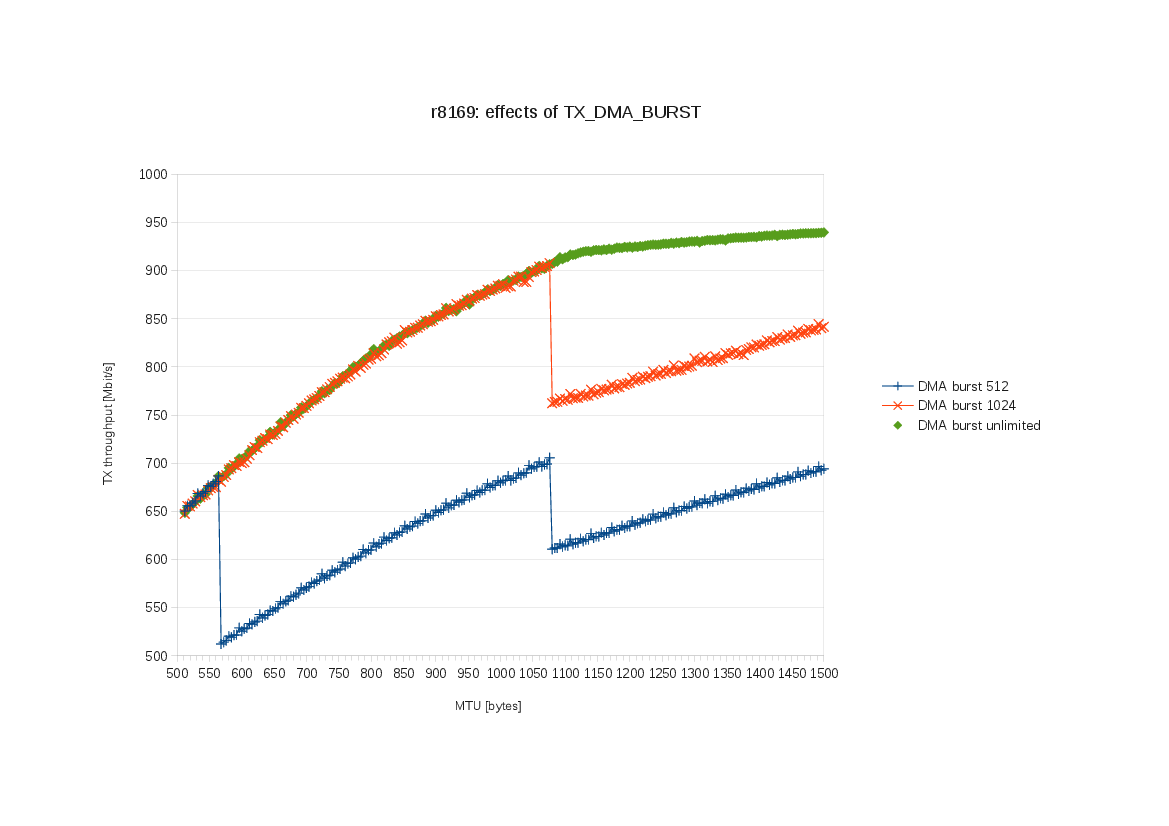
commit 57d2aa00dc upstream.
The issue below was found in 2.6.34-rt rather than mainline rt
kernel, but the issue still exists upstream as well.
So please let me describe how it was noticed on 2.6.34-rt:
On this version, each softirq has its own thread, it means there
is at least one RT FIFO task per cpu. The priority of these
tasks is set to 49 by default. If user launches an RT FIFO task
with priority lower than 49 of softirq RT tasks, it's possible
there are two RT FIFO tasks enqueued one cpu runqueue at one
moment. By current strategy of balancing RT tasks, when it comes
to RT tasks, we really need to put them off to a CPU that they
can run on as soon as possible. Even if it means a bit of cache
line flushing, we want RT tasks to be run with the least latency.
When the user RT FIFO task which just launched before is
running, the sched timer tick of the current cpu happens. In this
tick period, the timeout value of the user RT task will be
updated once. Subsequently, we try to wake up one softirq RT
task on its local cpu. As the priority of current user RT task
is lower than the softirq RT task, the current task will be
preempted by the higher priority softirq RT task. Before
preemption, we check to see if current can readily move to a
different cpu. If so, we will reschedule to allow the RT push logic
to try to move current somewhere else. Whenever the woken
softirq RT task runs, it first tries to migrate the user FIFO RT
task over to a cpu that is running a task of lesser priority. If
migration is done, it will send a reschedule request to the found
cpu by IPI interrupt. Once the target cpu responds the IPI
interrupt, it will pick the migrated user RT task to preempt its
current task. When the user RT task is running on the new cpu,
the sched timer tick of the cpu fires. So it will tick the user
RT task again. This also means the RT task timeout value will be
updated again. As the migration may be done in one tick period,
it means the user RT task timeout value will be updated twice
within one tick.
If we set a limit on the amount of cpu time for the user RT task
by setrlimit(RLIMIT_RTTIME), the SIGXCPU signal should be posted
upon reaching the soft limit.
But exactly when the SIGXCPU signal should be sent depends on the
RT task timeout value. In fact the timeout mechanism of sending
the SIGXCPU signal assumes the RT task timeout is increased once
every tick.
However, currently the timeout value may be added twice per
tick. So it results in the SIGXCPU signal being sent earlier
than expected.
To solve this issue, we prevent the timeout value from increasing
twice within one tick time by remembering the jiffies value of
last updating the timeout. As long as the RT task's jiffies is
different with the global jiffies value, we allow its timeout to
be updated.
Signed-off-by: Ying Xue <ying.xue@windriver.com>
Signed-off-by: Fan Du <fan.du@windriver.com>
Reviewed-by: Yong Zhang <yong.zhang0@gmail.com>
Acked-by: Steven Rostedt <rostedt@goodmis.org>
Cc: <peterz@infradead.org>
Link: http://lkml.kernel.org/r/1342508623-2887-1-git-send-email-ying.xue@windriver.com
Signed-off-by: Ingo Molnar <mingo@kernel.org>
[ lizf: backported to 3.4: adjust context ]
Signed-off-by: Li Zefan <lizefan@huawei.com>
[bwh: Backported to 3.2: adjust filename]
Signed-off-by: Ben Hutchings <ben@decadent.org.uk>
commit a4c96ae319 upstream.
migrate_tasks() uses _pick_next_task_rt() to get tasks from the
real-time runqueues to be migrated. When rt_rq is throttled
_pick_next_task_rt() won't return anything, in which case
migrate_tasks() can't move all threads over and gets stuck in an
infinite loop.
Instead unthrottle rt runqueues before migrating tasks.
Additionally: move unthrottle_offline_cfs_rqs() to rq_offline_fair()
Signed-off-by: Peter Boonstoppel <pboonstoppel@nvidia.com>
Signed-off-by: Peter Zijlstra <a.p.zijlstra@chello.nl>
Cc: Paul Turner <pjt@google.com>
Link: http://lkml.kernel.org/r/5FBF8E85CA34454794F0F7ECBA79798F379D3648B7@HQMAIL04.nvidia.com
Signed-off-by: Ingo Molnar <mingo@kernel.org>
[ lizf: backported to 3.4: adjust context ]
Signed-off-by: Li Zefan <lizefan@huawei.com>
[bwh: Backported to 3.2:
- Adjust filenames
- unthrottle_offline_cfs_rqs() is already static, but defined in sched.c
after including sched_fair.c, so add forward declaration
- unthrottle_offline_cfs_rqs() also needs to be defined for all CONFIG_SMP
configurations now]
Signed-off-by: Ben Hutchings <ben@decadent.org.uk>
commit 454c79999f upstream.
task_tick_rt() has an optimization to only reschedule SCHED_RR tasks
if they were the only element on their rq. However, with cgroups
a SCHED_RR task could be the only element on its per-cgroup rq but
still be competing with other SCHED_RR tasks in its parent's
cgroup. In this case, the SCHED_RR task in the child cgroup would
never yield at the end of its timeslice. If the child cgroup
rt_runtime_us was the same as the parent cgroup rt_runtime_us,
the task in the parent cgroup would starve completely.
Modify task_tick_rt() to check that the task is the only task on its
rq, and that the each of the scheduling entities of its ancestors
is also the only entity on its rq.
Signed-off-by: Colin Cross <ccross@android.com>
Signed-off-by: Peter Zijlstra <a.p.zijlstra@chello.nl>
Link: http://lkml.kernel.org/r/1337229266-15798-1-git-send-email-ccross@android.com
Signed-off-by: Ingo Molnar <mingo@kernel.org>
[bwh: Backported to 3.2: adjust filename]
Signed-off-by: Ben Hutchings <ben@decadent.org.uk>
commit 27c73ae759 upstream.
Commit 7cb2ef56e6 ("mm: fix aio performance regression for database
caused by THP") can cause dereference of a dangling pointer if
split_huge_page runs during PageHuge() if there are updates to the
tail_page->private field.
Also it is repeating compound_head twice for hugetlbfs and it is running
compound_head+compound_trans_head for THP when a single one is needed in
both cases.
The new code within the PageSlab() check doesn't need to verify that the
THP page size is never bigger than the smallest hugetlbfs page size, to
avoid memory corruption.
A longstanding theoretical race condition was found while fixing the
above (see the change right after the skip_unlock label, that is
relevant for the compound_lock path too).
By re-establishing the _mapcount tail refcounting for all compound
pages, this also fixes the below problem:
echo 0 >/sys/kernel/mm/hugepages/hugepages-2048kB/nr_hugepages
BUG: Bad page state in process bash pfn:59a01
page:ffffea000139b038 count:0 mapcount:10 mapping: (null) index:0x0
page flags: 0x1c00000000008000(tail)
Modules linked in:
CPU: 6 PID: 2018 Comm: bash Not tainted 3.12.0+ #25
Hardware name: Bochs Bochs, BIOS Bochs 01/01/2011
Call Trace:
dump_stack+0x55/0x76
bad_page+0xd5/0x130
free_pages_prepare+0x213/0x280
__free_pages+0x36/0x80
update_and_free_page+0xc1/0xd0
free_pool_huge_page+0xc2/0xe0
set_max_huge_pages.part.58+0x14c/0x220
nr_hugepages_store_common.isra.60+0xd0/0xf0
nr_hugepages_store+0x13/0x20
kobj_attr_store+0xf/0x20
sysfs_write_file+0x189/0x1e0
vfs_write+0xc5/0x1f0
SyS_write+0x55/0xb0
system_call_fastpath+0x16/0x1b
Signed-off-by: Khalid Aziz <khalid.aziz@oracle.com>
Signed-off-by: Andrea Arcangeli <aarcange@redhat.com>
Tested-by: Khalid Aziz <khalid.aziz@oracle.com>
Cc: Pravin Shelar <pshelar@nicira.com>
Cc: Greg Kroah-Hartman <gregkh@linuxfoundation.org>
Cc: Ben Hutchings <bhutchings@solarflare.com>
Cc: Christoph Lameter <cl@linux.com>
Cc: Johannes Weiner <jweiner@redhat.com>
Cc: Mel Gorman <mgorman@suse.de>
Cc: Rik van Riel <riel@redhat.com>
Cc: Andi Kleen <andi@firstfloor.org>
Cc: Minchan Kim <minchan@kernel.org>
Signed-off-by: Andrew Morton <akpm@linux-foundation.org>
Signed-off-by: Linus Torvalds <torvalds@linux-foundation.org>
[Khalid Aziz: Backported to 3.4]
Signed-off-by: Ben Hutchings <ben@decadent.org.uk>
commit 7cb2ef56e6 upstream.
I am working with a tool that simulates oracle database I/O workload.
This tool (orion to be specific -
<http://docs.oracle.com/cd/E11882_01/server.112/e16638/iodesign.htm#autoId24>)
allocates hugetlbfs pages using shmget() with SHM_HUGETLB flag. It then
does aio into these pages from flash disks using various common block
sizes used by database. I am looking at performance with two of the most
common block sizes - 1M and 64K. aio performance with these two block
sizes plunged after Transparent HugePages was introduced in the kernel.
Here are performance numbers:
pre-THP 2.6.39 3.11-rc5
1M read 8384 MB/s 5629 MB/s 6501 MB/s
64K read 7867 MB/s 4576 MB/s 4251 MB/s
I have narrowed the performance impact down to the overheads introduced by
THP in __get_page_tail() and put_compound_page() routines. perf top shows
>40% of cycles being spent in these two routines. Every time direct I/O
to hugetlbfs pages starts, kernel calls get_page() to grab a reference to
the pages and calls put_page() when I/O completes to put the reference
away. THP introduced significant amount of locking overhead to get_page()
and put_page() when dealing with compound pages because hugepages can be
split underneath get_page() and put_page(). It added this overhead
irrespective of whether it is dealing with hugetlbfs pages or transparent
hugepages. This resulted in 20%-45% drop in aio performance when using
hugetlbfs pages.
Since hugetlbfs pages can not be split, there is no reason to go through
all the locking overhead for these pages from what I can see. I added
code to __get_page_tail() and put_compound_page() to bypass all the
locking code when working with hugetlbfs pages. This improved performance
significantly. Performance numbers with this patch:
pre-THP 3.11-rc5 3.11-rc5 + Patch
1M read 8384 MB/s 6501 MB/s 8371 MB/s
64K read 7867 MB/s 4251 MB/s 6510 MB/s
Performance with 64K read is still lower than what it was before THP, but
still a 53% improvement. It does mean there is more work to be done but I
will take a 53% improvement for now.
Please take a look at the following patch and let me know if it looks
reasonable.
[akpm@linux-foundation.org: tweak comments]
Signed-off-by: Khalid Aziz <khalid.aziz@oracle.com>
Cc: Pravin B Shelar <pshelar@nicira.com>
Cc: Christoph Lameter <cl@linux.com>
Cc: Andrea Arcangeli <aarcange@redhat.com>
Cc: Johannes Weiner <hannes@cmpxchg.org>
Cc: Mel Gorman <mel@csn.ul.ie>
Cc: Rik van Riel <riel@redhat.com>
Cc: Minchan Kim <minchan@kernel.org>
Cc: Andi Kleen <andi@firstfloor.org>
Signed-off-by: Andrew Morton <akpm@linux-foundation.org>
Signed-off-by: Linus Torvalds <torvalds@linux-foundation.org>
Signed-off-by: Greg Kroah-Hartman <gregkh@linuxfoundation.org>
Signed-off-by: Ben Hutchings <ben@decadent.org.uk>
commit bee09ed91c upstream.
On AMD family 10h we see following error messages while waking up from
S3 for all non-boot CPUs leading to a failed IBS initialization:
Enabling non-boot CPUs ...
smpboot: Booting Node 0 Processor 1 APIC 0x1
[Firmware Bug]: cpu 1, try to use APIC500 (LVT offset 0) for vector 0x400, but the register is already in use for vector 0xf9 on another cpu
perf: IBS APIC setup failed on cpu #1
process: Switch to broadcast mode on CPU1
CPU1 is up
...
ACPI: Waking up from system sleep state S3
Reason for this is that during suspend the LVT offset for the IBS
vector gets lost and needs to be reinialized while resuming.
The offset is read from the IBSCTL msr. On family 10h the offset needs
to be 1 as offset 0 is used for the MCE threshold interrupt, but
firmware assings it for IBS to 0 too. The kernel needs to reprogram
the vector. The msr is a readonly node msr, but a new value can be
written via pci config space access. The reinitialization is
implemented for family 10h in setup_ibs_ctl() which is forced during
IBS setup.
This patch fixes IBS setup after waking up from S3 by adding
resume/supend hooks for the boot cpu which does the offset
reinitialization.
Marking it as stable to let distros pick up this fix.
Signed-off-by: Robert Richter <rric@kernel.org>
Signed-off-by: Peter Zijlstra <peterz@infradead.org>
Cc: Linus Torvalds <torvalds@linux-foundation.org>
Link: http://lkml.kernel.org/r/1389797849-5565-1-git-send-email-rric.net@gmail.com
Signed-off-by: Ingo Molnar <mingo@kernel.org>
[bwh: Backported to 3.2: adjust context]
Signed-off-by: Ben Hutchings <ben@decadent.org.uk>
commit 70f2fe3a26 upstream.
There is a bug in the function nilfs_segctor_collect, which results in
active data being written to a segment, that is marked as clean. It is
possible, that this segment is selected for a later segment
construction, whereby the old data is overwritten.
The problem shows itself with the following kernel log message:
nilfs_sufile_do_cancel_free: segment 6533 must be clean
Usually a few hours later the file system gets corrupted:
NILFS: bad btree node (blocknr=8748107): level = 0, flags = 0x0, nchildren = 0
NILFS error (device sdc1): nilfs_bmap_last_key: broken bmap (inode number=114660)
The issue can be reproduced with a file system that is nearly full and
with the cleaner running, while some IO intensive task is running.
Although it is quite hard to reproduce.
This is what happens:
1. The cleaner starts the segment construction
2. nilfs_segctor_collect is called
3. sc_stage is on NILFS_ST_SUFILE and segments are freed
4. sc_stage is on NILFS_ST_DAT current segment is full
5. nilfs_segctor_extend_segments is called, which
allocates a new segment
6. The new segment is one of the segments freed in step 3
7. nilfs_sufile_cancel_freev is called and produces an error message
8. Loop around and the collection starts again
9. sc_stage is on NILFS_ST_SUFILE and segments are freed
including the newly allocated segment, which will contain active
data and can be allocated at a later time
10. A few hours later another segment construction allocates the
segment and causes file system corruption
This can be prevented by simply reordering the statements. If
nilfs_sufile_cancel_freev is called before nilfs_segctor_extend_segments
the freed segments are marked as dirty and cannot be allocated any more.
Signed-off-by: Andreas Rohner <andreas.rohner@gmx.net>
Reviewed-by: Ryusuke Konishi <konishi.ryusuke@lab.ntt.co.jp>
Tested-by: Andreas Rohner <andreas.rohner@gmx.net>
Signed-off-by: Ryusuke Konishi <konishi.ryusuke@lab.ntt.co.jp>
Signed-off-by: Andrew Morton <akpm@linux-foundation.org>
Signed-off-by: Linus Torvalds <torvalds@linux-foundation.org>
Signed-off-by: Ben Hutchings <ben@decadent.org.uk>
commit 3f9aec7610 upstream.
When the core number exceeds 9, the size of the buffer storing the
alarm attribute name is insufficient and the attribute name is
truncated. This causes libsensors to skip these attributes as the
truncated name is not recognized.
Reported-by: Andreas Hollmann <hollmann@in.tum.de>
Signed-off-by: Jean Delvare <khali@linux-fr.org>
Signed-off-by: Guenter Roeck <linux@roeck-us.net>
Signed-off-by: Ben Hutchings <ben@decadent.org.uk>
commit e8b8491585 upstream.
commit e875ecea26
md/raid10 record bad blocks as needed during recovery.
added code to the "cannot recover this block" path to record a bad
block rather than fail the whole recovery.
Unfortunately this new case was placed *after* r10bio was freed rather
than *before*, yet it still uses r10bio.
This is will crash with a null dereference.
So move the freeing of r10bio down where it is safe.
Fixes: e875ecea26
Reported-by: Damian Nowak <spam@nowaker.net>
URL: https://bugzilla.kernel.org/show_bug.cgi?id=68181
Signed-off-by: NeilBrown <neilb@suse.de>
Signed-off-by: Ben Hutchings <ben@decadent.org.uk>
commit b50c259e25 upstream.
If we discover a bad block when reading we split the request and
potentially read some of it from a different device.
The code path of this has two bugs in RAID10.
1/ we get a spin_lock with _irq, but unlock without _irq!!
2/ The calculation of 'sectors_handled' is wrong, as can be clearly
seen by comparison with raid1.c
This leads to at least 2 warnings and a probable crash is a RAID10
ever had known bad blocks.
Fixes: 856e08e237
Reported-by: Damian Nowak <spam@nowaker.net>
URL: https://bugzilla.kernel.org/show_bug.cgi?id=68181
Signed-off-by: NeilBrown <neilb@suse.de>
Signed-off-by: Ben Hutchings <ben@decadent.org.uk>
commit 1cc03eb932 upstream.
commit 5d8c71f9e5
md: raid5 crash during degradation
Fixed a crash in an overly simplistic way which could leave
R5_WriteError or R5_MadeGood set in the stripe cache for devices
for which it is no longer relevant.
When those devices are removed and spares added the flags are still
set and can cause incorrect behaviour.
commit 14a75d3e07
md/raid5: preferentially read from replacement device if possible.
Fixed the same bug if a more effective way, so we can now revert
the original commit.
Reported-and-tested-by: Alexander Lyakas <alex.bolshoy@gmail.com>
Fixes: 5d8c71f9e5
Signed-off-by: NeilBrown <neilb@suse.de>
[bwh: Backported to 3.2: adjust context]
Signed-off-by: Ben Hutchings <ben@decadent.org.uk>
commit 3dc91d4338 upstream.
While running stress tests on adding and deleting ftrace instances I hit
this bug:
BUG: unable to handle kernel NULL pointer dereference at 0000000000000020
IP: selinux_inode_permission+0x85/0x160
PGD 63681067 PUD 7ddbe067 PMD 0
Oops: 0000 [#1] PREEMPT
CPU: 0 PID: 5634 Comm: ftrace-test-mki Not tainted 3.13.0-rc4-test-00033-gd2a6dde-dirty #20
Hardware name: /DG965MQ, BIOS MQ96510J.86A.0372.2006.0605.1717 06/05/2006
task: ffff880078375800 ti: ffff88007ddb0000 task.ti: ffff88007ddb0000
RIP: 0010:[<ffffffff812d8bc5>] [<ffffffff812d8bc5>] selinux_inode_permission+0x85/0x160
RSP: 0018:ffff88007ddb1c48 EFLAGS: 00010246
RAX: 0000000000000000 RBX: 0000000000800000 RCX: ffff88006dd43840
RDX: 0000000000000001 RSI: 0000000000000081 RDI: ffff88006ee46000
RBP: ffff88007ddb1c88 R08: 0000000000000000 R09: ffff88007ddb1c54
R10: 6e6576652f6f6f66 R11: 0000000000000003 R12: 0000000000000000
R13: 0000000000000081 R14: ffff88006ee46000 R15: 0000000000000000
FS: 00007f217b5b6700(0000) GS:ffffffff81e21000(0000) knlGS:0000000000000000
CS: 0010 DS: 0000 ES: 0000 CR0: 0000000080050033^M
CR2: 0000000000000020 CR3: 000000006a0fe000 CR4: 00000000000007f0
Call Trace:
security_inode_permission+0x1c/0x30
__inode_permission+0x41/0xa0
inode_permission+0x18/0x50
link_path_walk+0x66/0x920
path_openat+0xa6/0x6c0
do_filp_open+0x43/0xa0
do_sys_open+0x146/0x240
SyS_open+0x1e/0x20
system_call_fastpath+0x16/0x1b
Code: 84 a1 00 00 00 81 e3 00 20 00 00 89 d8 83 c8 02 40 f6 c6 04 0f 45 d8 40 f6 c6 08 74 71 80 cf 02 49 8b 46 38 4c 8d 4d cc 45 31 c0 <0f> b7 50 20 8b 70 1c 48 8b 41 70 89 d9 8b 78 04 e8 36 cf ff ff
RIP selinux_inode_permission+0x85/0x160
CR2: 0000000000000020
Investigating, I found that the inode->i_security was NULL, and the
dereference of it caused the oops.
in selinux_inode_permission():
isec = inode->i_security;
rc = avc_has_perm_noaudit(sid, isec->sid, isec->sclass, perms, 0, &avd);
Note, the crash came from stressing the deletion and reading of debugfs
files. I was not able to recreate this via normal files. But I'm not
sure they are safe. It may just be that the race window is much harder
to hit.
What seems to have happened (and what I have traced), is the file is
being opened at the same time the file or directory is being deleted.
As the dentry and inode locks are not held during the path walk, nor is
the inodes ref counts being incremented, there is nothing saving these
structures from being discarded except for an rcu_read_lock().
The rcu_read_lock() protects against freeing of the inode, but it does
not protect freeing of the inode_security_struct. Now if the freeing of
the i_security happens with a call_rcu(), and the i_security field of
the inode is not changed (it gets freed as the inode gets freed) then
there will be no issue here. (Linus Torvalds suggested not setting the
field to NULL such that we do not need to check if it is NULL in the
permission check).
Note, this is a hack, but it fixes the problem at hand. A real fix is
to restructure the destroy_inode() to call all the destructor handlers
from the RCU callback. But that is a major job to do, and requires a
lot of work. For now, we just band-aid this bug with this fix (it
works), and work on a more maintainable solution in the future.
Link: http://lkml.kernel.org/r/20140109101932.0508dec7@gandalf.local.home
Link: http://lkml.kernel.org/r/20140109182756.17abaaa8@gandalf.local.home
Signed-off-by: Steven Rostedt <rostedt@goodmis.org>
Signed-off-by: Linus Torvalds <torvalds@linux-foundation.org>
Signed-off-by: Ben Hutchings <ben@decadent.org.uk>
commit 29c350bf28 upstream.
The array was missing the final entry for the undefined instruction
exception handler; this commit adds it.
Signed-off-by: Russell King <rmk+kernel@arm.linux.org.uk>
Signed-off-by: Ben Hutchings <ben@decadent.org.uk>
commit e098f5cbe9 upstream.
This patch adds support for the PCI ID provided by the Marvell 88SE9170
SATA controller.
Signed-off-by: Simon Guinot <sguinot@lacie.com>
Signed-off-by: Tejun Heo <tj@kernel.org>
Signed-off-by: Ben Hutchings <ben@decadent.org.uk>
This was added as part of commit 3d567e0e29 ('tg3: Set 10_100_ONLY
flag for additional 10/100 Mbps devices') upstream and is needed by
the following patch to ahci.
Signed-off-by: Ben Hutchings <ben@decadent.org.uk>
commit fcce9a35f8 upstream.
A third possible PCI ID, as personally observed, and found in the
pci.ids list.
Signed-off-by: George Spelvin <linux@horizon.com>
Signed-off-by: Tejun Heo <tj@kernel.org>
Signed-off-by: Ben Hutchings <ben@decadent.org.uk>
commit 90ff5d688e upstream.
In EXCEPTION_PROLOG_COMMON() we check to see if the stack pointer (r1)
is valid when coming from the kernel. If it's not valid, we die but
with a nice oops message.
Currently we allocate a stack frame (subtract INT_FRAME_SIZE) before we
check to see if the stack pointer is negative. Unfortunately, this
won't detect a bad stack where r1 is less than INT_FRAME_SIZE.
This patch fixes the check to compare the modified r1 with
-INT_FRAME_SIZE. With this, bad kernel stack pointers (including NULL
pointers) are correctly detected again.
Kudos to Paulus for finding this.
Signed-off-by: Michael Neuling <mikey@neuling.org>
Signed-off-by: Benjamin Herrenschmidt <benh@kernel.crashing.org>
Signed-off-by: Ben Hutchings <ben@decadent.org.uk>
commit 4ff859fe1d upstream.
The clockevents code was being told that the footbridge clock event
device ticks at 16x the rate which it actually does. This leads to
timekeeping problems since it allows the clocksource to wrap before
the kernel notices. Fix this by using the correct clock.
Fixes: 4e8d76373c ("ARM: footbridge: convert to clockevents/clocksource")
Signed-off-by: Russell King <rmk+kernel@arm.linux.org.uk>
[bwh: Backported to 3.2: fold in the relevant parts of commit 838a2ae80a
('ARM: use clockevents_config_and_register() where possible')]
Signed-off-by: Ben Hutchings <ben@decadent.org.uk>
commit c0c1439541 upstream.
selinux_setprocattr() does ptrace_parent(p) under task_lock(p),
but task_struct->alloc_lock doesn't pin ->parent or ->ptrace,
this looks confusing and triggers the "suspicious RCU usage"
warning because ptrace_parent() does rcu_dereference_check().
And in theory this is wrong, spin_lock()->preempt_disable()
doesn't necessarily imply rcu_read_lock() we need to access
the ->parent.
Reported-by: Evan McNabb <emcnabb@redhat.com>
Signed-off-by: Oleg Nesterov <oleg@redhat.com>
Signed-off-by: Paul Moore <pmoore@redhat.com>
Signed-off-by: Ben Hutchings <ben@decadent.org.uk>
commit 46d01d6322 upstream.
Fix a broken networking check. Return an error if peer recv fails. If
secmark is active and the packet recv succeeds the peer recv error is
ignored.
Signed-off-by: Chad Hanson <chanson@trustedcs.com>
Signed-off-by: Paul Moore <pmoore@redhat.com>
Signed-off-by: Ben Hutchings <ben@decadent.org.uk>
commit f5a44db5d2 upstream.
The missing casts can cause the high 64-bits of the physical blocks to
be lost. Set up new macros which allows us to make sure the right
thing happen, even if at some point we end up supporting larger
logical block numbers.
Thanks to the Emese Revfy and the PaX security team for reporting this
issue.
Reported-by: PaX Team <pageexec@freemail.hu>
Reported-by: Emese Revfy <re.emese@gmail.com>
Signed-off-by: "Theodore Ts'o" <tytso@mit.edu>
[bwh: Backported to 3.2:
- Adjust context
- Drop inapplicable change to ext4_ext_rm_leaf()]
Signed-off-by: Ben Hutchings <ben@decadent.org.uk>
commit 4263c86dca upstream.
Certain dm962x revisions contain an bug, where if a USB bulk transfer retry
(E.G. if bulk crc mismatch) happens right after a transfer with odd or
maxpacket length, the internal tx hardware fifo gets out of sync causing
the interface to stop working.
Work around it by adding up to 3 bytes of padding to ensure this situation
cannot trigger.
This workaround also means we never pass multiple-of-maxpacket size skb's
to usbnet, so the length adjustment to handle usbnet's padding of those can
be removed.
Reported-by: Joseph Chang <joseph_chang@davicom.com.tw>
Signed-off-by: Peter Korsgaard <peter@korsgaard.com>
Signed-off-by: David S. Miller <davem@davemloft.net>
Signed-off-by: Ben Hutchings <ben@decadent.org.uk>
commit 407900cfb5 upstream.
dm9620/dm9621a require room for 4 byte padding even in dm9601 (3 byte
header) mode.
Signed-off-by: Peter Korsgaard <peter@korsgaard.com>
Signed-off-by: David S. Miller <davem@davemloft.net>
Signed-off-by: Ben Hutchings <ben@decadent.org.uk>
commit 7787380336 upstream.
net_dma can cause data to be copied to a stale mapping if a
copy-on-write fault occurs during dma. The application sees missing
data.
The following trace is triggered by modifying the kernel to WARN if it
ever triggers copy-on-write on a page that is undergoing dma:
WARNING: CPU: 24 PID: 2529 at lib/dma-debug.c:485 debug_dma_assert_idle+0xd2/0x120()
ioatdma 0000:00:04.0: DMA-API: cpu touching an active dma mapped page [pfn=0x16bcd9]
Modules linked in: iTCO_wdt iTCO_vendor_support ioatdma lpc_ich pcspkr dca
CPU: 24 PID: 2529 Comm: linbug Tainted: G W 3.13.0-rc1+ #353
00000000000001e5 ffff88016f45f688 ffffffff81751041 ffff88017ab0ef70
ffff88016f45f6d8 ffff88016f45f6c8 ffffffff8104ed9c ffffffff810f3646
ffff8801768f4840 0000000000000282 ffff88016f6cca10 00007fa2bb699349
Call Trace:
[<ffffffff81751041>] dump_stack+0x46/0x58
[<ffffffff8104ed9c>] warn_slowpath_common+0x8c/0xc0
[<ffffffff810f3646>] ? ftrace_pid_func+0x26/0x30
[<ffffffff8104ee86>] warn_slowpath_fmt+0x46/0x50
[<ffffffff8139c062>] debug_dma_assert_idle+0xd2/0x120
[<ffffffff81154a40>] do_wp_page+0xd0/0x790
[<ffffffff811582ac>] handle_mm_fault+0x51c/0xde0
[<ffffffff813830b9>] ? copy_user_enhanced_fast_string+0x9/0x20
[<ffffffff8175fc2c>] __do_page_fault+0x19c/0x530
[<ffffffff8175c196>] ? _raw_spin_lock_bh+0x16/0x40
[<ffffffff810f3539>] ? trace_clock_local+0x9/0x10
[<ffffffff810fa1f4>] ? rb_reserve_next_event+0x64/0x310
[<ffffffffa0014c00>] ? ioat2_dma_prep_memcpy_lock+0x60/0x130 [ioatdma]
[<ffffffff8175ffce>] do_page_fault+0xe/0x10
[<ffffffff8175c862>] page_fault+0x22/0x30
[<ffffffff81643991>] ? __kfree_skb+0x51/0xd0
[<ffffffff813830b9>] ? copy_user_enhanced_fast_string+0x9/0x20
[<ffffffff81388ea2>] ? memcpy_toiovec+0x52/0xa0
[<ffffffff8164770f>] skb_copy_datagram_iovec+0x5f/0x2a0
[<ffffffff8169d0f4>] tcp_rcv_established+0x674/0x7f0
[<ffffffff816a68c5>] tcp_v4_do_rcv+0x2e5/0x4a0
[..]
---[ end trace e30e3b01191b7617 ]---
Mapped at:
[<ffffffff8139c169>] debug_dma_map_page+0xb9/0x160
[<ffffffff8142bf47>] dma_async_memcpy_pg_to_pg+0x127/0x210
[<ffffffff8142cce9>] dma_memcpy_pg_to_iovec+0x119/0x1f0
[<ffffffff81669d3c>] dma_skb_copy_datagram_iovec+0x11c/0x2b0
[<ffffffff8169d1ca>] tcp_rcv_established+0x74a/0x7f0:
...the problem is that the receive path falls back to cpu-copy in
several locations and this trace is just one of the areas. A few
options were considered to fix this:
1/ sync all dma whenever a cpu copy branch is taken
2/ modify the page fault handler to hold off while dma is in-flight
Option 1 adds yet more cpu overhead to an "offload" that struggles to compete
with cpu-copy. Option 2 adds checks for behavior that is already documented as
broken when using get_user_pages(). At a minimum a debug mode is warranted to
catch and flag these violations of the dma-api vs get_user_pages().
Thanks to David for his reproducer.
Cc: Dave Jiang <dave.jiang@intel.com>
Cc: Vinod Koul <vinod.koul@intel.com>
Cc: Alexander Duyck <alexander.h.duyck@intel.com>
Reported-by: David Whipple <whipple@securedatainnovations.ch>
Acked-by: David S. Miller <davem@davemloft.net>
Signed-off-by: Dan Williams <dan.j.williams@intel.com>
Signed-off-by: Ben Hutchings <ben@decadent.org.uk>
commit f447ef4a56 upstream.
If a user calls 'cpupower set --perf-bias 15', the process will end with
a SIGSEGV in libc because cpupower-set passes a NULL optarg to the atoi
call. This is because the getopt_long structure currently has all of
the options as having an optional_argument when they really have a
required argument. We change the structure to use required_argument to
match the short options and it resolves the issue.
This fixes https://bugzilla.redhat.com/show_bug.cgi?id=1000439
Signed-off-by: Josh Boyer <jwboyer@fedoraproject.org>
Cc: Dominik Brodowski <linux@dominikbrodowski.net>
Cc: Thomas Renninger <trenn@suse.de>
Signed-off-by: Linus Torvalds <torvalds@linux-foundation.org>
Signed-off-by: Ben Hutchings <ben@decadent.org.uk>
commit 73f0b56a1f upstream.
This patch adds a driver workaround for a HW issue.
A race condition in the HW results in missing interrupts,
which can be avoided by a read/write with the ISR register.
All chips in the AR9002 series are affected by this bug - AR9003
and above do not have this problem.
Cc: Felix Fietkau <nbd@openwrt.org>
Signed-off-by: Sujith Manoharan <c_manoha@qca.qualcomm.com>
Signed-off-by: John W. Linville <linville@tuxdriver.com>
Signed-off-by: Ben Hutchings <ben@decadent.org.uk>
commit a885b3ccc7 upstream.
The GMCH_CTRL register (or MGCC in the spec) is at a different address
on Sandybridge, and the address to which we currently write to is
undefined. These stray writes appear to upset (hard hang) my Ivybridge
machine whilst it is in UEFI mode.
Note that the register is still marked as locked RO on Sandybridge, so
vgaarb is still dysfunctional.
Signed-off-by: Chris Wilson <chris@chris-wilson.co.uk>
Cc: Jani Nikula <jani.nikula@linux.intel.com>
Cc: Ville Syrjälä <ville.syrjala@linux.intel.com>
Reviewed-by: Jani Nikula <jani.nikula@intel.com>
Signed-off-by: Daniel Vetter <daniel.vetter@ffwll.ch>
[bwh: Backported to 3.2: add definition of SNB_GMCH_CTRL in i915_reg.h]
Signed-off-by: Ben Hutchings <ben@decadent.org.uk>
commit ed697e1aaf upstream.
When the process is sleeping at the SNDRV_PCM_STATE_PAUSED
state from the wait_for_avail function, the sleep process will be woken by
timeout(10 seconds). Even if the sleep process wake up by timeout, by this
patch, the process will continue with sleep and wait for the other state.
Signed-off-by: JongHo Kim <furmuwon@gmail.com>
Signed-off-by: Takashi Iwai <tiwai@suse.de>
Signed-off-by: Ben Hutchings <ben@decadent.org.uk>
commit 757dfcaa41 upstream.
This patch touches the RT group scheduling case.
Functions inc_rt_prio_smp() and dec_rt_prio_smp() change (global) rq's
priority, while rt_rq passed to them may be not the top-level rt_rq.
This is wrong, because changing of priority on a child level does not
guarantee that the priority is the highest all over the rq. So, this
leak makes RT balancing unusable.
The short example: the task having the highest priority among all rq's
RT tasks (no one other task has the same priority) are waking on a
throttle rt_rq. The rq's cpupri is set to the task's priority
equivalent, but real rq->rt.highest_prio.curr is less.
The patch below fixes the problem.
Signed-off-by: Kirill Tkhai <tkhai@yandex.ru>
Signed-off-by: Peter Zijlstra <peterz@infradead.org>
CC: Steven Rostedt <rostedt@goodmis.org>
Link: http://lkml.kernel.org/r/49231385567953@web4m.yandex.ru
Signed-off-by: Ingo Molnar <mingo@kernel.org>
[bwh: Backported to 3.2: adjust filename]
Signed-off-by: Ben Hutchings <ben@decadent.org.uk>
commit d386735588 upstream.
VMAs covering a bo but that didn't start at the same address space offset as
the bo they were mapping were incorrectly generating SEGFAULT errors in
the fault handler.
Reported-by: Joseph Dolinak <kanilo2@yahoo.com>
Signed-off-by: Thomas Hellstrom <thellstrom@vmware.com>
Reviewed-by: Jakob Bornecrantz <jakob@vmware.com>
[bwh: Backported to 3.2: drm_vma_node_start() is open-coded;
vma_pages() was open-coded]
Signed-off-by: Ben Hutchings <ben@decadent.org.uk>
commit c4602c1c81 upstream.
Ftrace currently initializes only the online CPUs. This implementation has
two problems:
- If we online a CPU after we enable the function profile, and then run the
test, we will lose the trace information on that CPU.
Steps to reproduce:
# echo 0 > /sys/devices/system/cpu/cpu1/online
# cd <debugfs>/tracing/
# echo <some function name> >> set_ftrace_filter
# echo 1 > function_profile_enabled
# echo 1 > /sys/devices/system/cpu/cpu1/online
# run test
- If we offline a CPU before we enable the function profile, we will not clear
the trace information when we enable the function profile. It will trouble
the users.
Steps to reproduce:
# cd <debugfs>/tracing/
# echo <some function name> >> set_ftrace_filter
# echo 1 > function_profile_enabled
# run test
# cat trace_stat/function*
# echo 0 > /sys/devices/system/cpu/cpu1/online
# echo 0 > function_profile_enabled
# echo 1 > function_profile_enabled
# cat trace_stat/function*
# run test
# cat trace_stat/function*
So it is better that we initialize the ftrace profiler for each possible cpu
every time we enable the function profile instead of just the online ones.
Link: http://lkml.kernel.org/r/1387178401-10619-1-git-send-email-miaox@cn.fujitsu.com
Signed-off-by: Miao Xie <miaox@cn.fujitsu.com>
Signed-off-by: Steven Rostedt <rostedt@goodmis.org>
Signed-off-by: Ben Hutchings <ben@decadent.org.uk>
commit bd02cd2549 upstream.
Evan Huus found (by fuzzing in wireshark) that the radiotap
iterator code can access beyond the length of the buffer if
the first bitmap claims an extension but then there's no
data at all. Fix this.
Reported-by: Evan Huus <eapache@gmail.com>
Signed-off-by: Johannes Berg <johannes.berg@intel.com>
Signed-off-by: Ben Hutchings <ben@decadent.org.uk>
commit 4cc629b7a2 upstream.
We should be writing bits here but instead we're writing the
numbers that correspond to the bits we want to write. Fix it by
wrapping the numbers in the BIT() macro. This fixes gpios acting
as interrupts.
Signed-off-by: Stephen Boyd <sboyd@codeaurora.org>
Signed-off-by: Linus Walleij <linus.walleij@linaro.org>
Signed-off-by: Ben Hutchings <ben@decadent.org.uk>
commit 693e0cb052 upstream.
While enabling these machines, we found we would sometimes lose an
interrupt if we change hardware volume during playback, and that
disabling msi fixed this issue. (Losing the interrupt caused underruns
and crackling audio, as the one second timeout is usually bigger than
the period size.)
The machines were all machines from HP, running AMD Hudson controller,
and Realtek ALC282 codec.
BugLink: https://bugs.launchpad.net/bugs/1260225
Signed-off-by: David Henningsson <david.henningsson@canonical.com>
Signed-off-by: Takashi Iwai <tiwai@suse.de>
[bwh: Backported to 3.2: adjust context]
Signed-off-by: Ben Hutchings <ben@decadent.org.uk>
commit 8333f0fe13 upstream.
Some RS690 boards with 64MB of sideport memory show up as
having 128MB sideport + 256MB of UMA. In this case,
just skip the sideport memory and use UMA. This fixes
rendering corruption and should improve performance.
bug:
https://bugs.freedesktop.org/show_bug.cgi?id=35457
Signed-off-by: Alex Deucher <alexander.deucher@amd.com>
[bwh: Backported to 3.2: adjust context]
Signed-off-by: Ben Hutchings <ben@decadent.org.uk>
commit 4454b66cb6 upstream.
This patch changes special case handling for ISCSI_OP_SCSI_CMD
where an initiator sends a zero length Expected Data Transfer
Length (EDTL), but still sets the WRITE and/or READ flag bits
when no payload transfer is requested.
Many, many moons ago two special cases where added for an ancient
version of ESX that has long since been fixed, so instead of adding
a new special case for the reported bug with a Broadcom 57800 NIC,
go ahead and always strip off the incorrect WRITE + READ flag bits.
Also, avoid sending a reject here, as RFC-3720 does mandate this
case be handled without protocol error.
Reported-by: Witold Bazakbal <865perl@wp.pl>
Tested-by: Witold Bazakbal <865perl@wp.pl>
Signed-off-by: Nicholas Bellinger <nab@linux-iscsi.org>
[bwh: Backported to 3.2: adjust context]
Signed-off-by: Ben Hutchings <ben@decadent.org.uk>
commit 6962d914f3 upstream.
We've got regression reports that my previous fix for spurious wakeups
after S5 on HP Haswell machines leads to the automatic reboot at
shutdown on some machines. It turned out that the fix for one side
triggers another BIOS bug in other side. So, it's exclusive.
Since the original S5 wakeups have been confirmed only on HP machines,
it'd be safer to apply it only to limited machines. As a wild guess,
limiting to machines with HP PCI SSID should suffice.
This patch should be backported to kernels as old as 3.12, that
contain the commit 638298dc66 "xhci: Fix
spurious wakeups after S5 on Haswell".
Bugzilla: https://bugzilla.kernel.org/show_bug.cgi?id=66171
Signed-off-by: Takashi Iwai <tiwai@suse.de>
Signed-off-by: Sarah Sharp <sarah.a.sharp@linux.intel.com>
Tested-by: <dashing.meng@gmail.com>
Reported-by: Niklas Schnelle <niklas@komani.de>
Reported-by: Giorgos <ganastasiouGR@gmail.com>
Reported-by: <art1@vhex.net>
Signed-off-by: Ben Hutchings <ben@decadent.org.uk>
commit 9105bb149b upstream.
That thing should be del_timer_sync(); consider what happens
if ext4_put_super() call of del_timer() happens to come just as it's
getting run on another CPU. Since that timer reschedules itself
to run next day, you are pretty much guaranteed that you'll end up
with kfree'd scheduled timer, with usual fun consequences. AFAICS,
that's -stable fodder all way back to 2010... [the second del_timer_sync()
is almost certainly not needed, but it doesn't hurt either]
Signed-off-by: Al Viro <viro@zeniv.linux.org.uk>
Signed-off-by: "Theodore Ts'o" <tytso@mit.edu>
[bwh: Backported to 3.2: adjust context]
Signed-off-by: Ben Hutchings <ben@decadent.org.uk>
commit df4e7ac0bb upstream.
ext2_quota_write() doesn't properly setup bh it passes to
ext2_get_block() and thus we hit assertion BUG_ON(maxblocks == 0) in
ext2_get_blocks() (or we could actually ask for mapping arbitrary number
of blocks depending on whatever value was on stack).
Fix ext2_quota_write() to properly fill in number of blocks to map.
Reviewed-by: "Theodore Ts'o" <tytso@mit.edu>
Reviewed-by: Christoph Hellwig <hch@lst.de>
Reported-by: Christoph Hellwig <hch@infradead.org>
Signed-off-by: Jan Kara <jack@suse.cz>
Signed-off-by: Ben Hutchings <ben@decadent.org.uk>
commit 5946d08937 upstream.
A corrupted ext4 may have out of order leaf extents, i.e.
extent: lblk 0--1023, len 1024, pblk 9217, flags: LEAF UNINIT
extent: lblk 1000--2047, len 1024, pblk 10241, flags: LEAF UNINIT
^^^^ overlap with previous extent
Reading such extent could hit BUG_ON() in ext4_es_cache_extent().
BUG_ON(end < lblk);
The problem is that __read_extent_tree_block() tries to cache holes as
well but assumes 'lblk' is greater than 'prev' and passes underflowed
length to ext4_es_cache_extent(). Fix it by checking for overlapping
extents in ext4_valid_extent_entries().
I hit this when fuzz testing ext4, and am able to reproduce it by
modifying the on-disk extent by hand.
Also add the check for (ee_block + len - 1) in ext4_valid_extent() to
make sure the value is not overflow.
Ran xfstests on patched ext4 and no regression.
Cc: Lukáš Czerner <lczerner@redhat.com>
Signed-off-by: Eryu Guan <guaneryu@gmail.com>
Signed-off-by: "Theodore Ts'o" <tytso@mit.edu>
Signed-off-by: Ben Hutchings <ben@decadent.org.uk>
commit ae1495b12d upstream.
While it's true that errors can only happen if there is a bug in
jbd2_journal_dirty_metadata(), if a bug does happen, we need to halt
the kernel or remount the file system read-only in order to avoid
further data loss. The ext4_journal_abort_handle() function doesn't
do any of this, and while it's likely that this call (since it doesn't
adjust refcounts) will likely result in the file system eventually
deadlocking since the current transaction will never be able to close,
it's much cleaner to call let ext4's error handling system deal with
this situation.
There's a separate bug here which is that if certain jbd2 errors
errors occur and file system is mounted errors=continue, the file
system will probably eventually end grind to a halt as described
above. But things have been this way in a long time, and usually when
we have these sorts of errors it's pretty much a disaster --- and
that's why the jbd2 layer aggressively retries memory allocations,
which is the most likely cause of these jbd2 errors.
Signed-off-by: "Theodore Ts'o" <tytso@mit.edu>
Reviewed-by: Jan Kara <jack@suse.cz>
[bwh: Backported to 3.2: drop logging of missing transaction debug data]
Signed-off-by: Ben Hutchings <ben@decadent.org.uk>
commit 87809942d3 upstream.
We've received multiple reports in Fedora via (BZ 907193)
that the Seagate Momentus SpinPoint M8 errors out when enabling AA:
[ 2.555905] ata2.00: failed to enable AA (error_mask=0x1)
[ 2.568482] ata2.00: failed to enable AA (error_mask=0x1)
Add the ATA_HORKAGE_BROKEN_FPDMA_AA for this specific harddisk.
Reported-by: Nicholas <arealityfarbetween@googlemail.com>
Signed-off-by: Michele Baldessari <michele@acksyn.org>
Tested-by: Nicholas <arealityfarbetween@googlemail.com>
Acked-by: Alan Cox <gnomes@lxorguk.ukuu.org.uk>
Signed-off-by: Tejun Heo <tj@kernel.org>
Signed-off-by: Ben Hutchings <ben@decadent.org.uk>
commit 84ed8a9905 upstream.
E.g. landisk_defconfig, which has CONFIG_NTFS_FS=m:
ERROR: "__ashrdi3" [fs/ntfs/ntfs.ko] undefined!
For "lib-y", if no symbols in a compilation unit are referenced by other
units, the compilation unit will not be included in vmlinux. This
breaks modules that do reference those symbols.
Use "obj-y" instead to fix this.
http://kisskb.ellerman.id.au/kisskb/buildresult/8838077/
This doesn't fix all cases. There are others, e.g. udivsi3.
This is also not limited to sh, many architectures handle this in the
same way.
A simple solution is to unconditionally include all helper functions.
A more complex solution is to make the choice of "lib-y" or "obj-y" depend
on CONFIG_MODULES:
obj-$(CONFIG_MODULES) += ...
lib-y($CONFIG_MODULES) += ...
Signed-off-by: Geert Uytterhoeven <geert@linux-m68k.org>
Cc: Paul Mundt <lethal@linux-sh.org>
Tested-by: Nobuhiro Iwamatsu <nobuhiro.iwamatsu.yj@renesas.com>
Reviewed-by: Nobuhiro Iwamatsu <nobuhiro.iwamatsu.yj@renesas.com>
Signed-off-by: Andrew Morton <akpm@linux-foundation.org>
Signed-off-by: Linus Torvalds <torvalds@linux-foundation.org>
Signed-off-by: Ben Hutchings <ben@decadent.org.uk>
commit eb1b8af33c upstream.
Aborted requests usually get cleared when the reply is received.
If MDS crashes, no reply will be received. So we need to cleanup
aborted requests when re-sending requests.
Signed-off-by: Yan, Zheng <zheng.z.yan@intel.com>
Reviewed-by: Greg Farnum <greg@inktank.com>
Signed-off-by: Sage Weil <sage@inktank.com>
Signed-off-by: Greg Kroah-Hartman <gregkh@linuxfoundation.org>
Signed-off-by: Ben Hutchings <ben@decadent.org.uk>
commit 2afc745f3e upstream.
This patch fixes the problem that get_unmapped_area() can return illegal
address and result in failing mmap(2) etc.
In case that the address higher than PAGE_SIZE is set to
/proc/sys/vm/mmap_min_addr, the address lower than mmap_min_addr can be
returned by get_unmapped_area(), even if you do not pass any virtual
address hint (i.e. the second argument).
This is because the current get_unmapped_area() code does not take into
account mmap_min_addr.
This leads to two actual problems as follows:
1. mmap(2) can fail with EPERM on the process without CAP_SYS_RAWIO,
although any illegal parameter is not passed.
2. The bottom-up search path after the top-down search might not work in
arch_get_unmapped_area_topdown().
Note: The first and third chunk of my patch, which changes "len" check,
are for more precise check using mmap_min_addr, and not for solving the
above problem.
[How to reproduce]
--- test.c -------------------------------------------------
#include <stdio.h>
#include <unistd.h>
#include <sys/mman.h>
#include <sys/errno.h>
int main(int argc, char *argv[])
{
void *ret = NULL, *last_map;
size_t pagesize = sysconf(_SC_PAGESIZE);
do {
last_map = ret;
ret = mmap(0, pagesize, PROT_NONE,
MAP_PRIVATE|MAP_ANONYMOUS, -1, 0);
// printf("ret=%p\n", ret);
} while (ret != MAP_FAILED);
if (errno != ENOMEM) {
printf("ERR: unexpected errno: %d (last map=%p)\n",
errno, last_map);
}
return 0;
}
---------------------------------------------------------------
$ gcc -m32 -o test test.c
$ sudo sysctl -w vm.mmap_min_addr=65536
vm.mmap_min_addr = 65536
$ ./test (run as non-priviledge user)
ERR: unexpected errno: 1 (last map=0x10000)
Signed-off-by: Akira Takeuchi <takeuchi.akr@jp.panasonic.com>
Signed-off-by: Kiyoshi Owada <owada.kiyoshi@jp.panasonic.com>
Reviewed-by: Naoya Horiguchi <n-horiguchi@ah.jp.nec.com>
Signed-off-by: Andrew Morton <akpm@linux-foundation.org>
Signed-off-by: Linus Torvalds <torvalds@linux-foundation.org>
[bwh: Backported to 3.2:
As we do not have vm_unmapped_area(), make arch_get_unmapped_area_topdown()
calculate the lower limit for the new area's end address and then compare
addresses with this instead of with len. In the process, fix an off-by-one
error which could result in returning 0 if mm->mmap_base == len.]
Signed-off-by: Ben Hutchings <ben@decadent.org.uk>
commit fda4e2e855 upstream.
In kvm_lapic_sync_from_vapic and kvm_lapic_sync_to_vapic there is the
potential to corrupt kernel memory if userspace provides an address that
is at the end of a page. This patches concerts those functions to use
kvm_write_guest_cached and kvm_read_guest_cached. It also checks the
vapic_address specified by userspace during ioctl processing and returns
an error to userspace if the address is not a valid GPA.
This is generally not guest triggerable, because the required write is
done by firmware that runs before the guest. Also, it only affects AMD
processors and oldish Intel that do not have the FlexPriority feature
(unless you disable FlexPriority, of course; then newer processors are
also affected).
Fixes: b93463aa59 ('KVM: Accelerated apic support')
Reported-by: Andrew Honig <ahonig@google.com>
Signed-off-by: Andrew Honig <ahonig@google.com>
Signed-off-by: Paolo Bonzini <pbonzini@redhat.com>
[dannf: backported to Debian's 3.2]
Signed-off-by: Ben Hutchings <ben@decadent.org.uk>
commit 657eb17d87 upstream.
Pick the MAC address of the first virtual interface as the new hardware MAC
address. Set BSSID mask according to this MAC address. This fixes CVE-2013-4579.
Signed-off-by: Mathy Vanhoef <vanhoefm@gmail.com>
Signed-off-by: John W. Linville <linville@tuxdriver.com>
Signed-off-by: Ben Hutchings <ben@decadent.org.uk>
commit c19ce0ab53 upstream.
Use proper cpp defined(...) constructs to avoid this:
arch/ia64/kernel/machine_kexec.c: In function 'arch_crash_save_vmcoreinfo':
arch/ia64/kernel/machine_kexec.c:160:8: warning: "CONFIG_PGTABLE_4" is not defined
Signed-off-by: Paul Gortmaker <paul.gortmaker@windriver.com>
Signed-off-by: Tony Luck <tony.luck@intel.com>
Signed-off-by: Ben Hutchings <ben@decadent.org.uk>
commit 0283f7a100 upstream.
At some point, Measurement Computing / ComputerBoards redesigned the
PCI-DIO48H to use a PLX PCI interface chip instead of an AMCC chip.
This meant they had to put their hardware registers in the PCI BAR 2
region instead of PCI BAR 1. Unfortunately, they kept the same PCI
device ID for the new design. This means the driver recognizes the
newer cards, but doesn't work (and is likely to screw up the local
configuration registers of the PLX chip) because it's using the wrong
region.
Since all the supported boards have the DIO registers in the PCI BAR 2
region except for older PCI-DIO48H boards which have an empty PCI BAR 2
region and the DIO registers in PCI BAR 1, determine which PCI BAR
region to use based on whether the PCI BAR 2 region is empty or not.
This change makes the `dioregs_badrindex` member of `struct
pcidio_board` redundant. The `pcicontroler_badrindex` member is also
unused, so remove both members.
Signed-off-by: Ian Abbott <abbotti@mev.co.uk>
Cc: kernel-team@lists.ubuntu.com
Signed-off-by: Ben Hutchings <ben@decadent.org.uk>
commit a49ecbcd7b upstream.
After a successful hugetlb page migration by soft offline, the source
page will either be freed into hugepage_freelists or buddy(over-commit
page). If page is in buddy, page_hstate(page) will be NULL. It will
hit a NULL pointer dereference in dequeue_hwpoisoned_huge_page().
BUG: unable to handle kernel NULL pointer dereference at 0000000000000058
IP: [<ffffffff81163761>] dequeue_hwpoisoned_huge_page+0x131/0x1d0
PGD c23762067 PUD c24be2067 PMD 0
Oops: 0000 [#1] SMP
So check PageHuge(page) after call migrate_pages() successfully.
Signed-off-by: Jianguo Wu <wujianguo@huawei.com>
Tested-by: Naoya Horiguchi <n-horiguchi@ah.jp.nec.com>
Reviewed-by: Naoya Horiguchi <n-horiguchi@ah.jp.nec.com>
Signed-off-by: Andrew Morton <akpm@linux-foundation.org>
Signed-off-by: Linus Torvalds <torvalds@linux-foundation.org>
[wujg: backport to 3.4:
- adjust context
- s/num_poisoned_pages/mce_bad_pages/]
Signed-off-by: Ben Hutchings <ben@decadent.org.uk>
commit b0cc6020e1 upstream.
Currently, we enable ARI in a device's upstream bridge if the bridge and
the device support it. But we never disable ARI, even if the device is
removed and replaced with a device that doesn't support ARI.
This means that if we hot-remove an ARI device and replace it with a
non-ARI multi-function device, we find only function 0 of the new device
because the upstream bridge still has ARI enabled, and next_ari_fn()
only returns function 0 for the new non-ARI device.
This patch disables ARI in the upstream bridge if the device doesn't
support ARI. See the PCIe spec, r3.0, sec 6.13.
[bhelgaas: changelog, function comment]
[yijing: replace PCIe Cap accessor with legacy PCI accessor]
Signed-off-by: Yijing Wang <wangyijing@huawei.com>
Signed-off-by: Jiang Liu <jiang.liu@huawei.com>
Signed-off-by: Bjorn Helgaas <bhelgaas@google.com>
Signed-off-by: Ben Hutchings <ben@decadent.org.uk>
commit 3948659e30 upstream.
There have been a few reports of this warning appearing recently:
XFS (dm-4): xlog_space_left: head behind tail
tail_cycle = 129, tail_bytes = 20163072
GH cycle = 129, GH bytes = 20162880
The common cause appears to be lots of freeze and unfreeze cycles,
and the output from the warnings indicates that we are leaking
around 8 bytes of log space per freeze/unfreeze cycle.
When we freeze the filesystem, we write an unmount record and that
uses xlog_write directly - a special type of transaction,
effectively. What it doesn't do, however, is correctly account for
the log space it uses. The unmount record writes an 8 byte structure
with a special magic number into the log, and the space this
consumes is not accounted for in the log ticket tracking the
operation. Hence we leak 8 bytes every unmount record that is
written.
Signed-off-by: Dave Chinner <dchinner@redhat.com>
Reviewed-by: Christoph Hellwig <hch@lst.de>
Signed-off-by: Ben Myers <bpm@sgi.com>
Signed-off-by: Ben Hutchings <ben@decadent.org.uk>
[ Upstream commit 95f4a45de1 ]
Bob Falken reported that after 4G packets, multicast forwarding stopped
working. This was because of a rule reference counter overflow which
freed the rule as soon as the overflow happend.
This patch solves this by adding the FIB_LOOKUP_NOREF flag to
fib_rules_lookup calls. This is safe even from non-rcu locked sections
as in this case the flag only implies not taking a reference to the rule,
which we don't need at all.
Rules only hold references to the namespace, which are guaranteed to be
available during the call of the non-rcu protected function reg_vif_xmit
because of the interface reference which itself holds a reference to
the net namespace.
Fixes: f0ad0860d0 ("ipv4: ipmr: support multiple tables")
Fixes: d1db275dd3 ("ipv6: ip6mr: support multiple tables")
Reported-by: Bob Falken <NetFestivalHaveFun@gmx.com>
Cc: Patrick McHardy <kaber@trash.net>
Cc: Thomas Graf <tgraf@suug.ch>
Cc: Julian Anastasov <ja@ssi.bg>
Cc: Eric Dumazet <eric.dumazet@gmail.com>
Signed-off-by: Hannes Frederic Sowa <hannes@stressinduktion.org>
Acked-by: Eric Dumazet <edumazet@google.com>
Signed-off-by: David S. Miller <davem@davemloft.net>
Signed-off-by: Ben Hutchings <ben@decadent.org.uk>
[ Based upon upstream commit 70315d22d3 ]
Fix inet_diag_dump_icsk() to reflect the fact that both TIME_WAIT and
FIN_WAIT2 connections are represented by inet_timewait_sock (not just
TIME_WAIT). Thus:
(a) We need to iterate through the time_wait buckets if the user wants
either TIME_WAIT or FIN_WAIT2. (Before fixing this, "ss -nemoi state
fin-wait-2" would not return any sockets, even if there were some in
FIN_WAIT2.)
(b) We need to check tw_substate to see if the user wants to dump
sockets in the particular substate (TIME_WAIT or FIN_WAIT2) that a
given connection is in. (Before fixing this, "ss -nemoi state
time-wait" would actually return sockets in state FIN_WAIT2.)
An analogous fix is in v3.13: 70315d22d3
("inet_diag: fix inet_diag_dump_icsk() to use correct state for
timewait sockets") but that patch is quite different because 3.13 code
is very different in this area due to the unification of TCP hash
tables in 05dbc7b ("tcp/dccp: remove twchain") in v3.13-rc1.
I tested that this applies cleanly between v3.3 and v3.12, and tested
that it works in both 3.3 and 3.12. It does not apply cleanly to 3.2
and earlier (though it makes semantic sense), and semantically is not
the right fix for 3.13 and beyond (as mentioned above).
Signed-off-by: Neal Cardwell <ncardwell@google.com>
Cc: Eric Dumazet <edumazet@google.com>
Acked-by: Eric Dumazet <edumazet@google.com>
Signed-off-by: Ben Hutchings <ben@decadent.org.uk>
[ Upstream commit 95e92fd40c ]
bnx2x triggers warnings with CONFIG_DMA_API_DEBUG=y:
WARNING: CPU: 0 PID: 2253 at lib/dma-debug.c:887 check_unmap+0xf8/0x920()
bnx2x 0000:28:00.0: DMA-API: device driver frees DMA memory with
different size [device address=0x00000000da2b389e] [map size=1490 bytes]
[unmap size=66 bytes]
The reason is that bnx2x splits a TSO BD into two BDs (headers + data)
using one DMA mapping for both, but it uses only the length of the first
BD when unmapping.
This patch fixes the bug by unmapping the whole length of the two BDs.
Signed-off-by: Michal Schmidt <mschmidt@redhat.com>
Reviewed-by: Eric Dumazet <edumazet@google.com>
Acked-by: Dmitry Kravkov <dmitry@broadcom.com>
Signed-off-by: David S. Miller <davem@davemloft.net>
Signed-off-by: Ben Hutchings <ben@decadent.org.uk>
[ Upstream commit fe0d692bbc ]
br_multicast_set_hash_max() is called from process context in
net/bridge/br_sysfs_br.c by the sysfs store_hash_max() function.
br_multicast_set_hash_max() calls spin_lock(&br->multicast_lock),
which can deadlock the CPU if a softirq that also tries to take the
same lock interrupts br_multicast_set_hash_max() while the lock is
held . This can happen quite easily when any of the bridge multicast
timers expire, which try to take the same lock.
The fix here is to use spin_lock_bh(), preventing other softirqs from
executing on this CPU.
Steps to reproduce:
1. Create a bridge with several interfaces (I used 4).
2. Set the "multicast query interval" to a low number, like 2.
3. Enable the bridge as a multicast querier.
4. Repeatedly set the bridge hash_max parameter via sysfs.
# brctl addbr br0
# brctl addif br0 eth1 eth2 eth3 eth4
# brctl setmcqi br0 2
# brctl setmcquerier br0 1
# while true ; do echo 4096 > /sys/class/net/br0/bridge/hash_max; done
Signed-off-by: Curt Brune <curt@cumulusnetworks.com>
Signed-off-by: Scott Feldman <sfeldma@cumulusnetworks.com>
Signed-off-by: David S. Miller <davem@davemloft.net>
Signed-off-by: Ben Hutchings <ben@decadent.org.uk>
[ Upstream commit 4d231b76ee ]
While commit 30a584d944 fixes datagram interface in LLC, a use
after free bug has been introduced for SOCK_STREAM sockets that do
not make use of MSG_PEEK.
The flow is as follow ...
if (!(flags & MSG_PEEK)) {
...
sk_eat_skb(sk, skb, false);
...
}
...
if (used + offset < skb->len)
continue;
... where sk_eat_skb() calls __kfree_skb(). Therefore, cache
original length and work on skb_len to check partial reads.
Fixes: 30a584d944 ("[LLX]: SOCK_DGRAM interface fixes")
Signed-off-by: Daniel Borkmann <dborkman@redhat.com>
Cc: Stephen Hemminger <stephen@networkplumber.org>
Cc: Arnaldo Carvalho de Melo <acme@ghostprotocols.net>
Signed-off-by: David S. Miller <davem@davemloft.net>
Signed-off-by: Ben Hutchings <ben@decadent.org.uk>
[ Upstream commit 2205369a31 ]
When the vlan code detects that the real device can do TX VLAN offloads
in hardware, it tries to arrange for the real device's header_ops to
be invoked directly.
But it does so illegally, by simply hooking the real device's
header_ops up to the VLAN device.
This doesn't work because we will end up invoking a set of header_ops
routines which expect a device type which matches the real device, but
will see a VLAN device instead.
Fix this by providing a pass-thru set of header_ops which will arrange
to pass the proper real device instead.
To facilitate this add a dev_rebuild_header(). There are
implementations which provide a ->cache and ->create but not a
->rebuild (f.e. PLIP). So we need a helper function just like
dev_hard_header() to avoid crashes.
Use this helper in the one existing place where the
header_ops->rebuild was being invoked, the neighbour code.
With lots of help from Florian Westphal.
Signed-off-by: David S. Miller <davem@davemloft.net>
Signed-off-by: Ben Hutchings <ben@decadent.org.uk>
[ Upstream commit f81152e350 ]
recvmsg handler in net/rose/af_rose.c performs size-check ->msg_namelen.
After commit f3d3342602
(net: rework recvmsg handler msg_name and msg_namelen logic), we now
always take the else branch due to namelen being initialized to 0.
Digging in netdev-vger-cvs git repo shows that msg_namelen was
initialized with a fixed-size since at least 1995, so the else branch
was never taken.
Compile tested only.
Signed-off-by: Florian Westphal <fw@strlen.de>
Acked-by: Hannes Frederic Sowa <hannes@stressinduktion.org>
Signed-off-by: David S. Miller <davem@davemloft.net>
Signed-off-by: Ben Hutchings <ben@decadent.org.uk>
[ Upstream commit 8e3fbf8704 ]
The yam_ioctl() code fails to initialise the cmd field
of the struct yamdrv_ioctl_cfg. Add an explicit memset(0)
before filling the structure to avoid the 4-byte info leak.
Signed-off-by: Salva Peiró <speiro@ai2.upv.es>
Signed-off-by: David S. Miller <davem@davemloft.net>
Signed-off-by: Ben Hutchings <ben@decadent.org.uk>
[ Upstream commit e9db5c21d3 ]
The local variable 'bi' comes from userspace. If userspace passed a
large number to 'bi.data.calibrate', there would be an integer overflow
in the following line:
s->hdlctx.calibrate = bi.data.calibrate * s->par.bitrate / 16;
Signed-off-by: Wenliang Fan <fanwlexca@gmail.com>
Signed-off-by: David S. Miller <davem@davemloft.net>
Signed-off-by: Ben Hutchings <ben@decadent.org.uk>
[ Upstream commit b1aac815c0 ]
Jakub reported while working with nlmon netlink sniffer that parts of
the inet_diag_sockid are not initialized when r->idiag_family != AF_INET6.
That is, fields of r->id.idiag_src[1 ... 3], r->id.idiag_dst[1 ... 3].
In fact, it seems that we can leak 6 * sizeof(u32) byte of kernel [slab]
memory through this. At least, in udp_dump_one(), we allocate a skb in ...
rep = nlmsg_new(sizeof(struct inet_diag_msg) + ..., GFP_KERNEL);
... and then pass that to inet_sk_diag_fill() that puts the whole struct
inet_diag_msg into the skb, where we only fill out r->id.idiag_src[0],
r->id.idiag_dst[0] and leave the rest untouched:
r->id.idiag_src[0] = inet->inet_rcv_saddr;
r->id.idiag_dst[0] = inet->inet_daddr;
struct inet_diag_msg embeds struct inet_diag_sockid that is correctly /
fully filled out in IPv6 case, but for IPv4 not.
So just zero them out by using plain memset (for this little amount of
bytes it's probably not worth the extra check for idiag_family == AF_INET).
Similarly, fix also other places where we fill that out.
Reported-by: Jakub Zawadzki <darkjames-ws@darkjames.pl>
Signed-off-by: Daniel Borkmann <dborkman@redhat.com>
Signed-off-by: David S. Miller <davem@davemloft.net>
Signed-off-by: Ben Hutchings <ben@decadent.org.uk>
[ Upstream commit 37ab4fa784 ]
This is similar to the set_peek_off patch where calling bind while the
socket is stuck in unix_dgram_recvmsg() will block and cause a hung task
spew after a while.
This is also the last place that did a straightforward mutex_lock(), so
there shouldn't be any more of these patches.
Signed-off-by: Sasha Levin <sasha.levin@oracle.com>
Signed-off-by: David S. Miller <davem@davemloft.net>
Signed-off-by: Ben Hutchings <ben@decadent.org.uk>
[ Upstream commit 388d333557 ]
The new tg3 driver leaves REG_BASE_ADDR (PCI config offset 120)
uninitialized. From power on reset this register may have garbage in it. The
Register Base Address register defines the device local address of a
register. The data pointed to by this location is read or written using
the Register Data register (PCI config offset 128). When REG_BASE_ADDR has
garbage any read or write of Register Data Register (PCI 128) will cause the
PCI bus to lock up. The TCO watchdog will fire and bring down the system.
Signed-off-by: Nat Gurumoorthy <natg@google.com>
Acked-by: Michael Chan <mchan@broadcom.com>
Signed-off-by: David S. Miller <davem@davemloft.net>
Signed-off-by: Ben Hutchings <ben@decadent.org.uk>
[ Upstream commit d323e92cc3 ]
maxattr in genl_family should be used to save the max attribute
type, but not the max command type. Drop monitor doesn't support
any attributes, so we should leave it as zero.
Signed-off-by: David S. Miller <davem@davemloft.net>
Signed-off-by: Ben Hutchings <ben@decadent.org.uk>
[ Upstream commit a3300ef4bb ]
Brett Ciphery reported that new ipv6 addresses failed to get installed
because the addrconf generated dsts where counted against the dst gc
limit. We don't need to count those routes like we currently don't count
administratively added routes.
Because the max_addresses check enforces a limit on unbounded address
generation first in case someone plays with router advertisments, we
are still safe here.
Reported-by: Brett Ciphery <brett.ciphery@windriver.com>
Signed-off-by: Hannes Frederic Sowa <hannes@stressinduktion.org>
Signed-off-by: David S. Miller <davem@davemloft.net>
Signed-off-by: Ben Hutchings <ben@decadent.org.uk>
[ Upstream commit 18fc25c94e ]
After congestion update on a local connection, when rds_ib_xmit returns
less bytes than that are there in the message, rds_send_xmit calls
back rds_ib_xmit with an offset that causes BUG_ON(off & RDS_FRAG_SIZE)
to trigger.
For a 4Kb PAGE_SIZE rds_ib_xmit returns min(8240,4096)=4096 when actually
the message contains 8240 bytes. rds_send_xmit thinks there is more to send
and calls rds_ib_xmit again with a data offset "off" of 4096-48(rds header)
=4048 bytes thus hitting the BUG_ON(off & RDS_FRAG_SIZE) [RDS_FRAG_SIZE=4k].
The commit 6094628bfd
"rds: prevent BUG_ON triggering on congestion map updates" introduced
this regression. That change was addressing the triggering of a different
BUG_ON in rds_send_xmit() on PowerPC architecture with 64Kbytes PAGE_SIZE:
BUG_ON(ret != 0 &&
conn->c_xmit_sg == rm->data.op_nents);
This was the sequence it was going through:
(rds_ib_xmit)
/* Do not send cong updates to IB loopback */
if (conn->c_loopback
&& rm->m_inc.i_hdr.h_flags & RDS_FLAG_CONG_BITMAP) {
rds_cong_map_updated(conn->c_fcong, ~(u64) 0);
return sizeof(struct rds_header) + RDS_CONG_MAP_BYTES;
}
rds_ib_xmit returns 8240
rds_send_xmit:
c_xmit_data_off = 0 + 8240 - 48 (rds header accounted only the first time)
= 8192
c_xmit_data_off < 65536 (sg->length), so calls rds_ib_xmit again
rds_ib_xmit returns 8240
rds_send_xmit:
c_xmit_data_off = 8192 + 8240 = 16432, calls rds_ib_xmit again
and so on (c_xmit_data_off 24672,32912,41152,49392,57632)
rds_ib_xmit returns 8240
On this iteration this sequence causes the BUG_ON in rds_send_xmit:
while (ret) {
tmp = min_t(int, ret, sg->length - conn->c_xmit_data_off);
[tmp = 65536 - 57632 = 7904]
conn->c_xmit_data_off += tmp;
[c_xmit_data_off = 57632 + 7904 = 65536]
ret -= tmp;
[ret = 8240 - 7904 = 336]
if (conn->c_xmit_data_off == sg->length) {
conn->c_xmit_data_off = 0;
sg++;
conn->c_xmit_sg++;
BUG_ON(ret != 0 &&
conn->c_xmit_sg == rm->data.op_nents);
[c_xmit_sg = 1, rm->data.op_nents = 1]
What the current fix does:
Since the congestion update over loopback is not actually transmitted
as a message, all that rds_ib_xmit needs to do is let the caller think
the full message has been transmitted and not return partial bytes.
It will return 8240 (RDS_CONG_MAP_BYTES+48) when PAGE_SIZE is 4Kb.
And 64Kb+48 when page size is 64Kb.
Reported-by: Josh Hunt <joshhunt00@gmail.com>
Tested-by: Honggang Li <honli@redhat.com>
Acked-by: Bang Nguyen <bang.nguyen@oracle.com>
Signed-off-by: Venkat Venkatsubra <venkat.x.venkatsubra@oracle.com>
Signed-off-by: David S. Miller <davem@davemloft.net>
Signed-off-by: Ben Hutchings <ben@decadent.org.uk>
[ Upstream commit 28e24c62ab ]
Few network drivers really supports frag_list : virtual drivers.
Some drivers wrongly advertise NETIF_F_FRAGLIST feature.
If skb with a frag_list is given to them, packet on the wire will be
corrupt.
Remove this flag, as core networking stack will make sure to
provide packets that can be sent without corruption.
Signed-off-by: Eric Dumazet <edumazet@google.com>
Cc: Thadeu Lima de Souza Cascardo <cascardo@linux.vnet.ibm.com>
Cc: Anirudha Sarangi <anirudh@xilinx.com>
Signed-off-by: David S. Miller <davem@davemloft.net>
Signed-off-by: Ben Hutchings <ben@decadent.org.uk>
commit c876006962 upstream.
Current MMC driver doesn't handle generic error (bit19 of device
status) in write sequence. As a result, write data gets lost when
generic error occurs. For example, a generic error when updating a
filesystem management information causes a loss of write data and
corrupts the filesystem. In the worst case, the system will never
boot.
This patch includes the following functionality:
1. To enable error checking for the response of CMD12 and CMD13
in write command sequence
2. To retry write sequence when a generic error occurs
Messages are added for v2 to show what occurs.
[Backported to 3.4-stable]
Signed-off-by: KOBAYASHI Yoshitake <yoshitake.kobayashi@toshiba.co.jp>
Signed-off-by: Chris Ball <cjb@laptop.org>
Signed-off-by: Ben Hutchings <ben@decadent.org.uk>
commit 8a56d7761d upstream.
Commit 8c4f3c3fa9 "ftrace: Check module functions being traced on reload"
fixed module loading and unloading with respect to function tracing, but
it missed the function graph tracer. If you perform the following
# cd /sys/kernel/debug/tracing
# echo function_graph > current_tracer
# modprobe nfsd
# echo nop > current_tracer
You'll get the following oops message:
------------[ cut here ]------------
WARNING: CPU: 2 PID: 2910 at /linux.git/kernel/trace/ftrace.c:1640 __ftrace_hash_rec_update.part.35+0x168/0x1b9()
Modules linked in: nfsd exportfs nfs_acl lockd ipt_MASQUERADE sunrpc ip6t_REJECT nf_conntrack_ipv6 nf_defrag_ipv6 ip6table_filter ip6_tables uinput snd_hda_codec_idt
CPU: 2 PID: 2910 Comm: bash Not tainted 3.13.0-rc1-test #7
Hardware name: To Be Filled By O.E.M. To Be Filled By O.E.M./To be filled by O.E.M., BIOS SDBLI944.86P 05/08/2007
0000000000000668 ffff8800787efcf8 ffffffff814fe193 ffff88007d500000
0000000000000000 ffff8800787efd38 ffffffff8103b80a 0000000000000668
ffffffff810b2b9a ffffffff81a48370 0000000000000001 ffff880037aea000
Call Trace:
[<ffffffff814fe193>] dump_stack+0x4f/0x7c
[<ffffffff8103b80a>] warn_slowpath_common+0x81/0x9b
[<ffffffff810b2b9a>] ? __ftrace_hash_rec_update.part.35+0x168/0x1b9
[<ffffffff8103b83e>] warn_slowpath_null+0x1a/0x1c
[<ffffffff810b2b9a>] __ftrace_hash_rec_update.part.35+0x168/0x1b9
[<ffffffff81502f89>] ? __mutex_lock_slowpath+0x364/0x364
[<ffffffff810b2cc2>] ftrace_shutdown+0xd7/0x12b
[<ffffffff810b47f0>] unregister_ftrace_graph+0x49/0x78
[<ffffffff810c4b30>] graph_trace_reset+0xe/0x10
[<ffffffff810bf393>] tracing_set_tracer+0xa7/0x26a
[<ffffffff810bf5e1>] tracing_set_trace_write+0x8b/0xbd
[<ffffffff810c501c>] ? ftrace_return_to_handler+0xb2/0xde
[<ffffffff811240a8>] ? __sb_end_write+0x5e/0x5e
[<ffffffff81122aed>] vfs_write+0xab/0xf6
[<ffffffff8150a185>] ftrace_graph_caller+0x85/0x85
[<ffffffff81122dbd>] SyS_write+0x59/0x82
[<ffffffff8150a185>] ftrace_graph_caller+0x85/0x85
[<ffffffff8150a2d2>] system_call_fastpath+0x16/0x1b
---[ end trace 940358030751eafb ]---
The above mentioned commit didn't go far enough. Well, it covered the
function tracer by adding checks in __register_ftrace_function(). The
problem is that the function graph tracer circumvents that (for a slight
efficiency gain when function graph trace is running with a function
tracer. The gain was not worth this).
The problem came with ftrace_startup() which should always be called after
__register_ftrace_function(), if you want this bug to be completely fixed.
Anyway, this solution moves __register_ftrace_function() inside of
ftrace_startup() and removes the need to call them both.
Reported-by: Dave Wysochanski <dwysocha@redhat.com>
Fixes: ed926f9b35 ("ftrace: Use counters to enable functions to trace")
Signed-off-by: Steven Rostedt <rostedt@goodmis.org>
Signed-off-by: Ben Hutchings <ben@decadent.org.uk>
commit 8c4f3c3fa9 upstream.
There's been a nasty bug that would show up and not give much info.
The bug displayed the following warning:
WARNING: at kernel/trace/ftrace.c:1529 __ftrace_hash_rec_update+0x1e3/0x230()
Pid: 20903, comm: bash Tainted: G O 3.6.11+ #38405.trunk
Call Trace:
[<ffffffff8103e5ff>] warn_slowpath_common+0x7f/0xc0
[<ffffffff8103e65a>] warn_slowpath_null+0x1a/0x20
[<ffffffff810c2ee3>] __ftrace_hash_rec_update+0x1e3/0x230
[<ffffffff810c4f28>] ftrace_hash_move+0x28/0x1d0
[<ffffffff811401cc>] ? kfree+0x2c/0x110
[<ffffffff810c68ee>] ftrace_regex_release+0x8e/0x150
[<ffffffff81149f1e>] __fput+0xae/0x220
[<ffffffff8114a09e>] ____fput+0xe/0x10
[<ffffffff8105fa22>] task_work_run+0x72/0x90
[<ffffffff810028ec>] do_notify_resume+0x6c/0xc0
[<ffffffff8126596e>] ? trace_hardirqs_on_thunk+0x3a/0x3c
[<ffffffff815c0f88>] int_signal+0x12/0x17
---[ end trace 793179526ee09b2c ]---
It was finally narrowed down to unloading a module that was being traced.
It was actually more than that. When functions are being traced, there's
a table of all functions that have a ref count of the number of active
tracers attached to that function. When a function trace callback is
registered to a function, the function's record ref count is incremented.
When it is unregistered, the function's record ref count is decremented.
If an inconsistency is detected (ref count goes below zero) the above
warning is shown and the function tracing is permanently disabled until
reboot.
The ftrace callback ops holds a hash of functions that it filters on
(and/or filters off). If the hash is empty, the default means to filter
all functions (for the filter_hash) or to disable no functions (for the
notrace_hash).
When a module is unloaded, it frees the function records that represent
the module functions. These records exist on their own pages, that is
function records for one module will not exist on the same page as
function records for other modules or even the core kernel.
Now when a module unloads, the records that represents its functions are
freed. When the module is loaded again, the records are recreated with
a default ref count of zero (unless there's a callback that traces all
functions, then they will also be traced, and the ref count will be
incremented).
The problem is that if an ftrace callback hash includes functions of the
module being unloaded, those hash entries will not be removed. If the
module is reloaded in the same location, the hash entries still point
to the functions of the module but the module's ref counts do not reflect
that.
With the help of Steve and Joern, we found a reproducer:
Using uinput module and uinput_release function.
cd /sys/kernel/debug/tracing
modprobe uinput
echo uinput_release > set_ftrace_filter
echo function > current_tracer
rmmod uinput
modprobe uinput
# check /proc/modules to see if loaded in same addr, otherwise try again
echo nop > current_tracer
[BOOM]
The above loads the uinput module, which creates a table of functions that
can be traced within the module.
We add uinput_release to the filter_hash to trace just that function.
Enable function tracincg, which increments the ref count of the record
associated to uinput_release.
Remove uinput, which frees the records including the one that represents
uinput_release.
Load the uinput module again (and make sure it's at the same address).
This recreates the function records all with a ref count of zero,
including uinput_release.
Disable function tracing, which will decrement the ref count for uinput_release
which is now zero because of the module removal and reload, and we have
a mismatch (below zero ref count).
The solution is to check all currently tracing ftrace callbacks to see if any
are tracing any of the module's functions when a module is loaded (it already does
that with callbacks that trace all functions). If a callback happens to have
a module function being traced, it increments that records ref count and starts
tracing that function.
There may be a strange side effect with this, where tracing module functions
on unload and then reloading a new module may have that new module's functions
being traced. This may be something that confuses the user, but it's not
a big deal. Another approach is to disable all callback hashes on module unload,
but this leaves some ftrace callbacks that may not be registered, but can
still have hashes tracing the module's function where ftrace doesn't know about
it. That situation can cause the same bug. This solution solves that case too.
Another benefit of this solution, is it is possible to trace a module's
function on unload and load.
Link: http://lkml.kernel.org/r/20130705142629.GA325@redhat.com
Reported-by: Jörn Engel <joern@logfs.org>
Reported-by: Dave Jones <davej@redhat.com>
Reported-by: Steve Hodgson <steve@purestorage.com>
Tested-by: Steve Hodgson <steve@purestorage.com>
Signed-off-by: Steven Rostedt <rostedt@goodmis.org>
[bwh: Backported to 3.2: adjust context, indentation]
Signed-off-by: Ben Hutchings <ben@decadent.org.uk>
commit 06a51d9307 upstream.
There are two types of hashes in the ftrace_ops; one type
is the filter_hash and the other is the notrace_hash. Either
one may be null, meaning it has no elements. But when elements
are added, the hash is allocated.
Throughout the code, a check needs to be made to see if a hash
exists or the hash has elements, but the check if the hash exists
is usually missing causing the possible "NULL pointer dereference bug".
Add a helper routine called "ftrace_hash_empty()" that returns
true if the hash doesn't exist or its count is zero. As they mean
the same thing.
Last-bug-reported-by: Jiri Olsa <jolsa@redhat.com>
Signed-off-by: Steven Rostedt <rostedt@goodmis.org>
Signed-off-by: Ben Hutchings <ben@decadent.org.uk>
commit c842e97552 upstream.
When disabling the "notrace" records, that means we want to trace them.
If the notrace_hash is zero, it means that we want to trace all
records. But to disable a zero notrace_hash means nothing.
The check for the notrace_hash count was incorrect with:
if (hash && !hash->count)
return
With the correct comment above it that states that we do nothing
if the notrace_hash has zero count. But !hash also means that
the notrace hash has zero count. I think this was done to
protect against dereferencing NULL. But if !hash is true, then
we go through the following loop without doing a single thing.
Fix it to:
if (!hash || !hash->count)
return;
Signed-off-by: Steven Rostedt <rostedt@goodmis.org>
Signed-off-by: Ben Hutchings <ben@decadent.org.uk>
commit 6f09234385 upstream.
We don't validate iph->ihl which may lead a dead loop if we meet a IPIP
skb whose iph->ihl is zero. Fix this by failing immediately when iph->ihl
is evil (less than 5).
This issue were introduced by commit ec5efe7946
(rps: support IPIP encapsulation).
Cc: Eric Dumazet <edumazet@google.com>
Cc: Petr Matousek <pmatouse@redhat.com>
Cc: Michael S. Tsirkin <mst@redhat.com>
Cc: Daniel Borkmann <dborkman@redhat.com>
Signed-off-by: Jason Wang <jasowang@redhat.com>
Acked-by: Eric Dumazet <edumazet@google.com>
Signed-off-by: David S. Miller <davem@davemloft.net>
[bwh: Backported to 3.2: the affected code is in __skb_get_rxhash()]
Signed-off-by: Ben Hutchings <ben@decadent.org.uk>
commit 31978b5cc6 upstream.
If we allocate less than sizeof(struct attrlist) then we end up
corrupting memory or doing a ZERO_PTR_SIZE dereference.
This can only be triggered with CAP_SYS_ADMIN.
Reported-by: Nico Golde <nico@ngolde.de>
Reported-by: Fabian Yamaguchi <fabs@goesec.de>
Signed-off-by: Dan Carpenter <dan.carpenter@oracle.com>
Reviewed-by: Dave Chinner <dchinner@redhat.com>
Signed-off-by: Ben Myers <bpm@sgi.com>
(cherry picked from commit 071c529eb6)
Signed-off-by: Ben Hutchings <ben@decadent.org.uk>
commit b4789b8e6b upstream.
It appears that driver runs into a problem here if fibsize is too small
because we allocate user_srbcmd with fibsize size only but later we
access it until user_srbcmd->sg.count to copy it over to srbcmd.
It is not correct to test (fibsize < sizeof(*user_srbcmd)) because this
structure already includes one sg element and this is not needed for
commands without data. So, we would recommend to add the following
(instead of test for fibsize == 0).
Signed-off-by: Mahesh Rajashekhara <Mahesh.Rajashekhara@pmcs.com>
Reported-by: Nico Golde <nico@ngolde.de>
Reported-by: Fabian Yamaguchi <fabs@goesec.de>
Signed-off-by: Linus Torvalds <torvalds@linux-foundation.org>
Signed-off-by: Ben Hutchings <ben@decadent.org.uk>
commit a497e47d4a upstream.
If we do a zero size allocation then it will oops. Also we can't be
sure the user passes us a NUL terminated string so I've added a
terminator.
This code can only be triggered by root.
Reported-by: Nico Golde <nico@ngolde.de>
Reported-by: Fabian Yamaguchi <fabs@goesec.de>
Signed-off-by: Dan Carpenter <dan.carpenter@oracle.com>
Acked-by: Dan Williams <dcbw@redhat.com>
Signed-off-by: John W. Linville <linville@tuxdriver.com>
Signed-off-by: Ben Hutchings <ben@decadent.org.uk>
commit 8404663f81 upstream.
The {get,put}_user macros don't perform range checking on the provided
__user address when !CPU_HAS_DOMAINS.
This patch reworks the out-of-line assembly accessors to check the user
address against a specified limit, returning -EFAULT if is is out of
range.
[will: changed get_user register allocation to match put_user]
[rmk: fixed building on older ARM architectures]
Reported-by: Catalin Marinas <catalin.marinas@arm.com>
Signed-off-by: Will Deacon <will.deacon@arm.com>
Signed-off-by: Russell King <rmk+kernel@arm.linux.org.uk>
[bwh: Backported to 3.2: TUSER() was called T()]
Signed-off-by: Ben Hutchings <ben@decadent.org.uk>
commit e40f193f5b upstream.
The iommu integration into memory slots expects memory slots to be
added or removed and doesn't handle the move case. We can unmap
slots from the iommu after we mark them invalid and map them before
installing the final memslot array. Also re-order the kmemdup vs
map so we don't leave iommu mappings if we get ENOMEM.
Reviewed-by: Gleb Natapov <gleb@redhat.com>
Signed-off-by: Alex Williamson <alex.williamson@redhat.com>
Signed-off-by: Marcelo Tosatti <mtosatti@redhat.com>
[bwh: Backported to 3.2: adjust context]
Signed-off-by: Ben Hutchings <ben@decadent.org.uk>
commit 12d6e7538e upstream.
PPC must flush all translations before the new memory slot
is visible.
Signed-off-by: Marcelo Tosatti <mtosatti@redhat.com>
Signed-off-by: Avi Kivity <avi@redhat.com>
[bwh: Backported to 3.2: adjust context]
Signed-off-by: Ben Hutchings <ben@decadent.org.uk>
commit 714b33d151 upstream.
Stephan Mueller reported to me recently a error in random number generation in
the ansi cprng. If several small requests are made that are less than the
instances block size, the remainder for loop code doesn't increment
rand_data_valid in the last iteration, meaning that the last bytes in the
rand_data buffer gets reused on the subsequent smaller-than-a-block request for
random data.
The fix is pretty easy, just re-code the for loop to make sure that
rand_data_valid gets incremented appropriately
Signed-off-by: Neil Horman <nhorman@tuxdriver.com>
Reported-by: Stephan Mueller <stephan.mueller@atsec.com>
CC: Stephan Mueller <stephan.mueller@atsec.com>
CC: Petr Matousek <pmatouse@redhat.com>
CC: Herbert Xu <herbert@gondor.apana.org.au>
CC: "David S. Miller" <davem@davemloft.net>
Signed-off-by: Herbert Xu <herbert@gondor.apana.org.au>
Signed-off-by: Ben Hutchings <ben@decadent.org.uk>
commit 8821f5dc18 upstream.
When working on report indexes, always validate that they are in bounds.
Without this, a HID device could report a malicious feature report that
could trick the driver into a heap overflow:
[ 634.885003] usb 1-1: New USB device found, idVendor=0596, idProduct=0500
...
[ 676.469629] BUG kmalloc-192 (Tainted: G W ): Redzone overwritten
Note that we need to change the indexes from s8 to s16 as they can
be between -1 and 255.
CVE-2013-2897
Signed-off-by: Benjamin Tissoires <benjamin.tissoires@redhat.com>
Acked-by: Kees Cook <keescook@chromium.org>
Signed-off-by: Jiri Kosina <jkosina@suse.cz>
[bwh: Backported to 3.2: mt_device::{cc,cc_value,inputmode}_index do not
exist and the corresponding indices do not need to be validated.
mt_device::maxcontact_report_id does not exist either. So all we need
to do is to widen mt_device::inputmode.]
Signed-off-by: Ben Hutchings <ben@decadent.org.uk>
[ Upstream commit 3868204d6b ]
commit a553e4a631 ("[PKTGEN]: IPSEC support")
tried to support IPsec ESP transport transformation for pktgen, but acctually
this doesn't work at all for two reasons(The orignal transformed packet has
bad IPv4 checksum value, as well as wrong auth value, reported by wireshark)
- After transpormation, IPv4 header total length needs update,
because encrypted payload's length is NOT same as that of plain text.
- After transformation, IPv4 checksum needs re-caculate because of payload
has been changed.
With this patch, armmed pktgen with below cofiguration, Wireshark is able to
decrypted ESP packet generated by pktgen without any IPv4 checksum error or
auth value error.
pgset "flag IPSEC"
pgset "flows 1"
Signed-off-by: Fan Du <fan.du@windriver.com>
Signed-off-by: David S. Miller <davem@davemloft.net>
Signed-off-by: Ben Hutchings <ben@decadent.org.uk>
[ Upstream commit 7f88c6b23a ]
IPv6 stats are 64 bits and thus are protected with a seqlock. By not
disabling bottom-half we could deadlock here if we don't disable bh and
a softirq reentrantly updates the same mib.
Cc: Eric Dumazet <eric.dumazet@gmail.com>
Signed-off-by: Hannes Frederic Sowa <hannes@stressinduktion.org>
Acked-by: Eric Dumazet <edumazet@google.com>
Signed-off-by: David S. Miller <davem@davemloft.net>
Signed-off-by: Ben Hutchings <ben@decadent.org.uk>
[ Upstream commit f1d8cba61c ]
In commit c9e9042994 ("ipv4: fix possible seqlock deadlock") I left
another places where IP_INC_STATS_BH() were improperly used.
udp_sendmsg(), ping_v4_sendmsg() and tcp_v4_connect() are called from
process context, not from softirq context.
This was detected by lockdep seqlock support.
Reported-by: jongman heo <jongman.heo@samsung.com>
Fixes: 584bdf8cbd ("[IPV4]: Fix "ipOutNoRoutes" counter error for TCP and UDP")
Fixes: c319b4d76b ("net: ipv4: add IPPROTO_ICMP socket kind")
Signed-off-by: Eric Dumazet <edumazet@google.com>
Cc: Hannes Frederic Sowa <hannes@stressinduktion.org>
Acked-by: Hannes Frederic Sowa <hannes@stressinduktion.org>
Signed-off-by: David S. Miller <davem@davemloft.net>
Signed-off-by: Ben Hutchings <ben@decadent.org.uk>
[ Upstream commit e40526cb20 ]
Salam reported a use after free bug in PF_PACKET that occurs when
we're sending out frames on a socket bound device and suddenly the
net device is being unregistered. It appears that commit 827d9780
introduced a possible race condition between {t,}packet_snd() and
packet_notifier(). In the case of a bound socket, packet_notifier()
can drop the last reference to the net_device and {t,}packet_snd()
might end up suddenly sending a packet over a freed net_device.
To avoid reverting 827d9780 and thus introducing a performance
regression compared to the current state of things, we decided to
hold a cached RCU protected pointer to the net device and maintain
it on write side via bind spin_lock protected register_prot_hook()
and __unregister_prot_hook() calls.
In {t,}packet_snd() path, we access this pointer under rcu_read_lock
through packet_cached_dev_get() that holds reference to the device
to prevent it from being freed through packet_notifier() while
we're in send path. This is okay to do as dev_put()/dev_hold() are
per-cpu counters, so this should not be a performance issue. Also,
the code simplifies a bit as we don't need need_rls_dev anymore.
Fixes: 827d978037 ("af-packet: Use existing netdev reference for bound sockets.")
Reported-by: Salam Noureddine <noureddine@aristanetworks.com>
Signed-off-by: Daniel Borkmann <dborkman@redhat.com>
Signed-off-by: Salam Noureddine <noureddine@aristanetworks.com>
Cc: Ben Greear <greearb@candelatech.com>
Cc: Eric Dumazet <eric.dumazet@gmail.com>
Signed-off-by: David S. Miller <davem@davemloft.net>
Signed-off-by: Ben Hutchings <ben@decadent.org.uk>
[ Upstream commit f873042093 ]
When the following commands are executed:
brctl addbr br0
ifconfig br0 hw ether <addr>
rmmod bridge
The calltrace will occur:
[ 563.312114] device eth1 left promiscuous mode
[ 563.312188] br0: port 1(eth1) entered disabled state
[ 563.468190] kmem_cache_destroy bridge_fdb_cache: Slab cache still has objects
[ 563.468197] CPU: 6 PID: 6982 Comm: rmmod Tainted: G O 3.12.0-0.7-default+ #9
[ 563.468199] Hardware name: Bochs Bochs, BIOS Bochs 01/01/2007
[ 563.468200] 0000000000000880 ffff88010f111e98 ffffffff814d1c92 ffff88010f111eb8
[ 563.468204] ffffffff81148efd ffff88010f111eb8 0000000000000000 ffff88010f111ec8
[ 563.468206] ffffffffa062a270 ffff88010f111ed8 ffffffffa063ac76 ffff88010f111f78
[ 563.468209] Call Trace:
[ 563.468218] [<ffffffff814d1c92>] dump_stack+0x6a/0x78
[ 563.468234] [<ffffffff81148efd>] kmem_cache_destroy+0xfd/0x100
[ 563.468242] [<ffffffffa062a270>] br_fdb_fini+0x10/0x20 [bridge]
[ 563.468247] [<ffffffffa063ac76>] br_deinit+0x4e/0x50 [bridge]
[ 563.468254] [<ffffffff810c7dc9>] SyS_delete_module+0x199/0x2b0
[ 563.468259] [<ffffffff814e0922>] system_call_fastpath+0x16/0x1b
[ 570.377958] Bridge firewalling registered
--------------------------- cut here -------------------------------
The reason is that when the bridge dev's address is changed, the
br_fdb_change_mac_address() will add new address in fdb, but when
the bridge was removed, the address entry in the fdb did not free,
the bridge_fdb_cache still has objects when destroy the cache, Fix
this by flushing the bridge address entry when removing the bridge.
v2: according to the Toshiaki Makita and Vlad's suggestion, I only
delete the vlan0 entry, it still have a leak here if the vlan id
is other number, so I need to call fdb_delete_by_port(br, NULL, 1)
to flush all entries whose dst is NULL for the bridge.
Suggested-by: Toshiaki Makita <toshiaki.makita1@gmail.com>
Suggested-by: Vlad Yasevich <vyasevich@gmail.com>
Signed-off-by: Ding Tianhong <dingtianhong@huawei.com>
Signed-off-by: David S. Miller <davem@davemloft.net>
Signed-off-by: Ben Hutchings <ben@decadent.org.uk>
[ Upstream commit d2615bf450 ]
The following commit:
b6c40d68ff
net: only invoke dev->change_rx_flags when device is UP
tried to fix a problem with VLAN devices and promiscuouse flag setting.
The issue was that VLAN device was setting a flag on an interface that
was down, thus resulting in bad promiscuity count.
This commit blocked flag propagation to any device that is currently
down.
A later commit:
deede2fabe
vlan: Don't propagate flag changes on down interfaces
fixed VLAN code to only propagate flags when the VLAN interface is up,
thus fixing the same issue as above, only localized to VLAN.
The problem we have now is that if we have create a complex stack
involving multiple software devices like bridges, bonds, and vlans,
then it is possible that the flags would not propagate properly to
the physical devices. A simple examle of the scenario is the
following:
eth0----> bond0 ----> bridge0 ---> vlan50
If bond0 or eth0 happen to be down at the time bond0 is added to
the bridge, then eth0 will never have promisc mode set which is
currently required for operation as part of the bridge. As a
result, packets with vlan50 will be dropped by the interface.
The only 2 devices that implement the special flag handling are
VLAN and DSA and they both have required code to prevent incorrect
flag propagation. As a result we can remove the generic solution
introduced in b6c40d68ff and leave
it to the individual devices to decide whether they will block
flag propagation or not.
Reported-by: Stefan Priebe <s.priebe@profihost.ag>
Suggested-by: Veaceslav Falico <vfalico@redhat.com>
Signed-off-by: Vlad Yasevich <vyasevic@redhat.com>
Signed-off-by: David S. Miller <davem@davemloft.net>
Signed-off-by: Ben Hutchings <ben@decadent.org.uk>
[ Upstream commit b5de4a22f1 ]
init_card() calls dev_get_by_name() to get a network deceive. But it
doesn't decrease network device reference count after the device is
used.
Signed-off-by: Ying Xue <ying.xue@windriver.com>
Signed-off-by: David S. Miller <davem@davemloft.net>
Signed-off-by: Ben Hutchings <ben@decadent.org.uk>
[ Upstream commit db31c55a6f ]
If kmsg->msg_namelen > sizeof(struct sockaddr_storage) then in the
original code that would lead to memory corruption in the kernel if you
had audit configured. If you didn't have audit configured it was
harmless.
There are some programs such as beta versions of Ruby which use too
large of a buffer and returning an error code breaks them. We should
clamp the ->msg_namelen value instead.
Fixes: 1661bf364a ("net: heap overflow in __audit_sockaddr()")
Reported-by: Eric Wong <normalperson@yhbt.net>
Signed-off-by: Dan Carpenter <dan.carpenter@oracle.com>
Tested-by: Eric Wong <normalperson@yhbt.net>
Acked-by: Eric Dumazet <edumazet@google.com>
Signed-off-by: David S. Miller <davem@davemloft.net>
Signed-off-by: Ben Hutchings <ben@decadent.org.uk>
[ Upstream commit 85fbaa7503 ]
Commit bceaa90240 ("inet: prevent leakage
of uninitialized memory to user in recv syscalls") conditionally updated
addr_len if the msg_name is written to. The recv_error and rxpmtu
functions relied on the recvmsg functions to set up addr_len before.
As this does not happen any more we have to pass addr_len to those
functions as well and set it to the size of the corresponding sockaddr
length.
This broke traceroute and such.
Fixes: bceaa90240 ("inet: prevent leakage of uninitialized memory to user in recv syscalls")
Reported-by: Brad Spengler <spender@grsecurity.net>
Reported-by: Tom Labanowski
Cc: mpb <mpb.mail@gmail.com>
Cc: David S. Miller <davem@davemloft.net>
Cc: Eric Dumazet <eric.dumazet@gmail.com>
Signed-off-by: Hannes Frederic Sowa <hannes@stressinduktion.org>
Signed-off-by: David S. Miller <davem@davemloft.net>
Signed-off-by: Ben Hutchings <ben@decadent.org.uk>
[ Upstream commit 68c6beb373 ]
In that case it is probable that kernel code overwrote part of the
stack. So we should bail out loudly here.
The BUG_ON may be removed in future if we are sure all protocols are
conformant.
Suggested-by: Eric Dumazet <eric.dumazet@gmail.com>
Signed-off-by: Hannes Frederic Sowa <hannes@stressinduktion.org>
Signed-off-by: David S. Miller <davem@davemloft.net>
Signed-off-by: Ben Hutchings <ben@decadent.org.uk>
[ Upstream commit f3d3342602 ]
This patch now always passes msg->msg_namelen as 0. recvmsg handlers must
set msg_namelen to the proper size <= sizeof(struct sockaddr_storage)
to return msg_name to the user.
This prevents numerous uninitialized memory leaks we had in the
recvmsg handlers and makes it harder for new code to accidentally leak
uninitialized memory.
Optimize for the case recvfrom is called with NULL as address. We don't
need to copy the address at all, so set it to NULL before invoking the
recvmsg handler. We can do so, because all the recvmsg handlers must
cope with the case a plain read() is called on them. read() also sets
msg_name to NULL.
Also document these changes in include/linux/net.h as suggested by David
Miller.
Changes since RFC:
Set msg->msg_name = NULL if user specified a NULL in msg_name but had a
non-null msg_namelen in verify_iovec/verify_compat_iovec. This doesn't
affect sendto as it would bail out earlier while trying to copy-in the
address. It also more naturally reflects the logic by the callers of
verify_iovec.
With this change in place I could remove "
if (!uaddr || msg_sys->msg_namelen == 0)
msg->msg_name = NULL
".
This change does not alter the user visible error logic as we ignore
msg_namelen as long as msg_name is NULL.
Also remove two unnecessary curly brackets in ___sys_recvmsg and change
comments to netdev style.
Cc: David Miller <davem@davemloft.net>
Suggested-by: Eric Dumazet <eric.dumazet@gmail.com>
Signed-off-by: Hannes Frederic Sowa <hannes@stressinduktion.org>
Signed-off-by: David S. Miller <davem@davemloft.net>
Signed-off-by: Ben Hutchings <ben@decadent.org.uk>
[ Upstream commit bceaa90240 ]
Only update *addr_len when we actually fill in sockaddr, otherwise we
can return uninitialized memory from the stack to the caller in the
recvfrom, recvmmsg and recvmsg syscalls. Drop the the (addr_len == NULL)
checks because we only get called with a valid addr_len pointer either
from sock_common_recvmsg or inet_recvmsg.
If a blocking read waits on a socket which is concurrently shut down we
now return zero and set msg_msgnamelen to 0.
Reported-by: mpb <mpb.mail@gmail.com>
Suggested-by: Eric Dumazet <eric.dumazet@gmail.com>
Signed-off-by: Hannes Frederic Sowa <hannes@stressinduktion.org>
Signed-off-by: David S. Miller <davem@davemloft.net>
Signed-off-by: Ben Hutchings <ben@decadent.org.uk>
[ Upstream commit c9e9042994 ]
ip4_datagram_connect() being called from process context,
it should use IP_INC_STATS() instead of IP_INC_STATS_BH()
otherwise we can deadlock on 32bit arches, or get corruptions of
SNMP counters.
Fixes: 584bdf8cbd ("[IPV4]: Fix "ipOutNoRoutes" counter error for TCP and UDP")
Signed-off-by: Eric Dumazet <edumazet@google.com>
Reported-by: Dave Jones <davej@redhat.com>
Signed-off-by: David S. Miller <davem@davemloft.net>
Signed-off-by: Ben Hutchings <ben@decadent.org.uk>
[ Upstream commit 1ca1a4cf59 ]
In af3e095a1f, Erik Jacobsen fixed one type of unaligned access
bug for ia64 by converting a 64-bit write to use put_unaligned().
Unfortunately, since gcc will convert a short memset() to a series
of appropriately-aligned stores, the problem is now visible again
on tilegx, where the memset that zeros out proc_event is converted
to three 64-bit stores, causing an unaligned access panic.
A better fix for the original problem is to ensure that proc_event
is aligned to 8 bytes here. We can do that relatively easily by
arranging to start the struct cn_msg aligned to 8 bytes and then
offset by 4 bytes. Doing so means that the immediately following
proc_event structure is then correctly aligned to 8 bytes.
The result is that the memset() stores are now aligned, and as an
added benefit, we can remove the put_unaligned() calls in the code.
Signed-off-by: Chris Metcalf <cmetcalf@tilera.com>
Signed-off-by: David S. Miller <davem@davemloft.net>
Signed-off-by: Ben Hutchings <ben@decadent.org.uk>
[ Upstream commit f9a23c8448 ]
These strings come from a copy_from_user() and there is no way to be
sure they are NUL terminated.
Signed-off-by: Dan Carpenter <dan.carpenter@oracle.com>
Signed-off-by: David S. Miller <davem@davemloft.net>
Signed-off-by: Ben Hutchings <ben@decadent.org.uk>
[ Upstream commit b869ccfab1 ]
This patch fixes two race conditions between bond_store_updelay/downdelay
and bond_store_miimon which could lead to division by zero as miimon can
be set to 0 while either updelay/downdelay are being set and thus miss the
zero check in the beginning, the zero div happens because updelay/downdelay
are stored as new_value / bond->params.miimon. Use rtnl to synchronize with
miimon setting.
CC: Jay Vosburgh <fubar@us.ibm.com>
CC: Andy Gospodarek <andy@greyhouse.net>
CC: Veaceslav Falico <vfalico@redhat.com>
Signed-off-by: Nikolay Aleksandrov <nikolay@redhat.com>
Acked-by: Veaceslav Falico <vfalico@redhat.com>
Signed-off-by: David S. Miller <davem@davemloft.net>
Signed-off-by: Ben Hutchings <ben@decadent.org.uk>
[ Upstream commit 1188f05497 ]
If priority/traffic class field in IPv6 header is set (seen when
using ssh), the uncompression sets the TC and Flow fields incorrectly.
Example:
This is IPv6 header of a sent packet. Note the priority/TC (=1) in
the first byte.
00000000: 61 00 00 00 00 2c 06 40 fe 80 00 00 00 00 00 00
00000010: 02 02 72 ff fe c6 42 10 fe 80 00 00 00 00 00 00
00000020: 02 1e ab ff fe 4c 52 57
This gets compressed like this in the sending side
00000000: 72 31 04 06 02 1e ab ff fe 4c 52 57 ec c2 00 16
00000010: aa 2d fe 92 86 4e be c6 ....
In the receiving end, the packet gets uncompressed to this
IPv6 header
00000000: 60 06 06 02 00 2a 1e 40 fe 80 00 00 00 00 00 00
00000010: 02 02 72 ff fe c6 42 10 fe 80 00 00 00 00 00 00
00000020: ab ff fe 4c 52 57 ec c2
First four bytes are set incorrectly and we have also lost
two bytes from destination address.
The fix is to switch the case values in switch statement
when checking the TC field.
Signed-off-by: Jukka Rissanen <jukka.rissanen@linux.intel.com>
Signed-off-by: David S. Miller <davem@davemloft.net>
Signed-off-by: Ben Hutchings <ben@decadent.org.uk>
[ Upstream commit ec9f1d15db ]
Currently the ARP monitoring is not supported with 802.3ad, and it's
prohibited to use it via the module params.
However we still can set it afterwards via sysfs, cause we only check for
*LB modes there.
To fix this - add a check for 802.3ad mode in bonding_store_arp_interval.
CC: Jay Vosburgh <fubar@us.ibm.com>
CC: Andy Gospodarek <andy@greyhouse.net>
Signed-off-by: Veaceslav Falico <vfalico@redhat.com>
Signed-off-by: David S. Miller <davem@davemloft.net>
Signed-off-by: Ben Hutchings <ben@decadent.org.uk>
[ Upstream commit 51c37a70aa ]
For properly initialising the Tausworthe generator [1], we have
a strict seeding requirement, that is, s1 > 1, s2 > 7, s3 > 15.
Commit 697f8d0348 ("random32: seeding improvement") introduced
a __seed() function that imposes boundary checks proposed by the
errata paper [2] to properly ensure above conditions.
However, we're off by one, as the function is implemented as:
"return (x < m) ? x + m : x;", and called with __seed(X, 1),
__seed(X, 7), __seed(X, 15). Thus, an unwanted seed of 1, 7, 15
would be possible, whereas the lower boundary should actually
be of at least 2, 8, 16, just as GSL does. Fix this, as otherwise
an initialization with an unwanted seed could have the effect
that Tausworthe's PRNG properties cannot not be ensured.
Note that this PRNG is *not* used for cryptography in the kernel.
[1] http://www.iro.umontreal.ca/~lecuyer/myftp/papers/tausme.ps
[2] http://www.iro.umontreal.ca/~lecuyer/myftp/papers/tausme2.ps
Joint work with Hannes Frederic Sowa.
Fixes: 697f8d0348 ("random32: seeding improvement")
Cc: Stephen Hemminger <stephen@networkplumber.org>
Cc: Florian Weimer <fweimer@redhat.com>
Cc: Theodore Ts'o <tytso@mit.edu>
Signed-off-by: Daniel Borkmann <dborkman@redhat.com>
Signed-off-by: Hannes Frederic Sowa <hannes@stressinduktion.org>
Signed-off-by: David S. Miller <davem@davemloft.net>
Signed-off-by: Ben Hutchings <ben@decadent.org.uk>
[ Upstream commit f104a567e6 ]
As the rfc 4191 said, the Router Preference and Lifetime values in a
::/0 Route Information Option should override the preference and lifetime
values in the Router Advertisement header. But when the kernel deals with
a ::/0 Route Information Option, the rt6_get_route_info() always return
NULL, that means that overriding will not happen, because those default
routers were added without flag RTF_ROUTEINFO in rt6_add_dflt_router().
In order to deal with that condition, we should call rt6_get_dflt_router
when the prefix length is 0.
Signed-off-by: Duan Jiong <duanj.fnst@cn.fujitsu.com>
Acked-by: Hannes Frederic Sowa <hannes@stressinduktion.org>
Signed-off-by: David S. Miller <davem@davemloft.net>
Signed-off-by: Ben Hutchings <ben@decadent.org.uk>
[ Upstream commit 13eb2ab2d3 ]
When trying to delete a table >= 256 using iproute2 the local table
will be deleted.
The table id is specified as a netlink attribute when it needs more then
8 bits and iproute2 then sets the table field to RT_TABLE_UNSPEC (0).
Preconditions to matching the table id in the rule delete code
doesn't seem to take the "table id in netlink attribute" into condition
so the frh_get_table helper function never gets to do its job when
matching against current rule.
Use the helper function twice instead of peaking at the table value directly.
Originally reported at: http://bugs.debian.org/724783
Reported-by: Nicolas HICHER <nhicher@avencall.com>
Signed-off-by: Andreas Henriksson <andreas@fatal.se>
Signed-off-by: David S. Miller <davem@davemloft.net>
Signed-off-by: Ben Hutchings <ben@decadent.org.uk>
commit f9f9ffc237 upstream.
throttle_cfs_rq() doesn't check to make sure that period_timer is running,
and while update_curr/assign_cfs_runtime does, a concurrently running
period_timer on another cpu could cancel itself between this cpu's
update_curr and throttle_cfs_rq(). If there are no other cfs_rqs running
in the tg to restart the timer, this causes the cfs_rq to be stranded
forever.
Fix this by calling __start_cfs_bandwidth() in throttle if the timer is
inactive.
(Also add some sched_debug lines for cfs_bandwidth.)
Tested: make a run/sleep task in a cgroup, loop switching the cgroup
between 1ms/100ms quota and unlimited, checking for timer_active=0 and
throttled=1 as a failure. With the throttle_cfs_rq() change commented out
this fails, with the full patch it passes.
Signed-off-by: Ben Segall <bsegall@google.com>
Signed-off-by: Peter Zijlstra <peterz@infradead.org>
Cc: pjt@google.com
Link: http://lkml.kernel.org/r/20131016181632.22647.84174.stgit@sword-of-the-dawn.mtv.corp.google.com
Signed-off-by: Ingo Molnar <mingo@kernel.org>
[bwh: Backported to 3.2: adjust filenames]
Signed-off-by: Ben Hutchings <ben@decadent.org.uk>
commit 446b802437 upstream.
In selinux_ip_postroute() we perform access checks based on the
packet's security label. For locally generated traffic we get the
packet's security label from the associated socket; this works in all
cases except for TCP SYN-ACK packets. In the case of SYN-ACK packet's
the correct security label is stored in the connection's request_sock,
not the server's socket. Unfortunately, at the point in time when
selinux_ip_postroute() is called we can't query the request_sock
directly, we need to recreate the label using the same logic that
originally labeled the associated request_sock.
See the inline comments for more explanation.
Reported-by: Janak Desai <Janak.Desai@gtri.gatech.edu>
Tested-by: Janak Desai <Janak.Desai@gtri.gatech.edu>
Signed-off-by: Paul Moore <pmoore@redhat.com>
Signed-off-by: Ben Hutchings <ben@decadent.org.uk>
commit 4718006827 upstream.
In selinux_ip_output() we always label packets based on the parent
socket. While this approach works in almost all cases, it doesn't
work in the case of TCP SYN-ACK packets when the correct label is not
the label of the parent socket, but rather the label of the larval
socket represented by the request_sock struct.
Unfortunately, since the request_sock isn't queued on the parent
socket until *after* the SYN-ACK packet is sent, we can't lookup the
request_sock to determine the correct label for the packet; at this
point in time the best we can do is simply pass/NF_ACCEPT the packet.
It must be said that simply passing the packet without any explicit
labeling action, while far from ideal, is not terrible as the SYN-ACK
packet will inherit any IP option based labeling from the initial
connection request so the label *should* be correct and all our
access controls remain in place so we shouldn't have to worry about
information leaks.
Reported-by: Janak Desai <Janak.Desai@gtri.gatech.edu>
Tested-by: Janak Desai <Janak.Desai@gtri.gatech.edu>
Signed-off-by: Paul Moore <pmoore@redhat.com>
Signed-off-by: Ben Hutchings <ben@decadent.org.uk>
commit b963a22e6d upstream.
Under guest controllable circumstances apic_get_tmcct will execute a
divide by zero and cause a crash. If the guest cpuid support
tsc deadline timers and performs the following sequence of requests
the host will crash.
- Set the mode to periodic
- Set the TMICT to 0
- Set the mode bits to 11 (neither periodic, nor one shot, nor tsc deadline)
- Set the TMICT to non-zero.
Then the lapic_timer.period will be 0, but the TMICT will not be. If the
guest then reads from the TMCCT then the host will perform a divide by 0.
This patch ensures that if the lapic_timer.period is 0, then the division
does not occur.
Reported-by: Andrew Honig <ahonig@google.com>
Signed-off-by: Andrew Honig <ahonig@google.com>
Signed-off-by: Paolo Bonzini <pbonzini@redhat.com>
[bwh: Backported to 3.2: s/kvm_apic_get_reg/apic_get_reg/]
Signed-off-by: Ben Hutchings <ben@decadent.org.uk>
commit 338c7dbadd upstream.
In multiple functions the vcpu_id is used as an offset into a bitfield. Ag
malicious user could specify a vcpu_id greater than 255 in order to set or
clear bits in kernel memory. This could be used to elevate priveges in the
kernel. This patch verifies that the vcpu_id provided is less than 255.
The api documentation already specifies that the vcpu_id must be less than
max_vcpus, but this is currently not checked.
Reported-by: Andrew Honig <ahonig@google.com>
Signed-off-by: Andrew Honig <ahonig@google.com>
Signed-off-by: Paolo Bonzini <pbonzini@redhat.com>
Signed-off-by: Ben Hutchings <ben@decadent.org.uk>
commit f12d5bfceb upstream.
The hugepage code had the exact same bug that regular pages had in
commit 7485d0d375 ("futexes: Remove rw parameter from
get_futex_key()").
The regular page case was fixed by commit 9ea71503a8 ("futex: Fix
regression with read only mappings"), but the transparent hugepage case
(added in a5b338f2b0: "thp: update futex compound knowledge") case
remained broken.
Found by Dave Jones and his trinity tool.
Reported-and-tested-by: Dave Jones <davej@fedoraproject.org>
Acked-by: Thomas Gleixner <tglx@linutronix.de>
Cc: Mel Gorman <mgorman@suse.de>
Cc: Darren Hart <dvhart@linux.intel.com>
Cc: Andrea Arcangeli <aarcange@redhat.com>
Cc: Oleg Nesterov <oleg@redhat.com>
Signed-off-by: Linus Torvalds <torvalds@linux-foundation.org>
Signed-off-by: Ben Hutchings <ben@decadent.org.uk>
commit 3806b45ba4 upstream.
The "rpm * div" operations can overflow here, so this patch adds an
upper limit to rpm to prevent that. Jean Delvare helped me with this
patch.
Signed-off-by: Dan Carpenter <dan.carpenter@oracle.com>
Acked-by: Roger Lucas <vt8231@hiddenengine.co.uk>
Signed-off-by: Jean Delvare <khali@linux-fr.org>
[bwh: Backported to 3.2: adjust context]
Signed-off-by: Ben Hutchings <ben@decadent.org.uk>
commit 33a7ab91d5 upstream.
The W83L786NG stores the fan speed on 4 bits while the sysfs interface
uses a 0-255 range. Thus the driver should scale the user input down
to map it to the device range, and scale up the value read from the
device before presenting it to the user. The reserved register nibble
should be left unchanged.
Signed-off-by: Jean Delvare <khali@linux-fr.org>
Reviewed-by: Guenter Roeck <linux@roeck-us.net>
[bwh: Backported to 3.2: adjust context]
Signed-off-by: Ben Hutchings <ben@decadent.org.uk>
commit cf7559bc05 upstream.
The wrong mask is used, which causes some fan speed control modes
(pwmX_enable) to be incorrectly reported, and some modes to be
impossible to set.
[JD: add subject and description.]
Signed-off-by: Brian Carnes <bmcarnes@gmail.com>
Signed-off-by: Jean Delvare <khali@linux-fr.org>
Signed-off-by: Ben Hutchings <ben@decadent.org.uk>
commit ff88b4724f upstream.
Erratum 71 of PXA270M Processor Family Specification Update
(April 19, 2010) explains that watchdog reset time is just
8us insead of 10ms in EMTS.
If SDRAM is not reset, it causes memory bus congestion and
the device hangs. We put SDRAM in selfresh mode before watchdog
reset, removing potential freezes.
Without this patch PXA270-based ICP DAS LP-8x4x hangs after up to 40
reboots. With this patch it has successfully rebooted 500 times.
Signed-off-by: Sergei Ianovich <ynvich@gmail.com>
Tested-by: Marek Vasut <marex@denx.de>
Signed-off-by: Haojian Zhuang <haojian.zhuang@gmail.com>
Signed-off-by: Olof Johansson <olof@lixom.net>
[bwh: Backported to 3.2: adjust context]
Signed-off-by: Ben Hutchings <ben@decadent.org.uk>
commit 506cac15ac upstream.
When converting from tosa-keyboard driver to matrix keyboard, tosa keys
received extra 1 column shift. Replace that with correct values to make
keyboard work again.
Fixes: f69a6548c9 ('[ARM] pxa/tosa: make use of the matrix keypad driver')
Signed-off-by: Dmitry Eremin-Solenikov <dbaryshkov@gmail.com>
Signed-off-by: Haojian Zhuang <haojian.zhuang@gmail.com>
Signed-off-by: Olof Johansson <olof@lixom.net>
Signed-off-by: Ben Hutchings <ben@decadent.org.uk>
commit 4cb57ab4a2 upstream.
Some module parameters in dm-bufio are read-only. These parameters
inform the user about memory consumption. They are not supposed to be
changed by the user.
However, despite being read-only, these parameters can be set on
modprobe or insmod command line, for example:
modprobe dm-bufio current_allocated_bytes=12345
The kernel doesn't expect that these variables can be non-zero at module
initialization and if the user sets them, it results in BUG.
This patch initializes the variables in the module init routine, so that
user-supplied values are ignored.
Signed-off-by: Mikulas Patocka <mpatocka@redhat.com>
Signed-off-by: Mike Snitzer <snitzer@redhat.com>
Signed-off-by: Ben Hutchings <ben@decadent.org.uk>
commit 5b2d06576c upstream.
The dm_round_up function may overflow to zero. In this case,
dm_table_create() must fail rather than go on to allocate an empty array
with alloc_targets().
This fixes a possible memory corruption that could be caused by passing
too large a number in "param->target_count".
Signed-off-by: Mikulas Patocka <mpatocka@redhat.com>
Signed-off-by: Mike Snitzer <snitzer@redhat.com>
Signed-off-by: Ben Hutchings <ben@decadent.org.uk>
commit 230c83afdd upstream.
There is a possible leak of snapshot space in case of crash.
The reason for space leaking is that chunks in the snapshot device are
allocated sequentially, but they are finished (and stored in the metadata)
out of order, depending on the order in which copying finished.
For example, supposed that the metadata contains the following records
SUPERBLOCK
METADATA (blocks 0 ... 250)
DATA 0
DATA 1
DATA 2
...
DATA 250
Now suppose that you allocate 10 new data blocks 251-260. Suppose that
copying of these blocks finish out of order (block 260 finished first
and the block 251 finished last). Now, the snapshot device looks like
this:
SUPERBLOCK
METADATA (blocks 0 ... 250, 260, 259, 258, 257, 256)
DATA 0
DATA 1
DATA 2
...
DATA 250
DATA 251
DATA 252
DATA 253
DATA 254
DATA 255
METADATA (blocks 255, 254, 253, 252, 251)
DATA 256
DATA 257
DATA 258
DATA 259
DATA 260
Now, if the machine crashes after writing the first metadata block but
before writing the second metadata block, the space for areas DATA 250-255
is leaked, it contains no valid data and it will never be used in the
future.
This patch makes dm-snapshot complete exceptions in the same order they
were allocated, thus fixing this bug.
Note: when backporting this patch to the stable kernel, change the version
field in the following way:
* if version in the stable kernel is {1, 11, 1}, change it to {1, 12, 0}
* if version in the stable kernel is {1, 10, 0} or {1, 10, 1}, change it
to {1, 10, 2}
Userspace reads the version to determine if the bug was fixed, so the
version change is needed.
Signed-off-by: Mikulas Patocka <mpatocka@redhat.com>
Signed-off-by: Mike Snitzer <snitzer@redhat.com>
Signed-off-by: Ben Hutchings <ben@decadent.org.uk>
commit 932e9dec38 upstream.
When running a 32bit kernel the hda_intel driver is still reporting
a 64bit dma_mask if the HW supports it.
From sound/pci/hda/hda_intel.c:
/* allow 64bit DMA address if supported by H/W */
if ((gcap & ICH6_GCAP_64OK) && !pci_set_dma_mask(pci, DMA_BIT_MASK(64)))
pci_set_consistent_dma_mask(pci, DMA_BIT_MASK(64));
else {
pci_set_dma_mask(pci, DMA_BIT_MASK(32));
pci_set_consistent_dma_mask(pci, DMA_BIT_MASK(32));
}
which means when there is a call to dma_alloc_coherent from
snd_malloc_dev_pages a machine address bigger than 32bit can be returned.
This can be true in particular if running the 32bit kernel as a pv dom0
under the Xen Hypervisor or PAE on bare metal.
The problem is that when calling setup_bdle to program the BLE the
dma_addr_t returned from the dma_alloc_coherent is wrongly truncated
from snd_sgbuf_get_addr if running a 32bit kernel:
static inline dma_addr_t snd_sgbuf_get_addr(struct snd_dma_buffer *dmab,
size_t offset)
{
struct snd_sg_buf *sgbuf = dmab->private_data;
dma_addr_t addr = sgbuf->table[offset >> PAGE_SHIFT].addr;
addr &= PAGE_MASK;
return addr + offset % PAGE_SIZE;
}
where PAGE_MASK in a 32bit kernel is zeroing the upper 32bit af addr.
Without this patch the HW will fetch the 32bit truncated address,
which is not the one obtained from dma_alloc_coherent and will result
to a non working audio but can corrupt host memory at a random location.
The current patch apply to v3.13-rc3-74-g6c843f5
Signed-off-by: Stefano Panella <stefano.panella@citrix.com>
Reviewed-by: Frediano Ziglio <frediano.ziglio@citrix.com>
Signed-off-by: Takashi Iwai <tiwai@suse.de>
Signed-off-by: Ben Hutchings <ben@decadent.org.uk>
commit 8b3b005d67 upstream.
In checkin
5551a34e5a x86-64, build: Always pass in -mno-sse
we unconditionally added -mno-sse to the main build, to keep newer
compilers from generating SSE instructions from autovectorization.
However, this did not extend to the special environments
(arch/x86/boot, arch/x86/boot/compressed, and arch/x86/realmode/rm).
Add -mno-sse to the compiler command line for these environments, and
add -mno-mmx to all the environments as well, as we don't want a
compiler to generate MMX code either.
This patch also removes a $(cc-option) call for -m32, since we have
long since stopped supporting compilers too old for the -m32 option,
and in fact hardcode it in other places in the Makefiles.
Reported-by: Kevin B. Smith <kevin.b.smith@intel.com>
Cc: Sunil K. Pandey <sunil.k.pandey@intel.com>
Signed-off-by: H. Peter Anvin <hpa@linux.intel.com>
Cc: H. J. Lu <hjl.tools@gmail.com>
Link: http://lkml.kernel.org/n/tip-j21wzqv790q834n7yc6g80j1@git.kernel.org
[bwh: Backported to 3.2:
- Drop changes to arch/x86/Makefile, which sets these flags earlier
- Adjust context
- Drop changes to arch/x86/realmode/rm/Makefile which doesn't exist]
Signed-off-by: Ben Hutchings <ben@decadent.org.uk>
commit 389a539058 upstream.
Now that scatterwalk_sg_chain sets the chain pointer bit the sg_page
call in scatterwalk_sg_next hits a BUG_ON when CONFIG_DEBUG_SG is
enabled. Use sg_chain_ptr instead of sg_page on a chain entry.
Signed-off-by: Tom Lendacky <thomas.lendacky@amd.com>
Signed-off-by: Herbert Xu <herbert@gondor.apana.org.au>
Signed-off-by: Ben Hutchings <ben@decadent.org.uk>
commit 2d51f3cd11 upstream.
This patch adds a check for USB_STATE_NOTATTACHED to the
hub_port_warm_reset_required() workaround for ports that end up in
Compliance Mode in hub_events() when trying to decide which reset
function to use. Trying to call usb_reset_device() with a NOTATTACHED
device will just fail and leave the port broken.
Signed-off-by: Julius Werner <jwerner@chromium.org>
Acked-by: Alan Stern <stern@rowland.harvard.edu>
Signed-off-by: Greg Kroah-Hartman <gregkh@linuxfoundation.org>
Signed-off-by: Ben Hutchings <ben@decadent.org.uk>
commit b4af6ef99a upstream.
According to WM8731 "PD, Rev 4.9 October 2012" datasheet, when it
works in DSP mode A, LRP = 1, while works in DSP mode B, LRP = 0.
So, fix LRP for DSP mode as the datesheet specification.
Signed-off-by: Bo Shen <voice.shen@atmel.com>
Acked-by: Charles Keepax <ckeepax@opensource.wolfsonmicro.com>
Signed-off-by: Mark Brown <broonie@linaro.org>
Signed-off-by: Ben Hutchings <ben@decadent.org.uk>
commit 1aeef303b5 upstream.
For MPC8572/MPC8536, the status of GPIOs defined as output
cannot be determined by reading GPDAT register, so the code
use shadow data register instead. But the code may give the
wrong status of GPIOs defined as input under some scenarios:
1. If some pins were configured as inputs and were asserted
high before booting the kernel, the shadow data has been
initialized with those pin values.
2. Some pins have been configured as output first and have
been set to the high value, then reconfigured as input.
The above cases will make the shadow data for those input
pins to be set to high. Then reading the pin status will
always return high even if the actual pin status is low.
The code should eliminate the effects of the shadow data to
the input pins, and the status of those pins should be
read directly from GPDAT.
Acked-by: Scott Wood <scottwood@freescale.com>
Acked-by: Anatolij Gustschin <agust@denx.de>
Signed-off-by: Liu Gang <Gang.Liu@freescale.com>
Signed-off-by: Linus Walleij <linus.walleij@linaro.org>
Signed-off-by: Ben Hutchings <ben@decadent.org.uk>
commit a313249937 upstream.
This patch fixes the CS5 setting on the PL2303 USB-to-serial devices. CS5 has a
value of 0 and the CSIZE setting has been skipped altogether by the enclosing
if. Tested on 3.11.6 and the scope shows the correct output after the fix has
been applied.
Tagged to be added to stable, because it fixes a user visible driver bug and is
simple enough to backport easily.
Signed-off-by: Colin Leitner <colin.leitner@gmail.com>
Signed-off-by: Johan Hovold <jhovold@gmail.com>
Signed-off-by: Greg Kroah-Hartman <gregkh@linuxfoundation.org>
[bwh: Backported to 3.2:
- Old code is cosmetically different]
Signed-off-by: Ben Hutchings <ben@decadent.org.uk>
commit 8704211f65 upstream.
FTDI UARTs support only 7 or 8 data bits. Until now the ftdi_sio driver would
only report this limitation for CS6 to dmesg and fail to reflect this fact to
tcgetattr.
This patch reverts the unsupported CSIZE setting and reports the fact with less
severance to dmesg for both CS5 and CS6.
To test the patch it's sufficient to call
stty -F /dev/ttyUSB0 cs5
which will succeed without the patch and report an error with the patch
applied.
As an additional fix this patch ensures that the control request will always
include a data bit size.
Signed-off-by: Colin Leitner <colin.leitner@gmail.com>
Signed-off-by: Johan Hovold <jhovold@gmail.com>
Signed-off-by: Greg Kroah-Hartman <gregkh@linuxfoundation.org>
[bwh: Backported to 3.2:
- Old code is cosmetically different
- s/ddev/\&port->dev/]
Signed-off-by: Ben Hutchings <ben@decadent.org.uk>
commit 78692cc338 upstream.
This patch removes an erroneous check of CSIZE, which made it impossible to set
CS5.
Compiles clean, but couldn't test against hardware.
Signed-off-by: Colin Leitner <colin.leitner@gmail.com>
Signed-off-by: Johan Hovold <jhovold@gmail.com>
Signed-off-by: Greg Kroah-Hartman <gregkh@linuxfoundation.org>
Signed-off-by: Ben Hutchings <ben@decadent.org.uk>
commit 711fbdfbf2 upstream.
This patch removes an erroneous check of CSIZE, which made it impossible to set
CS5.
Compiles clean, but couldn't test against hardware.
Signed-off-by: Colin Leitner <colin.leitner@gmail.com>
Signed-off-by: Johan Hovold <jhovold@gmail.com>
Signed-off-by: Greg Kroah-Hartman <gregkh@linuxfoundation.org>
Signed-off-by: Ben Hutchings <ben@decadent.org.uk>
commit 2bf308d7bc upstream.
Add new supporting declarations to option.c, to support Huawei new
devices with new bInterfaceProtocol value.
Signed-off-by: fangxiaozhi <huananhu@huawei.com>
Signed-off-by: Greg Kroah-Hartman <gregkh@linuxfoundation.org>
Signed-off-by: Ben Hutchings <ben@decadent.org.uk>
commit 8f173e22ab upstream.
Interface 1 on this device isn't for option to bind to otherwise an oops
on usb_wwan with log flooding will happen when accessing the port:
tty_release: ttyUSB1: read/write wait queue active!
It doesn't seem to respond to QMI if it's added to qmi_wwan so don't add
it there - it's likely used by the card reader.
Signed-off-by: Gustavo Zacarias <gustavo@zacarias.com.ar>
Signed-off-by: Greg Kroah-Hartman <gregkh@linuxfoundation.org>
Signed-off-by: Ben Hutchings <ben@decadent.org.uk>
commit a1470c7bf3 upstream.
Bug report from: wenxiong@linux.vnet.ibm.com
The issue is happened in dual controller configuration. We got the
sysfs warnings when rmmod the ipr module.
enclosure_unregister() in drivers/msic/enclosure.c, call device_unregister()
for each componment deivce, device_unregister() ->device_del()->kobject_del()
->sysfs_remove_dir(). In sysfs_remove_dir(), set kobj->sd = NULL.
For each componment device,
enclosure_component_release()->enclosure_remove_links()->sysfs_remove_link()
in which checking kobj->sd again, it has been set as NULL when doing
device_unregister. So we saw all these sysfs WARNING.
Tested-by: wenxiong@linux.vnet.ibm.com
Signed-off-by: James Bottomley <JBottomley@Parallels.com>
Signed-off-by: Ben Hutchings <ben@decadent.org.uk>
commit 88bf6d62db upstream.
A return value of 1 is interpreted as an error. See pci_driver.
in local_pci_probe(). If you're wondering how this ever could
have worked, it's because it used to be the case that only return
values less than zero were interpreted as failure. But even in
the current kernel if the driver registers its various entry
points with the kernel, and then returns a value which is
interpreted as failure, those registrations aren't undone, so
the driver still mostly works. However, the driver's remove
function wouldn't be called on rmmod, and pci power management
functions wouldn't work. In the case of Smart Array, since it
has a battery backed cache (or else no cache) even if the driver
is not shut down properly as long as there is no outstanding
i/o, nothing too bad happens, which is why it took so long to
notice.
Requesting backport to stable because the change to pci-driver.c
which requires driver probe functions to return 0 occurred between
2.6.35 and 2.6.36 (the pci power management breakage) and again
between 3.7 and 3.8 (pci_dev->driver getting set to NULL in
local_pci_probe() preventing driver remove function from being
called on rmmod.)
Signed-off-by: Stephen M. Cameron <scameron@beardog.cce.hp.com>
Signed-off-by: James Bottomley <JBottomley@Parallels.com>
Signed-off-by: Ben Hutchings <ben@decadent.org.uk>
commit 2e311fbabd upstream.
We inadvertantly discarded the scsi status for aborted commands.
For some commands (e.g. reads from tape drives) these can't be retried,
and if we discarded the scsi status, the scsi mid layer couldn't notice
anything was wrong and the error was not reported.
Signed-off-by: Stephen M. Cameron <scameron@beardog.cce.hp.com>
Signed-off-by: James Bottomley <JBottomley@Parallels.com>
Signed-off-by: Ben Hutchings <ben@decadent.org.uk>
commit 43659222e7 upstream.
It's no good setting vga_base after the VGA console has been
initialised, because if we do that we get this:
Unable to handle kernel paging request at virtual address 000b8000
pgd = c0004000
[000b8000] *pgd=07ffc831, *pte=00000000, *ppte=00000000
0Internal error: Oops: 5017 [#1] ARM
Modules linked in:
CPU: 0 PID: 0 Comm: swapper Not tainted 3.12.0+ #49
task: c03e2974 ti: c03d8000 task.ti: c03d8000
PC is at vgacon_startup+0x258/0x39c
LR is at request_resource+0x10/0x1c
pc : [<c01725d0>] lr : [<c0022b50>] psr: 60000053
sp : c03d9f68 ip : 000b8000 fp : c03d9f8c
r10: 000055aa r9 : 4401a103 r8 : ffffaa55
r7 : c03e357c r6 : c051b460 r5 : 000000ff r4 : 000c0000
r3 : 000b8000 r2 : c03e0514 r1 : 00000000 r0 : c0304971
Flags: nZCv IRQs on FIQs off Mode SVC_32 ISA ARM Segment kernel
which is an access to the 0xb8000 without the PCI offset required to
make it work.
Fixes: cc22b4c185 ("ARM: set vga memory base at run-time")
Signed-off-by: Russell King <rmk+kernel@arm.linux.org.uk>
[bwh: Backported to 3.2: adjust context]
Signed-off-by: Ben Hutchings <ben@decadent.org.uk>
commit d3f7d56a7a upstream.
Commit 35f9c09fe (tcp: tcp_sendpages() should call tcp_push() once)
added an internal flag MSG_SENDPAGE_NOTLAST, similar to
MSG_MORE.
algif_hash, algif_skcipher, and udp used MSG_MORE from tcp_sendpages()
and need to see the new flag as identical to MSG_MORE.
This fixes sendfile() on AF_ALG.
v3: also fix udp
Cc: Tom Herbert <therbert@google.com>
Cc: Eric Dumazet <eric.dumazet@gmail.com>
Cc: David S. Miller <davem@davemloft.net>
Reported-and-tested-by: Shawn Landden <shawnlandden@gmail.com>
Original-patch: Richard Weinberger <richard@nod.at>
Signed-off-by: Shawn Landden <shawn@churchofgit.com>
Signed-off-by: David S. Miller <davem@davemloft.net>
Signed-off-by: Ben Hutchings <ben@decadent.org.uk>
commit 89f4d45b27 upstream.
In case of error, the function kthread_run() returns ERR_PTR()
and never returns NULL. The NULL test in the return value check
should be replaced with IS_ERR().
Signed-off-by: Wei Yongjun <yongjun_wei@trendmicro.com.cn>
Signed-off-by: Hans Verkuil <hans.verkuil@cisco.com>
Signed-off-by: Mauro Carvalho Chehab <m.chehab@samsung.com>
[bwh: Backported to 3.2: adjust filename]
Signed-off-by: Ben Hutchings <ben@decadent.org.uk>
commit 9dda2769af upstream.
Some s390 crypto algorithms incorrectly use the crypto_tfm structure to
store private data. As the tfm can be shared among multiple threads, this
can result in data corruption.
This patch fixes aes-xts by moving the xts and pcc parameter blocks from
the tfm onto the stack (48 + 96 bytes).
Signed-off-by: Gerald Schaefer <gerald.schaefer@de.ibm.com>
Signed-off-by: Herbert Xu <herbert@gondor.apana.org.au>
[bwh: Backported to 3.2: adjust context]
Signed-off-by: Ben Hutchings <ben@decadent.org.uk>
commit 41da8b5adb upstream.
The scatterwalk_crypto_chain function invokes the scatterwalk_sg_chain
function to chain two scatterlists, but the chain pointer indication
bit is not set. When the resulting scatterlist is used, for example,
by sg_nents to count the number of scatterlist entries, a segfault occurs
because sg_nents does not follow the chain pointer to the chained scatterlist.
Update scatterwalk_sg_chain to set the chain pointer indication bit as is
done by the sg_chain function.
Signed-off-by: Tom Lendacky <thomas.lendacky@amd.com>
Signed-off-by: Herbert Xu <herbert@gondor.apana.org.au>
Signed-off-by: Ben Hutchings <ben@decadent.org.uk>
commit fc019c7122 upstream.
When performing an asynchronous ablkcipher operation the authenc
completion callback routine is invoked, but it does not locate and use
the proper IV.
The callback routine, crypto_authenc_encrypt_done, is updated to use
the same method of calculating the address of the IV as is done in
crypto_authenc_encrypt function which sets up the callback.
Signed-off-by: Tom Lendacky <thomas.lendacky@amd.com>
Signed-off-by: Herbert Xu <herbert@gondor.apana.org.au>
Signed-off-by: Ben Hutchings <ben@decadent.org.uk>
commit 0fc0287c9e upstream.
Juri hit the below lockdep report:
[ 4.303391] ======================================================
[ 4.303392] [ INFO: SOFTIRQ-safe -> SOFTIRQ-unsafe lock order detected ]
[ 4.303394] 3.12.0-dl-peterz+ #144 Not tainted
[ 4.303395] ------------------------------------------------------
[ 4.303397] kworker/u4:3/689 [HC0[0]:SC0[0]:HE0:SE1] is trying to acquire:
[ 4.303399] (&p->mems_allowed_seq){+.+...}, at: [<ffffffff8114e63c>] new_slab+0x6c/0x290
[ 4.303417]
[ 4.303417] and this task is already holding:
[ 4.303418] (&(&q->__queue_lock)->rlock){..-...}, at: [<ffffffff812d2dfb>] blk_execute_rq_nowait+0x5b/0x100
[ 4.303431] which would create a new lock dependency:
[ 4.303432] (&(&q->__queue_lock)->rlock){..-...} -> (&p->mems_allowed_seq){+.+...}
[ 4.303436]
[ 4.303898] the dependencies between the lock to be acquired and SOFTIRQ-irq-unsafe lock:
[ 4.303918] -> (&p->mems_allowed_seq){+.+...} ops: 2762 {
[ 4.303922] HARDIRQ-ON-W at:
[ 4.303923] [<ffffffff8108ab9a>] __lock_acquire+0x65a/0x1ff0
[ 4.303926] [<ffffffff8108cbe3>] lock_acquire+0x93/0x140
[ 4.303929] [<ffffffff81063dd6>] kthreadd+0x86/0x180
[ 4.303931] [<ffffffff816ded6c>] ret_from_fork+0x7c/0xb0
[ 4.303933] SOFTIRQ-ON-W at:
[ 4.303933] [<ffffffff8108abcc>] __lock_acquire+0x68c/0x1ff0
[ 4.303935] [<ffffffff8108cbe3>] lock_acquire+0x93/0x140
[ 4.303940] [<ffffffff81063dd6>] kthreadd+0x86/0x180
[ 4.303955] [<ffffffff816ded6c>] ret_from_fork+0x7c/0xb0
[ 4.303959] INITIAL USE at:
[ 4.303960] [<ffffffff8108a884>] __lock_acquire+0x344/0x1ff0
[ 4.303963] [<ffffffff8108cbe3>] lock_acquire+0x93/0x140
[ 4.303966] [<ffffffff81063dd6>] kthreadd+0x86/0x180
[ 4.303969] [<ffffffff816ded6c>] ret_from_fork+0x7c/0xb0
[ 4.303972] }
Which reports that we take mems_allowed_seq with interrupts enabled. A
little digging found that this can only be from
cpuset_change_task_nodemask().
This is an actual deadlock because an interrupt doing an allocation will
hit get_mems_allowed()->...->__read_seqcount_begin(), which will spin
forever waiting for the write side to complete.
Cc: John Stultz <john.stultz@linaro.org>
Cc: Mel Gorman <mgorman@suse.de>
Reported-by: Juri Lelli <juri.lelli@gmail.com>
Signed-off-by: Peter Zijlstra <peterz@infradead.org>
Tested-by: Juri Lelli <juri.lelli@gmail.com>
Acked-by: Li Zefan <lizefan@huawei.com>
Acked-by: Mel Gorman <mgorman@suse.de>
Signed-off-by: Tejun Heo <tj@kernel.org>
Signed-off-by: Ben Hutchings <ben@decadent.org.uk>
commit ae5fbae0cc upstream.
Since commit 110dd8f19d "[SCSI] libsas: fix scr_read/write users and
update the libata documentation" we have been passing pmp=1 and is_cmd=0
to ata_tf_to_fis(). Praveen reports that eSATA attached drives do not
discover correctly. His investigation found that the BIOS was passing
pmp=0 while Linux was passing pmp=1 and failing to discover the drives.
Update libsas to follow the libata example of pulling the pmp setting
from the ata_link and correct is_cmd to be 1 since all tf's submitted
through ->qc_issue are commands. Presumably libsas lldds do not care
about is_cmd as they have sideband mechanisms to perform link
management.
http://marc.info/?l=linux-scsi&m=138179681726990
[jejb: checkpatch fix]
Signed-off-by: Dan Williams <dan.j.williams@intel.com>
Reported-by: Praveen Murali <pmurali@logicube.com>
Tested-by: Praveen Murali <pmurali@logicube.com>
Signed-off-by: James Bottomley <JBottomley@Parallels.com>
Signed-off-by: Ben Hutchings <ben@decadent.org.uk>
commit ac01810c9d upstream.
When the system enters suspend, it disables all interrupts in
suspend_device_irqs(), including the interrupts marked EARLY_RESUME.
On the resume side things are different. The EARLY_RESUME interrupts
are reenabled in sys_core_ops->resume and the non EARLY_RESUME
interrupts are reenabled in the normal system resume path.
When suspend_noirq() failed or suspend is aborted for any other
reason, we might omit the resume side call to sys_core_ops->resume()
and therefor the interrupts marked EARLY_RESUME are not reenabled and
stay disabled forever.
To solve this, enable all irqs unconditionally in irq_resume()
regardless whether interrupts marked EARLY_RESUMEhave been already
enabled or not.
This might try to reenable already enabled interrupts in the non
failure case, but the only affected platform is XEN and it has been
confirmed that it does not cause any side effects.
[ tglx: Massaged changelog. ]
Signed-off-by: Laxman Dewangan <ldewangan@nvidia.com>
Acked-by-and-tested-by: Konrad Rzeszutek Wilk <konrad.wilk@oracle.com>
Acked-by: Heiko Stuebner <heiko@sntech.de>
Reviewed-by: Pavel Machek <pavel@ucw.cz>
Cc: <ian.campbell@citrix.com>
Cc: <rjw@rjwysocki.net>
Cc: <len.brown@intel.com>
Cc: <gregkh@linuxfoundation.org>
Link: http://lkml.kernel.org/r/1385388587-16442-1-git-send-email-ldewangan@nvidia.com
Signed-off-by: Thomas Gleixner <tglx@linutronix.de>
Signed-off-by: Ben Hutchings <ben@decadent.org.uk>
commit 2fea6cd303 upstream.
This patch fixes the issue that the sja1000_interrupt() function may have
returned IRQ_NONE without processing the optional pre_irq() and post_irq()
function before. Further the irq processing counter 'n' is moved to the end of
the while statement to return correct IRQ_[NONE|HANDLED] values at error
conditions.
Reported-by: Wolfgang Grandegger <wg@grandegger.com>
Acked-by: Wolfgang Grandegger <wg@grandegger.com>
Signed-off-by: Oliver Hartkopp <socketcan@hartkopp.net>
Signed-off-by: Marc Kleine-Budde <mkl@pengutronix.de>
[bwh: Backported to 3.2: s/SJA1000_IER/REG_IER/; s/SJA1000_IR/REG_IR/]
Signed-off-by: Ben Hutchings <ben@decadent.org.uk>
commit 1b672224d1 upstream.
As suggested by Minchan Kim and Jerome Marchand "The code in reset_store
get the block device (bdget_disk()) but it does not put it (bdput()) when
it's done using it. The usage count is therefore incremented but never
decremented."
This patch also puts bdput() for all error cases.
Acked-by: Minchan Kim <minchan@kernel.org>
Acked-by: Jerome Marchand <jmarchan@redhat.com>
Signed-off-by: Rashika Kheria <rashika.kheria@gmail.com>
Signed-off-by: Greg Kroah-Hartman <gregkh@linuxfoundation.org>
[bwh: Backported to 3.2: adjust filename, context]
Signed-off-by: Ben Hutchings <ben@decadent.org.uk>
commit 46a51c8021 upstream.
This patch fixes the bug in reset_store caused by accessing NULL pointer.
The bdev gets its value from bdget_disk() which could fail when memory
pressure is severe and hence can return NULL because allocation of
inode in bdget could fail.
Hence, this patch introduces a check for bdev to prevent reference to a
NULL pointer in the later part of the code. It also removes unnecessary
check of bdev for fsync_bdev().
Acked-by: Jerome Marchand <jmarchan@redhat.com>
Signed-off-by: Rashika Kheria <rashika.kheria@gmail.com>
Acked-by: Minchan Kim <minchan@kernel.org>
Signed-off-by: Greg Kroah-Hartman <gregkh@linuxfoundation.org>
[bwh: Backported to 3.2: adjust filename]
Signed-off-by: Ben Hutchings <ben@decadent.org.uk>
commit a535d81c92 upstream.
The dwc3 UDC driver doesn't implement endpoint wedging correctly.
When an endpoint is wedged, the gadget driver should be allowed to
clear the wedge by calling usb_ep_clear_halt(). Only the host is
prevented from resetting the endpoint.
This patch fixes the implementation.
Signed-off-by: Alan Stern <stern@rowland.harvard.edu>
Tested-by: Pratyush Anand <pratyush.anand@st.com>
Signed-off-by: Felipe Balbi <balbi@ti.com>
Signed-off-by: Ben Hutchings <ben@decadent.org.uk>
commit 2bac51a182 upstream.
The delayed_status value is used to keep track of status response
packets on ep0. It needs to be reset or the set_config function would
still delay the answer, if the usb device got unplugged while waiting
for setup_continue to be called.
Signed-off-by: Michael Grzeschik <m.grzeschik@pengutronix.de>
Signed-off-by: Felipe Balbi <balbi@ti.com>
Signed-off-by: Ben Hutchings <ben@decadent.org.uk>
commit 6f6485463a upstream.
Fix race in generic write implementation, which could lead to
temporarily degraded throughput.
The current generic write implementation introduced by commit
27c7acf220 ("USB: serial: reimplement generic fifo-based writes") has
always had this bug, although it's fairly hard to trigger and the
consequences are not likely to be noticed.
Specifically, a write() on one CPU while the completion handler is
running on another could result in only one of the two write urbs being
utilised to empty the remainder of the write fifo (unless there is a
second write() that doesn't race during that time).
Signed-off-by: Johan Hovold <jhovold@gmail.com>
Signed-off-by: Greg Kroah-Hartman <gregkh@linuxfoundation.org>
[bwh: Backported to 3.2: deleted code is a bit different]
Signed-off-by: Ben Hutchings <ben@decadent.org.uk>
commit 051a41fa4e upstream.
Multicast frames can't be transmitted as part of an aggregation
session (such a session couldn't even be set up) so don't try to
reorder them. Trying to do so would cause the reorder to stop
working correctly since multicast QoS frames (as transmitted by
the Aruba APs this was found with) would cause sequence number
confusion in the buffer.
Reported-by: Blaise Gassend <blaise@suitabletech.com>
Signed-off-by: Johannes Berg <johannes.berg@intel.com>
Signed-off-by: Ben Hutchings <ben@decadent.org.uk>
commit ec67ad8281 upstream.
In a recent patch:
commit c13f20ac48
Author: Michael Neuling <mikey@neuling.org>
powerpc/signals: Mark VSX not saved with small contexts
We fixed an issue but an improved solution was later discussed after the patch
was merged.
Firstly, this patch doesn't handle the 64bit signals case, which could also hit
this issue (but has never been reported).
Secondly, the original patch isn't clear what MSR VSX should be set to. The
new approach below always clears the MSR VSX bit (to indicate no VSX is in the
context) and sets it only in the specific case where VSX is available (ie. when
VSX has been used and the signal context passed has space to provide the
state).
This reverts the original patch and replaces it with the improved solution. It
also adds a 64 bit version.
Signed-off-by: Michael Neuling <mikey@neuling.org>
Signed-off-by: Benjamin Herrenschmidt <benh@kernel.crashing.org>
Signed-off-by: Ben Hutchings <ben@decadent.org.uk>
commit 2435dcb98c upstream.
The new IBM Akebono board has a PPC476GTR SoC with an AHCI compliant
SATA controller. This patch adds a compatible property for the new SoC
to the AHCI platform driver.
Signed-off-by: Alistair Popple <alistair@popple.id.au>
Signed-off-by: Tejun Heo <tj@kernel.org>
[bwh: Backported to 3.2: adjust context]
Signed-off-by: Ben Hutchings <ben@decadent.org.uk>
commit 76ae281f63 upstream.
A race window in configfs, it starts from one dentry is UNHASHED and end
before configfs_d_iput is called. In this window, if a lookup happen,
since the original dentry was UNHASHED, so a new dentry will be
allocated, and then in configfs_attach_attr(), sd->s_dentry will be
updated to the new dentry. Then in configfs_d_iput(),
BUG_ON(sd->s_dentry != dentry) will be triggered and system panic.
sys_open: sys_close:
... fput
dput
dentry_kill
__d_drop <--- dentry unhashed here,
but sd->dentry still point
to this dentry.
lookup_real
configfs_lookup
configfs_attach_attr---> update sd->s_dentry
to new allocated dentry here.
d_kill
configfs_d_iput <--- BUG_ON(sd->s_dentry != dentry)
triggered here.
To fix it, change configfs_d_iput to not update sd->s_dentry if
sd->s_count > 2, that means there are another dentry is using the sd
beside the one that is going to be put. Use configfs_dirent_lock in
configfs_attach_attr to sync with configfs_d_iput.
With the following steps, you can reproduce the bug.
1. enable ocfs2, this will mount configfs at /sys/kernel/config and
fill configure in it.
2. run the following script.
while [ 1 ]; do cat /sys/kernel/config/cluster/$your_cluster_name/idle_timeout_ms > /dev/null; done &
while [ 1 ]; do cat /sys/kernel/config/cluster/$your_cluster_name/idle_timeout_ms > /dev/null; done &
Signed-off-by: Junxiao Bi <junxiao.bi@oracle.com>
Cc: Joel Becker <jlbec@evilplan.org>
Cc: Al Viro <viro@zeniv.linux.org.uk>
Signed-off-by: Andrew Morton <akpm@linux-foundation.org>
Signed-off-by: Linus Torvalds <torvalds@linux-foundation.org>
Signed-off-by: Ben Hutchings <ben@decadent.org.uk>
commit 86784c6bde upstream.
In iSCSI negotiations with initiator CHAP enabled, usernames with
trailing garbage are permitted, because the string comparison only
checks the strlen of the configured username.
e.g. "usernameXXXXX" will be permitted to match "username".
Just check one more byte so the trailing null char is also matched.
Signed-off-by: Eric Seppanen <eric@purestorage.com>
Signed-off-by: Nicholas Bellinger <nab@linux-iscsi.org>
[bwh: Backported to 3.2: adjust context]
Signed-off-by: Ben Hutchings <ben@decadent.org.uk>
commit 369653e4fb upstream.
extract_param() is called with max_length set to the total size of the
output buffer. It's not safe to allow a parameter length equal to the
buffer size as the terminating null would be written one byte past the
end of the output buffer.
Signed-off-by: Eric Seppanen <eric@purestorage.com>
Signed-off-by: Nicholas Bellinger <nab@linux-iscsi.org>
[bwh: Backported to 3.2: adjust context]
Signed-off-by: Ben Hutchings <ben@decadent.org.uk>
commit c13f20ac48 upstream.
The VSX MSR bit in the user context indicates if the context contains VSX
state. Currently we set this when the process has touched VSX at any stage.
Unfortunately, if the user has not provided enough space to save the VSX state,
we can't save it but we currently still set the MSR VSX bit.
This patch changes this to clear the MSR VSX bit when the user doesn't provide
enough space. This indicates that there is no valid VSX state in the user
context.
This is needed to support get/set/make/swapcontext for applications that use
VSX but only provide a small context. For example, getcontext in glibc
provides a smaller context since the VSX registers don't need to be saved over
the glibc function call. But since the program calling getcontext may have
used VSX, the kernel currently says the VSX state is valid when it's not. If
the returned context is then used in setcontext (ie. a small context without
VSX but with MSR VSX set), the kernel will refuse the context. This situation
has been reported by the glibc community.
Based on patch from Carlos O'Donell.
Tested-by: Haren Myneni <haren@linux.vnet.ibm.com>
Signed-off-by: Michael Neuling <mikey@neuling.org>
Signed-off-by: Benjamin Herrenschmidt <benh@kernel.crashing.org>
Signed-off-by: Ben Hutchings <ben@decadent.org.uk>
commit e7cc5cf745 upstream.
The pcie_portdrv .probe() method calls pci_enable_device() once, in
pcie_port_device_register(), but the .remove() method calls
pci_disable_device() twice, in pcie_port_device_remove() and in
pcie_portdrv_remove().
That causes a "disabling already-disabled device" warning when removing a
PCIe port device. This happens all the time when removing Thunderbolt
devices, but is also easy to reproduce with, e.g.,
"echo 0000:00:1c.3 > /sys/bus/pci/drivers/pcieport/unbind"
This patch removes the disable from pcie_portdrv_remove().
[bhelgaas: changelog, tag for stable]
Reported-by: David Bulkow <David.Bulkow@stratus.com>
Reported-by: Mika Westerberg <mika.westerberg@linux.intel.com>
Signed-off-by: Yinghai Lu <yinghai@kernel.org>
Signed-off-by: Bjorn Helgaas <bhelgaas@google.com>
Signed-off-by: Ben Hutchings <ben@decadent.org.uk>
commit c97cf606e4 upstream.
If the DELEGRETURN errors out with something like NFS4ERR_BAD_STATEID
then there is no recovery possible. Just quit without returning an error.
Also, note that the client must not assume that the NFSv4 lease has been
renewed when it sees an error on DELEGRETURN.
Signed-off-by: Trond Myklebust <Trond.Myklebust@netapp.com>
Signed-off-by: Ben Hutchings <ben@decadent.org.uk>
commit 4a82fd7c4e upstream.
When the state manager is processing the NFS4CLNT_DELEGRETURN flag, session
draining is off, but DELEGRETURN can still get a session error.
The async handler calls nfs4_schedule_session_recovery returns -EAGAIN, and
the DELEGRETURN done then restarts the RPC task in the prepare state.
With the state manager still processing the NFS4CLNT_DELEGRETURN flag with
session draining off, these DELEGRETURNs will cycle with errors filling up the
session slots.
This prevents OPEN reclaims (from nfs_delegation_claim_opens) required by the
NFS4CLNT_DELEGRETURN state manager processing from completing, hanging the
state manager in the __rpc_wait_for_completion_task in nfs4_run_open_task
as seen in this kernel thread dump:
kernel: 4.12.32.53-ma D 0000000000000000 0 3393 2 0x00000000
kernel: ffff88013995fb60 0000000000000046 ffff880138cc5400 ffff88013a9df140
kernel: ffff8800000265c0 ffffffff8116eef0 ffff88013fc10080 0000000300000001
kernel: ffff88013a4ad058 ffff88013995ffd8 000000000000fbc8 ffff88013a4ad058
kernel: Call Trace:
kernel: [<ffffffff8116eef0>] ? cache_alloc_refill+0x1c0/0x240
kernel: [<ffffffffa0358110>] ? rpc_wait_bit_killable+0x0/0xa0 [sunrpc]
kernel: [<ffffffffa0358152>] rpc_wait_bit_killable+0x42/0xa0 [sunrpc]
kernel: [<ffffffff8152914f>] __wait_on_bit+0x5f/0x90
kernel: [<ffffffffa0358110>] ? rpc_wait_bit_killable+0x0/0xa0 [sunrpc]
kernel: [<ffffffff815291f8>] out_of_line_wait_on_bit+0x78/0x90
kernel: [<ffffffff8109b520>] ? wake_bit_function+0x0/0x50
kernel: [<ffffffffa035810d>] __rpc_wait_for_completion_task+0x2d/0x30 [sunrpc]
kernel: [<ffffffffa040d44c>] nfs4_run_open_task+0x11c/0x160 [nfs]
kernel: [<ffffffffa04114e7>] nfs4_open_recover_helper+0x87/0x120 [nfs]
kernel: [<ffffffffa0411646>] nfs4_open_recover+0xc6/0x150 [nfs]
kernel: [<ffffffffa040cc6f>] ? nfs4_open_recoverdata_alloc+0x2f/0x60 [nfs]
kernel: [<ffffffffa0414e1a>] nfs4_open_delegation_recall+0x6a/0xa0 [nfs]
kernel: [<ffffffffa0424020>] nfs_end_delegation_return+0x120/0x2e0 [nfs]
kernel: [<ffffffff8109580f>] ? queue_work+0x1f/0x30
kernel: [<ffffffffa0424347>] nfs_client_return_marked_delegations+0xd7/0x110 [nfs]
kernel: [<ffffffffa04225d8>] nfs4_run_state_manager+0x548/0x620 [nfs]
kernel: [<ffffffffa0422090>] ? nfs4_run_state_manager+0x0/0x620 [nfs]
kernel: [<ffffffff8109b0f6>] kthread+0x96/0xa0
kernel: [<ffffffff8100c20a>] child_rip+0xa/0x20
kernel: [<ffffffff8109b060>] ? kthread+0x0/0xa0
kernel: [<ffffffff8100c200>] ? child_rip+0x0/0x20
The state manager can not therefore process the DELEGRETURN session errors.
Change the async handler to wait for recovery on session errors.
Signed-off-by: Andy Adamson <andros@netapp.com>
Signed-off-by: Trond Myklebust <Trond.Myklebust@netapp.com>
[bwh: Backported to 3.2:
- Adjust context
- There's no restart_call label]
Signed-off-by: Ben Hutchings <ben@decadent.org.uk>
commit d617b338bb upstream.
This patch fixes following error (for big kernels):
---8<---
arch/avr32/boot/u-boot/head.o: In function `no_tag_table':
(.init.text+0x44): relocation truncated to fit: R_AVR32_22H_PCREL against symbol `panic' defined in .text.unlikely section in kernel/built-in.o
arch/avr32/kernel/built-in.o: In function `bad_return':
(.ex.text+0x236): relocation truncated to fit: R_AVR32_22H_PCREL against symbol `panic' defined in .text.unlikely section in kernel/built-in.o
--->8---
It comes up when the kernel increases and 'panic()' is too far away to fit in
the +/- 2MiB range. Which in turn issues from the 21-bit displacement in
'br{cond4}' mnemonic which is one of the two ways to do jumps (rjmp has just
10-bit displacement and therefore a way smaller range). This fact was stated
before in 8d29b7b9f8.
One solution to solve this is to add a local storage for the symbol address
and just load the $pc with that value.
Signed-off-by: Andreas Bießmann <andreas@biessmann.de>
Acked-by: Hans-Christian Egtvedt <egtvedt@samfundet.no>
Cc: Haavard Skinnemoen <hskinnemoen@gmail.com>
Signed-off-by: Ben Hutchings <ben@decadent.org.uk>
commit 7a2a74f4b8 upstream.
Before the CRT was (fully) set up in kernel_entry (bss cleared before in
_start, but also not before jump to panic() in no_tag_table case).
This patch fixes this up to have a fully working CRT when branching to panic()
in no_tag_table.
Signed-off-by: Andreas Bießmann <andreas@biessmann.de>
Acked-by: Hans-Christian Egtvedt <egtvedt@samfundet.no>
Cc: Haavard Skinnemoen <hskinnemoen@gmail.com>
Signed-off-by: Ben Hutchings <ben@decadent.org.uk>
commit 365da4adeb upstream.
This fixes a regression from 247500820e
"nfsd4: fix decoding of compounds across page boundaries". The previous
code was correct: argp->pagelist is initialized in
nfs4svc_deocde_compoundargs to rqstp->rq_arg.pages, and is therefore a
pointer to the page *after* the page we are currently decoding.
The reason that patch nevertheless fixed a problem with decoding
compounds containing write was a bug in the write decoding introduced by
5a80a54d21 "nfsd4: reorganize write
decoding", after which write decoding no longer adhered to the rule that
argp->pagelist point to the next page.
Signed-off-by: J. Bruce Fields <bfields@redhat.com>
[bwh: Backported to 3.2: adjust context; there is only one instance to fix]
Signed-off-by: Ben Hutchings <ben@decadent.org.uk>
commit 987da47910 upstream.
Use a straight goto error label style in nfsd_setattr to make sure
we always do the put_write_access call after we got it earlier.
Note that the we have been failing to do that in the case
nfsd_break_lease() returns an error, a bug introduced into 2.6.38 with
6a76bebefe "nfsd4: break lease on nfsd
setattr".
Signed-off-by: Christoph Hellwig <hch@lst.de>
Signed-off-by: J. Bruce Fields <bfields@redhat.com>
[bwh: Backported to 3.2: notify_change() takes only 2 arguments]
Signed-off-by: Ben Hutchings <ben@decadent.org.uk>
commit 818e5a22e9 upstream.
Split out two helpers to make the code more readable and easier to verify
for correctness.
Signed-off-by: Christoph Hellwig <hch@lst.de>
Signed-off-by: J. Bruce Fields <bfields@redhat.com>
[bwh: Backported to 3.2: s/umode_t/int/]
Signed-off-by: Ben Hutchings <ben@decadent.org.uk>
commit 718822c1c1 upstream.
The dm-delay target uses a shared workqueue for multiple instances. This
can cause deadlock if two or more dm-delay targets are stacked on the top
of each other.
This patch changes dm-delay to use a per-instance workqueue.
Signed-off-by: Mikulas Patocka <mpatocka@redhat.com>
Signed-off-by: Mike Snitzer <snitzer@redhat.com>
Signed-off-by: Ben Hutchings <ben@decadent.org.uk>
commit b1d9335642 upstream.
setfacl over cifs mounts can remove the default ACL when setting the
(non-default part of) the ACL and vice versa (we were leaving at 0
rather than setting to -1 the count field for the unaffected
half of the ACL. For example notice the setfacl removed
the default ACL in this sequence:
steven@steven-GA-970A-DS3:~/cifs-2.6$ getfacl /mnt/test-dir ; setfacl
-m default:user:test:rwx,user:test:rwx /mnt/test-dir
getfacl: Removing leading '/' from absolute path names
user::rwx
group::r-x
other::r-x
default:user::rwx
default:user:test:rwx
default:group::r-x
default😷:rwx
default:other::r-x
steven@steven-GA-970A-DS3:~/cifs-2.6$ getfacl /mnt/test-dir
getfacl: Removing leading '/' from absolute path names
user::rwx
user:test:rwx
group::r-x
mask::rwx
other::r-x
Signed-off-by: Steve French <smfrench@gmail.com>
Acked-by: Jeremy Allison <jra@samba.org>
[bwh: Backported to 3.2: adjust context]
Signed-off-by: Ben Hutchings <ben@decadent.org.uk>
commit 97b6ff6be9 upstream.
GPU with low amount of ram can fails at pinning new framebuffer before
unpinning old one. On such failure, retry with unpinning old one before
pinning new one allowing to work around the issue. This is somewhat
ugly but only affect those old GPU we care about.
Signed-off-by: Jerome Glisse <jglisse@redhat.com>
Signed-off-by: Alex Deucher <alexander.deucher@amd.com>
Signed-off-by: Ben Hutchings <ben@decadent.org.uk>
commit eafbdde9c5 upstream.
This driver uses a number of macros to get and set various fields in the
RX and TX descriptors. To work correctly, a u8 pointer to the descriptor
must be used; however, in some cases a descriptor structure pointer is used
instead. In addition, a duplicated statement is removed.
Signed-off-by: Larry Finger <Larry.Finger@lwfinger.net>
Reported-by: Mark Cave-Ayland <mark.cave-ayland@ilande.co.uk>
Signed-off-by: John W. Linville <linville@tuxdriver.com>
Signed-off-by: Ben Hutchings <ben@decadent.org.uk>
commit b2ea8ef559 upstream.
Apparently they need the same treatment as primary planes. This fixes
modesetting failures because of stuck cursors (!) on Thomas' i830M
machine.
I've figured while at it I'll also roll it out for the ivb 3 pipe
version of this function. I didn't do this for i845/i865 since Bspec
says the update mechanism works differently, and there's some
additional rules about what can be updated in which order.
Tested-by: Thomas Richter <thor@math.tu-berlin.de>
Cc: Thomas Richter <thor@math.tu-berlin.de>
Cc: Ville Syrjälä <ville.syrjala@linux.intel.com>
Signed-off-by: Daniel Vetter <daniel.vetter@ffwll.ch>
Signed-off-by: Ben Hutchings <ben@decadent.org.uk>
commit e41fae2b1e upstream.
Bit 2 of status register 2 on MAX6696 (external diode 2 open)
sets ALERT; the bit thus has to be listed in alert_alarms.
Also display a message in the alert handler if the condition
is encountered.
Even though not all overtemperature conditions cause ALERT
to be set, we should not ignore them in the alert handler.
Display messages for all out-of-range conditions.
Reported-by: Jean Delvare <khali@linux-fr.org>
Signed-off-by: Guenter Roeck <linux@roeck-us.net>
Signed-off-by: Jean Delvare <khali@linux-fr.org>
Signed-off-by: Ben Hutchings <ben@decadent.org.uk>
commit 30aeadd44d upstream.
This turns on the internal integrator LCD display(s). It seems that the code
to do this got lost in refactoring of the CLCD driver.
Signed-off-by: Jonathan Austin <jonathan.austin@arm.com>
Acked-by: Linus Walleij <linus.walleij@linaro.org>
Signed-off-by: Olof Johansson <olof@lixom.net>
Signed-off-by: Ben Hutchings <ben@decadent.org.uk>
commit 6408eac266 upstream.
The current code may access to the already freed object. The input
device must be accessed and unregistered before freeing the top level
sound object.
Signed-off-by: Takashi Iwai <tiwai@suse.de>
[bwh: Backported to 3.2: adjust context]
Signed-off-by: Ben Hutchings <ben@decadent.org.uk>
commit 4e9b45a192 upstream.
On 64 bit systems the test for negative message sizes is bogus as the
size, which may be positive when evaluated as a long, will get truncated
to an int when passed to load_msg(). So a long might very well contain a
positive value but when truncated to an int it would become negative.
That in combination with a small negative value of msg_ctlmax (which will
be promoted to an unsigned type for the comparison against msgsz, making
it a big positive value and therefore make it pass the check) will lead to
two problems: 1/ The kmalloc() call in alloc_msg() will allocate a too
small buffer as the addition of alen is effectively a subtraction. 2/ The
copy_from_user() call in load_msg() will first overflow the buffer with
userland data and then, when the userland access generates an access
violation, the fixup handler copy_user_handle_tail() will try to fill the
remainder with zeros -- roughly 4GB. That almost instantly results in a
system crash or reset.
,-[ Reproducer (needs to be run as root) ]--
| #include <sys/stat.h>
| #include <sys/msg.h>
| #include <unistd.h>
| #include <fcntl.h>
|
| int main(void) {
| long msg = 1;
| int fd;
|
| fd = open("/proc/sys/kernel/msgmax", O_WRONLY);
| write(fd, "-1", 2);
| close(fd);
|
| msgsnd(0, &msg, 0xfffffff0, IPC_NOWAIT);
|
| return 0;
| }
'---
Fix the issue by preventing msgsz from getting truncated by consistently
using size_t for the message length. This way the size checks in
do_msgsnd() could still be passed with a negative value for msg_ctlmax but
we would fail on the buffer allocation in that case and error out.
Also change the type of m_ts from int to size_t to avoid similar nastiness
in other code paths -- it is used in similar constructs, i.e. signed vs.
unsigned checks. It should never become negative under normal
circumstances, though.
Setting msg_ctlmax to a negative value is an odd configuration and should
be prevented. As that might break existing userland, it will be handled
in a separate commit so it could easily be reverted and reworked without
reintroducing the above described bug.
Hardening mechanisms for user copy operations would have catched that bug
early -- e.g. checking slab object sizes on user copy operations as the
usercopy feature of the PaX patch does. Or, for that matter, detect the
long vs. int sign change due to truncation, as the size overflow plugin
of the very same patch does.
[akpm@linux-foundation.org: fix i386 min() warnings]
Signed-off-by: Mathias Krause <minipli@googlemail.com>
Cc: Pax Team <pageexec@freemail.hu>
Cc: Davidlohr Bueso <davidlohr@hp.com>
Cc: Brad Spengler <spender@grsecurity.net>
Cc: Manfred Spraul <manfred@colorfullife.com>
Signed-off-by: Andrew Morton <akpm@linux-foundation.org>
Signed-off-by: Linus Torvalds <torvalds@linux-foundation.org>
[bwh: Backported to 3.2:
- Adjust context
- Drop changes to alloc_msg() and copy_msg(), which don't exist]
Signed-off-by: Ben Hutchings <ben@decadent.org.uk>
commit 66da0e1f90 upstream.
When devpts is unmounted, there may be a no-longer-used IDR tree hanging
off the superblock we are about to kill. This needs to be cleaned up
before destroying the SB.
The leak is usually not a big deal because unmounting devpts is typically
done when shutting down the whole machine. However, shutting down an LXC
container instead of a physical machine exposes the problem (the garbage
is detectable with kmemleak).
Signed-off-by: Ilija Hadzic <ihadzic@research.bell-labs.com>
Cc: Sukadev Bhattiprolu <sukadev@linux.vnet.ibm.com>
Signed-off-by: Andrew Morton <akpm@linux-foundation.org>
Signed-off-by: Linus Torvalds <torvalds@linux-foundation.org>
Signed-off-by: Ben Hutchings <ben@decadent.org.uk>
commit d049f74f2d upstream.
The get_dumpable() return value is not boolean. Most users of the
function actually want to be testing for non-SUID_DUMP_USER(1) rather than
SUID_DUMP_DISABLE(0). The SUID_DUMP_ROOT(2) is also considered a
protected state. Almost all places did this correctly, excepting the two
places fixed in this patch.
Wrong logic:
if (dumpable == SUID_DUMP_DISABLE) { /* be protective */ }
or
if (dumpable == 0) { /* be protective */ }
or
if (!dumpable) { /* be protective */ }
Correct logic:
if (dumpable != SUID_DUMP_USER) { /* be protective */ }
or
if (dumpable != 1) { /* be protective */ }
Without this patch, if the system had set the sysctl fs/suid_dumpable=2, a
user was able to ptrace attach to processes that had dropped privileges to
that user. (This may have been partially mitigated if Yama was enabled.)
The macros have been moved into the file that declares get/set_dumpable(),
which means things like the ia64 code can see them too.
CVE-2013-2929
Reported-by: Vasily Kulikov <segoon@openwall.com>
Signed-off-by: Kees Cook <keescook@chromium.org>
Cc: "Luck, Tony" <tony.luck@intel.com>
Cc: Oleg Nesterov <oleg@redhat.com>
Cc: "Eric W. Biederman" <ebiederm@xmission.com>
Signed-off-by: Andrew Morton <akpm@linux-foundation.org>
Signed-off-by: Linus Torvalds <torvalds@linux-foundation.org>
[bwh: Backported to 3.2: adjust context]
Signed-off-by: Ben Hutchings <ben@decadent.org.uk>
commit 312b4e2269 upstream.
Some setuid binaries will allow reading of files which have read
permission by the real user id. This is problematic with files which
use %pK because the file access permission is checked at open() time,
but the kptr_restrict setting is checked at read() time. If a setuid
binary opens a %pK file as an unprivileged user, and then elevates
permissions before reading the file, then kernel pointer values may be
leaked.
This happens for example with the setuid pppd application on Ubuntu 12.04:
$ head -1 /proc/kallsyms
00000000 T startup_32
$ pppd file /proc/kallsyms
pppd: In file /proc/kallsyms: unrecognized option 'c1000000'
This will only leak the pointer value from the first line, but other
setuid binaries may leak more information.
Fix this by adding a check that in addition to the current process having
CAP_SYSLOG, that effective user and group ids are equal to the real ids.
If a setuid binary reads the contents of a file which uses %pK then the
pointer values will be printed as NULL if the real user is unprivileged.
Update the sysctl documentation to reflect the changes, and also correct
the documentation to state the kptr_restrict=0 is the default.
This is a only temporary solution to the issue. The correct solution is
to do the permission check at open() time on files, and to replace %pK
with a function which checks the open() time permission. %pK uses in
printk should be removed since no sane permission check can be done, and
instead protected by using dmesg_restrict.
Signed-off-by: Ryan Mallon <rmallon@gmail.com>
Cc: Kees Cook <keescook@chromium.org>
Cc: Alexander Viro <viro@zeniv.linux.org.uk>
Cc: Joe Perches <joe@perches.com>
Cc: "Eric W. Biederman" <ebiederm@xmission.com>
Signed-off-by: Andrew Morton <akpm@linux-foundation.org>
Signed-off-by: Linus Torvalds <torvalds@linux-foundation.org>
[bwh: Backported to 3.2:
- Adjust context
- Compare ids directly instead of using {uid,gid}_eq()]
Signed-off-by: Ben Hutchings <ben@decadent.org.uk>
commit 72a0c55713 upstream.
On cris arch, the functions below aren't defined:
drivers/media/platform/sh_veu.c: In function 'sh_veu_reg_read':
drivers/media/platform/sh_veu.c:228:2: error: implicit declaration of function 'ioread32' [-Werror=implicit-function-declaration]
drivers/media/platform/sh_veu.c: In function 'sh_veu_reg_write':
drivers/media/platform/sh_veu.c:234:2: error: implicit declaration of function 'iowrite32' [-Werror=implicit-function-declaration]
drivers/media/platform/vsp1/vsp1.h: In function 'vsp1_read':
drivers/media/platform/vsp1/vsp1.h:66:2: error: implicit declaration of function 'ioread32' [-Werror=implicit-function-declaration]
drivers/media/platform/vsp1/vsp1.h: In function 'vsp1_write':
drivers/media/platform/vsp1/vsp1.h:71:2: error: implicit declaration of function 'iowrite32' [-Werror=implicit-function-declaration]
drivers/media/platform/vsp1/vsp1.h: In function 'vsp1_read':
drivers/media/platform/vsp1/vsp1.h:66:2: error: implicit declaration of function 'ioread32' [-Werror=implicit-function-declaration]
drivers/media/platform/vsp1/vsp1.h: In function 'vsp1_write':
drivers/media/platform/vsp1/vsp1.h:71:2: error: implicit declaration of function 'iowrite32' [-Werror=implicit-function-declaration]
drivers/media/platform/soc_camera/rcar_vin.c: In function 'rcar_vin_setup':
drivers/media/platform/soc_camera/rcar_vin.c:284:3: error: implicit declaration of function 'iowrite32' [-Werror=implicit-function-declaration]
drivers/media/platform/soc_camera/rcar_vin.c: In function 'rcar_vin_request_capture_stop':
drivers/media/platform/soc_camera/rcar_vin.c:353:2: error: implicit declaration of function 'ioread32' [-Werror=implicit-function-declaration]
Yet, they're available, as CONFIG_GENERIC_IOMAP is defined. What happens
is that asm/io.h was not including asm-generic/iomap.h.
Suggested-by: Ben Hutchings <ben@decadent.org.uk>
Signed-off-by: Mauro Carvalho Chehab <m.chehab@samsung.com>
Cc: Mikael Starvik <starvik@axis.com>
Cc: Jesper Nilsson <jesper.nilsson@axis.com>
Signed-off-by: Andrew Morton <akpm@linux-foundation.org>
Signed-off-by: Linus Torvalds <torvalds@linux-foundation.org>
Signed-off-by: Ben Hutchings <ben@decadent.org.uk>
commit 11f918d3e2 upstream.
Do it the same way as done in microcode_intel.c: use pr_debug()
for missing firmware files.
There seem to be CPUs out there for which no microcode update
has been submitted to kernel-firmware repo yet resulting in
scary sounding error messages in dmesg:
microcode: failed to load file amd-ucode/microcode_amd_fam16h.bin
Signed-off-by: Thomas Renninger <trenn@suse.de>
Acked-by: Borislav Petkov <bp@suse.de>
Link: http://lkml.kernel.org/r/1384274383-43510-1-git-send-email-trenn@suse.de
Signed-off-by: Ingo Molnar <mingo@kernel.org>
Signed-off-by: Ben Hutchings <ben@decadent.org.uk>
commit 092f9cd16a upstream.
msnd_pinnacle.c is used for both snd-msnd-pinnacle and
snd-msnd-classic drivers, and both should have different driver
names. Using the same driver name results in the sysfs warning for
duplicated entries like
kobject: 'msnd-pinnacle.7' (cec33408): kobject_release, parent (null) (delayed)
kobject: 'msnd-pinnacle' (cecd4980): kobject_release, parent cf3ad9b0 (delayed)
------------[ cut here ]------------
WARNING: CPU: 0 PID: 1 at fs/sysfs/dir.c:486 sysfs_warn_dup+0x7d/0xa0()
sysfs: cannot create duplicate filename '/bus/isa/drivers/msnd-pinnacle'
......
Reported-by: Fengguang Wu <fengguang.wu@intel.com>
Signed-off-by: Takashi Iwai <tiwai@suse.de>
Signed-off-by: Ben Hutchings <ben@decadent.org.uk>
commit 8e3ffa4710 upstream.
Userspace uses the netdev devtype for stuff like device naming and type
detection. Be nice and set it. Remove the pointless #if/#endif around
SET_NETDEV_DEV too.
Signed-off-by: Dan Williams <dcbw@redhat.com>
Signed-off-by: John W. Linville <linville@tuxdriver.com>
Signed-off-by: Ben Hutchings <ben@decadent.org.uk>
commit 7b3d2fb920 upstream.
[1] The gpmi uses the nand_command_lp to issue the commands to NAND chips.
The gpmi issues a DMA operation with gpmi_cmd_ctrl when it handles
a NAND_CMD_NONE control command. So when we read a page(NAND_CMD_READ0)
from the NAND, we may send two DMA operations back-to-back.
If we do not serialize the two DMA operations, we will meet a bug when
1.1) we enable CONFIG_DMA_API_DEBUG, CONFIG_DMADEVICES_DEBUG,
and CONFIG_DEBUG_SG.
1.2) Use the following commands in an UART console and a SSH console:
cmd 1: while true;do dd if=/dev/mtd0 of=/dev/null;done
cmd 1: while true;do dd if=/dev/mmcblk0 of=/dev/null;done
The kernel log shows below:
-----------------------------------------------------------------
kernel BUG at lib/scatterlist.c:28!
Unable to handle kernel NULL pointer dereference at virtual address 00000000
.........................
[<80044a0c>] (__bug+0x18/0x24) from [<80249b74>] (sg_next+0x48/0x4c)
[<80249b74>] (sg_next+0x48/0x4c) from [<80255398>] (debug_dma_unmap_sg+0x170/0x1a4)
[<80255398>] (debug_dma_unmap_sg+0x170/0x1a4) from [<8004af58>] (dma_unmap_sg+0x14/0x6c)
[<8004af58>] (dma_unmap_sg+0x14/0x6c) from [<8027e594>] (mxs_dma_tasklet+0x18/0x1c)
[<8027e594>] (mxs_dma_tasklet+0x18/0x1c) from [<8007d444>] (tasklet_action+0x114/0x164)
-----------------------------------------------------------------
1.3) Assume the two DMA operations is X (first) and Y (second).
The root cause of the bug:
Assume process P issues DMA X, and sleep on the completion
@this->dma_done. X's tasklet callback is dma_irq_callback. It firstly
wake up the process sleeping on the completion @this->dma_done,
and then trid to unmap the scatterlist S. The waked process P will
issue Y in another ARM core. Y initializes S->sg_magic to zero
with sg_init_one(), while dma_irq_callback is unmapping S at the same
time.
See the diagram:
ARM core 0 | ARM core 1
-------------------------------------------------------------
(P issues DMA X, then sleep) --> |
|
(X's tasklet wakes P) --> |
|
| <-- (P begin to issue DMA Y)
|
(X's tasklet unmap the |
scatterlist S with dma_unmap_sg) --> | <-- (Y calls sg_init_one() to init
| scatterlist S)
|
[2] This patch serialize both the X and Y in the following way:
Unmap the DMA scatterlist S firstly, and wake up the process at the end
of the DMA callback, in such a way, Y will be executed after X.
After this patch:
ARM core 0 | ARM core 1
-------------------------------------------------------------
(P issues DMA X, then sleep) --> |
|
(X's tasklet unmap the |
scatterlist S with dma_unmap_sg) --> |
|
(X's tasklet wakes P) --> |
|
| <-- (P begin to issue DMA Y)
|
| <-- (Y calls sg_init_one() to init
| scatterlist S)
|
Signed-off-by: Huang Shijie <b32955@freescale.com>
Signed-off-by: Brian Norris <computersforpeace@gmail.com>
Signed-off-by: Ben Hutchings <ben@decadent.org.uk>
commit d03b4aa77e upstream.
While receiving a packet on SDIO interface, we allocate skb with
size multiple of SDIO block size. We need to resize this skb
after RX using packet length from RX header.
Signed-off-by: Avinash Patil <patila@marvell.com>
Signed-off-by: Bing Zhao <bzhao@marvell.com>
Signed-off-by: John W. Linville <linville@tuxdriver.com>
Signed-off-by: Ben Hutchings <ben@decadent.org.uk>
commit 3545f3d5f4 upstream.
The routine that processes received frames was returning the RSSI value for the
signal strength; however, that value is available only for associated APs. As
a result, the strength was the absurd value of 10 dBm. As a result, scans
return incorrect values for the strength, which causes unwanted attempts to roam.
Signed-off-by: Larry Finger <Larry.Finger@lwfinger.net>
Signed-off-by: John W. Linville <linville@tuxdriver.com>
[bwh: Backported to 3.2: adjust context]
Signed-off-by: Ben Hutchings <ben@decadent.org.uk>
commit 78dbfecb95 upstream.
The routine that processes received frames was returning the RSSI value for the
signal strength; however, that value is available only for associated APs. As
a result, the strength was the absurd value of 10 dBm. As a result, scans
return incorrect values for the strength, which causes unwanted attempts to roam.
Signed-off-by: Larry Finger <Larry.Finger@lwfinger.net>
Signed-off-by: John W. Linville <linville@tuxdriver.com>
[bwh: Backported to 3.2: adjust context]
Signed-off-by: Ben Hutchings <ben@decadent.org.uk>
commit b4ade79766 upstream.
The routine that processes received frames was returning the RSSI value for the
signal strength; however, that value is available only for associated APs. As
a result, the strength was the absurd value of 10 dBm. As a result, scans
return incorrect values for the strength, which causes unwanted attempts to roam.
This patch fixes https://bugzilla.kernel.org/show_bug.cgi?id=63881.
Signed-off-by: Larry Finger <Larry.Finger@lwfinger.net>
Reported-by: Matthieu Baerts <matttbe@gmail.com>
Signed-off-by: John W. Linville <linville@tuxdriver.com>
[bwh: Backported to 3.2: adjust context]
Signed-off-by: Ben Hutchings <ben@decadent.org.uk>
commit 0c5d63f0ab upstream.
All of the rtlwifi drivers have an error in the routine that tests if
the data is "special". If it is, the subsequant transmission will be
at the lowest rate to enhance reliability. The 16-bit quantity is
big-endian, but was being extracted in native CPU mode. One of the
effects of this bug is to inhibit association under some conditions
as the TX rate is too high.
Based on suggestions by Joe Perches, the entire routine is rewritten.
One of the local headers contained duplicates of some of the ETH_P_XXX
definitions. These are deleted.
Signed-off-by: Larry Finger <Larry.Finger@lwfinger.net>
Cc: Mark Cave-Ayland <mark.cave-ayland@ilande.co.uk>
Signed-off-by: John W. Linville <linville@tuxdriver.com>
[bwh: Backported to 3.2: adjust context; use rtl_lps_leave()]
Signed-off-by: Ben Hutchings <ben@decadent.org.uk>
commit 3aef7dde8d upstream.
There is a typo in the struct member name on assignment when checking
rtlphy->current_chan_bw == HT_CHANNEL_WIDTH_20_40, the check uses pwrgroup_ht40
for bound limit and uses pwrgroup_ht20 when assigning instead.
Signed-off-by: Felipe Pena <felipensp@gmail.com>
Acked-by: Larry Finger <Larry.Finger@lwfinger.net>
Signed-off-by: John W. Linville <linville@tuxdriver.com>
Signed-off-by: Ben Hutchings <ben@decadent.org.uk>
commit 603e772992 upstream.
qib_user_sdma_queue_pkts() gets called with mmap_sem held for
writing. Except for get_user_pages() deep down in
qib_user_sdma_pin_pages() we don't seem to need mmap_sem at all. Even
more interestingly the function qib_user_sdma_queue_pkts() (and also
qib_user_sdma_coalesce() called somewhat later) call copy_from_user()
which can hit a page fault and we deadlock on trying to get mmap_sem
when handling that fault.
So just make qib_user_sdma_pin_pages() use get_user_pages_fast() and
leave mmap_sem locking for mm.
This deadlock has actually been observed in the wild when the node
is under memory pressure.
Reviewed-by: Mike Marciniszyn <mike.marciniszyn@intel.com>
Signed-off-by: Jan Kara <jack@suse.cz>
Signed-off-by: Roland Dreier <roland@purestorage.com>
[bwh: Backported to 3.2:
- Adjust context
- Adjust indentation and nr_pages argument in qib_user_sdma_pin_pages()]
Signed-off-by: Ben Hutchings <ben@decadent.org.uk>
commit 4adcf7fb67 upstream.
ipath_user_sdma_queue_pkts() gets called with mmap_sem held for
writing. Except for get_user_pages() deep down in
ipath_user_sdma_pin_pages() we don't seem to need mmap_sem at all.
Even more interestingly the function ipath_user_sdma_queue_pkts() (and
also ipath_user_sdma_coalesce() called somewhat later) call
copy_from_user() which can hit a page fault and we deadlock on trying
to get mmap_sem when handling that fault. So just make
ipath_user_sdma_pin_pages() use get_user_pages_fast() and leave
mmap_sem locking for mm.
This deadlock has actually been observed in the wild when the node
is under memory pressure.
Signed-off-by: Jan Kara <jack@suse.cz>
Signed-off-by: Mike Marciniszyn <mike.marciniszyn@intel.com>
[ Merged in fix for call to get_user_pages_fast from Tetsuo Handa
<penguin-kernel@I-love.SAKURA.ne.jp>. - Roland ]
Signed-off-by: Roland Dreier <roland@purestorage.com>
Signed-off-by: Ben Hutchings <ben@decadent.org.uk>
commit a6b31d18b0 upstream.
The following scenario can cause silent data corruption when doing
NFS writes. It has mainly been observed when doing database writes
using O_DIRECT.
1) The RPC client uses sendpage() to do zero-copy of the page data.
2) Due to networking issues, the reply from the server is delayed,
and so the RPC client times out.
3) The client issues a second sendpage of the page data as part of
an RPC call retransmission.
4) The reply to the first transmission arrives from the server
_before_ the client hardware has emptied the TCP socket send
buffer.
5) After processing the reply, the RPC state machine rules that
the call to be done, and triggers the completion callbacks.
6) The application notices the RPC call is done, and reuses the
pages to store something else (e.g. a new write).
7) The client NIC drains the TCP socket send buffer. Since the
page data has now changed, it reads a corrupted version of the
initial RPC call, and puts it on the wire.
This patch fixes the problem in the following manner:
The ordering guarantees of TCP ensure that when the server sends a
reply, then we know that the _first_ transmission has completed. Using
zero-copy in that situation is therefore safe.
If a time out occurs, we then send the retransmission using sendmsg()
(i.e. no zero-copy), We then know that the socket contains a full copy of
the data, and so it will retransmit a faithful reproduction even if the
RPC call completes, and the application reuses the O_DIRECT buffer in
the meantime.
Signed-off-by: Trond Myklebust <Trond.Myklebust@netapp.com>
Signed-off-by: Ben Hutchings <ben@decadent.org.uk>
commit 4912aa6c11 upstream.
crocode i2c_i801 i2c_core iTCO_wdt iTCO_vendor_support shpchp ioatdma dca be2net sg ses enclosure ext4 mbcache jbd2 sd_mod crc_t10dif ahci megaraid_sas(U) dm_mirror dm_region_hash dm_log dm_mod [last unloaded: scsi_wait_scan]
Pid: 491, comm: scsi_eh_0 Tainted: G W ---------------- 2.6.32-220.13.1.el6.x86_64 #1 IBM -[8722PAX]-/00D1461
RIP: 0010:[<ffffffff8124e424>] [<ffffffff8124e424>] blk_requeue_request+0x94/0xa0
RSP: 0018:ffff881057eefd60 EFLAGS: 00010012
RAX: ffff881d99e3e8a8 RBX: ffff881d99e3e780 RCX: ffff881d99e3e8a8
RDX: ffff881d99e3e8a8 RSI: ffff881d99e3e780 RDI: ffff881d99e3e780
RBP: ffff881057eefd80 R08: ffff881057eefe90 R09: 0000000000000000
R10: 0000000000000000 R11: 0000000000000000 R12: ffff881057f92338
R13: 0000000000000000 R14: ffff881057f92338 R15: ffff883058188000
FS: 0000000000000000(0000) GS:ffff880040200000(0000) knlGS:0000000000000000
CS: 0010 DS: 0018 ES: 0018 CR0: 000000008005003b
CR2: 00000000006d3ec0 CR3: 000000302cd7d000 CR4: 00000000000406b0
DR0: 0000000000000000 DR1: 0000000000000000 DR2: 0000000000000000
DR3: 0000000000000000 DR6: 00000000ffff0ff0 DR7: 0000000000000400
Process scsi_eh_0 (pid: 491, threadinfo ffff881057eee000, task ffff881057e29540)
Stack:
0000000000001057 0000000000000286 ffff8810275efdc0 ffff881057f16000
<0> ffff881057eefdd0 ffffffff81362323 ffff881057eefe20 ffffffff8135f393
<0> ffff881057e29af8 ffff8810275efdc0 ffff881057eefe78 ffff881057eefe90
Call Trace:
[<ffffffff81362323>] __scsi_queue_insert+0xa3/0x150
[<ffffffff8135f393>] ? scsi_eh_ready_devs+0x5e3/0x850
[<ffffffff81362a23>] scsi_queue_insert+0x13/0x20
[<ffffffff8135e4d4>] scsi_eh_flush_done_q+0x104/0x160
[<ffffffff8135fb6b>] scsi_error_handler+0x35b/0x660
[<ffffffff8135f810>] ? scsi_error_handler+0x0/0x660
[<ffffffff810908c6>] kthread+0x96/0xa0
[<ffffffff8100c14a>] child_rip+0xa/0x20
[<ffffffff81090830>] ? kthread+0x0/0xa0
[<ffffffff8100c140>] ? child_rip+0x0/0x20
Code: 00 00 eb d1 4c 8b 2d 3c 8f 97 00 4d 85 ed 74 bf 49 8b 45 00 49 83 c5 08 48 89 de 4c 89 e7 ff d0 49 8b 45 00 48 85 c0 75 eb eb a4 <0f> 0b eb fe 0f 1f 84 00 00 00 00 00 55 48 89 e5 0f 1f 44 00 00
RIP [<ffffffff8124e424>] blk_requeue_request+0x94/0xa0
RSP <ffff881057eefd60>
The RIP is this line:
BUG_ON(blk_queued_rq(rq));
After digging through the code, I think there may be a race between the
request completion and the timer handler running.
A timer is started for each request put on the device's queue (see
blk_start_request->blk_add_timer). If the request does not complete
before the timer expires, the timer handler (blk_rq_timed_out_timer)
will mark the request complete atomically:
static inline int blk_mark_rq_complete(struct request *rq)
{
return test_and_set_bit(REQ_ATOM_COMPLETE, &rq->atomic_flags);
}
and then call blk_rq_timed_out. The latter function will call
scsi_times_out, which will return one of BLK_EH_HANDLED,
BLK_EH_RESET_TIMER or BLK_EH_NOT_HANDLED. If BLK_EH_RESET_TIMER is
returned, blk_clear_rq_complete is called, and blk_add_timer is again
called to simply wait longer for the request to complete.
Now, if the request happens to complete while this is going on, what
happens? Given that we know the completion handler will bail if it
finds the REQ_ATOM_COMPLETE bit set, we need to focus on the completion
handler running after that bit is cleared. So, from the above
paragraph, after the call to blk_clear_rq_complete. If the completion
sets REQ_ATOM_COMPLETE before the BUG_ON in blk_add_timer, we go boom
there (I haven't seen this in the cores). Next, if we get the
completion before the call to list_add_tail, then the timer will
eventually fire for an old req, which may either be freed or reallocated
(there is evidence that this might be the case). Finally, if the
completion comes in *after* the addition to the timeout list, I think
it's harmless. The request will be removed from the timeout list,
req_atom_complete will be set, and all will be well.
This will only actually explain the coredumps *IF* the request
structure was freed, reallocated *and* queued before the error handler
thread had a chance to process it. That is possible, but it may make
sense to keep digging for another race. I think that if this is what
was happening, we would see other instances of this problem showing up
as null pointer or garbage pointer dereferences, for example when the
request structure was not re-used. It looks like we actually do run
into that situation in other reports.
This patch moves the BUG_ON(test_bit(REQ_ATOM_COMPLETE,
&req->atomic_flags)); from blk_add_timer to the only caller that could
trip over it (blk_start_request). It then inverts the calls to
blk_clear_rq_complete and blk_add_timer in blk_rq_timed_out to address
the race. I've boot tested this patch, but nothing more.
Signed-off-by: Jeff Moyer <jmoyer@redhat.com>
Acked-by: Hannes Reinecke <hare@suse.de>
Signed-off-by: Jens Axboe <axboe@kernel.dk>
Signed-off-by: Ben Hutchings <ben@decadent.org.uk>
commit 522e664644 upstream.
In reboot and crash path, when we shut down the local APIC, the I/O APIC is
still active. This may cause issues because external interrupts
can still come in and disturb the local APIC during shutdown process.
To quiet external interrupts, disable I/O APIC before shutdown local APIC.
Signed-off-by: Fenghua Yu <fenghua.yu@intel.com>
Link: http://lkml.kernel.org/r/1382578212-4677-1-git-send-email-fenghua.yu@intel.com
[ I suppose the 'issue' is a hang during shutdown. It's a fine change nevertheless. ]
Signed-off-by: Ingo Molnar <mingo@kernel.org>
[bwh: Backported to 3.2: adjust context]
Signed-off-by: Ben Hutchings <ben@decadent.org.uk>
commit 778d226a14 upstream.
This patch fixes two memory errors:
1. During a probe failure (in mtd_device_parse_register?) the command
buffer would not be freed.
2. The command buffer's size is determined based on the 'fast_read'
boolean, but the assignment of fast_read is made after this
allocation. Thus, the buffer may be allocated "too small".
To fix the first, just switch to the devres version of kzalloc.
To fix the second, increase MAX_CMD_SIZE unconditionally. It's not worth
saving a byte to fiddle around with the conditions here.
This problem was reported by Yuhang Wang a while back.
Signed-off-by: Brian Norris <computersforpeace@gmail.com>
Reported-by: Yuhang Wang <wangyuhang2014@gmail.com>
Reviewed-by: Sourav Poddar <sourav.poddar@ti.com>
[bwh: Backported to 3.2: adjust context]
Signed-off-by: Ben Hutchings <ben@decadent.org.uk>
commit a4d62babf9 upstream.
Hardware:
CPU: XLP832,the 64-bit OS
NOR Flash:S29GL128S 128M
Software:
Kernel:2.6.32.41
Filesystem:JFFS2
When writing files, errors appear:
Write len 182 but return retlen 180
Write of 182 bytes at 0x072c815c failed. returned -5, retlen 180
Write len 186 but return retlen 184
Write of 186 bytes at 0x072caff4 failed. returned -5, retlen 184
These errors exist only in 64-bit systems,not in 32-bit systems. After analysis, we
found that the left shift operation is wrong in map_word_load_partial. For instance:
unsigned char buf[3] ={0x9e,0x3a,0xea};
map_bankwidth(map) is 4;
for (i=0; i < 3; i++) {
int bitpos;
bitpos = (map_bankwidth(map)-1-i)*8;
orig.x[0] &= ~(0xff << bitpos);
orig.x[0] |= buf[i] << bitpos;
}
The value of orig.x[0] is expected to be 0x9e3aeaff, but in this situation(64-bit
System) we'll get the wrong value of 0xffffffff9e3aeaff due to the 64-bit sign
extension:
buf[i] is defined as "unsigned char" and the left-shift operation will convert it
to the type of "signed int", so when left-shift buf[i] by 24 bits, the final result
will get the wrong value: 0xffffffff9e3aeaff.
If the left-shift bits are less than 24, then sign extension will not occur. Whereas
the bankwidth of the nor flash we used is 4, therefore this BUG emerges.
Signed-off-by: Pang Xunlei <pang.xunlei@zte.com.cn>
Signed-off-by: Zhang Yi <zhang.yi20@zte.com.cn>
Signed-off-by: Lu Zhongjun <lu.zhongjun@zte.com.cn>
Signed-off-by: Brian Norris <computersforpeace@gmail.com>
Signed-off-by: Ben Hutchings <ben@decadent.org.uk>
commit 4355b70cf4 upstream.
Some bright specification writers decided to write this in the ONFI spec
(from ONFI 3.0, Section 3.1):
"The number of blocks and number of pages per block is not required to
be a power of two. In the case where one of these values is not a
power of two, the corresponding address shall be rounded to an
integral number of bits such that it addresses a range up to the
subsequent power of two value. The host shall not access upper
addresses in a range that is shown as not supported."
This breaks every assumption MTD makes about NAND block/chip-size
dimensions -- they *must* be a power of two!
And of course, an enterprising manufacturer has made use of this lovely
freedom. Exhibit A: Micron MT29F32G08CBADAWP
"- Plane size: 2 planes x 1064 blocks per plane
- Device size: 32Gb: 2128 blockss [sic]"
This quickly hits a BUG() in nand_base.c, since the extra dimensions
overflow so we think it's a second chip (on my single-chip setup):
ONFI param page 0 valid
ONFI flash detected
NAND device: Manufacturer ID: 0x2c, Chip ID: 0x44 (Micron MT29F32G08CBADAWP), 4256MiB, page size: 8192, OOB size: 744
------------[ cut here ]------------
kernel BUG at drivers/mtd/nand/nand_base.c:203!
Internal error: Oops - BUG: 0 [#1] SMP ARM
[... trim ...]
[<c02cf3e4>] (nand_select_chip+0x18/0x2c) from [<c02d25c0>] (nand_do_read_ops+0x90/0x424)
[<c02d25c0>] (nand_do_read_ops+0x90/0x424) from [<c02d2dd8>] (nand_read+0x54/0x78)
[<c02d2dd8>] (nand_read+0x54/0x78) from [<c02ad2c8>] (mtd_read+0x84/0xbc)
[<c02ad2c8>] (mtd_read+0x84/0xbc) from [<c02d4b28>] (scan_read.clone.4+0x4c/0x64)
[<c02d4b28>] (scan_read.clone.4+0x4c/0x64) from [<c02d4c88>] (search_bbt+0x148/0x290)
[<c02d4c88>] (search_bbt+0x148/0x290) from [<c02d4ea4>] (nand_scan_bbt+0xd4/0x5c0)
[... trim ...]
---[ end trace 0c9363860d865ff2 ]---
So to fix this, just truncate these dimensions down to the greatest
power-of-2 dimension that is less than or equal to the specified
dimension.
Signed-off-by: Brian Norris <computersforpeace@gmail.com>
[bwh: Backported to 3.2:
- Adjust context
- p->lun_count is not used]
Signed-off-by: Ben Hutchings <ben@decadent.org.uk>
commit 8f42d76987 upstream.
It's a superset of the existing CX2075x codecs, so we can reuse the
existing parser code.
Signed-off-by: Takashi Iwai <tiwai@suse.de>
Signed-off-by: Ben Hutchings <ben@decadent.org.uk>
commit fd432b9f8c upstream.
When system has a lot of highmem (e.g. 16GiB using a 32 bits kernel),
the code to calculate how much memory we need to preallocate in
normal zone may cause overflow. As Leon has analysed:
It looks that during computing 'alloc' variable there is overflow:
alloc = (3943404 - 1970542) - 1978280 = -5418 (signed)
And this function goes to err_out.
Fix this by avoiding that overflow.
References: https://bugzilla.kernel.org/show_bug.cgi?id=60817
Reported-and-tested-by: Leon Drugi <eyak@wp.pl>
Signed-off-by: Aaron Lu <aaron.lu@intel.com>
Signed-off-by: Rafael J. Wysocki <rafael.j.wysocki@intel.com>
Signed-off-by: Ben Hutchings <ben@decadent.org.uk>
commit 59c8e66378 upstream.
Also check the busy placements before deciding to move a buffer object.
Failing to do this may result in a completely unneccessary move within a
single memory type.
Signed-off-by: Thomas Hellstrom <thellstrom@vmware.com>
Reviewed-by: Jakob Bornecrantz <jakob@vmware.com>
[bwh: Backported to 3.2: adjust context]
Signed-off-by: Ben Hutchings <ben@decadent.org.uk>
commit 4d8fe7376a upstream.
Using the nlmsg_len member of the netlink header to test if the message
is valid is wrong as it includes the size of the netlink header itself.
Thereby allowing to send short netlink messages that pass those checks.
Use nlmsg_len() instead to test for the right message length. The result
of nlmsg_len() is guaranteed to be non-negative as the netlink message
already passed the checks of nlmsg_ok().
Also switch to min_t() to please checkpatch.pl.
Cc: Al Viro <viro@zeniv.linux.org.uk>
Cc: Eric Paris <eparis@redhat.com>
Signed-off-by: Mathias Krause <minipli@googlemail.com>
Signed-off-by: Richard Guy Briggs <rgb@redhat.com>
Signed-off-by: Eric Paris <eparis@redhat.com>
[bwh: Backported to 3.2: there aren't any optional fields for AUDIT_TTY_SET
so adjust the size test similarly as for AUDIT_SET]
Signed-off-by: Ben Hutchings <ben@decadent.org.uk>
commit 0868a5e150 upstream.
When the audit=1 kernel parameter is absent and auditd is not running,
AUDIT_USER_AVC messages are being silently discarded.
AUDIT_USER_AVC messages should be sent to userspace using printk(), as
mentioned in the commit message of 4a4cd633 ("AUDIT: Optimise the
audit-disabled case for discarding user messages").
When audit_enabled is 0, audit_receive_msg() discards all user messages
except for AUDIT_USER_AVC messages. However, audit_log_common_recv_msg()
refuses to allocate an audit_buffer if audit_enabled is 0. The fix is to
special case AUDIT_USER_AVC messages in both functions.
It looks like commit 50397bd1 ("[AUDIT] clean up audit_receive_msg()")
introduced this bug.
Signed-off-by: Tyler Hicks <tyhicks@canonical.com>
Cc: Al Viro <viro@zeniv.linux.org.uk>
Cc: Eric Paris <eparis@redhat.com>
Cc: linux-audit@redhat.com
Acked-by: Kees Cook <keescook@chromium.org>
Signed-off-by: Richard Guy Briggs <rgb@redhat.com>
Signed-off-by: Eric Paris <eparis@redhat.com>
Signed-off-by: Ben Hutchings <ben@decadent.org.uk>
commit f262f0f5ca upstream.
The cbc-aes-s390 algorithm incorrectly places the IV in the tfm
data structure. As the tfm is shared between multiple threads,
this introduces a possibility of data corruption.
This patch fixes this by moving the parameter block containing
the IV and key onto the stack (the block is 48 bytes long).
The same bug exists elsewhere in the s390 crypto system and they
will be fixed in subsequent patches.
Signed-off-by: Herbert Xu <herbert@gondor.apana.org.au>
[bwh: Backported to 3.2: adjust context]
Signed-off-by: Ben Hutchings <ben@decadent.org.uk>
commit 27ef63c7e9 upstream.
When determining the page size we could use to map with the IOMMU, the
page size should also be aligned with the hva, not just the gfn. The
gfn may not reflect the real alignment within the hugetlbfs file.
Most of the time, this works fine. However, if the hugetlbfs file is
backed by non-contiguous huge pages, a multi-huge page memslot starts at
an unaligned offset within the hugetlbfs file, and the gfn is aligned
with respect to the huge page size, kvm_host_page_size() will return the
huge page size and we will use that to map with the IOMMU.
When we later unpin that same memslot, the IOMMU returns the unmap size
as the huge page size, and we happily unpin that many pfns in
monotonically increasing order, not realizing we are spanning
non-contiguous huge pages and partially unpin the wrong huge page.
Ensure the IOMMU mapping page size is aligned with the hva corresponding
to the gfn, which does reflect the alignment within the hugetlbfs file.
Reviewed-by: Marcelo Tosatti <mtosatti@redhat.com>
Signed-off-by: Greg Edwards <gedwards@ddn.com>
Signed-off-by: Gleb Natapov <gleb@redhat.com>
[bwh: Backported to 3.2: s/__gfn_to_hva_memslot/gfn_to_hva_memslot/]
Signed-off-by: Ben Hutchings <ben@decadent.org.uk>
commit 7b5bfb8288 upstream.
If you record the sound during playback,
the playback sound becomes silent.
Modify so that the codec driver does not clear
SG_SL1::DACL bit which is controlled under widget
Signed-off-by: Phil Edworthy <phil.edworthy@renesas.com>
Signed-off-by: Kuninori Morimoto <kuninori.morimoto.gx@renesas.com>
Signed-off-by: Mark Brown <broonie@linaro.org>
Signed-off-by: Ben Hutchings <ben@decadent.org.uk>
commit 954a73d5d3 upstream.
Whenever multipath_dtr() is happening we must prevent queueing any
further path activation work. Implement this by adding a new
'pg_init_disabled' flag to the multipath structure that denotes future
path activation work should be skipped if it is set. By disabling
pg_init and then re-enabling in flush_multipath_work() we also avoid the
potential for pg_init to be initiated while suspending an mpath device.
Without this patch a race condition exists that may result in a kernel
panic:
1) If after pg_init_done() decrements pg_init_in_progress to 0, a call
to wait_for_pg_init_completion() assumes there are no more pending path
management commands.
2) If pg_init_required is set by pg_init_done(), due to retryable
mode_select errors, then process_queued_ios() will again queue the
path activation work.
3) If free_multipath() completes before activate_path() work is called a
NULL pointer dereference like the following can be seen when
accessing members of the recently destructed multipath:
BUG: unable to handle kernel NULL pointer dereference at 0000000000000090
RIP: 0010:[<ffffffffa003db1b>] [<ffffffffa003db1b>] activate_path+0x1b/0x30 [dm_multipath]
[<ffffffff81090ac0>] worker_thread+0x170/0x2a0
[<ffffffff81096c80>] ? autoremove_wake_function+0x0/0x40
[switch to disabling pg_init in flush_multipath_work & header edits by Mike Snitzer]
Signed-off-by: Shiva Krishna Merla <shivakrishna.merla@netapp.com>
Reviewed-by: Krishnasamy Somasundaram <somasundaram.krishnasamy@netapp.com>
Tested-by: Speagle Andy <Andy.Speagle@netapp.com>
Acked-by: Junichi Nomura <j-nomura@ce.jp.nec.com>
Signed-off-by: Mike Snitzer <snitzer@redhat.com>
[bwh: Backported to 3.2:
- Adjust context
- Bump version to 1.3.2 not 1.6.0]
Signed-off-by: Ben Hutchings <ben@decadent.org.uk>
commit 5d0f801a2c upstream.
If we handle end of block messages with higher priority than a lost message,
we can run into an endless interrupt loop.
This is reproducable with a am335x processor and "cansequence -r" at 1Mbit.
As soon as we loose a packet we can't escape from an interrupt loop.
This patch fixes the problem by handling lost packets before EOB packets.
Signed-off-by: Markus Pargmann <mpa@pengutronix.de>
Signed-off-by: Marc Kleine-Budde <mkl@pengutronix.de>
Signed-off-by: Ben Hutchings <ben@decadent.org.uk>
commit f36afb3957 upstream.
dm-mpath and dm-thin must process messages even if some device is
suspended, so we allocate argv buffer with GFP_NOIO. These messages have
a small fixed number of arguments.
On the other hand, dm-switch needs to process bulk data using messages
so excessive use of GFP_NOIO could cause trouble.
The patch also lowers the default number of arguments from 64 to 8, so
that there is smaller load on GFP_NOIO allocations.
Signed-off-by: Mikulas Patocka <mpatocka@redhat.com>
Acked-by: Alasdair G Kergon <agk@redhat.com>
Signed-off-by: Mike Snitzer <snitzer@redhat.com>
Signed-off-by: Ben Hutchings <ben@decadent.org.uk>
commit e82b89a6f1 upstream.
modalias_show() should return an empty string on error, not -ENODEV.
This causes the following false and annoying error:
> find /sys/devices -name modalias -print0 | xargs -0 cat >/dev/null
cat: /sys/devices/vio/4000/modalias: No such device
cat: /sys/devices/vio/4001/modalias: No such device
cat: /sys/devices/vio/4002/modalias: No such device
cat: /sys/devices/vio/4004/modalias: No such device
cat: /sys/devices/vio/modalias: No such device
Signed-off-by: Prarit Bhargava <prarit@redhat.com>
Signed-off-by: Benjamin Herrenschmidt <benh@kernel.crashing.org>
Signed-off-by: Ben Hutchings <ben@decadent.org.uk>
commit 7b6bc07ab5 upstream.
For isochronous endpoints, set the RPIPE wMaxPacketSize value using
wOverTheAirPacketSize from the endpoint companion descriptor instead of
wMaxPacketSize from the normal endpoint descriptor.
Signed-off-by: Thomas Pugliese <thomas.pugliese@gmail.com>
Signed-off-by: Greg Kroah-Hartman <gregkh@linuxfoundation.org>
[bwh: Backported to 3.2: adjust context]
Signed-off-by: Ben Hutchings <ben@decadent.org.uk>
commit f3964fe1c9 upstream.
The CS2 region contains the Assabet board configuration and status
registers, which are 32-bit. Unfortunately, some boot loaders do not
configure this region correctly, leaving it setup as a 16-bit region.
Fix this.
Signed-off-by: Russell King <rmk+kernel@arm.linux.org.uk>
Signed-off-by: Ben Hutchings <ben@decadent.org.uk>
commit 9b389a8a02 upstream.
The probe code of snd-usb-6fire driver overrides the devices[] pointer
wrongly without checking whether it's already occupied or not. This
would screw up the device disconnection later.
Spotted by coverity CID 141423.
Signed-off-by: Takashi Iwai <tiwai@suse.de>
Signed-off-by: Ben Hutchings <ben@decadent.org.uk>
commit 89dafa20f3 upstream.
Tested with Marvell 88se9125, attached with one port mulitplier(5 ports)
and one disk, we will get following boot log messages if using current
code:
ata8: SATA link up 6.0 Gbps (SStatus 133 SControl 330)
ata8.15: Port Multiplier 1.2, 0x1b4b:0x9715 r160, 5 ports, feat 0x1/0x1f
ahci 0000:03:00.0: FBS is enabled
ata8.00: hard resetting link
ata8.00: SATA link down (SStatus 0 SControl 330)
ata8.01: hard resetting link
ata8.01: SATA link down (SStatus 0 SControl 330)
ata8.02: hard resetting link
ata8.02: SATA link down (SStatus 0 SControl 330)
ata8.03: hard resetting link
ata8.03: SATA link up 6.0 Gbps (SStatus 133 SControl 133)
ata8.04: hard resetting link
ata8.04: failed to resume link (SControl 133)
ata8.04: failed to read SCR 0 (Emask=0x40)
ata8.04: failed to read SCR 0 (Emask=0x40)
ata8.04: failed to read SCR 1 (Emask=0x40)
ata8.04: failed to read SCR 0 (Emask=0x40)
ata8.03: native sectors (2) is smaller than sectors (976773168)
ata8.03: ATA-8: ST3500413AS, JC4B, max UDMA/133
ata8.03: 976773168 sectors, multi 0: LBA48 NCQ (depth 31/32)
ata8.03: configured for UDMA/133
ata8.04: failed to IDENTIFY (I/O error, err_mask=0x100)
ata8.15: hard resetting link
ata8.15: SATA link up 6.0 Gbps (SStatus 133 SControl 330)
ata8.15: Port Multiplier vendor mismatch '0x1b4b' != '0x133'
ata8.15: PMP revalidation failed (errno=-19)
ata8.15: hard resetting link
ata8.15: SATA link up 6.0 Gbps (SStatus 133 SControl 330)
ata8.15: Port Multiplier vendor mismatch '0x1b4b' != '0x133'
ata8.15: PMP revalidation failed (errno=-19)
ata8.15: limiting SATA link speed to 3.0 Gbps
ata8.15: hard resetting link
ata8.15: SATA link up 3.0 Gbps (SStatus 123 SControl 320)
ata8.15: Port Multiplier vendor mismatch '0x1b4b' != '0x133'
ata8.15: PMP revalidation failed (errno=-19)
ata8.15: failed to recover PMP after 5 tries, giving up
ata8.15: Port Multiplier detaching
ata8.03: disabled
ata8.00: disabled
ata8: EH complete
The reason is that current detection code doesn't follow AHCI spec:
First,the port multiplier detection process look like this:
ahci_hardreset(link, class, deadline)
if (class == ATA_DEV_PMP) {
sata_pmp_attach(dev) /* will enable FBS */
sata_pmp_init_links(ap, nr_ports);
ata_for_each_link(link, ap, EDGE) {
sata_std_hardreset(link, class, deadline);
if (link_is_online) /* do soft reset */
ahci_softreset(link, class, deadline);
}
}
But, according to chapter 9.3.9 in AHCI spec: Prior to issuing software
reset, software shall clear PxCMD.ST to '0' and then clear PxFBS.EN to
'0'.
The patch test ok with kernel 3.11.1.
tj: Patch white space contaminated, applied manually with trivial
updates.
Signed-off-by: Xiangliang Yu <yuxiangl@marvell.com>
Signed-off-by: Tejun Heo <tj@kernel.org>
Signed-off-by: Ben Hutchings <ben@decadent.org.uk>
commit 3e85c3ecbc upstream.
6.0 Gbps link speed was not decoded properly:
speed was reported at 3.0 Gbps only.
Tested: On a machine where libata reports 6.0 Gbps in
/var/log/messages:
ata1: SATA link up 6.0 Gbps (SStatus 133 SControl 300)
Before:
cat /sys/class/ata_link/link1/sata_spd
3.0 Gbps
After:
cat /sys/class/ata_link/link1/sata_spd
6.0 Gbps
Signed-off-by: Gwendal Grignou <gwendal@google.com>
Signed-off-by: Tejun Heo <tj@kernel.org>
Signed-off-by: Ben Hutchings <ben@decadent.org.uk>
commit 98d6f4dd84 upstream.
Fedora Ruby maintainer reported latest Ruby doesn't work on Fedora Rawhide
on ARM. (http://bugs.ruby-lang.org/issues/9008)
Because of, commit 1c6b39ad3f (alarmtimers: Return -ENOTSUPP if no
RTC device is present) intruduced to return ENOTSUPP when
clock_get{time,res} can't find a RTC device. However this is incorrect.
First, ENOTSUPP isn't exported to userland (ENOTSUP or EOPNOTSUP are the
closest userland equivlents).
Second, Posix and Linux man pages agree that clock_gettime and
clock_getres should return EINVAL if clk_id argument is invalid.
While the arugment that the clockid is valid, but just not supported
on this hardware could be made, this is just a technicality that
doesn't help userspace applicaitons, and only complicates error
handling.
Thus, this patch changes the code to use EINVAL.
Cc: Thomas Gleixner <tglx@linutronix.de>
Cc: Frederic Weisbecker <fweisbec@gmail.com>
Reported-by: Vit Ondruch <v.ondruch@tiscali.cz>
Signed-off-by: KOSAKI Motohiro <kosaki.motohiro@jp.fujitsu.com>
[jstultz: Tweaks to commit message to include full rational]
Signed-off-by: John Stultz <john.stultz@linaro.org>
Signed-off-by: Ben Hutchings <ben@decadent.org.uk>
commit e92aee3308 upstream.
This patch adds the Port Reset Change flag to the set of bits that are
preemptively cleared on init/resume of a hub. In theory this bit should
never be set unexpectedly... in practice it can still happen if BIOS,
SMM or ACPI code plays around with USB devices without cleaning up
correctly. This is especially dangerous for XHCI root hubs, which don't
generate any more Port Status Change Events until all change bits are
cleared, so this is a good precaution to have (similar to how it's
already done for the Warm Port Reset Change flag).
Signed-off-by: Julius Werner <jwerner@chromium.org>
Acked-by: Alan Stern <stern@rowland.harvard.edu>
Signed-off-by: Greg Kroah-Hartman <gregkh@linuxfoundation.org>
[bwh: Backported to 3.2:
- Adjust context
- s/usb_clear_port_feature/clear_port_feature/]
Signed-off-by: Ben Hutchings <ben@decadent.org.uk>
commit dcc01c0864 upstream.
Before the USB core resets a device, we need to disable the L1 timeout
for the roothub, if USB 2.0 Link PM is enabled. Otherwise the port may
transition into L1 in between descriptor fetches, before we know if the
USB device descriptors changed. LPM will be re-enabled after the
full device descriptors are fetched, and we can confirm the device still
supports USB 2.0 LPM after the reset.
We don't need to wait for the USB device to exit L1 before resetting the
device, since the xHCI roothub port diagrams show a transition to the
Reset state from any of the Ux states (see Figure 34 in the 2012-08-14
xHCI specification update).
This patch should be backported to kernels as old as 3.2, that contain
the commit 65580b4321 "xHCI: set USB2
hardware LPM". That was the first commit to enable USB 2.0
hardware-driven Link Power Management.
Signed-off-by: Sarah Sharp <sarah.a.sharp@linux.intel.com>
[bwh: Backported to 3.2: adjust context]
Signed-off-by: Ben Hutchings <ben@decadent.org.uk>
commit a6f951ddbd upstream.
In nfs4_proc_getlk(), when some error causes a retry of the call to
_nfs4_proc_getlk(), we can end up with Oopses of the form
BUG: unable to handle kernel NULL pointer dereference at 0000000000000134
IP: [<ffffffff8165270e>] _raw_spin_lock+0xe/0x30
<snip>
Call Trace:
[<ffffffff812f287d>] _atomic_dec_and_lock+0x4d/0x70
[<ffffffffa053c4f2>] nfs4_put_lock_state+0x32/0xb0 [nfsv4]
[<ffffffffa053c585>] nfs4_fl_release_lock+0x15/0x20 [nfsv4]
[<ffffffffa0522c06>] _nfs4_proc_getlk.isra.40+0x146/0x170 [nfsv4]
[<ffffffffa052ad99>] nfs4_proc_lock+0x399/0x5a0 [nfsv4]
The problem is that we don't clear the request->fl_ops after the first
try and so when we retry, nfs4_set_lock_state() exits early without
setting the lock stateid.
Regression introduced by commit 70cc6487a4
(locks: make ->lock release private data before returning in GETLK case)
Reported-by: Weston Andros Adamson <dros@netapp.com>
Reported-by: Jorge Mora <mora@netapp.com>
Signed-off-by: Trond Myklebust <Trond.Myklebust@netapp.com>
Signed-off-by: Ben Hutchings <ben@decadent.org.uk>
commit 3d77b50c58 upstream.
Commit b1adaf65ba ("[SCSI] block: add sg buffer copy helper
functions") introduces two sg buffer copy helpers, and calls
flush_kernel_dcache_page() on pages in SG list after these pages are
written to.
Unfortunately, the commit may introduce a potential bug:
- Before sending some SCSI commands, kmalloc() buffer may be passed to
block layper, so flush_kernel_dcache_page() can see a slab page
finally
- According to cachetlb.txt, flush_kernel_dcache_page() is only called
on "a user page", which surely can't be a slab page.
- ARCH's implementation of flush_kernel_dcache_page() may use page
mapping information to do optimization so page_mapping() will see the
slab page, then VM_BUG_ON() is triggered.
Aaro Koskinen reported the bug on ARM/kirkwood when DEBUG_VM is enabled,
and this patch fixes the bug by adding test of '!PageSlab(miter->page)'
before calling flush_kernel_dcache_page().
Signed-off-by: Ming Lei <ming.lei@canonical.com>
Reported-by: Aaro Koskinen <aaro.koskinen@iki.fi>
Tested-by: Simon Baatz <gmbnomis@gmail.com>
Cc: Russell King - ARM Linux <linux@arm.linux.org.uk>
Cc: Will Deacon <will.deacon@arm.com>
Cc: Aaro Koskinen <aaro.koskinen@iki.fi>
Acked-by: Catalin Marinas <catalin.marinas@arm.com>
Cc: FUJITA Tomonori <fujita.tomonori@lab.ntt.co.jp>
Cc: Tejun Heo <tj@kernel.org>
Cc: "James E.J. Bottomley" <JBottomley@parallels.com>
Cc: Jens Axboe <axboe@kernel.dk>
Signed-off-by: Andrew Morton <akpm@linux-foundation.org>
Signed-off-by: Linus Torvalds <torvalds@linux-foundation.org>
Signed-off-by: Ben Hutchings <ben@decadent.org.uk>
commit b5e2f33986 upstream.
We need to check the length parameter before doing the memcpy(). I've
actually changed it to strlcpy() as well so that it's NUL terminated.
You need CAP_NET_ADMIN to trigger these so it's not the end of the
world.
Reported-by: Nico Golde <nico@ngolde.de>
Reported-by: Fabian Yamaguchi <fabs@goesec.de>
Signed-off-by: Dan Carpenter <dan.carpenter@oracle.com>
Signed-off-by: Linus Torvalds <torvalds@linux-foundation.org>
[bwh: Backported to 3.2: adjust context]
Signed-off-by: Ben Hutchings <ben@decadent.org.uk>
commit 7314e613d5 upstream.
Nico Golde reports a few straggling uses of [io_]remap_pfn_range() that
really should use the vm_iomap_memory() helper. This trivially converts
two of them to the helper, and comments about why the third one really
needs to continue to use remap_pfn_range(), and adds the missing size
check.
Reported-by: Nico Golde <nico@ngolde.de>
Signed-off-by: Linus Torvalds <torvalds@linux-foundation.org.
[bwh: Backported to 3.2:
- Adjust context
- Also remove redundant vm_flags changes, removed separately upstream]
Signed-off-by: Ben Hutchings <ben@decadent.org.uk>
commit 54e181e073 upstream.
Since the beginning of the parisc-linux port, sometimes 64bit SMP kernels were
not able to bring up other CPUs than the monarch CPU and instead crashed the
kernel. The reason was unclear, esp. since it involved various machines (e.g.
J5600, J6750 and SuperDome). Testing showed, that those crashes didn't happened
when less than 4GB were installed, or if a 32bit Linux kernel was booted.
In the end, the fix for those SMP problems is trivial:
During the early phase of the initialization of the CPUs, including the monarch
CPU, the PDC_PSW firmware function to enable WIDE (=64bit) mode is called.
It's documented that this firmware function may clobber various registers, and
one one of those possibly clobbered registers is %cr30 which holds the task
thread info pointer.
Now, if %cr30 would always have been clobbered, then this bug would have been
detected much earlier. But lots of testing finally showed, that - at least for
%cr30 - on some machines only the upper 32bits of the 64bit register suddenly
turned zero after the firmware call.
So, after finding the root cause, the explanation for the various crashes
became clear:
- On 32bit SMP Linux kernels all upper 32bit were zero, so we didn't faced this
problem.
- Monarch CPUs in 64bit mode always booted sucessfully, because the inital task
thread info pointer was below 4GB.
- Secondary CPUs booted sucessfully on machines with less than 4GB RAM because
the upper 32bit were zero anyay.
- Secondary CPus failed to boot if we had more than 4GB RAM and the task thread
info pointer was located above the 4GB boundary.
Finally, the patch to fix this problem is trivial by saving the %cr30 register
before the firmware call and restoring it afterwards.
Signed-off-by: Helge Deller <deller@gmx.de>
Signed-off-by: John David Anglin <dave.anglin@bell.net>
Signed-off-by: Helge Deller <deller@gmx.de>
Signed-off-by: Ben Hutchings <ben@decadent.org.uk>
commit 58932e96e4 upstream.
In case of error, the function scsi_host_lookup() returns NULL
pointer not ERR_PTR(). The IS_ERR() test in the return value check
should be replaced with NULL test.
Signed-off-by: Wei Yongjun <yongjun_wei@trendmicro.com.cn>
Signed-off-by: Nicholas Bellinger <nab@linux-iscsi.org>
[bwh: Backported to 3.2: pscsi_configure_device() returns a pointer]
Signed-off-by: Ben Hutchings <ben@decadent.org.uk>
commit bc5bd37ce4 upstream.
Pavel Roskin reported that DRM_IOCTL_MODE_GETCONNECTOR was overwritting
the 4 bytes beyond the end of its structure with a 32-bit userspace
running on a 64-bit kernel. This is due to the padding gcc inserts as
the drm_mode_get_connector struct includes a u64 and its size is not a
natural multiple of u64s.
64-bit kernel:
sizeof(drm_mode_get_connector)=80, alignof=8
sizeof(drm_mode_get_encoder)=20, alignof=4
sizeof(drm_mode_modeinfo)=68, alignof=4
32-bit userspace:
sizeof(drm_mode_get_connector)=76, alignof=4
sizeof(drm_mode_get_encoder)=20, alignof=4
sizeof(drm_mode_modeinfo)=68, alignof=4
Fortuituously we can insert explicit padding to the tail of our
structures without breaking ABI.
Reported-by: Pavel Roskin <proski@gnu.org>
Signed-off-by: Chris Wilson <chris@chris-wilson.co.uk>
Cc: Dave Airlie <airlied@redhat.com>
Cc: dri-devel@lists.freedesktop.org
Signed-off-by: Dave Airlie <airlied@redhat.com>
[bwh: Backported to 3.2: adjust filename]
Signed-off-by: Ben Hutchings <ben@decadent.org.uk>
commit 3edc8376c0 upstream.
In 'decrypt_pki_encrypted_session_key' function:
Initializes 'payload' pointer and releases it on exit.
Signed-off-by: Geyslan G. Bem <geyslan@gmail.com>
Signed-off-by: Tyler Hicks <tyhicks@canonical.com>
[bwh: Backported to 3.2: adjust context]
Signed-off-by: Ben Hutchings <ben@decadent.org.uk>
commit e9c6a18264 upstream.
This patch fixes a particular type of data corruption that has been
encountered when loading a snapshot's metadata from disk.
When we allocate a new chunk in persistent_prepare, we increment
ps->next_free and we make sure that it doesn't point to a metadata area
by further incrementing it if necessary.
When we load metadata from disk on device activation, ps->next_free is
positioned after the last used data chunk. However, if this last used
data chunk is followed by a metadata area, ps->next_free is positioned
erroneously to the metadata area. A newly-allocated chunk is placed at
the same location as the metadata area, resulting in data or metadata
corruption.
This patch changes the code so that ps->next_free skips the metadata
area when metadata are loaded in function read_exceptions.
The patch also moves a piece of code from persistent_prepare_exception
to a separate function skip_metadata to avoid code duplication.
CVE-2013-4299
Signed-off-by: Mikulas Patocka <mpatocka@redhat.com>
Cc: Mike Snitzer <snitzer@redhat.com>
Signed-off-by: Alasdair G Kergon <agk@redhat.com>
Signed-off-by: Ben Hutchings <ben@decadent.org.uk>
commit cba9a90053 upstream.
According to create_thread(3): "The new thread does not inherit the creating
thread's alternate signal stack". Since commit f9a3879a (Fix sigaltstack
corruption among cloned threads), current->sas_ss_size is set to 0 for cloned
processes sharing VM with their parent. Don't use the (nonexistent) alternate
signal stack in this case. This has been broken since commit 29c4dfd9 ([XTENSA]
Remove non-rt signal handling).
Fixes the SA_ONSTACK part of the nptl/tst-cancel20 test from uClibc.
Signed-off-by: Baruch Siach <baruch@tkos.co.il>
Signed-off-by: Max Filippov <jcmvbkbc@gmail.com>
Signed-off-by: Chris Zankel <chris@zankel.net>
Signed-off-by: Ben Hutchings <ben@decadent.org.uk>
commit f5563318ff upstream.
When parsing an invalid radiotap header, the parser can overrun
the buffer that is passed in because it doesn't correctly check
1) the minimum radiotap header size
2) the space for extended bitmaps
The first issue doesn't affect any in-kernel user as they all
check the minimum size before calling the radiotap function.
The second issue could potentially affect the kernel if an skb
is passed in that consists only of the radiotap header with a
lot of extended bitmaps that extend past the SKB. In that case
a read-only buffer overrun by at most 4 bytes is possible.
Fix this by adding the appropriate checks to the parser.
Reported-by: Evan Huus <eapache@gmail.com>
Signed-off-by: Johannes Berg <johannes.berg@intel.com>
Signed-off-by: Ben Hutchings <ben@decadent.org.uk>
commit 59b33f148c upstream.
Running an "echo t > /proc/sysrq-trigger" crashes the parisc kernel. The
problem is, that in print_worker_info() we try to read the workqueue info via
the probe_kernel_read() functions which use pagefault_disable() to avoid
crashes like this:
probe_kernel_read(&pwq, &worker->current_pwq, sizeof(pwq));
probe_kernel_read(&wq, &pwq->wq, sizeof(wq));
probe_kernel_read(name, wq->name, sizeof(name) - 1);
The problem here is, that the first probe_kernel_read(&pwq) might return zero
in pwq and as such the following probe_kernel_reads() try to access contents of
the page zero which is read protected and generate a kernel segfault.
With this patch we fix the interruption handler to call parisc_terminate()
directly only if pagefault_disable() was not called (in which case
preempt_count()==0). Otherwise we hand over to the pagefault handler which
will try to look up the faulting address in the fixup tables.
Signed-off-by: Helge Deller <deller@gmx.de>
Signed-off-by: John David Anglin <dave.anglin@bell.net>
Signed-off-by: Helge Deller <deller@gmx.de>
Signed-off-by: Ben Hutchings <ben@decadent.org.uk>
commit 9d05746e7b upstream.
Olga reported that file descriptors opened with O_PATH do not work with
fstatfs(), found during further development of ksh93's thread support.
There is no reason to not allow O_PATH file descriptors here (fstatfs is
very much a path operation), so use "fdget_raw()". See commit
55815f7014 ("vfs: make O_PATH file descriptors usable for 'fstat()'")
for a very similar issue reported for fstat() by the same team.
Reported-and-tested-by: ольга крыжановская <olga.kryzhanovska@gmail.com>
Acked-by: Al Viro <viro@zeniv.linux.org.uk>
Signed-off-by: Linus Torvalds <torvalds@linux-foundation.org>
[bwh: Backported to 3.2: use fget_raw() not fdget_raw()]
Signed-off-by: Ben Hutchings <ben@decadent.org.uk>
commit 6e4ea8e33b upstream.
If we take the 2nd retry path in ext4_expand_extra_isize_ea, we
potentionally return from the function without having freed these
allocations. If we don't do the return, we over-write the previous
allocation pointers, so we leak either way.
Spotted with Coverity.
[ Fixed by tytso to set is and bs to NULL after freeing these
pointers, in case in the retry loop we later end up triggering an
error causing a jump to cleanup, at which point we could have a double
free bug. -- Ted ]
Signed-off-by: Dave Jones <davej@fedoraproject.org>
Signed-off-by: "Theodore Ts'o" <tytso@mit.edu>
Reviewed-by: Eric Sandeen <sandeen@redhat.com>
Signed-off-by: Ben Hutchings <ben@decadent.org.uk>
commit d544db293a upstream.
Add new supporting declarations to option.c, to support Huawei new
devices with new bInterfaceSubClass value.
Signed-off-by: fangxiaozhi <huananhu@huawei.com>
Signed-off-by: Greg Kroah-Hartman <gregkh@linuxfoundation.org>
Signed-off-by: Ben Hutchings <ben@decadent.org.uk>
commit 3f3f8d2f48 upstream.
Throughout compiler*.h, many version checks are made. These can be
simplified by using the macro that gcc's documentation recommends.
However, my primary reason for adding this is that I need bug-check
macros that are enabled at certain gcc versions and it's cleaner to use
this macro than the tradition method:
#if __GNUC__ > 4 || (__GNUC__ == 4 && __GNUC_MINOR__ => 2)
If you add patch level, it gets this ugly:
#if __GNUC__ > 4 || (__GNUC__ == 4 && (__GNUC_MINOR__ > 2 || \
__GNUC_MINOR__ == 2 __GNUC_PATCHLEVEL__ >= 1))
As opposed to:
#if GCC_VERSION >= 40201
While having separate headers for gcc 3 & 4 eliminates some of this
verbosity, they can still be cleaned up by this.
See also:
http://gcc.gnu.org/onlinedocs/cpp/Common-Predefined-Macros.html
Signed-off-by: Daniel Santos <daniel.santos@pobox.com>
Acked-by: Borislav Petkov <bp@alien8.de>
Acked-by: David Rientjes <rientjes@google.com>
Cc: Andi Kleen <ak@linux.intel.com>
Cc: Joe Perches <joe@perches.com>
Cc: Josh Triplett <josh@joshtriplett.org>
Cc: Paul Gortmaker <paul.gortmaker@windriver.com>
Signed-off-by: Andrew Morton <akpm@linux-foundation.org>
Signed-off-by: Linus Torvalds <torvalds@linux-foundation.org>
Signed-off-by: Ben Hutchings <ben@decadent.org.uk>
commit 61875f30da upstream.
Allow architectures which have a disabled get_cycles() function to
provide a random_get_entropy() function which provides a fine-grained,
rapidly changing counter that can be used by the /dev/random driver.
For example, an architecture might have a rapidly changing register
used to control random TLB cache eviction, or DRAM refresh that
doesn't meet the requirements of get_cycles(), but which is good
enough for the needs of the random driver.
Signed-off-by: "Theodore Ts'o" <tytso@mit.edu>
Signed-off-by: Ben Hutchings <ben@decadent.org.uk>
commit 9473ca6e92 upstream.
An error in calculating the offset in an skb causes the driver to read
essential device info from the wrong locations. The main effect is that
automatic gain calculations are nonsense.
Signed-off-by: Mark Cave-Ayland <mark.cave-ayland@ilande.co.uk>
Signed-off-by: Larry Finger <Larry.Finger@lwfinger.net>
Signed-off-by: John W. Linville <linville@tuxdriver.com>
Signed-off-by: Ben Hutchings <ben@decadent.org.uk>
commit cfc860253a upstream.
This fixes a typo in the code that saves the guest DSCR (Data Stream
Control Register) into the kvm_vcpu_arch struct on guest exit. The
effect of the typo was that the DSCR value was saved in the wrong place,
so changes to the DSCR by the guest didn't persist across guest exit
and entry, and some host kernel memory got corrupted.
Signed-off-by: Paul Mackerras <paulus@samba.org>
Acked-by: Alexander Graf <agraf@suse.de>
Signed-off-by: Paolo Bonzini <pbonzini@redhat.com>
Signed-off-by: Ben Hutchings <ben@decadent.org.uk>
commit 638298dc66 upstream.
Haswell LynxPoint and LynxPoint-LP with the recent Intel BIOS show
mysterious wakeups after shutdown occasionally. After discussing with
BIOS engineers, they explained that the new BIOS expects that the
wakeup sources are cleared and set to D3 for all wakeup devices when
the system is going to sleep or power off, but the current xhci driver
doesn't do this properly (partly intentionally).
This patch introduces a new quirk, XHCI_SPURIOUS_WAKEUP, for
fixing the spurious wakeups at S5 by calling xhci_reset() in the xhci
shutdown ops as done in xhci_stop(), and setting the device to PCI D3
at shutdown and remove ops.
The PCI D3 call is based on the initial fix patch by Oliver Neukum.
[Note: Sarah changed the quirk name from XHCI_HSW_SPURIOUS_WAKEUP to
XHCI_SPURIOUS_WAKEUP, since none of the other quirks have system names
in them. Sarah also fixed a collision with a quirk submitted around the
same time, by changing the xhci->quirks bit from 17 to 18.]
This patch should be backported to kernels as old as 3.0, that
contain the commit 1c12443ab8 "xhci: Add
Lynx Point to list of Intel switchable hosts."
Cc: Oliver Neukum <oneukum@suse.de>
Signed-off-by: Takashi Iwai <tiwai@suse.de>
Signed-off-by: Sarah Sharp <sarah.a.sharp@linux.intel.com>
[bwh: Backported to 3.2: adjust context]
Signed-off-by: Ben Hutchings <ben@decadent.org.uk>
commit 455f589252 upstream.
It has been reported that this chipset really cannot
sleep without this extraordinary delay.
This patch should be backported, in order to ensure this host functions
under stable kernels. The last quirk for Fresco Logic hosts (commit
bba18e33f2 "xhci: Extend Fresco Logic MSI
quirk.") was backported to stable kernels as old as 2.6.36.
Signed-off-by: Oliver Neukum <oneukum@suse.de>
Signed-off-by: Sarah Sharp <sarah.a.sharp@linux.intel.com>
[bwh: Backported to 3.2:
- Adjust context
- Use xhci_dbg() instead of xhci_dbg_trace()]
Signed-off-by: Ben Hutchings <ben@decadent.org.uk>
commit f217c980ca upstream.
The RWE bit of the USB 2.0 PORTPMSC register is supposed to enable
remote wakeup for devices in the lower power link state L1. It has
nothing to do with the device suspend remote wakeup from L2. The RWE
bit is designed to be set once (when USB 2.0 LPM is enabled for the
port) and cleared only when USB 2.0 LPM is disabled for the port.
The xHCI bus suspend method was setting the RWE bit erroneously, and the
bus resume method was clearing it. The xHCI 1.0 specification with
errata up to Aug 12, 2012 says in section 4.23.5.1.1.1 "Hardware
Controlled LPM":
"While Hardware USB2 LPM is enabled, software shall not modify the
HIRDBESL or RWE fields of the USB2 PORTPMSC register..."
If we have previously enabled USB 2.0 LPM for a device, that means when
the USB 2.0 bus is resumed, we violate the xHCI specification by
clearing RWE. It also means that after a bus resume, the host would
think remote wakeup is disabled from L1 for ports with USB 2.0 Link PM
enabled, which is not what we want.
This patch should be backported to kernels as old as 3.2, that
contain the commit 65580b4321 "xHCI: set
USB2 hardware LPM". That was the first kernel that supported USB 2.0
Link PM.
Signed-off-by: Sarah Sharp <sarah.a.sharp@linux.intel.com>
[bwh: Backported to 3.2: deleted code was cosmetically different]
Signed-off-by: Ben Hutchings <ben@decadent.org.uk>
commit 25f2bd7f5a upstream.
The crash reported and investigated in commit 5f4513 turned out to be
caused by a change to the read interface on newer (2012) SMCs.
Tests by Chris show that simply reading the data valid line is enough
for the problem to go away. Additional tests show that the newer SMCs
no longer wait for the number of requested bytes, but start sending
data right away. Apparently the number of bytes to read is no longer
specified as before, but instead found out by reading until end of
data. Failure to read until end of data confuses the state machine,
which eventually causes the crash.
As a remedy, assuming bit0 is the read valid line, make sure there is
nothing more to read before leaving the read function.
Tested to resolve the original problem, and runtested on MBA3,1,
MBP4,1, MBP8,2, MBP10,1, MBP10,2. The patch seems to have no effect on
machines before 2012.
Tested-by: Chris Murphy <chris@cmurf.com>
Signed-off-by: Henrik Rydberg <rydberg@euromail.se>
Signed-off-by: Guenter Roeck <linux@roeck-us.net>
[bwh: Backported to 3.2: adjust context]
Signed-off-by: Ben Hutchings <ben@decadent.org.uk>
commit a754055a12 upstream.
__ieee80211_scan_completed is called from a worker. This
means that the following flow is possible.
* driver calls ieee80211_scan_completed
* mac80211 cancels the scan (that is already complete)
* __ieee80211_scan_completed runs
When scan_work will finally run, it will see that the scan
hasn't been aborted and might even trigger another scan on
another band. This leads to a situation where cfg80211's
scan is not done and no further scan can be issued.
Fix this by setting a new flag when a HW scan is being
cancelled so that no other scan will be triggered.
Signed-off-by: Emmanuel Grumbach <emmanuel.grumbach@intel.com>
Signed-off-by: Johannes Berg <johannes.berg@intel.com>
Signed-off-by: Ben Hutchings <ben@decadent.org.uk>
commit f13e220161 upstream.
libata EH decrements scmd->retries when the command failed for reasons
unrelated to the command itself so that, for example, commands aborted
due to suspend / resume cycle don't get penalized; however,
decrementing scmd->retries isn't enough for ATA passthrough commands.
Without this fix, ATA passthrough commands are not resend to the
drive, and no error is signalled to the caller because:
- allowed retry count is 1
- ata_eh_qc_complete fill the sense data, so result is valid
- sense data is filled with untouched ATA registers.
Signed-off-by: Gwendal Grignou <gwendal@google.com>
Signed-off-by: Tejun Heo <tj@kernel.org>
Signed-off-by: Ben Hutchings <ben@decadent.org.uk>
commit 08a5dd3842 upstream.
Add some new PCI IDs to the table for 6000, 6005 and 6235 series.
Signed-off-by: Emmanuel Grumbach <emmanuel.grumbach@intel.com>
Signed-off-by: Johannes Berg <johannes.berg@intel.com>
[bwh: Backported to 3.2:
- Adjust filenames
- Drop const from struct iwl_cfg]
Signed-off-by: Ben Hutchings <ben@decadent.org.uk>
commit 20ecf9fd3b upstream.
some new thinkpad laptops use intel chip with new pci id need be added
lspci -vnn output:
Network controller [0280]: Intel Corporation Centrino Advanced-N 6235
[8086:088f] (rev 24)
Subsystem: Intel Corporation Device [8086:5260]
Signed-off-by: Shuduo Sang <sangshuduo@gmail.com>
Reviewed-by: Emmanuel Grumbach <emmanuel.grumbach@intel.com>
Signed-off-by: Johannes Berg <johannes.berg@intel.com>
[bwh: Backported to 3.2: adjust filename]
Signed-off-by: Ben Hutchings <ben@decadent.org.uk>
commit 75a56eccb0 upstream.
Add two more SKUs for 6x05 series of device.
First SKU has low 5GHz channels actives, the other SKU has high 5GHz channels actives.
Signed-off-by: Wey-Yi Guy <wey-yi.w.guy@intel.com>
Signed-off-by: John W. Linville <linville@tuxdriver.com>
Signed-off-by: Ben Hutchings <ben@decadent.org.uk>
commit f862eefec0 upstream.
It turns out the kernel relies on barrier() to force a reload of the
percpu offset value. Since we can't easily modify the definition of
barrier() to include "tp" as an output register, we instead provide a
definition of __my_cpu_offset as extended assembly that includes a fake
stack read to hazard against barrier(), forcing gcc to know that it
must reread "tp" and recompute anything based on "tp" after a barrier.
This fixes observed hangs in the slub allocator when we are looping
on a percpu cmpxchg_double.
A similar fix for ARMv7 was made in June in change 509eb76ebf.
Signed-off-by: Chris Metcalf <cmetcalf@tilera.com>
Signed-off-by: Ben Hutchings <ben@decadent.org.uk>
commit 0c5b93290b upstream.
When clients are idle for too long, hostapd sends nullfunc frames for
probing. When those are acked by the client, the idle time needs to be
updated.
To make this work (and to avoid unnecessary probing), update sta->last_rx
whenever an ACK was received for a tx packet. Only do this if the flag
IEEE80211_HW_REPORTS_TX_ACK_STATUS is set.
Signed-off-by: Felix Fietkau <nbd@openwrt.org>
Signed-off-by: Johannes Berg <johannes.berg@intel.com>
Signed-off-by: Ben Hutchings <ben@decadent.org.uk>
commit 6329b8d917 upstream.
If an Ad-Hoc node receives packets with the Cell ID or its own MAC
address as source address, it hits a WARN_ON in sta_info_insert_check()
With many packets, this can massively spam the logs. One way that this
can easily happen is through having Cisco APs in the area with rouge AP
detection and countermeasures enabled.
Such Cisco APs will regularly send fake beacons, disassoc and deauth
packets that trigger these warnings.
To fix this issue, drop such spoofed packets early in the rx path.
Reported-by: Thomas Huehn <thomas@net.t-labs.tu-berlin.de>
Signed-off-by: Felix Fietkau <nbd@openwrt.org>
Signed-off-by: Johannes Berg <johannes.berg@intel.com>
[bwh: Backported to 3.2: use compare_ether_addr() instead of ether_addr_equal()]
Signed-off-by: Ben Hutchings <ben@decadent.org.uk>
commit 47d06e532e upstream.
The some platforms (e.g., ARM) initializes their clocks as
late_initcalls for some unknown reason. So make sure
random_int_secret_init() is run after all of the late_initcalls are
run.
Signed-off-by: "Theodore Ts'o" <tytso@mit.edu>
[bwh: Backported to 3.2: adjust context]
Signed-off-by: Ben Hutchings <ben@decadent.org.uk>
commit 74e3d1e17b upstream.
Two rt tasks bind to one CPU core.
The higher priority rt task A preempts a lower priority rt task B which
has already taken the write seq lock, and then the higher priority rt
task A try to acquire read seq lock, it's doomed to lockup.
rt task A with lower priority: call write
i_size_write rt task B with higher priority: call sync, and preempt task A
write_seqcount_begin(&inode->i_size_seqcount); i_size_read
inode->i_size = i_size; read_seqcount_begin <-- lockup here...
So disable preempt when acquiring every i_size_seqcount *write* lock will
cure the problem.
Signed-off-by: Fan Du <fan.du@windriver.com>
Signed-off-by: Andrew Morton <akpm@linux-foundation.org>
Signed-off-by: Linus Torvalds <torvalds@linux-foundation.org>
Signed-off-by: Ben Hutchings <ben@decadent.org.uk>
commit 057db8488b upstream.
Andrey reported the following report:
ERROR: AddressSanitizer: heap-buffer-overflow on address ffff8800359c99f3
ffff8800359c99f3 is located 0 bytes to the right of 243-byte region [ffff8800359c9900, ffff8800359c99f3)
Accessed by thread T13003:
#0 ffffffff810dd2da (asan_report_error+0x32a/0x440)
#1 ffffffff810dc6b0 (asan_check_region+0x30/0x40)
#2 ffffffff810dd4d3 (__tsan_write1+0x13/0x20)
#3 ffffffff811cd19e (ftrace_regex_release+0x1be/0x260)
#4 ffffffff812a1065 (__fput+0x155/0x360)
#5 ffffffff812a12de (____fput+0x1e/0x30)
#6 ffffffff8111708d (task_work_run+0x10d/0x140)
#7 ffffffff810ea043 (do_exit+0x433/0x11f0)
#8 ffffffff810eaee4 (do_group_exit+0x84/0x130)
#9 ffffffff810eafb1 (SyS_exit_group+0x21/0x30)
#10 ffffffff81928782 (system_call_fastpath+0x16/0x1b)
Allocated by thread T5167:
#0 ffffffff810dc778 (asan_slab_alloc+0x48/0xc0)
#1 ffffffff8128337c (__kmalloc+0xbc/0x500)
#2 ffffffff811d9d54 (trace_parser_get_init+0x34/0x90)
#3 ffffffff811cd7b3 (ftrace_regex_open+0x83/0x2e0)
#4 ffffffff811cda7d (ftrace_filter_open+0x2d/0x40)
#5 ffffffff8129b4ff (do_dentry_open+0x32f/0x430)
#6 ffffffff8129b668 (finish_open+0x68/0xa0)
#7 ffffffff812b66ac (do_last+0xb8c/0x1710)
#8 ffffffff812b7350 (path_openat+0x120/0xb50)
#9 ffffffff812b8884 (do_filp_open+0x54/0xb0)
#10 ffffffff8129d36c (do_sys_open+0x1ac/0x2c0)
#11 ffffffff8129d4b7 (SyS_open+0x37/0x50)
#12 ffffffff81928782 (system_call_fastpath+0x16/0x1b)
Shadow bytes around the buggy address:
ffff8800359c9700: fd fd fd fd fd fd fd fd fd fd fd fd fd fd fd fd
ffff8800359c9780: fd fd fd fd fd fd fd fd fa fa fa fa fa fa fa fa
ffff8800359c9800: fa fa fa fa fa fa fa fa fa fa fa fa fa fa fa fa
ffff8800359c9880: fa fa fa fa fa fa fa fa fa fa fa fa fa fa fa fa
ffff8800359c9900: 00 00 00 00 00 00 00 00 00 00 00 00 00 00 00 00
=>ffff8800359c9980: 00 00 00 00 00 00 00 00 00 00 00 00 00 00[03]fb
ffff8800359c9a00: fa fa fa fa fa fa fa fa fa fa fa fa fa fa fa fa
ffff8800359c9a80: fa fa fa fa fa fa fa fa fa fa fa fa fa fa fa fa
ffff8800359c9b00: fa fa fa fa fa fa fa fa 00 00 00 00 00 00 00 00
ffff8800359c9b80: 00 00 00 00 00 00 00 00 00 00 00 00 00 00 00 00
ffff8800359c9c00: 00 00 00 00 00 00 00 00 fa fa fa fa fa fa fa fa
Shadow byte legend (one shadow byte represents 8 application bytes):
Addressable: 00
Partially addressable: 01 02 03 04 05 06 07
Heap redzone: fa
Heap kmalloc redzone: fb
Freed heap region: fd
Shadow gap: fe
The out-of-bounds access happens on 'parser->buffer[parser->idx] = 0;'
Although the crash happened in ftrace_regex_open() the real bug
occurred in trace_get_user() where there's an incrementation to
parser->idx without a check against the size. The way it is triggered
is if userspace sends in 128 characters (EVENT_BUF_SIZE + 1), the loop
that reads the last character stores it and then breaks out because
there is no more characters. Then the last character is read to determine
what to do next, and the index is incremented without checking size.
Then the caller of trace_get_user() usually nulls out the last character
with a zero, but since the index is equal to the size, it writes a nul
character after the allocated space, which can corrupt memory.
Luckily, only root user has write access to this file.
Link: http://lkml.kernel.org/r/20131009222323.04fd1a0d@gandalf.local.home
Reported-by: Andrey Konovalov <andreyknvl@google.com>
Signed-off-by: Steven Rostedt <rostedt@goodmis.org>
Signed-off-by: Ben Hutchings <ben@decadent.org.uk>
commit 3a7b21eaf4 upstream.
Some Cisco phones create huge messages that are spread over multiple packets.
After calculating the offset of the SIP body, it is validated to be within
the packet and the packet is dropped otherwise. This breaks operation of
these phones. Since connection tracking is supposed to be passive, just let
those packets pass unmodified and untracked.
Signed-off-by: Patrick McHardy <kaber@trash.net>
Signed-off-by: Pablo Neira Ayuso <pablo@netfilter.org>
[bwh: Backported to 3.2: there is no log message to delete]
Signed-off-by: Ben Hutchings <ben@decadent.org.uk>
[ This is a simplified -stable version of a set of upstream commits. ]
This is a replacement patch only for stable which does fix the problems
handled by the following two commits in -net:
"ip_output: do skb ufo init for peeked non ufo skb as well" (e93b7d748b)
"ip6_output: do skb ufo init for peeked non ufo skb as well" (c547dbf55d)
Three frames are written on a corked udp socket for which the output
netdevice has UFO enabled. If the first and third frame are smaller than
the mtu and the second one is bigger, we enqueue the second frame with
skb_append_datato_frags without initializing the gso fields. This leads
to the third frame appended regulary and thus constructing an invalid skb.
This fixes the problem by always using skb_append_datato_frags as soon
as the first frag got enqueued to the skb without marking the packet
as SKB_GSO_UDP.
The problem with only two frames for ipv6 was fixed by "ipv6: udp
packets following an UFO enqueued packet need also be handled by UFO"
(2811ebac25).
Cc: Jiri Pirko <jiri@resnulli.us>
Cc: Eric Dumazet <eric.dumazet@gmail.com>
Cc: David Miller <davem@davemloft.net>
Signed-off-by: Hannes Frederic Sowa <hannes@stressinduktion.org>
Signed-off-by: Greg Kroah-Hartman <gregkh@linuxfoundation.org>
Signed-off-by: Ben Hutchings <ben@decadent.org.uk>
commit 7b78f13603 upstream.
On a system running glibc trunk perf doesn't build:
CC builtin-sched.o
builtin-sched.c: In function ‘get_cpu_usage_nsec_parent’: builtin-sched.c:399:16: error: storage size of ‘ru’ isn’t known builtin-sched.c:403:2: error: implicit declaration of function ‘getrusage’ [-Werror=implicit-function-declaration]
[...]
Fix it by including sys/resource.h.
Signed-off-by: Markus Trippelsdorf <markus@trippelsdorf.de>
Cc: Peter Zijlstra <a.p.zijlstra@chello.nl>
Link: http://lkml.kernel.org/r/20120404084527.GA294@x4
Signed-off-by: Ingo Molnar <mingo@kernel.org>
Signed-off-by: Ben Hutchings <ben@decadent.org.uk>
[ Upstream commit 059dfa6a93 ]
time_after_eq() only works if the delta is < MAX_ULONG/2.
For a 32bit Dom0, if netfront sends packets at a very low rate, the time
between subsequent calls to tx_credit_exceeded() may exceed MAX_ULONG/2
and the test for timer_after_eq() will be incorrect. Credit will not be
replenished and the guest may become unable to send packets (e.g., if
prior to the long gap, all credit was exhausted).
Use jiffies_64 variant to mitigate this problem for 32bit Dom0.
Suggested-by: Jan Beulich <jbeulich@suse.com>
Signed-off-by: Wei Liu <wei.liu2@citrix.com>
Reviewed-by: David Vrabel <david.vrabel@citrix.com>
Cc: Ian Campbell <ian.campbell@citrix.com>
Cc: Jason Luan <jianhai.luan@oracle.com>
Signed-off-by: David S. Miller <davem@davemloft.net>
Signed-off-by: Ben Hutchings <ben@decadent.org.uk>
commit 75c7caf5a0 upstream.
Pass valid_io_request() checks if request end coincides with disksize
(end equals bound), only fail if we attempt to read beyond the bound.
mkfs.ext2 produces numerous errors:
[ 2164.632747] quiet_error: 1 callbacks suppressed
[ 2164.633260] Buffer I/O error on device zram0, logical block 153599
[ 2164.633265] lost page write due to I/O error on zram0
Signed-off-by: Sergey Senozhatsky <sergey.senozhatsky@gmail.com>
Signed-off-by: Greg Kroah-Hartman <gregkh@linuxfoundation.org>
Signed-off-by: Ben Hutchings <ben@decadent.org.uk>
commit d7dab39b6e upstream.
This is based on commit d1f5273e9a
ext4: return 32/64-bit dir name hash according to usage type
by Fan Yong <yong.fan@whamcloud.com>
Traditionally ext2/3/4 has returned a 32-bit hash value from llseek()
to appease NFSv2, which can only handle a 32-bit cookie for seekdir()
and telldir(). However, this causes problems if there are 32-bit hash
collisions, since the NFSv2 server can get stuck resending the same
entries from the directory repeatedly.
Allow ext3 to return a full 64-bit hash (both major and minor) for
telldir to decrease the chance of hash collisions.
This patch does implement a new ext3_dir_llseek op, because with 64-bit
hashes, nfs will attempt to seek to a hash "offset" which is much
larger than ext3's s_maxbytes. So for dx dirs, we call
generic_file_llseek_size() with the appropriate max hash value as the
maximum seekable size. Otherwise we just pass through to
generic_file_llseek().
Patch-updated-by: Bernd Schubert <bernd.schubert@itwm.fraunhofer.de>
Patch-updated-by: Eric Sandeen <sandeen@redhat.com>
(blame us if something is not correct)
Signed-off-by: Eric Sandeen <sandeen@redhat.com>
Signed-off-by: Jan Kara <jack@suse.cz>
Signed-off-by: Jonathan Nieder <jrnieder@gmail.com>
Signed-off-by: Ben Hutchings <ben@decadent.org.uk>
commit 06effdbb49 upstream.
Use 32-bit or 64-bit llseek() hashes for directory offsets depending on
the NFS version. NFSv2 gets 32-bit hashes only.
NOTE: This patch got rather complex as Christoph asked to set the
filp->f_mode flag in the open call or immediatly after dentry_open()
in nfsd_open() to avoid races.
Personally I still do not see a reason for that and in my opinion
FMODE_32BITHASH/FMODE_64BITHASH flags could be set nfsd_readdir(), as it
follows directly after nfsd_open() without a chance of races.
Signed-off-by: Bernd Schubert <bernd.schubert@itwm.fraunhofer.de>
Signed-off-by: "Theodore Ts'o" <tytso@mit.edu>
Acked-by: J. Bruce Fields <bfields@redhat.com>
Signed-off-by: Jonathan Nieder <jrnieder@gmail.com>
Signed-off-by: Ben Hutchings <ben@decadent.org.uk>
commit d1f5273e9a upstream.
Traditionally ext2/3/4 has returned a 32-bit hash value from llseek()
to appease NFSv2, which can only handle a 32-bit cookie for seekdir()
and telldir(). However, this causes problems if there are 32-bit hash
collisions, since the NFSv2 server can get stuck resending the same
entries from the directory repeatedly.
Allow ext4 to return a full 64-bit hash (both major and minor) for
telldir to decrease the chance of hash collisions. This still needs
integration on the NFS side.
Patch-updated-by: Bernd Schubert <bernd.schubert@itwm.fraunhofer.de>
(blame me if something is not correct)
Signed-off-by: Fan Yong <yong.fan@whamcloud.com>
Signed-off-by: Andreas Dilger <adilger@whamcloud.com>
Signed-off-by: Bernd Schubert <bernd.schubert@itwm.fraunhofer.de>
Signed-off-by: "Theodore Ts'o" <tytso@mit.edu>
Signed-off-by: Jonathan Nieder <jrnieder@gmail.com>
Signed-off-by: Ben Hutchings <ben@decadent.org.uk>
commit 6a8a13e038 upstream.
Those flags are supposed to be set by NFS readdir() to tell ext3/ext4
to 32bit (NFSv2) or 64bit hash values (offsets) in seekdir().
Signed-off-by: Bernd Schubert <bernd.schubert@itwm.fraunhofer.de>
Signed-off-by: "Theodore Ts'o" <tytso@mit.edu>
Signed-off-by: Jonathan Nieder <jrnieder@gmail.com>
Signed-off-by: Ben Hutchings <ben@decadent.org.uk>
commit d6776e6d5c upstream.
_pci_assign_resource() took an int "size" argument, which meant that
sizes larger than 4GB were truncated. Change type to resource_size_t.
[bhelgaas: changelog]
Signed-off-by: Nikhil P Rao <nikhil.rao@intel.com>
Signed-off-by: Bjorn Helgaas <bhelgaas@google.com>
Signed-off-by: Ben Hutchings <ben@decadent.org.uk>
[ Upstream commit d69e0f7ea9 ]
When IFF_ALLMULTI flag is set on interface and IFF_PROMISC isn't,
emac_dev_mcast_set should only enable RX of multicasts and reset
MACHASH registers.
It does this, but afterwards it either sets up multicast MACs
filtering or disables RX of multicasts and resets MACHASH registers
again, rendering IFF_ALLMULTI flag useless.
This patch fixes emac_dev_mcast_set, so that multicast MACs filtering and
disabling of RX of multicasts are skipped when IFF_ALLMULTI flag is set.
Tested with kernel 2.6.37.
Signed-off-by: Mariusz Ceier <mceier+kernel@gmail.com>
Acked-by: Mugunthan V N <mugunthanvnm@ti.com>
Signed-off-by: David S. Miller <davem@davemloft.net>
Signed-off-by: Ben Hutchings <ben@decadent.org.uk>
[ Upstream commit f2e5ddcc0d ]
When CONFIG_NETLABEL is disabled, the cipso_v4_validate() function could loop
forever in the main loop if opt[opt_iter +1] == 0, this will causing a kernel
crash in an SMP system, since the CPU executing this function will
stall /not respond to IPIs.
This problem can be reproduced by running the IP Stack Integrity Checker
(http://isic.sourceforge.net) using the following command on a Linux machine
connected to DUT:
"icmpsic -s rand -d <DUT IP address> -r 123456"
wait (1-2 min)
Signed-off-by: Seif Mazareeb <seif@marvell.com>
Acked-by: Paul Moore <paul@paul-moore.com>
Signed-off-by: David S. Miller <davem@davemloft.net>
Signed-off-by: Ben Hutchings <ben@decadent.org.uk>
[ Upstream commit 90c6bd34f8 ]
In the case of credentials passing in unix stream sockets (dgram
sockets seem not affected), we get a rather sparse race after
commit 16e5726 ("af_unix: dont send SCM_CREDENTIALS by default").
We have a stream server on receiver side that requests credential
passing from senders (e.g. nc -U). Since we need to set SO_PASSCRED
on each spawned/accepted socket on server side to 1 first (as it's
not inherited), it can happen that in the time between accept() and
setsockopt() we get interrupted, the sender is being scheduled and
continues with passing data to our receiver. At that time SO_PASSCRED
is neither set on sender nor receiver side, hence in cmsg's
SCM_CREDENTIALS we get eventually pid:0, uid:65534, gid:65534
(== overflow{u,g}id) instead of what we actually would like to see.
On the sender side, here nc -U, the tests in maybe_add_creds()
invoked through unix_stream_sendmsg() would fail, as at that exact
time, as mentioned, the sender has neither SO_PASSCRED on his side
nor sees it on the server side, and we have a valid 'other' socket
in place. Thus, sender believes it would just look like a normal
connection, not needing/requesting SO_PASSCRED at that time.
As reverting 16e5726 would not be an option due to the significant
performance regression reported when having creds always passed,
one way/trade-off to prevent that would be to set SO_PASSCRED on
the listener socket and allow inheriting these flags to the spawned
socket on server side in accept(). It seems also logical to do so
if we'd tell the listener socket to pass those flags onwards, and
would fix the race.
Before, strace:
recvmsg(4, {msg_name(0)=NULL, msg_iov(1)=[{"blub\n", 4096}],
msg_controllen=32, {cmsg_len=28, cmsg_level=SOL_SOCKET,
cmsg_type=SCM_CREDENTIALS{pid=0, uid=65534, gid=65534}},
msg_flags=0}, 0) = 5
After, strace:
recvmsg(4, {msg_name(0)=NULL, msg_iov(1)=[{"blub\n", 4096}],
msg_controllen=32, {cmsg_len=28, cmsg_level=SOL_SOCKET,
cmsg_type=SCM_CREDENTIALS{pid=11580, uid=1000, gid=1000}},
msg_flags=0}, 0) = 5
Signed-off-by: Daniel Borkmann <dborkman@redhat.com>
Cc: Eric Dumazet <edumazet@google.com>
Cc: Eric W. Biederman <ebiederm@xmission.com>
Signed-off-by: David S. Miller <davem@davemloft.net>
Signed-off-by: Ben Hutchings <ben@decadent.org.uk>
[ Upstream commit 2b13d06c95 ]
The wanxl_ioctl() code fails to initialize the two padding bytes of
struct sync_serial_settings after the ->loopback member. Add an explicit
memset(0) before filling the structure to avoid the info leak.
Signed-off-by: Salva Peiró <speiro@ai2.upv.es>
Signed-off-by: David S. Miller <davem@davemloft.net>
Signed-off-by: Ben Hutchings <ben@decadent.org.uk>
[ Upstream commit d2dbbba77e ]
IP/IPv6 fragmentation knows how to compute only TCP/UDP checksum.
This causes problems if SCTP packets has to be fragmented and
ipsummed has been set to PARTIAL due to checksum offload support.
This condition can happen when retransmitting after MTU discover,
or when INIT or other control chunks are larger then MTU.
Check for the rare fragmentation condition in SCTP and use software
checksum calculation in this case.
CC: Fan Du <fan.du@windriver.com>
Signed-off-by: Vlad Yasevich <vyasevich@gmail.com>
Acked-by: Neil Horman <nhorman@tuxdriver.com>
Signed-off-by: David S. Miller <davem@davemloft.net>
Signed-off-by: Ben Hutchings <ben@decadent.org.uk>
[ Upstream commit 27127a8256 ]
igb/ixgbe have hardware sctp checksum support, when this feature is enabled
and also IPsec is armed to protect sctp traffic, ugly things happened as
xfrm_output checks CHECKSUM_PARTIAL to do checksum operation(sum every thing
up and pack the 16bits result in the checksum field). The result is fail
establishment of sctp communication.
Cc: Neil Horman <nhorman@tuxdriver.com>
Cc: Steffen Klassert <steffen.klassert@secunet.com>
Signed-off-by: Fan Du <fan.du@windriver.com>
Signed-off-by: Vlad Yasevich <vyasevich@gmail.com>
Acked-by: Neil Horman <nhorman@tuxdriver.com>
Signed-off-by: David S. Miller <davem@davemloft.net>
Signed-off-by: Ben Hutchings <ben@decadent.org.uk>
[ Upstream commit 60e66fee56 ]
RPS support is kind of broken on bnx2x, because only non LRO packets
get proper rx queue information. This triggers reorders, as it seems
bnx2x like to generate a non LRO packet for segment including TCP PUSH
flag : (this might be pure coincidence, but all the reorders I've
seen involve segments with a PUSH)
11:13:34.335847 IP A > B: . 415808:447136(31328) ack 1 win 457 <nop,nop,timestamp 3789336 3985797>
11:13:34.335992 IP A > B: . 447136:448560(1424) ack 1 win 457 <nop,nop,timestamp 3789336 3985797>
11:13:34.336391 IP A > B: . 448560:479888(31328) ack 1 win 457 <nop,nop,timestamp 3789337 3985797>
11:13:34.336425 IP A > B: P 511216:512640(1424) ack 1 win 457 <nop,nop,timestamp 3789337 3985798>
11:13:34.336423 IP A > B: . 479888:511216(31328) ack 1 win 457 <nop,nop,timestamp 3789337 3985798>
11:13:34.336924 IP A > B: . 512640:543968(31328) ack 1 win 457 <nop,nop,timestamp 3789337 3985798>
11:13:34.336963 IP A > B: . 543968:575296(31328) ack 1 win 457 <nop,nop,timestamp 3789337 3985798>
We must call skb_record_rx_queue() to properly give to RPS (and more
generally for TX queue selection on forward path) the receive queue
information.
Similar fix is needed for skb_mark_napi_id(), but will be handled
in a separate patch to ease stable backports.
Signed-off-by: Eric Dumazet <edumazet@google.com>
Cc: Willem de Bruijn <willemb@google.com>
Cc: Eilon Greenstein <eilong@broadcom.com>
Acked-by: Dmitry Kravkov <dmitry@broadcom.com>
Signed-off-by: David S. Miller <davem@davemloft.net>
Signed-off-by: Ben Hutchings <ben@decadent.org.uk>
[ Upstream commit 162b2bedc0 ]
The current code tests the length of the whole netlink message to be
at least as long to fit a cn_msg. This is wrong as nlmsg_len includes
the length of the netlink message header. Use nlmsg_len() instead to
fix this "off-by-NLMSG_HDRLEN" size check.
Cc: stable@vger.kernel.org # v2.6.14+
Signed-off-by: Mathias Krause <minipli@googlemail.com>
Signed-off-by: David S. Miller <davem@davemloft.net>
Signed-off-by: Ben Hutchings <ben@decadent.org.uk>
[ Upstream commit 96b3404067 ]
The fst_get_iface() code fails to initialize the two padding bytes of
struct sync_serial_settings after the ->loopback member. Add an explicit
memset(0) before filling the structure to avoid the info leak.
Signed-off-by: Dan Carpenter <dan.carpenter@oracle.com>
Signed-off-by: David S. Miller <davem@davemloft.net>
Signed-off-by: Ben Hutchings <ben@decadent.org.uk>
This patch is based on 3.2.y branch, the one used by reporter. Please let me
know if it should be different. Thanks.
The patch which introduced the regression was applied on stables:
3.0.64 3.4.31 3.7.8 3.2.39
The patch which introduced the regression was for stable trees only.
---8<---
Commit 0d6a77079c "ipv6: do not create
neighbor entries for local delivery" introduced a regression on
which routes to local delivery would not work anymore. Like this:
$ ip -6 route add local 2001::/64 dev lo
$ ping6 -c1 2001::9
PING 2001::9(2001::9) 56 data bytes
ping: sendmsg: Invalid argument
As this is a local delivery, that commit would not allow the creation of a
neighbor entry and thus the packet cannot be sent.
But as TPROXY scenario actually needs to avoid the neighbor entry creation only
for input flow, this patch now limits previous patch to input flow, keeping
output as before that patch.
Reported-by: Debabrata Banerjee <dbavatar@gmail.com>
Signed-off-by: Marcelo Ricardo Leitner <mleitner@redhat.com>
Signed-off-by: Jiri Pirko <jiri@resnulli.us>
Acked-by: Hannes Frederic Sowa <hannes@stressinduktion.org>
CC: Hannes Frederic Sowa <hannes@stressinduktion.org>
Signed-off-by: Ben Hutchings <ben@decadent.org.uk>
[ Upstream commit fe119a05f8 ]
This patch fixes the calculation of the nlmsg size, by adding the missing
nla_total_size().
Signed-off-by: Marc Kleine-Budde <mkl@pengutronix.de>
Signed-off-by: David S. Miller <davem@davemloft.net>
Signed-off-by: Ben Hutchings <ben@decadent.org.uk>
[ Upstream commit 0a7e226090 ]
When sending out multicast messages, the source address in inet->mc_addr is
ignored and rewritten by an autoselected one. This is caused by a typo in
commit 813b3b5db8 ("ipv4: Use caller's on-stack flowi as-is in output
route lookups").
Signed-off-by: Jiri Benc <jbenc@redhat.com>
Acked-by: Eric Dumazet <edumazet@google.com>
Signed-off-by: David S. Miller <davem@davemloft.net>
Signed-off-by: Ben Hutchings <ben@decadent.org.uk>
[ Upstream commit e727ca82e0 ]
Initialize event_data for all possible message types to prevent leaking
kernel stack contents to userland (up to 20 bytes). Also set the flags
member of the connector message to 0 to prevent leaking two more stack
bytes this way.
Cc: stable@vger.kernel.org # v2.6.15+
Signed-off-by: Mathias Krause <minipli@googlemail.com>
Signed-off-by: David S. Miller <davem@davemloft.net>
Signed-off-by: Ben Hutchings <ben@decadent.org.uk>
[ Upstream commit 1661bf364a ]
We need to cap ->msg_namelen or it leads to a buffer overflow when we
to the memcpy() in __audit_sockaddr(). It requires CAP_AUDIT_CONTROL to
exploit this bug.
The call tree is:
___sys_recvmsg()
move_addr_to_user()
audit_sockaddr()
__audit_sockaddr()
Reported-by: Jüri Aedla <juri.aedla@gmail.com>
Signed-off-by: Dan Carpenter <dan.carpenter@oracle.com>
Signed-off-by: David S. Miller <davem@davemloft.net>
Signed-off-by: Ben Hutchings <ben@decadent.org.uk>
[ Upstream commit 80ad1d61e7 ]
commit 3ab5aee7fe ("net: Convert TCP & DCCP hash tables to use RCU /
hlist_nulls") incorrectly used sock_put() on TIMEWAIT sockets.
We should instead use inet_twsk_put()
Signed-off-by: Eric Dumazet <edumazet@google.com>
Signed-off-by: David S. Miller <davem@davemloft.net>
Signed-off-by: Ben Hutchings <ben@decadent.org.uk>
[ Upstream commit 5e8a402f83 ]
Yuchung found following problem :
There are bugs in the SACK processing code, merging part in
tcp_shift_skb_data(), that incorrectly resets or ignores the sacked
skbs FIN flag. When a receiver first SACK the FIN sequence, and later
throw away ofo queue (e.g., sack-reneging), the sender will stop
retransmitting the FIN flag, and hangs forever.
Following packetdrill test can be used to reproduce the bug.
$ cat sack-merge-bug.pkt
`sysctl -q net.ipv4.tcp_fack=0`
// Establish a connection and send 10 MSS.
0.000 socket(..., SOCK_STREAM, IPPROTO_TCP) = 3
+.000 setsockopt(3, SOL_SOCKET, SO_REUSEADDR, [1], 4) = 0
+.000 bind(3, ..., ...) = 0
+.000 listen(3, 1) = 0
+.050 < S 0:0(0) win 32792 <mss 1000,sackOK,nop,nop,nop,wscale 7>
+.000 > S. 0:0(0) ack 1 <mss 1460,nop,nop,sackOK,nop,wscale 6>
+.001 < . 1:1(0) ack 1 win 1024
+.000 accept(3, ..., ...) = 4
+.100 write(4, ..., 12000) = 12000
+.000 shutdown(4, SHUT_WR) = 0
+.000 > . 1:10001(10000) ack 1
+.050 < . 1:1(0) ack 2001 win 257
+.000 > FP. 10001:12001(2000) ack 1
+.050 < . 1:1(0) ack 2001 win 257 <sack 10001:11001,nop,nop>
+.050 < . 1:1(0) ack 2001 win 257 <sack 10001:12002,nop,nop>
// SACK reneg
+.050 < . 1:1(0) ack 12001 win 257
+0 %{ print "unacked: ",tcpi_unacked }%
+5 %{ print "" }%
First, a typo inverted left/right of one OR operation, then
code forgot to advance end_seq if the merged skb carried FIN.
Bug was added in 2.6.29 by commit 832d11c5cd
("tcp: Try to restore large SKBs while SACK processing")
Signed-off-by: Eric Dumazet <edumazet@google.com>
Signed-off-by: Yuchung Cheng <ycheng@google.com>
Acked-by: Neal Cardwell <ncardwell@google.com>
Cc: Ilpo Järvinen <ilpo.jarvinen@helsinki.fi>
Acked-by: Ilpo Järvinen <ilpo.jarvinen@helsinki.fi>
Signed-off-by: David S. Miller <davem@davemloft.net>
Signed-off-by: Ben Hutchings <ben@decadent.org.uk>
[ Upstream commit c52e2421f7 ]
TCP stack should make sure it owns skbs before mangling them.
We had various crashes using bnx2x, and it turned out gso_size
was cleared right before bnx2x driver was populating TC descriptor
of the _previous_ packet send. TCP stack can sometime retransmit
packets that are still in Qdisc.
Of course we could make bnx2x driver more robust (using
ACCESS_ONCE(shinfo->gso_size) for example), but the bug is TCP stack.
We have identified two points where skb_unclone() was needed.
This patch adds a WARN_ON_ONCE() to warn us if we missed another
fix of this kind.
Kudos to Neal for finding the root cause of this bug. Its visible
using small MSS.
Signed-off-by: Eric Dumazet <edumazet@google.com>
Signed-off-by: Neal Cardwell <ncardwell@google.com>
Cc: Yuchung Cheng <ycheng@google.com>
Signed-off-by: David S. Miller <davem@davemloft.net>
Signed-off-by: Ben Hutchings <ben@decadent.org.uk>
commit d5a7b406c5 upstream.
In patch
0d1862e can: flexcan: fix flexcan_chip_start() on imx6
the loop in flexcan_chip_start() that iterates over all mailboxes after the
soft reset of the CAN core was removed. This loop put all mailboxes (even the
ones marked as reserved 1...7) into EMPTY/INACTIVE mode. On mailboxes 8...63,
this aborts any pending TX messages.
After a cold boot there is random garbage in the mailboxes, which leads to
spontaneous transmit of CAN frames during first activation. Further if the
interface was disabled with a pending message (usually due to an error
condition on the CAN bus), this message is retransmitted after enabling the
interface again.
This patch fixes the regression by:
1) Limiting the maximum number of used mailboxes to 8, 0...7 are used by the RX
FIFO, 8 is used by TX.
2) Marking the TX mailbox as EMPTY/INACTIVE, so that any pending TX of that
mailbox is aborted.
Cc: Lothar Waßmann <LW@KARO-electronics.de>
Signed-off-by: Marc Kleine-Budde <mkl@pengutronix.de>
[bwh: Backported to 3.2:
- Adjust context
- Hardware local echo is still enabled]
Signed-off-by: Ben Hutchings <ben@decadent.org.uk>
commit b98b8babd6 upstream.
This is primarily to address transmission timeout occurrences, when
multiple H/W Tx queues are being used concurrently. Because in
the priority scheduling mode the controller does not service the
Tx queues equally (but in ascending index order), Tx timeouts are
being triggered rightaway for a basic test with multiple simultaneous
connections like:
iperf -c <server_ip> -n 100M -P 8
resulting in kernel trace:
NETDEV WATCHDOG: eth1 (fsl-gianfar): transmit queue <X> timed out
------------[ cut here ]------------
WARNING: at net/sched/sch_generic.c:255
...
and controller reset during intense traffic, and possibly further
complications.
This patch changes the default H/W Tx scheduling setting (TXSCHED)
for multi-queue devices, from priority scheduling mode to a weighted
round robin mode with equal weights for all H/W Tx queues, and
addresses the issue above.
Signed-off-by: Claudiu Manoil <claudiu.manoil@freescale.com>
Signed-off-by: David S. Miller <davem@davemloft.net>
Signed-off-by: Ben Hutchings <ben@decadent.org.uk>
commit 4b59e6c473 upstream.
On large systems with a lot of memory, walking all RAM to determine page
types may take a half second or even more.
In non-blockable contexts, the page allocator will emit a page allocation
failure warning unless __GFP_NOWARN is specified. In such contexts, irqs
are typically disabled and such a lengthy delay may even result in NMI
watchdog timeouts.
To fix this, suppress the page walk in such contexts when printing the
page allocation failure warning.
Signed-off-by: David Rientjes <rientjes@google.com>
Cc: Mel Gorman <mgorman@suse.de>
Acked-by: Michal Hocko <mhocko@suse.cz>
Cc: Dave Hansen <dave@linux.vnet.ibm.com>
Signed-off-by: Andrew Morton <akpm@linux-foundation.org>
Signed-off-by: Linus Torvalds <torvalds@linux-foundation.org>
Signed-off-by: Ben Hutchings <ben@decadent.org.uk>
commit 06a8566bcf upstream.
This patch fixes the issues indicated by the test results that
ipmi_msg_handler() is invoked in atomic context.
BUG: scheduling while atomic: kipmi0/18933/0x10000100
Modules linked in: ipmi_si acpi_ipmi ...
CPU: 3 PID: 18933 Comm: kipmi0 Tainted: G AW 3.10.0-rc7+ #2
Hardware name: QCI QSSC-S4R/QSSC-S4R, BIOS QSSC-S4R.QCI.01.00.0027.070120100606 07/01/2010
ffff8838245eea00 ffff88103fc63c98 ffffffff814c4a1e ffff88103fc63ca8
ffffffff814bfbab ffff88103fc63d28 ffffffff814c73e0 ffff88103933cbd4
0000000000000096 ffff88103fc63ce8 ffff88102f618000 ffff881035c01fd8
Call Trace:
<IRQ> [<ffffffff814c4a1e>] dump_stack+0x19/0x1b
[<ffffffff814bfbab>] __schedule_bug+0x46/0x54
[<ffffffff814c73e0>] __schedule+0x83/0x59c
[<ffffffff81058853>] __cond_resched+0x22/0x2d
[<ffffffff814c794b>] _cond_resched+0x14/0x1d
[<ffffffff814c6d82>] mutex_lock+0x11/0x32
[<ffffffff8101e1e9>] ? __default_send_IPI_dest_field.constprop.0+0x53/0x58
[<ffffffffa09e3f9c>] ipmi_msg_handler+0x23/0x166 [ipmi_si]
[<ffffffff812bf6e4>] deliver_response+0x55/0x5a
[<ffffffff812c0fd4>] handle_new_recv_msgs+0xb67/0xc65
[<ffffffff81007ad1>] ? read_tsc+0x9/0x19
[<ffffffff814c8620>] ? _raw_spin_lock_irq+0xa/0xc
[<ffffffffa09e1128>] ipmi_thread+0x5c/0x146 [ipmi_si]
...
Also Tony Camuso says:
We were getting occasional "Scheduling while atomic" call traces
during boot on some systems. Problem was first seen on a Cisco C210
but we were able to reproduce it on a Cisco c220m3. Setting
CONFIG_LOCKDEP and LOCKDEP_SUPPORT to 'y' exposed a lockdep around
tx_msg_lock in acpi_ipmi.c struct acpi_ipmi_device.
=================================
[ INFO: inconsistent lock state ]
2.6.32-415.el6.x86_64-debug-splck #1
---------------------------------
inconsistent {SOFTIRQ-ON-W} -> {IN-SOFTIRQ-W} usage.
ksoftirqd/3/17 [HC0[0]:SC1[1]:HE1:SE0] takes:
(&ipmi_device->tx_msg_lock){+.?...}, at: [<ffffffff81337a27>] ipmi_msg_handler+0x71/0x126
{SOFTIRQ-ON-W} state was registered at:
[<ffffffff810ba11c>] __lock_acquire+0x63c/0x1570
[<ffffffff810bb0f4>] lock_acquire+0xa4/0x120
[<ffffffff815581cc>] __mutex_lock_common+0x4c/0x400
[<ffffffff815586ea>] mutex_lock_nested+0x4a/0x60
[<ffffffff8133789d>] acpi_ipmi_space_handler+0x11b/0x234
[<ffffffff81321c62>] acpi_ev_address_space_dispatch+0x170/0x1be
The fix implemented by this change has been tested by Tony:
Tested the patch in a boot loop with lockdep debug enabled and never
saw the problem in over 400 reboots.
Reported-and-tested-by: Tony Camuso <tcamuso@redhat.com>
Signed-off-by: Lv Zheng <lv.zheng@intel.com>
Reviewed-by: Huang Ying <ying.huang@intel.com>
Signed-off-by: Rafael J. Wysocki <rafael.j.wysocki@intel.com>
Signed-off-by: Ben Hutchings <ben@decadent.org.uk>
commit 677a315656 upstream.
The `insn_bits` handler `ni_65xx_dio_insn_bits()` has a `for` loop that
currently writes (optionally) and reads back up to 5 "ports" consisting
of 8 channels each. It reads up to 32 1-bit channels but can only read
and write a whole port at once - it needs to handle up to 5 ports as the
first channel it reads might not be aligned on a port boundary. It
breaks out of the loop early if the next port it handles is beyond the
final port on the card. It also breaks out early on the 5th port in the
loop if the first channel was aligned. Unfortunately, it doesn't check
that the current port it is dealing with belongs to the comedi subdevice
the `insn_bits` handler is acting on. That's a bug.
Redo the `for` loop to terminate after the final port belonging to the
subdevice, changing the loop variable in the process to simplify things
a bit. The `for` loop could now try and handle more than 5 ports if the
subdevice has more than 40 channels, but the test `if (bitshift >= 32)`
ensures it will break out early after 4 or 5 ports (depending on whether
the first channel is aligned on a port boundary). (`bitshift` will be
between -7 and 7 inclusive on the first iteration, increasing by 8 for
each subsequent operation.)
Signed-off-by: Ian Abbott <abbotti@mev.co.uk>
Signed-off-by: Greg Kroah-Hartman <gregkh@linuxfoundation.org>
[Ian Abbott: This patch applies to kernels 2.6.34.y through to 3.5.y
inclusive.]
Signed-off-by: Ben Hutchings <ben@decadent.org.uk>
commit 0e9a9a1ad6 upstream.
When trying to mount a file system which does not contain a journal,
but which does have a orphan list containing an inode which needs to
be truncated, the mount call with hang forever in
ext4_orphan_cleanup() because ext4_orphan_del() will return
immediately without removing the inode from the orphan list, leading
to an uninterruptible loop in kernel code which will busy out one of
the CPU's on the system.
This can be trivially reproduced by trying to mount the file system
found in tests/f_orphan_extents_inode/image.gz from the e2fsprogs
source tree. If a malicious user were to put this on a USB stick, and
mount it on a Linux desktop which has automatic mounts enabled, this
could be considered a potential denial of service attack. (Not a big
deal in practice, but professional paranoids worry about such things,
and have even been known to allocate CVE numbers for such problems.)
-js: This is a fix for CVE-2013-2015.
Signed-off-by: "Theodore Ts'o" <tytso@mit.edu>
Reviewed-by: Zheng Liu <wenqing.lz@taobao.com>
Acked-by: Jan Kara <jack@suse.cz>
Signed-off-by: Jiri Slaby <jslaby@suse.cz>
Signed-off-by: Ben Hutchings <ben@decadent.org.uk>
commit 0fc86eca1b upstream.
Some error paths do not set a result, leading to the (false)
assumption that the value may be used uninitialized. Set results for
those paths as well.
Signed-off-by: Henrik Rydberg <rydberg@euromail.se>
Signed-off-by: Guenter Roeck <guenter.roeck@ericsson.com>
Signed-off-by: Ben Hutchings <ben@decadent.org.uk>
commit 526867c3ca upstream.
The halted state of a endpoint cannot be cleared over CLEAR_HALT from a
user process, because the stopped_td variable was overwritten in the
handle_stopped_endpoint() function. So the xhci_endpoint_reset() function will
refuse the reset and communication with device can not run over this endpoint.
https://bugzilla.kernel.org/show_bug.cgi?id=60699
Signed-off-by: Florian Wolter <wolly84@web.de>
Signed-off-by: Sarah Sharp <sarah.a.sharp@linux.intel.com>
Signed-off-by: Ben Hutchings <ben@decadent.org.uk>
This reverts commit de77b7955c, which was
commit f6e80abeab upstream.
This fix was only appropriate for Linux 3.7 onward, and introduced a
regression when applied to earlier versions.
Signed-off-by: Ben Hutchings <ben@decadent.org.uk>
commit 17b7f7cf58 upstream.
Refuse RW mount of isofs filesystem. So far we just silently changed it
to RO mount but when the media is writeable, block layer won't notice
this change and thus will think device is used RW and will block eject
button of the drive. That is unexpected by users because for
non-writeable media eject button works just fine.
Userspace mount(8) command handles this just fine and retries mounting
with MS_RDONLY set so userspace shouldn't see any regression. Plus any
tool mounting isofs is likely confronted with the case of read-only
media where block layer already refuses to mount the filesystem without
MS_RDONLY set so our behavior shouldn't be anything new for it.
Reported-by: Hui Wang <hui.wang@canonical.com>
Signed-off-by: Jan Kara <jack@suse.cz>
Signed-off-by: Ben Hutchings <ben@decadent.org.uk>
commit 9e0bf92c22 upstream.
The DuoSense touchscreen device causes a 10 second timeout. This fix
removes the delay.
Signed-off-by: Vasily Titskiy <qehgt0@gmail.com>
Signed-off-by: Jiri Kosina <jkosina@suse.cz>
[bwh: Backported to 3.2: adjust context]
Signed-off-by: Ben Hutchings <ben@decadent.org.uk>
commit 06bb521911 upstream.
Some devices of the "Speedlink VAD Cezanne" model need more aggressive fixing
than already done.
I made sure through testing that this patch would not interfere with the proper
working of a device that is bug-free. (The driver drops EV_REL events with
abs(val) >= 256, which are not achievable even on the highest laser resolution
hardware setting.)
Signed-off-by: Stefan Kriwanek <mail@stefankriwanek.de>
Signed-off-by: Jiri Kosina <jkosina@suse.cz>
Signed-off-by: Ben Hutchings <ben@decadent.org.uk>
commit 03a1cec1f1 upstream.
Boyd Yang reported a problem for the case that multiple threads of the same
thread group are waiting for a reponse for a permission event.
In this case it is possible that some of the threads are never woken up, even
if the response for the event has been received
(see http://marc.info/?l=linux-kernel&m=131822913806350&w=2).
The reason is that we are currently merging permission events if they belong to
the same thread group. But we are not prepared to wake up more than one waiter
for each event. We do
wait_event(group->fanotify_data.access_waitq, event->response ||
atomic_read(&group->fanotify_data.bypass_perm));
and after that
event->response = 0;
which is the reason that even if we woke up all waiters for the same event
some of them may see event->response being already set 0 again, then go back to
sleep and block forever.
With this patch we avoid that more than one thread is waiting for a response
by not merging permission events for the same thread group any more.
Reported-by: Boyd Yang <boyd.yang@gmail.com>
Signed-off-by: Lino Sanfilippo <LinoSanfilipp@gmx.de>
Signed-off-by: Eric Paris <eparis@redhat.com>
Signed-off-by: Ben Hutchings <ben@decadent.org.uk>
commit 3f1f33206c upstream.
Stephane thought the perf_cpu_context::active_pmu name confusing and
suggested using 'unique_pmu' instead.
This pointer is a pointer to a 'random' pmu sharing the cpuctx
instance, therefore limiting a for_each_pmu loop to those where
cpuctx->unique_pmu matches the pmu we get a loop over unique cpuctx
instances.
Suggested-by: Stephane Eranian <eranian@google.com>
Signed-off-by: Peter Zijlstra <a.p.zijlstra@chello.nl>
Link: http://lkml.kernel.org/n/tip-kxyjqpfj2fn9gt7kwu5ag9ks@git.kernel.org
Signed-off-by: Ingo Molnar <mingo@kernel.org>
Signed-off-by: Ben Hutchings <ben@decadent.org.uk>
commit f169007b27 upstream.
If we pass fd of memory.usage_in_bytes of cgroup A to cgroup.event_control
of cgroup B, then we won't get memory usage notification from A but B!
What's worse, if A and B are in different mount hierarchy, we'll end up
accessing NULL pointer!
Disallow this kind of invalid usage.
Signed-off-by: Li Zefan <lizefan@huawei.com>
Acked-by: Kirill A. Shutemov <kirill@shutemov.name>
Signed-off-by: Tejun Heo <tj@kernel.org>
Signed-off-by: Ben Hutchings <ben@decadent.org.uk>
This bug fix is only for stable branches older than 3.10. The bug was
fixed upstream by commit 2768935a46 ('sfc: reuse pages to avoid DMA
mapping/unmapping costs'), but that change is totally unsuitable for
stable.
Commit b590ace09d ('sfc: Fix efx_rx_buf_offset() in the presence of
swiotlb') added an explicit page_offset member to struct
efx_rx_buffer, which must be set consistently with the u.page and
dma_addr fields. However, it failed to add the necessary assignment
in efx_resurrect_rx_buffer(). It also did not correct the calculation
of efx_rx_buffer::dma_addr in efx_resurrect_rx_buffer(), which assumes
that DMA-mapping a page will result in a page-aligned DMA address
(exactly what swiotlb violates).
Add the assignment of efx_rx_buffer::page_offset and change the
calculation of dma_addr to make use of it.
Signed-off-by: Ben Hutchings <bhutchings@solarflare.com>
commit ece793fcfc upstream.
We try to linearize part of the skb when the number of iov is greater than
MAX_SKB_FRAGS. This is not enough since each single vector may occupy more than
one pages, so zerocopy_sg_fromiovec() may still fail and may break the guest
network.
Solve this problem by calculate the pages needed for iov before trying to do
zerocopy and switch to use copy instead of zerocopy if it needs more than
MAX_SKB_FRAGS.
This is done through introducing a new helper to count the pages for iov, and
call uarg->callback() manually when switching from zerocopy to copy to notify
vhost.
We can do further optimization on top.
This bug were introduced from b92946e291
(macvtap: zerocopy: validate vectors before building skb).
Cc: Michael S. Tsirkin <mst@redhat.com>
Signed-off-by: Jason Wang <jasowang@redhat.com>
Signed-off-by: David S. Miller <davem@davemloft.net>
[bwh: Backported to 3.2: callback only takes one argument]
Signed-off-by: Ben Hutchings <ben@decadent.org.uk>
This reverts commit 9e44390490, which
was commit 57ab048532 upstream.
Taking the semaphore here leads to sleeping in atomic context. This
was fixed in mainline commit a0c516cbfc ("zram: don't grab mutex in
zram_slot_free_noity") but that is too difficult to backport.
Signed-off-by: Ben Hutchings <ben@decadent.org.uk>
commit 5676005acf upstream.
need set '\0' for 'local_buffer'.
SPLPAR_MAXLENGTH is 1026, RTAS_DATA_BUF_SIZE is 4096. so the contents of
rtas_data_buf may truncated in memcpy.
if contents are really truncated.
the splpar_strlen is more than 1026. the next while loop checking will
not find the end of buffer. that will cause memory access violation.
Signed-off-by: Chen Gang <gang.chen@asianux.com>
Signed-off-by: Benjamin Herrenschmidt <benh@kernel.crashing.org>
Signed-off-by: Ben Hutchings <ben@decadent.org.uk>
commit f84f52a5c1 upstream.
There is a lot of years of collected cruft in the m68knommu linker script.
Clean it all up and use the well defined linker script support macros.
Support is maintained for building both ROM/FLASH based and RAM based setups.
No major changes to section layouts, though the rodata section is now lumped
in with the read/write data section.
Signed-off-by: Greg Ungerer <gerg@uclinux.org>
Signed-off-by: Ben Hutchings <ben@decadent.org.uk>
commit ed865e31a8 upstream.
Use the non-MMU linker script for ColdFire builds when we are building
for MMU enabled. The image layout is correct for loading on existing
ColdFire dev boards. The only addition required to the current non-MMU
linker script is to add support for the fixup section.
Signed-off-by: Greg Ungerer <gerg@uclinux.org>
Acked-by: Geert Uytterhoeven <geert@linux-m68k.org>
Acked-by: Matt Waddel <mwaddel@yahoo.com>
Acked-by: Kurt Mahan <kmahan@xmission.com>
Signed-off-by: Ben Hutchings <ben@decadent.org.uk>
commit 40c1b9cfee upstream.
The merge of m68knommu left the linker scripts a little disorganized.
Some consistent naming and squashing two of scripts that just include
others can simplify things a lot.
So merge the two simple including scripts, and rename the nommu script
to be consistent with the existing m68k linker scripts.
Signed-off-by: Greg Ungerer <gerg@uclinux.org>
Signed-off-by: Ben Hutchings <ben@decadent.org.uk>
commit 481f2d4f89 upstream.
The USB hub driver's event handler contains a check to catch SuperSpeed
devices that transitioned into the SS.Inactive state and tries to fix
them with a reset. It decides whether to do a plain hub port reset or
call the usb_reset_device() function based on whether there was a device
attached to the port.
However, there are device/hub combinations (found with a JetFlash
Transcend mass storage stick (8564:1000) on the root hub of an Intel
LynxPoint PCH) which can transition to the SS.Inactive state on
disconnect (and stay there long enough for the host to notice). In this
case, above-mentioned reset check will call usb_reset_device() on the
stale device data structure. The kernel will send pointless LPM control
messages to the no longer connected device address and can even cause
several 5 second khubd stalls on some (buggy?) host controllers, before
finally accepting the device's fate amongst a flurry of error messages.
This patch makes the choice of reset dependent on the port status that
has just been read from the hub in addition to the existence of an
in-kernel data structure for the device, and only proceeds with the more
extensive reset if both are valid.
Signed-off-by: Julius Werner <jwerner@chromium.org>
Signed-off-by: Sarah Sharp <sarah.a.sharp@linux.intel.com>
Signed-off-by: Ben Hutchings <ben@decadent.org.uk>
commit 776164c1fa upstream.
debugfs_remove_recursive() is wrong,
1. it wrongly assumes that !list_empty(d_subdirs) means that this
dir should be removed.
This is not that bad by itself, but:
2. if d_subdirs does not becomes empty after __debugfs_remove()
it gives up and silently fails, it doesn't even try to remove
other entries.
However ->d_subdirs can be non-empty because it still has the
already deleted !debugfs_positive() entries.
3. simple_release_fs() is called even if __debugfs_remove() fails.
Suppose we have
dir1/
dir2/
file2
file1
and someone opens dir1/dir2/file2.
Now, debugfs_remove_recursive(dir1/dir2) succeeds, and dir1/dir2 goes
away.
But debugfs_remove_recursive(dir1) silently fails and doesn't remove
this directory. Because it tries to delete (the already deleted)
dir1/dir2/file2 again and then fails due to "Avoid infinite loop"
logic.
Test-case:
#!/bin/sh
cd /sys/kernel/debug/tracing
echo 'p:probe/sigprocmask sigprocmask' >> kprobe_events
sleep 1000 < events/probe/sigprocmask/id &
echo -n >| kprobe_events
[ -d events/probe ] && echo "ERR!! failed to rm probe"
And after that it is not possible to create another probe entry.
With this patch debugfs_remove_recursive() skips !debugfs_positive()
files although this is not strictly needed. The most important change
is that it does not try to make ->d_subdirs empty, it simply scans
the whole list(s) recursively and removes as much as possible.
Link: http://lkml.kernel.org/r/20130726151256.GC19472@redhat.com
Acked-by: Greg Kroah-Hartman <gregkh@linuxfoundation.org>
Signed-off-by: Oleg Nesterov <oleg@redhat.com>
Signed-off-by: Steven Rostedt <rostedt@goodmis.org>
Signed-off-by: Ben Hutchings <ben@decadent.org.uk>
commit 9c5da09d26 upstream.
An rmdir pushes css's ref count to zero. However, if the associated
directory is open at the time, the dentry ref count is non-zero. If
the fd for this directory is then passed into perf_event_open, it
does a css_get(). This bounces the ref count back up from zero. This
is a problem by itself. But what makes it turn into a crash is the
fact that we end up doing an extra dput, since we perform a dput
when css_put sees the ref count go down to zero.
css_tryget() does not fall into that trap. So, we use that instead.
Reproduction test-case for the bug:
#include <unistd.h>
#include <sys/types.h>
#include <sys/stat.h>
#include <fcntl.h>
#include <linux/unistd.h>
#include <linux/perf_event.h>
#include <string.h>
#include <errno.h>
#include <stdio.h>
#define PERF_FLAG_PID_CGROUP (1U << 2)
int perf_event_open(struct perf_event_attr *hw_event_uptr,
pid_t pid, int cpu, int group_fd, unsigned long flags) {
return syscall(__NR_perf_event_open,hw_event_uptr, pid, cpu,
group_fd, flags);
}
/*
* Directly poke at the perf_event bug, since it's proving hard to repro
* depending on where in the kernel tree. what moved?
*/
int main(int argc, char **argv)
{
int fd;
struct perf_event_attr attr;
memset(&attr, 0, sizeof(attr));
attr.exclude_kernel = 1;
attr.size = sizeof(attr);
mkdir("/dev/cgroup/perf_event/blah", 0777);
fd = open("/dev/cgroup/perf_event/blah", O_RDONLY);
perror("open");
rmdir("/dev/cgroup/perf_event/blah");
sleep(2);
perf_event_open(&attr, fd, 0, -1, PERF_FLAG_PID_CGROUP);
perror("perf_event_open");
close(fd);
return 0;
}
Signed-off-by: Salman Qazi <sqazi@google.com>
Signed-off-by: Peter Zijlstra <a.p.zijlstra@chello.nl>
Acked-by: Tejun Heo <tj@kernel.org>
Link: http://lkml.kernel.org/r/20120614223108.1025.2503.stgit@dungbeetle.mtv.corp.google.com
Signed-off-by: Ingo Molnar <mingo@kernel.org>
Signed-off-by: Ben Hutchings <ben@decadent.org.uk>
commit 6547842844 upstream.
Prior to this patch the following code breaks:
/**
* multiline_example - this breaks kernel-doc
*/
#define multiline_example( \
myparam)
Producing this error:
Error(somefile.h:983): cannot understand prototype: 'multiline_example( \ '
This patch fixes the issue by appending all lines ending in a blackslash
(optionally followed by whitespace), removing the backslash and any
whitespace after it prior to appending (just like the C pre-processor
would).
This fixes a break in kerel-doc introduced by the additions to rbtree.h.
Signed-off-by: Daniel Santos <daniel.santos@pobox.com>
Cc: Randy Dunlap <rdunlap@xenotime.net>
Cc: Michal Marek <mmarek@suse.cz>
Signed-off-by: Andrew Morton <akpm@linux-foundation.org>
Signed-off-by: Linus Torvalds <torvalds@linux-foundation.org>
Signed-off-by: Ben Hutchings <ben@decadent.org.uk>
[ Upstream commit ab2abda637 ]
(From v1 to v2: changed comment)
On the way linux_sparc_syscall32->linux_syscall_trace32->goto 2f,
register %o5 doesn't clear its second 32-bit.
Fix that.
Signed-off-by: Kirill Tkhai <tkhai@yandex.ru>
CC: David Miller <davem@davemloft.net>
Signed-off-by: David S. Miller <davem@davemloft.net>
Signed-off-by: Ben Hutchings <ben@decadent.org.uk>
[ Upstream commit 61d9b9355b ]
The functions
__down_read
__down_read_trylock
__down_write
__down_write_trylock
__up_read
__up_write
__downgrade_write
are implemented inline, so remove corresponding EXPORT_SYMBOLs
(They lead to compile errors on RT kernel).
Signed-off-by: Kirill Tkhai <tkhai@yandex.ru>
CC: David Miller <davem@davemloft.net>
Signed-off-by: David S. Miller <davem@davemloft.net>
Signed-off-by: Ben Hutchings <ben@decadent.org.uk>
[ Upstream commit 1c2696cdaa ]
1)Use kvmap_itlb_longpath instead of kvmap_dtlb_longpath.
2)Handle page #0 only, don't handle page #1: bleu -> blu
(KERNBASE is 0x400000, so #1 does not exist too. But everything
is possible in the future. Fix to not to have problems later.)
3)Remove unused kvmap_itlb_nonlinear.
Signed-off-by: Kirill Tkhai <tkhai@yandex.ru>
CC: David Miller <davem@davemloft.net>
Signed-off-by: David S. Miller <davem@davemloft.net>
Signed-off-by: Ben Hutchings <ben@decadent.org.uk>
[ Upstream commit 21af8107f2 ]
Meelis Roos reports a crash in esp_free_lun_tag() in the presense
of a disk which has died.
The issue is that when we issue an autosense command, we do so by
hijacking the original command that caused the check-condition.
When we do so we clear out the ent->tag[] array when we issue it via
find_and_prep_issuable_command(). This is so that the autosense
command is forced to be issued non-tagged.
That is problematic, because it is the value of ent->tag[] which
determines whether we issued the original scsi command as tagged
vs. non-tagged (see esp_alloc_lun_tag()).
And that, in turn, is what trips up the sanity checks in
esp_free_lun_tag(). That function needs the original ->tag[] values
in order to free up the tag slot properly.
Fix this by remembering the original command's tag values, and
having esp_alloc_lun_tag() and esp_free_lun_tag() use them.
Reported-by: Meelis Roos <mroos@linux.ee>
Tested-by: Meelis Roos <mroos@linux.ee>
Signed-off-by: David S. Miller <davem@davemloft.net>
Signed-off-by: Ben Hutchings <ben@decadent.org.uk>
[ Upstream commit 7167cf0e8c ]
The dma descriptors indexes are only initialized on the probe function.
If a packet is on the buffer when temac_stop is called, the dma
descriptors indexes can be left on a incorrect state where no other
package can be sent.
So an interface could be left in an usable state after ifdow/ifup.
This patch makes sure that the descriptors indexes are in a proper
status when the device is open.
Signed-off-by: Ricardo Ribalda Delgado <ricardo.ribalda@gmail.com>
Signed-off-by: David S. Miller <davem@davemloft.net>
Signed-off-by: Ben Hutchings <ben@decadent.org.uk>
[ Upstream commit 9260d3e101 ]
It is possible for the timer handlers to run after the call to
ipv6_mc_down so use in6_dev_put instead of __in6_dev_put in the
handler function in order to do proper cleanup when the refcnt
reaches 0. Otherwise, the refcnt can reach zero without the
inet6_dev being destroyed and we end up leaking a reference to
the net_device and see messages like the following,
unregister_netdevice: waiting for eth0 to become free. Usage count = 1
Tested on linux-3.4.43.
Signed-off-by: Salam Noureddine <noureddine@aristanetworks.com>
Signed-off-by: David S. Miller <davem@davemloft.net>
Signed-off-by: Ben Hutchings <ben@decadent.org.uk>
[ Upstream commit e2401654dd ]
It is possible for the timer handlers to run after the call to
ip_mc_down so use in_dev_put instead of __in_dev_put in the handler
function in order to do proper cleanup when the refcnt reaches 0.
Otherwise, the refcnt can reach zero without the in_device being
destroyed and we end up leaking a reference to the net_device and
see messages like the following,
unregister_netdevice: waiting for eth0 to become free. Usage count = 1
Tested on linux-3.4.43.
Signed-off-by: Salam Noureddine <noureddine@aristanetworks.com>
Signed-off-by: David S. Miller <davem@davemloft.net>
Signed-off-by: Ben Hutchings <ben@decadent.org.uk>
[ Upstream commit 5a0068deb6 ]
Recently grabbed this report:
https://bugzilla.redhat.com/show_bug.cgi?id=1005567
Of an issue in which the bonding driver, with an attached vlan encountered the
following errors when bond0 was taken down and back up:
dummy1: promiscuity touches roof, set promiscuity failed. promiscuity feature of
device might be broken.
The error occurs because, during __bond_release_one, if we release our last
slave, we take on a random mac address and issue a NETDEV_CHANGEADDR
notification. With an attached vlan, the vlan may see that the vlan and bond
mac address were in sync, but no longer are. This triggers a call to dev_uc_add
and dev_set_rx_mode, which enables IFF_PROMISC on the bond device. Then, when
we complete __bond_release_one, we use the current state of the bond flags to
determine if we should decrement the promiscuity of the releasing slave. But
since the bond changed promiscuity state during the release operation, we
incorrectly decrement the slave promisc count when it wasn't in promiscuous mode
to begin with, causing the above error
Fix is pretty simple, just cache the bonding flags at the start of the function
and use those when determining the need to set promiscuity.
This is also needed for the ALLMULTI flag
CC: Jay Vosburgh <fubar@us.ibm.com>
CC: Andy Gospodarek <andy@greyhouse.net>
CC: Mark Wu <wudxw@linux.vnet.ibm.com>
CC: "David S. Miller" <davem@davemloft.net>
Reported-by: Mark Wu <wudxw@linux.vnet.ibm.com>
Signed-off-by: David S. Miller <davem@davemloft.net>
Signed-off-by: Ben Hutchings <ben@decadent.org.uk>
[ Upstream commit 207070f522 ]
Outgoing packets sent by via-rhine have their VLAN PCP field off by one
(when hardware acceleration is enabled). The TX descriptor expects only VID
and PCP (without a CFI/DEI bit).
Peter Boström noticed and reported the bug.
Signed-off-by: Roger Luethi <rl@hellgate.ch>
Cc: Peter Boström <peter.bostrom@netrounds.com>
Signed-off-by: David S. Miller <davem@davemloft.net>
Signed-off-by: Ben Hutchings <ben@decadent.org.uk>
[ Upstream commit 2811ebac25 ]
In the following scenario the socket is corked:
If the first UDP packet is larger then the mtu we try to append it to the
write queue via ip6_ufo_append_data. A following packet, which is smaller
than the mtu would be appended to the already queued up gso-skb via
plain ip6_append_data. This causes random memory corruptions.
In ip6_ufo_append_data we also have to be careful to not queue up the
same skb multiple times. So setup the gso frame only when no first skb
is available.
This also fixes a shortcoming where we add the current packet's length to
cork->length but return early because of a packet > mtu with dontfrag set
(instead of sutracting it again).
Found with trinity.
Cc: YOSHIFUJI Hideaki <yoshfuji@linux-ipv6.org>
Signed-off-by: Hannes Frederic Sowa <hannes@stressinduktion.org>
Reported-by: Dmitry Vyukov <dvyukov@google.com>
Signed-off-by: David S. Miller <davem@davemloft.net>
Signed-off-by: Ben Hutchings <ben@decadent.org.uk>
[ Upstream commit 703133de33 ]
If local fragmentation is allowed, then ip_select_ident() and
ip_select_ident_more() need to generate unique IDs to ensure
correct defragmentation on the peer.
For example, if IPsec (tunnel mode) has to encrypt large skbs
that have local_df bit set, then all IP fragments that belonged
to different ESP datagrams would have used the same identificator.
If one of these IP fragments would get lost or reordered, then
peer could possibly stitch together wrong IP fragments that did
not belong to the same datagram. This would lead to a packet loss
or data corruption.
Signed-off-by: Ansis Atteka <aatteka@nicira.com>
Signed-off-by: David S. Miller <davem@davemloft.net>
Signed-off-by: Ben Hutchings <ben@decadent.org.uk>
[ Upstream commit 9a0620133c ]
This changes the message_age_timer calculation to use the BPDU's max age as
opposed to the local bridge's max age. This is in accordance with section
8.6.2.3.2 Step 2 of the 802.1D-1998 sprecification.
With the current implementation, when running with very large bridge
diameters, convergance will not always occur even if a root bridge is
configured to have a longer max age.
Tested successfully on bridge diameters of ~200.
Signed-off-by: Chris Healy <cphealy@gmail.com>
Signed-off-by: David S. Miller <davem@davemloft.net>
Signed-off-by: Ben Hutchings <ben@decadent.org.uk>
[ Upstream commit 95ee62083c ]
Alan Chester reported an issue with IPv6 on SCTP that IPsec traffic is not
being encrypted, whereas on IPv4 it is. Setting up an AH + ESP transport
does not seem to have the desired effect:
SCTP + IPv4:
22:14:20.809645 IP (tos 0x2,ECT(0), ttl 64, id 0, offset 0, flags [DF], proto AH (51), length 116)
192.168.0.2 > 192.168.0.5: AH(spi=0x00000042,sumlen=16,seq=0x1): ESP(spi=0x00000044,seq=0x1), length 72
22:14:20.813270 IP (tos 0x2,ECT(0), ttl 64, id 0, offset 0, flags [DF], proto AH (51), length 340)
192.168.0.5 > 192.168.0.2: AH(spi=0x00000043,sumlen=16,seq=0x1):
SCTP + IPv6:
22:31:19.215029 IP6 (class 0x02, hlim 64, next-header SCTP (132) payload length: 364)
fe80::222:15ff:fe87:7fc.3333 > fe80::92e6:baff:fe0d:5a54.36767: sctp
1) [INIT ACK] [init tag: 747759530] [rwnd: 62464] [OS: 10] [MIS: 10]
Moreover, Alan says:
This problem was seen with both Racoon and Racoon2. Other people have seen
this with OpenSwan. When IPsec is configured to encrypt all upper layer
protocols the SCTP connection does not initialize. After using Wireshark to
follow packets, this is because the SCTP packet leaves Box A unencrypted and
Box B believes all upper layer protocols are to be encrypted so it drops
this packet, causing the SCTP connection to fail to initialize. When IPsec
is configured to encrypt just SCTP, the SCTP packets are observed unencrypted.
In fact, using `socat sctp6-listen:3333 -` on one end and transferring "plaintext"
string on the other end, results in cleartext on the wire where SCTP eventually
does not report any errors, thus in the latter case that Alan reports, the
non-paranoid user might think he's communicating over an encrypted transport on
SCTP although he's not (tcpdump ... -X):
...
0x0030: 5d70 8e1a 0003 001a 177d eb6c 0000 0000 ]p.......}.l....
0x0040: 0000 0000 706c 6169 6e74 6578 740a 0000 ....plaintext...
Only in /proc/net/xfrm_stat we can see XfrmInTmplMismatch increasing on the
receiver side. Initial follow-up analysis from Alan's bug report was done by
Alexey Dobriyan. Also thanks to Vlad Yasevich for feedback on this.
SCTP has its own implementation of sctp_v6_xmit() not calling inet6_csk_xmit().
This has the implication that it probably never really got updated along with
changes in inet6_csk_xmit() and therefore does not seem to invoke xfrm handlers.
SCTP's IPv4 xmit however, properly calls ip_queue_xmit() to do the work. Since
a call to inet6_csk_xmit() would solve this problem, but result in unecessary
route lookups, let us just use the cached flowi6 instead that we got through
sctp_v6_get_dst(). Since all SCTP packets are being sent through sctp_packet_transmit(),
we do the route lookup / flow caching in sctp_transport_route(), hold it in
tp->dst and skb_dst_set() right after that. If we would alter fl6->daddr in
sctp_v6_xmit() to np->opt->srcrt, we possibly could run into the same effect
of not having xfrm layer pick it up, hence, use fl6_update_dst() in sctp_v6_get_dst()
instead to get the correct source routed dst entry, which we assign to the skb.
Also source address routing example from 625034113 ("sctp: fix sctp to work with
ipv6 source address routing") still works with this patch! Nevertheless, in RFC5095
it is actually 'recommended' to not use that anyway due to traffic amplification [1].
So it seems we're not supposed to do that anyway in sctp_v6_xmit(). Moreover, if
we overwrite the flow destination here, the lower IPv6 layer will be unable to
put the correct destination address into IP header, as routing header is added in
ipv6_push_nfrag_opts() but then probably with wrong final destination. Things aside,
result of this patch is that we do not have any XfrmInTmplMismatch increase plus on
the wire with this patch it now looks like:
SCTP + IPv6:
08:17:47.074080 IP6 2620:52:0:102f:7a2b:cbff:fe27:1b0a > 2620:52:0:102f:213:72ff:fe32:7eba:
AH(spi=0x00005fb4,seq=0x1): ESP(spi=0x00005fb5,seq=0x1), length 72
08:17:47.074264 IP6 2620:52:0:102f:213:72ff:fe32:7eba > 2620:52:0:102f:7a2b:cbff:fe27:1b0a:
AH(spi=0x00003d54,seq=0x1): ESP(spi=0x00003d55,seq=0x1), length 296
This fixes Kernel Bugzilla 24412. This security issue seems to be present since
2.6.18 kernels. Lets just hope some big passive adversary in the wild didn't have
its fun with that. lksctp-tools IPv6 regression test suite passes as well with
this patch.
[1] http://www.secdev.org/conf/IPv6_RH_security-csw07.pdf
Reported-by: Alan Chester <alan.chester@tekelec.com>
Reported-by: Alexey Dobriyan <adobriyan@gmail.com>
Signed-off-by: Daniel Borkmann <dborkman@redhat.com>
Cc: Steffen Klassert <steffen.klassert@secunet.com>
Cc: Hannes Frederic Sowa <hannes@stressinduktion.org>
Acked-by: Vlad Yasevich <vyasevich@gmail.com>
Signed-off-by: David S. Miller <davem@davemloft.net>
Signed-off-by: Ben Hutchings <ben@decadent.org.uk>
[ Upstream commit d0fe8c888b ]
I've been hitting a NULL ptr deref while using netconsole because the
np->dev check and the pointer manipulation in netpoll_cleanup are done
without rtnl and the following sequence happens when having a netconsole
over a vlan and we remove the vlan while disabling the netconsole:
CPU 1 CPU2
removes vlan and calls the notifier
enters store_enabled(), calls
netdev_cleanup which checks np->dev
and then waits for rtnl
executes the netconsole netdev
release notifier making np->dev
== NULL and releases rtnl
continues to dereference a member of
np->dev which at this point is == NULL
Signed-off-by: Nikolay Aleksandrov <nikolay@redhat.com>
Signed-off-by: David S. Miller <davem@davemloft.net>
Signed-off-by: Ben Hutchings <ben@decadent.org.uk>
[ Upstream commit 88362ad8f9 ]
This was originally reported in [1] and posted by Neil Horman [2], he said:
Fix up a missed null pointer check in the asconf code. If we don't find
a local address, but we pass in an address length of more than 1, we may
dereference a NULL laddr pointer. Currently this can't happen, as the only
users of the function pass in the value 1 as the addrcnt parameter, but
its not hot path, and it doesn't hurt to check for NULL should that ever
be the case.
The callpath from sctp_asconf_mgmt() looks okay. But this could be triggered
from sctp_setsockopt_bindx() call with SCTP_BINDX_REM_ADDR and addrcnt > 1
while passing all possible addresses from the bind list to SCTP_BINDX_REM_ADDR
so that we do *not* find a single address in the association's bind address
list that is not in the packed array of addresses. If this happens when we
have an established association with ASCONF-capable peers, then we could get
a NULL pointer dereference as we only check for laddr == NULL && addrcnt == 1
and call later sctp_make_asconf_update_ip() with NULL laddr.
BUT: this actually won't happen as sctp_bindx_rem() will catch such a case
and return with an error earlier. As this is incredably unintuitive and error
prone, add a check to catch at least future bugs here. As Neil says, its not
hot path. Introduced by 8a07eb0a5 ("sctp: Add ASCONF operation on the
single-homed host").
[1] http://www.spinics.net/lists/linux-sctp/msg02132.html
[2] http://www.spinics.net/lists/linux-sctp/msg02133.html
Reported-by: Dan Carpenter <dan.carpenter@oracle.com>
Signed-off-by: Neil Horman <nhorman@tuxdriver.com>
Signed-off-by: Daniel Borkmann <dborkman@redhat.com>
Cc: Michio Honda <micchie@sfc.wide.ad.jp>
Acked-By: Neil Horman <nhorman@tuxdriver.com>
Acked-by: Vlad Yasevich <vyasevich@gmail.com>
Signed-off-by: David S. Miller <davem@davemloft.net>
Signed-off-by: Ben Hutchings <ben@decadent.org.uk>
[ Upstream commit 0c1db731bf ]
The indentation here implies this was meant to be a multi-line if.
Introduced several years back in commit c85c2951d4
("caif: Handle dev_queue_xmit errors.")
Signed-off-by: Dave Jones <davej@fedoraproject.org>
Signed-off-by: David S. Miller <davem@davemloft.net>
Signed-off-by: Ben Hutchings <ben@decadent.org.uk>
commit 1cf389df09 upstream.
Under heavy (DLPAR?) stress, we tripped this panic() in
arch/powerpc/kernel/iommu.c::iommu_init_table():
page = alloc_pages_node(nid, GFP_ATOMIC, get_order(sz));
if (!page)
panic("iommu_init_table: Can't allocate %ld bytes\n", sz);
Before the panic() we got a page allocation failure for an order-2
allocation. There appears to be memory free, but perhaps not in the
ATOMIC context. I looked through all the call-sites of
iommu_init_table() and didn't see any obvious reason to need an ATOMIC
allocation. Most call-sites in fact have an explicit GFP_KERNEL
allocation shortly before the call to iommu_init_table(), indicating we
are not in an atomic context. There is some indirection for some paths,
but I didn't see any locks indicating that GFP_KERNEL is inappropriate.
With this change under the same conditions, we have not been able to
reproduce the panic.
Signed-off-by: Nishanth Aravamudan <nacc@us.ibm.com>
Signed-off-by: Benjamin Herrenschmidt <benh@kernel.crashing.org>
Signed-off-by: Ben Hutchings <ben@decadent.org.uk>
commit d1211af304 upstream.
arch/powerpc/kernel/sysfs.c exports PURR with write permission.
This may be valid for kernel in phyp mode. But writing to
the file in guest mode causes crash due to a priviledge violation
Signed-off-by: Madhavan Srinivasan <maddy@linux.vnet.ibm.com>
Signed-off-by: Benjamin Herrenschmidt <benh@kernel.crashing.org>
[bwh: Backported to 3.2:
- Adjust context
- CPUs are sysdev and we must use the sysdev API]
Signed-off-by: Ben Hutchings <ben@decadent.org.uk>
commit 8f21bd0090 upstream.
The csum_partial_copy_generic() function saves the PowerPC non-volatile
r14, r15, and r16 registers for the main checksum-and-copy loop.
Unfortunately, it fails to restore them upon error exit from this loop,
which results in silent corruption of these registers in the presumably
rare event of an access exception within that loop.
This commit therefore restores these register on error exit from the loop.
Signed-off-by: Paul E. McKenney <paulmck@linux.vnet.ibm.com>
Signed-off-by: Anton Blanchard <anton@samba.org>
Signed-off-by: Benjamin Herrenschmidt <benh@kernel.crashing.org>
[bwh: Backported to 3.2: register name macros use lower-case 'r']
Signed-off-by: Ben Hutchings <ben@decadent.org.uk>
commit d9813c3681 upstream.
The csum_partial_copy_generic() uses register r7 to adjust the remaining
bytes to process. Unfortunately, r7 also holds a parameter, namely the
address of the flag to set in case of access exceptions while reading
the source buffer. Lacking a quantum implementation of PowerPC, this
commit instead uses register r9 to do the adjusting, leaving r7's
pointer uncorrupted.
Signed-off-by: Paul E. McKenney <paulmck@linux.vnet.ibm.com>
Signed-off-by: Anton Blanchard <anton@samba.org>
Signed-off-by: Benjamin Herrenschmidt <benh@kernel.crashing.org>
Signed-off-by: Ben Hutchings <ben@decadent.org.uk>
commit eb2addd404 upstream.
Hi,
my Huawei 3G modem has an embedded Smart Card reader which causes
trouble when the modem is being detected (a bunch of "<warn> (ttyUSBx):
open blocked by driver for more than 7 seconds!" in messages.log). This
trivial patch corrects the problem for me. The modem identifies itself
as "12d1:1406 Huawei Technologies Co., Ltd. E1750" in lsusb although the
description on the body says "Model E173u-1"
Signed-off-by: Michal Malý <madcatxster@prifuk.cz>
Cc: Bjørn Mork <bjorn@mork.no>
Signed-off-by: Greg Kroah-Hartman <gregkh@linuxfoundation.org>
Signed-off-by: Ben Hutchings <ben@decadent.org.uk>
commit 7f42ec3941 upstream.
Many NILFS2 users were reported about strange file system corruption
(for example):
NILFS: bad btree node (blocknr=185027): level = 0, flags = 0x0, nchildren = 768
NILFS error (device sda4): nilfs_bmap_last_key: broken bmap (inode number=11540)
But such error messages are consequence of file system's issue that takes
place more earlier. Fortunately, Jerome Poulin <jeromepoulin@gmail.com>
and Anton Eliasson <devel@antoneliasson.se> were reported about another
issue not so recently. These reports describe the issue with segctor
thread's crash:
BUG: unable to handle kernel paging request at 0000000000004c83
IP: nilfs_end_page_io+0x12/0xd0 [nilfs2]
Call Trace:
nilfs_segctor_do_construct+0xf25/0x1b20 [nilfs2]
nilfs_segctor_construct+0x17b/0x290 [nilfs2]
nilfs_segctor_thread+0x122/0x3b0 [nilfs2]
kthread+0xc0/0xd0
ret_from_fork+0x7c/0xb0
These two issues have one reason. This reason can raise third issue
too. Third issue results in hanging of segctor thread with eating of
100% CPU.
REPRODUCING PATH:
One of the possible way or the issue reproducing was described by
Jermoe me Poulin <jeromepoulin@gmail.com>:
1. init S to get to single user mode.
2. sysrq+E to make sure only my shell is running
3. start network-manager to get my wifi connection up
4. login as root and launch "screen"
5. cd /boot/log/nilfs which is a ext3 mount point and can log when NILFS dies.
6. lscp | xz -9e > lscp.txt.xz
7. mount my snapshot using mount -o cp=3360839,ro /dev/vgUbuntu/root /mnt/nilfs
8. start a screen to dump /proc/kmsg to text file since rsyslog is killed
9. start a screen and launch strace -f -o find-cat.log -t find
/mnt/nilfs -type f -exec cat {} > /dev/null \;
10. start a screen and launch strace -f -o apt-get.log -t apt-get update
11. launch the last command again as it did not crash the first time
12. apt-get crashes
13. ps aux > ps-aux-crashed.log
13. sysrq+W
14. sysrq+E wait for everything to terminate
15. sysrq+SUSB
Simplified way of the issue reproducing is starting kernel compilation
task and "apt-get update" in parallel.
REPRODUCIBILITY:
The issue is reproduced not stable [60% - 80%]. It is very important to
have proper environment for the issue reproducing. The critical
conditions for successful reproducing:
(1) It should have big modified file by mmap() way.
(2) This file should have the count of dirty blocks are greater that
several segments in size (for example, two or three) from time to time
during processing.
(3) It should be intensive background activity of files modification
in another thread.
INVESTIGATION:
First of all, it is possible to see that the reason of crash is not valid
page address:
NILFS [nilfs_segctor_complete_write]:2100 bh->b_count 0, bh->b_blocknr 13895680, bh->b_size 13897727, bh->b_page 0000000000001a82
NILFS [nilfs_segctor_complete_write]:2101 segbuf->sb_segnum 6783
Moreover, value of b_page (0x1a82) is 6786. This value looks like segment
number. And b_blocknr with b_size values look like block numbers. So,
buffer_head's pointer points on not proper address value.
Detailed investigation of the issue is discovered such picture:
[-----------------------------SEGMENT 6783-------------------------------]
NILFS [nilfs_segctor_do_construct]:2310 nilfs_segctor_begin_construction
NILFS [nilfs_segctor_do_construct]:2321 nilfs_segctor_collect
NILFS [nilfs_segctor_do_construct]:2336 nilfs_segctor_assign
NILFS [nilfs_segctor_do_construct]:2367 nilfs_segctor_update_segusage
NILFS [nilfs_segctor_do_construct]:2371 nilfs_segctor_prepare_write
NILFS [nilfs_segctor_do_construct]:2376 nilfs_add_checksums_on_logs
NILFS [nilfs_segctor_do_construct]:2381 nilfs_segctor_write
NILFS [nilfs_segbuf_submit_bio]:464 bio->bi_sector 111149024, segbuf->sb_segnum 6783
[-----------------------------SEGMENT 6784-------------------------------]
NILFS [nilfs_segctor_do_construct]:2310 nilfs_segctor_begin_construction
NILFS [nilfs_segctor_do_construct]:2321 nilfs_segctor_collect
NILFS [nilfs_lookup_dirty_data_buffers]:782 bh->b_count 1, bh->b_page ffffea000709b000, page->index 0, i_ino 1033103, i_size 25165824
NILFS [nilfs_lookup_dirty_data_buffers]:783 bh->b_assoc_buffers.next ffff8802174a6798, bh->b_assoc_buffers.prev ffff880221cffee8
NILFS [nilfs_segctor_do_construct]:2336 nilfs_segctor_assign
NILFS [nilfs_segctor_do_construct]:2367 nilfs_segctor_update_segusage
NILFS [nilfs_segctor_do_construct]:2371 nilfs_segctor_prepare_write
NILFS [nilfs_segctor_do_construct]:2376 nilfs_add_checksums_on_logs
NILFS [nilfs_segctor_do_construct]:2381 nilfs_segctor_write
NILFS [nilfs_segbuf_submit_bh]:575 bh->b_count 1, bh->b_page ffffea000709b000, page->index 0, i_ino 1033103, i_size 25165824
NILFS [nilfs_segbuf_submit_bh]:576 segbuf->sb_segnum 6784
NILFS [nilfs_segbuf_submit_bh]:577 bh->b_assoc_buffers.next ffff880218a0d5f8, bh->b_assoc_buffers.prev ffff880218bcdf50
NILFS [nilfs_segbuf_submit_bio]:464 bio->bi_sector 111150080, segbuf->sb_segnum 6784, segbuf->sb_nbio 0
[----------] ditto
NILFS [nilfs_segbuf_submit_bio]:464 bio->bi_sector 111164416, segbuf->sb_segnum 6784, segbuf->sb_nbio 15
[-----------------------------SEGMENT 6785-------------------------------]
NILFS [nilfs_segctor_do_construct]:2310 nilfs_segctor_begin_construction
NILFS [nilfs_segctor_do_construct]:2321 nilfs_segctor_collect
NILFS [nilfs_lookup_dirty_data_buffers]:782 bh->b_count 2, bh->b_page ffffea000709b000, page->index 0, i_ino 1033103, i_size 25165824
NILFS [nilfs_lookup_dirty_data_buffers]:783 bh->b_assoc_buffers.next ffff880219277e80, bh->b_assoc_buffers.prev ffff880221cffc88
NILFS [nilfs_segctor_do_construct]:2367 nilfs_segctor_update_segusage
NILFS [nilfs_segctor_do_construct]:2371 nilfs_segctor_prepare_write
NILFS [nilfs_segctor_do_construct]:2376 nilfs_add_checksums_on_logs
NILFS [nilfs_segctor_do_construct]:2381 nilfs_segctor_write
NILFS [nilfs_segbuf_submit_bh]:575 bh->b_count 2, bh->b_page ffffea000709b000, page->index 0, i_ino 1033103, i_size 25165824
NILFS [nilfs_segbuf_submit_bh]:576 segbuf->sb_segnum 6785
NILFS [nilfs_segbuf_submit_bh]:577 bh->b_assoc_buffers.next ffff880218a0d5f8, bh->b_assoc_buffers.prev ffff880222cc7ee8
NILFS [nilfs_segbuf_submit_bio]:464 bio->bi_sector 111165440, segbuf->sb_segnum 6785, segbuf->sb_nbio 0
[----------] ditto
NILFS [nilfs_segbuf_submit_bio]:464 bio->bi_sector 111177728, segbuf->sb_segnum 6785, segbuf->sb_nbio 12
NILFS [nilfs_segctor_do_construct]:2399 nilfs_segctor_wait
NILFS [nilfs_segbuf_wait]:676 segbuf->sb_segnum 6783
NILFS [nilfs_segbuf_wait]:676 segbuf->sb_segnum 6784
NILFS [nilfs_segbuf_wait]:676 segbuf->sb_segnum 6785
NILFS [nilfs_segctor_complete_write]:2100 bh->b_count 0, bh->b_blocknr 13895680, bh->b_size 13897727, bh->b_page 0000000000001a82
BUG: unable to handle kernel paging request at 0000000000001a82
IP: [<ffffffffa024d0f2>] nilfs_end_page_io+0x12/0xd0 [nilfs2]
Usually, for every segment we collect dirty files in list. Then, dirty
blocks are gathered for every dirty file, prepared for write and
submitted by means of nilfs_segbuf_submit_bh() call. Finally, it takes
place complete write phase after calling nilfs_end_bio_write() on the
block layer. Buffers/pages are marked as not dirty on final phase and
processed files removed from the list of dirty files.
It is possible to see that we had three prepare_write and submit_bio
phases before segbuf_wait and complete_write phase. Moreover, segments
compete between each other for dirty blocks because on every iteration
of segments processing dirty buffer_heads are added in several lists of
payload_buffers:
[SEGMENT 6784]: bh->b_assoc_buffers.next ffff880218a0d5f8, bh->b_assoc_buffers.prev ffff880218bcdf50
[SEGMENT 6785]: bh->b_assoc_buffers.next ffff880218a0d5f8, bh->b_assoc_buffers.prev ffff880222cc7ee8
The next pointer is the same but prev pointer has changed. It means
that buffer_head has next pointer from one list but prev pointer from
another. Such modification can be made several times. And, finally, it
can be resulted in various issues: (1) segctor hanging, (2) segctor
crashing, (3) file system metadata corruption.
FIX:
This patch adds:
(1) setting of BH_Async_Write flag in nilfs_segctor_prepare_write()
for every proccessed dirty block;
(2) checking of BH_Async_Write flag in
nilfs_lookup_dirty_data_buffers() and
nilfs_lookup_dirty_node_buffers();
(3) clearing of BH_Async_Write flag in nilfs_segctor_complete_write(),
nilfs_abort_logs(), nilfs_forget_buffer(), nilfs_clear_dirty_page().
Reported-by: Jerome Poulin <jeromepoulin@gmail.com>
Reported-by: Anton Eliasson <devel@antoneliasson.se>
Cc: Paul Fertser <fercerpav@gmail.com>
Cc: ARAI Shun-ichi <hermes@ceres.dti.ne.jp>
Cc: Piotr Szymaniak <szarpaj@grubelek.pl>
Cc: Juan Barry Manuel Canham <Linux@riotingpacifist.net>
Cc: Zahid Chowdhury <zahid.chowdhury@starsolutions.com>
Cc: Elmer Zhang <freeboy6716@gmail.com>
Cc: Kenneth Langga <klangga@gmail.com>
Signed-off-by: Vyacheslav Dubeyko <slava@dubeyko.com>
Acked-by: Ryusuke Konishi <konishi.ryusuke@lab.ntt.co.jp>
Signed-off-by: Andrew Morton <akpm@linux-foundation.org>
Signed-off-by: Linus Torvalds <torvalds@linux-foundation.org>
[bwh: Backported to 3.2: nilfs_clear_dirty_page() has not been separated
from nilfs_clear_dirty_pages()]
Signed-off-by: Ben Hutchings <ben@decadent.org.uk>
commit 0d1862ea1a upstream.
In the flexcan_chip_start() function first the flexcan core is going through
the soft reset sequence, then the RX FIFO is enabled.
With the hardware is put into FIFO mode, message buffers 1...7 are reserved by
the FIFO engine. The remaining message buffers are in reset default values.
This patch removes the bogus initialization of the message buffers, as it
causes an imprecise external abort on imx6.
Reported-by: Lothar Waßmann <LW@KARO-electronics.de>
Tested-by: Lothar Waßmann <LW@KARO-electronics.de>
Signed-off-by: Marc Kleine-Budde <mkl@pengutronix.de>
Signed-off-by: Ben Hutchings <ben@decadent.org.uk>
commit 60ce314d17 upstream.
The private array at the end of the rtl_priv struct is not aligned.
On ARM architecture, this causes an alignment trap and is fixed by aligning
that array with __align(sizeof(void *)). That should properly align that
space according to the requirements of all architectures.
Reported-by: Jason Andrews <jasona@cadence.com>
Tested-by: Jason Andrews <jasona@cadence.com>
Signed-off-by: Larry Finger <Larry.Finger@lwfinger.net>
Signed-off-by: John W. Linville <linville@tuxdriver.com>
Signed-off-by: Ben Hutchings <ben@decadent.org.uk>
commit 5f45138643 upstream.
After reports from Chris and Josh Boyer of a rare crash in applesmc,
Guenter pointed at the initialization problem fixed below. The patch
has not been verified to fix the crash, but should be applied
regardless.
Reported-by: <jwboyer@fedoraproject.org>
Suggested-by: Guenter Roeck <linux@roeck-us.net>
Signed-off-by: Henrik Rydberg <rydberg@euromail.se>
Signed-off-by: Guenter Roeck <linux@roeck-us.net>
Signed-off-by: Ben Hutchings <ben@decadent.org.uk>
commit 831abf7664 upstream.
Trying to read data from the Pegasus Technologies NoteTaker (0e20:0101)
[1] with the Windows App (EasyNote) works natively but fails when
Windows is running under KVM (and the USB device handed to KVM).
The reason is a USB control message
usb 4-2.2: control urb: bRequestType=22 bRequest=09 wValue=0200 wIndex=0001 wLength=0008
This goes to endpoint address 0x01 (wIndex); however, endpoint address
0x01 does not exist. There is an endpoint 0x81 though (same number,
but other direction); the app may have meant that endpoint instead.
The kernel thus rejects the IO and thus we see the failure.
Apparently, Linux is more strict here than Windows ... we can't change
the Win app easily, so that's a problem.
It seems that the Win app/driver is buggy here and the driver does not
behave fully according to the USB HID class spec that it claims to
belong to. The device seems to happily deal with that though (and
seems to not really care about this value much).
So the question is whether the Linux kernel should filter here.
Rejecting has the risk that somewhat non-compliant userspace apps/
drivers (most likely in a virtual machine) are prevented from working.
Not rejecting has the risk of confusing an overly sensitive device with
such a transfer. Given the fact that Windows does not filter it makes
this risk rather small though.
The patch makes the kernel more tolerant: If the endpoint address in
wIndex does not exist, but an endpoint with toggled direction bit does,
it will let the transfer through. (It does NOT change the message.)
With attached patch, the app in Windows in KVM works.
usb 4-2.2: check_ctrlrecip: process 13073 (qemu-kvm) requesting ep 01 but needs 81
I suspect this will mostly affect apps in virtual environments; as on
Linux the apps would have been adapted to the stricter handling of the
kernel. I have done that for mine[2].
[1] http://www.pegatech.com/
[2] https://sourceforge.net/projects/notetakerpen/
Signed-off-by: Kurt Garloff <kurt@garloff.de>
Acked-by: Alan Stern <stern@rowland.harvard.edu>
Signed-off-by: Greg Kroah-Hartman <gregkh@linuxfoundation.org>
Signed-off-by: Ben Hutchings <ben@decadent.org.uk>
commit f875fdbf34 upstream.
Since uhci-hcd, ehci-hcd, and xhci-hcd support runtime PM, the .pm
field in their pci_driver structures should be protected by CONFIG_PM
rather than CONFIG_PM_SLEEP. The corresponding change has already
been made for ohci-hcd.
Without this change, controllers won't do runtime suspend if system
suspend or hibernation isn't enabled.
Signed-off-by: Alan Stern <stern@rowland.harvard.edu>
CC: Sarah Sharp <sarah.a.sharp@linux.intel.com>
Signed-off-by: Greg Kroah-Hartman <gregkh@linuxfoundation.org>
Signed-off-by: Ben Hutchings <ben@decadent.org.uk>
commit e3eb270fab upstream.
The vt6656 is prone to resetting on the usb bus.
It seems there is a race condition and wpa supplicant is
trying to open the device via iw_handlers before its actually
closed at a stage that the buffers are being removed.
The device is longer considered open when the
buffers are being removed. So move ~DEVICE_FLAGS_OPENED
flag to before freeing the device buffers.
Signed-off-by: Malcolm Priestley <tvboxspy@gmail.com>
Signed-off-by: Greg Kroah-Hartman <gregkh@linuxfoundation.org>
Signed-off-by: Ben Hutchings <ben@decadent.org.uk>
commit 4a1132a023 upstream.
The tests are only usable if the acceleration engines have
been successfully initialized.
Based on an initial patch from: Alex Ivanov <gnidorah@p0n4ik.tk>
Signed-off-by: Alex Deucher <alexander.deucher@amd.com>
[bwh: Backported to 3.2: there is only one test: radeon_test_moves()]
Signed-off-by: Ben Hutchings <ben@decadent.org.uk>
commit 60e356f381 upstream.
LVM2, since version 2.02.96, creates origin with zero size, then loads
the snapshot driver and then loads the origin. Consequently, the
snapshot driver sees the origin size zero and sets the hash size to the
lower bound 64. Such small hash table causes performance degradation.
This patch changes it so that the hash size is determined by the size of
snapshot volume, not minimum of origin and snapshot size. It doesn't
make sense to set the snapshot size significantly larger than the origin
size, so we do not need to take origin size into account when
calculating the hash size.
Signed-off-by: Mikulas Patocka <mpatocka@redhat.com>
Signed-off-by: Mike Snitzer <snitzer@redhat.com>
Signed-off-by: Ben Hutchings <ben@decadent.org.uk>
commit 700870119f upstream.
Add patch to fix 32bit EFI service mapping (rhbz 726701)
Multiple people are reporting hitting the following WARNING on i386,
WARNING: at arch/x86/mm/ioremap.c:102 __ioremap_caller+0x3d3/0x440()
Modules linked in:
Pid: 0, comm: swapper Not tainted 3.9.0-rc7+ #95
Call Trace:
[<c102b6af>] warn_slowpath_common+0x5f/0x80
[<c1023fb3>] ? __ioremap_caller+0x3d3/0x440
[<c1023fb3>] ? __ioremap_caller+0x3d3/0x440
[<c102b6ed>] warn_slowpath_null+0x1d/0x20
[<c1023fb3>] __ioremap_caller+0x3d3/0x440
[<c106007b>] ? get_usage_chars+0xfb/0x110
[<c102d937>] ? vprintk_emit+0x147/0x480
[<c1418593>] ? efi_enter_virtual_mode+0x1e4/0x3de
[<c102406a>] ioremap_cache+0x1a/0x20
[<c1418593>] ? efi_enter_virtual_mode+0x1e4/0x3de
[<c1418593>] efi_enter_virtual_mode+0x1e4/0x3de
[<c1407984>] start_kernel+0x286/0x2f4
[<c1407535>] ? repair_env_string+0x51/0x51
[<c1407362>] i386_start_kernel+0x12c/0x12f
Due to the workaround described in commit 916f676f8 ("x86, efi: Retain
boot service code until after switching to virtual mode") EFI Boot
Service regions are mapped for a period during boot. Unfortunately, with
the limited size of the i386 direct kernel map it's possible that some
of the Boot Service regions will not be directly accessible, which
causes them to be ioremap()'d, triggering the above warning as the
regions are marked as E820_RAM in the e820 memmap.
There are currently only two situations where we need to map EFI Boot
Service regions,
1. To workaround the firmware bug described in 916f676f8
2. To access the ACPI BGRT image
but since we haven't seen an i386 implementation that requires either,
this simple fix should suffice for now.
[ Added to changelog - Matt ]
Reported-by: Bryan O'Donoghue <bryan.odonoghue.lkml@nexus-software.ie>
Acked-by: Tom Zanussi <tom.zanussi@intel.com>
Acked-by: Darren Hart <dvhart@linux.intel.com>
Cc: Josh Triplett <josh@joshtriplett.org>
Cc: Matthew Garrett <mjg59@srcf.ucam.org>
Cc: H. Peter Anvin <hpa@zytor.com>
Cc: Ingo Molnar <mingo@kernel.org>
Cc: Thomas Gleixner <tglx@linutronix.de>
Cc: Greg Kroah-Hartman <gregkh@linuxfoundation.org>
Signed-off-by: Josh Boyer <jwboyer@redhat.com>
Signed-off-by: Matt Fleming <matt.fleming@intel.com>
Signed-off-by: Ben Hutchings <ben@decadent.org.uk>
commit 19b85cfb19 upstream.
Fix tty_kref leak when tty_buffer_request room fails in dma-rx path.
Note that the tty ref isn't really needed anymore, but as the leak has
always been there, fixing it before removing should makes it easier to
backport the fix.
Signed-off-by: Johan Hovold <jhovold@gmail.com>
Signed-off-by: Greg Kroah-Hartman <gregkh@linuxfoundation.org>
[bwh: Backported to 3.2: adjust context]
Signed-off-by: Ben Hutchings <ben@decadent.org.uk>
commit fc0919c68c upstream.
Fix tty-kref leak introduced by commit 384e301e ("pch_uart: fix a
deadlock when pch_uart as console") which never put its tty reference.
Signed-off-by: Johan Hovold <jhovold@gmail.com>
Signed-off-by: Greg Kroah-Hartman <gregkh@linuxfoundation.org>
Signed-off-by: Ben Hutchings <ben@decadent.org.uk>
commit 855f5f1d88 upstream.
We were using the wrong set_properly callback so we always
ended up with Full scaling even if something else (Center or
Full aspect) was selected.
Signed-off-by: Alex Deucher <alexander.deucher@amd.com>
[bwh: Backported to 3.2: adjust context]
Signed-off-by: Ben Hutchings <ben@decadent.org.uk>
commit d967967e8d upstream.
This is called from snd_ctl_elem_write() with user supplied data so we
need to add some bounds checking.
Signed-off-by: Dan Carpenter <dan.carpenter@oracle.com>
Signed-off-by: Mark Brown <broonie@linaro.org>
Signed-off-by: Ben Hutchings <ben@decadent.org.uk>
commit f8d7b13e14 upstream.
The ->put() function are called from snd_ctl_elem_write() with user
supplied data. The limit checks here could underflow leading to a
crash.
Signed-off-by: Dan Carpenter <dan.carpenter@oracle.com>
Signed-off-by: Mark Brown <broonie@linaro.org>
Signed-off-by: Ben Hutchings <ben@decadent.org.uk>
commit 297502abb3 upstream.
A HID device could send a malicious output report that would cause the
logitech-dj HID driver to leak kernel memory contents to the device, or
trigger a NULL dereference during initialization:
[ 304.424553] usb 1-1: New USB device found, idVendor=046d, idProduct=c52b
...
[ 304.780467] BUG: unable to handle kernel NULL pointer dereference at 0000000000000028
[ 304.781409] IP: [<ffffffff815d50aa>] logi_dj_recv_send_report.isra.11+0x1a/0x90
CVE-2013-2895
Signed-off-by: Kees Cook <keescook@chromium.org>
Signed-off-by: Benjamin Tissoires <benjamin.tissoires@gmail.com>
Signed-off-by: Jiri Kosina <jkosina@suse.cz>
[bwh: Backported to 3.2: drop inapplicable changes to
logi_dj_recv_send_report()]
Signed-off-by: Ben Hutchings <ben@decadent.org.uk>
commit cc6b54aa54 upstream.
When dealing with usage_index, be sure to properly use unsigned instead of
int to avoid overflows.
When working on report fields, always validate that their report_counts are
in bounds.
Without this, a HID device could report a malicious feature report that
could trick the driver into a heap overflow:
[ 634.885003] usb 1-1: New USB device found, idVendor=0596, idProduct=0500
...
[ 676.469629] BUG kmalloc-192 (Tainted: G W ): Redzone overwritten
CVE-2013-2897
Signed-off-by: Benjamin Tissoires <benjamin.tissoires@redhat.com>
Acked-by: Kees Cook <keescook@chromium.org>
Signed-off-by: Jiri Kosina <jkosina@suse.cz>
[bwh: Backported to 3.2:
- Drop inapplicable changes to hid_usage::usage_index initialisation and
to hid_report_raw_event()
- Adjust context in report_features()
Signed-off-by: Ben Hutchings <ben@decadent.org.uk>
commit 0fb6bd06e0 upstream.
A HID device could send a malicious output report that would cause the
lg, lg3, and lg4 HID drivers to write beyond the output report allocation
during an event, causing a heap overflow:
[ 325.245240] usb 1-1: New USB device found, idVendor=046d, idProduct=c287
...
[ 414.518960] BUG kmalloc-4096 (Not tainted): Redzone overwritten
Additionally, while lg2 did correctly validate the report details, it was
cleaned up and shortened.
CVE-2013-2893
Signed-off-by: Kees Cook <keescook@chromium.org>
Reviewed-by: Benjamin Tissoires <benjamin.tissoires@redhat.com>
Signed-off-by: Jiri Kosina <jkosina@suse.cz>
[bwh: Backported to 3.2: adjust context]
Signed-off-by: Ben Hutchings <ben@decadent.org.uk>
commit 78214e81a1 upstream.
The zeroplus HID driver was not checking the size of allocated values
in fields it used. A HID device could send a malicious output report
that would cause the driver to write beyond the output report allocation
during initialization, causing a heap overflow:
[ 1442.728680] usb 1-1: New USB device found, idVendor=0c12, idProduct=0005
...
[ 1466.243173] BUG kmalloc-192 (Tainted: G W ): Redzone overwritten
CVE-2013-2889
Signed-off-by: Kees Cook <keescook@chromium.org>
Reviewed-by: Benjamin Tissoires <benjamin.tissoires@redhat.com>
Signed-off-by: Jiri Kosina <jkosina@suse.cz>
Signed-off-by: Ben Hutchings <ben@decadent.org.uk>
commit 331415ff16 upstream.
Many drivers need to validate the characteristics of their HID report
during initialization to avoid misusing the reports. This adds a common
helper to perform validation of the report exisitng, the field existing,
and the expected number of values within the field.
Signed-off-by: Kees Cook <keescook@chromium.org>
Reviewed-by: Benjamin Tissoires <benjamin.tissoires@redhat.com>
Signed-off-by: Jiri Kosina <jkosina@suse.cz>
[bwh: Backported to 3.2: adjust context]
Signed-off-by: Ben Hutchings <ben@decadent.org.uk>
commit 6c9a27f5da upstream.
There is a small race between copy_process() and cgroup_attach_task()
where child->se.parent,cfs_rq points to invalid (old) ones.
parent doing fork() | someone moving the parent to another cgroup
-------------------------------+---------------------------------------------
copy_process()
+ dup_task_struct()
-> parent->se is copied to child->se.
se.parent,cfs_rq of them point to old ones.
cgroup_attach_task()
+ cgroup_task_migrate()
-> parent->cgroup is updated.
+ cpu_cgroup_attach()
+ sched_move_task()
+ task_move_group_fair()
+- set_task_rq()
-> se.parent,cfs_rq of parent
are updated.
+ cgroup_fork()
-> parent->cgroup is copied to child->cgroup. (*1)
+ sched_fork()
+ task_fork_fair()
-> se.parent,cfs_rq of child are accessed
while they point to old ones. (*2)
In the worst case, this bug can lead to "use-after-free" and cause a panic,
because it's new cgroup's refcount that is incremented at (*1),
so the old cgroup(and related data) can be freed before (*2).
In fact, a panic caused by this bug was originally caught in RHEL6.4.
BUG: unable to handle kernel NULL pointer dereference at (null)
IP: [<ffffffff81051e3e>] sched_slice+0x6e/0xa0
[...]
Call Trace:
[<ffffffff81051f25>] place_entity+0x75/0xa0
[<ffffffff81056a3a>] task_fork_fair+0xaa/0x160
[<ffffffff81063c0b>] sched_fork+0x6b/0x140
[<ffffffff8106c3c2>] copy_process+0x5b2/0x1450
[<ffffffff81063b49>] ? wake_up_new_task+0xd9/0x130
[<ffffffff8106d2f4>] do_fork+0x94/0x460
[<ffffffff81072a9e>] ? sys_wait4+0xae/0x100
[<ffffffff81009598>] sys_clone+0x28/0x30
[<ffffffff8100b393>] stub_clone+0x13/0x20
[<ffffffff8100b072>] ? system_call_fastpath+0x16/0x1b
Signed-off-by: Daisuke Nishimura <nishimura@mxp.nes.nec.co.jp>
Signed-off-by: Peter Zijlstra <peterz@infradead.org>
Link: http://lkml.kernel.org/r/039601ceae06$733d3130$59b79390$@mxp.nes.nec.co.jp
Signed-off-by: Ingo Molnar <mingo@kernel.org>
[bwh: Backported to 3.2: adjust filename]
Signed-off-by: Ben Hutchings <ben@decadent.org.uk>
commit 2bff24a370 upstream.
A memory cgroup with (1) multiple threshold notifications and (2) at least
one threshold >=2G was not reliable. Specifically the notifications would
either not fire or would not fire in the proper order.
The __mem_cgroup_threshold() signaling logic depends on keeping 64 bit
thresholds in sorted order. mem_cgroup_usage_register_event() sorts them
with compare_thresholds(), which returns the difference of two 64 bit
thresholds as an int. If the difference is positive but has bit[31] set,
then sort() treats the difference as negative and breaks sort order.
This fix compares the two arbitrary 64 bit thresholds returning the
classic -1, 0, 1 result.
The test below sets two notifications (at 0x1000 and 0x81001000):
cd /sys/fs/cgroup/memory
mkdir x
for x in 4096 2164264960; do
cgroup_event_listener x/memory.usage_in_bytes $x | sed "s/^/$x listener:/" &
done
echo $$ > x/cgroup.procs
anon_leaker 500M
v3.11-rc7 fails to signal the 4096 event listener:
Leaking...
Done leaking pages.
Patched v3.11-rc7 properly notifies:
Leaking...
4096 listener:2013:8:31:14:13:36
Done leaking pages.
The fixed bug is old. It appears to date back to the introduction of
memcg threshold notifications in v2.6.34-rc1-116-g2e72b6347c94 "memcg:
implement memory thresholds"
Signed-off-by: Greg Thelen <gthelen@google.com>
Acked-by: Michal Hocko <mhocko@suse.cz>
Acked-by: Kirill A. Shutemov <kirill.shutemov@linux.intel.com>
Acked-by: Johannes Weiner <hannes@cmpxchg.org>
Signed-off-by: Andrew Morton <akpm@linux-foundation.org>
Signed-off-by: Linus Torvalds <torvalds@linux-foundation.org>
Signed-off-by: Ben Hutchings <ben@decadent.org.uk>
commit a8f531ebc3 upstream.
In collapse_huge_page() there is a race window between releasing the
mmap_sem read lock and taking the mmap_sem write lock, so find_vma() may
return NULL. So check the return value to avoid NULL pointer dereference.
collapse_huge_page
khugepaged_alloc_page
up_read(&mm->mmap_sem)
down_write(&mm->mmap_sem)
vma = find_vma(mm, address)
Signed-off-by: Libin <huawei.libin@huawei.com>
Acked-by: Kirill A. Shutemov <kirill.shutemov@linux.intel.com>
Reviewed-by: Wanpeng Li <liwanp@linux.vnet.ibm.com>
Reviewed-by: Michal Hocko <mhocko@suse.cz>
Signed-off-by: Andrew Morton <akpm@linux-foundation.org>
Signed-off-by: Linus Torvalds <torvalds@linux-foundation.org>
Signed-off-by: Ben Hutchings <ben@decadent.org.uk>
commit 28e8be3180 upstream.
Call fiemap ioctl(2) with given start offset as well as an desired mapping
range should show extents if possible. However, we somehow figure out the
end offset of mapping via 'mapping_end -= cpos' before iterating the
extent records which would cause problems if the given fiemap length is
too small to a cluster size, e.g,
Cluster size 4096:
debugfs.ocfs2 1.6.3
Block Size Bits: 12 Cluster Size Bits: 12
The extended fiemap test utility From David:
https://gist.github.com/anonymous/6172331
# dd if=/dev/urandom of=/ocfs2/test_file bs=1M count=1000
# ./fiemap /ocfs2/test_file 4096 10
start: 4096, length: 10
File /ocfs2/test_file has 0 extents:
# Logical Physical Length Flags
^^^^^ <-- No extent is shown
In this case, at ocfs2_fiemap(): cpos == mapping_end == 1. Hence the
loop of searching extent records was not executed at all.
This patch remove the in question 'mapping_end -= cpos', and loops
until the cpos is larger than the mapping_end as usual.
# ./fiemap /ocfs2/test_file 4096 10
start: 4096, length: 10
File /ocfs2/test_file has 1 extents:
# Logical Physical Length Flags
0: 0000000000000000 0000000056a01000 0000000006a00000 0000
Signed-off-by: Jie Liu <jeff.liu@oracle.com>
Reported-by: David Weber <wb@munzinger.de>
Tested-by: David Weber <wb@munzinger.de>
Cc: Sunil Mushran <sunil.mushran@gmail.com>
Cc: Mark Fashen <mfasheh@suse.de>
Cc: Joel Becker <jlbec@evilplan.org>
Signed-off-by: Andrew Morton <akpm@linux-foundation.org>
Signed-off-by: Linus Torvalds <torvalds@linux-foundation.org>
Signed-off-by: Ben Hutchings <ben@decadent.org.uk>
commit 984f1733fc upstream.
This patch fixes an out-of-bounds error in sd_read_cache_type(), found
by Google's AddressSanitizer tool. When the loop ends, we know that
"offset" lies beyond the end of the data in the buffer, so no Caching
mode page was found. In theory it may be present, but the buffer size
is limited to 512 bytes.
Signed-off-by: Alan Stern <stern@rowland.harvard.edu>
Reported-by: Dmitry Vyukov <dvyukov@google.com>
Signed-off-by: James Bottomley <JBottomley@Parallels.com>
Signed-off-by: Ben Hutchings <ben@decadent.org.uk>
commit 91f3a6aaf2 upstream.
The OUTPUT_ENABLE action jumps past the point in the coder where
the data_offset is set on certain rs780 cards. This worked
previously because the OUTPUT_ENABLE action is always called
immediately after the ENABLE action so the data_offset remained
set. In 6f8bbaf568
(drm/radeon/atom: initialize more atom interpretor elements to 0),
we explictly reset data_offset to 0 between atom calls which then
caused this to fail. The fix is to just skip calling the
OUTPUT_ENABLE action on the problematic chipsets. The ENABLE
action does the same thing and more. Ultimately, we could
probably drop the OUTPUT_ENABLE action all together on DCE3
asics.
fixes:
https://bugzilla.kernel.org/show_bug.cgi?id=60791
v2: only rs880 seems to be affected
Signed-off-by: Alex Deucher <alexander.deucher@amd.com>
Signed-off-by: Ben Hutchings <ben@decadent.org.uk>
commit 77dbd7a95e upstream.
crypto_larval_lookup should only return a larval if it created one.
Any larval created by another entity must be processed through
crypto_larval_wait before being returned.
Otherwise this will lead to a larval being killed twice, which
will most likely lead to a crash.
Reported-by: Kees Cook <keescook@chromium.org>
Tested-by: Kees Cook <keescook@chromium.org>
Signed-off-by: Herbert Xu <herbert@gondor.apana.org.au>
[bwh: Backported to 3.2: adjust context]
Signed-off-by: Ben Hutchings <ben@decadent.org.uk>
commit cac6a5ae01 upstream.
ACPI has _BCM and _BQC methods to set and query the backlight
brightness, respectively. The ACPI opregion has variables BCLP and CBLV
to hold the requested and current backlight brightness, respectively.
The BCLP variable has range 0..255 while the others have range
0..100. This means the _BCM method has to scale the brightness for BCLP,
and the gfx driver has to scale the requested value back for CBLV. If
the _BQC method uses the CBLV variable (apparently some implementations
do, some don't) for current backlight level reporting, there's room for
rounding errors.
Use DIV_ROUND_UP for scaling back to CBLV to get back to the same values
that were passed to _BCM, presuming the _BCM simply uses bclp = (in *
255) / 100 for scaling to BCLP.
Reference: https://gist.github.com/aaronlu/6314920
Reported-by: Aaron Lu <aaron.lu@intel.com>
Signed-off-by: Jani Nikula <jani.nikula@intel.com>
Reviewed-by: Aaron Lu <aaron.lu@intel.com>
Signed-off-by: Daniel Vetter <daniel.vetter@ffwll.ch>
[bwh: Backported to 3.2:
- Adjust context
- ASLE region is treated as normal memory rather than __iomem]
Signed-off-by: Ben Hutchings <ben@decadent.org.uk>
commit 99f2b13037 upstream.
The SMAP register offsets in the versatile PCI controller code were
all off by four. (This didn't have any observable bad effects
because on this board PHYS_OFFSET is zero, and (a) writing zero to
the flags register at offset 0x10 has no effect and (b) the reset
value of the SMAP register is zero anyway, so failing to write SMAP2
didn't matter.)
Signed-off-by: Peter Maydell <peter.maydell@linaro.org>
Reviewed-by: Linus Walleij <linus.walleij@linaro.org>
Signed-off-by: Kevin Hilman <khilman@linaro.org>
Signed-off-by: Ben Hutchings <ben@decadent.org.uk>
commit 1e87a2456b upstream.
A HID device could send a malicious output report that would cause the
picolcd HID driver to trigger a NULL dereference during attr file writing.
[jkosina@suse.cz: changed
report->maxfield < 1
to
report->maxfield != 1
as suggested by Bruno].
CVE-2013-2899
Signed-off-by: Kees Cook <keescook@chromium.org>
Reviewed-by: Bruno Prémont <bonbons@linux-vserver.org>
Acked-by: Bruno Prémont <bonbons@linux-vserver.org>
Signed-off-by: Jiri Kosina <jkosina@suse.cz>
[bwh: Backported to 3.2: adjust filename]
Signed-off-by: Ben Hutchings <ben@decadent.org.uk>
commit 875b4e3763 upstream.
A HID device could send a malicious feature report that would cause the
ntrig HID driver to trigger a NULL dereference during initialization:
[57383.031190] usb 3-1: New USB device found, idVendor=1b96, idProduct=0001
...
[57383.315193] BUG: unable to handle kernel NULL pointer dereference at 0000000000000030
[57383.315308] IP: [<ffffffffa08102de>] ntrig_probe+0x25e/0x420 [hid_ntrig]
CVE-2013-2896
Signed-off-by: Kees Cook <keescook@chromium.org>
Signed-off-by: Rafi Rubin <rafi@seas.upenn.edu>
Signed-off-by: Jiri Kosina <jkosina@suse.cz>
Signed-off-by: Ben Hutchings <ben@decadent.org.uk>
commit 412f30105e upstream.
A HID device could send a malicious output report that would cause the
pantherlord HID driver to write beyond the output report allocation
during initialization, causing a heap overflow:
[ 310.939483] usb 1-1: New USB device found, idVendor=0e8f, idProduct=0003
...
[ 315.980774] BUG kmalloc-192 (Tainted: G W ): Redzone overwritten
CVE-2013-2892
Signed-off-by: Kees Cook <keescook@chromium.org>
Signed-off-by: Jiri Kosina <jkosina@suse.cz>
Signed-off-by: Ben Hutchings <ben@decadent.org.uk>
commit efeb9e60d4 upstream.
Userspace can add names containing a slash character to the directory
listing. Don't allow this as it could cause all sorts of trouble.
Signed-off-by: Miklos Szeredi <mszeredi@suse.cz>
[bwh: Backported to 3.2: drop changes to parse_dirplusfile() which we
don't have]
Signed-off-by: Ben Hutchings <ben@decadent.org.uk>
commit 2e923a0527 upstream.
free_buff_list and rec_buff_list are initialized in the middle of hdpvr_probe(),
but if something bad happens before that, error handling code calls hdpvr_delete(),
which contains iteration over the lists (via hdpvr_free_buffers()).
The patch moves the lists initialization to the beginning and by the way fixes
goto label in error handling of registering videodev.
Found by Linux Driver Verification project (linuxtesting.org).
Signed-off-by: Alexey Khoroshilov <khoroshilov@ispras.ru>
Signed-off-by: Hans Verkuil <hans.verkuil@cisco.com>
Signed-off-by: Mauro Carvalho Chehab <m.chehab@samsung.com>
[bwh: Backported to 3.2: adjust filename]
Signed-off-by: Ben Hutchings <ben@decadent.org.uk>
commit 280847b532 upstream.
Video nodes can be used at once after registration, so make sure the full
initialization is done before registering them.
Signed-off-by: Hans Verkuil <hans.verkuil@cisco.com>
Signed-off-by: Mauro Carvalho Chehab <mchehab@redhat.com>
[bwh: Backported to 3.2: adjust filename, context]
Signed-off-by: Ben Hutchings <ben@decadent.org.uk>
commit 06a7c3c278 upstream.
The way how fuse calls truncate_pagecache() from fuse_change_attributes()
is completely wrong. Because, w/o i_mutex held, we never sure whether
'oldsize' and 'attr->size' are valid by the time of execution of
truncate_pagecache(inode, oldsize, attr->size). In fact, as soon as we
released fc->lock in the middle of fuse_change_attributes(), we completely
loose control of actions which may happen with given inode until we reach
truncate_pagecache. The list of potentially dangerous actions includes
mmap-ed reads and writes, ftruncate(2) and write(2) extending file size.
The typical outcome of doing truncate_pagecache() with outdated arguments
is data corruption from user point of view. This is (in some sense)
acceptable in cases when the issue is triggered by a change of the file on
the server (i.e. externally wrt fuse operation), but it is absolutely
intolerable in scenarios when a single fuse client modifies a file without
any external intervention. A real life case I discovered by fsx-linux
looked like this:
1. Shrinking ftruncate(2) comes to fuse_do_setattr(). The latter sends
FUSE_SETATTR to the server synchronously, but before getting fc->lock ...
2. fuse_dentry_revalidate() is asynchronously called. It sends FUSE_LOOKUP
to the server synchronously, then calls fuse_change_attributes(). The
latter updates i_size, releases fc->lock, but before comparing oldsize vs
attr->size..
3. fuse_do_setattr() from the first step proceeds by acquiring fc->lock and
updating attributes and i_size, but now oldsize is equal to
outarg.attr.size because i_size has just been updated (step 2). Hence,
fuse_do_setattr() returns w/o calling truncate_pagecache().
4. As soon as ftruncate(2) completes, the user extends file size by
write(2) making a hole in the middle of file, then reads data from the hole
either by read(2) or mmap-ed read. The user expects to get zero data from
the hole, but gets stale data because truncate_pagecache() is not executed
yet.
The scenario above illustrates one side of the problem: not truncating the
page cache even though we should. Another side corresponds to truncating
page cache too late, when the state of inode changed significantly.
Theoretically, the following is possible:
1. As in the previous scenario fuse_dentry_revalidate() discovered that
i_size changed (due to our own fuse_do_setattr()) and is going to call
truncate_pagecache() for some 'new_size' it believes valid right now. But
by the time that particular truncate_pagecache() is called ...
2. fuse_do_setattr() returns (either having called truncate_pagecache() or
not -- it doesn't matter).
3. The file is extended either by write(2) or ftruncate(2) or fallocate(2).
4. mmap-ed write makes a page in the extended region dirty.
The result will be the lost of data user wrote on the fourth step.
The patch is a hotfix resolving the issue in a simplistic way: let's skip
dangerous i_size update and truncate_pagecache if an operation changing
file size is in progress. This simplistic approach looks correct for the
cases w/o external changes. And to handle them properly, more sophisticated
and intrusive techniques (e.g. NFS-like one) would be required. I'd like to
postpone it until the issue is well discussed on the mailing list(s).
Changed in v2:
- improved patch description to cover both sides of the issue.
Signed-off-by: Maxim Patlasov <mpatlasov@parallels.com>
Signed-off-by: Miklos Szeredi <mszeredi@suse.cz>
[bwh: Backported to 3.2: add the fuse_inode::state field which we didn't have]
Signed-off-by: Ben Hutchings <ben@decadent.org.uk>
commit d331a415ae upstream.
Calls like setxattr and removexattr result in updation of ctime.
Therefore invalidate inode attributes to force a refresh.
Signed-off-by: Anand Avati <avati@redhat.com>
Reviewed-by: Brian Foster <bfoster@redhat.com>
Signed-off-by: Miklos Szeredi <mszeredi@suse.cz>
Signed-off-by: Ben Hutchings <ben@decadent.org.uk>
commit 4a4ac4eba1 upstream.
The patch fixes a race between ftruncate(2), mmap-ed write and write(2):
1) An user makes a page dirty via mmap-ed write.
2) The user performs shrinking truncate(2) intended to purge the page.
3) Before fuse_do_setattr calls truncate_pagecache, the page goes to
writeback. fuse_writepage_locked fills FUSE_WRITE request and releases
the original page by end_page_writeback.
4) fuse_do_setattr() completes and successfully returns. Since now, i_mutex
is free.
5) Ordinary write(2) extends i_size back to cover the page. Note that
fuse_send_write_pages do wait for fuse writeback, but for another
page->index.
6) fuse_writepage_locked proceeds by queueing FUSE_WRITE request.
fuse_send_writepage is supposed to crop inarg->size of the request,
but it doesn't because i_size has already been extended back.
Moving end_page_writeback to the end of fuse_writepage_locked fixes the
race because now the fact that truncate_pagecache is successfully returned
infers that fuse_writepage_locked has already called end_page_writeback.
And this, in turn, infers that fuse_flush_writepages has already called
fuse_send_writepage, and the latter used valid (shrunk) i_size. write(2)
could not extend it because of i_mutex held by ftruncate(2).
Signed-off-by: Maxim Patlasov <mpatlasov@parallels.com>
Signed-off-by: Miklos Szeredi <mszeredi@suse.cz>
Signed-off-by: Ben Hutchings <ben@decadent.org.uk>
commit 18e391862c upstream.
hdmi_channel_allocation() tries to find a HDMI channel allocation that
matches the number channels in the playback stream and contains only
speakers that the HDMI sink has reported as available via EDID. If no
such allocation is found, 0 (stereo audio) is used.
Using CA 0 causes the audio causes the sink to discard everything except
the first two channels (front left and front right).
However, the sink may be capable of receiving more channels than it has
speakers (and then perform downmix or discard the extra channels), in
which case it is preferable to use a CA that contains extra channels
than to use CA 0 which discards all the non-stereo channels.
Additionally, it seems that HBR (HD) passthrough output does not work on
Intel HDMI codecs when CA is set to 0 (possibly the codec zeroes
channels not present in CA). This happens with all receivers that report
a 5.1 speaker mask since a HBR stream is carried on 8 channels to the
codec.
Add a fallback in the CA selection so that the CA channel count at least
matches the stream channel count, even if the stream contains channels
not present in the sink speaker descriptor.
Thanks to GrimGriefer at OpenELEC forums for discovering that changing
the sink speaker mask allowed HBR output.
Reported-by: GrimGriefer
Reported-by: Ashecrow
Reported-by: Frank Zafka <kafkaesque1978@gmail.com>
Reported-by: Peter Frühberger <fritsch@xbmc.org>
Signed-off-by: Anssi Hannula <anssi.hannula@iki.fi>
Signed-off-by: Takashi Iwai <tiwai@suse.de>
[bwh: Backported to 3.2: adjust context]
Signed-off-by: Ben Hutchings <ben@decadent.org.uk>
commit fb93df1c2d upstream.
The table has the following format:
typedef struct _ATOM_SRC_DST_TABLE_FOR_ONE_OBJECT //usSrcDstTableOffset pointing to this structure
{
UCHAR ucNumberOfSrc;
USHORT usSrcObjectID[1];
UCHAR ucNumberOfDst;
USHORT usDstObjectID[1];
}ATOM_SRC_DST_TABLE_FOR_ONE_OBJECT;
usSrcObjectID[] and usDstObjectID[] are variably sized, so we
can't access them directly. Use pointers and update the offset
appropriately when accessing the Dst members.
Signed-off-by: Alex Deucher <alexander.deucher@amd.com>
Signed-off-by: Ben Hutchings <ben@decadent.org.uk>
commit 95663948ba upstream.
If the LCD table contains an EDID record, properly account
for the edid size when walking through the records.
This should fix error messages about unknown LCD records.
Signed-off-by: Alex Deucher <alexander.deucher@amd.com>
Signed-off-by: Ben Hutchings <ben@decadent.org.uk>
commit 0b31e02363 upstream.
We need to allocate line buffer to each display when
setting up the watermarks. Failure to do so can lead
to a blank screen. This fixes blank screen problems
on dce4.1/5 asics.
Based on an initial fix from:
Jay Cornwall <jay.cornwall@amd.com>
Signed-off-by: Alex Deucher <alexander.deucher@amd.com>
Signed-off-by: Ben Hutchings <ben@decadent.org.uk>
commit 9d8924297c upstream.
This patch fixes a build error that occurs when CONFIG_PM is enabled
and CONFIG_PM_SLEEP isn't:
>> drivers/usb/host/ohci-pci.c:294:10: error: 'usb_hcd_pci_pm_ops' undeclared here (not in a function)
.pm = &usb_hcd_pci_pm_ops
Since the usb_hcd_pci_pm_ops structure is defined and used when
CONFIG_PM is enabled, its declaration should not be protected by
CONFIG_PM_SLEEP.
Signed-off-by: Alan Stern <stern@rowland.harvard.edu>
Reported-by: kbuild test robot <fengguang.wu@intel.com>
Signed-off-by: Greg Kroah-Hartman <gregkh@linuxfoundation.org>
Signed-off-by: Ben Hutchings <ben@decadent.org.uk>
commit 0640332e07 upstream.
Any calls to dt_alloc() need to be zeroed. This is a temporary fix, but
the allocation function itself needs to zero memory before returning
it. This is a follow up to patch 9e4012752, "of: fdt: fix memory
initialization for expanded DT" which fixed one call site but missed
another.
Signed-off-by: Grant Likely <grant.likely@linaro.org>
Acked-by: Wladislav Wiebe <wladislav.kw@gmail.com>
Signed-off-by: Ben Hutchings <ben@decadent.org.uk>
commit 43622021d2 upstream.
The "Report ID" field of a HID report is used to build indexes of
reports. The kernel's index of these is limited to 256 entries, so any
malicious device that sets a Report ID greater than 255 will trigger
memory corruption on the host:
[ 1347.156239] BUG: unable to handle kernel paging request at ffff88094958a878
[ 1347.156261] IP: [<ffffffff813e4da0>] hid_register_report+0x2a/0x8b
CVE-2013-2888
Signed-off-by: Kees Cook <keescook@chromium.org>
Signed-off-by: Jiri Kosina <jkosina@suse.cz>
[bwh: Backported to 3.2: use dbg_hid() not hid_err()]
Signed-off-by: Ben Hutchings <ben@decadent.org.uk>
commit 524f42fab7 upstream.
The ECDT of ASUSTEK L4R doesn't provide correct command and data
I/O ports. The DSDT provides the correct information instead.
For this reason, add this machine to quirk list for ECDT validation
and use the EC information from the DSDT.
[rjw: Changelog]
References: https://bugzilla.kernel.org/show_bug.cgi?id=60765
Reported-and-tested-by: Daniele Esposti <expo@expobrain.net>
Signed-off-by: Lan Tianyu <tianyu.lan@intel.com>
Signed-off-by: Rafael J. Wysocki <rafael.j.wysocki@intel.com>
[bwh: Backported to 3.2: adjust context]
Signed-off-by: Ben Hutchings <ben@decadent.org.uk>
commit 69820e01aa upstream.
Since ohci-hcd supports runtime PM, the .pm field in its pci_driver
structure should be protected by CONFIG_PM rather than
CONFIG_PM_SLEEP.
Without this change, OHCI controllers won't do runtime suspend if
system suspend or hibernation isn't enabled.
Signed-off-by: Alan Stern <stern@rowland.harvard.edu>
Signed-off-by: Greg Kroah-Hartman <gregkh@linuxfoundation.org>
Signed-off-by: Ben Hutchings <ben@decadent.org.uk>
commit c8476fb855 upstream.
If a USB controller with XHCI_RESET_ON_RESUME goes to runtime suspend,
a reset will be performed upon runtime resume. Any previously suspended
devices attached to the controller will be re-enumerated at this time.
This will cause problems, for example, if an open system call on the
device triggered the resume (the open call will fail).
Note that this change is only relevant when persist_enabled is not set
for USB devices.
This patch should be backported to kernels as old as 3.0, that
contain the commit c877b3b2ad "xhci: Add
reset on resume quirk for asrock p67 host".
Signed-off-by: Shawn Nematbakhsh <shawnn@chromium.org>
Signed-off-by: Sarah Sharp <sarah.a.sharp@linux.intel.com>
Signed-off-by: Ben Hutchings <ben@decadent.org.uk>
commit 6e956da202 upstream.
We should not do temperature compensation on devices without
EXTERNAL_TX_ALC bit set (called DynamicTxAgcControl on vendor driver).
Such devices can have totally bogus TSSI parameters on the EEPROM,
but still threaded by us as valid and result doing wrong TX power
calculations.
This fix inability to connect to AP on slightly longer distance on
some Ralink chips/devices.
Reported-and-tested-by: Fabien ADAM <id2ndr@crocobox.org>
Signed-off-by: Stanislaw Gruszka <sgruszka@redhat.com>
Signed-off-by: John W. Linville <linville@tuxdriver.com>
[bwh: Backported to 3.2: use rt2x00_eeprom_read()]
Signed-off-by: Ben Hutchings <ben@decadent.org.uk>
commit f936f9b67b upstream.
I'm testing SH-Mobile SDHI driver in DMA mode with a new DMA controller using
'bonnie++' and getting DMA error after which the tmio_mmc_dma.c code falls back
to PIO but all commands time out after that. It turned out that the fallback
code calls tmio_mmc_enable_dma() with RX/TX channels already freed and pointers
to them cleared, so that the function bails out early instead of clearing the
DMA bit in the CTL_DMA_ENABLE register. The regression was introduced by commit
162f43e31c (mmc: tmio: fix a deadlock).
Moving tmio_mmc_enable_dma() calls to the top of the PIO fallback code in
tmio_mmc_start_dma_{rx|tx}() helps.
Signed-off-by: Sergei Shtylyov <sergei.shtylyov@cogentembedded.com>
Acked-by: Guennadi Liakhovetski <g.liakhovetski@gmx.de>
Signed-off-by: Chris Ball <cjb@laptop.org>
Signed-off-by: Ben Hutchings <ben@decadent.org.uk>
commit f375fc520d upstream.
Commit 7e8d5cd93f ("USB: Add EHCI support for MX27 and MX31 based
boards") introduced code that could potentially lead to a NULL pointer
dereference on driver removal.
Fix this by checking for the value of pdata before dereferencing it.
Signed-off-by: Daniel Mack <zonque@gmail.com>
Reported-by: Dan Carpenter <dan.carpenter@oracle.com>
Signed-off-by: Greg Kroah-Hartman <gregkh@linuxfoundation.org>
[bwh: Backported to 3.2: adjust context]
Signed-off-by: Ben Hutchings <ben@decadent.org.uk>
commit 2c4283ca7c upstream.
In dt282x_ai_insn_read() we call this macro like:
wait_for(!mux_busy(), comedi_error(dev, "timeout\n"); return -ETIME;);
Because the if statement doesn't have curly braces it means we always
return -ETIME and the function never succeeds.
Signed-off-by: Dan Carpenter <dan.carpenter@oracle.com>
Acked-by: Ian Abbott <abbotti@mev.co.uk>
Signed-off-by: Greg Kroah-Hartman <gregkh@linuxfoundation.org>
Signed-off-by: Ben Hutchings <ben@decadent.org.uk>
commit c34ac00cae upstream.
list_first_or_null() should test whether the list is empty and return
pointer to the first entry if not in a RCU safe manner. It's broken
in several ways.
* It compares __kernel @__ptr with __rcu @__next triggering the
following sparse warning.
net/core/dev.c:4331:17: error: incompatible types in comparison expression (different address spaces)
* It doesn't perform rcu_dereference*() and computes the entry address
using container_of() directly from the __rcu pointer which is
inconsitent with other rculist interface. As a result, all three
in-kernel users - net/core/dev.c, macvlan, cgroup - are buggy. They
dereference the pointer w/o going through read barrier.
* While ->next dereference passes through list_next_rcu(), the
compiler is still free to fetch ->next more than once and thus
nullify the "__ptr != __next" condition check.
Fix it by making list_first_or_null_rcu() dereference ->next directly
using ACCESS_ONCE() and then use list_entry_rcu() on it like other
rculist accessors.
v2: Paul pointed out that the compiler may fetch the pointer more than
once nullifying the condition check. ACCESS_ONCE() added on
->next dereference.
v3: Restored () around macro param which was accidentally removed.
Spotted by Paul.
Signed-off-by: Tejun Heo <tj@kernel.org>
Reported-by: Fengguang Wu <fengguang.wu@intel.com>
Cc: Dipankar Sarma <dipankar@in.ibm.com>
Cc: "Paul E. McKenney" <paulmck@linux.vnet.ibm.com>
Cc: "David S. Miller" <davem@davemloft.net>
Cc: Li Zefan <lizefan@huawei.com>
Cc: Patrick McHardy <kaber@trash.net>
Signed-off-by: Paul E. McKenney <paulmck@linux.vnet.ibm.com>
Reviewed-by: Josh Triplett <josh@joshtriplett.org>
Signed-off-by: Ben Hutchings <ben@decadent.org.uk>
commit 85fa532b6e upstream.
Bit 9 of PLL2,3 and 4 is reserved as '0'. The 24bit fractional part
should be split across each register in 8bit chunks.
Signed-off-by: Mike Dyer <mike.dyer@md-soft.co.uk>
Signed-off-by: Mark Brown <broonie@linaro.org>
Signed-off-by: Ben Hutchings <ben@decadent.org.uk>
commit e96542e55a upstream.
Similar to a race condition that exists in the tx path, the hardware
might re-read the 'next' pointer of a descriptor of the last completed
frame. This only affects non-EDMA (pre-AR93xx) devices.
To deal with this race, defer clearing and re-linking a completed rx
descriptor until the next one has been processed.
Signed-off-by: Felix Fietkau <nbd@openwrt.org>
Signed-off-by: John W. Linville <linville@tuxdriver.com>
Signed-off-by: Ben Hutchings <ben@decadent.org.uk>
commit 3269ee0bd6 upstream.
At best the current code only seems to free the leaf pagetables and
the root. If you're unlucky enough to have a large gap (like any
QEMU guest with more than 3G of memory), only the first chunk of leaf
pagetables are freed (plus the root). This is a massive memory leak.
This patch re-writes the pagetable freeing function to use a
recursive algorithm and manages to not only free all the pagetables,
but does it without any apparent performance loss versus the current
broken version.
Signed-off-by: Alex Williamson <alex.williamson@redhat.com>
Reviewed-by: Marcelo Tosatti <mtosatti@redhat.com>
Signed-off-by: Joerg Roedel <joro@8bytes.org>
Signed-off-by: Ben Hutchings <ben@decadent.org.uk>
commit 230aef7a6a upstream.
Normally when we haven't implemented an alignment handler for
a load or store instruction the process will be terminated.
The alignment handler uses the DSISR (or a pseudo one) to locate
the right handler. Unfortunately ldbrx and stdbrx overlap lfs and
stfs so we incorrectly think ldbrx is an lfs and stdbrx is an
stfs.
This bug is particularly nasty - instead of terminating the
process we apply an incorrect fixup and continue on.
With more and more overlapping instructions we should stop
creating a pseudo DSISR and index using the instruction directly,
but for now add a special case to catch ldbrx/stdbrx.
Signed-off-by: Anton Blanchard <anton@samba.org>
Signed-off-by: Benjamin Herrenschmidt <benh@kernel.crashing.org>
Signed-off-by: Ben Hutchings <ben@decadent.org.uk>
commit 6dd433e6cf upstream.
Both could want to submit the same URB. Some checks of the flag
intended to prevent that were missing.
Signed-off-by: Oliver Neukum <oneukum@suse.de>
Signed-off-by: Greg Kroah-Hartman <gregkh@linuxfoundation.org>
Signed-off-by: Ben Hutchings <ben@decadent.org.uk>
commit b4f17a488a upstream.
While reading the config parsing code I noticed this check is missing, without
this check config->desc.wTotalLength can end up with a value larger then the
dev->rawdescriptors length for the config, and when userspace then tries to
get the rawdescriptors bad things may happen.
Signed-off-by: Hans de Goede <hdegoede@redhat.com>
Signed-off-by: Greg Kroah-Hartman <gregkh@linuxfoundation.org>
Signed-off-by: Ben Hutchings <ben@decadent.org.uk>
commit 73d9f7eef3 upstream.
For nofail == false request, if __map_request failed, the caller does
cleanup work, like releasing the relative pages. It doesn't make any sense
to retry this request.
Signed-off-by: Jianpeng Ma <majianpeng@gmail.com>
Reviewed-by: Sage Weil <sage@inktank.com>
[bwh: Backported to 3.2: adjust indentation]
Signed-off-by: Ben Hutchings <ben@decadent.org.uk>
commit 026d5b07c0 upstream.
Otherwise in some cases, EAPOL frames might be filtered during the
initial handshake, causing delays and assoc failures.
Signed-off-by: Felix Fietkau <nbd@openwrt.org>
Signed-off-by: John W. Linville <linville@tuxdriver.com>
Signed-off-by: Ben Hutchings <ben@decadent.org.uk>
commit 5f338d9001 upstream.
With the current implementation, the callback in the tail of the list
can be added twice, because the check done in
gnttab_request_free_callback is bogus, callback->next can be NULL if
it is the last callback in the list. If we add the same callback twice
we end up with an infinite loop, were callback == callback->next.
Replace this check with a proper one that iterates over the list to
see if the callback has already been added.
Signed-off-by: Roger Pau Monné <roger.pau@citrix.com>
Cc: Konrad Rzeszutek Wilk <konrad.wilk@oracle.com>
Cc: David Vrabel <david.vrabel@citrix.com>
Signed-off-by: Konrad Rzeszutek Wilk <konrad.wilk@oracle.com>
Acked-by: Matt Wilson <msw@amazon.com>
Reviewed-by: David Vrabel <david.vrabel@citrix.com>
Signed-off-by: Ben Hutchings <ben@decadent.org.uk>
commit 212a871a39 upstream.
This changes puts the commit 4fe9f8e203 back in place
with the fixes for slab corruption because of the commit.
When a device is unplugged, wait for all processes that
have opened the device to close before deallocating the device.
This commit was solving kernel crash because of the corruption in
rb tree of vmalloc. The rootcause was the device data pointer was
geting excessed after the memory associated with hidraw was freed.
The commit 4fe9f8e203 was buggy as it was also freeing the hidraw
first and then calling delete operation on the list associated with
that hidraw leading to slab corruption.
Signed-off-by: Manoj Chourasia <mchourasia@nvidia.com>
Tested-by: Peter Wu <lekensteyn@gmail.com>
Signed-off-by: Jiri Kosina <jkosina@suse.cz>
Signed-off-by: Ben Hutchings <ben@decadent.org.uk>
commit df0cfd6990 upstream.
This basically reverts commit 4fe9f8e203. It causes multiple problems,
namely:
- after rmmod/modprobe cycle of bus driver, the input is not claimed any
more. This is likely because of misplaced hid_hw_close()
- it causes memory corruption on hidraw_list
As original patch author is not responding to requests to fix his patch,
and the original deallocation mechanism is not exposing any problems, I
am reverting back to it.
Signed-off-by: Jiri Kosina <jkosina@suse.cz>
Signed-off-by: Ben Hutchings <ben@decadent.org.uk>
[ Upstream commit 55432d2b54 ]
commit 5faa5df1fa (inetpeer: Invalidate the inetpeer tree along with
the routing cache) added a race :
Before freeing an inetpeer, we must respect a RCU grace period, and make
sure no user will attempt to increase refcnt.
inetpeer_invalidate_tree() waits for a RCU grace period before inserting
inetpeer tree into gc_list and waking the worker. At that time, no
concurrent lookup can find a inetpeer in this tree.
Signed-off-by: Eric Dumazet <edumazet@google.com>
Cc: Steffen Klassert <steffen.klassert@secunet.com>
Acked-by: Steffen Klassert <steffen.klassert@secunet.com>
Signed-off-by: David S. Miller <davem@davemloft.net>
Signed-off-by: Ben Hutchings <ben@decadent.org.uk>
[ Upstream commit 5faa5df1fa ]
We initialize the routing metrics with the values cached on the
inetpeer in rt_init_metrics(). So if we have the metrics cached on the
inetpeer, we ignore the user configured fib_metrics.
To fix this issue, we replace the old tree with a fresh initialized
inet_peer_base. The old tree is removed later with a delayed work queue.
Signed-off-by: Steffen Klassert <steffen.klassert@secunet.com>
Signed-off-by: David S. Miller <davem@davemloft.net>
Signed-off-by: Ben Hutchings <ben@decadent.org.uk>
[ Upstream commit 4225a398c1 ]
When the lockdep validator is enabled, it will report the below
warning when we enable a TIPC bearer:
[ INFO: possible irq lock inversion dependency detected ]
---------------------------------------------------------
Possible interrupt unsafe locking scenario:
CPU0 CPU1
---- ----
lock(ptype_lock);
local_irq_disable();
lock(tipc_net_lock);
lock(ptype_lock);
<Interrupt>
lock(tipc_net_lock);
*** DEADLOCK ***
the shortest dependencies between 2nd lock and 1st lock:
-> (ptype_lock){+.+...} ops: 10 {
[...]
SOFTIRQ-ON-W at:
[<c1089418>] __lock_acquire+0x528/0x13e0
[<c108a360>] lock_acquire+0x90/0x100
[<c1553c38>] _raw_spin_lock+0x38/0x50
[<c14651ca>] dev_add_pack+0x3a/0x60
[<c182da75>] arp_init+0x1a/0x48
[<c182dce5>] inet_init+0x181/0x27e
[<c1001114>] do_one_initcall+0x34/0x170
[<c17f7329>] kernel_init+0x110/0x1b2
[<c155b6a2>] kernel_thread_helper+0x6/0x10
[...]
... key at: [<c17e4b10>] ptype_lock+0x10/0x20
... acquired at:
[<c108a360>] lock_acquire+0x90/0x100
[<c1553c38>] _raw_spin_lock+0x38/0x50
[<c14651ca>] dev_add_pack+0x3a/0x60
[<c8bc18d2>] enable_bearer+0xf2/0x140 [tipc]
[<c8bb283a>] tipc_enable_bearer+0x1ba/0x450 [tipc]
[<c8bb3a04>] tipc_cfg_do_cmd+0x5c4/0x830 [tipc]
[<c8bbc032>] handle_cmd+0x42/0xd0 [tipc]
[<c148e802>] genl_rcv_msg+0x232/0x280
[<c148d3f6>] netlink_rcv_skb+0x86/0xb0
[<c148e5bc>] genl_rcv+0x1c/0x30
[<c148d144>] netlink_unicast+0x174/0x1f0
[<c148ddab>] netlink_sendmsg+0x1eb/0x2d0
[<c1456bc1>] sock_aio_write+0x161/0x170
[<c1135a7c>] do_sync_write+0xac/0xf0
[<c11360f6>] vfs_write+0x156/0x170
[<c11361e2>] sys_write+0x42/0x70
[<c155b0df>] sysenter_do_call+0x12/0x38
[...]
}
-> (tipc_net_lock){+..-..} ops: 4 {
[...]
IN-SOFTIRQ-R at:
[<c108953a>] __lock_acquire+0x64a/0x13e0
[<c108a360>] lock_acquire+0x90/0x100
[<c15541cd>] _raw_read_lock_bh+0x3d/0x50
[<c8bb874d>] tipc_recv_msg+0x1d/0x830 [tipc]
[<c8bc195f>] recv_msg+0x3f/0x50 [tipc]
[<c146a5fa>] __netif_receive_skb+0x22a/0x590
[<c146ab0b>] netif_receive_skb+0x2b/0xf0
[<c13c43d2>] pcnet32_poll+0x292/0x780
[<c146b00a>] net_rx_action+0xfa/0x1e0
[<c103a4be>] __do_softirq+0xae/0x1e0
[...]
}
>From the log, we can see three different call chains between
CPU0 and CPU1:
Time 0 on CPU0:
kernel_init()->inet_init()->dev_add_pack()
At time 0, the ptype_lock is held by CPU0 in dev_add_pack();
Time 1 on CPU1:
tipc_enable_bearer()->enable_bearer()->dev_add_pack()
At time 1, tipc_enable_bearer() first holds tipc_net_lock, and then
wants to take ptype_lock to register TIPC protocol handler into the
networking stack. But the ptype_lock has been taken by dev_add_pack()
on CPU0, so at this time the dev_add_pack() running on CPU1 has to be
busy looping.
Time 2 on CPU0:
netif_receive_skb()->recv_msg()->tipc_recv_msg()
At time 2, an incoming TIPC packet arrives at CPU0, hence
tipc_recv_msg() will be invoked. In tipc_recv_msg(), it first wants
to hold tipc_net_lock. At the moment, below scenario happens:
On CPU0, below is our sequence of taking locks:
lock(ptype_lock)->lock(tipc_net_lock)
On CPU1, our sequence of taking locks looks like:
lock(tipc_net_lock)->lock(ptype_lock)
Obviously deadlock may happen in this case.
But please note the deadlock possibly doesn't occur at all when the
first TIPC bearer is enabled. Before enable_bearer() -- running on
CPU1 does not hold ptype_lock, so the TIPC receive handler (i.e.
recv_msg()) is not registered successfully via dev_add_pack(), so
the tipc_recv_msg() cannot be called by recv_msg() even if a TIPC
message comes to CPU0. But when the second TIPC bearer is
registered, the deadlock can perhaps really happen.
To fix it, we will push the work of registering TIPC protocol
handler into workqueue context. After the change, both paths taking
ptype_lock are always in process contexts, thus, the deadlock should
never occur.
Signed-off-by: Ying Xue <ying.xue@windriver.com>
Signed-off-by: Jon Maloy <jon.maloy@ericsson.com>
Signed-off-by: Paul Gortmaker <paul.gortmaker@windriver.com>
Signed-off-by: David S. Miller <davem@davemloft.net>
Signed-off-by: Ben Hutchings <ben@decadent.org.uk>
[ Upstream commit 61e76b178d ]
RFC 4443 has defined two additional codes for ICMPv6 type 1 (destination
unreachable) messages:
5 - Source address failed ingress/egress policy
6 - Reject route to destination
Now they are treated as protocol error and icmpv6_err_convert() converts them
to EPROTO.
RFC 4443 says:
"Codes 5 and 6 are more informative subsets of code 1."
Treat codes 5 and 6 as code 1 (EACCES)
Btw, connect() returning -EPROTO confuses firefox, so that fallback to
other/IPv4 addresses does not work:
https://bugzilla.mozilla.org/show_bug.cgi?id=910773
Signed-off-by: Jiri Bohac <jbohac@suse.cz>
Acked-by: Hannes Frederic Sowa <hannes@stressinduktion.org>
Signed-off-by: David S. Miller <davem@davemloft.net>
Signed-off-by: Ben Hutchings <ben@decadent.org.uk>
[ Upstream commit 2d98c29b6f ]
While looking into MLDv1/v2 code, I noticed that bridging code does
not convert it's max delay into jiffies for MLDv2 messages as we do
in core IPv6' multicast code.
RFC3810, 5.1.3. Maximum Response Code says:
The Maximum Response Code field specifies the maximum time allowed
before sending a responding Report. The actual time allowed, called
the Maximum Response Delay, is represented in units of milliseconds,
and is derived from the Maximum Response Code as follows: [...]
As we update timers that work with jiffies, we need to convert it.
Signed-off-by: Daniel Borkmann <dborkman@redhat.com>
Cc: Linus Lüssing <linus.luessing@web.de>
Cc: Hannes Frederic Sowa <hannes@stressinduktion.org>
Signed-off-by: David S. Miller <davem@davemloft.net>
Signed-off-by: Ben Hutchings <ben@decadent.org.uk>
[ Upstream commit 25a6e6b84f ]
Allocating skbs when sending out neighbour discovery messages
currently uses sock_alloc_send_skb() based on a per net namespace
socket and thus share a socket wmem buffer space.
If a netdevice is temporarily unable to transmit due to carrier
loss or for other reasons, the queued up ndisc messages will cosnume
all of the wmem space and will thus prevent from any more skbs to
be allocated even for netdevices that are able to transmit packets.
The number of neighbour discovery messages sent is very limited,
use of alloc_skb() bypasses the socket wmem buffer size enforcement
while the manual call to skb_set_owner_w() maintains the socket
reference needed for the IPv6 output path.
This patch has orginally been posted by Eric Dumazet in a modified
form.
Signed-off-by: Thomas Graf <tgraf@suug.ch>
Cc: Eric Dumazet <eric.dumazet@gmail.com>
Cc: Hannes Frederic Sowa <hannes@stressinduktion.org>
Cc: Stephen Warren <swarren@wwwdotorg.org>
Cc: Fabio Estevam <festevam@gmail.com>
Tested-by: Fabio Estevam <fabio.estevam@freescale.com>
Tested-by: Stephen Warren <swarren@nvidia.com>
Acked-by: Hannes Frederic Sowa <hannes@stressinduktion.org>
Signed-off-by: David S. Miller <davem@davemloft.net>
Signed-off-by: Ben Hutchings <ben@decadent.org.uk>
[ Upstream commit f46078cfcd ]
It is not allowed for an ipv6 packet to contain multiple fragmentation
headers. So discard packets which were already reassembled by
fragmentation logic and send back a parameter problem icmp.
The updates for RFC 6980 will come in later, I have to do a bit more
research here.
Cc: YOSHIFUJI Hideaki <yoshfuji@linux-ipv6.org>
Signed-off-by: Hannes Frederic Sowa <hannes@stressinduktion.org>
Signed-off-by: David S. Miller <davem@davemloft.net>
Signed-off-by: Ben Hutchings <ben@decadent.org.uk>
[ Upstream commit 4b08a8f1bd ]
Because of the max_addresses check attackers were able to disable privacy
extensions on an interface by creating enough autoconfigured addresses:
<http://seclists.org/oss-sec/2012/q4/292>
But the check is not actually needed: max_addresses protects the
kernel to install too many ipv6 addresses on an interface and guards
addrconf_prefix_rcv to install further addresses as soon as this limit
is reached. We only generate temporary addresses in direct response of
a new address showing up. As soon as we filled up the maximum number of
addresses of an interface, we stop installing more addresses and thus
also stop generating more temp addresses.
Even if the attacker tries to generate a lot of temporary addresses
by announcing a prefix and removing it again (lifetime == 0) we won't
install more temp addresses, because the temporary addresses do count
to the maximum number of addresses, thus we would stop installing new
autoconfigured addresses when the limit is reached.
This patch fixes CVE-2013-0343 (but other layer-2 attacks are still
possible).
Thanks to Ding Tianhong to bring this topic up again.
Cc: Ding Tianhong <dingtianhong@huawei.com>
Cc: George Kargiotakis <kargig@void.gr>
Cc: P J P <ppandit@redhat.com>
Cc: YOSHIFUJI Hideaki <yoshfuji@linux-ipv6.org>
Signed-off-by: Hannes Frederic Sowa <hannes@stressinduktion.org>
Acked-by: Ding Tianhong <dingtianhong@huawei.com>
Signed-off-by: David S. Miller <davem@davemloft.net>
Signed-off-by: Ben Hutchings <ben@decadent.org.uk>
[ Upstream commits cf3c4c0306 and
d06f518746 (the latter is a fixup
from Dave Jones) ]
Self explanitory dma_mapping_error addition to the 8139 driver, based on this:
https://bugzilla.redhat.com/show_bug.cgi?id=947250
It showed several backtraces arising for dma_map_* usage without checking the
return code on the mapping. Add the check and abort the rx/tx operation if its
failed. Untested as I have no hardware and the reporter has wandered off, but
seems pretty straightforward.
Signed-off-by: Neil Horman <nhorman@tuxdriver.com>
CC: "David S. Miller" <davem@davemloft.net>
CC: Francois Romieu <romieu@fr.zoreil.com>
Signed-off-by: David S. Miller <davem@davemloft.net>
Signed-off-by: Ben Hutchings <ben@decadent.org.uk>
[ Upstream commit 3e3be27585 ]
In case a subtree did not match we currently stop backtracking and return
NULL (root table from fib_lookup). This could yield in invalid routing
table lookups when using subtrees.
Instead continue to backtrack until a valid subtree or node is found
and return this match.
Also remove unneeded NULL check.
Reported-by: Teco Boot <teco@inf-net.nl>
Cc: YOSHIFUJI Hideaki <yoshfuji@linux-ipv6.org>
Cc: David Lamparter <equinox@diac24.net>
Cc: <boutier@pps.univ-paris-diderot.fr>
Signed-off-by: Hannes Frederic Sowa <hannes@stressinduktion.org>
Signed-off-by: David S. Miller <davem@davemloft.net>
Signed-off-by: Ben Hutchings <ben@decadent.org.uk>
[ Upstream commit cd6b423afd ]
While investigating about strange increase of retransmit rates
on hosts ~24 days after boot, Van found hystart was disabled
if ca->epoch_start was 0, as following condition is true
when tcp_time_stamp high order bit is set.
(s32)(tcp_time_stamp - ca->epoch_start) < HZ
Quoting Van :
At initialization & after every loss ca->epoch_start is set to zero so
I believe that the above line will turn off hystart as soon as the 2^31
bit is set in tcp_time_stamp & hystart will stay off for 24 days.
I think we've observed that cubic's restart is too aggressive without
hystart so this might account for the higher drop rate we observe.
Diagnosed-by: Van Jacobson <vanj@google.com>
Signed-off-by: Eric Dumazet <edumazet@google.com>
Cc: Neal Cardwell <ncardwell@google.com>
Cc: Yuchung Cheng <ycheng@google.com>
Acked-by: Neal Cardwell <ncardwell@google.com>
Signed-off-by: David S. Miller <davem@davemloft.net>
Signed-off-by: Ben Hutchings <ben@decadent.org.uk>
[ Upstream commit 2ed0edf909 ]
commit 17a6e9f1aa ("tcp_cubic: fix clock dependency") added an
overflow error in bictcp_update() in following code :
/* change the unit from HZ to bictcp_HZ */
t = ((tcp_time_stamp + msecs_to_jiffies(ca->delay_min>>3) -
ca->epoch_start) << BICTCP_HZ) / HZ;
Because msecs_to_jiffies() being unsigned long, compiler does
implicit type promotion.
We really want to constrain (tcp_time_stamp - ca->epoch_start)
to a signed 32bit value, or else 't' has unexpected high values.
This bugs triggers an increase of retransmit rates ~24 days after
boot [1], as the high order bit of tcp_time_stamp flips.
[1] for hosts with HZ=1000
Big thanks to Van Jacobson for spotting this problem.
Diagnosed-by: Van Jacobson <vanj@google.com>
Signed-off-by: Eric Dumazet <edumazet@google.com>
Cc: Neal Cardwell <ncardwell@google.com>
Cc: Yuchung Cheng <ycheng@google.com>
Cc: Stephen Hemminger <stephen@networkplumber.org>
Acked-by: Neal Cardwell <ncardwell@google.com>
Signed-off-by: David S. Miller <davem@davemloft.net>
Signed-off-by: Ben Hutchings <ben@decadent.org.uk>
[ Upstream commit 5f671d6b4e ]
It's possible to assign an invalid value to the net.core.somaxconn
sysctl variable, because there is no checks at all.
The sk_max_ack_backlog field of the sock structure is defined as
unsigned short. Therefore, the backlog argument in inet_listen()
shouldn't exceed USHRT_MAX. The backlog argument in the listen() syscall
is truncated to the somaxconn value. So, the somaxconn value shouldn't
exceed 65535 (USHRT_MAX).
Also, negative values of somaxconn are meaningless.
before:
$ sysctl -w net.core.somaxconn=256
net.core.somaxconn = 256
$ sysctl -w net.core.somaxconn=65536
net.core.somaxconn = 65536
$ sysctl -w net.core.somaxconn=-100
net.core.somaxconn = -100
after:
$ sysctl -w net.core.somaxconn=256
net.core.somaxconn = 256
$ sysctl -w net.core.somaxconn=65536
error: "Invalid argument" setting key "net.core.somaxconn"
$ sysctl -w net.core.somaxconn=-100
error: "Invalid argument" setting key "net.core.somaxconn"
Based on a prior patch from Changli Gao.
Signed-off-by: Roman Gushchin <klamm@yandex-team.ru>
Reported-by: Changli Gao <xiaosuo@gmail.com>
Suggested-by: Eric Dumazet <edumazet@google.com>
Acked-by: Eric Dumazet <edumazet@google.com>
Signed-off-by: David S. Miller <davem@davemloft.net>
Signed-off-by: Ben Hutchings <ben@decadent.org.uk>
[ Upstream commit cbd375567f ]
When userspace passes a large priority value
the assignment of the unsigned value hopt->prio
to signed int cl->prio causes cl->prio to become negative and the
comparison is with TC_HTB_NUMPRIO is always false.
The result is that HTB crashes by referencing outside
the array when processing packets. With this patch the large value
wraps around like other values outside the normal range.
See: https://bugzilla.kernel.org/show_bug.cgi?id=60669
Signed-off-by: Stephen Hemminger <stephen@networkplumber.org>
Acked-by: Eric Dumazet <edumazet@google.com>
Signed-off-by: David S. Miller <davem@davemloft.net>
Signed-off-by: Ben Hutchings <ben@decadent.org.uk>
commit 3bc38cbceb upstream.
If there are UNUSABLE regions in the machine memory map, dom0 will
attempt to map them 1:1 which is not permitted by Xen and the kernel
will crash.
There isn't anything interesting in the UNUSABLE region that the dom0
kernel needs access to so we can avoid making the 1:1 mapping and
treat it as RAM.
We only do this for dom0, as that is where tboot case shows up.
A PV domU could have an UNUSABLE region in its pseudo-physical map
and would need to be handled in another patch.
This fixes a boot failure on hosts with tboot.
tboot marks a region in the e820 map as unusable and the dom0 kernel
would attempt to map this region and Xen does not permit unusable
regions to be mapped by guests.
(XEN) 0000000000000000 - 0000000000060000 (usable)
(XEN) 0000000000060000 - 0000000000068000 (reserved)
(XEN) 0000000000068000 - 000000000009e000 (usable)
(XEN) 0000000000100000 - 0000000000800000 (usable)
(XEN) 0000000000800000 - 0000000000972000 (unusable)
tboot marked this region as unusable.
(XEN) 0000000000972000 - 00000000cf200000 (usable)
(XEN) 00000000cf200000 - 00000000cf38f000 (reserved)
(XEN) 00000000cf38f000 - 00000000cf3ce000 (ACPI data)
(XEN) 00000000cf3ce000 - 00000000d0000000 (reserved)
(XEN) 00000000e0000000 - 00000000f0000000 (reserved)
(XEN) 00000000fe000000 - 0000000100000000 (reserved)
(XEN) 0000000100000000 - 0000000630000000 (usable)
Signed-off-by: David Vrabel <david.vrabel@citrix.com>
[v1: Altered the patch and description with domU's with UNUSABLE regions]
Signed-off-by: Konrad Rzeszutek Wilk <konrad.wilk@oracle.com>
Signed-off-by: Ben Hutchings <ben@decadent.org.uk>
commit 2b29a9fdcb upstream.
Any uaccess between guest_enter and guest_exit could trigger a page fault,
the page fault handler would handle it as a guest fault and translate a
user address as guest address.
Signed-off-by: Dominik Dingel <dingel@linux.vnet.ibm.com>
Signed-off-by: Christian Borntraeger <borntraeger@de.ibm.com>
Signed-off-by: Paolo Bonzini <pbonzini@redhat.com>
[bwh: Backported to 3.2: adjust context and add the rc variable]
Signed-off-by: Ben Hutchings <ben@decadent.org.uk>
commit ee60bddba5 upstream.
This patch fixes spc_emulate_inquiry_std() to add trailing ASCII
spaces for INQUIRY vendor + model fields following SPC-4 text:
"ASCII data fields described as being left-aligned shall have any
unused bytes at the end of the field (i.e., highest offset) and
the unused bytes shall be filled with ASCII space characters (20h)."
This addresses a problem with Falconstor NSS multipathing.
Reported-by: Tomas Molota <tomas.molota@lightstorm.sk>
Signed-off-by: Nicholas Bellinger <nab@linux-iscsi.org>
[bwh: Backported to 3.2, based on Nicholas's versions for 3.0 and 3.4]
Signed-off-by: Ben Hutchings <ben@decadent.org.uk>
commit fb615499f0 upstream.
The recent commit to delay the release of kobject triggered NULL
dereferences of opti9xx drivers. The cause is that all
snd-opti92x-ad1848, snd-opti92x-cs4231 and snd-opti93x drivers
register the PnP card driver with the very same name, and also
snd-opti92x-ad1848 and -cs4231 drivers register the ISA driver with
the same name, too. When these drivers are built in, quick
"register-release-and-re-register" actions occur, and this results in
Oops because of the same name is assigned to the kobject.
The fix is simply to assign individual names. As a bonus, by using
KBUILD_MODNAME, the patch reduces more lines than it adds.
The fix is based on the suggestion by Russell King.
Reported-and-tested-by: Fengguang Wu <fengguang.wu@intel.com>
Signed-off-by: Takashi Iwai <tiwai@suse.de>
Signed-off-by: Ben Hutchings <ben@decadent.org.uk>
commit de36e66d5f upstream.
Based on copy from microblaze add ucmpdi2 implementation.
This fixes build of niu driver which failed with:
drivers/built-in.o: In function `niu_get_nfc':
niu.c:(.text+0x91494): undefined reference to `__ucmpdi2'
This driver will never be used on a sparc32 system,
but patch added to fix build breakage with all*config builds.
Signed-off-by: Sam Ravnborg <sam@ravnborg.org>
Signed-off-by: David S. Miller <davem@davemloft.net>
Cc: Guenter Roeck <linux@roeck-us.net>
Signed-off-by: Greg Kroah-Hartman <gregkh@linuxfoundation.org>
Signed-off-by: Ben Hutchings <ben@decadent.org.uk>
commit 8cf662ed3e upstream.
Old Microblaze toolchain supported "b" contstrains for
all register but it always points to general purpose reg.
New Microblaze toolchain is more strict in this
and general purpose register should be used there "r".
Signed-off-by: Michal Simek <monstr@monstr.eu>
Signed-off-by: Ben Hutchings <ben@decadent.org.uk>
commit a8abbca661 upstream.
Fix the m32r link error:
LD arch/m32r/boot/compressed/vmlinux
arch/m32r/boot/compressed/misc.o: In function `zlib_updatewindow':
misc.c:(.text+0x190): undefined reference to `memcpy'
misc.c:(.text+0x190): relocation truncated to fit: R_M32R_26_PLTREL against undefined symbol `memcpy'
make[5]: *** [arch/m32r/boot/compressed/vmlinux] Error 1
by adding our own implementation of memcpy().
Signed-off-by: Geert Uytterhoeven <geert@linux-m68k.org>
Cc: Hirokazu Takata <takata@linux-m32r.org>
Signed-off-by: Andrew Morton <akpm@linux-foundation.org>
Signed-off-by: Linus Torvalds <torvalds@linux-foundation.org>
Signed-off-by: Ben Hutchings <ben@decadent.org.uk>
commit cd0a2bfb77 upstream.
Otherwise we get this link failure for frv's defconfig:
LD .tmp_vmlinux1
drivers/built-in.o: In function `pci_assign_resource':
(.text+0xbf0c): undefined reference to `pci_cardbus_resource_alignment'
drivers/built-in.o: In function `pci_setup':
pci.c:(.init.text+0x174): undefined reference to `pci_realloc_get_opt'
pci.c:(.init.text+0x1a0): undefined reference to `pci_realloc_get_opt'
make[1]: *** [.tmp_vmlinux1] Error 1
Cc: David Howells <dhowells@redhat.com>
Acked-by: Bjorn Helgaas <bhelgaas@google.com>
Signed-off-by: Paul Gortmaker <paul.gortmaker@windriver.com>
Signed-off-by: Ben Hutchings <ben@decadent.org.uk>
commit 77fa4cbd5f upstream.
Fix the typo introduced in
commit 1a2eb4604b
Author: Keith Packard <keithp@keithp.com>
Date: Wed Nov 16 16:26:07 2011 -0800
drm/i915: Hook up Ivybridge eDP
This fixes eDP link-training failures and cases where all voltage swing
/pre-emphasis levels were tried and failed during clock recovery and -
as a fallback - we go on to do channel equalization with the last voltage
swing/pre-emphasis level which will succeed. Both issues can lead to a
blank screen.
v2:
- improve commit message
Bugzilla: https://bugs.freedesktop.org/show_bug.cgi?id=64880
Tested-by: Jeremy Moles <cubicool@gmail.com>
Signed-off-by: Imre Deak <imre.deak@intel.com>
Reviewed-by: Paulo Zanoni <paulo.r.zanoni@intel.com>
Signed-off-by: Daniel Vetter <daniel.vetter@ffwll.ch>
Signed-off-by: Ben Hutchings <ben@decadent.org.uk>
commit b22ce2785d upstream.
If !PREEMPT, a kworker running work items back to back can hog CPU.
This becomes dangerous when a self-requeueing work item which is
waiting for something to happen races against stop_machine. Such
self-requeueing work item would requeue itself indefinitely hogging
the kworker and CPU it's running on while stop_machine would wait for
that CPU to enter stop_machine while preventing anything else from
happening on all other CPUs. The two would deadlock.
Jamie Liu reports that this deadlock scenario exists around
scsi_requeue_run_queue() and libata port multiplier support, where one
port may exclude command processing from other ports. With the right
timing, scsi_requeue_run_queue() can end up requeueing itself trying
to execute an IO which is asked to be retried while another device has
an exclusive access, which in turn can't make forward progress due to
stop_machine.
Fix it by invoking cond_resched() after executing each work item.
Signed-off-by: Tejun Heo <tj@kernel.org>
Reported-by: Jamie Liu <jamieliu@google.com>
References: http://thread.gmane.org/gmane.linux.kernel/1552567
[bwh: Backported to 3.2: adjust context]
Signed-off-by: Ben Hutchings <ben@decadent.org.uk>
commit 347e2233b7 upstream.
Some architectures, such as ARM-32 do not return the same base address
when you call kmap_atomic() twice on the same page.
This causes problems for the memmove() call in the XDR helper routine
"_shift_data_right_pages()", since it defeats the detection of
overlapping memory ranges, and has been seen to corrupt memory.
The fix is to distinguish between the case where we're doing an
inter-page copy or not. In the former case of we know that the memory
ranges cannot possibly overlap, so we can additionally micro-optimise
by replacing memmove() with memcpy().
Reported-by: Mark Young <MYoung@nvidia.com>
Reported-by: Matt Craighead <mcraighead@nvidia.com>
Cc: Bruce Fields <bfields@fieldses.org>
Signed-off-by: Trond Myklebust <Trond.Myklebust@netapp.com>
Tested-by: Matt Craighead <mcraighead@nvidia.com>
Signed-off-by: Ben Hutchings <ben@decadent.org.uk>
commit b854178601 upstream.
Signed-off-by: Cong Wang <amwang@redhat.com>
[bwh: Cherry-picked for 3.2 to let the next fix apply cleanly]
Signed-off-by: Ben Hutchings <ben@decadent.org.uk>
commit d220980b70 upstream.
This solves a problem observed in kexec'ed kernel where 200ms timeout is
too short and bootconsole fails to initialize. Console did eventually
become workable but much later into the boot process.
Observed timeout was around 260ms, but I decided to make it a little bigger
for more reliability.
This has been tested on Power7 machine with Petitboot as a primary
bootloader and PowerNV firmware.
Signed-off-by: Eugene Surovegin <surovegin@google.com>
Signed-off-by: Benjamin Herrenschmidt <benh@kernel.crashing.org>
Signed-off-by: Ben Hutchings <ben@decadent.org.uk>
commit bdbc29c19b upstream.
On 64-bit, __pa(&static_var) gets miscompiled by recent versions of
gcc as something like:
addis 3,2,.LANCHOR1+4611686018427387904@toc@ha
addi 3,3,.LANCHOR1+4611686018427387904@toc@l
This ends up effectively ignoring the offset, since its bottom 32 bits
are zero, and means that the result of __pa() still has 0xC in the top
nibble. This happens with gcc 4.8.1, at least.
To work around this, for 64-bit we make __pa() use an AND operator,
and for symmetry, we make __va() use an OR operator. Using an AND
operator rather than a subtraction ends up with slightly shorter code
since it can be done with a single clrldi instruction, whereas it
takes three instructions to form the constant (-PAGE_OFFSET) and add
it on. (Note that MEMORY_START is always 0 on 64-bit.)
Signed-off-by: Paul Mackerras <paulus@samba.org>
Signed-off-by: Benjamin Herrenschmidt <benh@kernel.crashing.org>
Signed-off-by: Ben Hutchings <ben@decadent.org.uk>
commit f5f6cbb616 upstream.
/proc/powerpc/lparcfg is an ancient facility (though still actively used)
which allows access to some informations relative to the partition when
running underneath a PAPR compliant hypervisor.
It makes no sense on non-pseries machines. However, currently, not only
can it be created on these if the kernel has pseries support, but accessing
it on such a machine will crash due to trying to do hypervisor calls.
In fact, it should also not do HV calls on older pseries that didn't have
an hypervisor either.
Finally, it has the plumbing to be a module but is a "bool" Kconfig option.
This fixes the whole lot by turning it into a machine_device_initcall
that is only created on pseries, and adding the necessary hypervisor
check before calling the H_GET_EM_PARMS hypercall
Signed-off-by: Benjamin Herrenschmidt <benh@kernel.crashing.org>
[bwh: Backported to 3.2: lparcfg_cleanup() was a bit different]
Signed-off-by: Ben Hutchings <ben@decadent.org.uk>
commit d2e9fc141e upstream.
ath9k_htc adds padding between the 802.11 header and the payload during
TX by moving the header. When handing the frame back to mac80211 for TX
status handling the header is not moved back into its original position.
This can result in a too small skb headroom when entering ath9k_htc
again (due to a soft retransmission for example) causing an
skb_under_panic oops.
Fix this by moving the 802.11 header back into its original position
before returning the frame to mac80211 as other drivers like rt2x00
or ath5k do.
Reported-by: Marc Kleine-Budde <mkl@blackshift.org>
Signed-off-by: Helmut Schaa <helmut.schaa@googlemail.com>
Tested-by: Marc Kleine-Budde <mkl@blackshift.org>
Signed-off-by: Marc Kleine-Budde <mkl@blackshift.org>
Signed-off-by: John W. Linville <linville@tuxdriver.com>
Signed-off-by: Ben Hutchings <ben@decadent.org.uk>
commit b2fcc0aee5 upstream.
My current 3.11 fix:
commit 788f7a56fc
Author: Stanislaw Gruszka <sgruszka@redhat.com>
Date: Thu Aug 1 12:07:55 2013 +0200
iwl4965: reset firmware after rfkill off
broke rfkill notification to user-space . I missed that bug, because
I compiled without CONFIG_RFKILL, sorry about that.
Signed-off-by: Stanislaw Gruszka <sgruszka@redhat.com>
Signed-off-by: John W. Linville <linville@tuxdriver.com>
[bwh: Backported to 3.2: adjust filename, context, naming]
Signed-off-by: Ben Hutchings <ben@decadent.org.uk>
commit 6bbbc30ce6 upstream.
Fixed warnings/errors for EXPORT_SYMBOL, linux_binprm, elf related
defines
Signed-off-by: Richard Kuo <rkuo@codeaurora.org>
Signed-off-by: Ben Hutchings <ben@decadent.org.uk>
commit aea1181b0b upstream.
There is no-one that really require atomic64_t support on sparc32.
But several drivers fails to build without proper atomic64 support.
And for an allyesconfig build for sparc32 this is annoying.
Include the generic atomic64_t support for sparc32.
This has a text footprint cost:
$size vmlinux (before atomic64_t support)
text data bss dec hex filename
3578860 134260 108781 3821901 3a514d vmlinux
$size vmlinux (after atomic64_t support)
text data bss dec hex filename
3579892 130684 108781 3819357 3a475d vmlinux
text increase (3579892 - 3578860) = 1032 bytes
data decreases - but I fail to explain why!
I have rebuild twice to check my numbers.
Signed-off-by: Sam Ravnborg <sam@ravnborg.org>
Signed-off-by: David S. Miller <davem@davemloft.net>
Signed-off-by: Ben Hutchings <ben@decadent.org.uk>
commit 650275dbfb upstream.
drivers/parisc/iommu-helpers.h:62: error: implicit declaration of function 'prefetchw'
make[3]: *** [drivers/parisc/sba_iommu.o] Error 1
drivers/parisc/iommu-helpers.h needs to #include <linux/prefetch.h>
where prefetchw is declared.
Signed-off-by: WANG Cong <xiyou.wangcong@gmail.com>
Signed-off-by: James Bottomley <JBottomley@Parallels.com>
Signed-off-by: Ben Hutchings <ben@decadent.org.uk>
commit a62ee234a5 upstream.
Commit d4702b189c ("sound: Fix make allmodconfig on MIPS") added a
(negative) dependency on ISA_DMA_SUPPORT_BROKEN. Since that Kconfig
symbol doesn't exist, this dependency will always evaluate to true.
Apparently GENERIC_ISA_DMA_SUPPORT_BROKEN was meant to be used here.
Signed-off-by: Paul Bolle <pebolle@tiscali.nl>
Signed-off-by: Takashi Iwai <tiwai@suse.de>
Cc: Guenter Roeck <linux@roeck-us.net>
Signed-off-by: Greg Kroah-Hartman <gregkh@linuxfoundation.org>
Signed-off-by: Ben Hutchings <ben@decadent.org.uk>
commit d0e045401f upstream.
The main reason is 0-day testing system which can directly
use these defconfigs for testing.
Enable support for all xilinx drivers which Microblaze
can use and disable dependency on external rootfs.cpio.
There is only one exception which is axi ethernet driver
which still uses NO_IRQ which is not defined for Microblaze.
Signed-off-by: Michal Simek <michal.simek@xilinx.com>
Cc: Guenter Roeck <linux@roeck-us.net>
Signed-off-by: Greg Kroah-Hartman <gregkh@linuxfoundation.org>
Signed-off-by: Ben Hutchings <ben@decadent.org.uk>
This reverts commit 5c6156fac0, which
was commit cc85b20780 upstream.
It broke ARM && PM configurations by adding a call to
genpd_dev_active_wakeup() which was only added in Linux 3.3.
Signed-off-by: Ben Hutchings <ben@decadent.org.uk>
commit 4bf93b50fd upstream.
Fix the issue with improper counting number of flying bio requests for
BIO_EOPNOTSUPP error detection case.
The sb_nbio must be incremented exactly the same number of times as
complete() function was called (or will be called) because
nilfs_segbuf_wait() will call wail_for_completion() for the number of
times set to sb_nbio:
do {
wait_for_completion(&segbuf->sb_bio_event);
} while (--segbuf->sb_nbio > 0);
Two functions complete() and wait_for_completion() must be called the
same number of times for the same sb_bio_event. Otherwise,
wait_for_completion() will hang or leak.
Signed-off-by: Vyacheslav Dubeyko <slava@dubeyko.com>
Cc: Dan Carpenter <dan.carpenter@oracle.com>
Acked-by: Ryusuke Konishi <konishi.ryusuke@lab.ntt.co.jp>
Tested-by: Ryusuke Konishi <konishi.ryusuke@lab.ntt.co.jp>
Signed-off-by: Andrew Morton <akpm@linux-foundation.org>
Signed-off-by: Linus Torvalds <torvalds@linux-foundation.org>
Signed-off-by: Ben Hutchings <ben@decadent.org.uk>
commit 924dd584b1 upstream.
BUG: sleeping function called from invalid context at kernel/workqueue.c:2752
in_atomic(): 1, irqs_disabled(): 1, pid: 360, name: zfcperp0.0.1700
CPU: 1 Not tainted 3.9.3+ #69
Process zfcperp0.0.1700 (pid: 360, task: 0000000075b7e080, ksp: 000000007476bc30)
<snip>
Call Trace:
([<00000000001165de>] show_trace+0x106/0x154)
[<00000000001166a0>] show_stack+0x74/0xf4
[<00000000006ff646>] dump_stack+0xc6/0xd4
[<000000000017f3a0>] __might_sleep+0x128/0x148
[<000000000015ece8>] flush_work+0x54/0x1f8
[<00000000001630de>] __cancel_work_timer+0xc6/0x128
[<00000000005067ac>] scsi_device_dev_release_usercontext+0x164/0x23c
[<0000000000161816>] execute_in_process_context+0x96/0xa8
[<00000000004d33d8>] device_release+0x60/0xc0
[<000000000048af48>] kobject_release+0xa8/0x1c4
[<00000000004f4bf2>] __scsi_iterate_devices+0xfa/0x130
[<000003ff801b307a>] zfcp_erp_strategy+0x4da/0x1014 [zfcp]
[<000003ff801b3caa>] zfcp_erp_thread+0xf6/0x2b0 [zfcp]
[<000000000016b75a>] kthread+0xf2/0xfc
[<000000000070c9de>] kernel_thread_starter+0x6/0xc
[<000000000070c9d8>] kernel_thread_starter+0x0/0xc
Apparently, the ref_count for some scsi_device drops down to zero,
triggering device removal through execute_in_process_context(), while
the lldd error recovery thread iterates through a scsi device list.
Unfortunately, execute_in_process_context() decides to immediately
execute that device removal function, instead of scheduling asynchronous
execution, since it detects process context and thinks it is safe to do
so. But almost all calls to shost_for_each_device() in our lldd are
inside spin_lock_irq, even in thread context. Obviously, schedule()
inside spin_lock_irq sections is a bad idea.
Change the lldd to use the proper iterator function,
__shost_for_each_device(), in combination with required locking.
Occurences that need to be changed include all calls in zfcp_erp.c,
since those might be executed in zfcp error recovery thread context
with a lock held.
Other occurences of shost_for_each_device() in zfcp_fsf.c do not
need to be changed (no process context, no surrounding locking).
The problem was introduced in Linux 2.6.37 by commit
b62a8d9b45
"[SCSI] zfcp: Use SCSI device data zfcp_scsi_dev instead of zfcp_unit".
Reported-by: Christian Borntraeger <borntraeger@de.ibm.com>
Signed-off-by: Martin Peschke <mpeschke@linux.vnet.ibm.com>
Signed-off-by: Steffen Maier <maier@linux.vnet.ibm.com>
Signed-off-by: James Bottomley <JBottomley@Parallels.com>
Signed-off-by: Ben Hutchings <ben@decadent.org.uk>
commit d79ff14262 upstream.
This patch adds wait_event_interruptible_lock_irq_timeout(), which is a
straight-forward descendant of wait_event_interruptible_timeout() and
wait_event_interruptible_lock_irq().
The zfcp driver used to call wait_event_interruptible_timeout()
in combination with some intricate and error-prone locking. Using
wait_event_interruptible_lock_irq_timeout() as a replacement
nicely cleans up that locking.
This rework removes a situation that resulted in a locking imbalance
in zfcp_qdio_sbal_get():
BUG: workqueue leaked lock or atomic: events/1/0xffffff00/10
last function: zfcp_fc_wka_port_offline+0x0/0xa0 [zfcp]
It was introduced by commit c2af7545aa
"[SCSI] zfcp: Do not wait for SBALs on stopped queue", which had a new
code path related to ZFCP_STATUS_ADAPTER_QDIOUP that took an early exit
without a required lock being held. The problem occured when a
special, non-SCSI I/O request was being submitted in process context,
when the adapter's queues had been torn down. In this case the bug
surfaced when the Fibre Channel port connection for a well-known address
was closed during a concurrent adapter shut-down procedure, which is a
rare constellation.
This patch also fixes these warnings from the sparse tool (make C=1):
drivers/s390/scsi/zfcp_qdio.c:224:12: warning: context imbalance in
'zfcp_qdio_sbal_check' - wrong count at exit
drivers/s390/scsi/zfcp_qdio.c:244:5: warning: context imbalance in
'zfcp_qdio_sbal_get' - unexpected unlock
Last but not least, we get rid of that crappy lock-unlock-lock
sequence at the beginning of the critical section.
It is okay to call zfcp_erp_adapter_reopen() with req_q_lock held.
Reported-by: Mikulas Patocka <mpatocka@redhat.com>
Reported-by: Heiko Carstens <heiko.carstens@de.ibm.com>
Signed-off-by: Martin Peschke <mpeschke@linux.vnet.ibm.com>
Signed-off-by: Steffen Maier <maier@linux.vnet.ibm.com>
Signed-off-by: James Bottomley <JBottomley@Parallels.com>
Signed-off-by: Ben Hutchings <ben@decadent.org.uk>
commit 9e40127526 upstream.
Already existing property flags are filled wrong for properties created from
initial FDT. This could cause problems if this DYNAMIC device-tree functions
are used later, i.e. properties are attached/detached/replaced. Simply dumping
flags from the running system show, that some initial static (not allocated via
kzmalloc()) nodes are marked as dynamic.
I putted some debug extensions to property_proc_show(..) :
..
+ if (OF_IS_DYNAMIC(pp))
+ pr_err("DEBUG: xxx : OF_IS_DYNAMIC\n");
+ if (OF_IS_DETACHED(pp))
+ pr_err("DEBUG: xxx : OF_IS_DETACHED\n");
when you operate on the nodes (e.g.: ~$ cat /proc/device-tree/*some_node*) you
will see that those flags are filled wrong, basically in most cases it will dump
a DYNAMIC or DETACHED status, which is in not true.
(BTW. this OF_IS_DETACHED is a own define for debug purposes which which just
make a test_bit(OF_DETACHED, &x->_flags)
If nodes are dynamic kernel is allowed to kfree() them. But it will crash
attempting to do so on the nodes from FDT -- they are not allocated via
kzmalloc().
Signed-off-by: Wladislav Wiebe <wladislav.kw@gmail.com>
Acked-by: Alexander Sverdlin <alexander.sverdlin@nsn.com>
Signed-off-by: Rob Herring <rob.herring@calxeda.com>
Signed-off-by: Ben Hutchings <ben@decadent.org.uk>
commit 35dc248383 upstream.
There is a nasty bug in the SCSI SG_IO ioctl that in some circumstances
leads to one process writing data into the address space of some other
random unrelated process if the ioctl is interrupted by a signal.
What happens is the following:
- A process issues an SG_IO ioctl with direction DXFER_FROM_DEV (ie the
underlying SCSI command will transfer data from the SCSI device to
the buffer provided in the ioctl)
- Before the command finishes, a signal is sent to the process waiting
in the ioctl. This will end up waking up the sg_ioctl() code:
result = wait_event_interruptible(sfp->read_wait,
(srp_done(sfp, srp) || sdp->detached));
but neither srp_done() nor sdp->detached is true, so we end up just
setting srp->orphan and returning to userspace:
srp->orphan = 1;
write_unlock_irq(&sfp->rq_list_lock);
return result; /* -ERESTARTSYS because signal hit process */
At this point the original process is done with the ioctl and
blithely goes ahead handling the signal, reissuing the ioctl, etc.
- Eventually, the SCSI command issued by the first ioctl finishes and
ends up in sg_rq_end_io(). At the end of that function, we run through:
write_lock_irqsave(&sfp->rq_list_lock, iflags);
if (unlikely(srp->orphan)) {
if (sfp->keep_orphan)
srp->sg_io_owned = 0;
else
done = 0;
}
srp->done = done;
write_unlock_irqrestore(&sfp->rq_list_lock, iflags);
if (likely(done)) {
/* Now wake up any sg_read() that is waiting for this
* packet.
*/
wake_up_interruptible(&sfp->read_wait);
kill_fasync(&sfp->async_qp, SIGPOLL, POLL_IN);
kref_put(&sfp->f_ref, sg_remove_sfp);
} else {
INIT_WORK(&srp->ew.work, sg_rq_end_io_usercontext);
schedule_work(&srp->ew.work);
}
Since srp->orphan *is* set, we set done to 0 (assuming the
userspace app has not set keep_orphan via an SG_SET_KEEP_ORPHAN
ioctl), and therefore we end up scheduling sg_rq_end_io_usercontext()
to run in a workqueue.
- In workqueue context we go through sg_rq_end_io_usercontext() ->
sg_finish_rem_req() -> blk_rq_unmap_user() -> ... ->
bio_uncopy_user() -> __bio_copy_iov() -> copy_to_user().
The key point here is that we are doing copy_to_user() on a
workqueue -- that is, we're on a kernel thread with current->mm
equal to whatever random previous user process was scheduled before
this kernel thread. So we end up copying whatever data the SCSI
command returned to the virtual address of the buffer passed into
the original ioctl, but it's quite likely we do this copying into a
different address space!
As suggested by James Bottomley <James.Bottomley@hansenpartnership.com>,
add a check for current->mm (which is NULL if we're on a kernel thread
without a real userspace address space) in bio_uncopy_user(), and skip
the copy if we're on a kernel thread.
There's no reason that I can think of for any caller of bio_uncopy_user()
to want to do copying on a kernel thread with a random active userspace
address space.
Huge thanks to Costa Sapuntzakis <costa@purestorage.com> for the
original pointer to this bug in the sg code.
Signed-off-by: Roland Dreier <roland@purestorage.com>
Tested-by: David Milburn <dmilburn@redhat.com>
Cc: Jens Axboe <axboe@kernel.dk>
Signed-off-by: James Bottomley <JBottomley@Parallels.com>
Signed-off-by: Ben Hutchings <ben@decadent.org.uk>
commit d74c6d514f upstream.
__bio_for_each_segment() iterates bvecs from the specified index
instead of bio->bv_idx. Currently, the only usage is to walk all the
bvecs after the bio has been advanced by specifying 0 index.
For immutable bvecs, we need to split these apart;
bio_for_each_segment() is going to have a different implementation.
This will also help document the intent of code that's using it -
bio_for_each_segment_all() is only legal to use for code that owns the
bio.
Signed-off-by: Kent Overstreet <koverstreet@google.com>
CC: Jens Axboe <axboe@kernel.dk>
CC: Neil Brown <neilb@suse.de>
CC: Boaz Harrosh <bharrosh@panasas.com>
[bwh: Backported to 3.2: drop inapplicable change to drivers/block/rbd.c.
This is a prerequisite for commit 35dc248383 'sg: Fix user memory
corruption when SG_IO is interrupted by a signal']
Signed-off-by: Ben Hutchings <ben@decadent.org.uk>
commit 4704fe4f03 upstream.
When a event is being bound to a VCPU there is a window between the
EVTCHNOP_bind_vpcu call and the adjustment of the local per-cpu masks
where an event may be lost. The hypervisor upcalls the new VCPU but
the kernel thinks that event is still bound to the old VCPU and
ignores it.
There is even a problem when the event is being bound to the same VCPU
as there is a small window beween the clear_bit() and set_bit() calls
in bind_evtchn_to_cpu(). When scanning for pending events, the kernel
may read the bit when it is momentarily clear and ignore the event.
Avoid this by masking the event during the whole bind operation.
Signed-off-by: David Vrabel <david.vrabel@citrix.com>
Signed-off-by: Konrad Rzeszutek Wilk <konrad.wilk@oracle.com>
Reviewed-by: Jan Beulich <jbeulich@suse.com>
[bwh: Backported to 3.2: remove the BM() cast]
Signed-off-by: Ben Hutchings <ben@decadent.org.uk>
commit 84ca7a8e45 upstream.
The sizeof() argument in init_evtchn_cpu_bindings() is incorrect
resulting in only the first 64 (or 32 in 32-bit guests) ports having
their bindings being initialized to VCPU 0.
In most cases this does not cause a problem as request_irq() will set
the irq affinity which will set the correct local per-cpu mask.
However, if the request_irq() is called on a VCPU other than 0, there
is a window between the unmasking of the event and the affinity being
set were an event may be lost because it is not locally unmasked on
any VCPU. If request_irq() is called on VCPU 0 then local irqs are
disabled during the window and the race does not occur.
Fix this by initializing all NR_EVENT_CHANNEL bits in the local
per-cpu masks.
Signed-off-by: David Vrabel <david.vrabel@citrix.com>
Signed-off-by: Konrad Rzeszutek Wilk <konrad.wilk@oracle.com>
Signed-off-by: Ben Hutchings <ben@decadent.org.uk>
commit 8ffff94d20 upstream.
Fixing support for the Silicon Image 3826 port multiplier, by applying
to it the same quirks applied to the Silicon Image 3726. Specifically
fixes the repeated timeout/reset process which previously afflicted
the 3726, as described from line 290. Slightly based on notes from:
https://bugzilla.redhat.com/show_bug.cgi?id=890237
Signed-off-by: Terry Suereth <terry.suereth@gmail.com>
Signed-off-by: Tejun Heo <tj@kernel.org>
Signed-off-by: Ben Hutchings <ben@decadent.org.uk>
commit 884020bf3d upstream.
After any "soft gfx reset" we must manually invalidate the TLBs
associated with each ring. Empirically, it seems that a
suspend/resume or D3-D0 cycle count as a "soft reset". The symptom is
that the hardware would fail to note the new address for its status
page, and so it would continue to write the shadow registers and
breadcrumbs into the old physical address (now used by something
completely different, scary). Whereas the driver would read the new
status page and never see any progress, it would appear that the GPU
hung immediately upon resume.
Based on a patch by naresh kumar kachhi <naresh.kumar.kacchi@intel.com>
Reported-by: Thiago Macieira <thiago@kde.org>
Bugzilla: https://bugs.freedesktop.org/show_bug.cgi?id=64725
Signed-off-by: Chris Wilson <chris@chris-wilson.co.uk>
Tested-by: Thiago Macieira <thiago@kde.org>
Signed-off-by: Daniel Vetter <daniel.vetter@ffwll.ch>
[bwh: Backported to 3.2: add definition of RING_INSTPM() from
commit c1cd90ed79 'drm/i915: collect more per ring error state']
Signed-off-by: Ben Hutchings <ben@decadent.org.uk>
commit ff8a43c10f upstream.
Make sure to fail properly if the device is not accepted during attach
in order to avoid null-pointer derefs (of missing interface private
data) at disconnect or release.
Signed-off-by: Johan Hovold <jhovold@gmail.com>
Signed-off-by: Greg Kroah-Hartman <gregkh@linuxfoundation.org>
Signed-off-by: Ben Hutchings <ben@decadent.org.uk>
commit ef6c8c1d73 upstream.
The parallel-port code of the drivers used a stack allocated
control-request buffer for asynchronous (and possibly deferred) control
requests. This not only violates the no-DMA-from-stack requirement but
could also lead to corrupt control requests being submitted.
Signed-off-by: Johan Hovold <jhovold@gmail.com>
Signed-off-by: Greg Kroah-Hartman <gregkh@linuxfoundation.org>
Signed-off-by: Ben Hutchings <ben@decadent.org.uk>
commit ea077b1b96 upstream.
Explicitly truncate the second operand of do_div() to 32 bits to guard
against bogus code calling it with a 64-bit divisor.
[Thorsten]
After upgrading from 3.2 to 3.10, mounting a btrfs volume fails with:
btrfs: setting nodatacow, compression disabled
btrfs: enabling auto recovery
btrfs: disk space caching is enabled
commit e8184e10f8 upstream.
As pointed out by Andreas Schwab, pointers passed to ARAnyM NatFeat calls
should be physical addresses, not virtual addresses.
Fortunately on Atari, physical and virtual kernel addresses are the same,
as long as normal kernel memory is concerned, so this usually worked fine
without conversion.
But for modules, pointers to literal strings are located in vmalloc()ed
memory. Depending on the version of ARAnyM, this causes the nf_get_id()
call to just fail, or worse, crash ARAnyM itself with e.g.
Gotcha! Illegal memory access. Atari PC = $968c
This is a big issue for distro kernels, who want to have all drivers as
loadable modules in an initrd.
Add a wrapper for nf_get_id() that copies the literal to the stack to
work around this issue.
Reported-by: Thorsten Glaser <tg@debian.org>
Signed-off-by: Geert Uytterhoeven <geert@linux-m68k.org>
Signed-off-by: Ben Hutchings <ben@decadent.org.uk>
commit 8c8296223f upstream.
Recently we met quite a lot of random kernel panic issues after enabling
CONFIG_PROC_PAGE_MONITOR. After debuggind we found this has something
to do with following bug in pagemap:
In struct pagemapread:
struct pagemapread {
int pos, len;
pagemap_entry_t *buffer;
bool v2;
};
pos is number of PM_ENTRY_BYTES in buffer, but len is the size of
buffer, it is a mistake to compare pos and len in add_page_map() for
checking buffer is full or not, and this can lead to buffer overflow and
random kernel panic issue.
Correct len to be total number of PM_ENTRY_BYTES in buffer.
[akpm@linux-foundation.org: document pagemapread.pos and .len units, fix PM_ENTRY_BYTES definition]
Signed-off-by: Yonghua Zheng <younghua.zheng@gmail.com>
Signed-off-by: Andrew Morton <akpm@linux-foundation.org>
Signed-off-by: Linus Torvalds <torvalds@linux-foundation.org>
[bwh: Backported to 3.2:
- Adjust context
- There is no pagemap_entry_t definition; keep using u64]
Signed-off-by: Ben Hutchings <ben@decadent.org.uk>
commit c95eb3184e upstream.
It is possible to construct an event group with a software event as a
group leader and then subsequently add a hardware event to the group.
This results in the event group being validated by adding all members
of the group to a fake PMU and attempting to allocate each event on
their respective PMU.
Unfortunately, for software events wthout a corresponding arm_pmu, this
results in a kernel crash attempting to dereference the ->get_event_idx
function pointer.
This patch fixes the problem by checking explicitly for software events
and ignoring those in event validation (since they can always be
scheduled). We will probably want to revisit this for 3.12, since the
validation checks don't appear to work correctly when dealing with
multiple hardware PMUs anyway.
Reported-by: Vince Weaver <vincent.weaver@maine.edu>
Tested-by: Vince Weaver <vincent.weaver@maine.edu>
Tested-by: Mark Rutland <mark.rutland@arm.com>
Signed-off-by: Will Deacon <will.deacon@arm.com>
Signed-off-by: Russell King <rmk+kernel@arm.linux.org.uk>
Signed-off-by: Ben Hutchings <ben@decadent.org.uk>
commit e877dd2f25 upstream.
Fix endianess bugs in firmware handling introduced by commits cb7a7c6a
("ti_usb_3410_5052: add Multi-Tech modem support") and 05a3d905
("ti_usb_3410_5052: support alternate firmware") which made the driver
use the wrong firmware for certain devices on big-endian machines.
Signed-off-by: Johan Hovold <jhovold@gmail.com>
Signed-off-by: Greg Kroah-Hartman <gregkh@linuxfoundation.org>
[bwh: Backported to 3.2: adjust context]
Signed-off-by: Ben Hutchings <ben@decadent.org.uk>
commit 91aa11fae1 upstream.
When jbd2_journal_dirty_metadata() returns error,
__ext4_handle_dirty_metadata() stops the handle. However callers of this
function do not count with that fact and still happily used now freed
handle. This use after free can result in various issues but very likely
we oops soon.
The motivation of adding __ext4_journal_stop() into
__ext4_handle_dirty_metadata() in commit 9ea7a0df seems to be only to
improve error reporting. So replace __ext4_journal_stop() with
ext4_journal_abort_handle() which was there before that commit and add
WARN_ON_ONCE() to dump stack to provide useful information.
Reported-by: Sage Weil <sage@inktank.com>
Signed-off-by: Jan Kara <jack@suse.cz>
Signed-off-by: "Theodore Ts'o" <tytso@mit.edu>
Signed-off-by: Ben Hutchings <ben@decadent.org.uk>
commit 909bd5926d upstream.
We want the data stored in "addr" and "qual", but the extra ampersands
mean we are copying stack data instead.
Signed-off-by: Dan Carpenter <dan.carpenter@oracle.com>
Signed-off-by: John W. Linville <linville@tuxdriver.com>
Signed-off-by: Ben Hutchings <ben@decadent.org.uk>
commit 1206ff4ff9 upstream.
Patch fixes zd1201 not to use stack as URB transfer_buffer. URB buffers need
to be DMA-able, which stack is not.
Patch is only compile tested.
Signed-off-by: Jussi Kivilinna <jussi.kivilinna@iki.fi>
Signed-off-by: John W. Linville <linville@tuxdriver.com>
Signed-off-by: Ben Hutchings <ben@decadent.org.uk>
commit 6ae6514b33 upstream.
Commit 5688978 ("ext4: improve handling of conflicting mount options")
introduced incorrect messages shown while choosing wrong mount options.
First of all, both cases of incorrect mount options,
"data=journal,delalloc" and "data=journal,dioread_nolock" result in
the same error message.
Secondly, the problem above isn't solved for remount option: the
mismatched parameter is simply ignored. Moreover, ext4_msg states
that remount with options "data=journal,delalloc" succeeded, which is
not true.
To fix it up, I added a simple check after parse_options() call to
ensure that data=journal and delalloc/dioread_nolock parameters are
not present at the same time.
Signed-off-by: Piotr Sarna <p.sarna@partner.samsung.com>
Acked-by: Bartlomiej Zolnierkiewicz <b.zolnierkie@samsung.com>
Signed-off-by: Kyungmin Park <kyungmin.park@samsung.com>
Signed-off-by: "Theodore Ts'o" <tytso@mit.edu>
Signed-off-by: Ben Hutchings <ben@decadent.org.uk>
commit 93d783bcca upstream.
In adt7470_write_word_data(), which writes two bytes using
i2c_smbus_write_byte_data(), the return codes are incorrectly AND-ed
together when they should be OR-ed together.
The return code of i2c_smbus_write_byte_data() is zero for success.
The upshot is only the first byte was ever written to the hardware.
The 2nd byte was never written out.
I noticed that trying to set the fan speed limits was not working
correctly on my system. Setting the fan speed limits is the only
code that uses adt7470_write_word_data(). After making the change
the limit settings work and the alarms work also.
Signed-off-by: Curt Brune <curt@cumulusnetworks.com>
Signed-off-by: Guenter Roeck <linux@roeck-us.net>
Signed-off-by: Ben Hutchings <ben@decadent.org.uk>
commit 6fab3febf6 upstream.
For r6xx+ asics. This mirrors the behavior of pre-r6xx
asics. We need to program the MC even if something
else in startup() fails. Failure to do so results in
an unusable GPU.
Based on a fix from: Mark Kettenis <kettenis@openbsd.org>
Signed-off-by: Alex Deucher <alexander.deucher@amd.com>
[bwh: Backported to 3.2: adjust context, drop changes to cik.c and si.c]
Signed-off-by: Ben Hutchings <ben@decadent.org.uk>
commit 757c4f6260 upstream.
David reported that commit c2b93e06 (cifs: only set ops for inodes in
I_NEW state) caused a regression with mfsymlinks. Prior to that patch,
if a mfsymlink dentry was instantiated at readdir time, the inode would
get a new set of ops when it was revalidated. After that patch, this
did not occur.
This patch addresses this by simply skipping instantiating dentries in
the readdir codepath when we know that they will need to be immediately
revalidated. The next attempt to use that dentry will cause a new lookup
to occur (which is basically what we want to happen anyway).
Cc: "Stefan (metze) Metzmacher" <metze@samba.org>
Cc: Sachin Prabhu <sprabhu@redhat.com>
Reported-and-Tested-by: David McBride <dwm37@cam.ac.uk>
Signed-off-by: Jeff Layton <jlayton@redhat.com>
Signed-off-by: Steve French <smfrench@gmail.com>
[bwh: Backported to 3.2: need to return NULL]
Signed-off-by: Ben Hutchings <ben@decadent.org.uk>
commit ddb6b5a964 upstream.
Patch fixes 6fire not to use stack as URB transfer_buffer. URB buffers need to
be DMA-able, which stack is not. Furthermore, transfer_buffer should not be
allocated as part of larger device structure because DMA coherency issues and
patch fixes this issue too.
Signed-off-by: Jussi Kivilinna <jussi.kivilinna@iki.fi>
Tested-by: Torsten Schenk <torsten.schenk@zoho.com>
Signed-off-by: Takashi Iwai <tiwai@suse.de>
[bwh: Backported to 3.2: adjust context]
Signed-off-by: Ben Hutchings <ben@decadent.org.uk>
commit ed5467da0e upstream.
tracing_read_pipe zeros all fields bellow "seq". The declaration contains
a comment about that, but it doesn't help.
The first field is "snapshot", it's true when current open file is
snapshot. Looks obvious, that it should not be zeroed.
The second field is "started". It was converted from cpumask_t to
cpumask_var_t (v2.6.28-4983-g4462344), in other words it was
converted from cpumask to pointer on cpumask.
Currently the reference on "started" memory is lost after the first read
from tracing_read_pipe and a proper object will never be freed.
The "started" is never dereferenced for trace_pipe, because trace_pipe
can't have the TRACE_FILE_ANNOTATE options.
Link: http://lkml.kernel.org/r/1375463803-3085183-1-git-send-email-avagin@openvz.org
Signed-off-by: Andrew Vagin <avagin@openvz.org>
Signed-off-by: Steven Rostedt <rostedt@goodmis.org>
[bwh: Backported to 3.2: there's no snapshot field]
Signed-off-by: Ben Hutchings <ben@decadent.org.uk>
commit 6431f5d7c6 upstream.
Problem: When Hardware IOMMU is on, megaraid_sas driver initialization fails
in kdump kernel with LSI MegaRAID controller(device id-0x73).
Actually this issue needs fix in firmware, but for firmware running in field,
this driver fix is proposed to resolve the issue. At firmware initialization
time, if firmware does not come to ready state, driver will reset the adapter
and retry for firmware transition to ready state unconditionally(not only
executed for kdump kernel).
Signed-off-by: Sumit Saxena <sumit.saxena@lsi.com>
Signed-off-by: Kashyap Desai <kashyap.desai@lsi.com>
Signed-off-by: James Bottomley <JBottomley@Parallels.com>
Signed-off-by: Ben Hutchings <ben@decadent.org.uk>
commit eca396d7a5 upstream.
If device was put into a sleep and system was restarted or module
reloaded, we have to wake device up before sending other commands.
Otherwise it will fail to start with Microcode error.
Signed-off-by: Stanislaw Gruszka <sgruszka@redhat.com>
Signed-off-by: John W. Linville <linville@tuxdriver.com>
[bwh: Backported to 3.2: adjust filename, context, naming]
Signed-off-by: Ben Hutchings <ben@decadent.org.uk>
commit 9186a1fd9e upstream.
If channel switch is pending and we remove interface we can
crash like showed below due to passing NULL vif to mac80211:
BUG: unable to handle kernel paging request at fffffffffffff8cc
IP: [<ffffffff8130924d>] strnlen+0xd/0x40
Call Trace:
[<ffffffff8130ad2e>] string.isra.3+0x3e/0xd0
[<ffffffff8130bf99>] vsnprintf+0x219/0x640
[<ffffffff8130c481>] vscnprintf+0x11/0x30
[<ffffffff81061585>] vprintk_emit+0x115/0x4f0
[<ffffffff81657bd5>] printk+0x61/0x63
[<ffffffffa048987f>] ieee80211_chswitch_done+0xaf/0xd0 [mac80211]
[<ffffffffa04e7b34>] iwl_chswitch_done+0x34/0x40 [iwldvm]
[<ffffffffa04f83c3>] iwlagn_commit_rxon+0x2a3/0xdc0 [iwldvm]
[<ffffffffa04ebc50>] ? iwlagn_set_rxon_chain+0x180/0x2c0 [iwldvm]
[<ffffffffa04e5e76>] iwl_set_mode+0x36/0x40 [iwldvm]
[<ffffffffa04e5f0d>] iwlagn_mac_remove_interface+0x8d/0x1b0 [iwldvm]
[<ffffffffa0459b3d>] ieee80211_do_stop+0x29d/0x7f0 [mac80211]
This is because we nulify ctx->vif in iwlagn_mac_remove_interface()
before calling some other functions that teardown interface. To fix
just check ctx->vif on iwl_chswitch_done(). We should not call
ieee80211_chswitch_done() as channel switch works were already canceled
by mac80211 in ieee80211_do_stop() -> ieee80211_mgd_stop().
Resolve:
https://bugzilla.redhat.com/show_bug.cgi?id=979581
Reported-by: Lukasz Jagiello <jagiello.lukasz@gmail.com>
Signed-off-by: Stanislaw Gruszka <sgruszka@redhat.com>
Reviewed-by: Emmanuel Grumbach <emmanuel.grumbach@intel.com>
Signed-off-by: Johannes Berg <johannes.berg@intel.com>
[bwh: Backported to 3.2: adjust context, filename]
Signed-off-by: Ben Hutchings <ben@decadent.org.uk>
commit 057d6332b2 upstream.
For cifs_set_cifscreds() in "fs/cifs/connect.c", 'desc' buffer length
is 'CIFSCREDS_DESC_SIZE' (56 is less than 256), and 'ses->domainName'
length may be "255 + '\0'".
The related sprintf() may cause memory overflow, so need extend related
buffer enough to hold all things.
It is also necessary to be sure of 'ses->domainName' must be less than
256, and define the related macro instead of hard code number '256'.
Signed-off-by: Chen Gang <gang.chen@asianux.com>
Reviewed-by: Jeff Layton <jlayton@redhat.com>
Reviewed-by: Shirish Pargaonkar <shirishpargaonkar@gmail.com>
Reviewed-by: Scott Lovenberg <scott.lovenberg@gmail.com>
Signed-off-by: Steve French <smfrench@gmail.com>
[bwh: Backported to 3.2:
- Adjust context in sess.c
- Drop inapplicable changes to connect.c]
Signed-off-by: Ben Hutchings <ben@decadent.org.uk>
commit 42a21826dc upstream.
The ProcessAuxChannel table on some rv635 boards assumes
the divmul members are initialized to 0 otherwise we get
an invalid fb offset since it has a bad mask set when
setting the fb base. While here initialize all the
atom interpretor elements to 0.
Fixes:
https://bugzilla.kernel.org/show_bug.cgi?id=60639
Signed-off-by: Alex Deucher <alexander.deucher@amd.com>
Signed-off-by: Ben Hutchings <ben@decadent.org.uk>
commit 016d5baad0 upstream.
The _BIX method returns extended battery info as a package.
According the ACPI spec (ACPI 5, Section 10.2.2.2), the first member
of that package should be "Revision". However, the current ACPI
battery driver treats the first member as "Power Unit" which should
be the second member. This causes the result of _BIX return data
parsing to be incorrect.
Fix this by adding a new member called 'revision' to struct
acpi_battery and adding the offsetof() information on it to
extended_info_offsets[] as the first row.
[rjw: Changelog]
Reported-and-tested-by: Jan Hoffmann <jan.christian.hoffmann@gmail.com>
References: http://bugzilla.kernel.org/show_bug.cgi?id=60519
Signed-off-by: Lan Tianyu <tianyu.lan@intel.com>
Signed-off-by: Rafael J. Wysocki <rafael.j.wysocki@intel.com>
Signed-off-by: Ben Hutchings <ben@decadent.org.uk>
commit fed1f1ed90 upstream.
RT Systems makes many usb serial cables based on the ftdi_sio driver for
programming various amateur radios. This patch is a full listing of
their current product offerings and should allow these cables to all
be recognized.
Signed-off-by: Rick Farina (Zero_Chaos) <zerochaos@gentoo.org>
Signed-off-by: Greg Kroah-Hartman <gregkh@linuxfoundation.org>
Signed-off-by: Ben Hutchings <ben@decadent.org.uk>
commit e2288b66fe upstream.
Since we clear QUEUE_STARTED in rt2x00queue_stop_queue(), following
call to rt2x00queue_pause_queue() reduce to noop, i.e we do not
stop queue in mac80211.
To fix that introduce rt2x00queue_pause_queue_nocheck() function,
which will stop queue in mac80211 directly.
Note that rt2x00_start_queue() explicitly set QUEUE_PAUSED bit.
Note also that reordering operations i.e. first call to
rt2x00queue_pause_queue() and then clear QUEUE_STARTED bit, will race
with rt2x00queue_unpause_queue(), so calling ieee80211_stop_queue()
directly is the only available solution to fix the problem without
major rework.
Signed-off-by: Stanislaw Gruszka <stf_xl@wp.pl>
Signed-off-by: John W. Linville <linville@tuxdriver.com>
Signed-off-by: Ben Hutchings <ben@decadent.org.uk>
commit 96f97a8391 upstream.
If a port gets unplugged while a user is blocked on read(), -ENODEV is
returned. However, subsequent read()s returned 0, indicating there's no
host-side connection (but not indicating the device went away).
This also happened when a port was unplugged and the user didn't have
any blocking operation pending. If the user didn't monitor the SIGIO
signal, they won't have a chance to find out if the port went away.
Fix by returning -ENODEV on all read()s after the port gets unplugged.
write() already behaves this way.
Signed-off-by: Amit Shah <amit.shah@redhat.com>
Signed-off-by: Rusty Russell <rusty@rustcorp.com.au>
Signed-off-by: Ben Hutchings <ben@decadent.org.uk>
commit 92d3453815 upstream.
SIGIO should be sent when a port gets unplugged. It should only be sent
to prcesses that have the port opened, and have asked for SIGIO to be
delivered. We were clearing out guest_connected before calling
send_sigio_to_port(), resulting in a sigio not getting sent to
processes.
Fix by setting guest_connected to false after invoking the sigio
function.
Signed-off-by: Amit Shah <amit.shah@redhat.com>
Signed-off-by: Rusty Russell <rusty@rustcorp.com.au>
Signed-off-by: Ben Hutchings <ben@decadent.org.uk>
commit ea3768b438 upstream.
We used to keep the port's char device structs and the /sys entries
around till the last reference to the port was dropped. This is
actually unnecessary, and resulted in buggy behaviour:
1. Open port in guest
2. Hot-unplug port
3. Hot-plug a port with the same 'name' property as the unplugged one
This resulted in hot-plug being unsuccessful, as a port with the same
name already exists (even though it was unplugged).
This behaviour resulted in a warning message like this one:
-------------------8<---------------------------------------
WARNING: at fs/sysfs/dir.c:512 sysfs_add_one+0xc9/0x130() (Not tainted)
Hardware name: KVM
sysfs: cannot create duplicate filename
'/devices/pci0000:00/0000:00:04.0/virtio0/virtio-ports/vport0p1'
Call Trace:
[<ffffffff8106b607>] ? warn_slowpath_common+0x87/0xc0
[<ffffffff8106b6f6>] ? warn_slowpath_fmt+0x46/0x50
[<ffffffff811f2319>] ? sysfs_add_one+0xc9/0x130
[<ffffffff811f23e8>] ? create_dir+0x68/0xb0
[<ffffffff811f2469>] ? sysfs_create_dir+0x39/0x50
[<ffffffff81273129>] ? kobject_add_internal+0xb9/0x260
[<ffffffff812733d8>] ? kobject_add_varg+0x38/0x60
[<ffffffff812734b4>] ? kobject_add+0x44/0x70
[<ffffffff81349de4>] ? get_device_parent+0xf4/0x1d0
[<ffffffff8134b389>] ? device_add+0xc9/0x650
-------------------8<---------------------------------------
Instead of relying on guest applications to release all references to
the ports, we should go ahead and unregister the port from all the core
layers. Any open/read calls on the port will then just return errors,
and an unplug/plug operation on the host will succeed as expected.
This also caused buggy behaviour in case of the device removal (not just
a port): when the device was removed (which means all ports on that
device are removed automatically as well), the ports with active
users would clean up only when the last references were dropped -- and
it would be too late then to be referencing char device pointers,
resulting in oopses:
-------------------8<---------------------------------------
PID: 6162 TASK: ffff8801147ad500 CPU: 0 COMMAND: "cat"
#0 [ffff88011b9d5a90] machine_kexec at ffffffff8103232b
#1 [ffff88011b9d5af0] crash_kexec at ffffffff810b9322
#2 [ffff88011b9d5bc0] oops_end at ffffffff814f4a50
#3 [ffff88011b9d5bf0] die at ffffffff8100f26b
#4 [ffff88011b9d5c20] do_general_protection at ffffffff814f45e2
#5 [ffff88011b9d5c50] general_protection at ffffffff814f3db5
[exception RIP: strlen+2]
RIP: ffffffff81272ae2 RSP: ffff88011b9d5d00 RFLAGS: 00010246
RAX: 0000000000000000 RBX: ffff880118901c18 RCX: 0000000000000000
RDX: ffff88011799982c RSI: 00000000000000d0 RDI: 3a303030302f3030
RBP: ffff88011b9d5d38 R8: 0000000000000006 R9: ffffffffa0134500
R10: 0000000000001000 R11: 0000000000001000 R12: ffff880117a1cc10
R13: 00000000000000d0 R14: 0000000000000017 R15: ffffffff81aff700
ORIG_RAX: ffffffffffffffff CS: 0010 SS: 0018
#6 [ffff88011b9d5d00] kobject_get_path at ffffffff8126dc5d
#7 [ffff88011b9d5d40] kobject_uevent_env at ffffffff8126e551
#8 [ffff88011b9d5dd0] kobject_uevent at ffffffff8126e9eb
#9 [ffff88011b9d5de0] device_del at ffffffff813440c7
-------------------8<---------------------------------------
So clean up when we have all the context, and all that's left to do when
the references to the port have dropped is to free up the port struct
itself.
Reported-by: chayang <chayang@redhat.com>
Reported-by: YOGANANTH SUBRAMANIAN <anantyog@in.ibm.com>
Reported-by: FuXiangChun <xfu@redhat.com>
Reported-by: Qunfang Zhang <qzhang@redhat.com>
Reported-by: Sibiao Luo <sluo@redhat.com>
Signed-off-by: Amit Shah <amit.shah@redhat.com>
Signed-off-by: Rusty Russell <rusty@rustcorp.com.au>
Signed-off-by: Ben Hutchings <ben@decadent.org.uk>
commit 671bdea2b9 upstream.
Between open() being called and processed, the port can be unplugged.
Check if this happened, and bail out.
A simple test script to reproduce this is:
while true; do for i in $(seq 1 100); do echo $i > /dev/vport0p3; done; done;
This opens and closes the port a lot of times; unplugging the port while
this is happening triggers the bug.
Signed-off-by: Amit Shah <amit.shah@redhat.com>
Signed-off-by: Rusty Russell <rusty@rustcorp.com.au>
Signed-off-by: Ben Hutchings <ben@decadent.org.uk>
commit 057b82be3c upstream.
There's a window between find_port_by_devt() returning a port and us
taking a kref on the port, where the port could get unplugged. Fix it
by taking the reference in find_port_by_devt() itself.
Problem reported and analyzed by Mateusz Guzik.
Reported-by: Mateusz Guzik <mguzik@redhat.com>
Signed-off-by: Amit Shah <amit.shah@redhat.com>
Signed-off-by: Rusty Russell <rusty@rustcorp.com.au>
Signed-off-by: Ben Hutchings <ben@decadent.org.uk>
commit 079a036f42 upstream.
Without this patch the driver waits ~1 ms for the UART to become idle. At
115200n8 this time is (theoretically) enough to transfer 11.5 characters
(= 115200 bits/s / (10 Bits/char) * 1ms). As the mxs-auart has a fifo size
of 16 characters the clock is gated too early. The problem is worse for
lower baud rates.
This only happens to really shut down the transmitter in the middle of a
transfer if /dev/ttyAPPx isn't opened in userspace (e.g. by a getty) but
was at least once (because the bootloader doesn't disable the transmitter).
So increase the timeout to 20 ms which should be enough for 9600n8, too.
Moreover skip gating the clock if the timeout is elapsed.
Signed-off-by: Uwe Kleine-König <u.kleine-koenig@pengutronix.de>
Signed-off-by: Greg Kroah-Hartman <gregkh@linuxfoundation.org>
Signed-off-by: Ben Hutchings <ben@decadent.org.uk>
commit d970d7fe65 upstream.
The handler needs to ack the pending events before actually handling them.
Otherwise a new event might come in after it it considered non-pending or
handled and is acked then without being handled. So this event is only
noticed when the next interrupt happens.
Without this patch an i.MX28 based machine running an rt-patched kernel
regularly hangs during boot.
Signed-off-by: Uwe Kleine-König <u.kleine-koenig@pengutronix.de>
Signed-off-by: Greg Kroah-Hartman <gregkh@linuxfoundation.org>
Signed-off-by: Ben Hutchings <ben@decadent.org.uk>
commit d8a083cc74 upstream.
Fix race in mos7840_get_reg which unconditionally manipulated the
control urb (which may already be in use) by adding a control-urb busy
flag.
Signed-off-by: Johan Hovold <jhovold@gmail.com>
Signed-off-by: Greg Kroah-Hartman <gregkh@linuxfoundation.org>
[bwh: Backported to 3.2: adjust context]
Signed-off-by: Ben Hutchings <ben@decadent.org.uk>
commit eaa5a99019 upstream.
GCC will optimize mxcsr_feature_mask_init in arch/x86/kernel/i387.c:
memset(&fx_scratch, 0, sizeof(struct i387_fxsave_struct));
asm volatile("fxsave %0" : : "m" (fx_scratch));
mask = fx_scratch.mxcsr_mask;
if (mask == 0)
mask = 0x0000ffbf;
to
memset(&fx_scratch, 0, sizeof(struct i387_fxsave_struct));
asm volatile("fxsave %0" : : "m" (fx_scratch));
mask = 0x0000ffbf;
since asm statement doesn’t say it will update fx_scratch. As the
result, the DAZ bit will be cleared. This patch fixes it. This bug
dates back to at least kernel 2.6.12.
Signed-off-by: H. Peter Anvin <hpa@linux.intel.com>
Signed-off-by: Ben Hutchings <ben@decadent.org.uk>
commit acfdd4b1f7 upstream.
a.out support on ARM requires that argc, argv and envp are passed in
r0-r2 respectively, which requires hacking load_aout_binary to
prevent argc being clobbered by the return code. Whilst mainline kernels
do set the registers up in start_thread, the aout loader has never
carried the hack in mainline.
Initialising the registers in this way actually goes against the libc
expectations for ELF binaries, where argc, argv and envp are passed on
the stack, with r0 being used to hold a pointer to an exit function for
cleaning up after the dynamic linker if required. If the pointer is
NULL, then it is ignored. When execing an ELF binary, Linux currently
zeroes r0, then sets it to argc and then finally clobbers it with the
return value of the execve syscall, so we actually end up with:
r0 = 0
stack[0] = argc
r1 = stack[1] = argv
r2 = stack[2] = envp
libc treats r1 and r2 as undefined. The clobbering of r0 by sys_execve
works for user-spawned threads, but when executing an ELF binary from a
kernel thread (via call_usermodehelper), the execve is performed on the
ret_from_fork path, which restores r0 from the saved pt_regs, resulting
in argc being presented to the C library. This has horrible consequences
when the application exits, since we have an exit function registered
using argc, resulting in a jump to hyperspace.
This patch solves the problem by removing the partial a.out support from
arch/arm/ altogether.
Cc: Ashish Sangwan <ashishsangwan2@gmail.com>
Signed-off-by: Will Deacon <will.deacon@arm.com>
Signed-off-by: Russell King <rmk+kernel@arm.linux.org.uk>
[bwh: Backported to 3.2:
- Adjust context
- Adjust uapi filename]
Signed-off-by: Ben Hutchings <ben@decadent.org.uk>
commit dc2a87f519 upstream.
Currently we configure harwdare and clock, only after
interface start. In this case, if we reload module or
reboot PC without configuring adapter, firmware will freeze.
There is no software way to reset adpter.
This patch add initial configuration and set it in
disabled state, to avoid this freeze. Behaviour of this patch
should be similar to: ifconfig wlan0 up; ifconfig wlan0 down.
Bug: https://github.com/qca/open-ath9k-htc-firmware/issues/1
Tested-by: Bo Shi <cnshibo@gmail.com>
Signed-off-by: Oleksij Rempel <linux@rempel-privat.de>
Signed-off-by: John W. Linville <linville@tuxdriver.com>
Signed-off-by: Ben Hutchings <ben@decadent.org.uk>
commit 707aee401d upstream.
The BT_CONFIG command that is sent to the device during
startup will enable BT coex unless the module parameter
turns it off, but on devices without Bluetooth this may
cause problems, as reported in Redhat BZ 885407.
Fix this by sending the BT_CONFIG command only when the
device has Bluetooth.
Reviewed-by: Emmanuel Grumbach <emmanuel.grumbach@intel.com>
Signed-off-by: Johannes Berg <johannes@sipsolutions.net>
[bwh: Backported to 3.2:
- Adjust filename
- s/priv->lib/priv->cfg/]
Signed-off-by: Ben Hutchings <ben@decadent.org.uk>
commit 6b0f32745d upstream.
The duplicate retransmission detection code in mac80211
erroneously attempts to do the check for every frame,
even frames that don't have a sequence control field or
that don't use it (QoS-Null frames.)
This is problematic because it causes the code to access
data beyond the end of the SKB and depending on the data
there will drop packets erroneously.
Correct the code to not do duplicate detection for such
frames.
I found this error while testing AP powersave, it lead
to retransmitted PS-Poll frames being dropped entirely
as the data beyond the end of the SKB was always zero.
Signed-off-by: Johannes Berg <johannes.berg@intel.com>
Signed-off-by: Ben Hutchings <ben@decadent.org.uk>
commit a0ec570f4f upstream.
These two events were sent to the default network
namespace.
This caused AP mode in a non-default netns to not
work correctly. Mgmt tx status was multicasted to
a different (default) netns instead of the one the
AP was in.
Signed-off-by: Michal Kazior <michal.kazior@tieto.com>
Signed-off-by: Johannes Berg <johannes.berg@intel.com>
Signed-off-by: Ben Hutchings <ben@decadent.org.uk>
commit 3c0b9de6d3 upstream.
I think we could just move the full vm_iomap_memory() function into
util.h or similar, but I didn't get any reply from anybody actually
using nommu even to this trivial patch, so I'm not going to touch it any
more than required.
Here's the fairly minimal stub to make the nommu case at least
potentially work. It doesn't seem like anybody cares, though.
Signed-off-by: Linus Torvalds <torvalds@linux-foundation.org>
Signed-off-by: Ben Hutchings <ben@decadent.org.uk>
commit 44512449c0 upstream.
NFSv4 reserves readdir cookie values 0-2 for special entries (. and ..),
but jfs allows a value of 2 for a non-special entry. This incompatibility
can result in the nfs client reporting a readdir loop.
This patch doesn't change the value stored internally, but adds one to
the value exposed to the iterate method.
Signed-off-by: Dave Kleikamp <dave.kleikamp@oracle.com>
Tested-by: Christian Kujau <lists@nerdbynature.de>
[bwh: Backported to 3.2:
- Adjust context
- s/ctx->pos/filp->f_pos/]
Signed-off-by: Ben Hutchings <ben@decadent.org.uk>
commit bd5fe738e3 upstream.
"idx" is controled by the user and can be a negative offset into the
input_names[] array.
Signed-off-by: Dan Carpenter <dan.carpenter@oracle.com>
Signed-off-by: Takashi Iwai <tiwai@suse.de>
Signed-off-by: Ben Hutchings <ben@decadent.org.uk>
commit 61ac51301e upstream.
UAC2_EXTENSION_UNIT_V2 differs from UAC1_EXTENSION_UNIT, but can be handled in
the same way when parsing the unit. Otherwise parse_audio_unit() fails when it
sees an extension unit on a UAC2 device.
UAC2_EXTENSION_UNIT_V2 is outside the range allocated by UAC1.
Signed-off-by: Torstein Hegge <hegge@resisty.net>
Acked-by: Daniel Mack <zonque@gmail.com>
Signed-off-by: Takashi Iwai <tiwai@suse.de>
Signed-off-by: Ben Hutchings <ben@decadent.org.uk>
commit 5dae5fd240 upstream.
Current code mishandles the case where the device is a UAC2
and the bDescriptorSubtype is a UAC2 Effect Unit (0x07).
It tries to parse it as a Processing Unit (which is similar to two
other UAC1 units with overlapping subtypes), but since the structure
is different (See: 4.7.2.10, 4.7.2.11 in UAC2 standard), the parsing
is done incorrectly and prevents the device from initializing.
For now, just ignore the unit.
Signed-off-by: Eldad Zack <eldad@fogrefinery.com>
Signed-off-by: Takashi Iwai <tiwai@suse.de>
Signed-off-by: Ben Hutchings <ben@decadent.org.uk>
commit 520c41cf2f upstream.
LVDS is the first output where dpms on/off and prepare/commit don't
perfectly match. Now the idea behind this special case seems to be
that for simple resolution changes on the LVDS we don't need to stop
the pipe, because (at least on newer chips) we can adjust the panel
fitter on the fly.
There are a few problems with the current code though:
- We still stop and restart the pipe unconditionally, because the crtc
helper code isn't flexible enough.
- We show some ugly flickering, especially when changing crtcs (this
the crtc helper would actually take into account, but we don't
implement the encoder->get_crtc callback required to make this work
properly).
So it doesn't even work as advertised. I agree that it would be nice
to do resolution changes on LVDS (and also eDP) whithout blacking the
screen where the panel fitter allows to do that. But imo we should
implement this as a special case a few layers up in the mode set code,
akin to how we already detect simple framebuffer changes (and only
update the required registers with ->mode_set_base).
Until this is all in place, make our lives easier and just rip it out.
Also note that this seems to fix actual bugs with enabling the lvds
output, see:
http://lists.freedesktop.org/archives/intel-gfx/2012-July/018614.html
Cc: Takashi Iwai <tiwai@suse.de>
Cc: Giacomo Comes <comes@naic.edu>
Acked-by: Chris Wilson <chris@chris-wilson.co.uk>
Tested-by: Takashi Iwai <tiwai@suse.de>
Signed-Off-by: Daniel Vetter <daniel.vetter@ffwll.ch>
Signed-off-by: Ben Hutchings <ben@decadent.org.uk>
[ Upstream commit a0db856a95 ]
Make sure the reserved fields, and padding (if any), are
fully initialized.
Based upon a patch by Dan Carpenter and feedback from
Joe Perches.
Signed-off-by: David S. Miller <davem@davemloft.net>
Signed-off-by: Ben Hutchings <ben@decadent.org.uk>
[ Upstream commit 20f0170377 ]
usbnet doesn't support yet SG, so drivers should not advertise SG or TSO
capabilities, as they allow TCP stack to build large TSO packets that
need to be linearized and might use order-5 pages.
This adds an extra copy overhead and possible allocation failures.
Current code ignore skb_linearize() return code so crashes are even
possible.
Best is to not pretend SG/TSO is supported, and add this again when/if
usbnet really supports SG for devices who could get a performance gain.
Based on a prior patch from Freddy Xin <freddy@asix.com.tw>
Signed-off-by: Eric Dumazet <edumazet@google.com>
Signed-off-by: David S. Miller <davem@davemloft.net>
Signed-off-by: Ben Hutchings <ben@decadent.org.uk>
[ Upstream commit c5c7774d7e ]
In commit 2f94aabd9f
(refactor sctp_outq_teardown to insure proper re-initalization)
we modified sctp_outq_teardown to use sctp_outq_init to fully re-initalize the
outq structure. Steve West recently asked me why I removed the q->error = 0
initalization from sctp_outq_teardown. I did so because I was operating under
the impression that sctp_outq_init would properly initalize that value for us,
but it doesn't. sctp_outq_init operates under the assumption that the outq
struct is all 0's (as it is when called from sctp_association_init), but using
it in __sctp_outq_teardown violates that assumption. We should do a memset in
sctp_outq_init to ensure that the entire structure is in a known state there
instead.
Signed-off-by: Neil Horman <nhorman@tuxdriver.com>
Reported-by: "West, Steve (NSN - US/Fort Worth)" <steve.west@nsn.com>
CC: Vlad Yasevich <vyasevich@gmail.com>
CC: netdev@vger.kernel.org
CC: davem@davemloft.net
Acked-by: Vlad Yasevich <vyasevich@gmail.com>
Signed-off-by: David S. Miller <davem@davemloft.net>
Signed-off-by: Ben Hutchings <ben@decadent.org.uk>
[ Upstream commit 087d273caf ]
This patch doesn't change the compiled code because ARC_HDR_SIZE is 4
and sizeof(int) is 4, but the intent was to use the header size and not
the sizeof the header size.
Signed-off-by: Dan Carpenter <dan.carpenter@oracle.com>
Signed-off-by: David S. Miller <davem@davemloft.net>
Signed-off-by: Ben Hutchings <ben@decadent.org.uk>
commit a59f4e079d upstream.
The caller of sched_sliced() should pass se.cfs_rq and se as the
arguments, however in sched_rr_get_interval() we gave it
rq.cfs_rq and se, which made the following computation obviously
wrong.
The change was introduced by commit:
77034937dc sched: fix crash in sys_sched_rr_get_interval()
... 5 years ago, while it had been the correct 'cfs_rq_of' before
the commit. The change seems to be irrelevant to the commit
msg, which was to return a 0 timeslice for tasks that are on an
idle runqueue. So I believe that was just a plain typo.
Signed-off-by: Zhu Yanhai <gaoyang.zyh@taobao.com>
Cc: Peter Zijlstra <peterz@infradead.org>
Cc: Paul Turner <pjt@google.com>
Cc: Thomas Gleixner <tglx@linutronix.de>
Cc: Steven Rostedt <rostedt@goodmis.org>
Cc: Andrew Morton <akpm@linux-foundation.org>
Cc: Linus Torvalds <torvalds@linux-foundation.org>
Link: http://lkml.kernel.org/r/1357621012-15039-1-git-send-email-gaoyang.zyh@taobao.com
[ Since this is an ABI and an old bug, we'll test this via a
slow upstream route, to hopefully discover any app breakage. ]
Signed-off-by: Ingo Molnar <mingo@kernel.org>
Signed-off-by: Ben Hutchings <ben@decadent.org.uk>
commit bb96961928 upstream.
sata_inic162x never reached a state where it's reliable enough for
production use and data corruption is a relatively common occurrence.
Make the driver generate warning about the issues and mark the Kconfig
option as experimental.
If the situation doesn't improve, we'd be better off making it depend
on CONFIG_BROKEN. Let's wait for several cycles and see if the kernel
message draws any attention.
Signed-off-by: Tejun Heo <tj@kernel.org>
Reported-by: Martin Braure de Calignon <braurede@free.fr>
Reported-by: Ben Hutchings <ben@decadent.org.uk>
Reported-by: risc4all@yahoo.com
Signed-off-by: Ben Hutchings <ben@decadent.org.uk>
commit b51c3427e9 ('ifb: fix rcu_sched self-detected stalls', commit
440d57bc5f upstream) added a call to cond_resched(), which is
declared in '#include <linux/sched.h>'. In Linux 3.2.y that header is
included indirectly in some but not all configurations, so add a
direct #include.
Reported-by: Teck Choon Giam <giamteckchoon@gmail.com>
Signed-off-by: Ben Hutchings <ben@decadent.org.uk>
commit 2c7b871b91 upstream.
Control transfers have both IN and OUT (or SETUP) packets, so when
clearing TT buffers for a control transfer it's necessary to send
two HUB_CLEAR_TT_BUFFER requests to the hub.
Signed-off-by: William Gulland <wgulland@google.com>
Acked-by: Alan Stern <stern@rowland.harvard.edu>
Signed-off-by: Greg Kroah-Hartman <gregkh@linuxfoundation.org>
Signed-off-by: Ben Hutchings <ben@decadent.org.uk>
commit 5f8a2e68b6 upstream.
Allocated urbs and buffers were never freed on errors in open.
Signed-off-by: Johan Hovold <jhovold@gmail.com>
Signed-off-by: Greg Kroah-Hartman <gregkh@linuxfoundation.org>
[bwh: Backported to 3.2: adjust context]
Signed-off-by: Ben Hutchings <ben@decadent.org.uk>
commit 878c69aae9 upstream.
Some (very few) early devices like mine, where not exposting a proper CDC
descriptor. This was fixed with an immediate firmware update from the vendor,
and pre-installed on newer devices.
So actual devices can be driven by cdc_acm.c + cdc_ether.c.
Signed-off-by: Enrico Mioso <mrkiko.rs@gmail.com>
Signed-off-by: Greg Kroah-Hartman <gregkh@linuxfoundation.org>
Signed-off-by: Ben Hutchings <ben@decadent.org.uk>
commit 4cf76df06e upstream.
Speaks AT on interfaces 5 (command & PPP) and 3 (secondary), other
interface protocols are unknown.
Signed-off-by: Dan Williams <dcbw@redhat.com>
Signed-off-by: Greg Kroah-Hartman <gregkh@linuxfoundation.org>
Signed-off-by: Ben Hutchings <ben@decadent.org.uk>
commit 3d1a69e726 upstream.
Prevent the option driver from binding itself to the QMI/WWAN interface, making
it unusable by the proper driver.
Signed-off-by: enrico Mioso <mrkiko.rs@gmail.com>
Signed-off-by: Greg Kroah-Hartman <gregkh@linuxfoundation.org>
Signed-off-by: Ben Hutchings <ben@decadent.org.uk>
commit d66eaf9f89 upstream.
in some cases where device is attched to xhci port and do not responding,
for example ath9k_htc with stalled firmware, kernel will
crash on ring_doorbell_for_active_rings.
This patch check if pointer exist before it is used.
This patch should be backported to kernels as old as 2.6.35, that
contain the commit e9df17eb14 "USB: xhci:
Correct assumptions about number of rings per endpoint"
Signed-off-by: Oleksij Rempel <linux@rempel-privat.de>
Signed-off-by: Sarah Sharp <sarah.a.sharp@linux.intel.com>
Signed-off-by: Ben Hutchings <ben@decadent.org.uk>
commit 07f3cb7c28 upstream.
Xhci controllers with hci_version > 0.96 gives spurious success
events on short packet completion. During webcam capture the
"ERROR Transfer event TRB DMA ptr not part of current TD" was observed.
The same application works fine with synopsis controllers hci_version 0.96.
The same issue is seen with Intel Pantherpoint xhci controller. So enabling
this quirk in xhci_gen_setup if controller verion is greater than 0.96.
For xhci-pci move the quirk to much generic place xhci_gen_setup.
Note from Sarah:
The xHCI 1.0 spec changed how hardware handles short packets. The HW
will notify SW of the TRB where the short packet occurred, and it will
also give a successful status for the last TRB in a TD (the one with the
IOC flag set). On the second successful status, that warning will be
triggered in the driver.
Software is now supposed to not assume the TD is not completed until it
gets that last successful status. That means we have a slight race
condition, although it should have little practical impact. This patch
papers over that issue.
It's on my long-term to-do list to fix this race condition, but it is a
much more involved patch that will probably be too big for stable. This
patch is needed for stable to avoid serious log spam.
This patch should be backported to kernels as old as 3.0, that
contain the commit ad808333d8 "Intel xhci:
Ignore spurious successful event."
The patch will have to be modified for kernels older than 3.2, since
that kernel added the xhci_gen_setup function for xhci platform devices.
The correct conflict resolution for kernels older than 3.2 is to set
XHCI_SPURIOUS_SUCCESS in xhci_pci_quirks for all xHCI 1.0 hosts.
Signed-off-by: George Cherian <george.cherian@ti.com>
Signed-off-by: Sarah Sharp <sarah.a.sharp@linux.intel.com>
Signed-off-by: Ben Hutchings <ben@decadent.org.uk>
commit 203a86613f upstream.
When the host controller fails to respond to an Enable Slot command, and
the host fails to respond to the register write to abort the command
ring, the xHCI driver will assume the host is dead, and call
usb_hc_died().
The USB device's slot_id is still set to zero, and the pointer stored at
xhci->devs[0] will always be NULL. The call to xhci_check_args in
xhci_free_dev should have caught the NULL virt_dev pointer.
However, xhci_free_dev is designed to free the xhci_virt_device
structures, even if the host is dead, so that we don't leak kernel
memory. xhci_free_dev checks the return value from the generic
xhci_check_args function. If the return value is -ENODEV, it carries on
trying to free the virtual device.
The issue is that xhci_check_args looks at the host controller state
before it looks at the xhci_virt_device pointer. It will return -ENIVAL
because the host is dead, and xhci_free_dev will ignore the return
value, and happily dereference the NULL xhci_virt_device pointer.
The fix is to make sure that xhci_check_args checks the xhci_virt_device
pointer before it checks the host state.
See https://bugs.launchpad.net/ubuntu/+source/linux/+bug/1203453 for
further details. This patch doesn't solve the underlying issue, but
will ensure we don't see any more NULL pointer dereferences because of
the issue.
This patch should be backported to kernels as old as 3.1, that
contain the commit 7bd89b4017 "xhci: Don't
submit commands or URBs to halted hosts."
Signed-off-by: Sarah Sharp <sarah.a.sharp@linux.intel.com>
Reported-by: Vincent Thiele <vincentthiele@gmail.com>
Signed-off-by: Ben Hutchings <ben@decadent.org.uk>
commit 1fad56424f upstream.
The driver failed to take the dynamic ids into account when determining
the device type and therefore all devices were detected as 2-port
devices when using the dynamic-id interface.
Match on the usb-serial-driver field instead of doing redundant id-table
searches.
Reported-by: Anders Hammarquist <iko@iko.pp.se>
Signed-off-by: Johan Hovold <jhovold@gmail.com>
Signed-off-by: Greg Kroah-Hartman <gregkh@linuxfoundation.org>
Signed-off-by: Ben Hutchings <ben@decadent.org.uk>
commit 0e0ed6406e upstream.
Module CRCs are implemented as absolute symbols that get resolved by
a linker script. We build an intermediate .o that contains an
unresolved symbol for each CRC. genksysms parses this .o, calculates
the CRCs and writes a linker script that "resolves" the symbols to
the calculated CRC.
Unfortunately the ppc64 relocatable kernel sees these CRCs as symbols
that need relocating and relocates them at boot. Commit d4703aef
(module: handle ppc64 relocating kcrctabs when CONFIG_RELOCATABLE=y)
added a hook to reverse the bogus relocations. Part of this patch
created a symbol at 0x0:
# head -2 /proc/kallsyms
0000000000000000 T reloc_start
c000000000000000 T .__start
This reloc_start symbol is causing lots of confusion to perf. It
thinks reloc_start is a massive function that stretches from 0x0 to
0xc000000000000000 and we get various cryptic errors out of perf,
including:
problem incrementing symbol count, skipping event
This patch removes the reloc_start linker script label and instead
defines it as PHYSICAL_START. We also need to wrap it with
CONFIG_PPC64 because the ppc32 kernel can set a non zero
PHYSICAL_START at compile time and we wouldn't want to subtract
it from the CRCs in that case.
Signed-off-by: Anton Blanchard <anton@samba.org>
Acked-by: Rusty Russell <rusty@rustcorp.com.au>
Signed-off-by: Benjamin Herrenschmidt <benh@kernel.crashing.org>
Signed-off-by: Ben Hutchings <ben@decadent.org.uk>
commit 4b18f08be0 upstream.
`do_cmd_ioctl()` is called with the comedi device's mutex locked to
process the `COMEDI_CMD` ioctl to set up comedi's asynchronous command
handling on a comedi subdevice. `comedi_read()` and `comedi_write()`
are the `read` and `write` handlers for the comedi device, but do not
lock the mutex (for performance reasons, as some things can hold the
mutex for quite a long time).
There is a race condition if `comedi_read()` or `comedi_write()` is
running at the same time and for the same file object and comedi
subdevice as `do_cmd_ioctl()`. `do_cmd_ioctl()` sets the subdevice's
`busy` pointer to the file object way before it sets the `SRF_RUNNING` flag
in the subdevice's `runflags` member. `comedi_read() and
`comedi_write()` check the subdevice's `busy` pointer is pointing to the
current file object, then if the `SRF_RUNNING` flag is not set, will call
`do_become_nonbusy()` to shut down the asyncronous command. Bad things
can happen if the asynchronous command is being shutdown and set up at
the same time.
To prevent the race, don't set the `busy` pointer until
after the `SRF_RUNNING` flag has been set. Also, make sure the mutex is
held in `comedi_read()` and `comedi_write()` while calling
`do_become_nonbusy()` in order to avoid moving the race condition to a
point within that function.
Change some error handling `goto cleanup` statements in `do_cmd_ioctl()`
to simple `return -ERRFOO` statements as a result of changing when the
`busy` pointer is set.
Signed-off-by: Ian Abbott <abbotti@mev.co.uk>
Signed-off-by: Greg Kroah-Hartman <gregkh@linuxfoundation.org>
[bwh: Backported to 3.2: adjust context]
Signed-off-by: Ben Hutchings <ben@decadent.org.uk>
commit 69acbaac30 upstream.
Comedi devices can do blocking read() or write() (or poll()) if an
asynchronous command has been set up, blocking for data (for read()) or
buffer space (for write()). Various events associated with the
asynchronous command will wake up the blocked reader or writer (or
poller). It is also possible to force the asynchronous command to
terminate by issuing a `COMEDI_CANCEL` ioctl. That shuts down the
asynchronous command, but does not currently wake up the blocked reader
or writer (or poller). If the blocked task could be woken up, it would
see that the command is no longer active and return. The caller of the
`COMEDI_CANCEL` ioctl could attempt to wake up the blocked task by
sending a signal, but that's a nasty workaround.
Change `do_cancel_ioctl()` to wake up the wait queue after it returns
from `do_cancel()`. `do_cancel()` can propagate an error return value
from the low-level comedi driver's cancel routine, but it always shuts
the command down regardless, so `do_cancel_ioctl()` can wake up he wait
queue regardless of the return value from `do_cancel()`.
Signed-off-by: Ian Abbott <abbotti@mev.co.uk>
Signed-off-by: Greg Kroah-Hartman <gregkh@linuxfoundation.org>
Signed-off-by: Ben Hutchings <ben@decadent.org.uk>
commit e4daf1ffbe upstream.
The following call chain:
------------------------------------------------------------
nfs4_get_vfs_file
- nfsd_open
- dentry_open
- do_dentry_open
- __get_file_write_access
- get_write_access
- return atomic_inc_unless_negative(&inode->i_writecount) ? 0 : -ETXTBSY;
------------------------------------------------------------
can result in the following state:
------------------------------------------------------------
struct nfs4_file {
...
fi_fds = {0xffff880c1fa65c80, 0xffffffffffffffe6, 0x0},
fi_access = {{
counter = 0x1
}, {
counter = 0x0
}},
...
------------------------------------------------------------
1) First time around, in nfs4_get_vfs_file() fp->fi_fds[O_WRONLY] is
NULL, hence nfsd_open() is called where we get status set to an error
and fp->fi_fds[O_WRONLY] to -ETXTBSY. Thus we do not reach
nfs4_file_get_access() and fi_access[O_WRONLY] is not incremented.
2) Second time around, in nfs4_get_vfs_file() fp->fi_fds[O_WRONLY] is
NOT NULL (-ETXTBSY), so nfsd_open() is NOT called, but
nfs4_file_get_access() IS called and fi_access[O_WRONLY] is incremented.
Thus we leave a landmine in the form of the nfs4_file data structure in
an incorrect state.
3) Eventually, when __nfs4_file_put_access() is called it finds
fi_access[O_WRONLY] being non-zero, it decrements it and calls
nfs4_file_put_fd() which tries to fput -ETXTBSY.
------------------------------------------------------------
...
[exception RIP: fput+0x9]
RIP: ffffffff81177fa9 RSP: ffff88062e365c90 RFLAGS: 00010282
RAX: ffff880c2b3d99cc RBX: ffff880c2b3d9978 RCX: 0000000000000002
RDX: dead000000100101 RSI: 0000000000000001 RDI: ffffffffffffffe6
RBP: ffff88062e365c90 R8: ffff88041fe797d8 R9: ffff88062e365d58
R10: 0000000000000008 R11: 0000000000000000 R12: 0000000000000001
R13: 0000000000000007 R14: 0000000000000000 R15: 0000000000000000
ORIG_RAX: ffffffffffffffff CS: 0010 SS: 0018
#9 [ffff88062e365c98] __nfs4_file_put_access at ffffffffa0562334 [nfsd]
#10 [ffff88062e365cc8] nfs4_file_put_access at ffffffffa05623ab [nfsd]
#11 [ffff88062e365ce8] free_generic_stateid at ffffffffa056634d [nfsd]
#12 [ffff88062e365d18] release_open_stateid at ffffffffa0566e4b [nfsd]
#13 [ffff88062e365d38] nfsd4_close at ffffffffa0567401 [nfsd]
#14 [ffff88062e365d88] nfsd4_proc_compound at ffffffffa0557f28 [nfsd]
#15 [ffff88062e365dd8] nfsd_dispatch at ffffffffa054543e [nfsd]
#16 [ffff88062e365e18] svc_process_common at ffffffffa04ba5a4 [sunrpc]
#17 [ffff88062e365e98] svc_process at ffffffffa04babe0 [sunrpc]
#18 [ffff88062e365eb8] nfsd at ffffffffa0545b62 [nfsd]
#19 [ffff88062e365ee8] kthread at ffffffff81090886
#20 [ffff88062e365f48] kernel_thread at ffffffff8100c14a
------------------------------------------------------------
Signed-off-by: Harshula Jayasuriya <harshula@redhat.com>
Signed-off-by: J. Bruce Fields <bfields@redhat.com>
[bwh: Backported to 3.2: adjust context]
Signed-off-by: Ben Hutchings <ben@decadent.org.uk>
commit 085b513f97 upstream.
sd_prep_fn will allocate a larger CDB for the command via mempool_alloc
for devices using DIF type 2 protection. This CDB was being freed
in sd_done, which results in a kernel crash if the command is retried
due to a UNIT ATTENTION. This change moves the code to free the larger
CDB into sd_unprep_fn instead, which is invoked after the request is
complete.
It is no longer necessary to call scsi_print_command separately for
this case as the ->cmnd will no longer be NULL in the normal code path.
Also removed conditional test for DIF type 2 when freeing the larger
CDB because the protection_type could have been changed via sysfs while
the command was executing.
Signed-off-by: Ewan D. Milne <emilne@redhat.com>
Acked-by: Martin K. Petersen <martin.petersen@oracle.com>
Signed-off-by: James Bottomley <JBottomley@Parallels.com>
Signed-off-by: Ben Hutchings <ben@decadent.org.uk>
commit 96f15f2903 upstream.
This commit fixes a race condition in the isci driver abort task and SSP
device task management path. The race is caused when an I/O termination
in the SCU hardware is necessary because of an SSP target timeout condition,
and the check of the I/O end state races against the HW-termination-driven
end state. The failure of the race meant that no TMF was sent to the device
to clean-up the pending I/O.
Signed-off-by: Jeff Skirvin <jeffrey.d.skirvin@intel.com>
Reviewed-by: Lukasz Dorau <lukasz.dorau@intel.com>
Signed-off-by: James Bottomley <JBottomley@Parallels.com>
[bwh: Backported to 3.2: adjust context]
Signed-off-by: Ben Hutchings <ben@decadent.org.uk>
commit cef1d00cd5 upstream.
Noticed that my old Radeon 7500 hung after printing
drm: GPU not posted. posting now...
when it wasn't selected as the primary card the BIOS. Some digging
revealed that it was hanging in combios_parse_mmio_table() while
parsing the ASIC INIT 3 table. Looking at the BIOS ROM for the card,
it becomes obvious that there is no ASIC INIT 3 table in the BIOS.
The code is just processing random garbage. No surprise it hangs!
Why do I say that there is no ASIC INIT 3 table is the BIOS? This
table is found through the MISC INFO table. The MISC INFO table can
be found at offset 0x5e in the COMBIOS header. But the header is
smaller than that. The COMBIOS header starts at offset 0x126. The
standard PCI Data Structure (the bit that starts with 'PCIR') lives at
offset 0x180. That means that the COMBIOS header can not be larger
than 0x5a bytes and therefore cannot contain a MISC INFO table.
I looked at a dozen or so BIOS images, some my own, some downloaded from:
<http://www.techpowerup.com/vgabios/index.php?manufacturer=ATI&page=1>
It is fairly obvious that the size of the COMBIOS header can be found
at offset 0x6 of the header. Not sure if it is a 16-bit number or
just an 8-bit number, but that doesn't really matter since the tables
seems to be always smaller than 256 bytes.
So I think combios_get_table_offset() should check if the requested
table is present. This can be done by checking the offset against the
size of the header. See the diff below. The diff is against the WIP
OpenBSD codebase that roughly corresponds to Linux 3.8.13 at this
point. But I don't think this bit of the code changed much since
then.
For what it is worth:
Signed-off-by: Mark Kettenis <kettenis@openbsd.org>
Signed-off-by: Alex Deucher <alexander.deucher@amd.com>
Signed-off-by: Ben Hutchings <ben@decadent.org.uk>
commit f7929f34fa upstream.
Hello,
got another card with "too bright" problem:
Sapphire Radeon VE 7000 DDR (VGA+S-Video)
lspci -vnn:
01:00.0 VGA compatible controller [0300]: Advanced Micro Devices [AMD] nee ATI RV100 QY [Radeon 7000/VE] [1002:5159] (prog-if 00 [VGA controller])
Subsystem: PC Partner Limited Sapphire Radeon VE 7000 DDR [174b:7c28]
The patch below fixes the problem for this card.
But I don't like the blacklist, couldn't some heuristic be used instead?
The interesting thing is that the manufacturer is the same as the other card
needing the same quirk. I wonder how many different types are broken this way.
The "wrong" ps2_pdac_adj value that comes from BIOS on this card is 0x300.
====================
drm/radeon: Add primary dac adj quirk for Sapphire Radeon VE 7000 DDR
Values from BIOS are wrong, causing too bright colors.
Use default values instead.
Signed-off-by: Ondrej Zary <linux@rainbow-software.org>
Signed-off-by: Alex Deucher <alexander.deucher@amd.com>
Signed-off-by: Ben Hutchings <ben@decadent.org.uk>
commit b579fa52f6 upstream.
This patch adds support for the Schweitzer Engineering Laboratories
C662 USB cable based off the CP210x driver.
Signed-off-by: Barry Grussling <barry@grussling.com>
Signed-off-by: Greg Kroah-Hartman <gregkh@linuxfoundation.org>
Signed-off-by: Ben Hutchings <ben@decadent.org.uk>
commit c38e83b6cc upstream.
This patch was tested on 3.10.1 kernel.
Same models of Petatel NP10T modems have different device IDs.
Unfortunately they have no additional revision information on a board
which may treat them as different devices. Currently I've seen only
two NP10T devices with various IDs. Possibly Petatel NP10T list will
be appended upon devices with new IDs will appear.
Signed-off-by: Daniil Bolsun <dan.bolsun@gmail.com>
Signed-off-by: Greg Kroah-Hartman <gregkh@linuxfoundation.org>
Signed-off-by: Ben Hutchings <ben@decadent.org.uk>
commit 90625070c4 upstream.
This adds NetGear Managed Switch M4100 series, M5300 series, M7100 series
USB ID (0846:0110) to the cp210x driver. Without this, the serial
adapter is not recognized in Linux. Description was obtained from
an Netgear Eng.
Signed-off-by: Luiz Angelo Daros de Luca <luizluca@gmail.com>
Signed-off-by: Greg Kroah-Hartman <gregkh@linuxfoundation.org>
Signed-off-by: Ben Hutchings <ben@decadent.org.uk>
commit be2f93a4c4 upstream.
Return SNDRV_PCM_POS_XRUN (snd_pcm_uframes_t) instead of
SNDRV_PCM_STATE_XRUN (snd_pcm_state_t) from the pointer
function of 6fire, as expected by snd_pcm_update_hw_ptr0().
Caught by sparse.
Signed-off-by: Eldad Zack <eldad@fogrefinery.com>
Signed-off-by: Takashi Iwai <tiwai@suse.de>
Signed-off-by: Ben Hutchings <ben@decadent.org.uk>
commit d29a9f629e upstream.
If we stop dropping a root for whatever reason we need to add it back to the
dead root list so that we will re-start the dropping next transaction commit.
The other case this happens is if we recover a drop because we will add a root
without adding it to the fs radix tree, so we can leak it's root and commit root
extent buffer, adding this to the dead root list makes this cleanup happen.
Thanks,
Reported-by: Alex Lyakas <alex.btrfs@zadarastorage.com>
Signed-off-by: Josef Bacik <jbacik@fusionio.com>
[bwh: Backported to 3.2: adjust context]
Signed-off-by: Ben Hutchings <ben@decadent.org.uk>
commit fec386ac14 upstream.
We aren't setting path->locks[level] when we resume a snapshot deletion which
means we won't unlock the buffer when we free the path. This causes deadlocks
if we happen to re-allocate the block before we've evicted the extent buffer
from cache. Thanks,
Reported-by: Alex Lyakas <alex.btrfs@zadarastorage.com>
Signed-off-by: Josef Bacik <jbacik@fusionio.com>
Signed-off-by: Ben Hutchings <ben@decadent.org.uk>
commit eac27f04a7 upstream.
There is a patch b55f84e2d5 "ata_piix: Fix DVD
not dectected at some Haswell platforms" to fix an issue of DVD not
recognized on Haswell Desktop platform with Lynx Point.
Recently, it is also found the same issue at some platformas with Wellsburg PCH.
So deliver a similar patch to fix it by disables 32bit PIO in IDE mode.
Signed-off-by: Youquan Song <youquan.song@intel.com>
Signed-off-by: Tejun Heo <tj@kernel.org>
Signed-off-by: Ben Hutchings <ben@decadent.org.uk>
commit 86f0b5b86d upstream.
snd_pcm_stop() must be called in the PCM substream lock context.
Signed-off-by: Takashi Iwai <tiwai@suse.de>
Signed-off-by: Ben Hutchings <ben@decadent.org.uk>
commit 5be1efb4c2 upstream.
snd_pcm_stop() must be called in the PCM substream lock context.
Signed-off-by: Takashi Iwai <tiwai@suse.de>
Signed-off-by: Ben Hutchings <ben@decadent.org.uk>
commit cb6f66a2d2 upstream.
The registers of max98088 are 8 bits, not 16 bits. This bug causes the
contents of registers to be overwritten with bad values when the codec
is suspended and then resumed.
Signed-off-by: Chih-Chung Chang <chihchung@chromium.org>
Signed-off-by: Dylan Reid <dgreid@chromium.org>
Signed-off-by: Mark Brown <broonie@linaro.org>
Signed-off-by: Ben Hutchings <ben@decadent.org.uk>
commit 5b9ab3f732 upstream.
snd_pcm_stop() must be called in the PCM substream lock context.
Signed-off-by: Takashi Iwai <tiwai@suse.de>
Signed-off-by: Ben Hutchings <ben@decadent.org.uk>
commit cc7282b8d5 upstream.
snd_pcm_stop() must be called in the PCM substream lock context.
Signed-off-by: Takashi Iwai <tiwai@suse.de>
Signed-off-by: Ben Hutchings <ben@decadent.org.uk>
commit 60478295d6 upstream.
snd_pcm_stop() must be called in the PCM substream lock context.
Signed-off-by: Takashi Iwai <tiwai@suse.de>
[bwh: Backported to 3.2: adjust context]
Signed-off-by: Ben Hutchings <ben@decadent.org.uk>
commit 1974d494de upstream.
Per dwc3 2.50a spec, the is_devspec bit is used to distinguish the
Device Endpoint-Specific Event or Device-Specific Event (DEVT). If the
bit is 1, the event is represented Device-Specific Event, then use
[7:1] bits as Device Specific Event to marked the type. It has 7 bits,
and we can see the reserved8_31 variable name which means from 8 to 31
bits marked reserved, actually there are 24 bits not 25 bits between
that. And 1 + 7 + 24 = 32, the event size is 4 byes.
So in dwc3_event_type, the bit mask should be:
is_devspec [0] 1 bit
type [7:1] 7 bits
reserved8_31 [31:8] 24 bits
This patch should be backported to kernels as old as 3.2, that contain
the commit 72246da40f "usb: Introduce
DesignWare USB3 DRD Driver".
Signed-off-by: Huang Rui <ray.huang@amd.com>
Signed-off-by: Felipe Balbi <balbi@ti.com>
Signed-off-by: Ben Hutchings <ben@decadent.org.uk>
commit cdcedd6981 upstream.
In case we fail our ->udc_start() callback, we
should be ready to accept another modprobe following
the failed one.
We had forgotten to clear dwc->gadget_driver back
to NULL and, because of that, we were preventing
gadget driver modprobe from being retried.
Signed-off-by: Felipe Balbi <balbi@ti.com>
Signed-off-by: Ben Hutchings <ben@decadent.org.uk>
commit d19f503e22 upstream.
device->driver_data needs to be cleared when releasing its data,
mem_device, in an error path of acpi_memory_device_add().
The function evaluates the _CRS of memory device objects, and fails
when it gets an unexpected resource or cannot allocate memory. A
kernel crash or data corruption may occur when the kernel accesses
the stale pointer.
Signed-off-by: Toshi Kani <toshi.kani@hp.com>
Reviewed-by: Yasuaki Ishimatsu <isimatu.yasuaki@jp.fujitsu.com>
Signed-off-by: Rafael J. Wysocki <rafael.j.wysocki@intel.com>
Signed-off-by: Ben Hutchings <ben@decadent.org.uk>
commit e7676a704e upstream.
The filesystem should not be marked inconsistent if ext4_free_blocks()
is not able to allocate memory. Unfortunately some callers (most
notably ext4_truncate) don't have a way to reflect an error back up to
the VFS. And even if we did, most userspace applications won't deal
with most system calls returning ENOMEM anyway.
Reported-by: Nagachandra P <nagachandra@gmail.com>
Signed-off-by: "Theodore Ts'o" <tytso@mit.edu>
[bwh: Backported to 3.2: adjust context]
Signed-off-by: Ben Hutchings <ben@decadent.org.uk>
commit 1c327d962f upstream.
In nlmsvc_retry_blocked, the check that the list is non-empty and acquiring
the pointer of the first entry is unprotected by any lock. This allows a rare
race condition when there is only one entry on the list. A function such as
nlmsvc_grant_callback() can be called, which will temporarily remove the entry
from the list. Between the list_empty() and list_entry(),the list may become
empty, causing an invalid pointer to be used as an nlm_block, leading to a
possible crash.
This patch adds the nlm_block_lock around these calls to prevent concurrent
use of the nlm_blocked list.
This was a regression introduced by
f904be9cc7 "lockd: Mostly remove BKL from
the server".
Cc: Bryan Schumaker <bjschuma@netapp.com>
Signed-off-by: David Jeffery <djeffery@redhat.com>
Signed-off-by: J. Bruce Fields <bfields@redhat.com>
Signed-off-by: Ben Hutchings <ben@decadent.org.uk>
commit 5c78dfe87e upstream.
SGTL5000_PLL_FRAC_DIV_MASK is used to mask bits 0-10 (11 bits in total) of
register CHIP_PLL_CTRL, so fix the mask to accomodate all this bit range.
Reported-by: Oskar Schirmer <oskar@scara.com>
Signed-off-by: Fabio Estevam <fabio.estevam@freescale.com>
Signed-off-by: Mark Brown <broonie@linaro.org>
Signed-off-by: Ben Hutchings <ben@decadent.org.uk>
commit 016fcab8ff upstream.
According to the sgtl5000 reference manual, the default value of CHIP_SSS_CTRL
is 0x10.
Reported-by: Oskar Schirmer <oskar@scara.com>
Signed-off-by: Fabio Estevam <fabio.estevam@freescale.com>
Signed-off-by: Mark Brown <broonie@linaro.org>
[bwh: Backported to 3.2: format of register defaults array is different]
Signed-off-by: Ben Hutchings <ben@decadent.org.uk>
commit 8e3f875554 upstream.
Check that the ring does not have an insane amount of requests
(more than there could fit on the ring).
If we detect this case we will stop processing the requests
and wait until the XenBus disconnects the ring.
The existing check RING_REQUEST_CONS_OVERFLOW which checks for how
many responses we have created in the past (rsp_prod_pvt) vs
requests consumed (req_cons) and whether said difference is greater or
equal to the size of the ring, does not catch this case.
Wha the condition does check if there is a need to process more
as we still have a backlog of responses to finish. Note that both
of those values (rsp_prod_pvt and req_cons) are not exposed on the
shared ring.
To understand this problem a mini crash course in ring protocol
response/request updates is in place.
There are four entries: req_prod and rsp_prod; req_event and rsp_event
to track the ring entries. We are only concerned about the first two -
which set the tone of this bug.
The req_prod is a value incremented by frontend for each request put
on the ring. Conversely the rsp_prod is a value incremented by the backend
for each response put on the ring (rsp_prod gets set by rsp_prod_pvt when
pushing the responses on the ring). Both values can
wrap and are modulo the size of the ring (in block case that is 32).
Please see RING_GET_REQUEST and RING_GET_RESPONSE for the more details.
The culprit here is that if the difference between the
req_prod and req_cons is greater than the ring size we have a problem.
Fortunately for us, the '__do_block_io_op' loop:
rc = blk_rings->common.req_cons;
rp = blk_rings->common.sring->req_prod;
while (rc != rp) {
..
blk_rings->common.req_cons = ++rc; /* before make_response() */
}
will loop up to the point when rc == rp. The macros inside of the
loop (RING_GET_REQUEST) is smart and is indexing based on the modulo
of the ring size. If the frontend has provided a bogus req_prod value
we will loop until the 'rc == rp' - which means we could be processing
already processed requests (or responses) often.
The reason the RING_REQUEST_CONS_OVERFLOW is not helping here is
b/c it only tracks how many responses we have internally produced
and whether we would should process more. The astute reader will
notice that the macro RING_REQUEST_CONS_OVERFLOW provides two
arguments - more on this later.
For example, if we were to enter this function with these values:
blk_rings->common.sring->req_prod = X+31415 (X is the value from
the last time __do_block_io_op was called).
blk_rings->common.req_cons = X
blk_rings->common.rsp_prod_pvt = X
The RING_REQUEST_CONS_OVERFLOW(&blk_rings->common, blk_rings->common.req_cons)
is doing:
req_cons - rsp_prod_pvt >= 32
Which is,
X - X >= 32 or 0 >= 32
And that is false, so we continue on looping (this bug).
If we re-use said macro RING_REQUEST_CONS_OVERFLOW and pass in the rp
instead (sring->req_prod) of rc, the this macro can do the check:
req_prod - rsp_prov_pvt >= 32
Which is,
X + 31415 - X >= 32 , or 31415 >= 32
which is true, so we can error out and break out of the function.
Unfortunatly the difference between rsp_prov_pvt and req_prod can be
at 32 (which would error out in the macro). This condition exists when
the backend is lagging behind with the responses and still has not finished
responding to all of them (so make_response has not been called), and
the rsp_prov_pvt + 32 == req_cons. This ends up with us not being able
to use said macro.
Hence introducing a new macro called RING_REQUEST_PROD_OVERFLOW which does
a simple check of:
req_prod - rsp_prod_pvt > RING_SIZE
And with the X values from above:
X + 31415 - X > 32
Returns true. Also not that if the ring is full (which is where
the RING_REQUEST_CONS_OVERFLOW triggered), we would not hit the
same condition:
X + 32 - X > 32
Which is false.
Lets use that macro.
Note that in v5 of this patchset the macro was different - we used an
earlier version.
[v1: Move the check outside the loop]
[v2: Add a pr_warn as suggested by David]
[v3: Use RING_REQUEST_CONS_OVERFLOW as suggested by Jan]
[v4: Move wake_up after kthread_stop as suggested by Jan]
[v5: Use RING_REQUEST_PROD_OVERFLOW instead]
[v6: Use RING_REQUEST_PROD_OVERFLOW - Jan's version]
Signed-off-by: Konrad Rzeszutek Wilk <konrad.wilk@oracle.com>
Reviewed-by: Jan Beulich <jbeulich@suse.com>
[bwh: Backported to 3.2: adjust context]
Signed-off-by: Ben Hutchings <ben@decadent.org.uk>
commit 8d9256906a upstream.
Backends may need to protect themselves against an insane number of
produced requests stored by a frontend, in case they iterate over
requests until reaching the req_prod value. There can't be more
requests on the ring than the difference between produced requests
and produced (but possibly not yet published) responses.
This is a more strict alternative to a patch previously posted by
Konrad Rzeszutek Wilk <konrad.wilk@oracle.com>.
Signed-off-by: Jan Beulich <jbeulich@suse.com>
Signed-off-by: Konrad Rzeszutek Wilk <konrad.wilk@oracle.com>
Signed-off-by: Ben Hutchings <ben@decadent.org.uk>
commit f17a519485 upstream.
The irqsoff tracer records the max time that interrupts are disabled.
There are hooks in the assembly code that calls back into the tracer when
interrupts are disabled or enabled.
When they are enabled, the tracer checks if the amount of time they
were disabled is larger than the previous recorded max interrupts off
time. If it is, it creates a snapshot of the currently running trace
to store where the last largest interrupts off time was held and how
it happened.
During testing, this RCU lockdep dump appeared:
[ 1257.829021] ===============================
[ 1257.829021] [ INFO: suspicious RCU usage. ]
[ 1257.829021] 3.10.0-rc1-test+ #171 Tainted: G W
[ 1257.829021] -------------------------------
[ 1257.829021] /home/rostedt/work/git/linux-trace.git/include/linux/rcupdate.h:780 rcu_read_lock() used illegally while idle!
[ 1257.829021]
[ 1257.829021] other info that might help us debug this:
[ 1257.829021]
[ 1257.829021]
[ 1257.829021] RCU used illegally from idle CPU!
[ 1257.829021] rcu_scheduler_active = 1, debug_locks = 0
[ 1257.829021] RCU used illegally from extended quiescent state!
[ 1257.829021] 2 locks held by trace-cmd/4831:
[ 1257.829021] #0: (max_trace_lock){......}, at: [<ffffffff810e2b77>] stop_critical_timing+0x1a3/0x209
[ 1257.829021] #1: (rcu_read_lock){.+.+..}, at: [<ffffffff810dae5a>] __update_max_tr+0x88/0x1ee
[ 1257.829021]
[ 1257.829021] stack backtrace:
[ 1257.829021] CPU: 3 PID: 4831 Comm: trace-cmd Tainted: G W 3.10.0-rc1-test+ #171
[ 1257.829021] Hardware name: To Be Filled By O.E.M. To Be Filled By O.E.M./To be filled by O.E.M., BIOS SDBLI944.86P 05/08/2007
[ 1257.829021] 0000000000000001 ffff880065f49da8 ffffffff8153dd2b ffff880065f49dd8
[ 1257.829021] ffffffff81092a00 ffff88006bd78680 ffff88007add7500 0000000000000003
[ 1257.829021] ffff88006bd78680 ffff880065f49e18 ffffffff810daebf ffffffff810dae5a
[ 1257.829021] Call Trace:
[ 1257.829021] [<ffffffff8153dd2b>] dump_stack+0x19/0x1b
[ 1257.829021] [<ffffffff81092a00>] lockdep_rcu_suspicious+0x109/0x112
[ 1257.829021] [<ffffffff810daebf>] __update_max_tr+0xed/0x1ee
[ 1257.829021] [<ffffffff810dae5a>] ? __update_max_tr+0x88/0x1ee
[ 1257.829021] [<ffffffff811002b9>] ? user_enter+0xfd/0x107
[ 1257.829021] [<ffffffff810dbf85>] update_max_tr_single+0x11d/0x12d
[ 1257.829021] [<ffffffff811002b9>] ? user_enter+0xfd/0x107
[ 1257.829021] [<ffffffff810e2b15>] stop_critical_timing+0x141/0x209
[ 1257.829021] [<ffffffff8109569a>] ? trace_hardirqs_on+0xd/0xf
[ 1257.829021] [<ffffffff811002b9>] ? user_enter+0xfd/0x107
[ 1257.829021] [<ffffffff810e3057>] time_hardirqs_on+0x2a/0x2f
[ 1257.829021] [<ffffffff811002b9>] ? user_enter+0xfd/0x107
[ 1257.829021] [<ffffffff8109550c>] trace_hardirqs_on_caller+0x16/0x197
[ 1257.829021] [<ffffffff8109569a>] trace_hardirqs_on+0xd/0xf
[ 1257.829021] [<ffffffff811002b9>] user_enter+0xfd/0x107
[ 1257.829021] [<ffffffff810029b4>] do_notify_resume+0x92/0x97
[ 1257.829021] [<ffffffff8154bdca>] int_signal+0x12/0x17
What happened was entering into the user code, the interrupts were enabled
and a max interrupts off was recorded. The trace buffer was saved along with
various information about the task: comm, pid, uid, priority, etc.
The uid is recorded with task_uid(tsk). But this is a macro that uses rcu_read_lock()
to retrieve the data, and this happened to happen where RCU is blind (user_enter).
As only the preempt and irqs off tracers can have this happen, and they both
only have the tsk == current, if tsk == current, use current_uid() instead of
task_uid(), as current_uid() does not use RCU as only current can change its uid.
This fixes the RCU suspicious splat.
Signed-off-by: Steven Rostedt <rostedt@goodmis.org>
Signed-off-by: Ben Hutchings <ben@decadent.org.uk>
commit 16da05b115 upstream.
gcc 4.8 warns because the memset only clears sizeof(char *) bytes, not
the whole buffer. Use the correct buffer size and clear the whole sense
buffer.
/backup/lsrc/git/linux-lto-2.6/drivers/scsi/bnx2fc/bnx2fc_io.c: In
function 'bnx2fc_parse_fcp_rsp':
/backup/lsrc/git/linux-lto-2.6/drivers/scsi/bnx2fc/bnx2fc_io.c:1810:41:
warning: argument to 'sizeof' in 'memset' call is the same expression as
the destination; did you mean to provide an explicit length?
[-Wsizeof-pointer-memaccess]
memset(sc_cmd->sense_buffer, 0, sizeof(sc_cmd->sense_buffer));
^
Signed-off-by: Andi Kleen <ak@linux.intel.com>
Acked-by: Bhanu Prakash Gollapudi <bprakash@broadcom.com>
Signed-off-by: James Bottomley <JBottomley@Parallels.com>
Signed-off-by: Ben Hutchings <ben@decadent.org.uk>
commit cbdadbbf0c upstream.
virtio net called virtqueue_enable_cq on RX path after napi_complete, so
with NAPI_STATE_SCHED clear - outside the implicit napi lock.
This violates the requirement to synchronize virtqueue_enable_cq wrt
virtqueue_add_buf. In particular, used event can move backwards,
causing us to lose interrupts.
In a debug build, this can trigger panic within START_USE.
Jason Wang reports that he can trigger the races artificially,
by adding udelay() in virtqueue_enable_cb() after virtio_mb().
However, we must call napi_complete to clear NAPI_STATE_SCHED before
polling the virtqueue for used buffers, otherwise napi_schedule_prep in
a callback will fail, causing us to lose RX events.
To fix, call virtqueue_enable_cb_prepare with NAPI_STATE_SCHED
set (under napi lock), later call virtqueue_poll with
NAPI_STATE_SCHED clear (outside the lock).
Reported-by: Jason Wang <jasowang@redhat.com>
Tested-by: Jason Wang <jasowang@redhat.com>
Acked-by: Jason Wang <jasowang@redhat.com>
Signed-off-by: Michael S. Tsirkin <mst@redhat.com>
Signed-off-by: David S. Miller <davem@davemloft.net>
[wg: Backported to 3.2]
Signed-off-by: Wolfram Gloger <wmglo@dent.med.uni-muenchen.de>
Signed-off-by: Ben Hutchings <ben@decadent.org.uk>
commit cc229884d3 upstream.
This adds a way to check ring empty state after enable_cb outside any
locks. Will be used by virtio_net.
Note: there's room for more optimization: caller is likely to have a
memory barrier already, which means we might be able to get rid of a
barrier here. Deferring this optimization until we do some
benchmarking.
Signed-off-by: Michael S. Tsirkin <mst@redhat.com>
Signed-off-by: David S. Miller <davem@davemloft.net>
[wg: Backported to 3.2]
Signed-off-by: Wolfram Gloger <wmglo@dent.med.uni-muenchen.de>
Signed-off-by: Ben Hutchings <ben@decadent.org.uk>
commit 23a01138ef upstream.
This fixes a race where a cpu may re-load a tlb from a stale tsb right
after it has been flushed by a remote function call.
I still see some instability when stressing the system with parallel
kernel builds while creating memory pressure by writing to
/proc/sys/vm/nr_hugepages, but this patch improves the stability
significantly.
Signed-off-by: Dave Kleikamp <dave.kleikamp@oracle.com>
Acked-by: Bob Picco <bob.picco@oracle.com>
Signed-off-by: David S. Miller <davem@davemloft.net>
Signed-off-by: Ben Hutchings <ben@decadent.org.uk>
commit 771a37ff4d upstream.
The Machine Description (MD) property "address-congruence-offset" is
optional. According to the MD specification the value is assumed 0UL when
not present. This caused early boot failure on T5.
Signed-off-by: Bob Picco <bob.picco@oracle.com>
CC: sparclinux@vger.kernel.org
Signed-off-by: David S. Miller <davem@davemloft.net>
Signed-off-by: Ben Hutchings <ben@decadent.org.uk>
commit 961246b4ed upstream.
Commit e4c6bfd2d7 ("mm: rearrange
vm_area_struct for fewer cache misses") changed the layout of the
vm_area_struct structure, it broke several SPARC32 assembly routines
which used numerical constants for accessing the vm_mm field.
This patch defines the VMA_VM_MM constant to replace the immediate values.
Signed-off-by: Olivier DANET <odanet@caramail.com>
Signed-off-by: David S. Miller <davem@davemloft.net>
Signed-off-by: Ben Hutchings <ben@decadent.org.uk>
[ Upstream commit 3e3aac4975 ]
egress_priority_map[] hash table updates are protected by rtnl,
and we never remove elements until device is dismantled.
We have to make sure that before inserting an new element in hash table,
all its fields are committed to memory or else another cpu could
find corrupt values and crash.
Signed-off-by: Eric Dumazet <edumazet@google.com>
Cc: Patrick McHardy <kaber@trash.net>
Signed-off-by: David S. Miller <davem@davemloft.net>
Signed-off-by: Ben Hutchings <ben@decadent.org.uk>
[ Upstream commit 584ec43553 ]
Ben Hutchings pointed out that my recent update to atl1e
in commit 352900b583
("atl1e: fix dma mapping warnings") was missing a bit of code.
Specifically it reset the hardware tx ring to its origional state when
we hit a dma error, but didn't unmap any exiting mappings from the
operation. This patch fixes that up. It also remembers to free the
skb in the event that an error occurs, so we don't leak. Untested, as
I don't have hardware. I think its pretty straightforward, but please
review closely.
Signed-off-by: Neil Horman <nhorman@tuxdriver.com>
CC: Ben Hutchings <bhutchings@solarflare.com>
CC: Jay Cliburn <jcliburn@gmail.com>
CC: Chris Snook <chris.snook@gmail.com>
CC: "David S. Miller" <davem@davemloft.net>
Signed-off-by: David S. Miller <davem@davemloft.net>
Signed-off-by: Ben Hutchings <ben@decadent.org.uk>
[ Upstream commit f2966cd569 ]
If __rtnl_link_register() return faild when loading the ifb, it will
take the wrong path and get oops, so fix it just like dummy.
Signed-off-by: Ding Tianhong <dingtianhong@huawei.com>
Signed-off-by: David S. Miller <davem@davemloft.net>
Signed-off-by: Ben Hutchings <ben@decadent.org.uk>
[ Upstream commit 61d46bf979 ]
Userspace may produce vectors greater than MAX_SKB_FRAGS. When we try to
linearize parts of the skb to let the rest of iov to be fit in
the frags, we need count copylen into linear when calling macvtap_alloc_skb()
instead of partly counting it into data_len. Since this breaks
zerocopy_sg_from_iovec() since its inner counter assumes nr_frags should
be zero at beginning. This cause nr_frags to be increased wrongly without
setting the correct frags.
This bug were introduced from b92946e291
(macvtap: zerocopy: validate vectors before building skb).
Cc: Michael S. Tsirkin <mst@redhat.com>
Signed-off-by: Jason Wang <jasowang@redhat.com>
Acked-by: Michael S. Tsirkin <mst@redhat.com>
Signed-off-by: David S. Miller <davem@davemloft.net>
Signed-off-by: Ben Hutchings <ben@decadent.org.uk>
[ Upstream commit 440d57bc5f ]
According to the commit 16b0dc29c1
(dummy: fix rcu_sched self-detected stalls)
Eric Dumazet fix the problem in dummy, but the ifb will occur the
same problem like the dummy modules.
Trying to "modprobe ifb numifbs=30000" triggers :
INFO: rcu_sched self-detected stall on CPU
After this splat, RTNL is locked and reboot is needed.
We must call cond_resched() to avoid this, even holding RTNL.
Signed-off-by: Ding Tianhong <dingtianhong@huawei.com>
Signed-off-by: David S. Miller <davem@davemloft.net>
Signed-off-by: Ben Hutchings <ben@decadent.org.uk>
[ Upstream commit aabb9875d0 ]
The missing call to unregister_netdev() leaves the interface active
after the driver is unloaded by rmmod.
Signed-off-by: Dave Kleikamp <dave.kleikamp@oracle.com>
Signed-off-by: David S. Miller <davem@davemloft.net>
Signed-off-by: Ben Hutchings <ben@decadent.org.uk>
[ Upstream commit b1a5a34bd0 ]
Ver and type in pppoe_hdr should be swapped as defined by RFC2516
section-4.
Signed-off-by: David S. Miller <davem@davemloft.net>
Signed-off-by: Ben Hutchings <ben@decadent.org.uk>
[ Upstream commit 4ccb93ce74 ]
Two of the x25 ioctl cases have error paths that break out of the function without
unlocking the socket, leading to this warning:
================================================
[ BUG: lock held when returning to user space! ]
3.10.0-rc7+ #36 Not tainted
------------------------------------------------
trinity-child2/31407 is leaving the kernel with locks still held!
1 lock held by trinity-child2/31407:
#0: (sk_lock-AF_X25){+.+.+.}, at: [<ffffffffa024b6da>] x25_ioctl+0x8a/0x740 [x25]
Signed-off-by: Dave Jones <davej@redhat.com>
Signed-off-by: David S. Miller <davem@davemloft.net>
Signed-off-by: Ben Hutchings <ben@decadent.org.uk>
[ Upstream commit c9ab4d85de ]
There is a race in neighbour code, because neigh_destroy() uses
skb_queue_purge(&neigh->arp_queue) without holding neighbour lock,
while other parts of the code assume neighbour rwlock is what
protects arp_queue
Convert all skb_queue_purge() calls to the __skb_queue_purge() variant
Use __skb_queue_head_init() instead of skb_queue_head_init()
to make clear we do not use arp_queue.lock
And hold neigh->lock in neigh_destroy() to close the race.
Reported-by: Joe Jin <joe.jin@oracle.com>
Signed-off-by: Eric Dumazet <edumazet@google.com>
Signed-off-by: David S. Miller <davem@davemloft.net>
Signed-off-by: Ben Hutchings <ben@decadent.org.uk>
[ Upstream commit ca8c358521 ]
EESR.RFE (receive FIFO overflow) interrupt is enabled by the driver on all SoCs
and sh_eth_error() handles it but it's not present in any initializer/assignment
of the 'eesr_err_check' field of 'struct sh_eth_cpu_data'. This leads to that
interrupt not being handled and cleared, and finally to disabling IRQ and the
driver being non-functional.
Modify DEFAULT_EESR_ERR_CHECK macro and all explicit initializers of the above
mentioned field to contain the EESR.RFE bit. Remove useless backslashes from the
initializers, while at it.
Signed-off-by: Sergei Shtylyov <sergei.shtylyov@cogentembedded.com>
Signed-off-by: David S. Miller <davem@davemloft.net>
Signed-off-by: Ben Hutchings <ben@decadent.org.uk>
[ Upstream commit a963a37d38 ]
It's possible to use AF_INET6 sockets and to connect to an IPv4
destination. After this, socket dst cache is a pointer to a rtable,
not rt6_info.
ip6_sk_dst_check() should check the socket dst cache is IPv6, or else
various corruptions/crashes can happen.
Dave Jones can reproduce immediate crash with
trinity -q -l off -n -c sendmsg -c connect
With help from Hannes Frederic Sowa
Reported-by: Dave Jones <davej@redhat.com>
Reported-by: Hannes Frederic Sowa <hannes@stressinduktion.org>
Signed-off-by: Eric Dumazet <edumazet@google.com>
Acked-by: Hannes Frederic Sowa <hannes@stressinduktion.org>
Signed-off-by: David S. Miller <davem@davemloft.net>
Signed-off-by: Ben Hutchings <ben@decadent.org.uk>
[ Upstream commit 4c7ab054ab ]
get user pages might fail partially in macvtap zero copy
mode. To recover we need to put all pages that we got,
but code used a wrong index resulting in double-free
errors.
Reported-by: Brad Hubbard <bhubbard@redhat.com>
Signed-off-by: Michael S. Tsirkin <mst@redhat.com>
Acked-by: Jason Wang <jasowang@redhat.com>
Signed-off-by: David S. Miller <davem@davemloft.net>
Signed-off-by: Ben Hutchings <ben@decadent.org.uk>
[ Upstream commit a881ae1f62 ]
If we disable all of the net interfaces, and enable
un-lo interface before lo interface, we already allocated
the addrconf dst in ipv6_add_addr. So we shouldn't allocate
it again when we enable lo interface.
Otherwise the message below will be triggered.
unregister_netdevice: waiting for sit1 to become free. Usage count = 1
This problem is introduced by commit 25fb6ca4ed
"net IPv6 : Fix broken IPv6 routing table after loopback down-up"
Signed-off-by: Gao feng <gaofeng@cn.fujitsu.com>
Signed-off-by: David S. Miller <davem@davemloft.net>
Signed-off-by: Ben Hutchings <ben@decadent.org.uk>
[ Upstream commit 32de868cbc ]
General Queries (the one with the Multicast Address field
set to zero / '::') are supposed to have a Maximum Response Delay
of [Query Response Interval], while for Multicast-Address-Specific
Queries it is [Last Listener Query Interval] - not the other way
round. (see RFC2710, section 7.3+7.8)
Signed-off-by: Linus Lüssing <linus.luessing@web.de>
Signed-off-by: David S. Miller <davem@davemloft.net>
Signed-off-by: Ben Hutchings <ben@decadent.org.uk>
commit 7b175c4672 upstream.
This hopefully will help point developers to the proper way that patches
should be submitted for inclusion in the stable kernel releases.
Reported-by: David Howells <dhowells@redhat.com>
Acked-by: David Howells <dhowells@redhat.com>
Signed-off-by: Greg Kroah-Hartman <gregkh@linuxfoundation.org>
Signed-off-by: Ben Hutchings <ben@decadent.org.uk>
commit 879a5a001b upstream.
My email address has changed, the suse.de one is now dead, so update all
of my MAINTAINER entries with the correct one so that patches don't get
lost.
Also change the status of some of my entries as I'm supposed to be doing
this stuff now for real.
Signed-off-by: Greg Kroah-Hartman <gregkh@linuxfoundation.org>
Signed-off-by: Linus Torvalds <torvalds@linux-foundation.org>
Signed-off-by: Ben Hutchings <ben@decadent.org.uk>
commit a60697f411 upstream.
On 32-bit architectures with 32-bit sector_t computation of data offset
in ext4_xattr_fiemap() can overflow resulting in reporting bogus data
location. Fix the problem by typing block number to proper type before
shifting.
Signed-off-by: Jan Kara <jack@suse.cz>
Signed-off-by: Theodore Ts'o <tytso@mit.edu>
Signed-off-by: Ben Hutchings <ben@decadent.org.uk>
commit 8af8eecc13 upstream.
The arithmetics adding delalloc blocks to the number of used blocks in
ext4_getattr() can easily overflow on 32-bit archs as we first multiply
number of blocks by blocksize and then divide back by 512. Make the
arithmetics more clever and also use proper type (unsigned long long
instead of unsigned long).
Signed-off-by: Jan Kara <jack@suse.cz>
Signed-off-by: Theodore Ts'o <tytso@mit.edu>
Signed-off-by: Ben Hutchings <ben@decadent.org.uk>
commit 542db01579 upstream.
In drivers/cdrom/cdrom.c mmc_ioctl_cdrom_read_data() allocates a memory
area with kmalloc in line 2885.
2885 cgc->buffer = kmalloc(blocksize, GFP_KERNEL);
2886 if (cgc->buffer == NULL)
2887 return -ENOMEM;
In line 2908 we can find the copy_to_user function:
2908 if (!ret && copy_to_user(arg, cgc->buffer, blocksize))
The cgc->buffer is never cleaned and initialized before this function.
If ret = 0 with the previous basic block, it's possible to display some
memory bytes in kernel space from userspace.
When we read a block from the disk it normally fills the ->buffer but if
the drive is malfunctioning there is a chance that it would only be
partially filled. The result is an leak information to userspace.
Signed-off-by: Dan Carpenter <dan.carpenter@oracle.com>
Cc: Jens Axboe <axboe@kernel.dk>
Signed-off-by: Andrew Morton <akpm@linux-foundation.org>
Signed-off-by: Linus Torvalds <torvalds@linux-foundation.org>
Signed-off-by: Ben Hutchings <ben@decadent.org.uk>
commit 384e301e35 upstream.
When we use pch_uart as system console like 'console=ttyPCH0,115200',
then 'send break' to it. We'll encounter the deadlock on a cpu/core,
with interrupts disabled on the core. When we happen to have all irqs
affinity to cpu0 then the deadlock on cpu0 actually deadlock whole
system.
In pch_uart_interrupt, we have spin_lock_irqsave(&priv->lock, flags)
then call pch_uart_err_ir when break is received. Then the call to
dev_err would actually call to pch_console_write then we'll run into
another spin_lock(&priv->lock), with interrupts disabled.
So in the call sequence lead by pch_uart_interrupt, we should be
carefully to call functions that will 'print message to console' only
in case the uart port is not being used as serial console.
Signed-off-by: Liang Li <liang.li@windriver.com>
Signed-off-by: Greg Kroah-Hartman <gregkh@linuxfoundation.org>
Signed-off-by: Ben Hutchings <ben@decadent.org.uk>
commit 9bb5d40cd9 upstream.
Vince's fuzzer once again found holes. This time it spotted a leak in
the locked page accounting.
When an event had redirected output and its close() was the last
reference to the buffer we didn't have a vm context to undo accounting.
Change the code to destroy the buffer on the last munmap() and detach
all redirected events at that time. This provides us the right context
to undo the vm accounting.
[Backporting for 3.4-stable.
VM_RESERVED flag was replaced with pair 'VM_DONTEXPAND | VM_DONTDUMP' in
314e51b9 since 3.7.0-rc1, and 314e51b9 comes from a big patchset, we didn't
backport the patchset, so I restored 'VM_DNOTEXPAND | VM_DONTDUMP' as before:
- vma->vm_flags |= VM_DONTCOPY | VM_DONTEXPAND | VM_DONTDUMP;
+ vma->vm_flags |= VM_DONTCOPY | VM_RESERVED;
-- zliu]
Reported-and-tested-by: Vince Weaver <vincent.weaver@maine.edu>
Signed-off-by: Peter Zijlstra <peterz@infradead.org>
Link: http://lkml.kernel.org/r/20130604084421.GI8923@twins.programming.kicks-ass.net
Signed-off-by: Ingo Molnar <mingo@kernel.org>
Signed-off-by: Zhouping Liu <zliu@redhat.com>
Signed-off-by: Greg Kroah-Hartman <gregkh@linuxfoundation.org>
[bwh: Backported to 3.2: drop unrelated addition of braces in free_event()]
Signed-off-by: Ben Hutchings <ben@decadent.org.uk>
commit 26cb63ad11 upstream.
Vince reported a problem found by his perf specific trinity
fuzzer.
Al noticed 2 problems with perf's mmap():
- it has issues against fork() since we use vma->vm_mm for accounting.
- it has an rb refcount leak on double mmap().
We fix the issues against fork() by using VM_DONTCOPY; I don't
think there's code out there that uses this; we didn't hear
about weird accounting problems/crashes. If we do need this to
work, the previously proposed VM_PINNED could make this work.
Aside from the rb reference leak spotted by Al, Vince's example
prog was indeed doing a double mmap() through the use of
perf_event_set_output().
This exposes another problem, since we now have 2 events with
one buffer, the accounting gets screwy because we account per
event. Fix this by making the buffer responsible for its own
accounting.
[Backporting for 3.4-stable.
VM_RESERVED flag was replaced with pair 'VM_DONTEXPAND | VM_DONTDUMP' in
314e51b9 since 3.7.0-rc1, and 314e51b9 comes from a big patchset, we didn't
backport the patchset, so I restored 'VM_DNOTEXPAND | VM_DONTDUMP' as before:
- vma->vm_flags |= VM_DONTCOPY | VM_DONTEXPAND | VM_DONTDUMP;
+ vma->vm_flags |= VM_DONTCOPY | VM_RESERVED;
-- zliu]
Reported-by: Vince Weaver <vincent.weaver@maine.edu>
Signed-off-by: Peter Zijlstra <peterz@infradead.org>
Cc: Al Viro <viro@zeniv.linux.org.uk>
Cc: Paul Mackerras <paulus@samba.org>
Cc: Arnaldo Carvalho de Melo <acme@ghostprotocols.net>
Link: http://lkml.kernel.org/r/20130528085548.GA12193@twins.programming.kicks-ass.net
Signed-off-by: Ingo Molnar <mingo@kernel.org>
Signed-off-by: Zhouping Liu <zliu@redhat.com>
Signed-off-by: Greg Kroah-Hartman <gregkh@linuxfoundation.org>
Signed-off-by: Ben Hutchings <ben@decadent.org.uk>
commit 92a49fb0f7 upstream.
Different versions of glibc are broken in different ways, but the short of
it is that for the time being, frsize should == bsize, and be used as the
multiple for the blocks, free, and available fields. This mirrors what is
done for NFS. The previous reporting of the page size for frsize meant
that newer glibc and df would report a very small value for the fs size.
Fixes http://tracker.ceph.com/issues/3793.
Signed-off-by: Sage Weil <sage@inktank.com>
Reviewed-by: Greg Farnum <greg@inktank.com>
Signed-off-by: Ben Hutchings <ben@decadent.org.uk>
commit 058ebd0eba upstream.
Jiri managed to trigger this warning:
[] ======================================================
[] [ INFO: possible circular locking dependency detected ]
[] 3.10.0+ #228 Tainted: G W
[] -------------------------------------------------------
[] p/6613 is trying to acquire lock:
[] (rcu_node_0){..-...}, at: [<ffffffff810ca797>] rcu_read_unlock_special+0xa7/0x250
[]
[] but task is already holding lock:
[] (&ctx->lock){-.-...}, at: [<ffffffff810f2879>] perf_lock_task_context+0xd9/0x2c0
[]
[] which lock already depends on the new lock.
[]
[] the existing dependency chain (in reverse order) is:
[]
[] -> #4 (&ctx->lock){-.-...}:
[] -> #3 (&rq->lock){-.-.-.}:
[] -> #2 (&p->pi_lock){-.-.-.}:
[] -> #1 (&rnp->nocb_gp_wq[1]){......}:
[] -> #0 (rcu_node_0){..-...}:
Paul was quick to explain that due to preemptible RCU we cannot call
rcu_read_unlock() while holding scheduler (or nested) locks when part
of the read side critical section was preemptible.
Therefore solve it by making the entire RCU read side non-preemptible.
Also pull out the retry from under the non-preempt to play nice with RT.
Reported-by: Jiri Olsa <jolsa@redhat.com>
Helped-out-by: Paul E. McKenney <paulmck@linux.vnet.ibm.com>
Signed-off-by: Peter Zijlstra <peterz@infradead.org>
Signed-off-by: Ingo Molnar <mingo@kernel.org>
Signed-off-by: Ben Hutchings <ben@decadent.org.uk>
commit 734df5ab54 upstream.
Currently when the child context for inherited events is
created, it's based on the pmu object of the first event
of the parent context.
This is wrong for the following scenario:
- HW context having HW and SW event
- HW event got removed (closed)
- SW event stays in HW context as the only event
and its pmu is used to clone the child context
The issue starts when the cpu context object is touched
based on the pmu context object (__get_cpu_context). In
this case the HW context will work with SW cpu context
ending up with following WARN below.
Fixing this by using parent context pmu object to clone
from child context.
Addresses the following warning reported by Vince Weaver:
[ 2716.472065] ------------[ cut here ]------------
[ 2716.476035] WARNING: at kernel/events/core.c:2122 task_ctx_sched_out+0x3c/0x)
[ 2716.476035] Modules linked in: nfsd auth_rpcgss oid_registry nfs_acl nfs locn
[ 2716.476035] CPU: 0 PID: 3164 Comm: perf_fuzzer Not tainted 3.10.0-rc4 #2
[ 2716.476035] Hardware name: AOpen DE7000/nMCP7ALPx-DE R1.06 Oct.19.2012, BI2
[ 2716.476035] 0000000000000000 ffffffff8102e215 0000000000000000 ffff88011fc18
[ 2716.476035] ffff8801175557f0 0000000000000000 ffff880119fda88c ffffffff810ad
[ 2716.476035] ffff880119fda880 ffffffff810af02a 0000000000000009 ffff880117550
[ 2716.476035] Call Trace:
[ 2716.476035] [<ffffffff8102e215>] ? warn_slowpath_common+0x5b/0x70
[ 2716.476035] [<ffffffff810ab2bd>] ? task_ctx_sched_out+0x3c/0x5f
[ 2716.476035] [<ffffffff810af02a>] ? perf_event_exit_task+0xbf/0x194
[ 2716.476035] [<ffffffff81032a37>] ? do_exit+0x3e7/0x90c
[ 2716.476035] [<ffffffff810cd5ab>] ? __do_fault+0x359/0x394
[ 2716.476035] [<ffffffff81032fe6>] ? do_group_exit+0x66/0x98
[ 2716.476035] [<ffffffff8103dbcd>] ? get_signal_to_deliver+0x479/0x4ad
[ 2716.476035] [<ffffffff810ac05c>] ? __perf_event_task_sched_out+0x230/0x2d1
[ 2716.476035] [<ffffffff8100205d>] ? do_signal+0x3c/0x432
[ 2716.476035] [<ffffffff810abbf9>] ? ctx_sched_in+0x43/0x141
[ 2716.476035] [<ffffffff810ac2ca>] ? perf_event_context_sched_in+0x7a/0x90
[ 2716.476035] [<ffffffff810ac311>] ? __perf_event_task_sched_in+0x31/0x118
[ 2716.476035] [<ffffffff81050dd9>] ? mmdrop+0xd/0x1c
[ 2716.476035] [<ffffffff81051a39>] ? finish_task_switch+0x7d/0xa6
[ 2716.476035] [<ffffffff81002473>] ? do_notify_resume+0x20/0x5d
[ 2716.476035] [<ffffffff813654f5>] ? retint_signal+0x3d/0x78
[ 2716.476035] ---[ end trace 827178d8a5966c3d ]---
Reported-by: Vince Weaver <vincent.weaver@maine.edu>
Signed-off-by: Jiri Olsa <jolsa@redhat.com>
Cc: Corey Ashford <cjashfor@linux.vnet.ibm.com>
Cc: Frederic Weisbecker <fweisbec@gmail.com>
Cc: Ingo Molnar <mingo@elte.hu>
Cc: Namhyung Kim <namhyung@kernel.org>
Cc: Paul Mackerras <paulus@samba.org>
Cc: Arnaldo Carvalho de Melo <acme@redhat.com>
Signed-off-by: Peter Zijlstra <peterz@infradead.org>
Link: http://lkml.kernel.org/r/1373384651-6109-1-git-send-email-jolsa@redhat.com
Signed-off-by: Ingo Molnar <mingo@kernel.org>
Signed-off-by: Ben Hutchings <ben@decadent.org.uk>
commit 0fbfc46fb0 upstream.
This patch fixes a potential buffer overflow while processing
iscsi_node_auth input for configfs attributes within NodeACL
tfc_tpg_nacl_auth_cit context.
Signed-off-by: Joern Engel <joern@logfs.org>
Signed-off-by: Nicholas Bellinger <nab@linux-iscsi.org>
Signed-off-by: Ben Hutchings <ben@decadent.org.uk>
commit 7a6a731bd0 upstream.
commit 98cb7e44 ([SCSI] megaraid_sas: Sanity check user
supplied length before passing it to dma_alloc_coherent())
introduced a memory leak. Memory allocated for entries
following zero length SGL entries will not be freed.
Reference: http://bugs.debian.org/688198
Signed-off-by: Bjørn Mork <bjorn@mork.no>
Acked-by: Adam Radford <aradford@gmail.com>
Signed-off-by: James Bottomley <JBottomley@Parallels.com>
Signed-off-by: Ben Hutchings <ben@decadent.org.uk>
commit 3ebacb0504 upstream.
The test if bitmap access is out of bound could errorneously pass if the
device size is divisible by 16384 sectors and we are asking for one bitmap
after the end.
Check for invalid size in the superblock. Invalid size could cause integer
overflows in the rest of the code.
Signed-off-by: Mikulas Patocka <mpatocka@artax.karlin.mff.cuni.cz>
Signed-off-by: Linus Torvalds <torvalds@linux-foundation.org>
Signed-off-by: Ben Hutchings <ben@decadent.org.uk>
commit c378f70adb upstream.
Currently, when a disconnect is requested by the user (via NBD_DISCONNECT
ioctl) the return from NBD_DO_IT is undefined (it is usually one of
several error codes). This means that nbd-client does not know if a
manual disconnect was performed or whether a network error occurred.
Because of this, nbd-client's persist mode (which tries to reconnect after
error, but not after manual disconnect) does not always work correctly.
This change fixes this by causing NBD_DO_IT to always return 0 if a user
requests a disconnect. This means that nbd-client can correctly either
persist the connection (if an error occurred) or disconnect (if the user
requested it).
Signed-off-by: Paul Clements <paul.clements@steeleye.com>
Acked-by: Rob Landley <rob@landley.net>
Signed-off-by: Andrew Morton <akpm@linux-foundation.org>
Signed-off-by: Linus Torvalds <torvalds@linux-foundation.org>
[bwh: Backported to 3.2: adjust device pointer name]
Signed-off-by: Ben Hutchings <ben@decadent.org.uk>
commit ffc8b30866 upstream.
Disk names may contain arbitrary strings, so they must not be
interpreted as format strings. It seems that only md allows arbitrary
strings to be used for disk names, but this could allow for a local
memory corruption from uid 0 into ring 0.
CVE-2013-2851
Signed-off-by: Kees Cook <keescook@chromium.org>
Cc: Jens Axboe <axboe@kernel.dk>
Signed-off-by: Andrew Morton <akpm@linux-foundation.org>
Signed-off-by: Linus Torvalds <torvalds@linux-foundation.org>
[bwh: Backported to 3.2: adjust device pointer name in nbd.c]
Signed-off-by: Ben Hutchings <ben@decadent.org.uk>
commit ef962df057 upstream.
Inlined xattr shared free space of inode block with inlined data or data
extent record, so the size of the later two should be adjusted when
inlined xattr is enabled. See ocfs2_xattr_ibody_init(). But this isn't
done well when reflink. For inode with inlined data, its max inlined
data size is adjusted in ocfs2_duplicate_inline_data(), no problem. But
for inode with data extent record, its record count isn't adjusted. Fix
it, or data extent record and inlined xattr may overwrite each other,
then cause data corruption or xattr failure.
One panic caused by this bug in our test environment is the following:
kernel BUG at fs/ocfs2/xattr.c:1435!
invalid opcode: 0000 [#1] SMP
Pid: 10871, comm: multi_reflink_t Not tainted 2.6.39-300.17.1.el5uek #1
RIP: ocfs2_xa_offset_pointer+0x17/0x20 [ocfs2]
RSP: e02b:ffff88007a587948 EFLAGS: 00010283
RAX: 0000000000000000 RBX: 0000000000000010 RCX: 00000000000051e4
RDX: ffff880057092060 RSI: 0000000000000f80 RDI: ffff88007a587a68
RBP: ffff88007a587948 R08: 00000000000062f4 R09: 0000000000000000
R10: 0000000000000000 R11: 0000000000000000 R12: 0000000000000010
R13: ffff88007a587a68 R14: 0000000000000001 R15: ffff88007a587c68
FS: 00007fccff7f06e0(0000) GS:ffff88007fc00000(0000) knlGS:0000000000000000
CS: e033 DS: 0000 ES: 0000 CR0: 000000008005003b
CR2: 00000000015cf000 CR3: 000000007aa76000 CR4: 0000000000000660
DR0: 0000000000000000 DR1: 0000000000000000 DR2: 0000000000000000
DR3: 0000000000000000 DR6: 00000000ffff0ff0 DR7: 0000000000000400
Process multi_reflink_t
Call Trace:
ocfs2_xa_reuse_entry+0x60/0x280 [ocfs2]
ocfs2_xa_prepare_entry+0x17e/0x2a0 [ocfs2]
ocfs2_xa_set+0xcc/0x250 [ocfs2]
ocfs2_xattr_ibody_set+0x98/0x230 [ocfs2]
__ocfs2_xattr_set_handle+0x4f/0x700 [ocfs2]
ocfs2_xattr_set+0x6c6/0x890 [ocfs2]
ocfs2_xattr_user_set+0x46/0x50 [ocfs2]
generic_setxattr+0x70/0x90
__vfs_setxattr_noperm+0x80/0x1a0
vfs_setxattr+0xa9/0xb0
setxattr+0xc3/0x120
sys_fsetxattr+0xa8/0xd0
system_call_fastpath+0x16/0x1b
Signed-off-by: Junxiao Bi <junxiao.bi@oracle.com>
Reviewed-by: Jie Liu <jeff.liu@oracle.com>
Acked-by: Joel Becker <jlbec@evilplan.org>
Cc: Mark Fasheh <mfasheh@suse.com>
Cc: Sunil Mushran <sunil.mushran@gmail.com>
Signed-off-by: Andrew Morton <akpm@linux-foundation.org>
Signed-off-by: Linus Torvalds <torvalds@linux-foundation.org>
Signed-off-by: Ben Hutchings <ben@decadent.org.uk>
commit 2cb33cac62 upstream.
A malicious monitor can craft an auth reply message that could cause a
NULL function pointer dereference in the client's kernel.
To prevent this, the auth_none protocol handler needs an empty
ceph_auth_client_ops->build_request() function.
CVE-2013-1059
Signed-off-by: Tyler Hicks <tyhicks@canonical.com>
Reported-by: Chanam Park <chanam.park@hkpco.kr>
Reviewed-by: Seth Arnold <seth.arnold@canonical.com>
Reviewed-by: Sage Weil <sage@inktank.com>
Signed-off-by: Ben Hutchings <ben@decadent.org.uk>
commit 247500820e upstream.
A freebsd NFSv4.0 client was getting rare IO errors expanding a tarball.
A network trace showed the server returning BAD_XDR on the final getattr
of a getattr+write+getattr compound. The final getattr started on a
page boundary.
I believe the Linux client ignores errors on the post-write getattr, and
that that's why we haven't seen this before.
Reported-by: Rick Macklem <rmacklem@uoguelph.ca>
Signed-off-by: J. Bruce Fields <bfields@redhat.com>
Signed-off-by: Ben Hutchings <ben@decadent.org.uk>
commit 39c04153fd upstream.
Once we decrement transaction->t_updates, if this is the last handle
holding the transaction from closing, and once we release the
t_handle_lock spinlock, it's possible for the transaction to commit
and be released. In practice with normal kernels, this probably won't
happen, since the commit happens in a separate kernel thread and it's
unlikely this could all happen within the space of a few CPU cycles.
On the other hand, with a real-time kernel, this could potentially
happen, so save the tid found in transaction->t_tid before we release
t_handle_lock. It would require an insane configuration, such as one
where the jbd2 thread was set to a very high real-time priority,
perhaps because a high priority real-time thread is trying to read or
write to a file system. But some people who use real-time kernels
have been known to do insane things, including controlling
laser-wielding industrial robots. :-)
Signed-off-by: "Theodore Ts'o" <tytso@mit.edu>
Signed-off-by: Ben Hutchings <ben@decadent.org.uk>
commit 64cb927371 upstream.
Both ext3 and ext4 htree_dirblock_to_tree() is just filling the
in-core rbtree for use by call_filldir(). All updates of ->f_pos are
done by the latter; bumping it here (on error) is obviously wrong - we
might very well have it nowhere near the block we'd found an error in.
Signed-off-by: Al Viro <viro@zeniv.linux.org.uk>
Signed-off-by: "Theodore Ts'o" <tytso@mit.edu>
Signed-off-by: Ben Hutchings <ben@decadent.org.uk>
commit 8246aca705 upstream.
the smp_release_cpus is a normal funciton and called in normal environments,
but it calls the __initdata spinning_secondaries.
need modify spinning_secondaries to match smp_release_cpus.
the related warning:
(the linker report boot_paca.33377, but it should be spinning_secondaries)
-----------------------------------------------------------------------------
WARNING: arch/powerpc/kernel/built-in.o(.text+0x23176): Section mismatch in reference from the function .smp_release_cpus() to the variable .init.data:boot_paca.33377
The function .smp_release_cpus() references
the variable __initdata boot_paca.33377.
This is often because .smp_release_cpus lacks a __initdata
annotation or the annotation of boot_paca.33377 is wrong.
WARNING: arch/powerpc/kernel/built-in.o(.text+0x231fe): Section mismatch in reference from the function .smp_release_cpus() to the variable .init.data:boot_paca.33377
The function .smp_release_cpus() references
the variable __initdata boot_paca.33377.
This is often because .smp_release_cpus lacks a __initdata
annotation or the annotation of boot_paca.33377 is wrong.
-----------------------------------------------------------------------------
Signed-off-by: Chen Gang <gang.chen@asianux.com>
Signed-off-by: Benjamin Herrenschmidt <benh@kernel.crashing.org>
Signed-off-by: Ben Hutchings <ben@decadent.org.uk>
commit 828c6a102b upstream.
This reverts commit 8d2f8cd424.
As reported by Stefan, this device already works with the parport_serial
driver, so the 8250_pci driver should not also try to grab it as well.
Reported-by: Stefan Seyfried <stefan.seyfried@googlemail.com>
Cc: Wang YanQing <udknight@gmail.com>
Signed-off-by: Greg Kroah-Hartman <gregkh@linuxfoundation.org>
[bwh: Backported to 3.2: adjust filename]
Signed-off-by: Ben Hutchings <ben@decadent.org.uk>
commit 605c912bb8 upstream.
Al Viro pointed me to the fact that '->readdir()' and '->llseek()' have no
mutual exclusion, which means the 'ubifs_dir_llseek()' can be run while we are
in the middle of 'ubifs_readdir()'.
This means that 'file->private_data' can be freed while 'ubifs_readdir()' uses
it, and this is a very bad bug: not only 'ubifs_readdir()' can return garbage,
but this may corrupt memory and lead to all kinds of problems like crashes an
security holes.
This patch fixes the problem by using the 'file->f_version' field, which
'->llseek()' always unconditionally sets to zero. We set it to 1 in
'ubifs_readdir()' and whenever we detect that it became 0, we know there was a
seek and it is time to clear the state saved in 'file->private_data'.
I tested this patch by writing a user-space program which runds readdir and
seek in parallell. I could easily crash the kernel without these patches, but
could not crash it with these patches.
Reported-by: Al Viro <viro@zeniv.linux.org.uk>
Tested-by: Artem Bityutskiy <artem.bityutskiy@linux.intel.com>
Signed-off-by: Artem Bityutskiy <artem.bityutskiy@linux.intel.com>
Signed-off-by: Al Viro <viro@zeniv.linux.org.uk>
[bwh: Backported to 3.2: adjust context]
Signed-off-by: Ben Hutchings <ben@decadent.org.uk>
commit 33f1a63ae8 upstream.
Al Viro pointed me to the fact that '->readdir()' and '->llseek()' have no
mutual exclusion, which means the 'ubifs_dir_llseek()' can be run while we are
in the middle of 'ubifs_readdir()'.
First of all, this means that 'file->private_data' can be freed while
'ubifs_readdir()' uses it. But this particular patch does not fix the problem.
This patch is only a preparation, and the fix will follow next.
In this patch we make 'ubifs_readdir()' stop using 'file->f_pos' directly,
because 'file->f_pos' can be changed by '->llseek()' at any point. This may
lead 'ubifs_readdir()' to returning inconsistent data: directory entry names
may correspond to incorrect file positions.
So here we introduce a local variable 'pos', read 'file->f_pose' once at very
the beginning, and then stick to 'pos'. The result of this is that when
'ubifs_dir_llseek()' changes 'file->f_pos' while we are in the middle of
'ubifs_readdir()', the latter "wins".
Reported-by: Al Viro <viro@zeniv.linux.org.uk>
Tested-by: Artem Bityutskiy <artem.bityutskiy@linux.intel.com>
Signed-off-by: Artem Bityutskiy <artem.bityutskiy@linux.intel.com>
Signed-off-by: Al Viro <viro@zeniv.linux.org.uk>
[bwh: Backported to 3.2: adjust context]
Signed-off-by: Ben Hutchings <ben@decadent.org.uk>
commit 0b0c002c34 upstream.
... because the "clock_event_device framework" already accounts for idle
time through the "event_handler" function pointer in
xen_timer_interrupt().
The patch is intended as the completion of [1]. It should fix the double
idle times seen in PV guests' /proc/stat [2]. It should be orthogonal to
stolen time accounting (the removed code seems to be isolated).
The approach may be completely misguided.
[1] https://lkml.org/lkml/2011/10/6/10
[2] http://lists.xensource.com/archives/html/xen-devel/2010-08/msg01068.html
John took the time to retest this patch on top of v3.10 and reported:
"idle time is correctly incremented for pv and hvm for the normal
case, nohz=off and nohz=idle." so lets put this patch in.
Signed-off-by: Laszlo Ersek <lersek@redhat.com>
Signed-off-by: John Haxby <john.haxby@oracle.com>
Signed-off-by: Konrad Rzeszutek Wilk <konrad.wilk@oracle.com>
Signed-off-by: Ben Hutchings <ben@decadent.org.uk>
commit a5faeaf910 upstream.
Code in blkdev.c moves a device inode to default_backing_dev_info when
the last reference to the device is put and moves the device inode back
to its bdi when the first reference is acquired. This includes moving to
wb.b_dirty list if the device inode is dirty. The code however doesn't
setup timer to wake corresponding flusher thread and while wb.b_dirty
list is non-empty __mark_inode_dirty() will not set it up either. Thus
periodic writeback is effectively disabled until a sync(2) call which can
lead to unexpected data loss in case of crash or power failure.
Fix the problem by setting up a timer for periodic writeback in case we
add the first dirty inode to wb.b_dirty list in bdev_inode_switch_bdi().
Reported-by: Bert De Jonghe <Bert.DeJonghe@amplidata.com>
Signed-off-by: Jan Kara <jack@suse.cz>
Signed-off-by: Jens Axboe <axboe@kernel.dk>
Signed-off-by: Ben Hutchings <ben@decadent.org.uk>
commit 578a1310f2 upstream.
We triggered an oops while running trinity with 3.4 kernel:
BUG: unable to handle kernel paging request at 0000000100000d07
IP: [<ffffffffa0109738>] dlci_ioctl+0xd8/0x2d4 [dlci]
PGD 640c0d067 PUD 0
Oops: 0000 [#1] PREEMPT SMP
CPU 3
...
Pid: 7302, comm: trinity-child3 Not tainted 3.4.24.09+ 40 Huawei Technologies Co., Ltd. Tecal RH2285 /BC11BTSA
RIP: 0010:[<ffffffffa0109738>] [<ffffffffa0109738>] dlci_ioctl+0xd8/0x2d4 [dlci]
...
Call Trace:
[<ffffffff8137c5c3>] sock_ioctl+0x153/0x280
[<ffffffff81195494>] do_vfs_ioctl+0xa4/0x5e0
[<ffffffff8118354a>] ? fget_light+0x3ea/0x490
[<ffffffff81195a1f>] sys_ioctl+0x4f/0x80
[<ffffffff81478b69>] system_call_fastpath+0x16/0x1b
...
It's because the net device is not a dlci device.
Reported-by: Li Jinyue <lijinyue@huawei.com>
Signed-off-by: Li Zefan <lizefan@huawei.com>
Signed-off-by: David S. Miller <davem@davemloft.net>
Signed-off-by: Ben Hutchings <ben@decadent.org.uk>
commit fdf96a907c upstream.
This is RH bug 970891
Uppercasing of username during calculation of ntlmv2 hash fails
because UniStrupr function does not handle big endian wchars.
Also fix a comment in the same code to reflect its correct usage.
[To make it easier for stable (rather than require 2nd patch) fixed
this patch of Shirish's to remove endian warning generated
by sparse -- steve f.]
Reported-by: steve <sanpatr1@in.ibm.com>
Signed-off-by: Shirish Pargaonkar <shirishpargaonkar@gmail.com>
Reviewed-by: Jeff Layton <jlayton@redhat.com>
Signed-off-by: Steve French <smfrench@gmail.com>
[bwh: Backported to 3.2: adjust context, indentation]
Signed-off-by: Ben Hutchings <ben@decadent.org.uk>
commit 14611e51a5 upstream.
task->cgroups is a RCU pointer pointing to struct css_set. A task
switches to a different css_set on cgroup migration but a css_set
doesn't change once created and its pointers to cgroup_subsys_states
aren't RCU protected.
task_subsys_state[_check]() is the macro to acquire css given a task
and subsys_id pair. It RCU-dereferences task->cgroups->subsys[] not
task->cgroups, so the RCU pointer task->cgroups ends up being
dereferenced without read_barrier_depends() after it. It's broken.
Fix it by introducing task_css_set[_check]() which does
RCU-dereference on task->cgroups. task_subsys_state[_check]() is
reimplemented to directly dereference ->subsys[] of the css_set
returned from task_css_set[_check]().
This removes some of sparse RCU warnings in cgroup.
v2: Fixed unbalanced parenthsis and there's no need to use
rcu_dereference_raw() when !CONFIG_PROVE_RCU. Both spotted by Li.
Signed-off-by: Tejun Heo <tj@kernel.org>
Reported-by: Fengguang Wu <fengguang.wu@intel.com>
Acked-by: Li Zefan <lizefan@huawei.com>
[bwh: Backported to 3.2:
- Adjust context
- Remove CONFIG_PROVE_RCU condition
- s/lockdep_is_held(&cgroup_mutex)/cgroup_lock_is_held()/]
Signed-off-by: Ben Hutchings <ben@decadent.org.uk>
commit 2ee3e26c67 upstream.
Commit 39c60a0948 '[SCSI] sd: fix array cache flushing bug causing
performance problems' added temp as a pointer to "temporary " and used
sizeof(temp) - 1 as its length. But sizeof(temp) is the size of the
pointer, not the size of the string constant. Change temp to a static
array so that sizeof() does what was intended.
Signed-off-by: Ben Hutchings <ben@decadent.org.uk>
Signed-off-by: James Bottomley <JBottomley@Parallels.com>
commit 39c60a0948 upstream.
Some arrays synchronize their full non volatile cache when the sd driver sends
a SYNCHRONIZE CACHE command. Unfortunately, they can have Terrabytes of this
and we send a SYNCHRONIZE CACHE for every barrier if an array reports it has a
writeback cache. This leads to massive slowdowns on journalled filesystems.
The fix is to allow userspace to turn off the writeback cache setting as a
temporary measure (i.e. without doing the MODE SELECT to write it back to the
device), so even though the device reported it has a writeback cache, the
user, knowing that the cache is non volatile and all they care about is
filesystem correctness, can turn that bit off in the kernel and avoid the
performance ruinous (and safety irrelevant) SYNCHRONIZE CACHE commands.
The way you do this is add a 'temporary' prefix when performing the usual
cache setting operations, so
echo temporary write through > /sys/class/scsi_disk/<disk>/cache_type
Reported-by: Ric Wheeler <rwheeler@redhat.com>
Signed-off-by: James Bottomley <JBottomley@Parallels.com>
Signed-off-by: Ben Hutchings <ben@decadent.org.uk>
commit 2976b10f05 upstream.
There was a a bug in setup_new_exec(), whereby
the test to disabled perf monitoring was not
correct because the new credentials for the
process were not yet committed and therefore
the get_dumpable() test was never firing.
The patch fixes the problem by moving the
perf_event test until after the credentials
are committed.
Signed-off-by: Stephane Eranian <eranian@google.com>
Tested-by: Jiri Olsa <jolsa@redhat.com>
Acked-by: Peter Zijlstra <a.p.zijlstra@chello.nl>
Signed-off-by: Ingo Molnar <mingo@kernel.org>
Signed-off-by: Ben Hutchings <ben@decadent.org.uk>
commit 7e6d72c15f upstream.
Booting a 64-vcpu KVM guest, with CONFIG_PREEMPT_VOLUNTARY,
can result in a soft lockup:
BUG: soft lockup - CPU#41 stuck for 67s! [setfont:1505]
RIP: 0010:[<ffffffff812c48da>]
[<ffffffff812c48da>] vgacon_do_font_op.clone.0+0x1ba/0x550
This is due to the 8192 (cmapsz) IO operations taking longer than expected
due to lock contention in QEMU.
Add conditional resched points in between writes allowing other tasks to
execute.
Signed-off-by: Marcelo Tosatti <mtosatti@redhat.com>
Signed-off-by: Dave Airlie <airlied@redhat.com>
[bwh: Backported to 3.2: add #include <linux/sched.h>, already present
upstream]
Signed-off-by: Ben Hutchings <ben@decadent.org.uk>
commit 13d60f4b6a upstream.
The futex_keys of process shared futexes are generated from the page
offset, the mapping host and the mapping index of the futex user space
address. This should result in an unique identifier for each futex.
Though this is not true when futexes are located in different subpages
of an hugepage. The reason is, that the mapping index for all those
futexes evaluates to the index of the base page of the hugetlbfs
mapping. So a futex at offset 0 of the hugepage mapping and another
one at offset PAGE_SIZE of the same hugepage mapping have identical
futex_keys. This happens because the futex code blindly uses
page->index.
Steps to reproduce the bug:
1. Map a file from hugetlbfs. Initialize pthread_mutex1 at offset 0
and pthread_mutex2 at offset PAGE_SIZE of the hugetlbfs
mapping.
The mutexes must be initialized as PTHREAD_PROCESS_SHARED because
PTHREAD_PROCESS_PRIVATE mutexes are not affected by this issue as
their keys solely depend on the user space address.
2. Lock mutex1 and mutex2
3. Create thread1 and in the thread function lock mutex1, which
results in thread1 blocking on the locked mutex1.
4. Create thread2 and in the thread function lock mutex2, which
results in thread2 blocking on the locked mutex2.
5. Unlock mutex2. Despite the fact that mutex2 got unlocked, thread2
still blocks on mutex2 because the futex_key points to mutex1.
To solve this issue we need to take the normal page index of the page
which contains the futex into account, if the futex is in an hugetlbfs
mapping. In other words, we calculate the normal page mapping index of
the subpage in the hugetlbfs mapping.
Mappings which are not based on hugetlbfs are not affected and still
use page->index.
Thanks to Mel Gorman who provided a patch for adding proper evaluation
functions to the hugetlbfs code to avoid exposing hugetlbfs specific
details to the futex code.
[ tglx: Massaged changelog ]
Signed-off-by: Zhang Yi <zhang.yi20@zte.com.cn>
Reviewed-by: Jiang Biao <jiang.biao2@zte.com.cn>
Tested-by: Ma Chenggong <ma.chenggong@zte.com.cn>
Reviewed-by: 'Mel Gorman' <mgorman@suse.de>
Acked-by: 'Darren Hart' <dvhart@linux.intel.com>
Cc: 'Peter Zijlstra' <peterz@infradead.org>
Link: http://lkml.kernel.org/r/000101ce71a6%24a83c5880%24f8b50980%24@com
Signed-off-by: Thomas Gleixner <tglx@linutronix.de>
[bwh: Backported to 3.2: adjust context]
Signed-off-by: Ben Hutchings <ben@decadent.org.uk>
commit a254810a86 upstream.
These devices are all Gobi1K devices (according to the Windows INF
files) and should be handled by qcserial instead of option. Their
network port is handled by qmi_wwan.
Signed-off-by: Dan Williams <dcbw@redhat.com>
Signed-off-by: Greg Kroah-Hartman <gregkh@linuxfoundation.org>
Signed-off-by: Ben Hutchings <ben@decadent.org.uk>
commit 48ba2efc38 upstream.
When SCSI command is received with task attribute not set, set it to SIMPLE.
Previously it is set to untagged. This causes the firmware to fail the commands.
Signed-off-by: Sreekanth Reddy <Sreekanth.Reddy@lsi.com>
Signed-off-by: James Bottomley <JBottomley@Parallels.com>
Signed-off-by: Ben Hutchings <ben@decadent.org.uk>
commit 6241f22ca1 upstream.
Modified device scan routine so each configuration page read breaks from the
while loop when the ioc_status is not equal to MPI2_IOCSTATUS_SUCCESS.
[jejb: checkpatch fixes]
Signed-off-by: Sreekanth Reddy <Sreekanth.Reddy@lsi.com>
Signed-off-by: James Bottomley <JBottomley@Parallels.com>
[bwh: Backported to 3.2; adjust context]
Signed-off-by: Ben Hutchings <ben@decadent.org.uk>
commit b0df96a006 upstream.
Missing delay is not getting set properly. The reason is that it is not
defined in the same file from where it is being invoked. The fix is to move
the missing delay module parameter from mpt2sas_base.c to mpt2sas_scsh.c.
Signed-off-by: Sreekanth Reddy <Sreekanth.Reddy@lsi.com>
Signed-off-by: James Bottomley <JBottomley@Parallels.com>
[bwh: Backported to 3.2: adjust context]
Signed-off-by: Ben Hutchings <ben@decadent.org.uk>
commit c5f927a6f6 upstream.
With this change, we no longer lose the innermost entry in the user-mode
part of the call chain. See also the x86 port, which includes the ip.
It's possible to partially work around this problem by post-processing
the data to use the PERF_SAMPLE_IP value, but this works only if the CPU
wasn't in the kernel when the sample was taken.
Signed-off-by: Jed Davis <jld@mozilla.com>
Signed-off-by: Will Deacon <will.deacon@arm.com>
Signed-off-by: Russell King <rmk+kernel@arm.linux.org.uk>
Signed-off-by: Ben Hutchings <ben@decadent.org.uk>
commit 60d0ca3cfd upstream.
If we use a large mapping, the expectation is that only unmaps from
the first pte in the superpage are supported. Unmaps from offsets
into the superpage should fail (ie. return zero sized unmap). In the
current code, unmapping from an offset clears the size of the full
mapping starting from an offset. For instance, if we map a 16k
physically contiguous range at IOVA 0x0 with a large page, then
attempt to unmap 4k at offset 12k, 4 ptes are cleared (12k - 28k) and
the unmap returns 16k unmapped. This potentially incorrectly clears
valid mappings and confuses drivers like VFIO that use the unmap size
to release pinned pages.
Fix by refusing to unmap from offsets into the page.
Signed-off-by: Alex Williamson <alex.williamson@redhat.com>
Signed-off-by: Joerg Roedel <joro@8bytes.org>
Signed-off-by: Ben Hutchings <ben@decadent.org.uk>
commit 3f6fa3d489 upstream.
The length check is invalid since the length varies with type of
info response.
This was introduced by the commit cb3b3152b2
Because of this, l2cap info rsp is not handled and command reject is sent.
> ACL data: handle 11 flags 0x02 dlen 16
L2CAP(s): Info rsp: type 2 result 0
Extended feature mask 0x00b8
Enhanced Retransmission mode
Streaming mode
FCS Option
Fixed Channels
< ACL data: handle 11 flags 0x00 dlen 10
L2CAP(s): Command rej: reason 0
Command not understood
Signed-off-by: Jaganath Kanakkassery <jaganath.k@samsung.com>
Signed-off-by: Chan-Yeol Park <chanyeol.park@samsung.com>
Acked-by: Johan Hedberg <johan.hedberg@intel.com>
Signed-off-by: Gustavo Padovan <gustavo.padovan@collabora.co.uk>
Signed-off-by: Ben Hutchings <ben@decadent.org.uk>
commit 10d0b9030a upstream.
A typo causes routine rtl92cu_phy_rf6052_set_cck_txpower() to test the
same condition twice. The problem was found using cppcheck-1.49, and the
proper fix was verified against the pre-mac80211 version of the code.
This patch was originally included as commit 1288aa4, but was accidentally
reverted in a later patch.
Reported-by: David Binderman <dcb314@hotmail.com> [original report]
Reported-by: Andrea Morello <andrea.merello@gmail.com> [report of accidental reversion]
Signed-off-by: Larry Finger <Larry.Finger@lwfinger.net>
Signed-off-by: John W. Linville <linville@tuxdriver.com>
Signed-off-by: Ben Hutchings <ben@decadent.org.uk>
commit 414abbd2cd upstream.
In dvb_ringbuffer lock-less synchronizationof reader and writer threads is done
with separateread and write pointers. Sincedvb_ringbuffer_flush() modifies the
read pointer, this function must not be called from the writer thread.
This patch removes the dvb_ringbuffer_flush() calls in the dmxdev ringbuffer
write functions, this fixes Oopses "Unable to handle kernel paging request"
I could observe for the call chaindvb_demux_read ->dvb_dmxdev_buffer_read ->
dvb_ringbuffer_read_user -> __copy_to_user (the reader side of the ringbuffer).
The flush calls at the write side are not necessary anyway since ringbuffer_flush
is also called in dvb_dmxdev_buffer_read() when an error condition is set in the
ringbuffer.
This patch should also be applied to stable kernels.
Signed-off-by: Soeren Moch <smoch@web.de>
Reviewed-by: Sakari Ailus <sakari.ailus@iki.fi>
Signed-off-by: Mauro Carvalho Chehab <mchehab@redhat.com>
[bwh: Backported to 3.2: adjust filename]
Signed-off-by: Ben Hutchings <ben@decadent.org.uk>
commit 35848f68b0 upstream.
Even if guest were compiled without SMP support, it could not assume that host
wasn't. So switch to use mb() instead of smp_mb() to force memory barriers for
UP guest.
Signed-off-by: Jason Wang <jasowang@redhat.com>
Cc: Haiyang Zhang <haiyangz@microsoft.com>
Signed-off-by: K. Y. Srinivasan <kys@microsoft.com>
Signed-off-by: Greg Kroah-Hartman <gregkh@linuxfoundation.org>
[bwh: Backported to 3.2:
- Drop changes to functions that don't exist here
- hv_ringbuffer_write() has only a write memory barrier]
Signed-off-by: Ben Hutchings <ben@decadent.org.uk>
commit bddee96b5d upstream.
When a selection to a converter MUX is changed in hdmi_pcm_open(), it
should be cached so that the given connection can be restored properly
at PM resume. We need just to replace the corresponding
snd_hda_codec_write() call with snd_hda_codec_write_cache().
Signed-off-by: Takashi Iwai <tiwai@suse.de>
Signed-off-by: Ben Hutchings <ben@decadent.org.uk>
commit d3bcb7b24b upstream.
ah->noise is maintained globally and not per-channel. This
is updated in the reset() routine after the NF history has been
filled for the *current channel*, just before switching to
the new channel. There is no need to do it inside getnf(), since
ah->noise must contain a value for the new channel.
Signed-off-by: Sujith Manoharan <c_manoha@qca.qualcomm.com>
Signed-off-by: John W. Linville <linville@tuxdriver.com>
Signed-off-by: Ben Hutchings <ben@decadent.org.uk>
commit 696df78509 upstream.
The commits,
"ath9k: Fix regression in channelwidth switch at the same channel"
"ath9k: Fix invalid noisefloor reading due to channel update"
attempted to fix noisefloor calibration when a channel switch
happens due to HT20/HT40 bandwidth change. This is causing invalid
readings resulting in messages like:
"ath: phy16: NF[0] (-45) > MAX (-95), correcting to MAX".
This results in an incorrect noise being used initially for reporting
the signal level of received packets, until NF calibration is done
and the history buffer is updated via the ANI timer, which happens
much later.
When a bandwidth change happens, it is appropriate to reset
the internal history data for the channel. Do this correctly in the
reset() routine by checking the "chanmode" variable.
Cc: Rajkumar Manoharan <rmanohar@qca.qualcomm.com>
Signed-off-by: Sujith Manoharan <c_manoha@qca.qualcomm.com>
Signed-off-by: John W. Linville <linville@tuxdriver.com>
[bwh: Backported to 3.2: adjust context, indentation]
Signed-off-by: Ben Hutchings <ben@decadent.org.uk>
commit 77d8483728 upstream.
It is useful to have channel mode in caldata to find out
whether operaing channel is in HT40/20 when we are currently
on offchannel. It will be used by BTCOEX to enable/disable
concurrent tx mechanism later.
Signed-off-by: Rajkumar Manoharan <rmanohar@qca.qualcomm.com>
Signed-off-by: John W. Linville <linville@tuxdriver.com>
Signed-off-by: Ben Hutchings <ben@decadent.org.uk>
commit 30d5b709da upstream.
For AR9485 boards with XLNA, the default gpio config
is not set correctly, fix this.
Signed-off-by: Sujith Manoharan <c_manoha@qca.qualcomm.com>
Signed-off-by: John W. Linville <linville@tuxdriver.com>
[bwh: Backported to 3.2: adjust context]
Signed-off-by: Ben Hutchings <ben@decadent.org.uk>
commit 693026ef2e upstream.
When b43 gets build into the kernel and it should use bcma we have to
ensure that bcma was also build into the kernel and not as a module.
In this patch this is also done for SSB, although you can not
build b43 without ssb support for now.
This fixes a build problem reported by Randy Dunlap in
5187EB95.2060605@infradead.org
Reported-By: Randy Dunlap <rdunlap@infradead.org>
Signed-off-by: Hauke Mehrtens <hauke@hauke-m.de>
Signed-off-by: John W. Linville <linville@tuxdriver.com>
Signed-off-by: Ben Hutchings <ben@decadent.org.uk>
commit 7a87718d92 upstream.
For some reason, a lot of port-multipliers have issues with softreset.
SIMG [34]7x series port-multipliers have been quite erratic in this
regard. I recall that it was better with some firmware revisions and
the current list of quirks worked fine for a while. I think it got
worse with later firmwares or maybe my test coverage wasn't good
enough. Anyways, HPA is reporting that his 3726 setup suffers SRST
failures and then the PMP gets confused and fails to probe the last
port.
The hope was that we try to stick to the standard as much as possible
and soonish the PMPs and their firmwares will improve in quality, so
the quirk list was kept to minimum. Well, it seems like that's never
gonna happen.
Let's set NO_SRST for all [34]7x PMPs so that whatever remaining
userbase of the device suffer the least. Maybe we should do the same
for 57xx's but unfortunately I don't have any device left to test and
I'm not even sure 57xx's have ever been made widely available, so
let's leave those alone for now.
Signed-off-by: Tejun Heo <tj@kernel.org>
Reported-by: "H. Peter Anvin" <hpa@zytor.com>
Signed-off-by: Ben Hutchings <ben@decadent.org.uk>
commit d68c277b50 upstream.
Without this memory barrier, the file-storage thread may fail to
escape from the following while loop, because it may observe new
common->thread_wakeup_needed and old bh->state which are updated by
the callback functions.
/* Wait for the CBW to arrive */
while (bh->state != BUF_STATE_FULL) {
rc = sleep_thread(common);
if (rc)
return rc;
}
Signed-off-by: UCHINO Satoshi <satoshi.uchino@toshiba.co.jp>
Acked-by: Michal Nazarewicz <mina86@mina86.com>
Signed-off-by: Felipe Balbi <balbi@ti.com>
Signed-off-by: Ben Hutchings <ben@decadent.org.uk>
commit 5863e10b44 upstream.
Use zram->init_lock to protect access to zram->meta, otherwise it
may cause invalid memory access if zram->meta has been freed by
zram_reset_device().
This issue may be triggered by:
Thread 1:
while true; do cat mem_used_total; done
Thread 2:
while true; do echo 8M > disksize; echo 1 > reset; done
Signed-off-by: Jiang Liu <jiang.liu@huawei.com>
Acked-by: Minchan Kim <minchan@kernel.org>
Signed-off-by: Greg Kroah-Hartman <gregkh@linuxfoundation.org>
[bwh: Backported to 3.2: adjust context]
Signed-off-by: Ben Hutchings <ben@decadent.org.uk>
commit 12a7ad3b81 upstream.
Function valid_io_request() should verify the entire request are within
the zram device address range. Otherwise it may cause invalid memory
access when accessing/modifying zram->meta->table[index] because the
'index' is out of range. Then it may access non-exist memory, randomly
modify memory belong to other subsystems, which is hard to track down.
Signed-off-by: Jiang Liu <jiang.liu@huawei.com>
Signed-off-by: Greg Kroah-Hartman <gregkh@linuxfoundation.org>
Signed-off-by: Ben Hutchings <ben@decadent.org.uk>
commit 39a9b8ac93 upstream.
On error recovery path of zram_init(), it leaks the zram device object
causing the failure. So change create_device() to free allocated
resources on error path.
Signed-off-by: Jiang Liu <jiang.liu@huawei.com>
Acked-by: Minchan Kim <minchan@kernel.org>
Acked-by: Jerome Marchand <jmarchan@redhat.com>
Signed-off-by: Greg Kroah-Hartman <gregkh@linuxfoundation.org>
[bwh: Backported to 3.2: adjust context]
Signed-off-by: Ben Hutchings <ben@decadent.org.uk>
commit 57ab048532 upstream.
zram_slot_free_notify() is free-running without any protection from
concurrent operations. So there are race conditions between
zram_bvec_read()/zram_bvec_write() and zram_slot_free_notify(),
and possible consequences include:
1) Trigger BUG_ON(!handle) on zram_bvec_write() side.
2) Access to freed pages on zram_bvec_read() side.
3) Break some fields (bad_compress, good_compress, pages_stored)
in zram->stats if the swap layer makes concurrently call to
zram_slot_free_notify().
So enhance zram_slot_free_notify() to acquire writer lock on zram->lock
before calling zram_free_page().
Signed-off-by: Jiang Liu <jiang.liu@huawei.com>
Signed-off-by: Greg Kroah-Hartman <gregkh@linuxfoundation.org>
Signed-off-by: Ben Hutchings <ben@decadent.org.uk>
commit 6030ea9b35 upstream.
Memory for zram->disk object may have already been freed after returning
from destroy_device(zram), then it's unsafe for zram_reset_device(zram)
to access zram->disk again.
We can't solve this bug by flipping the order of destroy_device(zram)
and zram_reset_device(zram), that will cause deadlock issues to the
zram sysfs handler.
So fix it by holding an extra reference to zram->disk before calling
destroy_device(zram).
Signed-off-by: Jiang Liu <jiang.liu@huawei.com>
Signed-off-by: Greg Kroah-Hartman <gregkh@linuxfoundation.org>
[bwh: Backported to 3.2: adjust context]
Signed-off-by: Ben Hutchings <ben@decadent.org.uk>
commit 9edf7d75ee upstream.
Commit 64deb6efdc
"[SCSI] zfcp: Use status_read_buf_num provided by FCP channel"
started using a value returned by the channel but only evaluated the value
if the fabric link is up.
Commit 8d88cf3f3b
"[SCSI] zfcp: Update status read mempool"
introduced mempool resizings based on the above value.
On setting an FCP device online for the very first time since boot, a new
zeroed adapter object is allocated. If the link is down, the number of
status read requests remains zero. Since just the config data exchange is
incomplete, we proceed with adapter open recovery. However, we
unconditionally call mempool_resize with adapter->stat_read_buf_num == 0 in
this case.
This causes a kernel message "kernel BUG at mm/mempool.c:131!" in process
"zfcperp<FCP-device-bus-ID>" with last function mempool_resize in Krnl PSW
and zfcp_erp_thread in the Call Trace.
Don't evaluate channel values which are invalid on link down. The number of
status read requests is always valid, evaluated, and set to a positive
minimum greater than zero. The adapter open recovery can proceed and the
channel has status read buffers to inform us on a future link up event.
While we are not aware of any other code path that could result in mempool
resize attempts of size zero, we still also initialize the number of status
read buffers to be posted to a static minimum number on adapter object
allocation.
Signed-off-by: Steffen Maier <maier@linux.vnet.ibm.com>
Signed-off-by: James Bottomley <JBottomley@Parallels.com>
[bwh: Backported to 3.2:
- Copyright notice changed slightly
- Don't use zfcp_fsf_convert_portspeed()]
Signed-off-by: Ben Hutchings <ben@decadent.org.uk>
commit 5fea4291de upstream.
Commit 86a9668a8d
"[SCSI] zfcp: support for hardware data router"
reduced the initial block queue limits in the scsi_host_template to the
absolute minimum and adjusted them later on. However, the adjustment was
too late for the BSG devices of Scsi_Host and fc_host.
Therefore, ioctl(..., SG_IO, ...) with request or response size > 4kB to a
BSG device of an fc_host or a Scsi_Host fails with EINVAL. As a result,
users of such ioctl such as HBA_SendCTPassThru() in libzfcphbaapi return
with error HBA_STATUS_ERROR.
Initialize the block queue limits in zfcp_scsi_host_template to the
greatest common denominator (GCD).
While we cannot exploit the slightly enlarged maximum request size with
data router, this should be neglectible. Doing so also avoids running into
trouble after live guest relocation (LGR) / migration from a data router
FCP device to an FCP device that does not support data router. In that
case, zfcp would figure out the new limits on adapter recovery, but the
fc_host and Scsi_Host (plus in fact all sdevs) still exist with the old and
now too large queue limits.
It should also OK, not to use half the size as in the DIX case, because
fc_host and Scsi_Host do not transport FCP requests including SCSI commands
using protection data.
Signed-off-by: Steffen Maier <maier@linux.vnet.ibm.com>
Reviewed-by: Martin Peschke <mpeschke@linux.vnet.ibm.com>
Signed-off-by: James Bottomley <JBottomley@Parallels.com>
[bwh: Backported to 3.2: copyright notice changed slightly]
Signed-off-by: Ben Hutchings <ben@decadent.org.uk>
commit f76ccaac4f upstream.
FCP device remains in status ERP_FAILED when device is switched online
or adapter recovery is triggered while link to SAN is down.
When Exchange Configuration Data command returns the FSF status
FSF_EXCHANGE_CONFIG_DATA_INCOMPLETE it aborts the exchange process.
The only retries are done during the common error recovery procedure
(i.e. max. 3 retries with 8sec sleep between) and remains in status
ERP_FAILED with QDIO down.
This commit reverts the commit 0df138476c
(zfcp: Fix adapter activation on link down).
When FSF status FSF_EXCHANGE_CONFIG_DATA_INCOMPLETE is received the
adapter recovery will be finished without any retries. QDIO will be
up now and status changes such as LINK UP will be received now.
Signed-off-by: Daniel Hansel <daniel.hansel@linux.vnet.ibm.com>
Signed-off-by: Steffen Maier <maier@linux.vnet.ibm.com>
Signed-off-by: James Bottomley <JBottomley@Parallels.com>
Signed-off-by: Ben Hutchings <ben@decadent.org.uk>
The workaround introduced by commit e5195c1f31 'r8169: fix 8168evl
frame padding.' upstream was incorrect and was entirely replaced in
commit b423e9ae49 'r8169: fix offloaded tx checksum for small
packets.'
On the 3.2.y branch, the first commit has effectively been applied
twice: the first time by itself, and the second time in commit
3cf40360f4 which squashed the two upstream commits together. That
left us with both the incorrect and the correct workaround in place.
Remove the incorrect one.
Signed-off-by: Ben Hutchings <ben@decadent.org.uk>
Cc: Francois Romieu <romieu@fr.zoreil.com>
commit 698b822363 upstream.
1d2ef59014 caused a regression in ncpfs such that
directories could no longer be removed. This was because ncp_rmdir checked
to see if a dentry could be unhashed before allowing it to be removed. Since
1d2ef59014 introduced a change that incremented
dentry->d_count causing it to always be greater than 1 unhash would always
fail. Thus causing the error path in ncp_rmdir to always be taken. Removing
this error path is safe as unhashing is still accomplished by calls to dput
from vfs_rmdir.
Signed-off-by: Dave Chiluk <chiluk@canonical.com>
Signed-off-by: Petr Vandrovec <petr@vandrovec.name>
Signed-off-by: Al Viro <viro@zeniv.linux.org.uk>
Signed-off-by: Ben Hutchings <ben@decadent.org.uk>
[ Upstream commit a6f79d0f26 ]
PPPoL2TP sockets should comply with the standard send*() return values
(i.e. return number of bytes sent instead of 0 upon success).
Signed-off-by: Guillaume Nault <g.nault@alphalink.fr>
Signed-off-by: David S. Miller <davem@davemloft.net>
Signed-off-by: Ben Hutchings <ben@decadent.org.uk>
[ Upstream commit 55b92b7a11 ]
Copy user data after PPP framing header. This prevents erasure of the
added PPP header and avoids leaking two bytes of uninitialised memory
at the end of skb's data buffer.
Signed-off-by: Guillaume Nault <g.nault@alphalink.fr>
Signed-off-by: David S. Miller <davem@davemloft.net>
Signed-off-by: Ben Hutchings <ben@decadent.org.uk>
[ Upstream commit 2dc85bf323 ]
uaddr->sa_data is exactly of size 14, which is hard-coded here and
passed as a size argument to strncpy(). A device name can be of size
IFNAMSIZ (== 16), meaning we might leave the destination string
unterminated. Thus, use strlcpy() and also sizeof() while we're
at it. We need to memset the data area beforehand, since strlcpy
does not padd the remaining buffer with zeroes for user space, so
that we do not possibly leak anything.
Signed-off-by: Daniel Borkmann <dborkman@redhat.com>
Signed-off-by: David S. Miller <davem@davemloft.net>
Signed-off-by: Ben Hutchings <ben@decadent.org.uk>
[ Upstream commit 1abd165ed7 ]
While stress testing sctp sockets, I hit the following panic:
BUG: unable to handle kernel NULL pointer dereference at 0000000000000020
IP: [<ffffffffa0490c4e>] sctp_endpoint_free+0xe/0x40 [sctp]
PGD 7cead067 PUD 7ce76067 PMD 0
Oops: 0000 [#1] SMP
Modules linked in: sctp(F) libcrc32c(F) [...]
CPU: 7 PID: 2950 Comm: acc Tainted: GF 3.10.0-rc2+ #1
Hardware name: Dell Inc. PowerEdge T410/0H19HD, BIOS 1.6.3 02/01/2011
task: ffff88007ce0e0c0 ti: ffff88007b568000 task.ti: ffff88007b568000
RIP: 0010:[<ffffffffa0490c4e>] [<ffffffffa0490c4e>] sctp_endpoint_free+0xe/0x40 [sctp]
RSP: 0018:ffff88007b569e08 EFLAGS: 00010292
RAX: 0000000000000000 RBX: ffff88007db78a00 RCX: dead000000200200
RDX: ffffffffa049fdb0 RSI: ffff8800379baf38 RDI: 0000000000000000
RBP: ffff88007b569e18 R08: ffff88007c230da0 R09: 0000000000000001
R10: 0000000000000000 R11: 0000000000000000 R12: 0000000000000000
R13: ffff880077990d00 R14: 0000000000000084 R15: ffff88007db78a00
FS: 00007fc18ab61700(0000) GS:ffff88007fc60000(0000) knlGS:0000000000000000
CS: 0010 DS: 0000 ES: 0000 CR0: 000000008005003b
CR2: 0000000000000020 CR3: 000000007cf9d000 CR4: 00000000000007e0
DR0: 0000000000000000 DR1: 0000000000000000 DR2: 0000000000000000
DR3: 0000000000000000 DR6: 00000000ffff0ff0 DR7: 0000000000000400
Stack:
ffff88007b569e38 ffff88007db78a00 ffff88007b569e38 ffffffffa049fded
ffffffff81abf0c0 ffff88007db78a00 ffff88007b569e58 ffffffff8145b60e
0000000000000000 0000000000000000 ffff88007b569eb8 ffffffff814df36e
Call Trace:
[<ffffffffa049fded>] sctp_destroy_sock+0x3d/0x80 [sctp]
[<ffffffff8145b60e>] sk_common_release+0x1e/0xf0
[<ffffffff814df36e>] inet_create+0x2ae/0x350
[<ffffffff81455a6f>] __sock_create+0x11f/0x240
[<ffffffff81455bf0>] sock_create+0x30/0x40
[<ffffffff8145696c>] SyS_socket+0x4c/0xc0
[<ffffffff815403be>] ? do_page_fault+0xe/0x10
[<ffffffff8153cb32>] ? page_fault+0x22/0x30
[<ffffffff81544e02>] system_call_fastpath+0x16/0x1b
Code: 0c c9 c3 66 2e 0f 1f 84 00 00 00 00 00 e8 fb fe ff ff c9 c3 66 0f
1f 84 00 00 00 00 00 55 48 89 e5 53 48 83 ec 08 66 66 66 66 90 <48>
8b 47 20 48 89 fb c6 47 1c 01 c6 40 12 07 e8 9e 68 01 00 48
RIP [<ffffffffa0490c4e>] sctp_endpoint_free+0xe/0x40 [sctp]
RSP <ffff88007b569e08>
CR2: 0000000000000020
---[ end trace e0d71ec1108c1dd9 ]---
I did not hit this with the lksctp-tools functional tests, but with a
small, multi-threaded test program, that heavily allocates, binds,
listens and waits in accept on sctp sockets, and then randomly kills
some of them (no need for an actual client in this case to hit this).
Then, again, allocating, binding, etc, and then killing child processes.
This panic then only occurs when ``echo 1 > /proc/sys/net/sctp/auth_enable''
is set. The cause for that is actually very simple: in sctp_endpoint_init()
we enter the path of sctp_auth_init_hmacs(). There, we try to allocate
our crypto transforms through crypto_alloc_hash(). In our scenario,
it then can happen that crypto_alloc_hash() fails with -EINTR from
crypto_larval_wait(), thus we bail out and release the socket via
sk_common_release(), sctp_destroy_sock() and hit the NULL pointer
dereference as soon as we try to access members in the endpoint during
sctp_endpoint_free(), since endpoint at that time is still NULL. Now,
if we have that case, we do not need to do any cleanup work and just
leave the destruction handler.
Signed-off-by: Daniel Borkmann <dborkman@redhat.com>
Acked-by: Neil Horman <nhorman@tuxdriver.com>
Acked-by: Vlad Yasevich <vyasevich@gmail.com>
Signed-off-by: David S. Miller <davem@davemloft.net>
Signed-off-by: Ben Hutchings <ben@decadent.org.uk>
[ Upstream commit 534c877928 ]
Commit 25fb6ca4ed
"net IPv6 : Fix broken IPv6 routing table after loopback down-up"
forgot to assign rt6_info to the inet6_ifaddr.
When disable the net device, the rt6_info which allocated
in init_loopback will not be destroied in __ipv6_ifa_notify.
This will trigger the waring message below
[23527.916091] unregister_netdevice: waiting for tap0 to become free. Usage count = 1
Reported-by: Arkadiusz Miskiewicz <a.miskiewicz@gmail.com>
Signed-off-by: Gao feng <gaofeng@cn.fujitsu.com>
Signed-off-by: David S. Miller <davem@davemloft.net>
Signed-off-by: Ben Hutchings <ben@decadent.org.uk>
[ Upstream commit c87a124a5d ]
Roman Gushchin discovered that udp4_lib_lookup2() was not reloading
first item in the rcu protected list, in case the loop was restarted.
This produced soft lockups as in https://lkml.org/lkml/2013/4/16/37
rcu_dereference(X)/ACCESS_ONCE(X) seem to not work as intended if X is
ptr->field :
In some cases, gcc caches the value or ptr->field in a register.
Use a barrier() to disallow such caching, as documented in
Documentation/atomic_ops.txt line 114
Thanks a lot to Roman for providing analysis and numerous patches.
Diagnosed-by: Roman Gushchin <klamm@yandex-team.ru>
Signed-off-by: Eric Dumazet <edumazet@google.com>
Reported-by: Boris Zhmurov <zhmurov@yandex-team.ru>
Signed-off-by: Roman Gushchin <klamm@yandex-team.ru>
Acked-by: Paul E. McKenney <paulmck@linux.vnet.ibm.com>
Signed-off-by: David S. Miller <davem@davemloft.net>
Signed-off-by: Ben Hutchings <ben@decadent.org.uk>
[ Upstream commits 1be374a051 and
a7526eb5d0 ]
MSG_CMSG_COMPAT is (AFAIK) not intended to be part of the API --
it's a hack that steals a bit to indicate to other networking code
that a compat entry was used. So don't allow it from a non-compat
syscall.
This prevents an oops when running this code:
int main()
{
int s;
struct sockaddr_in addr;
struct msghdr *hdr;
char *highpage = mmap((void*)(TASK_SIZE_MAX - 4096), 4096,
PROT_READ | PROT_WRITE,
MAP_PRIVATE | MAP_ANONYMOUS | MAP_FIXED, -1, 0);
if (highpage == MAP_FAILED)
err(1, "mmap");
s = socket(AF_INET, SOCK_DGRAM, IPPROTO_UDP);
if (s == -1)
err(1, "socket");
addr.sin_family = AF_INET;
addr.sin_port = htons(1);
addr.sin_addr.s_addr = htonl(INADDR_LOOPBACK);
if (connect(s, (struct sockaddr*)&addr, sizeof(addr)) != 0)
err(1, "connect");
void *evil = highpage + 4096 - COMPAT_MSGHDR_SIZE;
printf("Evil address is %p\n", evil);
if (syscall(__NR_sendmmsg, s, evil, 1, MSG_CMSG_COMPAT) < 0)
err(1, "sendmmsg");
return 0;
}
Cc: David S. Miller <davem@davemloft.net>
Signed-off-by: Andy Lutomirski <luto@amacapital.net>
Signed-off-by: David S. Miller <davem@davemloft.net>
Signed-off-by: Ben Hutchings <ben@decadent.org.uk>
[ Upstream commit a622260254 ]
Daniel Petre reported crashes in icmp_dst_unreach() with following call
graph:
Daniel found a similar problem mentioned in
http://lkml.indiana.edu/hypermail/linux/kernel/1007.0/00961.html
And indeed this is the root cause : skb->cb[] contains data fooling IP
stack.
We must clear IPCB in ip_tunnel_xmit() sooner in case dst_link_failure()
is called. Or else skb->cb[] might contain garbage from GSO segmentation
layer.
A similar fix was tested on linux-3.9, but gre code was refactored in
linux-3.10. I'll send patches for stable kernels as well.
Many thanks to Daniel for providing reports, patches and testing !
Reported-by: Daniel Petre <daniel.petre@rcs-rds.ro>
Signed-off-by: Eric Dumazet <edumazet@google.com>
Signed-off-by: David S. Miller <davem@davemloft.net>
Signed-off-by: Ben Hutchings <ben@decadent.org.uk>
[ Upstream commit 547669d483 ]
commit 3853b5841c ("xps: Improvements in TX queue selection")
introduced ooo_okay flag, but the condition to set it is slightly wrong.
In our traces, we have seen ACK packets being received out of order,
and RST packets sent in response.
We should test if we have any packets still in host queue.
Signed-off-by: Eric Dumazet <edumazet@google.com>
Cc: Tom Herbert <therbert@google.com>
Cc: Yuchung Cheng <ycheng@google.com>
Cc: Neal Cardwell <ncardwell@google.com>
Signed-off-by: David S. Miller <davem@davemloft.net>
Signed-off-by: Ben Hutchings <ben@decadent.org.uk>
[ Upstream commit 6b21e1b77d ]
The net/netlabel/netlabel_domainhash.c:netlbl_domhsh_add() function
does not properly validate new domain hash entries resulting in
potential problems when an administrator attempts to add an invalid
entry. One such problem, as reported by Vlad Halilov, is a kernel
BUG (found in netlabel_domainhash.c:netlbl_domhsh_audit_add()) when
adding an IPv6 outbound mapping with a CIPSO configuration.
This patch corrects this problem by adding the necessary validation
code to netlbl_domhsh_add() via the newly created
netlbl_domhsh_validate() function.
Ideally this patch should also be pushed to the currently active
-stable trees.
Reported-by: Vlad Halilov <vlad.halilov@gmail.com>
Signed-off-by: Paul Moore <pmoore@redhat.com>
Signed-off-by: David S. Miller <davem@davemloft.net>
Signed-off-by: Ben Hutchings <ben@decadent.org.uk>
[ Upstream commit 54d27fcb33 ]
TCP md5 communications fail [1] for some devices, because sg/crypto code
assume page offsets are below PAGE_SIZE.
This was discovered using mlx4 driver [2], but I suspect loopback
might trigger the same bug now we use order-3 pages in tcp_sendmsg()
[1] Failure is giving following messages.
huh, entered softirq 3 NET_RX ffffffff806ad230 preempt_count 00000100,
exited with 00000101?
[2] mlx4 driver uses order-2 pages to allocate RX frags
Reported-by: Matt Schnall <mischnal@google.com>
Signed-off-by: Eric Dumazet <edumazet@google.com>
Cc: Bernhard Beck <bbeck@google.com>
Signed-off-by: David S. Miller <davem@davemloft.net>
Signed-off-by: Ben Hutchings <ben@decadent.org.uk>
commit e9986f303d upstream.
If a virtio disk is open in guest and a disk resize operation is done,
(virsh blockresize), new size is not visible to tools like "fdisk -l".
This seems to be happening as we update only part->nr_sects and not
bdev->bd_inode size.
Call revalidate_disk() which should take care of it. I tested growing disk
size of already open disk and it works for me.
Signed-off-by: Vivek Goyal <vgoyal@redhat.com>
Signed-off-by: Jens Axboe <axboe@kernel.dk>
Signed-off-by: Ben Hutchings <ben@decadent.org.uk>
commit b8cb62f821 upstream.
1. Check for allocation failure
2. Clear the buffer contents, as they may actually be written to flash
3. Don't leak the buffer
Compile-tested only.
[ Tested successfully on my buggy ASUS machine - Matt ]
Signed-off-by: Ben Hutchings <ben@decadent.org.uk>
Signed-off-by: Matt Fleming <matt.fleming@intel.com>
commit f8b8404337 upstream.
This patch reworks the UEFI anti-bricking code, including an effective
reversion of cc5a080c and 31ff2f20. It turns out that calling
QueryVariableInfo() from boot services results in some firmware
implementations jumping to physical addresses even after entering virtual
mode, so until we have 1:1 mappings for UEFI runtime space this isn't
going to work so well.
Reverting these gets us back to the situation where we'd refuse to create
variables on some systems because they classify deleted variables as "used"
until the firmware triggers a garbage collection run, which they won't do
until they reach a lower threshold. This results in it being impossible to
install a bootloader, which is unhelpful.
Feedback from Samsung indicates that the firmware doesn't need more than
5KB of storage space for its own purposes, so that seems like a reasonable
threshold. However, there's still no guarantee that a platform will attempt
garbage collection merely because it drops below this threshold. It seems
that this is often only triggered if an attempt to write generates a
genuine EFI_OUT_OF_RESOURCES error. We can force that by attempting to
create a variable larger than the remaining space. This should fail, but if
it somehow succeeds we can then immediately delete it.
I've tested this on the UEFI machines I have available, but I don't have
a Samsung and so can't verify that it avoids the bricking problem.
Signed-off-by: Matthew Garrett <matthew.garrett@nebula.com>
Signed-off-by: Lee, Chun-Y <jlee@suse.com> [ dummy variable cleanup ]
Signed-off-by: Matt Fleming <matt.fleming@intel.com>
[bwh: Backported to 3.2: the reverted changes were never applied here]
Signed-off-by: Ben Hutchings <ben@decadent.org.uk>
commit 35a2fbc941 upstream.
Add product id for Abbott strip port cable for Precision meter which
uses the TI 3410 chip.
Signed-off-by: Anders Hammarquist <iko@iko.pp.se>
Signed-off-by: Greg Kroah-Hartman <gregkh@linuxfoundation.org>
Signed-off-by: Ben Hutchings <ben@decadent.org.uk>
commit d1603990ea upstream.
Fix kconfig warning and build errors on x86_64 by selecting BINFMT_ELF
when COMPAT_BINFMT_ELF is being selected.
warning: (IA32_EMULATION) selects COMPAT_BINFMT_ELF which has unmet direct dependencies (COMPAT && BINFMT_ELF)
fs/built-in.o: In function `elf_core_dump':
compat_binfmt_elf.c:(.text+0x3e093): undefined reference to `elf_core_extra_phdrs'
compat_binfmt_elf.c:(.text+0x3ebcd): undefined reference to `elf_core_extra_data_size'
compat_binfmt_elf.c:(.text+0x3eddd): undefined reference to `elf_core_write_extra_phdrs'
compat_binfmt_elf.c:(.text+0x3f004): undefined reference to `elf_core_write_extra_data'
[ hpa: This was sent to me for -next but it is a low risk build fix ]
Signed-off-by: Randy Dunlap <rdunlap@infradead.org>
Link: http://lkml.kernel.org/r/51C0B614.5000708@infradead.org
Signed-off-by: H. Peter Anvin <hpa@linux.intel.com>
Signed-off-by: Ben Hutchings <ben@decadent.org.uk>
commit 764bcbc5a6 upstream.
__kvm_set_xcr function does the CPL check when set xcr. __kvm_set_xcr is
called in two flows, one is invoked by guest, call stack shown as below,
handle_xsetbv(or xsetbv_interception)
kvm_set_xcr
__kvm_set_xcr
the other one is invoked by host, for example during system reset:
kvm_arch_vcpu_ioctl
kvm_vcpu_ioctl_x86_set_xcrs
__kvm_set_xcr
The former does need the CPL check, but the latter does not.
Signed-off-by: Zhang Haoyu <haoyu.zhang@huawei.com>
[Tweaks to commit message. - Paolo]
Signed-off-by: Paolo Bonzini <pbonzini@redhat.com>
Signed-off-by: Ben Hutchings <ben@decadent.org.uk>
commit 63384fd0b1 upstream.
Commit 1bc3974 (ARM: 7755/1: handle user space mapped pages in
flush_kernel_dcache_page) moved the implementation of
flush_kernel_dcache_page() into mm/flush.c but did not implement it
on noMMU ARM.
Signed-off-by: Simon Baatz <gmbnomis@gmail.com>
Acked-by: Kevin Hilman <khilman@linaro.org>
Signed-off-by: Russell King <rmk+kernel@arm.linux.org.uk>
Signed-off-by: Ben Hutchings <ben@decadent.org.uk>
commit 1bc39742aa upstream.
Commit f8b63c1 made flush_kernel_dcache_page a no-op assuming that
the pages it needs to handle are kernel mapped only. However, for
example when doing direct I/O, pages with user space mappings may
occur.
Thus, continue to do lazy flushing if there are no user space
mappings. Otherwise, flush the kernel cache lines directly.
Signed-off-by: Simon Baatz <gmbnomis@gmail.com>
Reviewed-by: Catalin Marinas <catalin.marinas@arm.com>
Signed-off-by: Russell King <rmk+kernel@arm.linux.org.uk>
Signed-off-by: Ben Hutchings <ben@decadent.org.uk>
commit 342cda2934 upstream.
When the Android firmware enables the audio interfaces in accessory
mode, it always declares in the control interface's baInterfaceNr array
that interfaces 0 and 1 belong to the audio function. However, the
accessory interface itself, if also enabled, already is at index 0 and
shifts the actual audio interface numbers to 1 and 2, which prevents the
PCM streaming interface from being seen by the host driver.
To get the PCM interface interface to work, detect when the descriptors
point to the (for this driver useless) accessory interface, and redirect
to the correct one.
Reported-by: Jeremy Rosen <jeremy.rosen@openwide.fr>
Tested-by: Jeremy Rosen <jeremy.rosen@openwide.fr>
Signed-off-by: Clemens Ladisch <clemens@ladisch.de>
Signed-off-by: Takashi Iwai <tiwai@suse.de>
Signed-off-by: Ben Hutchings <ben@decadent.org.uk>
commit 3cb3f839d3 upstream.
gcc 4.7.x is emitting calls to __ffsdi2 where previously
it used to inline the appropriate ctz instructions.
While this needs to be fixed in gcc, it's also easy to avoid
having it cause build failures when building with those
compilers by exporting __ffsdi2 to modules.
Signed-off-by: Chris Metcalf <cmetcalf@tilera.com>
Signed-off-by: Ben Hutchings <ben@decadent.org.uk>
commit bf593907f7 upstream.
Normally, the kernel emulates a few instructions that are unimplemented
on some processors (e.g. the old dcba instruction), or privileged (e.g.
mfpvr). The emulation of unimplemented instructions is currently not
working on the PowerNV platform. The reason is that on these machines,
unimplemented and illegal instructions cause a hypervisor emulation
assist interrupt, rather than a program interrupt as on older CPUs.
Our vector for the emulation assist interrupt just calls
program_check_exception() directly, without setting the bit in SRR1
that indicates an illegal instruction interrupt. This fixes it by
making the emulation assist interrupt set that bit before calling
program_check_interrupt(). With this, old programs that use no-longer
implemented instructions such as dcba now work again.
Signed-off-by: Paul Mackerras <paulus@samba.org>
Signed-off-by: Benjamin Herrenschmidt <benh@kernel.crashing.org>
[bwh: Backported to 3.2: adjust context]
Signed-off-by: Ben Hutchings <ben@decadent.org.uk>
commit df465abfe0 upstream.
Some systems that don't need wake-on-lan may choose to power down the
chip on system standby. Upon resume, the power on causes the boot code
to startup and initialize the hardware. On one new platform, this is
causing the device to go into a bad state due to a race between the
driver and boot code, once every several hundred resumes. The same race
exists on open since we come up from a power on.
This patch adds a wait for boot code signature at the beginning of
tg3_init_hw() which is common to both cases. If there has not been a
power-off or the boot code has already completed, the signature will be
present and poll_fw() returns immediately. Also return immediately if
the device does not have firmware.
Signed-off-by: Nithin Nayak Sujir <nsujir@broadcom.com>
Signed-off-by: Michael Chan <mchan@broadcom.com>
Signed-off-by: David S. Miller <davem@davemloft.net>
[bwh: Backported to 3.2: adjust context]
Signed-off-by: Ben Hutchings <ben@decadent.org.uk>
commit 3056e3aec8 upstream.
Without that fix, the following scenario could happen:
- RAID1 with drives A and B; drive B was freshly-added and is rebuilding
- Drive A fails
- WRITE request arrives to the array. It is failed by drive A, so
r1_bio is marked as R1BIO_WriteError, but the rebuilding drive B
succeeds in writing it, so the same r1_bio is marked as
R1BIO_Uptodate.
- r1_bio arrives to handle_write_finished, badblocks are disabled,
md_error()->error() does nothing because we don't fail the last drive
of raid1
- raid_end_bio_io() calls call_bio_endio()
- As a result, in call_bio_endio():
if (!test_bit(R1BIO_Uptodate, &r1_bio->state))
clear_bit(BIO_UPTODATE, &bio->bi_flags);
this code doesn't clear the BIO_UPTODATE flag, and the whole master
WRITE succeeds, back to the upper layer.
So we returned success to the upper layer, even though we had written
the data onto the rebuilding drive only. But when we want to read the
data back, we would not read from the rebuilding drive, so this data
is lost.
[neilb - applied identical change to raid10 as well]
This bug can result in lost data, so it is suitable for any
-stable kernel.
Signed-off-by: Alex Lyakas <alex@zadarastorage.com>
Signed-off-by: NeilBrown <neilb@suse.de>
[bwh: Backported to 3.2: for raid10, s/rdev/conf->mirrors[dev].rdev/]
Signed-off-by: Ben Hutchings <ben@decadent.org.uk>
commit 2d8f4447b5 upstream.
Do not use uninitialised termios data to determine when to configure the
device at open.
This also prevents stack data from leaking to userspace in the OOM error
path.
Signed-off-by: Johan Hovold <jhovold@gmail.com>
Signed-off-by: Greg Kroah-Hartman <gregkh@linuxfoundation.org>
[bwh: Backported to 3.2: tty_struct::termios is a pointer, not a struct]
Signed-off-by: Ben Hutchings <ben@decadent.org.uk>
commit 5e4211f1c4 upstream.
Do not use uninitialised termios data to determine when to configure the
device at open.
Signed-off-by: Johan Hovold <jhovold@gmail.com>
Signed-off-by: Greg Kroah-Hartman <gregkh@linuxfoundation.org>
[bwh: Backported to 3.2: tty_struct::termios is a pointer, not a struct]
Signed-off-by: Ben Hutchings <ben@decadent.org.uk>
commit 30dad30922 upstream.
When we have a page fault for the address which is backed by a hugepage
under migration, the kernel can't wait correctly and do busy looping on
hugepage fault until the migration finishes. As a result, users who try
to kick hugepage migration (via soft offlining, for example) occasionally
experience long delay or soft lockup.
This is because pte_offset_map_lock() can't get a correct migration entry
or a correct page table lock for hugepage. This patch introduces
migration_entry_wait_huge() to solve this.
Signed-off-by: Naoya Horiguchi <n-horiguchi@ah.jp.nec.com>
Reviewed-by: Rik van Riel <riel@redhat.com>
Reviewed-by: Wanpeng Li <liwanp@linux.vnet.ibm.com>
Reviewed-by: Michal Hocko <mhocko@suse.cz>
Cc: Mel Gorman <mgorman@suse.de>
Cc: Andi Kleen <andi@firstfloor.org>
Cc: KOSAKI Motohiro <kosaki.motohiro@jp.fujitsu.com>
Signed-off-by: Andrew Morton <akpm@linux-foundation.org>
Signed-off-by: Linus Torvalds <torvalds@linux-foundation.org>
Signed-off-by: Ben Hutchings <ben@decadent.org.uk>
commit cbab0e4eec upstream.
read_swap_cache_async() can race against get_swap_page(), and stumble
across a SWAP_HAS_CACHE entry in the swap map whose page wasn't brought
into the swapcache yet.
This transient swap_map state is expected to be transitory, but the
actual placement of discard at scan_swap_map() inserts a wait for I/O
completion thus making the thread at read_swap_cache_async() to loop
around its -EEXIST case, while the other end at get_swap_page() is
scheduled away at scan_swap_map(). This can leave the system deadlocked
if the I/O completion happens to be waiting on the CPU waitqueue where
read_swap_cache_async() is busy looping and !CONFIG_PREEMPT.
This patch introduces a cond_resched() call to make the aforementioned
read_swap_cache_async() busy loop condition to bail out when necessary,
thus avoiding the subtle race window.
Signed-off-by: Rafael Aquini <aquini@redhat.com>
Acked-by: Johannes Weiner <hannes@cmpxchg.org>
Acked-by: KOSAKI Motohiro <kosaki.motohiro@jp.fujitsu.com>
Acked-by: Hugh Dickins <hughd@google.com>
Cc: Shaohua Li <shli@kernel.org>
Signed-off-by: Andrew Morton <akpm@linux-foundation.org>
Signed-off-by: Linus Torvalds <torvalds@linux-foundation.org>
Signed-off-by: Ben Hutchings <ben@decadent.org.uk>
commit 24b8256a1f upstream.
When booted in legacy mode device_init_wakeup() gets called by
drivers/mfd/twl-core.c when the children are initialized. However, when
booted using device tree, the children are created with
of_platform_populate() instead add_children().
This means that the RTC driver will not have device_init_wakeup() set,
and we need to call it from the driver probe like RTC drivers typically
do.
Without this we cannot test PM wake-up events on omaps for cases where
there may not be any physical wake-up event.
Signed-off-by: Tony Lindgren <tony@atomide.com>
Reported-by: Kevin Hilman <khilman@linaro.org>
Cc: Alessandro Zummo <a.zummo@towertech.it>
Cc: Jingoo Han <jg1.han@samsung.com>
Signed-off-by: Andrew Morton <akpm@linux-foundation.org>
Signed-off-by: Linus Torvalds <torvalds@linux-foundation.org>
Signed-off-by: Ben Hutchings <ben@decadent.org.uk>
commit 03f47e888d upstream.
If a new logical drive is added and the CCISS_REGNEWD ioctl is invoked
(as is normal with the Array Configuration Utility) the process will
hang as below. It attempts to acquire the same mutex twice, once in
do_ioctl() and once in cciss_unlocked_open(). The BKL was recursive,
the mutex isn't.
Linux version 3.10.0-rc2 (scameron@localhost.localdomain) (gcc version 4.4.7 20120313 (Red Hat 4.4.7-3) (GCC) ) #1 SMP Fri May 24 14:32:12 CDT 2013
[...]
acu D 0000000000000001 0 3246 3191 0x00000080
Call Trace:
schedule+0x29/0x70
schedule_preempt_disabled+0xe/0x10
__mutex_lock_slowpath+0x17b/0x220
mutex_lock+0x2b/0x50
cciss_unlocked_open+0x2f/0x110 [cciss]
__blkdev_get+0xd3/0x470
blkdev_get+0x5c/0x1e0
register_disk+0x182/0x1a0
add_disk+0x17c/0x310
cciss_add_disk+0x13a/0x170 [cciss]
cciss_update_drive_info+0x39b/0x480 [cciss]
rebuild_lun_table+0x258/0x370 [cciss]
cciss_ioctl+0x34f/0x470 [cciss]
do_ioctl+0x49/0x70 [cciss]
__blkdev_driver_ioctl+0x28/0x30
blkdev_ioctl+0x200/0x7b0
block_ioctl+0x3c/0x40
do_vfs_ioctl+0x89/0x350
SyS_ioctl+0xa1/0xb0
system_call_fastpath+0x16/0x1b
This mutex usage was added into the ioctl path when the big kernel lock
was removed. As it turns out, these paths are all thread safe anyway
(or can easily be made so) and we don't want ioctl() to be single
threaded in any case.
Signed-off-by: Stephen M. Cameron <scameron@beardog.cce.hp.com>
Cc: Jens Axboe <axboe@kernel.dk>
Cc: Mike Miller <mike.miller@hp.com>
Signed-off-by: Andrew Morton <akpm@linux-foundation.org>
Signed-off-by: Linus Torvalds <torvalds@linux-foundation.org>
[bwh: Backported to 3.2: adjust context]
Signed-off-by: Ben Hutchings <ben@decadent.org.uk>
commit f000cfdde5 upstream.
audit_log_start() does wait_for_auditd() in a loop until
audit_backlog_wait_time passes or audit_skb_queue has a room.
If signal_pending() is true this becomes a busy-wait loop, schedule() in
TASK_INTERRUPTIBLE won't block.
Thanks to Guy for fully investigating and explaining the problem.
(akpm: that'll cause the system to lock up on a non-preemptible
uniprocessor kernel)
(Guy: "Our customer was in fact running a uniprocessor machine, and they
reported a system hang.")
Signed-off-by: Oleg Nesterov <oleg@redhat.com>
Reported-by: Guy Streeter <streeter@redhat.com>
Cc: Eric Paris <eparis@redhat.com>
Cc: Al Viro <viro@zeniv.linux.org.uk>
Signed-off-by: Andrew Morton <akpm@linux-foundation.org>
Signed-off-by: Linus Torvalds <torvalds@linux-foundation.org>
[bwh: Backported to 3.2: adjust context, indentation]
Signed-off-by: Ben Hutchings <ben@decadent.org.uk>
commit cf7df378aa upstream.
We recently noticed that reboot of a 1024 cpu machine takes approx 16
minutes of just stopping the cpus. The slowdown was tracked to commit
f96972f2dc ("kernel/sys.c: call disable_nonboot_cpus() in
kernel_restart()").
The current implementation does all the work of hot removing the cpus
before halting the system. We are switching to just migrating to the
boot cpu and then continuing with shutdown/reboot.
This also has the effect of not breaking x86's command line parameter
for specifying the reboot cpu. Note, this code was shamelessly copied
from arch/x86/kernel/reboot.c with bits removed pertaining to the
reboot_cpu command line parameter.
Signed-off-by: Robin Holt <holt@sgi.com>
Tested-by: Shawn Guo <shawn.guo@linaro.org>
Cc: "Srivatsa S. Bhat" <srivatsa.bhat@linux.vnet.ibm.com>
Cc: H. Peter Anvin <hpa@zytor.com>
Cc: Thomas Gleixner <tglx@linutronix.de>
Cc: Ingo Molnar <mingo@elte.hu>
Cc: Russ Anderson <rja@sgi.com>
Cc: Robin Holt <holt@sgi.com>
Cc: Russell King <linux@arm.linux.org.uk>
Cc: Guan Xuetao <gxt@mprc.pku.edu.cn>
Signed-off-by: Andrew Morton <akpm@linux-foundation.org>
Signed-off-by: Linus Torvalds <torvalds@linux-foundation.org>
Signed-off-by: Ben Hutchings <ben@decadent.org.uk>
commit e0e29b683d upstream.
The module parameter "fwpostfix" is userspace controllable, unfiltered,
and is used to define the firmware filename. b43_do_request_fw() populates
ctx->errors[] on error, containing the firmware filename. b43err()
parses its arguments as a format string. For systems with b43 hardware,
this could lead to a uid-0 to ring-0 escalation.
CVE-2013-2852
Signed-off-by: Kees Cook <keescook@chromium.org>
Signed-off-by: John W. Linville <linville@tuxdriver.com>
Signed-off-by: Ben Hutchings <ben@decadent.org.uk>
commit 531671cb17 upstream.
Almost all the DMA issues which have plagued ath9k (in station mode)
for years are related to PS. Disabling PS usually "fixes" the user's
connection stablility. Reports of DMA problems are still trickling in
and are sitting in the kernel bugzilla. Until the PS code in ath9k is
given a thorough review, disbale it by default. The slight increase
in chip power consumption is a small price to pay for improved link
stability.
Signed-off-by: Sujith Manoharan <c_manoha@qca.qualcomm.com>
Signed-off-by: John W. Linville <linville@tuxdriver.com>
Signed-off-by: Ben Hutchings <ben@decadent.org.uk>
commit cb3b3152b2 upstream.
There has been code in place to check that the L2CAP length header
matches the amount of data received, but many PDU handlers have not been
checking that the data received actually matches that expected by the
specific PDU. This patch adds passing the length header to the specific
handler functions and ensures that those functions fail cleanly in the
case of an incorrect amount of data.
Signed-off-by: Johan Hedberg <johan.hedberg@intel.com>
Signed-off-by: Gustavo Padovan <gustavo.padovan@collabora.co.uk>
Signed-off-by: John W. Linville <linville@tuxdriver.com>
[bwh: Backported to 3.2:
- Adjust context
- Move uses of *req below the new check in l2cap_connect_req]
Signed-off-by: Ben Hutchings <ben@decadent.org.uk>
commit c3456fb3e4 upstream.
In
commit 53d3b4d777
Author: Egbert Eich <eich@suse.de>
Date: Tue Jun 4 17:13:21 2013 +0200
drm/i915/sdvo: Use &intel_sdvo->ddc instead of intel_sdvo->i2c for DDC
Egbert Eich fixed a long-standing bug where we simply used a
non-working i2c controller to read the EDID for SDVO-LVDS panels.
Unfortunately some machines seem to not be able to cope with the mode
provided in the EDID. Specifically they seem to not be able to cope
with a 4x pixel mutliplier instead of a 2x one, which seems to have
been worked around by slightly changing the panels native mode in the
VBT so that the dotclock is just barely above 50MHz.
Since it took forever to notice the breakage it's fairly safe to
assume that at least for SDVO-LVDS panels the VBT contains fairly sane
data. So just switch around the order and use VBT modes first.
v2: Also add EDID modes just in case, and spell Egbert correctly.
v3: Elaborate a bit more about what's going on on Chris' machine.
Cc: Egbert Eich <eich@suse.de>
Cc: Chris Wilson <chris@chris-wilson.co.uk>
Bugzilla: https://bugs.freedesktop.org/show_bug.cgi?id=65524
Reported-and-tested-by: Chris Wilson <chris@chris-wilson.co.uk>
Signed-off-by: Daniel Vetter <daniel.vetter@ffwll.ch>
Signed-off-by: Ben Hutchings <ben@decadent.org.uk>
commit 591bfcfc33 upstream.
On a system with both MAX1617 and JC42 sensors, JC42 sensors can be misdetected
as LM84. Strengthen detection sufficiently enough to avoid this misdetection.
Also improve detection for ADM1021.
Modeled after chip detection code in sensors-detect command.
Signed-off-by: Guenter Roeck <linux@roeck-us.net>
Tested-by: Jean Delvare <khali@linux-fr.org>
Acked-by: Jean Delvare <khali@linux-fr.org>
Signed-off-by: Ben Hutchings <ben@decadent.org.uk>
commit 9eecf22d2b upstream.
When configuring the port (e.g. set_termios) the port minor number
rather than the port number was used in the request (and they only
coincide for minor number 0).
Signed-off-by: Johan Hovold <jhovold@gmail.com>
Signed-off-by: Greg Kroah-Hartman <gregkh@linuxfoundation.org>
Signed-off-by: Ben Hutchings <ben@decadent.org.uk>
commit da94a82930 upstream.
In August 2012, Matthew Gretton-Dann checked a change into binutils
labelled "Error on obsolete & warn on deprecated registers", apparently as
part of ARMv8 support. Apparently, this was supposed to emit the message
"Warning: This coprocessor register access is deprecated in ARMv8" when
using certain mcr/mrc instructions and building for ARMv8. Unfortunately,
the message that is actually emitted appears to be '(null)', which is
less helpful in comparison.
Even more unfortunately, this is biting us on every single kernel
build with a new gas, because arch/arm/boot/compressed/head.S and some
other files in that directory are built with -march=all since kernel
commit 80cec14a8 "[ARM] Add -march=all to assembly file build in
arch/arm/boot/compressed" back in v2.6.28.
This patch reverts Russell's nice solution and instead marks the head.S
file to be built for armv7-a, which fortunately lets us build all
instructions in that file without warnings even on the broken binutils.
Without this patch, building anything results in:
arch/arm/boot/compressed/head.S: Assembler messages:
arch/arm/boot/compressed/head.S:565: Warning: (null)
arch/arm/boot/compressed/head.S:676: Warning: (null)
arch/arm/boot/compressed/head.S:698: Warning: (null)
arch/arm/boot/compressed/head.S:722: Warning: (null)
arch/arm/boot/compressed/head.S:726: Warning: (null)
arch/arm/boot/compressed/head.S:957: Warning: (null)
arch/arm/boot/compressed/head.S:996: Warning: (null)
arch/arm/boot/compressed/head.S:997: Warning: (null)
arch/arm/boot/compressed/head.S:1027: Warning: (null)
arch/arm/boot/compressed/head.S:1035: Warning: (null)
arch/arm/boot/compressed/head.S:1046: Warning: (null)
arch/arm/boot/compressed/head.S:1060: Warning: (null)
arch/arm/boot/compressed/head.S:1092: Warning: (null)
arch/arm/boot/compressed/head.S:1094: Warning: (null)
arch/arm/boot/compressed/head.S:1095: Warning: (null)
arch/arm/boot/compressed/head.S:1102: Warning: (null)
arch/arm/boot/compressed/head.S:1134: Warning: (null)
Signed-off-by: Arnd Bergmann <arnd@arndb.de>
Cc: Matthew Gretton-Dann <matthew.gretton-dann@arm.com>
Signed-off-by: Russell King <rmk+kernel@arm.linux.org.uk>
[bwh: Backported to 3.2:
- Adjust context
- Remove definition of asflags-y as it is now empty]
Signed-off-by: Ben Hutchings <ben@decadent.org.uk>
commit 92bdd3f5eb upstream.
The cpu_topology symbol is required by any driver using the topology
interfaces, which leads to a couple of build errors:
ERROR: "cpu_topology" [drivers/net/ethernet/sfc/sfc.ko] undefined!
ERROR: "cpu_topology" [drivers/cpufreq/arm_big_little.ko] undefined!
ERROR: "cpu_topology" [drivers/block/mtip32xx/mtip32xx.ko] undefined!
The obvious solution is to export this symbol.
Signed-off-by: Arnd Bergmann <arnd@arndb.de>
Acked-by: Will Deacon <will.deacon@arm.com>
Cc: Nicolas Pitre <nico@linaro.org>
Cc: Vincent Guittot <vincent.guittot@linaro.org>
Signed-off-by: Russell King <rmk+kernel@arm.linux.org.uk>
Signed-off-by: Ben Hutchings <ben@decadent.org.uk>
commit a26f009a07 upstream.
The register access to enable hardware flow control depends on the
device port number and not the port minor number.
Signed-off-by: Johan Hovold <jhovold@gmail.com>
Signed-off-by: Greg Kroah-Hartman <gregkh@linuxfoundation.org>
Signed-off-by: Ben Hutchings <ben@decadent.org.uk>
commit a07088098a upstream.
The outcont_endpoints array was indexed using the port minor number
(which can be greater than the array size) rather than the device port
number.
Signed-off-by: Johan Hovold <jhovold@gmail.com>
Signed-off-by: Greg Kroah-Hartman <gregkh@linuxfoundation.org>
Signed-off-by: Ben Hutchings <ben@decadent.org.uk>
commit 53d3b4d777 upstream.
In intel_sdvo_get_lvds_modes() the wrong i2c adapter record is used
for DDC. Thus the code will always have to rely on a LVDS panel
mode supplied by VBT.
In most cases this succeeds, so this didn't get detected for quite
a while.
This regression seems to have been introduced in
commit f899fc64cd
Author: Chris Wilson <chris@chris-wilson.co.uk>
Date: Tue Jul 20 15:44:45 2010 -0700
drm/i915: use GMBUS to manage i2c links
Signed-off-by: Egbert Eich <eich@suse.de>
Reviewed-by: Chris Wilson <chris@chris-wilson.co.uk>
[danvet: Add note about which commit likely introduced this issue.]
Signed-off-by: Daniel Vetter <daniel.vetter@ffwll.ch>
Signed-off-by: Ben Hutchings <ben@decadent.org.uk>
commit 8a2f132a01 upstream.
The Option GTM681W uses a qualcomm chip and can be
served by the qcserial device driver.
Signed-off-by: Richard Weinberger <richard@nod.at>
Signed-off-by: Greg Kroah-Hartman <gregkh@linuxfoundation.org>
[bwh: Backported to 3.2: adjust context]
Signed-off-by: Ben Hutchings <ben@decadent.org.uk>
commit 6529591e3e upstream.
The patch adds a new HIDCOM device and does not affect other devices
driven by the cypress_M8 module. Changes are:
- add VendorID ProductID to device tables
- skip unstable speed check because FRWD uses 115200bps
- skip reset at probe which is an issue workaround for this
particular device.
Signed-off-by: Robert Butora <robert.butora.fi@gmail.com>
Signed-off-by: Greg Kroah-Hartman <gregkh@linuxfoundation.org>
Signed-off-by: Ben Hutchings <ben@decadent.org.uk>
commit e49f3959a9 upstream.
The current radeon driver initialization routines, when using KMS, are written
so that the IRQ installation routine is called before initializing the WB buffer
and the CP rings. With some ASICs, though, the IRQ routine tries to access the
GFX_INDEX ring causing a call to RREG32 with the value of -1 in
radeon_fence_read. This, in turn causes the system to completely hang with some
cards, requiring a hard reset.
A call stack that can cause such a hang looks like this (using rv515 ASIC for the
example here):
* rv515_init (rv515.c)
* radeon_irq_kms_init (radeon_irq_kms.c)
* drm_irq_install (drm_irq.c)
* radeon_driver_irq_preinstall_kms (radeon_irq_kms.c)
* rs600_irq_process (rs600.c)
* radeon_fence_process - due to SW interrupt (radeon_fence.c)
* radeon_fence_read (radeon_fence.c)
* hang due to RREG32(-1)
The patch moves the IRQ installation to the card startup routine, after the ring
has been initialized, but before the IRQ has been set. This fixes the issue, but
requires a check to see if the IRQ is already installed, as is the case in the
system resume codepath.
I have tested the patch on three machines using the rv515, the rv770 and the
evergreen ASIC. They worked without issues.
This seems to be a known issue and has been reported on several bug tracking
sites by various distributions (see links below). Most of reports recommend
booting the system with KMS disabled and then enabling KMS by reloading the
radeon module. For some reason, this was indeed a usable workaround, however,
UMS is now deprecated and disabled by default.
Bug reports:
https://bugzilla.redhat.com/show_bug.cgi?id=845745https://bugs.launchpad.net/ubuntu/+source/linux/+bug/561789https://bbs.archlinux.org/viewtopic.php?id=156964
Signed-off-by: Adis Hamzić <adis@hamzadis.com>
Signed-off-by: Alex Deucher <alexander.deucher@amd.com>
[bwh: Backported to 3.2:
- Adjust context
- Drop changes for Southern Islands]
Signed-off-by: Ben Hutchings <ben@decadent.org.uk>
commit b7ea85a4fe upstream.
When GPU acceleration is disabled, drm_vblank_cleanup() will free the
vblank-related data, such as vblank_refcount, vblank_inmodeset, etc.
But we found that drm_vblank_post_modeset() may be called after the
cleanup, which use vblank_refcount and vblank_inmodeset. And this will
cause a kernel panic.
Fix this by return immediately if dev->num_crtcs is zero. This is the
same thing that drm_vblank_pre_modeset() does.
Call trace of a drm_vblank_post_modeset() after drm_vblank_cleanup():
[ 62.628906] [<ffffffff804868d0>] drm_vblank_post_modeset+0x34/0xb4
[ 62.628906] [<ffffffff804c7008>] atombios_crtc_dpms+0xb4/0x174
[ 62.628906] [<ffffffff804c70e0>] atombios_crtc_commit+0x18/0x38
[ 62.628906] [<ffffffff8047f038>] drm_crtc_helper_set_mode+0x304/0x3cc
[ 62.628906] [<ffffffff8047f92c>] drm_crtc_helper_set_config+0x6d8/0x988
[ 62.628906] [<ffffffff8047dd40>] drm_fb_helper_set_par+0x94/0x104
[ 62.628906] [<ffffffff80439d14>] fbcon_init+0x424/0x57c
[ 62.628906] [<ffffffff8046a638>] visual_init+0xb8/0x118
[ 62.628906] [<ffffffff8046b9f8>] take_over_console+0x238/0x384
[ 62.628906] [<ffffffff80436df8>] fbcon_takeover+0x7c/0xdc
[ 62.628906] [<ffffffff8024fa20>] notifier_call_chain+0x44/0x94
[ 62.628906] [<ffffffff8024fcbc>] __blocking_notifier_call_chain+0x48/0x68
[ 62.628906] [<ffffffff8042d990>] register_framebuffer+0x228/0x260
[ 62.628906] [<ffffffff8047e010>] drm_fb_helper_single_fb_probe+0x260/0x314
[ 62.628906] [<ffffffff8047e2c4>] drm_fb_helper_initial_config+0x200/0x234
[ 62.628906] [<ffffffff804e5560>] radeon_fbdev_init+0xd4/0xf4
[ 62.628906] [<ffffffff804e0e08>] radeon_modeset_init+0x9bc/0xa18
[ 62.628906] [<ffffffff804bfc14>] radeon_driver_load_kms+0xdc/0x12c
[ 62.628906] [<ffffffff8048b548>] drm_get_pci_dev+0x148/0x238
[ 62.628906] [<ffffffff80423564>] local_pci_probe+0x5c/0xd0
[ 62.628906] [<ffffffff80241ac4>] work_for_cpu_fn+0x1c/0x30
[ 62.628906] [<ffffffff802427c8>] process_one_work+0x274/0x3bc
[ 62.628906] [<ffffffff80242934>] process_scheduled_works+0x24/0x44
[ 62.628906] [<ffffffff8024515c>] worker_thread+0x31c/0x3f4
[ 62.628906] [<ffffffff802497a8>] kthread+0x88/0x90
[ 62.628906] [<ffffffff80206794>] kernel_thread_helper+0x10/0x18
Signed-off-by: Huacai Chen <chenhc@lemote.com>
Signed-off-by: Binbin Zhou <zhoubb@lemote.com>
Reviewed-by: Michel Dänzer <michel.daenzer@amd.com>
Acked-by: Paul Menzel <paulepanter@users.sourceforge.net>
Signed-off-by: Dave Airlie <airlied@gmail.com>
Signed-off-by: Ben Hutchings <ben@decadent.org.uk>
commit 771d09b3c4 upstream.
On a HP Pavilion dm4 laptop the BIOS sets minimum backlight on boot,
completely dimming the screen. Ignore this initial value for this
machine.
Signed-off-by: Gustavo Maciel Dias Vieira <gustavo@sagui.org>
Signed-off-by: Rafael J. Wysocki <rafael.j.wysocki@intel.com>
Signed-off-by: Ben Hutchings <ben@decadent.org.uk>
commit 72ea18a558 upstream.
The read_mos_reg function is called with stack-allocated buffers, which
must not be used for control messages.
Signed-off-by: Johan Hovold <jhovold@gmail.com>
Signed-off-by: Greg Kroah-Hartman <gregkh@linuxfoundation.org>
Signed-off-by: Ben Hutchings <ben@decadent.org.uk>
commit 420021a395 upstream.
Fix regression introduced by commit 214916f2e ("USB: visor: reimplement
using generic framework") which broke initialisation of Treo/Kyocera
devices that re-mapped bulk-in endpoints.
Signed-off-by: Johan Hovold <jhovold@gmail.com>
Signed-off-by: Greg Kroah-Hartman <gregkh@linuxfoundation.org>
[bwh: Backported to 3.2: only copy bulk_in_size as the other new fields
don't exist here]
Signed-off-by: Ben Hutchings <ben@decadent.org.uk>
commit 5f8e2c07d7 upstream.
The first and second interrupt-in urbs are swapped for some Treo/Kyocera
devices, but the urb context was never updated with the new port.
Signed-off-by: Johan Hovold <jhovold@gmail.com>
Signed-off-by: Greg Kroah-Hartman <gregkh@linuxfoundation.org>
Signed-off-by: Ben Hutchings <ben@decadent.org.uk>
commit fdc03438f5 upstream.
This patch reverts commit 3e619d0415
(USB: EHCI: fix bug in scheduling periodic split transfers). The
commit was valid -- it fixed a real bug -- but the periodic scheduler
in ehci-hcd is in such bad shape (especially the part that handles
split transactions) that fixing one bug is very likely to cause
another to surface. That's what happened in this case; the result was
choppy and noisy playback on certain 24-bit audio devices.
The only real fix will be to rewrite this entire section of code. My
next project...
This fixes https://bugs.launchpad.net/ubuntu/+source/linux/+bug/1136110.
Thanks to Tim Richardson for extra testing and feedback, and to Joseph
Salisbury and Tyson Tan for tracking down the original source of the
problem.
Signed-off-by: Alan Stern <stern@rowland.harvard.edu>
CC: Joseph Salisbury <joseph.salisbury@canonical.com>
CC: Tim Richardson <tim@tim-richardson.net>
Signed-off-by: Greg Kroah-Hartman <gregkh@linuxfoundation.org>
Signed-off-by: Ben Hutchings <ben@decadent.org.uk>
commit 5bf8fae33d upstream.
we never allocate a TRB pool for physical endpoints
0 and 1 so trying to free it (a invalid TRB pool pointer)
will lead us in a warning while removing dwc3.ko module.
In order to fix the situation, all we have to do is skip
dwc3_free_trb_pool() for physical endpoints 0 and 1 just
as we while deleting endpoints from the endpoints list.
Signed-off-by: George Cherian <george.cherian@ti.com>
Signed-off-by: Felipe Balbi <balbi@ti.com>
[bwh: Backported to 3.2: adjust context]
Signed-off-by: Ben Hutchings <ben@decadent.org.uk>
commit 77df9e0b79 upstream.
Commit 71c731a2 (usb: host: xhci: Fix Compliance Mode on SN65LVPE502CP
Hardware) was a workaround for systems using the SN65LVPE502CP,
controller, but it introduced a bug in resume from hibernate.
The fix created a timer, comp_mode_recovery_timer, which is deleted from
a timer list when xhci_suspend() is called. However, the hibernate image,
including the timer list containing the comp_mode_recovery_timer, had
already been saved before the timer was deleted.
Upon resume from hibernate, the list containing the comp_mode_recovery_timer
is restored from the image saved to disk, and xhci_resume(), assuming that
the timer had been deleted by xhci_suspend(), makes a call to
compliance_mode_recoery_timer_init(), which creates a new instance of the
comp_mode_recovery_timer and attempts to place it into the same list in which
it is already active, thus corrupting the list during the list_add() call.
At this point, a call trace is emitted indicating the list corruption.
Soon afterward, the system locks up, the watchdog times out, and the
ensuing NMI crashes the system.
The problem did not occur when resuming from suspend. In suspend, the
image in RAM remains exactly as it was when xhci_suspend() deleted the
comp_mode_recovery_timer, so there is no problem when xhci_resume()
creates a new instance of this timer and places it in the still empty
list.
This patch avoids the problem by deleting the timer in xhci_resume()
when resuming from hibernate. Now xhci_resume() can safely make the
call to create a new instance of this timer, whether returning from
suspend or hibernate.
Thanks to Alan Stern for his help with understanding the problem.
[Sarah reworked this patch to cover the case where the xHCI restore
register operation fails, and (temp & STS_SRE) is true (and we re-init
the host, including re-init for the compliance mode), but hibernate is
false. The original patch would have caused list corruption in this
case.]
This patch should be backported to kernels as old as 3.2, that
contain the commit 71c731a296 "usb: host:
xhci: Fix Compliance Mode on SN65LVPE502CP Hardware"
Signed-off-by: Tony Camuso <tcamuso@redhat.com>
Tested-by: Tony Camuso <tcamuso@redhat.com>
Acked-by: Don Zickus <dzickus@redhat.com>
Signed-off-by: Sarah Sharp <sarah.a.sharp@linux.intel.com>
Signed-off-by: Ben Hutchings <ben@decadent.org.uk>
commit 88696ae432 upstream.
If for whatever reason we fall into fail path in xhci_mem_init()
before bw table gets initialized we may access the uninitialized lists
in xhci_mem_cleanup().
Check for bw table before traversing lists in cleanup routine.
This patch should be backported to kernels as old as 3.2, that contain
the commit 839c817ce6 "xhci: Store
information about roothubs and TTs."
Reported-by: Sergey Dyasly <dserrg@gmail.com>
Tested-by: Sergey Dyasly <dserrg@gmail.com>
Signed-off-by: Vladimir Murzin <murzin.v@gmail.com>
Signed-off-by: Sarah Sharp <sarah.a.sharp@linux.intel.com>
Signed-off-by: Ben Hutchings <ben@decadent.org.uk>
commit 331de00a64 upstream.
It is possible that we fail on xhci_mem_init, just before doing
the INIT_LIST_HEAD, and calling xhci_mem_cleanup.
Problem is that, the list_for_each_entry_safe macro, assumes
list heads are initialized (not NULL), and dereferences their 'next'
pointer, causing a kernel panic if this is not yet initialized.
Let's protect from that by moving inits to the beginning.
This patch should be backported to kernels as old as 3.2, that
contain the commit 9574323c39 "xHCI: test
USB2 software LPM".
Signed-off-by: Sergio Aguirre <sergio.a.aguirre.rodriguez@intel.com>
Acked-by: David Cohen <david.a.cohen@intel.com>
Signed-off-by: Sarah Sharp <sarah.a.sharp@linux.intel.com>
[bwh: Backported to 3.2: adjust context]
Signed-off-by: Ben Hutchings <ben@decadent.org.uk>
commit cbbd379aa4 upstream.
By having a higher max resolution we can now set up a virtual
framebuffer that spans several monitors. 4096 should be ok since we're
gen 3 or higher and should be enough for most dual head setups.
Signed-off-by: Patrik Jakobsson <patrik.r.jakobsson@gmail.com>
[bwh: Backported to 3.2: adjust filename]
Signed-off-by: Ben Hutchings <ben@decadent.org.uk>
commit a816e3113b upstream.
Pointers should not be compared to plain integers.
Quiets the sparse warning:
warning: Using plain integer as NULL pointer
Signed-off-by: Ying Xue <ying.xue@windriver.com>
Signed-off-by: Greg Kroah-Hartman <gregkh@linuxfoundation.org>
Signed-off-by: Ben Hutchings <ben@decadent.org.uk>
commit 7f49ef69db upstream.
As ftrace_filter_lseek is now used with ftrace_pid_fops, it needs to
be moved out of the #ifdef CONFIG_DYNAMIC_FTRACE section as the
ftrace_pid_fops is defined when DYNAMIC_FTRACE is not.
Cc: Namhyung Kim <namhyung@kernel.org>
Signed-off-by: Steven Rostedt <rostedt@goodmis.org>
[bwh: Backported to 3.2:
- ftrace_filter_lseek() is static and not declared in ftrace.h
- 'whence' parameter was called 'origin']
Signed-off-by: Ben Hutchings <ben@decadent.org.uk>
commit a4f46bb9fa upstream.
In the latest V-series bios DMI_PRODUCT_VERSION does not contain
the string Lenovo or Thinkpad, but is set to the model number, this
causes the thinkpad_acpi module to fail to load. Recognize laptop
as Lenovo using DMI_BIOS_VENDOR instead, which is set to Lenovo.
Test on V490u
=============
== After the patch ==
[ 1350.295757] thinkpad_acpi: ThinkPad ACPI Extras v0.24
[ 1350.295760] thinkpad_acpi: http://ibm-acpi.sf.net/
[ 1350.295761] thinkpad_acpi: ThinkPad BIOS H7ET21WW (1.00 ), EC unknown
[ 1350.295763] thinkpad_acpi: Lenovo LENOVO, model LV5DXXX
[ 1350.296086] thinkpad_acpi: detected a 8-level brightness capable ThinkPad
[ 1350.296694] thinkpad_acpi: radio switch found; radios are enabled
[ 1350.296703] thinkpad_acpi: possible tablet mode switch found; ThinkPad in laptop mode
[ 1350.306466] thinkpad_acpi: rfkill switch tpacpi_bluetooth_sw: radio is unblocked
[ 1350.307082] Registered led device: tpacpi::thinklight
[ 1350.307215] Registered led device: tpacpi::power
[ 1350.307255] Registered led device: tpacpi::standby
[ 1350.307294] Registered led device: tpacpi::thinkvantage
[ 1350.308160] thinkpad_acpi: Standard ACPI backlight interface available, not loading native one
[ 1350.308333] thinkpad_acpi: Console audio control enabled, mode: monitor (read only)
[ 1350.312287] input: ThinkPad Extra Buttons as /devices/platform/thinkpad_acpi/input/input14
== Before the patch ==
sudo modprobe thinkpad_acpi
FATAL: Error inserting thinkpad_acpi (/lib/modules/3.2.0-27-generic/kernel/drivers/platform/x86/thinkpad_acpi.ko): No such device
Test on B485
=============
This patch was also test in a B485 where the thinkpad_acpi module does not
have any issues loading. But, I tested it to make sure this patch does not
break on already functioning models of Lenovo products.
[13486.746359] thinkpad_acpi: ThinkPad ACPI Extras v0.24
[13486.746364] thinkpad_acpi: http://ibm-acpi.sf.net/
[13486.746368] thinkpad_acpi: ThinkPad BIOS HJET15WW(1.01), EC unknown
[13486.746373] thinkpad_acpi: Lenovo Lenovo LB485, model 814TR01
[13486.747300] thinkpad_acpi: detected a 8-level brightness capable ThinkPad
[13486.752435] thinkpad_acpi: rfkill switch tpacpi_bluetooth_sw: radio is unblocked
[13486.752883] Registered led device: tpacpi::thinklight
[13486.752915] thinkpad_acpi: Standard ACPI backlight interface available, not loading native one
[13486.753216] thinkpad_acpi: Console audio control enabled, mode: monitor (read only)
[13486.757147] input: ThinkPad Extra Buttons as /devices/platform/thinkpad_acpi/input/input15
Signed-off-by: Manoj Iyer <manoj.iyer@canonical.com>
Signed-off-by: Matthew Garrett <mjg@redhat.com>
Signed-off-by: Ben Hutchings <ben@decadent.org.uk>
commit 721e3eba21 upstream.
Commit c278531d39 added a warning when ext4_flush_unwritten_io() is
called without i_mutex being taken. It had previously not been taken
during orphan cleanup since races weren't possible at that point in
the mount process, but as a result of this c278531d39, we will now see
a kernel WARN_ON in this case. Take the i_mutex in
ext4_orphan_cleanup() to suppress this warning.
Reported-by: Alexander Beregalov <a.beregalov@gmail.com>
Signed-off-by: "Theodore Ts'o" <tytso@mit.edu>
Reviewed-by: Zheng Liu <wenqing.lz@taobao.com>
Signed-off-by: Ben Hutchings <ben@decadent.org.uk>
This avoids any other hardirq handler seeing a very stale jiffies
value immediately after wakeup from a long idle period. The one
observable symptom of this was a USB keyboard, with software keyboard
repeat, which would always repeat a key immediately that it was
pressed. This is due to the key press waking the guest, the key
handler immediately runs, sees an old jiffies value, and then that
jiffies value significantly updated, before the key is unpressed.
Reviewed-by: David Vrabel <david.vrabel@citrix.com>
Signed-off-by: Keir Fraser <keir.fraser@citrix.com>
Signed-off-by: Konrad Rzeszutek Wilk <konrad.wilk@oracle.com>
(cherry picked from commit bee980d9e9)
Signed-off-by: Ben Hutchings <ben@decadent.org.uk>
commit 73aaa22d5f upstream.
This patch fixes races uncovered by xfstests testcase 068.
One race is the result of jfs_sync() trying to write a sync point to the
journal after it has been frozen (or possibly in the process). Since
freezing sync's the journal, there is no need to write a sync point so
we simply want to return.
The second involves jfs_write_inode() being called on a deleted inode.
It calls jfs_flush_journal which is held up by the jfs_commit thread
doing the final iput on the same deleted inode, which itself is
waiting for the I_SYNC flag to be cleared. jfs_write_inode need not
do anything when i_nlink is zero, which is the easy fix.
Reported-by: Michael L. Semon <mlsemon35@gmail.com>
Signed-off-by: Dave Kleikamp <dave.kleikamp@oracle.com>
Signed-off-by: Ben Hutchings <ben@decadent.org.uk>
commit 9ecd1a75d9 upstream.
The maximum packet including header that can be handled by netfront / netback
wire format is 65535. Reduce gso_max_size accordingly.
Drop skb and print warning when skb->len > 65535. This can 1) save the effort
to send malformed packet to netback, 2) help spotting misconfiguration of
netfront in the future.
Signed-off-by: Wei Liu <wei.liu2@citrix.com>
Acked-by: Ian Campbell <ian.campbell@citrix.com>
Signed-off-by: David S. Miller <davem@davemloft.net>
[bwh: Backported to 3.2: adjust context]
Signed-off-by: Ben Hutchings <ben@decadent.org.uk>
commit 3a3bfb61e6 upstream.
__ratelimit() can be considered an inverted bool test because
it returns true when not ratelimited. Several tests in the
kernel tree use this __ratelimit() function incorrectly.
No net_ratelimit uses are incorrect currently though.
Most uses of net_ratelimit are to log something via printk or
pr_<level>.
In order to minimize the uses of net_ratelimit, and to start
standardizing the code style used for __ratelimit() and net_ratelimit(),
add a net_ratelimited_function() macro and net_<level>_ratelimited()
logging macros similar to pr_<level>_ratelimited that use the global
net_ratelimit instead of a static per call site "struct ratelimit_state".
Signed-off-by: Joe Perches <joe@perches.com>
Signed-off-by: David S. Miller <davem@davemloft.net>
Signed-off-by: Ben Hutchings <ben@decadent.org.uk>
commit 376414945d upstream.
This patch only changes some names to avoid confusion.
In this patch we have:
MAX_SKB_SLOTS_DEFAULT -> FATAL_SKB_SLOTS_DEFAULT
max_skb_slots -> fatal_skb_slots
#define XEN_NETBK_LEGACY_SLOTS_MAX XEN_NETIF_NR_SLOTS_MIN
The fatal_skb_slots is the threshold to determine whether a packet is
malicious.
XEN_NETBK_LEGACY_SLOTS_MAX is the maximum slots a valid packet can have at
this point. It is defined to be XEN_NETIF_NR_SLOTS_MIN because that's
guaranteed to be supported by all backends.
Suggested-by: Ian Campbell <ian.campbell@citrix.com>
Signed-off-by: Wei Liu <wei.liu2@citrix.com>
Signed-off-by: David S. Miller <davem@davemloft.net>
Signed-off-by: Ben Hutchings <ben@decadent.org.uk>
commit 59ccb4ebbc upstream.
Tune xen_netbk_count_requests to not touch working array beyond limit, so that
we can make working array size constant.
Suggested-by: Jan Beulich <jbeulich@suse.com>
Signed-off-by: Wei Liu <wei.liu2@citrix.com>
Signed-off-by: David S. Miller <davem@davemloft.net>
Signed-off-by: Ben Hutchings <ben@decadent.org.uk>
commit 03393fd5cc upstream.
Some frontend drivers are sending packets > 64 KiB in length. This length
overflows the length field in the first slot making the following slots have
an invalid length.
Turn this error back into a non-fatal error by dropping the packet. To avoid
having the following slots having fatal errors, consume all slots in the
packet.
This does not reopen the security hole in XSA-39 as if the packet as an
invalid number of slots it will still hit fatal error case.
Signed-off-by: David Vrabel <david.vrabel@citrix.com>
Signed-off-by: Wei Liu <wei.liu2@citrix.com>
Acked-by: Ian Campbell <ian.campbell@citrix.com>
Signed-off-by: David S. Miller <davem@davemloft.net>
Signed-off-by: Ben Hutchings <ben@decadent.org.uk>
commit 2810e5b9a7 upstream.
This patch tries to coalesce tx requests when constructing grant copy
structures. It enables netback to deal with situation when frontend's
MAX_SKB_FRAGS is larger than backend's MAX_SKB_FRAGS.
With the help of coalescing, this patch tries to address two regressions
avoid reopening the security hole in XSA-39.
Regression 1. The reduction of the number of supported ring entries (slots)
per packet (from 18 to 17). This regression has been around for some time but
remains unnoticed until XSA-39 security fix. This is fixed by coalescing
slots.
Regression 2. The XSA-39 security fix turning "too many frags" errors from
just dropping the packet to a fatal error and disabling the VIF. This is fixed
by coalescing slots (handling 18 slots when backend's MAX_SKB_FRAGS is 17)
which rules out false positive (using 18 slots is legit) and dropping packets
using 19 to `max_skb_slots` slots.
To avoid reopening security hole in XSA-39, frontend sending packet using more
than max_skb_slots is considered malicious.
The behavior of netback for packet is thus:
1-18 slots: valid
19-max_skb_slots slots: drop and respond with an error
max_skb_slots+ slots: fatal error
max_skb_slots is configurable by admin, default value is 20.
Also change variable name from "frags" to "slots" in netbk_count_requests.
Please note that RX path still has dependency on MAX_SKB_FRAGS. This will be
fixed with separate patch.
Signed-off-by: Wei Liu <wei.liu2@citrix.com>
Acked-by: Ian Campbell <ian.campbell@citrix.com>
Signed-off-by: David S. Miller <davem@davemloft.net>
Signed-off-by: Ben Hutchings <ben@decadent.org.uk>
commit 16ecba2605 upstream.
New value for netbk->mmap_pages[pending_idx] is assigned in
xen_netbk_alloc_page(), no need for a second assignment which
exposes internal to the outside world.
Signed-off-by: Wei Liu <wei.liu2@citrix.com>
Acked-by: Ian Campbell <ian.campbell@citrix.com>
Signed-off-by: David S. Miller <davem@davemloft.net>
Signed-off-by: Ben Hutchings <ben@decadent.org.uk>
commit 8866f405ef upstream.
A malicious USB device could feed in a large nr_rates value. This would
cause the subsequent call to kmemdup() to allocate a smaller buffer than
expected, leading to out-of-bounds access.
This patch validates the nr_rates value and reuses the limit introduced
in commit 4fa0e81b ("ALSA: usb-audio: fix possible hang and overflow
in parse_uac2_sample_rate_range()").
Signed-off-by: Xi Wang <xi.wang@gmail.com>
Signed-off-by: Takashi Iwai <tiwai@suse.de>
Signed-off-by: Ben Hutchings <ben@decadent.org.uk>
commit 4fa0e81b83 upstream.
A malicious USB device may feed in carefully crafted min/max/res values,
so that the inner loop in parse_uac2_sample_rate_range() could run for
a long time or even never terminate, e.g., given max = INT_MAX.
Also nr_rates could be a large integer, which causes an integer overflow
in the subsequent call to kmalloc() in parse_audio_format_rates_v2().
Thus, kmalloc() would allocate a smaller buffer than expected, leading
to a memory corruption.
To exploit the two vulnerabilities, an attacker needs physical access
to the machine to plug in a malicious USB device.
This patch makes two changes.
1) The type of "rate" is changed to unsigned int, so that the loop could
stop once "rate" is larger than INT_MAX.
2) Limit nr_rates to 1024.
Suggested-by: Takashi Iwai <tiwai@suse.de>
Signed-off-by: Xi Wang <xi.wang@gmail.com>
Signed-off-by: Takashi Iwai <tiwai@suse.de>
Signed-off-by: Ben Hutchings <ben@decadent.org.uk>
commit 9bc297ea06 upstream.
Commit 091f0ea300 "tg3: Add New 5719 Read
DMA workaround" added a workaround for TX DMA stall on the 5719. This
workaround needs to be applied to the 5720 as well.
Reported-by: Roland Dreier <roland@purestorage.com>
Tested-by: Roland Dreier <roland@purestorage.com>
Signed-off-by: Nithin Nayak Sujir <nsujir@broadcom.com>
Signed-off-by: Michael Chan <mchan@broadcom.com>
Signed-off-by: David S. Miller <davem@davemloft.net>
[bwh: Backported to 3.2: use GET_ASIC_REV() instead of tg3_asic_rev()]
Signed-off-by: Ben Hutchings <ben@decadent.org.uk>
commit 091f0ea300 upstream.
After Power-on-reset, the 5719's TX DMA length registers may contain
uninitialized values and cause TX DMA to stall. Check for invalid
values and set a register bit to flush the TX channels. The bit
needs to be turned off after the DMA channels have been flushed.
Signed-off-by: Michael Chan <mchan@broadcom.com>
Signed-off-by: David S. Miller <davem@davemloft.net>
Signed-off-by: Ben Hutchings <ben@decadent.org.uk>
commit cea4dcfdad upstream.
If a key was larger than 64 bytes, as checked by iscsi_check_key(), the
error response packet, generated by iscsi_add_notunderstood_response(),
would still attempt to copy the entire key into the packet, overflowing
the structure on the heap.
Remote preauthentication kernel memory corruption was possible if a
target was configured and listening on the network.
CVE-2013-2850
Signed-off-by: Kees Cook <keescook@chromium.org>
Signed-off-by: Nicholas Bellinger <nab@linux-iscsi.org>
Signed-off-by: Ben Hutchings <ben@decadent.org.uk>
commit 2962f5a5dc upstream.
XFS has failed to kill suid/sgid bits correctly when truncating
files of non-zero size since commit c4ed4243 ("xfs: split
xfs_setattr") introduced in the 3.1 kernel. Fix it.
Fix it.
Signed-off-by: Dave Chinner <dchinner@redhat.com>
Reviewed-by: Brian Foster <bfoster@redhat.com>
Signed-off-by: Ben Myers <bpm@sgi.com>
(cherry picked from commit 56c19e89b3)
Signed-off-by: Ben Hutchings <ben@decadent.org.uk>
commit 09fb8bd1a6 upstream.
Newer asics have variable numbers of crtcs. Use that
rather than the asic family to determine which crtcs
to check. This avoids checking non-existent crtcs or
missing crtcs on certain asics.
Reviewed-by: Michel Dänzer <michel.daenzer@amd.com>
Signed-off-by: Alex Deucher <alexander.deucher@amd.com>
Signed-off-by: Ben Hutchings <ben@decadent.org.uk>
commit c8aa22db01 upstream.
Since Eric's commit efe117ab8 ("Speedup ieee80211_remove_interfaces")
there's a bug in mac80211 when it unregisters with AP_VLAN interfaces
up. If the AP_VLAN interface was registered after the AP it belongs
to (which is the typical case) and then we get into this code path,
unregister_netdevice_many() will crash because it isn't prepared to
deal with interfaces being closed in the middle of it. Exactly this
happens though, because we iterate the list, find the AP master this
AP_VLAN belongs to and dev_close() the dependent VLANs. After this,
unregister_netdevice_many() won't pick up the fact that the AP_VLAN
is already down and will do it again, causing a crash.
Cc: Eric Dumazet <eric.dumazet@gmail.com>
Signed-off-by: Johannes Berg <johannes.berg@intel.com>
Signed-off-by: Ben Hutchings <ben@decadent.org.uk>
commit 166faf21bd upstream.
Consider the case where we have a very short ip= string in the original
mount options, and when we chase a referral we end up with a very long
IPv6 address. Be sure to allow for that possibility when estimating the
size of the string to allocate.
Signed-off-by: Jeff Layton <jlayton@redhat.com>
Signed-off-by: Steve French <sfrench@us.ibm.com>
Signed-off-by: Ben Hutchings <ben@decadent.org.uk>
commit c815797663 upstream.
If a P2P-Device is present and another virtual interface triggers
the connection work, the system crash because it tries to check
if the P2P-Device's netdev (which doesn't exist) is up. Skip any
wdevs that have no netdev to fix this.
Reported-by: YanBo <dreamfly281@gmail.com>
Signed-off-by: Johannes Berg <johannes.berg@intel.com>
[bwh: Backported to 3.2: adjust context]
Signed-off-by: Ben Hutchings <ben@decadent.org.uk>
Commit 1619f44196 'rapidio/tsi721: fix bug in MSI interrupt
handling' (commit 1ccc819da6 upstream) makes the MSI handler disable
and re-enable interrupts. When re-enabling interrupts, we should set
the same flags as were originally set, but this changed in Linux 3.5 so
the flags are now inconsistent in 3.2. In fact, the extra flag isn't
even defined in 3.2. Remove the extra flag from the MSI handler.
Reported-by: Steve Conklin <steve.conklin@canonical.com>
Signed-off-by: Ben Hutchings <ben@decadent.org.uk>
commit 4d94d6d030 upstream.
At some places io_remap_pfn_range() is needed.
UML has to serve it like all other archs do.
Signed-off-by: Richard Weinberger <richard@nod.at>
Signed-off-by: Ben Hutchings <ben@decadent.org.uk>
commit 7d3135af39 upstream.
When a low-level comedi driver auto-configures a device, a `struct
comedi_dev_file_info` is allocated (as well as a `struct
comedi_device`) by `comedi_alloc_board_minor()`. A pointer to the
hardware `struct device` is stored as a cookie in the `struct
comedi_dev_file_info`. When the low-level comedi driver
auto-unconfigures the device, `comedi_auto_unconfig()` uses the cookie
to find the `struct comedi_dev_file_info` so it can detach the comedi
device from the driver, clean it up and free it.
A problem arises if the user manually unconfigures and reconfigures the
comedi device using the `COMEDI_DEVCONFIG` ioctl so that is no longer
associated with the original hardware device. The problem is that the
cookie is not cleared, so that a call to `comedi_auto_unconfig()` from
the low-level driver will still find it, detach it, clean it up and free
it.
Stop this problem occurring by always clearing the `hardware_device`
cookie in the `struct comedi_dev_file_info` whenever the
`COMEDI_DEVCONFIG` ioctl call is successful.
Signed-off-by: Ian Abbott <abbotti@mev.co.uk>
Signed-off-by: Greg Kroah-Hartman <gregkh@linuxfoundation.org>
Signed-off-by: Ben Hutchings <ben@decadent.org.uk>
[ Upstream commit f77d602124 ]
We have seen multiple NULL dereferences in __inet6_lookup_established()
After analysis, I found that inet6_sk() could be NULL while the
check for sk_family == AF_INET6 was true.
Bug was added in linux-2.6.29 when RCU lookups were introduced in UDP
and TCP stacks.
Once an IPv6 socket, using SLAB_DESTROY_BY_RCU is inserted in a hash
table, we no longer can clear pinet6 field.
This patch extends logic used in commit fcbdf09d96
("net: fix nulls list corruptions in sk_prot_alloc")
TCP/UDP/UDPLite IPv6 protocols provide their own .clear_sk() method
to make sure we do not clear pinet6 field.
At socket clone phase, we do not really care, as cloning the parent (non
NULL) pinet6 is not adding a fatal race.
Signed-off-by: Eric Dumazet <edumazet@google.com>
Signed-off-by: David S. Miller <davem@davemloft.net>
Signed-off-by: Ben Hutchings <ben@decadent.org.uk>
[ Upstream commit 233c7df082, note
that I had to add list_first_or_null_rcu to rculist.h in order
to accomodate this fix. ]
Currently, if macvlan in passthru mode is created and data are rxed and
you remove this device, following panic happens:
NULL pointer dereference at 0000000000000198
IP: [<ffffffffa0196058>] macvlan_handle_frame+0x153/0x1f7 [macvlan]
I'm using following script to trigger this:
<script>
while [ 1 ]
do
ip link add link e1 name macvtap0 type macvtap mode passthru
ip link set e1 up
ip link set macvtap0 up
IFINDEX=`ip link |grep macvtap0 | cut -f 1 -d ':'`
cat /dev/tap$IFINDEX >/dev/null &
ip link del dev macvtap0
done
</script>
I run this script while "ping -f" is running on another machine to send
packets to e1 rx.
Reason of the panic is that list_first_entry() is blindly called in
macvlan_handle_frame() even if the list was empty. vlan is set to
incorrect pointer which leads to the crash.
I'm fixing this by protecting port->vlans list by rcu and by preventing
from getting incorrect pointer in case the list is empty.
Introduced by: commit eb06acdc85 "macvlan: Introduce 'passthru' mode to takeover the underlying device"
Signed-off-by: Jiri Pirko <jiri@resnulli.us>
Acked-by: Eric Dumazet <edumazet@google.com>
Signed-off-by: David S. Miller <davem@davemloft.net>
Signed-off-by: Ben Hutchings <ben@decadent.org.uk>
[ Upstream commit 4b264a1676 ]
The driver wrongly claimed I/O ports at an address returned by pci_iomap() --
even if it was passed an MMIO address. Fix this by claiming/releasing all PCI
resources in the PCI driver's probe()/remove() methods instead and get rid of
'must_free_region' flag weirdness (why would Cardbus claim anything for us?).
Signed-off-by: Sergei Shtylyov <sshtylyov@ru.mvista.com>
Signed-off-by: David S. Miller <davem@davemloft.net>
Signed-off-by: Ben Hutchings <ben@decadent.org.uk>
[ Upstream commit c81400be71 ]
When unloading the driver that drives an EISA board, a message similar to the
following one is displayed:
Trying to free nonexistent resource <0000000000013000-000000000001301f>
Then an user is unable to reload the driver because the resource it requested in
the previous load hasn't been freed. This happens most probably due to a typo in
vortex_eisa_remove() which calls release_region() with 'dev->base_addr' instead
of 'edev->base_addr'...
Reported-by: Matthew Whitehead <tedheadster@gmail.com>
Tested-by: Matthew Whitehead <tedheadster@gmail.com>
Signed-off-by: Sergei Shtylyov <sergei.shtylyov@cogentembedded.com>
Signed-off-by: David S. Miller <davem@davemloft.net>
Signed-off-by: Ben Hutchings <ben@decadent.org.uk>
[ Upstream commit 8da3056c04 ]
Jakub reported that it is fairly easy to trigger the BUG() macro
from user space with TPACKET_V3's RX_RING by just giving a wrong
header status flag. We already had a similar situation in commit
7f5c3e3a80 (``af_packet: remove BUG statement in
tpacket_destruct_skb'') where this was the case in the TX_RING
side that could be triggered from user space. So really, don't use
BUG() or BUG_ON() unless there's really no way out, and i.e.
don't use it for consistency checking when there's user space
involved, no excuses, especially not if you're slapping the user
with WARN + dump_stack + BUG all at once. The two functions are
of concern:
prb_retire_current_block() [when block status != TP_STATUS_KERNEL]
prb_open_block() [when block_status != TP_STATUS_KERNEL]
Calls to prb_open_block() are guarded by ealier checks if block_status
is really TP_STATUS_KERNEL (racy!), but the first one BUG() is easily
triggable from user space. System behaves still stable after they are
removed. Also remove that yoda condition entirely, since it's already
guarded.
Reported-by: Jakub Zawadzki <darkjames-ws@darkjames.pl>
Signed-off-by: Daniel Borkmann <dborkman@redhat.com>
Signed-off-by: David S. Miller <davem@davemloft.net>
Signed-off-by: Ben Hutchings <ben@decadent.org.uk>
[ Upstream commit 83401eb499 ]
A bridge should only send topology change notice if it is not
the root bridge. It is possible for message age timer to elect itself
as a new root bridge, and still have a topology change timer running
but waiting for bridge lock on other CPU.
Solve the race by checking if we are root bridge before continuing.
This was the root cause of the cases where br_send_tcn_bpdu would OOPS.
Reported-by: JerryKang <jerry.kang@samsung.com>
Signed-off-by: Stephen Hemminger <stephen@networkplumber.org>
Signed-off-by: David S. Miller <davem@davemloft.net>
Signed-off-by: Ben Hutchings <ben@decadent.org.uk>
[ Upstream commit 0dcffd0964 ]
Deal with changes in newer xtables while maintaining backward
compatibility. Thanks to Jan Engelhardt for suggestions.
Signed-off-by: Jamal Hadi Salim <jhs@mojatatu.com>
Signed-off-by: David S. Miller <davem@davemloft.net>
Signed-off-by: Ben Hutchings <ben@decadent.org.uk>
[ Upstream commit 3b54912f9c ]
The venerable 3c509 driver only sets its device parent in one case, the ISAPnP one.
It does this with the SET_NETDEV_DEV function. It should register with the device
hierarchy in two additional cases: standard (non-PnP) ISA and EISA.
- Currently they appear here:
/sys/devices/virtual/net/eth0 (standard ISA)
/sys/devices/virtual/net/eth1 (EISA)
- Rather, they should instead be here:
/sys/devices/isa/3c509.0/net/eth0 (standard ISA)
/sys/devices/pci0000:00/0000:00:07.0/00:04/net/eth1 (EISA)
Tested on ISA and EISA boards.
Signed-off-by: Matthew Whitehead <tedheadster@gmail.com>
Signed-off-by: David S. Miller <davem@davemloft.net>
Signed-off-by: Ben Hutchings <ben@decadent.org.uk>
commit 8c58bf3eec upstream.
Using this parameter one can disable the storage_size/2 check if
he is really sure that the UEFI does sane gc and fulfills the spec.
This parameter is useful if a devices uses more than 50% of the
storage by default.
The Intel DQSW67 desktop board is such a sucker for exmaple.
Signed-off-by: Richard Weinberger <richard@nod.at>
Signed-off-by: Matt Fleming <matt.fleming@intel.com>
[bwh: Backported to 3.2: adjust context]
Signed-off-by: Ben Hutchings <ben@decadent.org.uk>
commit 7791c8423f upstream.
Some EFI implementations return always a MaximumVariableSize of 0,
check against max_size only if it is non-zero.
My Intel DQ67SW desktop board has such an implementation.
Signed-off-by: Richard Weinberger <richard@nod.at>
Signed-off-by: Matt Fleming <matt.fleming@intel.com>
Signed-off-by: Ben Hutchings <ben@decadent.org.uk>
commit 3668011d4a upstream.
Fixes build with CONFIG_EFI_VARS=m which was broken after the commit
"x86, efivars: firmware bug workarounds should be in platform code".
Signed-off-by: Sergey Vlasov <vsu@altlinux.ru>
Signed-off-by: Matt Fleming <matt.fleming@intel.com>
Signed-off-by: Ben Hutchings <ben@decadent.org.uk>
commit a6e4d5a03e upstream.
Let's not burden ia64 with checks in the common efivars code that we're not
writing too much data to the variable store. That kind of thing is an x86
firmware bug, plain and simple.
efi_query_variable_store() provides platforms with a wrapper in which they can
perform checks and workarounds for EFI variable storage bugs.
Cc: H. Peter Anvin <hpa@zytor.com>
Cc: Matthew Garrett <mjg59@srcf.ucam.org>
Signed-off-by: Matt Fleming <matt.fleming@intel.com>
[bwh: Backported to 3.2: adjust context]
Signed-off-by: Ben Hutchings <ben@decadent.org.uk>
commit 7c689e63a8 upstream.
With an automatic after split-brain recovery policy of
"after-sb-1pri call-pri-lost-after-sb",
when trying to drbd_set_role() to R_SECONDARY,
we run into a deadlock.
This was first recognized and supposedly fixed by
2009-06-10 "Fixed a deadlock when using automatic split brain recovery when both nodes are"
replacing drbd_set_role() with drbd_change_state() in that code-path,
but the first hunk of that patch forgets to remove the drbd_set_role().
We apparently only ever tested the "two primaries" case.
Signed-off-by: Philipp Reisner <philipp.reisner@linbit.com>
Signed-off-by: Lars Ellenberg <lars.ellenberg@linbit.com>
Signed-off-by: Jens Axboe <axboe@kernel.dk>
Signed-off-by: Ben Hutchings <ben@decadent.org.uk>
commit 5c1ef59168 upstream.
pdc_desc_get() is called from pd_prep_slave_sg, and the function is
called from interrupt context(e.g. Uart driver "pch_uart.c").
In fact, I saw kernel error message.
So, GFP_ATOMIC must be used not GFP_NOIO.
Signed-off-by: Tomoya MORINAGA <tomoya.rohm@gmail.com>
Signed-off-by: Vinod Koul <vinod.koul@intel.com>
Signed-off-by: Ben Hutchings <ben@decadent.org.uk>
commit a83d675581 upstream.
When a device attached to the roothub is suspended, the endpoint rings
are stopped. The host may generate a completion event with the
completion code set to 'Stopped' or 'Stopped Invalid' when the ring is
halted. The current xHCI code prints a warning in that case, which can
be really annoying if the USB device is coming into and out of suspend.
Remove the unnecessary warning.
Signed-off-by: Sarah Sharp <sarah.a.sharp@linux.intel.com>
Tested-by: Stephen Hemminger <stephen@networkplumber.org>
Signed-off-by: Ben Hutchings <ben@decadent.org.uk>
commit a9ff785e44 upstream.
A panic can be caused by simply cat'ing /proc/<pid>/smaps while an
application has a VM_PFNMAP range. It happened in-house when a
benchmarker was trying to decipher the memory layout of his program.
/proc/<pid>/smaps and similar walks through a user page table should not
be looking at VM_PFNMAP areas.
Certain tests in walk_page_range() (specifically split_huge_page_pmd())
assume that all the mapped PFN's are backed with page structures. And
this is not usually true for VM_PFNMAP areas. This can result in panics
on kernel page faults when attempting to address those page structures.
There are a half dozen callers of walk_page_range() that walk through a
task's entire page table (as N. Horiguchi pointed out). So rather than
change all of them, this patch changes just walk_page_range() to ignore
VM_PFNMAP areas.
The logic of hugetlb_vma() is moved back into walk_page_range(), as we
want to test any vma in the range.
VM_PFNMAP areas are used by:
- graphics memory manager gpu/drm/drm_gem.c
- global reference unit sgi-gru/grufile.c
- sgi special memory char/mspec.c
- and probably several out-of-tree modules
[akpm@linux-foundation.org: remove now-unused hugetlb_vma() stub]
Signed-off-by: Cliff Wickman <cpw@sgi.com>
Reviewed-by: Naoya Horiguchi <n-horiguchi@ah.jp.nec.com>
Cc: Mel Gorman <mel@csn.ul.ie>
Cc: Andrea Arcangeli <aarcange@redhat.com>
Cc: Dave Hansen <dave.hansen@intel.com>
Cc: David Sterba <dsterba@suse.cz>
Cc: Johannes Weiner <hannes@cmpxchg.org>
Cc: KOSAKI Motohiro <kosaki.motohiro@gmail.com>
Cc: "Kirill A. Shutemov" <kirill.shutemov@linux.intel.com>
Signed-off-by: Andrew Morton <akpm@linux-foundation.org>
Signed-off-by: Linus Torvalds <torvalds@linux-foundation.org>
Signed-off-by: Ben Hutchings <ben@decadent.org.uk>
commit b4ca2b4b57 upstream.
Last time we found there is lock/unlock bug in ocfs2_file_aio_write, and
then we did a thorough search for all lock resources in
ocfs2_inode_info, including rw, inode and open lockres and found this
bug. My kernel version is 3.0.13, and it is also in the lastest version
3.9. In ocfs2_fiemap, once ocfs2_get_clusters_nocache failed, it should
goto out_unlock instead of out, because we need release buffer head, up
read alloc sem and unlock inode.
Signed-off-by: Joseph Qi <joseph.qi@huawei.com>
Reviewed-by: Jie Liu <jeff.liu@oracle.com>
Cc: Mark Fasheh <mfasheh@suse.com>
Cc: Joel Becker <jlbec@evilplan.org>
Acked-by: Sunil Mushran <sunil.mushran@gmail.com>
Signed-off-by: Andrew Morton <akpm@linux-foundation.org>
Signed-off-by: Linus Torvalds <torvalds@linux-foundation.org>
Signed-off-by: Ben Hutchings <ben@decadent.org.uk>
commit 10b3a32d29 upstream.
Commit 902c098a36 ("random: use lockless techniques in the interrupt
path") turned IRQ path from being spinlock protected into lockless
cmpxchg-retry update.
That commit removed r->lock serialization between crediting entropy bits
from IRQ context and accounting when extracting entropy on userspace
read path, but didn't turn the r->entropy_count reads/updates in
account() to use cmpxchg as well.
It has been observed, that under certain circumstances this leads to
read() on /dev/urandom to return 0 (EOF), as r->entropy_count gets
corrupted and becomes negative, which in turn results in propagating 0
all the way from account() to the actual read() call.
Convert the accounting code to be the proper lockless counterpart of
what has been partially done by 902c098a36.
Signed-off-by: Jiri Kosina <jkosina@suse.cz>
Cc: Theodore Ts'o <tytso@mit.edu>
Cc: Greg KH <greg@kroah.com>
Signed-off-by: Andrew Morton <akpm@linux-foundation.org>
Signed-off-by: Linus Torvalds <torvalds@linux-foundation.org>
[bwh: Backported to 3.2: adjust context]
Signed-off-by: Ben Hutchings <ben@decadent.org.uk>
commit 136e8770cd upstream.
nilfs2: fix issue of nilfs_set_page_dirty for page at EOF boundary
DESCRIPTION:
There are use-cases when NILFS2 file system (formatted with block size
lesser than 4 KB) can be remounted in RO mode because of encountering of
"broken bmap" issue.
The issue was reported by Anthony Doggett <Anthony2486@interfaces.org.uk>:
"The machine I've been trialling nilfs on is running Debian Testing,
Linux version 3.2.0-4-686-pae (debian-kernel@lists.debian.org) (gcc
version 4.6.3 (Debian 4.6.3-14) ) #1 SMP Debian 3.2.35-2), but I've
also reproduced it (identically) with Debian Unstable amd64 and Debian
Experimental (using the 3.8-trunk kernel). The problematic partitions
were formatted with "mkfs.nilfs2 -b 1024 -B 8192"."
SYMPTOMS:
(1) System log contains error messages likewise:
[63102.496756] nilfs_direct_assign: invalid pointer: 0
[63102.496786] NILFS error (device dm-17): nilfs_bmap_assign: broken bmap (inode number=28)
[63102.496798]
[63102.524403] Remounting filesystem read-only
(2) The NILFS2 file system is remounted in RO mode.
REPRODUSING PATH:
(1) Create volume group with name "unencrypted" by means of vgcreate utility.
(2) Run script (prepared by Anthony Doggett <Anthony2486@interfaces.org.uk>):
----------------[BEGIN SCRIPT]--------------------
VG=unencrypted
lvcreate --size 2G --name ntest $VG
mkfs.nilfs2 -b 1024 -B 8192 /dev/mapper/$VG-ntest
mkdir /var/tmp/n
mkdir /var/tmp/n/ntest
mount /dev/mapper/$VG-ntest /var/tmp/n/ntest
mkdir /var/tmp/n/ntest/thedir
cd /var/tmp/n/ntest/thedir
sleep 2
date
darcs init
sleep 2
dmesg|tail -n 5
date
darcs whatsnew || true
date
sleep 2
dmesg|tail -n 5
----------------[END SCRIPT]--------------------
REPRODUCIBILITY: 100%
INVESTIGATION:
As it was discovered, the issue takes place during segment
construction after executing such sequence of user-space operations:
open("_darcs/index", O_RDWR|O_CREAT|O_NOCTTY, 0666) = 7
fstat(7, {st_mode=S_IFREG|0644, st_size=0, ...}) = 0
ftruncate(7, 60)
The error message "NILFS error (device dm-17): nilfs_bmap_assign: broken
bmap (inode number=28)" takes place because of trying to get block
number for third block of the file with logical offset #3072 bytes. As
it is possible to see from above output, the file has 60 bytes of the
whole size. So, it is enough one block (1 KB in size) allocation for
the whole file. Trying to operate with several blocks instead of one
takes place because of discovering several dirty buffers for this file
in nilfs_segctor_scan_file() method.
The root cause of this issue is in nilfs_set_page_dirty function which
is called just before writing to an mmapped page.
When nilfs_page_mkwrite function handles a page at EOF boundary, it
fills hole blocks only inside EOF through __block_page_mkwrite().
The __block_page_mkwrite() function calls set_page_dirty() after filling
hole blocks, thus nilfs_set_page_dirty function (=
a_ops->set_page_dirty) is called. However, the current implementation
of nilfs_set_page_dirty() wrongly marks all buffers dirty even for page
at EOF boundary.
As a result, buffers outside EOF are inconsistently marked dirty and
queued for write even though they are not mapped with nilfs_get_block
function.
FIX:
This modifies nilfs_set_page_dirty() not to mark hole blocks dirty.
Thanks to Vyacheslav Dubeyko for his effort on analysis and proposals
for this issue.
Signed-off-by: Ryusuke Konishi <konishi.ryusuke@lab.ntt.co.jp>
Reported-by: Anthony Doggett <Anthony2486@interfaces.org.uk>
Reported-by: Vyacheslav Dubeyko <slava@dubeyko.com>
Cc: Vyacheslav Dubeyko <slava@dubeyko.com>
Tested-by: Ryusuke Konishi <konishi.ryusuke@lab.ntt.co.jp>
Signed-off-by: Andrew Morton <akpm@linux-foundation.org>
Signed-off-by: Linus Torvalds <torvalds@linux-foundation.org>
Signed-off-by: Ben Hutchings <ben@decadent.org.uk>
commit dfd20b2b17 upstream.
The index on the page must be set before it is inserted in the radix
tree. Otherwise there is a small race which can occur during lookup
where the page can be found with the incorrect index. This will trigger
the BUG_ON() in brd_lookup_page().
Signed-off-by: Brian Behlendorf <behlendorf1@llnl.gov>
Reported-by: Chris Wedgwood <cw@f00f.org>
Cc: Jens Axboe <axboe@kernel.dk>
Signed-off-by: Andrew Morton <akpm@linux-foundation.org>
Signed-off-by: Linus Torvalds <torvalds@linux-foundation.org>
Signed-off-by: Ben Hutchings <ben@decadent.org.uk>
commit 7c3425123d upstream.
We should not use set_pmd_at to update pmd_t with pgtable_t pointer.
set_pmd_at is used to set pmd with huge pte entries and architectures
like ppc64, clear few flags from the pte when saving a new entry.
Without this change we observe bad pte errors like below on ppc64 with
THP enabled.
BUG: Bad page map in process ld mm=0xc000001ee39f4780 pte:7fc3f37848000001 pmd:c000001ec0000000
Signed-off-by: Aneesh Kumar K.V <aneesh.kumar@linux.vnet.ibm.com>
Cc: Hugh Dickins <hughd@google.com>
Cc: Benjamin Herrenschmidt <benh@kernel.crashing.org>
Reviewed-by: Andrea Arcangeli <aarcange@redhat.com>
Signed-off-by: Andrew Morton <akpm@linux-foundation.org>
Signed-off-by: Linus Torvalds <torvalds@linux-foundation.org>
Signed-off-by: Ben Hutchings <ben@decadent.org.uk>
commit c2cc499c5b upstream.
Page 'new' during MIGRATION can't be flushed with flush_cache_page().
Using flush_cache_page(vma, addr, pfn) is justified only if the page is
already placed in process page table, and that is done right after
flush_cache_page(). But without it the arch function has no knowledge
of process PTE and does nothing.
Besides that, flush_cache_page() flushes an application cache page, but
the kernel has a different page virtual address and dirtied it.
Replace it with flush_dcache_page(new) which is the proper usage.
The old page is flushed in try_to_unmap_one() before migration.
This bug takes place in Sead3 board with M14Kc MIPS CPU without cache
aliasing (but Harvard arch - separate I and D cache) in tight memory
environment (128MB) each 1-3days on SOAK test. It fails in cc1 during
kernel build (SIGILL, SIGBUS, SIGSEG) if CONFIG_COMPACTION is switched
ON.
Signed-off-by: Leonid Yegoshin <Leonid.Yegoshin@imgtec.com>
Cc: Leonid Yegoshin <yegoshin@mips.com>
Acked-by: Rik van Riel <riel@redhat.com>
Cc: Michal Hocko <mhocko@suse.cz>
Acked-by: Mel Gorman <mgorman@suse.de>
Cc: Ralf Baechle <ralf@linux-mips.org>
Cc: Russell King <rmk@arm.linux.org.uk>
Cc: David Miller <davem@davemloft.net>
Signed-off-by: Andrew Morton <akpm@linux-foundation.org>
Signed-off-by: Linus Torvalds <torvalds@linux-foundation.org>
Signed-off-by: Ben Hutchings <ben@decadent.org.uk>
commit 1ccc819da6 upstream.
Fix bug in MSI interrupt handling which causes loss of event
notifications.
Typical indication of lost MSI interrupts are stalled message and
doorbell transfers between RapidIO endpoints. To avoid loss of MSI
interrupts all interrupts from the device must be disabled on entering
the interrupt handler routine and re-enabled when exiting it.
Re-enabling device interrupts will trigger new MSI message(s) if Tsi721
registered new events since entering interrupt handler routine.
This patch is applicable to kernel versions starting from v3.2.
Signed-off-by: Alexandre Bounine <alexandre.bounine@idt.com>
Cc: Matt Porter <mporter@kernel.crashing.org>
Signed-off-by: Andrew Morton <akpm@linux-foundation.org>
Signed-off-by: Linus Torvalds <torvalds@linux-foundation.org>
[bwh: Backported to 3.2: adjust context]
Signed-off-by: Ben Hutchings <ben@decadent.org.uk>
commit d34883d4e3 upstream.
Commit 751efd8610 ("mmu_notifier_unregister NULL Pointer deref and
multiple ->release()") breaks the fix 3ad3d901bb ("mm: mmu_notifier:
fix freed page still mapped in secondary MMU").
Since hlist_for_each_entry_rcu() is changed now, we can not revert that
patch directly, so this patch reverts the commit and simply fix the bug
spotted by that patch
This bug spotted by commit 751efd8610 is:
There is a race condition between mmu_notifier_unregister() and
__mmu_notifier_release().
Assume two tasks, one calling mmu_notifier_unregister() as a result
of a filp_close() ->flush() callout (task A), and the other calling
mmu_notifier_release() from an mmput() (task B).
A B
t1 srcu_read_lock()
t2 if (!hlist_unhashed())
t3 srcu_read_unlock()
t4 srcu_read_lock()
t5 hlist_del_init_rcu()
t6 synchronize_srcu()
t7 srcu_read_unlock()
t8 hlist_del_rcu() <--- NULL pointer deref.
This can be fixed by using hlist_del_init_rcu instead of hlist_del_rcu.
The another issue spotted in the commit is "multiple ->release()
callouts", we needn't care it too much because it is really rare (e.g,
can not happen on kvm since mmu-notify is unregistered after
exit_mmap()) and the later call of multiple ->release should be fast
since all the pages have already been released by the first call.
Anyway, this issue should be fixed in a separate patch.
-stable suggestions: Any version that has commit 751efd8610 need to be
backported. I find the oldest version has this commit is 3.0-stable.
[akpm@linux-foundation.org: tweak comments]
Signed-off-by: Xiao Guangrong <xiaoguangrong@linux.vnet.ibm.com>
Tested-by: Robin Holt <holt@sgi.com>
Signed-off-by: Andrew Morton <akpm@linux-foundation.org>
Signed-off-by: Linus Torvalds <torvalds@linux-foundation.org>
[bwh: Backported to 3.2: hlist_for_each_entry_rcu() still requires the
struct hlist_node pointer]
Signed-off-by: Ben Hutchings <ben@decadent.org.uk>
commit 4c663cfc52 upstream.
Many callers of the wait_event_timeout() and
wait_event_interruptible_timeout() expect that the return value will be
positive if the specified condition becomes true before the timeout
elapses. However, at the moment this isn't guaranteed. If the wake-up
handler is delayed enough, the time remaining until timeout will be
calculated as 0 - and passed back as a return value - even if the
condition became true before the timeout has passed.
Fix this by returning at least 1 if the condition becomes true. This
semantic is in line with what wait_for_condition_timeout() does; see
commit bb10ed09 ("sched: fix wait_for_completion_timeout() spurious
failure under heavy load").
Daniel said "We have 3 instances of this bug in drm/i915. One case even
where we switch between the interruptible and not interruptible
wait_event_timeout variants, foolishly presuming they have the same
semantics. I very much like this."
One such bug is reported at
https://bugs.freedesktop.org/show_bug.cgi?id=64133
Signed-off-by: Imre Deak <imre.deak@intel.com>
Acked-by: Daniel Vetter <daniel.vetter@ffwll.ch>
Acked-by: David Howells <dhowells@redhat.com>
Acked-by: Jens Axboe <axboe@kernel.dk>
Cc: "Paul E. McKenney" <paulmck@linux.vnet.ibm.com>
Cc: Dave Jones <davej@redhat.com>
Cc: Lukas Czerner <lczerner@redhat.com>
Signed-off-by: Andrew Morton <akpm@linux-foundation.org>
Signed-off-by: Linus Torvalds <torvalds@linux-foundation.org>
Signed-off-by: Ben Hutchings <ben@decadent.org.uk>
commit c8f6d8351b upstream.
Like on UL30VT, the ACPI video driver can't control backlight correctly on
Asus UL30A. Vendor driver (asus-laptop) can work. This patch is to
add "Asus UL30A" to ACPI video detect blacklist in order to use
asus-laptop for video control on the "Asus UL30A" rather than ACPI
video driver.
Signed-off-by: Bastian Triller <bastian.triller@gmail.com>
Signed-off-by: Rafael J. Wysocki <rafael.j.wysocki@intel.com>
Signed-off-by: Ben Hutchings <ben@decadent.org.uk>
commit 5a1e99dd20 upstream.
The comparison between traced and symbol addresses is backwards: if
the traced address doesn't exactly match a symbol (which we don't
expect it to), we'll show the next symbol and the offset to it,
whereas we should show the previous symbol and the offset from it.
Signed-off-by: Ben Hutchings <ben@decadent.org.uk>
Signed-off-by: David S. Miller <davem@davemloft.net>
commit 140c3c6a2b upstream.
This works much better if we don't treat protocol numbers as addresses.
Signed-off-by: Ben Hutchings <ben@decadent.org.uk>
Signed-off-by: David S. Miller <davem@davemloft.net>
commit a3c3cac5d3 upstream.
The lockless RPC_IS_QUEUED() test in __rpc_execute means that we need to
be careful about ordering the calls to rpc_test_and_set_running(task) and
rpc_clear_queued(task). If we get the order wrong, then we may end up
testing the RPC_TASK_RUNNING flag after __rpc_execute() has looped
and changed the state of the rpc_task.
Signed-off-by: Trond Myklebust <Trond.Myklebust@netapp.com>
Signed-off-by: Ben Hutchings <ben@decadent.org.uk>
commit 506026c3ec upstream.
rpc_make_runnable is not generally called with the queue lock held, unless
it's waking up a task that has been sitting on a waitqueue. This is safe
when the task has not entered the FSM yet, but the comments don't really
spell this out.
Signed-off-by: Jeff Layton <jlayton@redhat.com>
Signed-off-by: Trond Myklebust <Trond.Myklebust@netapp.com>
Signed-off-by: Ben Hutchings <ben@decadent.org.uk>
commit dab73b4eb9 upstream.
I meet emacs hang in start if I do the operation below:
1: echo 3 > /proc/sys/vm/drop_caches
2: emacs BigFile
3: Press CTRL-S follow 2 immediately
Then emacs hang on, CTRL-Q can't resume, the terminal
hang on, you can do nothing with this terminal except
close it.
The reason is before emacs takeover control the tty,
we use CTRL-S to XOFF it. Then when emacs takeover the
control, it may don't use the flow-control, so emacs hang.
This patch fix it.
This patch will fix a kind of strange tty relation hang problem,
I believe I meet it with vim in ssh, and also see below bug report:
http://bugs.debian.org/cgi-bin/bugreport.cgi?bug=465823
Signed-off-by: Wang YanQing <udknight@gmail.com>
Signed-off-by: Greg Kroah-Hartman <gregkh@linuxfoundation.org>
Signed-off-by: Ben Hutchings <ben@decadent.org.uk>
commit 2a0ebf80aa upstream.
The value of "offd" comes off the instance->rcv_buf[] and we used it as
the offset into an array. The problem is that we check the upper bound
but not for negative values.
Signed-off-by: Dan Carpenter <dan.carpenter@oracle.com>
Signed-off-by: Greg Kroah-Hartman <gregkh@linuxfoundation.org>
Signed-off-by: Ben Hutchings <ben@decadent.org.uk>
commit 2b8b279714 upstream.
When platform data were moved from arch/arm/mach-mv78xx0/common.c to
arch/arm/plat-orion/common.c with the commit "7e3819d ARM: orion:
Consolidate ethernet platform data", there were few typo made on
gigabit Ethernet interface ge10 and ge11. This commit writes back
their initial value, which allows to use this interfaces again.
Signed-off-by: Gregory CLEMENT <gregory.clement@free-electrons.com>
Acked-by: Andrew Lunn <andrew@lunn.ch>
Signed-off-by: Jason Cooper <jason@lakedaemon.net>
Signed-off-by: Ben Hutchings <ben@decadent.org.uk>
commit 6407d75afd upstream.
uapi should use __u32 not u32.
Fix a macro in virtio_console.h which uses u32.
Signed-off-by: Michael S. Tsirkin <mst@redhat.com>
Signed-off-by: Rusty Russell <rusty@rustcorp.com.au>
[bwh: Backported to 3.2: adjust filename]
Signed-off-by: Ben Hutchings <ben@decadent.org.uk>
commit 2a2d95e9d6 upstream.
If the I2C bus is put to a low power state by an ACPI method it might pull
the SDA line low (as its power is removed). Once the bus is put to full
power state again, the SDA line is pulled back to high. This transition
looks like a STOP condition from the controller point-of-view which sets
STOP detected bit in its status register causing the driver to fail
subsequent transfers.
Fix this by always clearing all interrupts before we start a transfer.
Signed-off-by: Mika Westerberg <mika.westerberg@linux.intel.com>
Signed-off-by: Wolfram Sang <wsa@the-dreams.de>
Signed-off-by: Ben Hutchings <ben@decadent.org.uk>
commit 6368087e85 upstream.
When a 32 bit version of ipmitool is used on a 64 bit kernel, the
ipmi_devintf code fails to correctly acquire ipmi_mutex. This results in
incomplete data being retrieved in some cases, or other possible failures.
Add a wrapper around compat_ipmi_ioctl() to take ipmi_mutex to fix this.
Signed-off-by: Benjamin LaHaise <bcrl@kvack.org>
Signed-off-by: Corey Minyard <cminyard@mvista.com>
Signed-off-by: Linus Torvalds <torvalds@linux-foundation.org>
Signed-off-by: Ben Hutchings <ben@decadent.org.uk>
commit 264b83c07a upstream.
argv_split(empty_or_all_spaces) happily succeeds, it simply returns
argc == 0 and argv[0] == NULL. Change call_usermodehelper_exec() to
check sub_info->path != NULL to avoid the crash.
This is the minimal fix, todo:
- perhaps we should change argv_split() to return NULL or change the
callers.
- kill or justify ->path[0] check
- narrow the scope of helper_lock()
Signed-off-by: Oleg Nesterov <oleg@redhat.com>
Acked-By: Lucas De Marchi <lucas.demarchi@intel.com>
Signed-off-by: Linus Torvalds <torvalds@linux-foundation.org>
Signed-off-by: Ben Hutchings <ben@decadent.org.uk>
commit 60705c8946 upstream.
Special preds are created when folding a series of preds that
can be done in serial. These are allocated in an ops field of
the pred structure. But they were never freed, causing memory
leaks.
This was discovered using the kmemleak checker:
unreferenced object 0xffff8800797fd5e0 (size 32):
comm "swapper/0", pid 1, jiffies 4294690605 (age 104.608s)
hex dump (first 32 bytes):
00 00 01 00 03 00 05 00 07 00 09 00 0b 00 0d 00 ................
00 00 00 00 00 00 00 00 00 00 00 00 00 00 00 00 ................
backtrace:
[<ffffffff814b52af>] kmemleak_alloc+0x73/0x98
[<ffffffff8111ff84>] kmemleak_alloc_recursive.constprop.42+0x16/0x18
[<ffffffff81120e68>] __kmalloc+0xd7/0x125
[<ffffffff810d47eb>] kcalloc.constprop.24+0x2d/0x2f
[<ffffffff810d4896>] fold_pred_tree_cb+0xa9/0xf4
[<ffffffff810d3781>] walk_pred_tree+0x47/0xcc
[<ffffffff810d5030>] replace_preds.isra.20+0x6f8/0x72f
[<ffffffff810d50b5>] create_filter+0x4e/0x8b
[<ffffffff81b1c30d>] ftrace_test_event_filter+0x5a/0x155
[<ffffffff8100028d>] do_one_initcall+0xa0/0x137
[<ffffffff81afbedf>] kernel_init_freeable+0x14d/0x1dc
[<ffffffff814b24b7>] kernel_init+0xe/0xdb
[<ffffffff814d539c>] ret_from_fork+0x7c/0xb0
[<ffffffffffffffff>] 0xffffffffffffffff
Cc: Tom Zanussi <tzanussi@gmail.com>
Signed-off-by: Steven Rostedt <rostedt@goodmis.org>
Signed-off-by: Ben Hutchings <ben@decadent.org.uk>
commit 997ff89360 upstream.
HP's virtual UHCI host controller takes a long time to suspend
(several hundred microseconds), even when no devices are attached.
This provokes a warning message from uhci-hcd in the auto-stop case.
To prevent this from happening, this patch adds a test to avoid
performing an auto-stop when the wait_for_hp quirk flag is set. The
controller will still suspend through the normal runtime PM mechanism.
And since that pathway includes a 1-ms delay, the slowness of the
virtual hardware won't matter.
Signed-off-by: Alan Stern <stern@rowland.harvard.edu>
Reported-and-tested-by: ZhenHua <zhen-hual@hp.com>
Signed-off-by: Greg Kroah-Hartman <gregkh@linuxfoundation.org>
Signed-off-by: Ben Hutchings <ben@decadent.org.uk>
commit e4f47e3675 upstream.
This patch shortens the logic in xhci_endpoint_init() by moving common
calculations involving max_packet and max_burst outside the switch
statement, rather than repeating the same code in multiple
case-specific statements. It also replaces two usages of max_packet
which were clearly intended to be max_burst all along.
More importantly, it compensates for a common bug in high-speed bulk
endpoint descriptors. In many devices there is a bulk endpoint having
a wMaxPacketSize value smaller than 512, which is forbidden by the USB
spec. Some xHCI controllers can't handle this and refuse to accept
the endpoint. This patch changes the max_packet value to 512, which
allows the controller to use the endpoint properly.
In practice the bogus maxpacket size doesn't matter, because none of
the transfers sent via these endpoints are longer than the maxpacket
value anyway.
Signed-off-by: Alan Stern <stern@rowland.harvard.edu>
Reported-and-tested-by: "Aurélien Leblond" <blablack@gmail.com>
Signed-off-by: Greg Kroah-Hartman <gregkh@linuxfoundation.org>
Signed-off-by: Ben Hutchings <ben@decadent.org.uk>
commit 44f3b503c1 upstream.
On the 5718, 5719 and 5720 serdes devices, powering down function 0
results in all the other ports being powered down. Add code to skip
function 0 power down.
v2:
- Modify tg3_phy_power_bug() function to use a switch instead of a
complicated if statement. Suggested by Joe Perches.
Signed-off-by: Michael Chan <mchan@broadcom.com>
Signed-off-by: Nithin Nayak Sujir <nsujir@broadcom.com>
Signed-off-by: David S. Miller <davem@davemloft.net>
[bwh: Backported to 3.2:
s/tg3_asic_rev\(tp\)/GET_ASIC_REV(tp->pci_chip_rev_id)/]
Signed-off-by: Ben Hutchings <ben@decadent.org.uk>
commit 42a5cf46cd upstream.
An inactive timer's base can refer to a offline cpu's base.
In the current code, cpu_base's lock is blindly reinitialized each
time a CPU is brought up. If a CPU is brought online during the period
that another thread is trying to modify an inactive timer on that CPU
with holding its timer base lock, then the lock will be reinitialized
under its feet. This leads to following SPIN_BUG().
<0> BUG: spinlock already unlocked on CPU#3, kworker/u:3/1466
<0> lock: 0xe3ebe000, .magic: dead4ead, .owner: kworker/u:3/1466, .owner_cpu: 1
<4> [<c0013dc4>] (unwind_backtrace+0x0/0x11c) from [<c026e794>] (do_raw_spin_unlock+0x40/0xcc)
<4> [<c026e794>] (do_raw_spin_unlock+0x40/0xcc) from [<c076c160>] (_raw_spin_unlock+0x8/0x30)
<4> [<c076c160>] (_raw_spin_unlock+0x8/0x30) from [<c009b858>] (mod_timer+0x294/0x310)
<4> [<c009b858>] (mod_timer+0x294/0x310) from [<c00a5e04>] (queue_delayed_work_on+0x104/0x120)
<4> [<c00a5e04>] (queue_delayed_work_on+0x104/0x120) from [<c04eae00>] (sdhci_msm_bus_voting+0x88/0x9c)
<4> [<c04eae00>] (sdhci_msm_bus_voting+0x88/0x9c) from [<c04d8780>] (sdhci_disable+0x40/0x48)
<4> [<c04d8780>] (sdhci_disable+0x40/0x48) from [<c04bf300>] (mmc_release_host+0x4c/0xb0)
<4> [<c04bf300>] (mmc_release_host+0x4c/0xb0) from [<c04c7aac>] (mmc_sd_detect+0x90/0xfc)
<4> [<c04c7aac>] (mmc_sd_detect+0x90/0xfc) from [<c04c2504>] (mmc_rescan+0x7c/0x2c4)
<4> [<c04c2504>] (mmc_rescan+0x7c/0x2c4) from [<c00a6a7c>] (process_one_work+0x27c/0x484)
<4> [<c00a6a7c>] (process_one_work+0x27c/0x484) from [<c00a6e94>] (worker_thread+0x210/0x3b0)
<4> [<c00a6e94>] (worker_thread+0x210/0x3b0) from [<c00aad9c>] (kthread+0x80/0x8c)
<4> [<c00aad9c>] (kthread+0x80/0x8c) from [<c000ea80>] (kernel_thread_exit+0x0/0x8)
As an example, this particular crash occurred when CPU #3 is executing
mod_timer() on an inactive timer whose base is refered to offlined CPU
#2. The code locked the timer_base corresponding to CPU #2. Before it
could proceed, CPU #2 came online and reinitialized the spinlock
corresponding to its base. Thus now CPU #3 held a lock which was
reinitialized. When CPU #3 finally ended up unlocking the old cpu_base
corresponding to CPU #2, we hit the above SPIN_BUG().
CPU #0 CPU #3 CPU #2
------ ------- -------
..... ...... <Offline>
mod_timer()
lock_timer_base
spin_lock_irqsave(&base->lock)
cpu_up(2) ..... ......
init_timers_cpu()
.... ..... spin_lock_init(&base->lock)
..... spin_unlock_irqrestore(&base->lock) ......
<spin_bug>
Allocation of per_cpu timer vector bases is done only once under
"tvec_base_done[]" check. In the current code, spinlock_initialization
of base->lock isn't under this check. When a CPU is up each time the
base lock is reinitialized. Move base spinlock initialization under
the check.
Signed-off-by: Tirupathi Reddy <tirupath@codeaurora.org>
Link: http://lkml.kernel.org/r/1368520142-4136-1-git-send-email-tirupath@codeaurora.org
Signed-off-by: Thomas Gleixner <tglx@linutronix.de>
Signed-off-by: Ben Hutchings <ben@decadent.org.uk>
commit 120496ac2d upstream.
This patch brings online all threads which are present but not online
prior to migration/hibernation. After migration/hibernation those
threads are taken back offline.
During migration/hibernation all online CPUs must call H_JOIN, this is
required by the hypervisor. Without this patch, threads that are offline
(H_CEDE'd) will not be woken to make the H_JOIN call and the OS will be
deadlocked (all threads either JOIN'd or CEDE'd).
Signed-off-by: Robert Jennings <rcj@linux.vnet.ibm.com>
Signed-off-by: Benjamin Herrenschmidt <benh@kernel.crashing.org>
Signed-off-by: Ben Hutchings <ben@decadent.org.uk>
commit 99e11334dc upstream.
Enable KW_PCIE1 on QNAP TS-11x/TS-21x devices as newer revisions
(rev 1.3) have a USB 3.0 chip from Etron on PCIe port 1. Thanks
to Marek Vasut for identifying this issue!
Signed-off-by: Martin Michlmayr <tbm@cyrius.com>
Tested-by: Marek Vasut <marex@denx.de>
Acked-by: Andrew Lunn <andrew@lunn.ch>
Signed-off-by: Jason Cooper <jason@lakedaemon.net>
Signed-off-by: Ben Hutchings <ben@decadent.org.uk>
commit fefaedcfb8 upstream.
The "boxes" parameter points into userspace memory. It should be verified
like any other operation against user memory.
Signed-off-by: Kees Cook <keescook@chromium.org>
Signed-off-by: Dave Airlie <airlied@redhat.com>
Signed-off-by: Ben Hutchings <ben@decadent.org.uk>
commit 4b0c0f294f upstream.
Prarit reported a crash on CPU offline/online. The reason is that on
CPU down the NOHZ related per cpu data of the dead cpu is not cleaned
up. If at cpu online an interrupt happens before the per cpu tick
device is registered the irq_enter() check potentially sees stale data
and dereferences a NULL pointer.
Cleanup the data after the cpu is dead.
Reported-by: Prarit Bhargava <prarit@redhat.com>
Cc: Mike Galbraith <bitbucket@online.de>
Link: http://lkml.kernel.org/r/alpine.LFD.2.02.1305031451561.2886@ionos
Signed-off-by: Thomas Gleixner <tglx@linutronix.de>
Signed-off-by: Ben Hutchings <ben@decadent.org.uk>
commit 502624bdad upstream.
This patch uses memalloc_noio_save to avoid a possible deadlock in
dm-bufio. (it could happen only with large block size, at most
PAGE_SIZE << MAX_ORDER (typically 8MiB).
__vmalloc doesn't fully respect gfp flags. The specified gfp flags are
used for allocation of requested pages, structures vmap_area, vmap_block
and vm_struct and the radix tree nodes.
However, the kernel pagetables are allocated always with GFP_KERNEL.
Thus the allocation of pagetables can recurse back to the I/O layer and
cause a deadlock.
This patch uses the function memalloc_noio_save to set per-process
PF_MEMALLOC_NOIO flag and the function memalloc_noio_restore to restore
it. When this flag is set, all allocations in the process are done with
implied GFP_NOIO flag, thus the deadlock can't happen.
This should be backported to stable kernels, but they don't have the
PF_MEMALLOC_NOIO flag and memalloc_noio_save/memalloc_noio_restore
functions. So, PF_MEMALLOC should be set and restored instead.
Signed-off-by: Mikulas Patocka <mpatocka@redhat.com>
Signed-off-by: Alasdair G Kergon <agk@redhat.com>
[bwh: Backported to 3.2 as recommended]
Signed-off-by: Ben Hutchings <ben@decadent.org.uk>
commit 8d76c49e9f upstream.
The invalid guest state emulation loop does not check halt_request
which causes 100% cpu loop while guest is in halt and in invalid
state, but more serious issue is that this leaves halt_request set, so
random instruction emulated by vm86 #GP exit can be interpreted
as halt which causes guest hang. Fix both problems by handling
halt_request in emulation loop.
Reported-by: Tomas Papan <tomas.papan@gmail.com>
Tested-by: Tomas Papan <tomas.papan@gmail.com>
Reviewed-by: Paolo Bonzini <pbonzini@redhat.com>
Signed-off-by: Gleb Natapov <gleb@redhat.com>
Signed-off-by: Ben Hutchings <ben@decadent.org.uk>
commit 7783819920 upstream.
The error in lis3lv02_poweron() is harmless in the resume path, so
we should ignore it. It is inline with the other usages of lis3lv02_poweron()
and matches the 3.0 code for this routine. This patch is in suse git and
might have missed making it into the mainline.
opensuse - commit id: 66ccdac87c322cf7af12bddba8c805af640b1cff
Signed-off-by: Takashi Iwai <tiwai@suse.de>
Signed-off-by: Shuah Khan <shuah.khan@hp.com>
Signed-off-by: Matthew Garrett <matthew.garrett@nebula.com>
Signed-off-by: Ben Hutchings <ben@decadent.org.uk>
commit c2b93e0699 upstream.
It's generally not safe to reset the inode ops once they've been set. In
the case where the inode was originally thought to be a directory and
then later found to be a DFS referral, this can lead to an oops when we
try to trigger an inode op on it after changing the ops to the blank
referral operations.
Reported-and-Tested-by: Sachin Prabhu <sprabhu@redhat.com>
Signed-off-by: Jeff Layton <jlayton@redhat.com>
Signed-off-by: Steve French <smfrench@gmail.com>
Signed-off-by: Ben Hutchings <ben@decadent.org.uk>
commit ccd384b104 upstream.
A small bug in this code was causing the ALLMULTI filter to be set
when in fact we were just wanting to program a selective multicast list
to the hardware.
Fix that bug and remove a redundant if condition in the code that
follows.
This fixes wakeup behaviour when multicast WOL is enabled. Previously,
all multicast packets would wake up the system. Now, only those that the
host intended to receive trigger wakeups.
Signed-off-by: Daniel Drake <dsd@laptop.org>
Acked-by: Bing Zhao <bzhao@marvell.com>
Signed-off-by: John W. Linville <linville@tuxdriver.com>
Signed-off-by: Ben Hutchings <ben@decadent.org.uk>
commit f16fdc9d2d upstream.
After unregister_netdevice() call the request is queued and
reg_state is changed to NETREG_UNREGISTERING.
As we check for NETREG_UNREGISTERED state, free_netdev() never
gets executed causing memory leak.
Initialize "dev->destructor" to free_netdev() to free device
data after unregistration.
Reported-by: Daniel Drake <dsd@laptop.org>
Tested-by: Daniel Drake <dsd@laptop.org>
Signed-off-by: Amitkumar Karwar <akarwar@marvell.com>
Signed-off-by: Bing Zhao <bzhao@marvell.com>
Signed-off-by: John W. Linville <linville@tuxdriver.com>
[bwh: Backported to 3.2: s/wdev->netdev/dev/]
Signed-off-by: Ben Hutchings <ben@decadent.org.uk>
commit 48795424ac upstream.
When the XO-4 with 8787 wireless is woken up due to wake-on-WLAN
mwifiex is often flooded with "not allowed while suspended" messages
and the interface is unusable.
[ 202.171609] int: sdio_ireg = 0x1
[ 202.180700] info: mwifiex_process_hs_config: auto cancelling host
sleep since there is interrupt from the firmware
[ 202.201880] event: wakeup device...
[ 202.211452] event: hs_deactivated
[ 202.514638] info: --- Rx: Data packet ---
[ 202.514753] data: 4294957544 BSS(0-0): Data <= kernel
[ 202.514825] PREP_CMD: device in suspended state
[ 202.514839] data: dequeuing the packet ec7248c0 ec4869c0
[ 202.514886] mwifiex_write_data_sync: not allowed while suspended
[ 202.514886] host_to_card, write iomem (1) failed: -1
[ 202.514917] mwifiex_write_data_sync: not allowed while suspended
[ 202.514936] host_to_card, write iomem (2) failed: -1
[ 202.514949] mwifiex_write_data_sync: not allowed while suspended
[ 202.514965] host_to_card, write iomem (3) failed: -1
[ 202.514976] mwifiex_write_data_async failed: 0xFFFFFFFF
This can be readily reproduced when putting the XO-4 in a loop where
it goes to sleep due to inactivity, but then wakes up due to an
incoming ping. The error is hit within an hour or two.
This issue happens when an interrupt comes in early while host sleep
is still activated. Driver handles this case by auto cancelling host
sleep. However is_suspended flag is still set which prevents any cmd
or data from being sent to firmware. Fix it by clearing is_suspended
flag in this path.
Reported-by: Daniel Drake <dsd@laptop.org>
Tested-by: Daniel Drake <dsd@laptop.org>
Signed-off-by: Bing Zhao <bzhao@marvell.com>
Signed-off-by: John W. Linville <linville@tuxdriver.com>
Signed-off-by: Ben Hutchings <ben@decadent.org.uk>
commit 73b82bf0bf upstream.
Add handling of rx descriptor underflow. This fixes a fault that could
happen on slow machines, where data is received faster than the CPU can
handle. In such a case the device will use up all rx descriptors and
refuse to send any more data before confirming that it is ok. This
patch enables necessary interrupt to discover such a situation and will
handle them by dropping everything in the ring buffer.
Reviewed-by: Michael Buesch <m@bues.ch>
Signed-off-by: Thommy Jakobsson <thommyj@gmail.com>
Signed-off-by: John W. Linville <linville@tuxdriver.com>
[bwh: Backported to 3.2: adjust context]
Signed-off-by: Ben Hutchings <ben@decadent.org.uk>
commit 61388f9e5d upstream.
Can only happen under these conditions: 1) The DSDT version is 1,
meaning integers are 32-bits. 2) The field is between 33 and 64
bits long.
It applies cleanly back to ACPICA 20100806+ (Linux v2.6.37+).
Signed-off-by: Bob Moore <robert.moore@intel.com>
Signed-off-by: Lv Zheng <lv.zheng@intel.com>
Signed-off-by: Rafael J. Wysocki <rafael.j.wysocki@intel.com>
Signed-off-by: Ben Hutchings <ben@decadent.org.uk>
commit 3eccfdb01d upstream.
Fix two issues in OOO commands processing done at iscsit_attach_ooo_cmdsn.
Handle command serial numbers wrap around by using iscsi_sna_lt and not regular comparisson.
The routine iterates until it finds an entry whose serial number is greater than the serial number of
the new one, thus the new entry should be inserted before that entry and not after.
Signed-off-by: Shlomo Pongratz <shlomop@mellanox.com>
Signed-off-by: Nicholas Bellinger <nab@linux-iscsi.org>
Signed-off-by: Ben Hutchings <ben@decadent.org.uk>
commit 2195b063f6 upstream.
The interrupt handler azx_interrupt will call azx_update_rirb,
which may call snd_hda_queue_unsol_event, snd_hda_queue_unsol_event
will dereference chip->bus pointer.
The problem is we alloc chip->bus in azx_codec_create
which will be called after we enable IRQ and enable unsolicited
event in azx_probe.
This will cause Oops due dereference NULL pointer. I meet it, good luck:)
[Rearranged the NULL check before the tracepoint and added another
NULL check of bus->workq -- tiwai]
Signed-off-by: Wang YanQing <udknight@gmail.com>
Signed-off-by: Takashi Iwai <tiwai@suse.de>
Signed-off-by: Ben Hutchings <ben@decadent.org.uk>
commit ce8a5dbdf9 upstream.
When checking if an autofs mount point is busy it isn't sufficient to
only check if it's a mount point.
For example, if the mount of an offset mountpoint in a tree is denied
for this host by its export and the dentry becomes a process working
directory the check incorrectly returns the mount as not in use at
expire.
This can happen since the default when mounting within a tree is
nostrict, which means ingnore mount fails on mounts within the tree and
continue. The nostrict option is meant to allow mounting in this case.
Signed-off-by: David Jeffery <djeffery@redhat.com>
Signed-off-by: Ian Kent <raven@themaw.net>
Signed-off-by: Linus Torvalds <torvalds@linux-foundation.org>
Signed-off-by: Ben Hutchings <ben@decadent.org.uk>
commit 7f1fc268c4 upstream.
If a user did:
echo 0 > /sys/devices/system/cpu/cpu1/online
echo 1 > /sys/devices/system/cpu/cpu1/online
we would (this a build with DEBUG enabled) get to:
smpboot: ++++++++++++++++++++=_---CPU UP 1
.. snip..
smpboot: Stack at about ffff880074c0ff44
smpboot: CPU1: has booted.
and hang. The RCU mechanism would kick in an try to IPI the CPU1
but the IPIs (and all other interrupts) would never arrive at the
CPU1. At first glance at least. A bit digging in the hypervisor
trace shows that (using xenanalyze):
[vla] d4v1 vec 243 injecting
0.043163027 --|x d4v1 intr_window vec 243 src 5(vector) intr f3
] 0.043163639 --|x d4v1 vmentry cycles 1468
] 0.043164913 --|x d4v1 vmexit exit_reason PENDING_INTERRUPT eip ffffffff81673254
0.043164913 --|x d4v1 inj_virq vec 243 real
[vla] d4v1 vec 243 injecting
0.043164913 --|x d4v1 intr_window vec 243 src 5(vector) intr f3
] 0.043165526 --|x d4v1 vmentry cycles 1472
] 0.043166800 --|x d4v1 vmexit exit_reason PENDING_INTERRUPT eip ffffffff81673254
0.043166800 --|x d4v1 inj_virq vec 243 real
[vla] d4v1 vec 243 injecting
there is a pending event (subsequent debugging shows it is the IPI
from the VCPU0 when smpboot.c on VCPU1 has done
"set_cpu_online(smp_processor_id(), true)") and the guest VCPU1 is
interrupted with the callback IPI (0xf3 aka 243) which ends up calling
__xen_evtchn_do_upcall.
The __xen_evtchn_do_upcall seems to do *something* but not acknowledge
the pending events. And the moment the guest does a 'cli' (that is the
ffffffff81673254 in the log above) the hypervisor is invoked again to
inject the IPI (0xf3) to tell the guest it has pending interrupts.
This repeats itself forever.
The culprit was the per_cpu(xen_vcpu, cpu) pointer. At the bootup
we set each per_cpu(xen_vcpu, cpu) to point to the
shared_info->vcpu_info[vcpu] but later on use the VCPUOP_register_vcpu_info
to register per-CPU structures (xen_vcpu_setup).
This is used to allow events for more than 32 VCPUs and for performance
optimizations reasons.
When the user performs the VCPU hotplug we end up calling the
the xen_vcpu_setup once more. We make the hypercall which returns
-EINVAL as it does not allow multiple registration calls (and
already has re-assigned where the events are being set). We pick
the fallback case and set per_cpu(xen_vcpu, cpu) to point to the
shared_info->vcpu_info[vcpu] (which is a good fallback during bootup).
However the hypervisor is still setting events in the register
per-cpu structure (per_cpu(xen_vcpu_info, cpu)).
As such when the events are set by the hypervisor (such as timer one),
and when we iterate in __xen_evtchn_do_upcall we end up reading stale
events from the shared_info->vcpu_info[vcpu] instead of the
per_cpu(xen_vcpu_info, cpu) structures. Hence we never acknowledge the
events that the hypervisor has set and the hypervisor keeps on reminding
us to ack the events which we never do.
The fix is simple. Don't on the second time when xen_vcpu_setup is
called over-write the per_cpu(xen_vcpu, cpu) if it points to
per_cpu(xen_vcpu_info).
Acked-by: Stefano Stabellini <stefano.stabellini@eu.citrix.com>
Signed-off-by: Konrad Rzeszutek Wilk <konrad.wilk@oracle.com>
Signed-off-by: Ben Hutchings <ben@decadent.org.uk>
commit e6155736ad upstream.
In the case where we are allocating for a non-extent file,
we must limit the groups we allocate from to those below
2^32 blocks, and ext4_mb_regular_allocator() attempts to
do this initially by putting a cap on ngroups for the
subsequent search loop.
However, the initial target group comes in from the
allocation context (ac), and it may already be beyond
the artificially limited ngroups. In this case,
the limit
if (group == ngroups)
group = 0;
at the top of the loop is never true, and the loop will
run away.
Catch this case inside the loop and reset the search to
start at group 0.
[sandeen@redhat.com: add commit msg & comments]
Signed-off-by: Lachlan McIlroy <lmcilroy@redhat.com>
Signed-off-by: Eric Sandeen <sandeen@redhat.com>
Signed-off-by: "Theodore Ts'o" <tytso@mit.edu>
Signed-off-by: Ben Hutchings <ben@decadent.org.uk>
commit 13f85203e1 upstream.
Some ancient pHyp versions used to create a 8 bytes local-mac-address
property in the device-tree instead of a 6 bytes one for veth.
The Linux driver code to deal with that is an insane hack which also
happens to break with some choices of MAC addresses in qemu by testing
for a bit in the address rather than just looking at the size of the
property.
Sanitize this by doing the latter instead.
Signed-off-by: Benjamin Herrenschmidt <benh@kernel.crashing.org>
Signed-off-by: David S. Miller <davem@davemloft.net>
Signed-off-by: Ben Hutchings <ben@decadent.org.uk>
commit 9f415eb255 upstream.
The Linux client is using CLAIM_FH to implement regular opens, not just
recovery cases, so it depends on the server to check permissions
correctly.
Therefore the owner override, which may make sense in the delegation
recovery case, isn't right in the CLAIM_FH case.
Symptoms: on a client with 49f9a0fafd
"NFSv4.1: Enable open-by-filehandle", Bryan noticed this:
touch test.txt
chmod 000 test.txt
echo test > test.txt
succeeding.
Reported-by: Bryan Schumaker <bjschuma@netapp.com>
Signed-off-by: J. Bruce Fields <bfields@redhat.com>
Signed-off-by: Ben Hutchings <ben@decadent.org.uk>
commit 4ef69d0394 upstream.
If no keycache slots are available, ath_key_config can return -ENOSPC.
If the key index is not checked for errors, it can lead to logspam that
looks like this: "ath: wiphy0: keyreset: keycache entry 228 out of range"
This can cause follow-up errors if the invalid keycache index gets
used for tx.
Signed-off-by: Felix Fietkau <nbd@openwrt.org>
Signed-off-by: John W. Linville <linville@tuxdriver.com>
Signed-off-by: Ben Hutchings <ben@decadent.org.uk>
commit bdbc5d0c60 upstream.
The driver is doing, by default, multi-block reads. When a block error
occurs, card/block.c instigates a single block read: "mmcblk0: retrying
using single block read". It leaves the sg chain intact and just changes
the length attribute for the first sg entry and the overall sg_len
parameter. When atmci_read_data_pio is called to read the single block
of data it ignores the sg_len and expects to read more than 512 bytes as
it sees there are multiple items in the sg list. No more data comes as
the controller has only been commanded to get one block.
Signed-off-by: Terry Barnaby <terry@beam.ltd.uk>
Acked-by: Ludovic Desroches <ludovic.desroches@atmel.com>
Signed-off-by: Chris Ball <cjb@laptop.org>
Signed-off-by: Ben Hutchings <ben@decadent.org.uk>
commit c6cc25fda5 upstream.
The adp5520 unfortunately also clears the BL_EN bit when the nSTNDBY bit is
cleared. So we need to make sure to restore it during resume if it was set
before suspend.
Signed-off-by: Lars-Peter Clausen <lars@metafoo.de>
Acked-by: Michael Hennerich <michael.hennerich@analog.com>
Signed-off-by: Samuel Ortiz <sameo@linux.intel.com>
Signed-off-by: Ben Hutchings <ben@decadent.org.uk>
commit 836dc2fe89 upstream.
PARTITION_SUPPORT needs to be set before doing the compare on version
number so the bit width test does not get invalid data. Before this
patch, a Sandisk iNAND eMMC card would detect 1-bit width although
the hardware supports 4-bit.
Only affects old emmc devices - pre 4.4 devices.
Reported-by: Elad Yi <elad.yi@gmail.com>
Signed-off-by: Philip Rakity <prakity@yahoo.com>
Signed-off-by: Chris Ball <cjb@laptop.org>
Signed-off-by: Ben Hutchings <ben@decadent.org.uk>
commit 91cf54feec upstream.
Fix regression introduced by commit 796211b795 ("mmc: atmel-mci: add
pdc support and runtime capabilities detection") which removed the need
for CONFIG_MMC_ATMELMCI_DMA but kept the Kconfig-entry as well as the
compile guards around dma_release_channel() in remove(). Consequently,
DMA is always enabled (if supported), but the DMA-channel is not
released on module unload unless the DMA-config option is selected.
Remove the no longer used CONFIG_MMC_ATMELMCI_DMA option completely.
Signed-off-by: Johan Hovold <jhovold@gmail.com>
Acked-by: Ludovic Desroches <ludovic.desroches@atmel.com>
Signed-off-by: Chris Ball <cjb@laptop.org>
[bwh: Backported to 3.2: adjust context]
Signed-off-by: Ben Hutchings <ben@decadent.org.uk>
This reverts commit 53e587aa5c.
Yves-Alexis Perez reported that it broke the driver on two machines
with GMA4500 and i965 chips. Only the backported version in 3.2.45
had this effect; the fix in mainline is fine.
Daniel Vetter stated that the fix is not needed in 3.2 anyway.
Reported-by: Yves-Alexis Perez <corsac@debian.org>
Signed-off-by: Ben Hutchings <ben@decadent.org.uk>
Patch for 3.0-stable. Function find_early_table_space removed upstream.
Fixes panic in alloc_low_page due to pgt_buf overflow during
init_memory_mapping.
find_early_table_space sizes pgt_buf based upon the size of the
memory being mapped, but it does not take into account the alignment
of the memory. When the region being mapped spans a 512GB (PGDIR_SIZE)
alignment, a panic from alloc_low_pages occurs.
kernel_physical_mapping_init takes into account PGDIR_SIZE alignment.
This causes an extra call to alloc_low_page to be made. This extra call
isn't accounted for by find_early_table_space and causes a kernel panic.
Change is to take into account PGDIR_SIZE alignment in find_early_table_space.
Signed-off-by: Jerry Hoemann <jerry.hoemann@hp.com>
Signed-off-by: Ben Hutchings <ben@decadent.org.uk>
commit ce11ff5e59 upstream.
Control of receive descriptor must not be returned to ethernet chipset
before vlan tag processing is done.
VLAN tag receive word is now reset both in normal and error path.
Signed-off-by: Francois Romieu <romieu@fr.zoreil.com>
Spotted-by: Timo Teras <timo.teras@iki.fi>
Cc: Hayes Wang <hayeswang@realtek.com>
Signed-off-by: David S. Miller <davem@davemloft.net>
Signed-off-by: Ben Hutchings <ben@decadent.org.uk>
commit 7122beeee7 upstream.
The following commit breaks numa distance setup for old powerpc
systems that use form0 encoding in device tree.
commit 41eab6f88f
powerpc/numa: Use form 1 affinity to setup node distance
Device tree node /rtas/ibm,associativity-reference-points would
index into /cpus/PowerPCxxxx/ibm,associativity based on form0 or
form1 encoding detected by ibm,architecture-vec-5 property.
All modern systems use form1 and current kernel code is correct.
However, on older systems with form0 encoding, the numa distance
will get hard coded as LOCAL_DISTANCE for all nodes. This causes
task scheduling anomaly since scheduler will skip building numa
level domain (topmost domain with all cpus) if all numa distances
are same. (value of 'level' in sched_init_numa() will remain 0)
Prior to the above commit:
((from) == (to) ? LOCAL_DISTANCE : REMOTE_DISTANCE)
Restoring compatible behavior with this patch for old powerpc systems
with device tree where numa distance are encoded as form0.
Signed-off-by: Vaidyanathan Srinivasan <svaidy@linux.vnet.ibm.com>
Signed-off-by: Michael Ellerman <michael@ellerman.id.au>
Signed-off-by: Ben Hutchings <ben@decadent.org.uk>
commit 12b2f117f3 upstream.
audit_trim_trees() calls get_tree(). If a failure occurs we must call
put_tree().
[akpm@linux-foundation.org: run put_tree() before mutex_lock() for small scalability improvement]
Signed-off-by: Chen Gang <gang.chen@asianux.com>
Cc: Al Viro <viro@zeniv.linux.org.uk>
Cc: Eric Paris <eparis@redhat.com>
Signed-off-by: Andrew Morton <akpm@linux-foundation.org>
Signed-off-by: Linus Torvalds <torvalds@linux-foundation.org>
Signed-off-by: Ben Hutchings <ben@decadent.org.uk>
commit 34948a947d upstream.
Upon resume from standby, ixgbe may trigger the ASSERT_RTNL() in
netif_set_real_num_tx_queues(). The call stack is:
netif_set_real_num_tx_queues
ixgbe_set_num_queues
ixgbe_init_interrupt_scheme
ixgbe_resume
Signed-off-by: Benjamin Poirier <bpoirier@suse.de>
Tested-by: Stephen Ko <stephen.s.ko@intel.com>
Signed-off-by: Jeff Kirsher <jeffrey.t.kirsher@intel.com>
Signed-off-by: Ben Hutchings <ben@decadent.org.uk>
commit e12a2d53ae upstream.
The routine to query the base of stolen memory was using the wrong
registers and the wrong encodings on virtually every platform.
It was not until the G33 refresh, that a PCI config register was
introduced that explicitly said where the stolen memory was. Prior to
865G there was not even a register that said where the end of usable
low memory was and where the stolen memory began (or ended depending
upon chipset). Before then, one has to look at the BIOS memory maps to
find the Top of Memory. Alas that is not exported by arch/x86 and so we
have to resort to disabling stolen memory on gen2 for the time being.
Then SandyBridge enlarged the PCI register to a full 32-bits and change
the encoding of the address, so even though we happened to be querying
the right register, we read the wrong bits and ended up using address 0
for our stolen data, i.e. notably FBC.
Signed-off-by: Chris Wilson <chris@chris-wilson.co.uk>
Signed-off-by: Daniel Vetter <daniel.vetter@ffwll.ch>
[bwh: Backported to 3.2: adjust filename, context]
Signed-off-by: Ben Hutchings <ben@decadent.org.uk>
[ Commits f36391d279 and
f0af97070a upstream. ]
As reported by Dave Kleikamp, when we emit cross calls to do batched
TLB flush processing we have a race because we do not synchronize on
the sibling cpus completing the cross call.
So meanwhile the TLB batch can be reset (tb->tlb_nr set to zero, etc.)
and either flushes are missed or flushes will flush the wrong
addresses.
Fix this by using generic infrastructure to synchonize on the
completion of the cross call.
This first required getting the flush_tlb_pending() call out from
switch_to() which operates with locks held and interrupts disabled.
The problem is that smp_call_function_many() cannot be invoked with
IRQs disabled and this is explicitly checked for with WARN_ON_ONCE().
We get the batch processing outside of locked IRQ disabled sections by
using some ideas from the powerpc port. Namely, we only batch inside
of arch_{enter,leave}_lazy_mmu_mode() calls. If we're not in such a
region, we flush TLBs synchronously.
1) Get rid of xcall_flush_tlb_pending and per-cpu type
implementations.
2) Do TLB batch cross calls instead via:
smp_call_function_many()
tlb_pending_func()
__flush_tlb_pending()
3) Batch only in lazy mmu sequences:
a) Add 'active' member to struct tlb_batch
b) Define __HAVE_ARCH_ENTER_LAZY_MMU_MODE
c) Set 'active' in arch_enter_lazy_mmu_mode()
d) Run batch and clear 'active' in arch_leave_lazy_mmu_mode()
e) Check 'active' in tlb_batch_add_one() and do a synchronous
flush if it's clear.
4) Add infrastructure for synchronous TLB page flushes.
a) Implement __flush_tlb_page and per-cpu variants, patch
as needed.
b) Likewise for xcall_flush_tlb_page.
c) Implement smp_flush_tlb_page() to invoke the cross-call.
d) Wire up global_flush_tlb_page() to the right routine based
upon CONFIG_SMP
5) It turns out that singleton batches are very common, 2 out of every
3 batch flushes have only a single entry in them.
The batch flush waiting is very expensive, both because of the poll
on sibling cpu completeion, as well as because passing the tlb batch
pointer to the sibling cpus invokes a shared memory dereference.
Therefore, in flush_tlb_pending(), if there is only one entry in
the batch perform a completely asynchronous global_flush_tlb_page()
instead.
Reported-by: Dave Kleikamp <dave.kleikamp@oracle.com>
Signed-off-by: David S. Miller <davem@davemloft.net>
Acked-by: Dave Kleikamp <dave.kleikamp@oracle.com>
Signed-off-by: Ben Hutchings <ben@decadent.org.uk>
[ Upstream commit 97599dc792 ]
Commit 4a94445c9a (net: Use ip_route_input_noref() in input path)
added a bug in IP defragmentation handling, as non refcounted
dst could escape an RCU protected section.
Commit 64f3b9e203 (net: ip_expire() must revalidate route) fixed
the case of timeouts, but not the general problem.
Tom Parkin noticed crashes in UDP stack and provided a patch,
but further analysis permitted us to pinpoint the root cause.
Before queueing a packet into a frag list, we must drop its dst,
as this dst has limited lifetime (RCU protected)
When/if a packet is finally reassembled, we use the dst of the very
last skb, still protected by RCU and valid, as the dst of the
reassembled packet.
Use same logic in IPv6, as there is no need to hold dst references.
Reported-by: Tom Parkin <tparkin@katalix.com>
Tested-by: Tom Parkin <tparkin@katalix.com>
Signed-off-by: Eric Dumazet <edumazet@google.com>
Signed-off-by: David S. Miller <davem@davemloft.net>
Signed-off-by: Ben Hutchings <ben@decadent.org.uk>
[ Upstream commit c802d75962 ]
sizeof() when applied to a pointer typed expression gives the size of the
pointer, not that of the pointed data.
Introduced by commit 3ce5ef(netrom: fix info leak via msg_name in nr_recvmsg)
Signed-off-by: Wei Yongjun <yongjun_wei@trendmicro.com.cn>
Signed-off-by: David S. Miller <davem@davemloft.net>
Signed-off-by: Ben Hutchings <ben@decadent.org.uk>
[ Upstream commit 60085c3d00 ]
The code in set_orig_addr() does not initialize all of the members of
struct sockaddr_tipc when filling the sockaddr info -- namely the union
is only partly filled. This will make recv_msg() and recv_stream() --
the only users of this function -- leak kernel stack memory as the
msg_name member is a local variable in net/socket.c.
Additionally to that both recv_msg() and recv_stream() fail to update
the msg_namelen member to 0 while otherwise returning with 0, i.e.
"success". This is the case for, e.g., non-blocking sockets. This will
lead to a 128 byte kernel stack leak in net/socket.c.
Fix the first issue by initializing the memory of the union with
memset(0). Fix the second one by setting msg_namelen to 0 early as it
will be updated later if we're going to fill the msg_name member.
Cc: Jon Maloy <jon.maloy@ericsson.com>
Cc: Allan Stephens <allan.stephens@windriver.com>
Signed-off-by: Mathias Krause <minipli@googlemail.com>
Signed-off-by: David S. Miller <davem@davemloft.net>
Signed-off-by: Ben Hutchings <ben@decadent.org.uk>
[ Upstream commit 4a184233f2 ]
The code in rose_recvmsg() does not initialize all of the members of
struct sockaddr_rose/full_sockaddr_rose when filling the sockaddr info.
Nor does it initialize the padding bytes of the structure inserted by
the compiler for alignment. This will lead to leaking uninitialized
kernel stack bytes in net/socket.c.
Fix the issue by initializing the memory used for sockaddr info with
memset(0).
Cc: Ralf Baechle <ralf@linux-mips.org>
Signed-off-by: Mathias Krause <minipli@googlemail.com>
Signed-off-by: David S. Miller <davem@davemloft.net>
Signed-off-by: Ben Hutchings <ben@decadent.org.uk>
[ Upstream commits 3ce5efad47 and
c802d75962 ]
In case msg_name is set the sockaddr info gets filled out, as
requested, but the code fails to initialize the padding bytes of
struct sockaddr_ax25 inserted by the compiler for alignment. Also
the sax25_ndigis member does not get assigned, leaking four more
bytes.
Both issues lead to the fact that the code will leak uninitialized
kernel stack bytes in net/socket.c.
Fix both issues by initializing the memory with memset(0).
Cc: Ralf Baechle <ralf@linux-mips.org>
Signed-off-by: Mathias Krause <minipli@googlemail.com>
Signed-off-by: David S. Miller <davem@davemloft.net>
Signed-off-by: Ben Hutchings <ben@decadent.org.uk>
[ Upstream commit c77a4b9cff ]
For stream sockets the code misses to update the msg_namelen member
to 0 and therefore makes net/socket.c leak the local, uninitialized
sockaddr_storage variable to userland -- 128 bytes of kernel stack
memory. The msg_namelen update is also missing for datagram sockets
in case the socket is shutting down during receive.
Fix both issues by setting msg_namelen to 0 early. It will be
updated later if we're going to fill the msg_name member.
Cc: Arnaldo Carvalho de Melo <acme@ghostprotocols.net>
Signed-off-by: Mathias Krause <minipli@googlemail.com>
Signed-off-by: David S. Miller <davem@davemloft.net>
Signed-off-by: Ben Hutchings <ben@decadent.org.uk>
[ Upstream commit a5598bd9c0 ]
The current code does not fill the msg_name member in case it is set.
It also does not set the msg_namelen member to 0 and therefore makes
net/socket.c leak the local, uninitialized sockaddr_storage variable
to userland -- 128 bytes of kernel stack memory.
Fix that by simply setting msg_namelen to 0 as obviously nobody cared
about iucv_sock_recvmsg() not filling the msg_name in case it was set.
Cc: Ursula Braun <ursula.braun@de.ibm.com>
Signed-off-by: Mathias Krause <minipli@googlemail.com>
Signed-off-by: David S. Miller <davem@davemloft.net>
Signed-off-by: Ben Hutchings <ben@decadent.org.uk>
[ Upstream commit 5ae94c0d2f ]
The current code does not fill the msg_name member in case it is set.
It also does not set the msg_namelen member to 0 and therefore makes
net/socket.c leak the local, uninitialized sockaddr_storage variable
to userland -- 128 bytes of kernel stack memory.
Fix that by simply setting msg_namelen to 0 as obviously nobody cared
about irda_recvmsg_dgram() not filling the msg_name in case it was
set.
Cc: Samuel Ortiz <samuel@sortiz.org>
Signed-off-by: Mathias Krause <minipli@googlemail.com>
Signed-off-by: David S. Miller <davem@davemloft.net>
Signed-off-by: Ben Hutchings <ben@decadent.org.uk>
[ Upstream commit 2d6fbfe733 ]
The current code does not fill the msg_name member in case it is set.
It also does not set the msg_namelen member to 0 and therefore makes
net/socket.c leak the local, uninitialized sockaddr_storage variable
to userland -- 128 bytes of kernel stack memory.
Fix that by simply setting msg_namelen to 0 as obviously nobody cared
about caif_seqpkt_recvmsg() not filling the msg_name in case it was
set.
Cc: Sjur Braendeland <sjur.brandeland@stericsson.com>
Signed-off-by: Mathias Krause <minipli@googlemail.com>
Signed-off-by: David S. Miller <davem@davemloft.net>
Signed-off-by: Ben Hutchings <ben@decadent.org.uk>
[ Upstream commit e11e0455c0 ]
If RFCOMM_DEFER_SETUP is set in the flags, rfcomm_sock_recvmsg() returns
early with 0 without updating the possibly set msg_namelen member. This,
in turn, leads to a 128 byte kernel stack leak in net/socket.c.
Fix this by updating msg_namelen in this case. For all other cases it
will be handled in bt_sock_stream_recvmsg().
Cc: Marcel Holtmann <marcel@holtmann.org>
Cc: Gustavo Padovan <gustavo@padovan.org>
Cc: Johan Hedberg <johan.hedberg@gmail.com>
Signed-off-by: Mathias Krause <minipli@googlemail.com>
Signed-off-by: David S. Miller <davem@davemloft.net>
Signed-off-by: Ben Hutchings <ben@decadent.org.uk>
[ Upstream commit 4683f42fde ]
In case the socket is already shutting down, bt_sock_recvmsg() returns
with 0 without updating msg_namelen leading to net/socket.c leaking the
local, uninitialized sockaddr_storage variable to userland -- 128 bytes
of kernel stack memory.
Fix this by moving the msg_namelen assignment in front of the shutdown
test.
Cc: Marcel Holtmann <marcel@holtmann.org>
Cc: Gustavo Padovan <gustavo@padovan.org>
Cc: Johan Hedberg <johan.hedberg@gmail.com>
Signed-off-by: Mathias Krause <minipli@googlemail.com>
Signed-off-by: David S. Miller <davem@davemloft.net>
Signed-off-by: Ben Hutchings <ben@decadent.org.uk>
[ Upstream commit ef3313e84a ]
When msg_namelen is non-zero the sockaddr info gets filled out, as
requested, but the code fails to initialize the padding bytes of struct
sockaddr_ax25 inserted by the compiler for alignment. Additionally the
msg_namelen value is updated to sizeof(struct full_sockaddr_ax25) but is
not always filled up to this size.
Both issues lead to the fact that the code will leak uninitialized
kernel stack bytes in net/socket.c.
Fix both issues by initializing the memory with memset(0).
Cc: Ralf Baechle <ralf@linux-mips.org>
Signed-off-by: Mathias Krause <minipli@googlemail.com>
Signed-off-by: David S. Miller <davem@davemloft.net>
Signed-off-by: Ben Hutchings <ben@decadent.org.uk>
[ Upstream commit 9b3e617f3d ]
The current code does not fill the msg_name member in case it is set.
It also does not set the msg_namelen member to 0 and therefore makes
net/socket.c leak the local, uninitialized sockaddr_storage variable
to userland -- 128 bytes of kernel stack memory.
Fix that by simply setting msg_namelen to 0 as obviously nobody cared
about vcc_recvmsg() not filling the msg_name in case it was set.
Signed-off-by: Mathias Krause <minipli@googlemail.com>
Signed-off-by: David S. Miller <davem@davemloft.net>
Signed-off-by: Ben Hutchings <ben@decadent.org.uk>
[ Upstream commit 12fb3dd9dc ]
commit bd090dfc63 (tcp: tcp_replace_ts_recent() should not be called
from tcp_validate_incoming()) introduced a TS ecr bug in slow path
processing.
1 A > B P. 1:10001(10000) ack 1 <nop,nop,TS val 1001 ecr 200>
2 B < A . 1:1(0) ack 1 win 257 <sack 9001:10001,TS val 300 ecr 1001>
3 A > B . 1:1001(1000) ack 1 win 227 <nop,nop,TS val 1002 ecr 200>
4 A > B . 1001:2001(1000) ack 1 win 227 <nop,nop,TS val 1002 ecr 200>
(ecr 200 should be ecr 300 in packets 3 & 4)
Problem is tcp_ack() can trigger send of new packets (retransmits),
reflecting the prior TSval, instead of the TSval contained in the
currently processed incoming packet.
Fix this by calling tcp_replace_ts_recent() from tcp_ack() after the
checks, but before the actions.
Reported-by: Yuchung Cheng <ycheng@google.com>
Signed-off-by: Eric Dumazet <edumazet@google.com>
Cc: Neal Cardwell <ncardwell@google.com>
Acked-by: Neal Cardwell <ncardwell@google.com>
Signed-off-by: David S. Miller <davem@davemloft.net>
Signed-off-by: Ben Hutchings <ben@decadent.org.uk>
[ Upstream commit 586c31f3bf ]
For sensitive data like keying material, it is common practice to zero
out keys before returning the memory back to the allocator. Thus, use
kzfree instead of kfree.
Signed-off-by: Daniel Borkmann <dborkman@redhat.com>
Acked-by: Neil Horman <nhorman@tuxdriver.com>
Acked-by: Vlad Yasevich <vyasevich@gmail.com>
Signed-off-by: David S. Miller <davem@davemloft.net>
Signed-off-by: Ben Hutchings <ben@decadent.org.uk>
[ Upstream commit d66954a066 ]
There is a bug in cookie_v4_check (net/ipv4/syncookies.c):
flowi4_init_output(&fl4, 0, sk->sk_mark, RT_CONN_FLAGS(sk),
RT_SCOPE_UNIVERSE, IPPROTO_TCP,
inet_sk_flowi_flags(sk),
(opt && opt->srr) ? opt->faddr : ireq->rmt_addr,
ireq->loc_addr, th->source, th->dest);
Here we do not respect sk->sk_bound_dev_if, therefore wrong dst_entry may be
taken. This dst_entry is used by new socket (get_cookie_sock ->
tcp_v4_syn_recv_sock), so its packets may take the wrong path.
Signed-off-by: Dmitry Popov <dp@highloadlab.com>
Signed-off-by: David S. Miller <davem@davemloft.net>
Signed-off-by: Ben Hutchings <ben@decadent.org.uk>
[ Upstream commit 124dff01af ]
Commit 130549fe ("netfilter: reset nf_trace in nf_reset") added code
to reset nf_trace in nf_reset(). This is wrong and unnecessary.
nf_reset() is used in the following cases:
- when passing packets up the the socket layer, at which point we want to
release all netfilter references that might keep modules pinned while
the packet is queued. nf_trace doesn't matter anymore at this point.
- when encapsulating or decapsulating IPsec packets. We want to continue
tracing these packets after IPsec processing.
- when passing packets through virtual network devices. Only devices on
that encapsulate in IPv4/v6 matter since otherwise nf_trace is not
used anymore. Its not entirely clear whether those packets should
be traced after that, however we've always done that.
- when passing packets through virtual network devices that make the
packet cross network namespace boundaries. This is the only cases
where we clearly want to reset nf_trace and is also what the
original patch intended to fix.
Add a new function nf_reset_trace() and use it in dev_forward_skb() to
fix this properly.
Signed-off-by: Patrick McHardy <kaber@trash.net>
Signed-off-by: David S. Miller <davem@davemloft.net>
Signed-off-by: Ben Hutchings <ben@decadent.org.uk>
[ Upstream commit 0e82e7f6df ]
It was reported that the following LSB test case failed
https://lsbbugs.linuxfoundation.org/attachment.cgi?id=2144 because we
were not coallescing unix stream messages when the application was
expecting us to.
The problem was that the first send was before the socket was accepted
and thus sock->sk_socket was NULL in maybe_add_creds, and the second
send after the socket was accepted had a non-NULL value for sk->socket
and thus we could tell the credentials were not needed so we did not
bother.
The unnecessary credentials on the first message cause
unix_stream_recvmsg to start verifying that all messages had the same
credentials before coallescing and then the coallescing failed because
the second message had no credentials.
Ignoring credentials when we don't care in unix_stream_recvmsg fixes a
long standing pessimization which would fail to coallesce messages when
reading from a unix stream socket if the senders were different even if
we did not care about their credentials.
I have tested this and verified that the in the LSB test case mentioned
above that the messages do coallesce now, while the were failing to
coallesce without this change.
Reported-by: Karel Srot <ksrot@redhat.com>
Reported-by: Ding Tianhong <dingtianhong@huawei.com>
Signed-off-by: "Eric W. Biederman" <ebiederm@xmission.com>
Signed-off-by: David S. Miller <davem@davemloft.net>
Signed-off-by: Ben Hutchings <ben@decadent.org.uk>
[ Upstream commit b6a5a7b9a5 ]
While enslaving a new device and after IFF_BONDING flag is set, in case
of failure it is not stripped from the device's priv_flags while
cleaning up, which could lead to other problems.
Cleaning at err_close because the flag is set after dev_open().
v2: no change
Signed-off-by: Nikolay Aleksandrov <nikolay@redhat.com>
Signed-off-by: David S. Miller <davem@davemloft.net>
Signed-off-by: Ben Hutchings <ben@decadent.org.uk>
[ Upstream commit 69b0216ac2 ]
While the bonding module is unloading, it is considered that after
rtnl_link_unregister all bond devices are destroyed but since no
synchronization mechanism exists, a new bond device can be created
via bonding_masters before unregister_pernet_subsys which would
lead to multiple problems (e.g. NULL pointer dereference, wrong RIP,
list corruption).
This patch fixes the issue by removing any bond devices left in the
netns after bonding_masters is removed from sysfs.
Signed-off-by: Nikolay Aleksandrov <nikolay@redhat.com>
Acked-by: Veaceslav Falico <vfalico@redhat.com>
Signed-off-by: David S. Miller <davem@davemloft.net>
Signed-off-by: Ben Hutchings <ben@decadent.org.uk>
[ Upstream commit 4543fbefe6 ]
A few drivers use dev_uc_sync/unsync to synchronize the
address lists from master down to slave/lower devices. In
some cases (bond/team) a single address list is synched down
to multiple devices. At the time of unsync, we have a leak
in these lower devices, because "synced" is treated as a
boolean and the address will not be unsynced for anything after
the first device/call.
Treat "synced" as a count (same as refcount) and allow all
unsync calls to work.
Signed-off-by: Vlad Yasevich <vyasevic@redhat.com>
Signed-off-by: David S. Miller <davem@davemloft.net>
Signed-off-by: Ben Hutchings <ben@decadent.org.uk>
[ Upstream commit 25fb6ca4ed ]
IPv6 Routing table becomes broken once we do ifdown, ifup of the loopback(lo)
interface. After down-up, routes of other interface's IPv6 addresses through
'lo' are lost.
IPv6 addresses assigned to all interfaces are routed through 'lo' for internal
communication. Once 'lo' is down, those routing entries are removed from routing
table. But those removed entries are not being re-created properly when 'lo' is
brought up. So IPv6 addresses of other interfaces becomes unreachable from the
same machine. Also this breaks communication with other machines because of
NDISC packet processing failure.
This patch fixes this issue by reading all interface's IPv6 addresses and adding
them to IPv6 routing table while bringing up 'lo'.
==Testing==
Before applying the patch:
$ route -A inet6
Kernel IPv6 routing table
Destination Next Hop Flag Met Ref Use If
2000::20/128 :: U 256 0 0 eth0
fe80::/64 :: U 256 0 0 eth0
::/0 :: !n -1 1 1 lo
::1/128 :: Un 0 1 0 lo
2000::20/128 :: Un 0 1 0 lo
fe80::xxxx:xxxx:xxxx:xxxx/128 :: Un 0 1 0 lo
ff00::/8 :: U 256 0 0 eth0
::/0 :: !n -1 1 1 lo
$ sudo ifdown lo
$ sudo ifup lo
$ route -A inet6
Kernel IPv6 routing table
Destination Next Hop Flag Met Ref Use If
2000::20/128 :: U 256 0 0 eth0
fe80::/64 :: U 256 0 0 eth0
::/0 :: !n -1 1 1 lo
::1/128 :: Un 0 1 0 lo
ff00::/8 :: U 256 0 0 eth0
::/0 :: !n -1 1 1 lo
$
After applying the patch:
$ route -A inet6
Kernel IPv6 routing
table
Destination Next Hop Flag Met Ref Use If
2000::20/128 :: U 256 0 0 eth0
fe80::/64 :: U 256 0 0 eth0
::/0 :: !n -1 1 1 lo
::1/128 :: Un 0 1 0 lo
2000::20/128 :: Un 0 1 0 lo
fe80::xxxx:xxxx:xxxx:xxxx/128 :: Un 0 1 0 lo
ff00::/8 :: U 256 0 0 eth0
::/0 :: !n -1 1 1 lo
$ sudo ifdown lo
$ sudo ifup lo
$ route -A inet6
Kernel IPv6 routing table
Destination Next Hop Flag Met Ref Use If
2000::20/128 :: U 256 0 0 eth0
fe80::/64 :: U 256 0 0 eth0
::/0 :: !n -1 1 1 lo
::1/128 :: Un 0 1 0 lo
2000::20/128 :: Un 0 1 0 lo
fe80::xxxx:xxxx:xxxx:xxxx/128 :: Un 0 1 0 lo
ff00::/8 :: U 256 0 0 eth0
::/0 :: !n -1 1 1 lo
$
Signed-off-by: Balakumaran Kannan <Balakumaran.Kannan@ap.sony.com>
Signed-off-by: Maruthi Thotad <Maruthi.Thotad@ap.sony.com>
Signed-off-by: David S. Miller <davem@davemloft.net>
Signed-off-by: Ben Hutchings <ben@decadent.org.uk>
[ Upstream commit f0f6ee1f70 ]
currently cbq works incorrectly for limits > 10% real link bandwidth,
and practically does not work for limits > 50% real link bandwidth.
Below are results of experiments taken on 1 Gbit link
In shaper | Actual Result
-----------+---------------
100M | 108 Mbps
200M | 244 Mbps
300M | 412 Mbps
500M | 893 Mbps
This happen because of q->now changes incorrectly in cbq_dequeue():
when it is called before real end of packet transmitting,
L2T is greater than real time delay, q_now gets an extra boost
but never compensate it.
To fix this problem we prevent change of q->now until its synchronization
with real time.
Signed-off-by: Vasily Averin <vvs@openvz.org>
Reviewed-by: Alexey Kuznetsov <kuznet@ms2.inr.ac.ru>
Acked-by: Eric Dumazet <edumazet@google.com>
Signed-off-by: David S. Miller <davem@davemloft.net>
Signed-off-by: Ben Hutchings <ben@decadent.org.uk>
commit 2323036dfe upstream.
This is my example conversion of a few existing mmap users. The HPET
case is simple, widely available, and easy to test (Clemens Ladisch sent
a trivial test-program for it).
Test-program-by: Clemens Ladisch <clemens@ladisch.de>
Signed-off-by: Linus Torvalds <torvalds@linux-foundation.org>
Signed-off-by: Ben Hutchings <ben@decadent.org.uk>
commit fc9bbca8f6 upstream.
This is my example conversion of a few existing mmap users. The
fb_mmap() case is a good example because it is a bit more complicated
than some: fb_mmap() mmaps one of two different memory areas depending
on the page offset of the mmap (but happily there is never any mixing of
the two, so the helper function still works).
Signed-off-by: Linus Torvalds <torvalds@linux-foundation.org>
[bwh: Backported to 3.2: fold in the relevant part of commit 314e51b985
'mm: kill vma flag VM_RESERVED and mm->reserved_vm counter']
Signed-off-by: Ben Hutchings <ben@decadent.org.uk>
commit 0fe09a45c4 upstream.
This is my example conversion of a few existing mmap users. The pcm
mmap case is one of the more straightforward ones.
Acked-by: Takashi Iwai <tiwai@suse.de>
Signed-off-by: Linus Torvalds <torvalds@linux-foundation.org>
Signed-off-by: Ben Hutchings <ben@decadent.org.uk>
commit b4cbb197c7 upstream.
Various drivers end up replicating the code to mmap() their memory
buffers into user space, and our core memory remapping function may be
very flexible but it is unnecessarily complicated for the common cases
to use.
Our internal VM uses pfn's ("page frame numbers") which simplifies
things for the VM, and allows us to pass physical addresses around in a
denser and more efficient format than passing a "phys_addr_t" around,
and having to shift it up and down by the page size. But it just means
that drivers end up doing that shifting instead at the interface level.
It also means that drivers end up mucking around with internal VM things
like the vma details (vm_pgoff, vm_start/end) way more than they really
need to.
So this just exports a function to map a certain physical memory range
into user space (using a phys_addr_t based interface that is much more
natural for a driver) and hides all the complexity from the driver.
Some drivers will still end up tweaking the vm_page_prot details for
things like prefetching or cacheability etc, but that's actually
relevant to the driver, rather than caring about what the page offset of
the mapping is into the particular IO memory region.
Acked-by: Greg Kroah-Hartman <gregkh@linuxfoundation.org>
Signed-off-by: Linus Torvalds <torvalds@linux-foundation.org>
Signed-off-by: Ben Hutchings <ben@decadent.org.uk>
commit 4f2e29031e upstream.
Commit b4cbb197c7 ("vm: add vm_iomap_memory() helper function") added
a helper function wrapper around io_remap_pfn_range(), and every other
architecture defined it in <asm/pgtable.h>.
The s390 choice of <asm/io.h> may make sense, but is not very convenient
for this case, and gratuitous differences like that cause unexpected errors like this:
mm/memory.c: In function 'vm_iomap_memory':
mm/memory.c:2439:2: error: implicit declaration of function 'io_remap_pfn_range' [-Werror=implicit-function-declaration]
Glory be the kbuild test robot who noticed this, bisected it, and
reported it to the guilty parties (ie me).
Cc: Martin Schwidefsky <schwidefsky@de.ibm.com>
Cc: Heiko Carstens <heiko.carstens@de.ibm.com>
Signed-off-by: Linus Torvalds <torvalds@linux-foundation.org>
[bwh: Backported to 3.2: the macro was not defined, so this is an addition
and not a move]
Signed-off-by: Ben Hutchings <ben@decadent.org.uk>
commit f1923820c4 upstream.
The valid mask for both offcore_response_0 and
offcore_response_1 was wrong for SNB/SNB-EP,
IVB/IVB-EP. It was possible to write to
reserved bit and cause a GP fault crashing
the kernel.
This patch fixes the problem by correctly marking the
reserved bits in the valid mask for all the processors
mentioned above.
A distinction between desktop and server parts is introduced
because bits 24-30 are only available on the server parts.
This version of the patch is just a rebase to perf/urgent tree
and should apply to older kernels as well.
Signed-off-by: Stephane Eranian <eranian@google.com>
Cc: peterz@infradead.org
Cc: jolsa@redhat.com
Cc: gregkh@linuxfoundation.org
Cc: security@kernel.org
Cc: ak@linux.intel.com
Signed-off-by: Ingo Molnar <mingo@kernel.org>
[bwh: Backported to 3.2: adjust context; drop the IVB case]
Signed-off-by: Ben Hutchings <ben@decadent.org.uk>
commit b0b885657b upstream.
We first tried to avoid updating atime/mtime entirely (commit
b0de59b573: "TTY: do not update atime/mtime on read/write"), and then
limited it to only update it occasionally (commit 37b7f3c765: "TTY:
fix atime/mtime regression"), but it turns out that this was both
insufficient and overkill.
It was insufficient because we let people attach to the shared ptmx node
to see activity without even reading atime/mtime, and it was overkill
because the "only once a minute" means that you can't really tell an
idle person from an active one with 'w'.
So this tries to fix the problem properly. It marks the shared ptmx
node as un-notifiable, and it lowers the "only once a minute" to a few
seconds instead - still long enough that you can't time individual
keystrokes, but short enough that you can tell whether somebody is
active or not.
Reported-by: Simon Kirby <sim@hostway.ca>
Acked-by: Jiri Slaby <jslaby@suse.cz>
Cc: Greg Kroah-Hartman <gregkh@linuxfoundation.org>
Signed-off-by: Linus Torvalds <torvalds@linux-foundation.org>
Signed-off-by: Ben Hutchings <ben@decadent.org.uk>
commit 37b7f3c765 upstream.
In commit b0de59b573 ("TTY: do not update atime/mtime on read/write")
we removed timestamps from tty inodes to fix a security issue and waited
if something breaks. Well, 'w', the utility to find out logged users
and their inactivity time broke. It shows that users are inactive since
the time they logged in.
To revert to the old behaviour while still preventing attackers to
guess the password length, we update the timestamps in one-minute
intervals by this patch.
Signed-off-by: Jiri Slaby <jslaby@suse.cz>
Cc: Greg Kroah-Hartman <gregkh@linuxfoundation.org>
Signed-off-by: Linus Torvalds <torvalds@linux-foundation.org>
[bwh: For 3.2, use Greg's backported version]
Signed-off-by: Ben Hutchings <ben@decadent.org.uk>
commit b0de59b573 upstream.
On http://vladz.devzero.fr/013_ptmx-timing.php, we can see how to find
out length of a password using timestamps of /dev/ptmx. It is
documented in "Timing Analysis of Keystrokes and Timing Attacks on
SSH". To avoid that problem, do not update time when reading
from/writing to a TTY.
I am afraid of regressions as this is a behavior we have since 0.97
and apps may expect the time to be current, e.g. for monitoring
whether there was a change on the TTY. Now, there is no change. So
this would better have a lot of testing before it goes upstream.
References: CVE-2013-0160
Signed-off-by: Jiri Slaby <jslaby@suse.cz>
Signed-off-by: Greg Kroah-Hartman <gregkh@linuxfoundation.org>
Signed-off-by: Ben Hutchings <ben@decadent.org.uk>
commit d69f3bad46 upstream.
Trying to run an application which was trying to put data into half of
memory using shmget(), we found that having a shmall value below 8EiB-8TiB
would prevent us from using anything more than 8TiB. By setting
kernel.shmall greater than 8EiB-8TiB would make the job work.
In the newseg() function, ns->shm_tot which, at 8TiB is INT_MAX.
ipc/shm.c:
458 static int newseg(struct ipc_namespace *ns, struct ipc_params *params)
459 {
...
465 int numpages = (size + PAGE_SIZE -1) >> PAGE_SHIFT;
...
474 if (ns->shm_tot + numpages > ns->shm_ctlall)
475 return -ENOSPC;
[akpm@linux-foundation.org: make ipc/shm.c:newseg()'s numpages size_t, not int]
Signed-off-by: Robin Holt <holt@sgi.com>
Reported-by: Alex Thorlton <athorlton@sgi.com>
Signed-off-by: Andrew Morton <akpm@linux-foundation.org>
Signed-off-by: Linus Torvalds <torvalds@linux-foundation.org>
Signed-off-by: Ben Hutchings <ben@decadent.org.uk>
commit 421348f1ca upstream.
Call cond_resched() in shrink_dcache_parent() to maintain interactivity.
Before this patch:
void shrink_dcache_parent(struct dentry * parent)
{
while ((found = select_parent(parent, &dispose)) != 0)
shrink_dentry_list(&dispose);
}
select_parent() populates the dispose list with dentries which
shrink_dentry_list() then deletes. select_parent() carefully uses
need_resched() to avoid doing too much work at once. But neither
shrink_dcache_parent() nor its called functions call cond_resched(). So
once need_resched() is set select_parent() will return single dentry
dispose list which is then deleted by shrink_dentry_list(). This is
inefficient when there are a lot of dentry to process. This can cause
softlockup and hurts interactivity on non preemptable kernels.
This change adds cond_resched() in shrink_dcache_parent(). The benefit
of this is that need_resched() is quickly cleared so that future calls
to select_parent() are able to efficiently return a big batch of dentry.
These additional cond_resched() do not seem to impact performance, at
least for the workload below.
Here is a program which can cause soft lockup if other system activity
sets need_resched().
int main()
{
struct rlimit rlim;
int i;
int f[100000];
char buf[20];
struct timeval t1, t2;
double diff;
/* cleanup past run */
system("rm -rf x");
/* boost nfile rlimit */
rlim.rlim_cur = 200000;
rlim.rlim_max = 200000;
if (setrlimit(RLIMIT_NOFILE, &rlim))
err(1, "setrlimit");
/* make directory for files */
if (mkdir("x", 0700))
err(1, "mkdir");
if (gettimeofday(&t1, NULL))
err(1, "gettimeofday");
/* populate directory with open files */
for (i = 0; i < 100000; i++) {
snprintf(buf, sizeof(buf), "x/%d", i);
f[i] = open(buf, O_CREAT);
if (f[i] == -1)
err(1, "open");
}
/* close some of the files */
for (i = 0; i < 85000; i++)
close(f[i]);
/* unlink all files, even open ones */
system("rm -rf x");
if (gettimeofday(&t2, NULL))
err(1, "gettimeofday");
diff = (((double)t2.tv_sec * 1000000 + t2.tv_usec) -
((double)t1.tv_sec * 1000000 + t1.tv_usec));
printf("done: %g elapsed\n", diff/1e6);
return 0;
}
Signed-off-by: Greg Thelen <gthelen@google.com>
Signed-off-by: Dave Chinner <david@fromorbit.com>
Signed-off-by: Andrew Morton <akpm@linux-foundation.org>
Signed-off-by: Linus Torvalds <torvalds@linux-foundation.org>
Signed-off-by: Ben Hutchings <ben@decadent.org.uk>
commit 04df32fa10 upstream.
When we run the crackerjack testsuite, the inotify_add_watch test is
stalled.
This is caused by the invalid mask 0 - the task is waiting for the event
but it never comes. inotify_add_watch() should return -EINVAL as it did
before commit 676a0675cf ("inotify: remove broken mask checks causing
unmount to be EINVAL"). That commit removes the invalid mask check, but
that check is needed.
Check the mask's ALL_INOTIFY_BITS before the inotify_arg_to_mask() call.
If none are set, just return -EINVAL.
Because IN_UNMOUNT is in ALL_INOTIFY_BITS, this change will not trigger
the problem that above commit fixed.
[akpm@linux-foundation.org: fix build]
Signed-off-by: Zhao Hongjiang <zhaohongjiang@huawei.com>
Acked-by: Jim Somerville <Jim.Somerville@windriver.com>
Cc: Paul Gortmaker <paul.gortmaker@windriver.com>
Cc: Jerome Marchand <jmarchan@redhat.com>
Cc: Eric Paris <eparis@parisplace.org>
Signed-off-by: Andrew Morton <akpm@linux-foundation.org>
Signed-off-by: Linus Torvalds <torvalds@linux-foundation.org>
[bwh: Backported to 3.2: adjust context]
Signed-off-by: Ben Hutchings <ben@decadent.org.uk>
commit 486adf72cc upstream.
Maintenance of a bad-block-list currently defaults to 'enabled'
and is then disabled when it cannot be supported.
This is backwards and causes problem for dm-raid which didn't know
to disable it.
So fix the defaults, and only enabled for v1.x metadata which
explicitly has bad blocks enabled.
The problem with dm-raid has been present since badblock support was
added in v3.1, so this patch is suitable for any -stable from 3.1
onwards.
Reported-by: Jonathan Brassow <jbrassow@redhat.com>
Signed-off-by: NeilBrown <neilb@suse.de>
Signed-off-by: Ben Hutchings <ben@decadent.org.uk>
commit e005715efa upstream.
There's a bug where rtc alarms are ignored after the rtc cmos suspends
but before the system finishes suspend. Since hpet emulation is
disabled and it still handles the interrupts, a wake event is never
registered which is done from the rtc layer.
This patch reverts commit d1b2efa83f ("rtc: disable hpet emulation on
suspend") which disabled hpet emulation. To fix the problem mentioned
in that commit, hpet_rtc_timer_init() is called directly on resume.
Signed-off-by: Derek Basehore <dbasehore@chromium.org>
Cc: Maxim Levitsky <maximlevitsky@gmail.com>
Cc: "H. Peter Anvin" <hpa@zytor.com>
Cc: Thomas Gleixner <tglx@linutronix.de>
Cc: Ingo Molnar <mingo@elte.hu>
Cc: "Rafael J. Wysocki" <rjw@sisk.pl>
Signed-off-by: Andrew Morton <akpm@linux-foundation.org>
Signed-off-by: Linus Torvalds <torvalds@linux-foundation.org>
Signed-off-by: Ben Hutchings <ben@decadent.org.uk>
commit 0259d9eb30 upstream.
The UART1 is on the fast AHB bridge, not on the slow bus.
Acked-by: Arnd Bergmann <arnd@arndb.de>
Signed-off-by: Linus Walleij <linus.walleij@linaro.org>
Signed-off-by: Olof Johansson <olof@lixom.net>
[bwh: Backported to 3.2: adjust context]
Signed-off-by: Ben Hutchings <ben@decadent.org.uk>
commit 94c163663f upstream.
In case a machine supports memory hotplug all active memory increments
present at IPL time have been initialized with a "usecount" of 1.
This is wrong if the memory increment size is larger than the memory
section size of the memory hotplug code. If that is the case the
usecount must be initialized with the number of memory sections that
fit into one memory increment.
Otherwise it is possible to put a memory increment into standby state
even if there are still active sections.
Afterwards addressing exceptions might happen which cause the kernel
to panic.
However even worse, if a memory increment was put into standby state
and afterwards into active state again, it's contents would have been
zeroed, leading to memory corruption.
This was only an issue for machines that support standby memory and
have at least 256GB memory.
This is broken since commit fdb1bb15 "[S390] sclp/memory hotplug: fix
initial usecount of increments".
Signed-off-by: Heiko Carstens <heiko.carstens@de.ibm.com>
Reviewed-by: Gerald Schaefer <gerald.schaefer@de.ibm.com>
Signed-off-by: Martin Schwidefsky <schwidefsky@de.ibm.com>
Signed-off-by: Ben Hutchings <ben@decadent.org.uk>
commit 29ce3c5073 upstream.
In __after_prom_start we copy the kernel down to zero in two calls to
copy_and_flush. After the first call (copy from 0 to copy_to_here:)
we jump to the newly copied code soon after.
Unfortunately there's no isync between the copy of this code and the
jump to it. Hence it's possible that stale instructions could still be
in the icache or pipeline before we branch to it.
We've seen this on real machines and it's results in no console output
after:
calling quiesce...
returning from prom_init
The below adds an isync to ensure that the copy and flushing has
completed before any branching to the new instructions occurs.
Signed-off-by: Michael Neuling <mikey@neuling.org>
Signed-off-by: Benjamin Herrenschmidt <benh@kernel.crashing.org>
Signed-off-by: Ben Hutchings <ben@decadent.org.uk>
commit d87d830720 upstream.
Previously, the ixgbe_msix_other was writing the full 32bits of the set
interrupts, instead of only the ones which the ixgbe_msix_other is
handling. This resulted in a loss of performance when the X540's PPS feature is
enabled due to sometimes clearing queue interrupts which resulted in the driver
not getting the interrupt for cleaning the q_vector rings often enough. The fix
is to simply mask the lower 16bits off so that this handler does not write them
in the EICR, which causes them to remain high and be properly handled by the
clean_rings interrupt routine as normal.
Signed-off-by: Jacob Keller <jacob.e.keller@intel.com>
Tested-by: Phil Schmitt <phillip.j.schmitt@intel.com>
Signed-off-by: Jeff Kirsher <jeffrey.t.kirsher@intel.com>
Signed-off-by: Ben Hutchings <ben@decadent.org.uk>
commit 6f7a05d701 upstream.
Vitaliy reported that a per cpu HPET timer interrupt crashes the
system during hibernation. What happens is that the per cpu HPET timer
gets shut down when the nonboot cpus are stopped. When the nonboot
cpus are onlined again the HPET code sets up the MSI interrupt which
fires before the clock event device is registered. The event handler
is still set to hrtimer_interrupt, which then crashes the machine due
to highres mode not being active.
See http://bugs.debian.org/cgi-bin/bugreport.cgi?bug=700333
There is no real good way to avoid that in the HPET code. The HPET
code alrady has a mechanism to detect spurious interrupts when event
handler == NULL for a similar reason.
We can handle that in the clockevent/tick layer and replace the
previous functional handler with a dummy handler like we do in
tick_setup_new_device().
The original clockevents code did this in clockevents_exchange_device(),
but that got removed by commit 7c1e76897 (clockevents: prevent
clockevent event_handler ending up handler_noop) which forgot to fix
it up in tick_shutdown(). Same issue with the broadcast device.
Reported-by: Vitaliy Fillipov <vitalif@yourcmc.ru>
Cc: Ben Hutchings <ben@decadent.org.uk>
Cc: 700333@bugs.debian.org
Signed-off-by: Thomas Gleixner <tglx@linutronix.de>
Signed-off-by: Ben Hutchings <ben@decadent.org.uk>
commit 60af3d037e upstream.
We've got strange errors in get_ctl_value() in mixer.c during
probing, e.g. on Hercules RMX2 DJ Controller:
ALSA mixer.c:352 cannot get ctl value: req = 0x83, wValue = 0x201, wIndex = 0xa00, type = 4
ALSA mixer.c:352 cannot get ctl value: req = 0x83, wValue = 0x200, wIndex = 0xa00, type = 4
....
It turned out that the culprit is autopm: snd_usb_autoresume() returns
-ENODEV when called during card->probing = 1.
Since the call itself during card->probing = 1 is valid, let's fix the
return value of snd_usb_autoresume() as success.
Reported-and-tested-by: Daniel Schürmann <daschuer@mixxx.org>
Signed-off-by: Takashi Iwai <tiwai@suse.de>
Signed-off-by: Ben Hutchings <ben@decadent.org.uk>
commit cd4baaaa04 upstream.
An early draft of the PHC patch series included an alarm in the
gianfar driver. During the review process, the alarm code was dropped,
but the capability removal was overlooked. This patch fixes the issue
by advertising zero alarms.
This patch should be applied to every 3.x stable kernel.
Signed-off-by: Richard Cochran <richardcochran@gmail.com>
Reported-by: Chris LaRocque <clarocq@gmail.com>
Signed-off-by: David S. Miller <davem@davemloft.net>
Signed-off-by: Ben Hutchings <ben@decadent.org.uk>
commit ebfc594c02 upstream.
The USB_DT_CS_ENDPOINT class-specific endpoint descriptor is usually
stuffed directly after the standard USB endpoint descriptor, and this is
where the driver currently expects it to be.
There are, however, devices in the wild that have it the other way
around in their descriptor sets, so the USB_DT_CS_ENDPOINT comes
*before* the standard enpoint. Devices known to implement it that way
are "Sennheiser BTD-500" and Plantronics USB headsets.
When the driver can't find the USB_DT_CS_ENDPOINT, it won't be able to
change sample rates, as the bitmask for the validity of this command is
storen in bmAttributes of that descriptor.
Fix this by searching the entire interface instead of just the extra
bytes of the first endpoint, in case the latter fails.
Signed-off-by: Daniel Mack <zonque@gmail.com>
Reported-and-tested-by: Torstein Hegge <hegge@resisty.net>
Reported-and-tested-by: Yves G <alsa-user@vivigatt.com>
Signed-off-by: Takashi Iwai <tiwai@suse.de>
Signed-off-by: Ben Hutchings <ben@decadent.org.uk>
commit 71d9a2b95f upstream.
The FT4232H used in the ST Micro Connect Lite has four hi-speed UART ports.
The first two ports are reserved for the JTAG interface.
We enable by default ports 2 and 3 as UARTs (where port 2 is a
conventional RS-232 UART)
Signed-off-by: Adrian Thomasset <adrian.thomasset@st.com>
Signed-off-by: Greg Kroah-Hartman <gregkh@linuxfoundation.org>
[bwh: Backported to 3.2: adjust context]
Signed-off-by: Ben Hutchings <ben@decadent.org.uk>
commit 6747e83235 upstream.
In commit 85fe402 (fs: do not assign default i_ino in new_inode), the
initialisation of i_ino was removed from new_inode() and pushed down
into the callers. However spufs_new_inode() was not updated.
This exhibits as no files appearing in /spu, because all our dirents
have a zero inode, which readdir() seems to dislike.
Signed-off-by: Michael Ellerman <michael@ellerman.id.au>
Signed-off-by: Benjamin Herrenschmidt <benh@kernel.crashing.org>
Signed-off-by: Ben Hutchings <ben@decadent.org.uk>
commit e6637d5427 upstream.
commit ae1287865f
Author: Dave Airlie <airlied@redhat.com>
Date: Thu Jan 24 16:12:41 2013 +1000
fbcon: don't lose the console font across generic->chip driver switch
uses a pointer in vc->vc_font.data to load font into the new driver.
However if the font is actually freed, we need to clear the data
so that we don't reload font from dangling pointer.
Bugzilla: https://bugzilla.redhat.com/show_bug.cgi?id=892340
Signed-off-by: Mika Kuoppala <mika.kuoppala@intel.com>
Signed-off-by: Dave Airlie <airlied@redhat.com>
Signed-off-by: Ben Hutchings <ben@decadent.org.uk>
commit bf8d909705 upstream.
The seconds field of an nfstime4 structure is 64bit, but we are assuming
that the first 32bits are zero-filled. So if the client tries to set
atime to a value before the epoch (touch -t 196001010101), then the
server will save the wrong value on disk.
Signed-off-by: Bryan Schumaker <bjschuma@netapp.com>
Signed-off-by: J. Bruce Fields <bfields@redhat.com>
Signed-off-by: Ben Hutchings <ben@decadent.org.uk>
commit c39e8e4354 upstream.
The TX_FIFO register is 10 bits wide. The lower 8 bits are the data to be
written, while the upper two bits are flags to indicate stop/start.
The driver apparently attempted to optimize write access, by only writing a
byte in those cases where the stop/start bits are zero. However, we have
seen cases where the lower byte is duplicated onto the upper byte by the
hardware, which causes inadvertent stop/starts.
This patch changes the write access to the transmit FIFO to always be 16 bits
wide.
Signed off by: Steven A. Falco <sfalco@harris.com>
Signed-off-by: Wolfram Sang <wsa@the-dreams.de>
Signed-off-by: Ben Hutchings <ben@decadent.org.uk>
commit 671b4b2ba9 upstream.
Many cards based on CY7C68300A/B/C use the USB ID 04b4:6830 but only the
B and C variants (EZ-USB AT2LP) support the ATA Command Block
functionality, according to the data sheets. The A variant (EZ-USB AT2)
locks up if ATACB is attempted, until a typical 30 seconds timeout runs
out and a USB reset is performed.
https://bugs.launchpad.net/bugs/428469
It seems that one way to spot a CY7C68300A (at least where the card
manufacturer left Cypress' EEPROM default vaules, against Cypress'
recommendations) is to look at the USB string descriptor indices.
A http://media.digikey.com/pdf/Data%20Sheets/Cypress%20PDFs/CY7C68300A.pdf
B http://www.farnell.com/datasheets/43456.pdf
C http://www.cypress.com/?rID=14189
Note that a CY7C68300B/C chip appears as CY7C68300A if it is running
in Backward Compatibility Mode, and if ATACB would be supported in this
case there is anyway no way to tell which chip it really is.
For 5 years my external USB drive has been locking up for half a minute
when plugged in and ata_id is run by udev, or anytime hdparm or similar
is run on it.
Finally looking at the /correct/ datasheet I think I found the reason. I
am aware the quirk in this patch is a bit hacky, but the hardware
manufacturers haven't made it easy for us.
Signed-off-by: Tormod Volden <debian.tormod@gmail.com>
Signed-off-by: Greg Kroah-Hartman <gregkh@linuxfoundation.org>
Signed-off-by: Ben Hutchings <ben@decadent.org.uk>
commit 9f06d15f8d upstream.
The current ST Micro Connect Lite uses the FT4232H hi-speed quad USB
UART FTDI chip. It is also possible to drive STM reference targets
populated with an on-board JTAG debugger based on the FT2232H chip with
the same STMicroelectronics tools.
For this reason, the ST Micro Connect Lite PIDs should be
ST_STMCLT_2232_PID: 0x3746
ST_STMCLT_4232_PID: 0x3747
Signed-off-by: Adrian Thomasset <adrian.thomasset@st.com>
Signed-off-by: Greg Kroah-Hartman <gregkh@linuxfoundation.org>
Signed-off-by: Ben Hutchings <ben@decadent.org.uk>
commit dcb8529057 upstream.
These chips were previously skipped since they are
pre-R600.
Signed-off-by: Alex Deucher <alexander.deucher@amd.com>
[bwh: Backported to 3.2: adjust context]
Signed-off-by: Ben Hutchings <ben@decadent.org.uk>
commit 7f3e3c7cfc upstream.
Fox the Kconfig documentation for CONFIG_EXT4_DEBUG to match the
change made by commit a0b30c1229: ext4: use module parameters instead
of debugfs for mballoc_debug
Signed-off-by: "Theodore Ts'o" <tytso@mit.edu>
Signed-off-by: Ben Hutchings <ben@decadent.org.uk>
commit 1dfd89af86 upstream.
After a server reboot, the reclaimer thread will recover all the existing
locks. For locks that are blocked, however, it will change the value
of block->b_status to nlm_lck_denied_grace_period in order to signal that
they need to wake up and resend the original blocking lock request.
Due to a bug, however, the block->b_status never gets reset after the
blocked locks have been woken up, and so the process goes into an
infinite loop of resends until the blocked lock is satisfied.
Reported-by: Marc Eshel <eshel@us.ibm.com>
Signed-off-by: Trond Myklebust <Trond.Myklebust@netapp.com>
Signed-off-by: Ben Hutchings <ben@decadent.org.uk>
commit 63b77bf489 upstream.
When the stations are being restored because of unassoc
RXON, the LQ cmd may not have been initialized because it
is initialized only after association.
Sending zeroed LQ_CMD makes the fw unhappy: it raises
SYSASSERT_2078.
Signed-off-by: Emmanuel Grumbach <emmanuel.grumbach@intel.com>
Reviewed-by: Johannes Berg <johannes.berg@intel.com>
[move zero_lq and make static const]
Signed-off-by: Johannes Berg <johannes.berg@intel.com>
[bwh: Backported to 3.2: adjust filename]
Signed-off-by: Ben Hutchings <ben@decadent.org.uk>
commit dc652f90e0 upstream.
Backlight cleanup in the eDP connector destroy callback caused the
backlight device to be removed on some systems that first initialized LVDS
and then attempted to initialize eDP. Prevent multiple backlight
initializations, and ensure backlight cleanup is only done once by moving
it to modeset cleanup.
A small wrinkle is the introduced asymmetry in backlight
setup/cleanup. This could be solved by adding refcounting, but it seems
overkill considering that there should only ever be one backlight device.
Bugzilla: https://bugzilla.kernel.org/show_bug.cgi?id=55701
Signed-off-by: Jani Nikula <jani.nikula@intel.com>
Tested-by: Peter Verthez <peter.verthez@skynet.be>
Signed-off-by: Daniel Vetter <daniel.vetter@ffwll.ch>
[bwh: Backported to 3.2:
- Adjust context
- s/dev_priv->backlight\.device/dev_priv->backlight/]
Signed-off-by: Ben Hutchings <ben@decadent.org.uk>
commit 25ff1195f8 upstream.
In order to fully serialize access to the fenced region and the update
to the fence register we need to take extreme measures on SNB+, and
manually flush writes to memory prior to writing the fence register in
conjunction with the memory barriers placed around the register write.
Fixes i-g-t/gem_fence_thrash
v2: Bring a bigger gun
v3: Switch the bigger gun for heavier bullets (Arjan van de Ven)
v4: Remove changes for working generations.
v5: Reduce to a per-cpu wbinvd() call prior to updating the fences.
v6: Rewrite comments to ellide forgotten history.
Bugzilla: https://bugs.freedesktop.org/show_bug.cgi?id=62191
Signed-off-by: Chris Wilson <chris@chris-wilson.co.uk>
Cc: Jon Bloomfield <jon.bloomfield@intel.com>
Tested-by: Jon Bloomfield <jon.bloomfield@intel.com> (v2)
Reviewed-by: Jesse Barnes <jbarnes@virtuousgeek.org>
Signed-off-by: Daniel Vetter <daniel.vetter@ffwll.ch>
[bwh: Backported to 3.2: insert the cache flush in i915_gem_object_get_fence()]
Signed-off-by: Ben Hutchings <ben@decadent.org.uk>
commit 1361bf4b9f upstream.
When usbfs receives a ctrl-request from userspace it calls check_ctrlrecip,
which for a request with USB_RECIP_ENDPOINT tries to map this to an interface
to see if this interface is claimed, except for ctrl-requests with a type of
USB_TYPE_VENDOR.
When trying to use this device: http://www.akaipro.com/eiepro
redirected to a Windows vm running on qemu on top of Linux.
The windows driver makes a ctrl-req with USB_TYPE_CLASS and
USB_RECIP_ENDPOINT with index 0, and the mapping of the endpoint (0) to
the interface fails since ep 0 is the ctrl endpoint and thus never is
part of an interface.
This patch fixes this ctrl-req failing by skipping the checkintf call for
USB_RECIP_ENDPOINT ctrl-reqs on the ctrl endpoint.
Reported-by: Dave Stikkolorum <d.r.stikkolorum@hhs.nl>
Tested-by: Dave Stikkolorum <d.r.stikkolorum@hhs.nl>
Signed-off-by: Hans de Goede <hdegoede@redhat.com>
Acked-by: Alan Stern <stern@rowland.harvard.edu>
Signed-off-by: Greg Kroah-Hartman <gregkh@linuxfoundation.org>
Signed-off-by: Ben Hutchings <ben@decadent.org.uk>
commit 7918c92ae9 upstream.
When we online the CPU, we get this splat:
smpboot: Booting Node 0 Processor 1 APIC 0x2
installing Xen timer for CPU 1
BUG: sleeping function called from invalid context at /home/konrad/ssd/konrad/linux/mm/slab.c:3179
in_atomic(): 1, irqs_disabled(): 0, pid: 0, name: swapper/1
Pid: 0, comm: swapper/1 Not tainted 3.9.0-rc6upstream-00001-g3884fad #1
Call Trace:
[<ffffffff810c1fea>] __might_sleep+0xda/0x100
[<ffffffff81194617>] __kmalloc_track_caller+0x1e7/0x2c0
[<ffffffff81303758>] ? kasprintf+0x38/0x40
[<ffffffff813036eb>] kvasprintf+0x5b/0x90
[<ffffffff81303758>] kasprintf+0x38/0x40
[<ffffffff81044510>] xen_setup_timer+0x30/0xb0
[<ffffffff810445af>] xen_hvm_setup_cpu_clockevents+0x1f/0x30
[<ffffffff81666d0a>] start_secondary+0x19c/0x1a8
The solution to that is use kasprintf in the CPU hotplug path
that 'online's the CPU. That is, do it in in xen_hvm_cpu_notify,
and remove the call to in xen_hvm_setup_cpu_clockevents.
Unfortunatly the later is not a good idea as the bootup path
does not use xen_hvm_cpu_notify so we would end up never allocating
timer%d interrupt lines when booting. As such add the check for
atomic() to continue.
Signed-off-by: Konrad Rzeszutek Wilk <konrad.wilk@oracle.com>
Signed-off-by: Ben Hutchings <ben@decadent.org.uk>
commit 66ff0fe9e7 upstream.
While we don't use the spinlock interrupt line (see for details
commit f10cd522c5 -
xen: disable PV spinlocks on HVM) - we should still do the proper
init / deinit sequence. We did not do that correctly and for the
CPU init for PVHVM guest we would allocate an interrupt line - but
failed to deallocate the old interrupt line.
This resulted in leakage of an irq_desc but more importantly this splat
as we online an offlined CPU:
genirq: Flags mismatch irq 71. 0002cc20 (spinlock1) vs. 0002cc20 (spinlock1)
Pid: 2542, comm: init.late Not tainted 3.9.0-rc6upstream #1
Call Trace:
[<ffffffff811156de>] __setup_irq+0x23e/0x4a0
[<ffffffff81194191>] ? kmem_cache_alloc_trace+0x221/0x250
[<ffffffff811161bb>] request_threaded_irq+0xfb/0x160
[<ffffffff8104c6f0>] ? xen_spin_trylock+0x20/0x20
[<ffffffff813a8423>] bind_ipi_to_irqhandler+0xa3/0x160
[<ffffffff81303758>] ? kasprintf+0x38/0x40
[<ffffffff8104c6f0>] ? xen_spin_trylock+0x20/0x20
[<ffffffff810cad35>] ? update_max_interval+0x15/0x40
[<ffffffff816605db>] xen_init_lock_cpu+0x3c/0x78
[<ffffffff81660029>] xen_hvm_cpu_notify+0x29/0x33
[<ffffffff81676bdd>] notifier_call_chain+0x4d/0x70
[<ffffffff810bb2a9>] __raw_notifier_call_chain+0x9/0x10
[<ffffffff8109402b>] __cpu_notify+0x1b/0x30
[<ffffffff8166834a>] _cpu_up+0xa0/0x14b
[<ffffffff816684ce>] cpu_up+0xd9/0xec
[<ffffffff8165f754>] store_online+0x94/0xd0
[<ffffffff8141d15b>] dev_attr_store+0x1b/0x20
[<ffffffff81218f44>] sysfs_write_file+0xf4/0x170
[<ffffffff811a2864>] vfs_write+0xb4/0x130
[<ffffffff811a302a>] sys_write+0x5a/0xa0
[<ffffffff8167ada9>] system_call_fastpath+0x16/0x1b
cpu 1 spinlock event irq -16
smpboot: Booting Node 0 Processor 1 APIC 0x2
And if one looks at the /proc/interrupts right after
offlining (CPU1):
70: 0 0 xen-percpu-ipi spinlock0
71: 0 0 xen-percpu-ipi spinlock1
77: 0 0 xen-percpu-ipi spinlock2
There is the oddity of the 'spinlock1' still being present.
Signed-off-by: Konrad Rzeszutek Wilk <konrad.wilk@oracle.com>
[bwh: Backported to 3.2: adjust context]
Signed-off-by: Ben Hutchings <ben@decadent.org.uk>
commit 888b65b4bc upstream.
In the PVHVM path when we do CPU online/offline path we would
leak the timer%d IRQ line everytime we do a offline event. The
online path (xen_hvm_setup_cpu_clockevents via
x86_cpuinit.setup_percpu_clockev) would allocate a new interrupt
line for the timer%d.
But we would still use the old interrupt line leading to:
kernel BUG at /home/konrad/ssd/konrad/linux/kernel/hrtimer.c:1261!
invalid opcode: 0000 [#1] SMP
RIP: 0010:[<ffffffff810b9e21>] [<ffffffff810b9e21>] hrtimer_interrupt+0x261/0x270
.. snip..
<IRQ>
[<ffffffff810445ef>] xen_timer_interrupt+0x2f/0x1b0
[<ffffffff81104825>] ? stop_machine_cpu_stop+0xb5/0xf0
[<ffffffff8111434c>] handle_irq_event_percpu+0x7c/0x240
[<ffffffff811175b9>] handle_percpu_irq+0x49/0x70
[<ffffffff813a74a3>] __xen_evtchn_do_upcall+0x1c3/0x2f0
[<ffffffff813a760a>] xen_evtchn_do_upcall+0x2a/0x40
[<ffffffff8167c26d>] xen_hvm_callback_vector+0x6d/0x80
<EOI>
[<ffffffff81666d01>] ? start_secondary+0x193/0x1a8
[<ffffffff81666cfd>] ? start_secondary+0x18f/0x1a8
There is also the oddity (timer1) in the /proc/interrupts after
offlining CPU1:
64: 1121 0 xen-percpu-virq timer0
78: 0 0 xen-percpu-virq timer1
84: 0 2483 xen-percpu-virq timer2
This patch fixes it.
Signed-off-by: Konrad Rzeszutek Wilk <konrad.wilk@oracle.com>
[bwh: Backported to 3.2: adjust context]
Signed-off-by: Ben Hutchings <ben@decadent.org.uk>
commit 990de49f74 upstream.
When a full scan 2.4 and 5 GHz scan is scheduled, but then the 2.4 GHz
part of the scan disables a 5.2 GHz channel due to, e.g. receiving
country or frequency information, that 5.2 GHz channel might already
be in the list of channels to scan next. Then, when the driver checks
if it should do a passive scan, that will return false and attempt an
active scan. This is not only wrong but can also lead to the iwlwifi
device firmware crashing since it checks regulatory as well.
Fix this by not setting the channel flags to just disabled but rather
OR'ing in the disabled flag. That way, even if the race happens, the
channel will be scanned passively which is still (mostly) correct.
Signed-off-by: Johannes Berg <johannes.berg@intel.com>
Signed-off-by: Ben Hutchings <ben@decadent.org.uk>
commit 769ba7212f upstream.
Commit b51306c (PCI: Set device power state to PCI_D0 for device
without native PM support) modified pci_platform_power_transition()
by adding code causing dev->current_state for devices that don't
support native PCI PM but are power-manageable by the platform to be
changed to PCI_D0 regardless of the value returned by the preceding
platform_pci_set_power_state(). In particular, that also is done
if the platform_pci_set_power_state() has been successful, which
causes the correct power state of the device set by
pci_update_current_state() in that case to be overwritten by PCI_D0.
Fix that mistake by making the fallback to PCI_D0 only happen if
the platform_pci_set_power_state() has returned an error.
[bhelgaas: folded in Yinghai's simplification, added URL & stable info]
Reference: http://lkml.kernel.org/r/27806FC4E5928A408B78E88BBC67A2306F466BBA@ORSMSX101.amr.corp.intel.com
Reported-by: Chris J. Benenati <chris.j.benenati@intel.com>
Signed-off-by: Rafael J. Wysocki <rafael.j.wysocki@intel.com>
Signed-off-by: Bjorn Helgaas <bhelgaas@google.com>
Acked-by: Yinghai Lu <yinghai@kernel.org>
Signed-off-by: Ben Hutchings <ben@decadent.org.uk>
commit 5a65dcc04c upstream.
The serial core uses device_find_child() but does not drop the reference to
the retrieved child after using it. This patch add the missing put_device().
What I have done to test this issue.
I used a machine with an AMBA PL011 serial driver. I tested the patch on
next-20120408 because the last branch [next-20120415] does not boot on this
board.
For test purpose, I added some pr_info() messages to print the refcount
after device_find_child() (lines: 1937,2009), and after put_device()
(lines: 1947, 2021).
Boot the machine *without* put_device(). Then:
echo reboot > /sys/power/disk
echo disk > /sys/power/state
[ 87.058575] uart_suspend_port:1937 refcount 4
[ 87.058582] uart_suspend_port:1947 refcount 4
[ 87.098083] uart_resume_port:2009refcount 5
[ 87.098088] uart_resume_port:2021 refcount 5
echo disk > /sys/power/state
[ 103.055574] uart_suspend_port:1937 refcount 6
[ 103.055580] uart_suspend_port:1947 refcount 6
[ 103.095322] uart_resume_port:2009 refcount 7
[ 103.095327] uart_resume_port:2021 refcount 7
echo disk > /sys/power/state
[ 252.459580] uart_suspend_port:1937 refcount 8
[ 252.459586] uart_suspend_port:1947 refcount 8
[ 252.499611] uart_resume_port:2009 refcount 9
[ 252.499616] uart_resume_port:2021 refcount 9
The refcount continuously increased.
Boot the machine *with* this patch. Then:
echo reboot > /sys/power/disk
echo disk > /sys/power/state
[ 159.333559] uart_suspend_port:1937 refcount 4
[ 159.333566] uart_suspend_port:1947 refcount 3
[ 159.372751] uart_resume_port:2009 refcount 4
[ 159.372755] uart_resume_port:2021 refcount 3
echo disk > /sys/power/state
[ 185.713614] uart_suspend_port:1937 refcount 4
[ 185.713621] uart_suspend_port:1947 refcount 3
[ 185.752935] uart_resume_port:2009 refcount 4
[ 185.752940] uart_resume_port:2021 refcount 3
echo disk > /sys/power/state
[ 207.458584] uart_suspend_port:1937 refcount 4
[ 207.458591] uart_suspend_port:1947 refcount 3
[ 207.498598] uart_resume_port:2009 refcount 4
[ 207.498605] uart_resume_port:2021 refcount 3
The refcount correctly handled.
Signed-off-by: Federico Vaga <federico.vaga@gmail.com>
Signed-off-by: Greg Kroah-Hartman <gregkh@linuxfoundation.org>
Signed-off-by: Ben Hutchings <ben@decadent.org.uk>
commit cbc200bca4 upstream.
Commit 88a8516a21 (ALSA: usbaudio: implement USB autosuspend)
introduced autopm for all USB audio/MIDI devices. However, many MIDI
devices, such as synthesizers, do not merely transmit MIDI messages but
use their MIDI inputs to control other functions. With autopm, these
devices would get powered down as soon as the last MIDI port device is
closed on the host.
Even some plain MIDI interfaces could get broken: they automatically
send Active Sensing messages while powered up, but as soon as these
messages cease, the receiving device would interpret this as an
accidental disconnection.
Commit f5f165418c (ALSA: usb-audio: Fix missing autopm for MIDI input)
introduced another regression: some devices (e.g. the Roland GAIA SH-01)
are self-powered but do a reset whenever the USB interface's power state
changes.
To work around all this, just disable autopm for all USB MIDI devices.
Reported-by: Laurens Holst
Signed-off-by: Clemens Ladisch <clemens@ladisch.de>
Signed-off-by: Takashi Iwai <tiwai@suse.de>
Signed-off-by: Ben Hutchings <ben@decadent.org.uk>
commit 1539d4f82a upstream.
When recording at 176.2KHz or 192Khz, the device adds a 32-bit length
header to the capture packets, which obviously needs to be ignored for
recording to work properly.
Userspace expected: L0 L1 L2 R0 R1 R2
...but actually got: R2 L0 L1 L2 R0 R1
Also, the last byte of the length header being interpreted as L0 of
the first sample caused spikes every 0.5ms, resulting in a loud 16KHz
tone (about the highest 'B' on a piano) being present throughout
captures.
Tested at all sample rates on an E-Mu 0404USB, and tested for
regressions on a generic USB headset.
Signed-off-by: Calvin Owens <jcalvinowens@gmail.com>
Signed-off-by: Takashi Iwai <tiwai@suse.de>
[bwh: Backported to 3.2: adjust filenames, context]
Signed-off-by: Ben Hutchings <ben@decadent.org.uk>
commit 0c7c3e67ab upstream.
Don't actually close any opens until we don't need them at all.
This means being left with write access when it's not really necessary,
but that's better than putting a file that might still have posix locks
held on it, as we have been.
Reported-by: Toralf Förster <toralf.foerster@gmx.de>
Signed-off-by: J. Bruce Fields <bfields@redhat.com>
Signed-off-by: Ben Hutchings <ben@decadent.org.uk>
commit 51fd36f3fa upstream.
One can trigger an overflow when using ktime_add_ns() on a 32bit
architecture not supporting CONFIG_KTIME_SCALAR.
When passing a very high value for u64 nsec, e.g. 7881299347898368000
the do_div() function converts this value to seconds (7881299347) which
is still to high to pass to the ktime_set() function as long. The result
in is a negative value.
The problem on my system occurs in the tick-sched.c,
tick_nohz_stop_sched_tick() when time_delta is set to
timekeeping_max_deferment(). The check for time_delta < KTIME_MAX is
valid, thus ktime_add_ns() is called with a too large value resulting in
a negative expire value. This leads to an endless loop in the ticker code:
time_delta: 7881299347898368000
expires = ktime_add_ns(last_update, time_delta)
expires: negative value
This fix caps the value to KTIME_MAX.
This error doesn't occurs on 64bit or architectures supporting
CONFIG_KTIME_SCALAR (e.g. ARM, x86-32).
Signed-off-by: David Engraf <david.engraf@sysgo.com>
[jstultz: Minor tweaks to commit message & header]
Signed-off-by: John Stultz <john.stultz@linaro.org>
Signed-off-by: Ben Hutchings <ben@decadent.org.uk>
commit 8f294b5a13 upstream.
The settimeofday01 test in the LTP testsuite effectively does
gettimeofday(current time);
settimeofday(Jan 1, 1970 + 100 seconds);
settimeofday(current time);
This test causes a stack trace to be displayed on the console during the
setting of timeofday to Jan 1, 1970 + 100 seconds:
[ 131.066751] ------------[ cut here ]------------
[ 131.096448] WARNING: at kernel/time/clockevents.c:209 clockevents_program_event+0x135/0x140()
[ 131.104935] Hardware name: Dinar
[ 131.108150] Modules linked in: sg nfsv3 nfs_acl nfsv4 auth_rpcgss nfs dns_resolver fscache lockd sunrpc nf_conntrack_netbios_ns nf_conntrack_broadcast ipt_MASQUERADE ip6table_mangle ip6t_REJECT nf_conntrack_ipv6 nf_defrag_ipv6 iptable_nat nf_nat_ipv4 nf_nat iptable_mangle ipt_REJECT nf_conntrack_ipv4 nf_defrag_ipv4 xt_conntrack nf_conntrack ebtable_filter ebtables ip6table_filter ip6_tables iptable_filter ip_tables kvm_amd kvm sp5100_tco bnx2 i2c_piix4 crc32c_intel k10temp fam15h_power ghash_clmulni_intel amd64_edac_mod pcspkr serio_raw edac_mce_amd edac_core microcode xfs libcrc32c sr_mod sd_mod cdrom ata_generic crc_t10dif pata_acpi radeon i2c_algo_bit drm_kms_helper ttm drm ahci pata_atiixp libahci libata usb_storage i2c_core dm_mirror dm_region_hash dm_log dm_mod
[ 131.176784] Pid: 0, comm: swapper/28 Not tainted 3.8.0+ #6
[ 131.182248] Call Trace:
[ 131.184684] <IRQ> [<ffffffff810612af>] warn_slowpath_common+0x7f/0xc0
[ 131.191312] [<ffffffff8106130a>] warn_slowpath_null+0x1a/0x20
[ 131.197131] [<ffffffff810b9fd5>] clockevents_program_event+0x135/0x140
[ 131.203721] [<ffffffff810bb584>] tick_program_event+0x24/0x30
[ 131.209534] [<ffffffff81089ab1>] hrtimer_interrupt+0x131/0x230
[ 131.215437] [<ffffffff814b9600>] ? cpufreq_p4_target+0x130/0x130
[ 131.221509] [<ffffffff81619119>] smp_apic_timer_interrupt+0x69/0x99
[ 131.227839] [<ffffffff8161805d>] apic_timer_interrupt+0x6d/0x80
[ 131.233816] <EOI> [<ffffffff81099745>] ? sched_clock_cpu+0xc5/0x120
[ 131.240267] [<ffffffff814b9ff0>] ? cpuidle_wrap_enter+0x50/0xa0
[ 131.246252] [<ffffffff814b9fe9>] ? cpuidle_wrap_enter+0x49/0xa0
[ 131.252238] [<ffffffff814ba050>] cpuidle_enter_tk+0x10/0x20
[ 131.257877] [<ffffffff814b9c89>] cpuidle_idle_call+0xa9/0x260
[ 131.263692] [<ffffffff8101c42f>] cpu_idle+0xaf/0x120
[ 131.268727] [<ffffffff815f8971>] start_secondary+0x255/0x257
[ 131.274449] ---[ end trace 1151a50552231615 ]---
When we change the system time to a low value like this, the value of
timekeeper->offs_real will be a negative value.
It seems that the WARN occurs because an hrtimer has been started in the time
between the releasing of the timekeeper lock and the IPI call (via a call to
on_each_cpu) in clock_was_set() in the do_settimeofday() code. The end result
is that a REALTIME_CLOCK timer has been added with softexpires = expires =
KTIME_MAX. The hrtimer_interrupt() fires/is called and the loop at
kernel/hrtimer.c:1289 is executed. In this loop the code subtracts the
clock base's offset (which was set to timekeeper->offs_real in
do_settimeofday()) from the current hrtimer_cpu_base->expiry value (which
was KTIME_MAX):
KTIME_MAX - (a negative value) = overflow
A simple check for an overflow can resolve this problem. Using KTIME_MAX
instead of the overflow value will result in the hrtimer function being run,
and the reprogramming of the timer after that.
Cc: Thomas Gleixner <tglx@linutronix.de>
Reviewed-by: Rik van Riel <riel@redhat.com>
Signed-off-by: Prarit Bhargava <prarit@redhat.com>
[jstultz: Tweaked commit subject]
Signed-off-by: John Stultz <john.stultz@linaro.org>
Signed-off-by: Ben Hutchings <ben@decadent.org.uk>
commit 9e9dd0e889 upstream.
The "Mobile Sandy Bridge CPUs" in the Fujitsu Esprimo Q900
mini desktop PCs are probably misleading the LVDS detection
code in intel_lvds_supported. Nothing is connected to the
LVDS ports in these systems.
Signed-off-by: Christian Lamparter <chunkeey@googlemail.com>
Signed-off-by: Daniel Vetter <daniel.vetter@ffwll.ch>
Signed-off-by: Ben Hutchings <ben@decadent.org.uk>
commit 794446c694 upstream.
The following race is possible:
[kjournald2] other_task
jbd2_journal_commit_transaction()
j_state = T_FINISHED;
spin_unlock(&journal->j_list_lock);
->jbd2_journal_remove_checkpoint()
->jbd2_journal_free_transaction();
->kmem_cache_free(transaction)
->j_commit_callback(journal, transaction);
-> USE_AFTER_FREE
WARNING: at lib/list_debug.c:62 __list_del_entry+0x1c0/0x250()
Hardware name:
list_del corruption. prev->next should be ffff88019a4ec198, but was 6b6b6b6b6b6b6b6b
Modules linked in: cpufreq_ondemand acpi_cpufreq freq_table mperf coretemp kvm_intel kvm crc32c_intel ghash_clmulni_intel microcode sg xhci_hcd button sd_mod crc_t10dif aesni_intel ablk_helper cryptd lrw aes_x86_64 xts gf128mul ahci libahci pata_acpi ata_generic dm_mirror dm_region_hash dm_log dm_mod
Pid: 16400, comm: jbd2/dm-1-8 Tainted: G W 3.8.0-rc3+ #107
Call Trace:
[<ffffffff8106fb0d>] warn_slowpath_common+0xad/0xf0
[<ffffffff8106fc06>] warn_slowpath_fmt+0x46/0x50
[<ffffffff813637e9>] ? ext4_journal_commit_callback+0x99/0xc0
[<ffffffff8148cae0>] __list_del_entry+0x1c0/0x250
[<ffffffff813637bf>] ext4_journal_commit_callback+0x6f/0xc0
[<ffffffff813ca336>] jbd2_journal_commit_transaction+0x23a6/0x2570
[<ffffffff8108aa42>] ? try_to_del_timer_sync+0x82/0xa0
[<ffffffff8108b491>] ? del_timer_sync+0x91/0x1e0
[<ffffffff813d3ecf>] kjournald2+0x19f/0x6a0
[<ffffffff810ad630>] ? wake_up_bit+0x40/0x40
[<ffffffff813d3d30>] ? bit_spin_lock+0x80/0x80
[<ffffffff810ac6be>] kthread+0x10e/0x120
[<ffffffff810ac5b0>] ? __init_kthread_worker+0x70/0x70
[<ffffffff818ff6ac>] ret_from_fork+0x7c/0xb0
[<ffffffff810ac5b0>] ? __init_kthread_worker+0x70/0x70
In order to demonstrace this issue one should mount ext4 with mount -o
discard option on SSD disk. This makes callback longer and race
window becomes wider.
In order to fix this we should mark transaction as finished only after
callbacks have completed
Signed-off-by: Dmitry Monakhov <dmonakhov@openvz.org>
Signed-off-by: "Theodore Ts'o" <tytso@mit.edu>
[bwh: Backported to 3.2: s/jbd2_journal_free_transaction/kfree/]
Signed-off-by: Ben Hutchings <ben@decadent.org.uk>
commit d76a3a7711 upstream.
In the case where an inode has a very stale transaction id (tid) in
i_datasync_tid or i_sync_tid, it's possible that after a very large
(2**31) number of transactions, that the tid number space might wrap,
causing tid_geq()'s calculations to fail.
Commit deeeaf13 "jbd2: fix fsync() tid wraparound bug", later modified
by commit e7b04ac0 "jbd2: don't wake kjournald unnecessarily",
attempted to fix this problem, but it only avoided kjournald spinning
forever by fixing the logic in jbd2_log_start_commit().
Unfortunately, in the codepaths in fs/ext4/fsync.c and fs/ext4/inode.c
that might call jbd2_log_start_commit() with a stale tid, those
functions will subsequently call jbd2_log_wait_commit() with the same
stale tid, and then wait for a very long time. To fix this, we
replace the calls to jbd2_log_start_commit() and
jbd2_log_wait_commit() with a call to a new function,
jbd2_complete_transaction(), which will correctly handle stale tid's.
As a bonus, jbd2_complete_transaction() will avoid locking
j_state_lock for writing unless a commit needs to be started. This
should have a small (but probably not measurable) improvement for
ext4's scalability.
Signed-off-by: "Theodore Ts'o" <tytso@mit.edu>
Reported-by: Ben Hutchings <ben@decadent.org.uk>
Reported-by: George Barnett <gbarnett@atlassian.com>
[bwh: Backported to 3.2: adjust context]
Signed-off-by: Ben Hutchings <ben@decadent.org.uk>
commit b022032e19 upstream.
we should return error status directly when nfs4_preprocess_stateid_op
return error.
Signed-off-by: fanchaoting <fanchaoting@cn.fujitsu.com>
Signed-off-by: J. Bruce Fields <bfields@redhat.com>
[bwh: Backported to 3.2: adjust context]
Signed-off-by: Ben Hutchings <ben@decadent.org.uk>
commit f7db5e7660 upstream.
The inode->i_mutex isn't hold when updating filp->f_pos
in read()/write(), so the filp->f_pos might be read as
0 or 1 in readdir() when there is concurrent read()/write()
on this same file, then may cause use after free in readdir().
The bug can be reproduced with Li Zefan's test code on the
link:
https://patchwork.kernel.org/patch/2160771/
This patch fixes the use after free under this situation.
Reported-by: Li Zefan <lizefan@huawei.com>
Signed-off-by: Ming Lei <ming.lei@canonical.com>
Signed-off-by: Greg Kroah-Hartman <gregkh@linuxfoundation.org>
[bwh: Backported to 3.2: file position is child inode number, not hash]
Signed-off-by: Ben Hutchings <ben@decadent.org.uk>
commit d303e9e98f upstream.
Back 2010 during a revamp of the irq code some initializations
were moved from ia64_mca_init() to ia64_mca_late_init() in
commit c75f2aa13f
Cannot use register_percpu_irq() from ia64_mca_init()
But this was hideously wrong. First of all these initializations
are now down far too late. Specifically after all the other cpus
have been brought up and initialized their own CMC vectors from
smp_callin(). Also ia64_mca_late_init() may be called from any cpu
so the line:
ia64_mca_cmc_vector_setup(); /* Setup vector on BSP */
is generally not executed on the BSP, and so the CMC vector isn't
setup at all on that processor.
Make use of the arch_early_irq_init() hook to get this code executed
at just the right moment: not too early, not too late.
Reported-by: Fred Hartnett <fred.hartnett@hp.com>
Tested-by: Fred Hartnett <fred.hartnett@hp.com>
Signed-off-by: Tony Luck <tony.luck@intel.com>
Signed-off-by: Ben Hutchings <ben@decadent.org.uk>
commit 545d6e189a upstream.
Found problem on system that firmware that could handle pci aer.
Firmware get error reporting after pci injecting error, before os boots.
But after os boots, firmware can not get report anymore, even pci=noaer
is passed.
Root cause: BIOS _OSC has problem with query bit checking.
It turns out that BIOS vendor is copying example code from ACPI Spec.
In ACPI Spec 5.0, page 290:
If (Not(And(CDW1,1))) // Query flag clear?
{ // Disable GPEs for features granted native control.
If (And(CTRL,0x01)) // Hot plug control granted?
{
Store(0,HPCE) // clear the hot plug SCI enable bit
Store(1,HPCS) // clear the hot plug SCI status bit
}
...
}
When Query flag is set, And(CDW1,1) will be 1, Not(1) will return 0xfffffffe.
So it will get into code path that should be for control set only.
BIOS acpi code should be changed to "If (LEqual(And(CDW1,1), 0)))"
Current kernel code is using _OSC query to notify firmware about support
from OS and then use _OSC to set control bits.
During query support, current code is using all possible controls.
So will execute code that should be only for control set stage.
That will have problem when pci=noaer or aer firmware_first is used.
As firmware have that control set for os aer already in query support stage,
but later will not os aer handling.
We should avoid passing all possible controls, just use osc_control_set
instead.
That should workaround BIOS bugs with affected systems on the field
as more bios vendors are copying sample code from ACPI spec.
Signed-off-by: Yinghai Lu <yinghai@kernel.org>
Signed-off-by: Rafael J. Wysocki <rafael.j.wysocki@intel.com>
Signed-off-by: Ben Hutchings <ben@decadent.org.uk>
commit 3ac1707a13 upstream.
The 3rd parameter of flex_array_prealloc() is the number of elements,
not the index of the last element.
The effect of the bug is, when opening cgroup.procs, a flex array will
be allocated and all elements of the array is allocated with
GFP_KERNEL flag, but the last one is GFP_ATOMIC, and if we fail to
allocate memory for it, it'll trigger a BUG_ON().
Signed-off-by: Li Zefan <lizefan@huawei.com>
Signed-off-by: Tejun Heo <tj@kernel.org>
Signed-off-by: Ben Hutchings <ben@decadent.org.uk>
commit de53e9caa4 upstream.
The Linux Kernel contains some inline assembly source code which has
wrong asm register constraints in arch/ia64/kvm/vtlb.c.
I observed this on Kernel 3.2.35 but it is also true on the most
recent Kernel 3.9-rc1.
File arch/ia64/kvm/vtlb.c:
u64 guest_vhpt_lookup(u64 iha, u64 *pte)
{
u64 ret;
struct thash_data *data;
data = __vtr_lookup(current_vcpu, iha, D_TLB);
if (data != NULL)
thash_vhpt_insert(current_vcpu, data->page_flags,
data->itir, iha, D_TLB);
asm volatile (
"rsm psr.ic|psr.i;;"
"srlz.d;;"
"ld8.s r9=[%1];;"
"tnat.nz p6,p7=r9;;"
"(p6) mov %0=1;"
"(p6) mov r9=r0;"
"(p7) extr.u r9=r9,0,53;;"
"(p7) mov %0=r0;"
"(p7) st8 [%2]=r9;;"
"ssm psr.ic;;"
"srlz.d;;"
"ssm psr.i;;"
"srlz.d;;"
: "=r"(ret) : "r"(iha), "r"(pte):"memory");
return ret;
}
The list of output registers is
: "=r"(ret) : "r"(iha), "r"(pte):"memory");
The constraint "=r" means that the GCC has to maintain that these vars
are in registers and contain valid info when the program flow leaves
the assembly block (output registers).
But "=r" also means that GCC can put them in registers that are used
as input registers. Input registers are iha, pte on the example.
If the predicate p7 is true, the 8th assembly instruction
"(p7) mov %0=r0;"
is the first one which writes to a register which is maintained by the
register constraints; it sets %0. %0 means the first register operand;
it is ret here.
This instruction might overwrite the %2 register (pte) which is needed
by the next instruction:
"(p7) st8 [%2]=r9;;"
Whether it really happens depends on how GCC decides what registers it
uses and how it optimizes the code.
The attached patch fixes the register operand constraints in
arch/ia64/kvm/vtlb.c.
The register constraints should be
: "=&r"(ret) : "r"(iha), "r"(pte):"memory");
The & means that GCC must not use any of the input registers to place
this output register in.
This is Debian bug#702639
(http://bugs.debian.org/cgi-bin/bugreport.cgi?bug=702639).
The patch is applicable on Kernel 3.9-rc1, 3.2.35 and many other versions.
Signed-off-by: Stephan Schreiber <info@fs-driver.org>
Signed-off-by: Tony Luck <tony.luck@intel.com>
Signed-off-by: Ben Hutchings <ben@decadent.org.uk>
commit 7fe70b579c upstream.
ftrace_dump() had a lot of issues. What ftrace_dump() does, is when
ftrace_dump_on_oops is set (via a kernel parameter or sysctl), it
will dump out the ftrace buffers to the console when either a oops,
panic, or a sysrq-z occurs.
This was written a long time ago when ftrace was fragile to recursion.
But it wasn't written well even for that.
There's a possible deadlock that can occur if a ftrace_dump() is happening
and an NMI triggers another dump. This is because it grabs a lock
before checking if the dump ran.
It also totally disables ftrace, and tracing for no good reasons.
As the ring_buffer now checks if it is read via a oops or NMI, where
there's a chance that the buffer gets corrupted, it will disable
itself. No need to have ftrace_dump() do the same.
ftrace_dump() is now cleaned up where it uses an atomic counter to
make sure only one dump happens at a time. A simple atomic_inc_return()
is enough that is needed for both other CPUs and NMIs. No need for
a spinlock, as if one CPU is running the dump, no other CPU needs
to do it too.
The tracing_on variable is turned off and not turned on. The original
code did this, but it wasn't pretty. By just disabling this variable
we get the result of not seeing traces that happen between crashes.
For sysrq-z, it doesn't get turned on, but the user can always write
a '1' to the tracing_on file. If they are using sysrq-z, then they should
know about tracing_on.
The new code is much easier to read and less error prone. No more
deadlock possibility when an NMI triggers here.
Reported-by: zhangwei(Jovi) <jovi.zhangwei@huawei.com>
Cc: Thomas Gleixner <tglx@linutronix.de>
Cc: Peter Zijlstra <a.p.zijlstra@chello.nl>
Cc: Frederic Weisbecker <fweisbec@gmail.com>
Signed-off-by: Steven Rostedt <rostedt@goodmis.org>
commit 4df297129f upstream.
Currently, the depth reported in the stack tracer stack_trace file
does not match the stack_max_size file. This is because the stack_max_size
includes the overhead of stack tracer itself while the depth does not.
The first time a max is triggered, a calculation is not performed that
figures out the overhead of the stack tracer and subtracts it from
the stack_max_size variable. The overhead is stored and is subtracted
from the reported stack size for comparing for a new max.
Now the stack_max_size corresponds to the reported depth:
# cat stack_max_size
4640
# cat stack_trace
Depth Size Location (48 entries)
----- ---- --------
0) 4640 32 _raw_spin_lock+0x18/0x24
1) 4608 112 ____cache_alloc+0xb7/0x22d
2) 4496 80 kmem_cache_alloc+0x63/0x12f
3) 4416 16 mempool_alloc_slab+0x15/0x17
[...]
While testing against and older gcc on x86 that uses mcount instead
of fentry, I found that pasing in ip + MCOUNT_INSN_SIZE let the
stack trace show one more function deep which was missing before.
Signed-off-by: Steven Rostedt <rostedt@goodmis.org>
Signed-off-by: Ben Hutchings <ben@decadent.org.uk>
commit d4ecbfc49b upstream.
When gcc 4.6 on x86 is used, the function tracer will use the new
option -mfentry which does a call to "fentry" at every function
instead of "mcount". The significance of this is that fentry is
called as the first operation of the function instead of the mcount
usage of being called after the stack.
This causes the stack tracer to show some bogus results for the size
of the last function traced, as well as showing "ftrace_call" instead
of the function. This is due to the stack frame not being set up
by the function that is about to be traced.
# cat stack_trace
Depth Size Location (48 entries)
----- ---- --------
0) 4824 216 ftrace_call+0x5/0x2f
1) 4608 112 ____cache_alloc+0xb7/0x22d
2) 4496 80 kmem_cache_alloc+0x63/0x12f
The 216 size for ftrace_call includes both the ftrace_call stack
(which includes the saving of registers it does), as well as the
stack size of the parent.
To fix this, if CC_USING_FENTRY is defined, then the stack_tracer
will reserve the first item in stack_dump_trace[] array when
calling save_stack_trace(), and it will fill it in with the parent ip.
Then the code will look for the parent pointer on the stack and
give the real size of the parent's stack pointer:
# cat stack_trace
Depth Size Location (14 entries)
----- ---- --------
0) 2640 48 update_group_power+0x26/0x187
1) 2592 224 update_sd_lb_stats+0x2a5/0x4ac
2) 2368 160 find_busiest_group+0x31/0x1f1
3) 2208 256 load_balance+0xd9/0x662
I'm Cc'ing stable, although it's not urgent, as it only shows bogus
size for item #0, the rest of the trace is legit. It should still be
corrected in previous stable releases.
Signed-off-by: Steven Rostedt <rostedt@goodmis.org>
Signed-off-by: Ben Hutchings <ben@decadent.org.uk>
commit 87889501d0 upstream.
Use the stack of stack_trace_call() instead of check_stack() as
the test pointer for max stack size. It makes it a bit cleaner
and a little more accurate.
Adding stable, as a later fix depends on this patch.
Signed-off-by: Steven Rostedt <rostedt@goodmis.org>
Signed-off-by: Ben Hutchings <ben@decadent.org.uk>
commit 72a763d805 upstream.
The current code does not set the msg_namelen member to 0 and therefore
makes net/socket.c leak the local sockaddr_storage variable to userland
-- 128 bytes of kernel stack memory. Fix that.
Signed-off-by: Mathias Krause <minipli@googlemail.com>
Signed-off-by: Herbert Xu <herbert@gondor.apana.org.au>
Signed-off-by: Ben Hutchings <ben@decadent.org.uk>
commit 383efcd000 upstream.
try_to_wake_up_local() should only be invoked to wake up another
task in the same runqueue and BUG_ON()s are used to enforce the
rule. Missing try_to_wake_up_local() can stall workqueue
execution but such stalls are likely to be finite either by
another work item being queued or the one blocked getting
unblocked. There's no reason to trigger BUG while holding rq
lock crashing the whole system.
Convert BUG_ON()s in try_to_wake_up_local() to WARN_ON_ONCE()s.
Signed-off-by: Tejun Heo <tj@kernel.org>
Acked-by: Steven Rostedt <rostedt@goodmis.org>
Cc: Peter Zijlstra <peterz@infradead.org>
Link: http://lkml.kernel.org/r/20130318192234.GD3042@htj.dyndns.org
Signed-off-by: Ingo Molnar <mingo@kernel.org>
[bwh: Backported to 3.2: adjust filename]
Signed-off-by: Ben Hutchings <ben@decadent.org.uk>
commit 8f964525a1 upstream.
This patch adds support for kvm_gfn_to_hva_cache_init functions for
reads and writes that will cross a page. If the range falls within
the same memslot, then this will be a fast operation. If the range
is split between two memslots, then the slower kvm_read_guest and
kvm_write_guest are used.
Tested: Test against kvm_clock unit tests.
Signed-off-by: Andrew Honig <ahonig@google.com>
Signed-off-by: Gleb Natapov <gleb@redhat.com>
[bwh: Backported to 3.2:
- Drop change in lapic.c
- Keep using __gfn_to_memslot() in kvm_gfn_to_hva_cache_init()]
Signed-off-by: Ben Hutchings <ben@decadent.org.uk>
commit a2c118bfab upstream.
If the guest specifies a IOAPIC_REG_SELECT with an invalid value and follows
that with a read of the IOAPIC_REG_WINDOW KVM does not properly validate
that request. ioapic_read_indirect contains an
ASSERT(redir_index < IOAPIC_NUM_PINS), but the ASSERT has no effect in
non-debug builds. In recent kernels this allows a guest to cause a kernel
oops by reading invalid memory. In older kernels (pre-3.3) this allows a
guest to read from large ranges of host memory.
Tested: tested against apic unit tests.
Signed-off-by: Andrew Honig <ahonig@google.com>
Signed-off-by: Marcelo Tosatti <mtosatti@redhat.com>
Signed-off-by: Ben Hutchings <ben@decadent.org.uk>
commit 0b79459b48 upstream.
There is a potential use after free issue with the handling of
MSR_KVM_SYSTEM_TIME. If the guest specifies a GPA in a movable or removable
memory such as frame buffers then KVM might continue to write to that
address even after it's removed via KVM_SET_USER_MEMORY_REGION. KVM pins
the page in memory so it's unlikely to cause an issue, but if the user
space component re-purposes the memory previously used for the guest, then
the guest will be able to corrupt that memory.
Tested: Tested against kvmclock unit test
Signed-off-by: Andrew Honig <ahonig@google.com>
Signed-off-by: Marcelo Tosatti <mtosatti@redhat.com>
[bwh: Backported to 3.2:
- Adjust context
- We do not implement the PVCLOCK_GUEST_STOPPED flag]
Signed-off-by: Ben Hutchings <ben@decadent.org.uk>
commit c300aa64dd upstream.
If the guest sets the GPA of the time_page so that the request to update the
time straddles a page then KVM will write onto an incorrect page. The
write is done byusing kmap atomic to get a pointer to the page for the time
structure and then performing a memcpy to that page starting at an offset
that the guest controls. Well behaved guests always provide a 32-byte aligned
address, however a malicious guest could use this to corrupt host kernel
memory.
Tested: Tested against kvmclock unit test.
Signed-off-by: Andrew Honig <ahonig@google.com>
Signed-off-by: Marcelo Tosatti <mtosatti@redhat.com>
Signed-off-by: Ben Hutchings <ben@decadent.org.uk>
commit 054430e773 upstream.
Okay so Alan's patch handled the case where there was no registered fbcon,
however the other path entered in set_con2fb_map pit.
In there we called fbcon_takeover, but we also took the console lock in a couple
of places. So push the console lock out to the callers of set_con2fb_map,
this means fbmem and switcheroo needed to take the lock around the fb notifier
entry points that lead to this.
This should fix the efifb regression seen by Maarten.
Tested-by: Maarten Lankhorst <maarten.lankhorst@canonical.com>
Tested-by: Lu Hua <huax.lu@intel.com>
Signed-off-by: Dave Airlie <airlied@redhat.com>
Signed-off-by: Ben Hutchings <ben@decadent.org.uk>
commit f5cf8f0742 upstream.
This code was broken because it assumed that all MTD devices were map-based.
Disable it for now, until it can be fixed properly for the next merge window.
Signed-off-by: David Woodhouse <David.Woodhouse@intel.com>
[bwh: Backported to 3.2: adjust context]
Signed-off-by: Ben Hutchings <ben@decadent.org.uk>
commit e2409d8343 upstream.
It would cause no link after suspending or shutdowning when the
nic changes the speed to 10M and connects to a link partner which
forces the speed to 100M.
Check the link partner ability to determine which speed to set.
Signed-off-by: Hayes Wang <hayeswang@realtek.com>
Acked-by: Francois Romieu <romieu@fr.zoreil.com>
Signed-off-by: David S. Miller <davem@davemloft.net>
Signed-off-by: Ben Hutchings <ben@decadent.org.uk>
commit c678ef5286 upstream.
As found by gcc-4.8, the QUEUE_SYSFS_BIT_FNS macro creates functions
that use a value generated by queue_var_store independent of whether
that value was set or not.
block/blk-sysfs.c: In function 'queue_store_nonrot':
block/blk-sysfs.c:244:385: warning: 'val' may be used uninitialized in this function [-Wmaybe-uninitialized]
Unlike most other such warnings, this one is not a false positive,
writing any non-number string into the sysfs files indeed has
an undefined result, rather than returning an error.
Signed-off-by: Arnd Bergmann <arnd@arndb.de>
Signed-off-by: Jens Axboe <axboe@kernel.dk>
Signed-off-by: Ben Hutchings <ben@decadent.org.uk>
commit aeb3a97222 upstream.
Rename "Digitial In" to "Digital In". This function is only used for
proc output, so should not cause any problems to change.
Signed-off-by: David Henningsson <david.henningsson@canonical.com>
Signed-off-by: Takashi Iwai <tiwai@suse.de>
Signed-off-by: Ben Hutchings <ben@decadent.org.uk>
commit 1d87caa69c upstream.
* Added the device ID to the modalias list and assinged ALC662 patches
for it
* Added 4 port support for the device ID 0671 in alc662_parse_auto_config
Signed-off-by: Rainer Koenig <Rainer.Koenig@ts.fujitsu.com>
Signed-off-by: Takashi Iwai <tiwai@suse.de>
Signed-off-by: Ben Hutchings <ben@decadent.org.uk>
commit 5f85f176c2 upstream.
NCR machines with LVDS panels using Intel chipsets need to have the
QUIRK_INVERT_BRIGHTNESS bit set.
Unfortunately NCR doesn't set a meaningful subvendor/subdevice ID,
therefore we add a DMI dependent quirk list.
Signed-off-by: Egbert Eich <eich@suse.de>
[danvet: fixup whitespace fail.]
Signed-off-by: Daniel Vetter <daniel.vetter@ffwll.ch>
Acked-by: Jani Nikula <jani.nikula@intel.com>
[bwh: Backported to 3.2:
- Adjust context
- Add #include <linux/dmi.h>]
Signed-off-by: Ben Hutchings <ben@decadent.org.uk>
commit 5a15ab5b93 upstream.
Mark the Acer Aspire 5734Z that this machines requires the module to
invert the panel backlight brightness value after reading from and prior
to writing to the PCI configuration space.
Signed-off-by: Carsten Emde <C.Emde@osadl.org>
Acked-by: Chris Wilson <chris@chris-wilson.co.uk>
Signed-off-by: Daniel Vetter <daniel.vetter@ffwll.ch>
Acked-by: Jani Nikula <jani.nikula@intel.com>
Signed-off-by: Ben Hutchings <ben@decadent.org.uk>
commit 7bd90909bb upstream.
Following the documentation of the Legacy Backlight Brightness (LBB)
Register in the configuration space of some Intel PCI graphics adapters,
setting the LBB register with the value 0x0 causes the backlight to be
turned off, and 0xFF causes the backlight to be set to 100% intensity
(http://download.intel.com/embedded/processors/Whitepaper/324567.pdf).
The Acer Aspire 5734Z, however, turns the backlight off at 0xFF and sets
it to maximum intensity at 0. In consequence, the screen of this systems
becomes dark at an early boot stage which makes it unusable. The same
inversion applies to the BLC_PWM_CTL I915 register. This problem was
introduced in kernel version 2.6.38 when the PCI device of this system
was first supported by the i915 KMS module.
This patch adds a parameter to the i915 module to enable inversion of
the brightness variable (i915.invert_brightness).
Signed-off-by: Carsten Emde <C.Emde@osadl.org>
Reviewed-by: Chris Wilson <chris@chris-wilson.co.uk>
Signed-off-by: Daniel Vetter <daniel.vetter@ffwll.ch>
Acked-by: Jani Nikula <jani.nikula@intel.com>
Signed-off-by: Ben Hutchings <ben@decadent.org.uk>
commit 4adaa61102 upstream.
Btrfs uses page_mkwrite to ensure stable pages during
crc calculations and mmap workloads. We call clear_page_dirty_for_io
before we do any crcs, and this forces any application with the file
mapped to wait for the crc to finish before it is allowed to change
the file.
With compression on, the clear_page_dirty_for_io step is happening after
we've compressed the pages. This means the applications might be
changing the pages while we are compressing them, and some of those
modifications might not hit the disk.
This commit adds the clear_page_dirty_for_io before compression starts
and makes sure to redirty the page if we have to fallback to
uncompressed IO as well.
Signed-off-by: Chris Mason <chris.mason@fusionio.com>
Reported-by: Alexandre Oliva <oliva@gnu.org>
Signed-off-by: Ben Hutchings <ben@decadent.org.uk>
commit 2f800fbd77 upstream.
De-account the accumulative dirty counters on page redirty.
Page redirties (very common in ext4) will introduce mismatch between
counters (a) and (b)
a) NR_DIRTIED, BDI_DIRTIED, tsk->nr_dirtied
b) NR_WRITTEN, BDI_WRITTEN
This will introduce systematic errors in balanced_rate and result in
dirty page position errors (ie. the dirty pages are no longer balanced
around the global/bdi setpoints).
Acked-by: Jan Kara <jack@suse.cz>
Acked-by: Peter Zijlstra <a.p.zijlstra@chello.nl>
Signed-off-by: Wu Fengguang <fengguang.wu@intel.com>
Signed-off-by: Ben Hutchings <ben@decadent.org.uk>
commit da28d966f6 upstream.
The return code from the registration of the thermal class is used to
unallocate resources, but this failure isn't passed back to the caller of
thermal_init. Return this failure back to the caller.
This bug was introduced in changeset 4cb18728 which overwrote the return code
when the variable was re-used to catch the return code of the registration of
the genetlink thermal socket family.
Signed-off-by: Richard Guy Briggs <rbriggs@redhat.com>
Signed-off-by: Zhang Rui <rui.zhang@intel.com>
Signed-off-by: Ben Hutchings <ben@decadent.org.uk>
commit 83f1b4ba91 upstream.
Commit 257b5358b3 ("scm: Capture the full credentials of the scm
sender") changed the credentials passing code to pass in the effective
uid/gid instead of the real uid/gid.
Obviously this doesn't matter most of the time (since normally they are
the same), but it results in differences for suid binaries when the wrong
uid/gid ends up being used.
This just undoes that (presumably unintentional) part of the commit.
Reported-by: Andy Lutomirski <luto@amacapital.net>
Cc: Eric W. Biederman <ebiederm@xmission.com>
Cc: Serge E. Hallyn <serge@hallyn.com>
Cc: David S. Miller <davem@davemloft.net>
Signed-off-by: Linus Torvalds <torvalds@linux-foundation.org>
Acked-by: "Eric W. Biederman" <ebiederm@xmission.com>
Signed-off-by: David S. Miller <davem@davemloft.net>
[bwh: Backported to 3.2: scm_set_cred() does user namespace conversion
of euid/egid using cred_to_ucred(). Add and use cred_real_to_ucred() to
do the same thing for real uid/gid.]
Signed-off-by: Ben Hutchings <ben@decadent.org.uk>
commit 9cc3a5bd40 upstream.
With applying the previous patch "hugetlbfs: stop setting VM_DONTDUMP in
initializing vma(VM_HUGETLB)" to reenable hugepage coredump, if a memory
error happens on a hugepage and the affected processes try to access the
error hugepage, we hit VM_BUG_ON(atomic_read(&page->_count) <= 0) in
get_page().
The reason for this bug is that coredump-related code doesn't recognise
"hugepage hwpoison entry" with which a pmd entry is replaced when a memory
error occurs on a hugepage.
In other words, physical address information is stored in different bit
layout between hugepage hwpoison entry and pmd entry, so
follow_hugetlb_page() which is called in get_dump_page() returns a wrong
page from a given address.
The expected behavior is like this:
absent is_swap_pte FOLL_DUMP Expected behavior
-------------------------------------------------------------------
true false false hugetlb_fault
false true false hugetlb_fault
false false false return page
true false true skip page (to avoid allocation)
false true true hugetlb_fault
false false true return page
With this patch, we can call hugetlb_fault() and take proper actions (we
wait for migration entries, fail with VM_FAULT_HWPOISON_LARGE for
hwpoisoned entries,) and as the result we can dump all hugepages except
for hwpoisoned ones.
Signed-off-by: Naoya Horiguchi <n-horiguchi@ah.jp.nec.com>
Cc: Rik van Riel <riel@redhat.com>
Acked-by: Michal Hocko <mhocko@suse.cz>
Cc: HATAYAMA Daisuke <d.hatayama@jp.fujitsu.com>
Acked-by: KOSAKI Motohiro <kosaki.motohiro@jp.fujitsu.com>
Acked-by: David Rientjes <rientjes@google.com>
Signed-off-by: Andrew Morton <akpm@linux-foundation.org>
Signed-off-by: Linus Torvalds <torvalds@linux-foundation.org>
Signed-off-by: Ben Hutchings <ben@decadent.org.uk>
commit cb2d8b342a upstream.
Events may be created with attr->disabled == 1 and attr->enable_on_exec
== 1, which confuses the group validation code because events with the
PERF_EVENT_STATE_OFF are not considered candidates for scheduling, which
may lead to failure at group scheduling time.
This patch fixes the validation check for ARM, so that events in the
OFF state are still considered when enable_on_exec is true.
Cc: Peter Zijlstra <a.p.zijlstra@chello.nl>
Cc: Arnaldo Carvalho de Melo <acme@ghostprotocols.net>
Cc: Jiri Olsa <jolsa@redhat.com>
Reported-by: Sudeep KarkadaNagesha <Sudeep.KarkadaNagesha@arm.com>
Signed-off-by: Will Deacon <will.deacon@arm.com>
Signed-off-by: Russell King <rmk+kernel@arm.linux.org.uk>
Signed-off-by: Ben Hutchings <ben@decadent.org.uk>
commit cd272d1ea7 upstream.
On Feroceon the L2 cache becomes non-coherent with the CPU
when the L1 caches are disabled. Thus the L2 needs to be invalidated
after both L1 caches are disabled.
On kexec before the starting the code for relocation the kernel,
the L1 caches are disabled in cpu_froc_fin (cpu_v7_proc_fin for Feroceon),
but after L2 cache is never invalidated, because inv_all is not set
in cache-feroceon-l2.c.
So kernel relocation and decompression may has (and usually has) errors.
Setting the function enables L2 invalidation and fixes the issue.
Signed-off-by: Illia Ragozin <illia.ragozin@grapecom.com>
Acked-by: Jason Cooper <jason@lakedaemon.net>
Signed-off-by: Russell King <rmk+kernel@arm.linux.org.uk>
Signed-off-by: Ben Hutchings <ben@decadent.org.uk>
commit f09a878511 upstream.
The hardware parsing of Control Wrapper Frames needs to be disabled, as
it has been causing spurious decryption error reports. The initvals for
other chips have been updated to disable it, but AR9580 was left out for
some reason.
Signed-off-by: Felix Fietkau <nbd@openwrt.org>
Signed-off-by: John W. Linville <linville@tuxdriver.com>
Signed-off-by: Ben Hutchings <ben@decadent.org.uk>
commit 0443de5fbf upstream.
To get correct endianes on little endian cpus (like arm) while reading device
tree properties, this patch replaces of_get_property() with
of_property_read_u32(). While there use of_property_read_bool() for the
handling of the boolean "nxp,no-comparator-bypass" property.
Signed-off-by: Christoph Fritz <chf.fritz@googlemail.com>
Signed-off-by: Marc Kleine-Budde <mkl@pengutronix.de>
Signed-off-by: Ben Hutchings <ben@decadent.org.uk>
commit 319e7bd96a upstream.
Since the firmware has been open sourced, the minor version has been
bumped to 1.4 and the API/ABI will stay compatible across further 1.x
releases.
Signed-off-by: Felix Fietkau <nbd@openwrt.org>
Signed-off-by: John W. Linville <linville@tuxdriver.com>
Signed-off-by: Ben Hutchings <ben@decadent.org.uk>
commit b6c7aabd92 upstream.
Let's do the changes properly and fix the same problem everywhere, not
just for one case.
Signed-off-by: Russell King <rmk+kernel@arm.linux.org.uk>
[bwh: Backported to 3.2: mohawk doesn't support suspend at all]
Signed-off-by: Ben Hutchings <ben@decadent.org.uk>
commit 5b55d70833 upstream.
Revert commit 62a3ddef61 ("vfs: fix spinning prevention in prune_icache_sb").
This commit doesn't look right: since we are looking at the tail of the
list (sb->s_inode_lru.prev) if we want to skip an inode, we should put
it back at the head of the list instead of the tail, otherwise we will
keep spinning on it.
Discovered when investigating why prune_icache_sb came top in perf
reports of a swapping load.
Signed-off-by: Suleiman Souhlal <suleiman@google.com>
Signed-off-by: Hugh Dickins <hughd@google.com>
Signed-off-by: Linus Torvalds <torvalds@linux-foundation.org>
Signed-off-by: Ben Hutchings <ben@decadent.org.uk>
commit a49b7e82ca upstream.
Anatol Pomozov identified a race condition that hits module unloading
and re-loading. To quote Anatol:
"This is a race codition that exists between kset_find_obj() and
kobject_put(). kset_find_obj() might return kobject that has refcount
equal to 0 if this kobject is freeing by kobject_put() in other
thread.
Here is timeline for the crash in case if kset_find_obj() searches for
an object tht nobody holds and other thread is doing kobject_put() on
the same kobject:
THREAD A (calls kset_find_obj()) THREAD B (calls kobject_put())
splin_lock()
atomic_dec_return(kobj->kref), counter gets zero here
... starts kobject cleanup ....
spin_lock() // WAIT thread A in kobj_kset_leave()
iterate over kset->list
atomic_inc(kobj->kref) (counter becomes 1)
spin_unlock()
spin_lock() // taken
// it does not know that thread A increased counter so it
remove obj from list
spin_unlock()
vfree(module) // frees module object with containing kobj
// kobj points to freed memory area!!
kobject_put(kobj) // OOPS!!!!
The race above happens because module.c tries to use kset_find_obj()
when somebody unloads module. The module.c code was introduced in
commit 6494a93d55fa"
Anatol supplied a patch specific for module.c that worked around the
problem by simply not using kset_find_obj() at all, but rather than make
a local band-aid, this just fixes kset_find_obj() to be thread-safe
using the proper model of refusing the get a new reference if the
refcount has already dropped to zero.
See examples of this proper refcount handling not only in the kref
documentation, but in various other equivalent uses of this pattern by
grepping for atomic_inc_not_zero().
[ Side note: the module race does indicate that module loading and
unloading is not properly serialized wrt sysfs information using the
module mutex. That may require further thought, but this is the
correct fix at the kobject layer regardless. ]
Reported-analyzed-and-tested-by: Anatol Pomozov <anatol.pomozov@gmail.com>
Cc: Greg Kroah-Hartman <gregkh@linuxfoundation.org>
Cc: Al Viro <viro@zeniv.linux.org.uk>
Signed-off-by: Linus Torvalds <torvalds@linux-foundation.org>
Signed-off-by: Ben Hutchings <ben@decadent.org.uk>
commit 4b20db3de8 upstream.
This function is intended to simplify locking around refcounting for
objects that can be looked up from a lookup structure, and which are
removed from that lookup structure in the object destructor.
Operations on such objects require at least a read lock around
lookup + kref_get, and a write lock around kref_put + remove from lookup
structure. Furthermore, RCU implementations become extremely tricky.
With a lookup followed by a kref_get_unless_zero *with return value check*
locking in the kref_put path can be deferred to the actual removal from
the lookup structure and RCU lookups become trivial.
v2: Formatting fixes.
v3: Invert the return value.
Signed-off-by: Thomas Hellstrom <thellstrom@vmware.com>
Signed-off-by: Dave Airlie <airlied@redhat.com>
[bwh: Backported to 3.2:
- Adjust context
- Add #include <linux/atomic.h>]
Signed-off-by: Ben Hutchings <ben@decadent.org.uk>
commit 4bc4bee459 upstream.
While trying to track down a tree log replay bug I noticed that fsck was always
complaining about nbytes not being right for our fsynced file. That is because
the new fsync stuff doesn't wait for ordered extents to complete, so the inodes
nbytes are not necessarily updated properly when we log it. So to fix this we
need to set nbytes to whatever it is on the inode that is on disk, so when we
replay the extents we can just add the bytes that are being added as we replay
the extent. This makes it work for the case that we have the wrong nbytes or
the case that we logged everything and nbytes is actually correct. With this
I'm no longer getting nbytes errors out of btrfsck.
Signed-off-by: Josef Bacik <jbacik@fusionio.com>
Signed-off-by: Chris Mason <chris.mason@fusionio.com>
[bwh: Backported to 3.2: adjust context]
Signed-off-by: Ben Hutchings <ben@decadent.org.uk>
commit 6a76f8c0ab upstream.
Currently set_ftrace_pid and set_graph_function files use seq_lseek
for their fops. However seq_open() is called only for FMODE_READ in
the fops->open() so that if an user tries to seek one of those file
when she open it for writing, it sees NULL seq_file and then panic.
It can be easily reproduced with following command:
$ cd /sys/kernel/debug/tracing
$ echo 1234 | sudo tee -a set_ftrace_pid
In this example, GNU coreutils' tee opens the file with fopen(, "a")
and then the fopen() internally calls lseek().
Link: http://lkml.kernel.org/r/1365663302-2170-1-git-send-email-namhyung@kernel.org
Cc: Frederic Weisbecker <fweisbec@gmail.com>
Cc: Ingo Molnar <mingo@kernel.org>
Cc: Namhyung Kim <namhyung.kim@lge.com>
Signed-off-by: Namhyung Kim <namhyung@kernel.org>
Signed-off-by: Steven Rostedt <rostedt@goodmis.org>
[bwh: Backported to 3.2: ftrace_regex_lseek() is static]
Signed-off-by: Ben Hutchings <ben@decadent.org.uk>
commit 30f359a6f9 upstream.
This patch fixes a bug where a handful of informational / control CDBs
that should be allowed during ALUA access state Standby/Offline/Transition
where incorrectly returning CHECK_CONDITION + ASCQ_04H_ALUA_TG_PT_*.
This includes INQUIRY + REPORT_LUNS, which would end up preventing LUN
registration when LUN scanning occured during these ALUA access states.
Cc: Hannes Reinecke <hare@suse.de>
Signed-off-by: Nicholas Bellinger <nab@linux-iscsi.org>
Signed-off-by: Ben Hutchings <ben@decadent.org.uk>
commit ba539743b7 upstream.
This patch fixes the MAINTENANCE_IN service action type checks to only
look at the proper lower 5 bits of cdb byte 1. This addresses the case
where MI_REPORT_TARGET_PGS w/ extended header using the upper three bits of
cdb byte 1 was not processed correctly in transport_generic_cmd_sequencer,
as well as the three cases for standby, unavailable, and transition ALUA
primary access state checks.
Also add MAINTENANCE_IN to the excluded list in transport_generic_prepare_cdb()
to prevent the PARAMETER DATA FORMAT bits from being cleared.
Cc: Hannes Reinecke <hare@suse.de>
Cc: Rob Evers <revers@redhat.com>
Cc: Christoph Hellwig <hch@lst.de>
Cc: Roland Dreier <roland@purestorage.com>
Signed-off-by: Nicholas Bellinger <nab@linux-iscsi.org>
Signed-off-by: Ben Hutchings <ben@decadent.org.uk>
commit 511ba86e1d upstream.
Invoking arch_flush_lazy_mmu_mode() results in calls to
preempt_enable()/disable() which may have performance impact.
Since lazy MMU is not used on bare metal we can patch away
arch_flush_lazy_mmu_mode() so that it is never called in such
environment.
[ hpa: the previous patch "Fix vmalloc_fault oops during lazy MMU
updates" may cause a minor performance regression on
bare metal. This patch resolves that performance regression. It is
somewhat unclear to me if this is a good -stable candidate. ]
Signed-off-by: Boris Ostrovsky <boris.ostrovsky@oracle.com>
Link: http://lkml.kernel.org/r/1364045796-10720-2-git-send-email-konrad.wilk@oracle.com
Tested-by: Josh Boyer <jwboyer@redhat.com>
Tested-by: Konrad Rzeszutek Wilk <konrad.wilk@oracle.com>
Acked-by: Borislav Petkov <bp@suse.de>
Signed-off-by: Konrad Rzeszutek Wilk <konrad.wilk@oracle.com>
Signed-off-by: H. Peter Anvin <hpa@linux.intel.com>
Signed-off-by: Ben Hutchings <ben@decadent.org.uk>
commit 1160c2779b upstream.
In paravirtualized x86_64 kernels, vmalloc_fault may cause an oops
when lazy MMU updates are enabled, because set_pgd effects are being
deferred.
One instance of this problem is during process mm cleanup with memory
cgroups enabled. The chain of events is as follows:
- zap_pte_range enables lazy MMU updates
- zap_pte_range eventually calls mem_cgroup_charge_statistics,
which accesses the vmalloc'd mem_cgroup per-cpu stat area
- vmalloc_fault is triggered which tries to sync the corresponding
PGD entry with set_pgd, but the update is deferred
- vmalloc_fault oopses due to a mismatch in the PUD entries
The OOPs usually looks as so:
------------[ cut here ]------------
kernel BUG at arch/x86/mm/fault.c:396!
invalid opcode: 0000 [#1] SMP
.. snip ..
CPU 1
Pid: 10866, comm: httpd Not tainted 3.6.10-4.fc18.x86_64 #1
RIP: e030:[<ffffffff816271bf>] [<ffffffff816271bf>] vmalloc_fault+0x11f/0x208
.. snip ..
Call Trace:
[<ffffffff81627759>] do_page_fault+0x399/0x4b0
[<ffffffff81004f4c>] ? xen_mc_extend_args+0xec/0x110
[<ffffffff81624065>] page_fault+0x25/0x30
[<ffffffff81184d03>] ? mem_cgroup_charge_statistics.isra.13+0x13/0x50
[<ffffffff81186f78>] __mem_cgroup_uncharge_common+0xd8/0x350
[<ffffffff8118aac7>] mem_cgroup_uncharge_page+0x57/0x60
[<ffffffff8115fbc0>] page_remove_rmap+0xe0/0x150
[<ffffffff8115311a>] ? vm_normal_page+0x1a/0x80
[<ffffffff81153e61>] unmap_single_vma+0x531/0x870
[<ffffffff81154962>] unmap_vmas+0x52/0xa0
[<ffffffff81007442>] ? pte_mfn_to_pfn+0x72/0x100
[<ffffffff8115c8f8>] exit_mmap+0x98/0x170
[<ffffffff810050d9>] ? __raw_callee_save_xen_pmd_val+0x11/0x1e
[<ffffffff81059ce3>] mmput+0x83/0xf0
[<ffffffff810624c4>] exit_mm+0x104/0x130
[<ffffffff8106264a>] do_exit+0x15a/0x8c0
[<ffffffff810630ff>] do_group_exit+0x3f/0xa0
[<ffffffff81063177>] sys_exit_group+0x17/0x20
[<ffffffff8162bae9>] system_call_fastpath+0x16/0x1b
Calling arch_flush_lazy_mmu_mode immediately after set_pgd makes the
changes visible to the consistency checks.
RedHat-Bugzilla: https://bugzilla.redhat.com/show_bug.cgi?id=914737
Tested-by: Josh Boyer <jwboyer@redhat.com>
Reported-and-Tested-by: Krishna Raman <kraman@redhat.com>
Signed-off-by: Samu Kallio <samu.kallio@aberdeencloud.com>
Link: http://lkml.kernel.org/r/1364045796-10720-1-git-send-email-konrad.wilk@oracle.com
Tested-by: Konrad Rzeszutek Wilk <konrad.wilk@oracle.com>
Signed-off-by: Konrad Rzeszutek Wilk <konrad.wilk@oracle.com>
Signed-off-by: H. Peter Anvin <hpa@linux.intel.com>
Signed-off-by: Ben Hutchings <ben@decadent.org.uk>
commit 386afc9114 upstream.
In UP and non-preempt respectively, the spinlocks and preemption
disable/enable points are stubbed out entirely, because there is no
regular code that can ever hit the kind of concurrency they are meant to
protect against.
However, while there is no regular code that can cause scheduling, we
_do_ end up having some exceptional (literally!) code that can do so,
and that we need to make sure does not ever get moved into the critical
region by the compiler.
In particular, get_user() and put_user() is generally implemented as
inline asm statements (even if the inline asm may then make a call
instruction to call out-of-line), and can obviously cause a page fault
and IO as a result. If that inline asm has been scheduled into the
middle of a preemption-safe (or spinlock-protected) code region, we
obviously lose.
Now, admittedly this is *very* unlikely to actually ever happen, and
we've not seen examples of actual bugs related to this. But partly
exactly because it's so hard to trigger and the resulting bug is so
subtle, we should be extra careful to get this right.
So make sure that even when preemption is disabled, and we don't have to
generate any actual *code* to explicitly tell the system that we are in
a preemption-disabled region, we need to at least tell the compiler not
to move things around the critical region.
This patch grew out of the same discussion that caused commits
79e5f05edc ("ARC: Add implicit compiler barrier to raw_local_irq*
functions") and 3e2e0d2c22 ("tile: comment assumption about
__insn_mtspr for <asm/irqflags.h>") to come about.
Note for stable: use discretion when/if applying this. As mentioned,
this bug may never have actually bitten anybody, and gcc may never have
done the required code motion for it to possibly ever trigger in
practice.
Cc: Steven Rostedt <srostedt@redhat.com>
Cc: Peter Zijlstra <peterz@infradead.org>
Signed-off-by: Linus Torvalds <torvalds@linux-foundation.org>
[bwh: Backported to 3.2: drop sched_preempt_enable_no_resched()]
Signed-off-by: Ben Hutchings <ben@decadent.org.uk>
commit f1ca493b0b upstream.
The Charge Pump needs the DSP clock to work properly, without it the
bypass to HP/LINEOUT is not working properly. This requirement is not
mentioned in the datasheet but has been confirmed by Mark Brown from
Wolfson.
Signed-off-by: Alban Bedel <alban.bedel@avionic-design.de>
Signed-off-by: Mark Brown <broonie@opensource.wolfsonmicro.com>
Signed-off-by: Ben Hutchings <ben@decadent.org.uk>
commit 6f389a8f1d upstream.
As commit 40dc166c (PM / Core: Introduce struct syscore_ops for core
subsystems PM) say, syscore_ops operations should be carried with one
CPU on-line and interrupts disabled. However, after commit f96972f2d
(kernel/sys.c: call disable_nonboot_cpus() in kernel_restart()),
syscore_shutdown() is called before disable_nonboot_cpus(), so break
the rules. We have a MIPS machine with a 8259A PIC, and there is an
external timer (HPET) linked at 8259A. Since 8259A has been shutdown
too early (by syscore_shutdown()), disable_nonboot_cpus() runs without
timer interrupt, so it hangs and reboot fails. This patch call
syscore_shutdown() a little later (after disable_nonboot_cpus()) to
avoid reboot failure, this is the same way as poweroff does.
For consistency, add disable_nonboot_cpus() to kernel_halt().
Signed-off-by: Huacai Chen <chenhc@lemote.com>
Signed-off-by: Rafael J. Wysocki <rafael.j.wysocki@intel.com>
Signed-off-by: Ben Hutchings <ben@decadent.org.uk>
commit a1cbcaa9ea upstream.
The sched_clock_remote() implementation has the following inatomicity
problem on 32bit systems when accessing the remote scd->clock, which
is a 64bit value.
CPU0 CPU1
sched_clock_local() sched_clock_remote(CPU0)
...
remote_clock = scd[CPU0]->clock
read_low32bit(scd[CPU0]->clock)
cmpxchg64(scd->clock,...)
read_high32bit(scd[CPU0]->clock)
While the update of scd->clock is using an atomic64 mechanism, the
readout on the remote cpu is not, which can cause completely bogus
readouts.
It is a quite rare problem, because it requires the update to hit the
narrow race window between the low/high readout and the update must go
across the 32bit boundary.
The resulting misbehaviour is, that CPU1 will see the sched_clock on
CPU1 ~4 seconds ahead of it's own and update CPU1s sched_clock value
to this bogus timestamp. This stays that way due to the clamping
implementation for about 4 seconds until the synchronization with
CLOCK_MONOTONIC undoes the problem.
The issue is hard to observe, because it might only result in a less
accurate SCHED_OTHER timeslicing behaviour. To create observable
damage on realtime scheduling classes, it is necessary that the bogus
update of CPU1 sched_clock happens in the context of an realtime
thread, which then gets charged 4 seconds of RT runtime, which results
in the RT throttler mechanism to trigger and prevent scheduling of RT
tasks for a little less than 4 seconds. So this is quite unlikely as
well.
The issue was quite hard to decode as the reproduction time is between
2 days and 3 weeks and intrusive tracing makes it less likely, but the
following trace recorded with trace_clock=global, which uses
sched_clock_local(), gave the final hint:
<idle>-0 0d..30 400269.477150: hrtimer_cancel: hrtimer=0xf7061e80
<idle>-0 0d..30 400269.477151: hrtimer_start: hrtimer=0xf7061e80 ...
irq/20-S-587 1d..32 400273.772118: sched_wakeup: comm= ... target_cpu=0
<idle>-0 0dN.30 400273.772118: hrtimer_cancel: hrtimer=0xf7061e80
What happens is that CPU0 goes idle and invokes
sched_clock_idle_sleep_event() which invokes sched_clock_local() and
CPU1 runs a remote wakeup for CPU0 at the same time, which invokes
sched_remote_clock(). The time jump gets propagated to CPU0 via
sched_remote_clock() and stays stale on both cores for ~4 seconds.
There are only two other possibilities, which could cause a stale
sched clock:
1) ktime_get() which reads out CLOCK_MONOTONIC returns a sporadic
wrong value.
2) sched_clock() which reads the TSC returns a sporadic wrong value.
#1 can be excluded because sched_clock would continue to increase for
one jiffy and then go stale.
#2 can be excluded because it would not make the clock jump
forward. It would just result in a stale sched_clock for one jiffy.
After quite some brain twisting and finding the same pattern on other
traces, sched_clock_remote() remained the only place which could cause
such a problem and as explained above it's indeed racy on 32bit
systems.
So while on 64bit systems the readout is atomic, we need to verify the
remote readout on 32bit machines. We need to protect the local->clock
readout in sched_clock_remote() on 32bit as well because an NMI could
hit between the low and the high readout, call sched_clock_local() and
modify local->clock.
Thanks to Siegfried Wulsch for bearing with my debug requests and
going through the tedious tasks of running a bunch of reproducer
systems to generate the debug information which let me decode the
issue.
Reported-by: Siegfried Wulsch <Siegfried.Wulsch@rovema.de>
Acked-by: Peter Zijlstra <peterz@infradead.org>
Cc: Steven Rostedt <rostedt@goodmis.org>
Link: http://lkml.kernel.org/r/alpine.LFD.2.02.1304051544160.21884@ionos
Signed-off-by: Thomas Gleixner <tglx@linutronix.de>
[bwh: Backported to 3.2: adjust filename]
Signed-off-by: Ben Hutchings <ben@decadent.org.uk>
commit 9fb2640159 upstream.
Some versions of pHyp will perform the adjunct partition test before the
ANDCOND test. The result of this is that H_RESOURCE can be returned and
cause the BUG_ON condition to occur. The HPTE is not removed. So add a
check for H_RESOURCE, it is ok if this HPTE is not removed as
pSeries_lpar_hpte_remove is looking for an HPTE to remove and not a
specific HPTE to remove. So it is ok to just move on to the next slot
and try again.
Signed-off-by: Michael Wolf <mjw@linux.vnet.ibm.com>
Signed-off-by: Stephen Rothwell <sfr@canb.auug.org.au>
Signed-off-by: Ben Hutchings <ben@decadent.org.uk>
commit 889d66848b upstream.
The usb_control_msg() function expects __u16 types and performs
the endianness conversions by itself.
However, in three places, a conversion is performed before it is
handed over to usb_control_msg(), which leads to a double conversion
(= no conversion):
* snd_usb_nativeinstruments_boot_quirk()
* snd_nativeinstruments_control_get()
* snd_nativeinstruments_control_put()
Caught by sparse:
sound/usb/mixer_quirks.c:512:38: warning: incorrect type in argument 6 (different base types)
sound/usb/mixer_quirks.c:512:38: expected unsigned short [unsigned] [usertype] index
sound/usb/mixer_quirks.c:512:38: got restricted __le16 [usertype] <noident>
sound/usb/mixer_quirks.c:543:35: warning: incorrect type in argument 5 (different base types)
sound/usb/mixer_quirks.c:543:35: expected unsigned short [unsigned] [usertype] value
sound/usb/mixer_quirks.c:543:35: got restricted __le16 [usertype] <noident>
sound/usb/mixer_quirks.c:543:56: warning: incorrect type in argument 6 (different base types)
sound/usb/mixer_quirks.c:543:56: expected unsigned short [unsigned] [usertype] index
sound/usb/mixer_quirks.c:543:56: got restricted __le16 [usertype] <noident>
sound/usb/quirks.c:502:35: warning: incorrect type in argument 5 (different base types)
sound/usb/quirks.c:502:35: expected unsigned short [unsigned] [usertype] value
sound/usb/quirks.c:502:35: got restricted __le16 [usertype] <noident>
Signed-off-by: Eldad Zack <eldad@fogrefinery.com>
Acked-by: Daniel Mack <zonque@gmail.com>
Signed-off-by: Takashi Iwai <tiwai@suse.de>
Signed-off-by: Ben Hutchings <ben@decadent.org.uk>
commit c10b90d85a upstream.
Even in failed case of pm_runtime_get_sync, the usage_count
is incremented. In order to keep the usage_count with correct
value and runtime power management to behave correctly, call
pm_runtime_put_noidle in such case.
In __hwspin_lock_request, module_put is also called before
return in pm_runtime_get_sync failed case.
Signed-off-by Liu Chuansheng <chuansheng.liu@intel.com>
Signed-off-by: Li Fei <fei.li@intel.com>
[edit commit log]
Signed-off-by: Ohad Ben-Cohen <ohad@wizery.com>
Signed-off-by: Ben Hutchings <ben@decadent.org.uk>
commit b55f84e2d5 upstream.
There is a quirk patch 5e5a4f5d5a
"ata_piix: make DVD Drive recognisable on systems with Intel Sandybridge
chipsets(v2)" fixing the 4 ports IDE controller 32bit PIO mode.
We've hit a problem with DVD not recognized on Haswell Desktop platform which
includes Lynx Point 2-port SATA controller.
This quirk patch disables 32bit PIO on this controller in IDE mode.
v2: Change spelling error in statememnt pointed by Sergei Shtylyov.
v3: Change comment statememnt and spliting line over 80 characters pointed by
Libor Pechacek and also rebase the patch against 3.8-rc7 kernel.
Tested-by: Lee, Chun-Yi <jlee@suse.com>
Signed-off-by: Youquan Song <youquan.song@intel.com>
Signed-off-by: Jeff Garzik <jgarzik@redhat.com>
Signed-off-by: Ben Hutchings <ben@decadent.org.uk>
commit d8668fcb0b upstream.
The function returns type of ATAPI drives so it should return integer value.
The commit 4dce8ba94c (libata: Use 'bool' return value for ata_id_XXX) since
v2.6.39 changed the type of return value from int to bool, the change would
cause all of the ATAPI class drives to be treated as TYPE_TAPE and the
max_sectors of the drives to be set to 65535 because of the commit
f8d8e5799b7(libata: increase 128 KB / cmd limit for ATAPI tape drives), for the
function would return true for all ATAPI class drives and the TYPE_TAPE is
defined as 0x01.
Signed-off-by: Shan Hai <shan.hai@windriver.com>
Signed-off-by: Jeff Garzik <jgarzik@redhat.com>
Signed-off-by: Ben Hutchings <ben@decadent.org.uk>
commit d3dde52209 upstream.
rfc4543(gcm(*)) code for GMAC assumes that assoc scatterlist always contains
only one segment and only makes use of this first segment. However ipsec passes
assoc with three segments when using 'extended sequence number' thus in this
case rfc4543(gcm(*)) fails to function correctly. Patch fixes this issue.
Reported-by: Chaoxing Lin <Chaoxing.Lin@ultra-3eti.com>
Tested-by: Chaoxing Lin <Chaoxing.Lin@ultra-3eti.com>
Signed-off-by: Jussi Kivilinna <jussi.kivilinna@iki.fi>
Signed-off-by: Herbert Xu <herbert@gondor.apana.org.au>
Signed-off-by: Ben Hutchings <ben@decadent.org.uk>
commit 84cc8fd2fe upstream.
The current code makes the assumption that a cpu_base lock won't be
held if the CPU corresponding to that cpu_base is offline, which isn't
always true.
If a hrtimer is not queued, then it will not be migrated by
migrate_hrtimers() when a CPU is offlined. Therefore, the hrtimer's
cpu_base may still point to a CPU which has subsequently gone offline
if the timer wasn't enqueued at the time the CPU went down.
Normally this wouldn't be a problem, but a cpu_base's lock is blindly
reinitialized each time a CPU is brought up. If a CPU is brought
online during the period that another thread is performing a hrtimer
operation on a stale hrtimer, then the lock will be reinitialized
under its feet, and a SPIN_BUG() like the following will be observed:
<0>[ 28.082085] BUG: spinlock already unlocked on CPU#0, swapper/0/0
<0>[ 28.087078] lock: 0xc4780b40, value 0x0 .magic: dead4ead, .owner: <none>/-1, .owner_cpu: -1
<4>[ 42.451150] [<c0014398>] (unwind_backtrace+0x0/0x120) from [<c0269220>] (do_raw_spin_unlock+0x44/0xdc)
<4>[ 42.460430] [<c0269220>] (do_raw_spin_unlock+0x44/0xdc) from [<c071b5bc>] (_raw_spin_unlock+0x8/0x30)
<4>[ 42.469632] [<c071b5bc>] (_raw_spin_unlock+0x8/0x30) from [<c00a9ce0>] (__hrtimer_start_range_ns+0x1e4/0x4f8)
<4>[ 42.479521] [<c00a9ce0>] (__hrtimer_start_range_ns+0x1e4/0x4f8) from [<c00aa014>] (hrtimer_start+0x20/0x28)
<4>[ 42.489247] [<c00aa014>] (hrtimer_start+0x20/0x28) from [<c00e6190>] (rcu_idle_enter_common+0x1ac/0x320)
<4>[ 42.498709] [<c00e6190>] (rcu_idle_enter_common+0x1ac/0x320) from [<c00e6440>] (rcu_idle_enter+0xa0/0xb8)
<4>[ 42.508259] [<c00e6440>] (rcu_idle_enter+0xa0/0xb8) from [<c000f268>] (cpu_idle+0x24/0xf0)
<4>[ 42.516503] [<c000f268>] (cpu_idle+0x24/0xf0) from [<c06ed3c0>] (rest_init+0x88/0xa0)
<4>[ 42.524319] [<c06ed3c0>] (rest_init+0x88/0xa0) from [<c0c00978>] (start_kernel+0x3d0/0x434)
As an example, this particular crash occurred when hrtimer_start() was
executed on CPU #0. The code locked the hrtimer's current cpu_base
corresponding to CPU #1. CPU #0 then tried to switch the hrtimer's
cpu_base to an optimal CPU which was online. In this case, it selected
the cpu_base corresponding to CPU #3.
Before it could proceed, CPU #1 came online and reinitialized the
spinlock corresponding to its cpu_base. Thus now CPU #0 held a lock
which was reinitialized. When CPU #0 finally ended up unlocking the
old cpu_base corresponding to CPU #1 so that it could switch to CPU
#3, we hit this SPIN_BUG() above while in switch_hrtimer_base().
CPU #0 CPU #1
---- ----
... <offline>
hrtimer_start()
lock_hrtimer_base(base #1)
... init_hrtimers_cpu()
switch_hrtimer_base() ...
... raw_spin_lock_init(&cpu_base->lock)
raw_spin_unlock(&cpu_base->lock) ...
<spin_bug>
Solve this by statically initializing the lock.
Signed-off-by: Michael Bohan <mbohan@codeaurora.org>
Link: http://lkml.kernel.org/r/1363745965-23475-1-git-send-email-mbohan@codeaurora.org
Signed-off-by: Thomas Gleixner <tglx@linutronix.de>
Signed-off-by: Ben Hutchings <ben@decadent.org.uk>
commit fc98ab873a upstream.
Use the port wait queue and make sure to check the serial disconnected
flag before accessing private port data after waking up.
This is is needed as the private port data (including the wait queue
itself) can be gone when waking up after a disconnect.
Signed-off-by: Johan Hovold <jhovold@gmail.com>
Signed-off-by: Greg Kroah-Hartman <gregkh@linuxfoundation.org>
[bwh: Backported to 3.2: adjust context]
Signed-off-by: Ben Hutchings <ben@decadent.org.uk>
commit 43a66b4c41 upstream.
Use the port wait queue and make sure to check the serial disconnected
flag before accessing private port data after waking up.
This is is needed as the private port data (including the wait queue
itself) can be gone when waking up after a disconnect.
Signed-off-by: Johan Hovold <jhovold@gmail.com>
Signed-off-by: Greg Kroah-Hartman <gregkh@linuxfoundation.org>
[bwh: Backported to 3.2: adjust context]
Signed-off-by: Ben Hutchings <ben@decadent.org.uk>
commit dbcea7615d upstream.
Use the port wait queue and make sure to check the serial disconnected
flag before accessing private port data after waking up.
This is is needed as the private port data (including the wait queue
itself) can be gone when waking up after a disconnect.
Signed-off-by: Johan Hovold <jhovold@gmail.com>
Signed-off-by: Greg Kroah-Hartman <gregkh@linuxfoundation.org>
[bwh: Backported to 3.2: adjust context, indentation]
Signed-off-by: Ben Hutchings <ben@decadent.org.uk>
commit 40509ca982 upstream.
Use the port wait queue and make sure to check the serial disconnected
flag before accessing private port data after waking up.
This is is needed as the private port data (including the wait queue
itself) can be gone when waking up after a disconnect.
Signed-off-by: Johan Hovold <jhovold@gmail.com>
Signed-off-by: Greg Kroah-Hartman <gregkh@linuxfoundation.org>
Signed-off-by: Ben Hutchings <ben@decadent.org.uk>
commit 8edfdab371 upstream.
Use the port wait queue and make sure to check the serial disconnected
flag before accessing private port data after waking up.
This is is needed as the private port data (including the wait queue
itself) can be gone when waking up after a disconnect.
Signed-off-by: Johan Hovold <jhovold@gmail.com>
Signed-off-by: Greg Kroah-Hartman <gregkh@linuxfoundation.org>
[bwh: Backported to 3.2: adjust context, indentation]
Signed-off-by: Ben Hutchings <ben@decadent.org.uk>
commit a14430db68 upstream.
Use the port wait queue and make sure to check the serial disconnected
flag before accessing private port data after waking up.
This is is needed as the private port data (including the wait queue
itself) can be gone when waking up after a disconnect.
Signed-off-by: Johan Hovold <jhovold@gmail.com>
Signed-off-by: Greg Kroah-Hartman <gregkh@linuxfoundation.org>
Signed-off-by: Ben Hutchings <ben@decadent.org.uk>
commit e670c6af12 upstream.
Make sure waiting processes are woken on modem-status changes.
Currently processes are only woken on termios changes regardless of
whether the modem status has changed.
Signed-off-by: Johan Hovold <jhovold@gmail.com>
Signed-off-by: Greg Kroah-Hartman <gregkh@linuxfoundation.org>
[bwh: Backported to 3.2: adjust context]
Signed-off-by: Ben Hutchings <ben@decadent.org.uk>
commit cf1d244436 upstream.
Use the port wait queue and make sure to check the serial disconnected
flag before accessing private port data after waking up.
This is is needed as the private port data (including the wait queue
itself) can be gone when waking up after a disconnect.
Signed-off-by: Johan Hovold <jhovold@gmail.com>
Signed-off-by: Greg Kroah-Hartman <gregkh@linuxfoundation.org>
[bwh: Backported to 3.2: adjust context]
Signed-off-by: Ben Hutchings <ben@decadent.org.uk>
commit 7b24596905 upstream.
Use the port wait queue and make sure to check the serial disconnected
flag before accessing private port data after waking up.
This is is needed as the private port data (including the wait queue
itself) can be gone when waking up after a disconnect.
Signed-off-by: Johan Hovold <jhovold@gmail.com>
Signed-off-by: Greg Kroah-Hartman <gregkh@linuxfoundation.org>
Signed-off-by: Ben Hutchings <ben@decadent.org.uk>
commit 333576255d upstream.
Use the port wait queue and make sure to check the serial disconnected
flag before accessing private port data after waking up.
This is is needed as the private port data (including the wait queue
itself) can be gone when waking up after a disconnect.
Signed-off-by: Johan Hovold <jhovold@gmail.com>
Signed-off-by: Greg Kroah-Hartman <gregkh@linuxfoundation.org>
Signed-off-by: Ben Hutchings <ben@decadent.org.uk>
commit 71ccb9b019 upstream.
Use the port wait queue and make sure to check the serial disconnected
flag before accessing private port data after waking up.
This is is needed as the private port data (including the wait queue
itself) can be gone when waking up after a disconnect.
When switching to tty ports, some lifetime assumptions were changed.
Specifically, close can now be called before the final tty reference is
dropped as part of hangup at device disconnect. Even with the ftdi
private-data refcounting this means that the port private data can be
freed while a process is sleeping on modem-status changes and thus
cannot be relied on to detect disconnects when woken up.
Signed-off-by: Johan Hovold <jhovold@gmail.com>
Signed-off-by: Greg Kroah-Hartman <gregkh@linuxfoundation.org>
Signed-off-by: Ben Hutchings <ben@decadent.org.uk>
commit 356050d8b1 upstream.
Use the port wait queue and make sure to check the serial disconnected
flag before accessing private port data after waking up.
This is is needed as the private port data (including the wait queue
itself) can be gone when waking up after a disconnect.
Also remove bogus test for private data pointer being NULL as it is
never assigned in the loop.
Signed-off-by: Johan Hovold <jhovold@gmail.com>
Signed-off-by: Greg Kroah-Hartman <gregkh@linuxfoundation.org>
Signed-off-by: Ben Hutchings <ben@decadent.org.uk>
commit fa1e11d523 upstream.
Use the port wait queue and make sure to check the serial disconnected
flag before accessing private port data after waking up.
This is is needed as the private port data (including the wait queue
itself) can be gone when waking up after a disconnect.
Signed-off-by: Johan Hovold <jhovold@gmail.com>
Signed-off-by: Greg Kroah-Hartman <gregkh@linuxfoundation.org>
Signed-off-by: Ben Hutchings <ben@decadent.org.uk>
commit 5018860321 upstream.
Use the port wait queue and make sure to check the serial disconnected
flag before accessing private port data after waking up.
This is is needed as the private port data (including the wait queue
itself) can be gone when waking up after a disconnect.
Signed-off-by: Johan Hovold <jhovold@gmail.com>
Signed-off-by: Greg Kroah-Hartman <gregkh@linuxfoundation.org>
Signed-off-by: Ben Hutchings <ben@decadent.org.uk>
commit e5b33dc9d1 upstream.
Add modem-status-change wait queue to struct usb_serial_port that
subdrivers can use to implement TIOCMIWAIT.
Currently subdrivers use a private wait queue which may have been
released when waking up after device disconnected.
Note that we're adding a new wait queue rather than reusing the tty-port
one as we do not want to get woken up at hangup (yet).
Signed-off-by: Johan Hovold <jhovold@gmail.com>
Signed-off-by: Greg Kroah-Hartman <gregkh@linuxfoundation.org>
Signed-off-by: Ben Hutchings <ben@decadent.org.uk>
commit 6b90466cfe upstream.
In patch "HID: microsoft: fix invalid rdesc for 3k kbd" I fixed
support for MS 3k keyboards. However the added check using memcmp and
a compound statement breaks build on architectures where memcmp is a
macro with parameters.
hid-microsoft.c:51:18: error: macro "memcmp" passed 6 arguments, but takes just 3
On x86_64, memcmp is a function, so I did not see the error.
Signed-off-by: Jiri Slaby <jslaby@suse.cz>
Reported-by: Geert Uytterhoeven <geert@linux-m68k.org>
Signed-off-by: Jiri Kosina <jkosina@suse.cz>
Signed-off-by: Ben Hutchings <ben@decadent.org.uk>
commit fcd99434fb upstream.
Now that netdev_rx_handler_unregister contains synchronize_net(), we need
to call it outside of bond->lock, cause it might sleep. Also, remove the
already unneded synchronize_net().
Signed-off-by: Veaceslav Falico <vfalico@redhat.com>
Acked-by: Eric Dumazet <edumazet@google.com>
Signed-off-by: David S. Miller <davem@davemloft.net>
Signed-off-by: Ben Hutchings <ben@decadent.org.uk>
[ Upstream commit 4c51e53689 ]
This patch enables RX of jumbo frames for LAN7500.
Previously the driver would transmit jumbo frames succesfully but
would drop received jumbo frames (incrementing the interface errors
count).
With this patch applied the device can succesfully receive jumbo
frames up to MTU 9000 (9014 bytes on the wire including ethernet
header).
Signed-off-by: Steve Glendinning <steve.glendinning@shawell.net>
Signed-off-by: David S. Miller <davem@davemloft.net>
Signed-off-by: Ben Hutchings <ben@decadent.org.uk>
[ Upstream commit 76a0e68129 ]
skb->ip_summed should be CHECKSUM_UNNECESSARY when the driver reports that
checksums were correct and CHECKSUM_NONE in any other case. They're
currently placed vice versa, which breaks the forwarding scenario. Fix it
by placing them as described above.
Signed-off-by: Veaceslav Falico <vfalico@redhat.com>
Signed-off-by: David S. Miller <davem@davemloft.net>
Signed-off-by: Ben Hutchings <ben@decadent.org.uk>
[ Upstream commit 00cfec3748 ]
commit 35d48903e9 (bonding: fix rx_handler locking) added a race
in bonding driver, reported by Steven Rostedt who did a very good
diagnosis :
<quoting Steven>
I'm currently debugging a crash in an old 3.0-rt kernel that one of our
customers is seeing. The bug happens with a stress test that loads and
unloads the bonding module in a loop (I don't know all the details as
I'm not the one that is directly interacting with the customer). But the
bug looks to be something that may still be present and possibly present
in mainline too. It will just be much harder to trigger it in mainline.
In -rt, interrupts are threads, and can schedule in and out just like
any other thread. Note, mainline now supports interrupt threads so this
may be easily reproducible in mainline as well. I don't have the ability
to tell the customer to try mainline or other kernels, so my hands are
somewhat tied to what I can do.
But according to a core dump, I tracked down that the eth irq thread
crashed in bond_handle_frame() here:
slave = bond_slave_get_rcu(skb->dev);
bond = slave->bond; <--- BUG
the slave returned was NULL and accessing slave->bond caused a NULL
pointer dereference.
Looking at the code that unregisters the handler:
void netdev_rx_handler_unregister(struct net_device *dev)
{
ASSERT_RTNL();
RCU_INIT_POINTER(dev->rx_handler, NULL);
RCU_INIT_POINTER(dev->rx_handler_data, NULL);
}
Which is basically:
dev->rx_handler = NULL;
dev->rx_handler_data = NULL;
And looking at __netif_receive_skb() we have:
rx_handler = rcu_dereference(skb->dev->rx_handler);
if (rx_handler) {
if (pt_prev) {
ret = deliver_skb(skb, pt_prev, orig_dev);
pt_prev = NULL;
}
switch (rx_handler(&skb)) {
My question to all of you is, what stops this interrupt from happening
while the bonding module is unloading? What happens if the interrupt
triggers and we have this:
CPU0 CPU1
---- ----
rx_handler = skb->dev->rx_handler
netdev_rx_handler_unregister() {
dev->rx_handler = NULL;
dev->rx_handler_data = NULL;
rx_handler()
bond_handle_frame() {
slave = skb->dev->rx_handler;
bond = slave->bond; <-- NULL pointer dereference!!!
What protection am I missing in the bond release handler that would
prevent the above from happening?
</quoting Steven>
We can fix bug this in two ways. First is adding a test in
bond_handle_frame() and others to check if rx_handler_data is NULL.
A second way is adding a synchronize_net() in
netdev_rx_handler_unregister() to make sure that a rcu protected reader
has the guarantee to see a non NULL rx_handler_data.
The second way is better as it avoids an extra test in fast path.
Reported-by: Steven Rostedt <rostedt@goodmis.org>
Signed-off-by: Eric Dumazet <edumazet@google.com>
Cc: Jiri Pirko <jpirko@redhat.com>
Cc: Paul E. McKenney <paulmck@us.ibm.com>
Acked-by: Steven Rostedt <rostedt@goodmis.org>
Reviewed-by: Paul E. McKenney <paulmck@linux.vnet.ibm.com>
Signed-off-by: David S. Miller <davem@davemloft.net>
Signed-off-by: Ben Hutchings <ben@decadent.org.uk>
[ Upstream commit 14bc435ea5 ]
According to the Datasheet (page 52):
15-12 Reserved
11-0 RXBC Receive Byte Count
This field indicates the present received frame byte size.
The code has a bug:
rxh = ks8851_rdreg32(ks, KS_RXFHSR);
rxstat = rxh & 0xffff;
rxlen = rxh >> 16; // BUG!!! 0xFFF mask should be applied
Signed-off-by: Max Nekludov <Max.Nekludov@us.elster.com>
Signed-off-by: David S. Miller <davem@davemloft.net>
Signed-off-by: Ben Hutchings <ben@decadent.org.uk>
[ Upstream commit 1c4a154e52 ]
Erik Hugne's errata proposal (Errata ID: 3480) to RFC4291 has been
verified: http://www.rfc-editor.org/errata_search.php?eid=3480
We have to check for pkt_type and loopback flag because either the
packets are allowed to travel over the loopback interface (in which case
pkt_type is PACKET_HOST and IFF_LOOPBACK flag is set) or they travel
over a non-loopback interface back to us (in which case PACKET_TYPE is
PACKET_LOOPBACK and IFF_LOOPBACK flag is not set).
Cc: Erik Hugne <erik.hugne@ericsson.com>
Cc: YOSHIFUJI Hideaki <yoshfuji@linux-ipv6.org>
Signed-off-by: Hannes Frederic Sowa <hannes@stressinduktion.org>
Signed-off-by: David S. Miller <davem@davemloft.net>
Signed-off-by: Ben Hutchings <ben@decadent.org.uk>
[ Upstream commit 6741f40d19 ]
Fix bug for DM9000 revision B which contain a DSP PHY
DM9000B use DSP PHY instead previouse DM9000 revisions' analog PHY,
So need extra change in initialization, For
explicity PHY Reset and PHY init parameter, and
first DM9000_NCR reset need NCR_MAC_LBK bit by dm9000_probe().
Following DM9000_NCR reset cause by dm9000_open() clear the
NCR_MAC_LBK bit.
Without this fix, Power-up FIFO pointers error happen around 2%
rate among Davicom's customers' boards. With this fix, All above
cases can be solved.
Signed-off-by: Joseph CHANG <josright123@gmail.com>
Signed-off-by: David S. Miller <davem@davemloft.net>
Signed-off-by: Ben Hutchings <ben@decadent.org.uk>
[ Upstream commit 91c5746425 ]
Some network drivers use a non default hard_header_len
Transmitted skb should take into account dev->hard_header_len, or risk
crashes or expensive reallocations.
In the case of aoe, lets reserve MAX_HEADER bytes.
David reported a crash in defxx driver, solved by this patch.
Reported-by: David Oostdyk <daveo@ll.mit.edu>
Tested-by: David Oostdyk <daveo@ll.mit.edu>
Signed-off-by: Eric Dumazet <edumazet@google.com>
Cc: Ed Cashin <ecashin@coraid.com>
Signed-off-by: David S. Miller <davem@davemloft.net>
Signed-off-by: Ben Hutchings <ben@decadent.org.uk>
commit 7e51cde276 upstream.
To restart tx queue use netif_wake_queue() intead of netif_start_queue()
so that net schedule will restart transmission immediately which will
increase network performance while doing huge data transfers.
Reported-by: Dan Franke <dan.franke@schneider-electric.com>
Suggested-by: Sriramakrishnan A G <srk@ti.com>
Signed-off-by: Mugunthan V N <mugunthanvnm@ti.com>
Acked-by: Eric Dumazet <edumazet@google.com>
Signed-off-by: David S. Miller <davem@davemloft.net>
Signed-off-by: Ben Hutchings <ben@decadent.org.uk>
[ Upstream commit 1bc7db1678 ]
Currently if either arp_interval or miimon is disabled, they both get
disabled, and upon disabling they get executed once more which is not
the proper behaviour. Also when doing a no-op and disabling an already
disabled one, the other again gets disabled.
Also fix the error messages with the proper valid ranges, and a small
typo fix in the up delay error message (outputting "down delay", instead
of "up delay").
Signed-off-by: Nikolay Aleksandrov <nikolay@redhat.com>
Signed-off-by: David S. Miller <davem@davemloft.net>
Signed-off-by: Ben Hutchings <ben@decadent.org.uk>
[ Upstream commit 9fe16b78ee ]
If slave sysfs symlink failes to be created - we end up without removing
the master sysfs symlink. Remove it in case of failure.
Signed-off-by: Veaceslav Falico <vfalico@redhat.com>
Signed-off-by: David S. Miller <davem@davemloft.net>
Signed-off-by: Ben Hutchings <ben@decadent.org.uk>
[ Upstream commit ded34e0fe8 ]
As reported by Jan, and others over the past few years, there is a
race condition caused by unix_release setting the sock->sk pointer
to NULL before properly marking the socket as dead/orphaned. This
can cause a problem with the LSM hook security_unix_may_send() if
there is another socket attempting to write to this partially
released socket in between when sock->sk is set to NULL and it is
marked as dead/orphaned. This patch fixes this by only setting
sock->sk to NULL after the socket has been marked as dead; I also
take the opportunity to make unix_release_sock() a void function
as it only ever returned 0/success.
Dave, I think this one should go on the -stable pile.
Special thanks to Jan for coming up with a reproducer for this
problem.
Reported-by: Jan Stancek <jan.stancek@gmail.com>
Signed-off-by: Paul Moore <pmoore@redhat.com>
Signed-off-by: David S. Miller <davem@davemloft.net>
Signed-off-by: Ben Hutchings <ben@decadent.org.uk>
[ Upstream commit fbb0c41b81 ]
First I would give three observations which will be used later.
Observation 1: if (delayed_work_pending(wq)) cancel_delayed_work(wq)
This usage is wrong because the pending bit is cleared just before the
work's fn is executed and if the function re-arms itself we might end up
with the work still running. It's safe to call cancel_delayed_work_sync()
even if the work is not queued at all.
Observation 2: Use of INIT_DELAYED_WORK()
Work needs to be initialized only once prior to (de/en)queueing.
Observation 3: IFF_UP is set only after ndo_open is called
Related race conditions:
1. Race between bonding_store_miimon() and bonding_store_arp_interval()
Because of Obs.1 we can end up having both works enqueued.
2. Multiple races with INIT_DELAYED_WORK()
Since the works are not protected by anything between INIT_DELAYED_WORK()
and calls to (en/de)queue it is possible for races between the following
functions:
(races are also possible between the calls to INIT_DELAYED_WORK()
and workqueue code)
bonding_store_miimon() - bonding_store_arp_interval(), bond_close(),
bond_open(), enqueued functions
bonding_store_arp_interval() - bonding_store_miimon(), bond_close(),
bond_open(), enqueued functions
3. By Obs.1 we need to change bond_cancel_all()
Bugs 1 and 2 are fixed by moving all work initializations in bond_open
which by Obs. 2 and Obs. 3 and the fact that we make sure that all works
are cancelled in bond_close(), is guaranteed not to have any work
enqueued.
Also RTNL lock is now acquired in bonding_store_miimon/arp_interval so
they can't race with bond_close and bond_open. The opposing work is
cancelled only if the IFF_UP flag is set and it is cancelled
unconditionally. The opposing work is already cancelled if the interface
is down so no need to cancel it again. This way we don't need new
synchronizations for the bonding workqueue. These bugs (and fixes) are
tied together and belong in the same patch.
Note: I have left 1 line intentionally over 80 characters (84) because I
didn't like how it looks broken down. If you'd prefer it otherwise,
then simply break it.
v2: Make description text < 75 columns
Signed-off-by: Nikolay Aleksandrov <nikolay@redhat.com>
Signed-off-by: Jay Vosburgh <fubar@us.ibm.com>
Signed-off-by: David S. Miller <davem@davemloft.net>
Signed-off-by: Ben Hutchings <ben@decadent.org.uk>
[ Upstream commits 73214f5d9f
and f1e79e2080, the latter
adds an assertion to genetlink to prevent this from happening
again in the future. ]
The original name is too long.
Signed-off-by: Masatake YAMATO <yamato@redhat.com>
Signed-off-by: David S. Miller <davem@davemloft.net>
Signed-off-by: Ben Hutchings <ben@decadent.org.uk>
[ Upstream commit 4a7df340ed ]
vlan_vid_del() could possibly free ->vlan_info after a RCU grace
period, however, we may still refer to the freed memory area
by 'grp' pointer. Found by code inspection.
This patch moves vlan_vid_del() as behind as possible.
Cc: Patrick McHardy <kaber@trash.net>
Cc: "David S. Miller" <davem@davemloft.net>
Signed-off-by: Cong Wang <amwang@redhat.com>
Acked-by: Eric Dumazet <edumazet@google.com>
Signed-off-by: David S. Miller <davem@davemloft.net>
Signed-off-by: Ben Hutchings <ben@decadent.org.uk>
[ Upstream commit 7ebe183c6d ]
On SACK reneging the sender immediately retransmits and forces a
timeout but disables Eifel (undo). If the (buggy) receiver does not
drop any packet this can trigger a false slow-start retransmit storm
driven by the ACKs of the original packets. This can be detected with
undo and TCP timestamps.
Signed-off-by: Yuchung Cheng <ycheng@google.com>
Acked-by: Neal Cardwell <ncardwell@google.com>
Signed-off-by: David S. Miller <davem@davemloft.net>
Signed-off-by: Ben Hutchings <ben@decadent.org.uk>
[ Upstream commit f4541d60a4 ]
A long standing problem with TSO is the fact that tcp_tso_should_defer()
rearms the deferred timer, while it should not.
Current code leads to following bad bursty behavior :
20:11:24.484333 IP A > B: . 297161:316921(19760) ack 1 win 119
20:11:24.484337 IP B > A: . ack 263721 win 1117
20:11:24.485086 IP B > A: . ack 265241 win 1117
20:11:24.485925 IP B > A: . ack 266761 win 1117
20:11:24.486759 IP B > A: . ack 268281 win 1117
20:11:24.487594 IP B > A: . ack 269801 win 1117
20:11:24.488430 IP B > A: . ack 271321 win 1117
20:11:24.489267 IP B > A: . ack 272841 win 1117
20:11:24.490104 IP B > A: . ack 274361 win 1117
20:11:24.490939 IP B > A: . ack 275881 win 1117
20:11:24.491775 IP B > A: . ack 277401 win 1117
20:11:24.491784 IP A > B: . 316921:332881(15960) ack 1 win 119
20:11:24.492620 IP B > A: . ack 278921 win 1117
20:11:24.493448 IP B > A: . ack 280441 win 1117
20:11:24.494286 IP B > A: . ack 281961 win 1117
20:11:24.495122 IP B > A: . ack 283481 win 1117
20:11:24.495958 IP B > A: . ack 285001 win 1117
20:11:24.496791 IP B > A: . ack 286521 win 1117
20:11:24.497628 IP B > A: . ack 288041 win 1117
20:11:24.498459 IP B > A: . ack 289561 win 1117
20:11:24.499296 IP B > A: . ack 291081 win 1117
20:11:24.500133 IP B > A: . ack 292601 win 1117
20:11:24.500970 IP B > A: . ack 294121 win 1117
20:11:24.501388 IP B > A: . ack 295641 win 1117
20:11:24.501398 IP A > B: . 332881:351881(19000) ack 1 win 119
While the expected behavior is more like :
20:19:49.259620 IP A > B: . 197601:202161(4560) ack 1 win 119
20:19:49.260446 IP B > A: . ack 154281 win 1212
20:19:49.261282 IP B > A: . ack 155801 win 1212
20:19:49.262125 IP B > A: . ack 157321 win 1212
20:19:49.262136 IP A > B: . 202161:206721(4560) ack 1 win 119
20:19:49.262958 IP B > A: . ack 158841 win 1212
20:19:49.263795 IP B > A: . ack 160361 win 1212
20:19:49.264628 IP B > A: . ack 161881 win 1212
20:19:49.264637 IP A > B: . 206721:211281(4560) ack 1 win 119
20:19:49.265465 IP B > A: . ack 163401 win 1212
20:19:49.265886 IP B > A: . ack 164921 win 1212
20:19:49.266722 IP B > A: . ack 166441 win 1212
20:19:49.266732 IP A > B: . 211281:215841(4560) ack 1 win 119
20:19:49.267559 IP B > A: . ack 167961 win 1212
20:19:49.268394 IP B > A: . ack 169481 win 1212
20:19:49.269232 IP B > A: . ack 171001 win 1212
20:19:49.269241 IP A > B: . 215841:221161(5320) ack 1 win 119
Signed-off-by: Eric Dumazet <edumazet@google.com>
Cc: Yuchung Cheng <ycheng@google.com>
Cc: Van Jacobson <vanj@google.com>
Cc: Neal Cardwell <ncardwell@google.com>
Cc: Nandita Dukkipati <nanditad@google.com>
Signed-off-by: David S. Miller <davem@davemloft.net>
Signed-off-by: Ben Hutchings <ben@decadent.org.uk>
[ Upstream commit 74f9f42c1c ]
The sky2 driver sets the Rx Upper Threshold for Pause Packet generation to a
wrong value which leads to only 2kB of RAM remaining space. This can lead to
Rx overflow errors even with activated flow-control.
Fix: We should increase the value to 8192/8
Signed-off-by: Mirko Lindner <mlindner@marvell.com>
Acked-by: Stephen Hemminger <stephen@networkplumber.org>
Signed-off-by: David S. Miller <davem@davemloft.net>
Signed-off-by: Ben Hutchings <ben@decadent.org.uk>
[ Upstream commit 9cfe8b156c ]
The sky2 driver doesn't count the Receive Overflows because the MAC
interrupt for this event is not set in the MAC's interrupt mask.
The MAC's interrupt mask is set only for Transmit FIFO Underruns.
Fix: The correct setting should be (GM_IS_TX_FF_UR | GM_IS_RX_FF_OR)
Otherwise the Receive Overflow event will not generate any interrupt.
The Receive Overflow interrupt is handled correctly
Signed-off-by: Mirko Lindner <mlindner@marvell.com>
Acked-by: Stephen Hemminger <stephen@networkplumber.org>
Signed-off-by: David S. Miller <davem@davemloft.net>
Signed-off-by: Ben Hutchings <ben@decadent.org.uk>
commit c1681bf8a7 upstream.
struct block_device lifecycle is defined by its inode (see fs/block_dev.c) -
block_device allocated first time we access /dev/loopXX and deallocated on
bdev_destroy_inode. When we create the device "losetup /dev/loopXX afile"
we want that block_device stay alive until we destroy the loop device
with "losetup -d".
But because we do not hold /dev/loopXX inode its counter goes 0, and
inode/bdev can be destroyed at any moment. Usually it happens at memory
pressure or when user drops inode cache (like in the test below). When later in
loop_clr_fd() we want to use bdev we have use-after-free error with following
stack:
BUG: unable to handle kernel NULL pointer dereference at 0000000000000280
bd_set_size+0x10/0xa0
loop_clr_fd+0x1f8/0x420 [loop]
lo_ioctl+0x200/0x7e0 [loop]
lo_compat_ioctl+0x47/0xe0 [loop]
compat_blkdev_ioctl+0x341/0x1290
do_filp_open+0x42/0xa0
compat_sys_ioctl+0xc1/0xf20
do_sys_open+0x16e/0x1d0
sysenter_dispatch+0x7/0x1a
To prevent use-after-free we need to grab the device in loop_set_fd()
and put it later in loop_clr_fd().
The issue is reprodusible on current Linus head and v3.3. Here is the test:
dd if=/dev/zero of=loop.file bs=1M count=1
while [ true ]; do
losetup /dev/loop0 loop.file
echo 2 > /proc/sys/vm/drop_caches
losetup -d /dev/loop0
done
[ Doing bdgrab/bput in loop_set_fd/loop_clr_fd is safe, because every
time we call loop_set_fd() we check that loop_device->lo_state is
Lo_unbound and set it to Lo_bound If somebody will try to set_fd again
it will get EBUSY. And if we try to loop_clr_fd() on unbound loop
device we'll get ENXIO.
loop_set_fd/loop_clr_fd (and any other loop ioctl) is called under
loop_device->lo_ctl_mutex. ]
Signed-off-by: Anatol Pomozov <anatol.pomozov@gmail.com>
Cc: Al Viro <viro@zeniv.linux.org.uk>
Signed-off-by: Linus Torvalds <torvalds@linux-foundation.org>
Signed-off-by: Ben Hutchings <ben@decadent.org.uk>
commit 56d08fef23 upstream.
Squelch compiler warnings:
fs/nfs/nfs4proc.c: In function ‘__nfs4_get_acl_uncached’:
fs/nfs/nfs4proc.c:3811:14: warning: comparison between signed and
unsigned integer expressions [-Wsign-compare]
fs/nfs/nfs4proc.c:3818:15: warning: comparison between signed and
unsigned integer expressions [-Wsign-compare]
Introduced by commit bf118a34 "NFSv4: include bitmap in nfsv4 get
acl data", Dec 7, 2011.
Signed-off-by: Chuck Lever <chuck.lever@oracle.com>
Signed-off-by: Trond Myklebust <Trond.Myklebust@netapp.com>
Signed-off-by: Ben Hutchings <ben@decadent.org.uk>
commit 89b1f39eb4 upstream.
For large UDF filesystems with 512-byte blocks the number of necessary
bitmap blocks is larger than 2^16 so s_nr_groups in udf_bitmap overflows
(the number will overflow for filesystems larger than 128 GB with
512-byte blocks). That results in ENOSPC errors despite the filesystem
has plenty of free space.
Fix the problem by changing s_nr_groups' type to 'int'. That is enough
even for filesystems 2^32 blocks (UDF maximum) and 512-byte blocksize.
Reported-and-tested-by: v10lator@myway.de
Signed-off-by: Jan Kara <jack@suse.cz>
Signed-off-by: Ben Hutchings <ben@decadent.org.uk>
commit 6ef9e2f6d1 upstream.
If CONFIG_MAC80211_MESH is not set, cfg80211 will now allow advertising
interface combinations with NL80211_IFTYPE_MESH_POINT present.
Add appropriate ifdefs to avoid running into errors.
Signed-off-by: Felix Fietkau <nbd@openwrt.org>
Acked-by: Gertjan van Wingerde <gwingerde@gmail.com>
Signed-off-by: John W. Linville <linville@tuxdriver.com>
[lxiang: Backported for 3.4-stable. Removed code of simultaneous AP and mesh
mode added in 4a5fc6d 3.9-rc1.]
Signed-off-by: Lingzhu Xiang <lxiang@redhat.com>
Reviewed-by: CAI Qian <caiqian@redhat.com>
Signed-off-by: Ben Hutchings <ben@decadent.org.uk>
commit f01fc1a82c upstream.
ixgbe_notify_dca cannot be called before driver registration
because it expects driver's klist_devices to be allocated and
initialized. While on it make sure debugfs files are removed
when registration fails.
Signed-off-by: Jakub Kicinski <jakub.kicinski@intel.com>
Tested-by: Phil Schmitt <phillip.j.schmitt@intel.com>
Signed-off-by: Jeff Kirsher <jeffrey.t.kirsher@intel.com>
Signed-off-by: David S. Miller <davem@davemloft.net>
[bwh: Backported to 3.2: no debugfs support]
Signed-off-by: Ben Hutchings <ben@decadent.org.uk>
commit b6a9b7f6b1 upstream.
find_vma() can be called by multiple threads with read lock
held on mm->mmap_sem and any of them can update mm->mmap_cache.
Prevent compiler from re-fetching mm->mmap_cache, because other
readers could update it in the meantime:
thread 1 thread 2
|
find_vma() | find_vma()
struct vm_area_struct *vma = NULL; |
vma = mm->mmap_cache; |
if (!(vma && vma->vm_end > addr |
&& vma->vm_start <= addr)) { |
| mm->mmap_cache = vma;
return vma; |
^^ compiler may optimize this |
local variable out and re-read |
mm->mmap_cache |
This issue can be reproduced with gcc-4.8.0-1 on s390x by running
mallocstress testcase from LTP, which triggers:
kernel BUG at mm/rmap.c:1088!
Call Trace:
([<000003d100c57000>] 0x3d100c57000)
[<000000000023a1c0>] do_wp_page+0x2fc/0xa88
[<000000000023baae>] handle_pte_fault+0x41a/0xac8
[<000000000023d832>] handle_mm_fault+0x17a/0x268
[<000000000060507a>] do_protection_exception+0x1e2/0x394
[<0000000000603a04>] pgm_check_handler+0x138/0x13c
[<000003fffcf1f07a>] 0x3fffcf1f07a
Last Breaking-Event-Address:
[<000000000024755e>] page_add_new_anon_rmap+0xc2/0x168
Thanks to Jakub Jelinek for his insight on gcc and helping to
track this down.
Signed-off-by: Jan Stancek <jstancek@redhat.com>
Acked-by: David Rientjes <rientjes@google.com>
Signed-off-by: Hugh Dickins <hughd@google.com>
Signed-off-by: Linus Torvalds <torvalds@linux-foundation.org>
[bwh: Backported to 3.2: adjust context, indentation]
Signed-off-by: Ben Hutchings <ben@decadent.org.uk>
commit c5fb301ae8 upstream.
Matthew reported kernels fail the pci_eisa probe and are later successful
with the virtual_eisa_root_init force probe without slot0.
The reason for that is: PNP probing is before pci_eisa_init gets called
as pci_eisa_init is called via pci_driver.
pnp 00:0f has 0xc80 - 0xc84 reserved.
[ 9.700409] pnp 00:0f: [io 0x0c80-0x0c84]
so eisa_probe will fail from pci_eisa_init
==>eisa_root_register
==>eisa_probe path.
as force_probe is not set in pci_eisa_root, it will bail early when
slot0 is not probed and initialized.
Try to use subsys_initcall_sync instead, and will keep following sequence:
pci_subsys_init
pci_eisa_init_early
pnpacpi_init/isapnp_init
After this patch EISA can be initialized properly, and PNP overlapping
resource will not be reserved.
[ 10.104434] system 00:0f: [io 0x0c80-0x0c84] could not be reserved
Reported-by: Matthew Whitehead <mwhitehe@redhat.com>
Tested-by: Matthew Whitehead <mwhitehe@redhat.com>
Signed-off-by: Yinghai Lu <yinghai@kernel.org>
Signed-off-by: Bjorn Helgaas <bhelgaas@google.com>
Signed-off-by: Ben Hutchings <ben@decadent.org.uk>
commit 1ad849aee5 upstream.
Some SPI slave devices require asserted chip select signal across
multiple transfer segments of an SPI message. Currently the driver
always de-asserts the internal SS signal for every single transfer
segment of the message and ignores the 'cs_change' flag of the
transfer description. Disable the internal chip select (SS) only
if this is needed and indicated by the 'cs_change' flag.
Without this change, each partial transfer of a surrounding
multi-part SPI transaction might erroneously change the SS
signal, which might prevent slaves from answering the request
that was sent in a previous transfer segment because the
transaction could be considered aborted (SS was de-asserted
before reading the response).
Reported-by: Gerhard Sittig <gerhard.sittig@ifm.com>
Signed-off-by: Anatolij Gustschin <agust@denx.de>
Signed-off-by: Mark Brown <broonie@opensource.wolfsonmicro.com>
Signed-off-by: Ben Hutchings <ben@decadent.org.uk>
commit 9ba5c80b1a upstream.
When multiple ovq operations are being performed (lots of open/close
operations on virtio_console fds), the __send_control_msg() function can
get confused without locking.
A simple recipe to cause badness is:
* create a QEMU VM with two virtio-serial ports
* in the guest, do
while true;do echo abc >/dev/vport0p1;done
while true;do echo edf >/dev/vport0p2;done
In one run, this caused a panic in __send_control_msg(). In another, I
got
virtio_console virtio0: control-o:id 0 is not a head!
This also results repeated messages similar to these on the host:
qemu-kvm: virtio-serial-bus: Unexpected port id 478762112 for device virtio-serial-bus.0
qemu-kvm: virtio-serial-bus: Unexpected port id 478762368 for device virtio-serial-bus.0
Reported-by: FuXiangChun <xfu@redhat.com>
Signed-off-by: Amit Shah <amit.shah@redhat.com>
Reviewed-by: Wanlong Gao <gaowanlong@cn.fujitsu.com>
Reviewed-by: Asias He <asias@redhat.com>
Signed-off-by: Rusty Russell <rusty@rustcorp.com.au>
[bwh: Backported to 3.2: adjust context]
Signed-off-by: Ben Hutchings <ben@decadent.org.uk>
commit 165b1b8bbc upstream.
The cvq_lock was taken for the c_ivq. Rename the lock to make that
obvious.
We'll also add a lock around the c_ovq in the next commit, so there's no
ambiguity.
Signed-off-by: Amit Shah <amit.shah@redhat.com>
Reviewed-by: Asias He <asias@redhat.com>
Reviewed-by: Wanlong Gao <gaowanlong@cn.fujitsu.com>
Signed-off-by: Rusty Russell <rusty@rustcorp.com.au>
[bwh: Backported to 3.2:
- Adjust context
- Drop change to virtcons_restore()]
Signed-off-by: Ben Hutchings <ben@decadent.org.uk>
commit ff7f3efb9a upstream.
The current Tilera boot infrastructure now provides the initramfs
to Linux as a Tilera-hypervisor file named "initramfs", rather than
"initramfs.cpio.gz", as before. (This makes it reasonable to use
other compression techniques than gzip on the file without having to
worry about the name causing confusion.) Adapt to use the new name,
but also fall back to checking for the old name.
Cc'ing to stable so that older kernels will remain compatible with
newer Tilera boot infrastructure.
Signed-off-by: Chris Metcalf <cmetcalf@tilera.com>
[bwh: Backported to 3.2: adjust context]
Signed-off-by: Ben Hutchings <ben@decadent.org.uk>
commit 35e5cbc0af upstream.
After commit 21d8a15a (lookup_one_len: don't accept . and ..) reiserfs
started failing to delete xattrs from inode. This was due to a buggy
test for '.' and '..' in fill_with_dentries() which resulted in passing
'.' and '..' entries to lookup_one_len() in some cases. That returned
error and so we failed to iterate over all xattrs of and inode.
Fix the test in fill_with_dentries() along the lines of the one in
lookup_one_len().
Reported-by: Pawel Zawora <pzawora@gmail.com>
Signed-off-by: Jan Kara <jack@suse.cz>
Signed-off-by: Ben Hutchings <ben@decadent.org.uk>
commit fdf30d1c1b upstream.
A user reported a problem where he was getting early ENOSPC with hundreds of
gigs of free data space and 6 gigs of free metadata space. This is because the
global block reserve was taking up the entire free metadata space. This is
ridiculous, we have infrastructure in place to throttle if we start using too
much of the global reserve, so instead of letting it get this huge just limit it
to 512mb so that users can still get work done. This allowed the user to
complete his rsync without issues. Thanks
Reported-and-tested-by: Stefan Priebe <s.priebe@profihost.ag>
Signed-off-by: Josef Bacik <jbacik@fusionio.com>
Signed-off-by: Ben Hutchings <ben@decadent.org.uk>
commit b251412db9 upstream.
Intermittently, b43 will report "Out of order TX status report on DMA ring".
When this happens, the driver must be reset before communication can resume.
The cause of the problem is believed to be an error in the closed-source
firmware; however, all versions of the firmware are affected.
This change uses the observation that the expected status is always 2 less
than the observed value, and supplies a fake status report to skip one
header/data pair.
Not all devices suffer from this problem, but it can occur several times
per second under heavy load. As each occurence kills the unmodified driver,
this patch makes if possible for the affected devices to function. The patch
logs only the first instance of the reset operation to prevent spamming
the logs.
Tested-by: Chris Vine <chris@cvine.freeserve.co.uk>
Signed-off-by: Larry Finger <Larry.Finger@lwfinger.net>
Signed-off-by: John W. Linville <linville@tuxdriver.com>
Signed-off-by: Ben Hutchings <ben@decadent.org.uk>
commit f901b6bc40 upstream.
Thias patch fixes a define conflict between the SH architecture and the sja1000
driver:
drivers/net/can/sja1000/sja1000.h:59:0: warning:
"REG_SR" redefined [enabled by default]
arch/sh/include/asm/ptrace_32.h:25:0: note:
this is the location of the previous definition
A SJA1000_ prefix is added to the offending sja1000 define only, to make a
minimal patch suited for stable. A later patch will add a SJA1000_ prefix to
all defines in sja1000.h.
Reported-by: Fengguang Wu <fengguang.wu@intel.com>
Signed-off-by: Marc Kleine-Budde <mkl@pengutronix.de>
Signed-off-by: Ben Hutchings <ben@decadent.org.uk>
commit c2a2876e86 upstream.
There is a bug introduced with commit 27c2127 that causes
devices which are hot unplugged and then hot-replugged to
not have per-device dma_ops set. This causes these devices
to not function correctly. Fixed with this patch.
Reported-by: Andreas Degert <andreas.degert@googlemail.com>
Signed-off-by: Joerg Roedel <joro@8bytes.org>
[bwh: Backported to 3.2: adjust context]
Signed-off-by: Ben Hutchings <ben@decadent.org.uk>
commit e8cd81693b upstream.
vcs_poll_data_free() calls unregister_vt_notifier(), which calls
atomic_notifier_chain_unregister(), which calls synchronize_rcu().
Do it *after* we'd dropped ->f_lock.
Signed-off-by: Al Viro <viro@zeniv.linux.org.uk>
Signed-off-by: Ben Hutchings <ben@decadent.org.uk>
commit 7ea600b531 upstream.
... lest we get livelocks between path_is_under() and d_path() and friends.
The thing is, wrt fairness lglocks are more similar to rwsems than to rwlocks;
it is possible to have thread B spin on attempt to take lock shared while thread
A is already holding it shared, if B is on lower-numbered CPU than A and there's
a thread C spinning on attempt to take the same lock exclusive.
As the result, we need consistent ordering between vfsmount_lock (lglock) and
rename_lock (seq_lock), even though everything that takes both is going to take
vfsmount_lock only shared.
Spotted-by: Brad Spengler <spender@grsecurity.net>
Signed-off-by: Al Viro <viro@zeniv.linux.org.uk>
[bwh: Backported to 3.2:
- Adjust context
- s/&vfsmount_lock/vfsmount_lock/]
Signed-off-by: Ben Hutchings <ben@decadent.org.uk>
commit 64a817cfbd upstream.
Since we only enforce an upper bound, not a lower bound, a "negative"
length can get through here.
The symptom seen was a warning when we attempt to a kmalloc with an
excessive size.
Reported-by: Toralf Förster <toralf.foerster@gmx.de>
Signed-off-by: J. Bruce Fields <bfields@redhat.com>
Signed-off-by: Ben Hutchings <ben@decadent.org.uk>
commit e4317ce877 upstream.
For the s626 driver, there is a bug in the handling of asynchronous
commands on the AI subdevice when the stop source is `TRIG_NONE`. The
command should run continuously until cancelled, but the interrupt
handler stops the command running after the first scan.
The command set-up function `s626_ai_cmd()` contains this code:
switch (cmd->stop_src) {
case TRIG_COUNT:
/* data arrives as one packet */
devpriv->ai_sample_count = cmd->stop_arg;
devpriv->ai_continous = 0;
break;
case TRIG_NONE:
/* continous acquisition */
devpriv->ai_continous = 1;
devpriv->ai_sample_count = 0;
break;
}
The interrupt handler `s626_irq_handler()` contains this code:
if (!(devpriv->ai_continous))
devpriv->ai_sample_count--;
if (devpriv->ai_sample_count <= 0) {
devpriv->ai_cmd_running = 0;
/* ... */
}
So `devpriv->ai_sample_count` is only decremented for the `TRIG_COUNT`
case, but `devpriv->ai_cmd_running` is set to 0 (and the command
stopped) regardless.
Fix this in `s626_ai_cmd()` by setting `devpriv->ai_sample_count = 1`
for the `TRIG_NONE` case. The interrupt handler will not decrement it
so it will remain greater than 0 and the check for stopping the
acquisition will fail.
Signed-off-by: Ian Abbott <abbotti@mev.co.uk>
Signed-off-by: Greg Kroah-Hartman <gregkh@linuxfoundation.org>
Signed-off-by: Ben Hutchings <ben@decadent.org.uk>
commit 1c11a172cb upstream.
Use proper macro while extracting TRB transfer length from
Transfer event TRBs. Adding a macro EVENT_TRB_LEN (bits 0:23)
for the same, and use it instead of TRB_LEN (bits 0:16) in
case of event TRBs.
This patch should be backported to kernels as old as 2.6.31, that
contain the commit b10de14211 "USB: xhci:
Bulk transfer support". This patch will have issues applying to older
kernels.
Signed-off-by: Vivek gautam <gautam.vivek@samsung.com>
Signed-off-by: Sarah Sharp <sarah.a.sharp@linux.intel.com>
Signed-off-by: Ben Hutchings <ben@decadent.org.uk>
commit 1166fde6a9 upstream.
We need to be careful when testing task->tk_waitqueue in
rpc_wake_up_task_queue_locked, because it can be changed while we
are holding the queue->lock.
By adding appropriate memory barriers, we can ensure that it is safe to
test task->tk_waitqueue for equality if the RPC_TASK_QUEUED bit is set.
Signed-off-by: Trond Myklebust <Trond.Myklebust@netapp.com>
Signed-off-by: Ben Hutchings <ben@decadent.org.uk>
commit 1ee9e2aa7b upstream.
Commit f0dc117abd ("IPoIB: Fix TX queue lockup with mixed UD/CM
traffic") attempts to solve an issue where unprocessed UD send
completions can deadlock the netdev.
The patch doesn't fully resolve the issue because if more than half
the tx_outstanding's were UD and all of the destinations are RC
reachable, arming the CQ doesn't solve the issue.
This patch uses the IB_CQ_REPORT_MISSED_EVENTS on the
ib_req_notify_cq(). If the rc is above 0, the UD send cq completion
callback is called directly to re-arm the send completion timer.
This issue is seen in very large parallel filesystem deployments
and the patch has been shown to correct the issue.
Reviewed-by: Dean Luick <dean.luick@intel.com>
Signed-off-by: Mike Marciniszyn <mike.marciniszyn@intel.com>
Signed-off-by: Roland Dreier <roland@purestorage.com>
Signed-off-by: Ben Hutchings <ben@decadent.org.uk>
commit 417a1178f1 upstream.
The dma-sh7760 currently fails with the following compile error:
sound/soc/sh/dma-sh7760.c:346:2: error: unknown field 'pcm_ops' specified in initializer
sound/soc/sh/dma-sh7760.c:346:2: warning: initialization from incompatible pointer type
sound/soc/sh/dma-sh7760.c:347:2: error: unknown field 'pcm_new' specified in initializer
sound/soc/sh/dma-sh7760.c:347:2: warning: initialization makes integer from pointer without a cast
sound/soc/sh/dma-sh7760.c:348:2: error: unknown field 'pcm_free' specified in initializer
sound/soc/sh/dma-sh7760.c:348:2: warning: initialization from incompatible pointer type
sound/soc/sh/dma-sh7760.c: In function 'sh7760_soc_platform_probe':
sound/soc/sh/dma-sh7760.c:353:2: warning: passing argument 2 of 'snd_soc_register_platform' from incompatible pointer type
include/sound/soc.h:368:5: note: expected 'struct snd_soc_platform_driver *' but argument is of type 'struct snd_soc_platform *'
This is due the misnaming of the snd_soc_platform_driver type name and 'ops'
field. The issue was introduced in commit f0fba2a("ASoC: multi-component - ASoC
Multi-Component Support").
Signed-off-by: Lars-Peter Clausen <lars@metafoo.de>
Signed-off-by: Mark Brown <broonie@opensource.wolfsonmicro.com>
Signed-off-by: Ben Hutchings <ben@decadent.org.uk>
commit a073dbff35 upstream.
We need to clear the NFS_LSEG_LAYOUTCOMMIT bits atomically with the
NFS_INO_LAYOUTCOMMIT bit, otherwise we may end up with situations
where the two are out of sync.
The first half of the problem is to ensure that pnfs_layoutcommit_inode
clears the NFS_LSEG_LAYOUTCOMMIT bit through pnfs_list_write_lseg.
We still need to keep the reference to those segments until the RPC call
is finished, so in order to make it clear _where_ those references come
from, we add a helper pnfs_list_write_lseg_done() that cleans up after
pnfs_list_write_lseg.
Signed-off-by: Trond Myklebust <Trond.Myklebust@netapp.com>
Acked-by: Benny Halevy <bhalevy@tonian.com>
[bwh: Backported to 3.2: s/pnfs_put_lseg/put_lseg/]
Signed-off-by: Ben Hutchings <ben@decadent.org.uk>
commit 4376c94618 upstream.
when pnfs block using device mapper,if umounting later,it maybe
cause oops. we apply "1 + sizeof(bl_umount_request)" memory for
msg->data, the memory maybe overflow when we do "memcpy(&dataptr
[sizeof(bl_msg)], &bl_umount_request, sizeof(bl_umount_request))",
because the size of bl_msg is more than 1 byte.
Signed-off-by: fanchaoting<fanchaoting@cn.fujitsu.com>
Signed-off-by: Trond Myklebust <Trond.Myklebust@netapp.com>
[bwh: Backported to 3.2:
- In dev_remove(), msg is a structure not a pointer to it]
Signed-off-by: Ben Hutchings <ben@decadent.org.uk>
commit e5110f411d upstream.
In case of 'if (filp->f_pos == 0 or 1)' of sysfs_readdir(),
the failure from filldir() isn't handled, and the reference counter
of the sysfs_dirent object pointed by filp->private_data will be
released without clearing filp->private_data, so use after free
bug will be triggered later.
This patch returns immeadiately under the situation for fixing the bug,
and it is reasonable to return from readdir() when filldir() fails.
Reported-by: Dave Jones <davej@redhat.com>
Tested-by: Sasha Levin <levinsasha928@gmail.com>
Signed-off-by: Ming Lei <ming.lei@canonical.com>
Signed-off-by: Greg Kroah-Hartman <gregkh@linuxfoundation.org>
Signed-off-by: Ben Hutchings <ben@decadent.org.uk>
commit 991f76f837 upstream.
While readdir() is running, lseek() may set filp->f_pos as zero,
then may leave filp->private_data pointing to one sysfs_dirent
object without holding its reference counter, so the sysfs_dirent
object may be used after free in next readdir().
This patch holds inode->i_mutex to avoid the problem since
the lock is always held in readdir path.
Reported-by: Dave Jones <davej@redhat.com>
Tested-by: Sasha Levin <levinsasha928@gmail.com>
Signed-off-by: Ming Lei <ming.lei@canonical.com>
Signed-off-by: Greg Kroah-Hartman <gregkh@linuxfoundation.org>
[bwh: Backported to 3.2: open-code file_inode() which we don't have]
Signed-off-by: Ben Hutchings <ben@decadent.org.uk>
commit 0e5e098ac2 upstream.
Commit 7708992 ("xen/blkback: Seperate the bio allocation and the bio
submission") consolidated the pendcnt updates to just a single write,
neglecting the fact that the error path relied on it getting set to 1
up front (such that the decrement in __end_block_io_op() would actually
drop the count to zero, triggering the necessary cleanup actions).
Also remove a misleading and a stale (after said commit) comment.
Signed-off-by: Jan Beulich <jbeulich@suse.com>
Signed-off-by: Konrad Rzeszutek Wilk <konrad.wilk@oracle.com>
Signed-off-by: Ben Hutchings <ben@decadent.org.uk>
commit 74632d11a1 upstream.
The commit 'ath9k_hw: fix calibration issues on chainmask that don't
include chain 0' changed the hardware chainmask to the chip chainmask
for the duration of the calibration, but the revert to user
configuration in the reset path runs too early.
That causes some issues with limiting the number of antennas (including
spurious failure in hardware-generated packets).
Fix this by reverting the chainmask after the essential parts of the
calibration that need the workaround, and before NF calibration is run.
Signed-off-by: Felix Fietkau <nbd@openwrt.org>
Reported-by: Wojciech Dubowik <Wojciech.Dubowik@neratec.com>
Tested-by: Wojciech Dubowik <Wojciech.Dubowik@neratec.com>
Signed-off-by: John W. Linville <linville@tuxdriver.com>
Signed-off-by: Ben Hutchings <ben@decadent.org.uk>
commit 67e753ca41 upstream.
The UBIFS space fixup is a useful feature which allows to fixup the "broken"
flash space at the time of the first mount. The "broken" space is usually the
result of using a "dumb" industrial flasher which is not able to skip empty
NAND pages and just writes all 0xFFs to the empty space, which has grave
side-effects for UBIFS when UBIFS trise to write useful data to those empty
pages.
The fix-up feature works roughly like this:
1. mkfs.ubifs sets the fixup flag in UBIFS superblock when creating the image
(see -F option)
2. when the file-system is mounted for the first time, UBIFS notices the fixup
flag and re-writes the entire media atomically, which may take really a lot
of time.
3. UBIFS clears the fixup flag in the superblock.
This works fine when the file system is mounted R/W for the very first time.
But it did not really work in the case when we first mount the file-system R/O,
and then re-mount R/W. The reason was that we started the fixup procedure too
late, which we cannot really do because we have to fixup the space before it
starts being used.
Signed-off-by: Artem Bityutskiy <artem.bityutskiy@linux.intel.com>
Reported-by: Mark Jackson <mpfj-list@mimc.co.uk>
Signed-off-by: Ben Hutchings <ben@decadent.org.uk>
commit a7dc19b865 upstream.
Currently tick_check_broadcast_device doesn't reject clock_event_devices
with CLOCK_EVT_FEAT_DUMMY, and may select them in preference to real
hardware if they have a higher rating value. In this situation, the
dummy timer is responsible for broadcasting to itself, and the core
clockevents code may attempt to call non-existent callbacks for
programming the dummy, eventually leading to a panic.
This patch makes tick_check_broadcast_device always reject dummy timers,
preventing this problem.
Signed-off-by: Mark Rutland <mark.rutland@arm.com>
Cc: linux-arm-kernel@lists.infradead.org
Cc: Jon Medhurst (Tixy) <tixy@linaro.org>
Signed-off-by: Thomas Gleixner <tglx@linutronix.de>
Signed-off-by: Ben Hutchings <ben@decadent.org.uk>
flush_signal_handlers() needs to know whether sigaction::sa_restorer
is defined, not whether SA_RESTORER is defined. Define the
__ARCH_HAS_SA_RESTORER macro to indicate this.
Vaguely based on upstream commit 574c4866e3 'consolidate kernel-side
struct sigaction declarations'.
Signed-off-by: Ben Hutchings <ben@decadent.org.uk>
Cc: Al Viro <viro@zeniv.linux.org.uk>
In 3.2, unlike mainline, efi_pstore_erase() calls efi_pstore_write()
with a size of 0, as the underlying EFI interface treats a size of 0
as meaning deletion.
This was not taken into account in my backport of commit d80a361d77
'efi_pstore: Check remaining space with QueryVariableInfo() before
writing data'. The size check should be omitted when erasing.
Signed-off-by: Ben Hutchings <ben@decadent.org.uk>
commit c19b3b0f6e upstream.
When KMS has parsed an EDID "detailed timing", it leaves the frame rate
zeroed. Consecutive (debug-) output of that mode thus yields 0 for
vsync. This simple fix also speeds up future invocations of
drm_mode_vrefresh().
While it is debatable whether this qualifies as a -stable fix I'd apply
it for consistency's sake; drm_helper_probe_single_connector_modes()
does the same thing already for all probed modes.
Signed-off-by: Torsten Duwe <duwe@lst.de>
Signed-off-by: Linus Torvalds <torvalds@linux-foundation.org>
Signed-off-by: Ben Hutchings <ben@decadent.org.uk>
commit 16dad1d743 upstream.
EDID spreads some values across multiple bytes; bit-fiddling is needed
to retrieve these. The current code to parse "detailed timings" has a
cut&paste error that results in a vsync offset of at most 15 lines
instead of 63.
See
http://en.wikipedia.org/wiki/EDID
and in the "EDID Detailed Timing Descriptor" see bytes 10+11 show why
that needs to be a left shift.
Signed-off-by: Torsten Duwe <duwe@lst.de>
Signed-off-by: Linus Torvalds <torvalds@linux-foundation.org>
Signed-off-by: Ben Hutchings <ben@decadent.org.uk>
commit d00285884c upstream.
hugetlb_total_pages is used for overcommit calculations but the current
implementation considers only the default hugetlb page size (which is
either the first defined hugepage size or the one specified by
default_hugepagesz kernel boot parameter).
If the system is configured for more than one hugepage size, which is
possible since commit a137e1cc6d ("hugetlbfs: per mount huge page
sizes") then the overcommit estimation done by __vm_enough_memory()
(resp. shown by meminfo_proc_show) is not precise - there is an
impression of more available/allowed memory. This can lead to an
unexpected ENOMEM/EFAULT resp. SIGSEGV when memory is accounted.
Testcase:
boot: hugepagesz=1G hugepages=1
the default overcommit ratio is 50
before patch:
egrep 'CommitLimit' /proc/meminfo
CommitLimit: 55434168 kB
after patch:
egrep 'CommitLimit' /proc/meminfo
CommitLimit: 54909880 kB
[akpm@linux-foundation.org: coding-style tweak]
Signed-off-by: Wanpeng Li <liwanp@linux.vnet.ibm.com>
Acked-by: Michal Hocko <mhocko@suse.cz>
Cc: "Aneesh Kumar K.V" <aneesh.kumar@linux.vnet.ibm.com>
Cc: Hillf Danton <dhillf@gmail.com>
Cc: KAMEZAWA Hiroyuki <kamezawa.hiroyu@jp.fujitsu.com>
Signed-off-by: Andrew Morton <akpm@linux-foundation.org>
Signed-off-by: Linus Torvalds <torvalds@linux-foundation.org>
Signed-off-by: Ben Hutchings <ben@decadent.org.uk>
commit 51f0885e54 upstream.
Dave Jones found another /proc issue with his Trinity tool: thanks to
the namespace model, we can have multiple /proc dentries that point to
the same inode, aliasing directories in /proc/<pid>/net/ for example.
This ends up being a total disaster, because it acts like hardlinked
directories, and causes locking problems. We rely on the topological
sort of the inodes pointed to by dentries, and if we have aliased
directories, that odering becomes unreliable.
In short: don't do this. Multiple dentries with the same (directory)
inode is just a bad idea, and the namespace code should never have
exposed things this way. But we're kind of stuck with it.
This solves things by just always allocating a new inode during /proc
dentry lookup, instead of using "iget_locked()" to look up existing
inodes by superblock and number. That actually simplies the code a bit,
at the cost of potentially doing more inode [de]allocations.
That said, the inode lookup wasn't free either (and did a lot of locking
of inodes), so it is probably not that noticeable. We could easily keep
the old lookup model for non-directory entries, but rather than try to
be excessively clever this just implements the minimal and simplest
workaround for the problem.
Reported-and-tested-by: Dave Jones <davej@redhat.com>
Analyzed-by: Al Viro <viro@zeniv.linux.org.uk>
Signed-off-by: Linus Torvalds <torvalds@linux-foundation.org>
[bwh: Backported to 3.2:
- Adjust context
- Never drop the pde reference in proc_get_inode(), as callers only
expect this when we return an existing inode, and we never do that now]
Signed-off-by: Ben Hutchings <ben@decadent.org.uk>
commit 132c803f7b upstream.
NVIDIA's Tegra SoC allows read/write of controller register only
if controller clock is enabled. System hangs if read/write happens
to registers without enabling clock.
clk_prepare_enable() can be fail due to unknown reason and hence
adding check for return value of this function. If this function
success then only access register otherwise return to caller with
error.
Signed-off-by: Laxman Dewangan <ldewangan@nvidia.com>
Reviewed-by: Stephen Warren <swarren@nvidia.com>
Signed-off-by: Wolfram Sang <wsa@the-dreams.de>
[bwh: Backported to 3.2:
- Adjust context
- Keep calling clk_enable() directly]
Signed-off-by: Ben Hutchings <ben@decadent.org.uk>
commit d7971051e4 upstream.
Make sure the interface is not released before our serial device.
Note that drivers are still not allowed to access the interface in
any way that may interfere with another driver that may have gotten
bound to the same interface after disconnect returns.
Signed-off-by: Johan Hovold <jhovold@gmail.com>
Signed-off-by: Greg Kroah-Hartman <gregkh@linuxfoundation.org>
Signed-off-by: Ben Hutchings <ben@decadent.org.uk>
commit 5492bf3d56 upstream.
Add missing get_icount field to two-port driver.
The two-port driver was not updated when switching to the new icount
interface in commit 0bca1b913a ("tty: Convert the USB drivers to the
new icount interface").
Signed-off-by: Johan Hovold <jhovold@gmail.com>
Signed-off-by: Greg Kroah-Hartman <gregkh@linuxfoundation.org>
Signed-off-by: Ben Hutchings <ben@decadent.org.uk>
commit 618aa1068d upstream.
Remove bogus disconnect test introduced by 95bef012e ("USB: more serial
drivers writing after disconnect") which prevented queued data from
being freed on disconnect.
The possible IO it was supposed to prevent is long gone.
Signed-off-by: Johan Hovold <jhovold@gmail.com>
Signed-off-by: Greg Kroah-Hartman <gregkh@linuxfoundation.org>
Signed-off-by: Ben Hutchings <ben@decadent.org.uk>
commit f853c61688 upstream.
We've had several reports of people attempting to mount Windows 8 shares
and getting failures with a return code of -EINVAL. The default sec=
mode changed recently to sec=ntlmssp. With that, we expect and parse a
SPNEGO blob from the server in the NEGOTIATE reply.
The current decode_negTokenInit function first parses all of the
mechTypes and then tries to parse the rest of the negTokenInit reply.
The parser however currently expects a mechListMIC or nothing to follow the
mechTypes, but Windows 8 puts a mechToken field there instead to carry
some info for the new NegoEx stuff.
In practice, we don't do anything with the fields after the mechTypes
anyway so I don't see any real benefit in continuing to parse them.
This patch just has the kernel ignore the fields after the mechTypes.
We'll probably need to reinstate some of this if we ever want to support
NegoEx.
Reported-by: Jason Burgess <jason@jacknife2.dns2go.com>
Reported-by: Yan Li <elliot.li.tech@gmail.com>
Signed-off-by: Jeff Layton <jlayton@redhat.com>
Signed-off-by: Steve French <sfrench@us.ibm.com>
Signed-off-by: Ben Hutchings <ben@decadent.org.uk>
commit e971318bbe upstream.
Some firmware exhibits a bug where the same VariableName and
VendorGuid values are returned on multiple invocations of
GetNextVariableName(). See,
https://bugzilla.kernel.org/show_bug.cgi?id=47631
As a consequence of such a bug, Andre reports hitting the following
WARN_ON() in the sysfs code after updating the BIOS on his, "Gigabyte
Technology Co., Ltd. To be filled by O.E.M./Z77X-UD3H, BIOS F19e
11/21/2012)" machine,
[ 0.581554] EFI Variables Facility v0.08 2004-May-17
[ 0.584914] ------------[ cut here ]------------
[ 0.585639] WARNING: at /home/andre/linux/fs/sysfs/dir.c:536 sysfs_add_one+0xd4/0x100()
[ 0.586381] Hardware name: To be filled by O.E.M.
[ 0.587123] sysfs: cannot create duplicate filename '/firmware/efi/vars/SbAslBufferPtrVar-01f33c25-764d-43ea-aeea-6b5a41f3f3e8'
[ 0.588694] Modules linked in:
[ 0.589484] Pid: 1, comm: swapper/0 Not tainted 3.8.0+ #7
[ 0.590280] Call Trace:
[ 0.591066] [<ffffffff81208954>] ? sysfs_add_one+0xd4/0x100
[ 0.591861] [<ffffffff810587bf>] warn_slowpath_common+0x7f/0xc0
[ 0.592650] [<ffffffff810588bc>] warn_slowpath_fmt+0x4c/0x50
[ 0.593429] [<ffffffff8134dd85>] ? strlcat+0x65/0x80
[ 0.594203] [<ffffffff81208954>] sysfs_add_one+0xd4/0x100
[ 0.594979] [<ffffffff81208b78>] create_dir+0x78/0xd0
[ 0.595753] [<ffffffff81208ec6>] sysfs_create_dir+0x86/0xe0
[ 0.596532] [<ffffffff81347e4c>] kobject_add_internal+0x9c/0x220
[ 0.597310] [<ffffffff81348307>] kobject_init_and_add+0x67/0x90
[ 0.598083] [<ffffffff81584a71>] ? efivar_create_sysfs_entry+0x61/0x1c0
[ 0.598859] [<ffffffff81584b2b>] efivar_create_sysfs_entry+0x11b/0x1c0
[ 0.599631] [<ffffffff8158517e>] register_efivars+0xde/0x420
[ 0.600395] [<ffffffff81d430a7>] ? edd_init+0x2f5/0x2f5
[ 0.601150] [<ffffffff81d4315f>] efivars_init+0xb8/0x104
[ 0.601903] [<ffffffff8100215a>] do_one_initcall+0x12a/0x180
[ 0.602659] [<ffffffff81d05d80>] kernel_init_freeable+0x13e/0x1c6
[ 0.603418] [<ffffffff81d05586>] ? loglevel+0x31/0x31
[ 0.604183] [<ffffffff816a6530>] ? rest_init+0x80/0x80
[ 0.604936] [<ffffffff816a653e>] kernel_init+0xe/0xf0
[ 0.605681] [<ffffffff816ce7ec>] ret_from_fork+0x7c/0xb0
[ 0.606414] [<ffffffff816a6530>] ? rest_init+0x80/0x80
[ 0.607143] ---[ end trace 1609741ab737eb29 ]---
There's not much we can do to work around and keep traversing the
variable list once we hit this firmware bug. Our only solution is to
terminate the loop because, as Lingzhu reports, some machines get
stuck when they encounter duplicate names,
> I had an IBM System x3100 M4 and x3850 X5 on which kernel would
> get stuck in infinite loop creating duplicate sysfs files because,
> for some reason, there are several duplicate boot entries in nvram
> getting GetNextVariableName into a circle of iteration (with
> period > 2).
Also disable the workqueue, as efivar_update_sysfs_entries() uses
GetNextVariableName() to figure out which variables have been created
since the last iteration. That algorithm isn't going to work if
GetNextVariableName() returns duplicates. Note that we don't disable
EFI variable creation completely on the affected machines, it's just
that any pstore dump-* files won't appear in sysfs until the next
boot.
Reported-by: Andre Heider <a.heider@gmail.com>
Reported-by: Lingzhu Xiang <lxiang@redhat.com>
Tested-by: Lingzhu Xiang <lxiang@redhat.com>
Cc: Seiji Aguchi <seiji.aguchi@hds.com>
Signed-off-by: Matt Fleming <matt.fleming@intel.com>
[bwh: Backported to 3.2: reason is not checked in efi_pstore_write()]
Signed-off-by: Ben Hutchings <ben@decadent.org.uk>
commit ec50bd32f1 upstream.
It's not wise to assume VariableNameSize represents the length of
VariableName, as not all firmware updates VariableNameSize in the same
way (some don't update it at all if EFI_SUCCESS is returned). There
are even implementations out there that update VariableNameSize with
values that are both larger than the string returned in VariableName
and smaller than the buffer passed to GetNextVariableName(), which
resulted in the following bug report from Michael Schroeder,
> On HP z220 system (firmware version 1.54), some EFI variables are
> incorrectly named :
>
> ls -d /sys/firmware/efi/vars/*8be4d* | grep -v -- -8be returns
> /sys/firmware/efi/vars/dbxDefault-pport8be4df61-93ca-11d2-aa0d-00e098032b8c
> /sys/firmware/efi/vars/KEKDefault-pport8be4df61-93ca-11d2-aa0d-00e098032b8c
> /sys/firmware/efi/vars/SecureBoot-pport8be4df61-93ca-11d2-aa0d-00e098032b8c
> /sys/firmware/efi/vars/SetupMode-Information8be4df61-93ca-11d2-aa0d-00e098032b8c
The issue here is that because we blindly use VariableNameSize without
verifying its value, we can potentially read garbage values from the
buffer containing VariableName if VariableNameSize is larger than the
length of VariableName.
Since VariableName is a string, we can calculate its size by searching
for the terminating NULL character.
Reported-by: Frederic Crozat <fcrozat@suse.com>
Cc: Matthew Garrett <mjg59@srcf.ucam.org>
Cc: Josh Boyer <jwboyer@redhat.com>
Cc: Michael Schroeder <mls@suse.com>
Cc: Lee, Chun-Yi <jlee@suse.com>
Cc: Lingzhu Xiang <lxiang@redhat.com>
Cc: Seiji Aguchi <seiji.aguchi@hds.com>
Signed-off-by: Matt Fleming <matt.fleming@intel.com>
Signed-off-by: Ben Hutchings <ben@decadent.org.uk>
commit a93bc0c6e0 upstream.
[Problem]
efi_pstore creates sysfs entries, which enable users to access to NVRAM,
in a write callback. If a kernel panic happens in an interrupt context,
it may fail because it could sleep due to dynamic memory allocations during
creating sysfs entries.
[Patch Description]
This patch removes sysfs operations from a write callback by introducing
a workqueue updating sysfs entries which is scheduled after the write
callback is called.
Also, the workqueue is kicked in a just oops case.
A system will go down in other cases such as panic, clean shutdown and emergency
restart. And we don't need to create sysfs entries because there is no chance for
users to access to them.
efi_pstore will be robust against a kernel panic in an interrupt context with this patch.
Signed-off-by: Seiji Aguchi <seiji.aguchi@hds.com>
Acked-by: Matt Fleming <matt.fleming@intel.com>
Signed-off-by: Tony Luck <tony.luck@intel.com>
[bwh: Backported to 3.2:
- Adjust contest
- Don't check reason in efi_pstore_write(), as it is not given as a
parameter
- Move up declaration of __efivars]
Signed-off-by: Ben Hutchings <ben@decadent.org.uk>
commit ec0971ba53 upstream.
We know that with some firmware implementations writing too much data to
UEFI variables can lead to bricking machines. Recent changes attempt to
address this issue, but for some it may still be prudent to avoid
writing large amounts of data until the solution has been proven on a
wide variety of hardware.
Crash dumps or other data from pstore can potentially be a large data
source. Add a pstore_module parameter to efivars to allow disabling its
use as a backend for pstore. Also add a config option,
CONFIG_EFI_VARS_PSTORE_DEFAULT_DISABLE, to allow setting the default
value of this paramter to true (i.e. disabled by default).
Signed-off-by: Seth Forshee <seth.forshee@canonical.com>
Cc: Josh Boyer <jwboyer@redhat.com>
Cc: Matthew Garrett <mjg59@srcf.ucam.org>
Cc: Seiji Aguchi <seiji.aguchi@hds.com>
Cc: Tony Luck <tony.luck@intel.com>
Signed-off-by: Matt Fleming <matt.fleming@intel.com>
[bwh: Backported to 3.2: adjust context]
Signed-off-by: Ben Hutchings <ben@decadent.org.uk>
commit ed9dc8ce7a upstream.
Add a new option, CONFIG_EFI_VARS_PSTORE, which can be set to N to
avoid using efivars as a backend to pstore, as some users may want to
compile out the code completely.
Set the default to Y to maintain backwards compatability, since this
feature has always been enabled until now.
Signed-off-by: Seth Forshee <seth.forshee@canonical.com>
Cc: Josh Boyer <jwboyer@redhat.com>
Cc: Matthew Garrett <mjg59@srcf.ucam.org>
Cc: Seiji Aguchi <seiji.aguchi@hds.com>
Cc: Tony Luck <tony.luck@intel.com>
Signed-off-by: Matt Fleming <matt.fleming@intel.com>
[bwh: Backported to 3.2: adjust context]
Signed-off-by: Ben Hutchings <ben@decadent.org.uk>
commit f046f89a99 upstream.
Fix a bug in dm_btree_remove that could leave leaf values with incorrect
reference counts. The effect of this was that removal of a shared block
could result in the space maps thinking the block was no longer used.
More concretely, if you have a thin device and a snapshot of it, sending
a discard to a shared region of the thin could corrupt the snapshot.
Thinp uses a 2-level nested btree to store it's mappings. This first
level is indexed by thin device, and the second level by logical
block.
Often when we're removing an entry in this mapping tree we need to
rebalance nodes, which can involve shadowing them, possibly creating a
copy if the block is shared. If we do create a copy then children of
that node need to have their reference counts incremented. In this
way reference counts percolate down the tree as shared trees diverge.
The rebalance functions were incrementing the children at the
appropriate time, but they were always assuming the children were
internal nodes. This meant the leaf values (in our case packed
block/flags entries) were not being incremented.
Signed-off-by: Joe Thornber <ejt@redhat.com>
Signed-off-by: Alasdair G Kergon <agk@redhat.com>
[bwh: Backported to 3.2: bump target version numbers from 1.0.1 to 1.0.2]
Signed-off-by: Ben Hutchings <ben@decadent.org.uk>
commit 511f3c5326 upstream.
This patch (as1666) fixes a regression in the UDC core. The core
takes care of unbinding gadget drivers, and it does the unbinding
before telling the UDC driver to turn off the controller hardware.
When the call to the udc_stop callback is made, the gadget no longer
has a driver. The callback routine should not be invoked with a
pointer to the old driver; doing so can cause problems (such as
use-after-free accesses in net2280).
This patch should be applied, with appropriate context changes, to all
the stable kernels going back to 3.1.
Signed-off-by: Alan Stern <stern@rowland.harvard.edu>
Signed-off-by: Felipe Balbi <balbi@ti.com>
[bwh: Backported to 3.2: adjust context, indentation]
Signed-off-by: Ben Hutchings <ben@decadent.org.uk>
commit a686fd141e upstream.
There is a typo in convert_to_spdif_status() about checking the
emphasis IEC958 status bit. It should check the given value instead
of the resultant value.
Reported-by: Martin Weishart <martin.weishart@telosalliance.com>
Signed-off-by: Takashi Iwai <tiwai@suse.de>
Signed-off-by: Ben Hutchings <ben@decadent.org.uk>
commit 2b405bfa84 upstream.
In data=journal mode, if we unmount the file system before a
transaction has a chance to complete, when the journal inode is being
evicted, we can end up calling into jbd2_log_wait_commit() for the
last transaction, after the journalling machinery has been shut down.
Arguably we should adjust ext4_should_journal_data() to return FALSE
for the journal inode, but the only place it matters is
ext4_evict_inode(), and so to save a bit of CPU time, and to make the
patch much more obviously correct by inspection(tm), we'll fix it by
explicitly not trying to waiting for a journal commit when we are
evicting the journal inode, since it's guaranteed to never succeed in
this case.
This can be easily replicated via:
mount -t ext4 -o data=journal /dev/vdb /vdb ; umount /vdb
------------[ cut here ]------------
WARNING: at /usr/projects/linux/ext4/fs/jbd2/journal.c:542 __jbd2_log_start_commit+0xba/0xcd()
Hardware name: Bochs
JBD2: bad log_start_commit: 3005630206 3005630206 0 0
Modules linked in:
Pid: 2909, comm: umount Not tainted 3.8.0-rc3 #1020
Call Trace:
[<c015c0ef>] warn_slowpath_common+0x68/0x7d
[<c02b7e7d>] ? __jbd2_log_start_commit+0xba/0xcd
[<c015c177>] warn_slowpath_fmt+0x2b/0x2f
[<c02b7e7d>] __jbd2_log_start_commit+0xba/0xcd
[<c02b8075>] jbd2_log_start_commit+0x24/0x34
[<c0279ed5>] ext4_evict_inode+0x71/0x2e3
[<c021f0ec>] evict+0x94/0x135
[<c021f9aa>] iput+0x10a/0x110
[<c02b7836>] jbd2_journal_destroy+0x190/0x1ce
[<c0175284>] ? bit_waitqueue+0x50/0x50
[<c028d23f>] ext4_put_super+0x52/0x294
[<c020efe3>] generic_shutdown_super+0x48/0xb4
[<c020f071>] kill_block_super+0x22/0x60
[<c020f3e0>] deactivate_locked_super+0x22/0x49
[<c020f5d6>] deactivate_super+0x30/0x33
[<c0222795>] mntput_no_expire+0x107/0x10c
[<c02233a7>] sys_umount+0x2cf/0x2e0
[<c02233ca>] sys_oldumount+0x12/0x14
[<c08096b8>] syscall_call+0x7/0xb
---[ end trace 6a954cc790501c1f ]---
jbd2_log_wait_commit: error: j_commit_request=-1289337090, tid=0
Signed-off-by: "Theodore Ts'o" <tytso@mit.edu>
Reviewed-by: Jan Kara <jack@suse.cz>
Signed-off-by: Ben Hutchings <ben@decadent.org.uk>
commit 83ea5d18d7 upstream.
Creation of individual mixer controls may fail, but that shouldn't cause
the entire mixer creation to fail. Even worse, if the mixer creation
fails, that will error out the entire device probing.
All the functions called by parse_audio_unit() should return -EINVAL if
they find descriptors that are unsupported or believed to be malformed,
so we can safely handle this error code as a non-fatal condition in
snd_usb_mixer_controls().
That fixes a long standing bug which is commonly worked around by
adding quirks which make the driver ignore entire interfaces. Some of
them might now be unnecessary.
Signed-off-by: Daniel Mack <zonque@gmail.com>
Reported-and-tested-by: Rodolfo Thomazelli <pe.soberbo@gmail.com>
Signed-off-by: Takashi Iwai <tiwai@suse.de>
Signed-off-by: Ben Hutchings <ben@decadent.org.uk>
commit 4d7b86c98e upstream.
In check_input_term() and parse_audio_feature_unit(), propagate the
error value that has been returned by a failing function instead of
-EINVAL. That helps cleaning up the error pathes in the mixer.
Signed-off-by: Daniel Mack <zonque@gmail.com>
Signed-off-by: Takashi Iwai <tiwai@suse.de>
Signed-off-by: Ben Hutchings <ben@decadent.org.uk>
commit f8264340e6 upstream.
According to XHCI specification (5.5.2.1) the IP is bit 0 and IE is bit 1
of IMAN register. Previously their definitions were reversed.
Even though there are no ill effects being observed from the swapped
definitions (because IMAN_IP is RW1C and in legacy PCI case we come in
with it already set to 1 so it was clearing itself even though we were
setting IMAN_IE instead of IMAN_IP), we should still correct the values.
This patch should be backported to kernels as old as 2.6.36, that
contain the commit 4e833c0b87 "xhci: don't
re-enable IE constantly".
Signed-off-by: Dmitry Torokhov <dtor@vmware.com>
Signed-off-by: Sarah Sharp <sarah.a.sharp@linux.intel.com>
Signed-off-by: Ben Hutchings <ben@decadent.org.uk>
commit a86b1a2cd2 upstream.
The argument passed to snd_hda_attach_beep_device() is a widget NID
while spec->beep_amp holds the composed value for amp controls.
Signed-off-by: Takashi Iwai <tiwai@suse.de>
[bwh: Backported to 3.2: adjust context]
Signed-off-by: Ben Hutchings <ben@decadent.org.uk>
commit 613f04a0f5 upstream.
The latency tracers require the buffers to be in overwrite mode,
otherwise they get screwed up. Force the buffers to stay in overwrite
mode when latency tracers are enabled.
Added a flag_changed() method to the tracer structure to allow
the tracers to see what flags are being changed, and also be able
to prevent the change from happing.
Signed-off-by: Steven Rostedt <rostedt@goodmis.org>
[bwh: Backported to 3.2:
- Adjust context
- Drop some changes that are not needed because trace_set_options() is not
separate from tracing_trace_options_write()]
Signed-off-by: Ben Hutchings <ben@decadent.org.uk>
commit 8090282265 upstream.
Changing the overwrite mode for the ring buffer via the trace
option only sets the normal buffer. But the snapshot buffer could
swap with it, and then the snapshot would be in non overwrite mode
and the normal buffer would be in overwrite mode, even though the
option flag states otherwise.
Keep the two buffers overwrite modes in sync.
Signed-off-by: Steven Rostedt <rostedt@goodmis.org>
[bwh: Backported to 3.2: adjust context]
Signed-off-by: Ben Hutchings <ben@decadent.org.uk>
commit 69d34da298 upstream.
Seems that the tracer flags have never been protected from
synchronous writes. Luckily, admins don't usually modify the
tracing flags via two different tasks. But if scripts were to
be used to modify them, then they could get corrupted.
Move the trace_types_lock that protects against tracers changing
to also protect the flags being set.
Signed-off-by: Steven Rostedt <rostedt@goodmis.org>
[bwh: Backported to 3.2: also move failure return in
tracing_trace_options_write() after unlocking]
Signed-off-by: Ben Hutchings <ben@decadent.org.uk>
commit 740466bc89 upstream.
Because function tracing is very invasive, and can even trace
calls to rcu_read_lock(), RCU access in function tracing is done
with preempt_disable_notrace(). This requires a synchronize_sched()
for updates and not a synchronize_rcu().
Function probes (traceon, traceoff, etc) must be freed after
a synchronize_sched() after its entry has been removed from the
hash. But call_rcu() is used. Fix this by using call_rcu_sched().
Also fix the usage to use hlist_del_rcu() instead of hlist_del().
Cc: Paul McKenney <paulmck@linux.vnet.ibm.com>
Signed-off-by: Steven Rostedt <rostedt@goodmis.org>
Signed-off-by: Ben Hutchings <ben@decadent.org.uk>
commit 3118a4f652 upstream.
It is possible to wrap the counter used to allocate the buffer for
relocation copies. This could lead to heap writing overflows.
CVE-2013-0913
v3: collapse test, improve comment
v2: move check into validate_exec_list
Signed-off-by: Kees Cook <keescook@chromium.org>
Reported-by: Pinkie Pie
Reviewed-by: Chris Wilson <chris@chris-wilson.co.uk>
Signed-off-by: Daniel Vetter <daniel.vetter@ffwll.ch>
Signed-off-by: Ben Hutchings <ben@decadent.org.uk>
commit 2563a4524f upstream.
Masks kernel address info-leak in object dumps with the %pK suffix,
so they cannot be used to target kernel memory corruption attacks if
the kptr_restrict sysctl is set.
Signed-off-by: Kees Cook <keescook@chromium.org>
Signed-off-by: Daniel Vetter <daniel.vetter@ffwll.ch>
[bwh: Backported to 3.2: the rest of the format string is different]
Signed-off-by: Ben Hutchings <ben@decadent.org.uk>
commit 24261fc23d upstream.
cifsFileInfo objects hold references to dentries and it is possible that
these will still be around in workqueues when VFS decides to kill super
block during unmount.
This results in panics like this one:
BUG: Dentry ffff88001f5e76c0{i=66b4a,n=1M-2} still in use (1) [unmount of cifs cifs]
------------[ cut here ]------------
kernel BUG at fs/dcache.c:943!
[..]
Process umount (pid: 1781, threadinfo ffff88003d6e8000, task ffff880035eeaec0)
[..]
Call Trace:
[<ffffffff811b44f3>] shrink_dcache_for_umount+0x33/0x60
[<ffffffff8119f7fc>] generic_shutdown_super+0x2c/0xe0
[<ffffffff8119f946>] kill_anon_super+0x16/0x30
[<ffffffffa036623a>] cifs_kill_sb+0x1a/0x30 [cifs]
[<ffffffff8119fcc7>] deactivate_locked_super+0x57/0x80
[<ffffffff811a085e>] deactivate_super+0x4e/0x70
[<ffffffff811bb417>] mntput_no_expire+0xd7/0x130
[<ffffffff811bc30c>] sys_umount+0x9c/0x3c0
[<ffffffff81657c19>] system_call_fastpath+0x16/0x1b
Fix this by making each cifsFileInfo object hold a reference to cifs
super block, which implicitly keeps VFS super block around as well.
Signed-off-by: Mateusz Guzik <mguzik@redhat.com>
Reviewed-by: Jeff Layton <jlayton@redhat.com>
Reported-and-Tested-by: Ben Greear <greearb@candelatech.com>
Signed-off-by: Steve French <sfrench@us.ibm.com>
[bwh: Backported to 3.2: adjust context]
Signed-off-by: Ben Hutchings <ben@decadent.org.uk>
commit 2721e72dd1 upstream.
Although the swap is wrapped with a spin_lock, the assignment
of the temp buffer used to swap is not within that lock.
It needs to be moved into that lock, otherwise two swaps
happening on two different CPUs, can end up using the wrong
temp buffer to assign in the swap.
Luckily, all current callers of the swap function appear to have
their own locks. But in case something is added that allows two
different callers to call the swap, then there's a chance that
this race can trigger and corrupt the buffers.
New code is coming soon that will allow for this race to trigger.
I've Cc'd stable, so this bug will not show up if someone backports
one of the changes that can trigger this bug.
Signed-off-by: Steven Rostedt <rostedt@goodmis.org>
Signed-off-by: Ben Hutchings <ben@decadent.org.uk>
commit 90ba983f68 upstream.
A user who was using a 8TB+ file system and with a very large flexbg
size (> 65536) could cause the atomic_t used in the struct flex_groups
to overflow. This was detected by PaX security patchset:
http://forums.grsecurity.net/viewtopic.php?f=3&t=3289&p=12551#p12551
This bug was introduced in commit 9f24e4208f, so it's been around
since 2.6.30. :-(
Fix this by using an atomic64_t for struct orlav_stats's
free_clusters.
Signed-off-by: "Theodore Ts'o" <tytso@mit.edu>
Reviewed-by: Lukas Czerner <lczerner@redhat.com>
[bwh: Backported to 3.2: adjust context]
Signed-off-by: Ben Hutchings <ben@decadent.org.uk>
commit 810da240f2 upstream.
We're using macro EXT4_B2C() to convert number of blocks to number of
clusters for bigalloc file systems. However, we should be using
EXT4_NUM_B2C().
Signed-off-by: Lukas Czerner <lczerner@redhat.com>
Signed-off-by: "Theodore Ts'o" <tytso@mit.edu>
[bwh: Backported to 3.2:
- Adjust context
- Drop changes in ext4_setup_new_descs() and ext4_calculate_overhead()]
Signed-off-by: Ben Hutchings <ben@decadent.org.uk>
commit ad56edad08 upstream.
jbd2_journal_dirty_metadata() didn't get a reference to journal_head it
was working with. This is OK in most of the cases since the journal head
should be attached to a transaction but in rare occasions when we are
journalling data, __ext4_journalled_writepage() can race with
jbd2_journal_invalidatepage() stripping buffers from a page and thus
journal head can be freed under hands of jbd2_journal_dirty_metadata().
Fix the problem by getting own journal head reference in
jbd2_journal_dirty_metadata() (and also in jbd2_journal_set_triggers()
which can possibly have the same issue).
Reported-by: Zheng Liu <gnehzuil.liu@gmail.com>
Signed-off-by: Jan Kara <jack@suse.cz>
Signed-off-by: "Theodore Ts'o" <tytso@mit.edu>
Signed-off-by: Ben Hutchings <ben@decadent.org.uk>
commit 3a2256702e upstream.
This commit fixes a wrong return value of the number of the allocated
blocks in ext4_split_extent. When the length of blocks we want to
allocate is greater than the length of the current extent, we return a
wrong number. Let's see what happens in the following case when we
call ext4_split_extent().
map: [48, 72]
ex: [32, 64, u]
'ex' will be split into two parts:
ex1: [32, 47, u]
ex2: [48, 64, w]
'map->m_len' is returned from this function, and the value is 24. But
the real length is 16. So it should be fixed.
Meanwhile in this commit we use right length of the allocated blocks
when get_reserved_cluster_alloc in ext4_ext_handle_uninitialized_extents
is called.
Signed-off-by: Zheng Liu <wenqing.lz@taobao.com>
Signed-off-by: "Theodore Ts'o" <tytso@mit.edu>
Cc: Dmitry Monakhov <dmonakhov@openvz.org>
Signed-off-by: Ben Hutchings <ben@decadent.org.uk>
[ Upstream commit fae8563b25 ]
Using TX push when notifying the NIC of multiple new descriptors in
the ring will very occasionally cause the TX DMA engine to re-use an
old descriptor. This can result in a duplicated or partly duplicated
packet (new headers with old data), or an IOMMU page fault. This does
not happen when the pushed descriptor is the only one written.
TX push also provides little latency benefit when a packet requires
more than one descriptor.
Signed-off-by: Ben Hutchings <bhutchings@solarflare.com>
Signed-off-by: Ben Hutchings <ben@decadent.org.uk>
[ Upstream commit 35205b211c ]
efx_device_detach_sync() locks all TX queues before marking the device
detached and thus disabling further TX scheduling. But it can still
be interrupted by TX completions which then result in TX scheduling in
soft interrupt context. This will deadlock when it tries to acquire
a TX queue lock that efx_device_detach_sync() already acquired.
To avoid deadlock, we must use netif_tx_{,un}lock_bh().
Signed-off-by: Ben Hutchings <bhutchings@solarflare.com>
Signed-off-by: Ben Hutchings <ben@decadent.org.uk>
[ Upstream commit 29c69a4882 ]
We must only ever stop TX queues when they are full or the net device
is not 'ready' so far as the net core, and specifically the watchdog,
is concerned. Otherwise, the watchdog may fire *immediately* if no
packets have been added to the queue in the last 5 seconds.
The device is ready if all the following are true:
(a) It has a qdisc
(b) It is marked present
(c) It is running
(d) The link is reported up
(a) and (c) are normally true, and must not be changed by a driver.
(d) is under our control, but fake link changes may disturb userland.
This leaves (b). We already mark the device absent during reset
and self-test, but we need to do the same during MTU changes and ring
reallocation. We don't need to do this when the device is brought
down because then (c) is already false.
Signed-off-by: Ben Hutchings <bhutchings@solarflare.com>
[bwh: Backported to 3.2: adjust context]
Signed-off-by: Ben Hutchings <ben@decadent.org.uk>
[ Upstream commits 06e63c57ac,
b590ace09d and
c73e787a8d ]
We assume that the mapping between DMA and virtual addresses is done
on whole pages, so we can find the page offset of an RX buffer using
the lower bits of the DMA address. However, swiotlb maps in units of
2K, breaking this assumption.
Add an explicit page_offset field to struct efx_rx_buffer.
Signed-off-by: Ben Hutchings <bhutchings@solarflare.com>
[bwh: Backported to 3.2: adjust context]
Signed-off-by: Ben Hutchings <ben@decadent.org.uk>
[ Upstream commit 3a68f19d7a ]
We may currently allocate two RX DMA buffers to a page, and only unmap
the page when the second is completed. We do not sync the first RX
buffer to be completed; this can result in packet loss or corruption
if the last RX buffer completed in a NAPI poll is the first in a page
and is not DMA-coherent. (In the middle of a NAPI poll, we will
handle the following RX completion and unmap the page *before* looking
at the content of the first buffer.)
Signed-off-by: Ben Hutchings <bhutchings@solarflare.com>
[bwh: Backported to 3.2: adjust context]
Signed-off-by: Ben Hutchings <ben@decadent.org.uk>
[ Upstream commit ebf98e797b ]
efx_mcdi_poll() uses get_seconds() to read the current time and to
implement a polling timeout. The use of this function was chosen
partly because it could easily be replaced in a co-sim environment
with a macro that read the simulated time.
Unfortunately the real get_seconds() returns the system time (real
time) which is subject to adjustment by e.g. ntpd. If the system time
is adjusted forward during a polled MCDI operation, the effective
timeout can be shorter than the intended 10 seconds, resulting in a
spurious failure. It is also possible for a backward adjustment to
delay detection of a areal failure.
Use jiffies instead, and change MCDI_RPC_TIMEOUT to be denominated in
jiffies. Also correct rounding of the timeout: check time > finish
(or rather time_after(time, finish)) and not time >= finish.
Signed-off-by: Ben Hutchings <bhutchings@solarflare.com>
[bwh: Backported to 3.2: adjust context]
Signed-off-by: Ben Hutchings <ben@decadent.org.uk>
[ Upstream commit c2f3b8e3a4 ]
The assertion of netif_device_present() at the top of
efx_hard_start_xmit() may fail if we don't do this.
Signed-off-by: Ben Hutchings <bhutchings@solarflare.com>
[bwh: Backported to 3.2: adjust context]
Signed-off-by: Ben Hutchings <ben@decadent.org.uk>
[ Upstream commits a606f4325d,
d5e8cc6c94,
525d9e8240 ]
The TX DMA engine issues upstream read requests when there is room in
the TX FIFO for the completion. However, the fetches for the rest of
the packet might be delayed by any back pressure. Since a flush must
wait for an EOP, the entire flush may be delayed by back pressure.
Mitigate this by disabling flow control before the flushes are
started. Since PF and VF flushes run in parallel introduce
fc_disable, a reference count of the number of flushes outstanding.
The same principle could be applied to Falcon, but that
would bring with it its own testing.
We sometimes hit a "failed to flush" timeout on some TX queues, but the
flushes have completed and the flush completion events seem to go missing.
In this case, we can check the TX_DESC_PTR_TBL register and drain the
queues if the flushes had finished.
Signed-off-by: Ben Hutchings <bhutchings@solarflare.com>
[bwh: Backported to 3.2:
- Call efx_nic_type::finish_flush() on both success and failure paths
- Check the TX_DESC_PTR_TBL registers in the polling loop
- Declare efx_mcdi_set_mac() extern]
Signed-off-by: Ben Hutchings <ben@decadent.org.uk>
[ Upstream commit bfeed90294 ]
On big-endian systems the MTD partition names currently have mangled
subtype numbers and are not recognised by the firmware update tool
(sfupdate).
Signed-off-by: Ben Hutchings <bhutchings@solarflare.com>
[bwh: Backported to 3.2: use old macros for length of firmware subtype array]
Signed-off-by: Ben Hutchings <ben@decadent.org.uk>
[ Upstream commit 3dca9d2dc2 ]
efx_nic_fatal_interrupt() disables DMA before scheduling a reset.
After this, we need not and *cannot* flush queues.
Signed-off-by: Ben Hutchings <bhutchings@solarflare.com>
Signed-off-by: Ben Hutchings <ben@decadent.org.uk>
[ Upstream commit 5a3da1fe95 ]
This patch introduces a constant limit of the fragment queue hash
table bucket list lengths. Currently the limit 128 is choosen somewhat
arbitrary and just ensures that we can fill up the fragment cache with
empty packets up to the default ip_frag_high_thresh limits. It should
just protect from list iteration eating considerable amounts of cpu.
If we reach the maximum length in one hash bucket a warning is printed.
This is implemented on the caller side of inet_frag_find to distinguish
between the different users of inet_fragment.c.
I dropped the out of memory warning in the ipv4 fragment lookup path,
because we already get a warning by the slab allocator.
Cc: Eric Dumazet <eric.dumazet@gmail.com>
Cc: Jesper Dangaard Brouer <jbrouer@redhat.com>
Signed-off-by: Hannes Frederic Sowa <hannes@stressinduktion.org>
Acked-by: Eric Dumazet <edumazet@google.com>
Signed-off-by: David S. Miller <davem@davemloft.net>
Signed-off-by: Ben Hutchings <ben@decadent.org.uk>
[ Upstream commit a5b8db9144 ]
Range/validity checks on rta_type in rtnetlink_rcv_msg() do
not account for flags that may be set. This causes the function
to return -EINVAL when flags are set on the type (for example
NLA_F_NESTED).
Signed-off-by: Vlad Yasevich <vyasevic@redhat.com>
Acked-by: Thomas Graf <tgraf@suug.ch>
Signed-off-by: David S. Miller <davem@davemloft.net>
Signed-off-by: Ben Hutchings <ben@decadent.org.uk>
[ Upstream commit 16fad69cfe ]
Chrome OS team reported a crash on a Pixel ChromeBook in TCP stack :
https://code.google.com/p/chromium/issues/detail?id=182056
commit a21d45726a (tcp: avoid order-1 allocations on wifi and tx
path) did a poor choice adding an 'avail_size' field to skb, while
what we really needed was a 'reserved_tailroom' one.
It would have avoided commit 22b4a4f22d (tcp: fix retransmit of
partially acked frames) and this commit.
Crash occurs because skb_split() is not aware of the 'avail_size'
management (and should not be aware)
Signed-off-by: Eric Dumazet <edumazet@google.com>
Reported-by: Mukesh Agrawal <quiche@chromium.org>
Signed-off-by: David S. Miller <davem@davemloft.net>
Signed-off-by: Ben Hutchings <ben@decadent.org.uk>
[ Upstream commit 5b9e12dbf9 ]
a long time ago by the commit
commit 93456b6d77
Author: Denis V. Lunev <den@openvz.org>
Date: Thu Jan 10 03:23:38 2008 -0800
[IPV4]: Unify access to the routing tables.
the defenition of FIB_HASH_TABLE size has obtained wrong dependency:
it should depend upon CONFIG_IP_MULTIPLE_TABLES (as was in the original
code) but it was depended from CONFIG_IP_ROUTE_MULTIPATH
This patch returns the situation to the original state.
The problem was spotted by Tingwei Liu.
Signed-off-by: Denis V. Lunev <den@openvz.org>
CC: Tingwei Liu <tingw.liu@gmail.com>
CC: Alexey Kuznetsov <kuznet@ms2.inr.ac.ru>
Signed-off-by: David S. Miller <davem@davemloft.net>
Signed-off-by: Ben Hutchings <ben@decadent.org.uk>
[ Upstream commit 2317f449af ]
sctp_assoc_lookup_tsn() function searchs which transport a certain TSN
was sent on, if not found in the active_path transport, then go search
all the other transports in the peer's transport_addr_list, however, we
should continue to the next entry rather than break the loop when meet
the active_path transport.
Signed-off-by: Xufeng Zhang <xufeng.zhang@windriver.com>
Acked-by: Neil Horman <nhorman@tuxdriver.com>
Acked-by: Vlad Yasevich <vyasevich@gmail.com>
Signed-off-by: David S. Miller <davem@davemloft.net>
Signed-off-by: Ben Hutchings <ben@decadent.org.uk>
[ Upstream commit f281563350 ]
When SCTP is done processing a duplicate cookie chunk, it tries
to delete a newly created association. For that, it has to set
the right association for the side-effect processing to work.
However, when it uses the SCTP_CMD_NEW_ASOC command, that performs
more work then really needed (like hashing the associationa and
assigning it an id) and there is no point to do that only to
delete the association as a next step. In fact, it also creates
an impossible condition where an association may be found by
the getsockopt() call, and that association is empty. This
causes a crash in some sctp getsockopts.
The solution is rather simple. We simply use SCTP_CMD_SET_ASOC
command that doesn't have all the overhead and does exactly
what we need.
Reported-by: Karl Heiss <kheiss@gmail.com>
Tested-by: Karl Heiss <kheiss@gmail.com>
CC: Neil Horman <nhorman@tuxdriver.com>
Signed-off-by: Vlad Yasevich <vyasevich@gmail.com>
Acked-by: Neil Horman <nhorman@tuxdriver.com>
Signed-off-by: David S. Miller <davem@davemloft.net>
Signed-off-by: Ben Hutchings <ben@decadent.org.uk>
[ Upstream commit 876254ae27 ]
bond_update_speed_duplex() might sleep while calling underlying slave's
routines. Move it out of atomic context in bond_enslave() and remove it
from bond_miimon_commit() - it was introduced by commit 546add79, however
when the slave interfaces go up/change state it's their responsibility to
fire NETDEV_UP/NETDEV_CHANGE events so that bonding can properly update
their speed.
I've tested it on all combinations of ifup/ifdown, autoneg/speed/duplex
changes, remote-controlled and local, on (not) MII-based cards. All changes
are visible.
Signed-off-by: Veaceslav Falico <vfalico@redhat.com>
Signed-off-by: David S. Miller <davem@davemloft.net>
Signed-off-by: Ben Hutchings <ben@decadent.org.uk>
[ Upstream commit 3f315bef23 ]
__netpoll_cleanup() is called in netconsole_netdev_event() while holding a
spinlock. Release/acquire the spinlock before/after it and restart the
loop. Also, disable the netconsole completely, because we won't have chance
after the restart of the loop, and might end up in a situation where
nt->enabled == 1 and nt->np.dev == NULL.
Signed-off-by: Veaceslav Falico <vfalico@redhat.com>
Acked-by: Neil Horman <nhorman@tuxdriver.com>
Signed-off-by: David S. Miller <davem@davemloft.net>
Signed-off-by: Ben Hutchings <ben@decadent.org.uk>
[ Upstream commit 4660c7f498 ]
This is needed in order to detect if the timestamp option appears
more than once in a packet, to remove the option if the packet is
fragmented, etc. My previous change neglected to store the option
location when the router addresses were prespecified and Pointer >
Length. But now the option location is also stored when Flag is an
unrecognized value, to ensure these option handling behaviors are
still performed.
Signed-off-by: David Ward <david.ward@ll.mit.edu>
Signed-off-by: David S. Miller <davem@davemloft.net>
Signed-off-by: Ben Hutchings <ben@decadent.org.uk>
[ Upstream commit cb29529ea0 ]
If a machine has X (X < 4) sunsu ports and cmdline
option "console=ttySY" is passed, where X < Y <= 4,
than the following panic happens:
Unable to handle kernel NULL pointer dereference
TPC: <sunsu_console_setup+0x78/0xe0>
RPC: <sunsu_console_setup+0x74/0xe0>
I7: <register_console+0x378/0x3e0>
Call Trace:
[0000000000453a38] register_console+0x378/0x3e0
[0000000000576fa0] uart_add_one_port+0x2e0/0x340
[000000000057af40] su_probe+0x160/0x2e0
[00000000005b8a4c] platform_drv_probe+0xc/0x20
[00000000005b6c2c] driver_probe_device+0x12c/0x220
[00000000005b6da8] __driver_attach+0x88/0xa0
[00000000005b4df4] bus_for_each_dev+0x54/0xa0
[00000000005b5a54] bus_add_driver+0x154/0x260
[00000000005b7190] driver_register+0x50/0x180
[00000000006d250c] sunsu_init+0x18c/0x1e0
[00000000006c2668] do_one_initcall+0xe8/0x160
[00000000006c282c] kernel_init_freeable+0x12c/0x1e0
[0000000000603764] kernel_init+0x4/0x100
[0000000000405f64] ret_from_syscall+0x1c/0x2c
[0000000000000000] (null)
1)Fix the panic;
2)Increment registered port number every successful
probe.
Signed-off-by: Kirill Tkhai <tkhai@yandex.ru>
CC: David Miller <davem@davemloft.net>
Signed-off-by: David S. Miller <davem@davemloft.net>
Signed-off-by: Ben Hutchings <ben@decadent.org.uk>
commit fe685aabf7 upstream.
For type 1 the parent_offset member in struct isofs_fid gets copied
uninitialized to userland. Fix this by initializing it to 0.
Signed-off-by: Mathias Krause <minipli@googlemail.com>
Signed-off-by: Jan Kara <jack@suse.cz>
Signed-off-by: Ben Hutchings <ben@decadent.org.uk>
commit 0143fc5e9f upstream.
For type 0x51 the udf.parent_partref member in struct fid gets copied
uninitialized to userland. Fix this by initializing it to 0.
Signed-off-by: Mathias Krause <minipli@googlemail.com>
Signed-off-by: Jan Kara <jack@suse.cz>
Signed-off-by: Ben Hutchings <ben@decadent.org.uk>
commit 95a69adab9 upstream.
The source code without this patch caused hypervkvpd to exit when it processed
a spoofed Netlink packet which has been sent from an untrusted local user.
Now Netlink messages with a non-zero nl_pid source address are ignored
and a warning is printed into the syslog.
Signed-off-by: Tomas Hozza <thozza@redhat.com>
Acked-by: K. Y. Srinivasan <kys@microsoft.com>
Signed-off-by: Greg Kroah-Hartman <gregkh@linuxfoundation.org>
Signed-off-by: Ben Hutchings <ben@decadent.org.uk>
commit 4502403dcf upstream.
The call tree here is:
sk_clone_lock() <- takes bh_lock_sock(newsk);
xfrm_sk_clone_policy()
__xfrm_sk_clone_policy()
clone_policy() <- uses GFP_ATOMIC for allocations
security_xfrm_policy_clone()
security_ops->xfrm_policy_clone_security()
selinux_xfrm_policy_clone()
Signed-off-by: Dan Carpenter <dan.carpenter@oracle.com>
Signed-off-by: James Morris <james.l.morris@oracle.com>
Signed-off-by: Ben Hutchings <ben@decadent.org.uk>
commit 46aa92d1ba upstream.
ubuf info allocator uses guest controlled head as an index,
so a malicious guest could put the same head entry in the ring twice,
and we will get two callbacks on the same value.
To fix use upend_idx which is guaranteed to be unique.
Reported-by: Rusty Russell <rusty@rustcorp.com.au>
Signed-off-by: Michael S. Tsirkin <mst@redhat.com>
Signed-off-by: David S. Miller <davem@davemloft.net>
Signed-off-by: Ben Hutchings <ben@decadent.org.uk>
commit d63ac5f6cf upstream.
Commit 44ae3ab335 forgot to update
the entry for the 970MP rev 1.0 processor when moving some CPU
features bits to the MMU feature bit mask. This breaks booting
on some rare G5 models using that chip revision.
Reported-by: Phileas Fogg <phileas-fogg@mail.ru>
Signed-off-by: Benjamin Herrenschmidt <benh@kernel.crashing.org>
Signed-off-by: Ben Hutchings <ben@decadent.org.uk>
commit f6a70a0707 upstream.
Our flush_tlb_kernel_range() implementation calls __tlb_flush_mm() with
&init_mm as argument. __tlb_flush_mm() however will only flush tlbs
for the passed in mm if its mm_cpumask is not empty.
For the init_mm however its mm_cpumask has never any bits set. Which in
turn means that our flush_tlb_kernel_range() implementation doesn't
work at all.
This can be easily verified with a vmalloc/vfree loop which allocates
a page, writes to it and then frees the page again. A crash will follow
almost instantly.
To fix this remove the cpumask_empty() check in __tlb_flush_mm() since
there shouldn't be too many mms with a zero mm_cpumask, besides the
init_mm of course.
Signed-off-by: Heiko Carstens <heiko.carstens@de.ibm.com>
Signed-off-by: Martin Schwidefsky <schwidefsky@de.ibm.com>
Signed-off-by: Ben Hutchings <ben@decadent.org.uk>
commit d627b62ff8 upstream.
This is rather a hack to fix brightness hotkeys on a Clevo laptop. CADL is not
used anywhere in the driver code at the moment, but it could be used in BIOS as
is the case with the Clevo laptop.
The Clevo B7130 requires the CADL field to contain at least the ID of
the LCD device. If this field is empty, the ACPI methods that are called
on pressing brightness / display switching hotkeys will not trigger a
notification. As a result, it appears as no hotkey has been pressed.
Reference: https://bugs.freedesktop.org/show_bug.cgi?id=45452
Tested-by: Peter Wu <lekensteyn@gmail.com>
Signed-off-by: Peter Wu <lekensteyn@gmail.com>
Acked-by: Jesse Barnes <jbarnes@virtuousgeek.org>
Signed-off-by: Daniel Vetter <daniel.vetter@ffwll.ch>
Signed-off-by: Ben Hutchings <ben@decadent.org.uk>
This reverts commit 9234152953
'perf: Fix parsing of __print_flags() in TP_printk()'. The same
change was already included in 3.2 as commit
d06c27b22a but in 3.2.1 this change
was wrongly applied to similar code in a different function.
Thanks to Jiri for pointing this out in 3.0.y.
Signed-off-by: Ben Hutchings <ben@decadent.org.uk>
Cc: Jiri Slaby <jslaby@suse.cz>
Cc: Andrew Vagin <avagin@openvz.org>
Cc: Steven Rostedt <rostedt@goodmis.org>
commit 0920a48719 upstream.
This increases GEN6_RC6p_THRESHOLD from 100000 to 150000. For some
reason this avoids the gen6_gt_check_fifodbg.isra warnings and
associated GPU lockups, which makes my ivy bridge machine stable.
Signed-off-by: Stéphane Marchesin <marcheu@chromium.org>
Acked-by: Jesse Barnes <jbarnes@virtuousgeek.org>
Signed-off-by: Daniel Vetter <daniel.vetter@ffwll.ch>
[bwh: Backported to 3.2: adjust filename]
Signed-off-by: Ben Hutchings <ben@decadent.org.uk>
[ Upstream commit 29cd8ae0e1 ]
The dcb netlink interface leaks stack memory in various places:
* perm_addr[] buffer is only filled at max with 12 of the 32 bytes but
copied completely,
* no in-kernel driver fills all fields of an IEEE 802.1Qaz subcommand,
so we're leaking up to 58 bytes for ieee_ets structs, up to 136 bytes
for ieee_pfc structs, etc.,
* the same is true for CEE -- no in-kernel driver fills the whole
struct,
Prevent all of the above stack info leaks by properly initializing the
buffers/structures involved.
Signed-off-by: Mathias Krause <minipli@googlemail.com>
Signed-off-by: David S. Miller <davem@davemloft.net>
Signed-off-by: Ben Hutchings <ben@decadent.org.uk>
[ Upstream commit 84d73cd3fb ]
Initialize the mac address buffer with 0 as the driver specific function
will probably not fill the whole buffer. In fact, all in-kernel drivers
fill only ETH_ALEN of the MAX_ADDR_LEN bytes, i.e. 6 of the 32 possible
bytes. Therefore we currently leak 26 bytes of stack memory to userland
via the netlink interface.
Signed-off-by: Mathias Krause <minipli@googlemail.com>
Signed-off-by: David S. Miller <davem@davemloft.net>
Signed-off-by: Ben Hutchings <ben@decadent.org.uk>
[ Upstream commit 3bc1b1add7 ]
The frames for which rx_handlers return RX_HANDLER_CONSUMED are no longer
counted as dropped. They are counted as successfully received by
'netif_receive_skb'.
This allows network interface drivers to correctly update their RX-OK and
RX-DRP counters based on the result of 'netif_receive_skb'.
Signed-off-by: Cristian Bercaru <B43982@freescale.com>
Signed-off-by: Eric Dumazet <edumazet@google.com>
Signed-off-by: David S. Miller <davem@davemloft.net>
Signed-off-by: Ben Hutchings <ben@decadent.org.uk>
[ Upstream commits 0c1233aba1 and
a6a8fe950e ]
When we have a large number of static label mappings that spill across
the netlink message boundary we fail to properly save our state in the
netlink_callback struct which causes us to repeat the same listings.
This patch fixes this problem by saving the state correctly between
calls to the NetLabel static label netlink "dumpit" routines.
Signed-off-by: Paul Moore <pmoore@redhat.com>
Signed-off-by: David S. Miller <davem@davemloft.net>
Signed-off-by: Ben Hutchings <ben@decadent.org.uk>
[ Upstream commit 87ab7f6f28 ]
Macvlan already supports hw address filters. Set the IFF_UNICAST_FLT
so that it doesn't needlesly enter PROMISC mode when macvlans are
stacked.
Signed-of-by: Vlad Yasevich <vyasevic@redhat.com>
Signed-off-by: David S. Miller <davem@davemloft.net>
Signed-off-by: Ben Hutchings <ben@decadent.org.uk>
[ Upstream commit aab2b4bf22 ]
We should not update ts_recent and call tcp_rcv_rtt_measure_ts() both
before and after going to step5. That wastes CPU and double-counts the
receiver-side RTT sample.
Signed-off-by: Neal Cardwell <ncardwell@google.com>
Acked-by: Eric Dumazet <edumazet@google.com>
Signed-off-by: David S. Miller <davem@davemloft.net>
Signed-off-by: Ben Hutchings <ben@decadent.org.uk>
[ Upstream commit 3e8b0ac3e4 ]
Setting net.ipv6.conf.<interface>.accept_ra=2 causes the kernel
to accept RAs even when forwarding is enabled. However, enabling
forwarding purges all default routes on the system, breaking
connectivity until the next RA is received. Fix this by not
purging default routes on interfaces that have accept_ra=2.
Signed-off-by: Lorenzo Colitti <lorenzo@google.com>
Acked-by: YOSHIFUJI Hideaki <yoshfuji@linux-ipv6.org>
Acked-by: Eric Dumazet <edumazet@google.com>
Signed-off-by: David S. Miller <davem@davemloft.net>
Signed-off-by: Ben Hutchings <ben@decadent.org.uk>
[ Upstream commit 8b82547e33 ]
The sendmsg() syscall handler for PPPoL2TP doesn't decrease the socket
reference counter after successful transmissions. Any successful
sendmsg() call from userspace will then increase the reference counter
forever, thus preventing the kernel's session and tunnel data from
being freed later on.
The problem only happens when writing directly on L2TP sockets.
PPP sockets attached to L2TP are unaffected as the PPP subsystem
uses pppol2tp_xmit() which symmetrically increase/decrease reference
counters.
This patch adds the missing call to sock_put() before returning from
pppol2tp_sendmsg().
Signed-off-by: Guillaume Nault <g.nault@alphalink.fr>
Signed-off-by: David S. Miller <davem@davemloft.net>
Signed-off-by: Ben Hutchings <ben@decadent.org.uk>
commit 6c4d3bc99b upstream.
Commit 1d9d8639c0 ("perf,x86: fix kernel crash with PEBS/BTS after
suspend/resume") introduces a link failure since
perf_restore_debug_store() is only defined for CONFIG_CPU_SUP_INTEL:
arch/x86/power/built-in.o: In function `restore_processor_state':
(.text+0x45c): undefined reference to `perf_restore_debug_store'
Fix it by defining the dummy function appropriately.
Signed-off-by: David Rientjes <rientjes@google.com>
Signed-off-by: Linus Torvalds <torvalds@linux-foundation.org>
Signed-off-by: Ben Hutchings <ben@decadent.org.uk>
commit 2a6e06b2ae upstream.
Commit 1d9d8639c0 ("perf,x86: fix kernel crash with PEBS/BTS after
suspend/resume") fixed a crash when doing PEBS performance profiling
after resuming, but in using init_debug_store_on_cpu() to restore the
DS_AREA mtrr it also resulted in a new WARN_ON() triggering.
init_debug_store_on_cpu() uses "wrmsr_on_cpu()", which in turn uses CPU
cross-calls to do the MSR update. Which is not really valid at the
early resume stage, and the warning is quite reasonable. Now, it all
happens to _work_, for the simple reason that smp_call_function_single()
ends up just doing the call directly on the CPU when the CPU number
matches, but we really should just do the wrmsr() directly instead.
This duplicates the wrmsr() logic, but hopefully we can just remove the
wrmsr_on_cpu() version eventually.
Reported-and-tested-by: Parag Warudkar <parag.lkml@gmail.com>
Signed-off-by: Linus Torvalds <torvalds@linux-foundation.org>
Signed-off-by: Ben Hutchings <ben@decadent.org.uk>
commit 1d9d8639c0 upstream.
This patch fixes a kernel crash when using precise sampling (PEBS)
after a suspend/resume. Turns out the CPU notifier code is not invoked
on CPU0 (BP). Therefore, the DS_AREA (used by PEBS) is not restored properly
by the kernel and keeps it power-on/resume value of 0 causing any PEBS
measurement to crash when running on CPU0.
The workaround is to add a hook in the actual resume code to restore
the DS Area MSR value. It is invoked for all CPUS. So for all but CPU0,
the DS_AREA will be restored twice but this is harmless.
Reported-by: Linus Torvalds <torvalds@linux-foundation.org>
Signed-off-by: Stephane Eranian <eranian@google.com>
Signed-off-by: Linus Torvalds <torvalds@linux-foundation.org>
Signed-off-by: Ben Hutchings <ben@decadent.org.uk>
commit b81273a132 upstream.
Now that login from util-linux is forced to drop all references to a
TTY which it wants to hangup (to reach reference count 1) we are
seeing issues with telnet. When login closes its last reference to the
slave PTY, it also resets packet mode on the *master* side. And we
have a race here.
What telnet does is fork+exec of `login'. Then there are two
scenarios:
* `login' closes the slave TTY and resets thus master's packet mode,
but even now telnet properly sets the mode, or
* `telnetd' sets packet mode on the master, `login' closes the slave
TTY and resets master's packet mode.
The former case is OK. However the latter happens in much more cases,
by the order of magnitude to be precise. So when one tries to login to
such a messed telnet setup, they see the following:
inux login:
ogin incorrect
Note the missing first letters -- telnet thinks it is still in the
packet mode, so when it receives "linux login" from `login', it
considers "l" as the type of the packet and strips it.
SuS does not mention how the implementation should behave. Both BSDs I
checked (Free and Net) do not reset the flag upon the last close.
By this I am resurrecting an old bug, see References. We are hitting
it regularly now, i.e. with updated util-linux, ergo login.
Here, I am changing a behavior introduced back in 2.1 times. It would
better have a long time testing before goes upstream.
Signed-off-by: Jiri Slaby <jslaby@suse.cz>
Cc: Mauro Carvalho Chehab <mchehab@redhat.com>
Cc: Bryan Mason <bmason@redhat.com>
References: https://lkml.org/lkml/2009/11/11/223
References: https://bugzilla.redhat.com/show_bug.cgi?id=504703
References: https://bugzilla.novell.com/show_bug.cgi?id=797042
Signed-off-by: Greg Kroah-Hartman <gregkh@linuxfoundation.org>
Signed-off-by: Ben Hutchings <ben@decadent.org.uk>
commit 0720a06a75 upstream.
The utf8s_to_utf16s conversion routine needs to be improved. Unlike
its utf16s_to_utf8s sibling, it doesn't accept arguments specifying
the maximum length of the output buffer or the endianness of its
16-bit output.
This patch (as1501) adds the two missing arguments, and adjusts the
only two places in the kernel where the function is called. A
follow-on patch will add a third caller that does utilize the new
capabilities.
The two conversion routines are still annoyingly inconsistent in the
way they handle invalid byte combinations. But that's a subject for a
different patch.
Signed-off-by: Alan Stern <stern@rowland.harvard.edu>
CC: Clemens Ladisch <clemens@ladisch.de>
Signed-off-by: Greg Kroah-Hartman <gregkh@suse.de>
Signed-off-by: Ben Hutchings <ben@decadent.org.uk>
commit bc178622d4 upstream.
Doing this would reliably fail with -EBUSY for me:
# mount /dev/sdb2 /mnt/scratch; umount /mnt/scratch; mkfs.btrfs -f /dev/sdb2
...
unable to open /dev/sdb2: Device or resource busy
because mkfs.btrfs tries to open the device O_EXCL, and somebody still has it.
Using systemtap to track bdev gets & puts shows a kworker thread doing a
blkdev put after mkfs attempts a get; this is left over from the unmount
path:
btrfs_close_devices
__btrfs_close_devices
call_rcu(&device->rcu, free_device);
free_device
INIT_WORK(&device->rcu_work, __free_device);
schedule_work(&device->rcu_work);
so unmount might complete before __free_device fires & does its blkdev_put.
Adding an rcu_barrier() to btrfs_close_devices() causes unmount to wait
until all blkdev_put()s are done, and the device is truly free once
unmount completes.
Signed-off-by: Eric Sandeen <sandeen@redhat.com>
Signed-off-by: Josef Bacik <jbacik@fusionio.com>
Signed-off-by: Chris Mason <chris.mason@fusionio.com>
Signed-off-by: Ben Hutchings <ben@decadent.org.uk>
commit b1a6650406 upstream.
When loopdev is built as module and we pass an invalid parameter,
loop_init() will return directly without deregister misc device, which
will cause an oops when insert loop module next time because we left some
garbage in the misc device list.
Test case:
sudo modprobe loop max_part=1024
(failed due to invalid parameter)
sudo modprobe loop
(oops)
Clean up nicely to avoid such oops.
Signed-off-by: Guo Chao <yan@linux.vnet.ibm.com>
Cc: Alexander Viro <viro@zeniv.linux.org.uk>
Cc: Guo Chao <yan@linux.vnet.ibm.com>
Cc: M. Hindess <hindessm@uk.ibm.com>
Cc: Nikanth Karthikesan <knikanth@suse.de>
Cc: Jens Axboe <axboe@kernel.dk>
Signed-off-by: Andrew Morton <akpm@linux-foundation.org>
Signed-off-by: Jens Axboe <axboe@kernel.dk>
Signed-off-by: Ben Hutchings <ben@decadent.org.uk>
commit 5370019dc2 upstream.
bd_mutex and lo_ctl_mutex can be held in different order.
Path #1:
blkdev_open
blkdev_get
__blkdev_get (hold bd_mutex)
lo_open (hold lo_ctl_mutex)
Path #2:
blkdev_ioctl
lo_ioctl (hold lo_ctl_mutex)
lo_set_capacity (hold bd_mutex)
Lockdep does not report it, because path #2 actually holds a subclass of
lo_ctl_mutex. This subclass seems creep into the code by mistake. The
patch author actually just mentioned it in the changelog, see commit
f028f3b2 ("loop: fix circular locking in loop_clr_fd()"), also see:
http://marc.info/?l=linux-kernel&m=123806169129727&w=2
Path #2 hold bd_mutex to call bd_set_size(), I've protected it
with i_mutex in a previous patch, so drop bd_mutex at this site.
Signed-off-by: Guo Chao <yan@linux.vnet.ibm.com>
Cc: Alexander Viro <viro@zeniv.linux.org.uk>
Cc: Guo Chao <yan@linux.vnet.ibm.com>
Cc: M. Hindess <hindessm@uk.ibm.com>
Cc: Nikanth Karthikesan <knikanth@suse.de>
Cc: Jens Axboe <axboe@kernel.dk>
Signed-off-by: Andrew Morton <akpm@linux-foundation.org>
Signed-off-by: Jens Axboe <axboe@kernel.dk>
Signed-off-by: Ben Hutchings <ben@decadent.org.uk>
commit 08e34eb14f upstream.
After a guest is live migrated, the xen-netfront driver emits a gratuitous
ARP message, so that networking hardware on the target host's subnet can
take notice, and public routing to the guest is re-established. However,
if the packet appears on the backend interface before the backend is added
to the target host's bridge, the packet is lost, and the migrated guest's
peers become unable to talk to the guest.
A sufficient two-parts condition to prevent the above is:
(1) ensure that the backend only moves to Connected xenbus state after its
hotplug scripts completed, ie. the netback interface got added to the
bridge; and
(2) ensure the frontend only queues the gARP when it sees the backend move
to Connected.
These two together provide complete ordering. Sub-condition (1) is already
satisfied by commit f942dc2552 in Linus' tree, based on commit
6b0b80ca7165 from [1].
In general, the full condition is sufficient, not necessary, because,
according to [2], live migration has been working for a long time without
satisfying sub-condition (2). However, after 6b0b80ca7165 was backported
to the RHEL-5 host to ensure (1), (2) still proved necessary in the RHEL-6
guest. This patch intends to provide (2) for upstream.
The Reviewed-by line comes from [3].
[1] git://xenbits.xen.org/people/ianc/linux-2.6.git#upstream/dom0/backend/netback-history
[2] http://old-list-archives.xen.org/xen-devel/2011-06/msg01969.html
[3] http://old-list-archives.xen.org/xen-devel/2011-07/msg00484.html
Signed-off-by: Laszlo Ersek <lersek@redhat.com>
Reviewed-by: Ian Campbell <ian.campbell@citrix.com>
Signed-off-by: David S. Miller <davem@davemloft.net>
Signed-off-by: Ben Hutchings <ben@decadent.org.uk>
commit 08dff7b7d6 upstream.
When online_pages() is called to add new memory to an empty zone, it
rebuilds all zone lists by calling build_all_zonelists(). But there's a
bug which prevents the new zone to be added to other nodes' zone lists.
online_pages() {
build_all_zonelists()
.....
node_set_state(zone_to_nid(zone), N_HIGH_MEMORY)
}
Here the node of the zone is put into N_HIGH_MEMORY state after calling
build_all_zonelists(), but build_all_zonelists() only adds zones from
nodes in N_HIGH_MEMORY state to the fallback zone lists.
build_all_zonelists()
->__build_all_zonelists()
->build_zonelists()
->find_next_best_node()
->for_each_node_state(n, N_HIGH_MEMORY)
So memory in the new zone will never be used by other nodes, and it may
cause strange behavor when system is under memory pressure. So put node
into N_HIGH_MEMORY state before calling build_all_zonelists().
Signed-off-by: Jianguo Wu <wujianguo@huawei.com>
Signed-off-by: Jiang Liu <liuj97@gmail.com>
Cc: Mel Gorman <mgorman@suse.de>
Cc: Michal Hocko <mhocko@suse.cz>
Cc: Minchan Kim <minchan@kernel.org>
Cc: Rusty Russell <rusty@rustcorp.com.au>
Cc: Yinghai Lu <yinghai@kernel.org>
Cc: Tony Luck <tony.luck@intel.com>
Cc: KAMEZAWA Hiroyuki <kamezawa.hiroyu@jp.fujitsu.com>
Cc: KOSAKI Motohiro <kosaki.motohiro@jp.fujitsu.com>
Cc: David Rientjes <rientjes@google.com>
Cc: Keping Chen <chenkeping@huawei.com>
Signed-off-by: Andrew Morton <akpm@linux-foundation.org>
Signed-off-by: Linus Torvalds <torvalds@linux-foundation.org>
[bwh: Backported to 3.2: adjust context]
Signed-off-by: Ben Hutchings <ben@decadent.org.uk>
commit b5a1eeef04 upstream.
Don't write more than the requested number of bytes of an batman-adv icmp
packet to the userspace buffer. Otherwise unrelated userspace memory might get
overridden by the kernel.
Signed-off-by: Sven Eckelmann <sven@narfation.org>
Signed-off-by: Marek Lindner <lindner_marek@yahoo.de>
Signed-off-by: Ben Hutchings <ben@decadent.org.uk>
commit c00b6856fc upstream.
Writing a icmp_packet_rr and then reading icmp_packet can lead to kernel
memory corruption, if __user *buf is just below TASK_SIZE.
Signed-off-by: Paul Kot <pawlkt@gmail.com>
[sven@narfation.org: made it checkpatch clean]
Signed-off-by: Sven Eckelmann <sven@narfation.org>
Signed-off-by: Marek Lindner <lindner_marek@yahoo.de>
Signed-off-by: Ben Hutchings <ben@decadent.org.uk>
commit d3b9d7a905 upstream.
A USB 3.0 device can transition to the Inactive state if a U1 or U2 exit
transition fails. The current code in hub_events simply issues a warm
reset, but does not call any pre-reset or post-reset driver methods (or
unbind/rebind drivers without them). Therefore the drivers won't know
their device has just been reset.
hub_events should instead call usb_reset_device. This means
hub_port_reset now needs to figure out whether it should issue a warm
reset or a hot reset.
Remove the FIXME note about needing disconnect() for a NOTATTACHED
device. This patch fixes that.
Signed-off-by: Sarah Sharp <sarah.a.sharp@linux.intel.com>
Acked-by: Alan Stern <stern@rowland.harvard.edu>
Signed-off-by: Ben Hutchings <ben@decadent.org.uk>
commit a24a607875 upstream.
When a hot reset fails on a USB 3.0 port, the current port reset code
recursively calls hub_port_reset inside hub_port_wait_reset. This isn't
ideal, since we should avoid recursive calls in the kernel, and it also
doesn't allow us to issue multiple warm resets on reset failures.
Rip out the recursive call. Instead, add code to hub_port_reset to
issue a warm reset if the hot reset fails, and try multiple warm resets
before giving up on the port.
In hub_port_wait_reset, remove the recursive call and re-indent. The
code is basically the same, except:
1. It bails out early if the port has transitioned to Inactive or
Compliance Mode after the reset completed.
2. It doesn't consider a connect status change to be a failed reset. If
multiple warm resets needed to be issued, the connect status may have
changed, so we need to ignore that and look at the port link state
instead. hub_port_reset will now do that.
3. It unconditionally sets udev->speed on all types of successful
resets. The old recursive code would set the port speed when the second
hub_port_reset returned.
The old code did not handle connected devices needing a warm reset well.
There were only two situations that the old code handled correctly: an
empty port needing a warm reset, and a hot reset that migrated to a warm
reset.
When an empty port needed a warm reset, hub_port_reset was called with
the warm variable set. The code in hub_port_finish_reset would skip
telling the USB core and the xHC host that the device was reset, because
otherwise that would result in a NULL pointer dereference.
When a USB 3.0 device reset migrated to a warm reset, the recursive call
made the call stack look like this:
hub_port_reset(warm = false)
hub_wait_port_reset(warm = false)
hub_port_reset(warm = true)
hub_wait_port_reset(warm = true)
hub_port_finish_reset(warm = true)
(return up the call stack to the first wait)
hub_port_finish_reset(warm = false)
The old code didn't want to notify the USB core or the xHC host of device reset
twice, so it only did it in the second call to hub_port_finish_reset,
when warm was set to false. This was necessary because
before patch two ("USB: Ignore xHCI Reset Device status."), the USB core
would pay attention to the xHC Reset Device command error status, and
the second call would always fail.
Now that we no longer have the recursive call, and warm can change from
false to true in hub_port_reset, we need to have hub_port_finish_reset
unconditionally notify the USB core and the xHC of the device reset.
In hub_port_finish_reset, unconditionally clear the connect status
change (CSC) bit for USB 3.0 hubs when the port reset is done. If we
had to issue multiple warm resets for a device, that bit may have been
set if the device went into SS.Inactive and then was successfully warm
reset.
Signed-off-by: Sarah Sharp <sarah.a.sharp@linux.intel.com>
Acked-by: Alan Stern <stern@rowland.harvard.edu>
Signed-off-by: Ben Hutchings <ben@decadent.org.uk>
commit 2d4fa940f9 upstream.
The next patch will refactor the hub port code to rip out the recursive
call to hub_port_reset on a failed hot reset. In preparation for that,
make sure all code paths can deal with being called with a NULL udev.
The usb_device will not be valid if warm reset was issued because a port
transitioned to the Inactive or Compliance Mode on a device connect.
This patch should have no effect on current behavior.
Signed-off-by: Sarah Sharp <sarah.a.sharp@linux.intel.com>
Acked-by: Alan Stern <stern@rowland.harvard.edu>
Signed-off-by: Ben Hutchings <ben@decadent.org.uk>
commit 0fe51aa5ee upstream.
The EHCI host controller needs to prevent EHCI initialization when the
UHCI or OHCI companion controller is in the middle of a port reset. It
uses ehci_cf_port_reset_rwsem to do this. USB 3.0 hubs can't be under
an EHCI host controller, so it makes no sense to down the semaphore for
USB 3.0 hubs. It also makes the warm port reset code more complex.
Don't down ehci_cf_port_reset_rwsem for USB 3.0 hubs.
Signed-off-by: Sarah Sharp <sarah.a.sharp@linux.intel.com>
Acked-by: Alan Stern <stern@rowland.harvard.edu>
Signed-off-by: Ben Hutchings <ben@decadent.org.uk>
commit 8aec0f5d41 upstream.
Looking at mm/process_vm_access.c:process_vm_rw() and comparing it to
compat_process_vm_rw() shows that the compatibility code requires an
explicit "access_ok()" check before calling
compat_rw_copy_check_uvector(). The same difference seems to appear when
we compare fs/read_write.c:do_readv_writev() to
fs/compat.c:compat_do_readv_writev().
This subtle difference between the compat and non-compat requirements
should probably be debated, as it seems to be error-prone. In fact,
there are two others sites that use this function in the Linux kernel,
and they both seem to get it wrong:
Now shifting our attention to fs/aio.c, we see that aio_setup_iocb()
also ends up calling compat_rw_copy_check_uvector() through
aio_setup_vectored_rw(). Unfortunately, the access_ok() check appears to
be missing. Same situation for
security/keys/compat.c:compat_keyctl_instantiate_key_iov().
I propose that we add the access_ok() check directly into
compat_rw_copy_check_uvector(), so callers don't have to worry about it,
and it therefore makes the compat call code similar to its non-compat
counterpart. Place the access_ok() check in the same location where
copy_from_user() can trigger a -EFAULT error in the non-compat code, so
the ABI behaviors are alike on both compat and non-compat.
While we are here, fix compat_do_readv_writev() so it checks for
compat_rw_copy_check_uvector() negative return values.
And also, fix a memory leak in compat_keyctl_instantiate_key_iov() error
handling.
Acked-by: Linus Torvalds <torvalds@linux-foundation.org>
Acked-by: Al Viro <viro@ZenIV.linux.org.uk>
Signed-off-by: Mathieu Desnoyers <mathieu.desnoyers@efficios.com>
Signed-off-by: Linus Torvalds <torvalds@linux-foundation.org>
[bwh: Backported to 3.2: adjust context]
Signed-off-by: Ben Hutchings <ben@decadent.org.uk>
commit 9a5467bf7b upstream.
Three errors resulting in kernel memory disclosure:
1/ The structures used for the netlink based crypto algorithm report API
are located on the stack. As snprintf() does not fill the remainder of
the buffer with null bytes, those stack bytes will be disclosed to users
of the API. Switch to strncpy() to fix this.
2/ crypto_report_one() does not initialize all field of struct
crypto_user_alg. Fix this to fix the heap info leak.
3/ For the module name we should copy only as many bytes as
module_name() returns -- not as much as the destination buffer could
hold. But the current code does not and therefore copies random data
from behind the end of the module name, as the module name is always
shorter than CRYPTO_MAX_ALG_NAME.
Also switch to use strncpy() to copy the algorithm's name and
driver_name. They are strings, after all.
Signed-off-by: Mathias Krause <minipli@googlemail.com>
Cc: Steffen Klassert <steffen.klassert@secunet.com>
Signed-off-by: Herbert Xu <herbert@gondor.apana.org.au>
[bwh: Backported to 3.2: adjust context]
Signed-off-by: Ben Hutchings <ben@decadent.org.uk>
commit 8c958c703e upstream.
On LTC2978, only READ_TEMPERATURE is supported. It reports
the internal junction temperature. This register is unpaged.
On LTC3880, READ_TEMPERATURE and READ_TEMPERATURE2 are supported.
READ_TEMPERATURE is paged and reports external temperatures.
READ_TEMPERATURE2 is unpaged and reports the internal junction
temperature.
Signed-off-by: Guenter Roeck <linux@roeck-us.net>
Acked-by: Jean Delvare <khali@linux-fr.org>
Signed-off-by: Ben Hutchings <ben@decadent.org.uk>
commit 2ca39528c0 upstream.
When the new signal handlers are set up, the location of sa_restorer is
not cleared, leaking a parent process's address space location to
children. This allows for a potential bypass of the parent's ASLR by
examining the sa_restorer value returned when calling sigaction().
Based on what should be considered "secret" about addresses, it only
matters across the exec not the fork (since the VMAs haven't changed
until the exec). But since exec sets SIG_DFL and keeps sa_restorer,
this is where it should be fixed.
Given the few uses of sa_restorer, a "set" function was not written
since this would be the only use. Instead, we use
__ARCH_HAS_SA_RESTORER, as already done in other places.
Example of the leak before applying this patch:
$ cat /proc/$$/maps
...
7fb9f3083000-7fb9f3238000 r-xp 00000000 fd:01 404469 .../libc-2.15.so
...
$ ./leak
...
7f278bc74000-7f278be29000 r-xp 00000000 fd:01 404469 .../libc-2.15.so
...
1 0 (nil) 0x7fb9f30b94a0
2 4000000 (nil) 0x7f278bcaa4a0
3 4000000 (nil) 0x7f278bcaa4a0
4 0 (nil) 0x7fb9f30b94a0
...
[akpm@linux-foundation.org: use SA_RESTORER for backportability]
Signed-off-by: Kees Cook <keescook@chromium.org>
Reported-by: Emese Revfy <re.emese@gmail.com>
Cc: Emese Revfy <re.emese@gmail.com>
Cc: PaX Team <pageexec@freemail.hu>
Cc: Al Viro <viro@zeniv.linux.org.uk>
Cc: Oleg Nesterov <oleg@redhat.com>
Cc: "Eric W. Biederman" <ebiederm@xmission.com>
Cc: Serge Hallyn <serge.hallyn@canonical.com>
Cc: Julien Tinnes <jln@google.com>
Signed-off-by: Andrew Morton <akpm@linux-foundation.org>
Signed-off-by: Linus Torvalds <torvalds@linux-foundation.org>
Signed-off-by: Ben Hutchings <ben@decadent.org.uk>
commit c0f5ecee4e upstream.
The buffer for responses must not overflow.
If this would happen, set a flag, drop the data and return
an error after user space has read all remaining data.
Signed-off-by: Oliver Neukum <oliver@neukum.org>
Signed-off-by: Greg Kroah-Hartman <gregkh@linuxfoundation.org>
[bwh: Backported to 3.2: adjust context]
Signed-off-by: Ben Hutchings <ben@decadent.org.uk>
commit 9d1817cab2 upstream.
On Sat, Mar 02, 2013 at 10:45:10AM +0100, Sven Geggus wrote:
> This is the bad commit I found doing git bisect:
> 04f482faf5 is the first bad commit
> commit 04f482faf5
> Author: Patrick McHardy <kaber@trash.net>
> Date: Mon Mar 28 08:39:36 2011 +0000
Good job. I was too lazy to bisect for bad commit;)
Reading the code I found problematic kthread_should_stop call from netlink
connector which causes the oops. After applying a patch, I've been testing
owfs+w1 setup for nearly two days and it seems to work very reliable (no
hangs, no memleaks etc).
More detailed description and possible fix is given below:
Function w1_search can be called from either kthread or netlink callback.
While the former works fine, the latter causes oops due to kthread_should_stop
invocation.
This patch adds a check if w1_search is serving netlink command, skipping
kthread_should_stop invocation if so.
Signed-off-by: Marcin Jurkowski <marcin1j@gmail.com>
Acked-by: Evgeniy Polyakov <zbr@ioremap.net>
Cc: Josh Boyer <jwboyer@gmail.com>
Tested-by: Sven Geggus <lists@fuchsschwanzdomain.de>
Signed-off-by: Greg Kroah-Hartman <gregkh@linuxfoundation.org>
[bwh: Backported to 3.2: adjust context]
Signed-off-by: Ben Hutchings <ben@decadent.org.uk>
commit a57e82a187 upstream.
The Rigblaster Advantage is an amateur radio interface sold by West Mountain
Radio. It contains a cp210x serial interface but the device ID is not in
the driver.
Signed-off-by: Steve Conklin <sconklin@canonical.com>
Signed-off-by: Greg Kroah-Hartman <gregkh@linuxfoundation.org>
Signed-off-by: Ben Hutchings <ben@decadent.org.uk>
commit 827aa0d36d upstream.
This could have been either ARCH_S5P64X0 or CPU_S5P6450. Looking at
commit 2555e663b3 ("ARM: S5P64X0: Add UART
serial support for S5P6450") - which added this typo - makes clear this
should be CPU_S5P6450.
Signed-off-by: Paul Bolle <pebolle@tiscali.nl>
Acked-by: Kukjin Kim <kgene.kim@samsung.com>
Signed-off-by: Greg Kroah-Hartman <gregkh@linuxfoundation.org>
[bwh: Backported to 3.2: adjust context]
Signed-off-by: Ben Hutchings <ben@decadent.org.uk>
commit d13402a4a9 upstream.
I've managed to find an 8 port version of the card 4 port card which was discussed here:
http://marc.info/?l=linux-serial&m=120760744205314&w=2
Looking back at that thread there were two issues in the original patch.
1) The I/O ports for the UARTs are within BAR2 not BAR0. This can been seen in the original post.
2) A serial quirk isn't needed as these cards have no memory in BAR0 which makes pci_plx9050_init just return.
This patch fixes the 4 port support to use BAR2, removes the bogus quirk and adds support for the 8 port card.
$ lspci -vvv -n -s 00:08.0
00:08.0 0780: 10b5:9050 (rev 01)
Subsystem: 10b5:1588
Control: I/O+ Mem- BusMaster- SpecCycle- MemWINV- VGASnoop- ParErr- Stepping- SERR- FastB2B- DisINTx-
Status: Cap+ 66MHz- UDF- FastB2B+ ParErr- DEVSEL=medium >TAbort- <TAbort- <MAbort- >SERR- <PERR- INTx-
Interrupt: pin A routed to IRQ 17
Region 1: I/O ports at ff00 [size=128]
Region 2: I/O ports at fe00 [size=64]
Region 3: I/O ports at fd00 [size=8]
Capabilities: <access denied>
Kernel driver in use: serial
$ dmesg | grep 0000:00:08.0:
[ 0.083320] pci 0000:00:08.0: [10b5:9050] type 0 class 0x000780
[ 0.083355] pci 0000:00:08.0: reg 14: [io 0xff00-0xff7f]
[ 0.083369] pci 0000:00:08.0: reg 18: [io 0xfe00-0xfe3f]
[ 0.083382] pci 0000:00:08.0: reg 1c: [io 0xfd00-0xfd07]
[ 0.083460] pci 0000:00:08.0: PME# supported from D0 D3hot
[ 1.212867] 0000:00:08.0: ttyS4 at I/O 0xfe00 (irq = 17) is a 16550A
[ 1.233073] 0000:00:08.0: ttyS5 at I/O 0xfe08 (irq = 17) is a 16550A
[ 1.253270] 0000:00:08.0: ttyS6 at I/O 0xfe10 (irq = 17) is a 16550A
[ 1.273468] 0000:00:08.0: ttyS7 at I/O 0xfe18 (irq = 17) is a 16550A
[ 1.293666] 0000:00:08.0: ttyS8 at I/O 0xfe20 (irq = 17) is a 16550A
[ 1.313863] 0000:00:08.0: ttyS9 at I/O 0xfe28 (irq = 17) is a 16550A
[ 1.334061] 0000:00:08.0: ttyS10 at I/O 0xfe30 (irq = 17) is a 16550A
[ 1.354258] 0000:00:08.0: ttyS11 at I/O 0xfe38 (irq = 17) is a 16550A
Signed-off-by: Scott Ashcroft <scott.ashcroft@talk21.com>
Signed-off-by: Greg Kroah-Hartman <gregkh@linuxfoundation.org>
[bwh: Backported to 3.2: adjust filename, context]
Signed-off-by: Ben Hutchings <ben@decadent.org.uk>
commit e06c93cacb upstream.
Add support for Altera 8250/16550 compatible serial port.
Signed-off-by: Ley Foon Tan <lftan@altera.com>
Signed-off-by: Greg Kroah-Hartman <gregkh@linuxfoundation.org>
[bwh: Backported to 3.2: adjust filenames, context]
Signed-off-by: Ben Hutchings <ben@decadent.org.uk>
commit 0da9dfdd2c upstream.
This fixes CVE-2013-1792.
There is a race in install_user_keyrings() that can cause a NULL pointer
dereference when called concurrently for the same user if the uid and
uid-session keyrings are not yet created. It might be possible for an
unprivileged user to trigger this by calling keyctl() from userspace in
parallel immediately after logging in.
Assume that we have two threads both executing lookup_user_key(), both
looking for KEY_SPEC_USER_SESSION_KEYRING.
THREAD A THREAD B
=============================== ===============================
==>call install_user_keyrings();
if (!cred->user->session_keyring)
==>call install_user_keyrings()
...
user->uid_keyring = uid_keyring;
if (user->uid_keyring)
return 0;
<==
key = cred->user->session_keyring [== NULL]
user->session_keyring = session_keyring;
atomic_inc(&key->usage); [oops]
At the point thread A dereferences cred->user->session_keyring, thread B
hasn't updated user->session_keyring yet, but thread A assumes it is
populated because install_user_keyrings() returned ok.
The race window is really small but can be exploited if, for example,
thread B is interrupted or preempted after initializing uid_keyring, but
before doing setting session_keyring.
This couldn't be reproduced on a stock kernel. However, after placing
systemtap probe on 'user->session_keyring = session_keyring;' that
introduced some delay, the kernel could be crashed reliably.
Fix this by checking both pointers before deciding whether to return.
Alternatively, the test could be done away with entirely as it is checked
inside the mutex - but since the mutex is global, that may not be the best
way.
Signed-off-by: David Howells <dhowells@redhat.com>
Reported-by: Mateusz Guzik <mguzik@redhat.com>
Signed-off-by: Andrew Morton <akpm@linux-foundation.org>
Signed-off-by: James Morris <james.l.morris@oracle.com>
Signed-off-by: Ben Hutchings <ben@decadent.org.uk>
commit 8d0c2d10dd upstream.
ext3_msg() takes the printk prefix as the second parameter and the
format string as the third parameter. Two callers of ext3_msg omit the
prefix and pass the format string as the second parameter and the first
parameter to the format string as the third parameter. In both cases
this string comes from an arbitrary source. Which means the string may
contain format string characters, which will
lead to undefined and potentially harmful behavior.
The issue was introduced in commit 4cf46b67eb("ext3: Unify log messages
in ext3") and is fixed by this patch.
Signed-off-by: Lars-Peter Clausen <lars@metafoo.de>
Signed-off-by: Jan Kara <jack@suse.cz>
Signed-off-by: Ben Hutchings <ben@decadent.org.uk>
commit 2d90e63603 upstream.
4 ports; AT/PPP is standard CDC-ACM. The other three (added by this
patch) are QCDM/DIAG, possibly GPS, and unknown.
Signed-off-by: Dan Williams <dcbw@redhat.com>
Signed-off-by: Greg Kroah-Hartman <gregkh@linuxfoundation.org>
Signed-off-by: Ben Hutchings <ben@decadent.org.uk>
commit 6987a6dabf upstream.
Remove usb_put_dev from vt6656_suspend and usb_get_dev
from vt6566_resume.
These are not normally in suspend/resume functions.
Signed-off-by: Malcolm Priestley <tvboxspy@gmail.com>
Signed-off-by: Greg Kroah-Hartman <gregkh@linuxfoundation.org>
Signed-off-by: Ben Hutchings <ben@decadent.org.uk>
commit e84e7a56a3 upstream.
The code currently only supports one virtio-rng device at a time.
Invoking guests with multiple devices causes the guest to blow up.
Check if we've already registered and initialised the driver. Also
cleanup in case of registration errors or hot-unplug so that a new
device can be used.
Reported-by: Peter Krempa <pkrempa@redhat.com>
Reported-by: <yunzheng@redhat.com>
Signed-off-by: Amit Shah <amit.shah@redhat.com>
Signed-off-by: Rusty Russell <rusty@rustcorp.com.au>
Signed-off-by: Ben Hutchings <ben@decadent.org.uk>
commit 4e0855dff0 upstream.
This patch removes redundant and unbalanced pci_disable_device() from
__e1000_shutdown(). pci_clear_master() is enough, device can go into
suspended state with elevated enable_cnt.
Bug was introduced in commit 23606cf5d1
("e1000e / PCI / PM: Add basic runtime PM support (rev. 4)") in v2.6.35
Cc: Bruce Allan <bruce.w.allan@intel.com>
Signed-off-by: Konstantin Khlebnikov <khlebnikov@openvz.org>
Acked-by: Rafael J. Wysocki <rafael.j.wysocki@intel.com>
Tested-by: Borislav Petkov <bp@suse.de>
Tested-by: Aaron Brown <aaron.f.brown@intel.com>
Signed-off-by: Jeff Kirsher <jeffrey.t.kirsher@intel.com>
Signed-off-by: Ben Hutchings <ben@decadent.org.uk>
commit ab4b71644a upstream.
This reverts commit 200e0d99 ("USB: storage: optimize to match the
Huawei USB storage devices and support new switch command" and the
followup bugfix commit cd060956 ("USB: storage: properly handle
the endian issues of idProduct").
The commit effectively added a large number of Huawei devices to
the deprecated usb-storage mode switching logic. Many of these
devices have been in use and supported by the userspace
usb_modeswitch utility for years. Forcing the switching inside
the kernel causes a number of regressions as a result of ignoring
existing onfigurations, and also completely takes away the ability
to configure mode switching per device/system/user.
Known regressions caused by this:
- Some of the devices support multiple modes, using different
switching commands. There are existing configurations taking
advantage of this.
- There is a real use case for disabling mode switching and
instead mounting the exposed storage device. This becomes
impossible with switching logic inside the usb-storage driver.
- At least on device fail as a result of the usb-storage switching
command, becoming completely unswitchable. This is possibly a
firmware bug, but still a regression because the device work as
expected using usb_modeswitch defaults.
In-kernel mode switching was deprecated years ago with the
development of the more user friendly userspace alternatives. The
existing list of devices in usb-storage was only kept to prevent
breaking already working systems. The long term plan is to remove
the list, not to add to it. Ref:
http://permalink.gmane.org/gmane.linux.usb.general/28543
Cc: <fangxiaozhi@huawei.com>
Signed-off-by: Bjørn Mork <bjorn@mork.no>
Signed-off-by: Greg Kroah-Hartman <gregkh@linuxfoundation.org>
Signed-off-by: Ben Hutchings <ben@decadent.org.uk>
commit a930d87905 upstream.
If you open a pipe for neither read nor write, the pipe code will not
add any usage counters to the pipe, causing the 'struct pipe_inode_info"
to be potentially released early.
That doesn't normally matter, since you cannot actually use the pipe,
but the pipe release code - particularly fasync handling - still expects
the actual pipe infrastructure to all be there. And rather than adding
NULL pointer checks, let's just disallow this case, the same way we
already do for the named pipe ("fifo") case.
This is ancient going back to pre-2.4 days, and until trinity, nobody
naver noticed.
Reported-by: Dave Jones <davej@redhat.com>
Signed-off-by: Linus Torvalds <torvalds@linux-foundation.org>
Signed-off-by: Ben Hutchings <ben@decadent.org.uk>
commit e377367772 upstream.
When system enters sleep, non-boot CPUs will be disabled.
Cpufreq stats sysfs is created when the CPU is up, but it is not
freed when the CPU is going down. This will cause memory leak.
Signed-off-by: xiaobing tu <xiaobing.tu@intel.com>
Signed-off-by: guifang tang <guifang.tang@intel.com>
Signed-off-by: Rafael J. Wysocki <rafael.j.wysocki@intel.com>
Signed-off-by: Ben Hutchings <ben@decadent.org.uk>
When decnet is built as a module a simple:
echo 0.0 >/proc/sys/net/decnet/node_address
results in most of the sysctl entries under /proc/sys/net/decnet and
/proc/sys/net/decnet/conf disappearing.
For more details see http://www.spinics.net/lists/netdev/msg226123.html.
This change applies the same workaround used in
net/core/sysctl_net_core.c and net/ipv6/sysctl_net_ipv6.c of creating
a skeleton of decnet sysctl entries before doing anything else.
The problem first appeared in kernel 2.6.27. The later rewrite of
sysctl in kernel 3.4 restored the previous behavior and eliminated the
need for this workaround.
This patch was heavily inspired by a similar but more complex patch by
Larry Baker.
Reported-by: Larry Baker <baker@usgs.gov>
Signed-off-by: "Eric W. Biederman" <ebiederm@xmission.com>
Signed-off-by: Ben Hutchings <ben@decadent.org.uk>
commit db05021d49 upstream.
The prompt to enable DYNAMIC_FTRACE (the ability to nop and
enable function tracing at run time) had a confusing statement:
"enable/disable ftrace tracepoints dynamically"
This was written before tracepoints were added to the kernel,
but now that tracepoints have been added, this is very confusing
and has confused people enough to give wrong information during
presentations.
Not only that, I looked at the help text, and it still references
that dreaded daemon that use to wake up once a second to update
the nop locations and brick NICs, that hasn't been around for over
five years.
Time to bring the text up to the current decade.
Reported-by: Ezequiel Garcia <elezegarcia@gmail.com>
Signed-off-by: Steven Rostedt <rostedt@goodmis.org>
Signed-off-by: Ben Hutchings <ben@decadent.org.uk>
commit 68d929862e upstream.
UEFI variables are typically stored in flash. For various reasons, avaiable
space is typically not reclaimed immediately upon the deletion of a
variable - instead, the system will garbage collect during initialisation
after a reboot.
Some systems appear to handle this garbage collection extremely poorly,
failing if more than 50% of the system flash is in use. This can result in
the machine refusing to boot. The safest thing to do for the moment is to
forbid writes if they'd end up using more than half of the storage space.
We can make this more finegrained later if we come up with a method for
identifying the broken machines.
Signed-off-by: Matthew Garrett <matthew.garrett@nebula.com>
Signed-off-by: Matt Fleming <matt.fleming@intel.com>
[bwh: Backported to 3.2:
- Drop efivarfs changes and unused check_var_size()
- Add error codes to include/linux/efi.h, added upstream by
commit 5d9db88376 ('efi: Add support for a UEFI variable filesystem')
- Add efi_status_to_err(), added upstream by commit 7253eaba7b
('efivarfs: Return an error if we fail to read a variable')]
Signed-off-by: Ben Hutchings <ben@decadent.org.uk>
commit 81fa4e581d upstream.
[Problem]
There is a scenario which efi_pstore fails to log messages in a panic case.
- CPUA holds an efi_var->lock in either efivarfs parts
or efi_pstore with interrupt enabled.
- CPUB panics and sends IPI to CPUA in smp_send_stop().
- CPUA stops with holding the lock.
- CPUB kicks efi_pstore_write() via kmsg_dump(KSMG_DUMP_PANIC)
but it returns without logging messages.
[Patch Description]
This patch disables an external interruption while holding efivars->lock
as follows.
In efi_pstore_write() and get_var_data(), spin_lock/spin_unlock is
replaced by spin_lock_irqsave/spin_unlock_irqrestore because they may
be called in an interrupt context.
In other functions, they are replaced by spin_lock_irq/spin_unlock_irq.
because they are all called from a process context.
By applying this patch, we can avoid the problem above with
a following senario.
- CPUA holds an efi_var->lock with interrupt disabled.
- CPUB panics and sends IPI to CPUA in smp_send_stop().
- CPUA receives the IPI after releasing the lock because it is
disabling interrupt while holding the lock.
- CPUB waits for one sec until CPUA releases the lock.
- CPUB kicks efi_pstore_write() via kmsg_dump(KSMG_DUMP_PANIC)
And it can hold the lock successfully.
Signed-off-by: Seiji Aguchi <seiji.aguchi@hds.com>
Acked-by: Mike Waychison <mikew@google.com>
Acked-by: Matt Fleming <matt.fleming@intel.com>
Signed-off-by: Tony Luck <tony.luck@intel.com>
[bwh: Backported to 3.2:
- Drop efivarfs changes
- Adjust context
- Drop change to efi_pstore_erase(), which is implemented using
efi_pstore_write() here]
Signed-off-by: Ben Hutchings <ben@decadent.org.uk>
commit d80a361d77 upstream.
[Issue]
As discussed in a thread below, Running out of space in EFI isn't a well-tested scenario.
And we wouldn't expect all firmware to handle it gracefully.
http://marc.info/?l=linux-kernel&m=134305325801789&w=2
On the other hand, current efi_pstore doesn't check a remaining space of storage at writing time.
Therefore, efi_pstore may not work if it tries to write a large amount of data.
[Patch Description]
To avoid handling the situation above, this patch checks if there is a space enough to log with
QueryVariableInfo() before writing data.
Signed-off-by: Seiji Aguchi <seiji.aguchi@hds.com>
Acked-by: Mike Waychison <mikew@google.com>
Signed-off-by: Tony Luck <tony.luck@intel.com>
Signed-off-by: Ben Hutchings <ben@decadent.org.uk>
commit 64325a3be0 upstream.
The root of problem is carelessly zeroing pointer(in function __tty_buffer_flush()),
when another thread can use it. It can be cause of "NULL pointer dereference".
Main idea of the patch, this is never free last (struct tty_buffer) in the active buffer.
Only flush the data for ldisc(buf->head->read = buf->head->commit).
At that moment driver can collect(write) data in buffer without conflict.
It is repeat behavior of flush_to_ldisc(), only without feeding data to ldisc.
Signed-off-by: Ilya Zykov <ilya@ilyx.ru>
Signed-off-by: Ben Hutchings <ben@decadent.org.uk>
commit f528d980c1 upstream.
When dma_ops are initialized the unity mappings are created. The
init_device_table_dma() function makes sure DMA from all devices is
blocked by default. This opens a short window in time where DMA to
unity mapped regions is blocked by the IOMMU. Make sure this does not
happen by initializing the device table after dma_ops.
Tested on 3.2.38
Signed-off-by: Joerg Roedel <joro@8bytes.org>
Signed-off-by: Shuah Khan <shuah.khan@hp.com>
Signed-off-by: Ben Hutchings <ben@decadent.org.uk>
commit 8a964f44e0 upstream.
The FH hardware will always write back to the scratch field
in commands, even host commands not just TX commands, which
can overwrite parts of the command. This is problematic if
the command is re-used (with IWL_HCMD_DFL_NOCOPY) and can
cause calibration issues.
Address this problem by always putting at least the first
16 bytes into the buffer we also use for the command header
and therefore make the DMA engine write back into this.
For commands that are smaller than 16 bytes also always map
enough memory for the DMA engine to write back to.
Reviewed-by: Emmanuel Grumbach <emmanuel.grumbach@intel.com>
Signed-off-by: Johannes Berg <johannes.berg@intel.com>
[bwh: Backported to 3.2:
- Adjust context
- Drop the IWL_HCMD_DFL_DUP handling
- Fix descriptor addresses and lengths for tracepoint, but otherwise
leave it unchanged]
Signed-off-by: Ben Hutchings <ben@decadent.org.uk>
commit a40e7cf8f0 upstream.
Commit 9f9c9cbb60 ("drivers/firmware/dmi_scan.c: fetch dmi version
from SMBIOS if it exists") hoisted the check for "_DMI_" into
dmi_scan_machine(), which means that we don't bother to check for
"_DMI_" at offset 16 in an SMBIOS entry. smbios_present() may also call
dmi_present() for an address where we found "_SM_", if it failed further
validation.
Check for "_DMI_" in smbios_present() before calling dmi_present().
[akpm@linux-foundation.org: fix build]
Signed-off-by: Ben Hutchings <ben@decadent.org.uk>
Reported-by: Tim McGrath <tmhikaru@gmail.com>
Tested-by: Tim Mcgrath <tmhikaru@gmail.com>
Cc: Zhenzhong Duan <zhenzhong.duan@oracle.com>
Signed-off-by: Andrew Morton <akpm@linux-foundation.org>
Signed-off-by: Linus Torvalds <torvalds@linux-foundation.org>
commit e8fc41377f upstream.
vbios values are wrong leading to colors that are
too bright. Use the default values instead.
Signed-off-by: Alex Deucher <alexander.deucher@amd.com>
Signed-off-by: Ben Hutchings <ben@decadent.org.uk>
commit 2069d483b3 upstream.
When a value of a vmaster slave control is changed, the ctl change
notification is sometimes ignored. This happens when the master
control overrides, e.g. when the corresponding master control is
muted. The reason is that slave_put() returns the value of the actual
slave put callback, and it doesn't reflect the virtual slave value
change.
This patch fixes the function just to return 1 whenever a slave value
is changed.
Signed-off-by: Takashi Iwai <tiwai@suse.de>
Signed-off-by: Ben Hutchings <ben@decadent.org.uk>
commit f7f154f124 upstream.
virtio_rng feeds the randomness buffer handed by the core directly
into the scatterlist, since commit bb347d9807.
However, if CONFIG_HW_RANDOM=m, the static buffer isn't a linear address
(at least on most archs). We could fix this in virtio_rng, but it's actually
far easier to just do it in the core as virtio_rng would have to allocate
a buffer every time (it doesn't know how much the core will want to read).
Reported-by: Aurelien Jarno <aurelien@aurel32.net>
Tested-by: Aurelien Jarno <aurelien@aurel32.net>
Signed-off-by: Rusty Russell <rusty@rustcorp.com.au>
Signed-off-by: Ben Hutchings <ben@decadent.org.uk>
commit 3e78080f81 upstream.
Not having power is a pretty serious error so check that we are able to
enable the supply and error out if we can't.
Signed-off-by: Mark Brown <broonie@opensource.wolfsonmicro.com>
Signed-off-by: Guenter Roeck <linux@roeck-us.net>
[bwh: Backported to 3.2: driver does not use the devm API to manage
memory, so goto err_free_data rather than returning on error]
Signed-off-by: Ben Hutchings <ben@decadent.org.uk>
commit f366fccd08 upstream.
We read the chip ID from the chip, use it to determine if the chip ID provided
to the driver is correct, and report it if wrong. We should also use the
correct chip ID to select supported functionality.
Signed-off-by: Guenter Roeck <linux@roeck-us.net>
Acked-by: Jean Delvare <khali@linux-fr.org>
Signed-off-by: Ben Hutchings <ben@decadent.org.uk>
commit dbd712c227 upstream.
Peak attributes were not initialized and cleared correctly.
Also, temp2_max is only supported on page 0 and thus does not need to be
an array.
Signed-off-by: Guenter Roeck <linux@roeck-us.net>
Acked-by: Jean Delvare <khali@linux-fr.org>
[bwh: Backported to 3.2: adjust context]
Signed-off-by: Ben Hutchings <ben@decadent.org.uk>
commit f2fe09b055 upstream.
Masked out PMXEVTYPER.NSH means that we can't enable profiling at PL2,
regardless of the settings in the HDCR.
This patch fixes the broken mask.
Reported-by: Christoffer Dall <cdall@cs.columbia.edu>
Signed-off-by: Will Deacon <will.deacon@arm.com>
Signed-off-by: Russell King <rmk+kernel@arm.linux.org.uk>
Signed-off-by: Ben Hutchings <ben@decadent.org.uk>
commit 4a35f83b2b upstream.
Restore crtc->fb to the old framebuffer if queue_flip fails.
While at it, kill the pointless intel_fb temp variable.
v2: Update crtc->fb before queue_flip and restore it back
after a failure.
Signed-off-by: Ville Syrjälä <ville.syrjala@linux.intel.com>
Reviewed-by: Chris Wilson <chris@chris-wilson.co.uk>
Reported-and-Tested-by: Mika Kuoppala <mika.kuoppala@intel.com>
Signed-off-by: Daniel Vetter <daniel.vetter@ffwll.ch>
[bwh: Backported to 3.2: adjust context]
Signed-off-by: Ben Hutchings <ben@decadent.org.uk>
commit fd7c092e71 upstream.
Avoid returning a truncated table or status string instead of setting
the DM_BUFFER_FULL_FLAG when the last target of a table fills the
buffer.
When processing a table or status request, the function retrieve_status
calls ti->type->status. If ti->type->status returns non-zero,
retrieve_status assumes that the buffer overflowed and sets
DM_BUFFER_FULL_FLAG.
However, targets don't return non-zero values from their status method
on overflow. Most targets returns always zero.
If a buffer overflow happens in a target that is not the last in the
table, it gets noticed during the next iteration of the loop in
retrieve_status; but if a buffer overflow happens in the last target, it
goes unnoticed and erroneously truncated data is returned.
In the current code, the targets behave in the following way:
* dm-crypt returns -ENOMEM if there is not enough space to store the
key, but it returns 0 on all other overflows.
* dm-thin returns errors from the status method if a disk error happened.
This is incorrect because retrieve_status doesn't check the error
code, it assumes that all non-zero values mean buffer overflow.
* all the other targets always return 0.
This patch changes the ti->type->status function to return void (because
most targets don't use the return code). Overflow is detected in
retrieve_status: if the status method fills up the remaining space
completely, it is assumed that buffer overflow happened.
Signed-off-by: Mikulas Patocka <mpatocka@redhat.com>
Signed-off-by: Alasdair G Kergon <agk@redhat.com>
[bwh: Backported to 3.2:
- Adjust context
- dm_status_fn doesn't take a status_flags parameter
- Bump the last component of each current version (verified not to
match any version used in mainline)
- Drop changes to dm-verity]
Signed-off-by: Ben Hutchings <ben@decadent.org.uk>
commit 884ac2978a upstream.
There is no hypercall to setup multiple MSI per PCI device.
As such with these two new commits:
- 08261d87f7
PCI/MSI: Enable multiple MSIs with pci_enable_msi_block_auto()
- 5ca72c4f7c
AHCI: Support multiple MSIs
we would call the PHYSDEVOP_map_pirq 'nvec' times with the same
contents of the PCI device. Sander discovered that we would get
the same PIRQ value 'nvec' times and return said values to the
caller. That of course meant that the device was configured only
with one MSI and AHCI would fail with:
ahci 0000:00:11.0: version 3.0
xen: registering gsi 19 triggering 0 polarity 1
xen: --> pirq=19 -> irq=19 (gsi=19)
(XEN) [2013-02-27 19:43:07] IOAPIC[0]: Set PCI routing entry (6-19 -> 0x99 -> IRQ 19 Mode:1 Active:1)
ahci 0000:00:11.0: AHCI 0001.0200 32 slots 4 ports 6 Gbps 0xf impl SATA mode
ahci 0000:00:11.0: flags: 64bit ncq sntf ilck pm led clo pmp pio slum part
ahci: probe of 0000:00:11.0 failed with error -22
That is b/c in ahci_host_activate the second call to
devm_request_threaded_irq would return -EINVAL as we passed in
(on the second run) an IRQ that was never initialized.
Reported-and-Tested-by: Sander Eikelenboom <linux@eikelenboom.it>
Signed-off-by: Konrad Rzeszutek Wilk <konrad.wilk@oracle.com>
Signed-off-by: Ben Hutchings <ben@decadent.org.uk>
commit 838f427955 upstream.
The ath9k commit 2ef167557c
(ath9k: fix signal strength reporting issues) fixed an issue where the
reported per-frame signal strength reported to mac80211 was being
overwritten with an internal average. The same issue is also present
in ath9k_htc.
In addition to preventing the driver from overwriting the value, this
commit also ensures that the internal average (which is used for ANI)
only tracks beacons of the AP that we're connected to.
Signed-off-by: Felix Fietkau <nbd@openwrt.org>
Signed-off-by: John W. Linville <linville@tuxdriver.com>
[bwh: Backported to 3.2: use compare_ether_addr() instead of
ether_addr_equal(), with opposite sense]
Signed-off-by: Ben Hutchings <ben@decadent.org.uk>
commit a3d63cadba upstream.
RSSI is being stored internally as s8 in several places. The indication
of an unset RSSI value, ATH_RSSI_DUMMY_MARKER, was supposed to have been
set to 127, but ended up being set to 0x127 because of a code cleanup
mistake. This could lead to invalid signal strength values in a few
places.
Signed-off-by: Felix Fietkau <nbd@openwrt.org>
Signed-off-by: John W. Linville <linville@tuxdriver.com>
Signed-off-by: Ben Hutchings <ben@decadent.org.uk>
commit e70ab97799 upstream.
While PROC_CN_MCAST_LISTEN/IGNORE is entirely advisory, it was possible
for an unprivileged user to turn off notifications for all listeners by
sending PROC_CN_MCAST_IGNORE. Instead, require the same privileges as
required for a multicast bind.
Signed-off-by: Kees Cook <keescook@chromium.org>
Cc: Evgeniy Polyakov <zbr@ioremap.net>
Cc: Matt Helsley <matthltc@us.ibm.com>
Acked-by: Evgeniy Polyakov <zbr@ioremap.net>
Acked-by: Matt Helsley <matthltc@us.ibm.com>
Signed-off-by: David S. Miller <davem@davemloft.net>
[bwh: Backported to 3.2: adjust context]
Signed-off-by: Ben Hutchings <ben@decadent.org.uk>
commit 58ebb34c49 upstream.
Create_stripe_zones returns an error slightly differently to
raid0_run and to raid0_takeover_*.
The error returned used by the second was wrong and an error would
result in mddev->private being set to NULL and sooner or later a
crash.
So never return NULL, return ERR_PTR(err), not NULL from
create_stripe_zones.
This bug has been present since 2.6.35 so the fix is suitable
for any kernel since then.
Signed-off-by: NeilBrown <neilb@suse.de>
Signed-off-by: Ben Hutchings <ben@decadent.org.uk>
commit a646853991 upstream.
You cannot resize a RAID0 array (in terms of making the devices
bigger), but the code doesn't entirely stop you.
So:
disable setting of the available size on each device for
RAID0 and Linear devices. This must not change as doing so
can change the effective layout of data.
Make sure that the size that raid0_size() reports is accurate,
but rounding devices sizes to chunk sizes. As the device sizes
cannot change now, this isn't so important, but it is best to be
safe.
Without this change:
mdadm --grow /dev/md0 -z max
mdadm --grow /dev/md0 -Z max
then read to the end of the array
can cause a BUG in a RAID0 array.
These bugs have been present ever since it became possible
to resize any device, which is a long time. So the fix is
suitable for any -stable kerenl.
Signed-off-by: NeilBrown <neilb@suse.de>
[bwh: Backported to 3.2: adjust context]
Signed-off-by: Ben Hutchings <ben@decadent.org.uk>
commit b255188f90 upstream.
Paolo Pisati reports that IPv6 triggers this warning:
BUG: scheduling while atomic: swapper/0/0/0x40000100
Modules linked in:
[<c001b1c4>] (unwind_backtrace+0x0/0xf0) from [<c0503c5c>] (__schedule_bug+0x48/0x5c)
[<c0503c5c>] (__schedule_bug+0x48/0x5c) from [<c0508608>] (__schedule+0x700/0x740)
[<c0508608>] (__schedule+0x700/0x740) from [<c007007c>] (__cond_resched+0x24/0x34)
[<c007007c>] (__cond_resched+0x24/0x34) from [<c05086dc>] (_cond_resched+0x3c/0x44)
[<c05086dc>] (_cond_resched+0x3c/0x44) from [<c0021f6c>] (do_alignment+0x178/0x78c)
[<c0021f6c>] (do_alignment+0x178/0x78c) from [<c00083e0>] (do_DataAbort+0x34/0x98)
[<c00083e0>] (do_DataAbort+0x34/0x98) from [<c0509a60>] (__dabt_svc+0x40/0x60)
Exception stack(0xc0763d70 to 0xc0763db8)
3d60: e97e805e e97e806e 2c000000 11000000
3d80: ea86bb00 0000002c 00000011 e97e807e c076d2a8 e97e805e e97e806e 0000002c
3da0: 3d000000 c0763dbc c04b98fc c02a8490 00000113 ffffffff
[<c0509a60>] (__dabt_svc+0x40/0x60) from [<c02a8490>] (__csum_ipv6_magic+0x8/0xc8)
Fix this by using probe_kernel_address() stead of __get_user().
Reported-by: Paolo Pisati <p.pisati@gmail.com>
Tested-by: Paolo Pisati <p.pisati@gmail.com>
Signed-off-by: Russell King <rmk+kernel@arm.linux.org.uk>
Signed-off-by: Ben Hutchings <ben@decadent.org.uk>
commit 5e4ba617c1 upstream.
Martin Storsjö reports that the sequence:
ee312ac1 vsub.f32 s4, s3, s2
ee702ac0 vsub.f32 s5, s1, s0
e59f0028 ldr r0, [pc, #40]
ee111a90 vmov r1, s3
on Raspberry Pi (implementor 41 architecture 1 part 20 variant b rev 5)
where s3 is a denormal and s2 is zero results in incorrect behaviour -
the instruction "vsub.f32 s5, s1, s0" is not executed:
VFP: bounce: trigger ee111a90 fpexc d0000780
VFP: emulate: INST=0xee312ac1 SCR=0x00000000
...
As we can see, the instruction triggering the exception is the "vmov"
instruction, and we emulate the "vsub.f32 s4, s3, s2" but fail to
properly take account of the FPEXC_FP2V flag in FPEXC. This is because
the test for the second instruction register being valid is bogus, and
will always skip emulation of the second instruction.
Reported-by: Martin Storsjö <martin@martin.st>
Tested-by: Martin Storsjö <martin@martin.st>
Signed-off-by: Russell King <rmk+kernel@arm.linux.org.uk>
Signed-off-by: Ben Hutchings <ben@decadent.org.uk>
commit a9a6b52ee1 upstream.
If the socket is full, we're better off just waiting until it empties,
or until the connection is broken. The reason why we generally don't
want to time out is that the call to xprt->ops->release_xprt() will
trigger a connection reset, which isn't helpful...
Let's make an exception for soft RPC calls, since they have to provide
timeout guarantees.
Signed-off-by: Trond Myklebust <Trond.Myklebust@netapp.com>
Signed-off-by: Ben Hutchings <ben@decadent.org.uk>
commit 5a7a613a47 upstream.
Commit 73ca100 broke the code that prevents the client from deleting
a silly renamed dentry. This affected "delete on last close"
semantics as after that commit, nothing prevented removal of
silly-renamed files. As a result, a process holding a file open
could easily get an ESTALE on the file in a directory where some
other process issued 'rm -rf some_dir_containing_the_file' twice.
Before the commit, any attempt at unlinking silly renamed files would
fail inside may_delete() with -EBUSY because of the
DCACHE_NFSFS_RENAMED flag. The following testcase demonstrates
the problem:
tail -f /nfsmnt/dir/file &
rm -rf /nfsmnt/dir
rm -rf /nfsmnt/dir
# second removal does not fail, 'tail' process receives ESTALE
The problem with the above commit is that it unhashes the old and
new dentries from the lookup path, even in the normal case when
a signal is not encountered and it would have been safe to call
d_move. Unfortunately the old dentry has the special
DCACHE_NFSFS_RENAMED flag set on it. Unhashing has the
side-effect that future lookups call d_alloc(), allocating a new
dentry without the special flag for any silly-renamed files. As a
result, subsequent calls to unlink silly renamed files do not fail
but allow the removal to go through. This will result in ESTALE
errors for any other process doing operations on the file.
To fix this, go back to using d_move on success.
For the signal case, it's unclear what we may safely do beyond d_drop.
Reported-by: Dave Wysochanski <dwysocha@redhat.com>
Signed-off-by: Trond Myklebust <Trond.Myklebust@netapp.com>
Acked-by: Jeff Layton <jlayton@redhat.com>
Signed-off-by: Ben Hutchings <ben@decadent.org.uk>
commit bbfa57c0f2 upstream.
If an fsync occurs on a read-only array, we need to send a
completion for the IO and may not increment the active IO count.
Otherwise, we hit a bug trace and can't stop the MD array anymore.
By advice of Christoph Hellwig we return success upon a flush
request but we return -EROFS for other writes.
We detect flush requests by checking if the bio has zero sectors.
This patch is suitable to any -stable kernel to which it applies.
Cc: Christoph Hellwig <hch@infradead.org>
Cc: Ben Hutchings <ben@decadent.org.uk>
Cc: NeilBrown <neilb@suse.de>
Signed-off-by: Sebastian Riemer <sebastian.riemer@profitbricks.com>
Reported-by: Ben Hutchings <ben@decadent.org.uk>
Acked-by: Paul Menzel <paulepanter@users.sourceforge.net>
Signed-off-by: NeilBrown <neilb@suse.de>
Signed-off-by: Ben Hutchings <ben@decadent.org.uk>
commit 1cba0cdf5e upstream.
__btrfs_close_devices() clones btrfs device structs with
memcpy(). Some of the fields in the clone are reinitialized, but it's
missing to init io_lock. In mainline this goes unnoticed, but on RT it
leaves the plist pointing to the original about to be freed lock
struct.
Initialize io_lock after cloning, so no references to the original
struct are left.
Reported-and-tested-by: Mike Galbraith <efault@gmx.de>
Signed-off-by: Thomas Gleixner <tglx@linutronix.de>
Signed-off-by: Chris Mason <chris.mason@fusionio.com>
Signed-off-by: Ben Hutchings <ben@decadent.org.uk>
commit 89a4e48f84 upstream.
Commit 968dee7722: "ext4: fix hole punch failure when depth is greater
than 0" introduced a regression in v3.5.1/v3.6-rc1 which caused kernel
crashes when users ran run "rm -rf" on large directory hierarchy on
ext4 filesystems on RAID devices:
BUG: unable to handle kernel NULL pointer dereference at 0000000000000028
Process rm (pid: 18229, threadinfo ffff8801276bc000, task ffff880123631710)
Call Trace:
[<ffffffff81236483>] ? __ext4_handle_dirty_metadata+0x83/0x110
[<ffffffff812353d3>] ext4_ext_truncate+0x193/0x1d0
[<ffffffff8120a8cf>] ? ext4_mark_inode_dirty+0x7f/0x1f0
[<ffffffff81207e05>] ext4_truncate+0xf5/0x100
[<ffffffff8120cd51>] ext4_evict_inode+0x461/0x490
[<ffffffff811a1312>] evict+0xa2/0x1a0
[<ffffffff811a1513>] iput+0x103/0x1f0
[<ffffffff81196d84>] do_unlinkat+0x154/0x1c0
[<ffffffff8118cc3a>] ? sys_newfstatat+0x2a/0x40
[<ffffffff81197b0b>] sys_unlinkat+0x1b/0x50
[<ffffffff816135e9>] system_call_fastpath+0x16/0x1b
Code: 8b 4d 20 0f b7 41 02 48 8d 04 40 48 8d 04 81 49 89 45 18 0f b7 49 02 48 83 c1 01 49 89 4d 00 e9 ae f8 ff ff 0f 1f 00 49 8b 45 28 <48> 8b 40 28 49 89 45 20 e9 85 f8 ff ff 0f 1f 80 00 00 00
RIP [<ffffffff81233164>] ext4_ext_remove_space+0xa34/0xdf0
This could be reproduced as follows:
The problem in commit 968dee7722 was that caused the variable 'i' to
be left uninitialized if the truncate required more space than was
available in the journal. This resulted in the function
ext4_ext_truncate_extend_restart() returning -EAGAIN, which caused
ext4_ext_remove_space() to restart the truncate operation after
starting a new jbd2 handle.
Reported-by: Maciej Żenczykowski <maze@google.com>
Reported-by: Marti Raudsepp <marti@juffo.org>
Tested-by: Fengguang Wu <fengguang.wu@intel.com>
Signed-off-by: "Theodore Ts'o" <tytso@mit.edu>
Signed-off-by: Ben Hutchings <ben@decadent.org.uk>
commit 968dee7722 upstream.
Whether to continue removing extents or not is decided by the return
value of function ext4_ext_more_to_rm() which checks 2 conditions:
a) if there are no more indexes to process.
b) if the number of entries are decreased in the header of "depth -1".
In case of hole punch, if the last block to be removed is not part of
the last extent index than this index will not be deleted, hence the
number of valid entries in the extent header of "depth - 1" will
remain as it is and ext4_ext_more_to_rm will return 0 although the
required blocks are not yet removed.
This patch fixes the above mentioned problem as instead of removing
the extents from the end of file, it starts removing the blocks from
the particular extent from which removing blocks is actually required
and continue backward until done.
Signed-off-by: Ashish Sangwan <ashish.sangwan2@gmail.com>
Signed-off-by: Namjae Jeon <linkinjeon@gmail.com>
Reviewed-by: Lukas Czerner <lczerner@redhat.com>
Signed-off-by: Greg Kroah-Hartman <gregkh@linuxfoundation.org>
Signed-off-by: Ben Hutchings <ben@decadent.org.uk>
commit 5f95d21fb6 upstream.
This commit rewrites ext4 punch hole implementation to use
ext4_ext_remove_space() instead of its home gown way of doing this via
ext4_ext_map_blocks(). There are several reasons for changing this.
Firstly it is quite non obvious that punching hole needs to
ext4_ext_map_blocks() to punch a hole, especially given that this
function should map blocks, not unmap it. It also required a lot of new
code in ext4_ext_map_blocks().
Secondly the design of it is not very effective. The reason is that we
are trying to punch out blocks in ext4_ext_punch_hole() in opposite
direction than in ext4_ext_rm_leaf() which causes the ext4_ext_rm_leaf()
to iterate through the whole tree from the end to the start to find the
requested extent for every extent we are going to punch out.
And finally the current implementation does not use the existing code,
but bring a lot of new code, which is IMO unnecessary since there
already is some infrastructure we can use. Specifically
ext4_ext_remove_space().
This commit changes ext4_ext_remove_space() to accept 'end' parameter so
we can not only truncate to the end of file, but also remove the space
in the middle of the file (punch a hole). Moreover, because the last
block to punch out, might be in the middle of the extent, we have to
split the extent at 'end + 1' so ext4_ext_rm_leaf() can easily either
remove the whole fist part of split extent, or change its size.
ext4_ext_remove_space() is then used to actually remove the space
(extents) from within the hole, instead of ext4_ext_map_blocks().
Note that this also fix the issue with punch hole, where we would forget
to remove empty index blocks from the extent tree, resulting in double
free block error and file system corruption. This is simply because we
now use different code path, where this problem does not exist.
This has been tested with fsx running for several days and xfstests,
plus xfstest #251 with '-o discard' run on the loop image (which
converts discard requestes into punch hole to the backing file). All of
it on 1K and 4K file system block size.
Signed-off-by: Lukas Czerner <lczerner@redhat.com>
Signed-off-by: "Theodore Ts'o" <tytso@mit.edu>
[bwh: Backported to 3.2.y: move EXT4_EXT_DATA_VALID{1,2} along with the
other extent splitting flags]
Signed-off-by: Ben Hutchings <ben@decadent.org.uk>
commit d740269867 upstream.
To avoid an explosion of request_module calls on a chain of abusive
scripts, fail maximum recursion with -ELOOP instead of -ENOEXEC. As soon
as maximum recursion depth is hit, the error will fail all the way back
up the chain, aborting immediately.
This also has the side-effect of stopping the user's shell from attempting
to reexecute the top-level file as a shell script. As seen in the
dash source:
if (cmd != path_bshell && errno == ENOEXEC) {
*argv-- = cmd;
*argv = cmd = path_bshell;
goto repeat;
}
The above logic was designed for running scripts automatically that lacked
the "#!" header, not to re-try failed recursion. On a legitimate -ENOEXEC,
things continue to behave as the shell expects.
Additionally, when tracking recursion, the binfmt handlers should not be
involved. The recursion being tracked is the depth of calls through
search_binary_handler(), so that function should be exclusively responsible
for tracking the depth.
Signed-off-by: Kees Cook <keescook@chromium.org>
Cc: halfdog <me@halfdog.net>
Cc: P J P <ppandit@redhat.com>
Cc: Alexander Viro <viro@zeniv.linux.org.uk>
Signed-off-by: Andrew Morton <akpm@linux-foundation.org>
[bwh: Backported to 3.2: adjust context]
Signed-off-by: Ben Hutchings <ben@decadent.org.uk>
commit 1cc684ab75 upstream.
As Tetsuo Handa pointed out, request_module() can stress the system
while the oom-killed caller sleeps in TASK_UNINTERRUPTIBLE.
The task T uses "almost all" memory, then it does something which
triggers request_module(). Say, it can simply call sys_socket(). This
in turn needs more memory and leads to OOM. oom-killer correctly
chooses T and kills it, but this can't help because it sleeps in
TASK_UNINTERRUPTIBLE and after that oom-killer becomes "disabled" by the
TIF_MEMDIE task T.
Make __request_module() killable. The only necessary change is that
call_modprobe() should kmalloc argv and module_name, they can't live in
the stack if we use UMH_KILLABLE. This memory is freed via
call_usermodehelper_freeinfo()->cleanup.
Reported-by: Tetsuo Handa <penguin-kernel@I-love.SAKURA.ne.jp>
Signed-off-by: Oleg Nesterov <oleg@redhat.com>
Cc: Rusty Russell <rusty@rustcorp.com.au>
Cc: Tejun Heo <tj@kernel.org>
Cc: David Rientjes <rientjes@google.com>
Signed-off-by: Andrew Morton <akpm@linux-foundation.org>
Signed-off-by: Linus Torvalds <torvalds@linux-foundation.org>
Signed-off-by: Ben Hutchings <ben@decadent.org.uk>
commit d0bd587a80 upstream.
Implement UMH_KILLABLE, should be used along with UMH_WAIT_EXEC/PROC.
The caller must ensure that subprocess_info->path/etc can not go away
until call_usermodehelper_freeinfo().
call_usermodehelper_exec(UMH_KILLABLE) does
wait_for_completion_killable. If it fails, it uses
xchg(&sub_info->complete, NULL) to serialize with umh_complete() which
does the same xhcg() to access sub_info->complete.
If call_usermodehelper_exec wins, it can safely return. umh_complete()
should get NULL and call call_usermodehelper_freeinfo().
Otherwise we know that umh_complete() was already called, in this case
call_usermodehelper_exec() falls back to wait_for_completion() which
should succeed "very soon".
Note: UMH_NO_WAIT == -1 but it obviously should not be used with
UMH_KILLABLE. We delay the neccessary cleanup to simplify the back
porting.
Signed-off-by: Oleg Nesterov <oleg@redhat.com>
Cc: Tetsuo Handa <penguin-kernel@I-love.SAKURA.ne.jp>
Cc: Rusty Russell <rusty@rustcorp.com.au>
Cc: Tejun Heo <tj@kernel.org>
Cc: David Rientjes <rientjes@google.com>
Signed-off-by: Andrew Morton <akpm@linux-foundation.org>
Signed-off-by: Linus Torvalds <torvalds@linux-foundation.org>
Signed-off-by: Ben Hutchings <ben@decadent.org.uk>
commit cb7da02245 upstream.
Since commit 8871e99f89 ('asus-laptop: HRWS/HWRS typo'), module
initialisation is very slow on the Asus UL30A. The HWRS method takes
about 12 seconds to run, and subsequent initialisation also seems to
be delayed. Since we don't really need the result, don't bother
calling it on init. Those who are curious can still get the result
through the 'infos' device attribute.
Update the comment about HWRS in show_infos().
Reported-by: ryan <draziw+deb@gmail.com>
References: http://bugs.debian.org/692436
Signed-off-by: Ben Hutchings <ben@decadent.org.uk>
Signed-off-by: Corentin Chary <corentin.chary@gmail.com>
Signed-off-by: Matthew Garrett <matthew.garrett@nebula.com>
commit cfd7570106 upstream.
Speech synthesis beginners need a low speech rate, and trained people
want a high speech rate. A medium speech rate is thus actually not a
good default for neither. Since trained people will typically know how
to change the rate, better default for a low speech rate, which
beginners can grasp and learn how to increase it afterwards
This was agreed with users on the speakup mailing list.
Signed-off-by: Samuel Thibault <samuel.thibault@ens-lyon.org>
Signed-off-by: Greg Kroah-Hartman <gregkh@linuxfoundation.org>
Signed-off-by: Ben Hutchings <ben@decadent.org.uk>
commit e387ef5c47 upstream.
Most Logitech UVC webcams (both early models that don't advertise UVC
compatibility and newer UVC-advertised devices) require the RESET_RESUME
quirk. Instead of listing each and every model, match the devices based
on the UVC interface information.
Signed-off-by: Laurent Pinchart <laurent.pinchart@ideasonboard.com>
Acked-by: Alan Stern <stern@rowland.harvard.edu>
Signed-off-by: Greg Kroah-Hartman <gregkh@linuxfoundation.org>
[bwh: Adjust context to apply after 3.2.38]
Signed-off-by: Ben Hutchings <ben@decadent.org.uk>
commit 80da2e0df5 upstream.
When a whole class of devices (possibly from a specific vendor, or
across multiple vendors) require a quirk, explictly listing all devices
in the class make the quirks table unnecessarily large. Fix this by
allowing matching devices based on interface information.
Signed-off-by: Laurent Pinchart <laurent.pinchart@ideasonboard.com>
Acked-by: Alan Stern <stern@rowland.harvard.edu>
Signed-off-by: Greg Kroah-Hartman <gregkh@linuxfoundation.org>
Signed-off-by: Ben Hutchings <ben@decadent.org.uk>
When backporting commit ebebd49a8e ('8250/16?50: Add support for
Broadcom TruManage redirected serial port') I took the next
available port type number for PORT_BRCM_TRUMANAGE (22).
However, the 8250 port type numbers are exposed to userland through
the TIOC{G,S}SERIAL ioctls and so must remain stable. Redefine
PORT_BRCM_TRUMANAGE as 25, matching mainline as of commit
85f024401b.
This leaves port types 22-24 within the valid range for 8250 but not
implemented there. Change serial8250_verify_port() to specifically
reject these and change serial8250_type() to return "unknown" for them
(though I'm not sure why it would ever see them).
Signed-off-by: Ben Hutchings <ben@decadent.org.uk>
commit bd97120fc3 upstream.
If a single descriptor crosses a region, the
second chunk length should be decremented
by size translated so far, instead it includes
the full descriptor length.
Signed-off-by: Michael S. Tsirkin <mst@redhat.com>
Acked-by: Jason Wang <jasowang@redhat.com>
Signed-off-by: David S. Miller <davem@davemloft.net>
Signed-off-by: Ben Hutchings <ben@decadent.org.uk>
commit 30ebc5e44d upstream.
We recently introduced a new return -ENODEV in this function but we need
to unlock before returning.
[mchehab@redhat.com: found two patches with the same fix. Merged SOB's/acks into one patch]
Acked-by: Herton R. Krzesinski <herton.krzesinski@canonical.com>
Signed-off-by: Dan Carpenter <dan.carpenter@oracle.com>
Signed-off-by: Douglas Bagnall <douglas@paradise.net.nz>
Signed-off-by: Mauro Carvalho Chehab <mchehab@redhat.com>
Signed-off-by: Ben Hutchings <ben@decadent.org.uk>
commit 720bb6436f upstream.
For some reason, when the lirc daemon learns that a usb remote control
has been unplugged, it wants to read the sysfs attributes of the
disappearing device. This is useful for uncovering transient
inconsistencies, but less so for keeping the system running when such
inconsistencies exist.
Under some circumstances (like every time I unplug my dvb stick from
my laptop), lirc catches an rc_dev whose raw event handler has been
removed (presumably by ir_raw_event_unregister), and proceeds to
interrogate the raw protocols supported by the NULL pointer.
This patch avoids the NULL dereference, and ignores the issue of how
this state of affairs came about in the first place.
Version 2 incorporates changes recommended by Mauro Carvalho Chehab
(-ENODEV instead of -EINVAL, and a signed-off-by).
Signed-off-by: Douglas Bagnall <douglas@paradise.net.nz>
Signed-off-by: Mauro Carvalho Chehab <mchehab@redhat.com>
Signed-off-by: Ben Hutchings <ben@decadent.org.uk>
commit 9f244e9cfd upstream.
[Issue]
When pstore is in panic and emergency-restart paths, it may be blocked
in those paths because it simply takes spin_lock.
This is an example scenario which pstore may hang up in a panic path:
- cpuA grabs psinfo->buf_lock
- cpuB panics and calls smp_send_stop
- smp_send_stop sends IRQ to cpuA
- after 1 second, cpuB gives up on cpuA and sends an NMI instead
- cpuA is now in an NMI handler while still holding buf_lock
- cpuB is deadlocked
This case may happen if a firmware has a bug and
cpuA is stuck talking with it more than one second.
Also, this is a similar scenario in an emergency-restart path:
- cpuA grabs psinfo->buf_lock and stucks in a firmware
- cpuB kicks emergency-restart via either sysrq-b or hangcheck timer.
And then, cpuB is deadlocked by taking psinfo->buf_lock again.
[Solution]
This patch avoids the deadlocking issues in both panic and emergency_restart
paths by introducing a function, is_non_blocking_path(), to check if a cpu
can be blocked in current path.
With this patch, pstore is not blocked even if another cpu has
taken a spin_lock, in those paths by changing from spin_lock_irqsave
to spin_trylock_irqsave.
In addition, according to a comment of emergency_restart() in kernel/sys.c,
spin_lock shouldn't be taken in an emergency_restart path to avoid
deadlock. This patch fits the comment below.
<snip>
/**
* emergency_restart - reboot the system
*
* Without shutting down any hardware or taking any locks
* reboot the system. This is called when we know we are in
* trouble so this is our best effort to reboot. This is
* safe to call in interrupt context.
*/
void emergency_restart(void)
<snip>
Signed-off-by: Seiji Aguchi <seiji.aguchi@hds.com>
Acked-by: Don Zickus <dzickus@redhat.com>
Signed-off-by: Tony Luck <tony.luck@intel.com>
[bwh: Backported to 3.2:
- Adjust context
- Add #include <linux/kmsg_dump.h>]
Signed-off-by: Ben Hutchings <ben@decadent.org.uk>
commit 22056e2b46 upstream.
Tuomas <tvainikk _at_ gmail _dot_ com> reported problems getting
meaningful output from a Lab-PC+ in differential mode for AI cmds, but
AI insn reads gave correct readings. He tracked it down to two
problems, one of which is addressed by this patch.
It seems that writing to the command3 register after writing to the
command4 register in `labpc_ai_cmd()` messes up the differential
reference bit setting in the command4 register. Set up the command4
register after the command3 register (as in `labpc_ai_rinsn()`) to avoid
the problem.
Thanks to Tuomas for suggesting the fix.
Signed-off-by: Ian Abbott <abbotti@mev.co.uk>
Signed-off-by: Ben Hutchings <ben@decadent.org.uk>
commit 4c4bc25d0f upstream.
Tuomas <tvainikk _at_ gmail _dot_ com> reported problems getting
meaningful output from a Lab-PC+ in differential mode for AI cmds, but
AI insn reads gave correct readings. He tracked it down to two
problems, one of which is addressed by this patch.
It seems the setting of the channel bits for particular scanning modes
was incorrect for differential mode. (Only half the number of channels
are available in differential mode; comedi refers to them as channels 0,
1, 2 and 3, but the hardware documentation refers to them as channels 0,
2, 4 and 6.) In differential mode, the setting of the channel enable
bits in the command1 register should depend on whether the scan enable
bit is set. Effectively, we need to double the comedi channel number
when the scan enable bit is not set in differential mode. The scan
enable bit gets set when the AI scan mode is `MODE_MULT_CHAN_UP` or
`MODE_MULT_CHAN_DOWN`, and gets cleared when the AI scan mode is
`MODE_SINGLE_CHAN` or `MODE_SINGLE_CHAN_INTERVAL`. The existing test
for whether the comedi channel number needs to be doubled in
differential mode is incorrect in `labpc_ai_cmd()`. This patch corrects
the test.
Thanks to Tuomas for suggesting the fix.
Signed-off-by: Ian Abbott <abbotti@mev.co.uk>
Signed-off-by: Ben Hutchings <ben@decadent.org.uk>
[ Upstream commit 08dcdbf6a7 ]
It looks like its possible to open thousands of TCP IPv6
sessions on a server, all landing in a single slot of TCP hash
table. Incoming packets have to lookup sockets in a very
long list.
We should hash all bits from foreign IPv6 addresses, using
a salt and hash mix, not a simple XOR.
inet6_ehashfn() can also separately use the ports, instead
of xoring them.
Reported-by: Neal Cardwell <ncardwell@google.com>
Signed-off-by: Eric Dumazet <edumazet@google.com>
Cc: Yuchung Cheng <ycheng@google.com>
Signed-off-by: David S. Miller <davem@davemloft.net>
Signed-off-by: Ben Hutchings <ben@decadent.org.uk>
[ Upstream commit 3e55f8b306 ]
If the credit timer is left armed after calling
xen_netbk_remove_xenvif(), then it may fire and attempt to schedule
the vif which will then oops as vif->netbk == NULL.
This may happen both in the fatal error path and during normal
disconnection from the front end.
The sequencing during shutdown is critical to ensure that: a)
vif->netbk doesn't become unexpectedly NULL; and b) the net device/vif
is not freed.
1. Mark as unschedulable (netif_carrier_off()).
2. Synchronously cancel the timer.
3. Remove the vif from the schedule list.
4. Remove it from it netback thread group.
5. Wait for vif->refcnt to become 0.
Signed-off-by: David Vrabel <david.vrabel@citrix.com>
Acked-by: Ian Campbell <ian.campbell@citrix.com>
Reported-by: Christopher S. Aker <caker@theshore.net>
Signed-off-by: David S. Miller <davem@davemloft.net>
Signed-off-by: Ben Hutchings <ben@decadent.org.uk>
[ Upstream commit 35876b5ffc ]
netbk_count_requests() could detect an error, call
netbk_fatal_tx_error() but return 0. The vif may then be used
afterwards (e.g., in a call to netbk_tx_error().
Since netbk_fatal_tx_error() could set vif->refcnt to 1, the vif may
be freed immediately after the call to netbk_fatal_tx_error() (e.g.,
if the vif is also removed).
Netback thread Xenwatch thread
-------------------------------------------
netbk_fatal_tx_err() netback_remove()
xenvif_disconnect()
...
free_netdev()
netbk_tx_err() Oops!
Signed-off-by: Wei Liu <wei.liu2@citrix.com>
Signed-off-by: Jan Beulich <JBeulich@suse.com>
Signed-off-by: David Vrabel <david.vrabel@citrix.com>
Reported-by: Christopher S. Aker <caker@theshore.net>
Acked-by: Ian Campbell <ian.campbell@citrix.com>
Signed-off-by: David S. Miller <davem@davemloft.net>
Signed-off-by: Ben Hutchings <ben@decadent.org.uk>
[ Upstream commit 547b4e7181 ]
Spanning Tree Protocol packets should have always been marked as
control packets, this causes them to get queued in the high prirority
FIFO. As Radia Perlman mentioned in her LCA talk, STP dies if bridge
gets overloaded and can't communicate. This is a long-standing bug back
to the first versions of Linux bridge.
Signed-off-by: Stephen Hemminger <stephen@networkplumber.org>
Signed-off-by: David S. Miller <davem@davemloft.net>
Signed-off-by: Ben Hutchings <ben@decadent.org.uk>
commit 51ac8893a7 upstream.
... as being guest triggerable (e.g. by invoking
XEN_PCI_OP_enable_msi{,x} on a device not being MSI/MSI-X capable).
This is CVE-2013-0231 / XSA-43.
Also make the two messages uniform in both their wording and severity.
Signed-off-by: Jan Beulich <jbeulich@suse.com>
Acked-by: Ian Campbell <ian.campbell@citrix.com>
Reviewed-by: Konrad Rzeszutek Wilk <konrad.wilk@oracle.com>
[bwh: Backported to 3.2: add #include <linux/ratelimited.h>, needed by
printk_ratelimited()]
Signed-off-by: Ben Hutchings <ben@decadent.org.uk>
commit 4f4ffc3a53 upstream.
automount-support is broken on the parisc architecture, because the existing
#if list does not include a check for defined(__hppa__). The HPPA (parisc)
architecture is similiar to other 64bit Linux targets where we have to define
autofs_wqt_t (which is passed back and forth to user space) as int type which
has a size of 32bit across 32 and 64bit kernels.
During the discussion on the mailing list, H. Peter Anvin suggested to invert
the #if list since only specific platforms (specifically those who do not have
a 32bit userspace, like IA64 and Alpha) should have autofs_wqt_t as unsigned
long type.
This suggestion is probably the best way to go, since Arm64 (and maybe others?)
seems to have a non-working automounter. So in the long run even for other new
upcoming architectures this inverted check seem to be the best solution, since
it will not require them to change this #if again (unless they are 64bit only).
Signed-off-by: Helge Deller <deller@gmx.de>
Acked-by: H. Peter Anvin <hpa@zytor.com>
Acked-by: Ian Kent <raven@themaw.net>
Acked-by: Catalin Marinas <catalin.marinas@arm.com>
CC: James Bottomley <James.Bottomley@HansenPartnership.com>
CC: Rolf Eike Beer <eike-kernel@sf-tec.de>
[bwh: Backported to 3.2: adjust filename]
Signed-off-by: Ben Hutchings <ben@decadent.org.uk>
commit d911e03d09 upstream.
Since ed4f209 "s390/time: fix sched_clock() overflow" a new helper function
is used to avoid overflows when converting TOD format values to nanosecond
values.
The kvm interrupt code formerly however only worked by accident because of
an overflow. It tried to program a timer that would expire in more than ~29
years. Because of the old TOD-to-nanoseconds overflow bug the real expiry
value however was much smaller, but now it isn't anymore.
This however triggers yet another bug in the function that programs the clock
comparator s390_next_ktime(): if the absolute "expires" value is after 2042
this will result in an overflow and the programmed value is lower than the
current TOD value which immediatly triggers a clock comparator (= timer)
interrupt.
Since the timer isn't expired it will be programmed immediately again and so
on... the result is a dead system.
To fix this simply program the maximum possible value if an overflow is
detected.
Reported-by: Christian Borntraeger <borntraeger@de.ibm.com>
Tested-by: Christian Borntraeger <borntraeger@de.ibm.com>
Signed-off-by: Heiko Carstens <heiko.carstens@de.ibm.com>
Signed-off-by: Ben Hutchings <ben@decadent.org.uk>
commit ae1c07a6b7 upstream.
For some reason the reading of the RQDPC register was being artificially
limited to 4K. Instead of limiting the value we should read the value and
add the full amount. Otherwise this can lead to a misleading number of
dropped packets when the actual value is in fact much higher.
Signed-off-by: Alexander Duyck <alexander.h.duyck@intel.com>
Tested-by: Jeff Pieper <jeffrey.e.pieper@intel.com>
Signed-off-by: Jeff Kirsher <jeffrey.t.kirsher@intel.com>
Signed-off-by: Ben Hutchings <ben@decadent.org.uk>
commit 3a2d63f879 upstream.
There are two problems with shutdown in the NBD driver.
1: Receiving the NBD_DISCONNECT ioctl does not sync the filesystem.
This patch adds the sync operation into __nbd_ioctl()'s
NBD_DISCONNECT handler. This is useful because BLKFLSBUF is restricted
to processes that have CAP_SYS_ADMIN, and the NBD client may not
possess it (fsync of the block device does not sync the filesystem,
either).
2: Once we clear the socket we have no guarantee that later reads will
come from the same backing storage.
The patch adds calls to kill_bdev() in __nbd_ioctl()'s socket
clearing code so the page cache is cleaned, lest reads that hit on the
page cache will return stale data from the previously-accessible disk.
Example:
# qemu-nbd -r -c/dev/nbd0 /dev/sr0
# file -s /dev/nbd0
/dev/stdin: # UDF filesystem data (version 1.5) etc.
# qemu-nbd -d /dev/nbd0
# qemu-nbd -r -c/dev/nbd0 /dev/sda
# file -s /dev/nbd0
/dev/stdin: # UDF filesystem data (version 1.5) etc.
While /dev/sda has:
# file -s /dev/sda
/dev/sda: x86 boot sector; etc.
Signed-off-by: Paolo Bonzini <pbonzini@redhat.com>
Acked-by: Paul Clements <Paul.Clements@steeleye.com>
Cc: Alex Bligh <alex@alex.org.uk>
Signed-off-by: Andrew Morton <akpm@linux-foundation.org>
Signed-off-by: Linus Torvalds <torvalds@linux-foundation.org>
[bwh: Backported to 3.2:
- Adjusted context
- s/\bnbd\b/lo/
- Incorporate export of kill_bdev() from commit ff01bb4832
('fs: move code out of buffer.c')]
Signed-off-by: Ben Hutchings <ben@decadent.org.uk>
commit 326cf0f0f3 upstream.
Most functions in idr fail to deal with the high bits when the idr
tree grows to the maximum height.
* idr_get_empty_slot() stops growing idr tree once the depth reaches
MAX_IDR_LEVEL - 1, which is one depth shallower than necessary to
cover the whole range. The function doesn't even notice that it
didn't grow the tree enough and ends up allocating the wrong ID
given sufficiently high @starting_id.
For example, on 64 bit, if the starting id is 0x7fffff01,
idr_get_empty_slot() will grow the tree 5 layer deep, which only
covers the 30 bits and then proceed to allocate as if the bit 30
wasn't specified. It ends up allocating 0x3fffff01 without the bit
30 but still returns 0x7fffff01.
* __idr_remove_all() will not remove anything if the tree is fully
grown.
* idr_find() can't find anything if the tree is fully grown.
* idr_for_each() and idr_get_next() can't iterate anything if the tree
is fully grown.
Fix it by introducing idr_max() which returns the maximum possible ID
given the depth of tree and replacing the id limit checks in all
affected places.
As the idr_layer pointer array pa[] needs to be 1 larger than the
maximum depth, enlarge pa[] arrays by one.
While this plugs the discovered issues, the whole code base is
horrible and in desparate need of rewrite. It's fragile like hell,
Signed-off-by: Tejun Heo <tj@kernel.org>
Cc: Rusty Russell <rusty@rustcorp.com.au>
Signed-off-by: Andrew Morton <akpm@linux-foundation.org>
Signed-off-by: Linus Torvalds <torvalds@linux-foundation.org>
[bwh: Backported to 3.2:
- Adjust context
- s/MAX_IDR_LEVEL/MAX_LEVEL/; s/MAX_IDR_SHIFT/MAX_ID_SHIFT/
- Drop change to idr_alloc()]
Signed-off-by: Ben Hutchings <ben@decadent.org.uk>
commit ce23bba842 upstream.
idr allocation in blk_alloc_devt() wasn't synchronized against lookup
and removal, and its limit check was off by one - 1 << MINORBITS is
the number of minors allowed, not the maximum allowed minor.
Add locking and rename MAX_EXT_DEVT to NR_EXT_DEVT and fix limit
checking.
Signed-off-by: Tejun Heo <tj@kernel.org>
Acked-by: Jens Axboe <axboe@kernel.dk>
Signed-off-by: Andrew Morton <akpm@linux-foundation.org>
Signed-off-by: Linus Torvalds <torvalds@linux-foundation.org>
Signed-off-by: Ben Hutchings <ben@decadent.org.uk>
commit 6cdae7416a upstream.
The iteration logic of idr_get_next() is borrowed mostly verbatim from
idr_for_each(). It walks down the tree looking for the slot matching
the current ID. If the matching slot is not found, the ID is
incremented by the distance of single slot at the given level and
repeats.
The implementation assumes that during the whole iteration id is aligned
to the layer boundaries of the level closest to the leaf, which is true
for all iterations starting from zero or an existing element and thus is
fine for idr_for_each().
However, idr_get_next() may be given any point and if the starting id
hits in the middle of a non-existent layer, increment to the next layer
will end up skipping the same offset into it. For example, an IDR with
IDs filled between [64, 127] would look like the following.
[ 0 64 ... ]
/----/ |
| |
NULL [ 64 ... 127 ]
If idr_get_next() is called with 63 as the starting point, it will try
to follow down the pointer from 0. As it is NULL, it will then try to
proceed to the next slot in the same level by adding the slot distance
at that level which is 64 - making the next try 127. It goes around the
loop and finds and returns 127 skipping [64, 126].
Note that this bug also triggers in idr_for_each_entry() loop which
deletes during iteration as deletions can make layers go away leaving
the iteration with unaligned ID into missing layers.
Fix it by ensuring proceeding to the next slot doesn't carry over the
unaligned offset - ie. use round_up(id + 1, slot_distance) instead of
id += slot_distance.
Signed-off-by: Tejun Heo <tj@kernel.org>
Reported-by: David Teigland <teigland@redhat.com>
Cc: KAMEZAWA Hiroyuki <kamezawa.hiroyu@jp.fujitsu.com>
Signed-off-by: Andrew Morton <akpm@linux-foundation.org>
Signed-off-by: Linus Torvalds <torvalds@linux-foundation.org>
Signed-off-by: Ben Hutchings <ben@decadent.org.uk>
commit 7b74e91278 upstream.
While adding and removing a lot of disks disks and partitions this
sometimes shows up:
WARNING: at fs/sysfs/dir.c:512 sysfs_add_one+0xc9/0x130() (Not tainted)
Hardware name:
sysfs: cannot create duplicate filename '/dev/block/259:751'
Modules linked in: raid1 autofs4 bnx2fc cnic uio fcoe libfcoe libfc 8021q scsi_transport_fc scsi_tgt garp stp llc sunrpc cpufreq_ondemand powernow_k8 freq_table mperf ipv6 dm_mirror dm_region_hash dm_log power_meter microcode dcdbas serio_raw amd64_edac_mod edac_core edac_mce_amd i2c_piix4 i2c_core k10temp bnx2 sg ixgbe dca mdio ext4 mbcache jbd2 dm_round_robin sr_mod cdrom sd_mod crc_t10dif ata_generic pata_acpi pata_atiixp ahci mptsas mptscsih mptbase scsi_transport_sas dm_multipath dm_mod [last unloaded: scsi_wait_scan]
Pid: 44103, comm: async/16 Not tainted 2.6.32-195.el6.x86_64 #1
Call Trace:
warn_slowpath_common+0x87/0xc0
warn_slowpath_fmt+0x46/0x50
sysfs_add_one+0xc9/0x130
sysfs_do_create_link+0x12b/0x170
sysfs_create_link+0x13/0x20
device_add+0x317/0x650
idr_get_new+0x13/0x50
add_partition+0x21c/0x390
rescan_partitions+0x32b/0x470
sd_open+0x81/0x1f0 [sd_mod]
__blkdev_get+0x1b6/0x3c0
blkdev_get+0x10/0x20
register_disk+0x155/0x170
add_disk+0xa6/0x160
sd_probe_async+0x13b/0x210 [sd_mod]
add_wait_queue+0x46/0x60
async_thread+0x102/0x250
default_wake_function+0x0/0x20
async_thread+0x0/0x250
kthread+0x96/0xa0
child_rip+0xa/0x20
kthread+0x0/0xa0
child_rip+0x0/0x20
This most likely happens because dev_t is freed while the number is
still used and idr_get_new() is not protected on every use. The fix
adds a mutex where it wasn't before and moves the dev_t free function so
it is called after device del.
Signed-off-by: Tomas Henzl <thenzl@redhat.com>
Cc: Jens Axboe <axboe@kernel.dk>
Signed-off-by: Andrew Morton <akpm@linux-foundation.org>
Signed-off-by: Linus Torvalds <torvalds@linux-foundation.org>
[bwh: Backported to 3.2: adjust filename]
Signed-off-by: Ben Hutchings <ben@decadent.org.uk>
commit 309a85b686 upstream.
ocfs2_block_group_alloc_discontig() disables chain relink by setting
ac->ac_allow_chain_relink = 0 because it grabs clusters from multiple
cluster groups.
It doesn't keep the credits for all chain relink,but
ocfs2_claim_suballoc_bits overrides this in this call trace:
ocfs2_block_group_claim_bits()->ocfs2_claim_clusters()->
__ocfs2_claim_clusters()->ocfs2_claim_suballoc_bits()
ocfs2_claim_suballoc_bits set ac->ac_allow_chain_relink = 1; then call
ocfs2_search_chain() one time and disable it again, and then we run out
of credits.
Fix is to allow relink by default and disable it in
ocfs2_block_group_alloc_discontig.
Without this patch, End-users will run into a crash due to run out of
credits, backtrace like this:
RIP: 0010:[<ffffffffa0808b14>] [<ffffffffa0808b14>]
jbd2_journal_dirty_metadata+0x164/0x170 [jbd2]
RSP: 0018:ffff8801b919b5b8 EFLAGS: 00010246
RAX: 0000000000000000 RBX: ffff88022139ddc0 RCX: ffff880159f652d0
RDX: ffff880178aa3000 RSI: ffff880159f652d0 RDI: ffff880087f09bf8
RBP: ffff8801b919b5e8 R08: 0000000000000000 R09: 0000000000000000
R10: 0000000000001e00 R11: 00000000000150b0 R12: ffff880159f652d0
R13: ffff8801a0cae908 R14: ffff880087f09bf8 R15: ffff88018d177800
FS: 00007fc9b0b6b6e0(0000) GS:ffff88022fd40000(0000) knlGS:0000000000000000
CS: 0010 DS: 0000 ES: 0000 CR0: 000000008005003b
CR2: 000000000040819c CR3: 0000000184017000 CR4: 00000000000006e0
DR0: 0000000000000000 DR1: 0000000000000000 DR2: 0000000000000000
DR3: 0000000000000000 DR6: 00000000ffff0ff0 DR7: 0000000000000400
Process dd (pid: 9945, threadinfo ffff8801b919a000, task ffff880149a264c0)
Call Trace:
ocfs2_journal_dirty+0x2f/0x70 [ocfs2]
ocfs2_relink_block_group+0x111/0x480 [ocfs2]
ocfs2_search_chain+0x455/0x9a0 [ocfs2]
...
Signed-off-by: Xiaowei.Hu <xiaowei.hu@oracle.com>
Reviewed-by: Srinivas Eeda <srinivas.eeda@oracle.com>
Cc: Mark Fasheh <mfasheh@suse.com>
Cc: Joel Becker <jlbec@evilplan.org>
Signed-off-by: Andrew Morton <akpm@linux-foundation.org>
Signed-off-by: Linus Torvalds <torvalds@linux-foundation.org>
Signed-off-by: Ben Hutchings <ben@decadent.org.uk>
commit 32918dd9f1 upstream.
We need to re-initialize the security for a new reflinked inode with its
parent dirs if it isn't specified to be preserved for ocfs2_reflink().
However, the code logic is broken at ocfs2_init_security_and_acl()
although ocfs2_init_security_get() succeed. As a result,
ocfs2_acl_init() does not involked and therefore the default ACL of
parent dir was missing on the new inode.
Note this was introduced by 9d8f13ba3 ("security: new
security_inode_init_security API adds function callback")
To reproduce:
set default ACL for the parent dir(ocfs2 in this case):
$ setfacl -m default:user:jeff:rwx ../ocfs2/
$ getfacl ../ocfs2/
# file: ../ocfs2/
# owner: jeff
# group: jeff
user::rwx
group::r-x
other::r-x
default:user::rwx
default:user:jeff:rwx
default:group::r-x
default😷:rwx
default:other::r-x
$ touch a
$ getfacl a
# file: a
# owner: jeff
# group: jeff
user::rw-
group::rw-
other::r--
Before patching, create reflink file b from a, the user
default ACL entry(user:jeff:rwx)was missing:
$ ./ocfs2_reflink a b
$ getfacl b
# file: b
# owner: jeff
# group: jeff
user::rw-
group::rw-
other::r--
In this case, the end user can also observed an error message at syslog:
(ocfs2_reflink,3229,2):ocfs2_init_security_and_acl:7193 ERROR: status = 0
After applying this patch, create reflink file c from a:
$ ./ocfs2_reflink a c
$ getfacl c
# file: c
# owner: jeff
# group: jeff
user::rw-
user:jeff:rwx #effective:rw-
group::r-x #effective:r--
mask::rw-
other::r--
Test program:
/* Usage: reflink <source> <dest> */
#include <stdio.h>
#include <stdint.h>
#include <stdbool.h>
#include <string.h>
#include <errno.h>
#include <sys/types.h>
#include <sys/stat.h>
#include <fcntl.h>
#include <sys/ioctl.h>
static int
reflink_file(char const *src_name, char const *dst_name,
bool preserve_attrs)
{
int fd;
#ifndef REFLINK_ATTR_NONE
# define REFLINK_ATTR_NONE 0
#endif
#ifndef REFLINK_ATTR_PRESERVE
# define REFLINK_ATTR_PRESERVE 1
#endif
#ifndef OCFS2_IOC_REFLINK
struct reflink_arguments {
uint64_t old_path;
uint64_t new_path;
uint64_t preserve;
};
# define OCFS2_IOC_REFLINK _IOW ('o', 4, struct reflink_arguments)
#endif
struct reflink_arguments args = {
.old_path = (unsigned long) src_name,
.new_path = (unsigned long) dst_name,
.preserve = preserve_attrs ? REFLINK_ATTR_PRESERVE :
REFLINK_ATTR_NONE,
};
fd = open(src_name, O_RDONLY);
if (fd < 0) {
fprintf(stderr, "Failed to open %s: %s\n",
src_name, strerror(errno));
return -1;
}
if (ioctl(fd, OCFS2_IOC_REFLINK, &args) < 0) {
fprintf(stderr, "Failed to reflink %s to %s: %s\n",
src_name, dst_name, strerror(errno));
return -1;
}
}
int
main(int argc, char *argv[])
{
if (argc != 3) {
fprintf(stdout, "Usage: %s source dest\n", argv[0]);
return 1;
}
return reflink_file(argv[1], argv[2], 0);
}
Signed-off-by: Jie Liu <jeff.liu@oracle.com>
Reviewed-by: Tao Ma <boyu.mt@taobao.com>
Cc: Mimi Zohar <zohar@linux.vnet.ibm.com>
Cc: Joel Becker <jlbec@evilplan.org>
Cc: Mark Fasheh <mfasheh@suse.com>
Signed-off-by: Andrew Morton <akpm@linux-foundation.org>
Signed-off-by: Linus Torvalds <torvalds@linux-foundation.org>
Signed-off-by: Ben Hutchings <ben@decadent.org.uk>
commit 7c10093692 upstream.
On non-BIOS platforms it is possible that the BIOS data area contains
garbage instead of being zeroed or something equivalent (firmware
people: we are talking of 1.5K here, so please do the sane thing.)
We need on the order of 20-30K of low memory in order to boot, which
may grow up to < 64K in the future. We probably want to avoid the
lowest of the low memory. At the same time, it seems extremely
unlikely that a legitimate EBDA would ever reach down to the 128K
(which would require it to be over half a megabyte in size.) Thus,
pick 128K as the cutoff for "this is insane, ignore." We may still
end up reserving a bunch of extra memory on the low megabyte, but that
is not really a major issue these days. In the worst case we lose
512K of RAM.
This code really should be merged with trim_bios_range() in
arch/x86/kernel/setup.c, but that is a bigger patch for a later merge
window.
Reported-by: Darren Hart <dvhart@linux.intel.com>
Signed-off-by: H. Peter Anvin <hpa@linux.intel.com>
Cc: Matt Fleming <matt.fleming@intel.com>
Link: http://lkml.kernel.org/n/tip-oebml055yyfm8yxmria09rja@git.kernel.org
Signed-off-by: Ben Hutchings <ben@decadent.org.uk>
commit ef4d0888bb upstream.
When commit 95a2482 (mmc: sdhci-esdhc-imx: add basic imx6q usdhc
support) works around host version issue on imx6q, it gets the
register address fixup "reg ^= 2" lost for imx25/35/51/53 esdhc.
Thus, the controller version on these SoCs is wrongly identified
as v1 while it's actually v2.
Add the address fixup back and take a different approach to correct
imx6q host version, so that the host version read gets back to work
for all SoCs.
Signed-off-by: Shawn Guo <shawn.guo@linaro.org>
Signed-off-by: Chris Ball <cjb@laptop.org>
Signed-off-by: Ben Hutchings <ben@decadent.org.uk>
commit 5f00110f72 upstream.
The tmpfs remount logic preserves filesystem mempolicy if the mpol=M
option is not specified in the remount request. A new policy can be
specified if mpol=M is given.
Before this patch remounting an mpol bound tmpfs without specifying
mpol= mount option in the remount request would set the filesystem's
mempolicy object to a freed mempolicy object.
To reproduce the problem boot a DEBUG_PAGEALLOC kernel and run:
# mkdir /tmp/x
# mount -t tmpfs -o size=100M,mpol=interleave nodev /tmp/x
# grep /tmp/x /proc/mounts
nodev /tmp/x tmpfs rw,relatime,size=102400k,mpol=interleave:0-3 0 0
# mount -o remount,size=200M nodev /tmp/x
# grep /tmp/x /proc/mounts
nodev /tmp/x tmpfs rw,relatime,size=204800k,mpol=??? 0 0
# note ? garbage in mpol=... output above
# dd if=/dev/zero of=/tmp/x/f count=1
# panic here
Panic:
BUG: unable to handle kernel NULL pointer dereference at (null)
IP: [< (null)>] (null)
[...]
Oops: 0010 [#1] SMP DEBUG_PAGEALLOC
Call Trace:
mpol_shared_policy_init+0xa5/0x160
shmem_get_inode+0x209/0x270
shmem_mknod+0x3e/0xf0
shmem_create+0x18/0x20
vfs_create+0xb5/0x130
do_last+0x9a1/0xea0
path_openat+0xb3/0x4d0
do_filp_open+0x42/0xa0
do_sys_open+0xfe/0x1e0
compat_sys_open+0x1b/0x20
cstar_dispatch+0x7/0x1f
Non-debug kernels will not crash immediately because referencing the
dangling mpol will not cause a fault. Instead the filesystem will
reference a freed mempolicy object, which will cause unpredictable
behavior.
The problem boils down to a dropped mpol reference below if
shmem_parse_options() does not allocate a new mpol:
config = *sbinfo
shmem_parse_options(data, &config, true)
mpol_put(sbinfo->mpol)
sbinfo->mpol = config.mpol /* BUG: saves unreferenced mpol */
This patch avoids the crash by not releasing the mempolicy if
shmem_parse_options() doesn't create a new mpol.
How far back does this issue go? I see it in both 2.6.36 and 3.3. I did
not look back further.
Signed-off-by: Greg Thelen <gthelen@google.com>
Acked-by: Hugh Dickins <hughd@google.com>
Signed-off-by: Andrew Morton <akpm@linux-foundation.org>
Signed-off-by: Linus Torvalds <torvalds@linux-foundation.org>
Signed-off-by: Ben Hutchings <ben@decadent.org.uk>
commit 67d46b296a upstream.
Rob van der Heij reported the following (paraphrased) on private mail.
The scenario is that I want to avoid backups to fill up the page
cache and purge stuff that is more likely to be used again (this is
with s390x Linux on z/VM, so I don't give it as much memory that
we don't care anymore). So I have something with LD_PRELOAD that
intercepts the close() call (from tar, in this case) and issues
a posix_fadvise() just before closing the file.
This mostly works, except for small files (less than 14 pages)
that remains in page cache after the face.
Unfortunately Rob has not had a chance to test this exact patch but the
test program below should be reproducing the problem he described.
The issue is the per-cpu pagevecs for LRU additions. If the pages are
added by one CPU but fadvise() is called on another then the pages
remain resident as the invalidate_mapping_pages() only drains the local
pagevecs via its call to pagevec_release(). The user-visible effect is
that a program that uses fadvise() properly is not obeyed.
A possible fix for this is to put the necessary smarts into
invalidate_mapping_pages() to globally drain the LRU pagevecs if a
pagevec page could not be discarded. The downside with this is that an
inode cache shrink would send a global IPI and memory pressure
potentially causing global IPI storms is very undesirable.
Instead, this patch adds a check during fadvise(POSIX_FADV_DONTNEED) to
check if invalidate_mapping_pages() discarded all the requested pages.
If a subset of pages are discarded it drains the LRU pagevecs and tries
again. If the second attempt fails, it assumes it is due to the pages
being mapped, locked or dirty and does not care. With this patch, an
application using fadvise() correctly will be obeyed but there is a
downside that a malicious application can force the kernel to send
global IPIs and increase overhead.
If accepted, I would like this to be considered as a -stable candidate.
It's not an urgent issue but it's a system call that is not working as
advertised which is weak.
The following test program demonstrates the problem. It should never
report that pages are still resident but will without this patch. It
assumes that CPU 0 and 1 exist.
int main() {
int fd;
int pagesize = getpagesize();
ssize_t written = 0, expected;
char *buf;
unsigned char *vec;
int resident, i;
cpu_set_t set;
/* Prepare a buffer for writing */
expected = FILESIZE_PAGES * pagesize;
buf = malloc(expected + 1);
if (buf == NULL) {
printf("ENOMEM\n");
exit(EXIT_FAILURE);
}
buf[expected] = 0;
memset(buf, 'a', expected);
/* Prepare the mincore vec */
vec = malloc(FILESIZE_PAGES);
if (vec == NULL) {
printf("ENOMEM\n");
exit(EXIT_FAILURE);
}
/* Bind ourselves to CPU 0 */
CPU_ZERO(&set);
CPU_SET(0, &set);
if (sched_setaffinity(getpid(), sizeof(set), &set) == -1) {
perror("sched_setaffinity");
exit(EXIT_FAILURE);
}
/* open file, unlink and write buffer */
fd = open("fadvise-test-file", O_CREAT|O_EXCL|O_RDWR);
if (fd == -1) {
perror("open");
exit(EXIT_FAILURE);
}
unlink("fadvise-test-file");
while (written < expected) {
ssize_t this_write;
this_write = write(fd, buf + written, expected - written);
if (this_write == -1) {
perror("write");
exit(EXIT_FAILURE);
}
written += this_write;
}
free(buf);
/*
* Force ourselves to another CPU. If fadvise only flushes the local
* CPUs pagevecs then the fadvise will fail to discard all file pages
*/
CPU_ZERO(&set);
CPU_SET(1, &set);
if (sched_setaffinity(getpid(), sizeof(set), &set) == -1) {
perror("sched_setaffinity");
exit(EXIT_FAILURE);
}
/* sync and fadvise to discard the page cache */
fsync(fd);
if (posix_fadvise(fd, 0, expected, POSIX_FADV_DONTNEED) == -1) {
perror("posix_fadvise");
exit(EXIT_FAILURE);
}
/* map the file and use mincore to see which parts of it are resident */
buf = mmap(NULL, expected, PROT_READ, MAP_SHARED, fd, 0);
if (buf == NULL) {
perror("mmap");
exit(EXIT_FAILURE);
}
if (mincore(buf, expected, vec) == -1) {
perror("mincore");
exit(EXIT_FAILURE);
}
/* Check residency */
for (i = 0, resident = 0; i < FILESIZE_PAGES; i++) {
if (vec[i])
resident++;
}
if (resident != 0) {
printf("Nr unexpected pages resident: %d\n", resident);
exit(EXIT_FAILURE);
}
munmap(buf, expected);
close(fd);
free(vec);
exit(EXIT_SUCCESS);
}
Signed-off-by: Mel Gorman <mgorman@suse.de>
Reported-by: Rob van der Heij <rvdheij@gmail.com>
Tested-by: Rob van der Heij <rvdheij@gmail.com>
Signed-off-by: Andrew Morton <akpm@linux-foundation.org>
Signed-off-by: Linus Torvalds <torvalds@linux-foundation.org>
Signed-off-by: Ben Hutchings <ben@decadent.org.uk>
commit 751efd8610 upstream.
There is a race condition between mmu_notifier_unregister() and
__mmu_notifier_release().
Assume two tasks, one calling mmu_notifier_unregister() as a result of a
filp_close() ->flush() callout (task A), and the other calling
mmu_notifier_release() from an mmput() (task B).
A B
t1 srcu_read_lock()
t2 if (!hlist_unhashed())
t3 srcu_read_unlock()
t4 srcu_read_lock()
t5 hlist_del_init_rcu()
t6 synchronize_srcu()
t7 srcu_read_unlock()
t8 hlist_del_rcu() <--- NULL pointer deref.
Additionally, the list traversal in __mmu_notifier_release() is not
protected by the by the mmu_notifier_mm->hlist_lock which can result in
callouts to the ->release() notifier from both mmu_notifier_unregister()
and __mmu_notifier_release().
-stable suggestions:
The stable trees prior to 3.7.y need commits 21a92735f6 and
70400303ce cherry-picked in that order prior to cherry-picking this
commit. The 3.7.y tree already has those two commits.
Signed-off-by: Robin Holt <holt@sgi.com>
Cc: Andrea Arcangeli <aarcange@redhat.com>
Cc: Wanpeng Li <liwanp@linux.vnet.ibm.com>
Cc: Xiao Guangrong <xiaoguangrong@linux.vnet.ibm.com>
Cc: Avi Kivity <avi@redhat.com>
Cc: Hugh Dickins <hughd@google.com>
Cc: Marcelo Tosatti <mtosatti@redhat.com>
Cc: Sagi Grimberg <sagig@mellanox.co.il>
Cc: Haggai Eran <haggaie@mellanox.com>
Signed-off-by: Andrew Morton <akpm@linux-foundation.org>
Signed-off-by: Linus Torvalds <torvalds@linux-foundation.org>
Signed-off-by: Ben Hutchings <ben@decadent.org.uk>
commit 21a92735f6 upstream.
With an RCU based mmu_notifier implementation, any callout to
mmu_notifier_invalidate_range_{start,end}() or
mmu_notifier_invalidate_page() would not be allowed to call schedule()
as that could potentially allow a modification to the mmu_notifier
structure while it is currently being used.
Since srcu allocs 4 machine words per instance per cpu, we may end up
with memory exhaustion if we use srcu per mm. So all mms share a global
srcu. Note that during large mmu_notifier activity exit & unregister
paths might hang for longer periods, but it is tolerable for current
mmu_notifier clients.
Signed-off-by: Sagi Grimberg <sagig@mellanox.co.il>
Signed-off-by: Andrea Arcangeli <aarcange@redhat.com>
Cc: Peter Zijlstra <a.p.zijlstra@chello.nl>
Cc: Haggai Eran <haggaie@mellanox.com>
Cc: "Paul E. McKenney" <paulmck@us.ibm.com>
Signed-off-by: Andrew Morton <akpm@linux-foundation.org>
Signed-off-by: Linus Torvalds <torvalds@linux-foundation.org>
Signed-off-by: Ben Hutchings <ben@decadent.org.uk>
commit 8520e443aa upstream.
Disable hard IRQ before kexec a new kernel image.
Not doing it can result in corrupted data in the memory segments
reserved for the new kernel.
Signed-off-by: Phileas Fogg <phileas-fogg@mail.ru>
Signed-off-by: Benjamin Herrenschmidt <benh@kernel.crashing.org>
Signed-off-by: Ben Hutchings <ben@decadent.org.uk>
commit 54c807e71d upstream.
Running AIO is pinning inode in memory using file reference. Once AIO
is completed using aio_complete(), file reference is put and inode can
be freed from memory. So we have to be sure that calling aio_complete()
is the last thing we do with the inode.
CC: Christoph Hellwig <hch@infradead.org>
CC: Jens Axboe <axboe@kernel.dk>
CC: Jeff Moyer <jmoyer@redhat.com>
Acked-by: Jeff Moyer <jmoyer@redhat.com>
Signed-off-by: Jan Kara <jack@suse.cz>
Signed-off-by: Al Viro <viro@zeniv.linux.org.uk>
Signed-off-by: Ben Hutchings <ben@decadent.org.uk>
commit 304e220f08 upstream.
ext4_has_free_clusters() should tell us whether there is enough free
clusters to allocate, however number of free clusters in the file system
is converted to blocks using EXT4_C2B() which is not only wrong use of
the macro (we should have used EXT4_NUM_B2C) but it's also completely
wrong concept since everything else is in cluster units.
Moreover when calculating number of root clusters we should be using
macro EXT4_NUM_B2C() instead of EXT4_B2C() otherwise the result might be
off by one. However r_blocks_count should always be a multiple of the
cluster ratio so doing a plain bit shift should be enough here. We
avoid using EXT4_B2C() because it's confusing.
As a result of the first problem number of free clusters is much bigger
than it should have been and ext4_has_free_clusters() would return 1 even
if there is really not enough free clusters available.
Fix this by removing the EXT4_C2B() conversion of free clusters and
using bit shift when calculating number of root clusters. This bug
affects number of xfstests tests covering file system ENOSPC situation
handling. With this patch most of the ENOSPC problems with bigalloc file
system disappear, especially the errors caused by delayed allocation not
having enough space when the actual allocation is finally requested.
Signed-off-by: Lukas Czerner <lczerner@redhat.com>
Signed-off-by: "Theodore Ts'o" <tytso@mit.edu>
Signed-off-by: Ben Hutchings <ben@decadent.org.uk>
commit 7630b661da upstream.
We found that bdev->bd_invalidated was left set once revalidate_disk()
is called, which results in page cache flush every time that device is
open.
Specifically, we found this problem in MD block device. Once we resize
a MD device, mdadm --monitor periodically flush all page cache for that
device every 60 or 1000 seconds when it opens the device.
This bug lies since at least 3.2.0 till the latest kernel(3.6.2). Patch
is attached.
The following steps will reproduce the problem.
1. prepair a block device (eg /dev/sdb).
2. create two partitions:
sudo parted /dev/sdb
mklabel gpt
mkpart primary 0% 50%
mkpart primary 50% 100%
3. create a md device.
sudo mdadm -C /dev/md/hoge -l 1 -n 2 -e 1.2 --assume-clean --auto=md --symlink=no /dev/sdb1 /dev/sdb2
4. create file system and mount it
sudo mkfs.ext3 /dev/md/hoge
sudo mkdir /mnt/test
sudo mount /dev/md/hoge /mnt/test
5. try to resize the device
sudo mdadm -G /dev/md/hoge --size=max
6. create a file to fill file cache.
sudo dd if=/dev/urandom of=/mnt/test/data bs=1M count=10
and verify the current status of file by free command.
7. mdadm monitor will open the md device every 1000 seconds and you
will find all file cache on the device are cleared.
The timing can be reduced by the following steps.
a) kill mdadm and restart it with --delay option
/sbin/mdadm --monitor --delay=30 --pid-file /var/run/mdadm/monitor.pid --daemonise --scan --syslog
or open the md device directly.
sudo dd if=/dev/md/hoge of=/dev/null bs=4096 count=1
Signed-off-by: MITSUNARI Shigeo <herumi@nifty.com>
Cc: Al Viro <viro@zeniv.linux.org.uk>
Cc: Jeff Moyer <jmoyer@redhat.com>
Signed-off-by: Andrew Morton <akpm@linux-foundation.org>
Signed-off-by: Linus Torvalds <torvalds@linux-foundation.org>
Signed-off-by: Ben Hutchings <ben@decadent.org.uk>
commit 676a0675cf upstream.
Running the command:
inotifywait -e unmount /mnt/disk
immediately aborts with a -EINVAL return code. This is however a valid
parameter. This abort occurs only if unmount is the sole event
parameter. If other event parameters are supplied, then the unmount
event wait will work.
The problem was introduced by commit 44b350fc23 ("inotify: Fix mask
checks"). In that commit, it states:
The mask checks in inotify_update_existing_watch() and
inotify_new_watch() are useless because inotify_arg_to_mask()
sets FS_IN_IGNORED and FS_EVENT_ON_CHILD bits anyway.
But instead of removing the useless checks, it did this:
mask = inotify_arg_to_mask(arg);
- if (unlikely(!mask))
+ if (unlikely(!(mask & IN_ALL_EVENTS)))
return -EINVAL;
The problem is that IN_ALL_EVENTS doesn't include IN_UNMOUNT, and other
parts of the code keep IN_UNMOUNT separate from IN_ALL_EVENTS. So the
check should be:
if (unlikely(!(mask & (IN_ALL_EVENTS | IN_UNMOUNT))))
But inotify_arg_to_mask(arg) always sets the IN_UNMOUNT bit in the mask
anyway, so the check is always going to pass and thus should simply be
removed. Also note that inotify_arg_to_mask completely controls what
mask bits get set from arg, there's no way for invalid bits to get
enabled there.
Lets fix it by simply removing the useless broken checks.
Signed-off-by: Jim Somerville <Jim.Somerville@windriver.com>
Signed-off-by: Paul Gortmaker <paul.gortmaker@windriver.com>
Cc: Jerome Marchand <jmarchan@redhat.com>
Cc: John McCutchan <john@johnmccutchan.com>
Cc: Robert Love <rlove@rlove.org>
Cc: Eric Paris <eparis@parisplace.org>
Signed-off-by: Andrew Morton <akpm@linux-foundation.org>
Signed-off-by: Linus Torvalds <torvalds@linux-foundation.org>
Signed-off-by: Ben Hutchings <ben@decadent.org.uk>
commit e182bb38d7 upstream.
When idr_find() was fed a negative ID, it used to look up the ID
ignoring the sign bit before recent ("idr: remove MAX_IDR_MASK and
move left MAX_IDR_* into idr.c") patch. Now a negative ID triggers
a WARN_ON_ONCE().
__lock_timer() feeds timer_id from userland directly to idr_find()
without sanitizing it which can trigger the above malfunctions. Add a
range check on @timer_id before invoking idr_find() in __lock_timer().
While timer_t is defined as int by all archs at the moment, Andrew
worries that it may be defined as a larger type later on. Make the
test cover larger integers too so that it at least is guaranteed to
not return the wrong timer.
Note that WARN_ON_ONCE() in idr_find() on id < 0 is transitional
precaution while moving away from ignoring MSB. Once it's gone we can
remove the guard as long as timer_t isn't larger than int.
Signed-off-by: Tejun Heo <tj@kernel.org>nnn
Reported-by: Sasha Levin <sasha.levin@oracle.com>
Cc: Andrew Morton <akpm@linux-foundation.org>
Link: http://lkml.kernel.org/r/20130220232412.GL3570@htj.dyndns.org
Signed-off-by: Thomas Gleixner <tglx@linutronix.de>
Signed-off-by: Ben Hutchings <ben@decadent.org.uk>
commit b531f81b0d upstream.
Commit 99fc86450c "ALSA: usb-mixer:
parse descriptors with structs" introduced a set of useful parsers
for descriptors. Unfortunately the parses for the Processing Unit
Descriptor came with a very subtle bug...
Functions uac_processing_unit_iProcessing() and
uac_processing_unit_specific() were indexing the baSourceID array
forgetting the fields before the iProcessing and process-specific
descriptors.
The problem was observed with Sound Blaster Extigy mixer,
where nNrModes in Up/Down-mix Processing Unit Descriptor
was accessed at offset 10 of the descriptor (value 0)
instead of offset 15 (value 7). In result the resulting
control had interesting limit values:
Simple mixer control 'Channel Routing Mode Select',0
Capabilities: volume volume-joined penum
Playback channels: Mono
Capture channels: Mono
Limits: 0 - -1
Mono: -1 [100%]
Fixed by starting from the bmControls, which was calculated
correctly, instead of baSourceID.
Now the mentioned control is fine:
Simple mixer control 'Channel Routing Mode Select',0
Capabilities: volume volume-joined penum
Playback channels: Mono
Capture channels: Mono
Limits: 0 - 6
Mono: 0 [0%]
Signed-off-by: Pawel Moll <mail@pawelmoll.com>
Signed-off-by: Takashi Iwai <tiwai@suse.de>
[bwh: Backported to 3.2: adjust filename]
Signed-off-by: Ben Hutchings <ben@decadent.org.uk>
commit fb834c7acc upstream.
commit 1de63d60cd ("efi: Clear EFI_RUNTIME_SERVICES rather than
EFI_BOOT by "noefi" boot parameter") attempted to make "noefi" true to
its documentation and disable EFI runtime services to prevent the
bricking bug described in commit e0094244e4 ("samsung-laptop:
Disable on EFI hardware"). However, it's not possible to clear
EFI_RUNTIME_SERVICES from an early param function because
EFI_RUNTIME_SERVICES is set in efi_init() *after* parse_early_param().
This resulted in "noefi" effectively becoming a no-op and no longer
providing users with a way to disable EFI, which is bad for those
users that have buggy machines.
Reported-by: Walt Nelson Jr <walt0924@gmail.com>
Cc: Satoru Takeuchi <takeuchi_satoru@jp.fujitsu.com>
Signed-off-by: Matt Fleming <matt.fleming@intel.com>
Link: http://lkml.kernel.org/r/1361392572-25657-1-git-send-email-matt@console-pimps.org
Signed-off-by: H. Peter Anvin <hpa@linux.intel.com>
[bwh: Backported to 3.2: efi_runtime_init() is not a separate function,
so put a whole set of statements in an if (!disable_runtime) block]
Signed-off-by: Ben Hutchings <ben@decadent.org.uk>
commit 76eaca031f upstream.
There is a loophole between Xen's current implementation of
pv-spinlocks and the scheduler. This was triggerable through
a testcase until v3.6 changed the TLB flushing code. The
problem potentially is still there just not observable in the
same way.
What could happen was (is):
1. CPU n tries to schedule task x away and goes into a slow
wait for the runq lock of CPU n-# (must be one with a lower
number).
2. CPU n-#, while processing softirqs, tries to balance domains
and goes into a slow wait for its own runq lock (for updating
some records). Since this is a spin_lock_irqsave in softirq
context, interrupts will be re-enabled for the duration of
the poll_irq hypercall used by Xen.
3. Before the runq lock of CPU n-# is unlocked, CPU n-1 receives
an interrupt (e.g. endio) and when processing the interrupt,
tries to wake up task x. But that is in schedule and still
on_cpu, so try_to_wake_up goes into a tight loop.
4. The runq lock of CPU n-# gets unlocked, but the message only
gets sent to the first waiter, which is CPU n-# and that is
busily stuck.
5. CPU n-# never returns from the nested interruption to take and
release the lock because the scheduler uses a busy wait.
And CPU n never finishes the task migration because the unlock
notification only went to CPU n-#.
To avoid this and since the unlocking code has no real sense of
which waiter is best suited to grab the lock, just send the IPI
to all of them. This causes the waiters to return from the hyper-
call (those not interrupted at least) and do active spinlocking.
BugLink: http://bugs.launchpad.net/bugs/1011792
Acked-by: Jan Beulich <JBeulich@suse.com>
Signed-off-by: Stefan Bader <stefan.bader@canonical.com>
Signed-off-by: Konrad Rzeszutek Wilk <konrad.wilk@oracle.com>
Signed-off-by: Ben Hutchings <ben@decadent.org.uk>
commit 196e077dc1 upstream.
If bit 0 of the features byte (0x18) is set to 0, then, according to
the EDID spec, "the display is non-continuous frequency (multi-mode)
and is only specified to accept the video timing formats that are
listed in Base EDID and certain Extension Blocks".
For more information, please see the EDID spec, check the notes of the
table that explains the "Feature Support" byte (18h) and also the
notes on the tables of the section that explains "Display Range Limits
& Additional Timing Description Definition (tag #FDh)".
Bugzilla: https://bugs.freedesktop.org/show_bug.cgi?id=45729
Reviewed-by: Alex Deucher <alexander.deucher@amd.com>
Reviewed-by: Adam Jackson <ajax@redhat.com>
Signed-off-by: Paulo Zanoni <paulo.r.zanoni@intel.com>
Signed-off-by: Dave Airlie <airlied@redhat.com>
[bwh: Backported to 3.2: adjust context]
Signed-off-by: Ben Hutchings <ben@decadent.org.uk>
commit 9d092603cc upstream.
"be->mode" is obtained from xenbus_read(), which does a kmalloc() for
the message body. The short string is never released, so do it along
with freeing "be" itself, and make sure the string isn't kept when
backend_changed() doesn't complete successfully (which made it
desirable to slightly re-structure that function, so that the error
cleanup can be done in one place).
Reported-by: Olaf Hering <olaf@aepfle.de>
Signed-off-by: Jan Beulich <jbeulich@suse.com>
Signed-off-by: Konrad Rzeszutek Wilk <konrad.wilk@oracle.com>
Signed-off-by: Ben Hutchings <ben@decadent.org.uk>
commit bbfd8a19b6 upstream.
Currently, eld_valid is never set to false, except at kernel module
load time. This patch makes sure that eld is no longer valid when
the cable is (hot-)unplugged.
Signed-off-by: David Henningsson <david.henningsson@canonical.com>
Signed-off-by: Takashi Iwai <tiwai@suse.de>
Signed-off-by: Ben Hutchings <ben@decadent.org.uk>
commit 666b3d803a upstream.
Currently, nlmclnt_lock will break out of the for(;;) loop when
the reclaimer wakes up the blocking lock thread by setting
nlm_lck_denied_grace_period. This causes the lock request to fail
with an ENOLCK error.
The intention was always to ensure that we resend the lock request
after the grace period has expired.
Reported-by: Wangyuan Zhang <Wangyuan.Zhang@netapp.com>
Signed-off-by: Trond Myklebust <Trond.Myklebust@netapp.com>
Signed-off-by: Ben Hutchings <ben@decadent.org.uk>
commit ccae0e50c1 upstream.
Bastian Bittorf reported that some of the silent freezes on a Linksys WRT54G
were due to overflow of the RX DMA ring buffer, which was created with 64
slots. That finding reminded me that I was seeing similar crashed on a netbook,
which also has a relatively slow processor. After increasing the number of
slots to 128, runs on the netbook that previously failed now worked; however,
I found that 109 slots had been used in one test. For that reason, the number
of slots is being increased to 256.
Signed-off-by: Larry Finger <Larry.Finger@lwfinger.net>
Cc: Bastian Bittorf <bittorf@bluebottle.com>
Signed-off-by: David S. Miller <davem@davemloft.net>
Signed-off-by: Ben Hutchings <ben@decadent.org.uk>
commit 8c189ea64e upstream.
Commit: c1bf08ac "ftrace: Be first to run code modification on modules"
changed ftrace module notifier's priority to INT_MAX in order to
process the ftrace nops before anything else could touch them
(namely kprobes). This was the correct thing to do.
Unfortunately, the ftrace module notifier also contains the ftrace
clean up code. As opposed to the set up code, this code should be
run *after* all the module notifiers have run in case a module is doing
correct clean-up and unregisters its ftrace hooks. Basically, ftrace
needs to do clean up on module removal, as it needs to know about code
being removed so that it doesn't try to modify that code. But after it
removes the module from its records, if a ftrace user tries to remove
a probe, that removal will fail due as the record of that code segment
no longer exists.
Nothing really bad happens if the probe removal is called after ftrace
did the clean up, but the ftrace removal function will return an error.
Correct code (such as kprobes) will produce a WARN_ON() if it fails
to remove the probe. As people get annoyed by frivolous warnings, it's
best to do the ftrace clean up after everything else.
By splitting the ftrace_module_notifier into two notifiers, one that
does the module load setup that is run at high priority, and the other
that is called for module clean up that is run at low priority, the
problem is solved.
Reported-by: Frank Ch. Eigler <fche@redhat.com>
Acked-by: Masami Hiramatsu <masami.hiramatsu.pt@hitachi.com>
Signed-off-by: Steven Rostedt <rostedt@goodmis.org>
Signed-off-by: Ben Hutchings <ben@decadent.org.uk>
commit fbbf8555a9 upstream.
This patch adds missing bounds checking for the configfs provided
mapped_lun value during target_fabric_make_mappedlun() setup ahead
of se_lun_acl initialization.
This addresses a potential OOPs when using a mapped_lun value that
exceeds the hardcoded TRANSPORT_MAX_LUNS_PER_TPG-1 value within
se_node_acl->device_list[].
Reported-by: Jan Engelhardt <jengelh@inai.de>
Cc: Jan Engelhardt <jengelh@inai.de>
Signed-off-by: Nicholas Bellinger <nab@linux-iscsi.org>
Signed-off-by: Ben Hutchings <ben@decadent.org.uk>
commit fcf29481fb upstream.
This patch fixes a bug in core_tpg_check_initiator_node_acl() ->
core_tpg_get_initiator_node_acl() where a dynamically created
se_node_acl generated during session login would be skipped during
subsequent lookup due to the '!acl->dynamic_node_acl' check, causing
a new se_node_acl to be created with a duplicate ->initiatorname.
This would occur when a fabric endpoint was configured with
TFO->tpg_check_demo_mode()=1 + TPF->tpg_check_demo_mode_cache()=1
preventing the release of an existing se_node_acl during se_session
shutdown.
Also, drop the unnecessary usage of core_tpg_get_initiator_node_acl()
within core_dev_init_initiator_node_lun_acl() that originally
required the extra '!acl->dynamic_node_acl' check, and just pass
the configfs provided se_node_acl pointer instead.
Signed-off-by: Nicholas Bellinger <nab@linux-iscsi.org>
[bwh: Backported to 3.2: adjust context, filename of header]
Signed-off-by: Ben Hutchings <ben@decadent.org.uk>
commit bc6b89237a upstream.
rtlwifi allocates both setup_packet and data buffer of control message urb,
using shared kmalloc in _usbctrl_vendorreq_async_write. Structure used for
allocating is:
struct {
u8 data[254];
struct usb_ctrlrequest dr;
};
Because 'struct usb_ctrlrequest' is __packed, setup packet is unaligned and
DMA mapping of both 'data' and 'dr' confuses ARM/sunxi, leading to memory
corruptions and freezes.
Patch changes setup packet to be allocated separately.
[v2]:
- Use WARN_ON_ONCE instead of WARN_ON
Signed-off-by: Jussi Kivilinna <jussi.kivilinna@mbnet.fi>
Signed-off-by: John W. Linville <linville@tuxdriver.com>
[bwh: Backported to 3.2: adjust context]
Signed-off-by: Ben Hutchings <ben@decadent.org.uk>
commit 7c45512df9 upstream.
Commit c060f943d0 ("mm: use aligned zone start for pfn_to_bitidx
calculation") fixed out calculation of the index into the pageblock
bitmap when a !SPARSEMEM zome was not aligned to pageblock_nr_pages.
However, the _allocation_ of that bitmap had never taken this alignment
requirement into accout, so depending on the exact size and alignment of
the zone, the use of that index could then access past the allocation,
resulting in some very subtle memory corruption.
This was reported (and bisected) by Ingo Molnar: one of his random
config builds would hang with certain very specific kernel command line
options.
In the meantime, commit c060f943d0 has been marked for stable, so this
fix needs to be back-ported to the stable kernels that backported the
commit to use the right alignment.
Bisected-and-tested-by: Ingo Molnar <mingo@kernel.org>
Acked-by: Mel Gorman <mgorman@suse.de>
Signed-off-by: Linus Torvalds <torvalds@linux-foundation.org>
Signed-off-by: Ben Hutchings <ben@decadent.org.uk>
commit 1231b3a1eb upstream.
Currently when new xattr block is created or released we we would call
dquot_free_block() or dquot_alloc_block() respectively, among the else
decrementing or incrementing the number of blocks assigned to the
inode by one block.
This however does not work for bigalloc file system because we always
allocate/free the whole cluster so we have to count with that in
dquot_free_block() and dquot_alloc_block() as well.
Use the clusters-to-blocks conversion EXT4_C2B() when passing number of
blocks to the dquot_alloc/free functions to fix the problem.
The problem has been revealed by xfstests #117 (and possibly others).
Signed-off-by: Lukas Czerner <lczerner@redhat.com>
Signed-off-by: "Theodore Ts'o" <tytso@mit.edu>
Reviewed-by: Eric Sandeen <sandeen@redhat.com>
Signed-off-by: Ben Hutchings <ben@decadent.org.uk>
commit 63f43f55c9 upstream.
rename() will change dentry->d_name. The result of this race can
be worse than seeing partially rewritten name, but we might access
a stale pointer because rename() will re-allocate memory to hold
a longer name.
It's safe in the protection of dentry->d_lock.
v2: check NULL dentry before acquiring dentry lock.
Signed-off-by: Li Zefan <lizefan@huawei.com>
Signed-off-by: Tejun Heo <tj@kernel.org>
Signed-off-by: Ben Hutchings <ben@decadent.org.uk>
commit 71b5707e11 upstream.
In cgroup_exit() put_css_set_taskexit() is called without any lock,
which might lead to accessing a freed cgroup:
thread1 thread2
---------------------------------------------
exit()
cgroup_exit()
put_css_set_taskexit()
atomic_dec(cgrp->count);
rmdir();
/* not safe !! */
check_for_release(cgrp);
rcu_read_lock() can be used to make sure the cgroup is alive.
Signed-off-by: Li Zefan <lizefan@huawei.com>
Signed-off-by: Tejun Heo <tj@kernel.org>
Signed-off-by: Ben Hutchings <ben@decadent.org.uk>
commit e75bafbff2 upstream.
svc_age_temp_xprts expires xprts in a two-step process: first it takes
the sv_lock and moves the xprts to expire off their server-wide list
(sv_tempsocks or sv_permsocks) to a local list. Then it drops the
sv_lock and enqueues and puts each one.
I see no reason for this: svc_xprt_enqueue() will take sp_lock, but the
sv_lock and sp_lock are not otherwise nested anywhere (and documentation
at the top of this file claims it's correct to nest these with sp_lock
inside.)
Tested-by: Jason Tibbitts <tibbs@math.uh.edu>
Tested-by: Paweł Sikora <pawel.sikora@agmk.net>
Signed-off-by: J. Bruce Fields <bfields@redhat.com>
Signed-off-by: Ben Hutchings <ben@decadent.org.uk>
commit 0475352326 upstream.
The module alias should be "ehci-omap" and not
"omap-ehci" to match the platform device name.
The omap-ehci module should now autoload correctly.
Signed-off-by: Roger Quadros <rogerq@ti.com>
Acked-by: Alan Stern <stern@rowland.harvard.edu>
Signed-off-by: Greg Kroah-Hartman <gregkh@linuxfoundation.org>
Signed-off-by: Ben Hutchings <ben@decadent.org.uk>
commit fa5ce5f94c upstream.
New ARM binutils don't allow extraneous whitespace inside
of brackets, which causes this error on all mach-w90x900
defconfigs:
arch/arm/kernel/entry-armv.S: Assembler messages:
arch/arm/kernel/entry-armv.S:214: Error: ARM register expected -- `ldr r0,[ r6,#(0x10C)]'
arch/arm/kernel/entry-armv.S:214: Error: ARM register expected -- `ldr r0,[ r6,#(0x110)]'
arch/arm/kernel/entry-armv.S:430: Error: ARM register expected -- `ldr r0,[ r6,#(0x10C)]'
arch/arm/kernel/entry-armv.S:430: Error: ARM register expected -- `ldr r0,[ r6,#(0x110)]'
This removes the whitespace in order to build the kernel
again.
Signed-off-by: Arnd Bergmann <arnd@arndb.de>
Cc: Wan ZongShun <mcuos.com@gmail.com>
Signed-off-by: Ben Hutchings <ben@decadent.org.uk>
commit 1de63d60cd upstream.
There was a serious problem in samsung-laptop that its platform driver is
designed to run under BIOS and running under EFI can cause the machine to
become bricked or can cause Machine Check Exceptions.
Discussion about this problem:
https://bugs.launchpad.net/ubuntu-cdimage/+bug/1040557https://bugzilla.kernel.org/show_bug.cgi?id=47121
The patches to fix this problem:
efi: Make 'efi_enabled' a function to query EFI facilities
83e6818974
samsung-laptop: Disable on EFI hardware
e0094244e4
Unfortunately this problem comes back again if users specify "noefi" option.
This parameter clears EFI_BOOT and that driver continues to run even if running
under EFI. Refer to the document, this parameter should clear
EFI_RUNTIME_SERVICES instead.
Documentation/kernel-parameters.txt:
===============================================================================
...
noefi [X86] Disable EFI runtime services support.
...
===============================================================================
Documentation/x86/x86_64/uefi.txt:
===============================================================================
...
- If some or all EFI runtime services don't work, you can try following
kernel command line parameters to turn off some or all EFI runtime
services.
noefi turn off all EFI runtime services
...
===============================================================================
Signed-off-by: Satoru Takeuchi <takeuchi_satoru@jp.fujitsu.com>
Link: http://lkml.kernel.org/r/511C2C04.2070108@jp.fujitsu.com
Cc: Matt Fleming <matt.fleming@intel.com>
Signed-off-by: H. Peter Anvin <hpa@linux.intel.com>
Signed-off-by: Ben Hutchings <ben@decadent.org.uk>
commit 1f3f687722 upstream.
The USB device descriptor of one identity presented by a few
Huawei morphing devices have serial functions with class codes
02/02/ff, indicating CDC ACM with a vendor specific protocol. This
combination is often used for MSFT RNDIS functions, and the CDC
ACM class driver will therefore ignore such functions.
The CDC ACM class driver cannot support functions with only 2
endpoints. The underlying serial functions of these modems are
also believed to be the same as for alternate device identities
already supported by the option driver. Letting the same driver
handle these functions independently of the current identity
ensures consistent handling and user experience.
There is no need to blacklist these devices in the rndis_host
driver. Huawei serial functions will either have only 2 endpoints
or a CDC ACM functional descriptor with bmCapabilities != 0, making
them correctly ignored as "non RNDIS" by that driver.
Signed-off-by: Bjørn Mork <bjorn@mork.no>
Signed-off-by: Greg Kroah-Hartman <gregkh@linuxfoundation.org>
Signed-off-by: Ben Hutchings <ben@decadent.org.uk>
commit 249bfb83cf upstream.
Devices are added to pci_pme_list when drivers use pci_enable_wake()
or pci_wake_from_d3(), but they aren't removed from the list unless
the driver explicitly disables wakeup. Many drivers never disable
wakeup, so their devices remain on the list even after they are
removed, e.g., via hotplug. A subsequent PME poll will oops when
it tries to touch the device.
This patch disables PME# on a device before removing it, which removes
the device from pci_pme_list. This is safe even if the device never
had PME# enabled.
This oops can be triggered by unplugging a Thunderbolt ethernet adapter
on a Macbook Pro, as reported by Daniel below.
[bhelgaas: changelog]
Reference: http://lkml.kernel.org/r/CAMVG2svG21yiM1wkH4_2pen2n+cr2-Zv7TbH3Gj+8MwevZjDbw@mail.gmail.com
Reported-and-tested-by: Daniel J Blueman <daniel@quora.org>
Signed-off-by: Rafael J. Wysocki <rafael.j.wysocki@intel.com>
Signed-off-by: Bjorn Helgaas <bhelgaas@google.com>
Signed-off-by: Ben Hutchings <ben@decadent.org.uk>
commit d953e0e837 upstream.
Remove the cdev from the system (with cdev_del) *before* deallocating it
(in pps_device_destruct, called via kobject_put from device_destroy).
Also prevent deallocating a device with open file handles.
A better long-term fix is probably to remove the cdev from the pps_device
entirely, and instead have all devices reference one global cdev. Then
the deallocation ordering becomes simpler.
But that's more complex and invasive change, so we leave that
for later.
Signed-off-by: George Spelvin <linux@horizon.com>
Acked-by: Rodolfo Giometti <giometti@enneenne.com>
Signed-off-by: Greg Kroah-Hartman <gregkh@linuxfoundation.org>
Signed-off-by: Ben Hutchings <ben@decadent.org.uk>
commit 03a7ffe4e5 upstream.
Now that N_TTY uses tty->disc_data for its private data,
'subclass' ldiscs cannot use ->disc_data for their own private data.
(This is a regression is v3.8-rc1)
Use pps_lookup_dev to associate the tty with the pps source instead.
This fixes a crashing regression in 3.8-rc1.
Signed-off-by: George Spelvin <linux@horizon.com>
Acked-by: Rodolfo Giometti <giometti@enneenne.com>
Signed-off-by: Greg Kroah-Hartman <gregkh@linuxfoundation.org>
Signed-off-by: Ben Hutchings <ben@decadent.org.uk>
commit 513b032c98 upstream.
The PPS serial line discipline wants to attach a PPS device to a tty
without changing the tty code to add a struct pps_device * pointer.
Since the number of PPS devices in a typical system is generally very low
(n=1 is by far the most common), it's practical to search the entire list
of allocated pps devices. (We capture the timestamp before the lookup,
so the timing isn't affected.)
It is a bit ugly that this function, which is part of the in-kernel
PPS API, has to be in pps.c as opposed to kapi,c, but that's not
something that affects users.
Signed-off-by: George Spelvin <linux@horizon.com>
Acked-by: Rodolfo Giometti <giometti@enneenne.com>
Signed-off-by: Greg Kroah-Hartman <gregkh@linuxfoundation.org>
Signed-off-by: Ben Hutchings <ben@decadent.org.uk>
commit b2ca699076 upstream.
Make sure serial-driver dtr_rts is called with disc_mutex held after
checking the disconnected flag.
Due to a bug in the tty layer, dtr_rts may get called after a device has
been disconnected and the tty-device unregistered. Some drivers have had
individual checks for disconnect to make sure the disconnected interface
was not accessed, but this should really be handled in usb-serial core
(at least until the long-standing tty-bug has been fixed).
Note that the problem has been made more acute with commit 0998d06310
("device-core: Ensure drvdata = NULL when no driver is bound") as the
port data is now also NULL when dtr_rts is called resulting in further
oopses.
Reported-by: Chris Ruehl <chris.ruehl@gtsys.com.hk>
Signed-off-by: Johan Hovold <jhovold@gmail.com>
Signed-off-by: Greg Kroah-Hartman <gregkh@linuxfoundation.org>
[bwh: Backported to 3.2:
- Adjust context
- Drop changes to quatech2.c]
Signed-off-by: Ben Hutchings <ben@decadent.org.uk>
commit 0ee364eb31 upstream.
A user reported the following oops when a backup process reads
/proc/kcore:
BUG: unable to handle kernel paging request at ffffbb00ff33b000
IP: [<ffffffff8103157e>] kern_addr_valid+0xbe/0x110
[...]
Call Trace:
[<ffffffff811b8aaa>] read_kcore+0x17a/0x370
[<ffffffff811ad847>] proc_reg_read+0x77/0xc0
[<ffffffff81151687>] vfs_read+0xc7/0x130
[<ffffffff811517f3>] sys_read+0x53/0xa0
[<ffffffff81449692>] system_call_fastpath+0x16/0x1b
Investigation determined that the bug triggered when reading
system RAM at the 4G mark. On this system, that was the first
address using 1G pages for the virt->phys direct mapping so the
PUD is pointing to a physical address, not a PMD page.
The problem is that the page table walker in kern_addr_valid() is
not checking pud_large() and treats the physical address as if
it was a PMD. If it happens to look like pmd_none then it'll
silently fail, probably returning zeros instead of real data. If
the data happens to look like a present PMD though, it will be
walked resulting in the oops above.
This patch adds the necessary pud_large() check.
Unfortunately the problem was not readily reproducible and now
they are running the backup program without accessing
/proc/kcore so the patch has not been validated but I think it
makes sense.
Signed-off-by: Mel Gorman <mgorman@suse.de>
Reviewed-by: Rik van Riel <riel@redhat.coM>
Reviewed-by: Michal Hocko <mhocko@suse.cz>
Acked-by: Johannes Weiner <hannes@cmpxchg.org>
Cc: linux-mm@kvack.org
Link: http://lkml.kernel.org/r/20130211145236.GX21389@suse.de
Signed-off-by: Ingo Molnar <mingo@kernel.org>
Signed-off-by: Ben Hutchings <ben@decadent.org.uk>
commit 32068f6527 upstream.
Enable hyperv_clocksource only if its advertised as a feature.
XenServer 6 returns the signature which is checked in
ms_hyperv_platform(), but it does not offer all features. Currently the
clocksource is enabled unconditionally in ms_hyperv_init_platform(), and
the result is a hanging guest.
Hyper-V spec Bit 1 indicates the availability of Partition Reference
Counter. Register the clocksource only if this bit is set.
The guest in question prints this in dmesg:
[ 0.000000] Hypervisor detected: Microsoft HyperV
[ 0.000000] HyperV: features 0x70, hints 0x0
This bug can be reproduced easily be setting 'viridian=1' in a HVM domU
.cfg file. A workaround without this patch is to boot the HVM guest with
'clocksource=jiffies'.
Signed-off-by: Olaf Hering <olaf@aepfle.de>
Link: http://lkml.kernel.org/r/1359940959-32168-1-git-send-email-kys@microsoft.com
Signed-off-by: K. Y. Srinivasan <kys@microsoft.com>
Cc: Greg KH <gregkh@linuxfoundation.org>
Signed-off-by: H. Peter Anvin <hpa@linux.intel.com>
Signed-off-by: Ben Hutchings <ben@decadent.org.uk>
commit dacae5a19b upstream.
snd_ali_pointer function is called with local
interrupts disabled. However it seems very strange to
reenable them in such way.
Found by Linux Driver Verification project (linuxtesting.org).
Signed-off-by: Denis Efremov <yefremov.denis@gmail.com>
Signed-off-by: Takashi Iwai <tiwai@suse.de>
Signed-off-by: Ben Hutchings <ben@decadent.org.uk>
commit f49a59c447 upstream.
According to the other code in this driver and similar
code in rme96 it seems, that spin_lock_irq in
snd_rme32_capture_close function should be paired
with spin_unlock_irq.
Found by Linux Driver Verification project (linuxtesting.org).
Signed-off-by: Denis Efremov <yefremov.denis@gmail.com>
Signed-off-by: Takashi Iwai <tiwai@suse.de>
Signed-off-by: Ben Hutchings <ben@decadent.org.uk>
commit cb214ede76 upstream.
When a HP ProLiant DL980 G7 Server boots a regular kernel,
there will be intermittent lost interrupts which could
result in a hang or (in extreme cases) data loss.
The reason is that this system only supports x2apic physical
mode, while the kernel boots with a logical-cluster default
setting.
This bug can be worked around by specifying the "x2apic_phys" or
"nox2apic" boot option, but we want to handle this system
without requiring manual workarounds.
The BIOS sets ACPI_FADT_APIC_PHYSICAL in FADT table.
As all apicids are smaller than 255, BIOS need to pass the
control to the OS with xapic mode, according to x2apic-spec,
chapter 2.9.
Current code handle x2apic when BIOS pass with xapic mode
enabled:
When user specifies x2apic_phys, or FADT indicates PHYSICAL:
1. During madt oem check, apic driver is set with xapic logical
or xapic phys driver at first.
2. enable_IR_x2apic() will enable x2apic_mode.
3. if user specifies x2apic_phys on the boot line, x2apic_phys_probe()
will install the correct x2apic phys driver and use x2apic phys mode.
Otherwise it will skip the driver will let x2apic_cluster_probe to
take over to install x2apic cluster driver (wrong one) even though FADT
indicates PHYSICAL, because x2apic_phys_probe does not check
FADT PHYSICAL.
Add checking x2apic_fadt_phys in x2apic_phys_probe() to fix the
problem.
Signed-off-by: Stoney Wang <song-bo.wang@hp.com>
[ updated the changelog and simplified the code ]
Signed-off-by: Yinghai Lu <yinghai@kernel.org>
Link: http://lkml.kernel.org/r/1360263182-16226-1-git-send-email-yinghai@kernel.org
Signed-off-by: Ingo Molnar <mingo@kernel.org>
Signed-off-by: Ben Hutchings <ben@decadent.org.uk>
commit cd060956c5 upstream.
1. The idProduct is little endian, so make sure its value to be
compatible with the current CPU. Make no break on big endian processors.
Signed-off-by: fangxiaozhi <huananhu@huawei.com>
Signed-off-by: Greg Kroah-Hartman <gregkh@linuxfoundation.org>
Signed-off-by: Ben Hutchings <ben@decadent.org.uk>
commit 957f4aca5f upstream.
When the new_id entry in /sysfs is used for a foreign USB device, rtlwifi
BUGS with a NULL pointer dereference because the per-driver configuration
data is not available. The probe function has been restructured as
suggested by Ben Hutchings <bhutchings@solarflare.com>.
Signed-off-by: Larry Finger <Larry.Finger@lwfinger.net>
Signed-off-by: John W. Linville <linville@tuxdriver.com>
[bwh: Backported to 3.2: adjust context, indentation]
Signed-off-by: Ben Hutchings <ben@decadent.org.uk>
commit 008e33f733 upstream.
Corrected USB ID for T-Com Sinus 154 data II. ISL3887-based. The
device was tested in managed mode with no security, WEP 128
bit and WPA-PSK (TKIP) with firmware 2.13.1.0.lm87.arm (md5sum:
7d676323ac60d6e1a3b6d61e8c528248). It works.
Signed-off-by: Tomasz Guszkowski <tsg@o2.pl>
Acked-By: Christian Lamparter <chunkeey@googlemail.com>
Signed-off-by: John W. Linville <linville@tuxdriver.com>
Signed-off-by: Ben Hutchings <ben@decadent.org.uk>
commit 50e244cc79 upstream.
Adjust the console layer to allow a take over call where the caller
already holds the locks. Make the fb layer lock in order.
This is partly a band aid, the fb layer is terminally confused about the
locking rules it uses for its notifiers it seems.
[akpm@linux-foundation.org: remove stray non-ascii char, tidy comment]
[akpm@linux-foundation.org: export do_take_over_console()]
[airlied: cleanup another non-ascii char]
Signed-off-by: Alan Cox <alan@linux.intel.com>
Cc: Florian Tobias Schandinat <FlorianSchandinat@gmx.de>
Cc: Stephen Rothwell <sfr@canb.auug.org.au>
Cc: Jiri Kosina <jkosina@suse.cz>
Tested-by: Sedat Dilek <sedat.dilek@gmail.com>
Reviewed-by: Daniel Vetter <daniel.vetter@ffwll.ch>
Signed-off-by: Andrew Morton <akpm@linux-foundation.org>
Signed-off-by: Dave Airlie <airlied@redhat.com>
Signed-off-by: Ben Hutchings <ben@decadent.org.uk>
commit 63a3f60341 upstream.
defined(@array) is deprecated in Perl and gives off a warning.
Restructure the code to remove that warning.
[ hpa: it would be interesting to revert to the timeconst.bc script.
It appears that the failures reported by akpm during testing of
that script was due to a known broken version of make, not a problem
with bc. The Makefile rules could probably be restructured to avoid
the make bug, or it is probably old enough that it doesn't matter. ]
Reported-by: Andi Kleen <ak@linux.intel.com>
Signed-off-by: H. Peter Anvin <hpa@linux.intel.com>
Cc: Andrew Morton <akpm@linux-foundation.org>
Signed-off-by: Ben Hutchings <ben@decadent.org.uk>
commit 9f23de52b6 upstream.
While looking at plymouth on udl I noticed that plymouth was trying
to use its fb plugin not its drm one, it was trying to drmOpen a driver called
usb not udl, noticed that we actually had out driver pointing at the wrong
device.
Signed-off-by: Dave Airlie <airlied@redhat.com>
Signed-off-by: Ben Hutchings <ben@decadent.org.uk>
commit ae1287865f upstream.
If grub2 loads efifb/vesafb, then when systemd starts it can set the console
font on that framebuffer device, however when we then load the native KMS
driver, the first thing it does is tear down the generic framebuffer driver.
The thing is the generic code is doing the right thing, it frees the font
because otherwise it would leak memory. However we can assume that if you
are removing the generic firmware driver (vesa/efi/offb), that a new driver
*should* be loading soon after, so we effectively leak the font.
However the old code left a dangling pointer in vc->vc_font.data and we
can now reuse that dangling pointer to load the font into the new
driver, now that we aren't freeing it.
Bugzilla: https://bugzilla.redhat.com/show_bug.cgi?id=892340
Cc: Kay Sievers <kay.sievers@vrfy.org>
Signed-off-by: Dave Airlie <airlied@redhat.com>
Signed-off-by: Ben Hutchings <ben@decadent.org.uk>
commit 2a24830723 upstream.
When we switch from 256->512 byte font rendering mode, it means the
current contents of the screen is being reinterpreted. The bit that holds
the high bit of the 9-bit font, may have been previously set, and thus
the new font misrenders.
The problem case we see is grub2 writes spaces with the bit set, so it
ends up with data like 0x820, which gets reinterpreted into 0x120 char
which the font translates into G with a circumflex. This flashes up on
screen at boot and is quite ugly.
A current side effect of this patch though is that any rendering on the
screen changes color to a slightly darker color, but at least the screen
no longer corrupts.
v2: as suggested by hpa, always clear the attribute space, whether we
are are going to or from 512 chars.
Signed-off-by: Dave Airlie <airlied@redhat.com>
Signed-off-by: Ben Hutchings <ben@decadent.org.uk>
commit cc400e185c upstream.
Some low-level comedi drivers (incorrectly) point `dev->read_subdev` or
`dev->write_subdev` to a subdevice that does not support asynchronous
commands. Comedi's poll(), read() and write() file operation handlers
assume these subdevices do support asynchronous commands. In
particular, they assume `s->async` is valid (where `s` points to the
read or write subdevice), which it won't be if it has been set
incorrectly. This can lead to a NULL pointer dereference.
Check `s->async` is non-NULL in `comedi_poll()`, `comedi_read()` and
`comedi_write()` to avoid the bug.
Signed-off-by: Ian Abbott <abbotti@mev.co.uk>
Signed-off-by: Ben Hutchings <ben@decadent.org.uk>
commit b22affe0ae upstream.
hrtimer_enqueue_reprogram contains a race which could result in
timer.base switch during unlock/lock sequence.
hrtimer_enqueue_reprogram is releasing the lock protecting the timer
base for calling raise_softirq_irqsoff() due to a lock ordering issue
versus rq->lock.
If during that time another CPU calls __hrtimer_start_range_ns() on
the same hrtimer, the timer base might switch, before the current CPU
can lock base->lock again and therefor the unlock_timer_base() call
will unlock the wrong lock.
[ tglx: Added comment and massaged changelog ]
Signed-off-by: Leonid Shatz <leonid.shatz@ravellosystems.com>
Signed-off-by: Izik Eidus <izik.eidus@ravellosystems.com>
Cc: Andrea Arcangeli <aarcange@redhat.com>
Link: http://lkml.kernel.org/r/1359981217-389-1-git-send-email-izik.eidus@ravellosystems.com
Signed-off-by: Thomas Gleixner <tglx@linutronix.de>
Signed-off-by: Ben Hutchings <ben@decadent.org.uk>
commit 8afd500cb5 upstream.
The last orphan in the dnext list has its dnext set to NULL. Because
of that, ubifs_delete_orphan assumes that it is not on the dnext list
and frees it immediately instead ignoring it as a second delete. The
orphan is later freed again by erase_deleted.
This change adds an explicit flag to ubifs_orphan indicating whether
it is pending delete.
Signed-off-by: Adam Thomas <adamthomas1111@gmail.com>
Signed-off-by: Artem Bityutskiy <artem.bityutskiy@linux.intel.com>
[bwh: Backported to 3.2: adjust context]
Signed-off-by: Ben Hutchings <ben@decadent.org.uk>
commit edac894389 upstream.
snd-aloop driver has no proper PM implementation, thus the PM resume
may trigger Oops due to leftover timer instance. This patch adds the
missing suspend/resume implementation.
Reported-and-tested-by: El boulangero <elboulangero@gmail.com>
Signed-off-by: Takashi Iwai <tiwai@suse.de>
[bwh: Backported to 3.2: adjust context]
Signed-off-by: Ben Hutchings <ben@decadent.org.uk>
commit 4fa3e78be7 upstream.
A bus_type has a list of devices (klist_devices), but the list and the
subsys_private structure that contains it are not initialized until the
bus_type is registered with bus_register().
The panic/reboot path has fixups that look up devices in pci_bus_type. If
we panic before registering pci_bus_type, the bus_type exists but the list
does not, so mach_reboot_fixups() trips over a null pointer and panics
again:
mach_reboot_fixups
pci_get_device
..
bus_find_device(&pci_bus_type, ...)
bus->p is NULL
Joonsoo reported a problem when panicking before PCI was initialized.
I think this patch should be sufficient to replace the patch he posted
here: https://lkml.org/lkml/2012/12/28/75 ("[PATCH] x86, reboot: skip
reboot_fixups in early boot phase")
Reported-by: Joonsoo Kim <js1304@gmail.com>
Signed-off-by: Bjorn Helgaas <bhelgaas@google.com>
Signed-off-by: Greg Kroah-Hartman <gregkh@linuxfoundation.org>
Signed-off-by: Ben Hutchings <ben@decadent.org.uk>
commit 7e5a5104c6 upstream.
Now zram allocates new page with GFP_KERNEL in zram I/O path
if IO is partial. Unfortunately, It may cause deadlock with
reclaim path like below.
write_page from fs
fs_lock
allocation(GFP_KERNEL)
reclaim
pageout
write_page from fs
fs_lock <-- deadlock
This patch fixes it by using GFP_NOIO. In read path, we
reorganize code flow so that kmap_atomic is called after the
GFP_NOIO allocation.
Acked-by: Jerome Marchand <jmarchand@redhat.com>
Acked-by: Nitin Gupta <ngupta@vflare.org>
[ penberg@kernel.org: don't use GFP_ATOMIC ]
Signed-off-by: Pekka Enberg <penberg@kernel.org>
Signed-off-by: Minchan Kim <minchan@kernel.org>
Signed-off-by: Greg Kroah-Hartman <gregkh@linuxfoundation.org>
[bwh: Backported to 3.2: no reordering is needed in the read path]
Signed-off-by: Ben Hutchings <ben@decadent.org.uk>
commit f116700971 upstream.
In ext4_mb_add_n_trim(), lg_prealloc_lock should be taken when
changing the lg_prealloc_list.
Signed-off-by: Niu Yawei <yawei.niu@intel.com>
Signed-off-by: "Theodore Ts'o" <tytso@mit.edu>
Signed-off-by: Ben Hutchings <ben@decadent.org.uk>
commit 2ad779b732 upstream.
If the driver detects and invalid ELD, it gives an open error.
But it forgot to release the assigned pin, converter and spdif ctls
before returning.
Signed-off-by: Takashi Iwai <tiwai@suse.de>
Signed-off-by: Ben Hutchings <ben@decadent.org.uk>
commit f03574f2d5 upstream.
This code was an optimization for 32-bit NUMA systems.
It has probably been the cause of a number of subtle bugs over
the years, although the conditions to excite them would have
been hard to trigger. Essentially, we remap part of the kernel
linear mapping area, and then sometimes part of that area gets
freed back in to the bootmem allocator. If those pages get
used by kernel data structures (say mem_map[] or a dentry),
there's no big deal. But, if anyone ever tried to use the
linear mapping for these pages _and_ cared about their physical
address, bad things happen.
For instance, say you passed __GFP_ZERO to the page allocator
and then happened to get handed one of these pages, it zero the
remapped page, but it would make a pte to the _old_ page.
There are probably a hundred other ways that it could screw
with things.
We don't need to hang on to performance optimizations for
these old boxes any more. All my 32-bit NUMA systems are long
dead and buried, and I probably had access to more than most
people.
This code is causing real things to break today:
https://lkml.org/lkml/2013/1/9/376
I looked in to actually fixing this, but it requires surgery
to way too much brittle code, as well as stuff like
per_cpu_ptr_to_phys().
[ hpa: Cc: this for -stable, since it is a memory corruption issue.
However, an alternative is to simply mark NUMA as depends BROKEN
rather than EXPERIMENTAL in the X86_32 subclause... ]
Link: http://lkml.kernel.org/r/20130131005616.1C79F411@kernel.stglabs.ibm.com
Signed-off-by: H. Peter Anvin <hpa@linux.intel.com>
[bwh: For 3.2, using the suggested alternative]
Signed-off-by: Ben Hutchings <ben@decadent.org.uk>
commit 7da5804648 upstream.
The quirk for the Roland/Cakewalk A-PRO keyboards accidentally used the
wrong interface number, which prevented the driver from attaching to the
device.
Signed-off-by: Clemens Ladisch <clemens@ladisch.de>
Signed-off-by: Ben Hutchings <ben@decadent.org.uk>
commit 754ab5c0e5 upstream.
Comedi has two sorts of minor devices:
(a) normal board minor devices in the range 0 to
COMEDI_NUM_BOARD_MINORS-1 inclusive; and
(b) special subdevice minor devices in the range COMEDI_NUM_BOARD_MINORS
upwards that are used to open the same underlying comedi device as the
normal board minor devices, but with non-default read and write
subdevices for asynchronous commands.
The special subdevice minor devices get created when a board supporting
asynchronous commands is attached to a normal board minor device, and
destroyed when the board is detached from the normal board minor device.
One way to attach or detach a board is by using the COMEDI_DEVCONFIG
ioctl. This should only be used on normal board minors as the special
subdevice minors are too ephemeral. In particular, the change
introduced in commit 7d3135af39 ("staging:
comedi: prevent auto-unconfig of manually configured devices") breaks
horribly for special subdevice minor devices.
Since there's no legitimate use for the COMEDI_DEVCONFIG ioctl on a
special subdevice minor device node, disallow it and return -ENOTTY.
Signed-off-by: Ian Abbott <abbotti@mev.co.uk>
Signed-off-by: Greg Kroah-Hartman <gregkh@linuxfoundation.org>
Signed-off-by: Ben Hutchings <ben@decadent.org.uk>
commit 15bc8d8457 upstream.
On store status we need to copy the current state of registers
into a save area. Currently we might save stale versions:
The sie state descriptor doesnt have fields for guest ACRS,FPRS,
those registers are simply stored in the host registers. The host
program must copy these away if needed. We do that in vcpu_put/load.
If we now do a store status in KVM code between vcpu_put/load, the
saved values are not up-to-date. Lets collect the ACRS/FPRS before
saving them.
This also fixes some strange problems with hotplug and virtio-ccw,
since the low level machine check handler (on hotplug a machine check
will happen) will revalidate all registers with the content of the
save area.
Signed-off-by: Christian Borntraeger <borntraeger@de.ibm.com>
Signed-off-by: Gleb Natapov <gleb@redhat.com>
[bwh: Backported to 3.2 as done in 3.0 by Jiri Slaby]
Signed-off-by: Ben Hutchings <ben@decadent.org.uk>
Cc: Jiri Slaby <jslaby@suse.cz>
commit 091e26dfc1 upstream.
Running AIO is pinning inode in memory using file reference. Once AIO
is completed using aio_complete(), file reference is put and inode can
be freed from memory. So we have to be sure that calling aio_complete()
is the last thing we do with the inode.
Reviewed-by: Carlos Maiolino <cmaiolino@redhat.com>
Acked-by: Jeff Moyer <jmoyer@redhat.com>
Signed-off-by: Jan Kara <jack@suse.cz>
Signed-off-by: "Theodore Ts'o" <tytso@mit.edu>
[bwh: Backported to 3.2: adjust context]
Signed-off-by: Ben Hutchings <ben@decadent.org.uk>
commit c3ad83d9ef upstream.
Otherwise, ext4 file systems with the quota featured enable will get a
very confusing "No such process" error message if the quota code is
built as a module and the quota_v2 module has not been loaded.
Signed-off-by: "Theodore Ts'o" <tytso@mit.edu>
Reviewed-by: Carlos Maiolino <cmaiolino@redhat.com>
Acked-by: Jan Kara <jack@suse.cz>
Signed-off-by: Ben Hutchings <ben@decadent.org.uk>
commit f8f0302bbc upstream.
Adding three currently unsupported modems based on information
from .inf driver files:
Diag VID_1BBB&PID_0052&MI_00
AGPS VID_1BBB&PID_0052&MI_01
VOICE VID_1BBB&PID_0052&MI_02
AT VID_1BBB&PID_0052&MI_03
Modem VID_1BBB&PID_0052&MI_05
wwan VID_1BBB&PID_0052&MI_06
Diag VID_1BBB&PID_00B6&MI_00
AT VID_1BBB&PID_00B6&MI_01
Modem VID_1BBB&PID_00B6&MI_02
wwan VID_1BBB&PID_00B6&MI_03
Diag VID_1BBB&PID_00B7&MI_00
AGPS VID_1BBB&PID_00B7&MI_01
VOICE VID_1BBB&PID_00B7&MI_02
AT VID_1BBB&PID_00B7&MI_03
Modem VID_1BBB&PID_00B7&MI_04
wwan VID_1BBB&PID_00B7&MI_05
Updating the blacklist info for the X060S_X200 and X220_X500D,
reserving interfaces for a wwan driver, based on
wwan VID_1BBB&PID_0000&MI_04
wwan VID_1BBB&PID_0017&MI_06
Signed-off-by: Bjørn Mork <bjorn@mork.no>
Signed-off-by: Greg Kroah-Hartman <gregkh@linuxfoundation.org>
Signed-off-by: Ben Hutchings <ben@decadent.org.uk>
commit d107a20415 upstream.
The Chip Select Configuration Register must be programmed to 0x2 in
order to achieve the correct behavior of the Static Memory Controller.
Without this patch devices wired to DFI and accessed through SMC cannot
be accessed after resume from S2.
Do not rely on the boot loader to program the CSMSADRCFG register by
programming it in the kernel smemc module.
Signed-off-by: Igor Grinberg <grinberg@compulab.co.il>
Acked-by: Eric Miao <eric.y.miao@gmail.com>
Signed-off-by: Haojian Zhuang <haojian.zhuang@gmail.com>
Signed-off-by: Ben Hutchings <ben@decadent.org.uk>
commit 7139bc1579 upstream.
This patch goes a long way toward fixing the minifail bug, and
it significantly improves the stability of SMP machines such as
the rp3440. When write protecting a page for COW, we need to
purge the existing translation. Otherwise, the COW break
doesn't occur as expected because the TLB may still have a stale entry
which allows writes.
[jejb: fix up checkpatch errors]
Signed-off-by: John David Anglin <dave.anglin@bell.net>
Signed-off-by: James Bottomley <JBottomley@Parallels.com>
Signed-off-by: Ben Hutchings <ben@decadent.org.uk>
commit 860d21e2c5 upstream.
The only reason for sb_getblk() failing is if it can't allocate the
buffer_head. So ENOMEM is more appropriate than EIO. In addition,
make sure that the file system is marked as being inconsistent if
sb_getblk() fails.
Signed-off-by: "Theodore Ts'o" <tytso@mit.edu>
[bwh: Backported to 3.2:
- Adjust context
- Drop change to inline.c
- Call to ext4_ext_check() from ext4_ext_find_extent() is conditional]
Signed-off-by: Ben Hutchings <ben@decadent.org.uk>
commit 6a040ce725 upstream.
The DDW code uses a eeh_dev struct from the pci_dev. However, this is
not set until eeh_add_device_late is called.
Since pci_bus_add_devices is called before eeh_add_device_late, the PCI
devices are added to the bus, making drivers' probe hooks to be called.
These will call set_dma_mask, which will call the DDW code, which will
require the eeh_dev struct from pci_dev. This would result in a crash,
due to a NULL dereference.
Calling eeh_add_device_late after pci_bus_add_devices would make the
system BUG, because device files shouldn't be added to devices there
were not added to the system. So, a new function is needed to add such
files only after pci_bus_add_devices have been called.
Signed-off-by: Thadeu Lima de Souza Cascardo <cascardo@linux.vnet.ibm.com>
Acked-by: Gavin Shan <shangw@linux.vnet.ibm.com>
Signed-off-by: Benjamin Herrenschmidt <benh@kernel.crashing.org>
[bwh: Backported to 3.2: adjust context]
Signed-off-by: Ben Hutchings <ben@decadent.org.uk>
commit c419fcfd07 upstream.
When providers get blocked unregister_dca_providers() is called ending up
with dca_providers and dca_domain lists emptied. Dca should be prevented from
trying to unregister any provider if dca_domain list is found empty.
Reported-by: Jiang Liu <jiang.liu@huawei.com>
Tested-by: Gaohuai Han <hangaohuai@huawei.com>
Signed-off-by: Maciej Sosnowski <maciej.sosnowski@intel.com>
Signed-off-by: Dan Williams <djbw@fb.com>
Signed-off-by: Ben Hutchings <ben@decadent.org.uk>
commit 55ee64b30a upstream.
Walking rbtree while it's modified is a Bad Idea(tm); besides,
the result of find_vma() can be freed just as it's getting returned
to caller. Fortunately, it's easy to fix - just take ->mmap_sem a bit
earlier (and don't bother with find_vma() at all if virtp >= PAGE_OFFSET -
in that case we don't even look at its result).
While we are at it, what prevents VIDIOC_PREPARE_BUF calling
v4l_prepare_buf() -> (e.g) vb2_ioctl_prepare_buf() -> vb2_prepare_buf() ->
__buf_prepare() -> __qbuf_userptr() -> vb2_vmalloc_get_userptr() -> find_vma(),
AFAICS without having taken ->mmap_sem anywhere in process? The code flow
is bloody convoluted and depends on a bunch of things done by initialization,
so I certainly might've missed something...
Signed-off-by: Al Viro <viro@zeniv.linux.org.uk>
Cc: Sakari Ailus <sakari.ailus@iki.fi>
Cc: Laurent Pinchart <laurent.pinchart@ideasonboard.com>
Cc: Archit Taneja <archit@ti.com>
Cc: Prabhakar Lad <prabhakar.lad@ti.com>
Signed-off-by: Mauro Carvalho Chehab <mchehab@redhat.com>
[bwh: Backported to 3.2: adjust filename]
Signed-off-by: Ben Hutchings <ben@decadent.org.uk>
commit 317efce991 upstream.
When subdev registration fails the subdev v4l2_dev field is left to a
non-NULL value. Later calls to v4l2_device_unregister_subdev() will
consider the subdev as registered and will module_put() the subdev
module without any matching module_get().
Fix this by setting the subdev v4l2_dev field to NULL in
v4l2_device_register_subdev() when the function fails.
Signed-off-by: Laurent Pinchart <laurent.pinchart@ideasonboard.com>
Acked-by: Sylwester Nawrocki <s.nawrocki@samsung.com>
Signed-off-by: Mauro Carvalho Chehab <mchehab@redhat.com>
[bwh: Backported to 3.2: adjust context, filename]
Signed-off-by: Ben Hutchings <ben@decadent.org.uk>
commit a2c1c57be8 upstream.
To avoid executing the same work item concurrenlty, workqueue hashes
currently busy workers according to their current work items and looks
up the the table when it wants to execute a new work item. If there
already is a worker which is executing the new work item, the new item
is queued to the found worker so that it gets executed only after the
current execution finishes.
Unfortunately, a work item may be freed while being executed and thus
recycled for different purposes. If it gets recycled for a different
work item and queued while the previous execution is still in
progress, workqueue may make the new work item wait for the old one
although the two aren't really related in any way.
In extreme cases, this false dependency may lead to deadlock although
it's extremely unlikely given that there aren't too many self-freeing
work item users and they usually don't wait for other work items.
To alleviate the problem, record the current work function in each
busy worker and match it together with the work item address in
find_worker_executing_work(). While this isn't complete, it ensures
that unrelated work items don't interact with each other and in the
very unlikely case where a twisted wq user triggers it, it's always
onto itself making the culprit easy to spot.
Signed-off-by: Tejun Heo <tj@kernel.org>
Reported-by: Andrey Isakov <andy51@gmx.ru>
Bugzilla: https://bugzilla.kernel.org/show_bug.cgi?id=51701
[bwh: Backported to 3.2:
- Adjust context
- Incorporate earlier logging cleanup in process_one_work() from
044c782ce3 ('workqueue: fix checkpatch issues')]
Signed-off-by: Ben Hutchings <ben@decadent.org.uk>
commit 55c171a6d9 upstream.
Running under a kvm host does not necessarily imply the presence of
a page mapped above the main memory with the virtio information;
however, the code includes a hard coded access to that page.
Instead, check for the presence of the page and exit gracefully
before we hit an addressing exception if it does not exist.
Reviewed-by: Marcelo Tosatti <mtosatti@redhat.com>
Reviewed-by: Alexander Graf <agraf@suse.de>
Signed-off-by: Cornelia Huck <cornelia.huck@de.ibm.com>
Signed-off-by: Gleb Natapov <gleb@redhat.com>
Signed-off-by: Ben Hutchings <ben@decadent.org.uk>
commit e716efde75 upstream.
commit 52553ddf(genirq: fix regression in irqfixup, irqpoll)
introduced a potential deadlock by calling the action handler with the
irq descriptor lock held.
Remove the call and let the handling code run even for an interrupt
where only a single action is registered. That matches the goal of
the above commit and avoids the deadlock.
Document the confusing action = desc->action reload in the handling
loop while at it.
Reported-and-tested-by: "Wang, Warner" <warner.wang@hp.com>
Tested-by: Edward Donovan <edward.donovan@numble.net>
Cc: "Wang, Song-Bo (Stoney)" <song-bo.wang@hp.com>
Signed-off-by: Thomas Gleixner <tglx@linutronix.de>
Signed-off-by: Ben Hutchings <ben@decadent.org.uk>
[ Upstream commit f4d9605434 ]
The 'operations' bitmap corresponds one-for-one with the operation
codes, no adjustment is necessary.
Reported-by: Mark Kettenis <mark.kettenis@xs4all.nl>
Signed-off-by: David S. Miller <davem@davemloft.net>
Signed-off-by: Ben Hutchings <ben@decadent.org.uk>
commit 13d2b4d11d upstream.
This fixes CVE-2013-0228 / XSA-42
Drew Jones while working on CVE-2013-0190 found that that unprivileged guest user
in 32bit PV guest can use to crash the > guest with the panic like this:
-------------
general protection fault: 0000 [#1] SMP
last sysfs file: /sys/devices/vbd-51712/block/xvda/dev
Modules linked in: sunrpc ipt_REJECT nf_conntrack_ipv4 nf_defrag_ipv4
iptable_filter ip_tables ip6t_REJECT nf_conntrack_ipv6 nf_defrag_ipv6
xt_state nf_conntrack ip6table_filter ip6_tables ipv6 xen_netfront ext4
mbcache jbd2 xen_blkfront dm_mirror dm_region_hash dm_log dm_mod [last
unloaded: scsi_wait_scan]
Pid: 1250, comm: r Not tainted 2.6.32-356.el6.i686 #1
EIP: 0061:[<c0407462>] EFLAGS: 00010086 CPU: 0
EIP is at xen_iret+0x12/0x2b
EAX: eb8d0000 EBX: 00000001 ECX: 08049860 EDX: 00000010
ESI: 00000000 EDI: 003d0f00 EBP: b77f8388 ESP: eb8d1fe0
DS: 0000 ES: 007b FS: 0000 GS: 00e0 SS: 0069
Process r (pid: 1250, ti=eb8d0000 task=c2953550 task.ti=eb8d0000)
Stack:
00000000 0027f416 00000073 00000206 b77f8364 0000007b 00000000 00000000
Call Trace:
Code: c3 8b 44 24 18 81 4c 24 38 00 02 00 00 8d 64 24 30 e9 03 00 00 00
8d 76 00 f7 44 24 08 00 00 02 80 75 33 50 b8 00 e0 ff ff 21 e0 <8b> 40
10 8b 04 85 a0 f6 ab c0 8b 80 0c b0 b3 c0 f6 44 24 0d 02
EIP: [<c0407462>] xen_iret+0x12/0x2b SS:ESP 0069:eb8d1fe0
general protection fault: 0000 [#2]
---[ end trace ab0d29a492dcd330 ]---
Kernel panic - not syncing: Fatal exception
Pid: 1250, comm: r Tainted: G D ---------------
2.6.32-356.el6.i686 #1
Call Trace:
[<c08476df>] ? panic+0x6e/0x122
[<c084b63c>] ? oops_end+0xbc/0xd0
[<c084b260>] ? do_general_protection+0x0/0x210
[<c084a9b7>] ? error_code+0x73/
-------------
Petr says: "
I've analysed the bug and I think that xen_iret() cannot cope with
mangled DS, in this case zeroed out (null selector/descriptor) by either
xen_failsafe_callback() or RESTORE_REGS because the corresponding LDT
entry was invalidated by the reproducer. "
Jan took a look at the preliminary patch and came up a fix that solves
this problem:
"This code gets called after all registers other than those handled by
IRET got already restored, hence a null selector in %ds or a non-null
one that got loaded from a code or read-only data descriptor would
cause a kernel mode fault (with the potential of crashing the kernel
as a whole, if panic_on_oops is set)."
The way to fix this is to realize that the we can only relay on the
registers that IRET restores. The two that are guaranteed are the
%cs and %ss as they are always fixed GDT selectors. Also they are
inaccessible from user mode - so they cannot be altered. This is
the approach taken in this patch.
Another alternative option suggested by Jan would be to relay on
the subtle realization that using the %ebp or %esp relative references uses
the %ss segment. In which case we could switch from using %eax to %ebp and
would not need the %ss over-rides. That would also require one extra
instruction to compensate for the one place where the register is used
as scaled index. However Andrew pointed out that is too subtle and if
further work was to be done in this code-path it could escape folks attention
and lead to accidents.
Reviewed-by: Petr Matousek <pmatouse@redhat.com>
Reported-by: Petr Matousek <pmatouse@redhat.com>
Reviewed-by: Andrew Cooper <andrew.cooper3@citrix.com>
Signed-off-by: Jan Beulich <jbeulich@suse.com>
Signed-off-by: Konrad Rzeszutek Wilk <konrad.wilk@oracle.com>
Signed-off-by: Ben Hutchings <ben@decadent.org.uk>
[ Upstream commit daf3ec688e ]
TG3_PHY_AUXCTL_SMDSP_ENABLE/DISABLE macros do a blind write to the phy
auxiliary control register and overwrite the EXT_PKT_LEN (bit 14) resulting
in intermittent crc errors on jumbo frames with some link partners. Change
the code to do a read/modify/write.
Signed-off-by: Nithin Nayak Sujir <nsujir@broadcom.com>
Signed-off-by: Michael Chan <mchan@broadcom.com>
Signed-off-by: David S. Miller <davem@davemloft.net>
Signed-off-by: Ben Hutchings <ben@decadent.org.uk>
[ Upstream commit 9c13cb8bb4 ]
When netconsole is enabled, logging messages generated during tg3_open
can result in a null pointer dereference for the uninitialized tg3
status block. Use the irq_sync flag to disable polling in the early
stages. irq_sync is cleared when the driver is enabling interrupts after
all initialization is completed.
Signed-off-by: Nithin Nayak Sujir <nsujir@broadcom.com>
Signed-off-by: Michael Chan <mchan@broadcom.com>
Signed-off-by: David S. Miller <davem@davemloft.net>
Signed-off-by: Ben Hutchings <ben@decadent.org.uk>
[ Upstream commit 6caab7b054 ]
If lower layer driver leaves the ip header in the skb fragment, it needs to
be first pulled into skb->data before inspecting ip header length or ip version
number.
Signed-off-by: Sarveshwar Bandi <sarveshwar.bandi@emulex.com>
Signed-off-by: David S. Miller <davem@davemloft.net>
Signed-off-by: Ben Hutchings <ben@decadent.org.uk>
[ Upstream commit ae62ca7b03 ]
commit 35f9c09fe9 (tcp: tcp_sendpages() should call tcp_push() once)
added an internal flag : MSG_SENDPAGE_NOTLAST meant to be set on all
frags but the last one for a splice() call.
The condition used to set the flag in pipe_to_sendpage() relied on
splice() user passing the exact number of bytes present in the pipe,
or a smaller one.
But some programs pass an arbitrary high value, and the test fails.
The effect of this bug is a lack of tcp_push() at the end of a
splice(pipe -> socket) call, and possibly very slow or erratic TCP
sessions.
We should both test sd->total_len and fact that another fragment
is in the pipe (pipe->nrbufs > 1)
Many thanks to Willy for providing very clear bug report, bisection
and test programs.
Reported-by: Willy Tarreau <w@1wt.eu>
Bisected-by: Willy Tarreau <w@1wt.eu>
Tested-by: Willy Tarreau <w@1wt.eu>
Signed-off-by: Eric Dumazet <edumazet@google.com>
Signed-off-by: David S. Miller <davem@davemloft.net>
Signed-off-by: Ben Hutchings <ben@decadent.org.uk>
[ Upstream commit 6731d2095b ]
There are transients during normal FRTO procedure during which
the packets_in_flight can go to zero between write_queue state
updates and firing the resulting segments out. As FRTO processing
occurs during that window the check must be more precise to
not match "spuriously" :-). More specificly, e.g., when
packets_in_flight is zero but FLAG_DATA_ACKED is true the problematic
branch that set cwnd into zero would not be taken and new segments
might be sent out later.
Signed-off-by: Ilpo Järvinen <ilpo.jarvinen@helsinki.fi>
Tested-by: Eric Dumazet <edumazet@google.com>
Acked-by: Neal Cardwell <ncardwell@google.com>
Signed-off-by: David S. Miller <davem@davemloft.net>
Signed-off-by: Ben Hutchings <ben@decadent.org.uk>
[ Upstream commit 2e5f421211 ]
Commit 9dc274151a (tcp: fix ABC in tcp_slow_start())
uncovered a bug in FRTO code :
tcp_process_frto() is setting snd_cwnd to 0 if the number
of in flight packets is 0.
As Neal pointed out, if no packet is in flight we lost our
chance to disambiguate whether a loss timeout was spurious.
We should assume it was a proper loss.
Reported-by: Pasi Kärkkäinen <pasik@iki.fi>
Signed-off-by: Neal Cardwell <ncardwell@google.com>
Signed-off-by: Eric Dumazet <edumazet@google.com>
Cc: Ilpo Järvinen <ilpo.jarvinen@helsinki.fi>
Cc: Yuchung Cheng <ycheng@google.com>
Signed-off-by: David S. Miller <davem@davemloft.net>
Signed-off-by: Ben Hutchings <ben@decadent.org.uk>
[ Upstream commit 48856286b6 ]
A buggy or malicious frontend should not be able to confuse netback.
If we spot anything which is not as it should be then shutdown the
device and don't try to continue with the ring in a potentially
hostile state. Well behaved and non-hostile frontends will not be
penalised.
As well as making the existing checks for such errors fatal also add a
new check that ensures that there isn't an insane number of requests
on the ring (i.e. more than would fit in the ring). If the ring
contains garbage then previously is was possible to loop over this
insane number, getting an error each time and therefore not generating
any more pending requests and therefore not exiting the loop in
xen_netbk_tx_build_gops for an externded period.
Also turn various netdev_dbg calls which no precipitate a fatal error
into netdev_err, they are rate limited because the device is shutdown
afterwards.
This fixes at least one known DoS/softlockup of the backend domain.
Signed-off-by: Ian Campbell <ian.campbell@citrix.com>
Reviewed-by: Konrad Rzeszutek Wilk <konrad.wilk@oracle.com>
Acked-by: Jan Beulich <JBeulich@suse.com>
Signed-off-by: David S. Miller <davem@davemloft.net>
Signed-off-by: Ben Hutchings <ben@decadent.org.uk>
[ Upstream commit b5c37fe6e2 ]
On sctp_endpoint_destroy, previously used sensitive keying material
should be zeroed out before the memory is returned, as we already do
with e.g. auth keys when released.
Signed-off-by: Daniel Borkmann <dborkman@redhat.com>
Acked-by: Vlad Yasevich <vyasevic@redhat.com>
Signed-off-by: David S. Miller <davem@davemloft.net>
Signed-off-by: Ben Hutchings <ben@decadent.org.uk>
[ Upstream commit 6ba542a291 ]
In sctp_setsockopt_auth_key, we create a temporary copy of the user
passed shared auth key for the endpoint or association and after
internal setup, we free it right away. Since it's sensitive data, we
should zero out the key before returning the memory back to the
allocator. Thus, use kzfree instead of kfree, just as we do in
sctp_auth_key_put().
Signed-off-by: Daniel Borkmann <dborkman@redhat.com>
Signed-off-by: David S. Miller <davem@davemloft.net>
Signed-off-by: Ben Hutchings <ben@decadent.org.uk>
[ Upstream commit 2f94aabd9f ]
Jamie Parsons reported a problem recently, in which the re-initalization of an
association (The duplicate init case), resulted in a loss of receive window
space. He tracked down the root cause to sctp_outq_teardown, which discarded
all the data on an outq during a re-initalization of the corresponding
association, but never reset the outq->outstanding_data field to zero. I wrote,
and he tested this fix, which does a proper full re-initalization of the outq,
fixing this problem, and hopefully future proofing us from simmilar issues down
the road.
Signed-off-by: Neil Horman <nhorman@tuxdriver.com>
Reported-by: Jamie Parsons <Jamie.Parsons@metaswitch.com>
Tested-by: Jamie Parsons <Jamie.Parsons@metaswitch.com>
CC: Jamie Parsons <Jamie.Parsons@metaswitch.com>
CC: Vlad Yasevich <vyasevich@gmail.com>
CC: "David S. Miller" <davem@davemloft.net>
CC: netdev@vger.kernel.org
Acked-by: Vlad Yasevich <vyasevich@gmail.com>
Signed-off-by: David S. Miller <davem@davemloft.net>
Signed-off-by: Ben Hutchings <ben@decadent.org.uk>
[ Upstream commit ab54ee80aa ]
We have conflicting type qualifiers for "freg_t" in s390's ptrace.h and the
iphase atm device driver, which causes the compile error below.
Unfortunately the s390 typedef can't be renamed, since it's a user visible api,
nor can I change the include order in s390 code to avoid the conflict.
So simply rename the iphase typedef to a new name. Fixes this compile error:
In file included from drivers/atm/iphase.c:66:0:
drivers/atm/iphase.h:639:25: error: conflicting type qualifiers for 'freg_t'
In file included from next/arch/s390/include/asm/ptrace.h:9:0,
from next/arch/s390/include/asm/lowcore.h:12,
from next/arch/s390/include/asm/thread_info.h:30,
from include/linux/thread_info.h:54,
from include/linux/preempt.h:9,
from include/linux/spinlock.h:50,
from include/linux/seqlock.h:29,
from include/linux/time.h:5,
from include/linux/stat.h:18,
from include/linux/module.h:10,
from drivers/atm/iphase.c:43:
next/arch/s390/include/uapi/asm/ptrace.h:197:3: note: previous declaration of 'freg_t' was here
Signed-off-by: Heiko Carstens <heiko.carstens@de.ibm.com>
Acked-by: chas williams - CONTRACTOR <chas@cmf.nrl.navy.mil>
Signed-off-by: David S. Miller <davem@davemloft.net>
Signed-off-by: Ben Hutchings <ben@decadent.org.uk>
[ Upstream commit 9665d5d624 ]
When releasing a packet socket, the routine packet_set_ring() is reused
to free rings instead of allocating them. But when calling it for the
first time, it fills req->tp_block_nr with the value of rb->pg_vec_len
which in the second invocation makes it bail out since req->tp_block_nr
is greater zero but req->tp_block_size is zero.
This patch solves the problem by passing a zeroed auto-variable to
packet_set_ring() upon each invocation from packet_release().
As far as I can tell, this issue exists even since 69e3c75 (net: TX_RING
and packet mmap), i.e. the original inclusion of TX ring support into
af_packet, but applies only to sockets with both RX and TX ring
allocated, which is probably why this was unnoticed all the time.
Signed-off-by: Phil Sutter <phil.sutter@viprinet.com>
Cc: Johann Baudy <johann.baudy@gnu-log.net>
Cc: Daniel Borkmann <dborkman@redhat.com>
Acked-by: Daniel Borkmann <dborkman@redhat.com>
Signed-off-by: David S. Miller <davem@davemloft.net>
Signed-off-by: Ben Hutchings <ben@decadent.org.uk>
[ Upstream commit bd30e94720 ]
They will be created at output, if ever needed. This avoids creating
empty neighbor entries when TPROXYing/Forwarding packets for addresses
that are not even directly reachable.
Note that IPv4 already handles it this way. No neighbor entries are
created for local input.
Tested by myself and customer.
Signed-off-by: Jiri Pirko <jiri@resnulli.us>
Signed-off-by: Marcelo Ricardo Leitner <mleitner@redhat.com>
Signed-off-by: David S. Miller <davem@davemloft.net>
Signed-off-by: Ben Hutchings <ben@decadent.org.uk>
[ Upstream commit 604dfd6efc ]
The return value of pktgen_add_device() is not checked, so
even if we fail to add some device, for example, non-exist one,
we still see "OK:...". This patch fixes it.
After this patch, I got:
# echo "add_device non-exist" > /proc/net/pktgen/kpktgend_0
-bash: echo: write error: No such device
# cat /proc/net/pktgen/kpktgend_0
Running:
Stopped:
Result: ERROR: can not add device non-exist
# echo "add_device eth0" > /proc/net/pktgen/kpktgend_0
# cat /proc/net/pktgen/kpktgend_0
Running:
Stopped: eth0
Result: OK: add_device=eth0
(Candidate for -stable)
Cc: David S. Miller <davem@davemloft.net>
Signed-off-by: Cong Wang <amwang@redhat.com>
Signed-off-by: David S. Miller <davem@davemloft.net>
Signed-off-by: Ben Hutchings <ben@decadent.org.uk>
[ Upstream commit 794ed393b7 ]
Ben Greear reported crashes in ip_rcv_finish() on a stress
test involving many macvlans.
We tracked the bug to a dst use after free. ip_rcv_finish()
was calling dst->input() and got garbage for dst->input value.
It appears the bug is in loopback driver, lacking
a skb_dst_force() before calling netif_rx().
As a result, a non refcounted dst, normally protected by a
RCU read_lock section, was escaping this section and could
be freed before the packet being processed.
[<ffffffff813a3c4d>] loopback_xmit+0x64/0x83
[<ffffffff81477364>] dev_hard_start_xmit+0x26c/0x35e
[<ffffffff8147771a>] dev_queue_xmit+0x2c4/0x37c
[<ffffffff81477456>] ? dev_hard_start_xmit+0x35e/0x35e
[<ffffffff8148cfa6>] ? eth_header+0x28/0xb6
[<ffffffff81480f09>] neigh_resolve_output+0x176/0x1a7
[<ffffffff814ad835>] ip_finish_output2+0x297/0x30d
[<ffffffff814ad6d5>] ? ip_finish_output2+0x137/0x30d
[<ffffffff814ad90e>] ip_finish_output+0x63/0x68
[<ffffffff814ae412>] ip_output+0x61/0x67
[<ffffffff814ab904>] dst_output+0x17/0x1b
[<ffffffff814adb6d>] ip_local_out+0x1e/0x23
[<ffffffff814ae1c4>] ip_queue_xmit+0x315/0x353
[<ffffffff814adeaf>] ? ip_send_unicast_reply+0x2cc/0x2cc
[<ffffffff814c018f>] tcp_transmit_skb+0x7ca/0x80b
[<ffffffff814c3571>] tcp_connect+0x53c/0x587
[<ffffffff810c2f0c>] ? getnstimeofday+0x44/0x7d
[<ffffffff810c2f56>] ? ktime_get_real+0x11/0x3e
[<ffffffff814c6f9b>] tcp_v4_connect+0x3c2/0x431
[<ffffffff814d6913>] __inet_stream_connect+0x84/0x287
[<ffffffff814d6b38>] ? inet_stream_connect+0x22/0x49
[<ffffffff8108d695>] ? _local_bh_enable_ip+0x84/0x9f
[<ffffffff8108d6c8>] ? local_bh_enable+0xd/0x11
[<ffffffff8146763c>] ? lock_sock_nested+0x6e/0x79
[<ffffffff814d6b38>] ? inet_stream_connect+0x22/0x49
[<ffffffff814d6b49>] inet_stream_connect+0x33/0x49
[<ffffffff814632c6>] sys_connect+0x75/0x98
This bug was introduced in linux-2.6.35, in commit
7fee226ad2 (net: add a noref bit on skb dst)
skb_dst_force() is enforced in dev_queue_xmit() for devices having a
qdisc.
Reported-by: Ben Greear <greearb@candelatech.com>
Signed-off-by: Eric Dumazet <edumazet@google.com>
Tested-by: Ben Greear <greearb@candelatech.com>
Signed-off-by: David S. Miller <davem@davemloft.net>
Signed-off-by: Ben Hutchings <ben@decadent.org.uk>
[ Upstream commit 5d0feaff23 ]
This was introduced in commit 6dccd16 "r8169: merge with version
6.001.00 of Realtek's r8169 driver". I did not find the version
6.001.00 online, but in 6.002.00 or any later r8169 from Realtek
this hunk is no longer present.
Also commit 05af214 "r8169: fix Ethernet Hangup for RTL8110SC
rev d" claims to have fixed this issue otherwise.
The magic compare mask of 0xfffe000 is dubious as it masks
parts of the Reserved part, and parts of the VLAN tag. But this
does not make much sense as the VLAN tag parts are perfectly
valid there. In matter of fact this seems to be triggered with
any VLAN tagged packet as RxVlanTag bit is matched. I would
suspect 0xfffe0000 was intended to test reserved part only.
Finally, this hunk is evil as it can cause more packets to be
handled than what was NAPI quota causing net/core/dev.c:
net_rx_action(): WARN_ON_ONCE(work > weight) to trigger, and
mess up the NAPI state causing device to hang.
As result, any system using VLANs and having high receive
traffic (so that NAPI poll budget limits rtl_rx) would result
in device hang.
Signed-off-by: Timo Teräs <timo.teras@iki.fi>
Acked-by: Francois Romieu <romieu@fr.zoreil.com>
Signed-off-by: David S. Miller <davem@davemloft.net>
Signed-off-by: Ben Hutchings <ben@decadent.org.uk>
[ Upstream commit a05948f296 ]
Christoph Paasch found netxen could trigger a BUG in its dismantle
phase, in netxen_release_tx_buffer(), using full size TSO packets.
cmd_buf->frag_count includes the skb->data part, so the loop must
start at index 1 instead of 0, or else we can make an out
of bound access to cmd_buff->frag_array[MAX_SKB_FRAGS + 2]
Christoph provided the fixes in netxen_map_tx_skb() function.
In case of a dma mapping error, its better to clear the dma fields
so that we don't try to unmap them again in netxen_release_tx_buffer()
Reported-by: Christoph Paasch <christoph.paasch@uclouvain.be>
Signed-off-by: Eric Dumazet <edumazet@google.com>
Tested-by: Christoph Paasch <christoph.paasch@uclouvain.be>
Cc: Sony Chacko <sony.chacko@qlogic.com>
Cc: Rajesh Borundia <rajesh.borundia@qlogic.com>
Signed-off-by: Christoph Paasch <christoph.paasch@uclouvain.be>
Signed-off-by: David S. Miller <davem@davemloft.net>
Signed-off-by: Ben Hutchings <ben@decadent.org.uk>
[ Upstream commit d721a1752b ]
If subtracting 12 from l leaves zero we'd do a zero size allocation,
leading to an oops later when we try to set the NUL terminator.
Reported-by: Dan Carpenter <dan.carpenter@oracle.com>
Signed-off-by: Tilman Schmidt <tilman@imap.cc>
Signed-off-by: David S. Miller <davem@davemloft.net>
Signed-off-by: Ben Hutchings <ben@decadent.org.uk>
[ Upstream commit 7efdba5bd9 ]
Commit 299b0767 (ipv6: Fix IPsec slowpath fragmentation problem)
has introduced a error in the header length calculation that
provokes corrupted packets when non-fragmentable extensions
headers (Destination Option or Routing Header Type 2) are used.
rt->rt6i_nfheader_len is the length of the non-fragmentable
extension header, and it should be substracted to
rt->dst.header_len, and not to exthdrlen, as it was done before
commit 299b0767.
This patch reverts to the original and correct behavior. It has
been successfully tested with and without IPsec on packets
that include non-fragmentable extensions headers.
Signed-off-by: Romain Kuntz <r.kuntz@ipflavors.com>
Acked-by: Steffen Klassert <steffen.klassert@secunet.com>
Signed-off-by: David S. Miller <davem@davemloft.net>
Signed-off-by: Ben Hutchings <ben@decadent.org.uk>
[ Upstream commit adbbf69d1a ]
I changed my email because the vyatta.com mail server is now
redirected to brocade.com; and the Brocade mail system
is not friendly to Linux desktop users.
Signed-off-by: Stephen Hemminger <stephen@networkplumber.org>
Signed-off-by: David S. Miller <davem@davemloft.net>
Signed-off-by: Ben Hutchings <ben@decadent.org.uk>
[ Upstream commit 85da53bf1c ]
The tests on the flags in addrconf_get_prefix_route() does no make
much sense: the 'noflags' parameter contains the set of flags that
must not match with the route flags, so the test must be done
against 'noflags', and not against 'flags'.
Signed-off-by: Romain Kuntz <r.kuntz@ipflavors.com>
Acked-by: YOSHIFUJI Hideaki <yoshfuji@linux-ipv6.org>
Signed-off-by: David S. Miller <davem@davemloft.net>
Signed-off-by: Ben Hutchings <ben@decadent.org.uk>
commit 4965f5667f upstream.
Using a recursive call add a non-conflicting region in
__reserve_region_with_split() could result in a stack overflow in the case
that the recursive calls are too deep. Convert the recursive calls to an
iterative loop to avoid the problem.
Tested on a machine containing 135 regions. The kernel no longer panicked
with stack overflow.
Also tested with code arbitrarily adding regions with no conflict,
embedding two consecutive conflicts and embedding two non-consecutive
conflicts.
Signed-off-by: T Makphaibulchoke <tmac@hp.com>
Reviewed-by: Ram Pai <linuxram@us.ibm.com>
Cc: Paul Gortmaker <paul.gortmaker@gmail.com>
Cc: Wei Yang <weiyang@linux.vnet.ibm.com>
Signed-off-by: Andrew Morton <akpm@linux-foundation.org>
Signed-off-by: Linus Torvalds <torvalds@linux-foundation.org>
Signed-off-by: Ben Hutchings <ben@decadent.org.uk>
commit 320cde19a4 upstream.
Patch to add the Formosa Industrial Computing, Inc. Infrared Receiver
[IR605A/Q] to hid-ids.h and hid-quirks.c. This IR receiver causes about a 10
second timeout when the usbhid driver attempts to initialze the device. Adding
this device to the quirks list with HID_QUIRK_NO_INIT_REPORTS removes the
delay.
Signed-off-by: Nicholas Santos <nicholas.santos@gmail.com>
[jkosina@suse.cz: fix ordering]
Signed-off-by: Jiri Kosina <jkosina@suse.cz>
Signed-off-by: Ben Hutchings <ben@decadent.org.uk>
commit 9067ac85d5 upstream.
wake_up_process() should never wakeup a TASK_STOPPED/TRACED task.
Change it to use TASK_NORMAL and add the WARN_ON().
TASK_ALL has no other users, probably can be killed.
Signed-off-by: Oleg Nesterov <oleg@redhat.com>
Signed-off-by: Linus Torvalds <torvalds@linux-foundation.org>
[bwh: Backported to 3.2: adjust filename]
Signed-off-by: Ben Hutchings <ben@decadent.org.uk>
commit 9899d11f65 upstream.
putreg() assumes that the tracee is not running and pt_regs_access() can
safely play with its stack. However a killed tracee can return from
ptrace_stop() to the low-level asm code and do RESTORE_REST, this means
that debugger can actually read/modify the kernel stack until the tracee
does SAVE_REST again.
set_task_blockstep() can race with SIGKILL too and in some sense this
race is even worse, the very fact the tracee can be woken up breaks the
logic.
As Linus suggested we can clear TASK_WAKEKILL around the arch_ptrace()
call, this ensures that nobody can ever wakeup the tracee while the
debugger looks at it. Not only this fixes the mentioned problems, we
can do some cleanups/simplifications in arch_ptrace() paths.
Probably ptrace_unfreeze_traced() needs more callers, for example it
makes sense to make the tracee killable for oom-killer before
access_process_vm().
While at it, add the comment into may_ptrace_stop() to explain why
ptrace_stop() still can't rely on SIGKILL and signal_pending_state().
Reported-by: Salman Qazi <sqazi@google.com>
Reported-by: Suleiman Souhlal <suleiman@google.com>
Suggested-by: Linus Torvalds <torvalds@linux-foundation.org>
Signed-off-by: Oleg Nesterov <oleg@redhat.com>
Signed-off-by: Linus Torvalds <torvalds@linux-foundation.org>
Signed-off-by: Ben Hutchings <ben@decadent.org.uk>
commit 910ffdb18a upstream.
Cleanup and preparation for the next change.
signal_wake_up(resume => true) is overused. None of ptrace/jctl callers
actually want to wakeup a TASK_WAKEKILL task, but they can't specify the
necessary mask.
Turn signal_wake_up() into signal_wake_up_state(state), reintroduce
signal_wake_up() as a trivial helper, and add ptrace_signal_wake_up()
which adds __TASK_TRACED.
This way ptrace_signal_wake_up() can work "inside" ptrace_request()
even if the tracee doesn't have the TASK_WAKEKILL bit set.
Signed-off-by: Oleg Nesterov <oleg@redhat.com>
Signed-off-by: Linus Torvalds <torvalds@linux-foundation.org>
Signed-off-by: Ben Hutchings <ben@decadent.org.uk>
commit 95cf00fa5d upstream.
Afaics the usage of update_debugctlmsr() and TIF_BLOCKSTEP in
step.c was always very wrong.
1. update_debugctlmsr() was simply unneeded. The child sleeps
TASK_TRACED, __switch_to_xtra(next_p => child) should notice
TIF_BLOCKSTEP and set/clear DEBUGCTLMSR_BTF after resume if
needed.
2. It is wrong. The state of DEBUGCTLMSR_BTF bit in CPU register
should always match the state of current's TIF_BLOCKSTEP bit.
3. Even get_debugctlmsr() + update_debugctlmsr() itself does not
look right. Irq can change other bits in MSR_IA32_DEBUGCTLMSR
register or the caller can be preempted in between.
4. It is not safe to play with TIF_BLOCKSTEP if task != current.
DEBUGCTLMSR_BTF and TIF_BLOCKSTEP should always match each
other if the task is running. The tracee is stopped but it
can be SIGKILL'ed right before set/clear_tsk_thread_flag().
However, now that uprobes uses user_enable_single_step(current)
we can't simply remove update_debugctlmsr(). So this patch adds
the additional "task == current" check and disables irqs to avoid
the race with interrupts/preemption.
Unfortunately this patch doesn't solve the last problem, we need
another fix. Probably we should teach ptrace_stop() to set/clear
single/block stepping after resume.
And afaics there is yet another problem: perf can play with
MSR_IA32_DEBUGCTLMSR from nmi, this obviously means that even
__switch_to_xtra() has problems.
Signed-off-by: Oleg Nesterov <oleg@redhat.com>
Signed-off-by: Ben Hutchings <ben@decadent.org.uk>
commit 848e8f5f0a upstream.
No functional changes, preparation for the next fix and for uprobes
single-step fixes.
Move the code playing with TIF_BLOCKSTEP/DEBUGCTLMSR_BTF into the
new helper, set_task_blockstep().
Signed-off-by: Oleg Nesterov <oleg@redhat.com>
Acked-by: Srikar Dronamraju <srikar@linux.vnet.ibm.com>
Signed-off-by: Ben Hutchings <ben@decadent.org.uk>
commit 318893e142 upstream.
The AHCI controller found in the STA2X11 chip uses BAR number 0
instead of 5. Also, the chip's fixup code sets a special DMA mask
for all of its PCI functions, and the mask must be preserved here.
Signed-off-by: Alessandro Rubini <rubini@gnudd.com>
Acked-by: Giancarlo Asnaghi <giancarlo.asnaghi@st.com>
Cc: Alan Cox <alan@linux.intel.com>
Signed-off-by: Jeff Garzik <jgarzik@redhat.com>
Signed-off-by: Ben Hutchings <ben@decadent.org.uk>
commit fd7b927012 upstream.
D-Link DWA-125/B1 is a relatively new USB Wi-Fi adapter, using a
Ralink chipset supported by the rt2800usb driver. Currently, to work
around the problem (it's missing in all present kernel versions,
up to and including 3.7.x), I had to add this to /etc/rc.local:
echo 2001 3c1e >> /sys/bus/usb/drivers/rt2800usb/new_id
After that, the device works without problems. Been using it for over
a week with no bugs in sight.
The attached patch is trivial and simply adds the new USB ID to the
list of devices handled by rt2800usb.
Signed-off-by: Maia Kozheva <sikon@ubuntu.com>
Signed-off-by: John W. Linville <linville@tuxdriver.com>
Signed-off-by: Ben Hutchings <ben@decadent.org.uk>
commit 36f318bb12 upstream.
This patch adds detection for the Sweex LW323 USB wireless network card
in the rt2x00 driver (just one line in rt2800usb.c).
It applies to linux-3.7-rc3.
Signed-off-by: Jaume Delclòs <jaume@delclos.com>
Signed-off-by: John W. Linville <linville@tuxdriver.com>
Signed-off-by: Ben Hutchings <ben@decadent.org.uk>
commit e7e034e18a upstream.
The RTC control register should be enabled in the process of
initializing.
Without this patch, I failed to enable RTC in Hisilicon Hi3620 SoC. The
register mapping section in RTC is always read as zero. So I doubt that
ST guys may already enable this register in bootloader. So they won't
meet this issue.
Signed-off-by: Haojian Zhuang <haojian.zhuang@linaro.org>
Cc: Srinidhi Kasagar <srinidhi.kasagar@stericsson.com>
Cc: Linus Walleij <linus.walleij@linaro.org>
Cc: Alessandro Zummo <a.zummo@towertech.it>
Signed-off-by: Andrew Morton <akpm@linux-foundation.org>
Signed-off-by: Linus Torvalds <torvalds@linux-foundation.org>
[bwh: Backported to 3.2: adjust context]
Signed-off-by: Ben Hutchings <ben@decadent.org.uk>
commit a9bae18954 upstream.
There exists a situation when GC can work in background alone without
any other filesystem activity during significant time.
The nilfs_clean_segments() method calls nilfs_segctor_construct() that
updates superblocks in the case of NILFS_SC_SUPER_ROOT and
THE_NILFS_DISCONTINUED flags are set. But when GC is working alone the
nilfs_clean_segments() is called with unset THE_NILFS_DISCONTINUED flag.
As a result, the update of superblocks doesn't occurred all this time
and in the case of SPOR superblocks keep very old values of last super
root placement.
SYMPTOMS:
Trying to mount a NILFS2 volume after SPOR in such environment ends with
very long mounting time (it can achieve about several hours in some
cases).
REPRODUCING PATH:
1. It needs to use external USB HDD, disable automount and doesn't
make any additional filesystem activity on the NILFS2 volume.
2. Generate temporary file with size about 100 - 500 GB (for example,
dd if=/dev/zero of=<file_name> bs=1073741824 count=200). The size of
file defines duration of GC working.
3. Then it needs to delete file.
4. Start GC manually by means of command "nilfs-clean -p 0". When you
start GC by means of such way then, at the end, superblocks is updated
by once. So, for simulation of SPOR, it needs to wait sometime (15 -
40 minutes) and simply switch off USB HDD manually.
5. Switch on USB HDD again and try to mount NILFS2 volume. As a
result, NILFS2 volume will mount during very long time.
REPRODUCIBILITY: 100%
FIX:
This patch adds checking that superblocks need to update and set
THE_NILFS_DISCONTINUED flag before nilfs_clean_segments() call.
Reported-by: Sergey Alexandrov <splavgm@gmail.com>
Signed-off-by: Vyacheslav Dubeyko <slava@dubeyko.com>
Tested-by: Vyacheslav Dubeyko <slava@dubeyko.com>
Acked-by: Ryusuke Konishi <konishi.ryusuke@lab.ntt.co.jp>
Tested-by: Ryusuke Konishi <konishi.ryusuke@lab.ntt.co.jp>
Signed-off-by: Andrew Morton <akpm@linux-foundation.org>
Signed-off-by: Linus Torvalds <torvalds@linux-foundation.org>
Signed-off-by: Ben Hutchings <ben@decadent.org.uk>
commit 200e0d994d upstream.
1. Optimize the match rules with new macro for Huawei USB storage devices,
to avoid to load USB storage driver for the modem interface
with Huawei devices.
2. Add to support new switch command for new Huawei USB dongles.
Signed-off-by: fangxiaozhi <huananhu@huawei.com>
Signed-off-by: Greg Kroah-Hartman <gregkh@linuxfoundation.org>
Signed-off-by: Ben Hutchings <ben@decadent.org.uk>
commit fd5d93a001 upstream.
If the requested number of DWs on the ring is larger than
the size of the ring itself, return an error.
In testing with large VM updates, we've seen crashes when we
try and allocate more space on the ring than the total size
of the ring without checking.
This prevents the crash but for large VM updates or bo moves
of very large buffers, we will need to break the transaction
down into multiple batches. I have patches to use IBs for
the next kernel.
Signed-off-by: Alex Deucher <alexander.deucher@amd.com>
[bwh: Backported to 3.2: use rdev->cp.ring_size instead of ring->ring_size]
Signed-off-by: Ben Hutchings <ben@decadent.org.uk>
commit 8cf9fa1240 upstream.
The conn->smp_chan pointer can be NULL if SMP PDUs arrive at unexpected
moments. To avoid NULL pointer dereferences the code should be checking
for this and disconnect if an unexpected SMP PDU arrives. This patch
fixes the issue by adding a check for conn->smp_chan for all other PDUs
except pairing request and security request (which are are the first
PDUs to come to initialize the SMP context).
Signed-off-by: Johan Hedberg <johan.hedberg@intel.com>
Acked-by: Marcel Holtmann <marcel@holtmann.org>
Signed-off-by: Gustavo Padovan <gustavo.padovan@collabora.co.uk>
Signed-off-by: Ben Hutchings <ben@decadent.org.uk>
commit 3e619d0415 upstream.
This patch (as1654) fixes a very old bug in ehci-hcd, connected with
scheduling of periodic split transfers. The calculations for
full/low-speed bus usage are all carried out after the correction for
bit-stuffing has been applied, but the values in the max_tt_usecs
array assume it hasn't been. The array should allow for allocation of
up to 90% of the bus capacity, which is 900 us, not 780 us.
The symptom caused by this bug is that any isochronous transfer to a
full-speed device with a maxpacket size larger than about 980 bytes is
always rejected with a -ENOSPC error.
Signed-off-by: Alan Stern <stern@rowland.harvard.edu>
Signed-off-by: Greg Kroah-Hartman <gregkh@linuxfoundation.org>
Signed-off-by: Ben Hutchings <ben@decadent.org.uk>
commit 8a7d7cbf7b upstream.
A scan request is split into multiple scan commands queued in
scan_pending_q. Each scan command will be sent to firmware and
its response is handlded one after another.
If any error is detected while parsing IE in command response
buffer the remaining data will be ignored and error is returned.
We should check if there is any more scan commands pending in
the queue before returning error. This ensures that we will call
cfg80211_scan_done if this is the last scan command, or send
next scan command in scan_pending_q to firmware.
Signed-off-by: Bing Zhao <bzhao@marvell.com>
Signed-off-by: Amitkumar Karwar <akarwar@marvell.com>
Signed-off-by: John W. Linville <linville@tuxdriver.com>
Signed-off-by: Ben Hutchings <ben@decadent.org.uk>
commit aa7f67304d upstream.
When the system has multiple domains do_sched_rt_period_timer()
can run on any CPU and may iterate over all rt_rq in
cpu_online_mask. This means when balance_runtime() is run for a
given rt_rq that rt_rq may be in a different rd than the current
processor. Thus if we use smp_processor_id() to get rd in
do_balance_runtime() we may borrow runtime from a rt_rq that is
not part of our rd.
This changes do_balance_runtime to get the rd from the passed in
rt_rq ensuring that we borrow runtime only from the correct rd
for the given rt_rq.
This fixes a BUG at kernel/sched/rt.c:687! in __disable_runtime
when we try reclaim runtime lent to other rt_rq but runtime has
been lent to a rt_rq in another rd.
Signed-off-by: Shawn Bohrer <sbohrer@rgmadvisors.com>
Acked-by: Steven Rostedt <rostedt@goodmis.org>
Acked-by: Mike Galbraith <bitbucket@online.de>
Cc: peterz@infradead.org
Link: http://lkml.kernel.org/r/1358186131-29494-1-git-send-email-sbohrer@rgmadvisors.com
Signed-off-by: Ingo Molnar <mingo@kernel.org>
[bwh: Backported to 3.2: adjust filename]
Signed-off-by: Ben Hutchings <ben@decadent.org.uk>
commit 58b2939b4d upstream.
When the xHCI driver is not available, actively switch the ports to EHCI
mode since some BIOSes leave them in xHCI mode where they would
otherwise appear dead. This was discovered on a Dell Optiplex 7010,
but it's possible other systems could be affected.
This should be backported to kernels as old as 3.0, that contain the
commit 69e848c209 "Intel xhci: Support
EHCI/xHCI port switching."
Signed-off-by: David Moore <david.moore@gmail.com>
Signed-off-by: Sarah Sharp <sarah.a.sharp@linux.intel.com>
Signed-off-by: Ben Hutchings <ben@decadent.org.uk>
commit 48c3375c5f upstream.
This patch (as1640) fixes a memory leak in xhci-hcd. The urb_priv
data structure isn't always deallocated in the handle_tx_event()
routine for non-control transfers. The patch adds a kfree() call so
that all paths end up freeing the memory properly.
This patch should be backported to kernels as old as 2.6.36, that
contain the commit 8e51adccd4 "USB: xHCI:
Introduce urb_priv structure"
Signed-off-by: Alan Stern <stern@rowland.harvard.edu>
Signed-off-by: Sarah Sharp <sarah.a.sharp@linux.intel.com>
Reported-and-tested-by: Martin Mokrejs <mmokrejs@fold.natur.cuni.cz>
Signed-off-by: Ben Hutchings <ben@decadent.org.uk>
commit f18f8ed2a9 upstream.
To calculate the TD size for a particular TRB in an isoc TD, we need
know the endpoint's max packet size. Isochronous endpoints also encode
the number of additional service opportunities in their wMaxPacketSize
field. The TD size calculation did not mask off those bits before using
the field. This resulted in incorrect TD size information for
isochronous TRBs when an URB frame buffer crossed a 64KB boundary.
For example:
- an isoc endpoint has 2 additional service opportunites and
a max packet size of 1020 bytes
- a frame transfer buffer contains 3060 bytes
- one frame buffer crosses a 64KB boundary, and must be split into
one 1276 byte TRB, and one 1784 byte TRB.
The TD size is is the number of packets that remain to be transferred
for a TD after processing all the max packet sized packets in the
current TRB and all previous TRBs.
For this TD, the number of packets to be transferred is (3060 / 1020),
or 3. The first TRB contains 1276 bytes, which means it contains one
full packet, and a 256 byte remainder. After processing all the max
packet-sized packets in the first TRB, the host will have 2 packets left
to transfer.
The old code would calculate the TD size for the first TRB as:
total packet count = DIV_ROUND_UP (TD length / endpoint wMaxPacketSize)
total packet count - (first TRB length / endpoint wMaxPacketSize)
The math should have been:
total packet count = DIV_ROUND_UP (3060 / 1020) = 3
3 - (1276 / 1020) = 2
Since the old code didn't mask off the additional service interval bits
from the wMaxPacketSize field, the math ended up as
total packet count = DIV_ROUND_UP (3060 / 5116) = 1
1 - (1276 / 5116) = 1
Fix this by masking off the number of additional service opportunities
in the wMaxPacketSize field.
This patch should be backported to stable kernels as old as 3.0, that
contain the commit 4da6e6f247 "xhci 1.0:
Update TD size field format." It may not apply well to kernels older
than 3.2 because of commit 29cc88979a
"USB: use usb_endpoint_maxp() instead of le16_to_cpu()".
Signed-off-by: Sarah Sharp <sarah.a.sharp@linux.intel.com>
Signed-off-by: Ben Hutchings <ben@decadent.org.uk>
commit 760973d2a7 upstream.
An isochronous TD is comprised of one isochronous TRB chained to zero or
more normal TRBs. Only the isoc TRB has the TBC and TLBPC fields. The
normal TRBs must set those fields to zeroes. The code was setting the
TBC and TLBPC fields for both isoc and normal TRBs. Fix this.
This should be backported to stable kernels as old as 3.0, that contain
the commit b61d378f2d " xhci 1.0: Set
transfer burst last packet count field."
Signed-off-by: Sarah Sharp <sarah.a.sharp@linux.intel.com>
Signed-off-by: Ben Hutchings <ben@decadent.org.uk>
In commit 28c4566d30, backport of commit e7d841ca03 ('drm/i915:
Close race between processing unpin task and queueing the flip') I
somehow added two calls to intel_mark_page_flip_active() from
intel_gen4_queue_flip() and none from intel_gen6_queue_flip(). There
should of course be one from each.
Reported-by: Julien Cristau <jcristau@debian.org>
Cc: Chris Wilson <chris@chris-wilson.co.uk>
Cc: Daniel Vetter <daniel.vetter@ffwll.ch>
Signed-off-by: Ben Hutchings <ben@decadent.org.uk>
This patch corrects a buffer overflow in kernels from 3.0 to 3.4 when calling
log_prefix() function from call_console_drivers().
This bug existed in previous releases but has been revealed with commit
162a7e7500 (2.6.39 => 3.0) that made changes
about how to allocate memory for early printk buffer (use of memblock_alloc).
It disappears with commit 7ff9554bb5 (3.4 => 3.5)
that does a refactoring of printk buffer management.
In log_prefix(), the access to "p[0]", "p[1]", "p[2]" or
"simple_strtoul(&p[1], &endp, 10)" may cause a buffer overflow as this
function is called from call_console_drivers by passing "&LOG_BUF(cur_index)"
where the index must be masked to do not exceed the buffer's boundary.
The trick is to prepare in call_console_drivers() a buffer with the necessary
data (PRI field of syslog message) to be safely evaluated in log_prefix().
This patch can be applied to stable kernel branches 3.0.y, 3.2.y and 3.4.y.
Without this patch, one can freeze a server running this loop from shell :
$ export DUMMY=`cat /dev/urandom | tr -dc '12345AZERTYUIOPQSDFGHJKLMWXCVBNazertyuiopqsdfghjklmwxcvbn' | head -c255`
$ while true do ; echo $DUMMY > /dev/kmsg ; done
The "server freeze" depends on where memblock_alloc does allocate printk buffer :
if the buffer overflow is inside another kernel allocation the problem may not
be revealed, else the server may hangs up.
Signed-off-by: Alexandre SIMON <Alexandre.Simon@univ-lorraine.fr>
Signed-off-by: Ben Hutchings <ben@decadent.org.uk>
commit 712ba9e9af upstream.
efi.runtime_version is erroneously being set to the value of the
vendor's firmware revision instead of that of the implemented EFI
specification. We can't deduce which EFI functions are available based
on the revision of the vendor's firmware since the version scheme is
likely to be unique to each vendor.
What we really need to know is the revision of the implemented EFI
specification, which is available in the EFI System Table header.
Cc: Seiji Aguchi <seiji.aguchi@hds.com>
Cc: Matthew Garrett <mjg59@srcf.ucam.org>
Signed-off-by: Matt Fleming <matt.fleming@intel.com>
Signed-off-by: Ben Hutchings <ben@decadent.org.uk>
[NOTE: the regression below is found only in 3.2-3.4 stable trees, so
there is no upstream commit corresponding to this patch]
The recent fix for the race at disconnection of usb-audio devices
(upstream commit 978520b7) triggers Oops when a device is unplugged
while playing on 3.2 and 3.4 kernels. The culprit is that the
shutdown flag check was wrongly added around the urb deactivation code
snippet. The urb deactivation code has to be performed even after the
device disconnected. Otherwise it remains undead and pokes the wild
access in the end.
The regression fix is simply reverting the shutdown flag check in that
code.
Reported-and-tested-by: Chris J Arges <christopherarges@gmail.com>
Signed-off-by: Takashi Iwai <tiwai@suse.de>
Signed-off-by: Ben Hutchings <ben@decadent.org.uk>
commit b98ae2729d upstream.
A patch in the 3.2 kernel caused regression with hotplugging the
M-Audio Fast track pro, or sound after suspend. I don't have the
device so I haven't done a full analysis, but it seems userspace
(both udev and pulseaudio) got confused when a card was created,
immediately destroyed, and then created again.
However, at least one person in the bug report (martin djfun)
reports that this patch resolves the issue for him. It also leaves
a message in the log:
"snd-usb-audio: probe of 1-1.1:1.1 failed with error -5" which is
a bit misleading. It is better than non-working audio, but maybe
there's a more elegant solution?
BugLink: https://bugs.launchpad.net/bugs/1095315
Signed-off-by: David Henningsson <david.henningsson@canonical.com>
Signed-off-by: Takashi Iwai <tiwai@suse.de>
Signed-off-by: Ben Hutchings <ben@decadent.org.uk>
commit ea2447f700 upstream.
This patch is to prevent non-USB devices that have RMRRs associated with them from
being placed into the SI Domain during init. This fixes the issue where the RMRR info
for devices being placed in and out of the SI Domain gets lost.
Signed-off-by: Thomas Mingarelli <thomas.mingarelli@hp.com>
Tested-by: Shuah Khan <shuah.khan@hp.com>
Reviewed-by: Donald Dutile <ddutile@redhat.com>
Reviewed-by: Alex Williamson <alex.williamson@redhat.com>
Signed-off-by: Joerg Roedel <joro@8bytes.org>
Signed-off-by: Ben Hutchings <ben@decadent.org.uk>
commit c43435d772 upstream.
comedi_auto_config() associates a Comedi minor device number with an
auto-configured hardware device and comedi_auto_unconfig() disassociates
it. Currently, these use the hardware device's private data pointer to
point to some allocated storage holding the minor device number. This
is a bit of a waste of the hardware device's private data pointer,
preventing it from being used for something more useful by the low-level
comedi device drivers. For example, it would make more sense if
comedi_usb_auto_config() was passed a pointer to the struct
usb_interface instead of the struct usb_device, but this cannot be done
currently because the low-level comedi drivers already use the private
data pointer in the struct usb_interface for something more useful.
This patch stops the comedi core hijacking the hardware device's private
data pointer. Instead, comedi_auto_config() stores a pointer to the
hardware device's struct device in the struct comedi_device_file_info
associated with the minor device number, and comedi_auto_unconfig()
calls new function comedi_find_board_minor() to recover the minor device
number associated with the hardware device.
Signed-off-by: Ian Abbott <abbotti@mev.co.uk>
Signed-off-by: Greg Kroah-Hartman <gregkh@linuxfoundation.org>
Signed-off-by: Ben Hutchings <ben@decadent.org.uk>
commit 34ffb33e09 upstream.
The 'ni_at_a2150' module links to `cfc_write_to_buffer` in the
'comedi_fc' module, so selecting 'COMEDI_NI_AT_A2150' in the kernel
config needs to also select 'COMEDI_FC'.
Signed-off-by: Ian Abbott <abbotti@mev.co.uk>
Signed-off-by: Ben Hutchings <ben@decadent.org.uk>
commit 9f9c9cbb60 upstream.
The right dmi version is in SMBIOS if it's zero in DMI region
This issue was originally found from an oracle bug.
One customer noticed system UUID doesn't match between dmidecode & uek2.
- HP ProLiant BL460c G6 :
# cat /sys/devices/virtual/dmi/id/product_uuid
00000000-0000-4C48-3031-4D5030333531
# dmidecode | grep -i uuid
UUID: 00000000-0000-484C-3031-4D5030333531
From SMBIOS 2.6 on, spec use little-endian encoding for UUID other than
network byte order.
So we need to get dmi version to distinguish. If version is 0.0, the
real version is taken from the SMBIOS version. This is part of original
kernel comment in code.
[akpm@linux-foundation.org: checkpatch fixes]
Signed-off-by: Zhenzhong Duan <zhenzhong.duan@oracle.com>
Cc: Feng Jin <joe.jin@oracle.com>
Cc: Jean Delvare <khali@linux-fr.org>
Signed-off-by: Andrew Morton <akpm@linux-foundation.org>
Signed-off-by: Linus Torvalds <torvalds@linux-foundation.org>
Signed-off-by: Ben Hutchings <ben@decadent.org.uk>
commit f1d8e614d7 upstream.
As of version 2.6 of the SMBIOS specification, the first 3 fields of the
UUID are supposed to be little-endian encoded.
Also a minor fix to match variable meaning and mute checkpatch.pl
[akpm@linux-foundation.org: tweak code comment]
Signed-off-by: Zhenzhong Duan <zhenzhong.duan@oracle.com>
Cc: Feng Jin <joe.jin@oracle.com>
Cc: Jean Delvare <khali@linux-fr.org>
Signed-off-by: Andrew Morton <akpm@linux-foundation.org>
Signed-off-by: Linus Torvalds <torvalds@linux-foundation.org>
Signed-off-by: Ben Hutchings <ben@decadent.org.uk>
commit afd5e34b2b upstream.
scsi_register_driver will register a prep_fn() function, which
in turn migh need to use the sd_cdp_pool for DIF.
Which hasn't been initialised at this point, leading to
a crash. So reshuffle the init_sd() and exit_sd() paths
to have the driver registered last.
Signed-off-by: Joel D. Diaz <joeldiaz@us.ibm.com>
Signed-off-by: Hannes Reinecke <hare@suse.de>
Signed-off-by: James Bottomley <JBottomley@Parallels.com>
Signed-off-by: Ben Hutchings <ben@decadent.org.uk>
commit a9acc5365d upstream.
SNB graphics devices have a bug that prevent them from accessing certain
memory ranges, namely anything below 1M and in the pages listed in the
table. So reserve those at boot if set detect a SNB gfx device on the
CPU to avoid GPU hangs.
Stephane Marchesin had a similar patch to the page allocator awhile
back, but rather than reserving pages up front, it leaked them at
allocation time.
[ hpa: made a number of stylistic changes, marked arrays as static
const, and made less verbose; use "memblock=debug" for full
verbosity. ]
Signed-off-by: Jesse Barnes <jbarnes@virtuousgeek.org>
Signed-off-by: H. Peter Anvin <hpa@linux.intel.com>
Signed-off-by: Ben Hutchings <ben@decadent.org.uk>
commit c489ee290b upstream.
NFS4ERR_DELAY is a legal reply when we call DESTROY_SESSION. It
usually means that the server is busy handling an unfinished RPC
request. Just sleep for a second and then retry.
We also need to be able to handle the NFS4ERR_BACK_CHAN_BUSY return
value. If the NFS server has outstanding callbacks, we just want to
similarly sleep & retry.
Signed-off-by: Trond Myklebust <Trond.Myklebust@netapp.com>
[bwh: Backported to 3.2: adjust context]
Signed-off-by: Ben Hutchings <ben@decadent.org.uk>
commit ab22541782 upstream.
Ensure that any setattr and getattr requests for junctions and/or
mountpoints are sent to the server. Ever since commit
0ec26fd069 (vfs: automount should ignore LOOKUP_FOLLOW), we have
silently dropped any setattr requests to a server-side mountpoint.
For referrals, we have silently dropped both getattr and setattr
requests.
This patch restores the original behaviour for setattr on mountpoints,
and tries to do the same for referrals, provided that we have a
filehandle...
Signed-off-by: Trond Myklebust <Trond.Myklebust@netapp.com>
Signed-off-by: Ben Hutchings <ben@decadent.org.uk>
commit 83e6818974 upstream.
Originally 'efi_enabled' indicated whether a kernel was booted from
EFI firmware. Over time its semantics have changed, and it now
indicates whether or not we are booted on an EFI machine with
bit-native firmware, e.g. 64-bit kernel with 64-bit firmware.
The immediate motivation for this patch is the bug report at,
https://bugs.launchpad.net/ubuntu-cdimage/+bug/1040557
which details how running a platform driver on an EFI machine that is
designed to run under BIOS can cause the machine to become
bricked. Also, the following report,
https://bugzilla.kernel.org/show_bug.cgi?id=47121
details how running said driver can also cause Machine Check
Exceptions. Drivers need a new means of detecting whether they're
running on an EFI machine, as sadly the expression,
if (!efi_enabled)
hasn't been a sufficient condition for quite some time.
Users actually want to query 'efi_enabled' for different reasons -
what they really want access to is the list of available EFI
facilities.
For instance, the x86 reboot code needs to know whether it can invoke
the ResetSystem() function provided by the EFI runtime services, while
the ACPI OSL code wants to know whether the EFI config tables were
mapped successfully. There are also checks in some of the platform
driver code to simply see if they're running on an EFI machine (which
would make it a bad idea to do BIOS-y things).
This patch is a prereq for the samsung-laptop fix patch.
Cc: David Airlie <airlied@linux.ie>
Cc: Corentin Chary <corentincj@iksaif.net>
Cc: Matthew Garrett <mjg59@srcf.ucam.org>
Cc: Dave Jiang <dave.jiang@intel.com>
Cc: Olof Johansson <olof@lixom.net>
Cc: Peter Jones <pjones@redhat.com>
Cc: Colin Ian King <colin.king@canonical.com>
Cc: Steve Langasek <steve.langasek@canonical.com>
Cc: Tony Luck <tony.luck@intel.com>
Cc: Konrad Rzeszutek Wilk <konrad@kernel.org>
Cc: Rafael J. Wysocki <rjw@sisk.pl>
Signed-off-by: Matt Fleming <matt.fleming@intel.com>
Signed-off-by: H. Peter Anvin <hpa@linux.intel.com>
[bwh: Backported to 3.2:
- Adjust context (a lot)
- Add efi_is_native() function from commit 5189c2a7c7
('x86: efi: Turn off efi_enabled after setup on mixed fw/kernel')
- Make efi_init() bail out when booted non-native, as it would previously
not be called in this case
- Drop inapplicable changes to start_kernel()]
Signed-off-by: Ben Hutchings <ben@decadent.org.uk>
commit 9ddf1aeb21 upstream.
For non-snoop mode, we fiddle with the page attributes of CORB/RIRB
and the position buffer, but also the ring buffers. The problem is
that the current code blindly assumes that the buffer is contiguous.
However, the ring buffers may be SG-buffers, thus a wrong vmapped
address is passed there, leading to Oops.
This patch fixes the handling for SG-buffers.
Bugzilla: https://bugzilla.novell.com/show_bug.cgi?id=800701
Signed-off-by: Takashi Iwai <tiwai@suse.de>
[bwh: Backported to 3.2: open-code snd_pcm_get_dma_buf()]
Signed-off-by: Ben Hutchings <ben@decadent.org.uk>
commit 4b05d09c18 upstream.
Running AIO is pinning inode in memory using file reference. Once AIO
is completed using aio_complete(), file reference is put and inode can
be freed from memory. So we have to be sure that calling aio_complete()
is the last thing we do with the inode.
CC: xfs@oss.sgi.com
CC: Ben Myers <bpm@sgi.com>
Signed-off-by: Jan Kara <jack@suse.cz>
Reviewed-by: Ben Myers <bpm@sgi.com>
Signed-off-by: Ben Myers <bpm@sgi.com>
Signed-off-by: Ben Hutchings <ben@decadent.org.uk>
commit 318fe78253 upstream.
The IOMMU may stop processing page translations due to a perceived lack
of credits for writing upstream peripheral page service request (PPR)
or event logs. If the L2B miscellaneous clock gating feature is enabled
the IOMMU does not properly register credits after the log request has
completed, leading to a potential system hang.
BIOSes are supposed to disable L2B micellaneous clock gating by setting
L2_L2B_CK_GATE_CONTROL[CKGateL2BMiscDisable](D0F2xF4_x90[2]) = 1b. This
patch corrects that for those which do not enable this workaround.
Signed-off-by: Suravee Suthikulpanit <suravee.suthikulpanit@amd.com>
Acked-by: Borislav Petkov <bp@suse.de>
Signed-off-by: Joerg Roedel <joro@8bytes.org>
[bwh: Backported to 3.2: adjust context]
Signed-off-by: Ben Hutchings <ben@decadent.org.uk>
commit f44310b98d upstream.
I get the following warning every day with v3.7, once or
twice a day:
[ 2235.186027] WARNING: at /mnt/sda7/kernel/linux/arch/x86/kernel/apic/ipi.c:109 default_send_IPI_mask_logical+0x2f/0xb8()
As explained by Linus as well:
|
| Once we've done the "list_add_rcu()" to add it to the
| queue, we can have (another) IPI to the target CPU that can
| now see it and clear the mask.
|
| So by the time we get to actually send the IPI, the mask might
| have been cleared by another IPI.
|
This patch also fixes a system hang problem, if the data->cpumask
gets cleared after passing this point:
if (WARN_ONCE(!mask, "empty IPI mask"))
return;
then the problem in commit 83d349f35e ("x86: don't send an IPI to
the empty set of CPU's") will happen again.
Signed-off-by: Wang YanQing <udknight@gmail.com>
Acked-by: Linus Torvalds <torvalds@linux-foundation.org>
Acked-by: Jan Beulich <jbeulich@suse.com>
Cc: Paul E. McKenney <paulmck@linux.vnet.ibm.com>
Cc: Andrew Morton <akpm@linux-foundation.org>
Cc: peterz@infradead.org
Cc: mina86@mina86.org
Cc: srivatsa.bhat@linux.vnet.ibm.com
Link: http://lkml.kernel.org/r/20130126075357.GA3205@udknight
[ Tidied up the changelog and the comment in the code. ]
Signed-off-by: Ingo Molnar <mingo@kernel.org>
Signed-off-by: Ben Hutchings <ben@decadent.org.uk>
commit d56268fb10 upstream.
Commit 23caaf19b1 (ALSA: usb-mixer: Add support for Audio Class v2.0)
forgot to adjust the length check for UAC 2.0 feature unit descriptors.
This would make the code abort on encountering a feature unit without
per-channel controls, and thus prevented the driver to work with any
device having such a unit, such as the RME Babyface or Fireface UCX.
Reported-by: Florian Hanisch <fhanisch@uni-potsdam.de>
Tested-by: Matthew Robbetts <wingfeathera@gmail.com>
Tested-by: Michael Beer <beerml@sigma6audio.de>
Cc: Daniel Mack <daniel@caiaq.de>
Signed-off-by: Clemens Ladisch <clemens@ladisch.de>
Signed-off-by: Takashi Iwai <tiwai@suse.de>
Signed-off-by: Ben Hutchings <ben@decadent.org.uk>
commit ee50e135ae upstream.
Errors in CAN protocol (location) are reported in data[3] of the can
frame instead of data[2].
Signed-off-by: Olivier Sobrie <olivier@sobrie.be>
Signed-off-by: Marc Kleine-Budde <mkl@pengutronix.de>
Signed-off-by: Ben Hutchings <ben@decadent.org.uk>
commit c903f0456b upstream.
At the moment the MSR driver only relies upon file system
checks. This means that anything as root with any capability set
can write to MSRs. Historically that wasn't very interesting but
on modern processors the MSRs are such that writing to them
provides several ways to execute arbitary code in kernel space.
Sample code and documentation on doing this is circulating and
MSR attacks are used on Windows 64bit rootkits already.
In the Linux case you still need to be able to open the device
file so the impact is fairly limited and reduces the security of
some capability and security model based systems down towards
that of a generic "root owns the box" setup.
Therefore they should require CAP_SYS_RAWIO to prevent an
elevation of capabilities. The impact of this is fairly minimal
on most setups because they don't have heavy use of
capabilities. Those using SELinux, SMACK or AppArmor rules might
want to consider if their rulesets on the MSR driver could be
tighter.
Signed-off-by: Alan Cox <alan@linux.intel.com>
Cc: Linus Torvalds <torvalds@linux-foundation.org>
Cc: Andrew Morton <akpm@linux-foundation.org>
Cc: Peter Zijlstra <a.p.zijlstra@chello.nl>
Signed-off-by: Ingo Molnar <mingo@kernel.org>
Signed-off-by: Ben Hutchings <ben@decadent.org.uk>
commit 1da80cfa87 upstream.
If one (but not both) allocations of p->chunks[].kpage[]
in radeon_cs_parser_init fail, the error path will free
the successfully allocated page, but leave a stale pointer
value in the kpage[] field. This will later cause a
double-free when radeon_cs_parser_fini is called.
This patch fixes the issue by forcing both pointers to NULL
after kfree in the error path.
The circumstances under which the problem happens are very
rare. The card must be AGP and the system must run out of
kmalloc area just at the right time so that one allocation
succeeds, while the other fails.
Signed-off-by: Ilija Hadzic <ihadzic@research.bell-labs.com>
Cc: Herton Ronaldo Krzesinski <herton.krzesinski@canonical.com>
Signed-off-by: Alex Deucher <alexander.deucher@amd.com>
[bwh: Backported to 3.2: s/p->chunk_ib_idx/i/]
Signed-off-by: Ben Hutchings <ben@decadent.org.uk>
commit 4518f611ba upstream.
Useful for statistics or on overflowing bug reports to keep things all
lined up.
Reviewed-by: Chris Wilson <chris@chris-wilson.co.uk>
Signed-off-by: Daniel Vetter <daniel.vetter@ffwll.ch>
[bwh: Backported to 3.2: adjust context]
Signed-off-by: Ben Hutchings <ben@decadent.org.uk>
commit f05bb0c7b6 upstream.
On SNB, if bit 13 of GFX_MODE, Flush TLB Invalidate Mode, is not set to 1,
the hardware can not program the scanline values. Those scanline values
then control when the signal is sent from the display engine to the render
ring for MI_WAIT_FOR_EVENTs. Note setting this bit means that TLB
invalidations must be performed explicitly through the appropriate bits
being set in PIPE_CONTROL.
References: https://bugzilla.kernel.org/show_bug.cgi?id=52311
Signed-off-by: Chris Wilson <chris@chris-wilson.co.uk>
Reviewed-by: Ben Widawsky <ben@bwidawsk.net>
Signed-off-by: Daniel Vetter <daniel.vetter@ffwll.ch>
[bwh: Backported to 3.2: s/_MASKED_BIT/GFX_MODE/]
Signed-off-by: Ben Hutchings <ben@decadent.org.uk>
commit 1c8c38c588 upstream.
This is a required workarounds for all products, especially on gen6+
where it causes the command streamer to fail to parse instructions
following a WAIT_FOR_EVENT. We use WAIT_FOR_EVENT for synchronising
between the GPU and the display engines, and so this bit being unset may
cause hangs.
References: https://bugzilla.kernel.org/show_bug.cgi?id=52311
Signed-off-by: Chris Wilson <chris@chris-wilson.co.uk>
Reviewed-by: Imre Deak <imre.deak@intel.com>
Signed-off-by: Daniel Vetter <daniel.vetter@ffwll.ch>
[bwh: Backported to 3.2:
- Adjust context
- s/_MASKED_BIT/GFX_MODE/]
Signed-off-by: Ben Hutchings <ben@decadent.org.uk>
commit fc74d8e011 upstream.
Older specs claimed this was bit 11, but newer specs and the actual
simulator code say it was bit 12. Regardless, we don't use MI_FLUSH,
or try to enable it any more.
Signed-off-by: Eric Anholt <eric@anholt.net>
Reviewed-by: Kenneth Graunke <kenneth@whitecape.org>
Reviewed-by: Ben Widawsky <ben@bwidawsk.net>
[danvet: Anyone trying to use this bit, please read all the relevant
discussions, it's epic.]
Signed-off-by: Daniel Vetter <daniel.vetter@ffwll.ch>
Signed-off-by: Ben Hutchings <ben@decadent.org.uk>
commit 8d79c3490a upstream.
We have always been using the wrong bit -- it's bit 12. However, the
bit also doesn't do anything -- hardware has always accepted the
MI_FLUSH command even when it was specced not to.
Given that there is only one MI_FLUSH emitted in all of the driver
stack on gen6+ (in i965_video.c of the 2d driver, and it should be
using other code to do its flush instead), just remove the MI_FLUSH
enable instead of trying to fix it.
Signed-off-by: Eric Anholt <eric@anholt.net>
Reviewed-by: Kenneth Graunke <kenneth@whitecape.org>
Reviewed-by: Ben Widawsky <ben@bwidawsk.net>
Signed-off-by: Daniel Vetter <daniel.vetter@ffwll.ch>
Signed-off-by: Ben Hutchings <ben@decadent.org.uk>
commit 24171dd920 upstream.
Chain swapping should only be enabled when the EEPROM chainmask is set to 5,
regardless of what the runtime chainmask is.
Signed-off-by: Felix Fietkau <nbd@openwrt.org>
Signed-off-by: John W. Linville <linville@tuxdriver.com>
[bwh: Backported to 3.2: keep the special case for AR_SREV_9462 here]
Signed-off-by: Ben Hutchings <ben@decadent.org.uk>
commit 1adb2e2b5f upstream.
When the next beacon is sent, the ath_buf from the previous run is reused.
If getting a new beacon from mac80211 fails, bf->bf_mpdu is not reset, yet
the skb is freed, leading to a double-free on the next beacon tx attempt,
resulting in a system crash.
Signed-off-by: Felix Fietkau <nbd@openwrt.org>
Signed-off-by: John W. Linville <linville@tuxdriver.com>
Signed-off-by: Ben Hutchings <ben@decadent.org.uk>
commit a3dc48e82b upstream.
On AR9300 the rx FIFO needs to be empty during reset to ensure that no
further DMA activity is generated, otherwise it might lead to memory
corruption issues.
Signed-off-by: Felix Fietkau <nbd@openwrt.org>
Signed-off-by: John W. Linville <linville@tuxdriver.com>
Signed-off-by: Ben Hutchings <ben@decadent.org.uk>
commit 0a9ab9bdb3 upstream.
The length parameter should be sizeof(req->name) - 1 because there is no
guarantee that string provided by userspace will contain the trailing
'\0'.
Can be easily reproduced by manually setting req->name to 128 non-zero
bytes prior to ioctl(HIDPCONNADD) and checking the device name setup on
input subsystem:
$ cat /sys/devices/pnp0/00\:04/tty/ttyS0/hci0/hci0\:1/input8/name
AAAAAA[...]AAAAAAAAf0:af:f0:af:f0:af
("f0:af:f0:af:f0:af" is the device bluetooth address, taken from "phys"
field in struct hid_device due to overflow.)
Signed-off-by: Anderson Lizardo <anderson.lizardo@openbossa.org>
Acked-by: Marcel Holtmann <marcel@holtmann.org>
Signed-off-by: Gustavo Padovan <gustavo.padovan@collabora.co.uk>
Signed-off-by: Ben Hutchings <ben@decadent.org.uk>
commit 10b8c7dff5 upstream.
When it goes to error through line 144, the memory allocated to *devname is
not freed, and the caller doesn't free it either in line 250. So we free the
memroy of *devname in function cifs_compose_mount_options() when it goes to
error.
Signed-off-by: Cong Ding <dinggnu@gmail.com>
Reviewed-by: Jeff Layton <jlayton@redhat.com>
Signed-off-by: Steve French <smfrench@gmail.com>
Signed-off-by: Ben Hutchings <ben@decadent.org.uk>
commit 0f815a0a70 upstream.
This patch (as1644) fixes a race that occurs during startup in
uhci-hcd. If the IRQ line is shared with other devices, it's possible
for the handler routine to be called before the data structures are
fully initialized.
The problem is fixed by adding a check to the IRQ handler routine. If
the initialization hasn't finished yet, the routine will return
immediately.
Signed-off-by: Alan Stern <stern@rowland.harvard.edu>
Reported-by: Don Zickus <dzickus@redhat.com>
Tested-by: "Huang, Adrian (ISS Linux TW)" <adrian.huang@hp.com>
Signed-off-by: Greg Kroah-Hartman <gregkh@linuxfoundation.org>
Signed-off-by: Ben Hutchings <ben@decadent.org.uk>
commit c1bf08ac26 upstream.
If some other kernel subsystem has a module notifier, and adds a kprobe
to a ftrace mcount point (now that kprobes work on ftrace points),
when the ftrace notifier runs it will fail and disable ftrace, as well
as kprobes that are attached to ftrace points.
Here's the error:
WARNING: at kernel/trace/ftrace.c:1618 ftrace_bug+0x239/0x280()
Hardware name: Bochs
Modules linked in: fat(+) stap_56d28a51b3fe546293ca0700b10bcb29__8059(F) nfsv4 auth_rpcgss nfs dns_resolver fscache xt_nat iptable_nat nf_conntrack_ipv4 nf_defrag_ipv4 nf_nat_ipv4 nf_nat nf_conntrack lockd sunrpc ppdev parport_pc parport microcode virtio_net i2c_piix4 drm_kms_helper ttm drm i2c_core [last unloaded: bid_shared]
Pid: 8068, comm: modprobe Tainted: GF 3.7.0-0.rc8.git0.1.fc19.x86_64 #1
Call Trace:
[<ffffffff8105e70f>] warn_slowpath_common+0x7f/0xc0
[<ffffffff81134106>] ? __probe_kernel_read+0x46/0x70
[<ffffffffa0180000>] ? 0xffffffffa017ffff
[<ffffffffa0180000>] ? 0xffffffffa017ffff
[<ffffffff8105e76a>] warn_slowpath_null+0x1a/0x20
[<ffffffff810fd189>] ftrace_bug+0x239/0x280
[<ffffffff810fd626>] ftrace_process_locs+0x376/0x520
[<ffffffff810fefb7>] ftrace_module_notify+0x47/0x50
[<ffffffff8163912d>] notifier_call_chain+0x4d/0x70
[<ffffffff810882f8>] __blocking_notifier_call_chain+0x58/0x80
[<ffffffff81088336>] blocking_notifier_call_chain+0x16/0x20
[<ffffffff810c2a23>] sys_init_module+0x73/0x220
[<ffffffff8163d719>] system_call_fastpath+0x16/0x1b
---[ end trace 9ef46351e53bbf80 ]---
ftrace failed to modify [<ffffffffa0180000>] init_once+0x0/0x20 [fat]
actual: cc:bb:d2:4b:e1
A kprobe was added to the init_once() function in the fat module on load.
But this happened before ftrace could have touched the code. As ftrace
didn't run yet, the kprobe system had no idea it was a ftrace point and
simply added a breakpoint to the code (0xcc in the cc:bb:d2:4b:e1).
Then when ftrace went to modify the location from a call to mcount/fentry
into a nop, it didn't see a call op, but instead it saw the breakpoint op
and not knowing what to do with it, ftrace shut itself down.
The solution is to simply give the ftrace module notifier the max priority.
This should have been done regardless, as the core code ftrace modification
also happens very early on in boot up. This makes the module modification
closer to core modification.
Link: http://lkml.kernel.org/r/20130107140333.593683061@goodmis.org
Acked-by: Masami Hiramatsu <masami.hiramatsu.pt@hitachi.com>
Reported-by: Frank Ch. Eigler <fche@redhat.com>
Signed-off-by: Steven Rostedt <rostedt@goodmis.org>
Signed-off-by: Ben Hutchings <ben@decadent.org.uk>
commit 42c364ace5 upstream.
These are just compatible with other CX2075x codecs.
Signed-off-by: Takashi Iwai <tiwai@suse.de>
Signed-off-by: Ben Hutchings <ben@decadent.org.uk>
commit 61d648fb47 upstream.
These are almost compatible with the older Conexant codecs.
Signed-off-by: Takashi Iwai <tiwai@suse.de>
Signed-off-by: Ben Hutchings <ben@decadent.org.uk>
commit 15653371c6 upstream.
Subhash Jadavani reported this partial backtrace:
Now consider this call stack from MMC block driver (this is on the ARMv7
based board):
[<c001b50c>] (v7_dma_inv_range+0x30/0x48) from [<c0017b8c>] (dma_cache_maint_page+0x1c4/0x24c)
[<c0017b8c>] (dma_cache_maint_page+0x1c4/0x24c) from [<c0017c28>] (___dma_page_cpu_to_dev+0x14/0x1c)
[<c0017c28>] (___dma_page_cpu_to_dev+0x14/0x1c) from [<c0017ff8>] (dma_map_sg+0x3c/0x114)
This is caused by incrementing the struct page pointer, and running off
the end of the sparsemem page array. Fix this by incrementing by pfn
instead, and convert the pfn to a struct page.
Suggested-by: James Bottomley <JBottomley@Parallels.com>
Tested-by: Subhash Jadavani <subhashj@codeaurora.org>
Signed-off-by: Russell King <rmk+kernel@arm.linux.org.uk>
Signed-off-by: Ben Hutchings <ben@decadent.org.uk>
commit f427e5f1cf upstream.
acpi_processor_get_power_info() has to be called before
acpi_processor_setup_cpuidle_states() to have the latest
information available. This fixes the missing C-state information
after AC-->DC transition.
Signed-off-by: Thomas Schlichter <thomas.schlichter@web.de>
Signed-off-by: Rafael J. Wysocki <rafael.j.wysocki@intel.com>
Signed-off-by: Ben Hutchings <ben@decadent.org.uk>
commit 6048e4c69d upstream.
dwc3_gadget_set_ep_config expects maxburst as incremented by 1. So, by
default initialize ep->maxburst to 1 for ep0.
Signed-off-by: Pratyush Anand <pratyush.anand@st.com>
Signed-off-by: Felipe Balbi <balbi@ti.com>
Signed-off-by: Ben Hutchings <ben@decadent.org.uk>
commit 99beb2e968 upstream.
The driver description files gives these names to the vendor specific
functions on this modem:
Diagnostics VID_2357&PID_0201&MI_00
NMEA VID_2357&PID_0201&MI_01
Modem VID_2357&PID_0201&MI_03
Networkcard VID_2357&PID_0201&MI_04
Reported-by: Thomas Schäfer <tschaefer@t-online.de>
Signed-off-by: Bjørn Mork <bjorn@mork.no>
Signed-off-by: Greg Kroah-Hartman <gregkh@linuxfoundation.org>
Signed-off-by: Ben Hutchings <ben@decadent.org.uk>
commit 2291dff02e upstream.
The driver description files gives these names to the vendor specific
functions on this modem:
Diag VID_19D2&PID_0265&MI_00
NMEA VID_19D2&PID_0265&MI_01
AT cmd VID_19D2&PID_0265&MI_02
Modem VID_19D2&PID_0265&MI_03
Net VID_19D2&PID_0265&MI_04
Signed-off-by: Bjørn Mork <bjorn@mork.no>
Signed-off-by: Greg Kroah-Hartman <gregkh@linuxfoundation.org>
Signed-off-by: Ben Hutchings <ben@decadent.org.uk>
commit d3286144c9 upstream.
Guests can trigger MMIO exits using dcbf. Since we don't emulate cache
incoherent MMIO, just do nothing and move on.
Reported-by: Ben Collins <ben.c@servergy.com>
Signed-off-by: Alexander Graf <agraf@suse.de>
Tested-by: Ben Collins <ben.c@servergy.com>
[bwh: Backported to 3.2: adjust context]
Signed-off-by: Ben Hutchings <ben@decadent.org.uk>
commit ebebd49a8e upstream.
Add support for the UART device present in Broadcom TruManage capable
NetXtreme chips (ie: 5761m 5762, and 5725).
This implementation has a hidden transmit FIFO, so running in single-byte
interrupt mode results in too many interrupts. The UART_CAP_HFIFO
capability was added to track this. It continues to reload the THR as long
as the THRE and TSRE bits are set in the LSR up to a specified limit (1024
is used here).
Signed-off-by: Stephen Hurd <shurd@broadcom.com>
Signed-off-by: Michael Chan <mchan@broadcom.com>
Signed-off-by: Greg Kroah-Hartman <gregkh@linuxfoundation.org>
[bwh: Backported to 3.2:
- Adjust filenames
- Adjust context
- First available port type number is 22 not 24
- s/uart_8250_port/uart_port/
- Use serial_in() not serial_port_in()]
Signed-off-by: Ben Hutchings <ben@decadent.org.uk>
commit 1ee4c55fc9 upstream.
vt6656 has several headers that use the #pragma pack(1) directive to
enable structure packing, but never disable it. The layout of
structures defined in other headers can then depend on which order the
various headers are included in, breaking the One Definition Rule.
In practice this resulted in crashes on x86_64 until the order of header
inclusion was changed for some files in commit 11d404cb56 ('staging:
vt6656: fix headers and add cfg80211.'). But we need a proper fix that
won't be affected by future changes to the order of inclusion.
This removes the #pragma pack(1) directives and adds __packed to the
structure definitions for which packing appears to have been intended.
Reported-and-tested-by: Malcolm Priestley <tvboxspy@gmail.com>
Signed-off-by: Ben Hutchings <ben@decadent.org.uk>
Signed-off-by: Greg Kroah-Hartman <gregkh@linuxfoundation.org>
[bwh: Backported to 3.2]
commit 9174adbee4 upstream.
This fixes CVE-2013-0190 / XSA-40
There has been an error on the xen_failsafe_callback path for failed
iret, which causes the stack pointer to be wrong when entering the
iret_exc error path. This can result in the kernel crashing.
In the classic kernel case, the relevant code looked a little like:
popl %eax # Error code from hypervisor
jz 5f
addl $16,%esp
jmp iret_exc # Hypervisor said iret fault
5: addl $16,%esp
# Hypervisor said segment selector fault
Here, there are two identical addls on either option of a branch which
appears to have been optimised by hoisting it above the jz, and
converting it to an lea, which leaves the flags register unaffected.
In the PVOPS case, the code looks like:
popl_cfi %eax # Error from the hypervisor
lea 16(%esp),%esp # Add $16 before choosing fault path
CFI_ADJUST_CFA_OFFSET -16
jz 5f
addl $16,%esp # Incorrectly adjust %esp again
jmp iret_exc
It is possible unprivileged userspace applications to cause this
behaviour, for example by loading an LDT code selector, then changing
the code selector to be not-present. At this point, there is a race
condition where it is possible for the hypervisor to return back to
userspace from an interrupt, fault on its own iret, and inject a
failsafe_callback into the kernel.
This bug has been present since the introduction of Xen PVOPS support
in commit 5ead97c84 (xen: Core Xen implementation), in 2.6.23.
Signed-off-by: Frediano Ziglio <frediano.ziglio@citrix.com>
Signed-off-by: Andrew Cooper <andrew.cooper3@citrix.com>
Signed-off-by: Konrad Rzeszutek Wilk <konrad.wilk@oracle.com>
Signed-off-by: Ben Hutchings <ben@decadent.org.uk>
commit 6f16f4998f upstream.
We currently use a temporary 1MB section aligned to a 1MB boundary for
mapping the provided device tree until the final page table is created.
However, if the device tree happens to cross that 1MB boundary, the end
of it remains unmapped and the kernel crashes when it attempts to access
it. Given no restriction on the location of that DTB, it could end up
with only a few bytes mapped at the end of a section.
Solve this issue by mapping two consecutive sections.
Signed-off-by: Nicolas Pitre <nico@linaro.org>
Tested-by: Sascha Hauer <s.hauer@pengutronix.de>
Tested-by: Tomasz Figa <t.figa@samsung.com>
Signed-off-by: Russell King <rmk+kernel@arm.linux.org.uk>
[bwh: Backported to 3.2:
- Adjust context
- The mapping is not conditional; drop the 'ne' suffixes]
Signed-off-by: Ben Hutchings <ben@decadent.org.uk>
commit 568dca15aa upstream.
Patrik Kluba reports that the preempt count becomes invalid due
to the preempt_enable() call being unbalanced with a
preempt_disable() call in the vfp assembly routines. This happens
because preempt_enable() and preempt_disable() update preempt
counts under PREEMPT_COUNT=y but the vfp assembly routines do so
under PREEMPT=y. In a configuration where PREEMPT=n and
DEBUG_ATOMIC_SLEEP=y, PREEMPT_COUNT=y and so the preempt_enable()
call in VFP_bounce() keeps subtracting from the preempt count
until it goes negative.
Fix this by always using PREEMPT_COUNT to decided when to update
preempt counts in the ARM assembly code.
Signed-off-by: Stephen Boyd <sboyd@codeaurora.org>
Reported-by: Patrik Kluba <pkluba@dension.com>
Tested-by: Patrik Kluba <pkluba@dension.com>
Signed-off-by: Russell King <rmk+kernel@arm.linux.org.uk>
Signed-off-by: Ben Hutchings <ben@decadent.org.uk>
commit ed4f20943c upstream.
Converting a 64 Bit TOD format value to nanoseconds means that the value
must be divided by 4.096. In order to achieve that we multiply with 125
and divide by 512.
When used within sched_clock() this triggers an overflow after appr.
417 days. Resulting in a sched_clock() return value that is much smaller
than previously and therefore may cause all sort of weird things in
subsystems that rely on a monotonic sched_clock() behaviour.
To fix this implement a tod_to_ns() helper function which converts TOD
values without overflow and call this function from both places that
open coded the conversion: sched_clock() and kvm_s390_handle_wait().
Reviewed-by: Martin Schwidefsky <schwidefsky@de.ibm.com>
Signed-off-by: Heiko Carstens <heiko.carstens@de.ibm.com>
Signed-off-by: Martin Schwidefsky <schwidefsky@de.ibm.com>
Signed-off-by: Ben Hutchings <ben@decadent.org.uk>
commit 262b6d363f upstream.
In the slow path, we are forced to copy the relocations prior to
acquiring the struct mutex in order to handle pagefaults. We forgo
copying the new offsets back into the relocation entries in order to
prevent a recursive locking bug should we trigger a pagefault whilst
holding the mutex for the reservations of the execbuffer. Therefore, we
need to reset the presumed_offsets just in case the objects are rebound
back into their old locations after relocating for this exexbuffer - if
that were to happen we would assume the relocations were valid and leave
the actual pointers to the kernels dangling, instant hang.
Fixes regression from commit bcf50e2775
Author: Chris Wilson <chris@chris-wilson.co.uk>
Date: Sun Nov 21 22:07:12 2010 +0000
drm/i915: Handle pagefaults in execbuffer user relocations
Bugzilla: https://bugs.freedesktop.org/show_bug.cgi?id=55984
Signed-off-by: Chris Wilson <chris@chris-wilson.co.uk>
Cc: Daniel Vetter <daniel.vetter@fwll.ch>
Signed-off-by: Daniel Vetter <daniel.vetter@ffwll.ch>
Signed-off-by: Ben Hutchings <ben@decadent.org.uk>
commit 014b9b4ce8 upstream.
When shut down SPI port, it's possible that MRDY has been asserted and a SPI
timer was activated waiting for SRDY assert, in the case, it needs to delete
this timer.
Signed-off-by: Chen Jun <jun.d.chen@intel.com>
Signed-off-by: channing <chao.bi@intel.com>
Signed-off-by: Greg Kroah-Hartman <gregkh@linuxfoundation.org>
Signed-off-by: Ben Hutchings <ben@decadent.org.uk>
commit 9e16721498 upstream.
Right now using pcie_aspm=force will not enable ASPM if the FADT indicates
ASPM is unsupported. However, the semantics of force should probably allow
for this, especially as they did before 3c076351c4 ("PCI: Rework ASPM
disable code")
This patch just skips the clearing of any ASPM setup that the firmware has
carried out on this bus if pcie_aspm=force is being used.
Reference: http://bugs.launchpad.net/bugs/962038
Signed-off-by: Colin Ian King <colin.king@canonical.com>
Signed-off-by: Bjorn Helgaas <bhelgaas@google.com>
Signed-off-by: Ben Hutchings <ben@decadent.org.uk>
commit f652e7d291 upstream.
When we have an SHPC-capable bridge with a second SHPC-capable bridge
below it, pushing the upstream bridge's attention button causes a
deadlock.
The deadlock happens because we use the shpchp_wq workqueue to run
shpchp_pushbutton_thread(), which uses shpchp_disable_slot() to remove
devices below the upstream bridge. When we remove the downstream bridge,
we call shpc_remove(), the shpchp driver's .remove() method. That calls
flush_workqueue(shpchp_wq), which deadlocks because the
shpchp_pushbutton_thread() work item is still running.
This patch avoids the deadlock by creating a workqueue for every slot
and removing the single shared workqueue.
Here's the call path that leads to the deadlock:
shpchp_queue_pushbutton_work
queue_work(shpchp_wq) # shpchp_pushbutton_thread
...
shpchp_pushbutton_thread
shpchp_disable_slot
remove_board
shpchp_unconfigure_device
pci_stop_and_remove_bus_device
...
shpc_remove # shpchp driver .remove method
hpc_release_ctlr
cleanup_slots
flush_workqueue(shpchp_wq)
This change is based on code inspection, since we don't have hardware
with this topology.
Based-on-patch-by: Yijing Wang <wangyijing@huawei.com>
Signed-off-by: Bjorn Helgaas <bhelgaas@google.com>
[bwh: Backported to 3.2: adjust context]
Signed-off-by: Ben Hutchings <ben@decadent.org.uk>
commit d347e75847 upstream.
Use non-ordered workqueue for attention button events.
Attention button events on each slot can be handled asynchronously. So
we should use non-ordered workqueue. This patch also removes ordered
workqueue in shpchp as a result.
486b10b9f4 ("PCI: pciehp: Handle push button event asynchronously") made
the same change to pciehp. I split this out from a patch by Yijing Wang
<wangyijing@huawei.com> so we fix one thing at a time and to make the
shpchp history correspond more closely with the pciehp history.
Signed-off-by: Bjorn Helgaas <bhelgaas@google.com>
CC: Kenji Kaneshige <kaneshige.kenji@jp.fujitsu.com>
Signed-off-by: Ben Hutchings <ben@decadent.org.uk>
commit a82b6af37d upstream.
The function aer_recover_queue() calls pci_get_domain_bus_and_slot(), which
requires that the caller decrement the reference count with pci_dev_put().
This patch adds the missing call to pci_dev_put().
Signed-off-by: Betty Dall <betty.dall@hp.com>
Signed-off-by: Bjorn Helgaas <bhelgaas@google.com>
Reviewed-by: Shuah Khan <shuah.khan@hp.com>
Signed-off-by: Ben Hutchings <ben@decadent.org.uk>
commit 8cf65dc386 upstream.
Simple fix to add support for Crucible Technologies COMET Caller ID
USB decoder - a device containing FTDI USB/Serial converter chip,
handling 1200bps CallerID messages decoded from the phone line -
adding correct USB PID is sufficient.
Tested to apply cleanly and work flawlessly against 3.6.9, 3.7.0-rc8
and 3.8.0-rc3 on both amd64 and x86 arches.
Signed-off-by: Tomasz Mloduchowski <q@qdot.me>
Signed-off-by: Greg Kroah-Hartman <gregkh@linuxfoundation.org>
Signed-off-by: Ben Hutchings <ben@decadent.org.uk>
commit c2be6f93b3 upstream.
When we have a hotplug-capable PCIe port with a second hotplug-capable
PCIe port below it, removing the device below the upstream port causes
a deadlock.
The deadlock happens because we use the pciehp_wq workqueue to run
pciehp_power_thread(), which uses pciehp_disable_slot() to remove devices
below the upstream port. When we remove the downstream PCIe port, we call
pciehp_remove(), the pciehp driver's .remove() method. That calls
flush_workqueue(pciehp_wq), which deadlocks because the
pciehp_power_thread() work item is still running.
This patch avoids the deadlock by creating a workqueue for every PCIe port
and removing the single shared workqueue.
Here's the call path that leads to the deadlock:
pciehp_queue_pushbutton_work
queue_work(pciehp_wq) # queue pciehp_power_thread
...
pciehp_power_thread
pciehp_disable_slot
remove_board
pciehp_unconfigure_device
pci_stop_and_remove_bus_device
...
pciehp_remove # pciehp driver .remove method
pciehp_release_ctrl
pcie_cleanup_slot
flush_workqueue(pciehp_wq)
This is fairly urgent because it can be caused by simply unplugging a
Thunderbolt adapter, as reported by Daniel below.
[bhelgaas: changelog]
Reference: http://lkml.kernel.org/r/CAMVG2ssiRgcTD1bej2tkUUfsWmpL5eNtPcNif9va2-Gzb2u8nQ@mail.gmail.com
Reported-and-tested-by: Daniel J Blueman <daniel@quora.org>
Reviewed-by: Kenji Kaneshige <kaneshige.kenji@jp.fujitsu.com>
Signed-off-by: Yijing Wang <wangyijing@huawei.com>
Signed-off-by: Bjorn Helgaas <bhelgaas@google.com>
[bwh: Backported to 3.2: adjust context]
Signed-off-by: Ben Hutchings <ben@decadent.org.uk>
commit 486b10b9f4 upstream.
Use non-ordered workqueue for attention button events.
Attention button events on each slot can be handled asynchronously. So
we should use non-ordered workqueue. This patch also removes ordered
workqueue in pciehp as a result.
Signed-off-by: Kenji Kaneshige <kaneshige.kenji@jp.fujitsu.com>
Signed-off-by: Jesse Barnes <jbarnes@virtuousgeek.org>
Signed-off-by: Ben Hutchings <ben@decadent.org.uk>
commit 027e8d52ab upstream.
Fix improper workqueue cleanup.
In the current pciehp, pcied_cleanup() calls destroy_workqueue()
before calling pcie_port_service_unregister(). This causes kernel oops
because flush_workqueue() is called in the pcie_port_service_unregister()
code path after the workqueue was destroyed. So pcied_cleanup() must call
pcie_port_service_unregister() first before calling destroy_workqueue().
Signed-off-by: Kenji Kaneshige <kaneshige.kenji@jp.fujitsu.com>
Signed-off-by: Jesse Barnes <jbarnes@virtuousgeek.org>
Signed-off-by: Ben Hutchings <ben@decadent.org.uk>
commit c060f943d0 upstream.
The current calculation in pfn_to_bitidx assumes that (pfn -
zone->zone_start_pfn) >> pageblock_order will return the same bit for
all pfn in a pageblock. If zone_start_pfn is not aligned to
pageblock_nr_pages, this may not always be correct.
Consider the following with pageblock order = 10, zone start 2MB:
pfn | pfn - zone start | (pfn - zone start) >> page block order
----------------------------------------------------------------
0x26000 | 0x25e00 | 0x97
0x26100 | 0x25f00 | 0x97
0x26200 | 0x26000 | 0x98
0x26300 | 0x26100 | 0x98
This means that calling {get,set}_pageblock_migratetype on a single page
will not set the migratetype for the full block. Fix this by rounding
down zone_start_pfn when doing the bitidx calculation.
For our use case, the effects of this bug were mostly tied to the fact
that CMA allocations would either take a long time or fail to happen.
Depending on the driver using CMA, this could result in anything from
visual glitches to application failures.
Signed-off-by: Laura Abbott <lauraa@codeaurora.org>
Acked-by: Mel Gorman <mgorman@suse.de>
Signed-off-by: Andrew Morton <akpm@linux-foundation.org>
Signed-off-by: Linus Torvalds <torvalds@linux-foundation.org>
Signed-off-by: Ben Hutchings <ben@decadent.org.uk>
commit 7964c06d66 upstream.
when run the folloing command under shell, it will return error
sh/$ echo 1 > /proc/sys/vm/compact_memory
sh/$ sh: write error: Bad address
After strace, I found the following log:
...
write(1, "1\n", 2) = 3
write(1, "", 4294967295) = -1 EFAULT (Bad address)
write(2, "echo: write error: Bad address\n", 31echo: write error: Bad address
) = 31
This tells system return 3(COMPACT_COMPLETE) after write data to
compact_memory.
The fix is to make the system just return 0 instead 3(COMPACT_COMPLETE)
from sysctl_compaction_handler after compaction_nodes finished.
Signed-off-by: Jason Liu <r64343@freescale.com>
Suggested-by: David Rientjes <rientjes@google.com>
Acked-by: Mel Gorman <mgorman@suse.de>
Cc: Rik van Riel <riel@redhat.com>
Cc: Minchan Kim <minchan@kernel.org>
Cc: KAMEZAWA Hiroyuki <kamezawa.hiroyu@jp.fujitsu.com>
Acked-by: David Rientjes <rientjes@google.com>
Signed-off-by: Andrew Morton <akpm@linux-foundation.org>
Signed-off-by: Linus Torvalds <torvalds@linux-foundation.org>
Signed-off-by: Ben Hutchings <ben@decadent.org.uk>
commit 07e72b95f5 upstream.
Some touchscreens have buggy firmware which claims
remote wakeup to be enabled after a reset. They nevertheless
crash if the feature is cleared by the host.
Add a check for reset resume before checking for
an enabled remote wakeup feature. On compliant
devices the feature must be cleared after a reset anyway.
Signed-off-by: Oliver Neukum <oneukum@suse.de>
Acked-by: Alan Stern <stern@rowland.harvard.edu>
Signed-off-by: Greg Kroah-Hartman <gregkh@linuxfoundation.org>
Signed-off-by: Ben Hutchings <ben@decadent.org.uk>
commit 036915a7a4 upstream.
Adding support "PSC Scanning, Magellan 800i" in cdc-acm
Very simple, but very necessary.
Suitable for all versions of the kernel > 2.6
Signed-off-by: Denis N Ladin <denladin@gmail.com>
Acked-by: Oliver Neukum <oneukum@suse.de>
Signed-off-by: Greg Kroah-Hartman <gregkh@linuxfoundation.org>
Signed-off-by: Ben Hutchings <ben@decadent.org.uk>
commit 5ec0085440 upstream.
also known as Alcatel One Touch L100V LTE
The driver description files gives these names to the vendor specific
functions on this modem:
Application1: VID_1BBB&PID_011E&MI_00
Application2: VID_1BBB&PID_011E&MI_01
Modem: VID_1BBB&PID_011E&MI_03
Ethernet: VID_1BBB&PID_011E&MI_04
Reported-by: Thomas Schäfer <tschaefer@t-online.de>
Signed-off-by: Bjørn Mork <bjorn@mork.no>
Signed-off-by: Greg Kroah-Hartman <gregkh@linuxfoundation.org>
Signed-off-by: Ben Hutchings <ben@decadent.org.uk>
commit fab38246f3 upstream.
The driver description files gives these names to the vendor specific
functions on this modem:
diag: VID_19D2&PID_0284&MI_00
nmea: VID_19D2&PID_0284&MI_01
at: VID_19D2&PID_0284&MI_02
mdm: VID_19D2&PID_0284&MI_03
net: VID_19D2&PID_0284&MI_04
Signed-off-by: Bjørn Mork <bjorn@mork.no>
Signed-off-by: Greg Kroah-Hartman <gregkh@linuxfoundation.org>
Signed-off-by: Ben Hutchings <ben@decadent.org.uk>
commit 94a85b6338 upstream.
In option.c, add some new MEDIATEK PIDs support for MEDIATEK new products. This
is a MEDIATEK inc. release patch.
Signed-off-by: Quentin.Li <snowmanli88@163.com>
Signed-off-by: Greg Kroah-Hartman <gregkh@linuxfoundation.org>
Signed-off-by: Ben Hutchings <ben@decadent.org.uk>
commit 4a71997a32 upstream.
Ensure that the aux table is properly initialized, even when optional features
are missing. Without this, the FDPIC loader did not work. This was meant to
be included in commit d5ab780305.
Signed-off-by: Thomas Schwinge <thomas@codesourcery.com>
Signed-off-by: Paul Mundt <lethal@linux-sh.org>
Signed-off-by: Ben Hutchings <ben@decadent.org.uk>
commit 51861d4eeb upstream.
Those rn50 chip are often connected to console remoting hw and load
detection often fails with those. Just don't try to load detect and
report connect.
Signed-off-by: Jerome Glisse <jglisse@redhat.com>
Signed-off-by: Alex Deucher <alexander.deucher@amd.com>
Signed-off-by: Ben Hutchings <ben@decadent.org.uk>
commit 81d0a6ae7b upstream.
Use DIV_ROUND_UP to prevent truncation by integer division issue.
This ensures we return enough delay time.
Signed-off-by: Axel Lin <axel.lin@ingics.com>
Signed-off-by: Mark Brown <broonie@opensource.wolfsonmicro.com>
[bwh: Backported to 3.2: delay is done by driver, not returned to the caller]
Signed-off-by: Ben Hutchings <ben@decadent.org.uk>
commit 18a9df42d5 upstream.
The ASC/ASCQ code for 'Logical Unit Communication failure' is
0x08/0x00; 0x80/0x00 is vendor specific.
Signed-off-by: Hannes Reinecke <hare@suse.de>
Cc: Nicholas Bellinger <nab@risingtidesystems.com>
Signed-off-by: Nicholas Bellinger <nab@linux-iscsi.org>
[bwh: Backported to 3.2: add offset to buffer index]
Signed-off-by: Ben Hutchings <ben@decadent.org.uk>
commit 87ed50036b upstream.
If the rpc_task exits while holding the socket write lock before it has
allocated an rpc slot, then the usual mechanism for releasing the write
lock in xprt_release() is defeated.
The problem occurs if the call to xprt_lock_write() initially fails, so
that the rpc_task is put on the xprt->sending wait queue. If the task
exits after being assigned the lock by __xprt_lock_write_func, but
before it has retried the call to xprt_lock_and_alloc_slot(), then
it calls xprt_release() while holding the write lock, but will
immediately exit due to the test for task->tk_rqstp != NULL.
Reported-by: Chris Perl <chris.perl@gmail.com>
Signed-off-by: Trond Myklebust <Trond.Myklebust@netapp.com>
Signed-off-by: Ben Hutchings <ben@decadent.org.uk>
commit 3b4bc7bccc upstream.
This patch fixes some code that implements a work-around to a hardware bug in
the ac97 controller on the pxa27x. A bug in the controller's warm reset
functionality requires that the mfp used by the controller as the AC97_nRESET
line be temporarily reconfigured as a generic output gpio (AF0) and manually
held high for the duration of the warm reset cycle. This is what was done in
the original code, but it was broken long ago by commit fb1bf8cd
([ARM] pxa: introduce processor specific pxa27x_assert_ac97reset())
which changed the mfp to a GPIO input instead of a high output.
The fix requires the ac97 controller to obtain the gpio via gpio_request_one(),
with arguments that configure the gpio as an output initially driven high.
Tested on a palm treo 680 machine. Reportedly, this broken code only prevents a
warm reset on hardware that lacks a pull-up on the line, which appears to be the
case for me.
Signed-off-by: Mike Dunn <mikedunn@newsguy.com>
Signed-off-by: Igor Grinberg <grinberg@compulab.co.il>
Signed-off-by: Mark Brown <broonie@opensource.wolfsonmicro.com>
[bwh: Backported to 3.2: adjust context]
Signed-off-by: Ben Hutchings <ben@decadent.org.uk>
commit 41b645c862 upstream.
Cold reset on the pxa27x currently fails and
pxa2xx_ac97_try_cold_reset: cold reset timeout (GSR=0x44)
appears in the kernel log. Through trial-and-error (the pxa270 developer's
manual is mostly incoherent on the topic of ac97 reset), I got cold reset to
complete by setting the WARM_RST bit in the GCR register (and later noticed that
pxa3xx does this for cold reset as well). Also, a timeout loop is needed to
wait for the reset to complete.
Tested on a palm treo 680 machine.
Signed-off-by: Mike Dunn <mikedunn@newsguy.com>
Acked-by: Igor Grinberg <grinberg@compulab.co.il>
Signed-off-by: Mark Brown <broonie@opensource.wolfsonmicro.com>
Signed-off-by: Ben Hutchings <ben@decadent.org.uk>
commit bc3b7756b5 upstream.
Current code does integer division (min_vol = min_uV / 1000) before pass
min_vol to max8997_get_voltage_proper_val().
So it is possible min_vol is truncated to a smaller value.
For example, if the request min_uV is 800900 for ldo.
min_vol = 800900 / 1000 = 800 (mV)
Then max8997_get_voltage_proper_val returns 800 mV for this case which is lower
than the requested voltage.
Use uV rather than mV in voltage_map_desc to prevent truncation by integer
division.
Signed-off-by: Axel Lin <axel.lin@ingics.com>
Signed-off-by: Mark Brown <broonie@opensource.wolfsonmicro.com>
[bwh: Backported to 3.2:
- Adjust context
- voltage_map_desc also has an n_bits field]
Signed-off-by: Ben Hutchings <ben@decadent.org.uk>
commit c0729eeefd upstream.
Éric Piel reported a kernel oops in the "comedi_test" module. It was a
NULL pointer dereference within `waveform_ai_interrupt()` (actually a
timer function) that sometimes occurred when a running asynchronous
command is cancelled (either by the `COMEDI_CANCEL` ioctl or by closing
the device file).
This seems to be a race between the caller of `waveform_ai_cancel()`
which on return from that function goes and tears down the running
command, and the timer function which uses the command. In particular,
`async->cmd.chanlist` gets freed (and the pointer set to NULL) by
`do_become_nonbusy()` in "comedi_fops.c" but a previously scheduled
`waveform_ai_interrupt()` timer function will dereference that pointer
regardless, leading to the oops.
Fix it by replacing the `del_timer()` call in `waveform_ai_cancel()`
with `del_timer_sync()`.
Signed-off-by: Ian Abbott <abbotti@mev.co.uk>
Reported-by: Éric Piel <piel@delmic.com>
Signed-off-by: Greg Kroah-Hartman <gregkh@linuxfoundation.org>
Signed-off-by: Ben Hutchings <ben@decadent.org.uk>
commit 34b55d8c48 upstream.
The minimum period was set to 357 ns, while the divider for these boards is 50
ns. This prevented to output at maximum speed as ni_ao_cmdtest() would return
357 but would not accept it.
Not sure why it was set to 357 ns (this was done before the git history,
which starts 5 years ago). My guess is that it comes from reading the
specification stating a 2.8 MHz rate (~ 357 ns). The latest
specification states a 2.86 MHz rate (~ 350 ns), which makes a lot
more sense.
Tested on a pci-6251.
Signed-off-by: Éric Piel <piel@delmic.com>
Acked-By: Ian Abbott <abbotti@mev.co.uk>
Signed-off-by: Greg Kroah-Hartman <gregkh@linuxfoundation.org>
[bwh: Backported to 3.2: drop hunk for a board that's not listed]
Signed-off-by: Ben Hutchings <ben@decadent.org.uk>
commit 93be8788e6 upstream.
As along the error path we do not correct the user pin-count for the
failure, we may end up with userspace believing that it has a pinned
object at offset 0 (when interrupted by a signal for example).
Signed-off-by: Chris Wilson <chris@chris-wilson.co.uk>
Signed-off-by: Daniel Vetter <daniel.vetter@ffwll.ch>
[bwh: Backported to 3.2: adjust context]
Signed-off-by: Ben Hutchings <ben@decadent.org.uk>
commit 9c969d8ccb upstream.
wait_event_interruptible function returns -ERESTARTSYS if it's
interrupted by a signal. Driver should check the return value
and handle this case properly.
In mwifiex_wait_queue_complete() routine, as we are now checking
wait_event_interruptible return value, the condition check is not
required. Also, we have removed mwifiex_cancel_pending_ioctl()
call to avoid a chance of sending second command to FW by other path
as soon as we clear current command node. FW can not handle two
commands simultaneously.
Signed-off-by: Bing Zhao <bzhao@marvell.com>
Signed-off-by: Amitkumar Karwar <akarwar@marvell.com>
Signed-off-by: John W. Linville <linville@tuxdriver.com>
[bwh: Backported to 3.2: adjust context]
Signed-off-by: Ben Hutchings <ben@decadent.org.uk>
commit b7097eb75f upstream.
Currently even if association is failed "iw link" shows some
information about connected BSS and "Tx timeout" error is seen in
dmesg log.
This patch fixes below issues in the code to handle assoc failure
case correctly.
1) "status" variable in mwifiex_wait_queue_complete() is not
correctly updated. Hence driver doesn't inform cfg80211 stack
about association failure.
2) During association network queues are stopped but carrier is
not cleared, which gives Tx timeout error in failure case
Signed-off-by: Amitkumar Karwar <akarwar@marvell.com>
Signed-off-by: Bing Zhao <bzhao@marvell.com>
Signed-off-by: John W. Linville <linville@tuxdriver.com>
Signed-off-by: Ben Hutchings <ben@decadent.org.uk>
commit c52804a472 upstream.
The USB core hub thread (khubd) is designed with external USB hubs in
mind. It expects that if a port status change bit is set, the hub will
continue to send a notification through the hub status data transfer.
Basically, it expects hub notifications to be level-triggered.
The xHCI host controller is designed to be edge-triggered on the logical
'OR' of all the port status change bits. When all port status change
bits are clear, and a new change bit is set, the xHC will generate a
Port Status Change Event. If another change bit is set in the same port
status register before the first bit is cleared, it will not send
another event.
This means that the hub code may lose port status changes because of
race conditions between clearing change bits. The user sees this as a
"dead port" that doesn't react to device connects.
The fix is to turn on port polling whenever a new change bit is set.
Once the USB core issues a hub status request that shows that no change
bits are set in any USB ports, turn off port polling.
We can't allow the USB core to poll the roothub for port events during
host suspend because if the PCI host is in D3cold, the port registers
will be all f's. Instead, stop the port polling timer, and
unconditionally restart it when the host resumes. If there are no port
change bits set after the resume, the first call to hub_status_data will
disable polling.
This patch should be backported to stable kernels with the first xHCI
support, 2.6.31 and newer, that include the commit
0f2a79300a "USB: xhci: Root hub support."
There will be merge conflicts because the check for HC_STATE_SUSPENDED
was moved into xhci_suspend in 3.8.
Signed-off-by: Sarah Sharp <sarah.a.sharp@linux.intel.com>
Acked-by: Alan Stern <stern@rowland.harvard.edu>
Signed-off-by: Ben Hutchings <ben@decadent.org.uk>
commit 65bdac5eff upstream.
An empty port can transition to either Inactive or Compliance Mode if a
newly connected USB 3.0 device fails to link train. In that case, we
issue a warm reset. Some devices, such as John's Roseweil eusb3
enclosure, slip back into Compliance Mode after the warm reset.
The current warm reset code does not check for device connect status on
warm reset completion, and it incorrectly reports the warm reset
succeeded. This causes the USB core to attempt to send a Set Address
control transfer to a port in Compliance Mode, which will always fail.
Make hub_port_wait_reset check the current connect status and link state
after the warm reset completes. Return a failure status if the device
is disconnected or the link state is Compliance Mode or SS.Inactive.
Make hub_events disable the port if warm reset fails. This will disable
the port, and then bring it back into the RxDetect state. Make the USB
core ignore the connect change until the device reconnects.
Note that this patch does NOT handle connected devices slipping into the
Inactive state very well. This is a concern, because devices can go
into the Inactive state on U1/U2 exit failure. However, the fix for
that case is too large for stable, so it will be submitted in a separate
patch.
This patch should be backported to kernels as old as 3.2, contain the
commit ID 75d7cf72ab "usbcore: refine warm
reset logic"
Signed-off-by: Sarah Sharp <sarah.a.sharp@linux.intel.com>
Acked-by: Alan Stern <stern@rowland.harvard.edu>
Reported-by: John Covici <covici@ccs.covici.com>
Signed-off-by: Ben Hutchings <ben@decadent.org.uk>
commit 4f43447e62 upstream.
The port reset code bails out early if the current connect status is
cleared (device disconnected). If we're issuing a hot reset, it may
also look at the link state before the reset is finished.
Section 10.14.2.6 of the USB 3.0 spec says that when a port enters the
Error state or Resetting state, the port connection bit retains the
value from the previous state. Therefore we can't trust it until the
reset finishes. Also, the xHCI spec section 4.19.1.2.5 says software
shall ignore the link state while the port is resetting, as it can be in
an unknown state.
The port state during reset is also unknown for USB 2.0 hubs. The hub
sends a reset signal by driving the bus into an SE0 state. This
overwhelms the "connect" signal from the device, so the port can't tell
whether anything is connected or not.
Fix the port reset code to ignore the port link state and current
connect bit until the reset finishes, and USB_PORT_STAT_RESET is
cleared.
Remove the check for USB_PORT_STAT_C_BH_RESET in the warm reset case,
because it's redundant. When the warm reset finishes, the port reset
bit will be cleared at the same time USB_PORT_STAT_C_BH_RESET is set.
Remove the now-redundant check for a cleared USB_PORT_STAT_RESET bit
in the code to deal with the finished reset.
This patch should be backported to all stable kernels.
Signed-off-by: Sarah Sharp <sarah.a.sharp@linux.intel.com>
Acked-by: Alan Stern <stern@rowland.harvard.edu>
Signed-off-by: Ben Hutchings <ben@decadent.org.uk>
commit 77c7f072c8 upstream.
John's NEC 0.96 xHCI host controller needs a longer timeout for a warm
reset to complete. The logs show it takes 650ms to complete the warm
reset, so extend the hub reset timeout to 800ms to be on the safe side.
This commit should be backported to kernels as old as 3.2, that contain
the commit 75d7cf72ab "usbcore: refine
warm reset logic".
Signed-off-by: Sarah Sharp <sarah.a.sharp@linux.intel.com>
Acked-by: Alan Stern <stern@rowland.harvard.edu>
Reported-by: John Covici <covici@ccs.covici.com>
Signed-off-by: Ben Hutchings <ben@decadent.org.uk>
commit 41e7e056cd upstream.
If hot and warm reset fails, or a port remains in the Compliance Mode,
the USB core needs to be able to disable a USB 3.0 port. Unlike USB 2.0
ports, once the port is placed into the Disabled link state, it will not
report any new device connects. To get device connect notifications, we
need to put the link into the Disabled state, and then the RxDetect
state.
The xHCI driver needs to atomically clear all change bits on USB 3.0
port disable, so that we get Port Status Change Events for future port
changes. We could technically do this in the USB core instead of in the
xHCI roothub code, since the port state machine can't advance out of the
disabled state until we set the link state to RxDetect. However,
external USB 3.0 hubs don't need this code. They are level-triggered,
not edge-triggered like xHCI, so they will continue to send interrupt
events when any change bit is set. Therefore it doesn't make sense to
put this code in the USB core.
This patch is part of a series to fix several reports of infinite loops
on device enumeration failure. This includes John, when he boots with
a USB 3.0 device (Roseweil eusb3 enclosure) attached to his NEC 0.96
host controller. The fix requires warm reset support, so it does not
make sense to backport this patch to stable kernels without warm reset
support.
This patch should be backported to kernels as old as 3.2, contain the
commit ID 75d7cf72ab "usbcore: refine warm
reset logic"
Signed-off-by: Sarah Sharp <sarah.a.sharp@linux.intel.com>
Acked-by: Alan Stern <stern@rowland.harvard.edu>
Reported-by: John Covici <covici@ccs.covici.com>
Signed-off-by: Ben Hutchings <ben@decadent.org.uk>
commit 8b8132bc3d upstream.
When the USB core finishes reseting a USB device, the xHCI driver sends
a Reset Device command to the host. The xHC then updates its internal
representation of the USB device to the 'Default' device state. If the
device was already in the Default state, the xHC will complete the
command with an error status.
If a device needs to be reset several times during enumeration, the
second reset will always fail because of the xHCI Reset Device command.
This can cause issues during enumeration.
For example, usb_reset_and_verify_device calls into hub_port_init in a
loop. Say that on the first call into hub_port_init, the device is
successfully reset, but doesn't respond to several set address control
transfers. Then the port will be disabled, but the udev will remain in
tact. usb_reset_and_verify_device will call into hub_port_init again.
On the second call into hub_port_init, the device will be reset, and the
xHCI driver will issue a Reset Device command. This command will fail
(because the device is already in the Default state), and
usb_reset_and_verify_device will fail. The port will be disabled, and
the device won't be able to enumerate.
Fix this by ignoring the return value of the HCD reset_device callback.
This commit should be backported to kernels as old as 3.2, that contain
the commit 75d7cf72ab "usbcore: refine
warm reset logic".
Signed-off-by: Sarah Sharp <sarah.a.sharp@linux.intel.com>
Acked-by: Alan Stern <stern@rowland.harvard.edu>
Signed-off-by: Ben Hutchings <ben@decadent.org.uk>
commit 1c7439c61f upstream.
USB 3.0 hubs and roothubs will automatically transition a failed hot
reset to a warm (BH) reset. In that case, the warm reset change bit
will be set, and the link state change bit may also be set. Change
hub_port_finish_reset to unconditionally clear those change bits for USB
3.0 hubs. If these bits are not cleared, we may lose port change events
from the roothub.
This commit should be backported to kernels as old as 3.2, that contain
the commit 75d7cf72ab "usbcore: refine
warm reset logic".
Signed-off-by: Sarah Sharp <sarah.a.sharp@linux.intel.com>
Acked-by: Alan Stern <stern@rowland.harvard.edu>
Signed-off-by: Ben Hutchings <ben@decadent.org.uk>
commit 55c1945eda upstream.
A high speed control or bulk endpoint may have bInterval set to zero,
which means it does not NAK. If bInterval is non-zero, it means the
endpoint NAKs at a rate of 2^(bInterval - 1).
The xHCI code to compute the NAK interval does not handle the special
case of zero properly. The current code unconditionally subtracts one
from bInterval and uses it as an exponent. This causes a very large
bInterval to be used, and warning messages like these will be printed:
usb 1-1: ep 0x1 - rounding interval to 32768 microframes, ep desc says 0 microframes
This may cause the xHCI host hardware to reject the Configure Endpoint
command, which means the HS device will be unusable under xHCI ports.
This patch should be backported to kernels as old as 2.6.31, that contain
commit dfa49c4ad1 "USB: xhci - fix math in
xhci_get_endpoint_interval()".
Reported-by: Vincent Pelletier <plr.vincent@gmail.com>
Suggested-by: Alan Stern <stern@rowland.harvard.edu>
Signed-off-by: Sarah Sharp <sarah.a.sharp@linux.intel.com>
Signed-off-by: Ben Hutchings <ben@decadent.org.uk>
commit a56f992cda upstream.
This is a very old bug, but there's nothing that prevents the
timer from running while the module is being removed when we
only do del_timer() instead of del_timer_sync().
The timer should normally not be running at this point, but
it's not clearly impossible (or we could just remove this.)
Tested-by: Ben Greear <greearb@candelatech.com>
Signed-off-by: Johannes Berg <johannes.berg@intel.com>
Signed-off-by: Ben Hutchings <ben@decadent.org.uk>
commit f4953fe6c4 upstream.
When a file system is mounted on a virtio-blk disk, we then remove it
and then reattach it, the reattached disk gets the same disk name and
ids as the hot removed one.
This leads to very nasty effects - mostly rendering the newly attached
device completely unusable.
Trying what happens when I do the same thing with a USB device, I saw
that the sd node simply doesn't get free'd when a device gets forcefully
removed.
Imitate the same behavior for vd devices. This way broken vd devices
simply are never free'd and newly attached ones keep working just fine.
Signed-off-by: Alexander Graf <agraf@suse.de>
Signed-off-by: Rusty Russell <rusty@rustcorp.com.au>
Signed-off-by: Ben Hutchings <ben@decadent.org.uk>
commit 2ac788f705 upstream.
Commit 5c8a86e10a (usb: musb: drop unneeded
musb_debug trickery) erroneously removed '\n' from the driver's banner.
Concatenate all the banner substrings while adding it back...
Signed-off-by: Sergei Shtylyov <sshtylyov@ru.mvista.com>
Signed-off-by: Felipe Balbi <balbi@ti.com>
Signed-off-by: Ben Hutchings <ben@decadent.org.uk>
commit 1d16638e3b upstream.
If we do have endpoints named like "ep-a" then bEndpointAddress is
counted internally by the gadget framework.
If we do have endpoints named like "ep-1" then bEndpointAddress is
assigned from the digit after "ep-".
If we do have both, then it is likely that after we used up the
"generic" endpoints we will use the digits and thus assign one
bEndpointAddress to multiple endpoints.
This theory can be proofed by using the completely enabled g_multi.
Without this patch, the mass storage won't enumerate and times out
because it shares endpoints with RNDIS.
This patch also adds fills up the endpoints list so we have in total
endpoints 1 to 15 in + out available while some of them are restricted
to certain types like BULK or ISO. Without this change the nokia gadget
won't load because the system does not provide enough (BULK) endpoints
but it did before ep-a - ep-f were removed.
Signed-off-by: Sebastian Andrzej Siewior <bigeasy@linutronix.de>
Acked-by: Alan Stern <stern@rowland.harvard.edu>
Signed-off-by: Felipe Balbi <balbi@ti.com>
Signed-off-by: Ben Hutchings <ben@decadent.org.uk>
commit 0a41409c51 upstream.
blk_alloc_queue has already done a bdi_init, so do not bdi_init
again in aoeblk_gdalloc. The extra call causes list corruption
in the per-CPU backing dev info stats lists.
Affected users see console WARNINGs about list_del corruption on
percpu_counter_destroy when doing "rmmod aoe" or "aoeflush -a"
when AoE targets have been detected and initialized by the
system.
The patch below applies to v3.6.11, with its v47 aoe driver. It
is expected to apply to all currently maintained stable kernels
except 3.7.y. A related but different fix has been posted for
3.7.y.
References:
RedHat bugzilla ticket with original report
https://bugzilla.redhat.com/show_bug.cgi?id=853064
LKML discussion of bug and fix
http://thread.gmane.org/gmane.linux.kernel/1416336/focus=1416497
Reported-by: Josh Boyer <jwboyer@redhat.com>
Signed-off-by: Ed Cashin <ecashin@coraid.com>
Signed-off-by: Ben Hutchings <ben@decadent.org.uk>
[ Upstream commit 354e4aa391 ]
RFC 5961 5.2 [Blind Data Injection Attack].[Mitigation]
All TCP stacks MAY implement the following mitigation. TCP stacks
that implement this mitigation MUST add an additional input check to
any incoming segment. The ACK value is considered acceptable only if
it is in the range of ((SND.UNA - MAX.SND.WND) <= SEG.ACK <=
SND.NXT). All incoming segments whose ACK value doesn't satisfy the
above condition MUST be discarded and an ACK sent back.
Move tcp_send_challenge_ack() before tcp_ack() to avoid a forward
declaration.
Signed-off-by: Eric Dumazet <edumazet@google.com>
Cc: Neal Cardwell <ncardwell@google.com>
Cc: Yuchung Cheng <ycheng@google.com>
Cc: Jerry Chu <hkchu@google.com>
Signed-off-by: David S. Miller <davem@davemloft.net>
Signed-off-by: Ben Hutchings <ben@decadent.org.uk>
[ Upstream commit bd090dfc63 ]
We added support for RFC 5961 in latest kernels but TCP fails
to perform exhaustive check of ACK sequence.
We can update our view of peer tsval from a frame that is
later discarded by tcp_ack()
This makes timestamps enabled sessions vulnerable to injection of
a high tsval : peers start an ACK storm, since the victim
sends a dupack each time it receives an ACK from the other peer.
As tcp_validate_incoming() is called before tcp_ack(), we should
not peform tcp_replace_ts_recent() from it, and let callers do it
at the right time.
Signed-off-by: Eric Dumazet <edumazet@google.com>
Cc: Neal Cardwell <ncardwell@google.com>
Cc: Yuchung Cheng <ycheng@google.com>
Cc: Nandita Dukkipati <nanditad@google.com>
Cc: H.K. Jerry Chu <hkchu@google.com>
Cc: Romain Francoise <romain@orebokech.com>
Signed-off-by: David S. Miller <davem@davemloft.net>
Signed-off-by: Ben Hutchings <ben@decadent.org.uk>
[ Upstream commit e371589917 ]
Followup of commit 0c24604b68 (tcp: implement RFC 5961 4.2)
As reported by Vijay Subramanian, we should send a challenge ACK
instead of a dup ack if a SYN flag is set on a packet received out of
window.
This permits the ratelimiting to work as intended, and to increase
correct SNMP counters.
Suggested-by: Vijay Subramanian <subramanian.vijay@gmail.com>
Signed-off-by: Eric Dumazet <edumazet@google.com>
Acked-by: Vijay Subramanian <subramanian.vijay@gmail.com>
Cc: Kiran Kumar Kella <kkiran@broadcom.com>
Signed-off-by: David S. Miller <davem@davemloft.net>
Signed-off-by: Ben Hutchings <ben@decadent.org.uk>
[ Upstream commit 0c24604b68 ]
Implement the RFC 5691 mitigation against Blind
Reset attack using SYN bit.
Section 4.2 of RFC 5961 advises to send a Challenge ACK and drop
incoming packet, instead of resetting the session.
Add a new SNMP counter to count number of challenge acks sent
in response to SYN packets.
(netstat -s | grep TCPSYNChallenge)
Remove obsolete TCPAbortOnSyn, since we no longer abort a TCP session
because of a SYN flag.
Signed-off-by: Eric Dumazet <edumazet@google.com>
Cc: Kiran Kumar Kella <kkiran@broadcom.com>
Signed-off-by: David S. Miller <davem@davemloft.net>
Signed-off-by: Ben Hutchings <ben@decadent.org.uk>
[ Upstream commit 282f23c6ee ]
Implement the RFC 5691 mitigation against Blind
Reset attack using RST bit.
Idea is to validate incoming RST sequence,
to match RCV.NXT value, instead of previouly accepted
window : (RCV.NXT <= SEG.SEQ < RCV.NXT+RCV.WND)
If sequence is in window but not an exact match, send
a "challenge ACK", so that the other part can resend an
RST with the appropriate sequence.
Add a new sysctl, tcp_challenge_ack_limit, to limit
number of challenge ACK sent per second.
Add a new SNMP counter to count number of challenge acks sent.
(netstat -s | grep TCPChallengeACK)
Signed-off-by: Eric Dumazet <edumazet@google.com>
Cc: Kiran Kumar Kella <kkiran@broadcom.com>
Signed-off-by: David S. Miller <davem@davemloft.net>
Signed-off-by: Ben Hutchings <ben@decadent.org.uk>
[ Upstream commit e337e24d66 ]
If in either of the above functions inet_csk_route_child_sock() or
__inet_inherit_port() fails, the newsk will not be freed:
unreferenced object 0xffff88022e8a92c0 (size 1592):
comm "softirq", pid 0, jiffies 4294946244 (age 726.160s)
hex dump (first 32 bytes):
0a 01 01 01 0a 01 01 02 00 00 00 00 a7 cc 16 00 ................
02 00 03 01 00 00 00 00 00 00 00 00 00 00 00 00 ................
backtrace:
[<ffffffff8153d190>] kmemleak_alloc+0x21/0x3e
[<ffffffff810ab3e7>] kmem_cache_alloc+0xb5/0xc5
[<ffffffff8149b65b>] sk_prot_alloc.isra.53+0x2b/0xcd
[<ffffffff8149b784>] sk_clone_lock+0x16/0x21e
[<ffffffff814d711a>] inet_csk_clone_lock+0x10/0x7b
[<ffffffff814ebbc3>] tcp_create_openreq_child+0x21/0x481
[<ffffffff814e8fa5>] tcp_v4_syn_recv_sock+0x3a/0x23b
[<ffffffff814ec5ba>] tcp_check_req+0x29f/0x416
[<ffffffff814e8e10>] tcp_v4_do_rcv+0x161/0x2bc
[<ffffffff814eb917>] tcp_v4_rcv+0x6c9/0x701
[<ffffffff814cea9f>] ip_local_deliver_finish+0x70/0xc4
[<ffffffff814cec20>] ip_local_deliver+0x4e/0x7f
[<ffffffff814ce9f8>] ip_rcv_finish+0x1fc/0x233
[<ffffffff814cee68>] ip_rcv+0x217/0x267
[<ffffffff814a7bbe>] __netif_receive_skb+0x49e/0x553
[<ffffffff814a7cc3>] netif_receive_skb+0x50/0x82
This happens, because sk_clone_lock initializes sk_refcnt to 2, and thus
a single sock_put() is not enough to free the memory. Additionally, things
like xfrm, memcg, cookie_values,... may have been initialized.
We have to free them properly.
This is fixed by forcing a call to tcp_done(), ending up in
inet_csk_destroy_sock, doing the final sock_put(). tcp_done() is necessary,
because it ends up doing all the cleanup on xfrm, memcg, cookie_values,
xfrm,...
Before calling tcp_done, we have to set the socket to SOCK_DEAD, to
force it entering inet_csk_destroy_sock. To avoid the warning in
inet_csk_destroy_sock, inet_num has to be set to 0.
As inet_csk_destroy_sock does a dec on orphan_count, we first have to
increase it.
Calling tcp_done() allows us to remove the calls to
tcp_clear_xmit_timer() and tcp_cleanup_congestion_control().
A similar approach is taken for dccp by calling dccp_done().
This is in the kernel since 093d282321 (tproxy: fix hash locking issue
when using port redirection in __inet_inherit_port()), thus since
version >= 2.6.37.
Signed-off-by: Christoph Paasch <christoph.paasch@uclouvain.be>
Signed-off-by: David S. Miller <davem@davemloft.net>
Signed-off-by: Ben Hutchings <ben@decadent.org.uk>
commit 45959ee7aa upstream.
When gcc inlines a function, it does not mark it with the mcount
prologue, which in turn means that inlined functions are not traced
by the function tracer. But if CONFIG_OPTIMIZE_INLINING is set, then
gcc is allowed not to inline a function that is marked inline.
Depending on the options and the compiler, a function may or may
not be traced by the function tracer, depending on whether gcc
decides to inline a function or not. This has caused several
problems in the pass becaues gcc is not always consistent with
what it decides to inline between different gcc versions.
Some places should not be traced (like paravirt native_* functions)
and these are mostly marked as inline. When gcc decides not to
inline the function, and if that function should not be traced, then
the ftrace function tracer will suddenly break when it use to work
fine. This becomes even harder to debug when different versions of
gcc will not inline that function, making the same kernel and config
work for some gcc versions and not work for others.
By making all functions marked inline to not be traced will remove
the ambiguity that gcc adds when it comes to tracing functions marked
inline. All gcc versions will be consistent with what functions are
traced and having volatile working code will be removed.
Note, only the inline macro when CONFIG_OPTIMIZE_INLINING is set needs
to have notrace added, as the attribute __always_inline will force
the function to be inlined and then not traced.
Signed-off-by: Steven Rostedt <rostedt@goodmis.org>
Signed-off-by: Ben Hutchings <ben@decadent.org.uk>
commit 5b632fe85e upstream.
Commit f0425beda4 "mac80211: retry sending
failed BAR frames later instead of tearing down aggr" caused regression
on rt2x00 hardware (connection hangs). This regression was fixed by
commit be03d4a45c "rt2x00: Don't let
mac80211 send a BAR when an AMPDU subframe fails". But the latter
commit caused yet another problem reported in
https://bugzilla.kernel.org/show_bug.cgi?id=42828#c22
After long discussion in this thread:
http://mid.gmane.org/20121018075615.GA18212@redhat.com
and testing various alternative solutions, which failed on one or other
setup, we have no other good fix for the issues like just revert both
mentioned earlier commits.
To do not affect other hardware which benefit from commit
f0425beda4, instead of reverting it,
introduce flag that when used will restore mac80211 behaviour before
the commit.
Signed-off-by: Stanislaw Gruszka <sgruszka@redhat.com>
[replaced link with mid.gmane.org that has message-id]
Signed-off-by: Johannes Berg <johannes.berg@intel.com>
[bwh: Backported to 3.2: adjust context]
Signed-off-by: Ben Hutchings <ben@decadent.org.uk>
commit fb719c59bd upstream.
Incrementing lenExtents even while writing to a hole is bad
for performance as calls to udf_discard_prealloc and
udf_truncate_tail_extent would not return from start if
isize != lenExtents
Signed-off-by: Namjae Jeon <namjae.jeon@samsung.com>
Signed-off-by: Ashish Sangwan <a.sangwan@samsung.com>
Signed-off-by: Jan Kara <jack@suse.cz>
Signed-off-by: Ben Hutchings <ben@decadent.org.uk>
commit 2f90b68309 upstream.
tm_mon is 0..11, whereas vt8500 expects 1..12 for the month field,
causing invalid date errors for January, and causing the day field to
roll over incorrectly.
The century flag is only handled in vt8500_rtc_read_time, but not set in
vt8500_rtc_set_time. This patch corrects the behaviour of the century
flag.
Signed-off-by: Edgar Toernig <froese@gmx.de>
Signed-off-by: Tony Prisk <linux@prisktech.co.nz>
Signed-off-by: Andrew Morton <akpm@linux-foundation.org>
Signed-off-by: Linus Torvalds <torvalds@linux-foundation.org>
Signed-off-by: Ben Hutchings <ben@decadent.org.uk>
commit 532db570e5 upstream.
Control register bitfield for 12H/24H mode is handled incorrectly.
Setting CR_24H actually enables 12H mode. This patch renames the define
and changes the initialization code to correctly set 24H mode.
Signed-off-by: Tony Prisk <linux@prisktech.co.nz>
Cc: Edgar Toernig <froese@gmx.de>
Signed-off-by: Andrew Morton <akpm@linux-foundation.org>
Signed-off-by: Linus Torvalds <torvalds@linux-foundation.org>
Signed-off-by: Ben Hutchings <ben@decadent.org.uk>
commit 53a59fc67f upstream.
Since commit e303297e6c ("mm: extended batches for generic
mmu_gather") we are batching pages to be freed until either
tlb_next_batch cannot allocate a new batch or we are done.
This works just fine most of the time but we can get in troubles with
non-preemptible kernel (CONFIG_PREEMPT_NONE or CONFIG_PREEMPT_VOLUNTARY)
on large machines where too aggressive batching might lead to soft
lockups during process exit path (exit_mmap) because there are no
scheduling points down the free_pages_and_swap_cache path and so the
freeing can take long enough to trigger the soft lockup.
The lockup is harmless except when the system is setup to panic on
softlockup which is not that unusual.
The simplest way to work around this issue is to limit the maximum
number of batches in a single mmu_gather. 10k of collected pages should
be safe to prevent from soft lockups (we would have 2ms for one) even if
they are all freed without an explicit scheduling point.
This patch doesn't add any new explicit scheduling points because it
relies on zap_pmd_range during page tables zapping which calls
cond_resched per PMD.
The following lockup has been reported for 3.0 kernel with a huge
process (in order of hundreds gigs but I do know any more details).
BUG: soft lockup - CPU#56 stuck for 22s! [kernel:31053]
Modules linked in: af_packet nfs lockd fscache auth_rpcgss nfs_acl sunrpc mptctl mptbase autofs4 binfmt_misc dm_round_robin dm_multipath bonding cpufreq_conservative cpufreq_userspace cpufreq_powersave pcc_cpufreq mperf microcode fuse loop osst sg sd_mod crc_t10dif st qla2xxx scsi_transport_fc scsi_tgt netxen_nic i7core_edac iTCO_wdt joydev e1000e serio_raw pcspkr edac_core iTCO_vendor_support acpi_power_meter rtc_cmos hpwdt hpilo button container usbhid hid dm_mirror dm_region_hash dm_log linear uhci_hcd ehci_hcd usbcore usb_common scsi_dh_emc scsi_dh_alua scsi_dh_hp_sw scsi_dh_rdac scsi_dh dm_snapshot pcnet32 mii edd dm_mod raid1 ext3 mbcache jbd fan thermal processor thermal_sys hwmon cciss scsi_mod
Supported: Yes
CPU 56
Pid: 31053, comm: kernel Not tainted 3.0.31-0.9-default #1 HP ProLiant DL580 G7
RIP: 0010: _raw_spin_unlock_irqrestore+0x8/0x10
RSP: 0018:ffff883ec1037af0 EFLAGS: 00000206
RAX: 0000000000000e00 RBX: ffffea01a0817e28 RCX: ffff88803ffd9e80
RDX: 0000000000000200 RSI: 0000000000000206 RDI: 0000000000000206
RBP: 0000000000000002 R08: 0000000000000001 R09: ffff887ec724a400
R10: 0000000000000000 R11: dead000000200200 R12: ffffffff8144c26e
R13: 0000000000000030 R14: 0000000000000297 R15: 000000000000000e
FS: 00007ed834282700(0000) GS:ffff88c03f200000(0000) knlGS:0000000000000000
CS: 0010 DS: 0000 ES: 0000 CR0: 000000008005003b
CR2: 000000000068b240 CR3: 0000003ec13c5000 CR4: 00000000000006e0
DR0: 0000000000000000 DR1: 0000000000000000 DR2: 0000000000000000
DR3: 0000000000000000 DR6: 00000000ffff0ff0 DR7: 0000000000000400
Process kernel (pid: 31053, threadinfo ffff883ec1036000, task ffff883ebd5d4100)
Call Trace:
release_pages+0xc5/0x260
free_pages_and_swap_cache+0x9d/0xc0
tlb_flush_mmu+0x5c/0x80
tlb_finish_mmu+0xe/0x50
exit_mmap+0xbd/0x120
mmput+0x49/0x120
exit_mm+0x122/0x160
do_exit+0x17a/0x430
do_group_exit+0x3d/0xb0
get_signal_to_deliver+0x247/0x480
do_signal+0x71/0x1b0
do_notify_resume+0x98/0xb0
int_signal+0x12/0x17
DWARF2 unwinder stuck at int_signal+0x12/0x17
Signed-off-by: Michal Hocko <mhocko@suse.cz>
Cc: Mel Gorman <mgorman@suse.de>
Cc: Rik van Riel <riel@redhat.com>
Cc: Peter Zijlstra <a.p.zijlstra@chello.nl>
Signed-off-by: Andrew Morton <akpm@linux-foundation.org>
Signed-off-by: Linus Torvalds <torvalds@linux-foundation.org>
Signed-off-by: Ben Hutchings <ben@decadent.org.uk>
commit 4f5f64cf0c upstream.
At one point acpi_device_set_id() checks if acpi_device_hid(device)
returns NULL, but that never happens, so system bus devices with an
empty list of PNP IDs are given the dummy HID ("device") instead of
the "system bus HID" ("LNXSYBUS"). Fix the code to use the right
check.
Signed-off-by: Rafael J. Wysocki <rafael.j.wysocki@intel.com>
Signed-off-by: Ben Hutchings <ben@decadent.org.uk>
commit c6567ed140 upstream.
This patch ensures that we free the rpc_task after the cleanup callbacks
are done in order to avoid a deadlock problem that can be triggered if
the callback needs to wait for another workqueue item to complete.
Signed-off-by: Trond Myklebust <Trond.Myklebust@netapp.com>
Cc: Weston Andros Adamson <dros@netapp.com>
Cc: Tejun Heo <tj@kernel.org>
Cc: Bruce Fields <bfields@fieldses.org>
Signed-off-by: Ben Hutchings <ben@decadent.org.uk>
commit e25fbe380c upstream.
The following null pointer check is broken.
*option = match_strdup(args);
return !option;
The pointer `option' must be non-null, and thus `!option' is always false.
Use `!*option' instead.
The bug was introduced in commit c5cb09b6f8 ("Cleanup: Factor out some
cut-and-paste code.").
Signed-off-by: Xi Wang <xi.wang@gmail.com>
Signed-off-by: Trond Myklebust <Trond.Myklebust@netapp.com>
Signed-off-by: Ben Hutchings <ben@decadent.org.uk>
commit 6c1ecba8d8 upstream.
The VDCTRL4 register does not provide the MXS SET/CLR/TOGGLE feature.
The write in mxsfb_disable_controller() sets the data_cnt for the LCD
DMA to 0 which obviously means the max. count for the LCD DMA and
leads to overwriting arbitrary memory when the display is unblanked.
Signed-off-by: Lothar Waßmann <LW@KARO-electronics.de>
Acked-by: Juergen Beisert <jbe@pengutronix.de>
Tested-by: Lauri Hintsala <lauri.hintsala@bluegiga.net>
Signed-off-by: Shawn Guo <shawn.guo@linaro.org>
Signed-off-by: Ben Hutchings <ben@decadent.org.uk>
commit eda85d6ad4 upstream.
Check that the AGP aperture can be mapped. This follows a similar change
done for Radeon (commit 365048ff, drm/radeon: AGP memory is only I/O if
the aperture can be mapped by the CPU.).
The patch fixes the following error seen on G5 iMac:
nouveau E[ DRM] failed to create kernel channel, -12
Bugzilla: https://bugs.freedesktop.org/show_bug.cgi?id=58806
Reviewed-by: Michel Dänzer <michel@daenzer.net>
Signed-off-by: Aaro Koskinen <aaro.koskinen@iki.fi>
Signed-off-by: Dave Airlie <airlied@redhat.com>
[bwh: Backported to 3.2: adjust context]
Signed-off-by: Ben Hutchings <ben@decadent.org.uk>
commit ce73ec6db4 upstream.
The locking in update_vsyscall_tz() is not only unnecessary because the vdso
code copies the data unproteced in __kernel_gettimeofday() but also
introduces a hard to reproduce race condition between update_vsyscall()
and update_vsyscall_tz(), which causes user space process to loop
forever in vdso code.
The following patch removes the locking from update_vsyscall_tz().
Locking is not only unnecessary because the vdso code copies the data
unprotected in __kernel_gettimeofday() but also erroneous because updating
the tb_update_count is not atomic and introduces a hard to reproduce race
condition between update_vsyscall() and update_vsyscall_tz(), which further
causes user space process to loop forever in vdso code.
The below scenario describes the race condition,
x==0 Boot CPU other CPU
proc_P: x==0
timer interrupt
update_vsyscall
x==1 x++;sync settimeofday
update_vsyscall_tz
x==2 x++;sync
x==3 sync;x++
sync;x++
proc_P: x==3 (loops until x becomes even)
Because the ++ operator would be implemented as three instructions and not
atomic on powerpc.
A similar change was made for x86 in commit 6c260d5863
("x86: vdso: Remove bogus locking in update_vsyscall_tz")
Signed-off-by: Shan Hai <shan.hai@windriver.com>
Signed-off-by: Benjamin Herrenschmidt <benh@kernel.crashing.org>
Signed-off-by: Ben Hutchings <ben@decadent.org.uk>
commit 4010fe21a3 upstream.
This patch adds USBIDs for:
- DrayTek Vigor 530
- Zoom 4410a
It also adds a note about Gemtek WUBI-100GW
and SparkLAN WL-682 USBID conflict [WUBI-100GW
is a ISL3886+NET2280 (LM86 firmare) solution,
whereas WL-682 is a ISL3887 (LM87 firmware)]
device.
Source: <http://www.wikidevi.com/wiki/Intersil/p54/usb/windows>
Signed-off-by: Christian Lamparter <chunkeey@googlemail.com>
Signed-off-by: John W. Linville <linville@tuxdriver.com>
Signed-off-by: Ben Hutchings <ben@decadent.org.uk>
commit f2a07f40db upstream.
Recently I suggested using "mount -o remount,mpol=local /tmp" in NUMA
mempolicy testing. Very nasty. Reading /proc/mounts, /proc/pid/mounts
or /proc/pid/mountinfo may then corrupt one bit of kernel memory, often
in a page table (causing "Bad swap" or "Bad page map" warning or "Bad
pagetable" oops), sometimes in a vm_area_struct or rbnode or somewhere
worse. "mpol=prefer" and "mpol=prefer:Node" are equally toxic.
Recent NUMA enhancements are not to blame: this dates back to 2.6.35,
when commit e17f74af35 "mempolicy: don't call mpol_set_nodemask() when
no_context" skipped mpol_parse_str()'s call to mpol_set_nodemask(),
which used to initialize v.preferred_node, or set MPOL_F_LOCAL in flags.
With slab poisoning, you can then rely on mpol_to_str() to set the bit
for node 0x6b6b, probably in the next page above the caller's stack.
mpol_parse_str() is only called from shmem_parse_options(): no_context
is always true, so call it unused for now, and remove !no_context code.
Set v.nodes or v.preferred_node or MPOL_F_LOCAL as mpol_to_str() might
expect. Then mpol_to_str() can ignore its no_context argument also,
the mpol being appropriately initialized whether contextualized or not.
Rename its no_context unused too, and let subsequent patch remove them
(that's not needed for stable backporting, which would involve rejects).
I don't understand why MPOL_LOCAL is described as a pseudo-policy:
it's a reasonable policy which suffers from a confusing implementation
in terms of MPOL_PREFERRED with MPOL_F_LOCAL. I believe this would be
much more robust if MPOL_LOCAL were recognized in switch statements
throughout, MPOL_F_LOCAL deleted, and MPOL_PREFERRED use the (possibly
empty) nodes mask like everyone else, instead of its preferred_node
variant (I presume an optimization from the days before MPOL_LOCAL).
But that would take me too long to get right and fully tested.
Signed-off-by: Hugh Dickins <hughd@google.com>
Signed-off-by: Linus Torvalds <torvalds@linux-foundation.org>
Signed-off-by: Ben Hutchings <ben@decadent.org.uk>
commit 31efee60f4 upstream.
When a call goes out, the signing code adjusts the sequence number
upward by two to account for the request and the response. An NT_CANCEL
however doesn't get a response of its own, it just hurries the server
along to get it to respond to the original request more quickly.
Therefore, we must adjust the sequence number back down by one after
signing a NT_CANCEL request.
Reported-by: Tim Perry <tdparmor-sambabugs@yahoo.com>
Signed-off-by: Jeff Layton <jlayton@redhat.com>
Signed-off-by: Steve French <smfrench@gmail.com>
[bwh: Backported to 3.2: adjust filename]
Signed-off-by: Ben Hutchings <ben@decadent.org.uk>
commit ad4b3fb7ff upstream.
Unfortunately with !CONFIG_PAGEFLAGS_EXTENDED, (!PageHead) is false, and
(PageHead) is true, for tail pages. If this is indeed the intended
behavior, which I doubt because it breaks cache cleaning on some ARM
systems, then the nomenclature is highly problematic.
This patch makes sure PageHead is only true for head pages and PageTail
is only true for tail pages, and neither is true for non-compound pages.
[ This buglet seems ancient - seems to have been introduced back in Apr
2008 in commit 6a1e7f777f: "pageflags: convert to the use of new
macros". And the reason nobody noticed is because the PageHead()
tests are almost all about just sanity-checking, and only used on
pages that are actual page heads. The fact that the old code returned
true for tail pages too was thus not really noticeable. - Linus ]
Signed-off-by: Christoffer Dall <cdall@cs.columbia.edu>
Acked-by: Andrea Arcangeli <aarcange@redhat.com>
Cc: Andrew Morton <akpm@linux-foundation.org>
Cc: Will Deacon <Will.Deacon@arm.com>
Cc: Steve Capper <Steve.Capper@arm.com>
Cc: Christoph Lameter <cl@linux.com>
Signed-off-by: Linus Torvalds <torvalds@linux-foundation.org>
Signed-off-by: Ben Hutchings <ben@decadent.org.uk>
commit 812089e01b upstream.
Otherwise it fails like this on cards like the Transcend 16GB SDHC card:
mmc0: new SDHC card at address b368
mmcblk0: mmc0:b368 SDC 15.0 GiB
mmcblk0: error -110 sending status command, retrying
mmcblk0: error -84 transferring data, sector 0, nr 8, cmd response 0x900, card status 0xb0
Tested on my Lenovo x200 laptop.
[bhelgaas: changelog]
Signed-off-by: Andy Lutomirski <luto@amacapital.net>
Signed-off-by: Bjorn Helgaas <bhelgaas@google.com>
Acked-by: Chris Ball <cjb@laptop.org>
CC: Manoj Iyer <manoj.iyer@canonical.com>
Signed-off-by: Ben Hutchings <ben@decadent.org.uk>
commit d096ad0f79 upstream.
When a journal-less ext4 filesystem is mounted on a read-only block
device (blockdev --setro will do), each remount (for other, unrelated,
flags, like suid=>nosuid etc) results in a series of scary messages
from kernel telling about I/O errors on the device.
This is becauese of the following code ext4_remount():
if (sbi->s_journal == NULL)
ext4_commit_super(sb, 1);
at the end of remount procedure, which forces writing (flushing) of
a superblock regardless whenever it is dirty or not, if the filesystem
is readonly or not, and whenever the device itself is readonly or not.
We only need call ext4_commit_super when the file system had been
previously mounted read/write.
Thanks to Eric Sandeen for help in diagnosing this issue.
Signed-off-By: Michael Tokarev <mjt@tls.msk.ru>
Signed-off-by: "Theodore Ts'o" <tytso@mit.edu>
Signed-off-by: Ben Hutchings <ben@decadent.org.uk>
commit 0602934f30 upstream.
If an LM73 device does not exist on an I2C bus, attempts to communicate
with the device result in an error code returned from the i2c read/write
functions. The current lm73 driver casts that return value from a s32
type to a s16 type, then converts it to a temperature in celsius.
Because negative temperatures are valid, it is difficult to distinguish
between an error code printed to the response buffer and a negative
temperature recorded by the sensor.
The solution is to evaluate the return value from the i2c functions
before performing any temperature calculations. If the i2c function did
not succeed, the error code should be passed back through the virtual
file system layer instead of being printed into the response buffer.
Before:
$ cat /sys/class/hwmon/hwmon0/device/temp1_input
-46
After:
$ cat /sys/class/hwmon/hwmon0/device/temp1_input
cat: read error: No such device or address
Signed-off-by: Chris Verges <kg4ysn@gmail.com>
Signed-off-by: Guenter Roeck <linux@roeck-us.net>
Signed-off-by: Ben Hutchings <ben@decadent.org.uk>
commit d7961c7fa4 upstream.
The following race is possible between start_this_handle() and someone
calling jbd2_journal_flush().
Process A Process B
start_this_handle().
if (journal->j_barrier_count) # false
if (!journal->j_running_transaction) { #true
read_unlock(&journal->j_state_lock);
jbd2_journal_lock_updates()
jbd2_journal_flush()
write_lock(&journal->j_state_lock);
if (journal->j_running_transaction) {
# false
... wait for committing trans ...
write_unlock(&journal->j_state_lock);
...
write_lock(&journal->j_state_lock);
if (!journal->j_running_transaction) { # true
jbd2_get_transaction(journal, new_transaction);
write_unlock(&journal->j_state_lock);
goto repeat; # eventually blocks on j_barrier_count > 0
...
J_ASSERT(!journal->j_running_transaction);
# fails
We fix the race by rechecking j_barrier_count after reacquiring j_state_lock
in exclusive mode.
Reported-by: yjwsignal@empal.com
Signed-off-by: Jan Kara <jack@suse.cz>
Signed-off-by: "Theodore Ts'o" <tytso@mit.edu>
Signed-off-by: Ben Hutchings <ben@decadent.org.uk>
commit 261cb20cb2 upstream.
Currently we allow enabling dioread_nolock mount option on remount for
filesystems where blocksize < PAGE_CACHE_SIZE. This isn't really
supported so fix the bug by moving the check for blocksize !=
PAGE_CACHE_SIZE into parse_options(). Change the original PAGE_SIZE to
PAGE_CACHE_SIZE along the way because that's what we are really
interested in.
Signed-off-by: Jan Kara <jack@suse.cz>
Signed-off-by: "Theodore Ts'o" <tytso@mit.edu>
Reviewed-by: Eric Sandeen <sandeen@redhat.com>
Signed-off-by: Ben Hutchings <ben@decadent.org.uk>
commit 0fde901f1d upstream.
Some broken systems (like HP nc6120) in some cases, usually after LID
close/open, enable VGA plane, making display unusable (black screen on LVDS,
some strange mode on VGA output). We used to disable VGA plane only once at
startup. Now we also check, if VGA plane is still disabled while changing
mode, and fix that if something changed it.
Bugzilla: https://bugs.freedesktop.org/show_bug.cgi?id=57434
Signed-off-by: Krzysztof Mazur <krzysiek@podlesie.net>
Signed-off-by: Daniel Vetter <daniel.vetter@ffwll.ch>
[bwh: Backported to 3.2: intel_modeset_setup_hw_state() does not
exist, so call i915_redisable_vga() directly from intel_lid_notify()]
Signed-off-by: Ben Hutchings <ben@decadent.org.uk>
commit c36575e663 upstream.
When depth of extent tree is greater than 1, logical start value of
interior node is not correctly updated in ext4_ext_rm_idx.
Signed-off-by: Forrest Liu <forrestl@synology.com>
Signed-off-by: "Theodore Ts'o" <tytso@mit.edu>
Reviewed-by: Ashish Sangwan <ashishsangwan2@gmail.com>
Signed-off-by: Ben Hutchings <ben@decadent.org.uk>
commit 70e227790d upstream.
The timer appears to run too fast/race on 64 bit systems.
Using msecs_to_jiffies seems to cause a deadlock on 64 bit.
A calculation of (MSecond * HZ) / 1000 appears to run satisfactory.
Change BSSIDInfoCount to u32.
After this patch the driver can be successfully connect on little endian 64/32 bit systems.
Signed-off-by: Malcolm Priestley <tvboxspy@gmail.com>
Signed-off-by: Greg Kroah-Hartman <gregkh@linuxfoundation.org>
Signed-off-by: Ben Hutchings <ben@decadent.org.uk>
commit ab1dd99631 upstream.
Calling RFbSetPower with uCH zero value will cause out of bound array reference.
This causes 64 bit kernels to oops on boot.
Note: Driver does not function on 64 bit kernels and should be
blacklisted on them.
Signed-off-by: Malcolm Priestley <tvboxspy@gmail.com>
Signed-off-by: Greg Kroah-Hartman <gregkh@linuxfoundation.org>
Signed-off-by: Ben Hutchings <ben@decadent.org.uk>
commit 1f1d06c34f upstream.
On COW, a new hugepage is allocated and charged to the memcg. If the
system is oom or the charge to the memcg fails, however, the fault
handler will return VM_FAULT_OOM which results in an oom kill.
Instead, it's possible to fallback to splitting the hugepage so that the
COW results only in an order-0 page being allocated and charged to the
memcg which has a higher liklihood to succeed. This is expensive
because the hugepage must be split in the page fault handler, but it is
much better than unnecessarily oom killing a process.
Signed-off-by: David Rientjes <rientjes@google.com>
Cc: Andrea Arcangeli <aarcange@redhat.com>
Cc: Johannes Weiner <jweiner@redhat.com>
Acked-by: KAMEZAWA Hiroyuki <kamezawa.hiroyu@jp.fujitsu.com>
Cc: Michal Hocko <mhocko@suse.cz>
Signed-off-by: Andrew Morton <akpm@linux-foundation.org>
Signed-off-by: Linus Torvalds <torvalds@linux-foundation.org>
Signed-off-by: Ben Hutchings <ben@decadent.org.uk>
[Not needed in 3.8 or newer as this driver is removed there. - gregkh]
We get this from user space and nothing has been done to ensure that
these strings are NUL terminated.
Reported-by: Chen Gang <gang.chen@asianux.com>
Signed-off-by: Dan Carpenter <dan.carpenter@oracle.com>
Signed-off-by: Greg Kroah-Hartman <gregkh@linuxfoundation.org>
Signed-off-by: Ben Hutchings <ben@decadent.org.uk>
commit bcdee04ea7 upstream.
pci_disable_device(pdev) used to be in pci remove function. But this
PCI device has two functions with interrupt lines connected to a
single pin. The other one is a USB host controller. So when we disable
the PIN there e.g. by rmmod hpilo, the controller stops working. It is
because the interrupt link is disabled in ACPI since it is not
refcounted yet. See acpi_pci_link_free_irq called from
acpi_pci_irq_disable.
It is not the best solution whatsoever, but as a workaround until the
ACPI irq link refcounting is sorted out this should fix the reported
errors.
References: https://lkml.org/lkml/2008/11/4/535
Signed-off-by: Jiri Slaby <jslaby@suse.cz>
Cc: Grant Grundler <grundler@parisc-linux.org>
Cc: Nobin Mathew <nobin.mathew@gmail.com>
Cc: Robert Hancock <hancockr@shaw.ca>
Cc: Arnd Bergmann <arnd@arndb.de>
Cc: David Altobelli <david.altobelli@hp.com>
Signed-off-by: Greg Kroah-Hartman <gregkh@linuxfoundation.org>
Signed-off-by: Ben Hutchings <ben@decadent.org.uk>
commit 7c34158231 upstream.
The RX replenish code doesn't handle DMA mapping failures,
which will cause issues if there actually is a failure. This
was reported by Shuah Khan who found a DMA mapping framework
warning ("device driver failed to check map error").
Reported-by: Shuah Khan <shuah.khan@hp.com>
Reviewed-by: Emmanuel Grumbach <emmanuel.grumbach@intel.com>
Signed-off-by: Johannes Berg <johannes.berg@intel.com>
[bwh: Backported to 3.2:
- Adjust filename, context, indentation
- Use bus(trans) instead of trans where necessary
- Use hw_params(trans).rx_page_order instead of trans_pcie->rx_page_order]
Signed-off-by: Ben Hutchings <ben@decadent.org.uk>
[ Upstream commit 1bf3751ec9 ]
ip_check_defrag() might be called from af_packet within the
RX path where shared SKBs are used, so it must not modify
the input SKB before it has unshared it for defragmentation.
Use skb_copy_bits() to get the IP header and only pull in
everything later.
The same is true for the other caller in macvlan as it is
called from dev->rx_handler which can also get a shared SKB.
Reported-by: Eric Leblond <eric@regit.org>
Signed-off-by: Johannes Berg <johannes.berg@intel.com>
Signed-off-by: David S. Miller <davem@davemloft.net>
Signed-off-by: Ben Hutchings <ben@decadent.org.uk>
[ Upstream commit be364c8c0f ]
Trinity (the syscall fuzzer) discovered a memory leak in SCTP,
reproducible e.g. with the sendto() syscall by passing invalid
user space pointer in the second argument:
#include <string.h>
#include <arpa/inet.h>
#include <sys/socket.h>
int main(void)
{
int fd;
struct sockaddr_in sa;
fd = socket(AF_INET, SOCK_STREAM, 132 /*IPPROTO_SCTP*/);
if (fd < 0)
return 1;
memset(&sa, 0, sizeof(sa));
sa.sin_family = AF_INET;
sa.sin_addr.s_addr = inet_addr("127.0.0.1");
sa.sin_port = htons(11111);
sendto(fd, NULL, 1, 0, (struct sockaddr *)&sa, sizeof(sa));
return 0;
}
As far as I can tell, the leak has been around since ~2003.
Signed-off-by: Tommi Rantala <tt.rantala@gmail.com>
Acked-by: Vlad Yasevich <vyasevich@gmail.com>
Signed-off-by: David S. Miller <davem@davemloft.net>
Signed-off-by: Ben Hutchings <ben@decadent.org.uk>
[ Upstream commit e196c0e579 ]
Race between bonding_store_slaves_active() and slave manipulation
functions. The bond_for_each_slave use in bonding_store_slaves_active()
is not protected by any synchronization mechanism.
NULL pointer dereference is easy to reach.
Fixed by acquiring the bond->lock for the slave walk.
v2: Make description text < 75 columns
Signed-off-by: Nikolay Aleksandrov <nikolay@redhat.com>
Signed-off-by: Jay Vosburgh <fubar@us.ibm.com>
Signed-off-by: David S. Miller <davem@davemloft.net>
Signed-off-by: Ben Hutchings <ben@decadent.org.uk>
[ no commit upstream, since usb_alloc_coherent usage was removed from
the driver before this was fixed ]
Commit cafbe85 ("USB: cdc-wdm: better allocate a buffer that is at least
as big as we tell the USB core") introduced a regression: it changed
the size used in usb_alloc_coherent, but failed to do the same for the
usb_free_coherent calls.
It also was marked for stable and got backported to older kernels. But
in the upstream kernel, the usage of usb_alloc_coherent was right after
removed from the driver, so upstream doesn't have this problem, while
the stable kernels still have, and thus need this fix.
BugLink: https://bugs.launchpad.net/bugs/1074157
Signed-off-by: Herton Ronaldo Krzesinski <herton.krzesinski@canonical.com>
Signed-off-by: Ben Hutchings <ben@decadent.org.uk>
commit 9a30a61f35 upstream.
commit 500a8cc466
Author: Zhenyu Wang <zhenyuw@linux.intel.com>
Date: Wed Jan 13 11:19:52 2010 +0800
drm/i915: parse eDP panel color depth from VBT block
originally introduced parsing bpp for eDP from VBT, with a default of 18
bpp if the eDP BIOS data block is not present. Turns out that default seems
to break the Macbook Pro with retina display, as noted in
commit 4344b813f1
Author: Daniel Vetter <daniel.vetter@ffwll.ch>
Date: Fri Aug 10 11:10:20 2012 +0200
drm/i915: ignore eDP bpc settings from vbt
Since we can't ignore bpc settings from VBT completely after all, get rid
of the default. Do not clamp eDP to 18 bpp by default if the eDP BDB is
missing from VBT.
Signed-off-by: Jani Nikula <jani.nikula@intel.com>
Tested-by: Henrik Rydberg <rydberg@euromail.se>
[danvet: paste in the updated commit message from irc.]
Signed-off-by: Daniel Vetter <daniel.vetter@ffwll.ch>
Signed-off-by: Ben Hutchings <ben@decadent.org.uk>
commit e910d7ebec upstream.
Abort dm ioctl processing if userspace changes the data_size parameter
after we validated it but before we finished copying the data buffer
from userspace.
The dm ioctl parameters are processed in the following sequence:
1. ctl_ioctl() calls copy_params();
2. copy_params() makes a first copy of the fixed-sized portion of the
userspace parameters into the local variable "tmp";
3. copy_params() then validates tmp.data_size and allocates a new
structure big enough to hold the complete data and copies the whole
userspace buffer there;
4. ctl_ioctl() reads userspace data the second time and copies the whole
buffer into the pointer "param";
5. ctl_ioctl() reads param->data_size without any validation and stores it
in the variable "input_param_size";
6. "input_param_size" is further used as the authoritative size of the
kernel buffer.
The problem is that userspace code could change the contents of user
memory between steps 2 and 4. In particular, the data_size parameter
can be changed to an invalid value after the kernel has validated it.
This lets userspace force the kernel to access invalid kernel memory.
The fix is to ensure that the size has not changed at step 4.
This patch shouldn't have a security impact because CAP_SYS_ADMIN is
required to run this code, but it should be fixed anyway.
Reported-by: Mikulas Patocka <mpatocka@redhat.com>
Signed-off-by: Alasdair G Kergon <agk@redhat.com>
Signed-off-by: Ben Hutchings <ben@decadent.org.uk>
commit 550929faf8 upstream.
This patch fixes a compilation failure on sparc32 by renaming struct node.
struct node is already defined in include/linux/node.h. On sparc32, it
happens to be included through other dependencies and persistent-data
doesn't compile because of conflicting declarations.
Signed-off-by: Mikulas Patocka <mpatocka@redhat.com>
Signed-off-by: Alasdair G Kergon <agk@redhat.com>
[bwh: Backported to 3.2: adjust context]
Signed-off-by: Ben Hutchings <ben@decadent.org.uk>
commit 891348ca0f upstream.
We found a user code which was raising a divide-by-zero trap. That trap
would lead to XPC connections between system-partitions being torn down
due to the die_chain notifier callouts it received.
This also revealed a different issue where multiple callers into
xpc_die_deactivate() would all attempt to do the disconnect in parallel
which would sometimes lock up but often overwhelm the console on very
large machines as each would print at least one line of output at the
end of the deactivate.
I reviewed all the users of the die_chain notifier and changed the code
to ignore the notifier callouts for reasons which will not actually lead
to a system to continue on to call die().
[akpm@linux-foundation.org: fix ia64]
Signed-off-by: Robin Holt <holt@sgi.com>
Cc: Thomas Gleixner <tglx@linutronix.de>
Cc: Ingo Molnar <mingo@elte.hu>
Signed-off-by: Andrew Morton <akpm@linux-foundation.org>
Signed-off-by: Linus Torvalds <torvalds@linux-foundation.org>
Signed-off-by: Ben Hutchings <ben@decadent.org.uk>
commit b66c598401 upstream.
If a series of scripts are executed, each triggering module loading via
unprintable bytes in the script header, kernel stack contents can leak
into the command line.
Normally execution of binfmt_script and binfmt_misc happens recursively.
However, when modules are enabled, and unprintable bytes exist in the
bprm->buf, execution will restart after attempting to load matching
binfmt modules. Unfortunately, the logic in binfmt_script and
binfmt_misc does not expect to get restarted. They leave bprm->interp
pointing to their local stack. This means on restart bprm->interp is
left pointing into unused stack memory which can then be copied into the
userspace argv areas.
After additional study, it seems that both recursion and restart remains
the desirable way to handle exec with scripts, misc, and modules. As
such, we need to protect the changes to interp.
This changes the logic to require allocation for any changes to the
bprm->interp. To avoid adding a new kmalloc to every exec, the default
value is left as-is. Only when passing through binfmt_script or
binfmt_misc does an allocation take place.
For a proof of concept, see DoTest.sh from:
http://www.halfdog.net/Security/2012/LinuxKernelBinfmtScriptStackDataDisclosure/
Signed-off-by: Kees Cook <keescook@chromium.org>
Cc: halfdog <me@halfdog.net>
Cc: P J P <ppandit@redhat.com>
Cc: Alexander Viro <viro@zeniv.linux.org.uk>
Signed-off-by: Andrew Morton <akpm@linux-foundation.org>
Signed-off-by: Linus Torvalds <torvalds@linux-foundation.org>
Signed-off-by: Ben Hutchings <ben@decadent.org.uk>
commit b911a6bdee upstream.
NFS appears to use d_obtain_alias() to create the root dentry rather than
d_make_root. This can cause 'prepend_path()' to complain that the root
has a weird name if an NFS filesystem is lazily unmounted. e.g. if
"/mnt" is an NFS mount then
{ cd /mnt; umount -l /mnt ; ls -l /proc/self/cwd; }
will cause a WARN message like
WARNING: at /home/git/linux/fs/dcache.c:2624 prepend_path+0x1d7/0x1e0()
...
Root dentry has weird name <>
to appear in kernel logs.
So change d_obtain_alias() to use "/" rather than "" as the anonymous
name.
Signed-off-by: NeilBrown <neilb@suse.de>
Cc: Trond Myklebust <Trond.Myklebust@netapp.com>
Cc: Al Viro <viro@zeniv.linux.org.uk>
Signed-off-by: Andrew Morton <akpm@linux-foundation.org>
Signed-off-by: Al Viro <viro@zeniv.linux.org.uk>
[bwh: Backported to 3.2: use named initialisers instead of QSTR_INIT()]
Signed-off-by: Ben Hutchings <ben@decadent.org.uk>
commit 6491d4d028 upstream.
The dma_pte_free_pagetable() function will only free a page table page
if it is asked to free the *entire* 2MiB range that it covers. So if a
page table page was used for one or more small mappings, it's likely to
end up still present in the page tables... but with no valid PTEs.
This was fine when we'd only be repopulating it with 4KiB PTEs anyway
but the same virtual address range can end up being reused for a
*large-page* mapping. And in that case were were trying to insert the
large page into the second-level page table, and getting a complaint
from the sanity check in __domain_mapping() because there was already a
corresponding entry. This was *relatively* harmless; it led to a memory
leak of the old page table page, but no other ill-effects.
Fix it by calling dma_pte_clear_range (hopefully redundant) and
dma_pte_free_pagetable() before setting up the new large page.
Signed-off-by: David Woodhouse <David.Woodhouse@intel.com>
Tested-by: Ravi Murty <Ravi.Murty@intel.com>
Tested-by: Sudeep Dutt <sudeep.dutt@intel.com>
Signed-off-by: Linus Torvalds <torvalds@linux-foundation.org>
Signed-off-by: Ben Hutchings <ben@decadent.org.uk>
commit 7bf9b7bef8 upstream.
find_vma() is *not* safe when somebody else is removing vmas. Not just
the return value might get bogus just as you are getting it (this instance
doesn't try to dereference the resulting vma), the search itself can get
buggered in rather spectacular ways. IOW, ->mmap_sem really, really is
not optional here.
Signed-off-by: Al Viro <viro@zeniv.linux.org.uk>
Signed-off-by: Russell King <rmk+kernel@arm.linux.org.uk>
Signed-off-by: Ben Hutchings <ben@decadent.org.uk>
commit c24bf9b4cc upstream.
The inb/outb macros for CRIS are broken from a number of points of view,
missing () around parameters and they have an unprotected if statement
in them. This was breaking the compile of IPMI on CRIS and thus I was
being annoyed by build regressions, so I fixed them.
Plus I don't think they would have worked at all, since the data values
were missing "&" and the outsl had a "3" instead of a "4" for the size.
From what I can tell, this stuff is not used at all, so this can't be
any more broken than it was before, anyway.
Signed-off-by: Corey Minyard <cminyard@mvista.com>
Cc: Jesper Nilsson <jesper.nilsson@axis.com>
Cc: Mikael Starvik <starvik@axis.com>
Acked-by: Geert Uytterhoeven <geert@linux-m68k.org>
Signed-off-by: Andrew Morton <akpm@linux-foundation.org>
Signed-off-by: Linus Torvalds <torvalds@linux-foundation.org>
Signed-off-by: Ben Hutchings <ben@decadent.org.uk>
commit d5f50b0c29 upstream.
If the argument and reply together exceed the maximum payload size, then
a reply with a read-like operation can overlow the rq_pages array.
Signed-off-by: J. Bruce Fields <bfields@redhat.com>
Signed-off-by: Ben Hutchings <ben@decadent.org.uk>
commit 8d238027b8 upstream.
We display a list of supplementary group for each process in
/proc/<pid>/status. However, we show only the first 32 groups, not all of
them.
Although this is rare, but sometimes processes do have more than 32
supplementary groups, and this kernel limitation breaks user-space apps
that rely on the group list in /proc/<pid>/status.
Number 32 comes from the internal NGROUPS_SMALL macro which defines the
length for the internal kernel "small" groups buffer. There is no
apparent reason to limit to this value.
This patch removes the 32 groups printing limit.
The Linux kernel limits the amount of supplementary groups by NGROUPS_MAX,
which is currently set to 65536. And this is the maximum count of groups
we may possibly print.
Signed-off-by: Artem Bityutskiy <artem.bityutskiy@linux.intel.com>
Acked-by: Serge E. Hallyn <serge.hallyn@ubuntu.com>
Acked-by: Kees Cook <keescook@chromium.org>
Signed-off-by: Andrew Morton <akpm@linux-foundation.org>
Signed-off-by: Linus Torvalds <torvalds@linux-foundation.org>
[bwh: Backported to 3.2: adjust context]
Signed-off-by: Ben Hutchings <ben@decadent.org.uk>
commit b78562b10f upstream.
The workaround to force VREF50 for dallas/hp model with ALC861VD
was introduced in commit 8fdcb6fe42,
but it contained wrong pincap override bits.
This patch fixes to exclude VREF80 pincap bit correctly.
Signed-off-by: Takashi Iwai <tiwai@suse.de>
Signed-off-by: Ben Hutchings <ben@decadent.org.uk>
commit 6169b67361 upstream.
We've seen the broken HDMI *video* output on some machines with GM965,
and the debugging session pointed that the culprit is the disabled
audio output pins. Toggling these pins dynamically on demand caused
flickering of HDMI TV.
This patch changes the behavior to keep the pin ON constantly.
Bugzilla: https://bugzilla.kernel.org/show_bug.cgi?id=51421
Signed-off-by: Takashi Iwai <tiwai@suse.de>
[bwh: Backported to 3.2: adjust context]
Signed-off-by: Ben Hutchings <ben@decadent.org.uk>
commit 8ae5865ec7 upstream.
Fix the quirk entry for HP Pavilion dv7 in order to make the bass
speaker working.
Reported-and-tested-by: Tomas Pospisek <tpo2@sourcepole.ch>
Signed-off-by: Takashi Iwai <tiwai@suse.de>
Signed-off-by: Ben Hutchings <ben@decadent.org.uk>
commit 6f2a6a5256 upstream.
It could happen (1 out of 100 times) that NAND did not start up
correctly after warm rebooting, so the kernel could not find the UBI or
DMA timed out due to a stalled BCH. When resetting BCH together with
GPMI, the issue could not be observed anymore (after 10000+ reboots). We
probably need the consistent state already before sending any command to
NAND, even when no ECC is needed. I chose to keep the extra reset for
BCH when changing the flash layout to be on the safe side.
Signed-off-by: Wolfram Sang <w.sang@pengutronix.de>
Acked-by: Huang Shijie <b32955@freescale.com>
Signed-off-by: Artem Bityutskiy <artem.bityutskiy@linux.intel.com>
Signed-off-by: Ben Hutchings <ben@decadent.org.uk>
commit 9f4ad44b26 upstream.
The lockdep warning below is in theory correct but it will be in really weird
rare situation that ends up that deadlock since the tcm fc session is hashed
based the rport id. Nonetheless, the complaining below is about rcu callback
that does the transport_deregister_session() is happening in softirq, where
transport_register_session() that happens earlier is not. This triggers the
lockdep warning below. So, just fix this to make lockdep happy by disabling
the soft irq before calling transport_register_session() in ft_prli.
BTW, this was found in FCoE VN2VN over two VMs, couple of create and destroy
would get this triggered.
v1: was enforcing register to be in softirq context which was not righ. See,
http://www.spinics.net/lists/target-devel/msg03614.html
v2: following comments from Roland&Nick (thanks), it seems we don't have to
do transport_deregister_session() in rcu callback, so move it into ft_sess_free()
but still do kfree() of the corresponding ft_sess struct in rcu callback to
make sure the ft_sess is not freed till the rcu callback.
...
[ 1328.370592] scsi2 : FCoE Driver
[ 1328.383429] fcoe: No FDMI support.
[ 1328.384509] host2: libfc: Link up on port (000000)
[ 1328.934229] host2: Assigned Port ID 00a292
[ 1357.232132] host2: rport 00a393: Remove port
[ 1357.232568] host2: rport 00a393: Port sending LOGO from Ready state
[ 1357.233692] host2: rport 00a393: Delete port
[ 1357.234472] host2: rport 00a393: work event 3
[ 1357.234969] host2: rport 00a393: callback ev 3
[ 1357.235979] host2: rport 00a393: Received a LOGO response closed
[ 1357.236706] host2: rport 00a393: work delete
[ 1357.237481]
[ 1357.237631] =================================
[ 1357.238064] [ INFO: inconsistent lock state ]
[ 1357.238450] 3.7.0-rc7-yikvm+ #3 Tainted: G O
[ 1357.238450] ---------------------------------
[ 1357.238450] inconsistent {SOFTIRQ-ON-W} -> {IN-SOFTIRQ-W} usage.
[ 1357.238450] ksoftirqd/0/3 [HC0[0]:SC1[1]:HE0:SE0] takes:
[ 1357.238450] (&(&se_tpg->session_lock)->rlock){+.?...}, at: [<ffffffffa01eacd4>] transport_deregister_session+0x41/0x148 [target_core_mod]
[ 1357.238450] {SOFTIRQ-ON-W} state was registered at:
[ 1357.238450] [<ffffffff810834f5>] mark_held_locks+0x6d/0x95
[ 1357.238450] [<ffffffff8108364a>] trace_hardirqs_on_caller+0x12d/0x197
[ 1357.238450] [<ffffffff810836c1>] trace_hardirqs_on+0xd/0xf
[ 1357.238450] [<ffffffff8149caba>] _raw_spin_unlock_irq+0x2d/0x45
[ 1357.238450] [<ffffffffa01e8d10>] __transport_register_session+0xb8/0x122 [target_core_mod]
[ 1357.238450] [<ffffffffa01e8dbe>] transport_register_session+0x44/0x5a [target_core_mod]
[ 1357.238450] [<ffffffffa018e32c>] ft_prli+0x1e3/0x275 [tcm_fc]
[ 1357.238450] [<ffffffffa0160e8d>] fc_rport_recv_req+0x95e/0xdc5 [libfc]
[ 1357.238450] [<ffffffffa015be88>] fc_lport_recv_els_req+0xc4/0xd5 [libfc]
[ 1357.238450] [<ffffffffa015c778>] fc_lport_recv_req+0x12f/0x18f [libfc]
[ 1357.238450] [<ffffffffa015a6d7>] fc_exch_recv+0x8ba/0x981 [libfc]
[ 1357.238450] [<ffffffffa0176d7a>] fcoe_percpu_receive_thread+0x47a/0x4e2 [fcoe]
[ 1357.238450] [<ffffffff810549f1>] kthread+0xb1/0xb9
[ 1357.238450] [<ffffffff814a40ec>] ret_from_fork+0x7c/0xb0
[ 1357.238450] irq event stamp: 275411
[ 1357.238450] hardirqs last enabled at (275410): [<ffffffff810bb6a0>] rcu_process_callbacks+0x229/0x42a
[ 1357.238450] hardirqs last disabled at (275411): [<ffffffff8149c2f7>] _raw_spin_lock_irqsave+0x22/0x8e
[ 1357.238450] softirqs last enabled at (275394): [<ffffffff8103d669>] __do_softirq+0x246/0x26f
[ 1357.238450] softirqs last disabled at (275399): [<ffffffff8103d6bb>] run_ksoftirqd+0x29/0x62
[ 1357.238450]
[ 1357.238450] other info that might help us debug this:
[ 1357.238450] Possible unsafe locking scenario:
[ 1357.238450]
[ 1357.238450] CPU0
[ 1357.238450] ----
[ 1357.238450] lock(&(&se_tpg->session_lock)->rlock);
[ 1357.238450] <Interrupt>
[ 1357.238450] lock(&(&se_tpg->session_lock)->rlock);
[ 1357.238450]
[ 1357.238450] *** DEADLOCK ***
[ 1357.238450]
[ 1357.238450] no locks held by ksoftirqd/0/3.
[ 1357.238450]
[ 1357.238450] stack backtrace:
[ 1357.238450] Pid: 3, comm: ksoftirqd/0 Tainted: G O 3.7.0-rc7-yikvm+ #3
[ 1357.238450] Call Trace:
[ 1357.238450] [<ffffffff8149399a>] print_usage_bug+0x1f5/0x206
[ 1357.238450] [<ffffffff8100da59>] ? save_stack_trace+0x2c/0x49
[ 1357.238450] [<ffffffff81082aae>] ? print_irq_inversion_bug.part.14+0x1ae/0x1ae
[ 1357.238450] [<ffffffff81083336>] mark_lock+0x106/0x258
[ 1357.238450] [<ffffffff81084e34>] __lock_acquire+0x2e7/0xe53
[ 1357.238450] [<ffffffff8102903d>] ? pvclock_clocksource_read+0x48/0xb4
[ 1357.238450] [<ffffffff810ba6a3>] ? rcu_process_gp_end+0xc0/0xc9
[ 1357.238450] [<ffffffffa01eacd4>] ? transport_deregister_session+0x41/0x148 [target_core_mod]
[ 1357.238450] [<ffffffff81085ef1>] lock_acquire+0x119/0x143
[ 1357.238450] [<ffffffffa01eacd4>] ? transport_deregister_session+0x41/0x148 [target_core_mod]
[ 1357.238450] [<ffffffff8149c329>] _raw_spin_lock_irqsave+0x54/0x8e
[ 1357.238450] [<ffffffffa01eacd4>] ? transport_deregister_session+0x41/0x148 [target_core_mod]
[ 1357.238450] [<ffffffffa01eacd4>] transport_deregister_session+0x41/0x148 [target_core_mod]
[ 1357.238450] [<ffffffff810bb6a0>] ? rcu_process_callbacks+0x229/0x42a
[ 1357.238450] [<ffffffffa018ddc5>] ft_sess_rcu_free+0x17/0x24 [tcm_fc]
[ 1357.238450] [<ffffffffa018ddae>] ? ft_sess_free+0x1b/0x1b [tcm_fc]
[ 1357.238450] [<ffffffff810bb6d7>] rcu_process_callbacks+0x260/0x42a
[ 1357.238450] [<ffffffff8103d55d>] __do_softirq+0x13a/0x26f
[ 1357.238450] [<ffffffff8149b34e>] ? __schedule+0x65f/0x68e
[ 1357.238450] [<ffffffff8103d6bb>] run_ksoftirqd+0x29/0x62
[ 1357.238450] [<ffffffff8105c83c>] smpboot_thread_fn+0x1a5/0x1aa
[ 1357.238450] [<ffffffff8105c697>] ? smpboot_unregister_percpu_thread+0x47/0x47
[ 1357.238450] [<ffffffff810549f1>] kthread+0xb1/0xb9
[ 1357.238450] [<ffffffff8149b49d>] ? wait_for_common+0xbb/0x10a
[ 1357.238450] [<ffffffff81054940>] ? __init_kthread_worker+0x59/0x59
[ 1357.238450] [<ffffffff814a40ec>] ret_from_fork+0x7c/0xb0
[ 1357.238450] [<ffffffff81054940>] ? __init_kthread_worker+0x59/0x59
[ 1417.440099] rport-2:0-0: blocked FC remote port time out: removing rport
Signed-off-by: Yi Zou <yi.zou@intel.com>
Cc: Open-FCoE <devel@open-fcoe.org>
Cc: Nicholas A. Bellinger <nab@risingtidesystems.com>
Signed-off-by: Nicholas Bellinger <nab@linux-iscsi.org>
Signed-off-by: Ben Hutchings <ben@decadent.org.uk>
commit f259613a1e upstream.
In rare circumstances, nfs_clone_server() of a v2 or v3 server can get
an error between setting server->destory (to nfs_destroy_server), and
calling nfs_start_lockd (which will set server->nlm_host).
If this happens, nfs_clone_server will call nfs_free_server which
will call nfs_destroy_server and thence nlmclnt_done(NULL). This
causes the NULL to be dereferenced.
So add a guard to only call nlmclnt_done() if ->nlm_host is not NULL.
The other guards there are irrelevant as nlm_host can only be non-NULL
if one of these flags are set - so remove those tests. (Thanks to Trond
for this suggestion).
This is suitable for any stable kernel since 2.6.25.
Signed-off-by: NeilBrown <neilb@suse.de>
Signed-off-by: Trond Myklebust <Trond.Myklebust@netapp.com>
Signed-off-by: Ben Hutchings <ben@decadent.org.uk>
commit cae49ede00 upstream.
We weren't clearing card->tx_skb[port] when processing the TX done interrupt.
If there wasn't another skb ready to transmit immediately, this led to a
double-free because we'd free it *again* next time we did have a packet to
send.
Signed-off-by: David Woodhouse <David.Woodhouse@intel.com>
Signed-off-by: David S. Miller <davem@davemloft.net>
Signed-off-by: Ben Hutchings <ben@decadent.org.uk>
commit 387870f2d6 upstream.
dmapool always calls dma_alloc_coherent() with GFP_ATOMIC flag,
regardless the flags provided by the caller. This causes excessive
pruning of emergency memory pools without any good reason. Additionaly,
on ARM architecture any driver which is using dmapools will sooner or
later trigger the following error:
"ERROR: 256 KiB atomic DMA coherent pool is too small!
Please increase it with coherent_pool= kernel parameter!".
Increasing the coherent pool size usually doesn't help much and only
delays such error, because all GFP_ATOMIC DMA allocations are always
served from the special, very limited memory pool.
This patch changes the dmapool code to correctly use gfp flags provided
by the dmapool caller.
Reported-by: Soeren Moch <smoch@web.de>
Reported-by: Thomas Petazzoni <thomas.petazzoni@free-electrons.com>
Signed-off-by: Marek Szyprowski <m.szyprowski@samsung.com>
Tested-by: Andrew Lunn <andrew@lunn.ch>
Tested-by: Soeren Moch <smoch@web.de>
Signed-off-by: Ben Hutchings <ben@decadent.org.uk>
commit 25a172655f upstream.
This can lead to a panic if the driver isn't ready to
handle them. Since our interrupt line is shared, we can get
an interrupt at any time (and CONFIG_DEBUG_SHIRQ checks
that even when the interrupt is being freed).
If the op_mode has gone away, we musn't call it. To avoid
this the transport disables the interrupts when the hw is
stopped and the op_mode is leaving.
If there is an event that would cause an interrupt the INTA
register is updated regardless of the enablement of the
interrupts: even if the interrupts are disabled, the INTA
will be changed, but the device won't issue an interrupt.
But the ISR can be called at any time, so we ought ignore
the value in the INTA otherwise we can call the op_mode
after it was freed.
I found this bug when the op_mode_start failed, and called
iwl_trans_stop_hw(trans, true). Then I played with the
RFKILL button, and removed the module.
While removing the module, the IRQ is freed, and the ISR is
called (CONFIG_DEBUG_SHIRQ enabled). Panic.
Signed-off-by: Emmanuel Grumbach <emmanuel.grumbach@intel.com>
Reviewed-by: Gregory Greenman <gregory.greenman@intel.com>
Signed-off-by: Johannes Berg <johannes.berg@intel.com>
[bwh: Backported to 3.2:
- Adjust context
- Pass bus(trans), not trans, to iwl_{read,write}32()]
Signed-off-by: Ben Hutchings <ben@decadent.org.uk>
commit 7007c90fb9 upstream.
With NFSv4, if we create a file then open it we explicit avoid checking
the permissions on the file during the open because the fact that we
created it ensures we should be allow to open it (the create and the
open should appear to be a single operation).
However if the reply to an EXCLUSIVE create gets lots and the client
resends the create, the current code will perform the permission check -
because it doesn't realise that it did the open already..
This patch should fix this.
Note that I haven't actually seen this cause a problem. I was just
looking at the code trying to figure out a different EXCLUSIVE open
related issue, and this looked wrong.
(Fix confirmed with pynfs 4.0 test OPEN4--bfields)
Signed-off-by: NeilBrown <neilb@suse.de>
[bfields: use OWNER_OVERRIDE and update for 4.1]
Signed-off-by: J. Bruce Fields <bfields@redhat.com>
[bwh: Backported to 3.2:
- Adjust context
- Use current_fh as file handle in do_open_lookup()]
Signed-off-by: Ben Hutchings <ben@decadent.org.uk>
commit 539526b413 upstream.
We've originally added this in
commit 291427f5fd
Author: Jesse Barnes <jbarnes@virtuousgeek.org>
Date: Fri Jul 29 12:42:37 2011 -0700
drm/i915: apply phase pointer override on SNB+ too
and then copy-pasted it over to ivb/ppt. The w/a was originally added
for ilk/ibx in
commit 5b2adf8971
Author: Jesse Barnes <jbarnes@virtuousgeek.org>
Date: Thu Oct 7 16:01:15 2010 -0700
drm/i915: add Ironlake clock gating workaround for FDI link training
and fixed up a bit in
commit 6f06ce184c
Author: Jesse Barnes <jbarnes@virtuousgeek.org>
Date: Tue Jan 4 15:09:38 2011 -0800
drm/i915: set phase sync pointer override enable before setting phase sync pointer
It turns out that this w/a isn't actually required on cpt/ppt and
positively harmful on ivb/ppt when using fdi B/C links - it results in
a black screen occasionally, with seemingfully everything working as
it should. The only failure indication I've found in the hw is that
eventually (but not right after the modeset completes) a pipe underrun
is signalled.
Big thanks to Arthur Runyan for all the ideas for registers to check
and changes to test, otherwise I couldn't ever have tracked this down!
Cc: "Runyan, Arthur J" <arthur.j.runyan@intel.com>
Reviewed-by: Jesse Barnes <jbarnes@virtuousgeek.org>
Signed-off-by: Daniel Vetter <daniel.vetter@ffwll.ch>
[bwh: Backported to 3.2: adjust context]
Signed-off-by: Ben Hutchings <ben@decadent.org.uk>
commit b7c0c23889 upstream.
While AR_PHY_CCA_NOM_VAL_* does contain the expected internal noise floor
for a chip measured in clean air, it refers to the lowest expected reading.
Depending on the frequency, this measurement can vary by about 6db, thus
causing a higher reported channel noise and signal strength.
Factor in the 6db offset when converting internal noisefloor to channel noise.
This patch makes the reported values more accurate for all chips without
affecting NF calibration behavior.
Signed-off-by: Felix Fietkau <nbd@openwrt.org>
Signed-off-by: John W. Linville <linville@tuxdriver.com>
Signed-off-by: Ben Hutchings <ben@decadent.org.uk>
commit cbbc0138ef upstream.
We were using wrong IRQ number so clearing wasn't working at all.
Depending on a platform this could result in a one device having two
interrupts assigned. On BCM4706 this resulted in all IRQs being broken.
Cc: Hauke Mehrtens <hauke@hauke-m.de>
Signed-off-by: Rafał Miłecki <zajec5@gmail.com>
Acked-by: Hauke Mehrtens <hauke@hauke-m.de>
Signed-off-by: John W. Linville <linville@tuxdriver.com>
Signed-off-by: Ben Hutchings <ben@decadent.org.uk>
commit 9c170e0686 upstream.
This reverts commit f74b9d365d.
Turns out reverting commit a240dc7b3c
"ath9k_hw: Updated AR9003 tx gain table for 5GHz" was not enough to
bring the tx power back to normal levels on devices like the
Buffalo WZR-HP-G450H, this one needs to be reverted as well.
This revert improves tx power by ~10 db on that device
Signed-off-by: Felix Fietkau <nbd@openwrt.org>
Cc: rmanohar@qca.qualcomm.com
Signed-off-by: John W. Linville <linville@tuxdriver.com>
Signed-off-by: Ben Hutchings <ben@decadent.org.uk>
commit db04328c16 upstream.
If count is less than the size of a register then we may hit integer
wraparound when trying to move backwards to check if we're still in
the buffer. Instead move the position forwards to check if it's still
in the buffer, we are unlikely to be able to allocate a buffer
sufficiently big to overflow here.
Signed-off-by: Mark Brown <broonie@opensource.wolfsonmicro.com>
[bwh: Backported to 3.2: formatted length is tot_len]
Signed-off-by: Ben Hutchings <ben@decadent.org.uk>
commit 93927f9c1d upstream.
Need to use the adjusted mode since we are sending native
timing and using the scaler for non-native modes.
Signed-off-by: Alex Deucher <alexander.deucher@amd.com>
Reviewed-by: Jerome Glisse <jglisse@redhat.com>
Signed-off-by: Ben Hutchings <ben@decadent.org.uk>
commit a02dc74b31 upstream.
Fixes flickering with some high res montiors.
Signed-off-by: Alex Deucher <alexander.deucher@amd.com>
[bwh: Backported to 3.2: use pll->flags instead of radeon_crtc->pll_flags]
Signed-off-by: Ben Hutchings <ben@decadent.org.uk>
commit cdc87c5a30 upstream.
TEST_ALPHA() is broken and always returns 0.
[akpm@linux-foundation.org: return false for '@' as well, per Bjorn]
Signed-off-by: Alan Cox <alan@lxorguk.ukuu.org.uk>
Signed-off-by: Andrew Morton <akpm@linux-foundation.org>
Signed-off-by: Rafael J. Wysocki <rafael.j.wysocki@intel.com>
Signed-off-by: Ben Hutchings <ben@decadent.org.uk>
commit e7d841ca03 upstream.
Before queuing the flip but crucially after attaching the unpin-work to
the crtc, we continue to setup the unpin-work. However, should the
hardware fire early, we see the connected unpin-work and queue the task.
The task then promptly runs and unpins the fb before we finish taking
the required references or even pinning it... Havoc.
To close the race, we use the flip-pending atomic to indicate when the
flip is finally setup and enqueued. So during the flip-done processing,
we can check more accurately whether the flip was expected.
v2: Add the appropriate mb() to ensure that the writes to the page-flip
worker are complete prior to marking it active and emitting the MI_FLIP.
On the read side, the mb should be enforced by the spinlocks.
Signed-off-by: Chris Wilson <chris@chris-wilson.co.uk>
[danvet: Review the barriers a bit, we need a write barrier both
before and after updating ->pending. Similarly we need a read barrier
in the interrupt handler both before and after reading ->pending. With
well-ordered irqs only one barrier in each place should be required,
but since this patch explicitly sets out to combat spurious interrupts
with is staged activation of the unpin work we need to go full-bore on
the barriers, too. Discussed with Chris Wilson on irc and changes
acked by him.]
Signed-off-by: Daniel Vetter <daniel.vetter@ffwll.ch>
[bwh: Backported to 3.2: adjust context]
Signed-off-by: Ben Hutchings <ben@decadent.org.uk>
commit 40ff2c3b3d upstream.
This patch changes vectored file I/O to use kmap + kunmap when mapping
incoming SGL memory -> struct iovec in order to properly support 32-bit
highmem configurations. This is because an extra bounce buffer may be
required when processing scatterlist pages allocated with GFP_KERNEL.
Signed-off-by: Sebastian Andrzej Siewior <bigeasy@linutronix.de>
Signed-off-by: Nicholas Bellinger <nab@linux-iscsi.org>
[bwh: Backported to 3.2: use task->task_sg{,_nents} for iteration]
Signed-off-by: Ben Hutchings <ben@decadent.org.uk>
commit 22e32f4f57 upstream.
Add family 16h PCI ID to AMD's power driver to allow it report
power consumption on these processors.
Signed-off-by: Boris Ostrovsky <boris.ostrovsky@amd.com>
Signed-off-by: Guenter Roeck <linux@roeck-us.net>
Signed-off-by: Ben Hutchings <ben@decadent.org.uk>
commit f5f165418c upstream.
The commit [88a8516a: ALSA: usbaudio: implement USB autosuspend] added
the support of autopm for USB MIDI output, but it didn't take the MIDI
input into account.
This patch adds the following for fixing the autopm:
- Manage the URB start at the first MIDI input stream open, instead of
the time of instance creation
- Move autopm code to the common substream_open()
- Make snd_usbmidi_input_start/_stop() more robust and add the running
state check
Reviewd-by: Clemens Ladisch <clemens@ladisch.de>
Tested-by: Clemens Ladisch <clemens@ladisch.de>
Signed-off-by: Takashi Iwai <tiwai@suse.de>
Signed-off-by: Ben Hutchings <ben@decadent.org.uk>
commit d99e79ec55 upstream.
The check to whom a device is reserved is done by checking the path
state of the affected channel paths. If it turns out that one path is
flagged as reserved by someone else the whole device is marked as such.
However the meaning of the RESVD_ELSE bit is that the addressed device
is reserved to a different pathgroup (and not reserved to a different
LPAR). If we do this test on a path which is currently not a member of
the pathgroup we could erroneously mark the device as reserved to
someone else.
To fix this collect the reserved state for all potential members of the
pathgroup and only mark the device as reserved if all of those potential
members have the RESVD_ELSE bit set.
Acked-by: Peter Oberparleiter <peter.oberparleiter@de.ibm.com>
Signed-off-by: Sebastian Ott <sebott@linux.vnet.ibm.com>
Signed-off-by: Martin Schwidefsky <schwidefsky@de.ibm.com>
Signed-off-by: Ben Hutchings <ben@decadent.org.uk>
commit 9d23734209 upstream.
This patch fixes both the transmit and receive portion of sending
fragmented mutlicast and broadcast packets.
The transmit section was broken because the offset for INTFRAG and
LASTFRAG packets were just miscalculated by IEEE1394_GASP_HDR_SIZE (which
was reserved with skb_push() in fwnet_send_packet).
The receive section was broken because in fwnet_incoming_packet is a call
to fwnet_peer_find_by_node_id(). Called with generation == -1 it will
not find a peer and the partial datagrams are associated to a peer.
[Stefan R: The fix to use context->card->generation is not perfect.
It relies on the IR tasklet which processes packets from the prior bus
generation to run before the self-ID-complete worklet which sets the
current card generation. Alas, there is no simple way of a race-free
implementation. Let's do it this way for now.]
Signed-off-by: Stephan Gatzka <stephan.gatzka@gmail.com>
Signed-off-by: Stefan Richter <stefanr@s5r6.in-berlin.de>
Signed-off-by: Ben Hutchings <ben@decadent.org.uk>
commit 54f7be5b83 upstream.
The function rb_set_head_page() searches the list of ring buffer
pages for a the page that has the HEAD page flag set. If it does
not find it, it will do a WARN_ON(), disable the ring buffer and
return NULL, as this should never happen.
But if this bug happens to happen, not all callers of this function
can handle a NULL pointer being returned from it. That needs to be
fixed.
Signed-off-by: Steven Rostedt <rostedt@goodmis.org>
Signed-off-by: Ben Hutchings <ben@decadent.org.uk>
commit a6b5e88c0e upstream.
During resume from system suspend the 'data' field of
struct pnp_dev in pnpacpi_set_resources() may be a stale pointer,
due to removal of the associated ACPI device node object in the
previous suspend-resume cycle. This happens, for example, if a
dockable machine is booted in the docking station and then suspended
and resumed and suspended again. If that happens,
pnpacpi_build_resource_template() called from pnpacpi_set_resources()
attempts to use that pointer and crashes.
However, pnpacpi_set_resources() actually checks the device's ACPI
handle, attempts to find the ACPI device node object attached to it
and returns an error code if that fails, so in fact it knows what the
correct value of dev->data should be. Use this observation to update
dev->data with the correct value if necessary and dump a call trace
if that's the case (once).
We still need to fix the root cause of this issue, but preventing
systems from crashing because of it is an improvement too.
Reported-and-tested-by: Zdenek Kabelac <zdenek.kabelac@gmail.com>
References: https://bugzilla.kernel.org/show_bug.cgi?id=51071
Signed-off-by: Rafael J. Wysocki <rafael.j.wysocki@intel.com>
Signed-off-by: Ben Hutchings <ben@decadent.org.uk>
commit 084940d5b1 upstream.
On Samsung X360, the BIOS will set a flag (VDRV) if the generic
ACPI backlight device is used. This flag will definitively break
the backlight interface (even the vendor interface) untill next
reboot. It's why we should prevent video.ko from being used here
and we can't rely on a later call to acpi_video_unregister().
Signed-off-by: Corentin Chary <corentin.chary@gmail.com>
Signed-off-by: Matthew Garrett <mjg@redhat.com>
Signed-off-by: Ben Hutchings <ben@decadent.org.uk>
commit 0ac1b1d7b7 upstream.
The current acpisleep DMI checks only run when CONFIG_SUSPEND is set.
And this may break hibernation on some platforms when CONFIG_SUSPEND
is cleared.
Move acpisleep DMI check into #ifdef CONFIG_ACPI_SLEEP instead.
[rjw: Added acpi_sleep_dmi_check() and rebased on top of earlier
patches adding entries to acpisleep_dmi_table[].]
References: https://bugzilla.kernel.org/show_bug.cgi?id=45921
Signed-off-by: Zhang Rui <rui.zhang@intel.com>
Signed-off-by: Rafael J. Wysocki <rafael.j.wysocki@intel.com>
Signed-off-by: Ben Hutchings <ben@decadent.org.uk>
commit a394aac885 upstream.
When the qla2xxx driver loses access to multiple, remote ports, there is a race
condition which can occur which will keep the request stuck on a scsi request
queue indefinitely.
This bad state occurred do to a race condition with how the FCPORT_UPDATE_NEEDED
bit is set in qla2x00_schedule_rport_del(), and how it is cleared in
qla2x00_do_dpc(). The problem port has its drport pointer set, but it has never
been processed by the driver to inform the fc transport that the port has been
lost. qla2x00_schedule_rport_del() sets drport, and then sets the
FCPORT_UPDATE_NEEDED bit. In qla2x00_do_dpc(), the port lists are walked and
any drport pointer is handled and the fc transport informed of the port loss,
then the FCPORT_UPDATE_NEEDED bit is cleared. This leaves a race where the
dpc thread is processing one port removal, another port removal is marked
with a call to qla2x00_schedule_rport_del(), and the dpc thread clears the
bit for both removals, even though only the first removal was actually
handled. Until another event occurs to set FCPORT_UPDATE_NEEDED, the later
port removal is never finished and qla2xxx stays in a bad state which causes
requests to become stuck on request queues.
This patch updates the driver to test and clear FCPORT_UPDATE_NEEDED
atomically. This ensures the port state changes are processed and not lost.
Signed-off-by: David Jeffery <djeffery@redhat.com>
Signed-off-by: Chad Dupuis <chad.dupuis@qlogic.com>
Signed-off-by: Saurav Kashyap <saurav.kashyap@qlogic.com>
Signed-off-by: James Bottomley <JBottomley@Parallels.com>
Signed-off-by: Ben Hutchings <ben@decadent.org.uk>
commit beecadea1b upstream.
The macro bit(n) is defined as ((u32)1 << n), and thus it doesn't work
with n >= 32, such as in mvs_94xx_assign_reg_set():
if (i >= 32) {
mvi->sata_reg_set |= bit(i);
...
}
The shift ((u32)1 << n) with n >= 32 also leads to undefined behavior.
The result varies depending on the architecture.
This patch changes bit(n) to do a 64-bit shift. It also simplifies
mv_ffc64() using __ffs64(), since invoking ffz() with ~0 is undefined.
Signed-off-by: Xi Wang <xi.wang@gmail.com>
Acked-by: Xiangliang Yu <yuxiangl@marvell.com>
Signed-off-by: James Bottomley <JBottomley@Parallels.com>
Signed-off-by: Ben Hutchings <ben@decadent.org.uk>
commit 072f19b4be upstream.
store_host_reset() has tried to re-invent the wheel to compare sysfs strings.
Unfortunately it did so poorly and never bothered to check the input from
userspace before overwriting stack with it, so something simple as:
echo "WoopsieWoopsie" >
/sys/devices/pseudo_0/adapter0/host0/scsi_host/host0/host_reset
would result in:
[ 316.310101] Kernel panic - not syncing: stack-protector: Kernel stack is corrupted in: ffffffff81f5bac7
[ 316.310101]
[ 316.320051] Pid: 6655, comm: sh Tainted: G W 3.7.0-rc5-next-20121114-sasha-00016-g5c9d68d-dirty #129
[ 316.320051] Call Trace:
[ 316.340058] pps pps0: PPS event at 1352918752.620355751
[ 316.340062] pps pps0: capture assert seq #303
[ 316.320051] [<ffffffff83b3856b>] panic+0xcd/0x1f4
[ 316.320051] [<ffffffff81f5bac7>] ? store_host_reset+0xd7/0x100
[ 316.320051] [<ffffffff8110b996>] __stack_chk_fail+0x16/0x20
[ 316.320051] [<ffffffff81f5bac7>] store_host_reset+0xd7/0x100
[ 316.320051] [<ffffffff81e55bb3>] dev_attr_store+0x13/0x30
[ 316.320051] [<ffffffff812f7db1>] sysfs_write_file+0x101/0x170
[ 316.320051] [<ffffffff8127acc8>] vfs_write+0xb8/0x180
[ 316.320051] [<ffffffff8127ae80>] sys_write+0x50/0xa0
[ 316.320051] [<ffffffff83c03418>] tracesys+0xe1/0xe6
Fix this by uninventing whatever was going on there and just use sysfs_streq.
Bug introduced by 29443691 ("[SCSI] scsi: Added support for adapter and
firmware reset").
[jejb: added necessary const to prevent compile warnings]
Signed-off-by: Sasha Levin <sasha.levin@oracle.com>
Signed-off-by: James Bottomley <JBottomley@Parallels.com>
Signed-off-by: Ben Hutchings <ben@decadent.org.uk>
commit ab48b03ec9 upstream.
If the restart timer is running due to BUS-OFF and the device is
disconnected an dev_put will decrease the usage counter to -1 thus
blocking the interface removal, resulting in the following dmesg
lines repeating every 10s:
can: notifier: receive list not found for dev can0
can: notifier: receive list not found for dev can0
can: notifier: receive list not found for dev can0
unregister_netdevice: waiting for can0 to become free. Usage count = -1
Signed-off-by: Alexander Stein <alexander.stein@systec-electronic.com>
Signed-off-by: Marc Kleine-Budde <mkl@pengutronix.de>
Signed-off-by: Ben Hutchings <ben@decadent.org.uk>
commit bb1e5dd711 upstream.
Like Lynx Point, Lynx Point LP is also switchable. See
1c12443ab8 for more details.
This patch should be backported to stable kernels as old as 3.0,
that contain commit 69e848c209
"Intel xhci: Support EHCI/xHCI port switching."
Signed-off-by: Russell Webb <russell.webb@linux.intel.com>
Signed-off-by: Sarah Sharp <sarah.a.sharp@linux.intel.com>
Signed-off-by: Ben Hutchings <ben@decadent.org.uk>
commit 3100d49d3c upstream.
sata_promise's pdc_hard_reset_port() needs to serialize because it
flips a port-specific bit in controller register that's shared by
all ports. The code takes the ata host lock for this, but that's
broken because an interrupt may arrive on our irq during the hard
reset sequence, and that too will take the ata host lock. With
lockdep enabled a big nasty warning is seen.
Fixed by adding private state to the ata host structure, containing
a second lock used only for serializing the hard reset sequences.
This eliminated the lockdep warnings both on my test rig and on
the original reporter's machine.
Signed-off-by: Mikael Pettersson <mikpe@it.uu.se>
Tested-by: Adko Branil <adkobranil@yahoo.com>
Signed-off-by: Jeff Garzik <jgarzik@redhat.com>
Signed-off-by: Ben Hutchings <ben@decadent.org.uk>
commit 3c989d7603 upstream.
The function iscsit_build_conn_drop_async_message() is called
from iscsit_close_connection() with spin lock 'sess->conn_lock'
held, so we should use GFP_ATOMIC instead of GFP_KERNEL.
Signed-off-by: Wei Yongjun <yongjun_wei@trendmicro.com.cn>
Signed-off-by: Nicholas Bellinger <nab@linux-iscsi.org>
Signed-off-by: Ben Hutchings <ben@decadent.org.uk>
commit d7e14b375b upstream.
The Newport AGILIS model AG-UC8 compact piezo motor controller
(http://search.newport.com/?q=*&x2=sku&q2=AG-UC8)
is yet another device using an FTDI USB-to-serial chip. It works
fine with the ftdi_sio driver when adding
options ftdi-sio product=0x3000 vendor=0x104d
to modprobe.d. udevadm reports "Newport" as the manufacturer,
and "Agilis" as the product name.
Signed-off-by: Martin Teichmann <lkb.teichmann@gmail.com>
Signed-off-by: Greg Kroah-Hartman <gregkh@linuxfoundation.org>
Signed-off-by: Ben Hutchings <ben@decadent.org.uk>
commit f36446cf9b upstream.
The Huawei E173 will normally appear as 12d1:1436 in Linux. But
the modem has another mode with different device ID and a slightly
different set of descriptors. This is the mode used by Windows like
this:
3Modem: USB\VID_12D1&PID_140C&MI_00\6&3A1D2012&0&0000
Networkcard: USB\VID_12D1&PID_140C&MI_01\6&3A1D2012&0&0001
Appli.Inter: USB\VID_12D1&PID_140C&MI_02\6&3A1D2012&0&0002
PC UI Inter: USB\VID_12D1&PID_140C&MI_03\6&3A1D2012&0&0003
All interfaces have the same ff/ff/ff class codes in this mode.
Blacklisting the network interface to allow it to be picked up by
the network driver.
Reported-by: Thomas Schäfer <tschaefer@t-online.de>
Signed-off-by: Bjørn Mork <bjorn@mork.no>
Signed-off-by: Greg Kroah-Hartman <gregkh@linuxfoundation.org>
Signed-off-by: Ben Hutchings <ben@decadent.org.uk>
commit 50ce5c0683 upstream.
This patch (as1636) is a partial workaround for a hardware bug
affecting OHCI controllers by NVIDIA at least, maybe others too. When
the controller retires a Transfer Descriptor, it is supposed to add
the TD onto the Done Queue. But sometimes this doesn't happen, with
the result that ohci-hcd never realizes the corresponding transfer has
finished. Symptoms can vary; a typical result is that USB audio stops
working after a while.
The patch works around the problem by recognizing that TDs are always
processed in order. Therefore, if a later TD is found on the Done
Queue than all the earlier TDs for the same endpoint must be finished
as well.
Unfortunately this won't solve the problem in cases where the missing
TD is the last one in the endpoint's queue. A complete fix would
require a signficant amount of change to the driver.
Signed-off-by: Alan Stern <stern@rowland.harvard.edu>
Tested-by: Oliver Neukum <oneukum@suse.de>
Signed-off-by: Greg Kroah-Hartman <gregkh@linuxfoundation.org>
Signed-off-by: Ben Hutchings <ben@decadent.org.uk>
commit 57d276d71a upstream.
Very embarassing: 1091006c5e "nfsd: turn
on reply cache for NFSv4" missed a line, effectively leaving the reply
cache off in the v4 case. I thought I'd tested that, but I guess not.
This time, wrote a pynfs test to confirm it works.
Signed-off-by: J. Bruce Fields <bfields@redhat.com>
Signed-off-by: Ben Hutchings <ben@decadent.org.uk>
commit 6bdb5f213c upstream.
If I mount an NFS v4.1 server to a single client multiple times and then
run xfstests over each mountpoint I usually get the client into a state
where recovery deadlocks. The server informs the client of a
cb_path_down sequence error, the client then does a
bind_connection_to_session and checks the status of the lease.
I found that bind_connection_to_session sets the NFS4_SESSION_DRAINING
flag on the client, but this flag is never unset before
nfs4_check_lease() reaches nfs4_proc_sequence(). This causes the client
to deadlock, halting all NFS activity to the server. nfs4_proc_sequence()
is only called by the state manager, so I can change it to run in privileged
mode to bypass the NFS4_SESSION_DRAINING check and avoid the deadlock.
Signed-off-by: Bryan Schumaker <bjschuma@netapp.com>
Signed-off-by: Trond Myklebust <Trond.Myklebust@netapp.com>
Signed-off-by: Ben Hutchings <ben@decadent.org.uk>
commit b9fbb62eb6 upstream.
mfd_remove_devices would iterate over all devices sharing a parent with
an mfd device regardless of whether they were allocated by the mfd core
or not. This especially caused problems when the device structure was
not contained within a platform_device, because to_platform_device is
used on each device pointer.
This patch defines a device_type for mfd devices and checks this is
present from mfd_remove_devices_fn before processing the device.
Signed-off-by: Charles Keepax <ckeepax@opensource.wolfsonmicro.com>
Tested-by: Peter Tyser <ptyser@xes-inc.com>
Reviewed-by: Mark Brown <broonie@opensource.wolfsonmicro.com>
Signed-off-by: Samuel Ortiz <sameo@linux.intel.com>
Signed-off-by: Ben Hutchings <ben@decadent.org.uk>
commit 4000e62615 upstream.
Add a quirk to correctly report battery capacity on 2010 and 2011
Lenovo Thinkpad models.
The affected models that I tested (x201, t410, t410s, and x220)
exhibit a problem where, when battery capacity reporting unit is mAh,
the values being reported are wrong. Pre-2010 and 2012 models appear
to always report in mWh and are thus unaffected. Also, in mid-2012
Lenovo issued a BIOS update for the 2011 models that fixes the issue
(tested on x220 with a post-1.29 BIOS). No such update is available
for the 2010 models, so those still need this patch.
Problem description: for some reason, the affected Thinkpads switch
the reporting unit between mAh and mWh; generally, mAh is used when a
laptop is plugged in and mWh when it's unplugged, although a
suspend/resume or rmmod/modprobe is needed for the switch to take
effect. The values reported in mAh are *always* wrong. This does
not appear to be a kernel regression; I believe that the values were
never reported correctly. I tested back to kernel 2.6.34, with
multiple machines and BIOS versions.
Simply plugging a laptop into mains before turning it on is enough to
reproduce the problem. Here's a sample /proc/acpi/battery/BAT0/info
from Thinkpad x220 (before a BIOS update) with a 4-cell battery:
present: yes
design capacity: 2886 mAh
last full capacity: 2909 mAh
battery technology: rechargeable
design voltage: 14800 mV
design capacity warning: 145 mAh
design capacity low: 13 mAh
cycle count: 0
capacity granularity 1: 1 mAh
capacity granularity 2: 1 mAh
model number: 42T4899
serial number: 21064
battery type: LION
OEM info: SANYO
Once the laptop switches the unit to mWh (unplug from mains, suspend,
resume), the output changes to:
present: yes
design capacity: 28860 mWh
last full capacity: 29090 mWh
battery technology: rechargeable
design voltage: 14800 mV
design capacity warning: 1454 mWh
design capacity low: 200 mWh
cycle count: 0
capacity granularity 1: 1 mWh
capacity granularity 2: 1 mWh
model number: 42T4899
serial number: 21064
battery type: LION
OEM info: SANYO
Can you see how the values for "design capacity", etc., differ by a
factor of 10 instead of 14.8 (the design voltage of this battery)?
On the battery itself it says: 14.8V, 1.95Ah, 29Wh, so clearly the
values reported in mWh are correct and the ones in mAh are not.
My guess is that this problem has been around ever since those
machines were released, but because the most common Thinkpad
batteries are rated at 10.8V, the error (8%) is small enough that it
simply hasn't been noticed or at least nobody could be bothered to
look into it.
My patch works around the problem by adjusting the incorrectly
reported mAh values by "10000 / design_voltage". The patch also has
code to figure out if it should be activated or not. It only
activates on Lenovo Thinkpads, only when the unit is mAh, and, as an
extra precaution, only when the battery capacity reported through
ACPI does not match what is reported through DMI (I've never
encountered a machine where the first two conditions would be true
but the last would not, but better safe than sorry).
I've been using this patch for close to a year on several systems
without any problems.
References: https://bugzilla.kernel.org/show_bug.cgi?id=41062
Acked-by: Henrique de Moraes Holschuh <hmh@hmh.eng.br>
Signed-off-by: Rafael J. Wysocki <rafael.j.wysocki@intel.com>
Signed-off-by: Ben Hutchings <ben@decadent.org.uk>
commit 11ee7e99f3 upstream.
If we build a kernel with CONFIG_RELOCATABLE=y CONFIG_CRASH_DUMP=n,
the kernel fails when we run at a non zero offset. It turns out
we were incorrectly wrapping some of the relocatable kernel code
with CONFIG_CRASH_DUMP.
Signed-off-by: Anton Blanchard <anton@samba.org>
Signed-off-by: Benjamin Herrenschmidt <benh@kernel.crashing.org>
Signed-off-by: Ben Hutchings <ben@decadent.org.uk>
commit 66bea92c69 upstream.
ext4_da_block_invalidatepages is missing a pagevec_init(),
which means that pvec->cold contains random garbage.
This affects whether the page goes to the front or
back of the LRU when ->cold makes it to
free_hot_cold_page()
Reviewed-by: Lukas Czerner <lczerner@redhat.com>
Reviewed-by: Carlos Maiolino <cmaiolino@redhat.com>
Signed-off-by: Eric Sandeen <sandeen@redhat.com>
Signed-off-by: "Theodore Ts'o" <tytso@mit.edu>
[bwh: Backported to 3.2: adjust context]
Signed-off-by: Ben Hutchings <ben@decadent.org.uk>
commit 878d7439d0 upstream.
Commit 29c00b4a1d (rcu: Add event-tracing for RCU callback
invocation) added a regression in rcu_do_batch()
Under stress, RCU is supposed to allow to process all items in queue,
instead of a batch of 10 items (blimit), but an integer overflow makes
the effective limit being 1. So, unless there is frequent idle periods
(during which RCU ignores batch limits), RCU can be forced into a
state where it cannot keep up with the callback-generation rate,
eventually resulting in OOM.
This commit therefore converts a few variables in rcu_do_batch() from
int to long to fix this problem, along with the module parameters
controlling the batch limits.
Signed-off-by: Eric Dumazet <edumazet@google.com>
Signed-off-by: Paul E. McKenney <paulmck@linux.vnet.ibm.com>
[bwh: Backported to 3.2:
- Adjust context
- Module parameters remain hidden from sysfs]
Signed-off-by: Ben Hutchings <ben@decadent.org.uk>
commit 4f29ef0508 upstream.
This patch adds two new products and modifies
the device id table to include them. In addition,
product of 0xbccd - BCM_USB_PRODUCT_ID_SM250 is
removed because Beceem, ZTE, Sprint use this id
for block devices.
Reported-by: Muhammad Minhazul Haque <mdminhazulhaque@gmail.com>
Signed-off-by: Kevin McKinney <klmckinney1@gmail.com>
Signed-off-by: Greg Kroah-Hartman <gregkh@linuxfoundation.org>
[bwh: Backported to 3.2: adjust context]
Signed-off-by: Ben Hutchings <ben@decadent.org.uk>
commit b0e4e606ff upstream.
This minor patch creates a more stricter conditional for the Z1 sytems for applying
the Compliance Mode Patch, this to avoid the quirk to be applied to models that
contain a "Z1" in their dmi product string but are different from Z1 systems.
This patch should be backported to stable kernels as old as 3.2, that
contain the commit 71c731a296 "usb: host:
xhci: Fix Compliance Mode on SN65LVPE502CP Hardware"
Signed-off-by: Alexis R. Cortes <alexis.cortes@ti.com>
Signed-off-by: Sarah Sharp <sarah.a.sharp@linux.intel.com>
Signed-off-by: Ben Hutchings <ben@decadent.org.uk>
commit 68e5254adb upstream.
xhci_alloc_segments_for_ring() builds a list of xhci_segments and links
the tail to head at the end (forming a ring). When it bails out for OOM
reasons half-way through, it tries to destroy its half-built list with
xhci_free_segments_for_ring(), even though it is not a ring yet. This
causes a null-pointer dereference upon hitting the last element.
Furthermore, one of its callers (xhci_ring_alloc()) mistakenly believes
the output parameters to be valid upon this kind of OOM failure, and
calls xhci_ring_free() on them. Since the (incomplete) list/ring should
already be destroyed in that case, this would lead to a use after free.
This patch fixes those issues by having xhci_alloc_segments_for_ring()
destroy its half-built, non-circular list manually and destroying the
invalid struct xhci_ring in xhci_ring_alloc() with a plain kfree().
This patch should be backported to kernels as old as 2.6.31, that
contains the commit 0ebbab3742 "USB: xhci:
Ring allocation and initialization."
A separate patch will need to be developed for kernels older than 3.4,
since the ring allocation code was refactored in that kernel.
Signed-off-by: Julius Werner <jwerner@chromium.org>
Signed-off-by: Sarah Sharp <sarah.a.sharp@linux.intel.com>
[bwh: Backported to 3.2:
- Adjust context
- Since segment allocation is done directly in xhci_ring_alloc(), walk
the list starting from ring->first_seg when freeing]
Signed-off-by: Ben Hutchings <ben@decadent.org.uk>
commit 4525c0a10d upstream.
The xHCI 1.0 specification made a change to the TD Size field in TRBs.
The value is now the number of packets that remain to be sent in the TD,
not including this TRB. The TD Size value for the last TRB in a TD must
always be zero.
The xHCI function xhci_v1_0_td_remainder() attempts to calculate this,
but it gets it wrong. First, it erroneously reuses the old
xhci_td_remainder function, which will right shift the value by 10. The
xHCI 1.0 spec as of June 2011 says nothing about right shifting by 10.
Second, it does not set the TD size for the last TRB in a TD to zero.
Third, it uses roundup instead of DIV_ROUND_UP. The total packet count
is supposed to be the total number of bytes in this TD, divided by the
max packet size, rounded up. DIV_ROUND_UP is the right function to use
in that case.
With the old code, a TD on an endpoint with max packet size 1024 would
be set up like so:
TRB 1, TRB length = 600 bytes, TD size = 0
TRB 1, TRB length = 200 bytes, TD size = 0
TRB 1, TRB length = 100 bytes, TD size = 0
With the new code, the TD would be set up like this:
TRB 1, TRB length = 600 bytes, TD size = 1
TRB 1, TRB length = 200 bytes, TD size = 1
TRB 1, TRB length = 100 bytes, TD size = 0
This commit should be backported to kernels as old as 3.0, that contain
the commit 4da6e6f247 "xhci 1.0: Update TD
size field format."
Signed-off-by: Sarah Sharp <sarah.a.sharp@linux.intel.com>
Reported-by: Chintan Mehta <chintan.mehta@sibridgetech.com>
Reported-by: Shimmer Huang <shimmering.h@gmail.com>
Tested-by: Bhavik Kothari <bhavik.kothari@sibridgetech.com>
Tested-by: Shimmer Huang <shimmering.h@gmail.com>
Signed-off-by: Ben Hutchings <ben@decadent.org.uk>
commit 392a07ae33 upstream.
David reports that at drivers/usb/host/xhci.c:2257:
static bool xhci_is_sync_in_ep(unsigned int ep_type)
{
return (ep_type == ISOC_IN_EP || ep_type != INT_IN_EP);
}
The static analyser cppcheck says
[linux-3.7-rc2/drivers/usb/host/xhci.c:2257]: (style) Redundant condition: If ep_type == 5, the comparison ep_type != 7 is always true.
Maybe the original programmer intention was something like
static bool xhci_is_sync_in_ep(unsigned int ep_type)
{
return (ep_type == ISOC_IN_EP || ep_type == INT_IN_EP);
}
Fix this.
This patch should be backported to stable kernels as old as 3.2, that
contain the commit 2b69899934 "xhci: USB
3.0 BW checking."
Signed-off-by: Sarah Sharp <sarah.a.sharp@linux.intel.com>
Reported-by: David Binderman <dcb314@hotmail.com>
Signed-off-by: Ben Hutchings <ben@decadent.org.uk>
commit 04aa530ec0 upstream.
Sankara reported that the genirq core code fails to adjust the
affinity of an interrupt thread in several cases:
1) On request/setup_irq() the call to setup_affinity() happens before
the new action is registered, so the new thread is not notified.
2) For secondary shared interrupts nothing notifies the new thread to
change its affinity.
3) Interrupts which have the IRQ_NO_BALANCE flag set are not moving
the thread either.
Fix this by setting the thread affinity flag right on thread creation
time. This ensures that under all circumstances the thread moves to
the right place. Requires a check in irq_thread_check_affinity for an
existing affinity mask (CONFIG_CPU_MASK_OFFSTACK=y)
Reported-and-tested-by: Sankara Muthukrishnan <sankara.m@gmail.com>
Link: http://lkml.kernel.org/r/alpine.LFD.2.02.1209041738200.2754@ionos
Signed-off-by: Thomas Gleixner <tglx@linutronix.de>
Signed-off-by: Ben Hutchings <ben@decadent.org.uk>
commit 2656a9abcf upstream.
This patch (as1632b) fixes a bug in ehci-hcd. The USB core uses
urb->hcpriv to determine whether or not an URB is active; host
controller drivers are supposed to set this pointer to a non-NULL
value when an URB is queued. However ehci-hcd sets it to NULL for
isochronous URBs, which defeats the check in usbcore.
In itself this isn't a big deal. But people have recently found that
certain sequences of actions will cause the snd-usb-audio driver to
reuse URBs without waiting for them to complete. In the absence of
proper checking by usbcore, the URBs get added to their endpoint list
twice. This leads to list corruption and a system freeze.
The patch makes ehci-hcd assign a meaningful value to urb->hcpriv for
isochronous URBs. Improving robustness always helps.
Signed-off-by: Alan Stern <stern@rowland.harvard.edu>
Reported-by: Artem S. Tashkinov <t.artem@lycos.com>
Reported-by: Christof Meerwald <cmeerw@cmeerw.org>
Signed-off-by: Greg Kroah-Hartman <gregkh@linuxfoundation.org>
[bwh: Backported to 3.2:
- Adjust context
- Also use usb_pipetype() to work out whether we should call qh_put()]
Signed-off-by: Ben Hutchings <ben@decadent.org.uk>
commit 36caff5d79 upstream.
This patch (as1631) fixes a bug that shows up when a config change
fails for a device under an xHCI controller. The controller needs to
be told to disable the endpoints that have been enabled for the new
config. The existing code does this, but before storing the
information about which endpoints were enabled! As a result, any
second attempt to install the new config is doomed to fail because
xhci-hcd will refuse to enable an endpoint that is already enabled.
The patch optimistically initializes the new endpoints' device
structures before asking the device to switch to the new config. If
the request fails then the endpoint information is already stored, so
we can use usb_hcd_alloc_bandwidth() to disable the endpoints with no
trouble. The rest of the error path is slightly more complex now; we
have to disable the new interfaces and call put_device() rather than
simply deallocating them.
Signed-off-by: Alan Stern <stern@rowland.harvard.edu>
Reported-and-tested-by: Matthias Schniedermeyer <ms@citd.de>
CC: Sarah Sharp <sarah.a.sharp@linux.intel.com>
Signed-off-by: Greg Kroah-Hartman <gregkh@linuxfoundation.org>
[bwh: Backported to 3.2: adjust context]
Signed-off-by: Ben Hutchings <ben@decadent.org.uk>
commit 864aa04cd0 upstream.
When updating the page protection map after calculating the user_pgprot
value, the base protection map is temporarily stored in an unsigned long
type, causing truncation of the protection bits when LPAE is enabled.
This effectively means that calls to mprotect() will corrupt the upper
page attributes, clearing the XN bit unconditionally.
This patch uses pteval_t to store the intermediate protection values,
preserving the upper bits for 64-bit descriptors.
Acked-by: Nicolas Pitre <nico@linaro.org>
Acked-by: Catalin Marinas <catalin.marinas@arm.com>
Signed-off-by: Will Deacon <will.deacon@arm.com>
Signed-off-by: Ben Hutchings <ben@decadent.org.uk>
commit 24ec19b0ae upstream.
In ext4_xattr_set_acl(), if ext4_journal_start() returns an error,
posix_acl_release() will not be called for 'acl' which may result in a
memory leak.
This patch fixes that.
Reviewed-by: Lukas Czerner <lczerner@redhat.com>
Signed-off-by: Eugene Shatokhin <eugene.shatokhin@rosalab.ru>
Signed-off-by: "Theodore Ts'o" <tytso@mit.edu>
Signed-off-by: Ben Hutchings <ben@decadent.org.uk>
commit 1c5c12c666 upstream.
There are some cases, for example when the initiator sends an
out-of-bounds ErrorRecoveryLevel value, where the iSCSI target
terminates the connection without sending back any error. Audit the
login path and add appropriate iscsit_tx_login_rsp() calls to make
sure this doesn't happen.
Signed-off-by: Roland Dreier <roland@purestorage.com>
Signed-off-by: Nicholas Bellinger <nab@linux-iscsi.org>
[bwh: Backported to 3.2: adjust context]
Signed-off-by: Ben Hutchings <ben@decadent.org.uk>
commit 3c40794b2d upstream.
The object type in the cache of lockowner_slab is wrong, and it is
better to fix it.
Signed-off-by: Yanchuan Nian <ycnian@gmail.com>
Signed-off-by: J. Bruce Fields <bfields@redhat.com>
Signed-off-by: Ben Hutchings <ben@decadent.org.uk>
commit 8b416b0b25 upstream.
Now that DaVinci glue layer can be modular, we must export cppi_interrupt()
that it may call...
Signed-off-by: Sergei Shtylyov <sshtylyov@ru.mvista.com>
Signed-off-by: Felipe Balbi <balbi@ti.com>
Signed-off-by: Ben Hutchings <ben@decadent.org.uk>
commit 0f9df93938 upstream.
The "video->minor = -1" assigment is done in V4L2 by
video_register_device() so it is removed here.
Now. uvc_function_bind() calls in error case uvc_function_unbind() for
cleanup. The problem is that uvc_function_unbind() frees the uvc struct
and uvc_bind_config() does as well in error case of usb_add_function().
Removing kfree() in usb_add_function() would make the patch smaller but
it would look odd because the new allocated memory is not cleaned up.
However it is not guaranteed that if we call usb_add_function() we also
get to the bind function.
Therefore the patch extracts the conditional cleanup from
uvc_function_unbind() applies to uvc_function_bind().
uvc_function_unbind() now contains only the complete cleanup which is
required once everything has been registrated.
Cc: Laurent Pinchart <laurent.pinchart@ideasonboard.com>
Cc: Bhupesh Sharma <bhupesh.sharma@st.com>
Signed-off-by: Sebastian Andrzej Siewior <bigeasy@linutronix.de>
Signed-off-by: Felipe Balbi <balbi@ti.com>
Signed-off-by: Ben Hutchings <ben@decadent.org.uk>
commit d185039f79 upstream.
The HS descriptors are only created if HS is supported by the UDC but we
never free them.
Signed-off-by: Sebastian Andrzej Siewior <bigeasy@linutronix.de>
Signed-off-by: Felipe Balbi <balbi@ti.com>
Signed-off-by: Ben Hutchings <ben@decadent.org.uk>
commit e79cc615a9 upstream.
I think this is wrong since 72c973dd ("usb: gadget: add
usb_endpoint_descriptor to struct usb_ep"). If we fail to allocate an ep
or bail out early we shouldn't check for the descriptor which is
assigned at ep_enable() time.
Cc: Tatyana Brokhman <tlinder@codeaurora.org>
Signed-off-by: Sebastian Andrzej Siewior <bigeasy@linutronix.de>
Signed-off-by: Felipe Balbi <balbi@ti.com>
Signed-off-by: Ben Hutchings <ben@decadent.org.uk>
commit e43a028752 upstream.
When remembering the direction of a DCR transaction, we should write
to the same variable that we interpret on later when doing vcpu_run
again.
Signed-off-by: Alexander Graf <agraf@suse.de>
[bwh: Backported to 3.2: adjust context, indentation]
Signed-off-by: Ben Hutchings <ben@decadent.org.uk>
commit 1680260226 upstream.
This reduced the power consumption to half in full and network sleep.
Cc: Paul Stewart <pstew@chromium.org>
Signed-off-by: Rajkumar Manoharan <rmanohar@qca.qualcomm.com>
Signed-off-by: John W. Linville <linville@tuxdriver.com>
[bwh: Backported to 3.2:
- INIT_INI_ARRAY macro requires an explicit size argument
- Remove the now-redundant macro PCIE_PLL_ON_CREQ_DIS_L1_2P0]
Signed-off-by: Ben Hutchings <ben@decadent.org.uk>
commit b92b1b89a3 upstream.
Virtio devices may attempt to add descriptors to a virtqueue from atomic
context using GFP_ATOMIC allocation. This is problematic because such
allocations can fall outside of the lowmem mapping, causing virt_to_phys
to report bogus physical addresses which are subsequently passed to
userspace via the buffers for the virtual device.
This patch masks out __GFP_HIGH and __GFP_HIGHMEM from the requested
flags when allocating descriptors for a virtqueue. If an atomic
allocation is requested and later fails, we will return -ENOSPC which
will be handled by the driver.
Cc: Sasha Levin <levinsasha928@gmail.com>
Signed-off-by: Will Deacon <will.deacon@arm.com>
Signed-off-by: Rusty Russell <rusty@rustcorp.com.au>
Signed-off-by: Ben Hutchings <ben@decadent.org.uk>
commit b9cdc88df8 upstream.
When using a virtio transport, the 9p net device may pass the physical
address of a kernel buffer to userspace via a scatterlist inside a
virtqueue. If the kernel buffer is mapped outside of the linear mapping
(e.g. highmem), then virt_to_page will return a bogus value and we will
populate the scatterlist with junk.
This patch uses kmap_to_page when populating the page array for a kernel
buffer.
Cc: Sasha Levin <levinsasha928@gmail.com>
Signed-off-by: Will Deacon <will.deacon@arm.com>
Signed-off-by: Rusty Russell <rusty@rustcorp.com.au>
Signed-off-by: Ben Hutchings <ben@decadent.org.uk>
commit f0263d2d22 upstream.
Some virtio device drivers (9p) need to translate high virtual addresses
to physical addresses, which are inserted into the virtqueue for
processing by userspace.
This patch exports the kmap_to_page symbol, so that the affected drivers
can be compiled as modules.
Signed-off-by: Will Deacon <will.deacon@arm.com>
Signed-off-by: Rusty Russell <rusty@rustcorp.com.au>
Signed-off-by: Ben Hutchings <ben@decadent.org.uk>
This is extracted from Mel Gorman's commit 5a178119b0 ('mm: add
support for direct_IO to highmem pages') upstream.
Required to backport commit b9cdc88df8 ('virtio: 9p: correctly pass
physical address to userspace for high pages').
Cc: Mel Gorman <mgorman@suse.de>
Cc: Rik van Riel <riel@redhat.com>
Cc: Andrew Morton <akpm@linux-foundation.org>
Signed-off-by: Ben Hutchings <ben@decadent.org.uk>
commit dd67d32dbc upstream.
A task is considered frozen enough between freezer_do_not_count() and
freezer_count() and freezers use freezer_should_skip() to test this
condition. This supposedly works because freezer_count() always calls
try_to_freezer() after clearing %PF_FREEZER_SKIP.
However, there currently is nothing which guarantees that
freezer_count() sees %true freezing() after clearing %PF_FREEZER_SKIP
when freezing is in progress, and vice-versa. A task can escape the
freezing condition in effect by freezer_count() seeing !freezing() and
freezer_should_skip() seeing %PF_FREEZER_SKIP.
This patch adds smp_mb()'s to freezer_count() and
freezer_should_skip() such that either %true freezing() is visible to
freezer_count() or !PF_FREEZER_SKIP is visible to
freezer_should_skip().
Signed-off-by: Tejun Heo <tj@kernel.org>
Cc: Oleg Nesterov <oleg@redhat.com>
Cc: Rafael J. Wysocki <rjw@sisk.pl>
[bwh: Backported to 3.2:
- Adjust context and indentation
- freezer_do_not_count() and freezer_count() are no-ops for kernel tasks]
Signed-off-by: Ben Hutchings <ben@decadent.org.uk>
commit 5edee61ede upstream.
cgroup core has a bug which violates a basic rule about event
notifications - when a new entity needs to be added, you add that to
the notification list first and then make the new entity conform to
the current state. If done in the reverse order, an event happening
inbetween will be lost.
cgroup_subsys->fork() is invoked way before the new task is added to
the css_set. Currently, cgroup_freezer is the only user of ->fork()
and uses it to make new tasks conform to the current state of the
freezer. If FROZEN state is requested while fork is in progress
between cgroup_fork_callbacks() and cgroup_post_fork(), the child
could escape freezing - the cgroup isn't frozen when ->fork() is
called and the freezer couldn't see the new task on the css_set.
This patch moves cgroup_subsys->fork() invocation to
cgroup_post_fork() after the new task is added to the css_set.
cgroup_fork_callbacks() is removed.
Because now a task may be migrated during cgroup_subsys->fork(),
freezer_fork() is updated so that it adheres to the usual RCU locking
and the rather pointless comment on why locking can be different there
is removed (if it doesn't make anything simpler, why even bother?).
Signed-off-by: Tejun Heo <tj@kernel.org>
Cc: Oleg Nesterov <oleg@redhat.com>
Cc: Rafael J. Wysocki <rjw@sisk.pl>
[bwh: Backported to 3.2:
- Adjust context
- Iterate over first CGROUP_BUILTIN_SUBSYS_COUNT elements of subsys
- cgroup_subsys::fork takes cgroup_subsys pointer as first parameter]
Signed-off-by: Ben Hutchings <ben@decadent.org.uk>
commit 87cac8f879 upstream.
Newer kernels (linux-next with the transparent huge page patches)
use rrbm if the feature is announced via feature bit 66.
RRBM will cause intercepts, so KVM does not handle it right now,
causing an illegal instruction in the guest.
The easy solution is to disable the feature bit for the guest.
This fixes bugs like:
Kernel BUG at 0000000000124c2a [verbose debug info unavailable]
illegal operation: 0001 [#1] SMP
Modules linked in: virtio_balloon virtio_net ipv6 autofs4
CPU: 0 Not tainted 3.5.4 #1
Process fmempig (pid: 659, task: 000000007b712fd0, ksp: 000000007bed3670)
Krnl PSW : 0704d00180000000 0000000000124c2a (pmdp_clear_flush_young+0x5e/0x80)
R:0 T:1 IO:1 EX:1 Key:0 M:1 W:0 P:0 AS:3 CC:1 PM:0 EA:3
00000000003cc000 0000000000000004 0000000000000000 0000000079800000
0000000000040000 0000000000000000 000000007bed3918 000000007cf40000
0000000000000001 000003fff7f00000 000003d281a94000 000000007bed383c
000000007bed3918 00000000005ecbf8 00000000002314a6 000000007bed36e0
Krnl Code:>0000000000124c2a: b9810025 ogr %r2,%r5
0000000000124c2e: 41343000 la %r3,0(%r4,%r3)
0000000000124c32: a716fffa brct %r1,124c26
0000000000124c36: b9010022 lngr %r2,%r2
0000000000124c3a: e3d0f0800004 lg %r13,128(%r15)
0000000000124c40: eb22003f000c srlg %r2,%r2,63
[ 2150.713198] Call Trace:
[ 2150.713223] ([<00000000002312c4>] page_referenced_one+0x6c/0x27c)
[ 2150.713749] [<0000000000233812>] page_referenced+0x32a/0x410
[...]
CC: Alex Graf <agraf@suse.de>
Signed-off-by: Martin Schwidefsky <schwidefsky@de.ibm.com>
Signed-off-by: Christian Borntraeger <borntraeger@de.ibm.com>
Signed-off-by: Marcelo Tosatti <mtosatti@redhat.com>
Signed-off-by: Ben Hutchings <ben@decadent.org.uk>
Fix wii_memory_fixups() the following compile error on 3.0.y tree with
wii_defconfig on 3.0.y tree.
CC arch/powerpc/platforms/embedded6xx/wii.o
arch/powerpc/platforms/embedded6xx/wii.c: In function ‘wii_memory_fixups’:
arch/powerpc/platforms/embedded6xx/wii.c:88:2: error: format ‘%llx’ expects argument of type ‘long long unsigned int’, but argument 2 has type ‘phys_addr_t’ [-Werror=format]
arch/powerpc/platforms/embedded6xx/wii.c:88:2: error: format ‘%llx’ expects argument of type ‘long long unsigned int’, but argument 3 has type ‘phys_addr_t’ [-Werror=format]
arch/powerpc/platforms/embedded6xx/wii.c:90:2: error: format ‘%llx’ expects argument of type ‘long long unsigned int’, but argument 2 has type ‘phys_addr_t’ [-Werror=format]
arch/powerpc/platforms/embedded6xx/wii.c:90:2: error: format ‘%llx’ expects argument of type ‘long long unsigned int’, but argument 3 has type ‘phys_addr_t’ [-Werror=format]
cc1: all warnings being treated as errors
make[2]: *** [arch/powerpc/platforms/embedded6xx/wii.o] Error 1
make[1]: *** [arch/powerpc/platforms/embedded6xx] Error 2
make: *** [arch/powerpc/platforms] Error 2
Signed-off-by: Shuah Khan <shuah.khan@hp.com>
Signed-off-by: Ben Hutchings <ben@decadent.org.uk>
commit 18a2f371f5 upstream.
This fixes a regression in 3.7-rc, which has since gone into stable.
Commit 00442ad04a ("mempolicy: fix a memory corruption by refcount
imbalance in alloc_pages_vma()") changed get_vma_policy() to raise the
refcount on a shmem shared mempolicy; whereas shmem_alloc_page() went
on expecting alloc_page_vma() to drop the refcount it had acquired.
This deserves a rework: but for now fix the leak in shmem_alloc_page().
Hugh: shmem_swapin() did not need a fix, but surely it's clearer to use
the same refcounting there as in shmem_alloc_page(), delete its onstack
mempolicy, and the strange mpol_cond_copy() and __mpol_cond_copy() -
those were invented to let swapin_readahead() make an unknown number of
calls to alloc_pages_vma() with one mempolicy; but since 00442ad04a,
alloc_pages_vma() has kept refcount in balance, so now no problem.
Reported-and-tested-by: Tommi Rantala <tt.rantala@gmail.com>
Signed-off-by: Mel Gorman <mgorman@suse.de>
Signed-off-by: Hugh Dickins <hughd@google.com>
Signed-off-by: Linus Torvalds <torvalds@linux-foundation.org>
[bwh: Backported to 3.2: adjust context]
Signed-off-by: Ben Hutchings <ben@decadent.org.uk>
commit 6984f3c31b upstream.
This reverts commit 8464dd52d3, which was a misapplied debugging
version of the patch, not the final patch itself.
Signed-off-by: Chris Ball <cjb@laptop.org>
[bwh: Backported to 3.2: adjust context]
Signed-off-by: Ben Hutchings <ben@decadent.org.uk>
commit e79e0fe380 upstream.
Subsequent threads returning EBUSY from vm_insert_pfn() was not handled
correctly. As a result concurrent access from new threads to
mmapped data caused SIGBUS.
Note that this fixes i-g-t/tests/gem_threaded_tiled_access.
Tested-by: Mika Kuoppala <mika.kuoppala@intel.com>
Signed-off-by: Dmitry Rogozhkin <dmitry.v.rogozhkin@intel.com>
Reviewed-by: Chris Wilson <chris@chris-wilson.co.uk>
Signed-off-by: Daniel Vetter <daniel.vetter@ffwll.ch>
Signed-off-by: Ben Hutchings <ben@decadent.org.uk>
commit cc22a938fc upstream.
This adds PCI ID for IVB GT2 server variant which we were missing.
Signed-off-by: Eugeni Dodonov <eugeni.dodonov@intel.com>
[danvet: fix up conflict because the patch has been diffed against next. tsk.]
Signed-Off-by: Daniel Vetter <daniel.vetter@ffwll.ch>
Signed-off-by: Ben Hutchings <ben@decadent.org.uk>
commit b631cf1f89 upstream.
This is to change use of "0x%08x" in favour of "%p" as per ../Documentation/printk-formats.txt,
which also takes care about the following warning during compilation time:
drivers/scsi/aha152x.c: In function ‘get_command’:
drivers/scsi/aha152x.c:2987: warning: cast from pointer to integer of different size
Signed-off-by: Krzysztof Wilczynski <krzysztof.wilczynski@linux.com>
Signed-off-by: Jiri Kosina <jkosina@suse.cz>
Signed-off-by: Ben Hutchings <ben@decadent.org.uk>
commit 5bc9ad774c upstream.
Gcc 4.6.2 complains that:
drivers/leds/leds-lp5521.c: In function `lp5521_load_program':
drivers/leds/leds-lp5521.c:214:21: warning: `mode' may be used uninitialized in this function [-Wuninitialized]
drivers/leds/leds-lp5521.c: In function `lp5521_probe':
drivers/leds/leds-lp5521.c:788:5: warning: `buf' may be used uninitialized in this function [-Wuninitialized]
drivers/leds/leds-lp5521.c:740:6: warning: `ret' may be used uninitialized in this function [-Wuninitialized]
These are real problems if lp5521_read() returns an error. When that
happens we should handle it, instead of ignoring it or doing a bitwise
OR with all the other error codes and continuing.
Signed-off-by: Dan Carpenter <dan.carpenter@oracle.com>
Cc: Milo <Milo.Kim@ti.com>
Cc: Richard Purdie <rpurdie@rpsys.net>
Cc: Bryan Wu <bryan.wu@canonical.com>
Signed-off-by: Andrew Morton <akpm@linux-foundation.org>
Signed-off-by: Linus Torvalds <torvalds@linux-foundation.org>
Signed-off-by: Ben Hutchings <ben@decadent.org.uk>
commit b03e66a6be upstream.
If kdump is triggered with pending IO, controller may not respond causing
kdump to fail.
http://marc.info/?l=linux-ide&m=133032255424658&w=2
During error recovery ata_do_dev_read_id never completes due hang
in mmio_insw.
ata_do_dev_read_id
ata_sff_data_xfer
ioread16_rep
mmio_insw
if DMA start bit is cleared before reset, PIO command is successful
and kdump succeeds.
Signed-off-by: David Milburn <dmilburn@redhat.com>
Signed-off-by: Jeff Garzik <jgarzik@redhat.com>
Signed-off-by: Ben Hutchings <ben@decadent.org.uk>
commit 39141ddfb6 upstream.
After commit 846a136881 ("ARM: vfp: fix
saving d16-d31 vfp registers on v6+ kernels"), the OMAP 2430SDP board
started crashing during boot with omap2plus_defconfig:
[ 3.875122] mmcblk0: mmc0:e624 SD04G 3.69 GiB
[ 3.915954] mmcblk0: p1
[ 4.086639] Internal error: Oops - undefined instruction: 0 [#1] SMP ARM
[ 4.093719] Modules linked in:
[ 4.096954] CPU: 0 Not tainted (3.6.0-02232-g759e00b #570)
[ 4.103149] PC is at vfp_reload_hw+0x1c/0x44
[ 4.107666] LR is at __und_usr_fault_32+0x0/0x8
It turns out that the context save/restore fix unmasked a latent bug
in commit 5aaf254409 ("ARM: 6203/1: Make
VFPv3 usable on ARMv6"). When CONFIG_VFPv3 is set, but the kernel is
booted on a pre-VFPv3 core, the code attempts to save and restore the
d16-d31 VFP registers. These are only present on non-D16 VFPv3+, so
this results in an undefined instruction exception. The code didn't
crash before commit 846a136 because the save and restore code was
only touching d0-d15, present on all VFP.
Fix by implementing a request from Russell King to add a new HWCAP
flag that affirmatively indicates the presence of the d16-d31
registers:
http://marc.info/?l=linux-arm-kernel&m=135013547905283&w=2
and some feedback from Måns to clarify the name of the HWCAP flag.
Signed-off-by: Paul Walmsley <paul@pwsan.com>
Cc: Tony Lindgren <tony@atomide.com>
Cc: Catalin Marinas <catalin.marinas@arm.com>
Cc: Dave Martin <dave.martin@linaro.org>
Cc: Måns Rullgård <mans.rullgard@linaro.org>
Signed-off-by: Russell King <rmk+kernel@arm.linux.org.uk>
[bwh: Backported to 3.2: adjust filename]
Signed-off-by: Ben Hutchings <ben@decadent.org.uk>
commit 31fd84b95e upstream.
The min/max call needed to have explicit types on some architectures
(e.g. mn10300). Use clamp_t instead to avoid the warning:
kernel/sys.c: In function 'override_release':
kernel/sys.c:1287:10: warning: comparison of distinct pointer types lacks a cast [enabled by default]
Reported-by: Fengguang Wu <fengguang.wu@intel.com>
Signed-off-by: Kees Cook <keescook@chromium.org>
Signed-off-by: Linus Torvalds <torvalds@linux-foundation.org>
Signed-off-by: Ben Hutchings <ben@decadent.org.uk>
commit 1102dcab84 upstream.
TjMax for the CE4100 series of Atom CPUs was previously reported to be
110 degrees C.
cpuinfo logs on the web show existing CPU types CE4110, CE4150, and CE4170,
reported as "model name : Intel(R) Atom(TM) CPU CE41{1|5|7}0 @ 1.{2|6}0GHz"
with model 28 (0x1c) and stepping 10 (0x0a). Add the three known variants
to the tjmax table.
Signed-off-by: Guenter Roeck <linux@roeck-us.net>
Acked-by: Jean Delvare <khali@linux-fr.org>
Signed-off-by: Ben Hutchings <ben@decadent.org.uk>
commit 41e58a1f2b upstream.
Atom CPUs don't have a register to retrieve TjMax. Detection so far was
incomplete. Use the X86 model ID to improve it.
Signed-off-by: Guenter Roeck <linux@roeck-us.net>
Signed-off-by: Jean Delvare <khali@linux-fr.org>
[bwh: Backported to 3.2: adjust context]
Signed-off-by: Ben Hutchings <ben@decadent.org.uk>
commit fc4b514f27 upstream.
8852aac25e ("workqueue: mod_delayed_work_on() shouldn't queue timer on
0 delay") unexpectedly uncovered a very nasty abuse of delayed_work in
megaraid - it allocated work_struct, casted it to delayed_work and
then pass that into queue_delayed_work().
Previously, this was okay because 0 @delay short-circuited to
queue_work() before doing anything with delayed_work. 8852aac25e
moved 0 @delay test into __queue_delayed_work() after sanity check on
delayed_work making megaraid trigger BUG_ON().
Although megaraid is already fixed by c1d390d8e6 ("megaraid: fix
BUG_ON() from incorrect use of delayed work"), this patch converts
BUG_ON()s in __queue_delayed_work() to WARN_ON_ONCE()s so that such
abusers, if there are more, trigger warning but don't crash the
machine.
Signed-off-by: Tejun Heo <tj@kernel.org>
Cc: Xiaotian Feng <xtfeng@gmail.com>
[Shuah Khan: This change is back-ported from upstream change that
converted BUG_ON()s in __queue_delayed_work() to WARN_ON_ONCE()s.]
Tested on Stable Trees: 3.0.x, 3.4.x, 3.6.x
Signed-off-by: Shuah Khan <shuah.khan@hp.com>
Signed-off-by: Ben Hutchings <ben@decadent.org.uk>
commit a51d4ed01e upstream.
This board is incorrectly detected as having an LVDS connector,
resulting in the VGA output (the only available output on the board)
showing the console only in the top-left 1024x768 pixels, and an extra
LVDS connector appearing in X.
It's a desktop Mini-ITX board using an Atom D525 CPU with an NM10
chipset.
I've had this board for about a year, but this is the first time I
noticed the issue because I've been running it headless for most of its
life.
Signed-off-by: Calvin Walton <calvin.walton@kepstin.ca>
Signed-off-by: Ben Hutchings <ben@decadent.org.uk>
commit 9292f37e1f upstream.
This allows to avoid talking to a non-responding bus repeatedly until we
finally timeout after 15 attempts. We can do this by catching the -ENXIO
error, provided by i2c_algo_bit:bit_doAddress call.
Within the bit_doAddress we already try 3 times to get the edid data, so
if the routine tells us that bus is not responding, it is mostly pointless
to keep re-trying those attempts over and over again until we reach final
number of retries.
This change should fix https://bugs.freedesktop.org/show_bug.cgi?id=41059
and improve overall edid detection timing by 10-30% in most cases, and by
a much larger margin in case of phantom outputs (up to 30x in one worst
case).
Timing results for i915-powered machines for 'time xrandr' command:
Machine 1: from 0.840s to 0.290s
Machine 2: from 0.315s to 0.280s
Machine 3: from +/- 4s to 0.184s
Timing results for HD5770 with 'time xrandr' command:
Machine 4: from 3.210s to 1.060s
Reviewed-by: Chris Wilson <chris@hchris-wilson.co.uk>
Reviewed-by: Keith Packard <keithp@keithp.com>
Tested-by: Sean Finney <seanius@seanius.net>
Tested-by: Soren Hansen <soren@linux2go.dk>
Tested-by: Hernando Torque <sirius@sonnenkinder.org>
Tested-by: Mike Lothian <mike@fireburn.co.uk>
Bugzilla: https://bugs.freedesktop.org/show_bug.cgi?id=41059
Signed-off-by: Eugeni Dodonov <eugeni.dodonov@intel.com>
Signed-off-by: Dave Airlie <airlied@redhat.com>
Signed-off-by: Ben Hutchings <ben@decadent.org.uk>
commit 6d1068b3a9 upstream.
On hosts without the XSAVE support unprivileged local user can trigger
oops similar to the one below by setting X86_CR4_OSXSAVE bit in guest
cr4 register using KVM_SET_SREGS ioctl and later issuing KVM_RUN
ioctl.
invalid opcode: 0000 [#2] SMP
Modules linked in: tun ip6table_filter ip6_tables ebtable_nat ebtables
...
Pid: 24935, comm: zoog_kvm_monito Tainted: G D 3.2.0-3-686-pae
EIP: 0060:[<f8b9550c>] EFLAGS: 00210246 CPU: 0
EIP is at kvm_arch_vcpu_ioctl_run+0x92a/0xd13 [kvm]
EAX: 00000001 EBX: 000f387e ECX: 00000000 EDX: 00000000
ESI: 00000000 EDI: 00000000 EBP: ef5a0060 ESP: d7c63e70
DS: 007b ES: 007b FS: 00d8 GS: 00e0 SS: 0068
Process zoog_kvm_monito (pid: 24935, ti=d7c62000 task=ed84a0c0
task.ti=d7c62000)
Stack:
00000001 f70a1200 f8b940a9 ef5a0060 00000000 00200202 f8769009 00000000
ef5a0060 000f387e eda5c020 8722f9c8 00015bae 00000000 ed84a0c0 ed84a0c0
c12bf02d 0000ae80 ef7f8740 fffffffb f359b740 ef5a0060 f8b85dc1 0000ae80
Call Trace:
[<f8b940a9>] ? kvm_arch_vcpu_ioctl_set_sregs+0x2fe/0x308 [kvm]
...
[<c12bfb44>] ? syscall_call+0x7/0xb
Code: 89 e8 e8 14 ee ff ff ba 00 00 04 00 89 e8 e8 98 48 ff ff 85 c0 74
1e 83 7d 48 00 75 18 8b 85 08 07 00 00 31 c9 8b 95 0c 07 00 00 <0f> 01
d1 c7 45 48 01 00 00 00 c7 45 1c 01 00 00 00 0f ae f0 89
EIP: [<f8b9550c>] kvm_arch_vcpu_ioctl_run+0x92a/0xd13 [kvm] SS:ESP
0068:d7c63e70
QEMU first retrieves the supported features via KVM_GET_SUPPORTED_CPUID
and then sets them later. So guest's X86_FEATURE_XSAVE should be masked
out on hosts without X86_FEATURE_XSAVE, making kvm_set_cr4 with
X86_CR4_OSXSAVE fail. Userspaces that allow specifying guest cpuid with
X86_FEATURE_XSAVE even on hosts that do not support it, might be
susceptible to this attack from inside the guest as well.
Allow setting X86_CR4_OSXSAVE bit only if host has XSAVE support.
Signed-off-by: Petr Matousek <pmatouse@redhat.com>
Signed-off-by: Marcelo Tosatti <mtosatti@redhat.com>
[bwh: Backported to 3.2: both functions are in arch/x86/kvm/x86.c]
Signed-off-by: Ben Hutchings <ben@decadent.org.uk>
This patch is only for pre-v3.3 stable trees which backported
b40a7959 "freezer: exec should clear PF_NOFREEZE along with PF_KTHREAD".
v3.3+ doesn't need this fix.
b40a7959 is the trivial bugfix, but unfortunately I forgot that
until 34b087e4 "freezer: kill unused set_freezable_with_signal()"
there were another only-for-kernel-threads flag, PF_FREEZER_NOSIG,
which should be cleared as well.
See https://bugs.launchpad.net/ubuntu/+source/v86d/+bug/1080530
The freezer fails because it expects that a PF_FREEZER_NOSIG task
doesn't need a signal. Before b40a7959 it wrongly succeeds leaving
the PF_NOFREEZE | PF_FREEZER_NOSIG task unfrozen.
Reported-and-tested-by: Joseph Salisbury <joseph.salisbury@canonical.com>
Signed-off-by: Oleg Nesterov <oleg@redhat.com>
[bwh: Don't touch PF_FORKNOEXEC; it's cleared elsewhere]
Signed-off-by: Ben Hutchings <ben@decadent.org.uk>
This reverts commit c5ee58688b,
which was commit 201e72acb2 upstream.
Herton Ronaldo Krzesinski pointed out that the race condition this
dealt with does not exist in 3.2.y.
Signed-off-by: Ben Hutchings <ben@decadent.org.uk>
commit 23795e580c upstream.
IVB Xeon currently shares the same parameters IVB client.
For 3.2, add model number to the switch in intel_idle_probe(), as
there is no device ID table.
Signed-off-by: Ben Hutchings <ben@decadent.org.uk>
commit 6edab08c24 upstream.
From an OS point of view, IVB looks like SNB, but quicker.
Signed-off-by: Len Brown <len.brown@intel.com>
[bwh: Backported to 3.2: add model number to the switch in
intel_idle_probe(), as there is no device ID table]
Signed-off-by: Ben Hutchings <ben@decadent.org.uk>
commit 412d32e6c9 upstream.
A rescue thread exiting TASK_INTERRUPTIBLE can lead to a task scheduling
off, never to be seen again. In the case where this occurred, an exiting
thread hit reiserfs homebrew conditional resched while holding a mutex,
bringing the box to its knees.
PID: 18105 TASK: ffff8807fd412180 CPU: 5 COMMAND: "kdmflush"
#0 [ffff8808157e7670] schedule at ffffffff8143f489
#1 [ffff8808157e77b8] reiserfs_get_block at ffffffffa038ab2d [reiserfs]
#2 [ffff8808157e79a8] __block_write_begin at ffffffff8117fb14
#3 [ffff8808157e7a98] reiserfs_write_begin at ffffffffa0388695 [reiserfs]
#4 [ffff8808157e7ad8] generic_perform_write at ffffffff810ee9e2
#5 [ffff8808157e7b58] generic_file_buffered_write at ffffffff810eeb41
#6 [ffff8808157e7ba8] __generic_file_aio_write at ffffffff810f1a3a
#7 [ffff8808157e7c58] generic_file_aio_write at ffffffff810f1c88
#8 [ffff8808157e7cc8] do_sync_write at ffffffff8114f850
#9 [ffff8808157e7dd8] do_acct_process at ffffffff810a268f
[exception RIP: kernel_thread_helper]
RIP: ffffffff8144a5c0 RSP: ffff8808157e7f58 RFLAGS: 00000202
RAX: 0000000000000000 RBX: 0000000000000000 RCX: 0000000000000000
RDX: 0000000000000000 RSI: ffffffff8107af60 RDI: ffff8803ee491d18
RBP: 0000000000000000 R8: 0000000000000000 R9: 0000000000000000
R10: 0000000000000000 R11: 0000000000000000 R12: 0000000000000000
R13: 0000000000000000 R14: 0000000000000000 R15: 0000000000000000
ORIG_RAX: ffffffffffffffff CS: 0010 SS: 0018
Signed-off-by: Mike Galbraith <mgalbraith@suse.de>
Signed-off-by: Tejun Heo <tj@kernel.org>
Signed-off-by: Ben Hutchings <ben@decadent.org.uk>
commit 60cefed485 upstream.
Kswapd does not in all places have the same criteria for a balanced
zone. Zones are only being reclaimed when their high watermark is
breached, but compaction checks loop over the zonelist again when the
zone does not meet the low watermark plus two times the size of the
allocation. This gets kswapd stuck in an endless loop over a small
zone, like the DMA zone, where the high watermark is smaller than the
compaction requirement.
Add a function, zone_balanced(), that checks the watermark, and, for
higher order allocations, if compaction has enough free memory. Then
use it uniformly to check for balanced zones.
This makes sure that when the compaction watermark is not met, at least
reclaim happens and progress is made - or the zone is declared
unreclaimable at some point and skipped entirely.
Signed-off-by: Johannes Weiner <hannes@cmpxchg.org>
Reported-by: George Spelvin <linux@horizon.com>
Reported-by: Johannes Hirte <johannes.hirte@fem.tu-ilmenau.de>
Reported-by: Tomas Racek <tracek@redhat.com>
Tested-by: Johannes Hirte <johannes.hirte@fem.tu-ilmenau.de>
Reviewed-by: Rik van Riel <riel@redhat.com>
Cc: Mel Gorman <mel@csn.ul.ie>
Signed-off-by: Andrew Morton <akpm@linux-foundation.org>
Signed-off-by: Linus Torvalds <torvalds@linux-foundation.org>
[bwh: Backported to 3.2: adjust context]
Signed-off-by: Ben Hutchings <ben@decadent.org.uk>
commit aa10990e02 upstream.
Dave Jones reported a bug with futex_lock_pi() that his trinity test
exposed. Sometime between queue_me() and taking the q.lock_ptr, the
lock_ptr became NULL, resulting in a crash.
While futex_wake() is careful to not call wake_futex() on futex_q's with
a pi_state or an rt_waiter (which are either waiting for a
futex_unlock_pi() or a PI futex_requeue()), futex_wake_op() and
futex_requeue() do not perform the same test.
Update futex_wake_op() and futex_requeue() to test for q.pi_state and
q.rt_waiter and abort with -EINVAL if detected. To ensure any future
breakage is caught, add a WARN() to wake_futex() if the same condition
is true.
This fix has seen 3 hours of testing with "trinity -c futex" on an
x86_64 VM with 4 CPUS.
[akpm@linux-foundation.org: tidy up the WARN()]
Signed-off-by: Darren Hart <dvhart@linux.intel.com>
Reported-by: Dave Jones <davej@redat.com>
Cc: Thomas Gleixner <tglx@linutronix.de>
Cc: Peter Zijlstra <peterz@infradead.org>
Cc: Ingo Molnar <mingo@elte.hu>
Cc: John Kacur <jkacur@redhat.com>
Signed-off-by: Andrew Morton <akpm@linux-foundation.org>
Signed-off-by: Linus Torvalds <torvalds@linux-foundation.org>
Signed-off-by: Ben Hutchings <ben@decadent.org.uk>
commit 81b401100c upstream.
Set in the rx_ifindex to pass the correct interface index in the case of a
message timeout detection. Usually the rx_ifindex value is set at receive
time. But when no CAN frame has been received the RX_TIMEOUT notification
did not contain a valid value.
Reported-by: Andre Naujoks <nautsch2@googlemail.com>
Signed-off-by: Oliver Hartkopp <socketcan@hartkopp.net>
Signed-off-by: Marc Kleine-Budde <mkl@pengutronix.de>
Signed-off-by: Ben Hutchings <ben@decadent.org.uk>
commit 25389bb207 upstream.
Commit 09e05d48 introduced a wait for transaction commit into
journal_unmap_buffer() in the case we are truncating a buffer undergoing commit
in the page stradding i_size on a filesystem with blocksize < pagesize. Sadly
we forgot to drop buffer lock before waiting for transaction commit and thus
deadlock is possible when kjournald wants to lock the buffer.
Fix the problem by dropping the buffer lock before waiting for transaction
commit. Since we are still holding page lock (and that is OK), buffer cannot
disappear under us.
Signed-off-by: Jan Kara <jack@suse.cz>
Signed-off-by: Ben Hutchings <ben@decadent.org.uk>
commit 893d290f1d upstream.
After we've done __elv_add_request() and __blk_run_queue() in
blk_execute_rq_nowait(), the request might finish and be freed
immediately. Therefore checking if the type is REQ_TYPE_PM_RESUME
isn't safe afterwards, because if it isn't, rq might be gone.
Instead, check beforehand and stash the result in a temporary.
This fixes crashes in blk_execute_rq_nowait() I get occasionally when
running with lots of memory debugging options enabled -- I think this
race is usually harmless because the window for rq to be reallocated
is so small.
Signed-off-by: Roland Dreier <roland@purestorage.com>
Signed-off-by: Jens Axboe <axboe@kernel.dk>
[bwh: Backported to 3.2: adjust context]
Signed-off-by: Ben Hutchings <ben@decadent.org.uk>
commit a8c32a5c98 upstream.
Request based dm attempts to re-run the request queue off the
request completion path. If used with a driver that potentially does
end_io from its request_fn, we could deadlock trying to recurse
back into request dispatch. Fix this by punting the request queue
run to kblockd.
Tested to fix a quickly reproducible deadlock in such a scenario.
Acked-by: Alasdair G Kergon <agk@redhat.com>
Signed-off-by: Jens Axboe <axboe@kernel.dk>
Signed-off-by: Ben Hutchings <ben@decadent.org.uk>
commit 441a179daf upstream.
int sys32_rt_sigprocmask(int how, compat_sigset_t __user *set, compat_sigset_t __user *oset,
unsigned int sigsetsize)
{
sigset_t old_set, new_set;
int ret;
if (set && get_sigset32(set, &new_set, sigsetsize))
...
static int
get_sigset32(compat_sigset_t __user *up, sigset_t *set, size_t sz)
{
compat_sigset_t s;
int r;
if (sz != sizeof *set) panic("put_sigset32()");
In other words, rt_sigprocmask(69, (void *)69, 69) done by 32bit process
will promptly panic the box.
Signed-off-by: Al Viro <viro@zeniv.linux.org.uk>
Signed-off-by: James Bottomley <JBottomley@Parallels.com>
Signed-off-by: Ben Hutchings <ben@decadent.org.uk>
commit 1dc831bf53 upstream.
- The code relies on rc_pci_fixup being called, which only happens
when CONFIG_PCI_QUIRKS is enabled, so add that to Kconfig. Omitting
this causes a booting failure with a non-obvious cause.
- Update rc_pci_fixup to set the class properly, copying the
more modern style from other places
- Correct the rc_pci_fixup comment
Signed-off-by: Jason Gunthorpe <jgunthorpe@obsidianresearch.com>
Signed-off-by: Jason Cooper <jason@lakedaemon.net>
[bwh: Backported to 3.2: adjust context]
Signed-off-by: Ben Hutchings <ben@decadent.org.uk>
commit d356cf5a74 upstream.
PMU interrupts start at IRQ_DOVE_PMU_START, not IRQ_DOVE_PMU_START + 1.
Fix the condition. (It may have been less likely to occur had the code
been written "if (irq >= IRQ_DOVE_PMU_START" which imho is the easier
to understand notation, and matches the normal way of thinking about
these things.)
Signed-off-by: Russell King <rmk+kernel@arm.linux.org.uk>
Signed-off-by: Jason Cooper <jason@lakedaemon.net>
Signed-off-by: Ben Hutchings <ben@decadent.org.uk>
commit 5d3df93542 upstream.
Fix the acknowledgement of PMU interrupts on Dove: some Dove hardware
has not been sensibly designed so that interrupts can be handled in a
race free manner. The PMU is one such instance.
The pending (aka 'cause') register is a bunch of RW bits, meaning that
these bits can be both cleared and set by software (confirmed on the
Armada-510 on the cubox.)
Hardware sets the appropriate bit when an interrupt is asserted, and
software is required to clear the bits which are to be processed. If
we write ~(1 << bit), then we end up asserting every other interrupt
except the one we're processing. So, we need to do a read-modify-write
cycle to clear the asserted bit.
However, any interrupts which occur in the middle of this cycle will
also be written back as zero, which will also clear the new interrupts.
The upshot of this is: there is _no_ way to safely clear down interrupts
in this register (and other similarly behaving interrupt pending
registers on this device.) The patch below at least stops us creating
new interrupts.
Signed-off-by: Russell King <rmk+kernel@arm.linux.org.uk>
Signed-off-by: Jason Cooper <jason@lakedaemon.net>
Signed-off-by: Ben Hutchings <ben@decadent.org.uk>
commit 88a693b5c1 upstream.
===============================
[ INFO: suspicious RCU usage. ]
3.5.0-rc1+ #63 Not tainted
-------------------------------
security/selinux/netnode.c:178 suspicious rcu_dereference_check() usage!
other info that might help us debug this:
rcu_scheduler_active = 1, debug_locks = 0
1 lock held by trinity-child1/8750:
#0: (sel_netnode_lock){+.....}, at: [<ffffffff812d8f8a>] sel_netnode_sid+0x16a/0x3e0
stack backtrace:
Pid: 8750, comm: trinity-child1 Not tainted 3.5.0-rc1+ #63
Call Trace:
[<ffffffff810cec2d>] lockdep_rcu_suspicious+0xfd/0x130
[<ffffffff812d91d1>] sel_netnode_sid+0x3b1/0x3e0
[<ffffffff812d8e20>] ? sel_netnode_find+0x1a0/0x1a0
[<ffffffff812d24a6>] selinux_socket_bind+0xf6/0x2c0
[<ffffffff810cd1dd>] ? trace_hardirqs_off+0xd/0x10
[<ffffffff810cdb55>] ? lock_release_holdtime.part.9+0x15/0x1a0
[<ffffffff81093841>] ? lock_hrtimer_base+0x31/0x60
[<ffffffff812c9536>] security_socket_bind+0x16/0x20
[<ffffffff815550ca>] sys_bind+0x7a/0x100
[<ffffffff816c03d5>] ? sysret_check+0x22/0x5d
[<ffffffff810d392d>] ? trace_hardirqs_on_caller+0x10d/0x1a0
[<ffffffff8133b09e>] ? trace_hardirqs_on_thunk+0x3a/0x3f
[<ffffffff816c03a9>] system_call_fastpath+0x16/0x1b
This patch below does what Paul McKenney suggested in the previous thread.
Signed-off-by: Dave Jones <davej@redhat.com>
Reviewed-by: Paul E. McKenney <paulmck@linux.vnet.ibm.com>
Acked-by: Paul Moore <paul@paul-moore.com>
Cc: Eric Paris <eparis@parisplace.org>
Signed-off-by: Andrew Morton <akpm@linux-foundation.org>
Signed-off-by: James Morris <james.l.morris@oracle.com>
Signed-off-by: Ben Hutchings <ben@decadent.org.uk>
commit 45171002b0 upstream.
The Intel 82855PM host bridge / Mobility FireGL 9000 RV250 combination
in an (outdated) ThinkPad T41 needs AGPMode 1 for suspend/resume (under
KMS, that is). So add a quirk for it.
(Change R250 to RV250 in comment for preceding quirk too.)
Signed-off-by: Paul Bolle <pebolle@tiscali.nl>
Signed-off-by: Alex Deucher <alexander.deucher@amd.com>
Signed-off-by: Ben Hutchings <ben@decadent.org.uk>
commit 804cc4a0ad upstream.
The save struct is not initialized previously so explicitly
mark the crtcs as not used when they are not in use.
Signed-off-by: Alex Deucher <alexander.deucher@amd.com>
Signed-off-by: Ben Hutchings <ben@decadent.org.uk>
commit 35f9ac2dce upstream.
If read_seqretry returned true and bbp was changed, it will write
invalid address which can cause some serious problem.
This bug was introduced by commit v3.0-rc7-130-g2699b67.
So fix is suitable for 3.0.y thru 3.6.y.
Reported-by: zhuwenfeng@kedacom.com
Tested-by: zhuwenfeng@kedacom.com
Signed-off-by: Jianpeng Ma <majianpeng@gmail.com>
Signed-off-by: NeilBrown <neilb@suse.de>
Signed-off-by: Ben Hutchings <ben@decadent.org.uk>
commit ab05613a06 upstream.
This bug was introduced by commit(v3.0-rc7-126-g2230dfe).
So fix is suitable for 3.0.y thru 3.6.y.
Signed-off-by: Jianpeng Ma <majianpeng@gmail.com>
Signed-off-by: NeilBrown <neilb@suse.de>
Signed-off-by: Ben Hutchings <ben@decadent.org.uk>
commit 7af1168693 upstream.
Calls into highlevel quota code cannot happen under the write lock. These
calls take dqio_mutex which ranks above write lock. So drop write lock
before calling back into quota code.
Signed-off-by: Jan Kara <jack@suse.cz>
Signed-off-by: Ben Hutchings <ben@decadent.org.uk>
commit 361d94a338 upstream.
Calls into reiserfs journalling code and reiserfs_get_block() need to
be protected with write lock. We remove write lock around calls to high
level quota code in the next patch so these paths would suddently become
unprotected.
Signed-off-by: Jan Kara <jack@suse.cz>
Signed-off-by: Ben Hutchings <ben@decadent.org.uk>
commit b9e06ef2e8 upstream.
In reiserfs_quota_on() we do quite some work - for example unpacking
tail of a quota file. Thus we have to hold write lock until a moment
we call back into the quota code.
Signed-off-by: Jan Kara <jack@suse.cz>
[bwh: Backported to 3.2: there is no distinction between USRQUOTA and
GRPQUOTA mount options here]
Signed-off-by: Ben Hutchings <ben@decadent.org.uk>
commit 3bb3e1fc47 upstream.
When remounting reiserfs dquot_suspend() or dquot_resume() can be called.
These functions take dqonoff_mutex which ranks above write lock so we have
to drop it before calling into quota code.
Signed-off-by: Jan Kara <jack@suse.cz>
[bwh: Backported to 3.2: adjust context]
Signed-off-by: Ben Hutchings <ben@decadent.org.uk>
commit fae2ae2a90 upstream.
If a signal handler is executed on altstack and another signal comes,
we will end up with rt_sigreturn() on return from the second handler
getting -EPERM from do_sigaltstack(). It's perfectly OK, since we
are not asking to change the settings; in fact, they couldn't have been
changed during the second handler execution exactly because we'd been
on altstack all along. 64bit sigreturn on sparc treats any error from
do_sigaltstack() as "SIGSEGV now"; we need to switch to the same semantics
we are using on other architectures.
Signed-off-by: Al Viro <viro@zeniv.linux.org.uk>
Signed-off-by: David S. Miller <davem@davemloft.net>
Signed-off-by: Ben Hutchings <ben@decadent.org.uk>
commit e99ddfde6a upstream.
Commit 88a8516a21 (ALSA: usbaudio: implement USB autosuspend) added
autosuspend code to all files making up the snd-usb-audio driver.
However, midi.c is part of snd-usb-lib and is also used by other
drivers, not all of which support autosuspend. Thus, calls to
usb_autopm_get_interface() could fail, and this unexpected error would
result in the MIDI output being completely unusable.
Make it work by ignoring the error that is expected with drivers that do
not support autosuspend.
Reported-by: Colin Fletcher <colin.m.fletcher@googlemail.com>
Reported-by: Devin Venable <venable.devin@gmail.com>
Reported-by: Dr Nick Bailey <nicholas.bailey@glasgow.ac.uk>
Reported-by: Jannis Achstetter <jannis_achstetter@web.de>
Reported-by: Rui Nuno Capela <rncbc@rncbc.org>
Cc: Oliver Neukum <oliver@neukum.org>
Signed-off-by: Clemens Ladisch <clemens@ladisch.de>
Signed-off-by: Ben Hutchings <ben@decadent.org.uk>
commit d69043c42d upstream.
Error handling in xfs_buf_ioapply_map() does not handle IO reference
counts correctly. We increment the b_io_remaining count before
building the bio, but then fail to decrement it in the failure case.
This leads to the buffer never running IO completion and releasing
the reference that the IO holds, so at unmount we can leak the
buffer. This leak is captured by this assert failure during unmount:
XFS: Assertion failed: atomic_read(&pag->pag_ref) == 0, file: fs/xfs/xfs_mount.c, line: 273
This is not a new bug - the b_io_remaining accounting has had this
problem for a long, long time - it's just very hard to get a
zero length bio being built by this code...
Further, the buffer IO error can be overwritten on a multi-segment
buffer by subsequent bio completions for partial sections of the
buffer. Hence we should only set the buffer error status if the
buffer is not already carrying an error status. This ensures that a
partial IO error on a multi-segment buffer will not be lost. This
part of the problem is a regression, however.
Signed-off-by: Dave Chinner <dchinner@redhat.com>
Reviewed-by: Mark Tinguely <tinguely@sgi.com>
Signed-off-by: Ben Myers <bpm@sgi.com>
Signed-off-by: Ben Hutchings <ben@decadent.org.uk>
commit dd321acddc upstream.
When host_sleep_config command fails we should return error to
MMC core to indicate the failure for our device.
The misspelled variable is also removed as it's redundant.
Signed-off-by: Bing Zhao <bzhao@marvell.com>
Signed-off-by: John W. Linville <linville@tuxdriver.com>
Signed-off-by: Ben Hutchings <ben@decadent.org.uk>
commit b1a47aa5e1 upstream.
Reported by Tim Shepard:
I was seeing sporadic failures (wedgeups), and the majority of those
failures I saw printed the printouts in mwifiex_cmd_timeout_func with
cmd = 0xe5 which is CMD_802_11_HS_CFG_ENH. When this happens, two
minutes later I get notified that the rtcwake thread is blocked, like
this:
INFO: task rtcwake:3495 blocked for more than 120 seconds.
To get the hung thread unblocked we wake up the cmd wait queue and
cancel the ioctl.
Reported-by: Tim Shepard <shep@laptop.org>
Signed-off-by: Bing Zhao <bzhao@marvell.com>
Signed-off-by: John W. Linville <linville@tuxdriver.com>
[bwh: Backported to 3.2: adjust context]
Signed-off-by: Ben Hutchings <ben@decadent.org.uk>
commit 949a05d034 upstream.
On Thu, 2012-11-01 at 16:45 -0700, Michel Lespinasse wrote:
> Looking at the arch/parisc/kernel/sys_parisc.c implementation of
> get_shared_area(), I do have a concern though. The function basically
> ignores the pgoff argument, so that if one creates a shared mapping of
> pages 0-N of a file, and then a separate shared mapping of pages 1-N
> of that same file, both will have the same cache offset for their
> starting address.
>
> This looks like this would create obvious aliasing issues. Am I
> misreading this ? I can't understand how this could work good enough
> to be undetected, so there must be something I'm missing here ???
This turns out to be correct and we need to pay attention to the pgoff as
well as the address when creating the virtual address for the area.
Fortunately, the bug is rarely triggered as most applications which use pgoff
tend to use large values (git being the primary one, and it uses pgoff in
multiples of 16MB) which are larger than our cache coherency modulus, so the
problem isn't often seen in practise.
Reported-by: Michel Lespinasse <walken@google.com>
Signed-off-by: James Bottomley <JBottomley@Parallels.com>
Signed-off-by: Ben Hutchings <ben@decadent.org.uk>
commit b78a4932f5 upstream.
The check whether the IBSS is active and can be removed should be
performed before deinitializing the fields used for the check/search.
Otherwise, the configured BSS will not be found and removed properly.
To make it more clear for the future, rename sdata->u.ibss to the
local pointer ifibss which is used within the checks.
This behaviour was introduced by
f3209bea11
("mac80211: fix IBSS teardown race")
Cc: Ignacy Gawedzki <i@lri.fr>
Signed-off-by: Simon Wunderlich <siwu@hrz.tu-chemnitz.de>
Signed-off-by: Johannes Berg <johannes.berg@intel.com>
Signed-off-by: Ben Hutchings <ben@decadent.org.uk>
commit 49bd665c54 upstream.
SATA MICROCODE DOWNALOAD fails on isci driver. After receiving Register
Device to Host (FIS 0x34) frame Initiator resets phy.
In the frame handler routine response (FIS 0x34) was copied into wrong
buffer and upper layer did not receive any answer which resulted in
timeout and reset.
This patch corrects this bug.
Signed-off-by: Maciej Patelczyk <maciej.patelczyk@intel.com>
Signed-off-by: Lukasz Dorau <lukasz.dorau@intel.com>
Signed-off-by: James Bottomley <JBottomley@Parallels.com>
Signed-off-by: Ben Hutchings <ben@decadent.org.uk>
commit 5ffd3412ae upstream.
jffs2_write_begin() first acquires the page lock, then f->sem. This
causes an AB-BA deadlock with jffs2_garbage_collect_live(), which first
acquires f->sem, then the page lock:
jffs2_garbage_collect_live
mutex_lock(&f->sem) (A)
jffs2_garbage_collect_dnode
jffs2_gc_fetch_page
read_cache_page_async
do_read_cache_page
lock_page(page) (B)
jffs2_write_begin
grab_cache_page_write_begin
find_lock_page
lock_page(page) (B)
mutex_lock(&f->sem) (A)
We fix this by restructuring jffs2_write_begin() to take f->sem before
the page lock. However, we make sure that f->sem is not held when
calling jffs2_reserve_space(), as this is not permitted by the locking
rules.
The deadlock above was observed multiple times on an SoC with a dual
ARMv7 (Cortex-A9), running the long-term 3.4.11 kernel; it occurred
when using scp to copy files from a host system to the ARM target
system. The fix was heavily tested on the same target system.
Signed-off-by: Thomas Betker <thomas.betker@rohde-schwarz.com>
Acked-by: Joakim Tjernlund <Joakim.Tjernlund@transmode.se>
Signed-off-by: Artem Bityutskiy <artem.bityutskiy@linux.intel.com>
[bwh: Backported to 3.2:
- Adjust context
- Use D1(printk(KERN_DEBUG ...)) instead of jffs2_dbg(1, ...)]
Signed-off-by: Ben Hutchings <ben@decadent.org.uk>
commit 5a6ea4af09 upstream.
The pointer returned by kzalloc should be tested for NULL
to avoid potential NULL pointer dereference later. Incorrect
pointer was being tested for NULL. Bug introduced by commit fbcf62a3
(mtd: physmap_of: move parse_obsolete_partitions to become separate
parser).
This patch fixes this bug.
Cc: Dmitry Eremin-Solenikov <dbaryshkov@gmail.com>
Cc: Artem Bityutskiy <artem.bityutskiy@intel.com>
Signed-off-by: Sachin Kamat <sachin.kamat@linaro.org>
Signed-off-by: David Woodhouse <David.Woodhouse@intel.com>
Signed-off-by: Ben Hutchings <ben@decadent.org.uk>
commit 2bbf0a1427 upstream.
The Way Access Filter in recent AMD CPUs may hurt the performance of
some workloads, caused by aliasing issues in the L1 cache.
This patch disables it on the affected CPUs.
The issue is similar to that one of last year:
http://lkml.indiana.edu/hypermail/linux/kernel/1107.3/00041.html
This new patch does not replace the old one, we just need another
quirk for newer CPUs.
The performance penalty without the patch depends on the
circumstances, but is a bit less than the last year's 3%.
The workloads affected would be those that access code from the same
physical page under different virtual addresses, so different
processes using the same libraries with ASLR or multiple instances of
PIE-binaries. The code needs to be accessed simultaneously from both
cores of the same compute unit.
More details can be found here:
http://developer.amd.com/Assets/SharedL1InstructionCacheonAMD15hCPU.pdf
CPUs affected are anything with the core known as Piledriver.
That includes the new parts of the AMD A-Series (aka Trinity) and the
just released new CPUs of the FX-Series (aka Vishera).
The model numbering is a bit odd here: FX CPUs have model 2,
A-Series has model 10h, with possible extensions to 1Fh. Hence the
range of model ids.
Signed-off-by: Andre Przywara <osp@andrep.de>
Link: http://lkml.kernel.org/r/1351700450-9277-1-git-send-email-osp@andrep.de
Signed-off-by: H. Peter Anvin <hpa@linux.intel.com>
[bwh: Backported to 3.2: wrmsrl_safe() is called checking_wrmsrl()]
Signed-off-by: Ben Hutchings <ben@decadent.org.uk>
commit 8ffeb9b0e6 upstream.
In get_sample_period(), unsigned long is not enough:
watchdog_thresh * 2 * (NSEC_PER_SEC / 5)
case1:
watchdog_thresh is 10 by default, the sample value will be: 0xEE6B2800
case2:
set watchdog_thresh is 20, the sample value will be: 0x1 DCD6 5000
In case2, we need use u64 to express the sample period. Otherwise,
changing the threshold thru proc often can not be successful.
Signed-off-by: liu chuansheng <chuansheng.liu@intel.com>
Acked-by: Don Zickus <dzickus@redhat.com>
Signed-off-by: Andrew Morton <akpm@linux-foundation.org>
Signed-off-by: Linus Torvalds <torvalds@linux-foundation.org>
Signed-off-by: Ben Hutchings <ben@decadent.org.uk>
commit 52965cc012 upstream.
Some bcm5974 trackpads have a physical button beneath the physical surface.
This patch sets the property bit so user space applications can detect the
trackpad type and act accordingly.
Signed-off-by: Jussi Pakkanen <jussi.pakkanen@canonical.com>
Reviewed-by: Henrik Rydberg <rydberg@euromail.se>
Signed-off-by: Dmitry Torokhov <dtor@mail.ru>
Signed-off-by: Ben Hutchings <ben@decadent.org.uk>
commit 29e9bf1841 upstream.
Thermal throttle and power limit events are not defined as MCE errors in x86
architecture and should not generate MCE errors in mcelog.
Current kernel generates fake software defined MCE errors for these events.
This may confuse users because they may think the machine has real MCE errors
while actually only thermal throttle or power limit events happen.
To make it worse, buggy firmware on some platforms may falsely generate
the events. Therefore, kernel reports MCE errors which users think as real
hardware errors. Although the firmware bugs should be fixed, on the other hand,
kernel should not report MCE errors either.
So mcelog is not a good mechanism to report these events. To report the events, we count them in respective counters (core_power_limit_count,
package_power_limit_count, core_throttle_count, and package_throttle_count) in
/sys/devices/system/cpu/cpu#/thermal_throttle/. Users can check the counters
for each event on each CPU. Please note that all CPU's on one package report
duplicate counters. It's user application's responsibity to retrieve a package
level counter for one package.
This patch doesn't report package level power limit, core level power limit, and
package level thermal throttle events in mcelog. When the events happen, only
report them in respective counters in sysfs.
Since core level thermal throttle has been legacy code in kernel for a while and
users accepted it as MCE error in mcelog, core level thermal throttle is still
reported in mcelog. In the mean time, the event is counted in a counter in sysfs
as well.
Signed-off-by: Fenghua Yu <fenghua.yu@intel.com>
Acked-by: Borislav Petkov <bp@amd64.org>
Acked-by: Tony Luck <tony.luck@intel.com>
Link: http://lkml.kernel.org/r/20111215001945.GA21009@linux-os.sc.intel.com
Signed-off-by: H. Peter Anvin <hpa@linux.intel.com>
Signed-off-by: Ben Hutchings <ben@decadent.org.uk>
commit 2a9227a5ee upstream.
Getting a short packet or a babble error is usually a recoverable error,
so stop scaring users with warnings in dmesg when xHCI debugging is turned
off.
Signed-off-by: Sarah Sharp <sarah.a.sharp@linux.intel.com>
Signed-off-by: Ben Hutchings <ben@decadent.org.uk>
commit 3b9783b277 upstream.
xHCI host controllers may not be capable of MSI, but they should be able
to be used in legacy PCI interrupt mode. Similarly, some xHCI host
controllers will have MSI support but not MSI-X support. Lower the
dmesg log level from an error to debug. The message won't appear unless
CONFIG_USB_XHCI_HCD_DEBUGGING is turned on.
If we need to find out whether the device can support MSI or MSI-X and
it's not being enabled by the driver, it's easy to ask the user to run
lspci.
Signed-off-by: Sarah Sharp <sarah.a.sharp@linux.intel.com>
Signed-off-by: Ben Hutchings <ben@decadent.org.uk>
commit 96e5d1d3ad upstream.
In gfs2_trans_add_bh(), gfs2 was testing if a there was a bd attached to the
buffer without having the gfs2_log_lock held. It was then assuming it would
stay attached for the rest of the function. However, without either the log
lock being held of the buffer locked, __gfs2_ail_flush() could detach bd at any
time. This patch moves the locking before the test. If there isn't a bd
already attached, gfs2 can safely allocate one and attach it before locking.
There is no way that the newly allocated bd could be on the ail list,
and thus no way for __gfs2_ail_flush() to detach it.
Signed-off-by: Benjamin Marzinski <bmarzins@redhat.com>
Signed-off-by: Steven Whitehouse <swhiteho@redhat.com>
[bwh: Backported to 3.2: adjust context]
Signed-off-by: Ben Hutchings <ben@decadent.org.uk>
commit c6fdd8e5d0 upstream.
The delayed work function int_in_work() may call usb_reset_device()
and thus, indirectly, the driver's pre_reset method. Trying to
cancel the work synchronously in that situation would deadlock.
Fix by avoiding cancel_work_sync() in the pre_reset method.
If the reset was NOT initiated by int_in_work() this might cause
int_in_work() to run after the post_reset method, with urb_int_in
already resubmitted, so handle that case gracefully.
Signed-off-by: Tilman Schmidt <tilman@imap.cc>
Signed-off-by: David S. Miller <davem@davemloft.net>
Signed-off-by: Ben Hutchings <ben@decadent.org.uk>
commit 2843b673d0 upstream.
The USB recovery mode present in i.MX28 ROM emulates USB HID.
It needs this quirk to behave properly.
Signed-off-by: Marek Vasut <marex@denx.de>
Cc: Chen Peter <B29397@freescale.com>
Cc: Greg KH <greg@kroah.com>
Cc: Jiri Kosina <jkosina@suse.cz>
[jkosina@suse.cz: fix alphabetical ordering]
Signed-off-by: Jiri Kosina <jkosina@suse.cz>
[bwh: Backported to 3.2: adjust context]
Signed-off-by: Ben Hutchings <ben@decadent.org.uk>
commit 34fa78b59c upstream.
The sigaddset/sigdelset/sigismember functions that are implemented with
bitfield insn cannot allow the sigset argument to be placed in a data
register since the sigset is wider than 32 bits. Remove the "d"
constraint from the asm statements.
The effect of the bug is that sending RT signals does not work, the signal
number is truncated modulo 32.
Signed-off-by: Andreas Schwab <schwab@linux-m68k.org>
Signed-off-by: Geert Uytterhoeven <geert@linux-m68k.org>
Signed-off-by: Ben Hutchings <ben@decadent.org.uk>
commit 25ec43d3e6 upstream.
The previous website doesn't exist anymore. Update it to one site that
actually exists.
Signed-off-by: Mauro Carvalho Chehab <mchehab@redhat.com>
Signed-off-by: Ben Hutchings <ben@decadent.org.uk>
commit b03543857f upstream.
Currently i915 driver checks [PCH_]LVDS register bits to decide
whether to set up the dual-link or the single-link mode. This relies
implicitly on that BIOS initializes the register properly at boot.
However, BIOS doesn't initialize it always. When the machine is
booted with the closed lid, BIOS skips the LVDS reg initialization.
This ends up in blank output on a machine with a dual-link LVDS when
you open the lid after the boot.
This patch adds a workaround for that problem by checking the initial
LVDS register value in VBT.
Bugzilla: https://bugs.freedesktop.org/show_bug.cgi?id=37742
Tested-By: Paulo Zanoni <paulo.r.zanoni@intel.com>
Reviewed-by: Rodrigo Vivi <rodrigo.vivi@gmail.com>
Reviewed-by: Adam Jackson <ajax@redhat.com>
Signed-off-by: Takashi Iwai <tiwai@suse.de>
Signed-off-by: Daniel Vetter <daniel.vetter@ffwll.ch>
Signed-off-by: Ben Hutchings <ben@decadent.org.uk>
commit 1729ad1f4f upstream.
In addition to some laptops needing i8042 reset after resuming from S2R to
get their touchpads working there is another class of laptops - ones that
need i8042 reset before going to S2R, otherwise they will simply reboot
instead of resuming.
See https://bugzilla.kernel.org/show_bug.cgi?id=15612
This change forces reset of i8042 before doing S2R.
Reported-by: Stefan Koch <stefan_koch@gmx.net>
Tested-by: Alexander van Loon <a.vanloon@alexandervanloon.nl>
Signed-off-by: Dmitry Torokhov <dtor@mail.ru>
Signed-off-by: Ben Hutchings <ben@decadent.org.uk>
commit a4ac9fea01 upstream.
During debug of one SRIOV enabled hotplug device, we found found that
add_size is not passed properly.
The device has devices under two level bridges:
+-[0000:80]-+-00.0-[81-8f]--
| +-01.0-[90-9f]--
| +-02.0-[a0-af]----00.0-[a1-a3]--+-02.0-[a2]--+-00.0 Oracle Corporation Device
| | \-03.0-[a3]--+-00.0 Oracle Corporation Device
Which means later the parent bridge will not try to add a big enough range:
[ 557.455077] pci 0000:a0:00.0: BAR 14: assigned [mem 0xf9000000-0xf93fffff]
[ 557.461974] pci 0000:a0:00.0: BAR 15: assigned [mem 0xf6000000-0xf61fffff pref]
[ 557.469340] pci 0000:a1:02.0: BAR 14: assigned [mem 0xf9000000-0xf91fffff]
[ 557.476231] pci 0000:a1:02.0: BAR 15: assigned [mem 0xf6000000-0xf60fffff pref]
[ 557.483582] pci 0000:a1:03.0: BAR 14: assigned [mem 0xf9200000-0xf93fffff]
[ 557.490468] pci 0000:a1:03.0: BAR 15: assigned [mem 0xf6100000-0xf61fffff pref]
[ 557.497833] pci 0000:a1:03.0: BAR 14: can't assign mem (size 0x200000)
[ 557.504378] pci 0000:a1:03.0: failed to add optional resources res=[mem 0xf9200000-0xf93fffff]
[ 557.513026] pci 0000:a1:02.0: BAR 14: can't assign mem (size 0x200000)
[ 557.519578] pci 0000:a1:02.0: failed to add optional resources res=[mem 0xf9000000-0xf91fffff]
It turns out we did not calculate size1 properly.
static resource_size_t calculate_memsize(resource_size_t size,
resource_size_t min_size,
resource_size_t size1,
resource_size_t old_size,
resource_size_t align)
{
if (size < min_size)
size = min_size;
if (old_size == 1 )
old_size = 0;
if (size < old_size)
size = old_size;
size = ALIGN(size + size1, align);
return size;
}
We should not pass add_size with min_size in calculate_memsize since
that will make add_size not contribute final add_size.
So just pass add_size with size1 to calculate_memsize().
With this change, we should have chance to remove extra addon in
pci_reassign_resource.
Signed-off-by: Yinghai Lu <yinghai@kernel.org>
Signed-off-by: Jesse Barnes <jbarnes@virtuousgeek.org>
Signed-off-by: Ben Hutchings <ben@decadent.org.uk>
commit 0658a3366d upstream.
The use of kfree(serial) in error cases of usb_serial_probe
was invalid - usb_serial structure allocated in create_serial()
gets reference of usb_device that needs to be put, so we need
to use usb_serial_put() instead of simple kfree().
Signed-off-by: Jan Safrata <jan.nikitenko@gmail.com>
Acked-by: Johan Hovold <jhovold@gmail.com>
Signed-off-by: Greg Kroah-Hartman <gregkh@linuxfoundation.org>
Signed-off-by: Ben Hutchings <ben@decadent.org.uk>
[ Upstream commit a652208e0b ]
Check (ha->addr == dev->dev_addr) is always true because dev_addr_init()
sets this. Correct the check to behave properly on addr removal.
Signed-off-by: Jiri Pirko <jiri@resnulli.us>
Signed-off-by: David S. Miller <davem@davemloft.net>
Signed-off-by: Ben Hutchings <ben@decadent.org.uk>
[ Upstream commit 0c9f79be29 ]
(1<<optname) is undefined behavior in C with a negative optname or
optname larger than 31. In those cases the result of the shift is
not necessarily zero (e.g., on x86).
This patch simplifies the code with a switch statement on optname.
It also allows the compiler to generate better code (e.g., using a
64-bit mask).
Signed-off-by: Xi Wang <xi.wang@gmail.com>
Signed-off-by: David S. Miller <davem@davemloft.net>
Signed-off-by: Ben Hutchings <ben@decadent.org.uk>
commit 38fe36a248 upstream.
ICMP tuples have id in src and type/code in dst.
So comparing src.u.all with dst.u.all will always fail here
and ip_xfrm_me_harder() is called for every ICMP packet,
even if there was no NAT.
Signed-off-by: Ulrich Weber <ulrich.weber@sophos.com>
[Pablo Neira Ayuso: Backported to.3.0]
Signed-off-by: Pablo Neira Ayuso <pablo@netfilter.org>
Signed-off-by: Ben Hutchings <ben@decadent.org.uk>
commit 4a70bbfaef upstream.
We spare nothing by not validating the sequence number of dataless
ACK packets and enabling it makes harder off-path attacks.
See: "Reflection scan: an Off-Path Attack on TCP" by Jan Wrobel,
http://arxiv.org/abs/1201.2074
Signed-off-by: Jozsef Kadlecsik <kadlec@blackhole.kfki.hu>
Signed-off-by: Pablo Neira Ayuso <pablo@netfilter.org>
Signed-off-by: Ben Hutchings <ben@decadent.org.uk>
commit 64f509ce71 upstream.
Clients should not send such packets. By accepting them, we open
up a hole by wich ephemeral ports can be discovered in an off-path
attack.
See: "Reflection scan: an Off-Path Attack on TCP" by Jan Wrobel,
http://arxiv.org/abs/1201.2074
Signed-off-by: Jozsef Kadlecsik <kadlec@blackhole.kfki.hu>
Signed-off-by: Pablo Neira Ayuso <pablo@netfilter.org>
Signed-off-by: Ben Hutchings <ben@decadent.org.uk>
commit 1bbbbe779a upstream.
On systems with very large memory (1 TB in our case), BIOS may report a
reserved region or a hole in the E820 map, even above the 4 GB range. Exclude
these from the direct mapping.
[ hpa: this should be done not just for > 4 GB but for everything above the legacy
region (1 MB), at the very least. That, however, turns out to require significant
restructuring. That work is well underway, but is not suitable for rc/stable. ]
Signed-off-by: Jacob Shin <jacob.shin@amd.com>
Link: http://lkml.kernel.org/r/1319145326-13902-1-git-send-email-jacob.shin@amd.com
Signed-off-by: H. Peter Anvin <hpa@linux.intel.com>
Signed-off-by: Ben Hutchings <ben@decadent.org.uk>
commit 0f3c42f522 upstream.
Under a particular load on one machine, I have hit shmem_evict_inode()'s
BUG_ON(inode->i_blocks), enough times to narrow it down to a particular
race between swapout and eviction.
It comes from the "if (freed > 0)" asymmetry in shmem_recalc_inode(),
and the lack of coherent locking between mapping's nrpages and shmem's
swapped count. There's a window in shmem_writepage(), between lowering
nrpages in shmem_delete_from_page_cache() and then raising swapped
count, when the freed count appears to be +1 when it should be 0, and
then the asymmetry stops it from being corrected with -1 before hitting
the BUG.
One answer is coherent locking: using tree_lock throughout, without
info->lock; reasonable, but the raw_spin_lock in percpu_counter_add() on
used_blocks makes that messier than expected. Another answer may be a
further effort to eliminate the weird shmem_recalc_inode() altogether,
but previous attempts at that failed.
So far undecided, but for now change the BUG_ON to WARN_ON: in usual
circumstances it remains a useful consistency check.
Signed-off-by: Hugh Dickins <hughd@google.com>
Signed-off-by: Andrew Morton <akpm@linux-foundation.org>
Signed-off-by: Linus Torvalds <torvalds@linux-foundation.org>
[bwh: Backported to 3.2: adjust context]
Signed-off-by: Ben Hutchings <ben@decadent.org.uk>
commit 9a5a8f19b4 upstream.
oom_badness() takes a totalpages argument which says how many pages are
available and it uses it as a base for the score calculation. The value
is calculated by mem_cgroup_get_limit which considers both limit and
total_swap_pages (resp. memsw portion of it).
This is usually correct but since fe35004fbf ("mm: avoid swapping out
with swappiness==0") we do not swap when swappiness is 0 which means
that we cannot really use up all the totalpages pages. This in turn
confuses oom score calculation if the memcg limit is much smaller than
the available swap because the used memory (capped by the limit) is
negligible comparing to totalpages so the resulting score is too small
if adj!=0 (typically task with CAP_SYS_ADMIN or non zero oom_score_adj).
A wrong process might be selected as result.
The problem can be worked around by checking mem_cgroup_swappiness==0
and not considering swap at all in such a case.
Signed-off-by: Michal Hocko <mhocko@suse.cz>
Acked-by: David Rientjes <rientjes@google.com>
Acked-by: Johannes Weiner <hannes@cmpxchg.org>
Acked-by: KOSAKI Motohiro <kosaki.motohiro@jp.fujitsu.com>
Acked-by: KAMEZAWA Hiroyuki <kamezawa.hiroyu@jp.fujitsu.com>
Signed-off-by: Andrew Morton <akpm@linux-foundation.org>
Signed-off-by: Linus Torvalds <torvalds@linux-foundation.org>
Signed-off-by: Ben Hutchings <ben@decadent.org.uk>
commit d55c4c613f upstream.
When walking page tables we need to make sure that everything
is within bounds of the ASCE limit of the task's address space.
Otherwise we might calculate e.g. a pud pointer which is not
within a pud and dereference it.
So check against TASK_SIZE (which is the ASCE limit) before
walking page tables.
Reviewed-by: Gerald Schaefer <gerald.schaefer@de.ibm.com>
Signed-off-by: Heiko Carstens <heiko.carstens@de.ibm.com>
Signed-off-by: Martin Schwidefsky <schwidefsky@de.ibm.com>
Signed-off-by: Ben Hutchings <ben@decadent.org.uk>
commit d0ddfbd3d1 upstream.
Any failures in intel_sdvo_init() after the intel_sdvo_setup_output() call
left behind ghost connectors, attached (with a dangling pointer) to the
sdvo that has been cleaned up and freed. Properly destroy any connectors
attached to the encoder.
Bugzilla: https://bugzilla.kernel.org/show_bug.cgi?id=46381
CC: Chris Wilson <chris@chris-wilson.co.uk>
Signed-off-by: Jani Nikula <jani.nikula@intel.com>
Tested-by: bjo@nord-west.org
[danvet: added a comment to explain why we need to clean up connectors
even when sdvo_output_setup fails.]
Signed-off-by: Daniel Vetter <daniel.vetter@ffwll.ch>
[bwh: Backported to 3.2: adjust context]
Signed-off-by: Ben Hutchings <ben@decadent.org.uk>
commit 43c771a196 upstream.
When in world roaming mode, allow 40 MHz to be used
on channels 12 and 13 so that an AP that is, e.g.,
using HT40+ on channel 9 (in the UK) can be used.
Reported-by: Eddie Chapman <eddie@ehuk.net>
Tested-by: Eddie Chapman <eddie@ehuk.net>
Acked-by: Luis R. Rodriguez <mcgrof@qca.qualcomm.com>
Signed-off-by: Johannes Berg <johannes.berg@intel.com>
Signed-off-by: Ben Hutchings <ben@decadent.org.uk>
commit fa968ee215 upstream.
If user space is running in primary mode it can switch to secondary
or access register mode, this is used e.g. in the clock_gettime code
of the vdso. If a signal is delivered to the user space process while
it has been running in access register mode the signal handler is
executed in access register mode as well which will result in a crash
most of the time.
Set the address space control bits in the PSW to the default for the
execution of the signal handler and make sure that the previous
address space control is restored on signal return. Take care
that user space can not switch to the kernel address space by
modifying the registers in the signal frame.
Signed-off-by: Martin Schwidefsky <schwidefsky@de.ibm.com>
[bwh: Backported to 3.2:
- Adjust filename
- The RI bit is not included in PSW_MASK_USER]
Signed-off-by: Ben Hutchings <ben@decadent.org.uk>
commit 445632ad6d upstream.
DAPM shutdown incorrectly uses "list" field of codec struct while
iterating over probed components (codec_dev_list). "list" field
refers to codecs registered in the system, "card_list" field is
used for probed components.
Signed-off-by: Misael Lopez Cruz <misael.lopez@ti.com>
Signed-off-by: Liam Girdwood <lrg@ti.com>
Signed-off-by: Mark Brown <broonie@opensource.wolfsonmicro.com>
Signed-off-by: Ben Hutchings <ben@decadent.org.uk>
commit 201e72acb2 upstream.
dev_cgroup->exceptions is protected with devcgroup_mutex for writes
and RCU for reads; however, RCU usage isn't correct.
* dev_exception_clean() doesn't use RCU variant of list_del() and
kfree(). The function can race with may_access() and may_access()
may end up dereferencing already freed memory. Use list_del_rcu()
and kfree_rcu() instead.
* may_access() may be called only with RCU read locked but doesn't use
RCU safe traversal over ->exceptions. Use list_for_each_entry_rcu().
Signed-off-by: Tejun Heo <tj@kernel.org>
Acked-by: Serge E. Hallyn <serge.hallyn@ubuntu.com>
Cc: Aristeu Rozanski <aris@redhat.com>
Cc: Li Zefan <lizefan@huawei.com>
[bwh: Backported to 3.2:
- Adjust context
- Exception list is called whitelist]
Signed-off-by: Ben Hutchings <ben@decadent.org.uk>
commit 55c6f4cb6e upstream.
When MCLK is supplied externally and BCLK and LRC are configured as outputs
(codec is master), the PLL values are only calculated correctly on the first
transmission. On subsequent transmissions, at differenct sample rates, the
wrong PLL values are used. Test for f_opclk instead of f_pllout to determine
if the PLL values are needed.
Signed-off-by: Eric Millbrandt <emillbrandt@dekaresearch.com>
Signed-off-by: Mark Brown <broonie@opensource.wolfsonmicro.com>
Signed-off-by: Ben Hutchings <ben@decadent.org.uk>
commit 987c285c2a upstream.
These are accessed without a lock when ending STA PSM. If the
sta_cleanup timer accesses these lists at the same time, we might crash.
This may fix some mysterious crashes we had during
ieee80211_sta_ps_deliver_wakeup.
Signed-off-by: Arik Nemtsov <arik@wizery.com>
Signed-off-by: Ido Yariv <ido@wizery.com>
Signed-off-by: Johannes Berg <johannes.berg@intel.com>
Signed-off-by: Ben Hutchings <ben@decadent.org.uk>
commit 59fa624519 upstream.
Siddhesh analyzed a failure in the take over of pi futexes in case the
owner died and provided a workaround.
See: http://sourceware.org/bugzilla/show_bug.cgi?id=14076
The detailed problem analysis shows:
Futex F is initialized with PTHREAD_PRIO_INHERIT and
PTHREAD_MUTEX_ROBUST_NP attributes.
T1 lock_futex_pi(F);
T2 lock_futex_pi(F);
--> T2 blocks on the futex and creates pi_state which is associated
to T1.
T1 exits
--> exit_robust_list() runs
--> Futex F userspace value TID field is set to 0 and
FUTEX_OWNER_DIED bit is set.
T3 lock_futex_pi(F);
--> Succeeds due to the check for F's userspace TID field == 0
--> Claims ownership of the futex and sets its own TID into the
userspace TID field of futex F
--> returns to user space
T1 --> exit_pi_state_list()
--> Transfers pi_state to waiter T2 and wakes T2 via
rt_mutex_unlock(&pi_state->mutex)
T2 --> acquires pi_state->mutex and gains real ownership of the
pi_state
--> Claims ownership of the futex and sets its own TID into the
userspace TID field of futex F
--> returns to user space
T3 --> observes inconsistent state
This problem is independent of UP/SMP, preemptible/non preemptible
kernels, or process shared vs. private. The only difference is that
certain configurations are more likely to expose it.
So as Siddhesh correctly analyzed the following check in
futex_lock_pi_atomic() is the culprit:
if (unlikely(ownerdied || !(curval & FUTEX_TID_MASK))) {
We check the userspace value for a TID value of 0 and take over the
futex unconditionally if that's true.
AFAICT this check is there as it is correct for a different corner
case of futexes: the WAITERS bit became stale.
Now the proposed change
- if (unlikely(ownerdied || !(curval & FUTEX_TID_MASK))) {
+ if (unlikely(ownerdied ||
+ !(curval & (FUTEX_TID_MASK | FUTEX_WAITERS)))) {
solves the problem, but it's not obvious why and it wreckages the
"stale WAITERS bit" case.
What happens is, that due to the WAITERS bit being set (T2 is blocked
on that futex) it enforces T3 to go through lookup_pi_state(), which
in the above case returns an existing pi_state and therefor forces T3
to legitimately fight with T2 over the ownership of the pi_state (via
pi_state->mutex). Probelm solved!
Though that does not work for the "WAITERS bit is stale" problem
because if lookup_pi_state() does not find existing pi_state it
returns -ERSCH (due to TID == 0) which causes futex_lock_pi() to
return -ESRCH to user space because the OWNER_DIED bit is not set.
Now there is a different solution to that problem. Do not look at the
user space value at all and enforce a lookup of possibly available
pi_state. If pi_state can be found, then the new incoming locker T3
blocks on that pi_state and legitimately races with T2 to acquire the
rt_mutex and the pi_state and therefor the proper ownership of the
user space futex.
lookup_pi_state() has the correct order of checks. It first tries to
find a pi_state associated with the user space futex and only if that
fails it checks for futex TID value = 0. If no pi_state is available
nothing can create new state at that point because this happens with
the hash bucket lock held.
So the above scenario changes to:
T1 lock_futex_pi(F);
T2 lock_futex_pi(F);
--> T2 blocks on the futex and creates pi_state which is associated
to T1.
T1 exits
--> exit_robust_list() runs
--> Futex F userspace value TID field is set to 0 and
FUTEX_OWNER_DIED bit is set.
T3 lock_futex_pi(F);
--> Finds pi_state and blocks on pi_state->rt_mutex
T1 --> exit_pi_state_list()
--> Transfers pi_state to waiter T2 and wakes it via
rt_mutex_unlock(&pi_state->mutex)
T2 --> acquires pi_state->mutex and gains ownership of the pi_state
--> Claims ownership of the futex and sets its own TID into the
userspace TID field of futex F
--> returns to user space
This covers all gazillion points on which T3 might come in between
T1's exit_robust_list() clearing the TID field and T2 fixing it up. It
also solves the "WAITERS bit stale" problem by forcing the take over.
Another benefit of changing the code this way is that it makes it less
dependent on untrusted user space values and therefor minimizes the
possible wreckage which might be inflicted.
As usual after staring for too long at the futex code my brain hurts
so much that I really want to ditch that whole optimization of
avoiding the syscall for the non contended case for PI futexes and rip
out the maze of corner case handling code. Unfortunately we can't as
user space relies on that existing behaviour, but at least thinking
about it helps me to preserve my mental sanity. Maybe we should
nevertheless :)
Reported-and-tested-by: Siddhesh Poyarekar <siddhesh.poyarekar@gmail.com>
Link: http://lkml.kernel.org/r/alpine.LFD.2.02.1210232138540.2756@ionos
Acked-by: Darren Hart <dvhart@linux.intel.com>
Signed-off-by: Thomas Gleixner <tglx@linutronix.de>
Signed-off-by: Ben Hutchings <ben@decadent.org.uk>
commit a28ad42a4a upstream.
This is a bugfix for a problem with the following symptoms:
1. A power cut happens
2. After reboot, we try to mount UBIFS
3. Mount fails with "No space left on device" error message
UBIFS complains like this:
UBIFS error (pid 28225): grab_empty_leb: could not find an empty LEB
The root cause of this problem is that when we mount, not all LEBs are
categorized. Only those which were read are. However, the
'ubifs_find_free_leb_for_idx()' function assumes that all LEBs were
categorized and 'c->freeable_cnt' is valid, which is a false assumption.
This patch fixes the problem by teaching 'ubifs_find_free_leb_for_idx()'
to always fall back to LPT scanning if no freeable LEBs were found.
This problem was reported by few people in the past, but Brent Taylor
was able to reproduce it and send me a flash image which cannot be mounted,
which made it easy to hunt the bug. Kudos to Brent.
Reported-by: Brent Taylor <motobud@gmail.com>
Signed-off-by: Artem Bityutskiy <artem.bityutskiy@linux.intel.com>
Signed-off-by: Ben Hutchings <ben@decadent.org.uk>
commit 98a1eebda3 upstream.
This commit is a preparation for a subsequent bugfix. We introduce a
counter for categorized lprops.
Signed-off-by: Artem Bityutskiy <artem.bityutskiy@linux.intel.com>
Signed-off-by: Ben Hutchings <ben@decadent.org.uk>
commit 10e44239f6 upstream.
The recent change for USB-audio disconnection race fixes introduced a
mutex deadlock again. There is a circular dependency between
chip->shutdown_rwsem and pcm->open_mutex, depicted like below, when a
device is opened during the disconnection operation:
A. snd_usb_audio_disconnect() ->
card.c::register_mutex ->
chip->shutdown_rwsem (write) ->
snd_card_disconnect() ->
pcm.c::register_mutex ->
pcm->open_mutex
B. snd_pcm_open() ->
pcm->open_mutex ->
snd_usb_pcm_open() ->
chip->shutdown_rwsem (read)
Since the chip->shutdown_rwsem protection in the case A is required
only for turning on the chip->shutdown flag and it doesn't have to be
taken for the whole operation, we can reduce its window in
snd_usb_audio_disconnect().
Reported-by: Jiri Slaby <jslaby@suse.cz>
Signed-off-by: Takashi Iwai <tiwai@suse.de>
Signed-off-by: Ben Hutchings <ben@decadent.org.uk>
commit aee77e4acc upstream.
The r8169 driver currently limits the DMA burst for TX to 1024 bytes. I have
a box where this prevents the interface from using the gigabit line to its full
potential. This patch solves the problem by setting TX_DMA_BURST to unlimited.
The box has an ASRock B75M motherboard with on-board RTL8168evl/8111evl
(XID 0c900880). TSO is enabled.
I used netperf (TCP_STREAM test) to measure the dependency of TX throughput
on MTU. I did it for three different values of TX_DMA_BURST ('5'=512, '6'=1024,
'7'=unlimited). This chart shows the results:
http://michich.fedorapeople.org/r8169/r8169-effects-of-TX_DMA_BURST.png
Interesting points:
- With the current DMA burst limit (1024):
- at the default MTU=1500 I get only 842 Mbit/s.
- when going from small MTU, the performance rises monotonically with
increasing MTU only up to a peak at MTU=1076 (908 MBit/s). Then there's
a sudden drop to 762 MBit/s from which the throughput rises monotonically
again with further MTU increases.
- With a smaller DMA burst limit (512):
- there's a similar peak at MTU=1076 and another one at MTU=564.
- With unlimited DMA burst:
- at the default MTU=1500 I get nice 940 Mbit/s.
- the throughput rises monotonically with increasing MTU with no strange
peaks.
Notice that the peaks occur at MTU sizes that are multiples of the DMA burst
limit plus 52. Why 52? Because:
20 (IP header) + 20 (TCP header) + 12 (TCP options) = 52
The Realtek-provided r8168 driver (v8.032.00) uses unlimited TX DMA burst too,
except for CFG_METHOD_1 where the TX DMA burst is set to 512 bytes.
CFG_METHOD_1 appears to be the oldest MAC version of "RTL8168B/8111B",
i.e. RTL_GIGA_MAC_VER_11 in r8169. Not sure if this MAC version really needs
the smaller burst limit, or if any other versions have similar requirements.
Signed-off-by: Michal Schmidt <mschmidt@redhat.com>
Acked-by: Francois Romieu <romieu@fr.zoreil.com>
Signed-off-by: David S. Miller <davem@davemloft.net>
Signed-off-by: Ben Hutchings <ben@decadent.org.uk>
commit b00e69dee4 upstream.
This regression was spotted between Debian squeeze and Debian wheezy
kernels (respectively based on 2.6.32 and 3.2). More info about
Wake-on-LAN issues with Realtek's 816x chipsets can be found in the
following thread: http://marc.info/?t=132079219400004
Probable regression from d4ed95d796e5126bba51466dc07e287cebc8bd19;
more chipsets are likely affected.
Tested on top of a 3.2.23 kernel.
Reported-by: Florent Fourcot <florent.fourcot@enst-bretagne.fr>
Tested-by: Florent Fourcot <florent.fourcot@enst-bretagne.fr>
Hinted-by: Francois Romieu <romieu@fr.zoreil.com>
Signed-off-by: Cyril Brulebois <kibi@debian.org>
Signed-off-by: David S. Miller <davem@davemloft.net>
Signed-off-by: Ben Hutchings <ben@decadent.org.uk>
commit 5f5b331d5c upstream.
The issue occurs when eCryptfs is mounted with a cipher supported by
the crypto subsystem but not by eCryptfs. The mount succeeds and an
error does not occur until a write. This change checks for eCryptfs
cipher support at mount time.
Resolves Launchpad issue #338914, reported by Tyler Hicks in 03/2009.
https://bugs.launchpad.net/ecryptfs/+bug/338914
Signed-off-by: Tim Sally <tsally@atomicpeace.com>
Signed-off-by: Tyler Hicks <tyhicks@canonical.com>
Signed-off-by: Ben Hutchings <ben@decadent.org.uk>
commit 069ddcda37 upstream.
When the eCryptfs mount options do not include '-o acl', but the lower
filesystem's mount options do include 'acl', the MS_POSIXACL flag is not
flipped on in the eCryptfs super block flags. This flag is what the VFS
checks in do_last() when deciding if the current umask should be applied
to a newly created inode's mode or not. When a default POSIX ACL mask is
set on a directory, the current umask is incorrectly applied to new
inodes created in the directory. This patch ignores the MS_POSIXACL flag
passed into ecryptfs_mount() and sets the flag on the eCryptfs super
block depending on the flag's presence on the lower super block.
Additionally, it is incorrect to allow a writeable eCryptfs mount on top
of a read-only lower mount. This missing check did not allow writes to
the read-only lower mount because permissions checks are still performed
on the lower filesystem's objects but it is best to simply not allow a
rw mount on top of ro mount. However, a ro eCryptfs mount on top of a rw
mount is valid and still allowed.
https://launchpad.net/bugs/1009207
Signed-off-by: Tyler Hicks <tyhicks@canonical.com>
Reported-by: Stefan Beller <stefanbeller@googlemail.com>
Cc: John Johansen <john.johansen@canonical.com>
Signed-off-by: Ben Hutchings <ben@decadent.org.uk>
[ Upstream commit 60713a0ca7 ]
As documented in RFC4861 (Neighbor Discovery for IP version 6) 7.2.6.,
unsolicited neighbour advertisements should be sent to the all-nodes
multicast address.
Signed-off-by: Hannes Frederic Sowa <hannes@stressinduktion.org>
Signed-off-by: David S. Miller <davem@davemloft.net>
Signed-off-by: Ben Hutchings <ben@decadent.org.uk>
[ Upstream commit a3d744e995 ]
Due to a NULL dereference, the following patch is causing oops
in normal trafic condition:
commit c0de08d042
Author: Eric Leblond <eric@regit.org>
Date: Thu Aug 16 22:02:58 2012 +0000
af_packet: don't emit packet on orig fanout group
This buggy patch was a feature fix and has reached most stable
branches.
When skb->sk is NULL and when packet fanout is used, there is a
crash in match_fanout_group where skb->sk is accessed.
This patch fixes the issue by returning false as soon as the
socket is NULL: this correspond to the wanted behavior because
the kernel as to resend the skb to all the listening socket in
this case.
Signed-off-by: Eric Leblond <eric@regit.org>
Signed-off-by: David S. Miller <davem@davemloft.net>
Signed-off-by: Ben Hutchings <ben@decadent.org.uk>
[ Upstream commit 789336360e ]
When creating an L2TPv3 Ethernet session, if register_netdev() should fail for
any reason (for example, automatic naming for "l2tpeth%d" interfaces hits the
32k-interface limit), the netdev is freed in the error path. However, the
l2tp_eth_sess structure's dev pointer is left uncleared, and this results in
l2tp_eth_delete() then attempting to unregister the same netdev later in the
session teardown. This results in an oops.
To avoid this, clear the session dev pointer in the error path.
Signed-off-by: Tom Parkin <tparkin@katalix.com>
Signed-off-by: David S. Miller <davem@davemloft.net>
Signed-off-by: Ben Hutchings <ben@decadent.org.uk>
[ Upstream commit 8f363b77ee ]
Reading TCP stats when using TCP Illinois congestion control algorithm
can cause a divide by zero kernel oops.
The division by zero occur in tcp_illinois_info() at:
do_div(t, ca->cnt_rtt);
where ca->cnt_rtt can become zero (when rtt_reset is called)
Steps to Reproduce:
1. Register tcp_illinois:
# sysctl -w net.ipv4.tcp_congestion_control=illinois
2. Monitor internal TCP information via command "ss -i"
# watch -d ss -i
3. Establish new TCP conn to machine
Either it fails at the initial conn, or else it needs to wait
for a loss or a reset.
This is only related to reading stats. The function avg_delay() also
performs the same divide, but is guarded with a (ca->cnt_rtt > 0) at its
calling point in update_params(). Thus, simply fix tcp_illinois_info().
Function tcp_illinois_info() / get_info() is called without
socket lock. Thus, eliminate any race condition on ca->cnt_rtt
by using a local stack variable. Simply reuse info.tcpv_rttcnt,
as its already set to ca->cnt_rtt.
Function avg_delay() is not affected by this race condition, as
its called with the socket lock.
Cc: Petr Matousek <pmatouse@redhat.com>
Signed-off-by: Jesper Dangaard Brouer <brouer@redhat.com>
Acked-by: Eric Dumazet <edumazet@google.com>
Acked-by: Stephen Hemminger <shemminger@vyatta.com>
Signed-off-by: David S. Miller <davem@davemloft.net>
Signed-off-by: Ben Hutchings <ben@decadent.org.uk>
[ Upstream commit 39707c2a3b ]
Driver anchors the tx urbs and defers the urb submission if
a transmit request comes when the interface is suspended.
Anchoring urb increments the urb reference count. These
deferred urbs are later accessed by calling usb_get_from_anchor()
for submission during interface resume. usb_get_from_anchor()
unanchors the urb but urb reference count remains same.
This causes the urb reference count to remain non-zero
after usb_free_urb() gets called and urb never gets freed.
Hence call usb_put_urb() after anchoring the urb to properly
balance the reference count for these deferred urbs. Also,
unanchor these deferred urbs during disconnect, to free them
up.
Signed-off-by: Hemant Kumar <hemantk@codeaurora.org>
Acked-by: Oliver Neukum <oneukum@suse.de>
Signed-off-by: David S. Miller <davem@davemloft.net>
Signed-off-by: Ben Hutchings <ben@decadent.org.uk>
[ Upstream commit 14edd87dc6 ]
Commit a02e4b7dae4551(Demark default hoplimit as zero) only changes the
hoplimit checking condition and default value in ip6_dst_hoplimit, not
zeros all hoplimit default value.
Keep the zeroing ip6_template_metrics[RTAX_HOPLIMIT - 1] to force it as
const, cause as a37e6e344910(net: force dst_default_metrics to const
section)
Signed-off-by: Li RongQing <roy.qing.li@gmail.com>
Signed-off-by: David S. Miller <davem@davemloft.net>
Signed-off-by: Ben Hutchings <ben@decadent.org.uk>
[ Upstream commit a3374c42aa ]
tcp_ioctl() tries to take into account if tcp socket received a FIN
to report correct number bytes in receive queue.
But its flaky because if the application ate the last skb,
we return 1 instead of 0.
Correct way to detect that FIN was received is to test SOCK_DONE.
Reported-by: Elliot Hughes <enh@google.com>
Signed-off-by: Eric Dumazet <edumazet@google.com>
Cc: Neal Cardwell <ncardwell@google.com>
Cc: Tom Herbert <therbert@google.com>
Signed-off-by: David S. Miller <davem@davemloft.net>
Signed-off-by: Ben Hutchings <ben@decadent.org.uk>
[ Upstream commit 6d772ac557 ]
On some suspend/resume operations involving wimax device, we have
noticed some intermittent memory corruptions in netlink code.
Stéphane Marchesin tracked this corruption in netlink_update_listeners()
and suggested a patch.
It appears netlink_release() should use kfree_rcu() instead of kfree()
for the listeners structure as it may be used by other cpus using RCU
protection.
netlink_release() must set to NULL the listeners pointer when
it is about to be freed.
Also have to protect netlink_update_listeners() and
netlink_has_listeners() if listeners is NULL.
Add a nl_deref_protected() lockdep helper to properly document which
locks protects us.
Reported-by: Jonathan Kliegman <kliegs@google.com>
Signed-off-by: Eric Dumazet <edumazet@google.com>
Cc: Stéphane Marchesin <marcheu@google.com>
Cc: Sam Leffler <sleffler@google.com>
Signed-off-by: David S. Miller <davem@davemloft.net>
Signed-off-by: Ben Hutchings <ben@decadent.org.uk>
commit b0a8cc58e6 upstream.
In kswapd(), set current->reclaim_state to NULL before returning, as
current->reclaim_state holds reference to variable on kswapd()'s stack.
In rare cases, while returning from kswapd() during memory offlining,
__free_slab() and freepages() can access the dangling pointer of
current->reclaim_state.
Signed-off-by: Takamori Yamaguchi <takamori.yamaguchi@jp.sony.com>
Signed-off-by: Aaditya Kumar <aaditya.kumar@ap.sony.com>
Acked-by: David Rientjes <rientjes@google.com>
Signed-off-by: Andrew Morton <akpm@linux-foundation.org>
Signed-off-by: Linus Torvalds <torvalds@linux-foundation.org>
Signed-off-by: Ben Hutchings <ben@decadent.org.uk>
commit 6ce377afd1 upstream.
Commit 4439647 ("xfs: reset buffer pointers before freeing them") in
3.0-rc1 introduced a regression when recovering log buffers that
wrapped around the end of log. The second part of the log buffer at
the start of the physical log was being read into the header buffer
rather than the data buffer, and hence recovery was seeing garbage
in the data buffer when it got to the region of the log buffer that
was incorrectly read.
Reported-by: Torsten Kaiser <just.for.lkml@googlemail.com>
Signed-off-by: Dave Chinner <dchinner@redhat.com>
Reviewed-by: Christoph Hellwig <hch@lst.de>
Reviewed-by: Mark Tinguely <tinguely@sgi.com>
Signed-off-by: Ben Myers <bpm@sgi.com>
Signed-off-by: Ben Hutchings <ben@decadent.org.uk>
commit 8bb4d9ce08 upstream.
There are uncovered cases whether the card refcount introduced by the
commit a0830dbd isn't properly increased or decreased:
- OSS PCM and mixer success paths
- When lookup function gets NULL
This patch fixes these places.
Bugzilla: https://bugzilla.kernel.org/show_bug.cgi?id=50251
Signed-off-by: Takashi Iwai <tiwai@suse.de>
Signed-off-by: Ben Hutchings <ben@decadent.org.uk>
commit ef4da45828 upstream.
VT1802 codec provides the invalid connection lists of NID 0x24 and
0x33 containing the routes to a non-exist widget 0x3e. This confuses
the auto-parser. Fix it up in the driver by overriding these
connections.
Reported-by: Massimo Del Fedele <max@veneto.com>
Signed-off-by: Takashi Iwai <tiwai@suse.de>
Signed-off-by: Ben Hutchings <ben@decadent.org.uk>
commit 5b3761954d upstream.
In via_auto_fill_adc_nids(), the parser tries to fill dac_nids[] at
the point of the current line-out (i). When no valid path is found
for this output, this results in dac = 0, thus it creates a hole in
dac_nids[]. This confuses is_empty_dac() and trims the detected DAC
in later reference.
This patch fixes the bug by appending DAC properly to dac_nids[] in
via_auto_fill_adc_nids().
Reported-by: Massimo Del Fedele <max@veneto.com>
Signed-off-by: Takashi Iwai <tiwai@suse.de>
Signed-off-by: Ben Hutchings <ben@decadent.org.uk>
commit 3300fb4f88 upstream.
Don't assume bank 0 is selected at device probe time. This may not be
the case. Force bank selection at first register access to guarantee
that we read the right registers upon driver loading.
Signed-off-by: Jean Delvare <khali@linux-fr.org>
Reviewed-by: Guenter Roeck <linux@roeck-us.net>
Signed-off-by: Ben Hutchings <ben@decadent.org.uk>
commit 16337e028a upstream.
Correctly enable the digital microphones with the right bits in the
right coeffecient registers on Cirrus CS4206/7 codecs. It also
prevents misconfiguring ADC1/2.
This fixes the digital mic on the Macbook Pro 10,1/Retina.
Based-on-patch-by: Alexander Stein <alexander.stein@systec-electronic.com>
Signed-off-by: Daniel J Blueman <daniel@quora.org>
Signed-off-by: Takashi Iwai <tiwai@suse.de>
[bwh: Backported to 3.2: adjust context]
Signed-off-by: Ben Hutchings <ben@decadent.org.uk>
commit 36960e440c upstream.
The userspace cifs.idmap program generally works with the wbclient libs
to generate binary SIDs in userspace. That program defines the struct
that holds these values as having a max of 15 subauthorities. The kernel
idmapping code however limits that value to 5.
When the kernel copies those values around though, it doesn't sanity
check the num_subauths value handed back from userspace or from the
server. It's possible therefore for userspace to hand us back a bogus
num_subauths value (or one that's valid, but greater than 5) that could
cause the kernel to walk off the end of the cifs_sid->sub_auths array.
Fix this by defining a new routine for copying sids and using that in
all of the places that copy it. If we end up with a sid that's longer
than expected then this approach will just lop off the "extra" subauths,
but that's basically what the code does today already. Better approaches
might be to fix this code to reject SIDs with >5 subauths, or fix it
to handle the subauths array dynamically.
At the same time, change the kernel to check the length of the data
returned by userspace. If it's shorter than struct cifs_sid, reject it
and return -EIO. If that happens we'll end up with fields that are
basically uninitialized.
Long term, it might make sense to redefine cifs_sid using a flexarray at
the end, to allow for variable-length subauth lists, and teach the code
to handle the case where the subauths array being passed in from
userspace is shorter than 5 elements.
Note too, that I don't consider this a security issue since you'd need
a compromised cifs.idmap program. If you have that, you can do all sorts
of nefarious stuff. Still, this is probably reasonable for stable.
Reviewed-by: Shirish Pargaonkar <shirishpargaonkar@gmail.com>
Signed-off-by: Jeff Layton <jlayton@redhat.com>
Signed-off-by: Ben Hutchings <ben@decadent.org.uk>
commit d5627acba9 upstream.
The sleeping code in iscsi_target_tx_thread() is susceptible to the classic
missed wakeup race:
- TX thread finishes handle_immediate_queue() and handle_response_queue(),
thinks both queues are empty.
- Another thread adds a queue entry and does wake_up_process(), which does
nothing because the TX thread is still awake.
- TX thread does schedule_timeout() and sleeps forever.
In practice this can kill an iSCSI connection if for example an initiator
does single-threaded writes and the target misses the wakeup window when
queueing an R2T; in this case the connection will be stuck until the
initiator loses patience and does some task management operation (or kills
the connection entirely).
Fix this by converting to wait_event_interruptible(), which does not
suffer from this sort of race.
Signed-off-by: Roland Dreier <roland@purestorage.com>
Cc: Andy Grover <agrover@redhat.com>
Cc: Hannes Reinecke <hare@suse.de>
Cc: Christoph Hellwig <hch@lst.de>
Signed-off-by: Nicholas Bellinger <nab@linux-iscsi.org>
Signed-off-by: Ben Hutchings <ben@decadent.org.uk>
commit 3e03989b58 upstream.
The expression (max_sectors * block_size) might overflow a u32
(indeed, since iblock sets max_hw_sectors to UINT_MAX, it is
guaranteed to overflow and end up with a much-too-small result in many
common cases). Fix this by doing an equivalent calculation that
doesn't require multiplication.
While we're touching this code, avoid splitting a printk format across
two lines and use pr_info(...) instead of printk(KERN_INFO ...).
Signed-off-by: Roland Dreier <roland@purestorage.com>
Signed-off-by: Nicholas Bellinger <nab@linux-iscsi.org>
Signed-off-by: Ben Hutchings <ben@decadent.org.uk>
commit 0d0f9dfb31 upstream.
If the call to core_dev_release_virtual_lun0() fails, then nothing
sets ret to anything other than 0, so even though everything is
torn down and freed, target_core_init_configfs() will seem to succeed
and the module will be loaded. Fix this by passing the return value
on up the chain.
Signed-off-by: Roland Dreier <roland@purestorage.com>
Signed-off-by: Nicholas Bellinger <nab@linux-iscsi.org>
Signed-off-by: Ben Hutchings <ben@decadent.org.uk>
commit 97a5486826 upstream.
Since commit c7f404b ('vfs: new superblock methods to override
/proc/*/mount{s,info}'), nfs_path() is used to generate the mounted
device name reported back to userland.
nfs_path() always generates a trailing slash when the given dentry is
the root of an NFS mount, but userland may expect the original device
name to be returned verbatim (as it used to be). Make this
canonicalisation optional and change the callers accordingly.
[jrnieder@gmail.com: use flag instead of bool argument]
Reported-and-tested-by: Chris Hiestand <chiestand@salk.edu>
Reference: http://bugs.debian.org/669314
Signed-off-by: Ben Hutchings <ben@decadent.org.uk>
Signed-off-by: Jonathan Nieder <jrnieder@gmail.com>
Signed-off-by: Trond Myklebust <Trond.Myklebust@netapp.com>
[bwh: Backported to 3.2:
- Adjust context
- nfs_show_devname() still takes a pointer to struct vfsmount]
commit acce94e68a upstream.
In very busy v3 environment, rpc.mountd can respond to the NULL
procedure but not the MNT procedure in a timely manner causing
the MNT procedure to time out. The problem is the mount system
call returns EIO which causes the mount to fail, instead of
ETIMEDOUT, which would cause the mount to be retried.
This patch sets the RPC_TASK_SOFT|RPC_TASK_TIMEOUT flags to
the rpc_call_sync() call in nfs_mount() which causes
ETIMEDOUT to be returned on timed out connections.
Signed-off-by: Steve Dickson <steved@redhat.com>
Signed-off-by: Trond Myklebust <Trond.Myklebust@netapp.com>
Signed-off-by: Ben Hutchings <ben@decadent.org.uk>
commit 8d96b10639 upstream.
The DNS resolver's use of the sunrpc cache involves a 'ttl' number
(relative) rather that a timeout (absolute). This confused me when
I wrote
commit c5b29f885a
"sunrpc: use seconds since boot in expiry cache"
and I managed to break it. The effect is that any TTL is interpreted
as 0, and nothing useful gets into the cache.
This patch removes the use of get_expiry() - which really expects an
expiry time - and uses get_uint() instead, treating the int correctly
as a ttl.
This fixes a regression that has been present since 2.6.37, causing
certain NFS accesses in certain environments to incorrectly fail.
Reported-by: Chuck Lever <chuck.lever@oracle.com>
Tested-by: Chuck Lever <chuck.lever@oracle.com>
Signed-off-by: NeilBrown <neilb@suse.de>
Signed-off-by: Trond Myklebust <Trond.Myklebust@netapp.com>
Signed-off-by: Ben Hutchings <ben@decadent.org.uk>
commit 2b1bc308f4 upstream.
If the state recovery machinery is triggered by the call to
nfs4_async_handle_error() then we can deadlock.
Signed-off-by: Trond Myklebust <Trond.Myklebust@netapp.com>
Signed-off-by: Ben Hutchings <ben@decadent.org.uk>
commit 2240a9e2d0 upstream.
If we do not release the sequence id in cases where we fail to get a
session slot, then we can deadlock if we hit a recovery scenario.
Signed-off-by: Trond Myklebust <Trond.Myklebust@netapp.com>
[bwh: Backported to 3.2:
- Adjust context
- nfs4_setup_sequence() has an additional 'cache_reply' parameter]
Signed-off-by: Ben Hutchings <ben@decadent.org.uk>
commit 399f11c3d8 upstream.
Currently, we will schedule session recovery and then return to the
caller of nfs4_handle_exception. This works for most cases, but causes
a hang on the following test case:
Client Server
------ ------
Open file over NFS v4.1
Write to file
Expire client
Try to lock file
The server will return NFS4ERR_BADSESSION, prompting the client to
schedule recovery. However, the client will continue placing lock
attempts and the open recovery never seems to be scheduled. The
simplest solution is to wait for session recovery to run before retrying
the lock.
Signed-off-by: Bryan Schumaker <bjschuma@netapp.com>
Signed-off-by: Trond Myklebust <Trond.Myklebust@netapp.com>
[bwh: Backported to 3.2: adjust context]
Signed-off-by: Ben Hutchings <ben@decadent.org.uk>
commit 95a7d76897 upstream.
As Mukesh explained it, the MMUEXT_TLB_FLUSH_ALL allows the
hypervisor to do a TLB flush on all active vCPUs. If instead
we were using the generic one (which ends up being xen_flush_tlb)
we end up making the MMUEXT_TLB_FLUSH_LOCAL hypercall. But
before we make that hypercall the kernel will IPI all of the
vCPUs (even those that were asleep from the hypervisor
perspective). The end result is that we needlessly wake them
up and do a TLB flush when we can just let the hypervisor
do it correctly.
This patch gives around 50% speed improvement when migrating
idle guest's from one host to another.
Oracle-bug: 14630170
Tested-by: Jingjie Jiang <jingjie.jiang@oracle.com>
Suggested-by: Mukesh Rathor <mukesh.rathor@oracle.com>
Signed-off-by: Konrad Rzeszutek Wilk <konrad.wilk@oracle.com>
Signed-off-by: Ben Hutchings <ben@decadent.org.uk>
commit 3ccc60f9d8 upstream.
Microsoft Digital Media Keyboard 3000 has two interfaces, and the
second one has a report descriptor with a bug. The second collection
says:
05 01 -- global; usage page -- 01 -- Generic Desktop Controls
09 80 -- local; usage -- 80 -- System Control
a1 01 -- main; collection -- 01 -- application
85 03 -- global; report ID -- 03
19 00 -- local; Usage Minimum -- 00
29 ff -- local; Usage Maximum -- ff
15 00 -- global; Logical Minimum -- 0
26 ff 00 -- global; Logical Maximum -- ff
81 00 -- main; input
c0 -- main; End Collection
I.e. it makes us think that there are all kinds of usages of system
control. That the keyboard is a not only a keyboard, but also a
joystick, mouse, gamepad, keypad, etc. The same as for the Wireless
Desktop Receiver, this should be Physical Min/Max. So fix that
appropriately.
References: https://bugzilla.novell.com/show_bug.cgi?id=776834
Signed-off-by: Jiri Slaby <jslaby@suse.cz>
Signed-off-by: Jiri Kosina <jkosina@suse.cz>
Signed-off-by: Ben Hutchings <ben@decadent.org.uk>
commit 32ed1911fc upstream.
The tsc40 driver announces it supports the pressure event, but will never
send one. The announcement will cause tslib to wait for such events and
sending all touch events with a pressure of 0. Removing the announcement
will make tslib fall back to emulating the pressure on touch events so
everything works as expected.
Signed-off-by: Rolf Eike Beer <eike-kernel@sf-tec.de>
Signed-off-by: Dmitry Torokhov <dmitry.torokhov@gmail.com>
Signed-off-by: Ben Hutchings <ben@decadent.org.uk>
commit 59ef28b1f1 upstream.
Masaki found and patched a kallsyms issue: the last symbol in a
module's symtab wasn't transferred. This is because we manually copy
the zero'th entry (which is always empty) then copy the rest in a loop
starting at 1, though from src[0]. His fix was minimal, I prefer to
rewrite the loops in more standard form.
There are two loops: one to get the size, and one to copy. Make these
identical: always count entry 0 and any defined symbol in an allocated
non-init section.
This bug exists since the following commit was introduced.
module: reduce symbol table for loaded modules (v2)
commit: 4a4962263f
LKML: http://lkml.org/lkml/2012/10/24/27
Reported-by: Masaki Kimura <masaki.kimura.kz@hitachi.com>
Signed-off-by: Rusty Russell <rusty@rustcorp.com.au>
[bwh: Backported to 3.2: we're still using a bitmap to compress the string
table]
Signed-off-by: Ben Hutchings <ben@decadent.org.uk>
commit 6fe7cc71bb upstream.
The ath9k xmit functions for AMPDUs can send frames as non-aggregate in case
only one frame is currently available. The client will then answer using a
normal Ack instead of a BlockAck. This acknowledgement has no TID stored and
therefore the hardware is not able to provide us the corresponding TID.
The TID set by the hardware in the tx status descriptor has to be seen as
undefined and not as a valid TID value for normal acknowledgements. Doing
otherwise results in a massive amount of retransmissions and stalls of
connections.
Users may experience low bandwidth and complete connection stalls in
environments with transfers using multiple TIDs.
This regression was introduced in b11b160def
("ath9k: validate the TID in the tx status information").
Signed-off-by: Sven Eckelmann <sven@narfation.org>
Signed-off-by: Simon Wunderlich <siwu@hrz.tu-chemnitz.de>
Acked-by: Felix Fietkau <nbd@openwrt.org>
Signed-off-by: John W. Linville <linville@tuxdriver.com>
[bwh: Backported to 3.2: adjust context]
Signed-off-by: Ben Hutchings <ben@decadent.org.uk>
commit bf7e1abe43 upstream.
Some hardware has correct (!= 0xff) value of tssi_bounds[4] in the
EEPROM, but step is equal to 0xff. This results on ridiculous delta
calculations and completely broke TX power settings.
Reported-and-tested-by: Pavel Lucik <pavel.lucik@gmail.com>
Signed-off-by: Stanislaw Gruszka <sgruszka@redhat.com>
Acked-by: Ivo van Doorn <IvDoorn@gmail.com>
Signed-off-by: John W. Linville <linville@tuxdriver.com>
Signed-off-by: Ben Hutchings <ben@decadent.org.uk>
commit a67baeb773 upstream.
map->kmap_ops allocated in gntdev_alloc_map() wasn't freed by
gntdev_put_map().
Add a gntdev_free_map() helper function to free everything allocated
by gntdev_alloc_map().
Signed-off-by: David Vrabel <david.vrabel@citrix.com>
Signed-off-by: Konrad Rzeszutek Wilk <konrad.wilk@oracle.com>
Signed-off-by: Ben Hutchings <ben@decadent.org.uk>
commit d60e7ec18c upstream.
On floppy initialization, if something failed inside the loop we call
add_disk, there was no cleanup of previous iterations in the error
handling.
Signed-off-by: Herton Ronaldo Krzesinski <herton.krzesinski@canonical.com>
Signed-off-by: Jiri Kosina <jkosina@suse.cz>
Signed-off-by: Jens Axboe <axboe@kernel.dk>
[bwh: Backported to 3.2: adjust context]
Signed-off-by: Ben Hutchings <ben@decadent.org.uk>
commit 8c6e30936a upstream.
bf->bf_next is only while buffers are chained as part of an A-MPDU
in the tx queue. When a tid queue is flushed (e.g. on tearing down
an aggregation session), frames can be enqueued again as normal
transmission, without bf_next being cleared. This can lead to the
old pointer being dereferenced again later.
This patch might fix crashes and "Failed to stop TX DMA!" messages.
Signed-off-by: Felix Fietkau <nbd@openwrt.org>
Signed-off-by: John W. Linville <linville@tuxdriver.com>
[bwh: Backported to 3.2: adjust context]
Signed-off-by: Ben Hutchings <ben@decadent.org.uk>
commit 6dbda2d00d upstream.
The code to allow EAPOL frames even when the station
isn't yet marked associated needs to check that the
incoming frame is long enough and due to paged RX it
also can't assume skb->data contains the right data,
it must use skb_copy_bits(). Fix this to avoid using
data that doesn't really exist.
Signed-off-by: Johannes Berg <johannes.berg@intel.com>
Signed-off-by: Ben Hutchings <ben@decadent.org.uk>
commit 9b395bc3be upstream.
A number of places in the mesh code don't check that
the frame data is present and in the skb header when
trying to access. Add those checks and the necessary
pskb_may_pull() calls. This prevents accessing data
that doesn't actually exist.
To do this, export ieee80211_get_mesh_hdrlen() to be
able to use it in mac80211.
Signed-off-by: Johannes Berg <johannes.berg@intel.com>
Signed-off-by: Ben Hutchings <ben@decadent.org.uk>
commit 4a4f1a5808 upstream.
Due to pskb_may_pull() checking the skb length, all
non-management frames are checked on input whether
their 802.11 header is fully present. Also add that
check for management frames and remove a check that
is now duplicate. This prevents accessing skb data
beyond the frame end.
Signed-off-by: Johannes Berg <johannes.berg@intel.com>
Signed-off-by: Ben Hutchings <ben@decadent.org.uk>
commit 7dd111e8ee upstream.
The mesh header can have address extension by a 4th
or a 5th and 6th address, but never both. Drop such
frames in 802.11 -> 802.3 conversion along with any
frames that have the wrong extension.
Reviewed-by: Javier Cardona <javier@cozybit.com>
Signed-off-by: Johannes Berg <johannes.berg@intel.com>
Signed-off-by: Ben Hutchings <ben@decadent.org.uk>
commit badecb001a upstream.
The 'ssid' field of the cfg80211_ibss_params is a u8 pointer and
its length is likely to be less than IEEE80211_MAX_SSID_LEN most
of the time.
This patch fixes the ssid copy in ieee80211_ibss_join() by using
the SSID length to prevent it from reading beyond the string.
Signed-off-by: Antonio Quartulli <ordex@autistici.org>
[rewrapped commit message, small rewording]
Signed-off-by: Johannes Berg <johannes.berg@intel.com>
Signed-off-by: Ben Hutchings <ben@decadent.org.uk>
commit f7fbf70ee9 upstream.
Per IEEE Std. 802.11-2012, Sec 8.2.4.4.1, the sequence Control field is
not present in control frames. We noticed this problem when processing
Block Ack Requests.
Signed-off-by: Javier Cardona <javier@cozybit.com>
Signed-off-by: Javier Lopez <jlopex@cozybit.com>
Signed-off-by: Johannes Berg <johannes.berg@intel.com>
Signed-off-by: Ben Hutchings <ben@decadent.org.uk>
commit 555cb715be upstream.
Doing otherwise is wrong, and may wreak havoc on the mpp tables,
specially if the frame is encrypted.
Reported-by: Chaoxing Lin <Chaoxing.Lin@ultra-3eti.com>
Signed-off-by: Javier Cardona <javier@cozybit.com>
Signed-off-by: Johannes Berg <johannes.berg@intel.com>
[bwh: Backported to 3.2: we have a large block conditional on
IEEE80211_RX_RA_MATCH rather than a goto conditional on the opposite,
so delete the condition]
Signed-off-by: Ben Hutchings <ben@decadent.org.uk>
commit 7840487cd6 upstream.
The i2c core driver will turn the platform device ID to busnum
When using platfrom device ID as -1, it means dynamically assigned
the busnum. When writing code, we need to make sure the busnum,
and call i2c_register_board_info(int busnum, ...) to register device
if using -1, we do not know the value of busnum
In order to solve this issue, set the platform device ID as a fix number
Here using 0 to match the busnum used in i2c_regsiter_board_info()
Signed-off-by: Bo Shen <voice.shen@atmel.com>
Acked-by: Jean Delvare <khali@linux-fr.org>
Signed-off-by: Nicolas Ferre <nicolas.ferre@atmel.com>
Acked-by: Jean-Christophe PLAGNIOL-VILLARD <plagnioj@jcrosoft.com>
Acked-by: Ludovic Desroches <ludovic.desroches@atmel.com>
Signed-off-by: Ben Hutchings <ben@decadent.org.uk>
commit 3d9a0183dd upstream.
Newer at91sam9g10 SoC revision can't be detected, so the kernel can't boot with
this kind of kernel panic:
"AT91: Impossible to detect the SOC type"
CPU: ARM926EJ-S [41069265] revision 5 (ARMv5TEJ), cr=00053177
CPU: VIVT data cache, VIVT instruction cache
Machine: Atmel AT91SAM9G10-EK
Ignoring tag cmdline (using the default kernel command line)
bootconsole [earlycon0] enabled
Memory policy: ECC disabled, Data cache writeback
Kernel panic - not syncing: AT91: Impossible to detect the SOC type
[<c00133d4>] (unwind_backtrace+0x0/0xe0) from [<c02366dc>] (panic+0x78/0x1cc)
[<c02366dc>] (panic+0x78/0x1cc) from [<c02fa35c>] (at91_map_io+0x90/0xc8)
[<c02fa35c>] (at91_map_io+0x90/0xc8) from [<c02f9860>] (paging_init+0x564/0x6d0)
[<c02f9860>] (paging_init+0x564/0x6d0) from [<c02f7914>] (setup_arch+0x464/0x704)
[<c02f7914>] (setup_arch+0x464/0x704) from [<c02f44f8>] (start_kernel+0x6c/0x2d4)
[<c02f44f8>] (start_kernel+0x6c/0x2d4) from [<20008040>] (0x20008040)
The reason for this is that the Debug Unit Chip ID Register has changed between
Engineering Sample and definitive revision of the SoC. Changing the check of
cidr to socid will address the problem. We do not integrate this check to the
list just above because we also have to make sure that the extended id is
disregarded.
Signed-off-by: Ivan Shugov <ivan.shugov@gmail.com>
[nicolas.ferre@atmel.com: change commit message]
Signed-off-by: Nicolas Ferre <nicolas.ferre@atmel.com>
Acked-by: Jean-Christophe PLAGNIOL-VILLARD <plagnioj@jcrosoft.com>
Signed-off-by: Ben Hutchings <ben@decadent.org.uk>
commit 9efade1b3e upstream.
cryptd_queue_worker attempts to prevent simultaneous accesses to crypto
workqueue by cryptd_enqueue_request using preempt_disable/preempt_enable.
However cryptd_enqueue_request might be called from softirq context,
so add local_bh_disable/local_bh_enable to prevent data corruption and
panics.
Bug report at http://marc.info/?l=linux-crypto-vger&m=134858649616319&w=2
v2:
- Disable software interrupts instead of hardware interrupts
Reported-by: Gurucharan Shetty <gurucharan.shetty@gmail.com>
Signed-off-by: Jussi Kivilinna <jussi.kivilinna@mbnet.fi>
Signed-off-by: Herbert Xu <herbert@gondor.apana.org.au>
Signed-off-by: Ben Hutchings <ben@decadent.org.uk>
commit b6e0e543f7 upstream.
Like in the case of native hdmi, which is fixed already in
commit adf00b26d1
Author: Paulo Zanoni <paulo.r.zanoni@intel.com>
Date: Tue Sep 25 13:23:34 2012 -0300
drm/i915: make sure we write all the DIP data bytes
we need to clear the entire sdvo buffer to avoid upsetting the
display.
Since infoframe buffer writing is now a bit more elaborate, extract it
into it's own function. This will be useful if we ever get around to
properly update the ELD for sdvo. Also #define proper names for the
two buffer indexes with fixed usage.
v2: Cite the right commit above, spotted by Paulo Zanoni.
v3: I'm too stupid to paste the right commit.
v4: Ben Hutchings noticed that I've failed to handle an underflow in
my loop logic, breaking it for i >= length + 8. Since I've just lost C
programmer license, use his solution. Also, make the frustrated 0-base
buffer size a notch more clear.
Reported-and-tested-by: Jürg Billeter <j@bitron.ch>
Bugzilla: https://bugzilla.kernel.org/show_bug.cgi?id=25732
Cc: Paulo Zanoni <przanoni@gmail.com>
Cc: Ben Hutchings <ben@decadent.org.uk>
Reviewed-by: Rodrigo Vivi <rodrigo.vivi@gmail.com>
Signed-off-by: Daniel Vetter <daniel.vetter@ffwll.ch>
Signed-off-by: Ben Hutchings <ben@decadent.org.uk>
commit 81014b9d0b upstream.
At least the worst offenders:
- SDVO specifies that the encoder should compute the ecc. Testing also
shows that we must not send the ecc field, so copy the dip_infoframe
struct to a temporay place and avoid the ecc field. This way the avi
infoframe is exactly 17 bytes long, which agrees with what the spec
mandates as a minimal storage capacity (with the ecc field it would
be 18 bytes).
- Only 17 when sending the avi infoframe. The SDVO spec explicitly
says that sending more data than what the device announces results
in undefined behaviour.
- Add __attribute__((packed)) to the avi and spd infoframes, for
otherwise they're wrongly aligned. Noticed because the avi infoframe
ended up being 18 bytes large instead of 17. We haven't noticed this
yet because we don't use the uint16_t fields yet (which are the only
ones that would be wrongly aligned).
This regression has been introduce by
3c17fe4b8f is the first bad commit
commit 3c17fe4b8f
Author: David Härdeman <david@hardeman.nu>
Date: Fri Sep 24 21:44:32 2010 +0200
i915: enable AVI infoframe for intel_hdmi.c [v4]
Patch tested on my g33 with a sdvo hdmi adaptor.
Bugzilla: https://bugzilla.kernel.org/show_bug.cgi?id=25732
Tested-by: Peter Ross <pross@xvid.org> (G35 SDVO-HDMI)
Reviewed-by: Eugeni Dodonov <eugeni.dodonov@intel.com>
Signed-Off-by: Daniel Vetter <daniel.vetter@ffwll.ch>
Signed-off-by: Ben Hutchings <ben@decadent.org.uk>
commit a9193983f4 upstream.
The overlay on the i830M has a peculiar failure mode: It works the
first time around after boot-up, but consistenly hangs the second time
it's used.
Chris Wilson has dug out a nice errata:
"1.5.12 Clock Gating Disable for Display Register
Address Offset: 06200h–06203h
"Bit 3
Ovrunit Clock Gating Disable.
0 = Clock gating controlled by unit enabling logic
1 = Disable clock gating function
DevALM Errata ALM049: Overlay Clock Gating Must be Disabled: Overlay
& L2 Cache clock gating must be disabled in order to prevent device
hangs when turning off overlay.SW must turn off Ovrunit clock gating
(6200h) and L2 Cache clock gating (C8h)."
Now I've nowhere found that 0xc8 register and hence couldn't apply the
l2 cache workaround. But I've remembered that part of the magic that
the OVERLAY_ON/OFF commands are supposed to do is to rearrange cache
allocations so that the overlay scaler has some scratch space.
And while pondering how that could explain the hang the 2nd time we
enable the overlay, I've remembered that the old ums overlay code did
_not_ issue the OVERLAY_OFF cmd.
And indeed, disabling the OFF cmd results in the overlay working
flawlessly, so I guess we can workaround the lack of the above
workaround by simply never disabling the overlay engine once it's
enabled.
Note that we have the first part of the above w/a already implemented
in i830_init_clock_gating - leave that as-is to avoid surprises.
v2: Add a comment in the code.
Bugzilla: https://bugs.freedesktop.org/show_bug.cgi?id=47827
Tested-by: Rhys <rhyspuk@gmail.com>
Reviewed-by: Chris Wilson <chris@chris-wilson.co.uk>
Signed-off-by: Daniel Vetter <daniel.vetter@ffwll.ch>
[bwh: Backported to 3.2:
- Adjust context
- s/intel_ring_emit(ring, /OUT_RING(/]
Signed-off-by: Ben Hutchings <ben@decadent.org.uk>
commit c4a9fafc77 upstream.
No driver initializes chan->max_antenna_gain to something sensible, and
the only place where it is being used right now is inside ath9k. This
leads to ath9k potentially using less tx power than it can use, which can
decrease performance/range in some rare cases.
Rather than going through every single driver, this patch initializes
chan->orig_mag in wiphy_register(), ignoring whatever value the driver
left in there. If a driver for some reason wishes to limit it independent
from regulatory rulesets, it can do so internally.
Signed-off-by: Felix Fietkau <nbd@openwrt.org>
Signed-off-by: Johannes Berg <johannes.berg@intel.com>
Signed-off-by: Ben Hutchings <ben@decadent.org.uk>
commit 115c9b8192 upstream.
Implement a new netlink attribute type IFLA_EXT_MASK. The mask
is a 32 bit value that can be used to indicate to the kernel that
certain extended ifinfo values are requested by the user application.
At this time the only mask value defined is RTEXT_FILTER_VF to
indicate that the user wants the ifinfo dump to send information
about the VFs belonging to the interface.
This patch fixes a bug in which certain applications do not have
large enough buffers to accommodate the extra information returned
by the kernel with large numbers of SR-IOV virtual functions.
Those applications will not send the new netlink attribute with
the interface info dump request netlink messages so they will
not get unexpectedly large request buffers returned by the kernel.
Modifies the rtnl_calcit function to traverse the list of net
devices and compute the minimum buffer size that can hold the
info dumps of all matching devices based upon the filter passed
in via the new netlink attribute filter mask. If no filter
mask is sent then the buffer allocation defaults to NLMSG_GOODSIZE.
With this change it is possible to add yet to be defined netlink
attributes to the dump request which should make it fairly extensible
in the future.
Signed-off-by: Greg Rose <gregory.v.rose@intel.com>
Signed-off-by: David S. Miller <davem@davemloft.net>
[bwh: Backported to 3.2: drop the change in do_setlink() that reverts
commit f18da14565, which we never applied]
Signed-off-by: Ben Hutchings <ben@decadent.org.uk>
Fix warning about unused variable introduced by commit e681b66f2e
("USB: mos7840: remove invalid disconnect handling") upstream.
A subsequent fix which removed the disconnect function got rid of the
warning but that one was only backported to v3.6.
Reported-by: Jiri Slaby <jslaby@suse.cz>
Signed-off-by: Johan Hovold <jhovold@gmail.com>
Signed-off-by: Ben Hutchings <ben@decadent.org.uk>
commit 0914f7961b upstream.
When disconnect callback is called, each component should wake up
sleepers and check card->shutdown flag for avoiding the endless sleep
blocking the proper resource release.
Signed-off-by: Takashi Iwai <tiwai@suse.de>
Signed-off-by: Ben Hutchings <ben@decadent.org.uk>
commit a0830dbd4e upstream.
For more strict protection for wild disconnections, a refcount is
introduced to the card instance, and let it up/down when an object is
referred via snd_lookup_*() in the open ops.
The free-after-last-close check is also changed to check this refcount
instead of the empty list, too.
Reported-by: Matthieu CASTET <matthieu.castet@parrot.com>
Signed-off-by: Takashi Iwai <tiwai@suse.de>
Signed-off-by: Ben Hutchings <ben@decadent.org.uk>
commit 888ea7d5ac upstream.
Similar like the previous commit, cover with chip->shutdown_rwsem
and chip->shutdown checks.
Reported-by: Matthieu CASTET <matthieu.castet@parrot.com>
Signed-off-by: Takashi Iwai <tiwai@suse.de>
Signed-off-by: Ben Hutchings <ben@decadent.org.uk>
commit 34f3c89fda upstream.
Replace mutex with rwsem for codec->shutdown protection so that
concurrent accesses are allowed.
Also add the protection to snd_usb_autosuspend() and
snd_usb_autoresume(), too.
Reported-by: Matthieu CASTET <matthieu.castet@parrot.com>
Signed-off-by: Takashi Iwai <tiwai@suse.de>
Signed-off-by: Ben Hutchings <ben@decadent.org.uk>
commit 978520b75f upstream.
Close some races at disconnection of a USB audio device by adding the
chip->shutdown_mutex and chip->shutdown check at appropriate places.
The spots to put bandaids are:
- PCM prepare, hw_params and hw_free
- where the usb device is accessed for communication or get speed, in
mixer.c and others; the device speed is now cached in subs->speed
instead of accessing to chip->dev
The accesses in PCM open and close don't need the mutex protection
because these are already handled in the core PCM disconnection code.
The autosuspend/autoresume codes are still uncovered by this patch
because of possible mutex deadlocks. They'll be covered by the
upcoming change to rwsem.
Also the mixer codes are untouched, too. These will be fixed in
another patch, too.
Reported-by: Matthieu CASTET <matthieu.castet@parrot.com>
Signed-off-by: Takashi Iwai <tiwai@suse.de>
Signed-off-by: Ben Hutchings <ben@decadent.org.uk>
commit 9b0573c07f upstream.
Fix races at PCM disconnection:
- while a PCM device is being opened or closed
- while the PCM state is being changed without lock in prepare,
hw_params, hw_free ops
Reported-by: Matthieu CASTET <matthieu.castet@parrot.com>
Signed-off-by: Takashi Iwai <tiwai@suse.de>
Signed-off-by: Ben Hutchings <ben@decadent.org.uk>
commit a007c4c3e9 upstream.
I don't think there's a practical difference for the range of values
these interfaces should see, but it would be safer to be unambiguous.
Signed-off-by: J. Bruce Fields <bfields@redhat.com>
Signed-off-by: Ben Hutchings <ben@decadent.org.uk>
commit e412e95a26 upstream.
This is to prevent nouveau from taking over the console on headless boards
such as Tesla.
Signed-off-by: Ben Skeggs <bskeggs@redhat.com>
Signed-off-by: Ben Hutchings <ben@decadent.org.uk>
commit 9430738d80 upstream.
Signed-off-by: Ben Skeggs <bskeggs@redhat.com>
[jrnieder@gmail.com: backport to 3.2: make fbcon suspend/resume
handling conditional in a vague hope that this will approximate what
the original does for 3.3+]
Signed-off-by: Jonathan Nieder <jrnieder@gmail.com>
Signed-off-by: Ben Hutchings <ben@decadent.org.uk>
commit f6365201d8 upstream.
The X86_32-only disable_hlt/enable_hlt mechanism was used by the
32-bit floppy driver. Its effect was to replace the use of the
HLT instruction inside default_idle() with cpu_relax() - essentially
it turned off the use of HLT.
This workaround was commented in the code as:
"disable hlt during certain critical i/o operations"
"This halt magic was a workaround for ancient floppy DMA
wreckage. It should be safe to remove."
H. Peter Anvin additionally adds:
"To the best of my knowledge, no-hlt only existed because of
flaky power distributions on 386/486 systems which were sold to
run DOS. Since DOS did no power management of any kind,
including HLT, the power draw was fairly uniform; when exposed
to the much hhigher noise levels you got when Linux used HLT
caused some of these systems to fail.
They were by far in the minority even back then."
Alan Cox further says:
"Also for the Cyrix 5510 which tended to go castors up if a HLT
occurred during a DMA cycle and on a few other boxes HLT during
DMA tended to go astray.
Do we care ? I doubt it. The 5510 was pretty obscure, the 5520
fixed it, the 5530 is probably the oldest still in any kind of
use."
So, let's finally drop this.
Signed-off-by: Len Brown <len.brown@intel.com>
Signed-off-by: Josh Boyer <jwboyer@redhat.com>
Signed-off-by: Andrew Morton <akpm@linux-foundation.org>
Acked-by: "H. Peter Anvin" <hpa@zytor.com>
Acked-by: Alan Cox <alan@lxorguk.ukuu.org.uk>
Cc: Stephen Hemminger <shemminger@vyatta.com
Cc: Linus Torvalds <torvalds@linux-foundation.org>
Link: http://lkml.kernel.org/n/tip-3rhk9bzf0x9rljkv488tloib@git.kernel.org
[ If anyone cares then alternative instruction patching could be
used to replace HLT with a one-byte NOP instruction. Much simpler. ]
Signed-off-by: Ingo Molnar <mingo@kernel.org>
[bwh: Backported to 3.2: adjust filename, context]
Signed-off-by: Ben Hutchings <ben@decadent.org.uk>
Commit ff03261adc ('Bluetooth: Fix
sending a HCI Authorization Request over LE links', commit
d8343f1257 upstream) added an
call to smp_conn_security() from hci_conn_security(). The
former is only defined if CONFIG_BT_L2CAP=y.
This is not required in mainline since commit
f1e91e1640 ('Bluetooth: Always compile
SCO and L2CAP in Bluetooth Core') removed that option.
Signed-off-by: Ben Hutchings <ben@decadent.org.uk>
commit abce9ac292 upstream.
tpm_write calls tpm_transmit without checking the return value and
assigns the return value unconditionally to chip->pending_data, even if
it's an error value.
This causes three bugs.
So if we write to /dev/tpm0 with a tpm_param_size bigger than
TPM_BUFSIZE=0x1000 (e.g. 0x100a)
and a bufsize also bigger than TPM_BUFSIZE (e.g. 0x100a)
tpm_transmit returns -E2BIG which is assigned to chip->pending_data as
-7, but tpm_write returns that TPM_BUFSIZE bytes have been successfully
been written to the TPM, altough this is not true (bug #1).
As we did write more than than TPM_BUFSIZE bytes but tpm_write reports
that only TPM_BUFSIZE bytes have been written the vfs tries to write
the remaining bytes (in this case 10 bytes) to the tpm device driver via
tpm_write which then blocks at
/* cannot perform a write until the read has cleared
either via tpm_read or a user_read_timer timeout */
while (atomic_read(&chip->data_pending) != 0)
msleep(TPM_TIMEOUT);
for 60 seconds, since data_pending is -7 and nobody is able to
read it (since tpm_read luckily checks if data_pending is greater than
0) (#bug 2).
After that the remaining bytes are written to the TPM which are
interpreted by the tpm as a normal command. (bug #3)
So if the last bytes of the command stream happen to be a e.g.
tpm_force_clear this gets accidentally sent to the TPM.
This patch fixes all three bugs, by propagating the error code of
tpm_write and returning -E2BIG if the input buffer is too big,
since the response from the tpm for a truncated value is bogus anyway.
Moreover it returns -EBUSY to userspace if there is a response ready to be
read.
Signed-off-by: Peter Huewe <peter.huewe@infineon.com>
Signed-off-by: Kent Yoder <key@linux.vnet.ibm.com>
Signed-off-by: Greg Kroah-Hartman <gregkh@linuxfoundation.org>
Signed-off-by: Ben Hutchings <ben@decadent.org.uk>
commit 5b423f6a40 upstream.
Existing code assumes that del_timer returns true for alive conntrack
entries. However, this is not true if reliable events are enabled.
In that case, del_timer may return true for entries that were
just inserted in the dying list. Note that packets / ctnetlink may
hold references to conntrack entries that were just inserted to such
list.
This patch fixes the issue by adding an independent timer for
event delivery. This increases the size of the ecache extension.
Still we can revisit this later and use variable size extensions
to allocate this area on demand.
Tested-by: Oliver Smith <olipro@8.c.9.b.0.7.4.0.1.0.0.2.ip6.arpa>
Signed-off-by: Pablo Neira Ayuso <pablo@netfilter.org>
Acked-by: David Miller <davem@davemloft.net>
Signed-off-by: Greg Kroah-Hartman <gregkh@linuxfoundation.org>
Signed-off-by: Ben Hutchings <ben@decadent.org.uk>
This reverts 5ff39e971c which was commit
303a7ce920 upstream.
It is not necessary for kernel versions without per-netns RPC clients.
Signed-off-by: Ben Hutchings <ben@decadent.org.uk>
commit 20f1de659b upstream.
Fix possible overflow of the buffer used for expanding environment
variables when building file list.
In the extremely unlikely case of an attacker having control over the
environment variables visible to gen_init_cpio, control over the
contents of the file gen_init_cpio parses, and gen_init_cpio was built
without compiler hardening, the attacker can gain arbitrary execution
control via a stack buffer overflow.
$ cat usr/crash.list
file foo ${BIG}${BIG}${BIG}${BIG}${BIG}${BIG} 0755 0 0
$ BIG=$(perl -e 'print "A" x 4096;') ./usr/gen_init_cpio usr/crash.list
*** buffer overflow detected ***: ./usr/gen_init_cpio terminated
This also replaces the space-indenting with tabs.
Patch based on existing fix extracted from grsecurity.
Signed-off-by: Kees Cook <keescook@chromium.org>
Cc: Michal Marek <mmarek@suse.cz>
Cc: Brad Spengler <spender@grsecurity.net>
Cc: PaX Team <pageexec@freemail.hu>
Signed-off-by: Andrew Morton <akpm@linux-foundation.org>
Signed-off-by: Linus Torvalds <torvalds@linux-foundation.org>
Signed-off-by: Ben Hutchings <ben@decadent.org.uk>
commit eedce141cd upstream.
The genalloc code uses the bitmap API from include/linux/bitmap.h and
lib/bitmap.c, which is based on long values. Both bitmap_set from
lib/bitmap.c and bitmap_set_ll, which is the lockless version from
genalloc.c, use BITMAP_LAST_WORD_MASK to set the first bits in a long in
the bitmap.
That one uses (1 << bits) - 1, 0b111, if you are setting the first three
bits. This means that the API counts from the least significant bits
(LSB from now on) to the MSB. The LSB in the first long is bit 0, then.
The same works for the lookup functions.
The genalloc code uses longs for the bitmap, as it should. In
include/linux/genalloc.h, struct gen_pool_chunk has unsigned long
bits[0] as its last member. When allocating the struct, genalloc should
reserve enough space for the bitmap. This should be a proper number of
longs that can fit the amount of bits in the bitmap.
However, genalloc allocates an integer number of bytes that fit the
amount of bits, but may not be an integer amount of longs. 9 bytes, for
example, could be allocated for 70 bits.
This is a problem in itself if the Least Significat Bit in a long is in
the byte with the largest address, which happens in Big Endian machines.
This means genalloc is not allocating the byte in which it will try to
set or check for a bit.
This may end up in memory corruption, where genalloc will try to set the
bits it has not allocated. In fact, genalloc may not set these bits
because it may find them already set, because they were not zeroed since
they were not allocated. And that's what causes a BUG when
gen_pool_destroy is called and check for any set bits.
What really happens is that genalloc uses kmalloc_node with __GFP_ZERO
on gen_pool_add_virt. With SLAB and SLUB, this means the whole slab
will be cleared, not only the requested bytes. Since struct
gen_pool_chunk has a size that is a multiple of 8, and slab sizes are
multiples of 8, we get lucky and allocate and clear the right amount of
bytes.
Hower, this is not the case with SLOB or with older code that did memset
after allocating instead of using __GFP_ZERO.
So, a simple module as this (running 3.6.0), will cause a crash when
rmmod'ed.
[root@phantom-lp2 foo]# cat foo.c
#include <linux/kernel.h>
#include <linux/module.h>
#include <linux/init.h>
#include <linux/genalloc.h>
MODULE_LICENSE("GPL");
MODULE_VERSION("0.1");
static struct gen_pool *foo_pool;
static __init int foo_init(void)
{
int ret;
foo_pool = gen_pool_create(10, -1);
if (!foo_pool)
return -ENOMEM;
ret = gen_pool_add(foo_pool, 0xa0000000, 32 << 10, -1);
if (ret) {
gen_pool_destroy(foo_pool);
return ret;
}
return 0;
}
static __exit void foo_exit(void)
{
gen_pool_destroy(foo_pool);
}
module_init(foo_init);
module_exit(foo_exit);
[root@phantom-lp2 foo]# zcat /proc/config.gz | grep SLOB
CONFIG_SLOB=y
[root@phantom-lp2 foo]# insmod ./foo.ko
[root@phantom-lp2 foo]# rmmod foo
------------[ cut here ]------------
kernel BUG at lib/genalloc.c:243!
cpu 0x4: Vector: 700 (Program Check) at [c0000000bb0e7960]
pc: c0000000003cb50c: .gen_pool_destroy+0xac/0x110
lr: c0000000003cb4fc: .gen_pool_destroy+0x9c/0x110
sp: c0000000bb0e7be0
msr: 8000000000029032
current = 0xc0000000bb0e0000
paca = 0xc000000006d30e00 softe: 0 irq_happened: 0x01
pid = 13044, comm = rmmod
kernel BUG at lib/genalloc.c:243!
[c0000000bb0e7ca0] d000000004b00020 .foo_exit+0x20/0x38 [foo]
[c0000000bb0e7d20] c0000000000dff98 .SyS_delete_module+0x1a8/0x290
[c0000000bb0e7e30] c0000000000097d4 syscall_exit+0x0/0x94
--- Exception: c00 (System Call) at 000000800753d1a0
SP (fffd0b0e640) is in userspace
Signed-off-by: Thadeu Lima de Souza Cascardo <cascardo@linux.vnet.ibm.com>
Cc: Paul Gortmaker <paul.gortmaker@windriver.com>
Cc: Benjamin Gaignard <benjamin.gaignard@stericsson.com>
Signed-off-by: Andrew Morton <akpm@linux-foundation.org>
Signed-off-by: Linus Torvalds <torvalds@linux-foundation.org>
Signed-off-by: Ben Hutchings <ben@decadent.org.uk>
commit ef5d437f71 upstream.
On s390 any write to a page (even from kernel itself) sets architecture
specific page dirty bit. Thus when a page is written to via buffered
write, HW dirty bit gets set and when we later map and unmap the page,
page_remove_rmap() finds the dirty bit and calls set_page_dirty().
Dirtying of a page which shouldn't be dirty can cause all sorts of
problems to filesystems. The bug we observed in practice is that
buffers from the page get freed, so when the page gets later marked as
dirty and writeback writes it, XFS crashes due to an assertion
BUG_ON(!PagePrivate(page)) in page_buffers() called from
xfs_count_page_state().
Similar problem can also happen when zero_user_segment() call from
xfs_vm_writepage() (or block_write_full_page() for that matter) set the
hardware dirty bit during writeback, later buffers get freed, and then
page unmapped.
Fix the issue by ignoring s390 HW dirty bit for page cache pages of
mappings with mapping_cap_account_dirty(). This is safe because for
such mappings when a page gets marked as writeable in PTE it is also
marked dirty in do_wp_page() or do_page_fault(). When the dirty bit is
cleared by clear_page_dirty_for_io(), the page gets writeprotected in
page_mkclean(). So pagecache page is writeable if and only if it is
dirty.
Thanks to Hugh Dickins for pointing out mapping has to have
mapping_cap_account_dirty() for things to work and proposing a cleaned
up variant of the patch.
The patch has survived about two hours of running fsx-linux on tmpfs
while heavily swapping and several days of running on out build machines
where the original problem was triggered.
Signed-off-by: Jan Kara <jack@suse.cz>
Cc: Martin Schwidefsky <schwidefsky@de.ibm.com>
Cc: Mel Gorman <mgorman@suse.de>
Cc: Hugh Dickins <hughd@google.com>
Cc: Heiko Carstens <heiko.carstens@de.ibm.com>
Signed-off-by: Andrew Morton <akpm@linux-foundation.org>
Signed-off-by: Linus Torvalds <torvalds@linux-foundation.org>
[bwh: Backported to 3.2: adjust context; in particular there is no local
'anon' in page_remove_rmap()]
Signed-off-by: Ben Hutchings <ben@decadent.org.uk>
commit b40a79591c upstream.
flush_old_exec() clears PF_KTHREAD but forgets about PF_NOFREEZE.
Signed-off-by: Oleg Nesterov <oleg@redhat.com>
Acked-by: Tejun Heo <tj@kernel.org>
Signed-off-by: Rafael J. Wysocki <rafael.j.wysocki@intel.com>
[bwh: Backported to 3.2: PF_FORKNOEXEC is cleared elsewhere]
Signed-off-by: Ben Hutchings <ben@decadent.org.uk>
commit 43a09f7fb0 upstream.
The command cancellation code doesn't check whether find_trb_seg()
couldn't find the segment that contains the TRB to be canceled. This
could cause a NULL pointer deference later in the function when next_trb
is called. It's unlikely to happen unless something is wrong with the
command ring pointers, so add some debugging in case it happens.
This patch should be backported to stable kernels as old as 3.0, that
contain the commit b63f4053cc "xHCI:
handle command after aborting the command ring".
Signed-off-by: Sarah Sharp <sarah.a.sharp@linux.intel.com>
Signed-off-by: Ben Hutchings <ben@decadent.org.uk>
commit c323dc023b upstream.
BIOS vendors keep changing the BIOS versions. Only match the beginning
of the string to match all Lucid tablets with board name M11JB.
Signed-off-by: Anisse Astier <anisse@astier.eu>
Signed-off-by: Greg Kroah-Hartman <gregkh@linuxfoundation.org>
Signed-off-by: Ben Hutchings <ben@decadent.org.uk>
commit e681b66f2e upstream.
Remove private zombie flag used to signal disconnect and to prevent
control urb from being submitted from interrupt urb completion handler.
The control urb will not be re-submitted as both the control urb and the
interrupt urb is killed on disconnect.
Signed-off-by: Johan Hovold <jhovold@gmail.com>
Signed-off-by: Greg Kroah-Hartman <gregkh@linuxfoundation.org>
Signed-off-by: Ben Hutchings <ben@decadent.org.uk>
commit 28c3ae9a8c upstream.
The private int_urb is never allocated so the submission from the
control completion handler will always fail. Remove this odd piece of
broken code.
Signed-off-by: Johan Hovold <jhovold@gmail.com>
Signed-off-by: Greg Kroah-Hartman <gregkh@linuxfoundation.org>
[bwh: Backported to 3.2: adjust context]
Signed-off-by: Ben Hutchings <ben@decadent.org.uk>
commit 3eb55cc4ed upstream.
The driver set the usb-serial port pointers to NULL on errors in attach,
effectively preventing usb-serial core from decrementing the port ref
counters and releasing the port devices and associated data.
Signed-off-by: Johan Hovold <jhovold@gmail.com>
Signed-off-by: Greg Kroah-Hartman <gregkh@linuxfoundation.org>
Signed-off-by: Ben Hutchings <ben@decadent.org.uk>
commit 084817d793 upstream.
Move interface data allocation to attach so that it is deallocated on
errors in usb-serial probe.
Signed-off-by: Johan Hovold <jhovold@gmail.com>
Signed-off-by: Greg Kroah-Hartman <gregkh@linuxfoundation.org>
[bwh: Backported to 3.2: adjust context]
Signed-off-by: Ben Hutchings <ben@decadent.org.uk>
commit 5260e458f5 upstream.
Make sure generic close is called at close.
The driver relies on the generic write implementation but did not call
generic close.
Note that the call to kill the read urb is not redundant, as mct_u232
uses an interrupt urb from the second port as the read urb and that
generic close therefore fails to kill it.
Compile-only tested.
Signed-off-by: Johan Hovold <jhovold@gmail.com>
Signed-off-by: Greg Kroah-Hartman <gregkh@linuxfoundation.org>
[bwh: Backported to 3.2: adjust context]
Signed-off-by: Ben Hutchings <ben@decadent.org.uk>
commit ea0dbebffe upstream.
Make sure to allocate the control-message buffer dynamically as some
platforms cannot do DMA from stack.
Note that only the first byte of the old buffer was used.
Signed-off-by: Johan Hovold <jhovold@gmail.com>
Signed-off-by: Greg Kroah-Hartman <gregkh@linuxfoundation.org>
Signed-off-by: Ben Hutchings <ben@decadent.org.uk>
commit 910a578f7e upstream.
We copy head count to a 16 bit field, this works by chance on LE but on
BE guest gets 0. Fix it up.
Signed-off-by: Michael S. Tsirkin <mst@redhat.com>
Tested-by: Alexander Graf <agraf@suse.de>
Signed-off-by: David S. Miller <davem@davemloft.net>
Signed-off-by: Ben Hutchings <ben@decadent.org.uk>
commit 66081a7251 upstream.
The warning check for duplicate sysfs entries can cause a buffer overflow
when printing the warning, as strcat() doesn't check buffer sizes.
Use strlcat() instead.
Since strlcat() doesn't return a pointer to the passed buffer, unlike
strcat(), I had to convert the nested concatenation in sysfs_add_one() to
an admittedly more obscure comma operator construct, to avoid emitting code
for the concatenation if CONFIG_BUG is disabled.
Signed-off-by: Geert Uytterhoeven <geert@linux-m68k.org>
Signed-off-by: Greg Kroah-Hartman <gregkh@linuxfoundation.org>
Signed-off-by: Ben Hutchings <ben@decadent.org.uk>
commit f878b657ce upstream.
Chris Perl reports that we're seeing races between the wakeup call in
xs_error_report and the connect attempts. Basically, Chris has shown
that in certain circumstances, the call to xs_error_report causes the
rpc_task that is responsible for reconnecting to wake up early, thus
triggering a disconnect and retry.
Since the sk->sk_error_report() calls in the socket layer are always
followed by a tcp_done() in the cases where we care about waking up
the rpc_tasks, just let the state_change callbacks take responsibility
for those wake ups.
Reported-by: Chris Perl <chris.perl@gmail.com>
Signed-off-by: Trond Myklebust <Trond.Myklebust@netapp.com>
Tested-by: Chris Perl <chris.perl@gmail.com>
Signed-off-by: Ben Hutchings <ben@decadent.org.uk>
commit 4bc1e68ed6 upstream.
The call to xprt_disconnect_done() that is triggered by a successful
connection reset will trigger another automatic wakeup of all tasks
on the xprt->pending rpc_wait_queue. In particular it will cause an
early wake up of the task that called xprt_connect().
All we really want to do here is clear all the socket-specific state
flags, so we split that functionality out of xs_sock_mark_closed()
into a helper that can be called by xs_abort_connection()
Reported-by: Chris Perl <chris.perl@gmail.com>
Signed-off-by: Trond Myklebust <Trond.Myklebust@netapp.com>
Tested-by: Chris Perl <chris.perl@gmail.com>
Signed-off-by: Ben Hutchings <ben@decadent.org.uk>
commit b9d2bb2ee5 upstream.
This reverts commit 55420c24a0.
Now that we clear the connected flag when entering TCP_CLOSE_WAIT,
the deadlock described in this commit is no longer possible.
Instead, the resulting call to xs_tcp_shutdown() can interfere
with pending reconnection attempts.
Reported-by: Chris Perl <chris.perl@gmail.com>
Signed-off-by: Trond Myklebust <Trond.Myklebust@netapp.com>
Tested-by: Chris Perl <chris.perl@gmail.com>
Signed-off-by: Ben Hutchings <ben@decadent.org.uk>
commit 168bfeef7b upstream.
If none of the elements in scrubrates[] matches, this loop will cause
__amd64_set_scrub_rate() to incorrectly use the n+1th element.
As the function is designed to use the final scrubrates[] element in the
case of no match, we can fix this bug by simply terminating the array
search at the n-1th element.
Boris: this code is fragile anyway, see here why:
http://marc.info/?l=linux-kernel&m=135102834131236&w=2
It will be rewritten more robustly soonish.
Reported-by: Denis Kirjanov <kirjanov@gmail.com>
Cc: Doug Thompson <dougthompson@xmission.com>
Signed-off-by: Andrew Morton <akpm@linux-foundation.org>
Signed-off-by: Borislav Petkov <borislav.petkov@amd.com>
Signed-off-by: Ben Hutchings <ben@decadent.org.uk>
commit 627072b06c upstream.
The tile tool chain uses the .eh_frame information for backtracing.
The vmlinux build drops any .eh_frame sections at link time, but when
present in kernel modules, it causes a module load failure due to the
presence of unsupported pc-relative relocations. When compiling to
use compiler feedback support, the compiler by default omits .eh_frame
information, so we don't see this problem. But when not using feedback,
we need to explicitly suppress the .eh_frame.
Signed-off-by: Chris Metcalf <cmetcalf@tilera.com>
Signed-off-by: Ben Hutchings <ben@decadent.org.uk>
commit 5f40b90972 upstream.
When booting a secondary CPU, the primary CPU hands two sets of page
tables via the secondary_data struct:
(1) swapper_pg_dir: a normal, cacheable, shared (if SMP) mapping
of the kernel image (i.e. the tables used by init_mm).
(2) idmap_pgd: an uncached mapping of the .idmap.text ELF
section.
The idmap is generally used when enabling and disabling the MMU, which
includes early CPU boot. In this case, the secondary CPU switches to
swapper as soon as it enters C code:
struct mm_struct *mm = &init_mm;
unsigned int cpu = smp_processor_id();
/*
* All kernel threads share the same mm context; grab a
* reference and switch to it.
*/
atomic_inc(&mm->mm_count);
current->active_mm = mm;
cpumask_set_cpu(cpu, mm_cpumask(mm));
cpu_switch_mm(mm->pgd, mm);
This causes a problem on ARMv7, where the identity mapping is treated as
strongly-ordered leading to architecturally UNPREDICTABLE behaviour of
exclusive accesses, such as those used by atomic_inc.
This patch re-orders the secondary_start_kernel function so that we
switch to swapper before performing any exclusive accesses.
Cc: David McKay <david.mckay@st.com>
Reported-by: Gilles Chanteperdrix <gilles.chanteperdrix@xenomai.org>
Signed-off-by: Will Deacon <will.deacon@arm.com>
Signed-off-by: Russell King <rmk+kernel@arm.linux.org.uk>
Signed-off-by: Ben Hutchings <ben@decadent.org.uk>
commit 84f98fdf78 upstream.
I have a Lenovo ThinkPad T430 and an UltraBase Series 3 docking
station.
Without this patch, if I plug my headphones into the jack on the
computer, everything works fine. The computer speakers mute and the
audio is played in the headphones. However, if I plug into the docking
station headphone jack the computer speakers are muted but there is no
audio in the headphones.
Addresses https://bugs.launchpad.net/bugs/1060372
Signed-off-by: Joseph Salisbury <joseph.salisbury@canonical.com>
Signed-off-by: Takashi Iwai <tiwai@suse.de>
Signed-off-by: Ben Hutchings <ben@decadent.org.uk>
commit a349e23d1c upstream.
In 32 bit guests, if a userspace process has %eax == -ERESTARTSYS
(-512) or -ERESTARTNOINTR (-513) when it is interrupted by an event
/and/ the process has a pending signal then %eip (and %eax) are
corrupted when returning to the main process after handling the
signal. The application may then crash with SIGSEGV or a SIGILL or it
may have subtly incorrect behaviour (depending on what instruction it
returned to).
The occurs because handle_signal() is incorrectly thinking that there
is a system call that needs to restarted so it adjusts %eip and %eax
to re-execute the system call instruction (even though user space had
not done a system call).
If %eax == -514 (-ERESTARTNOHAND (-514) or -ERESTART_RESTARTBLOCK
(-516) then handle_signal() only corrupted %eax (by setting it to
-EINTR). This may cause the application to crash or have incorrect
behaviour.
handle_signal() assumes that regs->orig_ax >= 0 means a system call so
any kernel entry point that is not for a system call must push a
negative value for orig_ax. For example, for physical interrupts on
bare metal the inverse of the vector is pushed and page_fault() sets
regs->orig_ax to -1, overwriting the hardware provided error code.
xen_hypervisor_callback() was incorrectly pushing 0 for orig_ax
instead of -1.
Classic Xen kernels pushed %eax which works as %eax cannot be both
non-negative and -RESTARTSYS (etc.), but using -1 is consistent with
other non-system call entry points and avoids some of the tests in
handle_signal().
There were similar bugs in xen_failsafe_callback() of both 32 and
64-bit guests. If the fault was corrected and the normal return path
was used then 0 was incorrectly pushed as the value for orig_ax.
Signed-off-by: David Vrabel <david.vrabel@citrix.com>
Acked-by: Jan Beulich <JBeulich@suse.com>
Acked-by: Ian Campbell <ian.campbell@citrix.com>
Signed-off-by: Konrad Rzeszutek Wilk <konrad.wilk@oracle.com>
Signed-off-by: Ben Hutchings <ben@decadent.org.uk>
commit c985cb37f1 upstream.
Because of a change in the s390 arch backend of binutils (commit 23ecd77
"Pick the default arch depending on the target size" in binutils repo)
31 bit builds will fail since the linker would now try to create 64 bit
binary output.
Fix this by setting OUTPUT_ARCH to s390:31-bit instead of s390.
Thanks to Andreas Krebbel for figuring out the issue.
Fixes this build error:
LD init/built-in.o
s390x-4.7.2-ld: s390:31-bit architecture of input file
`arch/s390/kernel/head.o' is incompatible with s390:64-bit output
Cc: Andreas Krebbel <Andreas.Krebbel@de.ibm.com>
Signed-off-by: Heiko Carstens <heiko.carstens@de.ibm.com>
Signed-off-by: Martin Schwidefsky <schwidefsky@de.ibm.com>
[bwh: Backported to 3.2: adjust context]
Signed-off-by: Ben Hutchings <ben@decadent.org.uk>
commit 470809741a upstream.
This minor change adds a new system to which the "Fix Compliance Mode
on SN65LVPE502CP Hardware" patch has to be applied also.
System added:
Vendor: Hewlett-Packard. System Model: Z1
Signed-off-by: Alexis R. Cortes <alexis.cortes@ti.com>
Acked-by: Sarah Sharp <sarah.a.sharp@linux.intel.com>
Signed-off-by: Greg Kroah-Hartman <gregkh@linuxfoundation.org>
Signed-off-by: Ben Hutchings <ben@decadent.org.uk>
commit cd0b16c1c3 upstream.
If the filehandle is stale, or open access is denied for some reason,
nlm_fopen() may return one of the NLMv4-specific error codes nlm4_stale_fh
or nlm4_failed. These get passed right through nlm_lookup_file(),
and so when nlmsvc_retrieve_args() calls the latter, it needs to filter
the result through the cast_status() machinery.
Failure to do so, will trigger the BUG_ON() in encode_nlm_stat...
Signed-off-by: Trond Myklebust <Trond.Myklebust@netapp.com>
Reported-by: Larry McVoy <lm@bitmover.com>
Signed-off-by: J. Bruce Fields <bfields@redhat.com>
Signed-off-by: Ben Hutchings <ben@decadent.org.uk>
commit 71aa5ebe36 upstream.
Even when CONFIG_SND_DEBUG is not enabled, we don't want to
return an arbitrary memory location when the channel count is
larger than we expected.
Signed-off-by: David Henningsson <david.henningsson@canonical.com>
Signed-off-by: Takashi Iwai <tiwai@suse.de>
Signed-off-by: Ben Hutchings <ben@decadent.org.uk>
commit 1f5320d597 upstream.
notify_on_release must be triggered when the last process in a cgroup is
move to another. But if the first(and only) process in a cgroup is moved to
another, notify_on_release is not triggered.
# mkdir /cgroup/cpu/SRC
# mkdir /cgroup/cpu/DST
#
# echo 1 >/cgroup/cpu/SRC/notify_on_release
# echo 1 >/cgroup/cpu/DST/notify_on_release
#
# sleep 300 &
[1] 8629
#
# echo 8629 >/cgroup/cpu/SRC/tasks
# echo 8629 >/cgroup/cpu/DST/tasks
-> notify_on_release for /SRC must be triggered at this point,
but it isn't.
This is because put_css_set() is called before setting CGRP_RELEASABLE
in cgroup_task_migrate(), and is a regression introduce by the
commit:74a1166d(cgroups: make procs file writable), which was merged
into v3.0.
Cc: Ben Blum <bblum@andrew.cmu.edu>
Acked-by: Li Zefan <lizefan@huawei.com>
Signed-off-by: Daisuke Nishimura <nishimura@mxp.nes.nec.co.jp>
Signed-off-by: Tejun Heo <tj@kernel.org>
[bwh: Backported to 3.2: adjust context]
Signed-off-by: Ben Hutchings <ben@decadent.org.uk>
commit 8f7b8db6e0 upstream.
The channel switch command for 6000 series devices
is larger than the maximum inline command size of
320 bytes. The command is therefore refused with a
warning. Fix this by allocating the command and
using the NOCOPY mechanism.
Reviewed-by: Emmanuel Grumbach <emmanuel.grumbach@intel.com>
Signed-off-by: Johannes Berg <johannes.berg@intel.com>
[bwh: Backported to 3.2: adjust filename, context]
Signed-off-by: Ben Hutchings <ben@decadent.org.uk>
commit bf11315eed upstream.
The driver does not count space of radiotap fields when allocating skb for
radiotap packet. This leads to kernel panic with the following call trace:
...
[67607.676067] [<c152f90f>] error_code+0x67/0x6c
[67607.676067] [<c142f831>] ? skb_put+0x91/0xa0
[67607.676067] [<f8cf5e5b>] ? ipw_handle_promiscuous_tx+0x16b/0x2d0 [ipw2200]
[67607.676067] [<f8cf5e5b>] ipw_handle_promiscuous_tx+0x16b/0x2d0 [ipw2200]
[67607.676067] [<f8cf899b>] ipw_net_hard_start_xmit+0x8b/0x90 [ipw2200]
[67607.676067] [<f8741c5a>] libipw_xmit+0x55a/0x980 [libipw]
[67607.676067] [<c143d3e8>] dev_hard_start_xmit+0x218/0x4d0
...
This bug was found by VittGam.
https://bugzilla.kernel.org/show_bug.cgi?id=43255
Signed-off-by: Stanislav Yakovlev <stas.yakovlev@gmail.com>
Signed-off-by: John W. Linville <linville@tuxdriver.com>
Signed-off-by: Ben Hutchings <ben@decadent.org.uk>
commit 4045f72bcf upstream.
This patch fix corruption which can manifest itself by following crash
when switching on rfkill switch with rt2x00 driver:
https://bugzilla.redhat.com/attachment.cgi?id=615362
Pointer key->u.ccmp.tfm of group key get corrupted in:
ieee80211_rx_h_michael_mic_verify():
/* update IV in key information to be able to detect replays */
rx->key->u.tkip.rx[rx->security_idx].iv32 = rx->tkip_iv32;
rx->key->u.tkip.rx[rx->security_idx].iv16 = rx->tkip_iv16;
because rt2x00 always set RX_FLAG_MMIC_STRIPPED, even if key is not TKIP.
We already check type of the key in different path in
ieee80211_rx_h_michael_mic_verify() function, so adding additional
check here is reasonable.
Signed-off-by: Stanislaw Gruszka <sgruszka@redhat.com>
Signed-off-by: John W. Linville <linville@tuxdriver.com>
Signed-off-by: Ben Hutchings <ben@decadent.org.uk>
commit 0829184711 upstream.
radeon_i2c_fini() walks thru the list of I2C bus recs rdev->i2c_bus[]
to destroy each of them.
radeon_ext_tmds_enc_destroy() however also has code to destroy it's
associated I2C bus rec which has been obtained by radeon_i2c_lookup()
and is therefore also in the i2c_bus[] list.
This causes a double free resulting in a kernel panic when unloading
the radeon driver.
Removing destroy code from radeon_ext_tmds_enc_destroy() fixes this
problem.
agd5f: fix compiler warning
Signed-off-by: Egbert Eich <eich@suse.de>
Signed-off-by: Alex Deucher <alexander.deucher@amd.com>
Signed-off-by: Ben Hutchings <ben@decadent.org.uk>
commit fdc858a466 upstream.
The sharpsl_pcmcia_ops structure gets passed into
sa11xx_drv_pcmcia_probe, where it gets accessed at run-time,
unlike all other pcmcia drivers that pass their structures
into platform_device_add_data, which makes a copy.
This means the gcc warning is valid and the structure
must not be marked as __initdata.
Without this patch, building collie_defconfig results in:
drivers/pcmcia/pxa2xx_sharpsl.c:22:31: fatal error: mach-pxa/hardware.h: No such file or directory
compilation terminated.
make[3]: *** [drivers/pcmcia/pxa2xx_sharpsl.o] Error 1
make[2]: *** [drivers/pcmcia] Error 2
make[1]: *** [drivers] Error 2
make: *** [sub-make] Error 2
Signed-off-by: Arnd Bergmann <arnd@arndb.de>
Cc: Dominik Brodowski <linux@dominikbrodowski.net>
Cc: Russell King <rmk+kernel@arm.linux.org.uk>
Cc: Pavel Machek <pavel@suse.cz>
Cc: linux-pcmcia@lists.infradead.org
Cc: Jochen Friedrich <jochen@scram.de>
Signed-off-by: Ben Hutchings <ben@decadent.org.uk>
commit 1a7bbda5b1 upstream.
We actually do not do anything about it. Just return a default
value of zero and if the kernel tries to write anything but 0
we BUG_ON.
This fixes the case when an user tries to suspend the machine
and it blows up in save_processor_state b/c 'read_cr8' is set
to NULL and we get:
kernel BUG at /home/konrad/ssd/linux/arch/x86/include/asm/paravirt.h:100!
invalid opcode: 0000 [#1] SMP
Pid: 2687, comm: init.late Tainted: G O 3.6.0upstream-00002-gac264ac-dirty #4 Bochs Bochs
RIP: e030:[<ffffffff814d5f42>] [<ffffffff814d5f42>] save_processor_state+0x212/0x270
.. snip..
Call Trace:
[<ffffffff810733bf>] do_suspend_lowlevel+0xf/0xac
[<ffffffff8107330c>] ? x86_acpi_suspend_lowlevel+0x10c/0x150
[<ffffffff81342ee2>] acpi_suspend_enter+0x57/0xd5
Signed-off-by: Konrad Rzeszutek Wilk <konrad.wilk@oracle.com>
Signed-off-by: Ben Hutchings <ben@decadent.org.uk>
commit cd0608e71e upstream.
The hypervisor will trap it. However without this patch,
we would crash as the .read_tscp is set to NULL. This patch
fixes it and sets it to the native_read_tscp call.
Signed-off-by: Konrad Rzeszutek Wilk <konrad.wilk@oracle.com>
Signed-off-by: Ben Hutchings <ben@decadent.org.uk>
commit f0a996eeed upstream.
This fault was detected using the kgdb test suite on boot and it
crashes recursively due to the fact that CONFIG_KPROBES on mips adds
an extra die notifier in the page fault handler. The crash signature
looks like this:
kgdbts:RUN bad memory access test
KGDB: re-enter exception: ALL breakpoints killed
Call Trace:
[<807b7548>] dump_stack+0x20/0x54
[<807b7548>] dump_stack+0x20/0x54
The fix for now is to have kgdb return immediately if the fault type
is DIE_PAGE_FAULT and allow the kprobe code to decide what is supposed
to happen.
Cc: Masami Hiramatsu <masami.hiramatsu.pt@hitachi.com>
Cc: David S. Miller <davem@davemloft.net>
Signed-off-by: Jason Wessel <jason.wessel@windriver.com>
Signed-off-by: Ben Hutchings <ben@decadent.org.uk>
commit 065a13e2cc upstream.
When sending a pairing request or response we should not just blindly
copy the value that the remote device sent. Instead we should at least
make sure to mask out any unknown bits. This is particularly critical
from the upcoming LE Secure Connections feature perspective as
incorrectly indicating support for it (by copying the remote value)
would cause a failure to pair with devices that support it.
Signed-off-by: Johan Hedberg <johan.hedberg@intel.com>
Acked-by: Marcel Holtmann <marcel@holtmann.org>
Signed-off-by: Gustavo Padovan <gustavo.padovan@collabora.co.uk>
Signed-off-by: Ben Hutchings <ben@decadent.org.uk>
commit 91502f099d upstream.
Clang complains that we are assigning a variable to itself. This should
be using bad_sectors like the similar earlier check does.
Bug has been present since 3.1-rc1. It is minor but could
conceivably cause corruption or other bad behaviour.
Signed-off-by: Dan Carpenter <dan.carpenter@oracle.com>
Signed-off-by: NeilBrown <neilb@suse.de>
Signed-off-by: Ben Hutchings <ben@decadent.org.uk>
commit 5aa8b57200 upstream.
For IPv6, sizeof(struct ipv6hdr) = 40, thus the following
expression will result negative:
datalen = pkt_dev->cur_pkt_size - 14 -
sizeof(struct ipv6hdr) - sizeof(struct udphdr) -
pkt_dev->pkt_overhead;
And, the check "if (datalen < sizeof(struct pktgen_hdr))" will be
passed as "datalen" is promoted to unsigned, therefore will cause
a crash later.
This is a quick fix by checking if "datalen" is negative. The following
patch will increase the default value of 'min_pkt_size' for IPv6.
This bug should exist for a long time, so Cc -stable too.
Cc: David S. Miller <davem@davemloft.net>
Signed-off-by: Cong Wang <amwang@redhat.com>
Signed-off-by: David S. Miller <davem@davemloft.net>
Signed-off-by: Ben Hutchings <ben@decadent.org.uk>
commit f7f4b2322b upstream.
This caused the internal speaker to mute itself because it was
present, which happened after powersave.
It was found on Dell XPS 15 (L502x), ALC665.
Reported-by: Da Fox <da.fox.mail@gmail.com>
Signed-off-by: David Henningsson <david.henningsson@canonical.com>
Signed-off-by: Takashi Iwai <tiwai@suse.de>
Signed-off-by: Ben Hutchings <ben@decadent.org.uk>
commit 7386cdbf2f upstream.
Git commit 09a1d34f85 "nohz: Make idle/iowait counter update
conditional" introduced a bug in regard to cpu hotplug. The effect is
that the number of idle ticks in the cpu summary line in /proc/stat is
still counting ticks for offline cpus.
Reproduction is easy, just start a workload that keeps all cpus busy,
switch off one or more cpus and then watch the idle field in top.
On a dual-core with one cpu 100% busy and one offline cpu you will get
something like this:
%Cpu(s): 48.7 us, 1.3 sy, 0.0 ni, 50.0 id, 0.0 wa, 0.0 hi, 0.0 si,
%0.0 st
The problem is that an offline cpu still has ts->idle_active == 1.
To fix this we should make sure that the cpu is online when calling
get_cpu_idle_time_us and get_cpu_iowait_time_us.
[Srivatsa: Rebased to current mainline]
Reported-by: Martin Schwidefsky <schwidefsky@de.ibm.com>
Signed-off-by: Michal Hocko <mhocko@suse.cz>
Reviewed-by: Srivatsa S. Bhat <srivatsa.bhat@linux.vnet.ibm.com>
Signed-off-by: Srivatsa S. Bhat <srivatsa.bhat@linux.vnet.ibm.com>
Link: http://lkml.kernel.org/r/20121010061820.8999.57245.stgit@srivatsabhat.in.ibm.com
Cc: deepthi@linux.vnet.ibm.com
Signed-off-by: Thomas Gleixner <tglx@linutronix.de>
[bwh: Backported to 3.2: adjust context]
Signed-off-by: Ben Hutchings <ben@decadent.org.uk>
commit c5e0b6dbad upstream.
The proper destructor should be called at the error path.
Signed-off-by: Takashi Iwai <tiwai@suse.de>
[bwh: Backported to 3.2: drop the change to nonexistent patch_cs4213()]
Signed-off-by: Ben Hutchings <ben@decadent.org.uk>
commit dee1f973ca upstream.
We assumed that at the time we call ext4_convert_unwritten_extents_endio()
extent in question is fully inside [map.m_lblk, map->m_len] because
it was already split during submission. But this may not be true due to
a race between writeback vs fallocate.
If extent in question is larger than requested we will split it again.
Special precautions should being done if zeroout required because
[map.m_lblk, map->m_len] already contains valid data.
Signed-off-by: Dmitry Monakhov <dmonakhov@openvz.org>
Signed-off-by: "Theodore Ts'o" <tytso@mit.edu>
[bwh: Backported to 3.2: adjust context]
Signed-off-by: Ben Hutchings <ben@decadent.org.uk>
commit 35c2a7f490 upstream.
Fuzzing with trinity oopsed on the 1st instruction of shmem_fh_to_dentry(),
u64 inum = fid->raw[2];
which is unhelpfully reported as at the end of shmem_alloc_inode():
BUG: unable to handle kernel paging request at ffff880061cd3000
IP: [<ffffffff812190d0>] shmem_alloc_inode+0x40/0x40
Oops: 0000 [#1] PREEMPT SMP DEBUG_PAGEALLOC
Call Trace:
[<ffffffff81488649>] ? exportfs_decode_fh+0x79/0x2d0
[<ffffffff812d77c3>] do_handle_open+0x163/0x2c0
[<ffffffff812d792c>] sys_open_by_handle_at+0xc/0x10
[<ffffffff83a5f3f8>] tracesys+0xe1/0xe6
Right, tmpfs is being stupid to access fid->raw[2] before validating that
fh_len includes it: the buffer kmalloc'ed by do_sys_name_to_handle() may
fall at the end of a page, and the next page not be present.
But some other filesystems (ceph, gfs2, isofs, reiserfs, xfs) are being
careless about fh_len too, in fh_to_dentry() and/or fh_to_parent(), and
could oops in the same way: add the missing fh_len checks to those.
Reported-by: Sasha Levin <levinsasha928@gmail.com>
Signed-off-by: Hugh Dickins <hughd@google.com>
Cc: Al Viro <viro@zeniv.linux.org.uk>
Cc: Sage Weil <sage@inktank.com>
Cc: Steven Whitehouse <swhiteho@redhat.com>
Cc: Christoph Hellwig <hch@infradead.org>
Signed-off-by: Al Viro <viro@zeniv.linux.org.uk>
Signed-off-by: Ben Hutchings <ben@decadent.org.uk>
commit b8c4321f3d upstream.
Line 0 and 1 were both written to line 0 (on the display) and all subsequent
lines had an offset of -1. The result was that the last line on the display
was never overwritten by writes to /dev/fbN.
Signed-off-by: Alexander Holler <holler@ahsoftware.de>
Acked-by: Bernie Thompson <bernie@plugable.com>
Signed-off-by: Florian Tobias Schandinat <FlorianSchandinat@gmx.de>
Signed-off-by: Ben Hutchings <ben@decadent.org.uk>
commit 26cff4e2aa upstream.
Adding two (or more) timers with large values for "expires" (they have
to reside within tv5 in the same list) leads to endless looping
between cascade() and internal_add_timer() in case CONFIG_BASE_SMALL
is one and jiffies are crossing the value 1 << 18. The bug was
introduced between 2.6.11 and 2.6.12 (and survived for quite some
time).
This patch ensures that when cascade() is called timers within tv5 are
not added endlessly to their own list again, instead they are added to
the next lower tv level tv4 (as expected).
Signed-off-by: Christian Hildner <christian.hildner@siemens.com>
Reviewed-by: Jan Kiszka <jan.kiszka@siemens.com>
Link: http://lkml.kernel.org/r/98673C87CB31274881CFFE0B65ECC87B0F5FC1963E@DEFTHW99EA4MSX.ww902.siemens.net
Signed-off-by: Thomas Gleixner <tglx@linutronix.de>
Signed-off-by: Ben Hutchings <ben@decadent.org.uk>
commit 5c1b10ab7f upstream.
Properly account for I/O in transit before returning from the RESET call.
In the absense of this patch, we could have a situation where the host may
respond to a command that was issued prior to the issuance of the RESET
command at some arbitrary time after responding to the RESET command.
Currently, the host does not do anything with the RESET command.
Signed-off-by: K. Y. Srinivasan <kys@microsoft.com>
Signed-off-by: James Bottomley <JBottomley@Parallels.com>
[bwh: Backported to 3.2: adjust filename, context]
Signed-off-by: Ben Hutchings <ben@decadent.org.uk>
commit bc977749e9 upstream.
Currently it is possible to unmap one more block than user requested to
due to the off-by-one error in unmap_region(). This is probably due to
the fact that the end variable despite its name actually points to the
last block to unmap + 1. However in the condition it is handled as the
last block of the region to unmap.
The bug was not previously spotted probably due to the fact that the
region was not zeroed, which has changed with commit
be1dd78de5. With that commit we were able
to corrupt the ext4 file system on 256M scsi_debug device with LBPRZ
enabled using fstrim.
Since the 'end' semantic is the same in several functions there this
commit just fixes the condition to use the 'end' variable correctly in
that context.
Reported-by: Paolo Bonzini <pbonzini@redhat.com>
Signed-off-by: Lukas Czerner <lczerner@redhat.com>
Reviewed-by: Martin K. Petersen <martin.petersen@oracle.com>
Acked-by: Douglas Gilbert <dgilbert@interlog.com>
Signed-off-by: James Bottomley <JBottomley@Parallels.com>
[bwh: Backported to 3.2: adjust context; unwrap the if-statement]
Signed-off-by: Ben Hutchings <ben@decadent.org.uk>
commit 846a136881 upstream.
Michael Olbrich reported that his test program fails when built with
-O2 -mcpu=cortex-a8 -mfpu=neon, and a kernel which supports v6 and v7
CPUs:
volatile int x = 2;
volatile int64_t y = 2;
int main() {
volatile int a = 0;
volatile int64_t b = 0;
while (1) {
a = (a + x) % (1 << 30);
b = (b + y) % (1 << 30);
assert(a == b);
}
}
and two instances are run. When built for just v7 CPUs, this program
works fine. It uses the "vadd.i64 d19, d18, d16" VFP instruction.
It appears that we do not save the high-16 double VFP registers across
context switches when the kernel is built for v6 CPUs. Fix that.
Tested-By: Michael Olbrich <m.olbrich@pengutronix.de>
Signed-off-by: Russell King <rmk+kernel@arm.linux.org.uk>
Signed-off-by: Ben Hutchings <ben@decadent.org.uk>
commit a520d52e99 upstream.
The Linux EC driver includes a mechanism to detect GPE storms,
and switch from interrupt-mode to polling mode. However, polling
mode sometimes doesn't work, so the workaround is problematic.
Also, different systems seem to need the threshold for detecting
the GPE storm at different levels.
ACPI_EC_STORM_THRESHOLD was initially 20 when it's created, and
was changed to 8 in 2.6.28 commit 06cf7d3c7 "ACPI: EC: lower interrupt storm
threshold" to fix kernel bug 11892 by forcing the laptop in that bug to
work in polling mode. However in bug 45151, it works fine in interrupt
mode if we lift the threshold back to 20.
This patch makes the threshold a module parameter so that user has a
flexible option to debug/workaround this issue.
The default is unchanged.
This is also a preparation patch to fix specific systems:
https://bugzilla.kernel.org/show_bug.cgi?id=45151
Signed-off-by: Feng Tang <feng.tang@intel.com>
Signed-off-by: Len Brown <len.brown@intel.com>
Signed-off-by: Ben Hutchings <ben@decadent.org.uk>
commit c99af3752b upstream.
Cloudlinux have a product called lve that includes a kernel module. This
was previously GPLed but is now under a proprietary license, but the
module continues to declare MODULE_LICENSE("GPL") and makes use of some
EXPORT_SYMBOL_GPL symbols. Forcibly taint it in order to avoid this.
Signed-off-by: Matthew Garrett <mjg59@srcf.ucam.org>
Cc: Alex Lyashkov <umka@cloudlinux.com>
Signed-off-by: Rusty Russell <rusty@rustcorp.com.au>
Signed-off-by: Ben Hutchings <ben@decadent.org.uk>
commit 012a121184 upstream.
As detailed in the thread titled "viafb PLL/clock tweaking causes XO-1.5
instability," enabling or disabling the IGA1/IGA2 clocks causes occasional
stability problems during suspend/resume cycles on this platform.
This is rather odd, as the documentation suggests that clocks have two
states (on/off) and the default (stable) configuration is configured to
enable the clock only when it is needed. However, explicitly enabling *or*
disabling the clock triggers this system instability, suggesting that there
is a 3rd state at play here.
Leaving the clock enable/disable registers alone solves this problem.
This fixes spurious reboots during suspend/resume behaviour introduced by
commit b692a63a.
Signed-off-by: Daniel Drake <dsd@laptop.org>
Signed-off-by: Florian Tobias Schandinat <FlorianSchandinat@gmx.de>
Signed-off-by: Ben Hutchings <ben@decadent.org.uk>
commit cf9182e90b upstream.
Processes that open and close multiple files may end up setting this
oo_last_closed_stid without freeing what was previously pointed to.
This can result in a major leak, visible for example by watching the
nfsd4_stateids line of /proc/slabinfo.
Reported-by: Cyril B. <cbay@excellency.fr>
Tested-by: Cyril B. <cbay@excellency.fr>
Signed-off-by: J. Bruce Fields <bfields@redhat.com>
Signed-off-by: Ben Hutchings <ben@decadent.org.uk>
commit aaeb61a97b upstream.
`pc236_detach()` is called by the comedi core if it attempted to attach
a device and failed. `pc236_detach()` calls `pc236_intr_disable()` if
the comedi device private data pointer (`devpriv`) is non-null. This
test is insufficient as `pc236_intr_disable()` accesses hardware
registers and the attach routine may have failed before it has saved
their I/O base addresses.
Fix it by checking `dev->iobase` is non-zero before calling
`pc236_intr_disable()` as that means the I/O base addresses have been
saved and the hardware registers can be accessed. It also implies the
comedi device private data pointer is valid, so there is no need to
check it.
Signed-off-by: Ian Abbott <abbotti@mev.co.uk>
[Ian Abbott: This patch is for the stable 3.0 kernel.]
Signed-off-by: Ben Hutchings <ben@decadent.org.uk>
[ Upstream commit 4c67525849 ]
After commit e2446eaa ("tcp_v4_send_reset: binding oif to iif in no
sock case").. tcp resets are always lost, when routing is asymmetric.
Yes, backing out that patch will result in misrouting of resets for
dead connections which used interface binding when were alive, but we
actually cannot do anything here. What's died that's died and correct
handling normal unbound connections is obviously a priority.
Comment to comment:
> This has few benefits:
> 1. tcp_v6_send_reset already did that.
It was done to route resets for IPv6 link local addresses. It was a
mistake to do so for global addresses. The patch fixes this as well.
Actually, the problem appears to be even more serious than guaranteed
loss of resets. As reported by Sergey Soloviev <sol@eqv.ru>, those
misrouted resets create a lot of arp traffic and huge amount of
unresolved arp entires putting down to knees NAT firewalls which use
asymmetric routing.
Signed-off-by: Alexey Kuznetsov <kuznet@ms2.inr.ac.ru>
Signed-off-by: Ben Hutchings <ben@decadent.org.uk>
[ Upstream commit 5175a5e76b ]
This is the revised patch for fixing rds-ping spinlock recursion
according to Venkat's suggestions.
RDS ping/pong over TCP feature has been broken for years(2.6.39 to
3.6.0) since we have to set TCP cork and call kernel_sendmsg() between
ping/pong which both need to lock "struct sock *sk". However, this
lock has already been hold before rds_tcp_data_ready() callback is
triggerred. As a result, we always facing spinlock resursion which
would resulting in system panic.
Given that RDS ping is only used to test the connectivity and not for
serious performance measurements, we can queue the pong transmit to
rds_wq as a delayed response.
Reported-by: Dan Carpenter <dan.carpenter@oracle.com>
CC: Venkat Venkatsubra <venkat.x.venkatsubra@oracle.com>
CC: David S. Miller <davem@davemloft.net>
CC: James Morris <james.l.morris@oracle.com>
Signed-off-by: Jie Liu <jeff.liu@oracle.com>
Signed-off-by: David S. Miller <davem@davemloft.net>
Signed-off-by: Ben Hutchings <ben@decadent.org.uk>
[ Upstream commit 48cc32d38a ]
6a32e4f9dd made the vlan code skip marking
vlan-tagged frames for not locally configured vlans as PACKET_OTHERHOST if
there was an rx_handler, as the rx_handler could cause the frame to be received
on a different (virtual) vlan-capable interface where that vlan might be
configured.
As rx_handlers do not necessarily return RX_HANDLER_ANOTHER, this could cause
frames for unknown vlans to be delivered to the protocol stack as if they had
been received untagged.
For example, if an ipv6 router advertisement that's tagged for a locally not
configured vlan is received on an interface with macvlan interfaces attached,
macvlan's rx_handler returns RX_HANDLER_PASS after delivering the frame to the
macvlan interfaces, which caused it to be passed to the protocol stack, leading
to ipv6 addresses for the announced prefix being configured even though those
are completely unusable on the underlying interface.
The fix moves marking as PACKET_OTHERHOST after the rx_handler so the
rx_handler, if there is one, sees the frame unchanged, but afterwards,
before the frame is delivered to the protocol stack, it gets marked whether
there is an rx_handler or not.
Signed-off-by: Florian Zumbiehl <florz@florz.de>
Signed-off-by: David S. Miller <davem@davemloft.net>
Signed-off-by: Ben Hutchings <ben@decadent.org.uk>
[ Upstream commit e1f165032c ]
The retry loop in neigh_resolve_output() and neigh_connected_output()
call dev_hard_header() with out reseting the skb to network_header.
This causes the retry to fail with skb_under_panic. The fix is to
reset the network_header within the retry loop.
Signed-off-by: Ramesh Nagappa <ramesh.nagappa@ericsson.com>
Reviewed-by: Shawn Lu <shawn.lu@ericsson.com>
Reviewed-by: Robert Coulson <robert.coulson@ericsson.com>
Reviewed-by: Billie Alsup <billie.alsup@ericsson.com>
Signed-off-by: David S. Miller <davem@davemloft.net>
Signed-off-by: Ben Hutchings <ben@decadent.org.uk>
commit a595c1ce4c upstream.
We weren't checking whether the resource was in use before calling
res_free(), so applications which called STREAMOFF on a v4l2 device that
wasn't already streaming would cause a BUG() to be hit (MythTV).
Reported-by: Larry Finger <larry.finger@lwfinger.net>
Reported-by: Jay Harbeston <jharbestonus@gmail.com>
Signed-off-by: Devin Heitmueller <dheitmueller@kernellabs.com>
Signed-off-by: Mauro Carvalho Chehab <mchehab@redhat.com>
Signed-off-by: Ben Hutchings <ben@decadent.org.uk>
[ Upstream commit 2856cc2e4d ]
On a 2-node machine with 256GB of ram we get 512 lines of
console output, which is just too much.
This mimicks Yinghai Lu's x86 commit c2b91e2eec
(x86_64/mm: check and print vmemmap allocation continuous) except that
we aren't ever going to get contiguous block pointers in between calls
so just print when the virtual address or node changes.
This decreases the output by an order of 16.
Also demote this to KERN_DEBUG.
Signed-off-by: David S. Miller <davem@davemloft.net>
Signed-off-by: Ben Hutchings <ben@decadent.org.uk>
[ Upstream commit a27032eee8 ]
There are multiple errors in how sys_sparc64_personality() handles
personality flags stored in top three bytes.
- directly comparing current->personality against PER_LINUX32 doesn't work
in cases when any of the personality flags stored in the top three bytes
are used.
- directly forcefully setting personality to PER_LINUX32 or PER_LINUX
discards any flags stored in the top three bytes
Fix the first one by properly using personality() macro to compare only
PER_MASK bytes.
Fix the second one by setting only the bits that should be set, instead of
overwriting the whole value.
Signed-off-by: Jiri Kosina <jkosina@suse.cz>
Signed-off-by: David S. Miller <davem@davemloft.net>
Signed-off-by: Ben Hutchings <ben@decadent.org.uk>
[ Upstream commit e793d8c674 ]
There was a serious disconnect in the logic happening in
sparc_pmu_disable_event() vs. sparc_pmu_enable_event().
Event disable is implemented by programming a NOP event into the PCR.
However, event enable was not reversing this operation. Instead, it
was setting the User/Priv/Hypervisor trace enable bits.
That's not sparc_pmu_enable_event()'s job, that's what
sparc_pmu_enable() and sparc_pmu_disable() do .
The intent of sparc_pmu_enable_event() is clear, since it first clear
out the event type encoding field. So fix this by OR'ing in the event
encoding rather than the trace enable bits.
Signed-off-by: David S. Miller <davem@davemloft.net>
Signed-off-by: Ben Hutchings <ben@decadent.org.uk>
[ Upstream commit 08280e6c4c ]
If the MM is not active, only report the top-level PC. Do not try to
access the address space.
Signed-off-by: David S. Miller <davem@davemloft.net>
Signed-off-by: Ben Hutchings <ben@decadent.org.uk>
[ Upstream commit 55c2770e41 ]
we want syscall_trace_leave() called on exit from any syscall;
skipping its call in case we'd done force_successful_syscall_return()
is broken...
Signed-off-by: Al Viro <viro@zeniv.linux.org.uk>
Signed-off-by: David S. Miller <davem@davemloft.net>
Signed-off-by: Ben Hutchings <ben@decadent.org.uk>
commit c07496fa61 upstream.
... we will botch up the bit17 swizzling. Furthermore tiled pwrite is
a (now) unused slowpath, so no one really cares.
This fixes the last swizzling issues I have with i-g-t on my bit17
swizzling i915G. No regression, it's been broken since the dawn of
gem, but it's nice for regression tracking when really _all_ i-g-t
tests work.
Actually this is not true, Chris Wilson noticed while reviewing this
patch that the commit
commit d9e86c0ee6
Author: Chris Wilson <chris@chris-wilson.co.uk>
Date: Wed Nov 10 16:40:20 2010 +0000
drm/i915: Pipelined fencing [infrastructure]
contained a functional change that broke things.
Reviewed-by: Chris Wilson <chris@chris-wilson.co.uk>
Signed-Off-by: Daniel Vetter <daniel.vetter@ffwll.ch>
[Luís Picciochi Oliveira: I picked the commit Daniel suggested and
edited it to affect the code that matched the same logical location on
the same function.]
Signed-off-by: Ben Hutchings <ben@decadent.org.uk>
commit 52f5509fe8 upstream.
This patch fixes a regression introduced by commit "e1000: do vlan
cleanup (799d531)".
Apparently some e1000 chips (not mine) are sensitive about the order of
setting vlan filter and vlan stripping/inserting functionality. So this
patch changes the order so it's the same as before vlan cleanup.
Reported-by: Ben Greear <greearb@candelatech.com>
Signed-off-by: Jiri Pirko <jpirko@redhat.com>
Tested-by: Ben Greear <greearb@candelatech.com>
Tested-by: Aaron Brown <aaron.f.brown@intel.com>
Signed-off-by: Jeff Kirsher <jeffrey.t.kirsher@intel.com>
[Jonathan Nieder: It doesn't apply cleanly to kernels before
v3.3-rc1~182^2~581 (net: introduce and use netdev_features_t for
device features sets) but a backport is straightforward.]
Signed-off-by: Jonathan Nieder <jrnieder@gmail.com>
Tested-by: Andrey Jr. Melnikov <temnota@kmv.ru>
Signed-off-by: Ben Hutchings <ben@decadent.org.uk>
commit bf7a01bf79 upstream.
The NAND_CHIPOPTIONS_MSK has limited utility and is causing real bugs. It
silently masks off at least one flag that might be set by the driver
(NAND_NO_SUBPAGE_WRITE). This breaks the GPMI NAND driver and possibly
others.
Really, as long as driver writers exercise a small amount of care with
NAND_* options, this mask is not necessary at all; it was only here to
prevent certain options from accidentally being set by the driver. But the
original thought turns out to be a bad idea occasionally. Thus, kill it.
Note, this patch fixes some major gpmi-nand breakage.
Signed-off-by: Brian Norris <computersforpeace@gmail.com>
Tested-by: Huang Shijie <shijie8@gmail.com>
Cc: stable@vger.kernel.org
Signed-off-by: Artem Bityutskiy <artem.bityutskiy@linux.intel.com>
Signed-off-by: David Woodhouse <David.Woodhouse@intel.com>
[Brian Norris: This is a backport for v3.2 stable.]
Signed-off-by: Ben Hutchings <ben@decadent.org.uk>
commit 09e05d4805 upstream.
ext3 users of data=journal mode with blocksize < pagesize were occasionally
hitting assertion failure in journal_commit_transaction() checking whether the
transaction has at least as many credits reserved as buffers attached. The
core of the problem is that when a file gets truncated, buffers that still need
checkpointing or that are attached to the committing transaction are left with
buffer_mapped set. When this happens to buffers beyond i_size attached to a
page stradding i_size, subsequent write extending the file will see these
buffers and as they are mapped (but underlying blocks were freed) things go
awry from here.
The assertion failure just coincidentally (and in this case luckily as we would
start corrupting filesystem) triggers due to journal_head not being properly
cleaned up as well.
Under some rare circumstances this bug could even hit data=ordered mode users.
There the assertion won't trigger and we would end up corrupting the
filesystem.
We fix the problem by unmapping buffers if possible (in lots of cases we just
need a buffer attached to a transaction as a place holder but it must not be
written out anyway). And in one case, we just have to bite the bullet and wait
for transaction commit to finish.
Reviewed-by: Josef Bacik <jbacik@fusionio.com>
Signed-off-by: Jan Kara <jack@suse.cz>
Signed-off-by: Ben Hutchings <ben@decadent.org.uk>
commit 3be324a94d upstream.
These are the hunks that I dropped when backporting for 3.2.24,
which are applicable now that we also have commit f34cd9ca
('samsung-laptop: don't handle backlight if handled by acpi/video').
Signed-off-by: Ben Hutchings <ben@decadent.org.uk>
commit f34cd9ca93 upstream.
samsung-laptop is not at all related to ACPI, but since this interface
is not documented at all, and the driver has to use it at load to
understand how it works on the laptop, I think it's a good idea to
disable it if a better solution is available.
Signed-off-by: Corentin Chary <corentincj@iksaif.net>
Signed-off-by: Matthew Garrett <mjg@redhat.com>
[bwh: Backported to 3.2:
- Adjust context, and change return to goto, since we do not have commit
5dea7a2 ('samsung-laptop: move code into init/exit functions')
- Use static variable since we do not have commit a6df489
('samsung-laptop: put all local variables in a single structure')]
Signed-off-by: Ben Hutchings <ben@decadent.org.uk>
commit 5276e16bb6 upstream.
When using the xt_set.h header in userspace, one will get these gcc
reports:
ipset/ip_set.h:184:1: error: unknown type name "u16"
In file included from libxt_SET.c:21:0:
netfilter/xt_set.h:61:2: error: unknown type name "u32"
netfilter/xt_set.h:62:2: error: unknown type name "u32"
Signed-off-by: Jan Engelhardt <jengelh@medozas.de>
Signed-off-by: Jozsef Kadlecsik <kadlec@blackhole.kfki.hu>
Signed-off-by: Pablo Neira Ayuso <pablo@netfilter.org>
Signed-off-by: Ben Hutchings <ben@decadent.org.uk>
commit 15a13bbdff upstream.
This fixes a resume regression introduced in
commit 7dd4906586
Author: Chris Wilson <chris@chris-wilson.co.uk>
Date: Wed Mar 21 10:48:18 2012 +0000
drm/i915: Mark untiled BLT commands as fenced on gen2/3
which fixed fencing tracking for untiled blt commands.
A side effect of that patch was that now also untiled objects have a
non-zero obj->last_fenced_seqno to track when a fence can be set up
after a pipelined tiling change. Unfortunately this was only cleared
by the fence setup and teardown code, resulting in tons of untiled but
inactive objects with non-zero last_fenced_seqno.
Now after resume we completely reset the seqno tracking, both on the
driver side (by setting dev_priv->next_seqno = 1) and on the hw side
(by allocating a new hws page, which contains the seqnos). Hilarity
and indefinite waits ensued from the stale seqnos in
obj->last_fenced_seqno from before the suspend.
The fix is to properly clear the fencing tracking state like we
already do for the normal gpu rendering while moving objects off the
active list.
Reported-and-tested-by: "Rafael J. Wysocki" <rjw@sisk.pl>
Cc: Jiri Slaby <jslaby@suse.cz>
Reviewed-by: Chris Wilson <chris@chris-wilson.co.uk>
Signed-Off-by: Daniel Vetter <daniel.vetter@ffwll.ch>
Signed-off-by: Ben Hutchings <ben@decadent.org.uk>
commit 7dd4906586 upstream.
The BLT commands on gen2/3 utilize the fence registers and so we cannot
modify any fences for the object whilst those commands are in flight.
Currently we marked tiled commands as occupying a fence, but forgot to
restrict the untiled commands from preventing a fence being assigned
before they were completed.
One side-effect is that we ten have to double check that a fence was
allocated for a fenced buffer during move-to-active.
Reported-by: Jiri Slaby <jirislaby@gmail.com>
Bugzilla: https://bugs.freedesktop.org/show_bug.cgi?id=43427
Bugzilla: https://bugs.freedesktop.org/show_bug.cgi?id=47990
Reviewed-by: Daniel Vetter <daniel.vetter@ffwll.ch>
Testcase: i-g-t/tests/gem_tiled_after_untiled_blt
Tested-by: Daniel Vetter <daniel.vetter@ffwll.ch>
Signed-off-by: Chris Wilson <chris@chris-wilson.co.uk>
Signed-off-by: Daniel Vetter <daniel.vetter@ffwll.ch>
[bwh: Backported to 3.2: The nesting of if-statements in the old
i915_gem_execbuffer_reserve() differs from pin_and_fence_object(),
so don't move the assignment of obj->pending_fenced_gpu_access but
adjust the boolean expression as recommended by Daniel Vetter.]
Signed-off-by: Ben Hutchings <ben@decadent.org.uk>
commit c9c4b6f6c2 upstream.
It looks like the desktop variants of i915 and i945 also have the DCC
register to control dram channel interleave and cpu side bit6
swizzling.
Unfortunately internal Cspec/ConfigDB documentation for these ancient chips
have already been dropped and there seem to be no archives. Also
somebody thought the swizzling behaviour is surely a worthy secret to
keep and redacted any mention of these fields from the published Intel
datasheets.
I suspect the hw engineers were really proud of the page coloring
they've achieved in their first dual channel dram controller with
bit17 - after all Bspec explains in great length the optimal layout of
page frame numbers modulo 4 for the color and depth buffers, too.
Later on when they've started to work on VT-d they shamefully
discoverd their stupidity and tried to cover the tracks ...
Tested-by: Daniel Vetter <daniel.vetter@ffwll.ch> (i915g)
Tested-by: Pavel Ondračka <pavel.ondracka@email.cz> (i945g)
Tested-by: Chris Wilson <chris@chris-wilson.co.uk>
Bugzilla: https://bugs.freedesktop.org/show_bug.cgi?id=42625
Signed-Off-by: Daniel Vetter <daniel.vetter@ffwll.ch>
Signed-off-by: Ben Hutchings <ben@decadent.org.uk>
commit b63f4053cc upstream.
According to xHCI spec section 4.6.1.1 and section 4.6.1.2,
after aborting a command on the command ring, xHC will
generate a command completion event with its completion
code set to Command Ring Stopped at least. If a command is
currently executing at the time of aborting a command, xHC
also generate a command completion event with its completion
code set to Command Abort. When the command ring is stopped,
software may remove, add, or rearrage Command Descriptors.
To cancel a command, software will initialize a command
descriptor for the cancel command, and add it into a
cancel_cmd_list of xhci. When the command ring is stopped,
software will find the command trbs described by command
descriptors in cancel_cmd_list and modify it to No Op
command. If software can't find the matched trbs, we can
think it had been finished.
This patch should be backported to kernels as old as 3.0, that contain
the commit 7ed603ecf8 "xhci: Add an
assertion to check for virt_dev=0 bug." That commit papers over a NULL
pointer dereference, and this patch fixes the underlying issue that
caused the NULL pointer dereference.
Signed-off-by: Elric Fu <elricfu1@gmail.com>
Signed-off-by: Sarah Sharp <sarah.a.sharp@linux.intel.com>
Tested-by: Miroslav Sabljic <miroslav.sabljic@avl.com>
[bwh: Backported to 3.2: inc_deq() needs an additional 'consumer' argument;
Jonathan Nieder worked out that this should be false]
Signed-off-by: Ben Hutchings <ben@decadent.org.uk>
commit 3a3847e007 upstream.
As reported by Steven Rostedt, e1000 has a lockdep splat added
during the recent merge window. The issue is that
cancel_delayed_work is called while holding our private mutex.
There is no reason that I can see to hold the mutex during pci
shutdown, it was more just paranoia that I put the mutex_lock
around the call to e1000_down.
In a quick survey lots of drivers handle locking differently when
being called by the pci layer. The assumption here is that we
don't need the mutexes' protection in this function because
the driver could not be unloaded while in the shutdown handler
which is only called at reboot or poweroff.
Reported-by: Steven Rostedt <rostedt@goodmis.org>
Signed-off-by: Jesse Brandeburg <jesse.brandeburg@intel.com>
Tested-by: Steven Rostedt <rostedt@goodmis.org>
Tested-by: Aaron Brown <aaron.f.brown@intel.com>
Signed-off-by: Jeff Kirsher <jeffrey.t.kirsher@intel.com>
Signed-off-by: David S. Miller <davem@davemloft.net>
Signed-off-by: Ben Hutchings <ben@decadent.org.uk>
commit 82e6bfe2fb upstream.
Commit v2.6.19-rc1~1272^2~41 tells us that r->cost != 0 can happen when
a running state is saved to userspace and then reinstated from there.
Make sure that private xt_limit area is initialized with correct values.
Otherwise, random matchings due to use of uninitialized memory.
Signed-off-by: Jan Engelhardt <jengelh@inai.de>
Signed-off-by: Pablo Neira Ayuso <pablo@netfilter.org>
Signed-off-by: Ben Hutchings <ben@decadent.org.uk>
commit 2614f86490 upstream.
In __nf_ct_expect_check, the function refresh_timer returns 1
if a matching expectation is found and its timer is successfully
refreshed. This results in nf_ct_expect_related returning 0.
Note that at this point:
- the passed expectation is not inserted in the expectation table
and its timer was not initialized, since we have refreshed one
matching/existing expectation.
- nf_ct_expect_alloc uses kmem_cache_alloc, so the expectation
timer is in some undefined state just after the allocation,
until it is appropriately initialized.
This can be a problem for the SIP helper during the expectation
addition:
...
if (nf_ct_expect_related(rtp_exp) == 0) {
if (nf_ct_expect_related(rtcp_exp) != 0)
nf_ct_unexpect_related(rtp_exp);
...
Note that nf_ct_expect_related(rtp_exp) may return 0 for the timer refresh
case that is detailed above. Then, if nf_ct_unexpect_related(rtcp_exp)
returns != 0, nf_ct_unexpect_related(rtp_exp) is called, which does:
spin_lock_bh(&nf_conntrack_lock);
if (del_timer(&exp->timeout)) {
nf_ct_unlink_expect(exp);
nf_ct_expect_put(exp);
}
spin_unlock_bh(&nf_conntrack_lock);
Note that del_timer always returns false if the timer has been
initialized. However, the timer was not initialized since setup_timer
was not called, therefore, the expectation timer remains in some
undefined state. If I'm not missing anything, this may lead to the
removal an unexistent expectation.
To fix this, the optimization that allows refreshing an expectation
is removed. Now nf_conntrack_expect_related looks more consistent
to me since it always add the expectation in case that it returns
success.
Thanks to Patrick McHardy for participating in the discussion of
this patch.
I think this may be the source of the problem described by:
http://marc.info/?l=netfilter-devel&m=134073514719421&w=2
Reported-by: Rafal Fitt <rafalf@aplusc.com.pl>
Acked-by: Patrick McHardy <kaber@trash.net>
Signed-off-by: Pablo Neira Ayuso <pablo@netfilter.org>
Signed-off-by: Ben Hutchings <ben@decadent.org.uk>
commit f22eb25cf5 upstream.
Via-headers are parsed beginning at the first character after the Via-address.
When the address is translated first and its length decreases, the offset to
start parsing at is incorrect and header parameters might be missed.
Update the offset after translating the Via-address to fix this.
Signed-off-by: Patrick McHardy <kaber@trash.net>
Signed-off-by: Pablo Neira Ayuso <pablo@netfilter.org>
Signed-off-by: Ben Hutchings <ben@decadent.org.uk>
commit 3f509c689a upstream.
We're hitting bug while trying to reinsert an already existing
expectation:
kernel BUG at kernel/timer.c:895!
invalid opcode: 0000 [#1] SMP
[...]
Call Trace:
<IRQ>
[<ffffffffa0069563>] nf_ct_expect_related_report+0x4a0/0x57a [nf_conntrack]
[<ffffffff812d423a>] ? in4_pton+0x72/0x131
[<ffffffffa00ca69e>] ip_nat_sdp_media+0xeb/0x185 [nf_nat_sip]
[<ffffffffa00b5b9b>] set_expected_rtp_rtcp+0x32d/0x39b [nf_conntrack_sip]
[<ffffffffa00b5f15>] process_sdp+0x30c/0x3ec [nf_conntrack_sip]
[<ffffffff8103f1eb>] ? irq_exit+0x9a/0x9c
[<ffffffffa00ca738>] ? ip_nat_sdp_media+0x185/0x185 [nf_nat_sip]
We have to remove the RTP expectation if the RTCP expectation hits EBUSY
since we keep trying with other ports until we succeed.
Reported-by: Rafal Fitt <rafalf@aplusc.com.pl>
Signed-off-by: Pablo Neira Ayuso <pablo@netfilter.org>
Signed-off-by: Ben Hutchings <ben@decadent.org.uk>
commit 07153c6ec0 upstream.
It was reported that the Linux kernel sometimes logs:
klogd: [2629147.402413] kernel BUG at net / netfilter /
nf_conntrack_proto_tcp.c: 447!
klogd: [1072212.887368] kernel BUG at net / netfilter /
nf_conntrack_proto_tcp.c: 392
ipv4_get_l4proto() in nf_conntrack_l3proto_ipv4.c and tcp_error() in
nf_conntrack_proto_tcp.c should catch malformed packets, so the errors
at the indicated lines - TCP options parsing - should not happen.
However, tcp_error() relies on the "dataoff" offset to the TCP header,
calculated by ipv4_get_l4proto(). But ipv4_get_l4proto() does not check
bogus ihl values in IPv4 packets, which then can slip through tcp_error()
and get caught at the TCP options parsing routines.
The patch fixes ipv4_get_l4proto() by invalidating packets with bogus
ihl value.
The patch closes netfilter bugzilla id 771.
Signed-off-by: Jozsef Kadlecsik <kadlec@blackhole.kfki.hu>
Signed-off-by: Pablo Neira Ayuso <pablo@netfilter.org>
Signed-off-by: Ben Hutchings <ben@decadent.org.uk>
commit 8f6189684e upstream.
Make stop scheduler class do the same accounting as other classes,
Migration threads can be caught in the act while doing exec balancing,
leading to the below due to use of unmaintained ->se.exec_start. The
load that triggered this particular instance was an apparently out of
control heavily threaded application that does system monitoring in
what equated to an exec bomb, with one of the VERY frequently migrated
tasks being ps.
%CPU PID USER CMD
99.3 45 root [migration/10]
97.7 53 root [migration/12]
97.0 57 root [migration/13]
90.1 49 root [migration/11]
89.6 65 root [migration/15]
88.7 17 root [migration/3]
80.4 37 root [migration/8]
78.1 41 root [migration/9]
44.2 13 root [migration/2]
Signed-off-by: Mike Galbraith <mgalbraith@suse.de>
Signed-off-by: Peter Zijlstra <a.p.zijlstra@chello.nl>
Link: http://lkml.kernel.org/r/1344051854.6739.19.camel@marge.simpson.net
Signed-off-by: Thomas Gleixner <tglx@linutronix.de>
[Steven Rostedt: backport for 3.2.]
Signed-off-by: Ben Hutchings <ben@decadent.org.uk>
commit e85c597469 upstream.
Dial back the aggressiveness of the controller lockup detection thread.
Currently it will declare the controller to be locked up if it goes
for 10 seconds with no interrupts and no change in the heartbeat
register. Dial back this to 30 seconds with no heartbeat change, and
also snoop the ioctl path and if a firmware flash command is detected,
dial it back further to 4 minutes until the firmware flash command
completes. The reason for this is that during the firmware flash
operation, the controller apparently doesn't update the heartbeat
register as frequently as it is supposed to, and we can get a false
positive.
Signed-off-by: Stephen M. Cameron <scameron@beardog.cce.hp.com>
Signed-off-by: James Bottomley <JBottomley@Parallels.com>
[bwh: Backported to 3.2: adjust context]
Signed-off-by: Ben Hutchings <ben@decadent.org.uk>
commit 00442ad04a upstream.
Commit cc9a6c8776 ("cpuset: mm: reduce large amounts of memory barrier
related damage v3") introduced a potential memory corruption.
shmem_alloc_page() uses a pseudo vma and it has one significant unique
combination, vma->vm_ops=NULL and vma->policy->flags & MPOL_F_SHARED.
get_vma_policy() does NOT increase a policy ref when vma->vm_ops=NULL
and mpol_cond_put() DOES decrease a policy ref when a policy has
MPOL_F_SHARED. Therefore, when a cpuset update race occurs,
alloc_pages_vma() falls in 'goto retry_cpuset' path, decrements the
reference count and frees the policy prematurely.
Signed-off-by: KOSAKI Motohiro <kosaki.motohiro@jp.fujitsu.com>
Signed-off-by: Mel Gorman <mgorman@suse.de>
Reviewed-by: Christoph Lameter <cl@linux.com>
Cc: Josh Boyer <jwboyer@gmail.com>
Signed-off-by: Andrew Morton <akpm@linux-foundation.org>
Signed-off-by: Linus Torvalds <torvalds@linux-foundation.org>
Signed-off-by: Mel Gorman <mgorman@suse.de>
Signed-off-by: Ben Hutchings <ben@decadent.org.uk>
commit 63f74ca21f upstream.
When shared_policy_replace() fails to allocate new->policy is not freed
correctly by mpol_set_shared_policy(). The problem is that shared
mempolicy code directly call kmem_cache_free() in multiple places where
it is easy to make a mistake.
This patch creates an sp_free wrapper function and uses it. The bug was
introduced pre-git age (IOW, before 2.6.12-rc2).
[mgorman@suse.de: Editted changelog]
Signed-off-by: KOSAKI Motohiro <kosaki.motohiro@jp.fujitsu.com>
Signed-off-by: Mel Gorman <mgorman@suse.de>
Reviewed-by: Christoph Lameter <cl@linux.com>
Cc: Josh Boyer <jwboyer@gmail.com>
Signed-off-by: Andrew Morton <akpm@linux-foundation.org>
Signed-off-by: Linus Torvalds <torvalds@linux-foundation.org>
Signed-off-by: Mel Gorman <mgorman@suse.de>
Signed-off-by: Ben Hutchings <ben@decadent.org.uk>
commit b22d127a39 upstream.
shared_policy_replace() use of sp_alloc() is unsafe. 1) sp_node cannot
be dereferenced if sp->lock is not held and 2) another thread can modify
sp_node between spin_unlock for allocating a new sp node and next
spin_lock. The bug was introduced before 2.6.12-rc2.
Kosaki's original patch for this problem was to allocate an sp node and
policy within shared_policy_replace and initialise it when the lock is
reacquired. I was not keen on this approach because it partially
duplicates sp_alloc(). As the paths were sp->lock is taken are not that
performance critical this patch converts sp->lock to sp->mutex so it can
sleep when calling sp_alloc().
[kosaki.motohiro@jp.fujitsu.com: Original patch]
Signed-off-by: Mel Gorman <mgorman@suse.de>
Acked-by: KOSAKI Motohiro <kosaki.motohiro@jp.fujitsu.com>
Reviewed-by: Christoph Lameter <cl@linux.com>
Cc: Josh Boyer <jwboyer@gmail.com>
Signed-off-by: Andrew Morton <akpm@linux-foundation.org>
Signed-off-by: Linus Torvalds <torvalds@linux-foundation.org>
Signed-off-by: Mel Gorman <mgorman@suse.de>
Signed-off-by: Ben Hutchings <ben@decadent.org.uk>
commit 869833f2c5 upstream.
Dave Jones' system call fuzz testing tool "trinity" triggered the
following bug error with slab debugging enabled
=============================================================================
BUG numa_policy (Not tainted): Poison overwritten
-----------------------------------------------------------------------------
INFO: 0xffff880146498250-0xffff880146498250. First byte 0x6a instead of 0x6b
INFO: Allocated in mpol_new+0xa3/0x140 age=46310 cpu=6 pid=32154
__slab_alloc+0x3d3/0x445
kmem_cache_alloc+0x29d/0x2b0
mpol_new+0xa3/0x140
sys_mbind+0x142/0x620
system_call_fastpath+0x16/0x1b
INFO: Freed in __mpol_put+0x27/0x30 age=46268 cpu=6 pid=32154
__slab_free+0x2e/0x1de
kmem_cache_free+0x25a/0x260
__mpol_put+0x27/0x30
remove_vma+0x68/0x90
exit_mmap+0x118/0x140
mmput+0x73/0x110
exit_mm+0x108/0x130
do_exit+0x162/0xb90
do_group_exit+0x4f/0xc0
sys_exit_group+0x17/0x20
system_call_fastpath+0x16/0x1b
INFO: Slab 0xffffea0005192600 objects=27 used=27 fp=0x (null) flags=0x20000000004080
INFO: Object 0xffff880146498250 @offset=592 fp=0xffff88014649b9d0
The problem is that the structure is being prematurely freed due to a
reference count imbalance. In the following case mbind(addr, len) should
replace the memory policies of both vma1 and vma2 and thus they will
become to share the same mempolicy and the new mempolicy will have the
MPOL_F_SHARED flag.
+-------------------+-------------------+
| vma1 | vma2(shmem) |
+-------------------+-------------------+
| |
addr addr+len
alloc_pages_vma() uses get_vma_policy() and mpol_cond_put() pair for
maintaining the mempolicy reference count. The current rule is that
get_vma_policy() only increments refcount for shmem VMA and
mpol_conf_put() only decrements refcount if the policy has
MPOL_F_SHARED.
In above case, vma1 is not shmem vma and vma->policy has MPOL_F_SHARED!
The reference count will be decreased even though was not increased
whenever alloc_page_vma() is called. This has been broken since commit
[52cd3b07: mempolicy: rework mempolicy Reference Counting] in 2008.
There is another serious bug with the sharing of memory policies.
Currently, mempolicy rebind logic (it is called from cpuset rebinding)
ignores a refcount of mempolicy and override it forcibly. Thus, any
mempolicy sharing may cause mempolicy corruption. The bug was
introduced by commit [68860ec1: cpusets: automatic numa mempolicy
rebinding].
Ideally, the shared policy handling would be rewritten to either
properly handle COW of the policy structures or at least reference count
MPOL_F_SHARED based exclusively on information within the policy.
However, this patch takes the easier approach of disabling any policy
sharing between VMAs. Each new range allocated with sp_alloc will
allocate a new policy, set the reference count to 1 and drop the
reference count of the old policy. This increases the memory footprint
but is not expected to be a major problem as mbind() is unlikely to be
used for fine-grained ranges. It is also inefficient because it means
we allocate a new policy even in cases where mbind_range() could use the
new_policy passed to it. However, it is more straight-forward and the
change should be invisible to the user.
[mgorman@suse.de: Edited changelog]
Reported-by: Dave Jones <davej@redhat.com>,
Cc: Christoph Lameter <cl@linux.com>,
Reviewed-by: Christoph Lameter <cl@linux.com>
Signed-off-by: KOSAKI Motohiro <kosaki.motohiro@jp.fujitsu.com>
Signed-off-by: Mel Gorman <mgorman@suse.de>
Cc: Josh Boyer <jwboyer@gmail.com>
Signed-off-by: Andrew Morton <akpm@linux-foundation.org>
Signed-off-by: Linus Torvalds <torvalds@linux-foundation.org>
Signed-off-by: Mel Gorman <mgorman@suse.de>
Signed-off-by: Ben Hutchings <ben@decadent.org.uk>
commit d6cf86d8f2 upstream.
A value of efi.runtime_version is checked before calling
update_capsule()/query_variable_info() as follows.
But it isn't initialized anywhere.
<snip>
static efi_status_t virt_efi_query_variable_info(u32 attr,
u64 *storage_space,
u64 *remaining_space,
u64 *max_variable_size)
{
if (efi.runtime_version < EFI_2_00_SYSTEM_TABLE_REVISION)
return EFI_UNSUPPORTED;
<snip>
This patch initializes a value of efi.runtime_version at boot time.
Signed-off-by: Seiji Aguchi <seiji.aguchi@hds.com>
Acked-by: Matthew Garrett <mjg@redhat.com>
Signed-off-by: Matt Fleming <matt.fleming@intel.com>
Signed-off-by: Ben Hutchings <ben@decadent.org.uk>
commit 62444b7462 upstream.
- Stop the displays from accessing the FB
- Block CPU access
- Turn off MC client access
This should fix issues some users have seen, especially
with UEFI, when changing the MC FB location that result
in hangs or display corruption.
v2: fix crtc enabled check noticed by Luca Tettamanti
Signed-off-by: Alex Deucher <alexander.deucher@amd.com>
[bwh: Backported to 3.2:
- Drop DCE6 cases
- Call evergreen_mc_wait_for_idle() directly
- Add dce4_wait_for_vblank() (commits 3ae19b750b
and 4a15903db0) and call it directly
Signed-off-by: Ben Hutchings <ben@decadent.org.uk>
commit 64e6651dcc upstream.
Since eCryptfs only calls fput() on the lower file in
ecryptfs_release(), eCryptfs should call the lower filesystem's
->flush() from ecryptfs_flush().
If the lower filesystem implements ->flush(), then eCryptfs should try
to flush out any dirty pages prior to calling the lower ->flush(). If
the lower filesystem does not implement ->flush(), then eCryptfs has no
need to do anything in ecryptfs_flush() since dirty pages are now
written out to the lower filesystem in ecryptfs_release().
Signed-off-by: Tyler Hicks <tyhicks@canonical.com>
Signed-off-by: Ben Hutchings <ben@decadent.org.uk>
commit 7149f2558d upstream.
Fixes a regression caused by:
821f749 eCryptfs: Revert to a writethrough cache model
That patch reverted some code (specifically, 32001d6f) that was
necessary to properly handle open() -> mmap() -> close() -> dirty pages
-> munmap(), because the lower file could be closed before the dirty
pages are written out.
Rather than reapplying 32001d6f, this approach is a better way of
ensuring that the lower file is still open in order to handle writing
out the dirty pages. It is called from ecryptfs_release(), while we have
a lock on the lower file pointer, just before the lower file gets the
final fput() and we overwrite the pointer.
https://launchpad.net/bugs/1047261
Signed-off-by: Tyler Hicks <tyhicks@canonical.com>
Reported-by: Artemy Tregubenko <me@arty.name>
Tested-by: Artemy Tregubenko <me@arty.name>
Tested-by: Colin Ian King <colin.king@canonical.com>
Signed-off-by: Ben Hutchings <ben@decadent.org.uk>
commit 821f7494a7 upstream.
A change was made about a year ago to get eCryptfs to better utilize its
page cache during writes. The idea was to do the page encryption
operations during page writeback, rather than doing them when initially
writing into the page cache, to reduce the number of page encryption
operations during sequential writes. This meant that the encrypted page
would only be written to the lower filesystem during page writeback,
which was a change from how eCryptfs had previously wrote to the lower
filesystem in ecryptfs_write_end().
The change caused a few eCryptfs-internal bugs that were shook out.
Unfortunately, more grave side effects have been identified that will
force changes outside of eCryptfs. Because the lower filesystem isn't
consulted until page writeback, eCryptfs has no way to pass lower write
errors (ENOSPC, mainly) back to userspace. Additionaly, it was reported
that quotas could be bypassed because of the way eCryptfs may sometimes
open the lower filesystem using a privileged kthread.
It would be nice to resolve the latest issues, but it is best if the
eCryptfs commits be reverted to the old behavior in the meantime.
This reverts:
32001d6f "eCryptfs: Flush file in vma close"
5be79de2 "eCryptfs: Flush dirty pages in setattr"
57db4e8d "ecryptfs: modify write path to encrypt page in writepage"
Signed-off-by: Tyler Hicks <tyhicks@canonical.com>
Tested-by: Colin King <colin.king@canonical.com>
Cc: Colin King <colin.king@canonical.com>
Cc: Thieu Le <thieule@google.com>
Signed-off-by: Ben Hutchings <ben@decadent.org.uk>
commit e3ccaa9761 upstream.
Historically, eCryptfs has only initialized lower files in the
ecryptfs_create() path. Lower file initialization is the act of writing
the cryptographic metadata from the inode's crypt_stat to the header of
the file. The ecryptfs_open() path already expects that metadata to be
in the header of the file.
A number of users have reported empty lower files in beneath their
eCryptfs mounts. Most of the causes for those empty files being left
around have been addressed, but the presence of empty files causes
problems due to the lack of proper cryptographic metadata.
To transparently solve this problem, this patch initializes empty lower
files in the ecryptfs_open() error path. If the metadata is unreadable
due to the lower inode size being 0, plaintext passthrough support is
not in use, and the metadata is stored in the header of the file (as
opposed to the user.ecryptfs extended attribute), the lower file will be
initialized.
The number of nested conditionals in ecryptfs_open() was getting out of
hand, so a helper function was created. To avoid the same nested
conditional problem, the conditional logic was reversed inside of the
helper function.
https://launchpad.net/bugs/911507
Signed-off-by: Tyler Hicks <tyhicks@canonical.com>
Cc: John Johansen <john.johansen@canonical.com>
Cc: Colin Ian King <colin.king@canonical.com>
Signed-off-by: Ben Hutchings <ben@decadent.org.uk>
commit 8bc2d3cf61 upstream.
ecryptfs_create() creates a lower inode, allocates an eCryptfs inode,
initializes the eCryptfs inode and cryptographic metadata attached to
the inode, and then writes the metadata to the header of the file.
If an error was to occur after the lower inode was created, an empty
lower file would be left in the lower filesystem. This is a problem
because ecryptfs_open() refuses to open any lower files which do not
have the appropriate metadata in the file header.
This patch properly unlinks the lower inode when an error occurs in the
later stages of ecryptfs_create(), reducing the chance that an empty
lower file will be left in the lower filesystem.
https://launchpad.net/bugs/872905
Signed-off-by: Tyler Hicks <tyhicks@canonical.com>
Cc: John Johansen <john.johansen@canonical.com>
Cc: Colin Ian King <colin.king@canonical.com>
Signed-off-by: Ben Hutchings <ben@decadent.org.uk>
commit 68766a2edc upstream.
In case we detect a problem and bail out, we fail to set "ret" to a
nonzero value, and udf_load_logicalvol will mistakenly report success.
Signed-off-by: Nikola Pajkovsky <npajkovs@redhat.com>
Signed-off-by: Jan Kara <jack@suse.cz>
Signed-off-by: Ben Hutchings <ben@decadent.org.uk>
commit 49999ab27e upstream.
In autofs4_d_automount(), if a mount fail occurs the AUTOFS_INF_PENDING
mount pending flag is not cleared.
One effect of this is when using the "browse" option, directory entry
attributes show up with all "?"s due to the incorrect callback and
subsequent failure return (when in fact no callback should be made).
Signed-off-by: Ian Kent <ikent@redhat.com>
Signed-off-by: Linus Torvalds <torvalds@linux-foundation.org>
Signed-off-by: Ben Hutchings <ben@decadent.org.uk>
commit 790198f74c upstream.
Fix two bugs of the /dev/fw* character device concerning the
FW_CDEV_IOC_GET_INFO ioctl with nonzero fw_cdev_get_info.bus_reset.
(Practically all /dev/fw* clients issue this ioctl right after opening
the device.)
Both bugs are caused by sizeof(struct fw_cdev_event_bus_reset) being 36
without natural alignment and 40 with natural alignment.
1) Memory corruption, affecting i386 userland on amd64 kernel:
Userland reserves a 36 bytes large buffer, kernel writes 40 bytes.
This has been first found and reported against libraw1394 if
compiled with gcc 4.7 which happens to order libraw1394's stack such
that the bug became visible as data corruption.
2) Information leak, affecting all kernel architectures except i386:
4 bytes of random kernel stack data were leaked to userspace.
Hence limit the respective copy_to_user() to the 32-bit aligned size of
struct fw_cdev_event_bus_reset.
Reported-by: Simon Kirby <sim@hostway.ca>
Signed-off-by: Stefan Richter <stefanr@s5r6.in-berlin.de>
Signed-off-by: Ben Hutchings <ben@decadent.org.uk>
commit 36e4f20af8 upstream.
Commit 0c176d52b0 ("mm: hugetlb: fix pgoff computation when unmapping
page from vma") fixed pgoff calculation but it has replaced it by
vma_hugecache_offset() which is not approapriate for offsets used for
vma_prio_tree_foreach() because that one expects index in page units
rather than in huge_page_shift.
Johannes said:
: The resulting index may not be too big, but it can be too small: assume
: hpage size of 2M and the address to unmap to be 0x200000. This is regular
: page index 512 and hpage index 1. If you have a VMA that maps the file
: only starting at the second huge page, that VMAs vm_pgoff will be 512 but
: you ask for offset 1 and miss it even though it does map the page of
: interest. hugetlb_cow() will try to unmap, miss the vma, and retry the
: cow until the allocation succeeds or the skipped vma(s) go away.
Signed-off-by: Michal Hocko <mhocko@suse.cz>
Acked-by: Hillf Danton <dhillf@gmail.com>
Cc: Mel Gorman <mel@csn.ul.ie>
Cc: KAMEZAWA Hiroyuki <kamezawa.hiroyu@jp.fujitsu.com>
Cc: Andrea Arcangeli <aarcange@redhat.com>
Cc: David Rientjes <rientjes@google.com>
Acked-by: Johannes Weiner <hannes@cmpxchg.org>
Signed-off-by: Andrew Morton <akpm@linux-foundation.org>
Signed-off-by: Linus Torvalds <torvalds@linux-foundation.org>
Signed-off-by: Ben Hutchings <ben@decadent.org.uk>
commit 0c176d52b0 upstream.
The computation for pgoff is incorrect, at least with
(vma->vm_pgoff >> PAGE_SHIFT)
involved. It is fixed with the available method if HPAGE_SIZE is
concerned in page cache lookup.
[akpm@linux-foundation.org: use vma_hugecache_offset() directly, per Michal]
Signed-off-by: Hillf Danton <dhillf@gmail.com>
Cc: Mel Gorman <mel@csn.ul.ie>
Cc: Michal Hocko <mhocko@suse.cz>
Reviewed-by: KAMEZAWA Hiroyuki <kamezawa.hiroyu@jp.fujitsu.com>
Cc: Andrea Arcangeli <aarcange@redhat.com>
Cc: David Rientjes <rientjes@google.com>
Reviewed-by: Michal Hocko <mhocko@suse.cz>
Signed-off-by: Andrew Morton <akpm@linux-foundation.org>
Signed-off-by: Linus Torvalds <torvalds@linux-foundation.org>
[bwh: Backported to 3.2: adjust context]
Signed-off-by: Ben Hutchings <ben@decadent.org.uk>
commit 027ef6c878 upstream.
In many places !pmd_present has been converted to pmd_none. For pmds
that's equivalent and pmd_none is quicker so using pmd_none is better.
However (unless we delete pmd_present) we should provide an accurate
pmd_present too. This will avoid the risk of code thinking the pmd is non
present because it's under __split_huge_page_map, see the pmd_mknotpresent
there and the comment above it.
If the page has been mprotected as PROT_NONE, it would also lead to a
pmd_present false negative in the same way as the race with
split_huge_page.
Because the PSE bit stays on at all times (both during split_huge_page and
when the _PAGE_PROTNONE bit get set), we could only check for the PSE bit,
but checking the PROTNONE bit too is still good to remember pmd_present
must always keep PROT_NONE into account.
This explains a not reproducible BUG_ON that was seldom reported on the
lists.
The same issue is in pmd_large, it would go wrong with both PROT_NONE and
if it races with split_huge_page.
Signed-off-by: Andrea Arcangeli <aarcange@redhat.com>
Acked-by: Rik van Riel <riel@redhat.com>
Cc: Johannes Weiner <jweiner@redhat.com>
Cc: Hugh Dickins <hughd@google.com>
Cc: Mel Gorman <mgorman@suse.de>
Signed-off-by: Andrew Morton <akpm@linux-foundation.org>
Signed-off-by: Linus Torvalds <torvalds@linux-foundation.org>
Signed-off-by: Ben Hutchings <ben@decadent.org.uk>
commit ec4d9f626d upstream.
In fuzzing with trinity, lockdep protested "possible irq lock inversion
dependency detected" when isolate_lru_page() reenabled interrupts while
still holding the supposedly irq-safe tree_lock:
invalidate_inode_pages2
invalidate_complete_page2
spin_lock_irq(&mapping->tree_lock)
clear_page_mlock
isolate_lru_page
spin_unlock_irq(&zone->lru_lock)
isolate_lru_page() is correct to enable interrupts unconditionally:
invalidate_complete_page2() is incorrect to call clear_page_mlock() while
holding tree_lock, which is supposed to nest inside lru_lock.
Both truncate_complete_page() and invalidate_complete_page() call
clear_page_mlock() before taking tree_lock to remove page from radix_tree.
I guess invalidate_complete_page2() preferred to test PageDirty (again)
under tree_lock before committing to the munlock; but since the page has
already been unmapped, its state is already somewhat inconsistent, and no
worse if clear_page_mlock() moved up.
Reported-by: Sasha Levin <levinsasha928@gmail.com>
Deciphered-by: Andrew Morton <akpm@linux-foundation.org>
Signed-off-by: Hugh Dickins <hughd@google.com>
Acked-by: Mel Gorman <mel@csn.ul.ie>
Cc: Rik van Riel <riel@redhat.com>
Cc: Johannes Weiner <hannes@cmpxchg.org>
Cc: Michel Lespinasse <walken@google.com>
Cc: Ying Han <yinghan@google.com>
Signed-off-by: Andrew Morton <akpm@linux-foundation.org>
Signed-off-by: Linus Torvalds <torvalds@linux-foundation.org>
Signed-off-by: Ben Hutchings <ben@decadent.org.uk>
commit 9d7d6e363b upstream.
read_persistent_clock uses a global variable, use a spinlock to
ensure non-atomic updates to the variable don't overlap and cause
time to move backwards.
Signed-off-by: Colin Cross <ccross@android.com>
Signed-off-by: R Sricharan <r.sricharan@ti.com>
Signed-off-by: Tony Lindgren <tony@atomide.com>
[bwh: Backported to 3.2: adjust context]
Signed-off-by: Ben Hutchings <ben@decadent.org.uk>
commit 5feb54a1ab upstream.
We can use up to four bus-clocks; but on module remove, we didn't
disable the fourth bus clock.
Signed-off-by: Jaehoon Chung <jh80.chung@samsung.com>
Signed-off-by: Kyungmin Park <kyungmin.park@samsung.com>
Signed-off-by: Chris Ball <cjb@laptop.org>
[bwh: Backported to 3.2: adjust context]
Signed-off-by: Ben Hutchings <ben@decadent.org.uk>
commit d4f1e48bd1 upstream.
When the loopback timer handler is running, calling del_timer() (for STOP
trigger) will not wait for the handler to complete before deactivating the
timer. The timer gets rescheduled in the handler as usual. Then a subsequent
START trigger will try to start the timer using add_timer() with a timer pending
leading to a kernel panic.
Serialize the calls to add_timer() and del_timer() using a spin lock to avoid
this.
Signed-off-by: Omair Mohammed Abdullah <omair.m.abdullah@linux.intel.com>
Signed-off-by: Vinod Koul <vinod.koul@linux.intel.com>
Signed-off-by: Takashi Iwai <tiwai@suse.de>
Signed-off-by: Ben Hutchings <ben@decadent.org.uk>
commit e4db0952e5 upstream.
The Lenovo IdeaPad U310 has an internal mic where the right channel
is phase inverted.
Signed-off-by: Felix Kaechele <felix@fetzig.org>
Signed-off-by: Takashi Iwai <tiwai@suse.de>
Signed-off-by: Ben Hutchings <ben@decadent.org.uk>
commit 18dcd3044e upstream.
The internal mic input is phase inverted on one channel.
To avoid people in userspace summing the channels together
and get zero result, use a separate mixer control for the
inverted channel.
BugLink: https://bugs.launchpad.net/bugs/903853
Signed-off-by: David Henningsson <david.henningsson@canonical.com>
Signed-off-by: Takashi Iwai <tiwai@suse.de>
[bwh: Backported to 3.2:
- Adjust context
- Change both invocations of apply_pin_fixup()]
Signed-off-by: Ben Hutchings <ben@decadent.org.uk>
commit 7c4a6106d6 upstream.
Fix multicast packet transmit logic to account for repetitive transmission
of single skb:
- correct check for available buffers (this bug may produce NULL pointer
crash dump in case of heavy traffic);
- update skb user count (incorrect user counter causes a warning dump from
net_tx_action routine during multicast transfers in systems with three or
more rionet participants).
Signed-off-by: Alexandre Bounine <alexandre.bounine@idt.com>
Cc: Matt Porter <mporter@kernel.crashing.org>
Cc: David S. Miller <davem@davemloft.net>
Signed-off-by: Andrew Morton <akpm@linux-foundation.org>
Signed-off-by: Linus Torvalds <torvalds@linux-foundation.org>
Signed-off-by: Ben Hutchings <ben@decadent.org.uk>
commit f96972f2dc upstream.
As kernel_power_off() calls disable_nonboot_cpus(), we may also want to
have kernel_restart() call disable_nonboot_cpus(). Doing so can help
machines that require boot cpu be the last alive cpu during reboot to
survive with kernel restart.
This fixes one reboot issue seen on imx6q (Cortex-A9 Quad). The machine
requires that the restart routine be run on the primary cpu rather than
secondary ones. Otherwise, the secondary core running the restart
routine will fail to come to online after reboot.
Signed-off-by: Shawn Guo <shawn.guo@linaro.org>
Signed-off-by: Andrew Morton <akpm@linux-foundation.org>
Signed-off-by: Linus Torvalds <torvalds@linux-foundation.org>
Signed-off-by: Ben Hutchings <ben@decadent.org.uk>
commit 0f6d93aa9d upstream.
The ACARD driver calls udelay() with a value > 2000, which leads to to
the following compilation error on ARM:
ERROR: "__bad_udelay" [drivers/scsi/atp870u.ko] undefined!
make[1]: *** [__modpost] Error 1
This is because udelay is defined on ARM, roughly speaking, as
#define udelay(n) ((n) > 2000 ? __bad_udelay() : \
__const_udelay((n) * ((2199023U*HZ)>>11)))
The argument to __const_udelay is the number of jiffies to wait divided
by 4, but this does not work unless the multiplication does not
overflow, and that is what the build error is designed to prevent. The
intended behavior can be achieved by using mdelay to call udelay
multiple times in a loop.
[jrnieder@gmail.com: adding context]
Signed-off-by: Martin Michlmayr <tbm@cyrius.com>
Signed-off-by: Jonathan Nieder <jrnieder@gmail.com>
Cc: James Bottomley <James.Bottomley@HansenPartnership.com>
Signed-off-by: Andrew Morton <akpm@linux-foundation.org>
Signed-off-by: Linus Torvalds <torvalds@linux-foundation.org>
Signed-off-by: Ben Hutchings <ben@decadent.org.uk>
commit c353acba28 upstream.
The call if_changed mechanism does not work when the command contains
backslashes. This basically is an issue with lzo and bzip2 compressed
kernels. The compressed binaries do not contain the uncompressed image
size, so these use size_append to append the size. This results in
backslashes in the executed command. With this if_changed always
detects a change in the command and rebuilds the compressed image even
if nothing has changed.
Fix this by escaping backslashes in make-cmd
Signed-off-by: Sascha Hauer <s.hauer@pengutronix.de>
Signed-off-by: Jan Luebbe <jlu@pengutronix.de>
Cc: Sam Ravnborg <sam@ravnborg.org>
Cc: Bernhard Walle <bernhard@bwalle.de>
Cc: Michal Marek <mmarek@suse.cz>
Signed-off-by: Andrew Morton <akpm@linux-foundation.org>
Signed-off-by: Linus Torvalds <torvalds@linux-foundation.org>
Signed-off-by: Ben Hutchings <ben@decadent.org.uk>
commit 0eb5a35801 upstream.
Do the same as commit a03a202e95 ("dmaengine: failure to get a
specific DMA channel is not critical") to get rid of the following
messages during kernel boot:
dmaengine_get: failed to get dma1chan0: (-22)
dmaengine_get: failed to get dma1chan1: (-22)
dmaengine_get: failed to get dma1chan2: (-22)
dmaengine_get: failed to get dma1chan3: (-22)
..
Signed-off-by: Fabio Estevam <fabio.estevam@freescale.com>
Cc: Vinod Koul <vinod.koul@intel.com>
Cc: Dan Williams <dan.j.williams@intel.com>
Signed-off-by: Andrew Morton <akpm@linux-foundation.org>
Signed-off-by: Linus Torvalds <torvalds@linux-foundation.org>
[bwh: Backported to 3.2: also apply changes to this logging statement
from commit 6343325023 ('dmaengine: Cleanup logging messages')]
Signed-off-by: Ben Hutchings <ben@decadent.org.uk>
commit f8f2ac9a76 upstream.
I can't even find how I figured this might be needed anymore. But sure
enough, the value I'm reading back on platforms doesn't match what the
docs recommends.
It seemed to fix Chris' GT1 in limited testing as well.
Tested-by: Chris Wilson <chris@chris-wilson.co.uk>
Signed-off-by: Ben Widawsky <ben@bwidawsk.net>
Signed-off-by: Daniel Vetter <daniel.vetter@ffwll.ch>
[bwh: Backported to 3.2: open-code _MASKED_BIT_{ENABLE,DISABLE}]
Signed-off-by: Ben Hutchings <ben@decadent.org.uk>
commit 74d44445af upstream.
... since finish_page_flip needs the vblank timestamp generated
in drm_handle_vblank. Somehow all the gmch platforms get it right,
but all the pch platform irq handlers get is wrong. Hooray for copy&
pasting!
Currently this gets papered over by a gross hack in finish_page_flip.
A second patch will remove that.
Note that without this, the new timestamp sanity checks in flip_test
occasionally get tripped up, hence the cc: stable tag.
Reviewed-by: mario.kleiner@tuebingen.mpg.de
Tested-by: Imre Deak <imre.deak@intel.com>
Signed-off-by: Daniel Vetter <daniel.vetter@ffwll.ch>
[bwh: Backported to 3.2: no loop over pipes in ivybridge_irq_handler(),
so make a similar change to that in ironlake_irq_handler()]
Signed-off-by: Ben Hutchings <ben@decadent.org.uk>
commit ca16f580a5 upstream.
We usually got away with ->next on the final entry being NULL, but it
finally bit me.
Signed-off-by: Rusty Russell <rusty@rustcorp.com.au>
[bwh: Backported to 3.2: adjust filename]
Signed-off-by: Ben Hutchings <ben@decadent.org.uk>
commit cf0eb28d3b upstream.
This patch increases the default for nopin_timeout to 15 seconds (wait
between sending a new NopIN ping) and nopin_response_timeout to 30 seconds
(wait for NopOUT response before failing the connection) in order to avoid
false positives by iSCSI Initiators who are not always able (under load) to
respond to NopIN echo PING requests within the current 5 second window.
False positives have been observed recently using Open-iSCSI code on v3.3.x
with heavy large-block READ workloads over small MTU 1 Gb/sec ports, and
increasing these values to more reasonable defaults significantly reduces
the possibility of false positive NopIN response timeout events under
this specific workload.
Historically these have been set low to initiate connection recovery as
soon as possible if we don't hear a ping back, but for modern v3.x code
on 1 -> 10 Gb/sec ports these new defaults make alot more sense.
Cc: Christoph Hellwig <hch@lst.de>
Cc: Andy Grover <agrover@redhat.com>
Cc: Mike Christie <michaelc@cs.wisc.edu>
Cc: Hannes Reinecke <hare@suse.de>
Signed-off-by: Nicholas Bellinger <nab@linux-iscsi.org>
Signed-off-by: Ben Hutchings <ben@decadent.org.uk>
commit 8464dd52d3 upstream.
On some systems, e.g., kzm9g, MMCIF interfaces can produce spurious
interrupts without any active request. To prevent the Oops, that results
in such cases, don't dereference the mmc request pointer until we make
sure, that we are indeed processing such a request.
Reported-by: Tetsuyuki Kobayashi <koba@kmckk.co.jp>
Signed-off-by: Guennadi Liakhovetski <g.liakhovetski@gmx.de>
Signed-off-by: Chris Ball <cjb@laptop.org>
[bwh: Backported to 3.2: adjust context]
Signed-off-by: Ben Hutchings <ben@decadent.org.uk>
commit c4c8eeb4df upstream.
In some cases mmc_suspend_host() is not able to claim the
host and proceed with the suspend process. The core returns
-EBUSY to the host controller driver. Unfortunately, the
host controller driver does not pass on this information
to the PM core and hence the system suspend process continues.
ret = mmc_suspend_host(host->mmc);
if (ret) {
host->suspended = 0;
if (host->pdata->resume) {
ret = host->pdata->resume(dev, host->slot_id);
The return status from mmc_suspend_host() is overwritten by return
status from host->pdata->resume. So the original return status is lost.
In these cases the MMC core gets to an unexpected state
during resume and multiple issues related to MMC crop up.
1. Host controller driver starts accessing the device registers
before the clocks are enabled which leads to a prefetch abort.
2. A file copy thread which was launched before suspend gets
stuck due to the host not being reclaimed during resume.
To avoid such problems pass on the -EBUSY status to the PM core
from the host controller driver. With this change, MMC core
suspend might still fail but it does not end up making the
system unusable. Suspend gets aborted and the user can try
suspending the system again.
Signed-off-by: Vaibhav Bedia <vaibhav.bedia@ti.com>
Signed-off-by: Hebbar, Gururaja <gururaja.hebbar@ti.com>
Acked-by: Venkatraman S <svenkatr@ti.com>
Signed-off-by: Chris Ball <cjb@laptop.org>
[bwh: Backported to 3.2:
- Adjust context, indentation
- s/dev/\&pdev->dev/]
Signed-off-by: Ben Hutchings <ben@decadent.org.uk>
commit b1e0d8b70f upstream.
The correct syntax for gcc -x is "gcc -x assembler", not
"gcc -xassembler". Even though the latter happens to work, the former
is what is documented in the manual page and thus what gcc wrappers
such as icecream do expect.
This isn't a cosmetic change. The missing space prevents icecream from
recognizing compilation tasks it can't handle, leading to silent kernel
miscompilations.
Besides me, credits go to Michael Matz and Dirk Mueller for
investigating the miscompilation issue and tracking it down to this
incorrect -x parameter syntax.
Signed-off-by: Jean Delvare <jdelvare@suse.de>
Acked-by: Ingo Molnar <mingo@kernel.org>
Cc: Bernhard Walle <bernhard@bwalle.de>
Cc: Michal Marek <mmarek@suse.cz>
Cc: Ralf Baechle <ralf@linux-mips.org>
Signed-off-by: Michal Marek <mmarek@suse.cz>
[bwh: Backported to 3.2: drop unneeded change to arch/x86/Makefile]
Signed-off-by: Ben Hutchings <ben@decadent.org.uk>
commit 875de98623 upstream.
"echo -e" is a GNU extension. When cross-compiling the kernel on a
BSD-like operating system (Mac OS X in my case), this doesn't work.
One could install a GNU version of echo, put that in the $PATH before
the system echo and use "/usr/bin/env echo", but the solution with
printf is simpler.
Since it is no disadvantage on Linux, I hope that gets accepted even if
cross-compiling the Linux kernel on another Unix operating system is
quite a rare use case.
Signed-off-by: Bernhard Walle <bernhard@bwalle.de>
Andreas Bießmann <andreas@biessmann.de>
Signed-off-by: Michal Marek <mmarek@suse.cz>
Signed-off-by: Ben Hutchings <ben@decadent.org.uk>
commit 904753da18 upstream.
Fix a potential multiple spin-unlock -> deadlock scenario during the
overflow check within iscsit_build_sendtargets_resp() as found by
sparse static checking.
Signed-off-by: Christoph Hellwig <hch@lst.de>
Signed-off-by: Nicholas Bellinger <nab@linux-iscsi.org>
Signed-off-by: Ben Hutchings <ben@decadent.org.uk>
commit 38b11bae6b upstream.
We've had reports in the past about this specific case, so it's time to
go ahead and explicitly set cache_dynamic_acls=1 for generate_node_acls=1
(TPG demo-mode) operation.
During normal generate_node_acls=0 operation with explicit NodeACLs ->
se_node_acl memory is persistent to the configfs group located at
/sys/kernel/config/target/$TARGETNAME/$TPGT/acls/$INITIATORNAME, so in
the generate_node_acls=1 case we want the reservation logic to reference
existing per initiator IQN se_node_acl memory (not to generate a new
se_node_acl), so go ahead and always set cache_dynamic_acls=1 when
TPG demo-mode is enabled.
Reported-by: Ronnie Sahlberg <ronniesahlberg@gmail.com>
Signed-off-by: Nicholas Bellinger <nab@linux-iscsi.org>
Signed-off-by: Ben Hutchings <ben@decadent.org.uk>
commit b32f4c7ed8 upstream.
This patch re-adds the ability to optionally run in buffered FILEIO mode
(eg: w/o O_DSYNC) for device backends in order to once again use the
Linux buffered cache as a write-back storage mechanism.
This logic was originally dropped with mainline v3.5-rc commit:
commit a4dff3043c
Author: Nicholas Bellinger <nab@linux-iscsi.org>
Date: Wed May 30 16:25:41 2012 -0700
target/file: Use O_DSYNC by default for FILEIO backends
This difference with this patch is that fd_create_virtdevice() now
forces the explicit setting of emulate_write_cache=1 when buffered FILEIO
operation has been enabled.
(v2: Switch to FDBD_HAS_BUFFERED_IO_WCE + add more detailed
comment as requested by hch)
Reported-by: Ferry <iscsitmp@bananateam.nl>
Cc: Christoph Hellwig <hch@lst.de>
Signed-off-by: Nicholas Bellinger <nab@linux-iscsi.org>
Signed-off-by: Ben Hutchings <ben@decadent.org.uk>
commit 5bb61643f6 upstream.
This was meant to be the purpose of the
intel_crtc_wait_for_pending_flips() function which is called whilst
preparing the CRTC for a modeset or before disabling. However, as Ville
Syrjala pointed out, we set the pending flip notification on the old
framebuffer that is no longer attached to the CRTC by the time we come
to flush the pending operations. Instead, we can simply wait on the
pending unpin work to be finished on this CRTC, knowning that the
hardware has therefore finished modifying the registers, before proceeding
with our direct access.
Fixes i-g-t/flip_test on non-pch platforms. pch platforms simply
schedule the flip immediately when the pipe is disabled, leading
to other funny issues.
Signed-off-by: Chris Wilson <chris@chris-wilson.co.uk>
[danvet: Added i-g-t note and cc: stable]
Signed-off-by: Daniel Vetter <daniel.vetter@ffwll.ch>
Signed-off-by: Ben Hutchings <ben@decadent.org.uk>
commit fe6e1e8d9f upstream.
If applications use flock to protect its write range, generic NFS
will not do read-modify-write cycle at page cache level. Therefore
LD should know how to handle non-sector aligned writes. Otherwise
there will be data corruption.
Signed-off-by: Peng Tao <tao.peng@emc.com>
Signed-off-by: Trond Myklebust <Trond.Myklebust@netapp.com>
[bwh: Backported to Linux 3.2:
- Adjust context
- s/wdata->pages\.npages/wdata->npages/
- s/header->pnfs_error/wdata->pnfs_error/
- Drop change in missing out_mds exit path]
Signed-off-by: Ben Hutchings <ben@decadent.org.uk>
commit 303a7ce920 upstream.
Taking hostname from uts namespace if not safe, because this cuold be
performind during umount operation on child reaper death. And in this case
current->nsproxy is NULL already.
Signed-off-by: Stanislav Kinsbursky <skinsbursky@parallels.com>
Signed-off-by: Trond Myklebust <Trond.Myklebust@netapp.com>
Signed-off-by: Ben Hutchings <ben@decadent.org.uk>
commit 9b796d06d5 upstream.
srp_free_req() uses the scsi_cmnd structure contents to unmap
buffers, so we must invoke srp_free_req() before we release
ownership of that structure.
Signed-off-by: Bart Van Assche <bvanassche@acm.org>
Acked-by: David Dillow <dillowda@ornl.gov>
Signed-off-by: Roland Dreier <roland@purestorage.com>
Signed-off-by: Ben Hutchings <ben@decadent.org.uk>
commit bea1e22df4 upstream.
Fix a crash in ipoib_mcast_join_task(). (with help from Or Gerlitz)
Commit c8c2afe360 ("IPoIB: Use rtnl lock/unlock when changing device
flags") added a call to rtnl_lock() in ipoib_mcast_join_task(), which
is run from the ipoib_workqueue, and hence the workqueue can't be
flushed from the context of ipoib_stop().
In the current code, ipoib_stop() (which doesn't flush the workqueue)
calls ipoib_mcast_dev_flush(), which goes and deletes all the
multicast entries. This takes place without any synchronization with
a possible running instance of ipoib_mcast_join_task() for the same
ipoib device, leading to a crash due to NULL pointer dereference.
Fix this by making sure that the workqueue is flushed before
ipoib_mcast_dev_flush() is called. To make that possible, we move the
RTNL-lock wrapped code to ipoib_mcast_join_finish().
Signed-off-by: Patrick McHardy <kaber@trash.net>
Signed-off-by: Roland Dreier <roland@purestorage.com>
Signed-off-by: Ben Hutchings <ben@decadent.org.uk>
commit bb0a13a134 upstream.
If override size is too big, the module was actually loaded instead of
failing, because retval was not set.
This lead to memory corruption with the use of the freed structs nandsim
and nand_chip.
Signed-off-by: Richard Genoud <richard.genoud@gmail.com>
Signed-off-by: Artem Bityutskiy <artem.bityutskiy@linux.intel.com>
Signed-off-by: David Woodhouse <David.Woodhouse@intel.com>
Signed-off-by: Ben Hutchings <ben@decadent.org.uk>
commit 74d83beaa2 upstream.
JFFS2 was designed without thought for OOB bitflips, it seems, but they
can occur and will be reported to JFFS2 via mtd_read_oob()[1]. We don't
want to fail on these transactions, since the data was corrected.
[1] Few drivers report bitflips for OOB-only transactions. With such
drivers, this patch should have no effect.
Signed-off-by: Brian Norris <computersforpeace@gmail.com>
Signed-off-by: Artem Bityutskiy <artem.bityutskiy@linux.intel.com>
Signed-off-by: David Woodhouse <David.Woodhouse@intel.com>
[bwh: Backported to 3.2: adjust context]
Signed-off-by: Ben Hutchings <ben@decadent.org.uk>
commit 4d3d688da8 upstream.
Unloading the omap2 nand driver missed to release the memory region which will
result in not being able to request it again if one want to load the driver
later on.
This patch fixes following error when loading omap2 module after unloading:
---8<---
~ $ rmmod omap2
~ $ modprobe omap2
[ 37.420928] omap2-nand: probe of omap2-nand.0 failed with error -16
~ $
--->8---
This error was introduced in 67ce04bf27 which
was the first commit of this driver.
Signed-off-by: Andreas Bießmann <andreas@biessmann.de>
Signed-off-by: Artem Bityutskiy <artem.bityutskiy@linux.intel.com>
Signed-off-by: David Woodhouse <David.Woodhouse@intel.com>
Signed-off-by: Ben Hutchings <ben@decadent.org.uk>
commit c51803ddba upstream.
We may cause a memory leak when the @types has more then one parser.
Take the `default_mtd_part_types` for example. The default_mtd_part_types has
two parsers now: `cmdlinepart` and `ofpart`.
Assume the following case:
The kernel command line sets the partitions like:
#gpmi-nand:20m(boot),20m(kernel),1g(rootfs),-(user)
But the devicetree file(such as arch/arm/boot/dts/imx28-evk.dts) also sets
the same partitions as the kernel command line does.
In the current code, the partitions parsed out by the `ofpart` will
overwrite the @pparts which has already set by the `cmdlinepart` parser,
and the the partitions parsed out by the `cmdlinepart` is missed.
A memory leak occurs.
So we should break the code as soon as we parse out the partitions,
In actually, this patch makes a priority order between the parsers.
If one parser has already parsed out the partitions successfully,
it's no need to use another parser anymore.
Signed-off-by: Huang Shijie <shijie8@gmail.com>
Signed-off-by: Artem Bityutskiy <artem.bityutskiy@linux.intel.com>
Signed-off-by: David Woodhouse <David.Woodhouse@intel.com>
Signed-off-by: Ben Hutchings <ben@decadent.org.uk>
commit d1f55c680e upstream.
Update driver autcpu12-nvram.c so it compiles; map_read32/map_write32
no longer exist in the kernel so the driver is totally broken.
Additionally, map_info name passed to simple_map_init is incorrect.
Signed-off-by: Alexander Shiyan <shc_work@mail.ru>
Acked-by: Arnd Bergmann <arnd@arndb.de>
Signed-off-by: Artem Bityutskiy <artem.bityutskiy@linux.intel.com>
Signed-off-by: David Woodhouse <David.Woodhouse@intel.com>
Signed-off-by: Ben Hutchings <ben@decadent.org.uk>
commit 824efd3741 upstream.
Commit c039450 (Input: synaptics - handle out of bounds values from the
hardware) caused any hardware reported values over 7167 to be treated as
a wrapped-around negative value. It turns out that some firmware uses
the value 8176 to indicate a finger near the edge of the touchpad whose
actual position cannot be determined. This value now gets treated as
negative, which can cause pointer jumps and broken edge scrolling on
these machines.
I only know of one touchpad which reports negative values, and this
hardware never reports any value lower than -8 (i.e. 8184). Moving the
threshold for treating a value as negative up to 8176 should work fine
then for any hardware we currently know about, and since we're dealing
with unspecified behavior it's probably the best we can do. The special
8176 value is also likely to result in sudden jumps in position, so
let's also clamp this to the maximum specified value for the axis.
BugLink: http://bugs.launchpad.net/bugs/1046512https://bugzilla.kernel.org/show_bug.cgi?id=46371
Signed-off-by: Seth Forshee <seth.forshee@canonical.com>
Reviewed-by: Daniel Kurtz <djkurtz@chromium.org>
Tested-by: Alan Swanson <swanson@ukfsn.org>
Tested-by: Arteom <arutemus@gmail.com>
Signed-off-by: Dmitry Torokhov <dmitry.torokhov@gmail.com>
Signed-off-by: Ben Hutchings <ben@decadent.org.uk>
commit e1878957b4 upstream.
Correct a direct dereference of I/O memory to use an appropriate I/O
memory access function. Note that the pointer being dereferenced is not
currently tagged with `__iomem` but I plan to correct that for 3.7.
Signed-off-by: Ian Abbott <abbotti@mev.co.uk>
Signed-off-by: Greg Kroah-Hartman <gregkh@linuxfoundation.org>
Signed-off-by: Ben Hutchings <ben@decadent.org.uk>
commit fe04ddf7c2 upstream.
There were reports of users destroying their Fedora installs by a kernel
tarball that replaces the /lib -> /usr/lib symlink. Let's remove the
toplevel directories from the tarball to prevent this from happening.
Reported-by: Andi Kleen <andi@firstfloor.org>
Suggested-by: Ben Hutchings <ben@decadent.org.uk>
Signed-off-by: Michal Marek <mmarek@suse.cz>
[bwh: Fold in commit 3ce9e53e78 to avoid
conflicts]
Signed-off-by: Ben Hutchings <ben@decadent.org.uk>
commit 2e3b3b105a upstream.
SI asics store voltage information differently so we
don't have a way to deal with it properly yet.
Signed-off-by: Alex Deucher <alexander.deucher@amd.com>
Signed-off-by: Ben Hutchings <ben@decadent.org.uk>
commit 0c96c65b48 upstream.
The dithering introduced in
commit 3b5c78a35c
Author: Adam Jackson <ajax@redhat.com>
Date: Tue Dec 13 15:41:00 2011 -0800
drm/i915/dp: Dither down to 6bpc if it makes the mode fit
stores the INTEL_MODE_DP_FORCE_6BPC flag in the private_flags of the
adjusted mode, while i9xx_crtc_mode_set() and ironlake_crtc_mode_set() use
the original mode, without the flag, so it would never have any
effect. However, the BPC was clamped by VBT settings, making things work by
coincidence, until that part was removed in
commit 4344b813f1
Author: Daniel Vetter <daniel.vetter@ffwll.ch>
Date: Fri Aug 10 11:10:20 2012 +0200
Use adjusted_mode instead of mode when checking for
INTEL_MODE_DP_FORCE_6BPC to make the flag have effect.
v2: Don't forget to fix this in i9xx_crtc_mode_set() also, pointed out by
Daniel both before and after sending the first patch.
Bugzilla: https://bugzilla.kernel.org/show_bug.cgi?id=47621
CC: Adam Jackson <ajax@redhat.com>
Signed-off-by: Jani Nikula <jani.nikula@intel.com>
Reviewed-by: Adam Jackson <ajax@redhat.com>
Signed-off-by: Daniel Vetter <daniel.vetter@ffwll.ch>
[bwh: Backported to 3.2:
- Adjust context
- intel_choose_pipe_bpp_dither() doesn't take a drm_framebuffer argument]
Signed-off-by: Ben Hutchings <ben@decadent.org.uk>
commit f34f9d186d upstream.
In !CORE_DUMP_USE_REGSET case, if elf_note_info_init fails to allocate
memory for info->fields, it frees already allocated stuff and returns
error to its caller, fill_note_info. Which in turn returns error to its
caller, elf_core_dump. Which jumps to cleanup label and calls
free_note_info, which will happily try to free all info->fields again.
BOOM.
This is the fix.
Signed-off-by: Oleg Nesterov <oleg@redhat.com>
Signed-off-by: Denys Vlasenko <vda.linux@googlemail.com>
Cc: Venu Byravarasu <vbyravarasu@nvidia.com>
Signed-off-by: Andrew Morton <akpm@linux-foundation.org>
Signed-off-by: Ben Hutchings <ben@decadent.org.uk>
commit b71fc079b5 upstream.
Code tracking when transaction needs to be committed on fdatasync(2) forgets
to handle a situation when only inode's i_size is changed. Thus in such
situations fdatasync(2) doesn't force transaction with new i_size to disk
and that can result in wrong i_size after a crash.
Fix the issue by updating inode's i_datasync_tid whenever its size is
updated.
Reported-by: Kristian Nielsen <knielsen@knielsen-hq.org>
Signed-off-by: Jan Kara <jack@suse.cz>
[bwh: Backported to 3.2: adjust context]
Signed-off-by: Ben Hutchings <ben@decadent.org.uk>
commit 6a08f447fa upstream.
ext4_special_inode_operations have their own ifdef CONFIG_EXT4_FS_XATTR
to mask those methods. And ext4_iget also always sets it, so there is
an inconsistency.
Signed-off-by: Bernd Schubert <bernd.schubert@itwm.fraunhofer.de>
Signed-off-by: "Theodore Ts'o" <tytso@mit.edu>
Signed-off-by: Ben Hutchings <ben@decadent.org.uk>
commit c5dd553b9f upstream.
This works around a few glitches in the ST version of the PL011
serial driver when using very high baud rates, as we do in the
Ux500: 3, 3.25, 4 and 4.05 Mbps.
Problem Observed/rootcause:
When using high baud-rates, and the baudrate*8 is getting close to
the provided clock frequency (so a division factor close to 1), when
using bursts of characters (so they are abutted), then it seems as if
there is not enough time to detect the beginning of the start-bit which
is a timing reference for the entire character, and thus the sampling
moment of character bits is moving towards the end of each bit, instead
of the middle.
Fix:
Increase slightly the RX baud rate of the UART above the theoretical
baudrate by 5%. This will definitely give more margin time to the
UART_RX to correctly sample the data at the middle of the bit period.
Also fix the ages old copy-paste error in the very stressed comment,
it's referencing the registers used in the PL010 driver rather than
the PL011 ones.
Signed-off-by: Guillaume Jaunet <guillaume.jaunet@stericsson.com>
Signed-off-by: Christophe Arnal <christophe.arnal@stericsson.com>
Signed-off-by: Matthias Locher <matthias.locher@stericsson.com>
Signed-off-by: Rajanikanth HV <rajanikanth.hv@stericsson.com>
Cc: Bibek Basu <bibek.basu@stericsson.com>
Cc: Par-Gunnar Hjalmdahl <par-gunnar.hjalmdahl@stericsson.com>
Signed-off-by: Linus Walleij <linus.walleij@linaro.org>
Signed-off-by: Greg Kroah-Hartman <gregkh@linuxfoundation.org>
Signed-off-by: Ben Hutchings <ben@decadent.org.uk>
commit 26e8220adb upstream.
Apparently the same card model has two IDs, so this patch
complements the commit 39aced68d6
adding the missing one.
Signed-off-by: Flavio Leitner <fbl@redhat.com>
Signed-off-by: Greg Kroah-Hartman <gregkh@linuxfoundation.org>
[bwh: Backported to 3.2: adjust filename]
Signed-off-by: Ben Hutchings <ben@decadent.org.uk>
commit b655c2c478 upstream.
`s626_enc_insn_config()` is incorrectly dereferencing `insn->data` which
is a pointer to user memory. It should be dereferencing the separate
`data` parameter that points to a copy of the data in kernel memory.
Signed-off-by: Ian Abbott <abbotti@mev.co.uk>
Reviewed-by: H Hartley Sweeten <hsweeten@visionengravers.com>
Signed-off-by: Greg Kroah-Hartman <gregkh@linuxfoundation.org>
Signed-off-by: Ben Hutchings <ben@decadent.org.uk>
commit f066055a34 upstream.
Proper block swap for inodes with full journaling enabled is
truly non obvious task. In order to be on a safe side let's
explicitly disable it for now.
Signed-off-by: Dmitry Monakhov <dmonakhov@openvz.org>
Signed-off-by: "Theodore Ts'o" <tytso@mit.edu>
Signed-off-by: Ben Hutchings <ben@decadent.org.uk>
commit 03bd8b9b89 upstream.
- Remove usless checks, because it is too late to check that inode != NULL
at the moment it was referenced several times.
- Double lock routines looks very ugly and locking ordering relays on
order of i_ino, but other kernel code rely on order of pointers.
Let's make them simple and clean.
- check that inodes belongs to the same SB as soon as possible.
Signed-off-by: Dmitry Monakhov <dmonakhov@openvz.org>
Signed-off-by: "Theodore Ts'o" <tytso@mit.edu>
Signed-off-by: Ben Hutchings <ben@decadent.org.uk>
commit adf00b26d1 upstream.
... even if the actual infoframe is smaller than the maximum possible
size.
If we don't write all the 32 DIP data bytes the InfoFrame ECC may not
be correctly calculated in some cases (e.g., when changing the port),
and this will lead to black screens on HDMI monitors. The ECC value is
generated by the hardware.
I don't see how this should break anything since we're writing 0 and
that should be the correct value, so this patch should be safe.
Notice that on IVB and older we actually have 64 bytes available for
VIDEO_DIP_DATA, but only bytes 0-31 actually store infoframe data: the
others are either read-only ECC values or marked as "reserved". On HSW
we only have 32 bytes, and the ECC value is stored on its own separate
read-only register. See BSpec.
This patch fixes bug #46761, which is marked as a regression
introduced by commit 4e89ee174b:
drm/i915: set the DIP port on ibx_write_infoframe
Before commit 4e89 we were just failing to send AVI infoframes when we
needed to change the port, which can lead to black screens in some
cases. After commit 4e89 we started sending infoframes, but with a
possibly wrong ECC value. After this patch I hope we start sending
correct infoframes.
Version 2:
- Improve commit message
- Try to make the code more clear
Bugzilla: https://bugzilla.kernel.org/show_bug.cgi?id=46761
Signed-off-by: Paulo Zanoni <paulo.r.zanoni@intel.com>
Reviewed-by: Rodrigo Vivi <rodrigo.vivi@gmail.com>
Signed-off-by: Daniel Vetter <daniel.vetter@ffwll.ch>
[bwh: Backported to 3.2: only two write_infoframe functions to be modified]
Signed-off-by: Ben Hutchings <ben@decadent.org.uk>
commit 9d9740f099 upstream.
On IVB and older, we basically have two registers: the control and the
data register. We write a few consecutitve times to the control
register, and we need these writes to arrive exactly in the specified
order.
Also, when we're changing the data register, we need to guarantee that
anything written to the control register already arrived (since
changing the control register can change where the data register
points to). Also, we need to make sure all the writes to the data
register happen exactly in the specified order, and we also *can't*
read the data register during this process, since reading and/or
writing it will change the place it points to.
So invoke the "better safe than sorry" rule and just be careful and
put barriers everywhere :)
On HSW we still have a control register that we write many times, but
we have many data registers.
Demanded-by: Chris Wilson <chris@chris-wilson.co.uk>
Signed-off-by: Paulo Zanoni <paulo.r.zanoni@intel.com>
Signed-off-by: Daniel Vetter <daniel.vetter@ffwll.ch>
[bwh: Backported to 3.2:
- There are only two write_infoframe functions to be modified
- The other VIDEO_DIP_CTL writes are in entirely different functions]
Signed-off-by: Ben Hutchings <ben@decadent.org.uk>
commit 80fab3b244 upstream.
When a device with an isochronous endpoint is behind a hub plugged into
the Intel Panther Point xHCI host controller, and the driver submits
multiple frames per URB, the xHCI driver will set the Block Event
Interrupt (BEI) flag on all but the last TD for the URB. This causes
the host controller to place an event on the event ring, but not send an
interrupt. When the last TD for the URB completes, BEI is cleared, and
we get an interrupt for the whole URB.
However, under a Panther Point xHCI host controller, if the parent hub
is unplugged when one or more events from transfers with BEI set are on
the event ring, a port status change event is placed on the event ring,
but no interrupt is generated. This means URBs stop completing, and the
USB device disconnect is not noticed. Something like a USB headset will
cause mplayer to hang when the device is disconnected.
If another transfer is sent (such as running `sudo lsusb -v`), the next
transfer event seems to "unstick" the event ring, the xHCI driver gets
an interrupt, and the disconnect is reported to the USB core.
The fix is not to use the BEI flag under the Panther Point xHCI host.
This will impact power consumption and system responsiveness, because
the xHCI driver will receive an interrupt for every frame in all
isochronous URBs instead of once per URB.
Intel chipset developers confirm that this bug will be hit if the BEI
flag is used on any endpoint, not just ones that are behind a hub.
This patch should be backported to kernels as old as 3.0, that contain
the commit 69e848c209 "Intel xhci: Support
EHCI/xHCI port switching."
Signed-off-by: Sarah Sharp <sarah.a.sharp@linux.intel.com>
Signed-off-by: Ben Hutchings <ben@decadent.org.uk>
commit 046b6802c8 upstream.
Currently, ASPM is disabled for all WLAN+BT combo chipsets
when BTCOEX is enabled. This is incorrect since the workaround
is required only for WB195, which is a AR9285+AR3011 combo
solution. Fix this by checking for the HW version when enabling
the workaround.
Signed-off-by: Sujith Manoharan <c_manoha@qca.qualcomm.com>
Tested-by: Paul Stewart <pstew@chromium.org>
Signed-off-by: John W. Linville <linville@tuxdriver.com>
[bwh: Backported to 3.2: ath9k_hw_get_btcoex_scheme() function is missing]
Signed-off-by: Ben Hutchings <ben@decadent.org.uk>
commit fc54ab7295 upstream.
The _OSC method may exist in module level code,
so it must be called after ACPI_FULL_INITIALIZATION
On some new platforms with Zero-Power-Optical-Disk-Drive (ZPODD)
support, this fix is necessary to save power.
Signed-off-by: Lin Ming <ming.m.lin@intel.com>
Tested-by: Aaron Lu <aaron.lu@intel.com>
Signed-off-by: Len Brown <len.brown@intel.com>
Signed-off-by: Ben Hutchings <ben@decadent.org.uk>
commit 457a73d346 upstream.
In 71c731a: usb: host: xhci: Fix Compliance Mode on SN65LVPE502CP Hardware
when extracting DMI strings (vendor or product_name) to mark them as quirk
we may get NULL pointer in case of non-x86 systems which won't define
CONFIG_DMI. Hence susbsequent strstr() calls crash while driver probing.
So, returning 'false' here in case we get a NULL vendor or product_name.
This is tested with ARM (exynos) system.
This patch should be backported to stable kernels as old as 3.6, that
contain the commit 71c731a296 "usb: host:
xhci: Fix Compliance Mode on SN65LVPE502CP Hardware"
Signed-off-by: Vivek Gautam <gautam.vivek@samsung.com>
Signed-off-by: Sarah Sharp <sarah.a.sharp@linux.intel.com>
Reported-by: Sebastian Gottschall (DD-WRT) <s.gottschall@dd-wrt.com>
Signed-off-by: Ben Hutchings <ben@decadent.org.uk>
commit a6e097dfdf upstream.
The Intel XHCI specification says that after clearing the run/stop bit
the controller may take up to 16ms to halt. We've seen a device take
14ms, which with the current timeout of 10ms causes the kernel to
abort the suspend. Increasing the timeout to the recommended value
fixes the problem.
This patch should be backported to kernels as old as 2.6.37, that
contain the commit 5535b1d5f8 "USB: xHCI:
PCI power management implementation".
Signed-off-by: Michael Spang <spang@chromium.org>
Signed-off-by: Sarah Sharp <sarah.a.sharp@linux.intel.com>
Signed-off-by: Ben Hutchings <ben@decadent.org.uk>
commit e47f8976d8 upstream.
A quote from SPC-4: "While in the unavailable primary target port
asymmetric access state, the device server shall support those of
the following commands that it supports while in the active/optimized
state: [ ... ] d) SET TARGET PORT GROUPS; [ ... ]". Hence enable
sending STPG to a target port group that is in the unavailable state.
Signed-off-by: Bart Van Assche <bvanassche@acm.org>
Reviewed-by: Mike Christie <michaelc@cs.wisc.edu>
Acked-by: Hannes Reinecke <hare@suse.de>
Signed-off-by: James Bottomley <JBottomley@Parallels.com>
Signed-off-by: Ben Hutchings <ben@decadent.org.uk>
commit bc3f02a795 upstream.
John reports:
BUG: soft lockup - CPU#2 stuck for 23s! [kworker/u:8:2202]
[..]
Call Trace:
[<ffffffff8141782a>] scsi_remove_target+0xda/0x1f0
[<ffffffff81421de5>] sas_rphy_remove+0x55/0x60
[<ffffffff81421e01>] sas_rphy_delete+0x11/0x20
[<ffffffff81421e35>] sas_port_delete+0x25/0x160
[<ffffffff814549a3>] mptsas_del_end_device+0x183/0x270
...introduced by commit 3b661a9 "[SCSI] fix hot unplug vs async scan race".
Don't restart lookup of more stargets in the multi-target case, just
arrange to traverse the list once, on the assumption that new targets
are always added at the end. There is no guarantee that the target will
change state in scsi_target_reap() so we can end up spinning if we
restart.
Acked-by: Jack Wang <jack_wang@usish.com>
LKML-Reference: <CAEhu1-6wq1YsNiscGMwP4ud0Q+MrViRzv=kcWCQSBNc8c68N5Q@mail.gmail.com>
Reported-by: John Drescher <drescherjm@gmail.com>
Tested-by: John Drescher <drescherjm@gmail.com>
Signed-off-by: Dan Williams <djbw@fb.com>
Signed-off-by: James Bottomley <JBottomley@Parallels.com>
Signed-off-by: Ben Hutchings <ben@decadent.org.uk>
commit 225c56960f upstream.
The length field in the host config packet is only 16-bit long, so
passing it 0x10000 (64K which is our standard PAGE_SIZE) doesn't
work and result in an empty config from the server.
Signed-off-by: Benjamin Herrenschmidt <benh@kernel.crashing.org>
Acked-by: Robert Jennings <rcj@linux.vnet.ibm.com>
Signed-off-by: James Bottomley <JBottomley@Parallels.com>
Signed-off-by: Ben Hutchings <ben@decadent.org.uk>
commit d436de8ce2 upstream.
__scsi_remove_device (e.g. due to dev_loss_tmo) calls
zfcp_scsi_slave_destroy which in turn sends a close LUN FSF request to
the adapter. After 30 seconds without response,
zfcp_erp_timeout_handler kicks the ERP thread failing the close LUN
ERP action. zfcp_erp_wait in zfcp_erp_lun_shutdown_wait and thus
zfcp_scsi_slave_destroy returns and then scsi_device is no longer
valid. Sometime later the response to the close LUN FSF request may
finally come in. However, commit
b62a8d9b45
"[SCSI] zfcp: Use SCSI device data zfcp_scsi_dev instead of zfcp_unit"
introduced a number of attempts to unconditionally access struct
zfcp_scsi_dev through struct scsi_device causing a use-after-free.
This leads to an Oops due to kernel page fault in one of:
zfcp_fsf_abort_fcp_command_handler, zfcp_fsf_open_lun_handler,
zfcp_fsf_close_lun_handler, zfcp_fsf_req_trace,
zfcp_fsf_fcp_handler_common.
Move dereferencing of zfcp private data zfcp_scsi_dev allocated in
scsi_device via scsi_transport_reserve_device after the check for
potentially aborted FSF request and thus no longer valid scsi_device.
Only then assign sdev_to_zfcp(sdev) to the local auto variable struct
zfcp_scsi_dev *zfcp_sdev.
Signed-off-by: Martin Peschke <mpeschke@linux.vnet.ibm.com>
Signed-off-by: Steffen Maier <maier@linux.vnet.ibm.com>
Signed-off-by: James Bottomley <JBottomley@Parallels.com>
Signed-off-by: Ben Hutchings <ben@decadent.org.uk>
commit d99b601b63 upstream.
Upstream commit f3450c7b91
"[SCSI] zfcp: Replace local reference counting with common kref"
accidentally dropped a reference count check before tearing down
zfcp_ports that are potentially in use by zfcp_units.
Even remote ports in use can be removed causing
unreachable garbage objects zfcp_ports with zfcp_units.
Thus units won't come back even after a manual port_rescan.
The kref of zfcp_port->dev.kobj is already used by the driver core.
We cannot re-use it to track the number of zfcp_units.
Re-introduce our own counter for units per port
and check on port_remove.
Signed-off-by: Steffen Maier <maier@linux.vnet.ibm.com>
Reviewed-by: Heiko Carstens <heiko.carstens@de.ibm.com>
Signed-off-by: James Bottomley <JBottomley@Parallels.com>
Signed-off-by: Ben Hutchings <ben@decadent.org.uk>
commit ca579c9f13 upstream.
If list_for_each_entry, etc complete a traversal of the list, the iterator
variable ends up pointing to an address at an offset from the list head,
and not a meaningful structure. Thus this value should not be used after
the end of the iterator. Replace port->adapter->scsi_host by
adapter->scsi_host.
This problem was found using Coccinelle (http://coccinelle.lip6.fr/).
Oversight in upsteam commit of v2.6.37
a1ca48319a
"[SCSI] zfcp: Move ACL/CFDC code to zfcp_cfdc.c"
which merged the content of zfcp_erp_port_access_changed().
Signed-off-by: Julia Lawall <Julia.Lawall@lip6.fr>
Signed-off-by: Steffen Maier <maier@linux.vnet.ibm.com>
Reviewed-by: Martin Peschke <mpeschke@linux.vnet.ibm.com>
Signed-off-by: James Bottomley <JBottomley@Parallels.com>
Signed-off-by: Ben Hutchings <ben@decadent.org.uk>
commit cb45214960 upstream.
If the mapping of FCP device bus ID and corresponding subchannel
is modified while the Linux image is suspended, the resume of FCP
devices can fail. During resume, zfcp gets callbacks from cio regarding
the modified subchannels but they can be arbitrarily mixed with the
restore/resume callback. Since the cio callbacks would trigger
adapter recovery, zfcp could wakeup before the resume callback.
Therefore, ignore the cio callbacks regarding subchannels while
being suspended. We can safely do so, since zfcp does not deal itself
with subchannels. For problem determination purposes, we still trace the
ignored callback events.
The following kernel messages could be seen on resume:
kernel: <WWPN>: parent <FCP device bus ID> should not be sleeping
As part of adapter reopen recovery, zfcp performs auto port scanning
which can erroneously try to register new remote ports with
scsi_transport_fc and the device core code complains about the parent
(adapter) still sleeping.
kernel: zfcp.3dff9c: <FCP device bus ID>:\
Setting up the QDIO connection to the FCP adapter failed
<last kernel message repeated 3 more times>
kernel: zfcp.574d43: <FCP device bus ID>:\
ERP cannot recover an error on the FCP device
In such cases, the adapter gave up recovery and remained blocked along
with its child objects: remote ports and LUNs/scsi devices. Even the
adapter shutdown as part of giving up recovery failed because the ccw
device state remained disconnected. Later, the corresponding remote
ports ran into dev_loss_tmo. As a result, the LUNs were erroneously
not available again after resume.
Even a manually triggered adapter recovery (e.g. sysfs attribute
failed, or device offline/online via sysfs) could not recover the
adapter due to the remaining disconnected state of the corresponding
ccw device.
Signed-off-by: Steffen Maier <maier@linux.vnet.ibm.com>
Signed-off-by: James Bottomley <JBottomley@Parallels.com>
Signed-off-by: Ben Hutchings <ben@decadent.org.uk>
commit 01e60527f0 upstream.
The pl vector has scount elements, i.e. pl[scount-1] is the last valid
element. For maximum sized requests, payload->counter == scount after
the last loop iteration. Therefore, do bounds checking first (with
boolean shortcut) to not access the invalid element pl[scount].
Do not trust the maximum sbale->scount value from the HBA
but ensure we won't access the pl vector out of our allocated bounds.
While at it, clean up scoping and prevent unnecessary memset.
Minor fix for 86a9668a8d
"[SCSI] zfcp: support for hardware data router"
Signed-off-by: Steffen Maier <maier@linux.vnet.ibm.com>
Reviewed-by: Martin Peschke <mpeschke@linux.vnet.ibm.com>
Signed-off-by: James Bottomley <JBottomley@Parallels.com>
Signed-off-by: Ben Hutchings <ben@decadent.org.uk>
commit 0100998dbf upstream.
Duplicate fssrh_2 from a54ca0f62f
"[SCSI] zfcp: Redesign of the debug tracing for HBA records."
complicates distinction of generic status read response from
local link up.
Duplicate fsscth1 from 2c55b750a8
"[SCSI] zfcp: Redesign of the debug tracing for SAN records."
complicates distinction of good common transport response from
invalid port handle.
Signed-off-by: Steffen Maier <maier@linux.vnet.ibm.com>
Reviewed-by: Martin Peschke <mpeschke@linux.vnet.ibm.com>
Signed-off-by: James Bottomley <JBottomley@Parallels.com>
Signed-off-by: Ben Hutchings <ben@decadent.org.uk>
commit a10d206ef1 upstream.
Each grace period is supposed to have at least one callback waiting
for that grace period to complete. However, if CONFIG_NO_HZ=n, an
extra callback-free grace period is no big problem -- it will chew up
a tiny bit of CPU time, but it will complete normally. In contrast,
CONFIG_NO_HZ=y kernels have the potential for all the CPUs to go to
sleep indefinitely, in turn indefinitely delaying completion of the
callback-free grace period. Given that nothing is waiting on this grace
period, this is also not a problem.
That is, unless RCU CPU stall warnings are also enabled, as they are
in recent kernels. In this case, if a CPU wakes up after at least one
minute of inactivity, an RCU CPU stall warning will result. The reason
that no one noticed until quite recently is that most systems have enough
OS noise that they will never remain absolutely idle for a full minute.
But there are some embedded systems with cut-down userspace configurations
that consistently get into this situation.
All this begs the question of exactly how a callback-free grace period
gets started in the first place. This can happen due to the fact that
CPUs do not necessarily agree on which grace period is in progress.
If a CPU still believes that the grace period that just completed is
still ongoing, it will believe that it has callbacks that need to wait for
another grace period, never mind the fact that the grace period that they
were waiting for just completed. This CPU can therefore erroneously
decide to start a new grace period. Note that this can happen in
TREE_RCU and TREE_PREEMPT_RCU even on a single-CPU system: Deadlock
considerations mean that the CPU that detected the end of the grace
period is not necessarily officially informed of this fact for some time.
Once this CPU notices that the earlier grace period completed, it will
invoke its callbacks. It then won't have any callbacks left. If no
other CPU has any callbacks, we now have a callback-free grace period.
This commit therefore makes CPUs check more carefully before starting a
new grace period. This new check relies on an array of tail pointers
into each CPU's list of callbacks. If the CPU is up to date on which
grace periods have completed, it checks to see if any callbacks follow
the RCU_DONE_TAIL segment, otherwise it checks to see if any callbacks
follow the RCU_WAIT_TAIL segment. The reason that this works is that
the RCU_WAIT_TAIL segment will be promoted to the RCU_DONE_TAIL segment
as soon as the CPU is officially notified that the old grace period
has ended.
This change is to cpu_needs_another_gp(), which is called in a number
of places. The only one that really matters is in rcu_start_gp(), where
the root rcu_node structure's ->lock is held, which prevents any
other CPU from starting or completing a grace period, so that the
comparison that determines whether the CPU is missing the completion
of a grace period is stable.
Reported-by: Becky Bruce <bgillbruce@gmail.com>
Reported-by: Subodh Nijsure <snijsure@grid-net.com>
Reported-by: Paul Walmsley <paul@pwsan.com>
Signed-off-by: Paul E. McKenney <paul.mckenney@linaro.org>
Signed-off-by: Paul E. McKenney <paulmck@linux.vnet.ibm.com>
Tested-by: Paul Walmsley <paul@pwsan.com> # OMAP3730, OMAP4430
Signed-off-by: Ben Hutchings <ben@decadent.org.uk>
commit f25590f39d upstream.
This patch adds a missing iscsi_reject->ffffffff assignment within
iscsit_send_reject() code to properly follow RFC-3720 Section 10.17
Bytes 16 -> 19 for the PDU format definition of ISCSI_OP_REJECT.
We've not seen any initiators care about this bytes in practice, but
as Ronnie reported this was causing trouble with wireshark packet
decoding lets go ahead and fix this up now.
Reported-by: Ronnie Sahlberg <ronniesahlberg@gmail.com>
Signed-off-by: Nicholas Bellinger <nab@linux-iscsi.org>
Signed-off-by: Ben Hutchings <ben@decadent.org.uk>
commit c638eb2872 upstream.
The three Pantech devices UML190 (106c:3716), UML290 (106c:3718) and
P4200 (106c:3721) all use the same subclasses to identify vendor
specific functions. Replace the existing device specific entries
with generic vendor matching, adding support for the P4200.
Signed-off-by: Bjørn Mork <bjorn@mork.no>
Cc: Thomas Schäfer <tschaefer@t-online.de>
Acked-by: Dan Williams <dcbw@redhat.com>
Signed-off-by: Greg Kroah-Hartman <gregkh@linuxfoundation.org>
Signed-off-by: Ben Hutchings <ben@decadent.org.uk>
commit c8cad4c89e upstream.
When `do_cmd_ioctl()` allocates memory for the kernel copy of a channel
list, it frees any previously allocated channel list in
`async->cmd.chanlist` and replaces it with the new one. However, if the
device is ever removed (or "detached") the cleanup code in
`cleanup_device()` in "drivers.c" does not free this memory so it is
lost.
A sensible place to free the kernel copy of the channel list is in
`do_become_nonbusy()` as at that point the comedi asynchronous command
associated with the channel list is no longer valid. Free the channel
list in `do_become_nonbusy()` instead of `do_cmd_ioctl()` and clear the
pointer to prevent it being freed more than once.
Note that `cleanup_device()` could be called at an inappropriate time
while the comedi device is open, but that's a separate bug not related
to this this patch.
Signed-off-by: Ian Abbott <abbotti@mev.co.uk>
Signed-off-by: Greg Kroah-Hartman <gregkh@linuxfoundation.org>
[bwh: Backported to 3.2: adjust context]
Signed-off-by: Ben Hutchings <ben@decadent.org.uk>
commit 00d4e7362e upstream.
In ext4_nonda_switch(), if the file system is getting full we used to
call writeback_inodes_sb_if_idle(). The problem is that we can be
holding i_mutex already, and this causes a potential deadlock when
writeback_inodes_sb_if_idle() when it tries to take s_umount. (See
lockdep output below).
As it turns out we don't need need to hold s_umount; the fact that we
are in the middle of the write(2) system call will keep the superblock
pinned. Unfortunately writeback_inodes_sb() checks to make sure
s_umount is taken, and the VFS uses a different mechanism for making
sure the file system doesn't get unmounted out from under us. The
simplest way of dealing with this is to just simply grab s_umount
using a trylock, and skip kicking the writeback flusher thread in the
very unlikely case that we can't take a read lock on s_umount without
blocking.
Also, we now check the cirteria for kicking the writeback thread
before we decide to whether to fall back to non-delayed writeback, so
if there are any outstanding delayed allocation writes, we try to get
them resolved as soon as possible.
[ INFO: possible circular locking dependency detected ]
3.6.0-rc1-00042-gce894ca #367 Not tainted
-------------------------------------------------------
dd/8298 is trying to acquire lock:
(&type->s_umount_key#18){++++..}, at: [<c02277d4>] writeback_inodes_sb_if_idle+0x28/0x46
but task is already holding lock:
(&sb->s_type->i_mutex_key#8){+.+...}, at: [<c01ddcce>] generic_file_aio_write+0x5f/0xd3
which lock already depends on the new lock.
2 locks held by dd/8298:
#0: (sb_writers#2){.+.+.+}, at: [<c01ddcc5>] generic_file_aio_write+0x56/0xd3
#1: (&sb->s_type->i_mutex_key#8){+.+...}, at: [<c01ddcce>] generic_file_aio_write+0x5f/0xd3
stack backtrace:
Pid: 8298, comm: dd Not tainted 3.6.0-rc1-00042-gce894ca #367
Call Trace:
[<c015b79c>] ? console_unlock+0x345/0x372
[<c06d62a1>] print_circular_bug+0x190/0x19d
[<c019906c>] __lock_acquire+0x86d/0xb6c
[<c01999db>] ? mark_held_locks+0x5c/0x7b
[<c0199724>] lock_acquire+0x66/0xb9
[<c02277d4>] ? writeback_inodes_sb_if_idle+0x28/0x46
[<c06db935>] down_read+0x28/0x58
[<c02277d4>] ? writeback_inodes_sb_if_idle+0x28/0x46
[<c02277d4>] writeback_inodes_sb_if_idle+0x28/0x46
[<c026f3b2>] ext4_nonda_switch+0xe1/0xf4
[<c0271ece>] ext4_da_write_begin+0x27/0x193
[<c01dcdb0>] generic_file_buffered_write+0xc8/0x1bb
[<c01ddc47>] __generic_file_aio_write+0x1dd/0x205
[<c01ddce7>] generic_file_aio_write+0x78/0xd3
[<c026d336>] ext4_file_write+0x480/0x4a6
[<c0198c1d>] ? __lock_acquire+0x41e/0xb6c
[<c0180944>] ? sched_clock_cpu+0x11a/0x13e
[<c01967e9>] ? trace_hardirqs_off+0xb/0xd
[<c018099f>] ? local_clock+0x37/0x4e
[<c0209f2c>] do_sync_write+0x67/0x9d
[<c0209ec5>] ? wait_on_retry_sync_kiocb+0x44/0x44
[<c020a7b9>] vfs_write+0x7b/0xe6
[<c020a9a6>] sys_write+0x3b/0x64
[<c06dd4bd>] syscall_call+0x7/0xb
Signed-off-by: "Theodore Ts'o" <tytso@mit.edu>
Signed-off-by: Ben Hutchings <ben@decadent.org.uk>
commit a519fc7a70 upstream.
Instead of doing a shutdown() call, we need to do an actual close().
Ditto if/when the server is sending us junk RPC headers.
Signed-off-by: Trond Myklebust <Trond.Myklebust@netapp.com>
Tested-by: Simon Kirby <sim@hostway.ca>
Signed-off-by: Ben Hutchings <ben@decadent.org.uk>
commit 5d06e3df28 upstream.
`parse_insn()` is dereferencing the user-space pointer `insn->data`
directly when handling the `INSN_INTTRIG` comedi instruction. It
shouldn't be using `insn->data` at all; it should be using the separate
`data` pointer passed to the function. Fix it.
Signed-off-by: Ian Abbott <abbotti@mev.co.uk>
Signed-off-by: Greg Kroah-Hartman <gregkh@linuxfoundation.org>
Signed-off-by: Ben Hutchings <ben@decadent.org.uk>
commit ee66401bb9 upstream.
Foxconn devices has a vendor specific class of device, we will match them
differently now.
Signed-off-by: Gustavo Padovan <gustavo.padovan@collabora.co.uk>
[bwh: Backported to 3.2: adjust context]
Signed-off-by: Ben Hutchings <ben@decadent.org.uk>
commit 1965f66e7d upstream.
For bridges with "secondary > subordinate", i.e., invalid bus number
apertures, we don't enumerate anything behind the bridge unless the
user specified "pci=assign-busses".
This patch makes us automatically try to reassign the downstream bus
numbers in this case (just for that bridge, not for all bridges as
"pci=assign-busses" does).
We don't discover all the devices on the Intel DP43BF motherboard
without this change (or "pci=assign-busses") because its BIOS configures
a bridge as:
pci 0000:00:1e.0: PCI bridge to [bus 20-08] (subtractive decode)
[bhelgaas: changelog, change message to dev_info]
Bugzilla: https://bugzilla.kernel.org/show_bug.cgi?id=18412
Bugzilla: https://bugzilla.redhat.com/show_bug.cgi?id=625754
Reported-by: Brian C. Huffman <bhuffman@graze.net>
Reported-by: VL <vl.homutov@gmail.com>
Tested-by: VL <vl.homutov@gmail.com>
Signed-off-by: Yinghai Lu <yinghai@kernel.org>
Signed-off-by: Bjorn Helgaas <bhelgaas@google.com>
Signed-off-by: Ben Hutchings <ben@decadent.org.uk>
commit 3aa6249759 upstream.
Currently, when try_to_grab_pending() grabs a delayed work item, it
leaves its linked work items alone on the delayed_works. The linked
work items are always NO_COLOR and will cause future
cwq_activate_first_delayed() increase cwq->nr_active incorrectly, and
may cause the whole cwq to stall. For example,
state: cwq->max_active = 1, cwq->nr_active = 1
one work in cwq->pool, many in cwq->delayed_works.
step1: try_to_grab_pending() removes a work item from delayed_works
but leaves its NO_COLOR linked work items on it.
step2: Later on, cwq_activate_first_delayed() activates the linked
work item increasing ->nr_active.
step3: cwq->nr_active = 1, but all activated work items of the cwq are
NO_COLOR. When they finish, cwq->nr_active will not be
decreased due to NO_COLOR, and no further work items will be
activated from cwq->delayed_works. the cwq stalls.
Fix it by ensuring the target work item is activated before stealing
PENDING in try_to_grab_pending(). This ensures that all the linked
work items are activated without incorrectly bumping cwq->nr_active.
tj: Updated comment and description.
Signed-off-by: Lai Jiangshan <laijs@cn.fujitsu.com>
Signed-off-by: Tejun Heo <tj@kernel.org>
[bwh: Backported to 3.2: adjust context]
Signed-off-by: Ben Hutchings <ben@decadent.org.uk>
commit 2e12bc29fc upstream.
domain_update_iommu_coherency() currently defaults to setting domains
as coherent when the domain is not attached to any iommus. This
allows for a window in domain_context_mapping_one() where such a
domain can update context entries non-coherently, and only after
update the domain capability to clear iommu_coherency.
This can be seen using KVM device assignment on VT-d systems that
do not support coherency in the ecap register. When a device is
added to a guest, a domain is created (iommu_coherency = 0), the
device is attached, and ranges are mapped. If we then hot unplug
the device, the coherency is updated and set to the default (1)
since no iommus are attached to the domain. A subsequent attach
of a device makes use of the same dmar domain (now marked coherent)
updates context entries with coherency enabled, and only disables
coherency as the last step in the process.
To fix this, switch domain_update_iommu_coherency() to use the
safer, non-coherent default for domains not attached to iommus.
Signed-off-by: Alex Williamson <alex.williamson@redhat.com>
Tested-by: Donald Dutile <ddutile@redhat.com>
Acked-by: Donald Dutile <ddutile@redhat.com>
Acked-by: Chris Wright <chrisw@sous-sol.org>
Signed-off-by: Joerg Roedel <joerg.roedel@amd.com>
[bwh: Backported to 3.2: dmar_domain::iommu_bmp is a single unsigned long
not an array, so add &]
Signed-off-by: Ben Hutchings <ben@decadent.org.uk>
commit feadf7c0a1 upstream.
The EEH core is talking with the PCI device driver to determine the
action (purely reset, or PCI device removal). During the period, the
driver might be unloaded and in turn causes kernel crash as follows:
EEH: Detected PCI bus error on PHB#4-PE#10000
EEH: This PCI device has failed 3 times in the last hour
lpfc 0004:01:00.0: 0:2710 PCI channel disable preparing for reset
Unable to handle kernel paging request for data at address 0x00000490
Faulting instruction address: 0xd00000000e682c90
cpu 0x1: Vector: 300 (Data Access) at [c000000fc75ffa20]
pc: d00000000e682c90: .lpfc_io_error_detected+0x30/0x240 [lpfc]
lr: d00000000e682c8c: .lpfc_io_error_detected+0x2c/0x240 [lpfc]
sp: c000000fc75ffca0
msr: 8000000000009032
dar: 490
dsisr: 40000000
current = 0xc000000fc79b88b0
paca = 0xc00000000edb0380 softe: 0 irq_happened: 0x00
pid = 3386, comm = eehd
enter ? for help
[c000000fc75ffca0] c000000fc75ffd30 (unreliable)
[c000000fc75ffd30] c00000000004fd3c .eeh_report_error+0x7c/0xf0
[c000000fc75ffdc0] c00000000004ee00 .eeh_pe_dev_traverse+0xa0/0x180
[c000000fc75ffe70] c00000000004ffd8 .eeh_handle_event+0x68/0x300
[c000000fc75fff00] c0000000000503a0 .eeh_event_handler+0x130/0x1a0
[c000000fc75fff90] c000000000020138 .kernel_thread+0x54/0x70
1:mon>
The patch increases the reference of the corresponding driver modules
while EEH core does the negotiation with PCI device driver so that the
corresponding driver modules can't be unloaded during the period and
we're safe to refer the callbacks.
Reported-by: Alexey Kardashevskiy <aik@ozlabs.ru>
Signed-off-by: Gavin Shan <shangw@linux.vnet.ibm.com>
Signed-off-by: Benjamin Herrenschmidt <benh@kernel.crashing.org>
[bwh: Backported to 3.2:
- Adjust context
- Reporting functions return int (success = 0), not void * (success = NULL)
- Assume that the 'dev' arguments are non-null]
Signed-off-by: Ben Hutchings <ben@decadent.org.uk>
commit 37bb7899ca upstream.
This patch fixes error cases within target_core_init_configfs() to
properly set ret = -ENOMEM before jumping to the out_global exception
path.
This was originally discovered with the following Coccinelle semantic
match information:
Convert a nonnegative error return code to a negative one, as returned
elsewhere in the function. A simplified version of the semantic match
that finds this problem is as follows: (http://coccinelle.lip6.fr/)
// <smpl>
(
if@p1 (\(ret < 0\|ret != 0\))
{ ... return ret; }
|
ret@p1 = 0
)
... when != ret = e1
when != &ret
*if(...)
{
... when != ret = e2
when forall
return ret;
}
// </smpl>
Signed-off-by: Peter Senna Tschudin <peter.senna@gmail.com>
Signed-off-by: Nicholas Bellinger <nab@linux-iscsi.org>
Signed-off-by: Ben Hutchings <ben@decadent.org.uk>
commit 40fe4f8967 upstream.
softsynth_read() reads a character at a time from the init string;
when it finds the null terminator it sets the initialized flag but
then repeats the last character.
Additionally, if the read() buffer is not big enough for the init
string, the next read() will start reading from the beginning again.
So the caller may never progress to reading anything else.
Replace the simple initialized flag with the current position in
the init string, carried over between calls. Switch to reading
real data once this reaches the null terminator.
(This assumes that the length of the init string can't change, which
seems to be the case. Really, the string and position belong together
in a per-file private struct.)
Tested-by: Samuel Thibault <sthibault@debian.org>
Signed-off-by: Ben Hutchings <ben@decadent.org.uk>
Signed-off-by: Greg Kroah-Hartman <gregkh@linuxfoundation.org>
commit 4b961180ef upstream.
ite_dev::rdev is currently initialised in ite_probe() after
rc_register_device() returns. If a newly registered device is opened
quickly enough, we may enable interrupts and try to use ite_dev::rdev
before it has been initialised. Move it up to the earliest point we
can, right after calling rc_allocate_device().
Reported-and-tested-by: YunQiang Su <wzssyqa@gmail.com>
Signed-off-by: Ben Hutchings <ben@decadent.org.uk>
Signed-off-by: Mauro Carvalho Chehab <mchehab@redhat.com>
commit 21e89afd32 upstream.
It turns out Smart Array logical drives do not support target
reset and when the target reset fails, the logical drive will
be taken off line. Symptoms look like this:
hpsa 0000:03:00.0: Abort request on C1:B0:T0:L0
hpsa 0000:03:00.0: resetting device 1:0:0:0
hpsa 0000:03:00.0: cp ffff880037c56000 is reported invalid (probably means target device no longer present)
hpsa 0000:03:00.0: resetting device failed.
sd 1:0:0:0: Device offlined - not ready after error recovery
sd 1:0:0:0: rejecting I/O to offline device
EXT3-fs error (device sdb1): read_block_bitmap:
LUN reset is supported though, and is what we should be using.
Target reset is also disruptive in shared SAS situations,
for example, an external MSA1210m which does support target
reset attached to Smart Arrays in multiple hosts -- a target
reset from one host is disruptive to other hosts as all LUNs
on the target will be reset and will abort all outstanding i/os
back to all the attached hosts. So we should use LUN reset,
not target reset.
Tested this with Smart Array logical drives and with tape drives.
Not sure how this bug survived since 2009, except it must be very
rare for a Smart Array to require more than 30s to complete a request.
Signed-off-by: Stephen M. Cameron <scameron@beardog.cce.hp.com>
Signed-off-by: James Bottomley <JBottomley@Parallels.com>
Signed-off-by: Ben Hutchings <ben@decadent.org.uk>
commit 6e4468b9a0 upstream.
The patch is used to cancel command when the command isn't
acknowledged and a timeout occurs.
This patch should be backported to kernels as old as 3.0, that contain
the commit 7ed603ecf8 "xhci: Add an
assertion to check for virt_dev=0 bug." That commit papers over a NULL
pointer dereference, and this patch fixes the underlying issue that
caused the NULL pointer dereference.
Signed-off-by: Elric Fu <elricfu1@gmail.com>
Signed-off-by: Sarah Sharp <sarah.a.sharp@linux.intel.com>
Tested-by: Miroslav Sabljic <miroslav.sabljic@avl.com>
Signed-off-by: Ben Hutchings <ben@decadent.org.uk>
commit b92cc66c04 upstream.
Software have to abort command ring and cancel command
when a command is failed or hang. Otherwise, the command
ring will hang up and can't handle the others. An example
of a command that may hang is the Address Device Command,
because waiting for a SET_ADDRESS request to be acknowledged
by a USB device is outside of the xHC's ability to control.
To cancel a command, software will initialize a command
descriptor for the cancel command, and add it into a
cancel_cmd_list of xhci.
Sarah: Fixed missing newline on "Have the command ring been stopped?"
debugging statement.
This patch should be backported to kernels as old as 3.0, that contain
the commit 7ed603ecf8 "xhci: Add an
assertion to check for virt_dev=0 bug." That commit papers over a NULL
pointer dereference, and this patch fixes the underlying issue that
caused the NULL pointer dereference.
Signed-off-by: Elric Fu <elricfu1@gmail.com>
Signed-off-by: Sarah Sharp <sarah.a.sharp@linux.intel.com>
Tested-by: Miroslav Sabljic <miroslav.sabljic@avl.com>
Signed-off-by: Ben Hutchings <ben@decadent.org.uk>
commit c181bc5b5d upstream.
Adding cmd_ring_state for command ring. It helps to verify
the current command ring state for controlling the command
ring operations.
This patch should be backported to kernels as old as 3.0. The commit
7ed603ecf8 "xhci: Add an assertion to
check for virt_dev=0 bug." papers over the NULL pointer dereference that
I now believe is related to a timed out Set Address command. This (and
the four patches that follow it) contain the real fix that also allows
VIA USB 3.0 hubs to consistently re-enumerate during the plug/unplug
stress tests.
Signed-off-by: Elric Fu <elricfu1@gmail.com>
Signed-off-by: Sarah Sharp <sarah.a.sharp@linux.intel.com>
Tested-by: Miroslav Sabljic <miroslav.sabljic@avl.com>
Signed-off-by: Ben Hutchings <ben@decadent.org.uk>
commit 5af98bb06d upstream.
Eric Fu reports a problem with his VIA host controller fetching a zeroed
event ring pointer on resume from suspend. The host should have been
halted, but we can't be sure because that code ignores the return value
from xhci_halt(). Print a warning when the host controller refuses to
halt within XHCI_MAX_HALT_USEC (currently 16 seconds).
(Update: it turns out that the VIA host controller is reporting a halted
state when it fetches the zeroed event ring pointer. However, we still
need this warning for other host controllers.)
Signed-off-by: Sarah Sharp <sarah.a.sharp@linux.intel.com>
Signed-off-by: Ben Hutchings <ben@decadent.org.uk>
commit 947ca1856a upstream.
DEADLOCK will be report while running a kernel with NUMA and LOCKDEP enabled,
the process of this fake report is:
kmem_cache_free() //free obj in cachep
-> cache_free_alien() //acquire cachep's l3 alien lock
-> __drain_alien_cache()
-> free_block()
-> slab_destroy()
-> kmem_cache_free() //free slab in cachep->slabp_cache
-> cache_free_alien() //acquire cachep->slabp_cache's l3 alien lock
Since the cachep and cachep->slabp_cache's l3 alien are in the same lock class,
fake report generated.
This should not happen since we already have init_lock_keys() which will
reassign the lock class for both l3 list and l3 alien.
However, init_lock_keys() was invoked at a wrong position which is before we
invoke enable_cpucache() on each cache.
Since until set slab_state to be FULL, we won't invoke enable_cpucache()
on caches to build their l3 alien while creating them, so although we invoked
init_lock_keys(), the l3 alien lock class won't change since we don't have
them until invoked enable_cpucache() later.
This patch will invoke init_lock_keys() after we done enable_cpucache()
instead of before to avoid the fake DEADLOCK report.
Michael traced the problem back to a commit in release 3.0.0:
commit 30765b92ad
Author: Peter Zijlstra <peterz@infradead.org>
Date: Thu Jul 28 23:22:56 2011 +0200
slab, lockdep: Annotate the locks before using them
Fernando found we hit the regular OFF_SLAB 'recursion' before we
annotate the locks, cure this.
The relevant portion of the stack-trace:
> [ 0.000000] [<c085e24f>] rt_spin_lock+0x50/0x56
> [ 0.000000] [<c04fb406>] __cache_free+0x43/0xc3
> [ 0.000000] [<c04fb23f>] kmem_cache_free+0x6c/0xdc
> [ 0.000000] [<c04fb2fe>] slab_destroy+0x4f/0x53
> [ 0.000000] [<c04fb396>] free_block+0x94/0xc1
> [ 0.000000] [<c04fc551>] do_tune_cpucache+0x10b/0x2bb
> [ 0.000000] [<c04fc8dc>] enable_cpucache+0x7b/0xa7
> [ 0.000000] [<c0bd9d3c>] kmem_cache_init_late+0x1f/0x61
> [ 0.000000] [<c0bba687>] start_kernel+0x24c/0x363
> [ 0.000000] [<c0bba0ba>] i386_start_kernel+0xa9/0xaf
Reported-by: Fernando Lopez-Lezcano <nando@ccrma.Stanford.EDU>
Acked-by: Pekka Enberg <penberg@kernel.org>
Signed-off-by: Peter Zijlstra <a.p.zijlstra@chello.nl>
Link: http://lkml.kernel.org/r/1311888176.2617.379.camel@laptop
Signed-off-by: Ingo Molnar <mingo@elte.hu>
The commit moved init_lock_keys() before we build up the alien, so we
failed to reclass it.
Acked-by: Christoph Lameter <cl@linux.com>
Tested-by: Paul E. McKenney <paulmck@linux.vnet.ibm.com>
Signed-off-by: Michael Wang <wangyun@linux.vnet.ibm.com>
Signed-off-by: Pekka Enberg <penberg@kernel.org>
[bwh: Backported to 3.2: adjust context]
Signed-off-by: Ben Hutchings <ben@decadent.org.uk>
commit 6bb22fea25 upstream.
Linux native exit codes are 8-bit unsigned values. exit(-1) results
in an exit code of 255, which is usually reserved for shells reporting
'command not found'. Use the portable value EXIT_FAILURE. (Not that
this matters much for a daemon.)
Signed-off-by: Ben Hutchings <ben@decadent.org.uk>
Signed-off-by: K. Y. Srinivasan <kys@microsoft.com>
Signed-off-by: Greg Kroah-Hartman <gregkh@linuxfoundation.org>
[bwh: Backported to 3.2: drop changes to exit() calls not in this version]
commit 7083909023 upstream.
Some of the EFI variable attributes are missing from print out from
/sys/firmware/efi/vars/*/attributes. This patch adds those in. It also
updates code to use pre-defined constants for masking current value
of attributes.
Signed-off-by: Khalid Aziz <khalid.aziz@hp.com>
Reviewed-by: Kees Cook <keescook@chromium.org>
Acked-by: Matthew Garrett <mjg@redhat.com>
Signed-off-by: Greg Kroah-Hartman <gregkh@linuxfoundation.org>
Signed-off-by: Ben Hutchings <ben@decadent.org.uk>
commit 193819cf2e upstream.
Without this patch, these PEB are not scrubbed until we put data in them.
Bitflip can accumulate latter and we can loose the EC header (but VID header
should be intact and allow to recover data).
Signed-off-by: Matthieu Castet <matthieu.castet@parrot.com>
Signed-off-by: Artem Bityutskiy <artem.bityutskiy@linux.intel.com>
[bwh: Backported to 3.2: adjust filename, context]
Signed-off-by: Ben Hutchings <ben@decadent.org.uk>
commit abb3e01103 upstream.
Currently UBI fails in autoresize when it is in R/O mode (e.g., because the
underlying MTD device is R/O). This patch fixes the issue - we just skip
autoresize and print a warning.
Reported-by: Pali Rohár <pali.rohar@gmail.com>
Signed-off-by: Artem Bityutskiy <artem.bityutskiy@linux.intel.com>
Signed-off-by: Ben Hutchings <ben@decadent.org.uk>
commit 88ed2a6061 upstream.
Uplink (TX) network data will go through gsm_dlci_data_output_framed
there is a bug where if memory allocation fails, the skb which
has already been pulled off the list will be lost.
In addition TX skbs were being processed in LIFO order
Fixed the memory leak, and changed to FIFO order processing
Signed-off-by: Russ Gorby <russ.gorby@intel.com>
Tested-by: Kappel, LaurentX <laurentx.kappel@intel.com>
Signed-off-by: Alan Cox <alan@linux.intel.com>
Signed-off-by: Greg Kroah-Hartman <gregkh@linuxfoundation.org>
Signed-off-by: Ben Hutchings <ben@decadent.org.uk>
commit 329e56780e upstream.
Drivers are supposed to use the dev_* versions of the kfree_skb
interfaces. In a couple of cases we were called with IRQs
disabled as well which kfree_skb() does not expect.
Replaced kfree_skb calls w/ dev_kfree_skb and dev_kfree_skb_any
Signed-off-by: Russ Gorby <russ.gorby@intel.com>
Tested-by: Yin, Fengwei <fengwei.yin@intel.com>
Signed-off-by: Alan Cox <alan@linux.intel.com>
Signed-off-by: Greg Kroah-Hartman <gregkh@linuxfoundation.org>
Signed-off-by: Ben Hutchings <ben@decadent.org.uk>
commit b4338e1efc upstream.
gsm_data_kick was recently modified to allow messages on the
tx queue bound for DLCI0 to flow even during FCOFF conditions.
Unfortunately we introduced a bug discovered by code inspection
where subsequent list traversers can access freed memory if
the DLCI0 messages were not all at the head of the list.
Replaced singly linked tx list w/ a list_head and used
provided interfaces for traversing and deleting members.
Signed-off-by: Russ Gorby <russ.gorby@intel.com>
Tested-by: Yin, Fengwei <fengwei.yin@intel.com>
Signed-off-by: Alan Cox <alan@linux.intel.com>
Signed-off-by: Greg Kroah-Hartman <gregkh@linuxfoundation.org>
Signed-off-by: Ben Hutchings <ben@decadent.org.uk>
commit 5e44708f75 upstream.
There were some locking holes in the management of the MUX's
message queue for 2 code paths:
1) gsmld_write_wakeup
2) receipt of CMD_FCON flow-control message
In both cases gsm_data_kick is called w/o locking so it can collide
with other other instances of gsm_data_kick (pulling messages tx_tail)
or potentially other instances of __gsm_data_queu (adding messages to tx_head)
Changed to take the tx_lock in these 2 cases
Signed-off-by: Russ Gorby <russ.gorby@intel.com>
Tested-by: Yin, Fengwei <fengwei.yin@intel.com>
Signed-off-by: Alan Cox <alan@linux.intel.com>
Signed-off-by: Greg Kroah-Hartman <gregkh@linuxfoundation.org>
Signed-off-by: Ben Hutchings <ben@decadent.org.uk>
commit 10c6c383e4 upstream.
The design of uplink flow control in the mux driver is
that for constipated channels data will backup into the
per-channel fifos, and any messages that make it to the
outbound message queue will still go out.
Code was added to also stop messages that were in the outbound
queue but this requires filtering through all the messages on the
queue for stopped dlcis and changes some of the mux logic unneccessarily.
The message fiiltering was removed to be in line w/ the original design
as the message filtering does not provide any solution.
Extra debug messages used during investigation were also removed.
Signed-off-by: samix.lebsir <samix.lebsir@intel.com>
Signed-off-by: Alan Cox <alan@linux.intel.com>
Signed-off-by: Greg Kroah-Hartman <gregkh@linuxfoundation.org>
Signed-off-by: Ben Hutchings <ben@decadent.org.uk>
commit c01af4fec2 upstream.
- Correcting handling of FCon/FCoff in order to respect 27.010 spec
- Consider FCon/off will overide all dlci flow control except for
dlci0 as we must be able to send control frames.
- Dlci constipated handling according to FC, RTC and RTR values.
- Modifying gsm_dlci_data_kick and gsm_dlci_data_sweep according
to dlci constipated value
Signed-off-by: Frederic Berat <fredericx.berat@intel.com>
Signed-off-by: Russ Gorby <russ.gorby@intel.com>
Signed-off-by: Alan Cox <alan@linux.intel.com>
Signed-off-by: Greg Kroah-Hartman <gregkh@linuxfoundation.org>
Signed-off-by: Ben Hutchings <ben@decadent.org.uk>
commit 192b6041e7 upstream.
gsm_dlci_data_kick will not call any output function if tx_bytes > THRESH_LO
furthermore it will call the output function only once if tx_bytes == 0
If the size of the IP writes are on the order of THRESH_LO
we can get into a situation where skbs accumulate on the outbound list
being starved for events to call the output function.
gsm_dlci_data_kick now calls the sweep function when tx_bytes==0
Signed-off-by: Russ Gorby <russ.gorby@intel.com>
Tested-by: Kappel, LaurentX <laurentx.kappel@intel.com>
Signed-off-by: Alan Cox <alan@linux.intel.com>
Signed-off-by: Greg Kroah-Hartman <gregkh@linuxfoundation.org>
Signed-off-by: Ben Hutchings <ben@decadent.org.uk>
commit 7e8ac7b23b upstream.
In 3GPP27.010 5.8.1, it defined:
The TE multiplexer initiates the establishment of the multiplexer control channel by sending a SABM frame on DLCI 0 using the procedures of clause 5.4.1.
Once the multiplexer channel is established other DLCs may be established using the procedures of clause 5.4.1.
This patch implement 5.8.1 in MUX level, it make sure DLC0 is the first channel to be setup.
[or for those not familiar with the specification: it was possible to try
and open a data connection while the control channel was not yet fully
open, which is a spec violation and confuses some modems]
Signed-off-by: xiaojin <jin.xiao@intel.com>
Tested-by: Yin, Fengwei <fengwei.yin@intel.com>
[tweaked the order we check things and error code]
Signed-off-by: Alan Cox <alan@linux.intel.com>
Signed-off-by: Greg Kroah-Hartman <gregkh@linuxfoundation.org>
Signed-off-by: Ben Hutchings <ben@decadent.org.uk>
commit e9490e93c1 upstream.
Change the BUG_ON to WARN_ON and return in case of tty->read_buf==NULL. We want to track a
couple of long standing reports of this but at the same time we can avoid killing the box.
Signed-off-by: Stanislav Kozina <skozina@redhat.com>
Signed-off-by: Alan Cox <alan@linux.intel.com>
Signed-off-by: Greg Kroah-Hartman <gregkh@linuxfoundation.org>
Signed-off-by: Ben Hutchings <ben@decadent.org.uk>
commit ee8b593aff upstream.
If a user provides a buffer larger than a tty->write_buf chunk and
passes '\r' at the end of the buffer, we touch an out-of-bound memory.
Add a check there to prevent this.
Signed-off-by: Jiri Slaby <jslaby@suse.cz>
Cc: Samo Pogacnik <samo_pogacnik@t-2.net>
Signed-off-by: Greg Kroah-Hartman <gregkh@linuxfoundation.org>
Signed-off-by: Ben Hutchings <ben@decadent.org.uk>
commit 959d1af8cf upstream.
WORK_STRUCT_PENDING is used to claim ownership of a work item and
process_one_work() releases it before starting execution. When
someone else grabs PENDING, all pre-release updates to the work item
should be visible and all updates made by the new owner should happen
afterwards.
Grabbing PENDING uses test_and_set_bit() and thus has a full barrier;
however, clearing doesn't have a matching wmb. Given the preceding
spin_unlock and use of clear_bit, I don't believe this can be a
problem on an actual machine and there hasn't been any related report
but it still is theretically possible for clear_pending to permeate
upwards and happen before work->entry update.
Add an explicit smp_wmb() before work_clear_pending().
Signed-off-by: Tejun Heo <tj@kernel.org>
Cc: Oleg Nesterov <oleg@redhat.com>
Signed-off-by: Ben Hutchings <ben@decadent.org.uk>
commit 7bb9c75436 upstream.
The code responsible for reading the version of the mirror bbt was
incorrectly using the descriptor of the main bbt.
Pass the mirror bbt descriptor to 'scan_read_raw' when reading the
version of the mirror bbt.
Signed-off-by: Shmulik Ladkani <shmulik.ladkani@gmail.com>
Acked-by: Sebastian Andrzej Siewior <bigeasy@linutronix.de>
Signed-off-by: Artem Bityutskiy <artem.bityutskiy@linux.intel.com>
Signed-off-by: David Woodhouse <David.Woodhouse@intel.com>
Signed-off-by: Ben Hutchings <ben@decadent.org.uk>
commit 6d70a74ffd upstream.
The oem parameter image embedded in the efi variable is at an offset
from the start of the variable. However, in the failure path we try to
free the 'orom' pointer which is only valid when the paramaters are
being read from the legacy option-rom space.
Since failure to load the oem parameters is unlikely and we keep the
memory around in the success case just defer all de-allocation to devm.
Reported-by: Don Morris <don.morris@hp.com>
Signed-off-by: Dan Williams <dan.j.williams@intel.com>
Signed-off-by: Ben Hutchings <ben@decadent.org.uk>
[ Upstream commit cf9ecf4b63 ]
On the earliest TSO capable devices, TSO was accomplished through
firmware. The TSO cannot coexist with ASF management firmware though.
The tg3 driver determines whether or not ASF is enabled by calling
tg3_get_eeprom_hw_cfg(), which checks a particular bit of NIC memory.
Commit dabc5c670d, entitled "tg3: Move
TSO_CAPABLE assignment", accidentally moved the code that determines
TSO capabilities earlier than the call to tg3_get_eeprom_hw_cfg(). As a
consequence, the driver was attempting to determine TSO capabilities
before it had all the data it needed to make the decision.
This patch fixes the problem by revisiting and reevaluating the decision
after tg3_get_eeprom_hw_cfg() is called.
Signed-off-by: Matt Carlson <mcarlson@broadcom.com>
Signed-off-by: Michael Chan <mchan@broadcom.com>
Signed-off-by: David S. Miller <davem@davemloft.net>
Signed-off-by: Ben Hutchings <ben@decadent.org.uk>
[ Upstream commit 8babe8cc65 ]
In order for the network layer to see that AoE requires
no checksumming in a generic way, the packets must be
marked as requiring no checksum, so we make this requirement
explicit with the assertion.
Signed-off-by: Ed Cashin <ecashin@coraid.com>
Signed-off-by: David S. Miller <davem@davemloft.net>
Signed-off-by: Ben Hutchings <ben@decadent.org.uk>
[ Upstream commit c0d680e577 ]
A change in a series of VLAN-related changes appears to have
inadvertently disabled the use of the scatter gather feature of
network cards for transmission of non-IP ethernet protocols like ATA
over Ethernet (AoE). Below is a reference to the commit that
introduces a "harmonize_features" function that turns off scatter
gather when the NIC does not support hardware checksumming for the
ethernet protocol of an sk buff.
commit f01a5236bd
Author: Jesse Gross <jesse@nicira.com>
Date: Sun Jan 9 06:23:31 2011 +0000
net offloading: Generalize netif_get_vlan_features().
The can_checksum_protocol function is not equipped to consider a
protocol that does not require checksumming. Calling it for a
protocol that requires no checksum is inappropriate.
The patch below has harmonize_features call can_checksum_protocol when
the protocol needs a checksum, so that the network layer is not forced
to perform unnecessary skb linearization on the transmission of AoE
packets. Unnecessary linearization results in decreased performance
and increased memory pressure, as reported here:
http://www.spinics.net/lists/linux-mm/msg15184.html
The problem has probably not been widely experienced yet, because
only recently has the kernel.org-distributed aoe driver acquired the
ability to use payloads of over a page in size, with the patchset
recently included in the mm tree:
https://lkml.org/lkml/2012/8/28/140
The coraid.com-distributed aoe driver already could use payloads of
greater than a page in size, but its users generally do not use the
newest kernels.
Signed-off-by: Ed Cashin <ecashin@coraid.com>
Signed-off-by: David S. Miller <davem@davemloft.net>
Signed-off-by: Ben Hutchings <ben@decadent.org.uk>
[ Upstream commit c0cc88a762 ]
While investigating l2tp bug, I hit a bug in eth_type_trans(),
because not enough bytes were pulled in skb head.
Signed-off-by: Eric Dumazet <edumazet@google.com>
Signed-off-by: David S. Miller <davem@davemloft.net>
Signed-off-by: Ben Hutchings <ben@decadent.org.uk>
[ Upstream commit 96af69ea2a ]
mip6_mh_filter() should not modify its input, or else its caller
would need to recompute ipv6_hdr() if skb->head is reallocated.
Use skb_header_pointer() instead of pskb_may_pull()
Signed-off-by: Eric Dumazet <edumazet@google.com>
Signed-off-by: David S. Miller <davem@davemloft.net>
Signed-off-by: Ben Hutchings <ben@decadent.org.uk>
[ Upstream commit 1b05c4b50e ]
icmpv6_filter() should not modify its input, or else its caller
would need to recompute ipv6_hdr() if skb->head is reallocated.
Use skb_header_pointer() instead of pskb_may_pull() and
change the prototype to make clear both sk and skb are const.
Also, if icmpv6 header cannot be found, do not deliver the packet,
as we do in IPv4.
Signed-off-by: Eric Dumazet <edumazet@google.com>
Signed-off-by: David S. Miller <davem@davemloft.net>
Signed-off-by: Ben Hutchings <ben@decadent.org.uk>
[ Upstream commit ab43ed8b74 ]
icmp_filter() should not modify its input, or else its caller
would need to recompute ip_hdr() if skb->head is reallocated.
Use skb_header_pointer() instead of pskb_may_pull() and
change the prototype to make clear both sk and skb are const.
Signed-off-by: Eric Dumazet <edumazet@google.com>
Signed-off-by: David S. Miller <davem@davemloft.net>
Signed-off-by: Ben Hutchings <ben@decadent.org.uk>
[ Upstream commit 3e10986d1d ]
Its possible to use RAW sockets to get a crash in
tcp_set_keepalive() / sk_reset_timer()
Fix is to make sure socket is a SOCK_STREAM one.
Reported-by: Dave Jones <davej@redhat.com>
Signed-off-by: Eric Dumazet <edumazet@google.com>
Signed-off-by: David S. Miller <davem@davemloft.net>
Signed-off-by: Ben Hutchings <ben@decadent.org.uk>
[ Upstream commit 6862234238 ]
In the current rxhash calculation function, while the
sorting of the ports/addrs is coherent (you get the
same rxhash for packets sharing the same 4-tuple, in
both directions), ports and addrs are sorted
independently. This implies packets from a connection
between the same addresses but crossed ports hash to
the same rxhash.
For example, traffic between A=S:l and B=L:s is hashed
(in both directions) from {L, S, {s, l}}. The same
rxhash is obtained for packets between C=S:s and D=L:l.
This patch ensures that you either swap both addrs and ports,
or you swap none. Traffic between A and B, and traffic
between C and D, get their rxhash from different sources
({L, S, {l, s}} for A<->B, and {L, S, {s, l}} for C<->D)
The patch is co-written with Eric Dumazet <edumazet@google.com>
Signed-off-by: Chema Gonzalez <chema@google.com>
Signed-off-by: Eric Dumazet <edumazet@google.com>
Signed-off-by: David S. Miller <davem@davemloft.net>
Signed-off-by: Ben Hutchings <ben@decadent.org.uk>
[ Upstream commit 2b018d57ff ]
When PPPOE is running over a virtual ethernet interface (e.g., a
bonding interface) and the user tries to delete the interface in case
the PPPOE state is ZOMBIE, the kernel will loop forever while
unregistering net_device for the reference count is not decreased to
zero which should have been done with dev_put().
Signed-off-by: Xiaodong Xu <stid.smth@gmail.com>
Signed-off-by: David S. Miller <davem@davemloft.net>
Signed-off-by: Ben Hutchings <ben@decadent.org.uk>
[ Upstream commit 4c3a5bdae2 ]
SCTP charges wmem_alloc via sctp_set_owner_w() in sctp_sendmsg() and via
skb_set_owner_w() in sctp_packet_transmit(). If a sender runs out of
sndbuf it will sleep in sctp_wait_for_sndbuf() and expects to be waken up
by __sctp_write_space().
Buffer space charged via sctp_set_owner_w() is released in sctp_wfree()
which calls __sctp_write_space() directly.
Buffer space charged via skb_set_owner_w() is released via sock_wfree()
which calls sk->sk_write_space() _if_ SOCK_USE_WRITE_QUEUE is not set.
sctp_endpoint_init() sets SOCK_USE_WRITE_QUEUE on all sockets.
Therefore if sctp_packet_transmit() manages to queue up more than sndbuf
bytes, sctp_wait_for_sndbuf() will never be woken up again unless it is
interrupted by a signal.
This could be fixed by clearing the SOCK_USE_WRITE_QUEUE flag but ...
Charging for the data twice does not make sense in the first place, it
leads to overcharging sndbuf by a factor 2. Therefore this patch only
charges a single byte in wmem_alloc when transmitting an SCTP packet to
ensure that the socket stays alive until the packet has been released.
This means that control chunks are no longer accounted for in wmem_alloc
which I believe is not a problem as skb->truesize will typically lead
to overcharging anyway and thus compensates for any control overhead.
Signed-off-by: Thomas Graf <tgraf@suug.ch>
CC: Vlad Yasevich <vyasevic@redhat.com>
CC: Neil Horman <nhorman@tuxdriver.com>
CC: David Miller <davem@davemloft.net>
Acked-by: Vlad Yasevich <vyasevich@gmail.com>
Signed-off-by: David S. Miller <davem@davemloft.net>
Signed-off-by: Ben Hutchings <ben@decadent.org.uk>
[ Upstream commit 15c041759b ]
If recv() syscall is called for a TCP socket so that
- IOAT DMA is used
- MSG_WAITALL flag is used
- requested length is bigger than sk_rcvbuf
- enough data has already arrived to bring rcv_wnd to zero
then when tcp_recvmsg() gets to calling sk_wait_data(), receive
window can be still zero while sk_async_wait_queue exhausts
enough space to keep it zero. As this queue isn't cleaned until
the tcp_service_net_dma() call, sk_wait_data() cannot receive
any data and blocks forever.
If zero receive window and non-empty sk_async_wait_queue is
detected before calling sk_wait_data(), process the queue first.
Signed-off-by: Michal Kubecek <mkubecek@suse.cz>
Signed-off-by: David S. Miller <davem@davemloft.net>
Signed-off-by: Ben Hutchings <ben@decadent.org.uk>
[ Upstream commit 6825a26c2d ]
as we hold dst_entry before we call __ip6_del_rt,
so we should alse call dst_release not only return
-ENOENT when the rt6_info is ip6_null_entry.
and we already hold the dst entry, so I think it's
safe to call dst_release out of the write-read lock.
Signed-off-by: Gao feng <gaofeng@cn.fujitsu.com>
Signed-off-by: David S. Miller <davem@davemloft.net>
Signed-off-by: Ben Hutchings <ben@decadent.org.uk>
[ Upstream commit 5316cf9a51 ]
skb_reset_mac_len() relies on the value of the skb->network_header pointer,
therefore we must wait for such pointer to be recalculated before computing
the new mac_len value.
Signed-off-by: Antonio Quartulli <ordex@autistici.org>
Signed-off-by: David S. Miller <davem@davemloft.net>
Signed-off-by: Ben Hutchings <ben@decadent.org.uk>
[ Upstream commit 2120c52da6 ]
I discovered I couldn't get sierra_net to work on a powerpc. Turns out
the firmware attribute check assumes the system is little endian and
hence fails because the attributes is a 16 bit value.
Signed-off-by: Len Sorensen <lsorense@csclub.uwaterloo.ca>
Signed-off-by: David S. Miller <davem@davemloft.net>
Signed-off-by: Ben Hutchings <ben@decadent.org.uk>
[ Upstream commit 7126195697 ]
If the old timestamps of a class, say cl, are stale when the class
becomes active, then QFQ may assign to cl a much higher start time
than the maximum value allowed. This may happen when QFQ assigns to
the start time of cl the finish time of a group whose classes are
characterized by a higher value of the ratio
max_class_pkt/weight_of_the_class with respect to that of
cl. Inserting a class with a too high start time into the bucket list
corrupts the data structure and may eventually lead to crashes.
This patch limits the maximum start time assigned to a class.
Signed-off-by: Paolo Valente <paolo.valente@unimore.it>
Signed-off-by: David S. Miller <davem@davemloft.net>
Signed-off-by: Ben Hutchings <ben@decadent.org.uk>
[ Upstream commit bdfc87f7d1 ]
Its possible to setup a bad cbq configuration leading to
an infinite loop in cbq_classify()
DEV_OUT=eth0
ICMP="match ip protocol 1 0xff"
U32="protocol ip u32"
DST="match ip dst"
tc qdisc add dev $DEV_OUT root handle 1: cbq avpkt 1000 \
bandwidth 100mbit
tc class add dev $DEV_OUT parent 1: classid 1:1 cbq \
rate 512kbit allot 1500 prio 5 bounded isolated
tc filter add dev $DEV_OUT parent 1: prio 3 $U32 \
$ICMP $DST 192.168.3.234 flowid 1:
Reported-by: Denys Fedoryschenko <denys@visp.net.lb>
Tested-by: Denys Fedoryschenko <denys@visp.net.lb>
Signed-off-by: Eric Dumazet <edumazet@google.com>
Signed-off-by: David S. Miller <davem@davemloft.net>
Signed-off-by: Ben Hutchings <ben@decadent.org.uk>
[ Upstream commit e4d1aa40e3 ]
Add a check if pdev->bus->self == NULL (root bus). When attaching
a netxen NIC to a VM it can be on the root bus and the guest would
crash in netxen_mask_aer_correctable() because of a NULL pointer
dereference if CONFIG_PCIEAER is present.
Signed-off-by: Nikolay Aleksandrov <nikolay@redhat.com>
Signed-off-by: David S. Miller <davem@davemloft.net>
Signed-off-by: Ben Hutchings <ben@decadent.org.uk>
[ Upstream commit 0b836ddde1 ]
Commit 36a1211970 (netprio_cgroup.h:
dont include module.h from other includes) made the following build
error on ixp4xx_hss pop up:
CC [M] drivers/net/wan/ixp4xx_hss.o
drivers/net/wan/ixp4xx_hss.c:1412:20: error: expected ';', ',' or ')'
before string constant
drivers/net/wan/ixp4xx_hss.c:1413:25: error: expected ';', ',' or ')'
before string constant
drivers/net/wan/ixp4xx_hss.c:1414:21: error: expected ';', ',' or ')'
before string constant
drivers/net/wan/ixp4xx_hss.c:1415:19: error: expected ';', ',' or ')'
before string constant
make[8]: *** [drivers/net/wan/ixp4xx_hss.o] Error 1
This was previously hidden because ixp4xx_hss includes linux/hdlc.h which
includes linux/netdevice.h which includes linux/netprio_cgroup.h which
used to include linux/module.h. The real issue was actually present since
the initial commit that added this driver since it uses macros from
linux/module.h without including this file.
Signed-off-by: Florian Fainelli <florian@openwrt.org>
Signed-off-by: David S. Miller <davem@davemloft.net>
Signed-off-by: Ben Hutchings <ben@decadent.org.uk>
[ Upstream commit ffb5ba9001 ]
chan->count is used by rx channel. If the desc count is not updated by
the clean up loop in cpdma_chan_stop, the value written to the rxfree
register in cpdma_chan_start will be incorrect.
Signed-off-by: Tao Hou <hotforest@gmail.com>
Signed-off-by: David S. Miller <davem@davemloft.net>
Signed-off-by: Ben Hutchings <ben@decadent.org.uk>
[ Upstream commit ecd7918745 ]
The current code fails to ensure that the netlink message actually
contains as many bytes as the header indicates. If a user creates a new
state or updates an existing one but does not supply the bytes for the
whole ESN replay window, the kernel copies random heap bytes into the
replay bitmap, the ones happen to follow the XFRMA_REPLAY_ESN_VAL
netlink attribute. This leads to following issues:
1. The replay window has random bits set confusing the replay handling
code later on.
2. A malicious user could use this flaw to leak up to ~3.5kB of heap
memory when she has access to the XFRM netlink interface (requires
CAP_NET_ADMIN).
Known users of the ESN replay window are strongSwan and Steffen's
iproute2 patch (<http://patchwork.ozlabs.org/patch/85962/>). The latter
uses the interface with a bitmap supplied while the former does not.
strongSwan is therefore prone to run into issue 1.
To fix both issues without breaking existing userland allow using the
XFRMA_REPLAY_ESN_VAL netlink attribute with either an empty bitmap or a
fully specified one. For the former case we initialize the in-kernel
bitmap with zero, for the latter we copy the user supplied bitmap. For
state updates the full bitmap must be supplied.
To prevent overflows in the bitmap length calculation the maximum size
of bmp_len is limited to 128 by this patch -- resulting in a maximum
replay window of 4096 packets. This should be sufficient for all real
life scenarios (RFC 4303 recommends a default replay window size of 64).
Cc: Steffen Klassert <steffen.klassert@secunet.com>
Cc: Martin Willi <martin@revosec.ch>
Cc: Ben Hutchings <bhutchings@solarflare.com>
Signed-off-by: Mathias Krause <minipli@googlemail.com>
Signed-off-by: David S. Miller <davem@davemloft.net>
Signed-off-by: Ben Hutchings <ben@decadent.org.uk>
[ Upstream commit 1f86840f89 ]
The memory used for the template copy is a local stack variable. As
struct xfrm_user_tmpl contains multiple holes added by the compiler for
alignment, not initializing the memory will lead to leaking stack bytes
to userland. Add an explicit memset(0) to avoid the info leak.
Initial version of the patch by Brad Spengler.
Cc: Brad Spengler <spender@grsecurity.net>
Signed-off-by: Mathias Krause <minipli@googlemail.com>
Acked-by: Steffen Klassert <steffen.klassert@secunet.com>
Signed-off-by: David S. Miller <davem@davemloft.net>
Signed-off-by: Ben Hutchings <ben@decadent.org.uk>
[ Upstream commit 7b789836f4 ]
The memory reserved to dump the xfrm policy includes multiple padding
bytes added by the compiler for alignment (padding bytes in struct
xfrm_selector and struct xfrm_userpolicy_info). Add an explicit
memset(0) before filling the buffer to avoid the heap info leak.
Signed-off-by: Mathias Krause <minipli@googlemail.com>
Acked-by: Steffen Klassert <steffen.klassert@secunet.com>
Signed-off-by: David S. Miller <davem@davemloft.net>
Signed-off-by: Ben Hutchings <ben@decadent.org.uk>
[ Upstream commit f778a63671 ]
The memory reserved to dump the xfrm state includes the padding bytes of
struct xfrm_usersa_info added by the compiler for alignment (7 for
amd64, 3 for i386). Add an explicit memset(0) before filling the buffer
to avoid the info leak.
Signed-off-by: Mathias Krause <minipli@googlemail.com>
Acked-by: Steffen Klassert <steffen.klassert@secunet.com>
Signed-off-by: David S. Miller <davem@davemloft.net>
Signed-off-by: Ben Hutchings <ben@decadent.org.uk>
[ Upstream commit 4c87308bde ]
copy_to_user_auth() fails to initialize the remainder of alg_name and
therefore discloses up to 54 bytes of heap memory via netlink to
userland.
Use strncpy() instead of strcpy() to fill the trailing bytes of alg_name
with null bytes.
Signed-off-by: Mathias Krause <minipli@googlemail.com>
Acked-by: Steffen Klassert <steffen.klassert@secunet.com>
Signed-off-by: David S. Miller <davem@davemloft.net>
Signed-off-by: Ben Hutchings <ben@decadent.org.uk>
[ Upstream commit 433a195480 ]
if xfrm_policy_get_afinfo returns 0, it has already released the read
lock, xfrm_policy_put_afinfo should not be called again.
Signed-off-by: Li RongQing <roy.qing.li@gmail.com>
Signed-off-by: David S. Miller <davem@davemloft.net>
Signed-off-by: Ben Hutchings <ben@decadent.org.uk>
[ Upstream commit c254637225 ]
When dump_one_policy() returns an error, e.g. because of a too small
buffer to dump the whole xfrm policy, xfrm_policy_netlink() returns
NULL instead of an error pointer. But its caller expects an error
pointer and therefore continues to operate on a NULL skbuff.
Signed-off-by: Mathias Krause <minipli@googlemail.com>
Acked-by: Steffen Klassert <steffen.klassert@secunet.com>
Signed-off-by: David S. Miller <davem@davemloft.net>
Signed-off-by: Ben Hutchings <ben@decadent.org.uk>
[ Upstream commit 864745d291 ]
When dump_one_state() returns an error, e.g. because of a too small
buffer to dump the whole xfrm state, xfrm_state_netlink() returns NULL
instead of an error pointer. But its callers expect an error pointer
and therefore continue to operate on a NULL skbuff.
This could lead to a privilege escalation (execution of user code in
kernel context) if the attacker has CAP_NET_ADMIN and is able to map
address 0.
Signed-off-by: Mathias Krause <minipli@googlemail.com>
Acked-by: Steffen Klassert <steffen.klassert@secunet.com>
Signed-off-by: David S. Miller <davem@davemloft.net>
Signed-off-by: Ben Hutchings <ben@decadent.org.uk>
[ Upstream commit 3b59df46a4 ]
ESN for esp is defined in RFC 4303. This RFC assumes that the
sequence number counters are always up to date. However,
this is not true if an async crypto algorithm is employed.
If the sequence number counters are not up to date on sequence
number check, we may incorrectly update the upper 32 bit of
the sequence number. This leads to a DOS.
We workaround this by comparing the upper sequence number,
(used for authentication) with the upper sequence number
computed after the async processing. We drop the packet
if these numbers are different.
To do this, we introduce a recheck function that does this
check in the ESN case.
Signed-off-by: Steffen Klassert <steffen.klassert@secunet.com>
Acked-by: Herbert Xu <herbert@gondor.apana.org.au>
Signed-off-by: David S. Miller <davem@davemloft.net>
Signed-off-by: Ben Hutchings <ben@decadent.org.uk>
[ Upstream commit e488921f44 ]
Commit d6cb3e41 "bnx2x: fix checksum validation" caused a performance
regression for IPv6. Rx checksum offload does not work. IPv6 packets
are passed to the stack with CHECKSUM_NONE.
The hardware obviously cannot perform IP checksum validation for IPv6,
because there is no checksum in the IPv6 header. This should not prevent
us from setting CHECKSUM_UNNECESSARY.
Tested on BCM57711.
Signed-off-by: Michal Schmidt <mschmidt@redhat.com>
Acked-by: Eric Dumazet <edumazet@google.com>
Acked-by: Eilon Greenstein <eilong@broadcom.com>
Signed-off-by: David S. Miller <davem@davemloft.net>
Signed-off-by: Ben Hutchings <ben@decadent.org.uk>
commit dfb117b3e5 upstream.
Check whether we evaluated _ADR successfully. Previously we ignored
failure, so we would have used garbage data from the stack as the device
and function number.
We return AE_OK so that we ignore only this slot and continue looking
for other slots.
Found by Coverity (CID 113981).
Signed-off-by: Bjorn Helgaas <bhelgaas@google.com>
Signed-off-by: Ben Hutchings <ben@decadent.org.uk>
commit 4fe9f8e203 upstream.
When a device is unplugged, wait for all processes that have opened the device
to close before deallocating the device.
Signed-off-by: Ratan Nalumasu <ratan@google.com>
Signed-off-by: Jiri Kosina <jkosina@suse.cz>
Signed-off-by: Ben Hutchings <ben@decadent.org.uk>
commit bcb4a75bde upstream.
Several improvements in error handling:
- do not report success if alloc_chrdev_region() failed
- check for error code of cdev_add()
- use unregister_chrdev_region() instead of unregister_chrdev()
if class_create() failed
Found by Linux Driver Verification project (linuxtesting.org).
Signed-off-by: Alexey Khoroshilov <khoroshilov@ispras.ru>
Signed-off-by: Jiri Kosina <jkosina@suse.cz>
Signed-off-by: Ben Hutchings <ben@decadent.org.uk>
commit 4c7b417ecb upstream.
If we don't read fast enough hidraw device, hidraw_report_event
will cycle and we will leak list->buffer.
Also list->buffer are not free on release.
After this patch, kmemleak report nothing.
Signed-off-by: Matthieu CASTET <matthieu.castet@parrot.com>
Signed-off-by: Jiri Kosina <jkosina@suse.cz>
Signed-off-by: Ben Hutchings <ben@decadent.org.uk>
commit d6d7c87352 upstream.
Commit b6787242f3 ("HID: hidraw: add proper error handling to raw event
reporting") forgot to update the static inline version of
hidraw_report_event() for the case when CONFIG_HIDRAW is unset. Fix that
up.
Reported-by: Stephen Rothwell <sfr@canb.auug.org.au>
Signed-off-by: Jiri Kosina <jkosina@suse.cz>
Signed-off-by: Ben Hutchings <ben@decadent.org.uk>
commit b6787242f3 upstream.
If kmemdup() in hidraw_report_event() fails, we are not propagating
this fact properly.
Let hidraw_report_event() and hid_report_raw_event() return an error
value to the caller.
Reported-by: Oliver Neukum <oneukum@suse.de>
Signed-off-by: Jiri Kosina <jkosina@suse.cz>
Signed-off-by: Ben Hutchings <ben@decadent.org.uk>
commit 2f1f4d9b60 upstream.
This reverts commit 985f61f7ee.
This commit fixed certain cases, but ended up regressing others
due to limitations in the current KMS API. A proper fix is too
invasive for 3.6. Push it back to 3.7.
Reported-by: Andres Freund <andres@anarazel.de>
Signed-off-by: Alex Deucher <alexander.deucher@amd.com>
[bwh: Backported to 3.2: drop the DCE6 case]
Signed-off-by: Ben Hutchings <ben@decadent.org.uk>
commit d35be8bab9 upstream.
In the event of CPU hotplug, the kernel modifies the cpusets' cpus_allowed
masks as and when necessary to ensure that the tasks belonging to the cpusets
have some place (online CPUs) to run on. And regular CPU hotplug is
destructive in the sense that the kernel doesn't remember the original cpuset
configurations set by the user, across hotplug operations.
However, suspend/resume (which uses CPU hotplug) is a special case in which
the kernel has the responsibility to restore the system (during resume), to
exactly the same state it was in before suspend.
In order to achieve that, do the following:
1. Don't modify cpusets during suspend/resume. At all.
In particular, don't move the tasks from one cpuset to another, and
don't modify any cpuset's cpus_allowed mask. So, simply ignore cpusets
during the CPU hotplug operations that are carried out in the
suspend/resume path.
2. However, cpusets and sched domains are related. We just want to avoid
altering cpusets alone. So, to keep the sched domains updated, build
a single sched domain (containing all active cpus) during each of the
CPU hotplug operations carried out in s/r path, effectively ignoring
the cpusets' cpus_allowed masks.
(Since userspace is frozen while doing all this, it will go unnoticed.)
3. During the last CPU online operation during resume, build the sched
domains by looking up the (unaltered) cpusets' cpus_allowed masks.
That will bring back the system to the same original state as it was in
before suspend.
Ultimately, this will not only solve the cpuset problem related to suspend
resume (ie., restores the cpusets to exactly what it was before suspend, by
not touching it at all) but also speeds up suspend/resume because we avoid
running cpuset update code for every CPU being offlined/onlined.
Signed-off-by: Srivatsa S. Bhat <srivatsa.bhat@linux.vnet.ibm.com>
Signed-off-by: Peter Zijlstra <a.p.zijlstra@chello.nl>
Cc: Linus Torvalds <torvalds@linux-foundation.org>
Cc: Andrew Morton <akpm@linux-foundation.org>
Cc: Thomas Gleixner <tglx@linutronix.de>
Link: http://lkml.kernel.org/r/20120524141611.3692.20155.stgit@srivatsabhat.in.ibm.com
[Preeti U Murthy: Please apply this patch to the stable tree 3.0.y]
Signed-off-by: Preeti U Murthy <preeti@linux.vnet.ibm.com>
Signed-off-by: Ben Hutchings <ben@decadent.org.uk>
commit 1b68a4ca2d upstream.
If USB2 host controller probes fine but USB3 does not then we don't
remove the USB controller properly and lock up the system while the HUB
code will try to enumerate the USB2 controller and access memory which
is no longer available in case the dummy_hcd was compiled as a module.
This is a problem since 448b6eb1 ("USB: Make sure to fetch the BOS desc
for roothubs.) if used in USB3 mode because dummy does not provide this
descriptor and explodes later.
Signed-off-by: Sebastian Andrzej Siewior <sebastian@breakpoint.cc>
Signed-off-by: Felipe Balbi <balbi@ti.com>
Signed-off-by: Ben Hutchings <ben@decadent.org.uk>
commit 8110e16d42 upstream.
IBM reported a deadlock in select_parent(). This was found to be caused
by taking rename_lock when already locked when restarting the tree
traversal.
There are two cases when the traversal needs to be restarted:
1) concurrent d_move(); this can only happen when not already locked,
since taking rename_lock protects against concurrent d_move().
2) racing with final d_put() on child just at the moment of ascending
to parent; rename_lock doesn't protect against this rare race, so it
can happen when already locked.
Because of case 2, we need to be able to handle restarting the traversal
when rename_lock is already held. This patch fixes all three callers of
try_to_ascend().
IBM reported that the deadlock is gone with this patch.
[ I rewrote the patch to be smaller and just do the "goto again" if the
lock was already held, but credit goes to Miklos for the real work.
- Linus ]
Signed-off-by: Miklos Szeredi <mszeredi@suse.cz>
Cc: Al Viro <viro@ZenIV.linux.org.uk>
Signed-off-by: Linus Torvalds <torvalds@linux-foundation.org>
Signed-off-by: Ben Hutchings <ben@decadent.org.uk>
commit 32ab31e01e upstream.
The ACPI tables in the Macbook Air 5,1 define a single IOAPIC with id 2,
but the only remapping unit described in the DMAR table matches id 0.
Interrupt remapping fails as a result, and the kernel panics with the
message "timer doesn't work through Interrupt-remapped IO-APIC."
To fix this, check each IOAPIC for a corresponding IOMMU. If an IOMMU is
not found, do not allow IRQ remapping to be enabled.
v2: Move check to parse_ioapics_under_ir(), raise log level to KERN_ERR,
and add FW_BUG to the log message
v3: Skip check if IOMMU doesn't support interrupt remapping and remove
existing check that the IOMMU count equals the IOAPIC count
Acked-by: Suresh Siddha <suresh.b.siddha@intel.com>
Signed-off-by: Seth Forshee <seth.forshee@canonical.com>
Acked-by: Yinghai Lu <yinghai@kernel.org>
Signed-off-by: Joerg Roedel <joerg.roedel@amd.com>
[bwh: Backported to 3.2: adjust filename]
Signed-off-by: Ben Hutchings <ben@decadent.org.uk>
commit 2588aba002 upstream.
pch_uart_interrupt() takes priv->port.lock which leads to two recursive
spinlock calls if low_latency==1 or CONFIG_PREEMPT_RT_FULL=y (one
otherwise):
pch_uart_interrupt
spin_lock_irqsave(priv->port.lock, flags)
case PCH_UART_IID_RDR_TO (data ready)
handle_rx_to
push_rx
tty_port_tty_get
spin_lock_irqsave(&port->lock, flags) <--- already hold this lock
...
tty_flip_buffer_push
...
flush_to_ldisc
spin_lock_irqsave(&tty->buf.lock)
spin_lock_irqsave(&tty->buf.lock)
disc->ops->receive_buf(tty, char_buf)
n_tty_receive_buf
tty->ops->flush_chars()
uart_flush_chars
uart_start
spin_lock_irqsave(&port->lock) <--- already hold this lock
Avoid this by using a dedicated lock to protect the eg20t_port structure
and IO access to its membase. This is more consistent with the 8250
driver. Ensure priv->lock is always take prior to priv->port.lock when
taken at the same time.
V2: Remove inadvertent whitespace change.
V3: Account for oops_in_progress for the private lock in
pch_console_write().
Note: Like the 8250 driver, if a printk is introduced anywhere inside
the pch_console_write() critical section, the kernel will hang
on a recursive spinlock on the private lock. The oops case is
handled by using a trylock in the oops_in_progress case.
Signed-off-by: Darren Hart <dvhart@linux.intel.com>
CC: Tomoya MORINAGA <tomoya.rohm@gmail.com>
CC: Feng Tang <feng.tang@intel.com>
CC: Alexander Stein <alexander.stein@systec-electronic.com>
Acked-by: Alan Cox <alan@linux.intel.com>
Signed-off-by: Greg Kroah-Hartman <gregkh@linuxfoundation.org>
[bwh: Backported to 3.2:
- Adjust context
- Drop changes to pch_console_write()]
Signed-off-by: Ben Hutchings <ben@decadent.org.uk>
commit d8343f1257 upstream.
In the case that the link is already in the connected state and a
Pairing request arrives from the mgmt interface, hci_conn_security()
would be called but it was not considering LE links.
Reported-by: João Paulo Rechi Vita <jprvita@openbossa.org>
Signed-off-by: Vinicius Costa Gomes <vinicius.gomes@openbossa.org>
Signed-off-by: Gustavo Padovan <gustavo.padovan@collabora.co.uk>
Signed-off-by: Ben Hutchings <ben@decadent.org.uk>
commit cc110922da upstream.
To make it clear that it may be called from contexts that may not have
any knowledge of L2CAP, we change the connection parameter, to receive
a hci_conn.
This also makes it clear that it is checking the security of the link.
Signed-off-by: Vinicius Costa Gomes <vinicius.gomes@openbossa.org>
Signed-off-by: Gustavo Padovan <gustavo.padovan@collabora.co.uk>
Signed-off-by: Ben Hutchings <ben@decadent.org.uk>
commit 4188bba0e9 upstream.
The driver should not try to switch to 1.8V when the SD 3.0 host
controller does not have any UHS capabilities bits set (SDR50, DDR50
or SDR104). See page 72 of "SD Specifications Part A2 SD Host
Controller Simplified Specification Version 3.00" under
"1.8V Signaling Enable". Instead of setting SDR12 and SDR25 in the host
capabilities data structure for all V3.0 host controllers, only set them
if SDR104, SDR50 or DDR50 is set in the host capabilities register. This
will prevent the switch to 1.8V later.
Signed-off-by: Al Cooper <acooper@gmail.com>
Acked-by: Arindam Nath <arindam.nath@amd.com>
Acked-by: Philip Rakity <prakity@marvell.com>
Acked-by: Girish K S <girish.shivananjappa@linaro.org>
Signed-off-by: Chris Ball <cjb@laptop.org>
Signed-off-by: Ben Hutchings <ben@decadent.org.uk>
commit c531077f40 upstream.
When using my Seagate FreeAgent GoFlex eSATAp external disk enclosure,
interface errors are always seen until 1.5Gbps is negotiated [1]. This
occurs using any disk in the enclosure, and when the disk is connected
directly with a generic passive eSATAp cable, we see stable 3Gbps
operation as expected.
Blacklist 3Gbps mode to avoid dataloss and the ~30s delay bus reset
and renegotiation incurs.
Signed-off-by: Daniel J Blueman <daniel@quora.org>
Signed-off-by: Jeff Garzik <jgarzik@redhat.com>
Signed-off-by: Ben Hutchings <ben@decadent.org.uk>
commit 06b6a1cf6e upstream.
Jay Fenlason (fenlason@redhat.com) found a bug,
that recvfrom() on an RDS socket can return the contents of random kernel
memory to userspace if it was called with a address length larger than
sizeof(struct sockaddr_in).
rds_recvmsg() also fails to set the addr_len paramater properly before
returning, but that's just a bug.
There are also a number of cases wher recvfrom() can return an entirely bogus
address. Anything in rds_recvmsg() that returns a non-negative value but does
not go through the "sin = (struct sockaddr_in *)msg->msg_name;" code path
at the end of the while(1) loop will return up to 128 bytes of kernel memory
to userspace.
And I write two test programs to reproduce this bug, you will see that in
rds_server, fromAddr will be overwritten and the following sock_fd will be
destroyed.
Yes, it is the programmer's fault to set msg_namelen incorrectly, but it is
better to make the kernel copy the real length of address to user space in
such case.
How to run the test programs ?
I test them on 32bit x86 system, 3.5.0-rc7.
1 compile
gcc -o rds_client rds_client.c
gcc -o rds_server rds_server.c
2 run ./rds_server on one console
3 run ./rds_client on another console
4 you will see something like:
server is waiting to receive data...
old socket fd=3
server received data from client:data from client
msg.msg_namelen=32
new socket fd=-1067277685
sendmsg()
: Bad file descriptor
/***************** rds_client.c ********************/
int main(void)
{
int sock_fd;
struct sockaddr_in serverAddr;
struct sockaddr_in toAddr;
char recvBuffer[128] = "data from client";
struct msghdr msg;
struct iovec iov;
sock_fd = socket(AF_RDS, SOCK_SEQPACKET, 0);
if (sock_fd < 0) {
perror("create socket error\n");
exit(1);
}
memset(&serverAddr, 0, sizeof(serverAddr));
serverAddr.sin_family = AF_INET;
serverAddr.sin_addr.s_addr = inet_addr("127.0.0.1");
serverAddr.sin_port = htons(4001);
if (bind(sock_fd, (struct sockaddr*)&serverAddr, sizeof(serverAddr)) < 0) {
perror("bind() error\n");
close(sock_fd);
exit(1);
}
memset(&toAddr, 0, sizeof(toAddr));
toAddr.sin_family = AF_INET;
toAddr.sin_addr.s_addr = inet_addr("127.0.0.1");
toAddr.sin_port = htons(4000);
msg.msg_name = &toAddr;
msg.msg_namelen = sizeof(toAddr);
msg.msg_iov = &iov;
msg.msg_iovlen = 1;
msg.msg_iov->iov_base = recvBuffer;
msg.msg_iov->iov_len = strlen(recvBuffer) + 1;
msg.msg_control = 0;
msg.msg_controllen = 0;
msg.msg_flags = 0;
if (sendmsg(sock_fd, &msg, 0) == -1) {
perror("sendto() error\n");
close(sock_fd);
exit(1);
}
printf("client send data:%s\n", recvBuffer);
memset(recvBuffer, '\0', 128);
msg.msg_name = &toAddr;
msg.msg_namelen = sizeof(toAddr);
msg.msg_iov = &iov;
msg.msg_iovlen = 1;
msg.msg_iov->iov_base = recvBuffer;
msg.msg_iov->iov_len = 128;
msg.msg_control = 0;
msg.msg_controllen = 0;
msg.msg_flags = 0;
if (recvmsg(sock_fd, &msg, 0) == -1) {
perror("recvmsg() error\n");
close(sock_fd);
exit(1);
}
printf("receive data from server:%s\n", recvBuffer);
close(sock_fd);
return 0;
}
/***************** rds_server.c ********************/
int main(void)
{
struct sockaddr_in fromAddr;
int sock_fd;
struct sockaddr_in serverAddr;
unsigned int addrLen;
char recvBuffer[128];
struct msghdr msg;
struct iovec iov;
sock_fd = socket(AF_RDS, SOCK_SEQPACKET, 0);
if(sock_fd < 0) {
perror("create socket error\n");
exit(0);
}
memset(&serverAddr, 0, sizeof(serverAddr));
serverAddr.sin_family = AF_INET;
serverAddr.sin_addr.s_addr = inet_addr("127.0.0.1");
serverAddr.sin_port = htons(4000);
if (bind(sock_fd, (struct sockaddr*)&serverAddr, sizeof(serverAddr)) < 0) {
perror("bind error\n");
close(sock_fd);
exit(1);
}
printf("server is waiting to receive data...\n");
msg.msg_name = &fromAddr;
/*
* I add 16 to sizeof(fromAddr), ie 32,
* and pay attention to the definition of fromAddr,
* recvmsg() will overwrite sock_fd,
* since kernel will copy 32 bytes to userspace.
*
* If you just use sizeof(fromAddr), it works fine.
* */
msg.msg_namelen = sizeof(fromAddr) + 16;
/* msg.msg_namelen = sizeof(fromAddr); */
msg.msg_iov = &iov;
msg.msg_iovlen = 1;
msg.msg_iov->iov_base = recvBuffer;
msg.msg_iov->iov_len = 128;
msg.msg_control = 0;
msg.msg_controllen = 0;
msg.msg_flags = 0;
while (1) {
printf("old socket fd=%d\n", sock_fd);
if (recvmsg(sock_fd, &msg, 0) == -1) {
perror("recvmsg() error\n");
close(sock_fd);
exit(1);
}
printf("server received data from client:%s\n", recvBuffer);
printf("msg.msg_namelen=%d\n", msg.msg_namelen);
printf("new socket fd=%d\n", sock_fd);
strcat(recvBuffer, "--data from server");
if (sendmsg(sock_fd, &msg, 0) == -1) {
perror("sendmsg()\n");
close(sock_fd);
exit(1);
}
}
close(sock_fd);
return 0;
}
Signed-off-by: Weiping Pan <wpan@redhat.com>
Signed-off-by: David S. Miller <davem@davemloft.net>
Signed-off-by: Ben Hutchings <ben@decadent.org.uk>
[Fixed upstream by commits 2955b47d2c and
a4683487f9 from Dan Williams, but they are much
more intrusive than this tiny fix, according to Andrew - gregkh]
This patch tries to fix a dead loop in async_synchronize_full(), which
could be seen when preemption is disabled on a single cpu machine.
void async_synchronize_full(void)
{
do {
async_synchronize_cookie(next_cookie);
} while (!list_empty(&async_running) || !
list_empty(&async_pending));
}
async_synchronize_cookie() calls async_synchronize_cookie_domain() with
&async_running as the default domain to synchronize.
However, there might be some works in the async_pending list from other
domains. On a single cpu system, without preemption, there is no chance
for the other works to finish, so async_synchronize_full() enters a dead
loop.
It seems async_synchronize_full() wants to synchronize all entries in
all running lists(domains), so maybe we could just check the entry_count
to know whether all works are finished.
Currently, async_synchronize_cookie_domain() expects a non-NULL running
list ( if NULL, there would be NULL pointer dereference ), so maybe a
NULL pointer could be used as an indication for the functions to
synchronize all works in all domains.
Reported-by: Paul E. McKenney <paulmck@linux.vnet.ibm.com>
Signed-off-by: Li Zhong <zhong@linux.vnet.ibm.com>
Tested-by: Paul E. McKenney <paulmck@linux.vnet.ibm.com>
Tested-by: Christian Kujau <lists@nerdbynature.de>
Cc: Andrew Morton <akpm@linux-foundation.org>
Cc: Dan Williams <dan.j.williams@gmail.com>
Cc: Christian Kujau <lists@nerdbynature.de>
Cc: Andrew Morton <akpm@linux-foundation.org>
Cc: Cong Wang <xiyou.wangcong@gmail.com>
Signed-off-by: Greg Kroah-Hartman <gregkh@linuxfoundation.org>
Signed-off-by: Ben Hutchings <ben@decadent.org.uk>
commit 734b65417b upstream.
This change eliminates an initialization-order hazard most
recently seen when netprio_cgroup is built into the kernel.
With thanks to Eric Dumazet for catching a bug.
Signed-off-by: Mark Rustad <mark.d.rustad@intel.com>
Acked-by: Eric Dumazet <edumazet@google.com>
Signed-off-by: David S. Miller <davem@davemloft.net>
Signed-off-by: Ben Hutchings <ben@decadent.org.uk>
commit 1fa6535faf upstream.
As pointed out by Gustavo and Marcel, all Apple-specific Broadcom
devices seen so far have the same interface class, subclass and
protocol numbers. This patch adds an entry which matches all of them,
using the new USB_VENDOR_AND_INTERFACE_INFO() macro.
In particular, this patch adds support for the MacBook Pro Retina
(05ac:8286), which is not in the present list.
Signed-off-by: Henrik Rydberg <rydberg@euromail.se>
Tested-by: Shea Levy <shea@shealevy.com>
Acked-by: Marcel Holtmann <marcel@holtmann.org>
Signed-off-by: Gustavo Padovan <gustavo.padovan@collabora.co.uk>
Signed-off-by: Ben Hutchings <ben@decadent.org.uk>
commit 92c385f46b upstream.
Many Broadcom devices has a vendor specific devices class, with this rule
we match all existent and future controllers with this behavior.
We also remove old rules to that matches product id for Broadcom devices.
Tested-by: John Hommel <john.hommel@hp.com>
Signed-off-by: Gustavo Padovan <gustavo.padovan@collabora.co.uk>
Signed-off-by: Ben Hutchings <ben@decadent.org.uk>
commit 0d00dc2611 upstream.
This patch (as1607) fixes a race that can occur if a USB host
controller is removed while a process is reading the
/sys/kernel/debug/usb/devices file.
The usb_device_read() routine uses the bus->root_hub pointer to
determine whether or not the root hub is registered. The is not a
valid test, because the pointer is set before the root hub gets
registered and remains set even after the root hub is unregistered and
deallocated. As a result, usb_device_read() or usb_device_dump() can
access freed memory, causing an oops.
The patch changes the test to use the hcd->rh_registered flag, which
does get set and cleared at the appropriate times. It also makes sure
to hold the usb_bus_list_lock mutex while setting the flag, so that
usb_device_read() will become aware of new root hubs as soon as they
are registered.
Signed-off-by: Alan Stern <stern@rowland.harvard.edu>
Reported-by: Don Zickus <dzickus@redhat.com>
Signed-off-by: Greg Kroah-Hartman <gregkh@linuxfoundation.org>
Signed-off-by: Ben Hutchings <ben@decadent.org.uk>
commit 80b4812407 upstream.
The 'enough' function is written to work with 'near' arrays only
in that is implicitly assumes that the offset from one 'group' of
devices to the next is the same as the number of copies.
In reality it is the number of 'near' copies.
So change it to make this number explicit.
This bug makes it possible to run arrays without enough drives
present, which is dangerous.
It is appropriate for an -stable kernel, but will almost certainly
need to be modified for some of them.
Reported-by: Jakub Husák <jakub@gooseman.cz>
Signed-off-by: NeilBrown <neilb@suse.de>
[bwh: Backported to 3.2: s/geo->/conf->/]
Signed-off-by: Ben Hutchings <ben@decadent.org.uk>
commit c3c4555edd upstream.
Always clear QUEUE_FLAG_ADD_RANDOM if any underlying device does not
have it set. Otherwise devices with predictable characteristics may
contribute entropy.
QUEUE_FLAG_ADD_RANDOM specifies whether or not queue IO timings
contribute to the random pool.
For bio-based targets this flag is always 0 because such devices have no
real queue.
For request-based devices this flag was always set to 1 by default.
Now set it according to the flags on underlying devices. If there is at
least one device which should not contribute, set the flag to zero: If a
device, such as fast SSD storage, is not suitable for supplying entropy,
a request-based queue stacked over it will not be either.
Because the checking logic is exactly same as for the rotational flag,
share the iteration function with device_is_nonrot().
Signed-off-by: Milan Broz <mbroz@redhat.com>
Signed-off-by: Alasdair G Kergon <agk@redhat.com>
Signed-off-by: Ben Hutchings <ben@decadent.org.uk>
commit ba1cbad93d upstream.
The access beyond the end of device BUG_ON that was introduced to
dm_request_fn via commit 29e4013de7 ("dm: implement
REQ_FLUSH/FUA support for request-based dm") was an overly
drastic (but simple) response to this situation.
I have received a report that this BUG_ON was hit and now think
it would be better to use dm_kill_unmapped_request() to fail the clone
and original request with -EIO.
map_request() will assign the valid target returned by
dm_table_find_target to tio->ti. But when the target
isn't valid tio->ti is never assigned (because map_request isn't
called); so add a check for tio->ti != NULL to dm_done().
Reported-by: Mike Christie <michaelc@cs.wisc.edu>
Signed-off-by: Mike Snitzer <snitzer@redhat.com>
Signed-off-by: Jun'ichi Nomura <j-nomura@ce.jp.nec.com>
Signed-off-by: Alasdair G Kergon <agk@redhat.com>
Signed-off-by: Ben Hutchings <ben@decadent.org.uk>
commit deb09ddaff upstream.
Sandy bridge EDAC is calculating the memory size with overflow.
Basically, the size field and the integer calculation is using 32 bits.
More bits are needed, when the DIMM memories have high density.
The net result is that memories are improperly reported there, when
high-density DIMMs are used:
EDAC DEBUG: in drivers/edac/sb_edac.c, line at 591: mc#0: channel 0, dimm 0, -16384 Mb (-4194304 pages) bank: 8, rank: 2, row: 0x10000, col: 0x800
EDAC DEBUG: in drivers/edac/sb_edac.c, line at 591: mc#0: channel 1, dimm 0, -16384 Mb (-4194304 pages) bank: 8, rank: 2, row: 0x10000, col: 0x800
As the number of pages value is handled at the EDAC core as unsigned
ints, the driver shows the 16 GB memories at sysfs interface as 16760832
MB! The fix is simple: calculate the number of pages as unsigned 64-bits
integer.
After the patch, the memory size (16 GB) is properly detected:
EDAC DEBUG: in drivers/edac/sb_edac.c, line at 592: mc#0: channel 0, dimm 0, 16384 Mb (4194304 pages) bank: 8, rank: 2, row: 0x10000, col: 0x800
EDAC DEBUG: in drivers/edac/sb_edac.c, line at 592: mc#0: channel 1, dimm 0, 16384 Mb (4194304 pages) bank: 8, rank: 2, row: 0x10000, col: 0x800
Signed-off-by: Mauro Carvalho Chehab <mchehab@redhat.com>
[bwh: Backported to 3.2:
- Adjust context
- Debug log function is debugf0(), not edac_dbg()]
Signed-off-by: Ben Hutchings <ben@decadent.org.uk>
commit b1268d3737 upstream.
For GPIOs of gpio-lpc32xx, gpio_direction_output() ignores the value argument
(initial value of output). This patch fixes this by setting the level
accordingly.
Signed-off-by: Roland Stigge <stigge@antcom.de>
Acked-by: Alexandre Pereira da Silva <aletes.xgr@gmail.com>
Signed-off-by: Linus Walleij <linus.walleij@linaro.org>
Signed-off-by: Ben Hutchings <ben@decadent.org.uk>
commit 8d54db795d upstream.
The hypervisor is in charge of allocating the proper "NUMA" memory
and dealing with the CPU scheduler to keep them bound to the proper
NUMA node. The PV guests (and PVHVM) have no inkling of where they
run and do not need to know that right now. In the future we will
need to inject NUMA configuration data (if a guest spans two or more
NUMA nodes) so that the kernel can make the right choices. But those
patches are not yet present.
In the meantime, disable the NUMA capability in the PV guest, which
also fixes a bootup issue. Andre says:
"we see Dom0 crashes due to the kernel detecting the NUMA topology not
by ACPI, but directly from the northbridge (CONFIG_AMD_NUMA).
This will detect the actual NUMA config of the physical machine, but
will crash about the mismatch with Dom0's virtual memory. Variation of
the theme: Dom0 sees what it's not supposed to see.
This happens with the said config option enabled and on a machine where
this scanning is still enabled (K8 and Fam10h, not Bulldozer class)
We have this dump then:
NUMA: Warning: node ids are out of bound, from=-1 to=-1 distance=10
Scanning NUMA topology in Northbridge 24
Number of physical nodes 4
Node 0 MemBase 0000000000000000 Limit 0000000040000000
Node 1 MemBase 0000000040000000 Limit 0000000138000000
Node 2 MemBase 0000000138000000 Limit 00000001f8000000
Node 3 MemBase 00000001f8000000 Limit 0000000238000000
Initmem setup node 0 0000000000000000-0000000040000000
NODE_DATA [000000003ffd9000 - 000000003fffffff]
Initmem setup node 1 0000000040000000-0000000138000000
NODE_DATA [0000000137fd9000 - 0000000137ffffff]
Initmem setup node 2 0000000138000000-00000001f8000000
NODE_DATA [00000001f095e000 - 00000001f0984fff]
Initmem setup node 3 00000001f8000000-0000000238000000
Cannot find 159744 bytes in node 3
BUG: unable to handle kernel NULL pointer dereference at (null)
IP: [<ffffffff81d220e6>] __alloc_bootmem_node+0x43/0x96
Pid: 0, comm: swapper Not tainted 3.3.6 #1 AMD Dinar/Dinar
RIP: e030:[<ffffffff81d220e6>] [<ffffffff81d220e6>] __alloc_bootmem_node+0x43/0x96
.. snip..
[<ffffffff81d23024>] sparse_early_usemaps_alloc_node+0x64/0x178
[<ffffffff81d23348>] sparse_init+0xe4/0x25a
[<ffffffff81d16840>] paging_init+0x13/0x22
[<ffffffff81d07fbb>] setup_arch+0x9c6/0xa9b
[<ffffffff81683954>] ? printk+0x3c/0x3e
[<ffffffff81d01a38>] start_kernel+0xe5/0x468
[<ffffffff81d012cf>] x86_64_start_reservations+0xba/0xc1
[<ffffffff81007153>] ? xen_setup_runstate_info+0x2c/0x36
[<ffffffff81d050ee>] xen_start_kernel+0x565/0x56c
"
so we just disable NUMA scanning by setting numa_off=1.
Reported-and-Tested-by: Andre Przywara <andre.przywara@amd.com>
Acked-by: Andre Przywara <andre.przywara@amd.com>
Signed-off-by: Konrad Rzeszutek Wilk <konrad.wilk@oracle.com>
Signed-off-by: Ben Hutchings <ben@decadent.org.uk>
commit 5f0ecb907d upstream.
The quirk introduced with commit
00250ec909 (hwmon: fam15h_power: fix
bogus values with current BIOSes) is not only required during driver
load but also when system resumes from suspend. The BIOS might set the
previously recommended (but unsuitable) initilization value for the
running average range register during resume.
Signed-off-by: Andreas Herrmann <andreas.herrmann3@amd.com>
Tested-by: Andreas Hartmann <andihartmann@01019freenet.de>
Signed-off-by: Jean Delvare <khali@linux-fr.org>
Signed-off-by: Ben Hutchings <ben@decadent.org.uk>
commit 596264082f upstream.
This patch fixes an issue introduced after commit 4ea5454203
("HID: Fix race condition between driver core and ll-driver").
After that commit, hid-core discards any incoming packet that arrives while
hid driver's probe function is being executed.
This broke the enumeration process of hid-logitech-dj, that must receive
control packets in-band with the mouse and keyboard packets. Discarding mouse
or keyboard data at the very begining is usually fine, but it is not the case
for control packets.
This patch forces a re-enumeration of the paired devices when a packet arrives
that comes from an unknown device.
Based on a patch originally written by Benjamin Tissoires.
Signed-off-by: Nestor Lopez Casado <nlopezcasad@logitech.com>
Signed-off-by: Jiri Kosina <jkosina@suse.cz>
Signed-off-by: Ben Hutchings <ben@decadent.org.uk>
commit d8dc3494f7 upstream.
On a system with a logitech wireless keyboard/mouse and DMA-API debugging
enabled, this warning appears at boot:
kernel: WARNING: at lib/dma-debug.c:929 check_for_stack.part.12+0x70/0xa7()
kernel: Hardware name: MS-7593
kernel: uhci_hcd 0000:00:1d.1: DMA-API: device driver maps memory fromstack [addr=ffff8801b0079c29]
Make logi_dj_recv_query_paired_devices and logi_dj_recv_switch_to_dj_mode
use a structure allocated with kzalloc rather than a stack based one.
Signed-off-by: Marc Dionne <marc.c.dionne@gmail.com>
Signed-off-by: Jiri Kosina <jkosina@suse.cz>
Signed-off-by: Ben Hutchings <ben@decadent.org.uk>
commit 765031668f upstream.
The user can only experience the bug if she pairs 6 devices to a Unifying
receiver. The sixth paired device would not work.
The value changed is actually a bitmask that enables reporting from each
paired device. As the sixth bit was not set, the sixth device reports are
ignored by the receiver and never get to the driver.
Signed-off-by: Nestor Lopez Casado <nlopezcasad@logitech.com>
drivers/hid/hid-logitech-dj.c | 2 +-
1 files changed, 1 insertions(+), 1 deletions(-)
Signed-off-by: Jiri Kosina <jkosina@suse.cz>
Signed-off-by: Ben Hutchings <ben@decadent.org.uk>
commit e21093ef6f upstream.
The Revision 1.0 Janz CMOD-IO Carrier Board does not have support for
the reset registers. To support older hardware, the code is changed to
use the hardware reset register on the Janz VMOD-ICAN3 hardware itself.
Signed-off-by: Ira W. Snyder <iws@ovro.caltech.edu>
Signed-off-by: Marc Kleine-Budde <mkl@pengutronix.de>
Signed-off-by: Ben Hutchings <ben@decadent.org.uk>
commit 8669cf6793 upstream.
On Toshiba Satellite C850D, the touchpad and the keyboard might randomly
not work at boot. Preventing MUX mode activation solves this issue.
Signed-off-by: Anisse Astier <anisse@astier.eu>
Signed-off-by: Dmitry Torokhov <dtor@mail.ru>
Signed-off-by: Ben Hutchings <ben@decadent.org.uk>
commit bd49940a35 upstream.
As the initial domain we are able to search/map certain regions
of memory to harvest configuration data. For all low-level we
use ACPI tables - for interrupts we use exclusively ACPI _PRT
(so DSDT) and MADT for INT_SRC_OVR.
The SMP MP table is not used at all. As a matter of fact we do
not even support machines that only have SMP MP but no ACPI tables.
Lets follow how Moorestown does it and just disable searching
for BIOS SMP tables.
This also fixes an issue on HP Proliant BL680c G5 and DL380 G6:
9f->100 for 1:1 PTE
Freeing 9f-100 pfn range: 97 pages freed
1-1 mapping on 9f->100
.. snip..
e820: BIOS-provided physical RAM map:
Xen: [mem 0x0000000000000000-0x000000000009efff] usable
Xen: [mem 0x000000000009f400-0x00000000000fffff] reserved
Xen: [mem 0x0000000000100000-0x00000000cfd1dfff] usable
.. snip..
Scan for SMP in [mem 0x00000000-0x000003ff]
Scan for SMP in [mem 0x0009fc00-0x0009ffff]
Scan for SMP in [mem 0x000f0000-0x000fffff]
found SMP MP-table at [mem 0x000f4fa0-0x000f4faf] mapped at [ffff8800000f4fa0]
(XEN) mm.c:908:d0 Error getting mfn 100 (pfn 5555555555555555) from L1 entry 0000000000100461 for l1e_owner=0, pg_owner=0
(XEN) mm.c:4995:d0 ptwr_emulate: could not get_page_from_l1e()
BUG: unable to handle kernel NULL pointer dereference at (null)
IP: [<ffffffff81ac07e2>] xen_set_pte_init+0x66/0x71
. snip..
Pid: 0, comm: swapper Not tainted 3.6.0-rc6upstream-00188-gb6fb969-dirty #2 HP ProLiant BL680c G5
.. snip..
Call Trace:
[<ffffffff81ad31c6>] __early_ioremap+0x18a/0x248
[<ffffffff81624731>] ? printk+0x48/0x4a
[<ffffffff81ad32ac>] early_ioremap+0x13/0x15
[<ffffffff81acc140>] get_mpc_size+0x2f/0x67
[<ffffffff81acc284>] smp_scan_config+0x10c/0x136
[<ffffffff81acc2e4>] default_find_smp_config+0x36/0x5a
[<ffffffff81ac3085>] setup_arch+0x5b3/0xb5b
[<ffffffff81624731>] ? printk+0x48/0x4a
[<ffffffff81abca7f>] start_kernel+0x90/0x390
[<ffffffff81abc356>] x86_64_start_reservations+0x131/0x136
[<ffffffff81abfa83>] xen_start_kernel+0x65f/0x661
(XEN) Domain 0 crashed: 'noreboot' set - not rebooting.
which is that ioremap would end up mapping 0xff using _PAGE_IOMAP
(which is what early_ioremap sticks as a flag) - which meant
we would get MFN 0xFF (pte ff461, which is OK), and then it would
also map 0x100 (b/c ioremap tries to get page aligned request, and
it was trying to map 0xf4fa0 + PAGE_SIZE - so it mapped the next page)
as _PAGE_IOMAP. Since 0x100 is actually a RAM page, and the _PAGE_IOMAP
bypasses the P2M lookup we would happily set the PTE to 1000461.
Xen would deny the request since we do not have access to the
Machine Frame Number (MFN) of 0x100. The P2M[0x100] is for example
0x80140.
Fixes-Oracle-Bugzilla: https://bugzilla.oracle.com/bugzilla/show_bug.cgi?id=13665
Acked-by: Jan Beulich <jbeulich@suse.com>
Signed-off-by: Konrad Rzeszutek Wilk <konrad.wilk@oracle.com>
[bwh: Backported to 3.2: adjust context]
Signed-off-by: Ben Hutchings <ben@decadent.org.uk>
commit a85d0d7f34 upstream.
When call_crda() is called we kick off a witch hunt search
for the same regulatory domain on our internal regulatory
database and that work gets kicked off on a workqueue, this
is done while the cfg80211_mutex is held. If that workqueue
kicks off it will first lock reg_regdb_search_mutex and
later cfg80211_mutex but to ensure two CPUs will not contend
against cfg80211_mutex the right thing to do is to have the
reg_regdb_search() wait until the cfg80211_mutex is let go.
The lockdep report is pasted below.
cfg80211: Calling CRDA to update world regulatory domain
======================================================
[ INFO: possible circular locking dependency detected ]
3.3.8 #3 Tainted: G O
-------------------------------------------------------
kworker/0:1/235 is trying to acquire lock:
(cfg80211_mutex){+.+...}, at: [<816468a4>] set_regdom+0x78c/0x808 [cfg80211]
but task is already holding lock:
(reg_regdb_search_mutex){+.+...}, at: [<81646828>] set_regdom+0x710/0x808 [cfg80211]
which lock already depends on the new lock.
the existing dependency chain (in reverse order) is:
-> #2 (reg_regdb_search_mutex){+.+...}:
[<800a8384>] lock_acquire+0x60/0x88
[<802950a8>] mutex_lock_nested+0x54/0x31c
[<81645778>] is_world_regdom+0x9f8/0xc74 [cfg80211]
-> #1 (reg_mutex#2){+.+...}:
[<800a8384>] lock_acquire+0x60/0x88
[<802950a8>] mutex_lock_nested+0x54/0x31c
[<8164539c>] is_world_regdom+0x61c/0xc74 [cfg80211]
-> #0 (cfg80211_mutex){+.+...}:
[<800a77b8>] __lock_acquire+0x10d4/0x17bc
[<800a8384>] lock_acquire+0x60/0x88
[<802950a8>] mutex_lock_nested+0x54/0x31c
[<816468a4>] set_regdom+0x78c/0x808 [cfg80211]
other info that might help us debug this:
Chain exists of:
cfg80211_mutex --> reg_mutex#2 --> reg_regdb_search_mutex
Possible unsafe locking scenario:
CPU0 CPU1
---- ----
lock(reg_regdb_search_mutex);
lock(reg_mutex#2);
lock(reg_regdb_search_mutex);
lock(cfg80211_mutex);
*** DEADLOCK ***
3 locks held by kworker/0:1/235:
#0: (events){.+.+..}, at: [<80089a00>] process_one_work+0x230/0x460
#1: (reg_regdb_work){+.+...}, at: [<80089a00>] process_one_work+0x230/0x460
#2: (reg_regdb_search_mutex){+.+...}, at: [<81646828>] set_regdom+0x710/0x808 [cfg80211]
stack backtrace:
Call Trace:
[<80290fd4>] dump_stack+0x8/0x34
[<80291bc4>] print_circular_bug+0x2ac/0x2d8
[<800a77b8>] __lock_acquire+0x10d4/0x17bc
[<800a8384>] lock_acquire+0x60/0x88
[<802950a8>] mutex_lock_nested+0x54/0x31c
[<816468a4>] set_regdom+0x78c/0x808 [cfg80211]
Reported-by: Felix Fietkau <nbd@openwrt.org>
Tested-by: Felix Fietkau <nbd@openwrt.org>
Signed-off-by: Luis R. Rodriguez <mcgrof@do-not-panic.com>
Reviewed-by: Johannes Berg <johannes@sipsolutions.net>
Signed-off-by: John W. Linville <linville@tuxdriver.com>
Signed-off-by: Ben Hutchings <ben@decadent.org.uk>
commit 256d0eaac8 upstream.
If a command status of CMD_PROTOCOL_ERR is received, this
information should be conveyed to the SCSI mid layer, not
dropped on the floor. CMD_PROTOCOL_ERR may be received
from the Smart Array for any commands destined for an external
RAID controller such as a P2000, or commands destined for tape
drives or CD/DVD-ROM drives, if for instance a cable is
disconnected. This mostly affects multipath configurations, as
disconnecting a cable on a non-multipath configuration is not
going to do anything good regardless of whether CMD_PROTOCOL_ERR
is handled correctly or not. Not handling CMD_PROTOCOL_ERR
correctly in a multipath configaration involving external RAID
controllers may cause data corruption, so this is quite a serious
bug. This bug should not normally cause a problem for direct
attached disk storage.
Signed-off-by: Stephen M. Cameron <scameron@beardog.cce.hp.com>
Signed-off-by: James Bottomley <JBottomley@Parallels.com>
Signed-off-by: Ben Hutchings <ben@decadent.org.uk>
commit 10cce6d8b5 upstream.
This patch checks whether HBA is SAS2008 B0 controller.
if it is a SAS2008 B0 controller then it use IO-APIC interrupt instead of MSIX,
as SAS2008 B0 controller doesn't support MSIX interrupts.
[jejb: fix whitespace problems]
Signed-off-by: Sreekanth Reddy <sreekanth.reddy@lsi.com>
Signed-off-by: James Bottomley <JBottomley@Parallels.com>
Signed-off-by: Ben Hutchings <ben@decadent.org.uk>
commit d653220711 upstream.
This patch fixes the following kernel panic invoked by uninitialized fields
in the chip initialization for the 1G bnx2 iSCSI offload.
One of the bits in the chip initialization is being used by the latest
firmware to control overflow packets. When this control bit gets enabled
erroneously, it would ultimately result in a bad packet placement which would
cause the bnx2 driver to dereference a NULL ptr in the placement handler.
This can happen under certain stress I/O environment under the Linux
iSCSI offload operation.
This change only affects Broadcom's 5709 chipset.
Unable to handle kernel NULL pointer dereference at 0000000000000008 RIP:
[<ffffffff881f0e7d>] :bnx2:bnx2_poll_work+0xd0d/0x13c5
Pid: 0, comm: swapper Tainted: G ---- 2.6.18-333.el5debug #2
RIP: 0010:[<ffffffff881f0e7d>] [<ffffffff881f0e7d>] :bnx2:bnx2_poll_work+0xd0d/0x13c5
RSP: 0018:ffff8101b575bd50 EFLAGS: 00010216
RAX: 0000000000000005 RBX: ffff81007c5fb180 RCX: 0000000000000000
RDX: 0000000000000ffc RSI: 00000000817e8000 RDI: 0000000000000220
RBP: ffff81015bbd7ec0 R08: ffff8100817e9000 R09: 0000000000000000
R10: ffff81007c5fb180 R11: 00000000000000c8 R12: 000000007a25a010
R13: 0000000000000000 R14: 0000000000000005 R15: ffff810159f80558
FS: 0000000000000000(0000) GS:ffff8101afebc240(0000) knlGS:0000000000000000
CS: 0010 DS: 0018 ES: 0018 CR0: 000000008005003b
CR2: 0000000000000008 CR3: 0000000000201000 CR4: 00000000000006a0
Process swapper (pid: 0, threadinfo ffff8101b5754000, task ffff8101afebd820)
Stack: 000000000000000b ffff810159f80000 0000000000000040 ffff810159f80520
ffff810159f80500 00cf00cf8008e84b ffffc200100939e0 ffff810009035b20
0000502900000000 000000be00000001 ffff8100817e7810 00d08101b575bea8
Call Trace:
<IRQ> [<ffffffff8008e0d0>] show_schedstat+0x1c2/0x25b
[<ffffffff881f1886>] :bnx2:bnx2_poll+0xf6/0x231
[<ffffffff8000c9b9>] net_rx_action+0xac/0x1b1
[<ffffffff800125a0>] __do_softirq+0x89/0x133
[<ffffffff8005e30c>] call_softirq+0x1c/0x28
[<ffffffff8006d5de>] do_softirq+0x2c/0x7d
[<ffffffff8006d46e>] do_IRQ+0xee/0xf7
[<ffffffff8005d625>] ret_from_intr+0x0/0xa
<EOI> [<ffffffff801a5780>] acpi_processor_idle_simple+0x1c5/0x341
[<ffffffff801a573d>] acpi_processor_idle_simple+0x182/0x341
[<ffffffff801a55bb>] acpi_processor_idle_simple+0x0/0x341
[<ffffffff80049560>] cpu_idle+0x95/0xb8
[<ffffffff80078b1c>] start_secondary+0x479/0x488
Signed-off-by: Eddie Wai <eddie.wai@broadcom.com>
Reviewed-by: Mike Christie <michaelc@cs.wisc.edu>
Signed-off-by: James Bottomley <JBottomley@Parallels.com>
Signed-off-by: Ben Hutchings <ben@decadent.org.uk>
commit b98b601672 upstream.
Clear Audio Enable bit to trigger unsolicated event to notify Audio
Driver part the HDMI hot plug change. The patch fixed the bug when
remove HDMI cable the bit was not cleared correctly.
In intel_hdmi_dpms(), if intel_hdmi->has_audio been true, the "Audio enable bit" will
be set to trigger unsolicated event to notify Alsa driver the change.
intel_hdmi->has_audio will be reset to false from intel_hdmi_detect() after
remove the hdmi cable, here's debug log:
[ 187.494153] [drm:output_poll_execute], [CONNECTOR:17:HDMI-A-1] status updated from 1 to 2
[ 187.525349] [drm:intel_hdmi_detect], HDMI: has_audio = 0
so when comes back to intel_hdmi_dpms(), the "Audio enable bit" will not be cleared. And this
cause the eld infomation and pin presence doesnot update accordingly in alsa driver side.
This patch will also trigger unsolicated event to alsa driver to notify the hot plug event:
[ 187.853159] ALSA sound/pci/hda/patch_hdmi.c:772 HDMI hot plug event: Codec=3 Pin=5 Presence_Detect=0 ELD_Valid=1
[ 187.853268] ALSA sound/pci/hda/patch_hdmi.c:990 HDMI status: Codec=3 Pin=5 Presence_Detect=0 ELD_Valid=0
Signed-off-by: Wang Xingchao <xingchao.wang@intel.com>
Signed-off-by: Daniel Vetter <daniel.vetter@ffwll.ch>
Signed-off-by: Ben Hutchings <ben@decadent.org.uk>
commit 7e81a42e34 upstream.
Pin-leaks persist and we get the perennial bug reports of machine
lockups to the BUG_ON(pin_count==MAX). If we instead loudly report that
the object cannot be pinned at that time it should prevent the driver from
locking up, and hopefully restore a semblance of working whilst still
leaving us a OOPS to debug.
Signed-off-by: Chris Wilson <chris@chris-wilson.co.uk>
Signed-off-by: Daniel Vetter <daniel.vetter@ffwll.ch>
[bwh: Backported to 3.2: adjust context]
Signed-off-by: Ben Hutchings <ben@decadent.org.uk>
commit e1e5b7e425 upstream.
This patch zeroes the SCTLR.TRE bit prior to setting the mapping as
cacheable for ARMv7 cores in the decompressor, ensuring that the
memory region attributes are obtained from the C and B bits, not from
the page tables.
Cc: Nicolas Pitre <nico@fluxnic.net>
Reviewed-by: Will Deacon <will.deacon@arm.com>
Signed-off-by: Matthew Leach <matthew.leach@arm.com>
Signed-off-by: Will Deacon <will.deacon@arm.com>
Signed-off-by: Russell King <rmk+kernel@arm.linux.org.uk>
Signed-off-by: Ben Hutchings <ben@decadent.org.uk>
commit c456797681 upstream.
Avoid the construction of a malformed DMA request sent to
the DMA controller.
Log message is for debug only because this condition is unlikely to
append and may only trigger at driver development time.
Signed-off-by: Nicolas Ferre <nicolas.ferre@atmel.com>
Signed-off-by: Vinod Koul <vinod.koul@linux.intel.com>
Signed-off-by: Ben Hutchings <ben@decadent.org.uk>
commit 022e1d0680 upstream.
There are a number of problems that occur for the latest version
of the Realtek RTL8188CE device with the in-kernel driver. These
include selection of the wrong firmware, and system lockup. A full
fix is known, but is too invasive for inclusion in stable. This patch
fixes the problem with loading the wrong firmware, and logs a message
that the device may not work for kernels 3.6 and older.
Signed-off-by: Larry Finger <Larry.Finger@lwfinger.net>
Cc: Anisse Astier <anisse@astier.eu>
Cc: Li Chaoming <chaoming_li@realsil.com.cn>
Tested-by: Anisse Astier <anisse@astier.eu>
Signed-off-by: John W. Linville <linville@tuxdriver.com>
[bwh: Backported to 3.2: adjust context]
Signed-off-by: Ben Hutchings <ben@decadent.org.uk>
commit 308b135e4f upstream.
kdump can be interrupted by watchdog timer when the timer is left
activated on the crash kernel. Changed the hpwdt driver to disable
watchdog timer at boot-time. This assures that watchdog timer is
disabled until /dev/watchdog is opened, and prevents watchdog timer
to be left running on the crash kernel.
Signed-off-by: Toshi Kani <toshi.kani@hp.com>
Tested-by: Lisa Mitchell <lisa.mitchell@hp.com>
Signed-off-by: Thomas Mingarelli <Thomas.Mingarelli@hp.com>
Signed-off-by: Wim Van Sebroeck <wim@iguana.be>
Signed-off-by: Ben Hutchings <ben@decadent.org.uk>
commit b5740f4b2c upstream.
try_to_wake_up() has a problem which may change status from TASK_DEAD to
TASK_RUNNING in race condition with SMI or guest environment of virtual
machine. As a result, exited task is scheduled() again and panic occurs.
Here is the sequence how it occurs:
----------------------------------+-----------------------------
|
CPU A | CPU B
----------------------------------+-----------------------------
TASK A calls exit()....
do_exit()
exit_mm()
down_read(mm->mmap_sem);
rwsem_down_failed_common()
set TASK_UNINTERRUPTIBLE
set waiter.task <= task A
list_add to sem->wait_list
:
raw_spin_unlock_irq()
(I/O interruption occured)
__rwsem_do_wake(mmap_sem)
list_del(&waiter->list);
waiter->task = NULL
wake_up_process(task A)
try_to_wake_up()
(task is still
TASK_UNINTERRUPTIBLE)
p->on_rq is still 1.)
ttwu_do_wakeup()
(*A)
:
(I/O interruption handler finished)
if (!waiter.task)
schedule() is not called
due to waiter.task is NULL.
tsk->state = TASK_RUNNING
:
check_preempt_curr();
:
task->state = TASK_DEAD
(*B)
<--- set TASK_RUNNING (*C)
schedule()
(exit task is running again)
BUG_ON() is called!
--------------------------------------------------------
The execution time between (*A) and (*B) is usually very short,
because the interruption is disabled, and setting TASK_RUNNING at (*C)
must be executed before setting TASK_DEAD.
HOWEVER, if SMI is interrupted between (*A) and (*B),
(*C) is able to execute AFTER setting TASK_DEAD!
Then, exited task is scheduled again, and BUG_ON() is called....
If the system works on guest system of virtual machine, the time
between (*A) and (*B) may be also long due to scheduling of hypervisor,
and same phenomenon can occur.
By this patch, do_exit() waits for releasing task->pi_lock which is used
in try_to_wake_up(). It guarantees the task becomes TASK_DEAD after
waking up.
Signed-off-by: Yasunori Goto <y-goto@jp.fujitsu.com>
Acked-by: Oleg Nesterov <oleg@redhat.com>
Signed-off-by: Peter Zijlstra <a.p.zijlstra@chello.nl>
Cc: Linus Torvalds <torvalds@linux-foundation.org>
Cc: Andrew Morton <akpm@linux-foundation.org>
Link: http://lkml.kernel.org/r/20120117174031.3118.E1E9C6FF@jp.fujitsu.com
Signed-off-by: Ingo Molnar <mingo@elte.hu>
Signed-off-by: Ben Hutchings <ben@decadent.org.uk>
commit 6889125b8b upstream.
powernowk8_target() runs off a per-cpu work item and if the
cpufreq_policy->cpu is different from the current one, it migrates the
kworker to the target CPU by manipulating current->cpus_allowed. The
function migrates the kworker back to the original CPU but this is
still broken. Workqueue concurrency management requires the kworkers
to stay on the same CPU and powernowk8_target() ends up triggerring
BUG_ON(rq != this_rq()) in try_to_wake_up_local() if it contends on
fidvid_mutex and sleeps.
It is unclear why this bug is being reported now. Duncan says it
appeared to be a regression of 3.6-rc1 and couldn't reproduce it on
3.5. Bisection seemed to point to 63d95a91 "workqueue: use @pool
instead of @gcwq or @cpu where applicable" which is an non-functional
change. Given that the reproduce case sometimes took upto days to
trigger, it's easy to be misled while bisecting. Maybe something made
contention on fidvid_mutex more likely? I don't know.
This patch fixes the bug by using work_on_cpu() instead if @pol->cpu
isn't the same as the current one. The code assumes that
cpufreq_policy->cpu is kept online by the caller, which Rafael tells
me is the case.
stable: ed48ece27c ("workqueue: reimplement work_on_cpu() using
system_wq") should be applied before this; otherwise, the
behavior could be horrible.
Signed-off-by: Tejun Heo <tj@kernel.org>
Reported-by: Duncan <1i5t5.duncan@cox.net>
Tested-by: Duncan <1i5t5.duncan@cox.net>
Cc: Rafael J. Wysocki <rjw@sisk.pl>
Cc: Andreas Herrmann <andreas.herrmann3@amd.com>
Bugzilla: https://bugzilla.kernel.org/show_bug.cgi?id=47301
Signed-off-by: Ben Hutchings <ben@decadent.org.uk>
commit ed48ece27c upstream.
The existing work_on_cpu() implementation is hugely inefficient. It
creates a new kthread, execute that single function and then let the
kthread die on each invocation.
Now that system_wq can handle concurrent executions, there's no
advantage of doing this. Reimplement work_on_cpu() using system_wq
which makes it simpler and way more efficient.
stable: While this isn't a fix in itself, it's needed to fix a
workqueue related bug in cpufreq/powernow-k8. AFAICS, this
shouldn't break other existing users.
Signed-off-by: Tejun Heo <tj@kernel.org>
Acked-by: Jiri Kosina <jkosina@suse.cz>
Cc: Linus Torvalds <torvalds@linux-foundation.org>
Cc: Bjorn Helgaas <bhelgaas@google.com>
Cc: Len Brown <lenb@kernel.org>
Cc: Rafael J. Wysocki <rjw@sisk.pl>
Signed-off-by: Ben Hutchings <ben@decadent.org.uk>
commit b161dfa693 upstream.
IBM reported a soft lockup after applying the fix for the rename_lock
deadlock. Commit c83ce989cb ("VFS: Fix the nfs sillyrename regression
in kernel 2.6.38") was found to be the culprit.
The nfs sillyrename fix used DCACHE_DISCONNECTED to indicate that the
dentry was killed. This flag can be set on non-killed dentries too,
which results in infinite retries when trying to traverse the dentry
tree.
This patch introduces a separate flag: DCACHE_DENTRY_KILLED, which is
only set in d_kill() and makes try_to_ascend() test only this flag.
IBM reported successful test results with this patch.
Signed-off-by: Miklos Szeredi <mszeredi@suse.cz>
Cc: Trond Myklebust <Trond.Myklebust@netapp.com>
Signed-off-by: Linus Torvalds <torvalds@linux-foundation.org>
Signed-off-by: Ben Hutchings <ben@decadent.org.uk>
commit 2453f5f992 upstream.
If a command completes with a status of CMD_PROTOCOL_ERR, this
information should be conveyed to the SCSI mid layer, not dropped
on the floor. Unlike a similar bug in the hpsa driver, this bug
only affects tape drives and CD and DVD ROM drives in the cciss
driver, and to induce it, you have to disconnect (or damage) a
cable, so it is not a very likely scenario (which would explain
why the bug has gone undetected for the last 10 years.)
Signed-off-by: Stephen M. Cameron <scameron@beardog.cce.hp.com>
Signed-off-by: Jens Axboe <axboe@kernel.dk>
Signed-off-by: Ben Hutchings <ben@decadent.org.uk>
commit f14851af0e upstream.
There may be a bug when registering section info. For example, on my
Itanium platform, the pfn range of node0 includes the other nodes, so
other nodes' section info will be double registered, and memmap's page
count will equal to 3.
node0: start_pfn=0x100, spanned_pfn=0x20fb00, present_pfn=0x7f8a3, => 0x000100-0x20fc00
node1: start_pfn=0x80000, spanned_pfn=0x80000, present_pfn=0x80000, => 0x080000-0x100000
node2: start_pfn=0x100000, spanned_pfn=0x80000, present_pfn=0x80000, => 0x100000-0x180000
node3: start_pfn=0x180000, spanned_pfn=0x80000, present_pfn=0x80000, => 0x180000-0x200000
free_all_bootmem_node()
register_page_bootmem_info_node()
register_page_bootmem_info_section()
When hot remove memory, we can't free the memmap's page because
page_count() is 2 after put_page_bootmem().
sparse_remove_one_section()
free_section_usemap()
free_map_bootmem()
put_page_bootmem()
[akpm@linux-foundation.org: add code comment]
Signed-off-by: Xishi Qiu <qiuxishi@huawei.com>
Signed-off-by: Jiang Liu <jiang.liu@huawei.com>
Acked-by: Mel Gorman <mgorman@suse.de>
Cc: "Luck, Tony" <tony.luck@intel.com>
Cc: Yasuaki Ishimatsu <isimatu.yasuaki@jp.fujitsu.com>
Signed-off-by: Andrew Morton <akpm@linux-foundation.org>
Signed-off-by: Linus Torvalds <torvalds@linux-foundation.org>
Signed-off-by: Ben Hutchings <ben@decadent.org.uk>
commit 0ba8f2d593 upstream.
The heuristic method for buddy has been introduced since commit
43506fad21 ("mm/page_alloc.c: simplify calculation of combined index
of adjacent buddy lists"). But the page address of higher page's buddy
was wrongly calculated, which will lead page_is_buddy to fail for ever.
IOW, the heuristic method would be disabled with the wrong page address
of higher page's buddy.
Calculating the page address of higher page's buddy should be based
higher_page with the offset between index of higher page and index of
higher page's buddy.
Signed-off-by: Haifeng Li <omycle@gmail.com>
Signed-off-by: Gavin Shan <shangw@linux.vnet.ibm.com>
Reviewed-by: Michal Hocko <mhocko@suse.cz>
Cc: KyongHo Cho <pullip.cho@samsung.com>
Cc: Mel Gorman <mgorman@suse.de>
Cc: Minchan Kim <minchan.kim@gmail.com>
Cc: Johannes Weiner <jweiner@redhat.com>
Signed-off-by: Andrew Morton <akpm@linux-foundation.org>
Signed-off-by: Linus Torvalds <torvalds@linux-foundation.org>
Signed-off-by: Ben Hutchings <ben@decadent.org.uk>
commit 8dcebaa9a0 upstream.
On some platforms, bootloaders are known to do some interesting RTC
programming. Without going into the obscurities as to why this may be
the case, suffice it to say the the driver should not make any
assumptions about the state of the RTC when the driver loads. In
particular, the driver probe should be sure that all interrupts are
disabled until otherwise programmed.
This was discovered when finding bursty I2C traffic every second on
Overo platforms. This I2C overhead was keeping the SoC from hitting
deep power states. The cause was found to be the RTC firing every
second on the I2C-connected TWL PMIC.
Special thanks to Felipe Balbi for suggesting to look for a rogue driver
as the source of the I2C traffic rather than the I2C driver itself.
Special thanks to Steve Sakoman for helping track down the source of the
continuous RTC interrups on the Overo boards.
Signed-off-by: Kevin Hilman <khilman@ti.com>
Cc: Felipe Balbi <balbi@ti.com>
Tested-by: Steve Sakoman <steve@sakoman.com>
Cc: Alessandro Zummo <a.zummo@towertech.it>
Tested-by: Shubhrajyoti Datta <omaplinuxkernel@gmail.com>
Signed-off-by: Andrew Morton <akpm@linux-foundation.org>
Signed-off-by: Linus Torvalds <torvalds@linux-foundation.org>
Signed-off-by: Ben Hutchings <ben@decadent.org.uk>
commit fded4e090c upstream.
Fix a serious but uncommon bug in nbd which occurs when there is heavy
I/O going to the nbd device while, at the same time, a failure (server,
network) or manual disconnect of the nbd connection occurs.
There is a small window between the time that the nbd_thread is stopped
and the socket is shutdown where requests can continue to be queued to
nbd's internal waiting_queue. When this happens, those requests are
never completed or freed.
The fix is to clear the waiting_queue on shutdown of the nbd device, in
the same way that the nbd request queue (queue_head) is already being
cleared.
Signed-off-by: Paul Clements <paul.clements@steeleye.com>
Signed-off-by: Andrew Morton <akpm@linux-foundation.org>
Signed-off-by: Linus Torvalds <torvalds@linux-foundation.org>
[bwh: Backported to 3.2: local nbd_device pointers are called 'lo' not 'nbd']
Signed-off-by: Ben Hutchings <ben@decadent.org.uk>
commit 05cf96398e upstream.
I found following definition in include/linux/memory.h, in my IA64
platform, SECTION_SIZE_BITS is equal to 32, and MIN_MEMORY_BLOCK_SIZE
will be 0.
#define MIN_MEMORY_BLOCK_SIZE (1 << SECTION_SIZE_BITS)
Because MIN_MEMORY_BLOCK_SIZE is int type and length of 32bits,
so MIN_MEMORY_BLOCK_SIZE(1 << 32) will will equal to 0.
Actually when SECTION_SIZE_BITS >= 31, MIN_MEMORY_BLOCK_SIZE will be wrong.
This will cause wrong system memory infomation in sysfs.
I think it should be:
#define MIN_MEMORY_BLOCK_SIZE (1UL << SECTION_SIZE_BITS)
And "echo offline > memory0/state" will cause following call trace:
kernel BUG at mm/memory_hotplug.c:885!
sh[6455]: bugcheck! 0 [1]
Pid: 6455, CPU 0, comm: sh
psr : 0000101008526030 ifs : 8000000000000fa4 ip : [<a0000001008c40f0>] Not tainted (3.6.0-rc1)
ip is at offline_pages+0x210/0xee0
Call Trace:
show_stack+0x80/0xa0
show_regs+0x640/0x920
die+0x190/0x2c0
die_if_kernel+0x50/0x80
ia64_bad_break+0x3d0/0x6e0
ia64_native_leave_kernel+0x0/0x270
offline_pages+0x210/0xee0
alloc_pages_current+0x180/0x2a0
Signed-off-by: Jianguo Wu <wujianguo@huawei.com>
Signed-off-by: Jiang Liu <jiang.liu@huawei.com>
Cc: "Luck, Tony" <tony.luck@intel.com>
Reviewed-by: Michal Hocko <mhocko@suse.cz>
Signed-off-by: Andrew Morton <akpm@linux-foundation.org>
Signed-off-by: Linus Torvalds <torvalds@linux-foundation.org>
Signed-off-by: Ben Hutchings <ben@decadent.org.uk>
commit 6bf6104573 upstream.
The unregister_sysctl_table() function hangs if all references to its
ctl_table_header structure are not dropped.
This can happen sometimes because of a leak in proc_sys_lookup():
proc_sys_lookup() gets a reference to the table via lookup_entry(), but
it does not release it when a subsequent call to sysctl_follow_link()
fails.
This patch fixes this leak by making sure the reference is always
dropped on return.
See also commit 076c3eed2c ("sysctl: Rewrite proc_sys_lookup
introducing find_entry and lookup_entry") which reorganized this code in
3.4.
Tested in Linux 3.4.4.
Signed-off-by: Francesco Ruggeri <fruggeri@aristanetworks.com>
Signed-off-by: Linus Torvalds <torvalds@linux-foundation.org>
Signed-off-by: Ben Hutchings <ben@decadent.org.uk>
commit 57b2d68863 upstream.
The pause and resume operations indicate that the stream can be
un-paused/resumed from the exact location they were paused/suspended.
This is not true for this driver, the pause and suspend triggers share
the same code path with stop, they flush all pending DMA transfers.
This drops all pending samples. The pause_release/resume triggers are
the same as start, except that prepare won't be called beforehand,
nothing will be enqueued to the DMA engine and nothing will happen (no
audio). Removing the pause flag will let apps know that it isn't
supported. Removing the resume flag will cause user space to call
prepare and start instead of resume, so audio will continue playing when
the system wakes up.
Before removing the pause and resume flags, I tested this on an exynos
5250, using 'aplay -i'. Pause/un-pause leads to silence followed by a
write error. Suspend/resume testing led to the same result. Removing
the two flags fixes suspend/resume (since snd_pcm_prepare is called
again). And leads to a proper reporting of pause not supported.
Signed-off-by: Dylan Reid <dgreid@chromium.org>
Signed-off-by: Mark Brown <broonie@opensource.wolfsonmicro.com>
Signed-off-by: Ben Hutchings <ben@decadent.org.uk>
commit 4c054ba63a upstream.
This patch fixes a long-standing bug with SCSI overflow handling
where se_cmd->data_length was incorrectly being re-assigned to
the larger CDB extracted allocation length, resulting in a number
of fabric level errors that would end up causing a session reset
in most cases. So instead now:
- Only re-assign se_cmd->data_length durining UNDERFLOW (to use the
smaller value)
- Use existing se_cmd->data_length for OVERFLOW (to use the smaller
value)
This fix has been tested with the following CDB to generate an
SCSI overflow:
sg_raw -r512 /dev/sdc 28 0 0 0 0 0 0 0 9 0
Tested using iscsi-target, tcm_qla2xxx, loopback and tcm_vhost fabric
ports. Here is a bit more detail on each case:
- iscsi-target: Bug with open-iscsi with overflow, sg_raw returns
-3584 bytes of data.
- tcm_qla2xxx: Working as expected, returnins 512 bytes of data
- loopback: sg_raw returns CHECK_CONDITION, from overflow rejection
in transport_generic_map_mem_to_cmd()
- tcm_vhost: Same as loopback
Reported-by: Roland Dreier <roland@purestorage.com>
Cc: Roland Dreier <roland@purestorage.com>
Cc: Christoph Hellwig <hch@lst.de>
Cc: Boaz Harrosh <bharrosh@panasas.com>
Signed-off-by: Nicholas Bellinger <nab@linux-iscsi.org>
Signed-off-by: Ben Hutchings <ben@decadent.org.uk>
commit 55815f7014 upstream.
We already use them for openat() and friends, but fstat() also wants to
be able to use O_PATH file descriptors. This should make it more
directly comparable to the O_SEARCH of Solaris.
Note that you could already do the same thing with "fstatat()" and an
empty path, but just doing "fstat()" directly is simpler and faster, so
there is no reason not to just allow it directly.
See also commit 332a2e1244, which did the same thing for fchdir, for
the same reasons.
Reported-by: ольга крыжановская <olga.kryzhanovska@gmail.com>
Cc: Al Viro <viro@zeniv.linux.org.uk>
Signed-off-by: Linus Torvalds <torvalds@linux-foundation.org>
Signed-off-by: Ben Hutchings <ben@decadent.org.uk>
commit e994defb7b upstream.
Use the *_light() versions that properly avoid doing the file user count
updates when they are unnecessary.
Signed-off-by: Linus Torvalds <torvalds@linux-foundation.org>
Signed-off-by: Ben Hutchings <ben@decadent.org.uk>
commit 8335eafc28 upstream.
After calling into the lower filesystem to do a rename, the lower target
inode's attributes were not copied up to the eCryptfs target inode. This
resulted in the eCryptfs target inode staying around, rather than being
evicted, because i_nlink was not updated for the eCryptfs inode. This
also meant that eCryptfs didn't do the final iput() on the lower target
inode so it stayed around, as well. This would result in a failure to
free up space occupied by the target file in the rename() operation.
Both target inodes would eventually be evicted when the eCryptfs
filesystem was unmounted.
This patch calls fsstack_copy_attr_all() after the lower filesystem
does its ->rename() so that important inode attributes, such as i_nlink,
are updated at the eCryptfs layer. ecryptfs_evict_inode() is now called
and eCryptfs can drop its final reference on the lower inode.
http://launchpad.net/bugs/561129
Signed-off-by: Tyler Hicks <tyhicks@canonical.com>
Tested-by: Colin Ian King <colin.king@canonical.com>
Signed-off-by: Ben Hutchings <ben@decadent.org.uk>
commit 610bd7da16 upstream.
We noticed a plymouth bug on Fedora 18, and I then
noticed this stupid thinko, fixing it fixed the problem
with plymouth.
Acked-by: Ben Skeggs <bskeggs@redhat.com>
Signed-off-by: Dave Airlie <airlied@redhat.com>
Signed-off-by: Ben Hutchings <ben@decadent.org.uk>
commit 985f61f7ee upstream.
For DP we can use the same PPLL for all active DP
encoders. Take advantage of that to prevent cases
where we may end up sharing a PPLL between DP and
non-DP which won't work. Also clean up the code
a bit.
v2: - fix missing pll_id assignment in crtc init
v3: - fix DP PPLL check
- document functions
- break in main encoder search loop after matching.
no need to keep checking additional encoders.
fixes:
https://bugs.freedesktop.org/show_bug.cgi?id=54471
Signed-off-by: Alex Deucher <alexander.deucher@amd.com>
[bwh: Backported to 3.2: drop the DCE6 case]
Signed-off-by: Ben Hutchings <ben@decadent.org.uk>
commit ecd67955fd upstream.
No functional change, but re-order the cases so they
evaluate properly due to the way the DCE macros work.
Noticed by kallisti5 on IRC.
Signed-off-by: Alex Deucher <alexander.deucher@amd.com>
[bwh: Backported to 3.2: drop the DCE6 case]
Signed-off-by: Ben Hutchings <ben@decadent.org.uk>
commit 26fe45a0a7 upstream.
Selecting ATOM_PPLL_INVALID should be equivalent as the
DCPLL or PPLL0 are already programmed for the DISPCLK, but
the preferred method is to always specify the PLL selected.
SetPixelClock will check the parameters and skip the
programming if the PLL is already set up.
Signed-off-by: Alex Deucher <alexander.deucher@amd.com>
Reviewed-by: Christian König <christian.koenig@amd.com>
[bwh: Backported to 3.2: drop the DCE6 case]
Signed-off-by: Ben Hutchings <ben@decadent.org.uk>
commit 5e1782d224 upstream.
Testing and works with the -modesetting driver,
Reviewed-by: Jakob Bornecrantz <jakob@vmware.com>
Signed-off-by: Dave Airlie <airlied@redhat.com>
[bwh: Backported to 3.2: adjust context]
Signed-off-by: Ben Hutchings <ben@decadent.org.uk>
commit 3737e2be50 upstream.
The AK4396 DAC has a linear-scale attentuator, but
sound/pci/ice1712/prodigy_hifi.c used a log scale instead, which is
not quite right. This patch restores the correct scale, borrowing
from the ak4396 code in sound/pci/oxygen/oxygen.c.
Signed-off-by: Matteo Frigo <athena@fftw.org>
Signed-off-by: Takashi Iwai <tiwai@suse.de>
Signed-off-by: Ben Hutchings <ben@decadent.org.uk>
commit 3d037774b4 upstream.
There is a possibility of QH overlay region having reference to a stale
qTD pointer during unlink.
Consider an endpoint having two pending qTD before unlink process begins.
The endpoint's QH queue looks like this.
qTD1 --> qTD2 --> Dummy
To unlink qTD2, QH is removed from asynchronous list and Asynchronous
Advance Doorbell is programmed. The qTD1's next qTD pointer is set to
qTD2'2 next qTD pointer and qTD2 is retired upon controller's doorbell
interrupt. If QH's current qTD pointer points to qTD1, transfer overlay
region still have reference to qTD2. But qtD2 is just unlinked and freed.
This may cause EHCI system error. Fix this by updating qTD next pointer
in QH overlay region with the qTD next pointer of the current qTD.
Signed-off-by: Pavankumar Kondeti <pkondeti@codeaurora.org>
Acked-by: Alan Stern <stern@rowland.harvard.edu>
Signed-off-by: Greg Kroah-Hartman <gregkh@linuxfoundation.org>
Signed-off-by: Ben Hutchings <ben@decadent.org.uk>
commit f08dea7348 upstream.
The Microchip vid:pid 04d8:000a is used for their CDC ACM
demo firmware application. This is a device with a single
function conforming to the CDC ACM specification and with
the intention of demonstrating CDC ACM class firmware and
driver interaction. The demo is used on a number of
development boards, and may also be used unmodified by
vendors using Microchip hardware.
Some vendors have re-used this vid:pid for other types of
firmware, emulating FTDI chips. Attempting to continue to
support such devices without breaking class based
applications that by matching on interface
class/subclass/proto being ff/ff/00. I have no information
about the actual device or interface descriptors, but this
will at least make the proper CDC ACM devices work again.
Anyone having details of the offending device's descriptors
should update this entry with the details.
Reported-by: Florian Wöhrl <fw@woehrl.biz>
Reported-by: Xiaofan Chen <xiaofanc@gmail.com>
Cc: Alan Cox <alan@linux.intel.com>
Cc: Bruno Thomsen <bruno.thomsen@gmail.com>
Signed-off-by: Bjørn Mork <bjorn@mork.no>
Signed-off-by: Greg Kroah-Hartman <gregkh@linuxfoundation.org>
Signed-off-by: Ben Hutchings <ben@decadent.org.uk>
commit 07dc59f098 upstream.
snd_hda_codec_reset() calls restore_pincfgs() where the codec is
powered up again, which eventually tries to resume and initialize via
the callbacks of the codec. However, it's the place just after codec
free callback, thus no codec callbacks should be called after that.
On a codec like CS4206, it results in Oops due to the access in init
callback.
This patch fixes the issue by clearing the codec callbacks properly
after freeing codec.
Reported-by: Daniel J Blueman <daniel@quora.org>
Signed-off-by: Takashi Iwai <tiwai@suse.de>
[bwh: Backported to 3.2: adjust context]
Signed-off-by: Ben Hutchings <ben@decadent.org.uk>
commit 2b2040af0b upstream.
get_user may fail to load from the provided __user address due to an
unhandled fault generated by the access.
In the case of the undefined instruction trap, this results in failure
to load the faulting instruction, in which case we should send SIGILL to
the task rather than continue with potentially uninitialised data.
Signed-off-by: Will Deacon <will.deacon@arm.com>
Signed-off-by: Russell King <rmk+kernel@arm.linux.org.uk>
Signed-off-by: Ben Hutchings <ben@decadent.org.uk>
commit 70b0476a23 upstream.
'make dtbs' in a clean tree will try running the dtc before actually
building it. Make these rules depend upon the scripts to build it.
Signed-off-by: David Brown <davidb@codeaurora.org>
Signed-off-by: Russell King <rmk+kernel@arm.linux.org.uk>
Signed-off-by: Ben Hutchings <ben@decadent.org.uk>
commit f39c1bfb5a upstream.
Commit 43cedbf0e8 (SUNRPC: Ensure that
we grab the XPRT_LOCK before calling xprt_alloc_slot) is causing
hangs in the case of NFS over UDP mounts.
Since neither the UDP or the RDMA transport mechanism use dynamic slot
allocation, we can skip grabbing the socket lock for those transports.
Add a new rpc_xprt_op to allow switching between the TCP and UDP/RDMA
case.
Note that the NFSv4.1 back channel assigns the slot directly
through rpc_run_bc_task, so we can ignore that case.
Reported-by: Dick Streefland <dick.streefland@altium.nl>
Signed-off-by: Trond Myklebust <Trond.Myklebust@netapp.com>
Signed-off-by: Ben Hutchings <ben@decadent.org.uk>
commit 01913b49cf upstream.
If decode_getfh failed, nfs4_xdr_dec_open would return 0 since the last
decode_* call must have succeeded.
Signed-off-by: Weston Andros Adamson <dros@netapp.com>
Signed-off-by: Trond Myklebust <Trond.Myklebust@netapp.com>
Signed-off-by: Ben Hutchings <ben@decadent.org.uk>
commit 60e233a566 upstream.
Fengguang Wu <fengguang.wu@intel.com> writes:
> After the __devinit* removal series, I can still get kernel panic in
> show_uevent(). So there are more sources of bug..
>
> Debug patch:
>
> @@ -343,8 +343,11 @@ static ssize_t show_uevent(struct device
> goto out;
>
> /* copy keys to file */
> - for (i = 0; i < env->envp_idx; i++)
> + dev_err(dev, "uevent %d env[%d]: %s/.../%s\n", env->buflen, env->envp_idx, top_kobj->name, dev->kobj.name);
> + for (i = 0; i < env->envp_idx; i++) {
> + printk(KERN_ERR "uevent %d env[%d]: %s\n", (int)count, i, env->envp[i]);
> count += sprintf(&buf[count], "%s\n", env->envp[i]);
> + }
>
> Oops message, the env[] is again not properly initilized:
>
> [ 44.068623] input input0: uevent 61 env[805306368]: input0/.../input0
> [ 44.069552] uevent 0 env[0]: (null)
This is a completely different CONFIG_HOTPLUG problem, only
demonstrating another reason why CONFIG_HOTPLUG should go away. I had a
hard time trying to disable it anyway ;-)
The problem this time is lots of code assuming that a call to
add_uevent_var() will guarantee that env->buflen > 0. This is not true
if CONFIG_HOTPLUG is unset. So things like this end up overwriting
env->envp_idx because the array index is -1:
if (add_uevent_var(env, "MODALIAS="))
return -ENOMEM;
len = input_print_modalias(&env->buf[env->buflen - 1],
sizeof(env->buf) - env->buflen,
dev, 0);
Don't know what the best action is, given that there seem to be a *lot*
of this around the kernel. This patch "fixes" the problem for me, but I
don't know if it can be considered an appropriate fix.
[ It is the correct fix for now, for 3.7 forcing CONFIG_HOTPLUG to
always be on is the longterm fix, but it's too late for 3.6 and older
kernels to resolve this that way - gregkh ]
Reported-by: Fengguang Wu <fengguang.wu@intel.com>
Signed-off-by: Bjørn Mork <bjorn@mork.no>
Tested-by: Fengguang Wu <fengguang.wu@intel.com>
Signed-off-by: Greg Kroah-Hartman <gregkh@linuxfoundation.org>
Signed-off-by: Ben Hutchings <ben@decadent.org.uk>
commit 92fc7a8b0f upstream.
This patch (as1604) adds a CONFIG_INTF_STRINGS quirk for the Joss
infrared touchboard device. The device doesn't like to be asked for
its interface strings.
Signed-off-by: Alan Stern <stern@rowland.harvard.edu>
Reported-by: adam ? <adam3337@wp.pl>
Signed-off-by: Greg Kroah-Hartman <gregkh@linuxfoundation.org>
Signed-off-by: Ben Hutchings <ben@decadent.org.uk>
commit dafc4f7be1 upstream.
Commit b69cc67205 added support for the E-861. After acquiring a C-867, I
realised that every Physik Instrumente's device has a different PID. They are
listed in the Windows device driver's .inf file. So here are all PIDs for the
current (and probably future) USB devices from Physik Instrumente.
Compiled, but only actually tested on the E-861 and C-867.
Signed-off-by: Éric Piel <piel@delmic.com>
Signed-off-by: Greg Kroah-Hartman <gregkh@linuxfoundation.org>
Signed-off-by: Ben Hutchings <ben@decadent.org.uk>
commit d90c92fee8 upstream.
This patch fixes a bug found by Nish Aravamudan
(https://lkml.org/lkml/2012/5/15/220) where the driver is not following
the spec (it is not aligning the rx buffer on a 16-byte boundary) and the
hypervisor aborts the registration, making the device unusable.
The fix follows BenH's recommendation (https://lkml.org/lkml/2012/7/20/461)
to replace the kmalloc+map for a single call to dma_alloc_coherent()
because that function always aligns to a 16-byte boundary.
The stable trees will run into this bug whenever the rx buffer kmalloc call
returns something not aligned on a 16-byte boundary.
Signed-off-by: Santiago Leon <santil@linux.vnet.ibm.com>
Signed-off-by: David S. Miller <davem@davemloft.net>
Signed-off-by: Ben Hutchings <ben@decadent.org.uk>
commit 7be0670f7b upstream.
Remove the clock configuration from imx_setup_ufcr(). This
isn't needed here and will cause garbage output if done.
To be be sure that we only touch the bits we want (TXTL and RXTL)
we have to mask out all other bits of the UFCR register. Add
one non-existing bit macro for this, too (bit 6, DCEDTE on i.MX6).
Signed-off-by: Dirk Behme <dirk.behme@de.bosch.com>
CC: Shawn Guo <shawn.guo@linaro.org>
CC: Sascha Hauer <s.hauer@pengutronix.de>
CC: Troy Kisky <troy.kisky@boundarydevices.com>
CC: Xinyu Chen <xinyu.chen@freescale.com>
Acked-by: Shawn Guo <shawn.guo@linaro.org>
Signed-off-by: Greg Kroah-Hartman <gregkh@linuxfoundation.org>
[bwh: Backported to 3.2: deleted code in imx_setup_ufcr() refers to
sport->clk not sport->clk_per]
Signed-off-by: Ben Hutchings <ben@decadent.org.uk>
commit 9ec1882df2 upstream.
The console feature's write routing is unsafe on SMP with
the startup/shutdown call.
There could be several consumers of the console
* the kernel printk
* the init process using /dev/kmsg to call printk to show log
* shell, which open /dev/console and write with sys_write()
The shell goes into the normal uart open/write routing,
but the other two go into the console operations.
The open routing calls imx serial startup, which will write USR1/2
register without any lock and critical with imx_console_write call.
Add a spin_lock for startup/shutdown/console_write routing.
This patch is a port from Freescale's Android kernel.
Signed-off-by: Xinyu Chen <xinyu.chen@freescale.com>
Tested-by: Dirk Behme <dirk.behme@de.bosch.com>
CC: Sascha Hauer <s.hauer@pengutronix.de>
Acked-by: Shawn Guo <shawn.guo@linaro.org>
Signed-off-by: Greg Kroah-Hartman <gregkh@linuxfoundation.org>
[bwh: Backported to 3.2: adjust context]
Signed-off-by: Ben Hutchings <ben@decadent.org.uk>
commit 2963657819 upstream.
For non PCI-based stacks, this function call
usb_disable_xhci_ports(to_pci_dev(hcd->self.controller));
made from xhci_shutdown is not applicable.
Ideally, we wouldn't have any PCI-specific code on
a generic driver such as the xHCI stack, but it looks
like we should just stub usb_disable_xhci_ports() out
for non-PCI devices.
[ balbi@ti.com: slight improvement to commit log ]
This patch should be backported to kernels as old as 3.0, since the
commit it fixes (e95829f474 "xhci: Switch
PPT ports to EHCI on shutdown.") was marked for stable.
Signed-off-by: Moiz Sonasath<m-sonasath@ti.com>
Signed-off-by: Ruchika Kharwar <ruchika@ti.com>
Signed-off-by: Felipe Balbi <balbi@ti.com>
Signed-off-by: Sarah Sharp <sarah.a.sharp@linux.intel.com>
Signed-off-by: Ben Hutchings <ben@decadent.org.uk>
commit 71c731a296 upstream.
This patch is intended to work around a known issue on the
SN65LVPE502CP USB3.0 re-driver that can delay the negotiation
between a device and the host past the usual handshake timeout.
If that happens on the first insertion, the host controller
port will enter in Compliance Mode and NO port status event will
be generated (as per xHCI Spec) making impossible to detect this
event by software. The port will remain in compliance mode until
a warm reset is applied to it.
As a result of this, the port will seem "dead" to the user and no
device connections or disconnections will be detected.
For solving this, the patch creates a timer which polls every 2
seconds the link state of each host controller's port (this
by reading the PORTSC register) and recovers the port by issuing a
Warm reset every time Compliance mode is detected.
If a xHC USB3.0 port has previously entered to U0, the compliance
mode issue will NOT occur only until system resumes from
sleep/hibernate, therefore, the compliance mode timer is stopped
when all xHC USB 3.0 ports have entered U0. The timer is initialized
again after each system resume.
Since the issue is being caused by a piece of hardware, the timer
will be enabled ONLY on those systems that have the SN65LVPE502CP
installed (this patch uses DMI strings for detecting those systems)
therefore making this patch to act as a quirk (XHCI_COMP_MODE_QUIRK
has been added to the xhci stack).
This patch applies for these systems:
Vendor: Hewlett-Packard. System Models: Z420, Z620 and Z820.
This patch should be backported to kernels as old as 3.2, as that was
the first kernel to support warm reset. The kernels will need to
contain both commit 10d674a82e "USB: When
hot reset for USB3 fails, try warm reset" and commit
8bea2bd37d "usb: Add support for root hub
port status CAS". The first patch add warm reset support, and the
second patch modifies the USB core to issue a warm reset when the port
is in compliance mode.
Signed-off-by: Alexis R. Cortes <alexis.cortes@ti.com>
Signed-off-by: Sarah Sharp <sarah.a.sharp@linux.intel.com>
[bwh: Backported to 3.2: adjust context]
Signed-off-by: Ben Hutchings <ben@decadent.org.uk>
commit e955a1cd08 upstream.
My test platform (Intel DX79SI) boots reliably under BIOS, but frequently
crashes when booting via UEFI. I finally tracked this down to the xhci
handoff code. It seems that reads from the device occasionally just return
0xff, resulting in xhci_find_next_cap_offset generating a value that's
larger than the resource region. We then oops when attempting to read the
value. Sanity checking that value lets us avoid the crash.
I've no idea what's causing the underlying problem, and xhci still doesn't
actually *work* even with this, but the machine at least boots which will
probably make further debugging easier.
This should be backported to kernels as old as 2.6.31, that contain the
commit 66d4eadd8d "USB: xhci: BIOS handoff
and HW initialization."
Signed-off-by: Matthew Garrett <mjg@redhat.com>
Signed-off-by: Sarah Sharp <sarah.a.sharp@linux.intel.com>
Signed-off-by: Ben Hutchings <ben@decadent.org.uk>
commit 052c7f9ffb upstream.
The intent was to test whether the flag was set.
This patch should be backported to stable kernels as old as 3.0, since
it fixes a bug in commit e95829f474 "xhci:
Switch PPT ports to EHCI on shutdown.", which was marked for stable.
Signed-off-by: Dan Carpenter <dan.carpenter@oracle.com>
Signed-off-by: Sarah Sharp <sarah.a.sharp@linux.intel.com>
Signed-off-by: Ben Hutchings <ben@decadent.org.uk>
commit e95829f474 upstream.
The Intel desktop boards DH77EB and DH77DF have a hardware issue that
can be worked around by BIOS. If the USB ports are switched to xHCI on
shutdown, the xHCI host will send a spurious interrupt, which will wake
the system. Some BIOS will work around this, but not all.
The bug can be avoided if the USB ports are switched back to EHCI on
shutdown. The Intel Windows driver switches the ports back to EHCI, so
change the Linux xHCI driver to do the same.
Unfortunately, we can't tell the two effected boards apart from other
working motherboards, because the vendors will change the DMI strings
for the DH77EB and DH77DF boards to their own custom names. One example
is Compulab's mini-desktop, the Intense-PC. Instead, key off the
Panther Point xHCI host PCI vendor and device ID, and switch the ports
over for all PPT xHCI hosts.
The only impact this will have on non-effected boards is to add a couple
hundred milliseconds delay on boot when the BIOS has to switch the ports
over from EHCI to xHCI.
This patch should be backported to kernels as old as 3.0, that contain
the commit 69e848c209 "Intel xhci: Support
EHCI/xHCI port switching."
Signed-off-by: Sarah Sharp <sarah.a.sharp@linux.intel.com>
Reported-by: Denis Turischev <denis@compulab.co.il>
Tested-by: Denis Turischev <denis@compulab.co.il>
[bwh: Backported to 3.2: adjust context]
Signed-off-by: Ben Hutchings <ben@decadent.org.uk>
commit 6d7d9798ad upstream.
This patch fixes a race condition that results in memory
corruption when using cleancache.
The race exists between the zcache shrinker handler,
shrink_zcache_memory() and cleancache_get_page().
In most cases, the shrinker will both evict a zbpg
from its buddy list and flush it from tmem before a
cleancache_get_page() occurs on that page. A subsequent
cleancache_get_page() will fail in the tmem layer.
In the rare case that two occur together and the
cleancache_get_page() path gets through the tmem
layer before the shrinker path can flush tmem,
zbud_decompress() does a check to see if the zbpg is a
"zombie", i.e. not on a buddy list, which means the shrinker
is in the process of reclaiming it. If the zbpg is a zombie,
zbud_decompress() returns -EINVAL.
However, this return code is being ignored by the caller,
zcache_pampd_get_data_and_free(), which results in the
caller of cleancache_get_page() thinking that the page has
been properly retrieved when it has not.
This patch modifies zcache_pampd_get_data_and_free() to
convey the failure up the stack so that the caller of
cleancache_get_page() knows the page retrieval failed.
This needs to be applied to stable trees as well.
zcache-main.c was named zcache.c before v3.1, so
I'm not sure how you want to handle trees earlier
than that.
Signed-off-by: Seth Jennings <sjenning@linux.vnet.ibm.com>
Reviewed-by: Konrad Rzeszutek Wilk <konrad.wilk@oracle.com>
Reviewed-by: Minchan Kim <minchan@kernel.org>
Signed-off-by: Greg Kroah-Hartman <gregkh@linuxfoundation.org>
Signed-off-by: Ben Hutchings <ben@decadent.org.uk>
commit efd5d6b03b upstream.
On our system (ARM Cortex-M3 SOC running linux-2.6.33)
frequent crashes were observed in the rt2800usb module
because of the invalid length of the received packet (3392,
46920...). This patch adds the sanity check on the packet
legth. Also, changed WARNING to ERROR in rt2x00lib_rxdone()
so that the bad packet condition would be noticed.
The fix was tested on the latest compat-wireless-3.5.1-1-snpc.
Signed-off-by: Sergei Poselenov <sposelenov@emcraft.com>
Acked-by: Ivo van Doorn <IvDoorn@gmail.com>
Signed-off-by: John W. Linville <linville@tuxdriver.com>
Signed-off-by: Ben Hutchings <ben@decadent.org.uk>
commit a396e10019 upstream.
We need to program the rfkill switch GPIO pin direction to input at
device initialization time, not only when the interface is brought up.
Doing this only when the interface is brought up could lead to rfkill
detecting the switch is turned on erroneously and inability to create
the interface and bringing it up.
Reported-and-tested-by: Andreas Messer <andi@bastelmap.de>
Signed-off-by: Gertjan van Wingerde <gwingerde@gmail.com>
Acked-by: Ivo Van Doorn <ivdoorn@gmail.com>
Signed-off-by: John W. Linville <linville@tuxdriver.com>
Signed-off-by: Ben Hutchings <ben@decadent.org.uk>
commit a96874a2a9 upstream.
With a previous patch to enable the EHCI/XHCI port switching, it switches
all the available ports.
The assumption is not correct because the BIOS may expect some ports
not switchable by the OS.
There are two more registers that contains the information of the switchable
and non-switchable ports.
This patch adds the checking code for the two register so that only the
switchable ports are altered.
This patch should be backported to kernels as old as 3.0, that contain
commit ID 69e848c209 "Intel xhci: Support
EHCI/xHCI port switching."
Signed-off-by: Keng-Yu Lin <kengyu@canonical.com>
Signed-off-by: Sarah Sharp <sarah.a.sharp@linux.intel.com>
Signed-off-by: Ben Hutchings <ben@decadent.org.uk>
commit 29d214576f upstream.
On Intel Panther Point chipset USB 3.0 devices show up as
high-speed devices on powerup, but after an s3 cycle they are
correctly recognized as SuperSpeed. At powerup switch the port
to xHCI so that USB 3.0 devices are correctly recognized.
BugLink: http://bugs.launchpad.net/bugs/1000424
This patch should be backported to kernels as old as 3.0, that contain
commit ID 69e848c209 "Intel xhci: Support
EHCI/xHCI port switching."
Signed-off-by: Manoj Iyer <manoj.iyer@canonical.com>
Signed-off-by: Sarah Sharp <sarah.a.sharp@linux.intel.com>
Signed-off-by: Ben Hutchings <ben@decadent.org.uk>
commit aa209eef3c upstream.
Hi,
This patch fixes a bug with driver failing to negotiate a connection.
The bug was traced to commit
203e4615ee
staging: vt6656: removed custom definitions of Ethernet packet types
In that patch, definitions in include/linux/if_ether.h replaced ones
in tether.h which had both big and little endian definitions.
include/linux/if_ether.h only refers to big endian values, cpu_to_be16
should be used for the correct endian architectures.
Signed-off-by: Malcolm Priestley <tvboxspy@gmail.com>
Signed-off-by: Greg Kroah-Hartman <gregkh@linuxfoundation.org>
Signed-off-by: Ben Hutchings <ben@decadent.org.uk>
commit 61ed59ed09 upstream.
Don't zero out bits 15..12 of the data value in `das08jr_ao_winsn()` as
that knobbles the upper three-quarters of the output range for the
'das08jr-16-ao' board.
Signed-off-by: Ian Abbott <abbotti@mev.co.uk>
Signed-off-by: Greg Kroah-Hartman <gregkh@linuxfoundation.org>
Signed-off-by: Ben Hutchings <ben@decadent.org.uk>
commit e6391a1828 upstream.
The element of `das08_boards[]` for the 'das08jr-16-ao' board has the
`ai_encoding` member set to `das08_encode12`. It should be set to
`das08_encode16` same as the 'das08jr/16' board. After all, this board
has 16-bit AI resolution.
The description of the A/D LSB register at offset 0 seems incorrect in
the user manual "cio-das08jr-16-ao.pdf" as it implies that the AI
resolution is only 12 bits. The diagrams of the A/D LSB and MSB
registers show 15 data bits and a sign bit, which matches what the
software expects for the `das08_encode16` AI encoding method.
Signed-off-by: Ian Abbott <abbotti@mev.co.uk>
Signed-off-by: Greg Kroah-Hartman <gregkh@linuxfoundation.org>
[bwh: Backported to 3.2: adjust indentation]
Signed-off-by: Ben Hutchings <ben@decadent.org.uk>
commit 872ece86ea upstream.
Apparently, am-utils is still using the legacy binary mountdata interface,
and is having trouble parsing /proc/mounts due to the 'port=' field being
incorrectly set.
The following patch should fix up the regression.
Reported-by: Marius Tolzmann <tolzmann@molgen.mpg.de>
Signed-off-by: Trond Myklebust <Trond.Myklebust@netapp.com>
Signed-off-by: Ben Hutchings <ben@decadent.org.uk>
commit c3f52af3e0 upstream.
When the NFS_COOKIEVERF helper macro was converted into a static
inline function in commit 99fadcd764 (nfs: convert NFS_*(inode)
helpers to static inline), we broke the initialisation of the
readdir cookies, since that depended on doing a memset with an
argument of 'sizeof(NFS_COOKIEVERF(inode))' which therefore
changed from sizeof(be32 cookieverf[2]) to sizeof(be32 *).
At this point, NFS_COOKIEVERF seems to be more of an obfuscation
than a helper, so the best thing would be to just get rid of it.
Also see: https://bugzilla.kernel.org/show_bug.cgi?id=46881
Reported-by: Andi Kleen <andi@firstfloor.org>
Reported-by: David Binderman <dcb314@hotmail.com>
Signed-off-by: Trond Myklebust <Trond.Myklebust@netapp.com>
Signed-off-by: Ben Hutchings <ben@decadent.org.uk>
commit a6fa941d94 upstream.
Don't mess with file refcounts (or keep a reference to file, for
that matter) in perf_event. Use explicit refcount of its own
instead. Deal with the race between the final reference to event
going away and new children getting created for it by use of
atomic_long_inc_not_zero() in inherit_event(); just have the
latter free what it had allocated and return NULL, that works
out just fine (children of siblings of something doomed are
created as singletons, same as if the child of leader had been
created and immediately killed).
Signed-off-by: Al Viro <viro@zeniv.linux.org.uk>
Signed-off-by: Peter Zijlstra <a.p.zijlstra@chello.nl>
Link: http://lkml.kernel.org/r/20120820135925.GG23464@ZenIV.linux.org.uk
Signed-off-by: Ingo Molnar <mingo@kernel.org>
Signed-off-by: Ben Hutchings <ben@decadent.org.uk>
commit cab32f39dc upstream.
The MCP2515 has a silicon bug causing repeated frame transmission, see section
5 of MCP2515 Rev. B Silicon Errata Revision G (March 2007).
Basically, setting TXBnCTRL.TXREQ in either SPI mode (00 or 11) will eventually
cause the bug. The workaround proposed by Microchip is to use mode 00 and send
a RTS command on the SPI bus to initiate the transmission.
Signed-off-by: Benoît Locher <Benoit.Locher@skf.com>
Signed-off-by: Marc Kleine-Budde <mkl@pengutronix.de>
Signed-off-by: Ben Hutchings <ben@decadent.org.uk>
commit fcbc50da77 upstream.
Avoid constant wakeups caused by noisy irq lines when we don't even care
about the irq. This should be particularly useful for i945g/gm where the
hotplug has been disabled:
commit 768b107e4b
Author: Daniel Vetter <daniel.vetter@ffwll.ch>
Date: Fri May 4 11:29:56 2012 +0200
drm/i915: disable sdvo hotplug on i945g/gm
v2: While at it, remove the bogus hotplug_active read, and do not mask
hotplug_active[0] before checking whether the irq is needed, per discussion
with Daniel on IRC.
Bugzilla: https://bugzilla.kernel.org/show_bug.cgi?id=38442
Tested-by: Dominik Köppl <dominik@devwork.org>
Signed-off-by: Jani Nikula <jani.nikula@intel.com>
Signed-off-by: Daniel Vetter <daniel.vetter@ffwll.ch>
Signed-off-by: Ben Hutchings <ben@decadent.org.uk>
commit 084b612ecf upstream.
Note that gen3 is the only platform where we've got the bit
definitions right, hence the workaround of disabling sdvo hotplug
support on i945g/gm is not due to misdiagnosis of broken hotplug irq
handling ...
Signed-off-by: Chris Wilson <chris@chris-wilson.co.uk>
[danvet: add some blurb about sdvo hotplug fail on i945g/gm I've
wondered about while reviewing.]
Signed-off-by: Daniel Vetter <daniel.vetter@ffwll.ch>
[bwh: Backported to 3.2:
- Adjust context
- Handle all three cases in i915_driver_irq_postinstall() as there
are not separate functions for gen3 and gen4+
- Carry on using IS_SDVOB() in intel_sdvo_init()]
Signed-off-by: Ben Hutchings <ben@decadent.org.uk>
commit bf8801145c upstream.
From ARM debug architecture v7.1 onwards, a watchpoint exception causes
the DFAR to be updated with the faulting data address. However, DFSR.WnR
takes an UNKNOWN value and therefore cannot be used in general to
determine the access type that triggered the watchpoint.
This patch forbids watchpoints without an overflow handler from
specifying a specific access type (load/store). Those with overflow
handlers must be able to handle false positives potentially triggered by
a watchpoint of a different access type on the same address. For
SIGTRAP-based handlers (i.e. ptrace), this should have no impact.
Signed-off-by: Will Deacon <will.deacon@arm.com>
Signed-off-by: Russell King <rmk+kernel@arm.linux.org.uk>
Signed-off-by: Ben Hutchings <ben@decadent.org.uk>
commit f1b5c997e6 upstream.
The ZTE (Vodafone) K5006-Z use the following
interface layout:
00 DIAG
01 secondary
02 modem
03 networkcard
04 storage
Ignoring interface #3 which is handled by the qmi_wwan
driver.
Cc: Thomas Schäfer <tschaefer@t-online.de>
Signed-off-by: Bjørn Mork <bjorn@mork.no>
Signed-off-by: Greg Kroah-Hartman <gregkh@linuxfoundation.org>
Signed-off-by: Ben Hutchings <ben@decadent.org.uk>
commit 47f1204329 upstream.
Swap entries are encoding in ptes such that !pte_present(pte) and
pte_file(pte). The remaining bits of the descriptor are used to identify
the swapfile and offset within it to the swap entry.
When writing such a pte for a user virtual address, set_pte_at
unconditionally sets the nG bit, which (in the case of LPAE) will
corrupt the swapfile offset and lead to a BUG:
[ 140.494067] swap_free: Unused swap offset entry 000763b4
[ 140.509989] BUG: Bad page map in process rs:main Q:Reg pte:0ec76800 pmd:8f92e003
This patch fixes the problem by only setting the nG bit for user
mappings that are actually present.
Reviewed-by: Catalin Marinas <catalin.marinas@arm.com>
Signed-off-by: Will Deacon <will.deacon@arm.com>
Signed-off-by: Russell King <rmk+kernel@arm.linux.org.uk>
Signed-off-by: Ben Hutchings <ben@decadent.org.uk>
This patch fixes a particularly nasty bug that was revealed by the ring
expansion patches. The bug has been present since the very beginning of
the xHCI driver history, and could have caused general protection faults
from bad memory accesses.
The first thing to note is that a Set TR Dequeue Pointer command can
move the dequeue pointer to a link TRB, if the canceled or stalled
transfer TD ended just before a link TRB. The function to increment the
dequeue pointer, inc_deq, was written before cancellation and stall
support was added. It assumed that the dequeue pointer could never
point to a link TRB. It would unconditionally increment the dequeue
pointer at the start of the function, check if the pointer was now on a
link TRB, and move it to the top of the next segment if so.
This means that if a Set TR Dequeue Point command moved the dequeue
pointer to a link TRB, a subsequent call to inc_deq() would move the
pointer off the segment and into la-la-land. It would then read from
that memory to determine if it was a link TRB. Other functions would
often call inc_deq() until the dequeue pointer matched some other
pointer, which means this function would quite happily read all of
system memory before wrapping around to the right pointer value.
Often, there would be another endpoint segment from a different ring
allocated from the same DMA pool, which would be contiguous to the
segment inc_deq just stepped off of. inc_deq would eventually find the
link TRB in that segment, and blindly move the dequeue pointer back to
the top of the correct ring segment.
The only reason the original code worked at all is because there was
only one ring segment. With the ring expansion patches, the dequeue
pointer would eventually wrap into place, but the dequeue segment would
be out-of-sync. On the second TD after the dequeue pointer was moved to
a link TRB, trb_in_td() would fail (because the dequeue pointer and
dequeue segment were out-of-sync), and this message would appear:
ERROR Transfer event TRB DMA ptr not part of current TD
This fixes bugzilla entry 4333 (option-based modem unhappy on USB 3.0
port: "Transfer event TRB DMA ptr not part of current TD", "rejecting
I/O to offline device"),
https://bugzilla.kernel.org/show_bug.cgi?id=43333
and possibly other general protection fault bugs as well.
This patch should be backported to kernels as old as 2.6.31. The
original upstream commit is 50d0206fca,
but it does not apply to kernels older than 3.4, because inc_deq was
changed in 3.3 and 3.4. This patch should apply to the 3.2 kernel and
older.
Signed-off-by: Sarah Sharp <sarah.a.sharp@linux.intel.com>
During modeset we have to disable the pipe to reconfigure its timings
and maybe its size. Userspace may have queued up command buffers that
depend upon the pipe running in a certain configuration and so the
commands may become confused across the modeset. At the moment, we use a
less than satisfactory kick-scanline-waits should the GPU hang during
the modeset. It should be more reliable to wait for the pending
operations to complete first, even though we still have a window for
userspace to submit a broken command buffer during the modeset.
Signed-off-by: Chris Wilson <chris@chris-wilson.co.uk>
Signed-off-by: Daniel Vetter <daniel.vetter@ffwll.ch>
(cherry picked from commit 0f91128d88)
Signed-off-by: Timo Aaltonen <timo.aaltonen@canonical.com>
This is a -stable backport of cee58483cf
Andreas Bombe reported that the added ktime_t overflow checking added to
timespec_valid in commit 4e8b14526c ("time: Improve sanity checking of
timekeeping inputs") was causing problems with X.org because it caused
timeouts larger then KTIME_T to be invalid.
Previously, these large timeouts would be clamped to KTIME_MAX and would
never expire, which is valid.
This patch splits the ktime_t overflow checking into a new
timespec_valid_strict function, and converts the timekeeping codes
internal checking to use this more strict function.
Reported-and-tested-by: Andreas Bombe <aeb@debian.org>
Cc: Zhouping Liu <zliu@redhat.com>
Cc: Ingo Molnar <mingo@kernel.org>
Cc: Prarit Bhargava <prarit@redhat.com>
Cc: Thomas Gleixner <tglx@linutronix.de>
Signed-off-by: John Stultz <john.stultz@linaro.org>
Signed-off-by: Linus Torvalds <torvalds@linux-foundation.org>
Cc: Linux Kernel <linux-kernel@vger.kernel.org>
Signed-off-by: John Stultz <john.stultz@linaro.org>
This is a -stable backport of 4e8b14526c
Unexpected behavior could occur if the time is set to a value large
enough to overflow a 64bit ktime_t (which is something larger then the
year 2262).
Also unexpected behavior could occur if large negative offsets are
injected via adjtimex.
So this patch improves the sanity check timekeeping inputs by
improving the timespec_valid() check, and then makes better use of
timespec_valid() to make sure we don't set the time to an invalid
negative value or one that overflows ktime_t.
Note: This does not protect from setting the time close to overflowing
ktime_t and then letting natural accumulation cause the overflow.
Reported-by: CAI Qian <caiqian@redhat.com>
Reported-by: Sasha Levin <levinsasha928@gmail.com>
Signed-off-by: John Stultz <john.stultz@linaro.org>
Cc: Peter Zijlstra <a.p.zijlstra@chello.nl>
Cc: Prarit Bhargava <prarit@redhat.com>
Cc: Zhouping Liu <zliu@redhat.com>
Cc: Ingo Molnar <mingo@kernel.org>
Link: http://lkml.kernel.org/r/1344454580-17031-1-git-send-email-john.stultz@linaro.org
Signed-off-by: Thomas Gleixner <tglx@linutronix.de>
Cc: Linux Kernel <linux-kernel@vger.kernel.org>
Signed-off-by: John Stultz <john.stultz@linaro.org>
commit 96e65306b8 upstream.
The compiler may compile the following code into TWO write/modify
instructions.
worker->flags &= ~WORKER_UNBOUND;
worker->flags |= WORKER_REBIND;
so the other CPU may temporarily see worker->flags which doesn't have
either WORKER_UNBOUND or WORKER_REBIND set and perform local wakeup
prematurely.
Fix it by using single explicit assignment via ACCESS_ONCE().
Because idle workers have another WORKER_NOT_RUNNING flag, this bug
doesn't exist for them; however, update it to use the same pattern for
consistency.
tj: Applied the change to idle workers too and updated comments and
patch description a bit.
stable: Idle worker rebinding doesn't apply for -stable and
WORKER_UNBOUND used to be WORKER_ROGUE. Updated accordingly.
Signed-off-by: Lai Jiangshan <laijs@cn.fujitsu.com>
Signed-off-by: Tejun Heo <tj@kernel.org>
[ Upstream commit 5c879d2094 ]
Commit c3def943c7 have added support for
new pci ids of the 57840 board, while failing to change the obsolete value
in 'pci_ids.h'.
This patch does so, allowing the probe of such devices.
Signed-off-by: Yuval Mintz <yuvalmin@broadcom.com>
Signed-off-by: Eilon Greenstein <eilong@broadcom.com>
Signed-off-by: David S. Miller <davem@davemloft.net>
Signed-off-by: Ben Hutchings <ben@decadent.org.uk>
[ Upstream commit acbb219d5f ]
When tearing down a net namespace, ipv4 mr_table structures are freed
without first deactivating their timers. This can result in a crash in
run_timer_softirq.
This patch mimics the corresponding behaviour in ipv6.
Locking and synchronization seem to be adequate.
We are about to kfree mrt, so existing code should already make sure that
no other references to mrt are pending or can be created by incoming traffic.
The functions invoked here do not cause new references to mrt or other
race conditions to be created.
Invoking del_timer_sync guarantees that ipmr_expire_timer is inactive.
Both ipmr_expire_process (whose completion we may have to wait in
del_timer_sync) and mroute_clean_tables internally use mfc_unres_lock
or other synchronizations when needed, and they both only modify mrt.
Tested in Linux 3.4.8.
Signed-off-by: Francesco Ruggeri <fruggeri@aristanetworks.com>
Signed-off-by: David S. Miller <davem@davemloft.net>
Signed-off-by: Ben Hutchings <ben@decadent.org.uk>
[ Upstream commit 99469c32f7 ]
Avoid to use synchronize_rcu in l2tp_tunnel_free because context may be
atomic.
Signed-off-by: Dmitry Kozlov <xeb@mail.ru>
Signed-off-by: David S. Miller <davem@davemloft.net>
Signed-off-by: Ben Hutchings <ben@decadent.org.uk>
[ Upstream commit e2c53be223 ]
Commit -
"b852b72 gianfar: fix bug caused by
87c288c6e9aa31720b72e2bc2d665e24e1653c3e"
disables by default (on mac init) the hw vlan tag insertion.
The "features" flags were not updated to reflect this, and
"ethtool -K" shows tx-vlan-offload to be "on" by default.
Cc: Sebastian Poehn <sebastian.poehn@belden.com>
Signed-off-by: Claudiu Manoil <claudiu.manoil@freescale.com>
Signed-off-by: David S. Miller <davem@davemloft.net>
Signed-off-by: Ben Hutchings <ben@decadent.org.uk>
[ Upstream commit 20e1db19db ]
Non-root user-space processes can send Netlink messages to other
processes that are well-known for being subscribed to Netlink
asynchronous notifications. This allows ilegitimate non-root
process to send forged messages to Netlink subscribers.
The userspace process usually verifies the legitimate origin in
two ways:
a) Socket credentials. If UID != 0, then the message comes from
some ilegitimate process and the message needs to be dropped.
b) Netlink portID. In general, portID == 0 means that the origin
of the messages comes from the kernel. Thus, discarding any
message not coming from the kernel.
However, ctnetlink sets the portID in event messages that has
been triggered by some user-space process, eg. conntrack utility.
So other processes subscribed to ctnetlink events, eg. conntrackd,
know that the event was triggered by some user-space action.
Neither of the two ways to discard ilegitimate messages coming
from non-root processes can help for ctnetlink.
This patch adds capability validation in case that dst_pid is set
in netlink_sendmsg(). This approach is aggressive since existing
applications using any Netlink bus to deliver messages between
two user-space processes will break. Note that the exception is
NETLINK_USERSOCK, since it is reserved for netlink-to-netlink
userspace communication.
Still, if anyone wants that his Netlink bus allows netlink-to-netlink
userspace, then they can set NL_NONROOT_SEND. However, by default,
I don't think it makes sense to allow to use NETLINK_ROUTE to
communicate two processes that are sending no matter what information
that is not related to link/neighbouring/routing. They should be using
NETLINK_USERSOCK instead for that.
Signed-off-by: Pablo Neira Ayuso <pablo@netfilter.org>
Signed-off-by: David S. Miller <davem@davemloft.net>
Signed-off-by: Ben Hutchings <ben@decadent.org.uk>
[ Upstream commit e0e3cea46d ]
Pablo Neira Ayuso discovered that avahi and
potentially NetworkManager accept spoofed Netlink messages because of a
kernel bug. The kernel passes all-zero SCM_CREDENTIALS ancillary data
to the receiver if the sender did not provide such data, instead of not
including any such data at all or including the correct data from the
peer (as it is the case with AF_UNIX).
This bug was introduced in commit 16e5726269
(af_unix: dont send SCM_CREDENTIALS by default)
This patch forces passing credentials for netlink, as
before the regression.
Another fix would be to not add SCM_CREDENTIALS in
netlink messages if not provided by the sender, but it
might break some programs.
With help from Florian Weimer & Petr Matousek
This issue is designated as CVE-2012-3520
Signed-off-by: Eric Dumazet <edumazet@google.com>
Cc: Petr Matousek <pmatouse@redhat.com>
Cc: Florian Weimer <fweimer@redhat.com>
Cc: Pablo Neira Ayuso <pablo@netfilter.org>
Signed-off-by: David S. Miller <davem@davemloft.net>
Signed-off-by: Ben Hutchings <ben@decadent.org.uk>
[ Upstream commit c0de08d042 ]
If a packet is emitted on one socket in one group of fanout sockets,
it is transmitted again. It is thus read again on one of the sockets
of the fanout group. This result in a loop for software which
generate packets when receiving one.
This retransmission is not the intended behavior: a fanout group
must behave like a single socket. The packet should not be
transmitted on a socket if it originates from a socket belonging
to the same fanout group.
This patch fixes the issue by changing the transmission check to
take fanout group info account.
Reported-by: Aleksandr Kotov <a1k@mail.ru>
Signed-off-by: Eric Leblond <eric@regit.org>
Signed-off-by: David S. Miller <davem@davemloft.net>
Signed-off-by: Ben Hutchings <ben@decadent.org.uk>
[ Upstream commit 43da5f2e0d ]
The implementation of dev_ifconf() for the compat ioctl interface uses
an intermediate ifc structure allocated in userland for the duration of
the syscall. Though, it fails to initialize the padding bytes inserted
for alignment and that for leaks four bytes of kernel stack. Add an
explicit memset(0) before filling the structure to avoid the info leak.
Signed-off-by: Mathias Krause <minipli@googlemail.com>
Signed-off-by: David S. Miller <davem@davemloft.net>
Signed-off-by: Ben Hutchings <ben@decadent.org.uk>
[ Upstream commit 2d8a041b7b ]
If at least one of CONFIG_IP_VS_PROTO_TCP or CONFIG_IP_VS_PROTO_UDP is
not set, __ip_vs_get_timeouts() does not fully initialize the structure
that gets copied to userland and that for leaks up to 12 bytes of kernel
stack. Add an explicit memset(0) before passing the structure to
__ip_vs_get_timeouts() to avoid the info leak.
Signed-off-by: Mathias Krause <minipli@googlemail.com>
Cc: Wensong Zhang <wensong@linux-vs.org>
Cc: Simon Horman <horms@verge.net.au>
Cc: Julian Anastasov <ja@ssi.bg>
Signed-off-by: David S. Miller <davem@davemloft.net>
Signed-off-by: Ben Hutchings <ben@decadent.org.uk>
[ Upstream commit 7b07f8eb75 ]
The CCID3 code fails to initialize the trailing padding bytes of struct
tfrc_tx_info added for alignment on 64 bit architectures. It that for
potentially leaks four bytes kernel stack via the getsockopt() syscall.
Add an explicit memset(0) before filling the structure to avoid the
info leak.
Signed-off-by: Mathias Krause <minipli@googlemail.com>
Cc: Gerrit Renker <gerrit@erg.abdn.ac.uk>
Signed-off-by: David S. Miller <davem@davemloft.net>
Signed-off-by: Ben Hutchings <ben@decadent.org.uk>
[ Upstream commit 3592aaeb80 ]
The LLC code wrongly returns 0, i.e. "success", when the socket is
zapped. Together with the uninitialized uaddrlen pointer argument from
sys_getsockname this leads to an arbitrary memory leak of up to 128
bytes kernel stack via the getsockname() syscall.
Return an error instead when the socket is zapped to prevent the info
leak. Also remove the unnecessary memset(0). We don't directly write to
the memory pointed by uaddr but memcpy() a local structure at the end of
the function that is properly initialized.
Signed-off-by: Mathias Krause <minipli@googlemail.com>
Cc: Arnaldo Carvalho de Melo <acme@ghostprotocols.net>
Signed-off-by: David S. Miller <davem@davemloft.net>
Signed-off-by: Ben Hutchings <ben@decadent.org.uk>
[ Upstream commit 792039c73c ]
The L2CAP code fails to initialize the l2_bdaddr_type member of struct
sockaddr_l2 and the padding byte added for alignment. It that for leaks
two bytes kernel stack via the getsockname() syscall. Add an explicit
memset(0) before filling the structure to avoid the info leak.
Signed-off-by: Mathias Krause <minipli@googlemail.com>
Cc: Marcel Holtmann <marcel@holtmann.org>
Cc: Gustavo Padovan <gustavo@padovan.org>
Cc: Johan Hedberg <johan.hedberg@gmail.com>
Signed-off-by: David S. Miller <davem@davemloft.net>
Signed-off-by: Ben Hutchings <ben@decadent.org.uk>
[ Upstream commit 9344a97296 ]
The RFCOMM code fails to initialize the trailing padding byte of struct
sockaddr_rc added for alignment. It that for leaks one byte kernel stack
via the getsockname() syscall. Add an explicit memset(0) before filling
the structure to avoid the info leak.
Signed-off-by: Mathias Krause <minipli@googlemail.com>
Cc: Marcel Holtmann <marcel@holtmann.org>
Cc: Gustavo Padovan <gustavo@padovan.org>
Cc: Johan Hedberg <johan.hedberg@gmail.com>
Signed-off-by: David S. Miller <davem@davemloft.net>
Signed-off-by: Ben Hutchings <ben@decadent.org.uk>
[ Upstream commit f9432c5ec8 ]
The RFCOMM code fails to initialize the two padding bytes of struct
rfcomm_dev_list_req inserted for alignment before copying it to
userland. Additionally there are two padding bytes in each instance of
struct rfcomm_dev_info. The ioctl() that for disclosures two bytes plus
dev_num times two bytes uninitialized kernel heap memory.
Allocate the memory using kzalloc() to fix this issue.
Signed-off-by: Mathias Krause <minipli@googlemail.com>
Cc: Marcel Holtmann <marcel@holtmann.org>
Cc: Gustavo Padovan <gustavo@padovan.org>
Cc: Johan Hedberg <johan.hedberg@gmail.com>
Signed-off-by: David S. Miller <davem@davemloft.net>
Signed-off-by: Ben Hutchings <ben@decadent.org.uk>
[ Upstream commit e15ca9a0ef ]
The HCI code fails to initialize the two padding bytes of struct
hci_ufilter before copying it to userland -- that for leaking two
bytes kernel stack. Add an explicit memset(0) before filling the
structure to avoid the info leak.
Signed-off-by: Mathias Krause <minipli@googlemail.com>
Cc: Marcel Holtmann <marcel@holtmann.org>
Cc: Gustavo Padovan <gustavo@padovan.org>
Cc: Johan Hedberg <johan.hedberg@gmail.com>
Signed-off-by: David S. Miller <davem@davemloft.net>
Signed-off-by: Ben Hutchings <ben@decadent.org.uk>
[ Upstream commit 3c0c5cfdcd ]
The ATM code fails to initialize the two padding bytes of struct
sockaddr_atmpvc inserted for alignment. Add an explicit memset(0)
before filling the structure to avoid the info leak.
Signed-off-by: Mathias Krause <minipli@googlemail.com>
Signed-off-by: David S. Miller <davem@davemloft.net>
Signed-off-by: Ben Hutchings <ben@decadent.org.uk>
[ Upstream commit e862f1a9b7 ]
The ATM code fails to initialize the two padding bytes of struct
sockaddr_atmpvc inserted for alignment. Add an explicit memset(0)
before filling the structure to avoid the info leak.
Signed-off-by: Mathias Krause <minipli@googlemail.com>
Signed-off-by: David S. Miller <davem@davemloft.net>
Signed-off-by: Ben Hutchings <ben@decadent.org.uk>
[ Upstream commit 7f5c3e3a80 ]
Here's a quote of the comment about the BUG macro from asm-generic/bug.h:
Don't use BUG() or BUG_ON() unless there's really no way out; one
example might be detecting data structure corruption in the middle
of an operation that can't be backed out of. If the (sub)system
can somehow continue operating, perhaps with reduced functionality,
it's probably not BUG-worthy.
If you're tempted to BUG(), think again: is completely giving up
really the *only* solution? There are usually better options, where
users don't need to reboot ASAP and can mostly shut down cleanly.
In our case, the status flag of a ring buffer slot is managed from both sides,
the kernel space and the user space. This means that even though the kernel
side might work as expected, the user space screws up and changes this flag
right between the send(2) is triggered when the flag is changed to
TP_STATUS_SENDING and a given skb is destructed after some time. Then, this
will hit the BUG macro. As David suggested, the best solution is to simply
remove this statement since it cannot be used for kernel side internal
consistency checks. I've tested it and the system still behaves /stable/ in
this case, so in accordance with the above comment, we should rather remove it.
Signed-off-by: Daniel Borkmann <daniel.borkmann@tik.ee.ethz.ch>
Signed-off-by: David S. Miller <davem@davemloft.net>
Signed-off-by: Ben Hutchings <ben@decadent.org.uk>
[ Upstream commit 7364e445f6 ]
Do not leak memory by updating pointer with potentially NULL realloc return value.
Found by Linux Driver Verification project (linuxtesting.org).
Signed-off-by: Alexey Khoroshilov <khoroshilov@ispras.ru>
Signed-off-by: David S. Miller <davem@davemloft.net>
Signed-off-by: Ben Hutchings <ben@decadent.org.uk>
[ Upstream commit 08252b3231 ]
pptp always use init_net as the net namespace to lookup
route, this will cause route lookup failed in container.
because we already set the correct net namespace to struct
sock in pptp_create,so fix this by using sock_net(sk) to
replace &init_net.
Signed-off-by: Gao feng <gaofeng@cn.fujitsu.com>
Signed-off-by: David S. Miller <davem@davemloft.net>
Signed-off-by: Ben Hutchings <ben@decadent.org.uk>
[ Upstream commit 696ecdc106 ]
gact_rand array is accessed by gact->tcfg_ptype whose value
is assumed to less than MAX_RAND, but any range checks are
not performed.
So add a check in tcf_gact_init(). And in tcf_gact(), we can
reduce a branch.
Signed-off-by: Hiroaki SHIMODA <shimoda.hiroaki@gmail.com>
Signed-off-by: David S. Miller <davem@davemloft.net>
Signed-off-by: Ben Hutchings <ben@decadent.org.uk>
[ Upstream commit 1485348d24 ]
Cache the device gso_max_segs in sock::sk_gso_max_segs and use it to
limit the size of TSO skbs. This avoids the need to fall back to
software GSO for local TCP senders.
Signed-off-by: Ben Hutchings <bhutchings@solarflare.com>
Signed-off-by: David S. Miller <davem@davemloft.net>
Signed-off-by: Ben Hutchings <ben@decadent.org.uk>
[ Upstream commit 7e6d06f0de ]
Currently an skb requiring TSO may not fit within a minimum-size TX
queue. The TX queue selected for the skb may stall and trigger the TX
watchdog repeatedly (since the problem skb will be retried after the
TX reset). This issue is designated as CVE-2012-3412.
Set the maximum number of TSO segments for our devices to 100. This
should make no difference to behaviour unless the actual MSS is less
than about 700. Increase the minimum TX queue size accordingly to
allow for 2 worst-case skbs, so that there will definitely be space
to add an skb after we wake a queue.
To avoid invalidating existing configurations, change
efx_ethtool_set_ringparam() to fix up values that are too small rather
than returning -EINVAL.
Signed-off-by: Ben Hutchings <bhutchings@solarflare.com>
Signed-off-by: David S. Miller <davem@davemloft.net>
Signed-off-by: Ben Hutchings <ben@decadent.org.uk>
[ Upstream commit 30b678d844 ]
A peer (or local user) may cause TCP to use a nominal MSS of as little
as 88 (actual MSS of 76 with timestamps). Given that we have a
sufficiently prodigious local sender and the peer ACKs quickly enough,
it is nevertheless possible to grow the window for such a connection
to the point that we will try to send just under 64K at once. This
results in a single skb that expands to 861 segments.
In some drivers with TSO support, such an skb will require hundreds of
DMA descriptors; a substantial fraction of a TX ring or even more than
a full ring. The TX queue selected for the skb may stall and trigger
the TX watchdog repeatedly (since the problem skb will be retried
after the TX reset). This particularly affects sfc, for which the
issue is designated as CVE-2012-3412.
Therefore:
1. Add the field net_device::gso_max_segs holding the device-specific
limit.
2. In netif_skb_features(), if the number of segments is too high then
mask out GSO features to force fall back to software GSO.
Signed-off-by: Ben Hutchings <bhutchings@solarflare.com>
Signed-off-by: David S. Miller <davem@davemloft.net>
Signed-off-by: Ben Hutchings <ben@decadent.org.uk>
commit e68bb91baa upstream.
This patch adds config I2C_DESIGNWARE_CORE in Kconfig, and let
I2C_DESIGNWARE_PLATFORM and I2C_DESIGNWARE_PCI select I2C_DESIGNWARE_CORE.
Because both I2C_DESIGNWARE_PLATFORM and I2C_DESIGNWARE_PCI can be built as
built-in or module, we also need to export the functions in i2c-designware-core.
This fixes below build error when CONFIG_I2C_DESIGNWARE_PLATFORM=y &&
CONFIG_I2C_DESIGNWARE_PCI=y:
LD drivers/i2c/busses/built-in.o
drivers/i2c/busses/i2c-designware-pci.o: In function `i2c_dw_clear_int':
i2c-designware-core.c:(.text+0xa10): multiple definition of `i2c_dw_clear_int'
drivers/i2c/busses/i2c-designware-platform.o:i2c-designware-platdrv.c:(.text+0x928): first defined here
drivers/i2c/busses/i2c-designware-pci.o: In function `i2c_dw_init':
i2c-designware-core.c:(.text+0x178): multiple definition of `i2c_dw_init'
drivers/i2c/busses/i2c-designware-platform.o:i2c-designware-platdrv.c:(.text+0x90): first defined here
drivers/i2c/busses/i2c-designware-pci.o: In function `dw_readl':
i2c-designware-core.c:(.text+0xe8): multiple definition of `dw_readl'
drivers/i2c/busses/i2c-designware-platform.o:i2c-designware-platdrv.c:(.text+0x0): first defined here
drivers/i2c/busses/i2c-designware-pci.o: In function `i2c_dw_isr':
i2c-designware-core.c:(.text+0x724): multiple definition of `i2c_dw_isr'
drivers/i2c/busses/i2c-designware-platform.o:i2c-designware-platdrv.c:(.text+0x63c): first defined here
drivers/i2c/busses/i2c-designware-pci.o: In function `i2c_dw_xfer':
i2c-designware-core.c:(.text+0x4b0): multiple definition of `i2c_dw_xfer'
drivers/i2c/busses/i2c-designware-platform.o:i2c-designware-platdrv.c:(.text+0x3c8): first defined here
drivers/i2c/busses/i2c-designware-pci.o: In function `i2c_dw_is_enabled':
i2c-designware-core.c:(.text+0x9d4): multiple definition of `i2c_dw_is_enabled'
drivers/i2c/busses/i2c-designware-platform.o:i2c-designware-platdrv.c:(.text+0x8ec): first defined here
drivers/i2c/busses/i2c-designware-pci.o: In function `dw_writel':
i2c-designware-core.c:(.text+0x124): multiple definition of `dw_writel'
drivers/i2c/busses/i2c-designware-platform.o:i2c-designware-platdrv.c:(.text+0x3c): first defined here
drivers/i2c/busses/i2c-designware-pci.o: In function `i2c_dw_xfer_msg':
i2c-designware-core.c:(.text+0x2e8): multiple definition of `i2c_dw_xfer_msg'
drivers/i2c/busses/i2c-designware-platform.o:i2c-designware-platdrv.c:(.text+0x200): first defined here
drivers/i2c/busses/i2c-designware-pci.o: In function `i2c_dw_enable':
i2c-designware-core.c:(.text+0x9c8): multiple definition of `i2c_dw_enable'
drivers/i2c/busses/i2c-designware-platform.o:i2c-designware-platdrv.c:(.text+0x8e0): first defined here
drivers/i2c/busses/i2c-designware-pci.o: In function `i2c_dw_read_comp_param':
i2c-designware-core.c:(.text+0xa24): multiple definition of `i2c_dw_read_comp_param'
drivers/i2c/busses/i2c-designware-platform.o:i2c-designware-platdrv.c:(.text+0x93c): first defined here
drivers/i2c/busses/i2c-designware-pci.o: In function `i2c_dw_disable':
i2c-designware-core.c:(.text+0x9dc): multiple definition of `i2c_dw_disable'
drivers/i2c/busses/i2c-designware-platform.o:i2c-designware-platdrv.c:(.text+0x8f4): first defined here
drivers/i2c/busses/i2c-designware-pci.o: In function `i2c_dw_func':
i2c-designware-core.c:(.text+0x710): multiple definition of `i2c_dw_func'
drivers/i2c/busses/i2c-designware-platform.o:i2c-designware-platdrv.c:(.text+0x628): first defined here
drivers/i2c/busses/i2c-designware-pci.o: In function `i2c_dw_disable_int':
i2c-designware-core.c:(.text+0xa18): multiple definition of `i2c_dw_disable_int'
drivers/i2c/busses/i2c-designware-platform.o:i2c-designware-platdrv.c:(.text+0x930): first defined here
make[3]: *** [drivers/i2c/busses/built-in.o] Error 1
make[2]: *** [drivers/i2c/busses] Error 2
make[1]: *** [drivers/i2c] Error 2
make: *** [drivers] Error 2
Signed-off-by: Axel Lin <axel.lin@gmail.com>
Signed-off-by: Jean Delvare <khali@linux-fr.org>
Tested-by: Jiri Slaby <jslaby@suse.cz>
Signed-off-by: Ben Hutchings <ben@decadent.org.uk>
commit b5031ed1be upstream.
When running 32-bit pvops-dom0 and a driver tries to allocate a coherent
DMA-memory the xen swiotlb-implementation returned memory beyond 4GB.
The underlaying reason is that if the supplied driver passes in a
DMA_BIT_MASK(64) ( hwdev->coherent_dma_mask is set to 0xffffffffffffffff)
our dma_mask will be u64 set to 0xffffffffffffffff even if we set it to
DMA_BIT_MASK(32) previously. Meaning we do not reset the upper bits.
By using the dma_alloc_coherent_mask function - it does the proper casting
and we get 0xfffffffff.
This caused not working sound on a system with 4 GB and a 64-bit
compatible sound-card with sets the DMA-mask to 64bit.
On bare-metal and the forward-ported xen-dom0 patches from OpenSuse a coherent
DMA-memory is always allocated inside the 32-bit address-range by calling
dma_alloc_coherent_mask.
This patch adds the same functionality to xen swiotlb and is a rebase of the
original patch from Ronny Hegewald which never got upstream b/c the
underlaying reason was not understood until now.
The original email with the original patch is in:
http://old-list-archives.xen.org/archives/html/xen-devel/2010-02/msg00038.html
the original thread from where the discussion started is in:
http://old-list-archives.xen.org/archives/html/xen-devel/2010-01/msg00928.html
Signed-off-by: Ronny Hegewald <ronny.hegewald@online.de>
Signed-off-by: Stefano Panella <stefano.panella@citrix.com>
Acked-By: David Vrabel <david.vrabel@citrix.com>
Signed-off-by: Konrad Rzeszutek Wilk <konrad.wilk@oracle.com>
Signed-off-by: Ben Hutchings <ben@decadent.org.uk>
commit 9c2fc0de1a upstream.
When a file is stored in ICB (inode), we overwrite part of the file, and
the page containing file's data is not in page cache, we end up corrupting
file's data by overwriting them with zeros. The problem is we use
simple_write_begin() which simply zeroes parts of the page which are not
written to. The problem has been introduced by be021ee4 (udf: convert to
new aops).
Fix the problem by providing a ->write_begin function which makes the page
properly uptodate.
Reported-by: Ian Abbott <abbotti@mev.co.uk>
Signed-off-by: Jan Kara <jack@suse.cz>
Signed-off-by: Ben Hutchings <ben@decadent.org.uk>
commit 9fb1b36ca1 upstream.
We have been observing hangs, both of KVM guest vcpu tasks and more
generally, where a process that is woken doesn't properly wake up and
continue to run, but instead sticks in TASK_WAKING state. This
happens because the update of rq->wake_list in ttwu_queue_remote()
is not ordered with the update of ipi_message in
smp_muxed_ipi_message_pass(), and the reading of rq->wake_list in
scheduler_ipi() is not ordered with the reading of ipi_message in
smp_ipi_demux(). Thus it is possible for the IPI receiver not to see
the updated rq->wake_list and therefore conclude that there is nothing
for it to do.
In order to make sure that anything done before smp_send_reschedule()
is ordered before anything done in the resulting call to scheduler_ipi(),
this adds barriers in smp_muxed_message_pass() and smp_ipi_demux().
The barrier in smp_muxed_message_pass() is a full barrier to ensure that
there is a full ordering between the smp_send_reschedule() caller and
scheduler_ipi(). In smp_ipi_demux(), we use xchg() rather than
xchg_local() because xchg() includes release and acquire barriers.
Using xchg() rather than xchg_local() makes sense given that
ipi_message is not just accessed locally.
This moves the barrier between setting the message and calling the
cause_ipi() function into the individual cause_ipi implementations.
Most of them -- those that used outb, out_8 or similar -- already had
a full barrier because out_8 etc. include a sync before the MMIO
store. This adds an explicit barrier in the two remaining cases.
These changes made no measurable difference to the speed of IPIs as
measured using a simple ping-pong latency test across two CPUs on
different cores of a POWER7 machine.
The analysis of the reason why processes were not waking up properly
is due to Milton Miller.
Reported-by: Milton Miller <miltonm@bga.com>
Signed-off-by: Paul Mackerras <paulus@samba.org>
Signed-off-by: Benjamin Herrenschmidt <benh@kernel.crashing.org>
Signed-off-by: Ben Hutchings <ben@decadent.org.uk>
commit 3ce21cdfe9 upstream.
During kdump stress testing I sometimes see the kdump kernel panic
with:
Interrupt 0x306 (real) is invalid, disabling it.
Kernel panic - not syncing: bad return code EOI - rc = -4, value=ff000306
Instead of panicing print the error message, dump the stack the first
time it happens and continue on. Add some more information to the
debug messages as well.
Signed-off-by: Anton Blanchard <anton@samba.org>
Signed-off-by: Benjamin Herrenschmidt <benh@kernel.crashing.org>
Signed-off-by: Ben Hutchings <ben@decadent.org.uk>
commit 1021cb268b upstream.
If the default DSCR is non zero we set thread.dscr_inherit in
copy_thread() meaning the new thread and all its children will ignore
future updates to the default DSCR. This is not intended and is
a change in behaviour that a number of our users have hit.
We just need to inherit thread.dscr and thread.dscr_inherit from
the parent which ends up being much simpler.
This was found with the following test case:
http://ozlabs.org/~anton/junkcode/dscr_default_test.c
Signed-off-by: Anton Blanchard <anton@samba.org>
Signed-off-by: Benjamin Herrenschmidt <benh@kernel.crashing.org>
Signed-off-by: Ben Hutchings <ben@decadent.org.uk>
commit 00ca0de02f upstream.
When we update the DSCR either via emulation of mtspr(DSCR) or via
a change to dscr_default in sysfs we don't update thread.dscr.
We will eventually update it at context switch time but there is
a period where thread.dscr is incorrect.
If we fork at this point we will copy the old value of thread.dscr
into the child. To avoid this, always keep thread.dscr in sync with
reality.
This issue was found with the following testcase:
http://ozlabs.org/~anton/junkcode/dscr_inherit_test.c
Signed-off-by: Anton Blanchard <anton@samba.org>
Signed-off-by: Benjamin Herrenschmidt <benh@kernel.crashing.org>
Signed-off-by: Ben Hutchings <ben@decadent.org.uk>
commit 1b6ca2a6fe upstream.
Writing to dscr_default in sysfs doesn't actually change the DSCR -
we rely on a context switch on each CPU to do the work. There is no
guarantee we will get a context switch in a reasonable amount of time
so fire off an IPI to force an immediate change.
This issue was found with the following test case:
http://ozlabs.org/~anton/junkcode/dscr_explicit_test.c
Signed-off-by: Anton Blanchard <anton@samba.org>
Signed-off-by: Benjamin Herrenschmidt <benh@kernel.crashing.org>
[bwh: Backported to 3.2: adjust context]
Signed-off-by: Ben Hutchings <ben@decadent.org.uk>
commit 74f330bcea upstream.
Since commit 30832ab56 ("mmc: sdhci: Always pass clock request value
zero to set_clock host op") was merged, esdhc_set_clock starts hitting
"if (clock == 0)" where ESDHC_SYSTEM_CONTROL has been operated. This
causes SDHCI card-detection function being broken. Fix the regression
by moving "if (clock == 0)" above ESDHC_SYSTEM_CONTROL operation.
Signed-off-by: Shawn Guo <shawn.guo@linaro.org>
Signed-off-by: Chris Ball <cjb@laptop.org>
Signed-off-by: Ben Hutchings <ben@decadent.org.uk>
commit c9e67d4837 upstream.
In some cases fuse_retrieve() would return a short byte count if offset was
non-zero. The data returned was correct, though.
Signed-off-by: Miklos Szeredi <mszeredi@suse.cz>
Signed-off-by: Ben Hutchings <ben@decadent.org.uk>
commit 78b495c39a upstream.
UBI was mistakingly using 'kfree()' instead of 'kmem_cache_free()' when
freeing "attach eraseblock" structures in vtbl.c. Thankfully, this happened
only when we were doing auto-format, so many systems were unaffected. However,
there are still many users affected.
It is strange, but the system did not crash and nothing bad happened when
the SLUB memory allocator was used. However, in case of SLOB we observed an
crash right away.
This problem was introduced in 2.6.39 by commit
"6c1e875 UBI: add slab cache for ubi_scan_leb objects"
A note for stable trees:
Because variable were renamed, this won't cleanly apply to older kernels.
Changing names like this should help:
1. ai -> si
2. aeb_slab_cache -> seb_slab_cache
3. new_aeb -> new_seb
Reported-by: Richard Genoud <richard.genoud@gmail.com>
Tested-by: Richard Genoud <richard.genoud@gmail.com>
Tested-by: Artem Bityutskiy <artem.bityutskiy@linux.intel.com>
Signed-off-by: Artem Bityutskiy <artem.bityutskiy@linux.intel.com>
[bwh: Backported to 3.2: aeb_slab_cache was actually named scan_leb_slab]
Signed-off-by: Ben Hutchings <ben@decadent.org.uk>
commit 156bddd8e5 upstream.
Code tracking when transaction needs to be committed on fdatasync(2) forgets
to handle a situation when only inode's i_size is changed. Thus in such
situations fdatasync(2) doesn't force transaction with new i_size to disk
and that can result in wrong i_size after a crash.
Fix the issue by updating inode's i_datasync_tid whenever its size is
updated.
Reported-by: Kristian Nielsen <knielsen@knielsen-hq.org>
Signed-off-by: Jan Kara <jack@suse.cz>
[bwh: Backported to 3.2: adjust context]
Signed-off-by: Ben Hutchings <ben@decadent.org.uk>
commit d821a4c4d1 upstream.
With a low enough MSS on the link partner and TSO enabled locally, the
networking stack can periodically send a very large (e.g. 64KB) TCP
message for which the driver will attempt to use more Tx descriptors than
are available by default in the Tx ring. This is due to a workaround in
the code that imposes a limit of only 4 MSS-sized segments per descriptor
which appears to be a carry-over from the older e1000 driver and may be
applicable only to some older PCI or PCIx parts which are not supported in
e1000e. When the driver gets a message that is too large to fit across the
configured number of Tx descriptors, it stops the upper stack from queueing
any more and gets stuck in this state. After a timeout, the upper stack
assumes the adapter is hung and calls the driver to reset it.
Remove the unnecessary limitation of using up to only 4 MSS-sized segments
per Tx descriptor, and put in a hard failure test to catch when attempting
to check for message sizes larger than would fit in the whole Tx ring.
Refactor the remaining logic that limits the size of data per Tx descriptor
from a seemingly arbitrary 8KB to a limit based on the dynamic size of the
Tx packet buffer as described in the hardware specification.
Also, fix the logic in the check for space in the Tx ring for the next
largest possible packet after the current one has been successfully queued
for transmit, and use the appropriate defines for default ring sizes in
e1000_probe instead of magic values.
This issue goes back to the introduction of e1000e in 2.6.24 when it was
split off from e1000.
Reported-by: Ben Hutchings <bhutchings@solarflare.com>
Signed-off-by: Bruce Allan <bruce.w.allan@intel.com>
Tested-by: Aaron Brown <aaron.f.brown@intel.com>
Signed-off-by: Jeff Kirsher <jeffrey.t.kirsher@intel.com>
Signed-off-by: David S. Miller <davem@davemloft.net>
[bwh: Backported to 3.2:
- Adjust context
- Adjust for use of net_device vs e1000_ring parameter]
Signed-off-by: Ben Hutchings <ben@decadent.org.uk>
commit 8d1af57ae3 upstream.
The ordering is important and the current drm code
wasn't cutting it for modern DIG encoders. We need
to have information about crtc before setting up
the encoders so I've shifted the ordering a bit.
Probably we'll need a full rework akin to danvet's
recent intel patchs. This patch fixes numerous
issues with DP bridge chips and makes link training
much more reliable.
Signed-off-by: Alex Deucher <alexander.deucher@amd.com>
[bwh: Backported to 3.2: drop DCE6 cases]
Signed-off-by: Ben Hutchings <ben@decadent.org.uk>
commit 4e58591c89 upstream.
Some plls are shared for DP.
Signed-off-by: Alex Deucher <alexander.deucher@amd.com>
Reviewed-by: Michel Dänzer <michel.daenzer@amd.com>
[bwh: Backported to 3.2: add the dev and rdev variables, previously added
upstream to support DCE6.1 which isn't supported in this version]
Signed-off-by: Ben Hutchings <ben@decadent.org.uk>
commit 67ddbb3e65 upstream.
This patch (as1603) adds a NOGET quirk for the Eaton Ellipse MAX UPS
device. (The USB IDs were already present in hid-ids.h, apparently
under a different name.)
Signed-off-by: Alan Stern <stern@rowland.harvard.edu>
Reported-by: Laurent Bigonville <l.bigonville@edpnet.be>
Signed-off-by: Jiri Kosina <jkosina@suse.cz>
Signed-off-by: Ben Hutchings <ben@decadent.org.uk>
commit b7ea95ff9b upstream.
This patch modifies hid-multitouch driver for supporting PixArt optical touch
screen. Because of the device does not have to set initial report, we apply
"HID_QUIRK_NO_INIT_REPORTS" quirk and add the device into hid_blacklist[]
Signed-off-by: Aaron Tian <aaron_tian@pixart.com.tw>
Signed-off-by: Jiri Kosina <jkosina@suse.cz>
[bwh: Backported to 3.2: adjust context]
Signed-off-by: Ben Hutchings <ben@decadent.org.uk>
commit acb4b992d8 upstream.
Each of these error messages can be caused by a broken or malicious
userspace wanting to spam the dmesg with useless info. They're really
not worthy of DRM_DEBUG statements either; those are generally only
useful during bringup of new hardware or versions, and ought to be
removed before going upstream anyway.
Signed-off-by: Jesse Barnes <jbarnes@virtuousgeek.org>
Reviewed-by: Alex Deucher <alexdeucher@gmail.com>
Signed-off-by: Dave Airlie <airlied@redhat.com>
[bwh: Backported to 3.2: s/r\./r->/ in drm_mode_addfb()]
Signed-off-by: Ben Hutchings <ben@decadent.org.uk>
commit f637c4c940 upstream.
The i.MX cpufreq implementation uses the CPU_FREQ_TABLE helpers,
so it needs to select that code to be built. This problem has
apparently existed since the i.MX cpufreq code was first merged
in v2.6.37.
Building IMX without CPU_FREQ_TABLE results in:
arch/arm/plat-mxc/built-in.o: In function `mxc_cpufreq_exit':
arch/arm/plat-mxc/cpufreq.c:173: undefined reference to `cpufreq_frequency_table_put_attr'
arch/arm/plat-mxc/built-in.o: In function `mxc_set_target':
arch/arm/plat-mxc/cpufreq.c:84: undefined reference to `cpufreq_frequency_table_target'
arch/arm/plat-mxc/built-in.o: In function `mxc_verify_speed':
arch/arm/plat-mxc/cpufreq.c:65: undefined reference to `cpufreq_frequency_table_verify'
arch/arm/plat-mxc/built-in.o: In function `mxc_cpufreq_init':
arch/arm/plat-mxc/cpufreq.c:154: undefined reference to `cpufreq_frequency_table_cpuinfo'
arch/arm/plat-mxc/cpufreq.c:162: undefined reference to `cpufreq_frequency_table_get_attr'
Signed-off-by: Arnd Bergmann <arnd@arndb.de>
Acked-by: Shawn Guo <shawn.guo@linaro.org>
Cc: Sascha Hauer <s.hauer@pengutronix.de>
Cc: Yong Shen <yong.shen@linaro.org>
Signed-off-by: Ben Hutchings <ben@decadent.org.uk>
commit c96aae1f7f upstream.
When we are finished with return PFNs to the hypervisor, then
populate it back, and also mark the E820 MMIO and E820 gaps
as IDENTITY_FRAMEs, we then call P2M to set areas that can
be used for ballooning. We were off by one, and ended up
over-writting a P2M entry that most likely was an IDENTITY_FRAME.
For example:
1-1 mapping on 40000->40200
1-1 mapping on bc558->bc5ac
1-1 mapping on bc5b4->bc8c5
1-1 mapping on bc8c6->bcb7c
1-1 mapping on bcd00->100000
Released 614 pages of unused memory
Set 277889 page(s) to 1-1 mapping
Populating 40200-40466 pfn range: 614 pages added
=> here we set from 40466 up to bc559 P2M tree to be
INVALID_P2M_ENTRY. We should have done it up to bc558.
The end result is that if anybody is trying to construct
a PTE for PFN bc558 they end up with ~PAGE_PRESENT.
Reported-by-and-Tested-by: Andre Przywara <andre.przywara@amd.com>
Signed-off-by: Konrad Rzeszutek Wilk <konrad.wilk@oracle.com>
Signed-off-by: Ben Hutchings <ben@decadent.org.uk>
commit a46d2619d7 upstream.
The binding doc and dts use properties "fsl,{cd,wp}-internal" while
esdhc driver uses "fsl,{cd,wp}-controller". Fix binding doc and dts
to get them match driver code.
Reported-by: Chris Ball <cjb@laptop.org>
Signed-off-by: Shawn Guo <shawn.guo@linaro.org>
Acked-by: Chris Ball <cjb@laptop.org>
Signed-off-by: Ben Hutchings <ben@decadent.org.uk>
commit c944b0b935 upstream.
Though commit 602bf40 (ARM: imx6: exit coherency when shutting down
a cpu) improves the stability of imx6q cpu hotplug a lot, there are
still hangs seen with a more stressful hotplug testing.
It's expected that once imx_enable_cpu(cpu, false) is called, the cpu
will be taken down by hardware immediately, and the code after that
will not get any chance to execute. However, this is not always the
case from the testing. The cpu could possibly be alive for a few
cycles before hardware actually takes it down. So rather than letting
cpu execute some code that could cause a hang in these cycles, let's
make the cpu spin there and wait for hardware to take it down.
Signed-off-by: Shawn Guo <shawn.guo@linaro.org>
Signed-off-by: Ben Hutchings <ben@decadent.org.uk>
commit c1c52848ce upstream.
omapfb does not currently set pseudo palette correctly for color depths
above 16bpp, making red text invisible, command like
echo -e '\e[0;31mRED' > /dev/tty1
will display nothing on framebuffer console in 24bpp mode.
This is because temporary variable is declared incorrectly, fix it.
Signed-off-by: Grazvydas Ignotas <notasas@gmail.com>
Signed-off-by: Tomi Valkeinen <tomi.valkeinen@ti.com>
Signed-off-by: Florian Tobias Schandinat <FlorianSchandinat@gmx.de>
Signed-off-by: Ben Hutchings <ben@decadent.org.uk>
commit 43ca6cb28c upstream.
The old interface is bugged and reads the wrong sensor when retrieving
the reading for the chassis fan (it reads the CPU sensor); the new
interface works fine.
Reported-by: Göran Uddeborg <goeran@uddeborg.se>
Tested-by: Göran Uddeborg <goeran@uddeborg.se>
Signed-off-by: Luca Tettamanti <kronos.it@gmail.com>
Signed-off-by: Guenter Roeck <linux@roeck-us.net>
Signed-off-by: Ben Hutchings <ben@decadent.org.uk>
commit 14216561e1 upstream.
This is a particularly nasty SCSI ATA Translation Layer (SATL) problem.
SAT-2 says (section 8.12.2)
if the device is in the stopped state as the result of
processing a START STOP UNIT command (see 9.11), then the SATL
shall terminate the TEST UNIT READY command with CHECK CONDITION
status with the sense key set to NOT READY and the additional
sense code of LOGICAL UNIT NOT READY, INITIALIZING COMMAND
REQUIRED;
mpt2sas internal SATL seems to implement this. The result is very confusing
standby behaviour (using hdparm -y). If you suspend a drive and then send
another command, usually it wakes up. However, if the next command is a TEST
UNIT READY, the SATL sees that the drive is suspended and proceeds to follow
the SATL rules for this, returning NOT READY to all subsequent commands. This
means that the ordering of TEST UNIT READY is crucial: if you send TUR and
then a command, you get a NOT READY to both back. If you send a command and
then a TUR, you get GOOD status because the preceeding command woke the drive.
This bit us badly because
commit 85ef06d1d2
Author: Tejun Heo <tj@kernel.org>
Date: Fri Jul 1 16:17:47 2011 +0200
block: flush MEDIA_CHANGE from drivers on close(2)
Changed our ordering on TEST UNIT READY commands meaning that SATA drives
connected to an mpt2sas now suspend and refuse to wake (because the mpt2sas
SATL sees the suspend *before* the drives get awoken by the next ATA command)
resulting in lots of failed commands.
The standard is completely nuts forcing this inconsistent behaviour, but we
have to work around it.
The fix for this is twofold:
1. Set the allow_restart flag so we wake the drive when we see it has been
suspended
2. Return all TEST UNIT READY status directly to the mid layer without any
further error handling which prevents us causing error handling which
may offline the device just because of a media check TUR.
Reported-by: Matthias Prager <linux@matthiasprager.de>
Signed-off-by: James Bottomley <JBottomley@Parallels.com>
Signed-off-by: Ben Hutchings <ben@decadent.org.uk>
commit bd8d6dd43a upstream.
The following patch moves the poll_aen_lock initializer from
megasas_probe_one() to megasas_init(). This prevents a crash when a user
loads the driver and tries to issue a poll() system call on the ioctl
interface with no adapters present.
Signed-off-by: Kashyap Desai <Kashyap.Desai@lsi.com>
Signed-off-by: Adam Radford <aradford@gmail.com>
Signed-off-by: James Bottomley <JBottomley@Parallels.com>
Signed-off-by: Ben Hutchings <ben@decadent.org.uk>
commit 338b131a32 upstream.
If the specified max_queue_depth setting is less than the
expected number of internal commands, then driver will calculate
the queue depth size to a negitive number. This negitive number
is actually a very large number because variable is unsigned
16bit integer. So, the driver will ask for a very large amount of
memory for message frames and resulting into oops as memory
allocation routines will not able to handle such a large request.
So, in order to limit this kind of oops, The driver need to set
the max_queue_depth to a scsi mid layer's can_queue value. Then
the overall message frames required for IO is minimum of either
(max_queue_depth plus internal commands) or the IOC global
credits.
Signed-off-by: Sreekanth Reddy <sreekanth.reddy@lsi.com>
Signed-off-by: James Bottomley <JBottomley@Parallels.com>
Signed-off-by: Ben Hutchings <ben@decadent.org.uk>
commit 4fc79db178 upstream.
If the device is not started, we can't read its
SRAM and attempting to do so will cause issues.
Protect the debugfs read.
Signed-off-by: Johannes Berg <johannes.berg@intel.com>
Signed-off-by: John W. Linville <linville@tuxdriver.com>
[bwh: Backported to 3.2:
- Adjust context
- Pass iwl_shared not iwl_priv pointer to iwl_is_ready_rf()]
Signed-off-by: Ben Hutchings <ben@decadent.org.uk>
commit 94543a8d4f upstream.
iwl_dbgfs_fh_reg_read() can cause crashes and/or
BUG_ON in slub because the ifdefs are wrong, the
code in iwl_dump_fh() should use DEBUGFS, not
DEBUG to protect the buffer writing code.
Also, while at it, clean up the arguments to the
function, some code and make it generally safer.
Reported-by: Benjamin Herrenschmidt <benh@kernel.crashing.org>
Signed-off-by: Johannes Berg <johannes.berg@intel.com>
Signed-off-by: John W. Linville <linville@tuxdriver.com>
[bwh: Backported to 3.2: adjust filenames and context]
Signed-off-by: Ben Hutchings <ben@decadent.org.uk>
commit 58569aee5a upstream.
The mv643xx ethernet controller limits the packet size for the TX
checksum offloading. This patch sets this limits for Kirkwood and
Dove which have smaller limits that the default.
As a side note, this patch is an updated version of a patch sent some years
ago: http://lists.infradead.org/pipermail/linux-arm-kernel/2010-June/017320.html
which seems to have been lost.
Signed-off-by: Arnaud Patard <arnaud.patard@rtp-net.org>
Signed-off-by: Jason Cooper <jason@lakedaemon.net>
[bwh: Backported to 3.2: adjust for the extra two parameters of
orion_ge0{0,1}_init()]
Signed-off-by: Ben Hutchings <ben@decadent.org.uk>
commit 54f32a35f4 upstream.
Calling the dmtimer function omap_dm_timer_set_source() fails if following a
call to pm_runtime_put() to disable the timer. For example the following
sequence would fail to set the parent clock ...
omap_dm_timer_stop(gptimer);
omap_dm_timer_set_source(gptimer, OMAP_TIMER_SRC_32_KHZ);
The following error message would be seen ...
omap_dm_timer_set_source: failed to set timer_32k_ck as parent
The problem is that, by design, pm_runtime_put() simply decrements the usage
count and returns before the timer has actually been disabled. Therefore,
setting the parent clock failed because the timer was still active when the
trying to set the parent clock. Setting a parent clock will fail if the clock
you are setting the parent of has a non-zero usage count. To ensure that this
does not fail use pm_runtime_put_sync() when disabling the timer.
Note that this will not be seen on OMAP1 devices, because these devices do
not use the clock framework for dmtimers.
Signed-off-by: Jon Hunter <jon-hunter@ti.com>
Acked-by: Kevin Hilman <khilman@ti.com>
Signed-off-by: Tony Lindgren <tony@atomide.com>
Signed-off-by: Ben Hutchings <ben@decadent.org.uk>
commit b01858c780 upstream.
Commit d670ac019f (ARM: SAMSUNG: DMA Cleanup as per sparse) changed the
prototype of the s3c2410_dma_* functions to use the enum dma_ch instead
of an generic unsigned int.
In the s3c24xx dma.c s3c2410_dma_enqueue seems to have been forgotten,
the other functions there were changed correctly.
Signed-off-by: Heiko Stuebner <heiko@sntech.de>
Signed-off-by: Kukjin Kim <kgene.kim@samsung.com>
Signed-off-by: Ben Hutchings <ben@decadent.org.uk>
commit bba3d8c3b3 upstream.
The following build error occured during a parisc build with
swap-over-NFS patches applied.
net/core/sock.c:274:36: error: initializer element is not constant
net/core/sock.c:274:36: error: (near initialization for 'memalloc_socks')
net/core/sock.c:274:36: error: initializer element is not constant
Dave Anglin says:
> Here is the line in sock.i:
>
> struct static_key memalloc_socks = ((struct static_key) { .enabled =
> ((atomic_t) { (0) }) });
The above line contains two compound literals. It also uses a designated
initializer to initialize the field enabled. A compound literal is not a
constant expression.
The location of the above statement isn't fully clear, but if a compound
literal occurs outside the body of a function, the initializer list must
consist of constant expressions.
Reported-by: Fengguang Wu <fengguang.wu@intel.com>
Signed-off-by: Mel Gorman <mgorman@suse.de>
Signed-off-by: James Bottomley <JBottomley@Parallels.com>
Signed-off-by: Ben Hutchings <ben@decadent.org.uk>
commit fe35004fbf upstream.
Sometimes we'd like to avoid swapping out anonymous memory. In
particular, avoid swapping out pages of important process or process
groups while there is a reasonable amount of pagecache on RAM so that we
can satisfy our customers' requirements.
OTOH, we can control how aggressive the kernel will swap memory pages with
/proc/sys/vm/swappiness for global and
/sys/fs/cgroup/memory/memory.swappiness for each memcg.
But with current reclaim implementation, the kernel may swap out even if
we set swappiness=0 and there is pagecache in RAM.
This patch changes the behavior with swappiness==0. If we set
swappiness==0, the kernel does not swap out completely (for global reclaim
until the amount of free pages and filebacked pages in a zone has been
reduced to something very very small (nr_free + nr_filebacked < high
watermark)).
Signed-off-by: Satoru Moriya <satoru.moriya@hds.com>
Acked-by: Minchan Kim <minchan@kernel.org>
Reviewed-by: Rik van Riel <riel@redhat.com>
Acked-by: Jerome Marchand <jmarchan@redhat.com>
Signed-off-by: Andrew Morton <akpm@linux-foundation.org>
Signed-off-by: Linus Torvalds <torvalds@linux-foundation.org>
[bwh: Backported to 3.2:
- Adjust context
- vmscan_swappiness() does not have a zone parameter]
Signed-off-by: Ben Hutchings <ben@decadent.org.uk>
commit cc37f75a9f upstream.
A Squashfs filesystem containing nothing but an empty directory,
although unusual and ultimately pointless, is still valid.
The directory_table >= next_table sanity check rejects these
filesystems as invalid because the directory_table is empty and
equal to next_table.
Signed-off-by: Phillip Lougher <phillip@squashfs.org.uk>
Signed-off-by: Ben Hutchings <ben@decadent.org.uk>
commit 3766054fff upstream.
There are some new video switch keys that used by newer machines.
0xA0 - SDSP HDMI only
0xA1 - SDSP LCD + HDMI
0xA2 - SDSP CRT + HDMI
0xA3 - SDSP TV + HDMI
But in Linux, there is no suitable userspace application to handle this,
so, mapping them all to KEY_SWITCHVIDEOMODE.
Signed-off-by: AceLan Kao <acelan.kao@canonical.com>
Signed-off-by: Matthew Garrett <mjg@redhat.com>
Signed-off-by: Ben Hutchings <ben@decadent.org.uk>
commit 4ea418b8b2 upstream.
A local static variable was declared as a pointer to a string
constant. We're assigning to the underlying memory, so it
needs to be an array instead.
Signed-off-by: Christopher Brannon <chris@the-brannons.com>
Signed-off-by: Greg Kroah-Hartman <gregkh@linuxfoundation.org>
Signed-off-by: Ben Hutchings <ben@decadent.org.uk>
commit 38f8eefccf upstream.
kdb <-> kgdb transitioning does not work properly with this UART
driver because the get character routine loops indefinitely as opposed
to returning NO_POLL_CHAR per the expectation of the KDB I/O driver
API.
The symptom is a kernel hang when trying to switch debug modes.
Cc: Alan Cox <alan@linux.intel.com>
Signed-off-by: Jason Wessel <jason.wessel@windriver.com>
Signed-off-by: Greg Kroah-Hartman <gregkh@linuxfoundation.org>
Signed-off-by: Ben Hutchings <ben@decadent.org.uk>
commit 76c9d8fe2c upstream.
Add yet another device to the list of Cypress barcode scanners
needing the CP_RDESC_SWAPPED_MIN_MAX quirk.
Signed-off-by: Lionel Vaux (iouri) <lionel.vaux@free.fr>
Signed-off-by: Jiri Kosina <jkosina@suse.cz>
Signed-off-by: Ben Hutchings <ben@decadent.org.uk>
commit 483001c765 upstream.
blk_cleanup_queue() will call blk_drian_queue() to drain all the
requests before queue DEAD marking. If we reset the device before
blk_cleanup_queue() the drain would fail.
1) if the queue is stopped in do_virtblk_request() because device is
full, the q->request_fn() will not be called.
blk_drain_queue() {
while(true) {
...
if (!list_empty(&q->queue_head))
__blk_run_queue(q) {
if (queue is not stoped)
q->request_fn()
}
...
}
}
Do no reset the device before blk_cleanup_queue() gives the chance to
start the queue in interrupt handler blk_done().
2) In commit b79d866c8b, We abort requests
dispatched to driver before blk_cleanup_queue(). There is a race if
requests are dispatched to driver after the abort and before the queue
DEAD mark. To fix this, instead of aborting the requests explicitly, we
can just reset the device after after blk_cleanup_queue so that the
device can complete all the requests before queue DEAD marking in the
drain process.
Cc: Rusty Russell <rusty@rustcorp.com.au>
Cc: virtualization@lists.linux-foundation.org
Cc: kvm@vger.kernel.org
Signed-off-by: Asias He <asias@redhat.com>
Acked-by: Michael S. Tsirkin <mst@redhat.com>
Signed-off-by: Rusty Russell <rusty@rustcorp.com.au>
Signed-off-by: Ben Hutchings <ben@decadent.org.uk>
commit 02e2b12494 upstream.
del_gendisk() might not return due to failing to remove the
/sys/block/vda/serial sysfs entry when another thread (udev) is
trying to read it.
virtblk_remove()
vdev->config->reset() : guest will not kick us through interrupt
del_gendisk()
device_del()
kobject_del(): got stuck, sysfs entry ref count non zero
sysfs_open_file(): user space process read /sys/block/vda/serial
sysfs_get_active() : got sysfs entry ref count
dev_attr_show()
virtblk_serial_show()
blk_execute_rq() : got stuck, interrupt is disabled
request cannot be finished
This patch fixes it by calling del_gendisk() before we disable guest's
interrupt so that the request sent in virtblk_serial_show() will be
finished and del_gendisk() will success.
This fixes another race in hot-unplug process.
It is save to call del_gendisk(vblk->disk) before
flush_work(&vblk->config_work) which might access vblk->disk, because
vblk->disk is not freed until put_disk(vblk->disk).
Cc: virtualization@lists.linux-foundation.org
Cc: kvm@vger.kernel.org
Signed-off-by: Asias He <asias@redhat.com>
Acked-by: Michael S. Tsirkin <mst@redhat.com>
Signed-off-by: Rusty Russell <rusty@rustcorp.com.au>
Signed-off-by: Ben Hutchings <ben@decadent.org.uk>
commit b79d866c8b upstream.
If we reset the virtio-blk device before the requests already dispatched
to the virtio-blk driver from the block layer are finised, we will stuck
in blk_cleanup_queue() and the remove will fail.
blk_cleanup_queue() calls blk_drain_queue() to drain all requests queued
before DEAD marking. However it will never success if the device is
already stopped. We'll have q->in_flight[] > 0, so the drain will not
finish.
How to reproduce the race:
1. hot-plug a virtio-blk device
2. keep reading/writing the device in guest
3. hot-unplug while the device is busy serving I/O
Test:
~1000 rounds of hot-plug/hot-unplug test passed with this patch.
Changes in v3:
- Drop blk_abort_queue and blk_abort_request
- Use __blk_end_request_all to complete request dispatched to driver
Changes in v2:
- Drop req_in_flight
- Use virtqueue_detach_unused_buf to get request dispatched to driver
Signed-off-by: Asias He <asias@redhat.com>
Signed-off-by: Rusty Russell <rusty@rustcorp.com.au>
Signed-off-by: Ben Hutchings <ben@decadent.org.uk>
commit 4678d6f970 upstream.
Fix a theoretical race related to config work
handler: a config interrupt might happen
after we flush config work but before we
reset the device. It will then cause the
config work to run during or after reset.
Two problems with this:
- if this runs after device is gone we will get use after free
- access of config while reset is in progress is racy
(as layout is changing).
As a solution
1. flush after reset when we know there will be no more interrupts
2. add a flag to disable config access before reset
Signed-off-by: Michael S. Tsirkin <mst@redhat.com>
Signed-off-by: Rusty Russell <rusty@rustcorp.com.au>
Signed-off-by: Ben Hutchings <ben@decadent.org.uk>
commit d114a33387 upstream.
Send the entire DMI (SMBIOS) table to the /dev/random driver to
help seed its pools.
Signed-off-by: Tony Luck <tony.luck@intel.com>
Signed-off-by: Theodore Ts'o <tytso@mit.edu>
Signed-off-by: Ben Hutchings <ben@decadent.org.uk>
commit cbc96b7594 upstream.
Many platforms have per-machine instance data (serial numbers,
asset tags, etc.) squirreled away in areas that are accessed
during early system bringup. Mixing this data into the random
pools has a very high value in providing better random data,
so we should allow (and even encourage) architecture code to
call add_device_randomness() from the setup_arch() paths.
However, this limits our options for internal structure of
the random driver since random_initialize() is not called
until long after setup_arch().
Add a big fat comment to rand_initialize() spelling out
this requirement.
Suggested-by: Theodore Ts'o <tytso@mit.edu>
Signed-off-by: Tony Luck <tony.luck@intel.com>
Signed-off-by: Theodore Ts'o <tytso@mit.edu>
Signed-off-by: Ben Hutchings <ben@decadent.org.uk>
commit 330e0a01d5 upstream.
Matt Mackall stepped down as the /dev/random driver maintainer last
year, so Theodore Ts'o is taking back the /dev/random driver.
Cc: Matt Mackall <mpm@selenic.com>
Signed-off-by: "Theodore Ts'o" <tytso@mit.edu>
Signed-off-by: Ben Hutchings <ben@decadent.org.uk>
commit 44e4360fa3 upstream.
/proc/sys/kernel/random/boot_id can be read concurrently by userspace
processes. If two (or more) user-space processes concurrently read
boot_id when sysctl_bootid is not yet assigned, a race can occur making
boot_id differ between the reads. Because the whole point of the boot id
is to be unique across a kernel execution, fix this by protecting this
operation with a spinlock.
Given that this operation is not frequently used, hitting the spinlock
on each call should not be an issue.
Signed-off-by: Mathieu Desnoyers <mathieu.desnoyers@efficios.com>
Cc: "Theodore Ts'o" <tytso@mit.edu>
Cc: Matt Mackall <mpm@selenic.com>
Signed-off-by: Eric Dumazet <eric.dumazet@gmail.com>
Cc: Greg Kroah-Hartman <greg@kroah.com>
Signed-off-by: Andrew Morton <akpm@linux-foundation.org>
Signed-off-by: Linus Torvalds <torvalds@linux-foundation.org>
Signed-off-by: Ben Hutchings <ben@decadent.org.uk>
commit 8f321f853e upstream.
If remote device sends bogus RFC option with invalid length,
undefined options values are used. Fix this by using defaults when
remote misbehaves.
This also fixes the following warning reported by gcc 4.7.0:
net/bluetooth/l2cap_core.c: In function 'l2cap_config_rsp':
net/bluetooth/l2cap_core.c:3302:13: warning: 'rfc.max_pdu_size' may be used uninitialized in this function [-Wmaybe-uninitialized]
net/bluetooth/l2cap_core.c:3266:24: note: 'rfc.max_pdu_size' was declared here
net/bluetooth/l2cap_core.c:3298:25: warning: 'rfc.monitor_timeout' may be used uninitialized in this function [-Wmaybe-uninitialized]
net/bluetooth/l2cap_core.c:3266:24: note: 'rfc.monitor_timeout' was declared here
net/bluetooth/l2cap_core.c:3297:25: warning: 'rfc.retrans_timeout' may be used uninitialized in this function [-Wmaybe-uninitialized]
net/bluetooth/l2cap_core.c:3266:24: note: 'rfc.retrans_timeout' was declared here
net/bluetooth/l2cap_core.c:3295:2: warning: 'rfc.mode' may be used uninitialized in this function [-Wmaybe-uninitialized]
net/bluetooth/l2cap_core.c:3266:24: note: 'rfc.mode' was declared here
Signed-off-by: Szymon Janc <szymon.janc@tieto.com>
Signed-off-by: Gustavo Padovan <gustavo.padovan@collabora.co.uk>
Signed-off-by: Ben Hutchings <ben@decadent.org.uk>
commit 676ce6d5ca upstream.
Commit 91f68c89d8 ("block: fix infinite loop in __getblk_slow")
is not good: a successful call to grow_buffers() cannot guarantee
that the page won't be reclaimed before the immediate next call to
__find_get_block(), which is why there was always a loop there.
Yesterday I got "EXT4-fs error (device loop0): __ext4_get_inode_loc:3595:
inode #19278: block 664: comm cc1: unable to read itable block" on console,
which pointed to this commit.
I've been trying to bisect for weeks, why kbuild-on-ext4-on-loop-on-tmpfs
sometimes fails from a missing header file, under memory pressure on
ppc G5. I've never seen this on x86, and I've never seen it on 3.5-rc7
itself, despite that commit being in there: bisection pointed to an
irrelevant pinctrl merge, but hard to tell when failure takes between
18 minutes and 38 hours (but so far it's happened quicker on 3.6-rc2).
(I've since found such __ext4_get_inode_loc errors in /var/log/messages
from previous weeks: why the message never appeared on console until
yesterday morning is a mystery for another day.)
Revert 91f68c89d8, restoring __getblk_slow() to how it was (plus
a checkpatch nitfix). Simplify the interface between grow_buffers()
and grow_dev_page(), and avoid the infinite loop beyond end of device
by instead checking init_page_buffers()'s end_block there (I presume
that's more efficient than a repeated call to blkdev_max_block()),
returning -ENXIO to __getblk_slow() in that case.
And remove akpm's ten-year-old "__getblk() cannot fail ... weird"
comment, but that is worrying: are all users of __getblk() really
now prepared for a NULL bh beyond end of device, or will some oops??
Signed-off-by: Hugh Dickins <hughd@google.com>
Signed-off-by: Jens Axboe <axboe@kernel.dk>
Signed-off-by: Ben Hutchings <ben@decadent.org.uk>
commit 61065a30af upstream.
While stressing the kernel with with failing allocations today, I hit the
following chain of events:
alloc_page_buffers():
bh = alloc_buffer_head(GFP_NOFS);
if (!bh)
goto no_grow; <= path taken
grow_dev_page():
bh = alloc_page_buffers(page, size, 0);
if (!bh)
goto failed; <= taken, consequence of the above
and then the failed path BUG()s the kernel.
The failure is inserted a litte bit artificially, but even then, I see no
reason why it should be deemed impossible in a real box.
Even though this is not a condition that we expect to see around every
time, failed allocations are expected to be handled, and BUG() sounds just
too much. As a matter of fact, grow_dev_page() can return NULL just fine
in other circumstances, so I propose we just remove it, then.
Signed-off-by: Glauber Costa <glommer@parallels.com>
Cc: Michal Hocko <mhocko@suse.cz>
Signed-off-by: Andrew Morton <akpm@linux-foundation.org>
Signed-off-by: Linus Torvalds <torvalds@linux-foundation.org>
Signed-off-by: Ben Hutchings <ben@decadent.org.uk>
commit 3670e7e12e upstream.
Make sure that there is no doorbell messages left behind due to disabled
interrupts during inbound doorbell processing.
The most common case for this bug is loss of rionet JOIN messages in
systems with three or more rionet participants and MSI or MSI-X enabled.
As result, requests for packet transfers may finish with "destination
unreachable" error message.
This patch is applicable to kernel versions starting from v3.2.
Signed-off-by: Alexandre Bounine <alexandre.bounine@idt.com>
Cc: Matt Porter <mporter@kernel.crashing.org>
Signed-off-by: Andrew Morton <akpm@linux-foundation.org>
Signed-off-by: Linus Torvalds <torvalds@linux-foundation.org>
Signed-off-by: Ben Hutchings <ben@decadent.org.uk>
commit 7dbfb315b2 upstream.
Correct the offset by subtracting 20 from tm_hour before taking the
modulo 12.
[ "Why 20?" I hear you ask. Or at least I did.
Here's the reason why: RS5C348_BIT_PM is 32, and is - stupidly -
included in the RS5C348_HOURS_MASK define. So it's really subtracting
out that bit to get "hour+12". But then because it does things modulo
12, it needs to add the 12 in again afterwards anyway.
This code is confused. It would be much clearer if RS5C348_HOURS_MASK
just didn't include the RS5C348_BIT_PM bit at all, then it wouldn't
need to do the silly subtract either.
Whatever. It's all just math, the end result is the same. - Linus ]
Reported-by: James Nute <newten82@gmail.com>
Tested-by: James Nute <newten82@gmail.com>
Signed-off-by: Atsushi Nemoto <anemo@mba.ocn.ne.jp>
Signed-off-by: Andrew Morton <akpm@linux-foundation.org>
Signed-off-by: Linus Torvalds <torvalds@linux-foundation.org>
Signed-off-by: Ben Hutchings <ben@decadent.org.uk>
commit 7838f994b4 upstream.
On many of our larger systems, CPU 0 has had all of its IRQ resources
consumed before XPC loads. Worst cases on machines with multiple 10
GigE cards and multiple IB cards have depleted the entire first socket
of IRQs.
This patch makes selecting the node upon which IRQs are allocated (as
well as all the other GRU Message Queue structures) specifiable as a
module load param and has a default behavior of searching all nodes/cpus
for an available resources.
[akpm@linux-foundation.org: fix build: include cpu.h and module.h]
Signed-off-by: Robin Holt <holt@sgi.com>
Signed-off-by: Andrew Morton <akpm@linux-foundation.org>
Signed-off-by: Linus Torvalds <torvalds@linux-foundation.org>
Signed-off-by: Ben Hutchings <ben@decadent.org.uk>
commit eb48c07146 upstream.
Each page mapped in a process's address space must be correctly
accounted for in _mapcount. Normally the rules for this are
straightforward but hugetlbfs page table sharing is different. The page
table pages at the PMD level are reference counted while the mapcount
remains the same.
If this accounting is wrong, it causes bugs like this one reported by
Larry Woodman:
kernel BUG at mm/filemap.c:135!
invalid opcode: 0000 [#1] SMP
CPU 22
Modules linked in: bridge stp llc sunrpc binfmt_misc dcdbas microcode pcspkr acpi_pad acpi]
Pid: 18001, comm: mpitest Tainted: G W 3.3.0+ #4 Dell Inc. PowerEdge R620/07NDJ2
RIP: 0010:[<ffffffff8112cfed>] [<ffffffff8112cfed>] __delete_from_page_cache+0x15d/0x170
Process mpitest (pid: 18001, threadinfo ffff880428972000, task ffff880428b5cc20)
Call Trace:
delete_from_page_cache+0x40/0x80
truncate_hugepages+0x115/0x1f0
hugetlbfs_evict_inode+0x18/0x30
evict+0x9f/0x1b0
iput_final+0xe3/0x1e0
iput+0x3e/0x50
d_kill+0xf8/0x110
dput+0xe2/0x1b0
__fput+0x162/0x240
During fork(), copy_hugetlb_page_range() detects if huge_pte_alloc()
shared page tables with the check dst_pte == src_pte. The logic is if
the PMD page is the same, they must be shared. This assumes that the
sharing is between the parent and child. However, if the sharing is
with a different process entirely then this check fails as in this
diagram:
parent
|
------------>pmd
src_pte----------> data page
^
other--------->pmd--------------------|
^
child-----------|
dst_pte
For this situation to occur, it must be possible for Parent and Other to
have faulted and failed to share page tables with each other. This is
possible due to the following style of race.
PROC A PROC B
copy_hugetlb_page_range copy_hugetlb_page_range
src_pte == huge_pte_offset src_pte == huge_pte_offset
!src_pte so no sharing !src_pte so no sharing
(time passes)
hugetlb_fault hugetlb_fault
huge_pte_alloc huge_pte_alloc
huge_pmd_share huge_pmd_share
LOCK(i_mmap_mutex)
find nothing, no sharing
UNLOCK(i_mmap_mutex)
LOCK(i_mmap_mutex)
find nothing, no sharing
UNLOCK(i_mmap_mutex)
pmd_alloc pmd_alloc
LOCK(instantiation_mutex)
fault
UNLOCK(instantiation_mutex)
LOCK(instantiation_mutex)
fault
UNLOCK(instantiation_mutex)
These two processes are not poing to the same data page but are not
sharing page tables because the opportunity was missed. When either
process later forks, the src_pte == dst pte is potentially insufficient.
As the check falls through, the wrong PTE information is copied in
(harmless but wrong) and the mapcount is bumped for a page mapped by a
shared page table leading to the BUG_ON.
This patch addresses the issue by moving pmd_alloc into huge_pmd_share
which guarantees that the shared pud is populated in the same critical
section as pmd. This also means that huge_pte_offset test in
huge_pmd_share is serialized correctly now which in turn means that the
success of the sharing will be higher as the racing tasks see the pud
and pmd populated together.
Race identified and changelog written mostly by Mel Gorman.
{akpm@linux-foundation.org: attempt to make the huge_pmd_share() comment comprehensible, clean up coding style]
Reported-by: Larry Woodman <lwoodman@redhat.com>
Tested-by: Larry Woodman <lwoodman@redhat.com>
Reviewed-by: Mel Gorman <mgorman@suse.de>
Signed-off-by: Michal Hocko <mhocko@suse.cz>
Reviewed-by: Rik van Riel <riel@redhat.com>
Cc: David Gibson <david@gibson.dropbear.id.au>
Cc: Ken Chen <kenchen@google.com>
Cc: Cong Wang <xiyou.wangcong@gmail.com>
Cc: Hillf Danton <dhillf@gmail.com>
Signed-off-by: Andrew Morton <akpm@linux-foundation.org>
Signed-off-by: Linus Torvalds <torvalds@linux-foundation.org>
Signed-off-by: Ben Hutchings <ben@decadent.org.uk>
commit d8636a2717 upstream.
So we've had a fair few reports of fbcon handover breakage between
efi/vesafb and i915 surface recently, so I dedicated a couple of
days to finding the problem.
Essentially the last thing we saw was the conflicting framebuffer
message and that was all.
So after much tracing with direct netconsole writes (printks
under console_lock not so useful), I think I found the race.
Thread A (driver load) Thread B (timer thread)
unbind_con_driver -> |
bind_con_driver -> |
vc->vc_sw->con_deinit -> |
fbcon_deinit -> |
console_lock() |
| |
| fbcon_flashcursor timer fires
| console_lock() <- blocked for A
|
|
fbcon_del_cursor_timer ->
del_timer_sync
(BOOM)
Of course because all of this is under the console lock,
we never see anything, also since we also just unbound the active
console guess what we never see anything.
Hopefully this fixes the problem for anyone seeing vesafb->kms
driver handoff.
v1.1: add comment suggestion from Alan.
Signed-off-by: Dave Airlie <airlied@redhat.com>
Signed-off-by: Ben Hutchings <ben@decadent.org.uk>
commit 676bc2e1e4 upstream.
This reverts commit d1c7871ddb.
ttm_bo_init() destroys the BO on failure. So this patch makes
the retry path work with freed memory. This ends up causing
kernel panics when this path is hit.
Signed-off-by: Alex Deucher <alexander.deucher@amd.com>
[bwh: Backported to 3.2: adjust context]
Signed-off-by: Ben Hutchings <ben@decadent.org.uk>
commit d10f27a750 upstream.
The rpc server tries to ensure that there will be room to send a reply
before it receives a request.
It does this by tracking, in xpt_reserved, an upper bound on the total
size of the replies that is has already committed to for the socket.
Currently it is adding in the estimate for a new reply *before* it
checks whether there is space available. If it finds that there is not
space, it then subtracts the estimate back out.
This may lead the subsequent svc_xprt_enqueue to decide that there is
space after all.
The results is a svc_recv() that will repeatedly return -EAGAIN, causing
server threads to loop without doing any actual work.
Reported-by: Michael Tokarev <mjt@tls.msk.ru>
Tested-by: Michael Tokarev <mjt@tls.msk.ru>
Signed-off-by: J. Bruce Fields <bfields@redhat.com>
Signed-off-by: Ben Hutchings <ben@decadent.org.uk>
commit f06f00a24d upstream.
svc_tcp_sendto sets XPT_CLOSE if we fail to transmit the entire reply.
However, the XPT_CLOSE won't be acted on immediately. Meanwhile other
threads could send further replies before the socket is really shut
down. This can manifest as data corruption: for example, if a truncated
read reply is followed by another rpc reply, that second reply will look
to the client like further read data.
Symptoms were data corruption preceded by svc_tcp_sendto logging
something like
kernel: rpc-srv/tcp: nfsd: sent only 963696 when sending 1048708 bytes - shutting down socket
Reported-by: Malahal Naineni <malahal@us.ibm.com>
Tested-by: Malahal Naineni <malahal@us.ibm.com>
Signed-off-by: J. Bruce Fields <bfields@redhat.com>
Signed-off-by: Ben Hutchings <ben@decadent.org.uk>
commit be1e44441a upstream.
Examination of svc_tcp_clear_pages shows that it assumes sk_tcplen is
consistent with sk_pages[] (in particular, sk_pages[n] can't be NULL if
sk_tcplen would lead us to expect n pages of data).
svc_tcp_restore_pages zeroes out sk_pages[] while leaving sk_tcplen.
This is OK, since both functions are serialized by XPT_BUSY. However,
that means the inconsistency must be repaired before dropping XPT_BUSY.
Therefore we should be ensuring that svc_tcp_save_pages repairs the
problem before exiting svc_tcp_recv_record on error.
Symptoms were a BUG() in svc_tcp_clear_pages.
Signed-off-by: J. Bruce Fields <bfields@redhat.com>
Signed-off-by: Ben Hutchings <ben@decadent.org.uk>
commit 0866004304 upstream.
If the rpc call to NFS3PROC_FSINFO fails, then we need to report that
error so that the mount fails. Otherwise we can end up with a
superblock with completely unusable values for block sizes, maxfilesize,
etc.
Reported-by: Yuanming Chen <hikvision_linux@163.com>
Signed-off-by: Trond Myklebust <Trond.Myklebust@netapp.com>
Signed-off-by: Ben Hutchings <ben@decadent.org.uk>
commit 211fa4fc4e upstream.
Return a number of bytes read in radeon_atrm_get_bios_chunk() and
properly check this value in radeon_atrm_get_bios().
If radeon_atrm_get_bios_chunk() read less bytes then were requested,
it means that it finished reading bios data.
Prior to this patch, condition in radeon_atrm_get_bios() was always
equivalent to "if (ATRM_BIOS_PAGE <= 0)", so it was always false,
thus radeon_atrm_get_bios() was trying to read past the bios data
wasting boot time.
On my lenovo ideapad u455 laptop this patch drops bios reading time
from ~5.5s to ~1.5s.
Signed-off-by: Igor Murzov <e-mail@date.by>
Reviewed-by: Alex Deucher <alexander.deucher@amd.com>
Signed-off-by: Dave Airlie <airlied@redhat.com>
Signed-off-by: Ben Hutchings <ben@decadent.org.uk>
commit 4f81f98676 upstream.
We need it in the radeon drm module to fetch
and verify the vbios image on UEFI systems.
Signed-off-by: Alex Deucher <alexander.deucher@amd.com>
Signed-off-by: Ben Hutchings <ben@decadent.org.uk>
commit 52e9b39d9a upstream.
There is a more recent APU stepping with a new PCI ID
shipping in the same board by Fujitsu which needs the
same quirk to correctly mark the back plane connectors.
Signed-off-by: Tvrtko Ursulin <tvrtko.ursulin@onelan.co.uk>
Signed-off-by: Alex Deucher <alexander.deucher@amd.com>
Signed-off-by: Ben Hutchings <ben@decadent.org.uk>
commit 72d3eb13b5 upstream.
This netconsole_target_put() is obviously redundant, and it
causes a kernel segfault when removing a bridge device which has
netconsole running on it.
This is caused by:
commit 8d8fc29d02
Author: Amerigo Wang <amwang@redhat.com>
Date: Thu May 19 21:39:10 2011 +0000
netpoll: disable netpoll when enslave a device
Cc: David Miller <davem@davemloft.net>
Signed-off-by: Cong Wang <amwang@redhat.com>
Signed-off-by: David S. Miller <davem@davemloft.net>
Signed-off-by: Ben Hutchings <ben@decadent.org.uk>
commit 67a806d949 upstream.
The following build error occurred during an alpha build:
net/core/sock.c:274:36: error: initializer element is not constant
Dave Anglin says:
> Here is the line in sock.i:
>
> struct static_key memalloc_socks = ((struct static_key) { .enabled =
> ((atomic_t) { (0) }) });
The above line contains two compound literals. It also uses a designated
initializer to initialize the field enabled. A compound literal is not a
constant expression.
The location of the above statement isn't fully clear, but if a compound
literal occurs outside the body of a function, the initializer list must
consist of constant expressions.
Signed-off-by: Mel Gorman <mgorman@suse.de>
Signed-off-by: Fengguang Wu <fengguang.wu@intel.com>
Signed-off-by: Michael Cree <mcree@orcon.net.nz>
Acked-by: Matt Turner <mattst88@gmail.com>
Signed-off-by: Linus Torvalds <torvalds@linux-foundation.org>
Signed-off-by: Ben Hutchings <ben@decadent.org.uk>
commit a2fa3ccd7b upstream.
Currently we export SOCK_NONBLOCK to user space but that conflicts with
the definition from glibc leading to compilation errors in user programs
(e.g. see Debian bug #658460).
The generic socket.h restricts the definition of SOCK_NONBLOCK to the
kernel, as does the MIPS specific socket.h, so let's do the same on
Alpha.
Signed-off-by: Michael Cree <mcree@orcon.net.nz>
Acked-by: Matt Turner <mattst88@gmail.com>
Signed-off-by: Linus Torvalds <torvalds@linux-foundation.org>
Signed-off-by: Ben Hutchings <ben@decadent.org.uk>
commit 99f347caa4 upstream.
If a device specifies zero endpoints in its interface descriptor,
the kernel oopses in acm_probe(). Even though that's clearly an
invalid descriptor, we should test wether we have all endpoints.
This is especially bad as this oops can be triggered by just
plugging a USB device in.
Signed-off-by: Sven Schnelle <svens@stackframe.org>
Signed-off-by: Greg Kroah-Hartman <gregkh@linuxfoundation.org>
Signed-off-by: Ben Hutchings <ben@decadent.org.uk>
commit b9c4167cbb upstream.
This structure needs to always stick around, even if CONFIG_HOTPLUG
is disabled, otherwise we can oops when trying to probe a device that
was added after the structure is thrown away.
Thanks to Fengguang Wu and Bjørn Mork for tracking this issue down.
Reported-by: Fengguang Wu <fengguang.wu@intel.com>
Reported-by: Bjørn Mork <bjorn@mork.no>
CC: Christian Lamparter <chunkeey@googlemail.com>
CC: "John W. Linville" <linville@tuxdriver.com>
Signed-off-by: Greg Kroah-Hartman <gregkh@linuxfoundation.org>
Signed-off-by: Ben Hutchings <ben@decadent.org.uk>
commit e694d51888 upstream.
This structure needs to always stick around, even if CONFIG_HOTPLUG
is disabled, otherwise we can oops when trying to probe a device that
was added after the structure is thrown away.
Thanks to Fengguang Wu and Bjørn Mork for tracking this issue down.
Reported-by: Fengguang Wu <fengguang.wu@intel.com>
Reported-by: Bjørn Mork <bjorn@mork.no>
CC: Hans de Goede <hdegoede@redhat.com>
CC: Mauro Carvalho Chehab <mchehab@infradead.org>
Signed-off-by: Greg Kroah-Hartman <gregkh@linuxfoundation.org>
Signed-off-by: Ben Hutchings <ben@decadent.org.uk>
commit ccf795847a upstream.
Currently the microphone input source is not selectable as while there is
a DAPM widget it's not connected to anything so it won't be properly
instantiated. Add something more correct for the input structure to get
things going, even though it's not hooked into the rest of the routing
map and so won't actually achieve anything except allowing the relevant
register bits to be written.
Reported-by: Christop Fritz <chf.fritz@googlemail.com>
Signed-off-by: Mark Brown <broonie@opensource.wolfsonmicro.com>
Signed-off-by: Ben Hutchings <ben@decadent.org.uk>
commit 58a34de7b1 upstream.
The power.deferred_resume can only be set if the runtime PM status
of device is RPM_SUSPENDING and it should be cleared after its
status has been changed, regardless of whether or not the runtime
suspend has been successful. However, it only is cleared on
suspend failure, while it may remain set on successful suspend and
is happily leaked to rpm_resume() executed in that case.
That shouldn't happen, so if power.deferred_resume is set in
rpm_suspend() after the status has been changed to RPM_SUSPENDED,
clear it before calling rpm_resume(). Then, it doesn't need to be
cleared before changing the status to RPM_SUSPENDING any more,
because it's always cleared after the status has been changed to
either RPM_SUSPENDED (on success) or RPM_ACTIVE (on failure).
Signed-off-by: Rafael J. Wysocki <rjw@sisk.pl>
Acked-by: Alan Stern <stern@rowland.harvard.edu>
Signed-off-by: Ben Hutchings <ben@decadent.org.uk>
commit 7f321c26c0 upstream.
For devices whose power.no_callbacks flag is set, rpm_resume()
should return 1 if the device's parent is already active, so that
the callers of pm_runtime_get() don't think that they have to wait
for the device to resume (asynchronously) in that case (the core
won't queue up an asynchronous resume in that case, so there's
nothing to wait for anyway).
Modify the code accordingly (and make sure that an idle notification
will be queued up on success, even if 1 is to be returned).
Signed-off-by: Rafael J. Wysocki <rjw@sisk.pl>
Acked-by: Alan Stern <stern@rowland.harvard.edu>
Signed-off-by: Ben Hutchings <ben@decadent.org.uk>
commit 0548bbb853 upstream.
Commit 8aeb00ff85: "ext4: fix overhead calculation used by
ext4_statfs()" introduced a O(n**2) calculation which makes very large
file systems take forever to mount. Fix this with an optimization for
non-bigalloc file systems. (For bigalloc file systems the overhead
needs to be set in the the superblock.)
Signed-off-by: "Theodore Ts'o" <tytso@mit.edu>
Signed-off-by: Ben Hutchings <ben@decadent.org.uk>
commit d0e27c88d7 upstream.
I am hitting this bug when the target is low in memory that fails the
alloc_page() for the newly submitted command. This is a sort of off-by-one
bug causing NULL pointer dereference in __free_page() since 'i' here is
really the counter of total pages that have been successfully allocated here.
Signed-off-by: Yi Zou <yi.zou@intel.com>
Cc: Andy Grover <agrover@redhat.com>
Cc: Nicholas Bellinger <nab@linux-iscsi.org>
Cc: Open-FCoE.org <devel@open-fcoe.org>
Signed-off-by: Nicholas Bellinger <nab@linux-iscsi.org>
Signed-off-by: Ben Hutchings <ben@decadent.org.uk>
commit 425e776d93 upstream.
This allows distros to remove the line from their modprobe
configuration.
Signed-off-by: Bryan Schumaker <bjschuma@netapp.com>
Signed-off-by: Trond Myklebust <Trond.Myklebust@netapp.com>
[bwh: Backported to 3.2: adjust context]
Signed-off-by: Ben Hutchings <ben@decadent.org.uk>
commit 667a5313ec upstream.
commit 27a7b260f7
md: Fix handling for devices from 2TB to 4TB in 0.90 metadata.
changed 0.90 metadata handling to truncated size to 4TB as that is
all that 0.90 can record.
However for RAID0 and Linear, 0.90 doesn't need to record the size, so
this truncation is not needed and causes working arrays to become too small.
So avoid the truncation for RAID0 and Linear
This bug was introduced in 3.1 and is suitable for any stable kernels
from then onwards.
As the offending commit was tagged for 'stable', any stable kernel
that it was applied to should also get this patch. That includes
at least 2.6.32, 2.6.33 and 3.0. (Thanks to Ben Hutchings for
providing that list).
Signed-off-by: Neil Brown <neilb@suse.de>
Signed-off-by: Ben Hutchings <ben@decadent.org.uk>
commit 276bdb82de upstream.
ccid_hc_rx_getsockopt() and ccid_hc_tx_getsockopt() might be called with
a NULL ccid pointer leading to a NULL pointer dereference. This could
lead to a privilege escalation if the attacker is able to map page 0 and
prepare it with a fake ccid_ops pointer.
Signed-off-by: Mathias Krause <minipli@googlemail.com>
Cc: Gerrit Renker <gerrit@erg.abdn.ac.uk>
Signed-off-by: David S. Miller <davem@davemloft.net>
Signed-off-by: Ben Hutchings <ben@decadent.org.uk>
commit 0b68c8e2c3 upstream.
Commit dbf0e4c (PCI: EHCI: fix crash during suspend on ASUS
computers) added a workaround for an ASUS suspend issue related to
USB EHCI and a bug in a number of ASUS BIOSes that attempt to shut
down the EHCI controller during system suspend if its PCI command
register doesn't contain 0 at that time.
It turns out that the same workaround is necessary in the analogous
hibernation code path, so add it.
References: https://bugzilla.kernel.org/show_bug.cgi?id=45811
Reported-and-tested-by: Oleksij Rempel <bug-track@fisher-privat.net>
Signed-off-by: Rafael J. Wysocki <rjw@sisk.pl>
Signed-off-by: Bjorn Helgaas <bhelgaas@google.com>
Signed-off-by: Ben Hutchings <ben@decadent.org.uk>
commit e68726ff72 upstream.
Userspace can pass weird create mode in open(2) that we canonicalize to
"(mode & S_IALLUGO) | S_IFREG" in vfs_create().
The problem is that we use the uncanonicalized mode before calling vfs_create()
with unforseen consequences.
So do the canonicalization early in build_open_flags().
Signed-off-by: Miklos Szeredi <mszeredi@suse.cz>
Tested-by: Richard W.M. Jones <rjones@redhat.com>
Signed-off-by: Ben Hutchings <ben@decadent.org.uk>
commit a2140fc0cb upstream.
Refcounting of fsnotify_mark in audit tree is broken. E.g:
refcount
create_chunk
alloc_chunk 1
fsnotify_add_mark 2
untag_chunk
fsnotify_get_mark 3
fsnotify_destroy_mark
audit_tree_freeing_mark 2
fsnotify_put_mark 1
fsnotify_put_mark 0
via destroy_list
fsnotify_mark_destroy -1
This was reported by various people as triggering Oops when stopping auditd.
We could just remove the put_mark from audit_tree_freeing_mark() but that would
break freeing via inode destruction. So this patch simply omits a put_mark
after calling destroy_mark or adds a get_mark before.
The additional get_mark is necessary where there's no other put_mark after
fsnotify_destroy_mark() since it assumes that the caller is holding a reference
(or the inode is keeping the mark pinned, not the case here AFAICS).
Signed-off-by: Miklos Szeredi <mszeredi@suse.cz>
Reported-by: Valentin Avram <aval13@gmail.com>
Reported-by: Peter Moody <pmoody@google.com>
Acked-by: Eric Paris <eparis@redhat.com>
Signed-off-by: Ben Hutchings <ben@decadent.org.uk>
commit 0fe33aae0e upstream.
Don't do free_chunk() after fsnotify_add_mark(). That one does a delayed unref
via the destroy list and this results in use-after-free.
Signed-off-by: Miklos Szeredi <mszeredi@suse.cz>
Acked-by: Eric Paris <eparis@redhat.com>
Signed-off-by: Ben Hutchings <ben@decadent.org.uk>
commit 35a38556d9 upstream.
eDP is tons of fun. It turns out that at least the new MacBook Air 5,1
model absolutely doesn't like the new force vdd dance we've introduced
in
commit 6cb49835da
Author: Daniel Vetter <daniel.vetter@ffwll.ch>
Date: Sun May 20 17:14:50 2012 +0200
drm/i915: enable vdd when switching off the eDP panel
But that patch also tried to fix some neat edp sequence issue with the
force_vdd timings. Closer inspection reveals that we've raised
force_vdd only to do the aux channel communication dp_sink_dpms. If we
move the edp_panel_off below that, we don't need any force_vdd for the
disable sequence, which makes the Air happy.
Unfortunately the reporter of the original bug that the above commit
fixed is travelling, so we can't test whether this regresses things.
But my theory is that since we don't check for any power-off ->
force_vdd-on delays in edp_panel_vdd_on, this was the actual
root-cause of this failure. With that force_vdd dance completely
eliminated, I'm hopeful the original bug stays fixed, too.
For reference the old bug, which hopefully doesn't get broken by this:
https://bugzilla.kernel.org/show_bug.cgi?id=43163
In any case, regression fixers win over plain bugfixes, so this needs
to go in asap.
v2: The crucial pieces seems to be to clear the force_vdd flag
uncoditionally, too, in edp_panel_off. Looks like this is left behind
by the firmware somehow.
v3: The Apple firmware seems to switch off the panel on it's own, hence
we still need to keep force_vdd on, but properly clear it when switching
the panel off.
Bugzilla: https://bugzilla.kernel.org/show_bug.cgi?id=45671
Tested-by: Roberto Romer <sildurin@gmail.com>
Tested-by: Daniel Wagner <wagi@monom.org>
Tested-by: Keith Packard <keithp@keithp.com>
Cc: Keith Packard <keithp@keithp.com>
Signed-off-by: Daniel Vetter <daniel.vetter@ffwll.ch>
Signed-off-by: Ben Hutchings <ben@decadent.org.uk>
commit e1352fde56 upstream.
ath_rx_tasklet() calls ath9k_rx_skb_preprocess() and ath9k_rx_skb_postprocess()
in a loop over the received frames. The decrypt_error flag is
initialized to false
just outside ath_rx_tasklet() loop. ath9k_rx_accept(), called by
ath9k_rx_skb_preprocess(),
only sets decrypt_error to true and never to false.
Then ath_rx_tasklet() calls ath9k_rx_skb_postprocess() and passes
decrypt_error to it.
So, after a decryption error, in ath9k_rx_skb_postprocess(), we can
have a leftover value
from another processed frame. In that case, the frame will not be marked with
RX_FLAG_DECRYPTED even if it is decrypted correctly.
When using CCMP encryption this issue can lead to connection stuck
because of CCMP
PN corruption and a waste of CPU time since mac80211 tries to decrypt an already
deciphered frame with ieee80211_aes_ccm_decrypt.
Fix the issue initializing decrypt_error flag at the begging of the
ath_rx_tasklet() loop.
Signed-off-by: Lorenzo Bianconi <lorenzo.bianconi83@gmail.com>
Signed-off-by: John W. Linville <linville@tuxdriver.com>
Signed-off-by: Ben Hutchings <ben@decadent.org.uk>
commit 0bce9c46bf upstream.
ARM recently moved to asm-generic/mutex-xchg.h for its mutex
implementation after the previous implementation was found to be missing
some crucial memory barriers. However, this has revealed some problems
running hackbench on SMP platforms due to the way in which the
MUTEX_SPIN_ON_OWNER code operates.
The symptoms are that a bunch of hackbench tasks are left waiting on an
unlocked mutex and therefore never get woken up to claim it. This boils
down to the following sequence of events:
Task A Task B Task C Lock value
0 1
1 lock() 0
2 lock() 0
3 spin(A) 0
4 unlock() 1
5 lock() 0
6 cmpxchg(1,0) 0
7 contended() -1
8 lock() 0
9 spin(C) 0
10 unlock() 1
11 cmpxchg(1,0) 0
12 unlock() 1
At this point, the lock is unlocked, but Task B is in an uninterruptible
sleep with nobody to wake it up.
This patch fixes the problem by ensuring we put the lock into the
contended state if we fail to acquire it on the fastpath, ensuring that
any blocked waiters are woken up when the mutex is released.
Signed-off-by: Will Deacon <will.deacon@arm.com>
Cc: Arnd Bergmann <arnd@arndb.de>
Cc: Chris Mason <chris.mason@fusionio.com>
Cc: Ingo Molnar <mingo@elte.hu>
Reviewed-by: Nicolas Pitre <nico@linaro.org>
Signed-off-by: Peter Zijlstra <a.p.zijlstra@chello.nl>
Link: http://lkml.kernel.org/n/tip-6e9lrw2avczr0617fzl5vqb8@git.kernel.org
Signed-off-by: Thomas Gleixner <tglx@linutronix.de>
Signed-off-by: Ben Hutchings <ben@decadent.org.uk>
commit bea6832cc8 upstream.
On architectures where cputime_t is 64 bit type, is possible to trigger
divide by zero on do_div(temp, (__force u32) total) line, if total is a
non zero number but has lower 32 bit's zeroed. Removing casting is not
a good solution since some do_div() implementations do cast to u32
internally.
This problem can be triggered in practice on very long lived processes:
PID: 2331 TASK: ffff880472814b00 CPU: 2 COMMAND: "oraagent.bin"
#0 [ffff880472a51b70] machine_kexec at ffffffff8103214b
#1 [ffff880472a51bd0] crash_kexec at ffffffff810b91c2
#2 [ffff880472a51ca0] oops_end at ffffffff814f0b00
#3 [ffff880472a51cd0] die at ffffffff8100f26b
#4 [ffff880472a51d00] do_trap at ffffffff814f03f4
#5 [ffff880472a51d60] do_divide_error at ffffffff8100cfff
#6 [ffff880472a51e00] divide_error at ffffffff8100be7b
[exception RIP: thread_group_times+0x56]
RIP: ffffffff81056a16 RSP: ffff880472a51eb8 RFLAGS: 00010046
RAX: bc3572c9fe12d194 RBX: ffff880874150800 RCX: 0000000110266fad
RDX: 0000000000000000 RSI: ffff880472a51eb8 RDI: 001038ae7d9633dc
RBP: ffff880472a51ef8 R8: 00000000b10a3a64 R9: ffff880874150800
R10: 00007fcba27ab680 R11: 0000000000000202 R12: ffff880472a51f08
R13: ffff880472a51f10 R14: 0000000000000000 R15: 0000000000000007
ORIG_RAX: ffffffffffffffff CS: 0010 SS: 0018
#7 [ffff880472a51f00] do_sys_times at ffffffff8108845d
#8 [ffff880472a51f40] sys_times at ffffffff81088524
#9 [ffff880472a51f80] system_call_fastpath at ffffffff8100b0f2
RIP: 0000003808caac3a RSP: 00007fcba27ab6d8 RFLAGS: 00000202
RAX: 0000000000000064 RBX: ffffffff8100b0f2 RCX: 0000000000000000
RDX: 00007fcba27ab6e0 RSI: 000000000076d58e RDI: 00007fcba27ab6e0
RBP: 00007fcba27ab700 R8: 0000000000000020 R9: 000000000000091b
R10: 00007fcba27ab680 R11: 0000000000000202 R12: 00007fff9ca41940
R13: 0000000000000000 R14: 00007fcba27ac9c0 R15: 00007fff9ca41940
ORIG_RAX: 0000000000000064 CS: 0033 SS: 002b
Signed-off-by: Stanislaw Gruszka <sgruszka@redhat.com>
Signed-off-by: Peter Zijlstra <a.p.zijlstra@chello.nl>
Link: http://lkml.kernel.org/r/20120808092714.GA3580@redhat.com
Signed-off-by: Thomas Gleixner <tglx@linutronix.de>
[bwh: Backported to 3.2:
- Adjust filename
- Most conversions in the original code are implicit]
Signed-off-by: Ben Hutchings <ben@decadent.org.uk>
commit 4344b813f1 upstream.
This has originally been introduced to not oversubscribe the dp links
in
commit 885a5fb5b1
Author: Zhenyu Wang <zhenyuw@linux.intel.com>
Date: Tue Jan 12 05:38:31 2010 +0800
drm/i915: fix pixel color depth setting on eDP
Since then we've fixed up the dp link bandwidth calculation code and
should now automatically fall back to 6bpc dithering. So this is
unnecessary.
Furthermore it seems to break the new MacbookPro with retina display,
hence let's just rip this out.
Reported-by: Benoit Gschwind <gschwind@gnu-log.net>
Cc: Benoit Gschwind <gschwind@gnu-log.net>
Cc: Francois Rigaut <frigaut@gmail.com>
Cc: Greg KH <gregkh@linuxfoundation.org>
Tested-by: Benoit Gschwind <gschwind@gnu-log.net>
Tested-by: Bernhard Froemel <froemel at vmars tuwien.ac.at>
Signed-off-by: Daniel Vetter <daniel.vetter@ffwll.ch>
--
Testing feedback highgly welcome, and thanks for Benoit for finding
out that the bpc computations are busted.
-Daniel
Signed-off-by: Ben Hutchings <ben@decadent.org.uk>
commit 730a8128cd upstream.
Commit 5a783cbc48 ("ARM: 7478/1: errata: extend workaround for erratum
#720789") added workarounds for erratum #720789 to the range TLB
invalidation functions with the observation that the erratum only
affects SMP platforms. However, when running an SMP_ON_UP kernel on a
uniprocessor platform we must take care to preserve the ASID as the
workaround is not required.
This patch ensures that we don't set the ASID to 0 when flushing the TLB
on such a system, preserving the original behaviour with the workaround
disabled.
Signed-off-by: Will Deacon <will.deacon@arm.com>
Signed-off-by: Russell King <rmk+kernel@arm.linux.org.uk>
Signed-off-by: Ben Hutchings <ben@decadent.org.uk>
commit f5f2025ef3 upstream.
Page migration encodes the pfn in the offset field of a swp_entry_t.
For LPAE, we support physical addresses of up to 36 bits (due to
sparsemem limitations with the size of page flags), requiring 24 bits
to represent a pfn. A further 3 bits are used to encode a swp_entry into
a pte, leaving 5 bits for the type field. Furthermore, the core code
defines MAX_SWAPFILES_SHIFT as 5, so the additional type bit does not
get used.
This patch reduces the width of the type field to 5 bits, allowing us
to create up to 31 swapfiles of 64GB each.
Reviewed-by: Catalin Marinas <catalin.marinas@arm.com>
Signed-off-by: Will Deacon <will.deacon@arm.com>
Signed-off-by: Russell King <rmk+kernel@arm.linux.org.uk>
Signed-off-by: Ben Hutchings <ben@decadent.org.uk>
commit 3d9fb0038a upstream.
VFPv4 support depends on the VFPv3 context save/restore code, so only
advertise support in the hwcaps if the kernel can actually handle it.
Signed-off-by: Will Deacon <will.deacon@arm.com>
Signed-off-by: Russell King <rmk+kernel@arm.linux.org.uk>
Signed-off-by: Ben Hutchings <ben@decadent.org.uk>
commit b1b552a69b upstream.
This patch fixes an issue introduced by patch:
72c973d usb: gadget: add usb_endpoint_descriptor to struct usb_ep
Without this patch we see a kworker taking 100% CPU, after this sequence:
- Connect gadget to a windows host
- load g_ether
- ifconfig up <ip>; ifconfig down; ifconfig up
- ping <windows host>
The "ifconfig down" results in calling eth_stop(), which will call
usb_ep_disable() and, if the carrier is still ok, usb_ep_enable():
usb_ep_disable(link->in_ep);
usb_ep_disable(link->out_ep);
if (netif_carrier_ok(net)) {
usb_ep_enable(link->in_ep);
usb_ep_enable(link->out_ep);
}
The ep should stay enabled, but will not, as ep_disable set the desc
pointer to NULL, therefore the subsequent ep_enable will fail. This leads
to permanent rescheduling of the eth_work() worker as usb_ep_queue()
(called by the worker) will fail due to the unconfigured endpoint.
We fix this issue by saving the ep descriptors and re-assign them before
usb_ep_enable().
Cc: Tatyana Brokhman <tlinder@codeaurora.org>
Signed-off-by: Michael Grzeschik <m.grzeschik@pengutronix.de>
Signed-off-by: Marc Kleine-Budde <mkl@pengutronix.de>
Signed-off-by: Greg Kroah-Hartman <gregkh@linuxfoundation.org>
Signed-off-by: Ben Hutchings <ben@decadent.org.uk>
commit 5c263b92f8 upstream.
* Use the buffer content length as opposed to the total buffer size. This can
be a real problem when using the mos7840 as a usb serial-console as all
kernel output is truncated during boot.
Signed-off-by: Mark Ferrell <mferrell@uplogix.com>
Signed-off-by: Greg Kroah-Hartman <gregkh@linuxfoundation.org>
Signed-off-by: Ben Hutchings <ben@decadent.org.uk>
commit ee6f827df9 upstream.
In this patch, we add new declarations into option.c to support the new
interfaces of Huawei Data Card devices. And at the same time, remove the
redundant declarations from option.c.
Signed-off-by: fangxiaozhi <huananhu@huawei.com>
Signed-off-by: Greg Kroah-Hartman <gregkh@linuxfoundation.org>
Signed-off-by: Ben Hutchings <ben@decadent.org.uk>
commit d81a5d1956 upstream.
A lot of Broadcom Bluetooth devices provides vendor specific interface
class and we are getting flooded by patches adding new device support.
This change will help us enable support for any other Broadcom with vendor
specific device that arrives in the future.
Only the product id changes for those devices, so this macro would be
perfect for us:
{ USB_VENDOR_AND_INTERFACE_INFO(0x0a5c, 0xff, 0x01, 0x01) }
Signed-off-by: Marcel Holtmann <marcel@holtmann.org>
Signed-off-by: Gustavo Padovan <gustavo.padovan@collabora.co.uk>
Acked-by: Henrik Rydberg <rydberg@bitmath.se>
Signed-off-by: Greg Kroah-Hartman <gregkh@linuxfoundation.org>
Signed-off-by: Ben Hutchings <ben@decadent.org.uk>
commit 5cb7df2b2d upstream.
Gary reports that with recent kernels, he notices more xHCI driver
warnings:
xhci_hcd 0000:03:00.0: WARN Successful completion on short TX: needs XHCI_TRUST_TX_LENGTH quirk?
We think his Etron xHCI host controller may have the same buggy behavior
as the Fresco Logic xHCI host. When a short transfer is received, the
host will mark the transfer as successfully completed when it should be
marking it with a short completion.
Fix this by turning on the XHCI_TRUST_TX_LENGTH quirk when the Etron
host is discovered. Note that Gary has revision 1, but if Etron fixes
this bug in future revisions, the quirk will have no effect.
This patch should be backported to kernels as old as 2.6.36, that
contain a backported version of commit
1530bbc627 "xhci: Add new short TX quirk
for Fresco Logic host."
Signed-off-by: Sarah Sharp <sarah.a.sharp@linux.intel.com>
Reported-by: Gary E. Miller <gem@rellim.com>
Signed-off-by: Ben Hutchings <ben@decadent.org.uk>
commit 22ceac1912 upstream.
The NEC/Renesas 720201 xHCI host controller does not complete its reset
within 250 milliseconds. In fact, it takes about 9 seconds to reset the
host controller, and 1 second for the host to be ready for doorbell
rings. Extend the reset and CNR polling timeout to 10 seconds each.
This patch should be backported to kernels as old as 2.6.31, that
contain the commit 66d4eadd8d "USB: xhci:
BIOS handoff and HW initialization."
Signed-off-by: Sarah Sharp <sarah.a.sharp@linux.intel.com>
Reported-by: Edwin Klein Mentink <e.kleinmentink@zonnet.nl>
[bwh: Backported to 3.2: result of second handshake call is returned directly]
Signed-off-by: Ben Hutchings <ben@decadent.org.uk>
commit fb6ccff667 upstream.
Commit 7572777eef attempted to verify that
the total iovec from the client doesn't overflow iov_length() but it
only checked the first element. The iovec could still overflow by
starting with a small element. The obvious fix is to check all the
elements.
The overflow case doesn't look dangerous to the kernel as the copy is
limited by the length after the overflow. This fix restores the
intention of returning an error instead of successfully copying less
than the iovec represented.
I found this by code inspection. I built it but don't have a test case.
I'm cc:ing stable because the initial commit did as well.
Signed-off-by: Zach Brown <zab@redhat.com>
Signed-off-by: Miklos Szeredi <mszeredi@suse.cz>
Signed-off-by: Ben Hutchings <ben@decadent.org.uk>
commit 7e731bc9a1 upstream.
Commit 03179fe923 introduced a kmemcheck complaint in
ext4_da_get_block_prep() because we save and restore
ei->i_da_metadata_calc_last_lblock even though it is left
uninitialized in the case where i_da_metadata_calc_len is zero.
This doesn't hurt anything, but silencing the kmemcheck complaint
makes it easier for people to find real bugs.
Addresses https://bugzilla.kernel.org/show_bug.cgi?id=45631
(which is marked as a regression).
Signed-off-by: "Theodore Ts'o" <tytso@mit.edu>
Signed-off-by: Ben Hutchings <ben@decadent.org.uk>
commit 8554116e17 upstream.
we have encountered a bug whereby reading a lot of files (copying
fedora's /bin) from a pNFS mount and hitting Ctrl+C in the middle caused
a general protection fault in xdr_shrink_bufhead. this function is
called when decoding the response from LAYOUTGET. the decoding is done
by a worker thread, and the caller of LAYOUTGET waits for the worker
thread to complete.
hitting Ctrl+C caused the synchronous wait to end and the next thing the
caller does is to free the pages, so when the worker thread calls
xdr_shrink_bufhead, the pages are gone. therefore, the cleanup of these
pages has been moved to nfs4_layoutget_release.
Signed-off-by: Idan Kedar <idank@tonian.com>
Signed-off-by: Benny Halevy <bhalevy@tonian.com>
Signed-off-by: Trond Myklebust <Trond.Myklebust@netapp.com>
Signed-off-by: Ben Hutchings <ben@decadent.org.uk>
commit 3dd4765fce upstream.
...and ensure that we tear down the nfs_commit_data cache too when
unloading the module.
Cc: Bryan Schumaker <bjschuma@netapp.com>
Signed-off-by: Jeff Layton <jlayton@redhat.com>
Signed-off-by: Trond Myklebust <Trond.Myklebust@netapp.com>
[bwh: Backported to 3.2: drop the nfs_cdata_cachep cleanup; it doesn't exist]
Signed-off-by: Ben Hutchings <ben@decadent.org.uk>
commit 81ee8fb6b5 upstream.
It seems we can not update the crtc scanout address. After disabling
crtc, update to base address do not take effect after crtc being
reenable leading to at least frame being scanout from the old crtc
base address. Disabling crtc display request lead to same behavior.
So after changing the vram address if we don't keep crtc disabled
we will have the GPU trying to read some random system memory address
with some iommu this will broke the crtc engine and will lead to
broken display and iommu error message.
So to avoid this, disable crtc. For flicker less boot we will need
to avoid moving the vram start address.
This patch should also fix :
https://bugs.freedesktop.org/show_bug.cgi?id=42373
Signed-off-by: Jerome Glisse <jglisse@redhat.com>
Signed-off-by: Ben Hutchings <ben@decadent.org.uk>
commit e858712185 upstream.
The native 31 bit and the compat behaviour for the mmap system calls differ:
In native 31 bit mode the passed in address for the mmap system call will be
unmodified passed to sys_mmap_pgoff().
In compat mode however the passed in address will be modified with
compat_ptr() which masks out the most significant bit.
The result is that in native 31 bit mode each mmap request (with MAP_FIXED)
will fail where the most significat bit is set, while in compat mode it
may succeed.
This odd behaviour was introduced with d3815898 "[S390] mmap: add missing
compat_ptr conversion to both mmap compat syscalls".
To restore a consistent behaviour accross native and compat mode this
patch functionally reverts the above mentioned commit.
Signed-off-by: Heiko Carstens <heiko.carstens@de.ibm.com>
Signed-off-by: Martin Schwidefsky <schwidefsky@de.ibm.com>
Signed-off-by: Ben Hutchings <ben@decadent.org.uk>
commit f01db988ef upstream.
I have seen a number of "blt ring initialization failed" messages
where the ctl or start registers are not the correct value. Upon further
inspection, if the code just waited a little bit, it would read the
correct value. Adding the wait_for to these reads should eliminate the
issue.
Signed-off-by: Sean Paul <seanpaul@chromium.org>
Reviewed-by: Ben Widawsky <ben@bwidawsk.net>
Signed-off-by: Daniel Vetter <daniel.vetter@ffwll.ch>
Signed-off-by: Ben Hutchings <ben@decadent.org.uk>
commit 4eef6cbfcc upstream.
The EETI touchscreen asserts its IRQ line as soon as it has data in its
internal buffers. The line is automatically deasserted once all data has
been read via I2C. Hence, the driver has to monitor the GPIO line and
cannot simply rely on the interrupt handler reception.
In the current implementation of the driver, irq_to_gpio() is used to
determine the GPIO number from the i2c_client's IRQ value.
As irq_to_gpio() is not available on all platforms, this patch changes
this and makes the driver ignore the passed in IRQ. Instead, a GPIO is
added to the platform_data struct and gpio_to_irq is used to derive the
IRQ from that GPIO. If this fails, bail out. The driver is only able to
work in environments where the touchscreen GPIO can be mapped to an
IRQ.
Without this patch, building raumfeld_defconfig results in:
drivers/input/touchscreen/eeti_ts.c: In function 'eeti_ts_irq_active':
drivers/input/touchscreen/eeti_ts.c:65:2: error: implicit declaration of function 'irq_to_gpio' [-Werror=implicit-function-declaration]
Signed-off-by: Daniel Mack <zonque@gmail.com>
Signed-off-by: Arnd Bergmann <arnd@arndb.de>
Cc: Dmitry Torokhov <dmitry.torokhov@gmail.com>
Cc: Sven Neumann <s.neumann@raumfeld.com>
Cc: linux-input@vger.kernel.org
Cc: Haojian Zhuang <haojian.zhuang@gmail.com>
[bwh: Backported to 3.2: raumfeld_controller_i2c_board_info.irq was
initialised using gpio_to_irq(), but this doesn't seem to matter]
Signed-off-by: Ben Hutchings <ben@decadent.org.uk>
commit 59ee93a528 upstream.
The irq_to_gpio function was removed from the pxa platform
in linux-3.2, and this driver has been broken since.
There is actually no in-tree user of this driver that adds
this platform device, but the driver can and does get enabled
on some platforms.
Without this patch, building ezx_defconfig results in:
drivers/mfd/ezx-pcap.c: In function 'pcap_isr_work':
drivers/mfd/ezx-pcap.c:205:2: error: implicit declaration of function 'irq_to_gpio' [-Werror=implicit-function-declaration]
Signed-off-by: Arnd Bergmann <arnd@arndb.de>
Acked-by: Haojian Zhuang <haojian.zhuang@gmail.com>
Cc: Samuel Ortiz <sameo@linux.intel.com>
Cc: Daniel Ribeiro <drwyrm@gmail.com>
Signed-off-by: Ben Hutchings <ben@decadent.org.uk>
commit e9fc83cb2e upstream.
This computer is confirmed working with model=auto on kernel 3.2.
Also, parsing fails with hda-emu with the current model.
Signed-off-by: David Henningsson <david.henningsson@canonical.com>
Signed-off-by: Takashi Iwai <tiwai@suse.de>
Signed-off-by: Ben Hutchings <ben@decadent.org.uk>
commit c8415a48fc upstream.
As with the ThinkPad Models X230 Tablet and T530 the X230 needs a qurik to
correctly set up the pins for the dock port.
Signed-off-by: Felix Kaechele <felix@fetzig.org>
Signed-off-by: Takashi Iwai <tiwai@suse.de>
Signed-off-by: Ben Hutchings <ben@decadent.org.uk>
commit 50e2a30cf6 upstream.
There's a bug that causes the rate scaling to get stuck
when it has to use single-stream rates with a peer that
can do GF and SGI; the two are incompatible so we can't
use them together, but that causes the algorithm to not
work at all, it always rejects updates.
Disable greenfield for now to prevent that problem.
Reviewed-by: Emmanuel Grumbach <emmanuel.grumbach@intel.com>
Tested-by: Cesar Eduardo Barros <cesarb@cesarb.net>
Signed-off-by: Johannes Berg <johannes.berg@intel.com>
Signed-off-by: John W. Linville <linville@tuxdriver.com>
[bwh: Backported to 3.2: adjust filename]
Signed-off-by: Ben Hutchings <ben@decadent.org.uk>
commit 1f6fc43e62 upstream.
libertas currently calls cfg80211_disconnected() when it is being
brought down. This causes an event to be allocated, but since the
wdev is already removed from the rdev by the time that the event
processing work executes, the event is never processed or freed.
http://article.gmane.org/gmane.linux.kernel.wireless.general/95666
Fix this leak, and other possible situations, by processing the event
queue when a device is being unregistered. Thanks to Johannes Berg for
the suggestion.
Signed-off-by: Daniel Drake <dsd@laptop.org>
Reviewed-by: Johannes Berg <johannes@sipsolutions.net>
Signed-off-by: John W. Linville <linville@tuxdriver.com>
Signed-off-by: Ben Hutchings <ben@decadent.org.uk>
commit 4407be6ba2 upstream.
Add a model/fixup string "lenovo-dock", for Thinkpad T430s, to allow
sound in docking station.
Tested on Lenovo T430s with ThinkPad Mini Dock Plus Series 3
Signed-off-by: Philipp A. Mohrenweiser <phiamo@googlemail.com>
Signed-off-by: Takashi Iwai <tiwai@suse.de>
Signed-off-by: Ben Hutchings <ben@decadent.org.uk>
commit 3bed491c8d upstream.
The CONFIG_DEFAULT_MMAP_MIN_ADDR was set to 65536 in mxs_defconfig,
this caused severe breakage of userland applications since the upper
limit for ARM is 32768. By default CONFIG_DEFAULT_MMAP_MIN_ADDR is
set to 4096 and can also be changed via /proc/sys/vm/mmap_min_addr
if needed.
Quoting Russell King [1]:
"4096 is also fine for ARM too. There's not much point in having
defconfigs change it - that would just be pure noise in the config
files."
the CONFIG_DEFAULT_MMAP_MIN_ADDR can be removed from the defconfig
altogether.
This problem was introduced by commit cde7c41 (ARM: configs: add
defconfig for mach-mxs).
[1] http://marc.info/?l=linux-arm-kernel&m=134401593807820&w=2
Signed-off-by: Marek Vasut <marex@denx.de>
Cc: Russell King <linux@arm.linux.org.uk>
Cc: Wolfgang Denk <wd@denx.de>
Signed-off-by: Shawn Guo <shawn.guo@linaro.org>
Signed-off-by: Ben Hutchings <ben@decadent.org.uk>
commit d4e5979c0d upstream.
AR1111 is same as AR9485. The h/w
difference between them is quite insignificant,
Felix suggests only very few baseband features
may not be available in AR1111. The h/w code for
AR9485 is already present, so AR1111 should
work fine with the addition of its PID/VID.
Cc: Felix Bitterli <felixb@qca.qualcomm.com>
Reported-by: Tim Bentley <Tim.Bentley@Gmail.com>
Signed-off-by: Mohammed Shafi Shajakhan <mohammed@qca.qualcomm.com>
Tested-by: Tim Bentley <Tim.Bentley@Gmail.com>
Signed-off-by: John W. Linville <linville@tuxdriver.com>
Signed-off-by: Ben Hutchings <ben@decadent.org.uk>
commit dd4c9260e7 upstream.
The mesh path timer needs to be canceled when
leaving the mesh as otherwise it could fire
after the interface has been removed already.
Signed-off-by: Johannes Berg <johannes.berg@intel.com>
Signed-off-by: Ben Hutchings <ben@decadent.org.uk>
Based on commit fee84b079d upstream.
Intercept RDPMC and forward it to the PMU emulation code.
Newer vmx support will only allow to load the kvm_intel module
if RDPMC_EXITING is supported. Even without the actual support
this part of the change is required on 3.2 hosts.
BugLink: http://bugs.launchpad.net/bugs/1031090
Signed-off-by: Stefan Bader <stefan.bader@canonical.com>
Signed-off-by: Avi Kivity <avi@redhat.com>
Signed-off-by: Ben Hutchings <ben@decadent.org.uk>
commit 53d227f282 upstream.
Currently we reserve seqnos only when we emit the request to the ring
(by bumping dev_priv->next_seqno), but start using it much earlier for
ring->oustanding_lazy_request. When 2 threads compete for the gpu and
run on two different rings (e.g. ddx on blitter vs. compositor)
hilarity ensued, especially when we get constantly interrupted while
reserving buffers.
Breakage seems to have been introduced in
commit 6f392d5486
Author: Chris Wilson <chris@chris-wilson.co.uk>
Date: Sat Aug 7 11:01:22 2010 +0100
drm/i915: Use a common seqno for all rings.
This patch fixes up the seqno reservation logic by moving it into
i915_gem_next_request_seqno. The ring->add_request functions now
superflously still return the new seqno through a pointer, that will
be refactored in the next patch.
Note that with this change we now unconditionally allocate a seqno,
even when ->add_request might fail because the rings are full and the
gpu died. But this does not open up a new can of worms because we can
already leave behind an outstanding_request_seqno if e.g. the caller
gets interrupted with a signal while stalling for the gpu in the
eviciton paths. And with the bugfix we only ever have one seqno
allocated per ring (and only that ring), so there are no ordering
issues with multiple outstanding seqnos on the same ring.
v2: Keep i915_gem_get_seqno (but move it to i915_gem.c) to make it
clear that we only have one seqno counter for all rings. Suggested by
Chris Wilson.
v3: As suggested by Chris Wilson use i915_gem_next_request_seqno
instead of ring->oustanding_lazy_request to make the follow-up
refactoring more clearly correct. Also improve the commit message
with issues discussed on irc.
Bugzilla: https://bugs.freedesktop.org/show_bug.cgi?id=45181
Tested-by: Nicolas Kalkhof nkalkhof()at()web.de
Reviewed-by: Chris Wilson <chris@chris-wilson.co.uk>
Signed-Off-by: Daniel Vetter <daniel.vetter@ffwll.ch>
Signed-off-by: Ben Hutchings <ben@decadent.org.uk>
commit a6dc8c0421 upstream.
The variable io_size was unsigned int, which caused the wrong sector number
to be calculated after aligning it. This then caused mount to fail with big
volumes, as backup volume header information was searched from a
wrong sector.
Signed-off-by: Janne Kalliomäki <janne@tuxera.com>
Signed-off-by: Christoph Hellwig <hch@lst.de>
Signed-off-by: Linus Torvalds <torvalds@linux-foundation.org>
Signed-off-by: Ben Hutchings <ben@decadent.org.uk>
commit 3ce4d85b76 upstream.
In commit a7959c1, the USB part of rtlwifi was switched to convert
_usb_read_sync() to using a preallocated buffer rather than one
that has been acquired using kmalloc. Although this routine is named
as though it were synchronous, there seem to be simultaneous users,
and the selection of the index to the data buffer is not multi-user
safe. This situation is addressed by adding a new spinlock. The routine
cannot sleep, thus a mutex is not allowed.
Signed-off-by: Larry Finger <Larry.Finger@lwfinger.net>
Signed-off-by: John W. Linville <linville@tuxdriver.com>
Signed-off-by: Ben Hutchings <ben@decadent.org.uk>
[ Upstream commits a117dacde0
and 8bbb181308 ]
The tun module leaks up to 36 bytes of memory by not fully initializing
a structure located on the stack that gets copied to user memory by the
TUNGETIFF and SIOCGIFHWADDR ioctl()s.
Signed-off-by: Mathias Krause <minipli@googlemail.com>
Signed-off-by: David S. Miller <davem@davemloft.net>
Signed-off-by: Ben Hutchings <ben@decadent.org.uk>
[ Upstream commit 59ea33a68a ]
Back in 2006, commit 1a2449a87b ("[I/OAT]: TCP recv offload to I/OAT")
added support for receive offloading to IOAT dma engine if available.
The code in tcp_rcv_established() tries to perform early DMA copy if
applicable. It however does so without checking whether the userspace
task is actually expecting the data in the buffer.
This is not a problem under normal circumstances, but there is a corner
case where this doesn't work -- and that's when MSG_TRUNC flag to
recvmsg() is used.
If the IOAT dma engine is not used, the code properly checks whether
there is a valid ucopy.task and the socket is owned by userspace, but
misses the check in the dmaengine case.
This problem can be observed in real trivially -- for example 'tbench' is a
good reproducer, as it makes a heavy use of MSG_TRUNC. On systems utilizing
IOAT, you will soon find tbench waiting indefinitely in sk_wait_data(), as they
have been already early-copied in tcp_rcv_established() using dma engine.
This patch introduces the same check we are performing in the simple
iovec copy case to the IOAT case as well. It fixes the indefinite
recvmsg(MSG_TRUNC) hangs.
Signed-off-by: Jiri Kosina <jkosina@suse.cz>
Signed-off-by: David S. Miller <davem@davemloft.net>
Signed-off-by: Ben Hutchings <ben@decadent.org.uk>
[ Upstream commit b1beb681cb ]
When device flags are set using rtnetlink, IFF_PROMISC and IFF_ALLMULTI
flags are handled specially. Function dev_change_flags sets IFF_PROMISC and
IFF_ALLMULTI bits in dev->gflags according to the passed value but
do_setlink passes a result of rtnl_dev_combine_flags which takes those bits
from dev->flags.
This can be easily trigerred by doing:
tcpdump -i eth0 &
ip l s up eth0
ip sets IFF_UP flag in ifi_flags and ifi_change, which is combined with
IFF_PROMISC by rtnl_dev_combine_flags, causing __dev_change_flags to set
IFF_PROMISC in gflags.
Reported-by: Max Matveev <makc@redhat.com>
Signed-off-by: Jiri Benc <jbenc@redhat.com>
Signed-off-by: David S. Miller <davem@davemloft.net>
Signed-off-by: Ben Hutchings <ben@decadent.org.uk>
[ Upstream commit e4c7f259c5 ]
The problem is that we call this with a spin lock held. The call tree
is:
kaweth_start_xmit() holds kaweth->device_lock.
-> kaweth_async_set_rx_mode()
-> kaweth_control()
-> kaweth_internal_control_msg()
The kaweth_internal_control_msg() function is only called from
kaweth_control() which used GFP_ATOMIC for its allocations.
Signed-off-by: Dan Carpenter <dan.carpenter@oracle.com>
Signed-off-by: David S. Miller <davem@davemloft.net>
Signed-off-by: Ben Hutchings <ben@decadent.org.uk>
[ Upstream commit 4249357010 ]
TCP_USER_TIMEOUT is a TCP level socket option that takes an unsigned int. But
patch "tcp: Add TCP_USER_TIMEOUT socket option"(dca43c75) didn't check the negative
values. If a user assign -1 to it, the socket will set successfully and wait
for 4294967295 miliseconds. This patch add a negative value check to avoid
this issue.
Signed-off-by: Hangbin Liu <liuhangbin@gmail.com>
Signed-off-by: David S. Miller <davem@davemloft.net>
Signed-off-by: Ben Hutchings <ben@decadent.org.uk>
[ Upstream commit 89d7ae34cd ]
As reported by Alan Cox, and verified by Lin Ming, when a user
attempts to add a CIPSO option to a socket using the CIPSO_V4_TAG_LOCAL
tag the kernel dies a terrible death when it attempts to follow a NULL
pointer (the skb argument to cipso_v4_validate() is NULL when called via
the setsockopt() syscall).
This patch fixes this by first checking to ensure that the skb is
non-NULL before using it to find the incoming network interface. In
the unlikely case where the skb is NULL and the user attempts to add
a CIPSO option with the _TAG_LOCAL tag we return an error as this is
not something we want to allow.
A simple reproducer, kindly supplied by Lin Ming, although you must
have the CIPSO DOI #3 configure on the system first or you will be
caught early in cipso_v4_validate():
#include <sys/types.h>
#include <sys/socket.h>
#include <linux/ip.h>
#include <linux/in.h>
#include <string.h>
struct local_tag {
char type;
char length;
char info[4];
};
struct cipso {
char type;
char length;
char doi[4];
struct local_tag local;
};
int main(int argc, char **argv)
{
int sockfd;
struct cipso cipso = {
.type = IPOPT_CIPSO,
.length = sizeof(struct cipso),
.local = {
.type = 128,
.length = sizeof(struct local_tag),
},
};
memset(cipso.doi, 0, 4);
cipso.doi[3] = 3;
sockfd = socket(AF_INET, SOCK_DGRAM, 0);
#define SOL_IP 0
setsockopt(sockfd, SOL_IP, IP_OPTIONS,
&cipso, sizeof(struct cipso));
return 0;
}
CC: Lin Ming <mlin@ss.pku.edu.cn>
Reported-by: Alan Cox <alan@lxorguk.ukuu.org.uk>
Signed-off-by: Paul Moore <pmoore@redhat.com>
Signed-off-by: David S. Miller <davem@davemloft.net>
Signed-off-by: Ben Hutchings <ben@decadent.org.uk>
[ Upstream commit 96f80d123e ]
unregister_netdevice_notifier() must be called before
unregister_pernet_subsys() to avoid accessing already freed
pernet memory. This fixes the following oops when doing rmmod:
Call Trace:
[<ffffffffa0f802bd>] caif_device_notify+0x4d/0x5a0 [caif]
[<ffffffff81552ba9>] unregister_netdevice_notifier+0xb9/0x100
[<ffffffffa0f86dcc>] caif_device_exit+0x1c/0x250 [caif]
[<ffffffff810e7734>] sys_delete_module+0x1a4/0x300
[<ffffffff810da82d>] ? trace_hardirqs_on_caller+0x15d/0x1e0
[<ffffffff813517de>] ? trace_hardirqs_on_thunk+0x3a/0x3
[<ffffffff81696bad>] system_call_fastpath+0x1a/0x1f
RIP
[<ffffffffa0f7f561>] caif_get+0x51/0xb0 [caif]
Signed-off-by: Sjur Brændeland <sjur.brandeland@stericsson.com>
Acked-by: "Eric W. Biederman" <ebiederm@xmission.com>
Signed-off-by: David S. Miller <davem@davemloft.net>
Signed-off-by: Ben Hutchings <ben@decadent.org.uk>
[ Upstream commit 2eebc1e188 ]
A few days ago Dave Jones reported this oops:
[22766.294255] general protection fault: 0000 [#1] PREEMPT SMP
[22766.295376] CPU 0
[22766.295384] Modules linked in:
[22766.387137] ffffffffa169f292 6b6b6b6b6b6b6b6b ffff880147c03a90
ffff880147c03a74
[22766.387135] DR3: 0000000000000000 DR6: 00000000ffff0ff0 DR7: 00000000000
[22766.387136] Process trinity-watchdo (pid: 10896, threadinfo ffff88013e7d2000,
[22766.387137] Stack:
[22766.387140] ffff880147c03a10
[22766.387140] ffffffffa169f2b6
[22766.387140] ffff88013ed95728
[22766.387143] 0000000000000002
[22766.387143] 0000000000000000
[22766.387143] ffff880003fad062
[22766.387144] ffff88013c120000
[22766.387144]
[22766.387145] Call Trace:
[22766.387145] <IRQ>
[22766.387150] [<ffffffffa169f292>] ? __sctp_lookup_association+0x62/0xd0
[sctp]
[22766.387154] [<ffffffffa169f2b6>] __sctp_lookup_association+0x86/0xd0 [sctp]
[22766.387157] [<ffffffffa169f597>] sctp_rcv+0x207/0xbb0 [sctp]
[22766.387161] [<ffffffff810d4da8>] ? trace_hardirqs_off_caller+0x28/0xd0
[22766.387163] [<ffffffff815827e3>] ? nf_hook_slow+0x133/0x210
[22766.387166] [<ffffffff815902fc>] ? ip_local_deliver_finish+0x4c/0x4c0
[22766.387168] [<ffffffff8159043d>] ip_local_deliver_finish+0x18d/0x4c0
[22766.387169] [<ffffffff815902fc>] ? ip_local_deliver_finish+0x4c/0x4c0
[22766.387171] [<ffffffff81590a07>] ip_local_deliver+0x47/0x80
[22766.387172] [<ffffffff8158fd80>] ip_rcv_finish+0x150/0x680
[22766.387174] [<ffffffff81590c54>] ip_rcv+0x214/0x320
[22766.387176] [<ffffffff81558c07>] __netif_receive_skb+0x7b7/0x910
[22766.387178] [<ffffffff8155856c>] ? __netif_receive_skb+0x11c/0x910
[22766.387180] [<ffffffff810d423e>] ? put_lock_stats.isra.25+0xe/0x40
[22766.387182] [<ffffffff81558f83>] netif_receive_skb+0x23/0x1f0
[22766.387183] [<ffffffff815596a9>] ? dev_gro_receive+0x139/0x440
[22766.387185] [<ffffffff81559280>] napi_skb_finish+0x70/0xa0
[22766.387187] [<ffffffff81559cb5>] napi_gro_receive+0xf5/0x130
[22766.387218] [<ffffffffa01c4679>] e1000_receive_skb+0x59/0x70 [e1000e]
[22766.387242] [<ffffffffa01c5aab>] e1000_clean_rx_irq+0x28b/0x460 [e1000e]
[22766.387266] [<ffffffffa01c9c18>] e1000e_poll+0x78/0x430 [e1000e]
[22766.387268] [<ffffffff81559fea>] net_rx_action+0x1aa/0x3d0
[22766.387270] [<ffffffff810a495f>] ? account_system_vtime+0x10f/0x130
[22766.387273] [<ffffffff810734d0>] __do_softirq+0xe0/0x420
[22766.387275] [<ffffffff8169826c>] call_softirq+0x1c/0x30
[22766.387278] [<ffffffff8101db15>] do_softirq+0xd5/0x110
[22766.387279] [<ffffffff81073bc5>] irq_exit+0xd5/0xe0
[22766.387281] [<ffffffff81698b03>] do_IRQ+0x63/0xd0
[22766.387283] [<ffffffff8168ee2f>] common_interrupt+0x6f/0x6f
[22766.387283] <EOI>
[22766.387284]
[22766.387285] [<ffffffff8168eed9>] ? retint_swapgs+0x13/0x1b
[22766.387285] Code: c0 90 5d c3 66 0f 1f 44 00 00 4c 89 c8 5d c3 0f 1f 00 55 48
89 e5 48 83
ec 20 48 89 5d e8 4c 89 65 f0 4c 89 6d f8 66 66 66 66 90 <0f> b7 87 98 00 00 00
48 89 fb
49 89 f5 66 c1 c0 08 66 39 46 02
[22766.387307]
[22766.387307] RIP
[22766.387311] [<ffffffffa168a2c9>] sctp_assoc_is_match+0x19/0x90 [sctp]
[22766.387311] RSP <ffff880147c039b0>
[22766.387142] ffffffffa16ab120
[22766.599537] ---[ end trace 3f6dae82e37b17f5 ]---
[22766.601221] Kernel panic - not syncing: Fatal exception in interrupt
It appears from his analysis and some staring at the code that this is likely
occuring because an association is getting freed while still on the
sctp_assoc_hashtable. As a result, we get a gpf when traversing the hashtable
while a freed node corrupts part of the list.
Nominally I would think that an mibalanced refcount was responsible for this,
but I can't seem to find any obvious imbalance. What I did note however was
that the two places where we create an association using
sctp_primitive_ASSOCIATE (__sctp_connect and sctp_sendmsg), have failure paths
which free a newly created association after calling sctp_primitive_ASSOCIATE.
sctp_primitive_ASSOCIATE brings us into the sctp_sf_do_prm_asoc path, which
issues a SCTP_CMD_NEW_ASOC side effect, which in turn adds a new association to
the aforementioned hash table. the sctp command interpreter that process side
effects has not way to unwind previously processed commands, so freeing the
association from the __sctp_connect or sctp_sendmsg error path would lead to a
freed association remaining on this hash table.
I've fixed this but modifying sctp_[un]hash_established to use hlist_del_init,
which allows us to proerly use hlist_unhashed to check if the node is on a
hashlist safely during a delete. That in turn alows us to safely call
sctp_unhash_established in the __sctp_connect and sctp_sendmsg error paths
before freeing them, regardles of what the associations state is on the hash
list.
I noted, while I was doing this, that the __sctp_unhash_endpoint was using
hlist_unhsashed in a simmilar fashion, but never nullified any removed nodes
pointers to make that function work properly, so I fixed that up in a simmilar
fashion.
I attempted to test this using a virtual guest running the SCTP_RR test from
netperf in a loop while running the trinity fuzzer, both in a loop. I wasn't
able to recreate the problem prior to this fix, nor was I able to trigger the
failure after (neither of which I suppose is suprising). Given the trace above
however, I think its likely that this is what we hit.
Signed-off-by: Neil Horman <nhorman@tuxdriver.com>
Reported-by: davej@redhat.com
CC: davej@redhat.com
CC: "David S. Miller" <davem@davemloft.net>
CC: Vlad Yasevich <vyasevich@gmail.com>
CC: Sridhar Samudrala <sri@us.ibm.com>
CC: linux-sctp@vger.kernel.org
Signed-off-by: David S. Miller <davem@davemloft.net>
Signed-off-by: Ben Hutchings <ben@decadent.org.uk>
[ Upstream commit c1f5163de4 ]
In rare cases, bnx2x_free_tx_skbs() can unmap the wrong DMA address
when it gets to the last entry of the tx ring. We were not using
the proper macro to skip the last entry when advancing the tx index.
Reported-by: Zongyun Lai <zlai@vmware.com>
Reviewed-by: Jeffrey Huang <huangjw@broadcom.com>
Signed-off-by: Michael Chan <mchan@broadcom.com>
Signed-off-by: David S. Miller <davem@davemloft.net>
Signed-off-by: Ben Hutchings <ben@decadent.org.uk>
commit 9539dfb7ac upstream.
Rx Error interrupt(E.G. parity error) is not enabled.
So, when parity error occurs, error interrupt is not occurred.
As a result, the received data is not dropped.
This patch adds enable/disable rx error interrupt code.
Signed-off-by: Tomoya MORINAGA <tomoya.rohm@gmail.com>
Acked-by: Alan Cox <alan@linux.intel.com>
Signed-off-by: Greg Kroah-Hartman <gregkh@linuxfoundation.org>
[Backported by Tomoya MORINGA: adjusted context]
Signed-off-by: Ben Hutchings <ben@decadent.org.uk>
commit bec4596b4e upstream.
drop_monitor calls several sleeping functions while in atomic context.
BUG: sleeping function called from invalid context at mm/slub.c:943
in_atomic(): 1, irqs_disabled(): 0, pid: 2103, name: kworker/0:2
Pid: 2103, comm: kworker/0:2 Not tainted 3.5.0-rc1+ #55
Call Trace:
[<ffffffff810697ca>] __might_sleep+0xca/0xf0
[<ffffffff811345a3>] kmem_cache_alloc_node+0x1b3/0x1c0
[<ffffffff8105578c>] ? queue_delayed_work_on+0x11c/0x130
[<ffffffff815343fb>] __alloc_skb+0x4b/0x230
[<ffffffffa00b0360>] ? reset_per_cpu_data+0x160/0x160 [drop_monitor]
[<ffffffffa00b022f>] reset_per_cpu_data+0x2f/0x160 [drop_monitor]
[<ffffffffa00b03ab>] send_dm_alert+0x4b/0xb0 [drop_monitor]
[<ffffffff810568e0>] process_one_work+0x130/0x4c0
[<ffffffff81058249>] worker_thread+0x159/0x360
[<ffffffff810580f0>] ? manage_workers.isra.27+0x240/0x240
[<ffffffff8105d403>] kthread+0x93/0xa0
[<ffffffff816be6d4>] kernel_thread_helper+0x4/0x10
[<ffffffff8105d370>] ? kthread_freezable_should_stop+0x80/0x80
[<ffffffff816be6d0>] ? gs_change+0xb/0xb
Rework the logic to call the sleeping functions in right context.
Use standard timer/workqueue api to let system chose any cpu to perform
the allocation and netlink send.
Also avoid a loop if reset_per_cpu_data() cannot allocate memory :
use mod_timer() to wait 1/10 second before next try.
Signed-off-by: Eric Dumazet <edumazet@google.com>
Cc: Neil Horman <nhorman@tuxdriver.com>
Reviewed-by: Neil Horman <nhorman@tuxdriver.com>
Signed-off-by: David S. Miller <davem@davemloft.net>
Signed-off-by: Ben Hutchings <ben@decadent.org.uk>
commit 4fdcfa1284 upstream.
I just noticed after some recent updates, that the init path for the drop
monitor protocol has a minor error. drop monitor maintains a per cpu structure,
that gets initalized from a single cpu. Normally this is fine, as the protocol
isn't in use yet, but I recently made a change that causes a failed skb
allocation to reschedule itself . Given the current code, the implication is
that this workqueue reschedule will take place on the wrong cpu. If drop
monitor is used early during the boot process, its possible that two cpus will
access a single per-cpu structure in parallel, possibly leading to data
corruption.
This patch fixes the situation, by storing the cpu number that a given instance
of this per-cpu data should be accessed from. In the case of a need for a
reschedule, the cpu stored in the struct is assigned the rescheule, rather than
the currently executing cpu
Tested successfully by myself.
Signed-off-by: Neil Horman <nhorman@tuxdriver.com>
CC: David Miller <davem@davemloft.net>
Signed-off-by: David S. Miller <davem@davemloft.net>
Signed-off-by: Ben Hutchings <ben@decadent.org.uk>
commit 3885ca785a upstream.
Eric Dumazet pointed out to me that the drop_monitor protocol has some holes in
its smp protections. Specifically, its possible to replace data->skb while its
being written. This patch corrects that by making data->skb an rcu protected
variable. That will prevent it from being overwritten while a tracepoint is
modifying it.
Signed-off-by: Neil Horman <nhorman@tuxdriver.com>
Reported-by: Eric Dumazet <eric.dumazet@gmail.com>
CC: David Miller <davem@davemloft.net>
Acked-by: Eric Dumazet <edumazet@google.com>
Signed-off-by: David S. Miller <davem@davemloft.net>
Signed-off-by: Ben Hutchings <ben@decadent.org.uk>
commit cde2e9a651 upstream.
Eric Dumazet pointed out this warning in the drop_monitor protocol to me:
[ 38.352571] BUG: sleeping function called from invalid context at kernel/mutex.c:85
[ 38.352576] in_atomic(): 1, irqs_disabled(): 0, pid: 4415, name: dropwatch
[ 38.352580] Pid: 4415, comm: dropwatch Not tainted 3.4.0-rc2+ #71
[ 38.352582] Call Trace:
[ 38.352592] [<ffffffff8153aaf0>] ? trace_napi_poll_hit+0xd0/0xd0
[ 38.352599] [<ffffffff81063f2a>] __might_sleep+0xca/0xf0
[ 38.352606] [<ffffffff81655b16>] mutex_lock+0x26/0x50
[ 38.352610] [<ffffffff8153aaf0>] ? trace_napi_poll_hit+0xd0/0xd0
[ 38.352616] [<ffffffff810b72d9>] tracepoint_probe_register+0x29/0x90
[ 38.352621] [<ffffffff8153a585>] set_all_monitor_traces+0x105/0x170
[ 38.352625] [<ffffffff8153a8ca>] net_dm_cmd_trace+0x2a/0x40
[ 38.352630] [<ffffffff8154a81a>] genl_rcv_msg+0x21a/0x2b0
[ 38.352636] [<ffffffff810f8029>] ? zone_statistics+0x99/0xc0
[ 38.352640] [<ffffffff8154a600>] ? genl_rcv+0x30/0x30
[ 38.352645] [<ffffffff8154a059>] netlink_rcv_skb+0xa9/0xd0
[ 38.352649] [<ffffffff8154a5f0>] genl_rcv+0x20/0x30
[ 38.352653] [<ffffffff81549a7e>] netlink_unicast+0x1ae/0x1f0
[ 38.352658] [<ffffffff81549d76>] netlink_sendmsg+0x2b6/0x310
[ 38.352663] [<ffffffff8150824f>] sock_sendmsg+0x10f/0x130
[ 38.352668] [<ffffffff8150abe0>] ? move_addr_to_kernel+0x60/0xb0
[ 38.352673] [<ffffffff81515f04>] ? verify_iovec+0x64/0xe0
[ 38.352677] [<ffffffff81509c46>] __sys_sendmsg+0x386/0x390
[ 38.352682] [<ffffffff810ffaf9>] ? handle_mm_fault+0x139/0x210
[ 38.352687] [<ffffffff8165b5bc>] ? do_page_fault+0x1ec/0x4f0
[ 38.352693] [<ffffffff8106ba4d>] ? set_next_entity+0x9d/0xb0
[ 38.352699] [<ffffffff81310b49>] ? tty_ldisc_deref+0x9/0x10
[ 38.352703] [<ffffffff8106d363>] ? pick_next_task_fair+0x63/0x140
[ 38.352708] [<ffffffff8150b8d4>] sys_sendmsg+0x44/0x80
[ 38.352713] [<ffffffff8165f8e2>] system_call_fastpath+0x16/0x1b
It stems from holding a spinlock (trace_state_lock) while attempting to register
or unregister tracepoint hooks, making in_atomic() true in this context, leading
to the warning when the tracepoint calls might_sleep() while its taking a mutex.
Since we only use the trace_state_lock to prevent trace protocol state races, as
well as hardware stat list updates on an rcu write side, we can just convert the
spinlock to a mutex to avoid this problem.
Signed-off-by: Neil Horman <nhorman@tuxdriver.com>
Reported-by: Eric Dumazet <eric.dumazet@gmail.com>
CC: David Miller <davem@davemloft.net>
Acked-by: Eric Dumazet <edumazet@google.com>
Signed-off-by: David S. Miller <davem@davemloft.net>
Signed-off-by: Ben Hutchings <ben@decadent.org.uk>
commit 2514bc510d upstream.
High frequency link configurations have the potential to cause trouble
with long and/or cheap cables, so prefer slow and wide configurations
instead. This patch has the potential to cause trouble for eDP
configurations that lie about available lanes, so if we run into that we
can make it conditional on eDP.
Bugzilla: https://bugs.freedesktop.org/show_bug.cgi?id=45801
Tested-by: peter@colberg.org
Signed-off-by: Jesse Barnes <jbarnes@virtuousgeek.org>
Signed-off-by: Daniel Vetter <daniel.vetter@ffwll.ch>
Signed-off-by: Ben Hutchings <ben@decadent.org.uk>
commit 9e2760d18b upstream.
User space access must always go through uaccess accessors, since on
classic m68k user space and kernel space are completely separate.
Signed-off-by: Andreas Schwab <schwab@linux-m68k.org>
Tested-by: Thorsten Glaser <tg@debian.org>
Signed-off-by: Geert Uytterhoeven <geert@linux-m68k.org>
Signed-off-by: Ben Hutchings <ben@decadent.org.uk>
commit 9e62bb4458 upstream.
_ios_obj() is accessed by group_index not device_table index.
The oc->comps array is only a group_full of devices at a time
it is not like ore_comp_dev() which is indexed by a global
device_table index.
This did not BUG until now because exofs only uses a single
COMP for all devices. But with other FSs like PanFS this is
not true.
This bug was only in the write_path, all other users were
using it correctly
[This is a bug since 3.2 Kernel]
Signed-off-by: Boaz Harrosh <bharrosh@panasas.com>
Signed-off-by: Ben Hutchings <ben@decadent.org.uk>
commit 707fba3fa7 upstream.
Lenovo Thinkpad T530 with ALC269VC codec has a dock port but BIOS
doesn't set up the pins properly. Enable the pins as well as on
Thinkpad X230 Tablet.
Reported-and-tested-by: Mario <anyc@hadiko.de>
Signed-off-by: Takashi Iwai <tiwai@suse.de>
Signed-off-by: Ben Hutchings <ben@decadent.org.uk>
commit aff252a848 upstream.
uac_clock_source_is_valid() uses the control selector value to access
the bmControls bitmap of the clock source unit. This is wrong, as
control selector values start from 1, while the bitmap uses all
available bits.
In other words, "Clock Validity Control" is stored in D3..2, not D5..4
of the clock selector unit's bmControls.
Signed-off-by: Daniel Mack <zonque@gmail.com>
Reported-by: Andreas Koch <andreas@akdesigninc.com>
Signed-off-by: Takashi Iwai <tiwai@suse.de>
Signed-off-by: Ben Hutchings <ben@decadent.org.uk>
commit d833352a43 upstream.
If a process creates a large hugetlbfs mapping that is eligible for page
table sharing and forks heavily with children some of whom fault and
others which destroy the mapping then it is possible for page tables to
get corrupted. Some teardowns of the mapping encounter a "bad pmd" and
output a message to the kernel log. The final teardown will trigger a
BUG_ON in mm/filemap.c.
This was reproduced in 3.4 but is known to have existed for a long time
and goes back at least as far as 2.6.37. It was probably was introduced
in 2.6.20 by [39dde65c: shared page table for hugetlb page]. The messages
look like this;
[ ..........] Lots of bad pmd messages followed by this
[ 127.164256] mm/memory.c:391: bad pmd ffff880412e04fe8(80000003de4000e7).
[ 127.164257] mm/memory.c:391: bad pmd ffff880412e04ff0(80000003de6000e7).
[ 127.164258] mm/memory.c:391: bad pmd ffff880412e04ff8(80000003de0000e7).
[ 127.186778] ------------[ cut here ]------------
[ 127.186781] kernel BUG at mm/filemap.c:134!
[ 127.186782] invalid opcode: 0000 [#1] SMP
[ 127.186783] CPU 7
[ 127.186784] Modules linked in: af_packet cpufreq_conservative cpufreq_userspace cpufreq_powersave acpi_cpufreq mperf ext3 jbd dm_mod coretemp crc32c_intel usb_storage ghash_clmulni_intel aesni_intel i2c_i801 r8169 mii uas sr_mod cdrom sg iTCO_wdt iTCO_vendor_support shpchp serio_raw cryptd aes_x86_64 e1000e pci_hotplug dcdbas aes_generic container microcode ext4 mbcache jbd2 crc16 sd_mod crc_t10dif i915 drm_kms_helper drm i2c_algo_bit ehci_hcd ahci libahci usbcore rtc_cmos usb_common button i2c_core intel_agp video intel_gtt fan processor thermal thermal_sys hwmon ata_generic pata_atiixp libata scsi_mod
[ 127.186801]
[ 127.186802] Pid: 9017, comm: hugetlbfs-test Not tainted 3.4.0-autobuild #53 Dell Inc. OptiPlex 990/06D7TR
[ 127.186804] RIP: 0010:[<ffffffff810ed6ce>] [<ffffffff810ed6ce>] __delete_from_page_cache+0x15e/0x160
[ 127.186809] RSP: 0000:ffff8804144b5c08 EFLAGS: 00010002
[ 127.186810] RAX: 0000000000000001 RBX: ffffea000a5c9000 RCX: 00000000ffffffc0
[ 127.186811] RDX: 0000000000000000 RSI: 0000000000000009 RDI: ffff88042dfdad00
[ 127.186812] RBP: ffff8804144b5c18 R08: 0000000000000009 R09: 0000000000000003
[ 127.186813] R10: 0000000000000000 R11: 000000000000002d R12: ffff880412ff83d8
[ 127.186814] R13: ffff880412ff83d8 R14: 0000000000000000 R15: ffff880412ff83d8
[ 127.186815] FS: 00007fe18ed2c700(0000) GS:ffff88042dce0000(0000) knlGS:0000000000000000
[ 127.186816] CS: 0010 DS: 0000 ES: 0000 CR0: 000000008005003b
[ 127.186817] CR2: 00007fe340000503 CR3: 0000000417a14000 CR4: 00000000000407e0
[ 127.186818] DR0: 0000000000000000 DR1: 0000000000000000 DR2: 0000000000000000
[ 127.186819] DR3: 0000000000000000 DR6: 00000000ffff0ff0 DR7: 0000000000000400
[ 127.186820] Process hugetlbfs-test (pid: 9017, threadinfo ffff8804144b4000, task ffff880417f803c0)
[ 127.186821] Stack:
[ 127.186822] ffffea000a5c9000 0000000000000000 ffff8804144b5c48 ffffffff810ed83b
[ 127.186824] ffff8804144b5c48 000000000000138a 0000000000001387 ffff8804144b5c98
[ 127.186825] ffff8804144b5d48 ffffffff811bc925 ffff8804144b5cb8 0000000000000000
[ 127.186827] Call Trace:
[ 127.186829] [<ffffffff810ed83b>] delete_from_page_cache+0x3b/0x80
[ 127.186832] [<ffffffff811bc925>] truncate_hugepages+0x115/0x220
[ 127.186834] [<ffffffff811bca43>] hugetlbfs_evict_inode+0x13/0x30
[ 127.186837] [<ffffffff811655c7>] evict+0xa7/0x1b0
[ 127.186839] [<ffffffff811657a3>] iput_final+0xd3/0x1f0
[ 127.186840] [<ffffffff811658f9>] iput+0x39/0x50
[ 127.186842] [<ffffffff81162708>] d_kill+0xf8/0x130
[ 127.186843] [<ffffffff81162812>] dput+0xd2/0x1a0
[ 127.186845] [<ffffffff8114e2d0>] __fput+0x170/0x230
[ 127.186848] [<ffffffff81236e0e>] ? rb_erase+0xce/0x150
[ 127.186849] [<ffffffff8114e3ad>] fput+0x1d/0x30
[ 127.186851] [<ffffffff81117db7>] remove_vma+0x37/0x80
[ 127.186853] [<ffffffff81119182>] do_munmap+0x2d2/0x360
[ 127.186855] [<ffffffff811cc639>] sys_shmdt+0xc9/0x170
[ 127.186857] [<ffffffff81410a39>] system_call_fastpath+0x16/0x1b
[ 127.186858] Code: 0f 1f 44 00 00 48 8b 43 08 48 8b 00 48 8b 40 28 8b b0 40 03 00 00 85 f6 0f 88 df fe ff ff 48 89 df e8 e7 cb 05 00 e9 d2 fe ff ff <0f> 0b 55 83 e2 fd 48 89 e5 48 83 ec 30 48 89 5d d8 4c 89 65 e0
[ 127.186868] RIP [<ffffffff810ed6ce>] __delete_from_page_cache+0x15e/0x160
[ 127.186870] RSP <ffff8804144b5c08>
[ 127.186871] ---[ end trace 7cbac5d1db69f426 ]---
The bug is a race and not always easy to reproduce. To reproduce it I was
doing the following on a single socket I7-based machine with 16G of RAM.
$ hugeadm --pool-pages-max DEFAULT:13G
$ echo $((18*1048576*1024)) > /proc/sys/kernel/shmmax
$ echo $((18*1048576*1024)) > /proc/sys/kernel/shmall
$ for i in `seq 1 9000`; do ./hugetlbfs-test; done
On my particular machine, it usually triggers within 10 minutes but
enabling debug options can change the timing such that it never hits.
Once the bug is triggered, the machine is in trouble and needs to be
rebooted. The machine will respond but processes accessing proc like "ps
aux" will hang due to the BUG_ON. shutdown will also hang and needs a
hard reset or a sysrq-b.
The basic problem is a race between page table sharing and teardown. For
the most part page table sharing depends on i_mmap_mutex. In some cases,
it is also taking the mm->page_table_lock for the PTE updates but with
shared page tables, it is the i_mmap_mutex that is more important.
Unfortunately it appears to be also insufficient. Consider the following
situation
Process A Process B
--------- ---------
hugetlb_fault shmdt
LockWrite(mmap_sem)
do_munmap
unmap_region
unmap_vmas
unmap_single_vma
unmap_hugepage_range
Lock(i_mmap_mutex)
Lock(mm->page_table_lock)
huge_pmd_unshare/unmap tables <--- (1)
Unlock(mm->page_table_lock)
Unlock(i_mmap_mutex)
huge_pte_alloc ...
Lock(i_mmap_mutex) ...
vma_prio_walk, find svma, spte ...
Lock(mm->page_table_lock) ...
share spte ...
Unlock(mm->page_table_lock) ...
Unlock(i_mmap_mutex) ...
hugetlb_no_page <--- (2)
free_pgtables
unlink_file_vma
hugetlb_free_pgd_range
remove_vma_list
In this scenario, it is possible for Process A to share page tables with
Process B that is trying to tear them down. The i_mmap_mutex on its own
does not prevent Process A walking Process B's page tables. At (1) above,
the page tables are not shared yet so it unmaps the PMDs. Process A sets
up page table sharing and at (2) faults a new entry. Process B then trips
up on it in free_pgtables.
This patch fixes the problem by adding a new function
__unmap_hugepage_range_final that is only called when the VMA is about to
be destroyed. This function clears VM_MAYSHARE during
unmap_hugepage_range() under the i_mmap_mutex. This makes the VMA
ineligible for sharing and avoids the race. Superficially this looks like
it would then be vunerable to truncate and madvise issues but hugetlbfs
has its own truncate handlers so does not use unmap_mapping_range() and
does not support madvise(DONTNEED).
This should be treated as a -stable candidate if it is merged.
Test program is as follows. The test case was mostly written by Michal
Hocko with a few minor changes to reproduce this bug.
==== CUT HERE ====
static size_t huge_page_size = (2UL << 20);
static size_t nr_huge_page_A = 512;
static size_t nr_huge_page_B = 5632;
unsigned int get_random(unsigned int max)
{
struct timeval tv;
gettimeofday(&tv, NULL);
srandom(tv.tv_usec);
return random() % max;
}
static void play(void *addr, size_t size)
{
unsigned char *start = addr,
*end = start + size,
*a;
start += get_random(size/2);
/* we could itterate on huge pages but let's give it more time. */
for (a = start; a < end; a += 4096)
*a = 0;
}
int main(int argc, char **argv)
{
key_t key = IPC_PRIVATE;
size_t sizeA = nr_huge_page_A * huge_page_size;
size_t sizeB = nr_huge_page_B * huge_page_size;
int shmidA, shmidB;
void *addrA = NULL, *addrB = NULL;
int nr_children = 300, n = 0;
if ((shmidA = shmget(key, sizeA, IPC_CREAT|SHM_HUGETLB|0660)) == -1) {
perror("shmget:");
return 1;
}
if ((addrA = shmat(shmidA, addrA, SHM_R|SHM_W)) == (void *)-1UL) {
perror("shmat");
return 1;
}
if ((shmidB = shmget(key, sizeB, IPC_CREAT|SHM_HUGETLB|0660)) == -1) {
perror("shmget:");
return 1;
}
if ((addrB = shmat(shmidB, addrB, SHM_R|SHM_W)) == (void *)-1UL) {
perror("shmat");
return 1;
}
fork_child:
switch(fork()) {
case 0:
switch (n%3) {
case 0:
play(addrA, sizeA);
break;
case 1:
play(addrB, sizeB);
break;
case 2:
break;
}
break;
case -1:
perror("fork:");
break;
default:
if (++n < nr_children)
goto fork_child;
play(addrA, sizeA);
break;
}
shmdt(addrA);
shmdt(addrB);
do {
wait(NULL);
} while (--n > 0);
shmctl(shmidA, IPC_RMID, NULL);
shmctl(shmidB, IPC_RMID, NULL);
return 0;
}
[akpm@linux-foundation.org: name the declaration's args, fix CONFIG_HUGETLBFS=n build]
Signed-off-by: Hugh Dickins <hughd@google.com>
Reviewed-by: Michal Hocko <mhocko@suse.cz>
Signed-off-by: Mel Gorman <mgorman@suse.de>
Signed-off-by: Andrew Morton <akpm@linux-foundation.org>
Signed-off-by: Linus Torvalds <torvalds@linux-foundation.org>
[bwh: Backported to 3.2:
- Adjust context
- Drop the mmu_gather * parameters]
Signed-off-by: Ben Hutchings <ben@decadent.org.uk>
commit 3ad3d901bb upstream.
mmu_notifier_release() is called when the process is exiting. It will
delete all the mmu notifiers. But at this time the page belonging to the
process is still present in page tables and is present on the LRU list, so
this race will happen:
CPU 0 CPU 1
mmu_notifier_release: try_to_unmap:
hlist_del_init_rcu(&mn->hlist);
ptep_clear_flush_notify:
mmu nofifler not found
free page !!!!!!
/*
* At the point, the page has been
* freed, but it is still mapped in
* the secondary MMU.
*/
mn->ops->release(mn, mm);
Then the box is not stable and sometimes we can get this bug:
[ 738.075923] BUG: Bad page state in process migrate-perf pfn:03bec
[ 738.075931] page:ffffea00000efb00 count:0 mapcount:0 mapping: (null) index:0x8076
[ 738.075936] page flags: 0x20000000000014(referenced|dirty)
The same issue is present in mmu_notifier_unregister().
We can call ->release before deleting the notifier to ensure the page has
been unmapped from the secondary MMU before it is freed.
Signed-off-by: Xiao Guangrong <xiaoguangrong@linux.vnet.ibm.com>
Cc: Avi Kivity <avi@redhat.com>
Cc: Marcelo Tosatti <mtosatti@redhat.com>
Cc: Paul Gortmaker <paul.gortmaker@windriver.com>
Cc: Andrea Arcangeli <aarcange@redhat.com>
Signed-off-by: Andrew Morton <akpm@linux-foundation.org>
Signed-off-by: Linus Torvalds <torvalds@linux-foundation.org>
Signed-off-by: Ben Hutchings <ben@decadent.org.uk>
commit ca57df79d4 upstream.
On architectures with CONFIG_HUGETLB_PAGE_SIZE_VARIABLE set, such as
Itanium, pageblock_order is a variable with default value of 0. It's set
to the right value by set_pageblock_order() in function
free_area_init_core().
But pageblock_order may be used by sparse_init() before free_area_init_core()
is called along path:
sparse_init()
->sparse_early_usemaps_alloc_node()
->usemap_size()
->SECTION_BLOCKFLAGS_BITS
->((1UL << (PFN_SECTION_SHIFT - pageblock_order)) *
NR_PAGEBLOCK_BITS)
The uninitialized pageblock_size will cause memory wasting because
usemap_size() returns a much bigger value then it's really needed.
For example, on an Itanium platform,
sparse_init() pageblock_order=0 usemap_size=24576
free_area_init_core() before pageblock_order=0, usemap_size=24576
free_area_init_core() after pageblock_order=12, usemap_size=8
That means 24K memory has been wasted for each section, so fix it by calling
set_pageblock_order() from sparse_init().
Signed-off-by: Xishi Qiu <qiuxishi@huawei.com>
Signed-off-by: Jiang Liu <liuj97@gmail.com>
Cc: Tony Luck <tony.luck@intel.com>
Cc: Yinghai Lu <yinghai@kernel.org>
Cc: KAMEZAWA Hiroyuki <kamezawa.hiroyu@jp.fujitsu.com>
Cc: Benjamin Herrenschmidt <benh@kernel.crashing.org>
Cc: KOSAKI Motohiro <kosaki.motohiro@jp.fujitsu.com>
Cc: David Rientjes <rientjes@google.com>
Cc: Keping Chen <chenkeping@huawei.com>
Signed-off-by: Andrew Morton <akpm@linux-foundation.org>
Signed-off-by: Linus Torvalds <torvalds@linux-foundation.org>
[bwh: Backported to 3.2: adjust context]
Signed-off-by: Ben Hutchings <ben@decadent.org.uk>
commit f96a4216e8 upstream.
The default 10 microsecond delay for the controller to come out of
halt in dbgp_ehci_startup is too short, so increase it to 1 millisecond.
This is based on emperical testing on various USB debug ports on
modern machines such as a Lenovo X220i and an Ivybridge development
platform that needed to wait ~450-950 microseconds.
Signed-off-by: Colin Ian King <colin.king@canonical.com>
Signed-off-by: Jason Wessel <jason.wessel@windriver.com>
Signed-off-by: Ben Hutchings <ben@decadent.org.uk>
commit 15ac49b650 upstream.
While trying to get a v3.5 kernel booted on the cubox, I noticed that
VFP does not work correctly with VFP bounce handling. This is because
of the confusion over 16-bit vs 32-bit instructions, and where PC is
supposed to point to.
The rule is that FP handlers are entered with regs->ARM_pc pointing at
the _next_ instruction to be executed. However, if the exception is
not handled, regs->ARM_pc points at the faulting instruction.
This is easy for ARM mode, because we know that the next instruction and
previous instructions are separated by four bytes. This is not true of
Thumb2 though.
Since all FP instructions are 32-bit in Thumb2, it makes things easy.
We just need to select the appropriate adjustment. Do this by moving
the adjustment out of do_undefinstr() into the assembly code, as only
the assembly code knows whether it's dealing with a 32-bit or 16-bit
instruction.
Acked-by: Will Deacon <will.deacon@arm.com>
Signed-off-by: Russell King <rmk+kernel@arm.linux.org.uk>
Signed-off-by: Ben Hutchings <ben@decadent.org.uk>
commit 5a783cbc48 upstream.
Commit cdf357f1 ("ARM: 6299/1: errata: TLBIASIDIS and TLBIMVAIS
operations can broadcast a faulty ASID") replaced by-ASID TLB flushing
operations with all-ASID variants to workaround A9 erratum #720789.
This patch extends the workaround to include the tlb_range operations,
which were overlooked by the original patch.
Tested-by: Steve Capper <steve.capper@arm.com>
Signed-off-by: Will Deacon <will.deacon@arm.com>
Signed-off-by: Russell King <rmk+kernel@arm.linux.org.uk>
Signed-off-by: Ben Hutchings <ben@decadent.org.uk>
commit 24b35521b8 upstream.
vfp_pm_suspend should save the VFP state in suspend after
any lazy context switch. If it only saves when the VFP is enabled,
the state can get lost when, on a UP system:
Thread 1 uses the VFP
Context switch occurs to thread 2, VFP is disabled but the
VFP context is not saved
Thread 2 initiates suspend
vfp_pm_suspend is called with the VFP disabled, and the unsaved
VFP context of Thread 1 in the registers
Modify vfp_pm_suspend to save the VFP context whenever
vfp_current_hw_state is not NULL.
Includes a fix from Ido Yariv <ido@wizery.com>, who pointed out that on
SMP systems, the state pointer can be pointing to a freed task struct if
a task exited on another cpu, fixed by using #ifndef CONFIG_SMP in the
new if clause.
Cc: Barry Song <bs14@csr.com>
Cc: Catalin Marinas <catalin.marinas@arm.com>
Cc: Ido Yariv <ido@wizery.com>
Cc: Daniel Drake <dsd@laptop.org>
Cc: Will Deacon <will.deacon@arm.com>
Signed-off-by: Colin Cross <ccross@android.com>
Signed-off-by: Russell King <rmk+kernel@arm.linux.org.uk>
Signed-off-by: Ben Hutchings <ben@decadent.org.uk>
commit a84b895a23 upstream.
vfp_pm_suspend runs on each cpu, only clear the hardware state
pointer for the current cpu. Prevents a possible crash if one
cpu clears the hw state pointer when another cpu has already
checked if it is valid.
Signed-off-by: Colin Cross <ccross@android.com>
Signed-off-by: Russell King <rmk+kernel@arm.linux.org.uk>
Signed-off-by: Ben Hutchings <ben@decadent.org.uk>
commit a76d7bd96d upstream.
The open-coded mutex implementation for ARMv6+ cores suffers from a
severe lack of barriers, so in the uncontended case we don't actually
protect any accesses performed during the critical section.
Furthermore, the code is largely a duplication of the ARMv6+ atomic_dec
code but optimised to remove a branch instruction, as the mutex fastpath
was previously inlined. Now that this is executed out-of-line, we can
reuse the atomic access code for the locking (in fact, we use the xchg
code as this produces shorter critical sections).
This patch uses the generic xchg based implementation for mutexes on
ARMv6+, which introduces barriers to the lock/unlock operations and also
has the benefit of removing a fair amount of inline assembly code.
Acked-by: Arnd Bergmann <arnd@arndb.de>
Acked-by: Nicolas Pitre <nico@linaro.org>
Reported-by: Shan Kang <kangshan0910@gmail.com>
Signed-off-by: Will Deacon <will.deacon@arm.com>
Signed-off-by: Russell King <rmk+kernel@arm.linux.org.uk>
Signed-off-by: Ben Hutchings <ben@decadent.org.uk>
commit 98bd8b96b2 upstream.
The CPU will endlessly spin at the end of machine_halt and
machine_restart calls. However, this will lead to a soft lockup
warning after about 20 seconds, if CONFIG_LOCKUP_DETECTOR is enabled,
as system timer is still alive.
Disable interrupt before going to spin endlessly, so that the lockup
warning will never be seen.
Reported-by: Marek Vasut <marex@denx.de>
Signed-off-by: Shawn Guo <shawn.guo@linaro.org>
Signed-off-by: Russell King <rmk+kernel@arm.linux.org.uk>
[bwh: Backported to 3.2: adjust context]
Signed-off-by: Ben Hutchings <ben@decadent.org.uk>
commit caea33da89 upstream.
Without this patch kernel will panic on LockD start, because lockd_up() checks
lockd_up_net() result for negative value.
From my pow it's better to return negative value from rpcbind routines instead
of replacing all such checks like in lockd_up().
Signed-off-by: Stanislav Kinsbursky <skinsbursky@parallels.com>
Signed-off-by: Trond Myklebust <Trond.Myklebust@netapp.com>
Signed-off-by: Ben Hutchings <ben@decadent.org.uk>
commit 572d8b3945 upstream.
An fs-thaw ioctl causes deadlock with a chcp or mkcp -s command:
chcp D ffff88013870f3d0 0 1325 1324 0x00000004
...
Call Trace:
nilfs_transaction_begin+0x11c/0x1a0 [nilfs2]
wake_up_bit+0x20/0x20
copy_from_user+0x18/0x30 [nilfs2]
nilfs_ioctl_change_cpmode+0x7d/0xcf [nilfs2]
nilfs_ioctl+0x252/0x61a [nilfs2]
do_page_fault+0x311/0x34c
get_unmapped_area+0x132/0x14e
do_vfs_ioctl+0x44b/0x490
__set_task_blocked+0x5a/0x61
vm_mmap_pgoff+0x76/0x87
__set_current_blocked+0x30/0x4a
sys_ioctl+0x4b/0x6f
system_call_fastpath+0x16/0x1b
thaw D ffff88013870d890 0 1352 1351 0x00000004
...
Call Trace:
rwsem_down_failed_common+0xdb/0x10f
call_rwsem_down_write_failed+0x13/0x20
down_write+0x25/0x27
thaw_super+0x13/0x9e
do_vfs_ioctl+0x1f5/0x490
vm_mmap_pgoff+0x76/0x87
sys_ioctl+0x4b/0x6f
filp_close+0x64/0x6c
system_call_fastpath+0x16/0x1b
where the thaw ioctl deadlocked at thaw_super() when called while chcp was
waiting at nilfs_transaction_begin() called from
nilfs_ioctl_change_cpmode(). This deadlock is 100% reproducible.
This is because nilfs_ioctl_change_cpmode() first locks sb->s_umount in
read mode and then waits for unfreezing in nilfs_transaction_begin(),
whereas thaw_super() locks sb->s_umount in write mode. The locking of
sb->s_umount here was intended to make snapshot mounts and the downgrade
of snapshots to checkpoints exclusive.
This fixes the deadlock issue by replacing the sb->s_umount usage in
nilfs_ioctl_change_cpmode() with a dedicated mutex which protects snapshot
mounts.
Signed-off-by: Ryusuke Konishi <konishi.ryusuke@lab.ntt.co.jp>
Cc: Fernando Luis Vazquez Cao <fernando@oss.ntt.co.jp>
Tested-by: Ryusuke Konishi <konishi.ryusuke@lab.ntt.co.jp>
Signed-off-by: Andrew Morton <akpm@linux-foundation.org>
Signed-off-by: Linus Torvalds <torvalds@linux-foundation.org>
Signed-off-by: Ben Hutchings <ben@decadent.org.uk>
commit 3715c5309f upstream.
When using ALT+SysRq+Q all the pointers are replaced with "pK-error" like
this:
[23153.208033] .base: pK-error
with echo h > /proc/sysrq-trigger it works:
[23107.776363] .base: ffff88023e60d540
The intent behind this behavior was to return "pK-error" in cases where
the %pK format specifier was used in interrupt context, because the
CAP_SYSLOG check wouldn't be meaningful. Clearly this should only apply
when kptr_restrict is actually enabled though.
Reported-by: Stevie Trujillo <stevie.trujillo@gmail.com>
Signed-off-by: Dan Rosenberg <dan.j.rosenberg@gmail.com>
Signed-off-by: Andrew Morton <akpm@linux-foundation.org>
Signed-off-by: Linus Torvalds <torvalds@linux-foundation.org>
Signed-off-by: Ben Hutchings <ben@decadent.org.uk>
commit 6c4088ac3a upstream.
efi_setup_pcdp_console() is called during boot to parse the HCDP/PCDP
EFI system table and setup an early console for printk output. The
routine uses ioremap/iounmap to setup access to the HCDP/PCDP table
information.
The call to ioremap is happening early in the boot process which leads
to a panic on x86_64 systems:
panic+0x01ca
do_exit+0x043c
oops_end+0x00a7
no_context+0x0119
__bad_area_nosemaphore+0x0138
bad_area_nosemaphore+0x000e
do_page_fault+0x0321
page_fault+0x0020
reserve_memtype+0x02a1
__ioremap_caller+0x0123
ioremap_nocache+0x0012
efi_setup_pcdp_console+0x002b
setup_arch+0x03a9
start_kernel+0x00d4
x86_64_start_reservations+0x012c
x86_64_start_kernel+0x00fe
This replaces the calls to ioremap/iounmap in efi_setup_pcdp_console()
with calls to early_ioremap/early_iounmap which can be called during
early boot.
This patch was tested on an x86_64 prototype system which uses the
HCDP/PCDP table for early console setup.
Signed-off-by: Greg Pearson <greg.pearson@hp.com>
Acked-by: Khalid Aziz <khalid.aziz@hp.com>
Signed-off-by: Andrew Morton <akpm@linux-foundation.org>
Signed-off-by: Linus Torvalds <torvalds@linux-foundation.org>
Signed-off-by: Ben Hutchings <ben@decadent.org.uk>
commit b7219ccb33 upstream.
If a resync of a RAID1 array with 2 devices finds a known bad block
one device it will neither read from, or write to, that device for
this block offset.
So there will be one read_target (The other device) and zero write
targets.
This condition causes md/raid1 to abort the resync assuming that it
has finished - without known bad blocks this would be true.
When there are no write targets because of the presence of bad blocks
we should only skip over the area covered by the bad block.
RAID10 already gets this right, raid1 doesn't. Or didn't.
As this can cause a 'sync' to abort early and appear to have succeeded
it could lead to some data corruption, so it suitable for -stable.
Reported-by: Alexander Lyakas <alex.bolshoy@gmail.com>
Signed-off-by: NeilBrown <neilb@suse.de>
Signed-off-by: Ben Hutchings <ben@decadent.org.uk>
commit 5cf02d09b5 upstream.
We've had some reports of a deadlock where rpciod ends up with a stack
trace like this:
PID: 2507 TASK: ffff88103691ab40 CPU: 14 COMMAND: "rpciod/14"
#0 [ffff8810343bf2f0] schedule at ffffffff814dabd9
#1 [ffff8810343bf3b8] nfs_wait_bit_killable at ffffffffa038fc04 [nfs]
#2 [ffff8810343bf3c8] __wait_on_bit at ffffffff814dbc2f
#3 [ffff8810343bf418] out_of_line_wait_on_bit at ffffffff814dbcd8
#4 [ffff8810343bf488] nfs_commit_inode at ffffffffa039e0c1 [nfs]
#5 [ffff8810343bf4f8] nfs_release_page at ffffffffa038bef6 [nfs]
#6 [ffff8810343bf528] try_to_release_page at ffffffff8110c670
#7 [ffff8810343bf538] shrink_page_list.clone.0 at ffffffff81126271
#8 [ffff8810343bf668] shrink_inactive_list at ffffffff81126638
#9 [ffff8810343bf818] shrink_zone at ffffffff8112788f
#10 [ffff8810343bf8c8] do_try_to_free_pages at ffffffff81127b1e
#11 [ffff8810343bf958] try_to_free_pages at ffffffff8112812f
#12 [ffff8810343bfa08] __alloc_pages_nodemask at ffffffff8111fdad
#13 [ffff8810343bfb28] kmem_getpages at ffffffff81159942
#14 [ffff8810343bfb58] fallback_alloc at ffffffff8115a55a
#15 [ffff8810343bfbd8] ____cache_alloc_node at ffffffff8115a2d9
#16 [ffff8810343bfc38] kmem_cache_alloc at ffffffff8115b09b
#17 [ffff8810343bfc78] sk_prot_alloc at ffffffff81411808
#18 [ffff8810343bfcb8] sk_alloc at ffffffff8141197c
#19 [ffff8810343bfce8] inet_create at ffffffff81483ba6
#20 [ffff8810343bfd38] __sock_create at ffffffff8140b4a7
#21 [ffff8810343bfd98] xs_create_sock at ffffffffa01f649b [sunrpc]
#22 [ffff8810343bfdd8] xs_tcp_setup_socket at ffffffffa01f6965 [sunrpc]
#23 [ffff8810343bfe38] worker_thread at ffffffff810887d0
#24 [ffff8810343bfee8] kthread at ffffffff8108dd96
#25 [ffff8810343bff48] kernel_thread at ffffffff8100c1ca
rpciod is trying to allocate memory for a new socket to talk to the
server. The VM ends up calling ->releasepage to get more memory, and it
tries to do a blocking commit. That commit can't succeed however without
a connected socket, so we deadlock.
Fix this by setting PF_FSTRANS on the workqueue task prior to doing the
socket allocation, and having nfs_release_page check for that flag when
deciding whether to do a commit call. Also, set PF_FSTRANS
unconditionally in rpc_async_schedule since that function can also do
allocations sometimes.
Signed-off-by: Jeff Layton <jlayton@redhat.com>
Signed-off-by: Trond Myklebust <Trond.Myklebust@netapp.com>
Signed-off-by: Ben Hutchings <ben@decadent.org.uk>
commit 008c2e8f24 upstream.
Make sure the kernel does not incorrectly create a SIGBUS signal during
user space accesses:
For user space accesses in the switched addressing mode case the kernel
may walk page tables and access user address space via the kernel
mapping. If a page table entry is invalid the function __handle_fault()
gets called in order to emulate a page fault and trigger all the usual
actions like paging in a missing page etc. by calling handle_mm_fault().
If handle_mm_fault() returns with an error fixup handling is necessary.
For the switched addressing mode case all errors need to be mapped to
-EFAULT, so that the calling uaccess function can return -EFAULT to
user space.
Unfortunately the __handle_fault() incorrectly calls do_sigbus() if
VM_FAULT_SIGBUS is set. This however should only happen if a page fault
was triggered by a user space instruction. For kernel mode uaccesses
the correct action is to only return -EFAULT.
So user space may incorrectly see SIGBUS signals because of this bug.
For current machines this would only be possible for the switched
addressing mode case in conjunction with futex operations.
Signed-off-by: Heiko Carstens <heiko.carstens@de.ibm.com>
Signed-off-by: Martin Schwidefsky <schwidefsky@de.ibm.com>
[bwh: Backported to 3.2: do_exception() and do_sigbus() parameters differ]
Signed-off-by: Ben Hutchings <ben@decadent.org.uk>
commit 2c95a32909 upstream.
Block layer will allocate a spinlock for the queue if the driver does
not provide one in blk_init_queue().
The reason to use the internal spinlock is that blk_cleanup_queue() will
switch to use the internal spinlock in the cleanup code path.
if (q->queue_lock != &q->__queue_lock)
q->queue_lock = &q->__queue_lock;
However, processes which are in D state might have taken the driver
provided spinlock, when the processes wake up, they would release the
block provided spinlock.
=====================================
[ BUG: bad unlock balance detected! ]
3.4.0-rc7+ #238 Not tainted
-------------------------------------
fio/3587 is trying to release lock (&(&q->__queue_lock)->rlock) at:
[<ffffffff813274d2>] blk_queue_bio+0x2a2/0x380
but there are no more locks to release!
other info that might help us debug this:
1 lock held by fio/3587:
#0: (&(&vblk->lock)->rlock){......}, at:
[<ffffffff8132661a>] get_request_wait+0x19a/0x250
Other drivers use block layer provided spinlock as well, e.g. SCSI.
Switching to the block layer provided spinlock saves a bit of memory and
does not increase lock contention. Performance test shows no real
difference is observed before and after this patch.
Changes in v2: Improve commit log as Michael suggested.
Cc: virtualization@lists.linux-foundation.org
Cc: kvm@vger.kernel.org
Signed-off-by: Asias He <asias@redhat.com>
Acked-by: Michael S. Tsirkin <mst@redhat.com>
Signed-off-by: Rusty Russell <rusty@rustcorp.com.au>
[bwh: Backported to 3.2: adjust context]
Signed-off-by: Ben Hutchings <ben@decadent.org.uk>
commit 63a78bb105 upstream.
According to responses from the BIOS team, ASUS_WMI_METHODID_DSTS2
(0x53545344) will be used as future DSTS ID. In addition, calling
asus_wmi_evaluate_method(ASUS_WMI_METHODID_DSTS2, 0, 0, NULL) returns
ASUS_WMI_UNSUPPORTED_METHOD in new ASUS laptop PCs. This patch fixes
no DSTS ID will be assigned in this case.
Signed-off-by: Alex Hung <alex.hung@canonical.com>
Signed-off-by: Matthew Garrett <mjg@redhat.com>
Signed-off-by: Ben Hutchings <ben@decadent.org.uk>
commit d2e7c96af1 upstream.
Mix in any architectural randomness in extract_buf() instead of
xfer_secondary_buf(). This allows us to mix in more architectural
randomness, and it also makes xfer_secondary_buf() faster, moving a
tiny bit of additional CPU overhead to process which is extracting the
randomness.
[ Commit description modified by tytso to remove an extended
advertisement for the RDRAND instruction. ]
Signed-off-by: H. Peter Anvin <hpa@linux.intel.com>
Acked-by: Ingo Molnar <mingo@kernel.org>
Cc: DJ Johnston <dj.johnston@intel.com>
Signed-off-by: Theodore Ts'o <tytso@mit.edu>
Signed-off-by: Ben Hutchings <ben@decadent.org.uk>
commit 905386f82d upstream.
Fix memory leak in process_prepared_mapping by always freeing
the dm_thin_new_mapping structs from the mapping_pool mempool on
the error paths.
Signed-off-by: Joe Thornber <ejt@redhat.com>
Signed-off-by: Mike Snitzer <snitzer@redhat.com>
Signed-off-by: Alasdair G Kergon <agk@redhat.com>
Signed-off-by: Ben Hutchings <ben@decadent.org.uk>
commit 7768ed33cc upstream.
Reduce the slab size used for the dm_thin_endio_hook mempool.
Allocation has been seen to fail on machines with smaller amounts
of memory due to fragmentation.
lvm: page allocation failure. order:5, mode:0xd0
device-mapper: table: 253:38: thin-pool: Error creating pool's endio_hook mempool
Signed-off-by: Alasdair G Kergon <agk@redhat.com>
Signed-off-by: Ben Hutchings <ben@decadent.org.uk>
commit a119365586 upstream.
The following build error occured during a ia64 build with
swap-over-NFS patches applied.
net/core/sock.c:274:36: error: initializer element is not constant
net/core/sock.c:274:36: error: (near initialization for 'memalloc_socks')
net/core/sock.c:274:36: error: initializer element is not constant
This is identical to a parisc build error. Fengguang Wu, Mel Gorman
and James Bottomley did all the legwork to track the root cause of
the problem. This fix and entire commit log is shamelessly copied
from them with one extra detail to change a dubious runtime use of
ATOMIC_INIT() to atomic_set() in drivers/char/mspec.c
Dave Anglin says:
> Here is the line in sock.i:
>
> struct static_key memalloc_socks = ((struct static_key) { .enabled =
> ((atomic_t) { (0) }) });
The above line contains two compound literals. It also uses a designated
initializer to initialize the field enabled. A compound literal is not a
constant expression.
The location of the above statement isn't fully clear, but if a compound
literal occurs outside the body of a function, the initializer list must
consist of constant expressions.
Signed-off-by: Tony Luck <tony.luck@intel.com>
Signed-off-by: Ben Hutchings <ben@decadent.org.uk>
commit 0f6f281b73 upstream.
The downgrade of the 4 level page table created by init_new_context is
currently done only in start_thread31. If a 31 bit process forks the
new mm uses a 4 level page table, including the task size of 2<<42
that goes along with it. This is incorrect as now a 31 bit process
can map memory beyond 2GB. Define arch_dup_mmap to do the downgrade
after fork.
Signed-off-by: Martin Schwidefsky <schwidefsky@de.ibm.com>
[bwh: Backported to 3.2: adjust context]
Signed-off-by: Ben Hutchings <ben@decadent.org.uk>
commit bc733d4952 upstream.
The irq field of struct snd_mpu401 is supposed to be initialized to -1.
Since it's set to zero as of now, a probing error before the irq
installation results in a kernel warning "Trying to free already-free
IRQ 0".
Bugzilla: https://bugzilla.kernel.org/show_bug.cgi?id=44821
Signed-off-by: Takashi Iwai <tiwai@suse.de>
Signed-off-by: Ben Hutchings <ben@decadent.org.uk>
commit 6162552b0d upstream.
We've got a bug report about the silent output from the headphone on a
mobo with VT2021, and spotted out that this was because of the wrong
D3 state on the DAC for the headphone output. The bug is triggered by
the incomplete check for this DAC in set_widgets_power_state_vt1718S().
It checks only the connectivity of the primary output (0x27) but
doesn't consider the path from the headphone pin (0x28).
Now this patch fixes the problem by checking both pins for DAC 0x0b.
Signed-off-by: Takashi Iwai <tiwai@suse.de>
[bwh: Backported to 3.2: keep using snd_hda_codec_write() as
update_power_state() is missing]
Signed-off-by: Ben Hutchings <ben@decadent.org.uk>
commit c0394506e6 upstream.
The touchpad on the Acer Aspire One D250 will report out of range values
in the extreme lower portion of the touchpad. These appear as abrupt
changes in the values reported by the hardware from very low values to
very high values, which can cause unexpected vertical jumps in the
position of the mouse pointer.
What seems to be happening is that the value is wrapping to a two's
compliment negative value of higher resolution than the 13-bit value
reported by the hardware, with the high-order bits being truncated. This
patch adds handling for these values by converting them to the
appropriate negative values.
The only tricky part about this is deciding when to treat a number as
negative. It stands to reason that if out of range values can be
reported on the low end then it could also happen on the high end, so
not all out of range values should be treated as negative. The approach
taken here is to split the difference between the maximum legitimate
value for the axis and the maximum possible value that the hardware can
report, treating values greater than this number as negative and all
other values as positive. This can be tweaked later if hardware is found
that operates outside of these parameters.
BugLink: http://bugs.launchpad.net/bugs/1001251
Signed-off-by: Seth Forshee <seth.forshee@canonical.com>
Reviewed-by: Daniel Kurtz <djkurtz@chromium.org>
Signed-off-by: Dmitry Torokhov <dmitry.torokhov@gmail.com>
[bwh: Backported to 3.2: adjust context]
Signed-off-by: Ben Hutchings <ben@decadent.org.uk>
commit 2fe2d9f47c upstream.
Line 0 and 1 were both written to line 0 (on the display) and all subsequent
lines had an offset of -1. The result was that the last line on the display
was never overwritten by writes to /dev/fbN.
The origin of this bug seems to have been udlfb.
Signed-off-by: Alexander Holler <holler@ahsoftware.de>
Signed-off-by: Florian Tobias Schandinat <FlorianSchandinat@gmx.de>
Signed-off-by: Ben Hutchings <ben@decadent.org.uk>
commit b8edf3e552 upstream.
Otherwise if someone tries to use all four channels on AIF1 with the
device in master mode we won't be able to clock out all the data.
Signed-off-by: Mark Brown <broonie@opensource.wolfsonmicro.com>
Signed-off-by: Ben Hutchings <ben@decadent.org.uk>
commit 27130f0cc3 upstream.
wm831x devices contain a unique ID value. Feed this into the newly added
device_add_randomness() to add some per device seed data to the pool.
Signed-off-by: Mark Brown <broonie@opensource.wolfsonmicro.com>
Signed-off-by: Theodore Ts'o <tytso@mit.edu>
Signed-off-by: Ben Hutchings <ben@decadent.org.uk>
commit 9dccf55f4c upstream.
The tamper evident features of the RTC include the "write counter" which
is a pseudo-random number regenerated whenever we set the RTC. Since this
value is unpredictable it should provide some useful seeding to the random
number generator.
Only do this on boot since the goal is to seed the pool rather than add
useful entropy.
Signed-off-by: Mark Brown <broonie@opensource.wolfsonmicro.com>
Signed-off-by: Theodore Ts'o <tytso@mit.edu>
Signed-off-by: Ben Hutchings <ben@decadent.org.uk>
commit c2557a303a upstream.
Create a new function, get_random_bytes_arch() which will use the
architecture-specific hardware random number generator if it is
present. Change get_random_bytes() to not use the HW RNG, even if it
is avaiable.
The reason for this is that the hw random number generator is fast (if
it is present), but it requires that we trust the hardware
manufacturer to have not put in a back door. (For example, an
increasing counter encrypted by an AES key known to the NSA.)
It's unlikely that Intel (for example) was paid off by the US
Government to do this, but it's impossible for them to prove otherwise
commit e6d4947b12 upstream.
If the CPU supports a hardware random number generator, use it in
xfer_secondary_pool(), where it will significantly improve things and
where we can afford it.
Also, remove the use of the arch-specific rng in
add_timer_randomness(), since the call is significantly slower than
get_cycles(), and we're much better off using it in
xfer_secondary_pool() anyway.
Signed-off-by: "Theodore Ts'o" <tytso@mit.edu>
Signed-off-by: Ben Hutchings <ben@decadent.org.uk>
commit a2080a67ab upstream.
Add a new interface, add_device_randomness() for adding data to the
random pool that is likely to differ between two devices (or possibly
even per boot). This would be things like MAC addresses or serial
numbers, or the read-out of the RTC. This does *not* add any actual
entropy to the pool, but it initializes the pool to different values
for devices that might otherwise be identical and have very little
entropy available to them (particularly common in the embedded world).
[ Modified by tytso to mix in a timestamp, since there may be some
variability caused by the time needed to detect/configure the hardware
in question. ]
Signed-off-by: Linus Torvalds <torvalds@linux-foundation.org>
Signed-off-by: "Theodore Ts'o" <tytso@mit.edu>
Signed-off-by: Ben Hutchings <ben@decadent.org.uk>
commit 902c098a36 upstream.
The real-time Linux folks don't like add_interrupt_randomness() taking
a spinlock since it is called in the low-level interrupt routine.
This also allows us to reduce the overhead in the fast path, for the
random driver, which is the interrupt collection path.
Signed-off-by: "Theodore Ts'o" <tytso@mit.edu>
Signed-off-by: Ben Hutchings <ben@decadent.org.uk>
commit 775f4b297b upstream.
We've been moving away from add_interrupt_randomness() for various
reasons: it's too expensive to do on every interrupt, and flooding the
CPU with interrupts could theoretically cause bogus floods of entropy
from a somewhat externally controllable source.
This solves both problems by limiting the actual randomness addition
to just once a second or after 64 interrupts, whicever comes first.
During that time, the interrupt cycle data is buffered up in a per-cpu
pool. Also, we make sure the the nonblocking pool used by urandom is
initialized before we start feeding the normal input pool. This
assures that /dev/urandom is returning unpredictable data as soon as
possible.
(Based on an original patch by Linus, but significantly modified by
tytso.)
Tested-by: Eric Wustrow <ewust@umich.edu>
Reported-by: Eric Wustrow <ewust@umich.edu>
Reported-by: Nadia Heninger <nadiah@cs.ucsd.edu>
Reported-by: Zakir Durumeric <zakir@umich.edu>
Reported-by: J. Alex Halderman <jhalderm@umich.edu>.
Signed-off-by: Linus Torvalds <torvalds@linux-foundation.org>
Signed-off-by: "Theodore Ts'o" <tytso@mit.edu>
Signed-off-by: Ben Hutchings <ben@decadent.org.uk>
commit 3e88bdff1c upstream.
If there is an architecture-specific random number generator (such as
RDRAND for Intel architectures), use it to initialize /dev/random's
entropy stores. Even in the worst case, if RDRAND is something like
AES(NSA_KEY, counter++), it won't hurt, and it will definitely help
against any other adversaries.
Signed-off-by: "Theodore Ts'o" <tytso@mit.edu>
Link: http://lkml.kernel.org/r/1324589281-31931-1-git-send-email-tytso@mit.edu
Signed-off-by: H. Peter Anvin <hpa@linux.intel.com>
Signed-off-by: Ben Hutchings <ben@decadent.org.uk>
commit cf833d0b99 upstream.
We still don't use rdrand in /dev/random, which just seems stupid. We
accept the *cycle*counter* as a random input, but we don't accept
rdrand? That's just broken.
Sure, people can do things in user space (write to /dev/random, use
rdrand in addition to /dev/random themselves etc etc), but that
*still* seems to be a particularly stupid reason for saying "we
shouldn't bother to try to do better in /dev/random".
And even if somebody really doesn't trust rdrand as a source of random
bytes, it seems singularly stupid to trust the cycle counter *more*.
So I'd suggest the attached patch. I'm not going to even bother
arguing that we should add more bits to the entropy estimate, because
that's not the point - I don't care if /dev/random fills up slowly or
not, I think it's just stupid to not use the bits we can get from
rdrand and mix them into the strong randomness pool.
Link: http://lkml.kernel.org/r/CA%2B55aFwn59N1=m651QAyTy-1gO1noGbK18zwKDwvwqnravA84A@mail.gmail.com
Acked-by: "David S. Miller" <davem@davemloft.net>
Acked-by: "Theodore Ts'o" <tytso@mit.edu>
Acked-by: Herbert Xu <herbert@gondor.apana.org.au>
Cc: Matt Mackall <mpm@selenic.com>
Cc: Tony Luck <tony.luck@intel.com>
Cc: Eric Dumazet <eric.dumazet@gmail.com>
Signed-off-by: H. Peter Anvin <hpa@linux.intel.com>
Signed-off-by: Ben Hutchings <ben@decadent.org.uk>
commit 2930d381d2 upstream.
Actually, xfs and jfs can optionally be case insensitive; we'll handle
that case in later patches.
Signed-off-by: J. Bruce Fields <bfields@redhat.com>
Signed-off-by: Ben Hutchings <ben@decadent.org.uk>
commit b31b021988 upstream.
commit 9ef449c6b3 ("[media] rc: Postpone ISR
registration") fixed an early ISR registration on several drivers. It did
however also introduced a bug by moving the invocation of pnp_port_start()
to the end of the probe function.
This patch fixes this issue by moving the invocation of pnp_port_start() to
an earlier stage in the probe function.
Cc: Jarod Wilson <jarod@redhat.com>
Signed-off-by: Luis Henriques <luis.henriques@canonical.com>
Signed-off-by: Mauro Carvalho Chehab <mchehab@redhat.com>
Signed-off-by: Ben Hutchings <ben@decadent.org.uk>
commit c663600584 upstream.
Booting a 3.2, 3.3, or 3.4-rc4 kernel on an Atari using the
`nfeth' ethernet device triggers a WARN_ONCE() in generic irq
handling code on the first irq for that device:
WARNING: at kernel/irq/handle.c:146 handle_irq_event_percpu+0x134/0x142()
irq 3 handler nfeth_interrupt+0x0/0x194 enabled interrupts
Modules linked in:
Call Trace: [<000299b2>] warn_slowpath_common+0x48/0x6a
[<000299c0>] warn_slowpath_common+0x56/0x6a
[<00029a4c>] warn_slowpath_fmt+0x2a/0x32
[<0005b34c>] handle_irq_event_percpu+0x134/0x142
[<0005b34c>] handle_irq_event_percpu+0x134/0x142
[<0000a584>] nfeth_interrupt+0x0/0x194
[<001ba0a8>] schedule_preempt_disabled+0x0/0xc
[<0005b37a>] handle_irq_event+0x20/0x2c
[<0005add4>] generic_handle_irq+0x2c/0x3a
[<00002ab6>] do_IRQ+0x20/0x32
[<0000289e>] auto_irqhandler_fixup+0x4/0x6
[<00003144>] cpu_idle+0x22/0x2e
[<001b8a78>] printk+0x0/0x18
[<0024d112>] start_kernel+0x37a/0x386
[<0003021d>] __do_proc_dointvec+0xb1/0x366
[<0003021d>] __do_proc_dointvec+0xb1/0x366
[<0024c31e>] _sinittext+0x31e/0x9c0
After invoking the irq's handler the kernel sees !irqs_disabled()
and concludes that the handler erroneously enabled interrupts.
However, debugging shows that !irqs_disabled() is true even before
the handler is invoked, which indicates a problem in the platform
code rather than the specific driver.
The warning does not occur in 3.1 or older kernels.
It turns out that the ALLOWINT definition for Atari is incorrect.
The Atari definition of ALLOWINT is ~0x400, the stated purpose of
that is to avoid taking HSYNC interrupts. irqs_disabled() returns
true if the 3-bit ipl & 4 is non-zero. The nfeth interrupt runs at
ipl 3 (it's autovector 3), but 3 & 4 is zero so irqs_disabled() is
false, and the warning above is generated.
When interrupts are explicitly disabled, ipl is set to 7. When they
are enabled, ipl is masked with ALLOWINT. On Atari this will result
in ipl = 3, which blocks interrupts at ipl 3 and below. So how come
nfeth interrupts at ipl 3 are received at all? That's because ipl
is reset to 2 by Atari-specific code in default_idle(), again with
the stated purpose of blocking HSYNC interrupts. This discrepancy
means that ipl 3 can remain blocked for longer than intended.
Both default_idle() and falcon_hblhandler() identify HSYNC with
ipl 2, and the "Atari ST/.../F030 Hardware Register Listing" agrees,
but ALLOWINT is defined as if HSYNC was ipl 3.
[As an experiment I modified default_idle() to reset ipl to 3, and
as expected that resulted in all nfeth interrupts being blocked.]
The fix is simple: define ALLOWINT as ~0x500 instead. This makes
arch_local_irq_enable() consistent with default_idle(), and prevents
the !irqs_disabled() problems for ipl 3 interrupts.
Tested on Atari running in an Aranym VM.
Signed-off-by: Mikael Pettersson <mikpe@it.uu.se>
Tested-by: Michael Schmitz <schmitzmic@googlemail.com> (on Falcon/CT60)
[Geert Uytterhoeven: This version applies to v3.2..v3.4.]
Signed-off-by: Geert Uytterhoeven <geert@linux-m68k.org>
Signed-off-by: Ben Hutchings <ben@decadent.org.uk>
partial of commit 8e8b41f9d8 upstream.
As part of commit 463454b5db ("cfg80211: fix interface
combinations check"), this extra check was introduced:
if ((all_iftypes & used_iftypes) != used_iftypes)
goto cont;
However, most wireless NIC drivers did not advertise ADHOC in
wiphy.iface_combinations[i].limits[] and hence we'll get -EBUSY
when we bring up a ADHOC wlan with commands similar to:
# iwconfig wlan0 mode ad-hoc && ifconfig wlan0 up
In commit 8e8b41f9d8 ("cfg80211: enforce lack of interface
combinations"), the change below fixes the issue:
if (total == 1)
return 0;
But it also introduces other dependencies for stable. For example,
a full cherry pick of 8e8b41f9d8 would introduce additional
regressions unless we also start cherry picking driver specific
fixes like the following:
9b4760e ath5k: add possible wiphy interface combinations
1ae2fc2 mac80211_hwsim: advertise interface combinations
20c8e8d ath9k: add possible wiphy interface combinations
And the purpose of the 'if (total == 1)' is to cover the specific
use case (IBSS, adhoc) that was mentioned above. So we just pick
the specific part out from 8e8b41f9d8 here.
Doing so gives stable kernels a way to fix the change introduced
by 463454b5db, without having to make cherry picks specific to
various NIC drivers.
Signed-off-by: Liang Li <liang.li@windriver.com>
Signed-off-by: Paul Gortmaker <paul.gortmaker@windriver.com>
Signed-off-by: Ben Hutchings <ben@decadent.org.uk>
commit 4b71ca6bce upstream.
For one, the driver device pointer needs to be filled in, or the lirc core
will refuse to load the driver. And we really need to wire up all the
platform_device bits. This has been tested via the lirc sourceforge tree
and verified to work, been sitting there for months, finally getting
around to sending it. :\
CC: Josh Boyer <jwboyer@redhat.com>
Signed-off-by: Jarod Wilson <jarod@redhat.com>
Signed-off-by: Mauro Carvalho Chehab <mchehab@redhat.com>
Signed-off-by: Ben Hutchings <ben@decadent.org.uk>
commit b9e0d95c04 upstream.
When the frontend and the backend reside on the same domain, even if we
add pages to the m2p_override, these pages will never be returned by
mfn_to_pfn because the check "get_phys_to_machine(pfn) != mfn" will
always fail, so the pfn of the frontend will be returned instead
(resulting in a deadlock because the frontend pages are already locked).
INFO: task qemu-system-i38:1085 blocked for more than 120 seconds.
"echo 0 > /proc/sys/kernel/hung_task_timeout_secs" disables this message.
qemu-system-i38 D ffff8800cfc137c0 0 1085 1 0x00000000
ffff8800c47ed898 0000000000000282 ffff8800be4596b0 00000000000137c0
ffff8800c47edfd8 ffff8800c47ec010 00000000000137c0 00000000000137c0
ffff8800c47edfd8 00000000000137c0 ffffffff82213020 ffff8800be4596b0
Call Trace:
[<ffffffff81101ee0>] ? __lock_page+0x70/0x70
[<ffffffff81a0fdd9>] schedule+0x29/0x70
[<ffffffff81a0fe80>] io_schedule+0x60/0x80
[<ffffffff81101eee>] sleep_on_page+0xe/0x20
[<ffffffff81a0e1ca>] __wait_on_bit_lock+0x5a/0xc0
[<ffffffff81101ed7>] __lock_page+0x67/0x70
[<ffffffff8106f750>] ? autoremove_wake_function+0x40/0x40
[<ffffffff811867e6>] ? bio_add_page+0x36/0x40
[<ffffffff8110b692>] set_page_dirty_lock+0x52/0x60
[<ffffffff81186021>] bio_set_pages_dirty+0x51/0x70
[<ffffffff8118c6b4>] do_blockdev_direct_IO+0xb24/0xeb0
[<ffffffff811e71a0>] ? ext3_get_blocks_handle+0xe00/0xe00
[<ffffffff8118ca95>] __blockdev_direct_IO+0x55/0x60
[<ffffffff811e71a0>] ? ext3_get_blocks_handle+0xe00/0xe00
[<ffffffff811e91c8>] ext3_direct_IO+0xf8/0x390
[<ffffffff811e71a0>] ? ext3_get_blocks_handle+0xe00/0xe00
[<ffffffff81004b60>] ? xen_mc_flush+0xb0/0x1b0
[<ffffffff81104027>] generic_file_aio_read+0x737/0x780
[<ffffffff813bedeb>] ? gnttab_map_refs+0x15b/0x1e0
[<ffffffff811038f0>] ? find_get_pages+0x150/0x150
[<ffffffff8119736c>] aio_rw_vect_retry+0x7c/0x1d0
[<ffffffff811972f0>] ? lookup_ioctx+0x90/0x90
[<ffffffff81198856>] aio_run_iocb+0x66/0x1a0
[<ffffffff811998b8>] do_io_submit+0x708/0xb90
[<ffffffff81199d50>] sys_io_submit+0x10/0x20
[<ffffffff81a18d69>] system_call_fastpath+0x16/0x1b
The explanation is in the comment within the code:
We need to do this because the pages shared by the frontend
(xen-blkfront) can be already locked (lock_page, called by
do_read_cache_page); when the userspace backend tries to use them
with direct_IO, mfn_to_pfn returns the pfn of the frontend, so
do_blockdev_direct_IO is going to try to lock the same pages
again resulting in a deadlock.
A simplified call graph looks like this:
pygrub QEMU
-----------------------------------------------
do_read_cache_page io_submit
| |
lock_page ext3_direct_IO
|
bio_add_page
|
lock_page
Internally the xen-blkback uses m2p_add_override to swizzle (temporarily)
a 'struct page' to have a different MFN (so that it can point to another
guest). It also can easily find out whether another pfn corresponding
to the mfn exists in the m2p, and can set the FOREIGN bit
in the p2m, making sure that mfn_to_pfn returns the pfn of the backend.
This allows the backend to perform direct_IO on these pages, but as a
side effect prevents the frontend from using get_user_pages_fast on
them while they are being shared with the backend.
Signed-off-by: Stefano Stabellini <stefano.stabellini@eu.citrix.com>
Signed-off-by: Konrad Rzeszutek Wilk <konrad.wilk@oracle.com>
Signed-off-by: Ben Hutchings <ben@decadent.org.uk>
commit 3f9a5aabd0 upstream.
add_disk() takes gendisk reference on request queue. If driver failed during
initialization and never called add_disk() then that extra reference is not
taken. That reference is put in put_disk(). floppy driver allocates the
disk, allocates queue, sets disk->queue and then relizes that floppy
controller is not present. It tries to tear down everything and tries to
put a reference down in put_disk() which was never taken.
In such error cases cleanup disk->queue before calling put_disk() so that
we never try to put down a reference which was never taken in first place.
Reported-and-tested-by: Suresh Jayaraman <sjayaraman@suse.com>
Tested-by: Dirk Gouders <gouders@et.bocholt.fh-gelsenkirchen.de>
Signed-off-by: Vivek Goyal <vgoyal@redhat.com>
Acked-by: Tejun Heo <tj@kernel.org>
Signed-off-by: Jens Axboe <axboe@kernel.dk>
Signed-off-by: Ben Hutchings <ben@decadent.org.uk>
commit 8323f26ce3 upstream
Stefan reported a crash on a kernel before a3e5d1091c ("sched:
Don't call task_group() too many times in set_task_rq()"), he
found the reason to be that the multiple task_group()
invocations in set_task_rq() returned different values.
Looking at all that I found a lack of serialization and plain
wrong comments.
The below tries to fix it using an extra pointer which is
updated under the appropriate scheduler locks. Its not pretty,
but I can't really see another way given how all the cgroup
stuff works.
Reported-and-tested-by: Stefan Bader <stefan.bader@canonical.com>
Signed-off-by: Peter Zijlstra <a.p.zijlstra@chello.nl>
Link: http://lkml.kernel.org/r/1340364965.18025.71.camel@twins
Signed-off-by: Ingo Molnar <mingo@kernel.org>
(backported to previous file names and layout)
Signed-off-by: Stefan Bader <stefan.bader@canonical.com>
Signed-off-by: Ben Hutchings <ben@decadent.org.uk>
commit 141168c36c and
commit 3f806e5098 upstream.
Several fields in struct cpuinfo_x86 were not defined for the
!SMP case, likely to save space. However, those fields still
have some meaning for UP, and keeping them allows some #ifdef
removal from other files. The additional size of the UP kernel
from this change is not significant enough to worry about
keeping up the distinction:
text data bss dec hex filename
4737168 506459 972040 6215667 5ed7f3 vmlinux.o.before
4737444 506459 972040 6215943 5ed907 vmlinux.o.after
for a difference of 276 bytes for an example UP config.
If someone wants those 276 bytes back badly then it should
be implemented in a cleaner way.
Signed-off-by: Kevin Winchester <kjwinchester@gmail.com>
Cc: Steffen Persvold <sp@numascale.com>
Link: http://lkml.kernel.org/r/1324428742-12498-1-git-send-email-kjwinchester@gmail.com
Signed-off-by: Ingo Molnar <mingo@elte.hu>
Signed-off-by: Borislav Petkov <borislav.petkov@amd.com>
Signed-off-by: Ben Hutchings <ben@decadent.org.uk>
commit dc32f63453 upstream.
Commit a6bc32b899 ("mm: compaction: introduce sync-light migration for
use by compaction") changed the declaration of migrate_pages() and
migrate_huge_pages().
But it missed changing the argument of migrate_huge_pages() in
soft_offline_huge_page(). In this case, we should call
migrate_huge_pages() with MIGRATE_SYNC.
Additionally, there is a mismatch between type the of argument and the
function declaration for migrate_pages().
Signed-off-by: Joonsoo Kim <js1304@gmail.com>
Cc: Christoph Lameter <cl@linux.com>
Cc: Mel Gorman <mgorman@suse.de>
Acked-by: David Rientjes <rientjes@google.com>
Cc: "Aneesh Kumar K.V" <aneesh.kumar@linux.vnet.ibm.com>
Signed-off-by: Andrew Morton <akpm@linux-foundation.org>
Signed-off-by: Linus Torvalds <torvalds@linux-foundation.org>
Signed-off-by: Ben Hutchings <ben@decadent.org.uk>
commit ce806a3047 upstream.
Linear copy works by adding the offset to the buffer address,
which may end up not being 16-byte aligned.
Some tests I've written for prime_pcopy show that the engine
allows this correctly, so the restriction on lowest 4 bits of
address can be lifted safely.
The comments added were by envyas, I think because I used
a newer version.
Signed-off-by: Maarten Lankhorst <maarten.lankhorst@canonical.com>
[bwh: Backported to 3.2: no # prefixes in nva3_copy.fuc]
Signed-off-by: Ben Hutchings <ben@decadent.org.uk>
commit e9fbcb4220 upstream.
Each ordered operation has a free callback, and this was called with the
worker spinlock held. Josef made the free callback also call iput,
which we can't do with the spinlock.
This drops the spinlock for the free operation and grabs it again before
moving through the rest of the list. We'll circle back around to this
and find a cleaner way that doesn't bounce the lock around so much.
Signed-off-by: Chris Mason <chris.mason@fusionio.com>
Signed-off-by: Ben Hutchings <ben@decadent.org.uk>
commit ca2ccde5e2 upstream.
To have DP behave like VGA/DVI we need to retrain the link
on hotplug. For this to happen we need to force link
training to happen by setting connector dpms to off
before asking it turning it on again.
v2: agd5f
- drop the dp_get_link_status() change in atombios_dp.c
for now. We still need the dpms OFF change.
Signed-off-by: Jerome Glisse <jglisse@redhat.com>
Signed-off-by: Alex Deucher <alexander.deucher@amd.com>
Signed-off-by: Dave Airlie <airlied@redhat.com>
Signed-off-by: Ben Hutchings <ben@decadent.org.uk>
commit 266dcba541 upstream.
No need to retrain the link for passive adapters.
v2: agd5f
- no passive DP to VGA adapters, update comments
- assign radeon_connector_atom_dig after we are sure
we have a digital connector as analog connectors
have different private data.
- get new sink type before checking for retrain. No
need to check if it's no longer a DP connection.
Signed-off-by: Jerome Glisse <jglisse@redhat.com>
Signed-off-by: Alex Deucher <alexander.deucher@amd.com>
Signed-off-by: Dave Airlie <airlied@redhat.com>
Signed-off-by: Ben Hutchings <ben@decadent.org.uk>
commit 8d1c702aa0 upstream.
We want to print link status query failed only if it's
an unexepected fail. If we query to see if we need
link training it might be because there is nothing
connected and thus link status query have the right
to fail in that case.
To avoid printing failure when it's expected, move the
failure message to proper place.
Signed-off-by: Jerome Glisse <jglisse@redhat.com>
Signed-off-by: Dave Airlie <airlied@redhat.com>
Signed-off-by: Ben Hutchings <ben@decadent.org.uk>
commit f197ac13f6 upstream.
In the ac.c, power_supply_register()'s return value is not checked.
As a result, the driver's add() ops may return success
even though the device failed to initialize.
For example, some BIOS may describe two ACADs in the same DSDT.
The second ACAD device will fail to register,
but ACPI driver's add() ops returns sucessfully.
The ACPI device will receive ACPI notification and cause OOPS.
https://bugzilla.redhat.com/show_bug.cgi?id=772730
Signed-off-by: Lan Tianyu <tianyu.lan@intel.com>
Signed-off-by: Len Brown <len.brown@intel.com>
Signed-off-by: Ben Hutchings <ben@decadent.org.uk>
commit 0ec4f431eb upstream.
The only checks of the long argument passed to fcntl(fd,F_SETLEASE,.)
are done after converting the long to an int. Thus some illegal values
may be let through and cause problems in later code.
[ They actually *don't* cause problems in mainline, as of Dave Jones's
commit 8d657eb3b4 "Remove easily user-triggerable BUG from
generic_setlease", but we should fix this anyway. And this patch will
be necessary to fix real bugs on earlier kernels. ]
Signed-off-by: J. Bruce Fields <bfields@redhat.com>
Signed-off-by: Linus Torvalds <torvalds@linux-foundation.org>
Signed-off-by: Ben Hutchings <ben@decadent.org.uk>
commit 0ff97ebf08 upstream.
Ever since the DAPM performance improvements we've been marking all widgets
as not dirty after each DAPM run. Since _PRE and _POST events aren't part
of the DAPM graph this has rendered them non-functional, they will never be
marked dirty again and thus will never be run again.
Fix this by skipping them when marking widgets as not dirty.
Signed-off-by: Mark Brown <broonie@opensource.wolfsonmicro.com>
Acked-by: Liam Girdwood <lrg@ti.com>
Signed-off-by: Ben Hutchings <ben@decadent.org.uk>
commit 03179fe923 upstream.
The function ext4_calc_metadata_amount() has side effects, although
it's not obvious from its function name. So if we fail to claim
space, regardless of whether we retry to claim the space again, or
return an error, we need to undo these side effects.
Otherwise we can end up incorrectly calculating the number of metadata
blocks needed for the operation, which was responsible for an xfstests
failure for test #271 when using an ext2 file system with delalloc
enabled.
Reported-by: Brian Foster <bfoster@redhat.com>
Signed-off-by: "Theodore Ts'o" <tytso@mit.edu>
Signed-off-by: Ben Hutchings <ben@decadent.org.uk>
commit 97795d2a5b upstream.
If we hit a condition where we have allocated metadata blocks that
were not appropriately reserved, we risk underflow of
ei->i_reserved_meta_blocks. In turn, this can throw
sbi->s_dirtyclusters_counter significantly out of whack and undermine
the nondelalloc fallback logic in ext4_nonda_switch(). Warn if this
occurs and set i_allocated_meta_blocks to avoid this problem.
This condition is reproduced by xfstests 270 against ext2 with
delalloc enabled:
Mar 28 08:58:02 localhost kernel: [ 171.526344] EXT4-fs (loop1): delayed block allocation failed for inode 14 at logical offset 64486 with max blocks 64 with error -28
Mar 28 08:58:02 localhost kernel: [ 171.526346] EXT4-fs (loop1): This should not happen!! Data will be lost
270 ultimately fails with an inconsistent filesystem and requires an
fsck to repair. The cause of the error is an underflow in
ext4_da_update_reserve_space() due to an unreserved meta block
allocation.
Signed-off-by: Brian Foster <bfoster@redhat.com>
Signed-off-by: "Theodore Ts'o" <tytso@mit.edu>
Signed-off-by: Ben Hutchings <ben@decadent.org.uk>
commit 55fc05b741 upstream.
At http://dev.laptop.org/ticket/11980 we have determined that the
Marvell CaFe SDHCI controller reports bad card presence during
resume. It reports that no card is present even when it is.
This is a regression -- resume worked back around 2.6.37.
Around 400ms after resuming, a "card inserted" interrupt is
generated, at which point it starts reporting presence.
Work around this hardware oddity by setting the
SDHCI_QUIRK_BROKEN_CARD_DETECTION flag.
Thanks to Chris Ball for helping with diagnosis.
Signed-off-by: Daniel Drake <dsd@laptop.org>
[stable@: please apply to 3.0+]
Signed-off-by: Chris Ball <cjb@laptop.org>
Signed-off-by: Ben Hutchings <ben@decadent.org.uk>
commit bf6932f44a upstream.
From Al Viro:
BTW, speaking of struct file treatment related to sockets -
there's this piece of code in iscsi:
/*
* The SCTP stack needs struct socket->file.
*/
if ((np->np_network_transport == ISCSI_SCTP_TCP) ||
(np->np_network_transport == ISCSI_SCTP_UDP)) {
if (!new_sock->file) {
new_sock->file = kzalloc(
sizeof(struct file), GFP_KERNEL);
For one thing, as far as I can see it'not true - sctp does *not* depend on
socket->file being non-NULL; it does, in one place, check socket->file->f_flags
for O_NONBLOCK, but there it treats NULL socket->file as "flag not set".
Which is the case here anyway - the fake struct file created in
__iscsi_target_login_thread() (and in iscsi_target_setup_login_socket(), with
the same excuse) do *not* get that flag set.
Moreover, it's a bloody serious violation of a bunch of asserts in VFS;
all struct file instances should come from filp_cachep, via get_empty_filp()
(or alloc_file(), which is a wrapper for it). FWIW, I'm very tempted to
do this and be done with the entire mess:
Signed-off-by: Al Viro <viro@zeniv.linux.org.uk>
Cc: Andy Grover <agrover@redhat.com>
Cc: Hannes Reinecke <hare@suse.de>
Cc: Christoph Hellwig <hch@lst.de>
Signed-off-by: Nicholas Bellinger <nab@linux-iscsi.org>
[bwh: Backported to 3.2: adjust context]
Signed-off-by: Ben Hutchings <ben@decadent.org.uk>
commit b17caa174a upstream.
commit 198439e4 [SCSI] libsas: do not set res = 0 in sas_ex_discover_dev()
commit 19252de6 [SCSI] libsas: fix wide port hotplug issues
The above commits seem to have confused the return value of
sas_ex_discover_dev which is non-zero on failure and
sas_ex_join_wide_port which just indicates short circuiting discovery on
already established ports. The result is random discovery failures
depending on configuration.
Calls to sas_ex_join_wide_port are the source of the trouble as its
return value is errantly assigned to 'res'. Convert it to bool and stop
returning its result up the stack.
Tested-by: Dan Melnic <dan.melnic@amd.com>
Reported-by: Dan Melnic <dan.melnic@amd.com>
Signed-off-by: Dan Williams <dan.j.williams@intel.com>
Reviewed-by: Jack Wang <jack_wang@usish.com>
Signed-off-by: James Bottomley <JBottomley@Parallels.com>
Signed-off-by: Ben Hutchings <ben@decadent.org.uk>
commit 26f2f199ff upstream.
Continue running revalidation until no more broadcast devices are
discovered. Fixes cases where re-discovery completes too early in a
domain with multiple expanders with pending re-discovery events.
Servicing BCNs can get backed up behind error recovery.
Signed-off-by: Dan Williams <dan.j.williams@intel.com>
Signed-off-by: James Bottomley <JBottomley@Parallels.com>
Signed-off-by: Ben Hutchings <ben@decadent.org.uk>
commit 57fc2e335f upstream.
Rapid ata hotplug on a libsas controller results in cases where libsas
is waiting indefinitely on eh to perform an ata probe.
A race exists between scsi_schedule_eh() and scsi_restart_operations()
in the case when scsi_restart_operations() issues i/o to other devices
in the sas domain. When this happens the host state transitions from
SHOST_RECOVERY (set by scsi_schedule_eh) back to SHOST_RUNNING and
->host_busy is non-zero so we put the eh thread to sleep even though
->host_eh_scheduled is active.
Before putting the error handler to sleep we need to check if the
host_state needs to return to SHOST_RECOVERY for another trip through
eh. Since i/o that is released by scsi_restart_operations has been
blocked for at least one eh cycle, this implementation allows those
i/o's to run before another eh cycle starts to discourage hung task
timeouts.
Reported-by: Tom Jackson <thomas.p.jackson@intel.com>
Tested-by: Tom Jackson <thomas.p.jackson@intel.com>
Signed-off-by: Dan Williams <dan.j.williams@intel.com>
Signed-off-by: James Bottomley <JBottomley@Parallels.com>
Signed-off-by: Ben Hutchings <ben@decadent.org.uk>
commit 3b661a92e8 upstream.
The following crash results from cases where the end_device has been
removed before scsi_sysfs_add_sdev has had a chance to run.
BUG: unable to handle kernel NULL pointer dereference at 0000000000000098
IP: [<ffffffff8115e100>] sysfs_create_dir+0x32/0xb6
...
Call Trace:
[<ffffffff8125e4a8>] kobject_add_internal+0x120/0x1e3
[<ffffffff81075149>] ? trace_hardirqs_on+0xd/0xf
[<ffffffff8125e641>] kobject_add_varg+0x41/0x50
[<ffffffff8125e70b>] kobject_add+0x64/0x66
[<ffffffff8131122b>] device_add+0x12d/0x63a
[<ffffffff814b65ea>] ? _raw_spin_unlock_irqrestore+0x47/0x56
[<ffffffff8107de15>] ? module_refcount+0x89/0xa0
[<ffffffff8132f348>] scsi_sysfs_add_sdev+0x4e/0x28a
[<ffffffff8132dcbb>] do_scan_async+0x9c/0x145
...teach scsi_sysfs_add_devices() to check for deleted devices() before
trying to add them, and teach scsi_remove_target() how to remove targets
that have not been added via device_add().
Reported-by: Dariusz Majchrzak <dariusz.majchrzak@intel.com>
Signed-off-by: Dan Williams <dan.j.williams@intel.com>
Signed-off-by: James Bottomley <JBottomley@Parallels.com>
Signed-off-by: Ben Hutchings <ben@decadent.org.uk>
commit 940f5d47e2 upstream.
When we call scsi_unprep_request() the command associated with the request
gets destroyed and therefore drops its reference on the device. If this was
the only reference, the device may get released and we end up with a NULL
pointer deref when we call blk_requeue_request.
Reported-by: Mike Christie <michaelc@cs.wisc.edu>
Signed-off-by: Bart Van Assche <bvanassche@acm.org>
Reviewed-by: Mike Christie <michaelc@cs.wisc.edu>
Reviewed-by: Tejun Heo <tj@kernel.org>
[jejb: enhance commend and add commit log for stable]
Signed-off-by: James Bottomley <JBottomley@Parallels.com>
Signed-off-by: Ben Hutchings <ben@decadent.org.uk>
commit 67bd941300 upstream.
Use blk_queue_dead() to test whether the queue is dead instead
of !sdev. Since scsi_prep_fn() may be invoked concurrently with
__scsi_remove_device(), keep the queuedata (sdev) pointer in
__scsi_remove_device(). This patch fixes a kernel oops that
can be triggered by USB device removal. See also
http://www.spinics.net/lists/linux-scsi/msg56254.html.
Other changes included in this patch:
- Swap the blk_cleanup_queue() and kfree() calls in
scsi_host_dev_release() to make that code easier to grasp.
- Remove the queue dead check from scsi_run_queue() since the
queue state can change anyway at any point in that function
where the queue lock is not held.
- Remove the queue dead check from the start of scsi_request_fn()
since it is redundant with the scsi_device_online() check.
Reported-by: Jun'ichi Nomura <j-nomura@ce.jp.nec.com>
Signed-off-by: Bart Van Assche <bvanassche@acm.org>
Reviewed-by: Mike Christie <michaelc@cs.wisc.edu>
Reviewed-by: Tejun Heo <tj@kernel.org>
Signed-off-by: James Bottomley <JBottomley@Parallels.com>
Signed-off-by: Ben Hutchings <ben@decadent.org.uk>
commit 34f6055c80 upstream.
There are a number of QUEUE_FLAG_DEAD tests. Add blk_queue_dead()
macro and use it.
This patch doesn't introduce any functional difference.
Signed-off-by: Tejun Heo <tj@kernel.org>
Signed-off-by: Jens Axboe <axboe@kernel.dk>
Signed-off-by: Ben Hutchings <ben@decadent.org.uk>
commit 9e76e6d031 upstream.
Turn on the pin widget's PIN_OUT bit from playback prepare. The pin is
enabled in open, but is disabled in hdmi_init_pin which is called during
system resume. This causes a system suspend/resume during playback to
mute HDMI/DP. Enabling the pin in prepare instead of open allows calling
snd_pcm_prepare after a system resume to restore audio.
Signed-off-by: Dylan Reid <dgreid@chromium.org>
Signed-off-by: Takashi Iwai <tiwai@suse.de>
Signed-off-by: Ben Hutchings <ben@decadent.org.uk>
commit f60ec4c7df upstream.
This could previously fail if either of the enabled displays was using a
horizontal resolution that is a multiple of 128, and only the leftmost column
of the cursor was (supposed to be) visible at the right edge of that display.
The solution is to move the cursor one pixel to the left in that case.
Bugzilla: https://bugs.freedesktop.org/show_bug.cgi?id=33183
Signed-off-by: Michel Dänzer <michel.daenzer@amd.com>
Reviewed-by: Alex Deucher <alexander.deucher@amd.com>
Signed-off-by: Dave Airlie <airlied@redhat.com>
Signed-off-by: Ben Hutchings <ben@decadent.org.uk>
commit 2c9195e990 upstream.
This did not work because devices are not put into the
pt_domain. Fix this.
Signed-off-by: Joerg Roedel <joerg.roedel@amd.com>
[bwh: Backported to 3.2: do not use iommu_dev_data::passthrough]
Signed-off-by: Ben Hutchings <ben@decadent.org.uk>
commit 6575820221 upstream.
Currently, all workqueue cpu hotplug operations run off
CPU_PRI_WORKQUEUE which is higher than normal notifiers. This is to
ensure that workqueue is up and running while bringing up a CPU before
other notifiers try to use workqueue on the CPU.
Per-cpu workqueues are supposed to remain working and bound to the CPU
for normal CPU_DOWN_PREPARE notifiers. This holds mostly true even
with workqueue offlining running with higher priority because
workqueue CPU_DOWN_PREPARE only creates a bound trustee thread which
runs the per-cpu workqueue without concurrency management without
explicitly detaching the existing workers.
However, if the trustee needs to create new workers, it creates
unbound workers which may wander off to other CPUs while
CPU_DOWN_PREPARE notifiers are in progress. Furthermore, if the CPU
down is cancelled, the per-CPU workqueue may end up with workers which
aren't bound to the CPU.
While reliably reproducible with a convoluted artificial test-case
involving scheduling and flushing CPU burning work items from CPU down
notifiers, this isn't very likely to happen in the wild, and, even
when it happens, the effects are likely to be hidden by the following
successful CPU down.
Fix it by using different priorities for up and down notifiers - high
priority for up operations and low priority for down operations.
Workqueue cpu hotplug operations will soon go through further cleanup.
Signed-off-by: Tejun Heo <tj@kernel.org>
Acked-by: "Rafael J. Wysocki" <rjw@sisk.pl>
Signed-off-by: Ben Hutchings <ben@decadent.org.uk>
commit f1b00f4dab upstream.
Commit d83579e2a5 incorporated some
changes from the vendor driver that made it newly important that the
calculated hardware version correctly include the CHIP_92D bit, as all
of the IS_92D_* macros were changed to depend on it. However, this bit
was being unset for dual-mac, dual-phy devices. The vendor driver
behavior was modified to not do this, but unfortunately this change was
not picked up along with the others. This caused scanning in the 2.4GHz
band to be broken, and possibly other bugs as well.
This patch brings the version calculation logic in parity with the
vendor driver in this regard, and in doing so fixes the regression.
However, the version calculation code in general continues to be largely
incoherent and messy, and needs to be cleaned up.
Signed-off-by: Forest Bond <forest.bond@rapidrollout.com>
Signed-off-by: Larry Finger <Larry.Finger@lwfinger.net>
Signed-off-by: John W. Linville <linville@tuxdriver.com>
Signed-off-by: Ben Hutchings <ben@decadent.org.uk>
commit 0008204ffe upstream.
The s390 idle accounting code uses a sequence counter which gets used
when the per cpu idle statistics get updated and read.
One assumption on read access is that only when the sequence counter is
even and did not change while reading all values the result is valid.
On cpu hotplug however the per cpu data structure gets initialized via
a cpu hotplug notifier on CPU_ONLINE.
CPU_ONLINE however is too late, since the onlined cpu is already running
and might access the per cpu data. Worst case is that the data structure
gets initialized while an idle thread is updating its idle statistics.
This will result in an uneven sequence counter after an update.
As a result user space tools like top, which access /proc/stat in order
to get idle stats, will busy loop waiting for the sequence counter to
become even again, which will never happen until the queried cpu will
update its idle statistics again. And even then the sequence counter
will only have an even value for a couple of cpu cycles.
Fix this by moving the initialization of the per cpu idle statistics
to cpu_init(). I prefer that solution in favor of changing the
notifier to CPU_UP_PREPARE, which would be a different solution to
the problem.
Signed-off-by: Heiko Carstens <heiko.carstens@de.ibm.com>
Signed-off-by: Martin Schwidefsky <schwidefsky@de.ibm.com>
[bwh: Backported to 3.2: adjust context]
Signed-off-by: Ben Hutchings <ben@decadent.org.uk>
commit 7409a6657a upstream.
Fail UNMAP commands that have more than our reported limit on unmap
descriptors.
Signed-off-by: Roland Dreier <roland@purestorage.com>
Signed-off-by: Nicholas Bellinger <nab@linux-iscsi.org>
[bwh: Backported to 3.2: adjust filename]
Signed-off-by: Ben Hutchings <ben@decadent.org.uk>
commit b7fc7f3777 upstream.
It's possible for an initiator to send us an UNMAP command with a
descriptor that is less than 8 bytes; in that case it's really bad for
us to set an unsigned int to that value, subtract 8 from it, and then
use that as a limit for our loop (since the value will wrap around to
a huge positive value).
Fix this by making size be signed and only looping if size >= 16 (ie
if we have at least a full descriptor available).
Also remove offset as an obfuscated name for the constant 8.
Signed-off-by: Roland Dreier <roland@purestorage.com>
Signed-off-by: Nicholas Bellinger <nab@linux-iscsi.org>
[bwh: Backported to 3.2: adjust filename, context]
Signed-off-by: Ben Hutchings <ben@decadent.org.uk>
commit 1a5fa4576e upstream.
The UNMAP DATA LENGTH and UNMAP BLOCK DESCRIPTOR DATA LENGTH fields
are in the unmap descriptor (the payload transferred to our data out
buffer), not in the CDB itself. Read them from the correct place in
target_emulated_unmap.
Signed-off-by: Roland Dreier <roland@purestorage.com>
Signed-off-by: Nicholas Bellinger <nab@linux-iscsi.org>
[bwh: Backported to 3.2: adjust filename, context]
Signed-off-by: Ben Hutchings <ben@decadent.org.uk>
commit 2594e29865 upstream.
When processing an UNMAP command, we need to make sure that the number
of blocks we're asked to UNMAP does not exceed our reported maximum
number of blocks per UNMAP, and that the range of blocks we're
unmapping doesn't go past the end of the device.
Signed-off-by: Roland Dreier <roland@purestorage.com>
Signed-off-by: Nicholas Bellinger <nab@linux-iscsi.org>
[bwh: Backported to 3.2: adjust filename, context]
Signed-off-by: Ben Hutchings <ben@decadent.org.uk>
commit e2397c7044 upstream.
Many SCSI commands are defined to return a CHECK CONDITION / ILLEGAL
REQUEST with ASC set to LOGICAL BLOCK ADDRESS OUT OF RANGE if the
initiator sends a command that accesses a too-big LBA. Add an enum
value and case entries so that target code can return this status.
Signed-off-by: Roland Dreier <roland@purestorage.com>
Signed-off-by: Nicholas Bellinger <nab@linux-iscsi.org>
Signed-off-by: Ben Hutchings <ben@decadent.org.uk>
commit fe020120cb upstream.
mwifiex driver supports 2x2 chips as well. Hence valid mcs values
are 0 to 15. The check for mcs index is corrected in this patch.
For example: if 40MHz is enabled and mcs index is 11, "iw link"
command would show "tx bitrate: 108.0 MBit/s" without this patch.
Now it shows "tx bitrate: 108.0 MBit/s MCS 11 40Mhz" with the patch.
Signed-off-by: Amitkumar Karwar <akarwar@marvell.com>
Signed-off-by: Bing Zhao <bzhao@marvell.com>
Signed-off-by: John W. Linville <linville@tuxdriver.com>
Signed-off-by: Ben Hutchings <ben@decadent.org.uk>
commit b416c9a10b upstream.
Add "memory" attribute in inline assembly language as a compiler
barrier to make sure 4.6.x GCC don't reorder mfmsr().
Signed-off-by: Tiejun Chen <tiejun.chen@windriver.com>
Signed-off-by: Benjamin Herrenschmidt <benh@kernel.crashing.org>
Signed-off-by: Ben Hutchings <ben@decadent.org.uk>
commit 57b9655d01 upstream.
When a partition table length is corrupted to be close to 1 << 32, the
check for its length may overflow on 32-bit systems and we will think
the length is valid. Later on the kernel can crash trying to read beyond
end of buffer. Fix the check to avoid possible overflow.
Reported-by: Ben Hutchings <ben@decadent.org.uk>
Signed-off-by: Jan Kara <jack@suse.cz>
Signed-off-by: Ben Hutchings <ben@decadent.org.uk>
commit 952fc18ef9 upstream.
Commit f975d6bcc7 introduced bug which caused ext4_statfs() to
miscalculate the number of file system overhead blocks. This causes
the f_blocks field in the statfs structure to be larger than it should
be. This would in turn cause the "df" output to show the number of
data blocks in the file system and the number of data blocks used to
be larger than they should be.
Signed-off-by: "Theodore Ts'o" <tytso@mit.edu>
[bwh: Backported to 3.2: adjust context]
Signed-off-by: Ben Hutchings <ben@decadent.org.uk>
commit 2102e06a5f upstream.
iso data buffers may have holes in them if some packets were short, so for
iso urbs we should always copy the entire buffer, just like the regular
processcompl does.
Signed-off-by: Hans de Goede <hdegoede@redhat.com>
Acked-by: Alan Stern <stern@rowland.harvard.edu>
Signed-off-by: Greg Kroah-Hartman <gregkh@linuxfoundation.org>
Signed-off-by: Ben Hutchings <ben@decadent.org.uk>
commit c9fc3f778a upstream.
Microcode reloading in a per-core manner is a very bad idea for both
major x86 vendors. And the thing is, we have such interface with which
we can end up with different microcode versions applied on different
cores of an otherwise homogeneous wrt (family,model,stepping) system.
So turn off the possibility of doing that per core and allow it only
system-wide.
This is a minimal fix which we'd like to see in stable too thus the
more-or-less arbitrary decision to allow system-wide reloading only on
the BSP:
$ echo 1 > /sys/devices/system/cpu/cpu0/microcode/reload
...
and disable the interface on the other cores:
$ echo 1 > /sys/devices/system/cpu/cpu23/microcode/reload
-bash: echo: write error: Invalid argument
Also, allowing the reload only from one CPU (the BSP in
that case) doesn't allow the reload procedure to degenerate
into an O(n^2) deal when triggering reloads from all
/sys/devices/system/cpu/cpuX/microcode/reload sysfs nodes
simultaneously.
A more generic fix will follow.
Cc: Henrique de Moraes Holschuh <hmh@hmh.eng.br>
Cc: Peter Zijlstra <peterz@infradead.org>
Signed-off-by: Borislav Petkov <borislav.petkov@amd.com>
Link: http://lkml.kernel.org/r/1340280437-7718-2-git-send-email-bp@amd64.org
Signed-off-by: H. Peter Anvin <hpa@zytor.com>
Signed-off-by: Ben Hutchings <ben@decadent.org.uk>
commit 443772d408 upstream.
If function tracing is enabled for some of the low-level suspend/resume
functions, it leads to triple fault during resume from suspend, ultimately
ending up in a reboot instead of a resume (or a total refusal to come out
of suspended state, on some machines).
This issue was explained in more detail in commit f42ac38c59 (ftrace:
disable tracing for suspend to ram). However, the changes made by that commit
got reverted by commit cbe2f5a6e8 (tracing: allow tracing of
suspend/resume & hibernation code again). So, unfortunately since things are
not yet robust enough to allow tracing of low-level suspend/resume functions,
suspend/resume is still broken when ftrace is enabled.
So fix this by disabling function tracing during suspend/resume & hibernation.
Signed-off-by: Srivatsa S. Bhat <srivatsa.bhat@linux.vnet.ibm.com>
Signed-off-by: Rafael J. Wysocki <rjw@sisk.pl>
Signed-off-by: Ben Hutchings <ben@decadent.org.uk>
commit f6fb99cadc upstream.
Make it possible for ext4_count_free to operate on buffers and not
just data in buffer_heads.
Signed-off-by: "Theodore Ts'o" <tytso@mit.edu>
[bwh: Backported to 3.2: adjust context]
Signed-off-by: Ben Hutchings <ben@decadent.org.uk>
commit 31bde1ceaa upstream.
A "usb0" interface that has never been connected to a host has an unknown
operstate, and therefore the IFF_RUNNING flag is (incorrectly) asserted
when queried by ifconfig, ifplugd, etc. This is a result of calling
netif_carrier_off() too early in the probe function; it should be called
after register_netdev().
Similar problems have been fixed in many other drivers, e.g.:
e826eafa6 (bonding: Call netif_carrier_off after register_netdevice)
0d672e9f8 (drivers/net: Call netif_carrier_off at the end of the probe)
6a3c869a6 (cxgb4: fix reported state of interfaces without link)
Fix is to move netif_carrier_off() to the end of the function.
Signed-off-by: Kevin Cernekee <cernekee@gmail.com>
Signed-off-by: Felipe Balbi <balbi@ti.com>
Signed-off-by: Ben Hutchings <ben@decadent.org.uk>
commit e828b9fb4f upstream.
found in 2012_03_22_RT5572_Linux_STA_v2.6.0.0_DPO
RT3070:
(0x2019,0x5201) Planex Communications, Inc. RT8070
(0x7392,0x4085) 2L Central Europe BV 8070
7392 is Edimax
RT35xx:
(0x1690,0x0761) Askey
was Fujitsu Stylistic 550, but 1690 is Askey
Signed-off-by: Xose Vazquez Perez <xose.vazquez@gmail.com>
Acked-by: Gertjan van Wingerde <gwingerde@gmail.com>
Signed-off-by: John W. Linville <linville@tuxdriver.com>
Signed-off-by: Ben Hutchings <ben@decadent.org.uk>
commit 3cf003c08b upstream.
Jian found that when he ran fsx on a 32 bit arch with a large wsize the
process and one of the bdi writeback kthreads would sometimes deadlock
with a stack trace like this:
crash> bt
PID: 2789 TASK: f02edaa0 CPU: 3 COMMAND: "fsx"
#0 [eed63cbc] schedule at c083c5b3
#1 [eed63d80] kmap_high at c0500ec8
#2 [eed63db0] cifs_async_writev at f7fabcd7 [cifs]
#3 [eed63df0] cifs_writepages at f7fb7f5c [cifs]
#4 [eed63e50] do_writepages at c04f3e32
#5 [eed63e54] __filemap_fdatawrite_range at c04e152a
#6 [eed63ea4] filemap_fdatawrite at c04e1b3e
#7 [eed63eb4] cifs_file_aio_write at f7fa111a [cifs]
#8 [eed63ecc] do_sync_write at c052d202
#9 [eed63f74] vfs_write at c052d4ee
#10 [eed63f94] sys_write at c052df4c
#11 [eed63fb0] ia32_sysenter_target at c0409a98
EAX: 00000004 EBX: 00000003 ECX: abd73b73 EDX: 012a65c6
DS: 007b ESI: 012a65c6 ES: 007b EDI: 00000000
SS: 007b ESP: bf8db178 EBP: bf8db1f8 GS: 0033
CS: 0073 EIP: 40000424 ERR: 00000004 EFLAGS: 00000246
Each task would kmap part of its address array before getting stuck, but
not enough to actually issue the write.
This patch fixes this by serializing the marshal_iov operations for
async reads and writes. The idea here is to ensure that cifs
aggressively tries to populate a request before attempting to fulfill
another one. As soon as all of the pages are kmapped for a request, then
we can unlock and allow another one to proceed.
There's no need to do this serialization on non-CONFIG_HIGHMEM arches
however, so optimize all of this out when CONFIG_HIGHMEM isn't set.
Reported-by: Jian Li <jiali@redhat.com>
Signed-off-by: Jeff Layton <jlayton@redhat.com>
Signed-off-by: Steve French <smfrench@gmail.com>
[bwh: Backported to 3.2: adjust context]
Signed-off-by: Ben Hutchings <ben@decadent.org.uk>
commit eb2dc35d99 upstream.
The 8168evl (RTL_GIGA_MAC_VER_34) based Gigabyte GA-990FXA motherboards
are very prone to NETDEV watchdog problems without this change. See
https://bugzilla.kernel.org/show_bug.cgi?id=42899 for instance.
I don't know why it *works*. It's depressingly effective though.
For the record:
- the problem may go along IOMMU (AMD-Vi) errors but it really looks
like a red herring.
- the patch sets the RX_MULTI_EN bit. If the 8168c doc is any guide,
the chipset now fetches several Rx descriptors at a time.
- long ago the driver ignored the RX_MULTI_EN bit.
e542a2269f changed the RxConfig
settings. Whatever the problem it's now labeled a regression.
- Realtek's own driver can identify two different 8168evl devices
(CFG_METHOD_16 and CFG_METHOD_17) where the r8169 driver only
sees one. It sucks.
Signed-off-by: Francois Romieu <romieu@fr.zoreil.com>
Signed-off-by: David S. Miller <davem@davemloft.net>
Signed-off-by: Ben Hutchings <ben@decadent.org.uk>
commit 380e99fc44 upstream.
The strcpy was being used to set the name of the board. Since the
destination char* was read-only and the name is set statically at
compile time; this was both wrong and redundant.
The type of char* is changed to const char* to prevent future errors.
Reported-by: Radek Masin <radek@masin.eu>
Signed-off-by: Ezequiel Garcia <elezegarcia@gmail.com>
[ Taking directly due to vacations - Linus ]
Signed-off-by: Linus Torvalds <torvalds@linux-foundation.org>
Signed-off-by: Ben Hutchings <ben@decadent.org.uk>
commit fd5a42980e upstream.
Just like the module loader, ftrace needs to be updated to use r12
instead of r11 with newer gcc's.
Signed-off-by: Roger Blofeld <blofeldus@yahoo.com>
Signed-off-by: Benjamin Herrenschmidt <benh@kernel.crashing.org>
Signed-off-by: Ben Hutchings <ben@decadent.org.uk>
commit 5aaa0b7a2e upstream.
Follow up on commit 556061b00 ("sched/nohz: Fix rq->cpu_load[]
calculations") since while that fixed the busy case it regressed the
mostly idle case.
Add a callback from the nohz exit to also age the rq->cpu_load[]
array. This closes the hole where either there was no nohz load
balance pass during the nohz, or there was a 'significant' amount of
idle time between the last nohz balance and the nohz exit.
So we'll update unconditionally from the tick to not insert any
accidental 0 load periods while busy, and we try and catch up from
nohz idle balance and nohz exit. Both these are still prone to missing
a jiffy, but that has always been the case.
Signed-off-by: Peter Zijlstra <a.p.zijlstra@chello.nl>
Cc: pjt@google.com
Cc: Venkatesh Pallipadi <venki@google.com>
Link: http://lkml.kernel.org/n/tip-kt0trz0apodbf84ucjfdbr1a@git.kernel.org
Signed-off-by: Ingo Molnar <mingo@kernel.org>
[bwh: Backported to 3.2: adjust filenames and context]
Signed-off-by: Ben Hutchings <ben@decadent.org.uk>
commit 556061b00c upstream.
While investigating why the load-balancer did funny I found that the
rq->cpu_load[] tables were completely screwy.. a bit more digging
revealed that the updates that got through were missing ticks followed
by a catchup of 2 ticks.
The catchup assumes the cpu was idle during that time (since only nohz
can cause missed ticks and the machine is idle etc..) this means that
esp. the higher indices were significantly lower than they ought to
be.
The reason for this is that its not correct to compare against jiffies
on every jiffy on any other cpu than the cpu that updates jiffies.
This patch cludges around it by only doing the catch-up stuff from
nohz_idle_balance() and doing the regular stuff unconditionally from
the tick.
Signed-off-by: Peter Zijlstra <a.p.zijlstra@chello.nl>
Cc: pjt@google.com
Cc: Venkatesh Pallipadi <venki@google.com>
Link: http://lkml.kernel.org/n/tip-tp4kj18xdd5aj4vvj0qg55s2@git.kernel.org
Signed-off-by: Ingo Molnar <mingo@kernel.org>
[bwh: Backported to 3.2: adjust filenames and context; keep functions static]
Signed-off-by: Ben Hutchings <ben@decadent.org.uk>
commit b1c12cbcd0 upstream.
Stable note: Not tracked in Bugzilla. [get|put]_mems_allowed() is extremely
expensive and severely impacted page allocator performance. This
is part of a series of patches that reduce page allocator overhead.
Fix a gcc warning (and bug?) introduced in cc9a6c877 ("cpuset: mm: reduce
large amounts of memory barrier related damage v3")
Local variable "page" can be uninitialized if the nodemask from vma policy
does not intersects with nodemask from cpuset. Even if it doesn't happens
it is better to initialize this variable explicitly than to introduce
a kernel oops in a weird corner case.
mm/hugetlb.c: In function `alloc_huge_page':
mm/hugetlb.c:1135:5: warning: `page' may be used uninitialized in this function
Signed-off-by: Konstantin Khlebnikov <khlebnikov@openvz.org>
Acked-by: Mel Gorman <mgorman@suse.de>
Acked-by: David Rientjes <rientjes@google.com>
Signed-off-by: Andrew Morton <akpm@linux-foundation.org>
Signed-off-by: Linus Torvalds <torvalds@linux-foundation.org>
Signed-off-by: Mel Gorman <mgorman@suse.de>
Signed-off-by: Ben Hutchings <ben@decadent.org.uk>
commit cc9a6c8776 upstream.
Stable note: Not tracked in Bugzilla. [get|put]_mems_allowed() is extremely
expensive and severely impacted page allocator performance. This
is part of a series of patches that reduce page allocator overhead.
Commit c0ff7453bb ("cpuset,mm: fix no node to alloc memory when
changing cpuset's mems") wins a super prize for the largest number of
memory barriers entered into fast paths for one commit.
[get|put]_mems_allowed is incredibly heavy with pairs of full memory
barriers inserted into a number of hot paths. This was detected while
investigating at large page allocator slowdown introduced some time
after 2.6.32. The largest portion of this overhead was shown by
oprofile to be at an mfence introduced by this commit into the page
allocator hot path.
For extra style points, the commit introduced the use of yield() in an
implementation of what looks like a spinning mutex.
This patch replaces the full memory barriers on both read and write
sides with a sequence counter with just read barriers on the fast path
side. This is much cheaper on some architectures, including x86. The
main bulk of the patch is the retry logic if the nodemask changes in a
manner that can cause a false failure.
While updating the nodemask, a check is made to see if a false failure
is a risk. If it is, the sequence number gets bumped and parallel
allocators will briefly stall while the nodemask update takes place.
In a page fault test microbenchmark, oprofile samples from
__alloc_pages_nodemask went from 4.53% of all samples to 1.15%. The
actual results were
3.3.0-rc3 3.3.0-rc3
rc3-vanilla nobarrier-v2r1
Clients 1 UserTime 0.07 ( 0.00%) 0.08 (-14.19%)
Clients 2 UserTime 0.07 ( 0.00%) 0.07 ( 2.72%)
Clients 4 UserTime 0.08 ( 0.00%) 0.07 ( 3.29%)
Clients 1 SysTime 0.70 ( 0.00%) 0.65 ( 6.65%)
Clients 2 SysTime 0.85 ( 0.00%) 0.82 ( 3.65%)
Clients 4 SysTime 1.41 ( 0.00%) 1.41 ( 0.32%)
Clients 1 WallTime 0.77 ( 0.00%) 0.74 ( 4.19%)
Clients 2 WallTime 0.47 ( 0.00%) 0.45 ( 3.73%)
Clients 4 WallTime 0.38 ( 0.00%) 0.37 ( 1.58%)
Clients 1 Flt/sec/cpu 497620.28 ( 0.00%) 520294.53 ( 4.56%)
Clients 2 Flt/sec/cpu 414639.05 ( 0.00%) 429882.01 ( 3.68%)
Clients 4 Flt/sec/cpu 257959.16 ( 0.00%) 258761.48 ( 0.31%)
Clients 1 Flt/sec 495161.39 ( 0.00%) 517292.87 ( 4.47%)
Clients 2 Flt/sec 820325.95 ( 0.00%) 850289.77 ( 3.65%)
Clients 4 Flt/sec 1020068.93 ( 0.00%) 1022674.06 ( 0.26%)
MMTests Statistics: duration
Sys Time Running Test (seconds) 135.68 132.17
User+Sys Time Running Test (seconds) 164.2 160.13
Total Elapsed Time (seconds) 123.46 120.87
The overall improvement is small but the System CPU time is much
improved and roughly in correlation to what oprofile reported (these
performance figures are without profiling so skew is expected). The
actual number of page faults is noticeably improved.
For benchmarks like kernel builds, the overall benefit is marginal but
the system CPU time is slightly reduced.
To test the actual bug the commit fixed I opened two terminals. The
first ran within a cpuset and continually ran a small program that
faulted 100M of anonymous data. In a second window, the nodemask of the
cpuset was continually randomised in a loop.
Without the commit, the program would fail every so often (usually
within 10 seconds) and obviously with the commit everything worked fine.
With this patch applied, it also worked fine so the fix should be
functionally equivalent.
Signed-off-by: Mel Gorman <mgorman@suse.de>
Cc: Miao Xie <miaox@cn.fujitsu.com>
Cc: David Rientjes <rientjes@google.com>
Cc: Peter Zijlstra <a.p.zijlstra@chello.nl>
Cc: Christoph Lameter <cl@linux.com>
Signed-off-by: Andrew Morton <akpm@linux-foundation.org>
Signed-off-by: Linus Torvalds <torvalds@linux-foundation.org>
Signed-off-by: Mel Gorman <mgorman@suse.de>
[bwh: Forward-ported from 3.0 to 3.2: apply the upstream changes
to get_any_partial()]
Signed-off-by: Ben Hutchings <ben@decadent.org.uk>
commit b95a2f2d48 upstream - WARNING: this is a substitute patch.
Stable note: Not tracked in Bugzilla. This is a partial backport of an
upstream commit addressing a completely different issue
that accidentally contained an important fix. The workload
this patch helps was memcached when IO is started in the
background. memcached should stay resident but without this patch
it gets swapped. Sometimes this manifests as a drop in throughput
but mostly it was observed through /proc/vmstat.
Commit [246e87a9: memcg: fix get_scan_count() for small targets] was meant
to fix a problem whereby small scan targets on memcg were ignored causing
priority to raise too sharply. It forced scanning to take place if the
target was small, memcg or kswapd.
From the time it was introduced it caused excessive reclaim by kswapd
with workloads being pushed to swap that previously would have stayed
resident. This was accidentally fixed in commit [b95a2f2d: mm: vmscan:
convert global reclaim to per-memcg LRU lists] by making it harder for
kswapd to force scan small targets but that patchset is not suitable for
backporting. This was later changed again by commit [90126375: mm/vmscan:
push lruvec pointer into get_scan_count()] into a format that looks
like it would be a straight-forward backport but there is a subtle
difference due to the use of lruvecs.
The impact of the accidental fix is to make it harder for kswapd to force
scan small targets by taking zone->all_unreclaimable into account. This
patch is the closest equivalent available based on what is backported.
Signed-off-by: Mel Gorman <mgorman@suse.de>
Signed-off-by: Ben Hutchings <ben@decadent.org.uk>
commit 043bcbe5ec upstream.
Stable note: Not tracked in Bugzilla. There were reports of shared
mapped pages being unfairly reclaimed in comparison to older kernels.
This is being addressed over time. Even though the subject
refers to lumpy reclaim, it impacts compaction as well.
Lumpy reclaim does well to stop at a PageAnon when there's no swap, but
better is to stop at any PageSwapBacked, which includes shmem/tmpfs too.
Signed-off-by: Hugh Dickins <hughd@google.com>
Reviewed-by: KOSAKI Motohiro <kosaki.motohiro@jp.fujitsu.com>
Reviewed-by: Minchan Kim <minchan@kernel.org>
Signed-off-by: Andrew Morton <akpm@linux-foundation.org>
Signed-off-by: Linus Torvalds <torvalds@linux-foundation.org>
Signed-off-by: Mel Gorman <mgorman@suse.de>
Signed-off-by: Ben Hutchings <ben@decadent.org.uk>
commit 86cfd3a450 upstream.
Stable note: Not tracked in Bugzilla. This patch reduces kswapd CPU
usage on swapless systems with high anonymous memory usage.
It's pointless to continue reclaiming when we have no swap space and lots
of anon pages in the inactive list.
Without this patch, it is possible when swap is disabled to continue
trying to reclaim when there are only anonymous pages in the system even
though that will not make any progress.
Signed-off-by: Minchan Kim <minchan@kernel.org>
Cc: KOSAKI Motohiro <kosaki.motohiro@jp.fujitsu.com>
Acked-by: Mel Gorman <mgorman@suse.de>
Reviewed-by: Rik van Riel <riel@redhat.com>
Cc: Johannes Weiner <jweiner@redhat.com>
Cc: Andrea Arcangeli <aarcange@redhat.com>
Signed-off-by: Andrew Morton <akpm@linux-foundation.org>
Signed-off-by: Linus Torvalds <torvalds@linux-foundation.org>
Signed-off-by: Ben Hutchings <ben@decadent.org.uk>
commit c909e99364 upstream.
Stable note: Not tracked in Bugzilla. There were reports of shared
mapped pages being unfairly reclaimed in comparison to older kernels.
This is being addressed over time.
Logic added in commit 8cab4754d2 ("vmscan: make mapped executable pages
the first class citizen") was noticeably weakened in commit
6457474624 ("vmscan: detect mapped file pages used only once").
Currently these pages can become "first class citizens" only after second
usage. After this patch page_check_references() will activate they after
first usage, and executable code gets yet better chance to stay in memory.
Signed-off-by: Konstantin Khlebnikov <khlebnikov@openvz.org>
Cc: Pekka Enberg <penberg@kernel.org>
Cc: Minchan Kim <minchan.kim@gmail.com>
Cc: KAMEZAWA Hiroyuki <kamezawa.hiroyu@jp.fujitsu.com>
Cc: Wu Fengguang <fengguang.wu@intel.com>
Cc: Johannes Weiner <hannes@cmpxchg.org>
Cc: Nick Piggin <npiggin@kernel.dk>
Cc: Mel Gorman <mel@csn.ul.ie>
Cc: Shaohua Li <shaohua.li@intel.com>
Cc: Rik van Riel <riel@redhat.com>
Signed-off-by: Andrew Morton <akpm@linux-foundation.org>
Signed-off-by: Linus Torvalds <torvalds@linux-foundation.org>
Signed-off-by: Ben Hutchings <ben@decadent.org.uk>
commit 34dbc67a64 upstream.
Stable note: Not tracked in Bugzilla. There were reports of shared
mapped pages being unfairly reclaimed in comparison to older kernels.
This is being addressed over time. The specific workload being
addressed here in described in paragraph four and while paragraph
five says it did not help performance as such, it made a difference
to major page faults. I'm aware of at least one bug for a large
vendor that was due to increased major faults.
Commit 6457474624 ("vmscan: detect mapped file pages used only once")
greatly decreases lifetime of single-used mapped file pages.
Unfortunately it also decreases life time of all shared mapped file
pages. Because after commit bf3f3bc5e7 ("mm: don't mark_page_accessed
in fault path") page-fault handler does not mark page active or even
referenced.
Thus page_check_references() activates file page only if it was used twice
while it stays in inactive list, meanwhile it activates anon pages after
first access. Inactive list can be small enough, this way reclaimer can
accidentally throw away any widely used page if it wasn't used twice in
short period.
After this patch page_check_references() also activate file mapped page at
first inactive list scan if this page is already used multiple times via
several ptes.
I found this while trying to fix degragation in rhel6 (~2.6.32) from rhel5
(~2.6.18). There a complete mess with >100 web/mail/spam/ftp containers,
they share all their files but there a lot of anonymous pages: ~500mb
shared file mapped memory and 15-20Gb non-shared anonymous memory. In
this situation major-pagefaults are very costly, because all containers
share the same page. In my load kernel created a disproportionate
pressure on the file memory, compared with the anonymous, they equaled
only if I raise swappiness up to 150 =)
These patches actually wasn't helped a lot in my problem, but I saw
noticable (10-20 times) reduce in count and average time of
major-pagefault in file-mapped areas.
Actually both patches are fixes for commit v2.6.33-5448-g6457474, because
it was aimed at one scenario (singly used pages), but it breaks the logic
in other scenarios (shared and/or executable pages)
Signed-off-by: Konstantin Khlebnikov <khlebnikov@openvz.org>
Acked-by: Pekka Enberg <penberg@kernel.org>
Acked-by: Minchan Kim <minchan.kim@gmail.com>
Reviewed-by: KAMEZAWA Hiroyuki <kamezawa.hiroyu@jp.fujitsu.com>
Cc: Wu Fengguang <fengguang.wu@intel.com>
Cc: Johannes Weiner <hannes@cmpxchg.org>
Cc: Nick Piggin <npiggin@kernel.dk>
Cc: Mel Gorman <mel@csn.ul.ie>
Cc: Shaohua Li <shaohua.li@intel.com>
Cc: Rik van Riel <riel@redhat.com>
Signed-off-by: Andrew Morton <akpm@linux-foundation.org>
Signed-off-by: Linus Torvalds <torvalds@linux-foundation.org>
Signed-off-by: Ben Hutchings <ben@decadent.org.uk>
commit 0cee34fd72 upstream.
Stable note: Not tracked on Bugzilla. THP and compaction was found to
aggressively reclaim pages and stall systems under different
situations that was addressed piecemeal over time.
If compaction can proceed for a given zone, shrink_zones() does not
reclaim any more pages from it. After commit [e0c2327: vmscan: abort
reclaim/compaction if compaction can proceed], do_try_to_free_pages()
tries to finish as soon as possible once one zone can compact.
This was intended to prevent slabs being shrunk unnecessarily but there
are side-effects. One is that a small zone that is ready for compaction
will abort reclaim even if the chances of successfully allocating a THP
from that zone is small. It also means that reclaim can return too early
even though sc->nr_to_reclaim pages were not reclaimed.
This partially reverts the commit until it is proven that slabs are really
being shrunk unnecessarily but preserves the check to return 1 to avoid
OOM if reclaim was aborted prematurely.
[aarcange@redhat.com: This patch replaces a revert from Andrea]
Signed-off-by: Mel Gorman <mgorman@suse.de>
Reviewed-by: Rik van Riel <riel@redhat.com>
Cc: Andrea Arcangeli <aarcange@redhat.com>
Cc: Minchan Kim <minchan.kim@gmail.com>
Cc: Dave Jones <davej@redhat.com>
Cc: Jan Kara <jack@suse.cz>
Cc: Andy Isaacson <adi@hexapodia.org>
Cc: Nai Xia <nai.xia@gmail.com>
Cc: Johannes Weiner <jweiner@redhat.com>
Signed-off-by: Andrew Morton <akpm@linux-foundation.org>
Signed-off-by: Linus Torvalds <torvalds@linux-foundation.org>
Signed-off-by: Ben Hutchings <ben@decadent.org.uk>
commit 7335084d44 upstream.
Stable note: Not tracked in Bugzilla. This patch makes later patches
easier to apply but otherwise has little to justify it. The
problem it fixes was never observed but the source of the
theoretical problem did not exist for very long.
During direct reclaim it is possible that reclaim will be aborted so that
compaction can be attempted to satisfy a high-order allocation. If this
decision is made before any pages are reclaimed, it is possible that 0 is
returned to the page allocator potentially triggering an OOM. This has
not been observed but it is a possibility so this patch addresses it.
Signed-off-by: Mel Gorman <mgorman@suse.de>
Reviewed-by: Rik van Riel <riel@redhat.com>
Cc: Andrea Arcangeli <aarcange@redhat.com>
Cc: Minchan Kim <minchan.kim@gmail.com>
Cc: Dave Jones <davej@redhat.com>
Cc: Jan Kara <jack@suse.cz>
Cc: Andy Isaacson <adi@hexapodia.org>
Cc: Nai Xia <nai.xia@gmail.com>
Cc: Johannes Weiner <jweiner@redhat.com>
Signed-off-by: Andrew Morton <akpm@linux-foundation.org>
Signed-off-by: Linus Torvalds <torvalds@linux-foundation.org>
Signed-off-by: Ben Hutchings <ben@decadent.org.uk>
commit fe4b1b244b upstream.
Stable note: Not tracked on Bugzilla. THP and compaction was found to
aggressively reclaim pages and stall systems under different
situations that was addressed piecemeal over time. This patch
addresses a problem where the fix regressed THP allocation
success rates.
In commit e0887c19 ("vmscan: limit direct reclaim for higher order
allocations"), Rik noted that reclaim was too aggressive when THP was
enabled. In his initial patch he used the number of free pages to decide
if reclaim should abort for compaction. My feedback was that reclaim and
compaction should be using the same logic when deciding if reclaim should
be aborted.
Unfortunately, this had the effect of reducing THP success rates when the
workload included something like streaming reads that continually
allocated pages. The window during which compaction could run and return
a THP was too small.
This patch combines Rik's two patches together. compaction_suitable() is
still used to decide if reclaim should be aborted to allow compaction is
used. However, it will also ensure that there is a reasonable buffer of
free pages available. This improves upon the THP allocation success rates
but bounds the number of pages that are freed for compaction.
Signed-off-by: Mel Gorman <mgorman@suse.de>
Reviewed-by: Rik van Riel<riel@redhat.com>
Cc: Andrea Arcangeli <aarcange@redhat.com>
Cc: Minchan Kim <minchan.kim@gmail.com>
Cc: Dave Jones <davej@redhat.com>
Cc: Jan Kara <jack@suse.cz>
Cc: Andy Isaacson <adi@hexapodia.org>
Cc: Nai Xia <nai.xia@gmail.com>
Cc: Johannes Weiner <jweiner@redhat.com>
Signed-off-by: Andrew Morton <akpm@linux-foundation.org>
Signed-off-by: Linus Torvalds <torvalds@linux-foundation.org>
Signed-off-by: Ben Hutchings <ben@decadent.org.uk>
commit a6bc32b899 upstream.
Stable note: Not tracked in Buzilla. This was part of a series that
reduced interactivity stalls experienced when THP was enabled.
These stalls were particularly noticable when copying data
to a USB stick but the experiences for users varied a lot.
This patch adds a lightweight sync migrate operation MIGRATE_SYNC_LIGHT
mode that avoids writing back pages to backing storage. Async compaction
maps to MIGRATE_ASYNC while sync compaction maps to MIGRATE_SYNC_LIGHT.
For other migrate_pages users such as memory hotplug, MIGRATE_SYNC is
used.
This avoids sync compaction stalling for an excessive length of time,
particularly when copying files to a USB stick where there might be a
large number of dirty pages backed by a filesystem that does not support
->writepages.
[aarcange@redhat.com: This patch is heavily based on Andrea's work]
[akpm@linux-foundation.org: fix fs/nfs/write.c build]
[akpm@linux-foundation.org: fix fs/btrfs/disk-io.c build]
Signed-off-by: Mel Gorman <mgorman@suse.de>
Reviewed-by: Rik van Riel <riel@redhat.com>
Cc: Andrea Arcangeli <aarcange@redhat.com>
Cc: Minchan Kim <minchan.kim@gmail.com>
Cc: Dave Jones <davej@redhat.com>
Cc: Jan Kara <jack@suse.cz>
Cc: Andy Isaacson <adi@hexapodia.org>
Cc: Nai Xia <nai.xia@gmail.com>
Cc: Johannes Weiner <jweiner@redhat.com>
Signed-off-by: Andrew Morton <akpm@linux-foundation.org>
Signed-off-by: Linus Torvalds <torvalds@linux-foundation.org>
Signed-off-by: Ben Hutchings <ben@decadent.org.uk>
commit c824493528 upstream.
Stable note: Not tracked in Bugzilla. A fix aimed at preserving page aging
information by reducing LRU list churning had the side-effect of
reducing THP allocation success rates. This was part of a series
to restore the success rates while preserving the reclaim fix.
Commit 39deaf85 ("mm: compaction: make isolate_lru_page() filter-aware")
noted that compaction does not migrate dirty or writeback pages and that
is was meaningless to pick the page and re-add it to the LRU list. This
had to be partially reverted because some dirty pages can be migrated by
compaction without blocking.
This patch updates "mm: compaction: make isolate_lru_page" by skipping
over pages that migration has no possibility of migrating to minimise LRU
disruption.
Signed-off-by: Mel Gorman <mgorman@suse.de>
Reviewed-by: Rik van Riel<riel@redhat.com>
Cc: Andrea Arcangeli <aarcange@redhat.com>
Reviewed-by: Minchan Kim <minchan@kernel.org>
Cc: Dave Jones <davej@redhat.com>
Cc: Jan Kara <jack@suse.cz>
Cc: Andy Isaacson <adi@hexapodia.org>
Cc: Nai Xia <nai.xia@gmail.com>
Cc: Johannes Weiner <jweiner@redhat.com>
Signed-off-by: Andrew Morton <akpm@linux-foundation.org>
Signed-off-by: Linus Torvalds <torvalds@linux-foundation.org>
Signed-off-by: Ben Hutchings <ben@decadent.org.uk>
commit 66199712e9 upstream.
Stable note: Not tracked in Buzilla. This was part of a series that
reduced interactivity stalls experienced when THP was enabled.
If compaction is deferred, direct reclaim is used to try to free enough
pages for the allocation to succeed. For small high-orders, this has a
reasonable chance of success. However, if the caller has specified
__GFP_NO_KSWAPD to limit the disruption to the system, it makes more sense
to fail the allocation rather than stall the caller in direct reclaim.
This patch skips direct reclaim if compaction is deferred and the caller
specifies __GFP_NO_KSWAPD.
Async compaction only considers a subset of pages so it is possible for
compaction to be deferred prematurely and not enter direct reclaim even in
cases where it should. To compensate for this, this patch also defers
compaction only if sync compaction failed.
Signed-off-by: Mel Gorman <mgorman@suse.de>
Acked-by: Minchan Kim <minchan.kim@gmail.com>
Reviewed-by: Rik van Riel<riel@redhat.com>
Cc: Andrea Arcangeli <aarcange@redhat.com>
Cc: Dave Jones <davej@redhat.com>
Cc: Jan Kara <jack@suse.cz>
Cc: Andy Isaacson <adi@hexapodia.org>
Cc: Nai Xia <nai.xia@gmail.com>
Cc: Johannes Weiner <jweiner@redhat.com>
Signed-off-by: Andrew Morton <akpm@linux-foundation.org>
Signed-off-by: Linus Torvalds <torvalds@linux-foundation.org>
Signed-off-by: Ben Hutchings <ben@decadent.org.uk>
commit b969c4ab9f upstream.
Stable note: Not tracked in Bugzilla. A fix aimed at preserving page
aging information by reducing LRU list churning had the side-effect
of reducing THP allocation success rates. This was part of a series
to restore the success rates while preserving the reclaim fix.
Asynchronous compaction is used when allocating transparent hugepages to
avoid blocking for long periods of time. Due to reports of stalling,
there was a debate on disabling synchronous compaction but this severely
impacted allocation success rates. Part of the reason was that many dirty
pages are skipped in asynchronous compaction by the following check;
if (PageDirty(page) && !sync &&
mapping->a_ops->migratepage != migrate_page)
rc = -EBUSY;
This skips over all mapping aops using buffer_migrate_page() even though
it is possible to migrate some of these pages without blocking. This
patch updates the ->migratepage callback with a "sync" parameter. It is
the responsibility of the callback to fail gracefully if migration would
block.
Signed-off-by: Mel Gorman <mgorman@suse.de>
Reviewed-by: Rik van Riel <riel@redhat.com>
Cc: Andrea Arcangeli <aarcange@redhat.com>
Cc: Minchan Kim <minchan.kim@gmail.com>
Cc: Dave Jones <davej@redhat.com>
Cc: Jan Kara <jack@suse.cz>
Cc: Andy Isaacson <adi@hexapodia.org>
Cc: Nai Xia <nai.xia@gmail.com>
Cc: Johannes Weiner <jweiner@redhat.com>
Signed-off-by: Andrew Morton <akpm@linux-foundation.org>
Signed-off-by: Linus Torvalds <torvalds@linux-foundation.org>
Signed-off-by: Ben Hutchings <ben@decadent.org.uk>
commit a77ebd333c upstream.
Stable note: Not tracked in Bugzilla. A fix aimed at preserving page aging
information by reducing LRU list churning had the side-effect of
reducing THP allocation success rates. This was part of a series
to restore the success rates while preserving the reclaim fix.
Short summary: There are severe stalls when a USB stick using VFAT is
used with THP enabled that are reduced by this series. If you are
experiencing this problem, please test and report back and considering I
have seen complaints from openSUSE and Fedora users on this as well as a
few private mails, I'm guessing it's a widespread issue. This is a new
type of USB-related stall because it is due to synchronous compaction
writing where as in the past the big problem was dirty pages reaching
the end of the LRU and being written by reclaim.
Am cc'ing Andrew this time and this series would replace
mm-do-not-stall-in-synchronous-compaction-for-thp-allocations.patch.
I'm also cc'ing Dave Jones as he might have merged that patch to Fedora
for wider testing and ideally it would be reverted and replaced by this
series.
That said, the later patches could really do with some review. If this
series is not the answer then a new direction needs to be discussed
because as it is, the stalls are unacceptable as the results in this
leader show.
For testers that try backporting this to 3.1, it won't work because
there is a non-obvious dependency on not writing back pages in direct
reclaim so you need those patches too.
Changelog since V5
o Rebase to 3.2-rc5
o Tidy up the changelogs a bit
Changelog since V4
o Added reviewed-bys, credited Andrea properly for sync-light
o Allow dirty pages without mappings to be considered for migration
o Bound the number of pages freed for compaction
o Isolate PageReclaim pages on their own LRU list
This is against 3.2-rc5 and follows on from discussions on "mm: Do
not stall in synchronous compaction for THP allocations" and "[RFC
PATCH 0/5] Reduce compaction-related stalls". Initially, the proposed
patch eliminated stalls due to compaction which sometimes resulted in
user-visible interactivity problems on browsers by simply never using
sync compaction. The downside was that THP success allocation rates
were lower because dirty pages were not being migrated as reported by
Andrea. His approach at fixing this was nacked on the grounds that
it reverted fixes from Rik merged that reduced the amount of pages
reclaimed as it severely impacted his workloads performance.
This series attempts to reconcile the requirements of maximising THP
usage, without stalling in a user-visible fashion due to compaction
or cheating by reclaiming an excessive number of pages.
Patch 1 partially reverts commit 39deaf85 to allow migration to isolate
dirty pages. This is because migration can move some dirty
pages without blocking.
Patch 2 notes that the /proc/sys/vm/compact_memory handler is not using
synchronous compaction when it should be. This is unrelated
to the reported stalls but is worth fixing.
Patch 3 checks if we isolated a compound page during lumpy scan and
account for it properly. For the most part, this affects
tracing so it's unrelated to the stalls but worth fixing.
Patch 4 notes that it is possible to abort reclaim early for compaction
and return 0 to the page allocator potentially entering the
"may oom" path. This has not been observed in practice but
the rest of the series potentially makes it easier to happen.
Patch 5 adds a sync parameter to the migratepage callback and gives
the callback responsibility for migrating the page without
blocking if sync==false. For example, fallback_migrate_page
will not call writepage if sync==false. This increases the
number of pages that can be handled by asynchronous compaction
thereby reducing stalls.
Patch 6 restores filter-awareness to isolate_lru_page for migration.
In practice, it means that pages under writeback and pages
without a ->migratepage callback will not be isolated
for migration.
Patch 7 avoids calling direct reclaim if compaction is deferred but
makes sure that compaction is only deferred if sync
compaction was used.
Patch 8 introduces a sync-light migration mechanism that sync compaction
uses. The objective is to allow some stalls but to not call
->writepage which can lead to significant user-visible stalls.
Patch 9 notes that while we want to abort reclaim ASAP to allow
compation to go ahead that we leave a very small window of
opportunity for compaction to run. This patch allows more pages
to be freed by reclaim but bounds the number to a reasonable
level based on the high watermark on each zone.
Patch 10 allows slabs to be shrunk even after compaction_ready() is
true for one zone. This is to avoid a problem whereby a single
small zone can abort reclaim even though no pages have been
reclaimed and no suitably large zone is in a usable state.
Patch 11 fixes a problem with the rate of page scanning. As reclaim is
rarely stalling on pages under writeback it means that scan
rates are very high. This is particularly true for direct
reclaim which is not calling writepage. The vmstat figures
implied that much of this was busy work with PageReclaim pages
marked for immediate reclaim. This patch is a prototype that
moves these pages to their own LRU list.
This has been tested and other than 2 USB keys getting trashed,
nothing horrible fell out. That said, I am a bit unhappy with the
rescue logic in patch 11 but did not find a better way around it. It
does significantly reduce scan rates and System CPU time indicating
it is the right direction to take.
What is of critical importance is that stalls due to compaction
are massively reduced even though sync compaction was still
allowed. Testing from people complaining about stalls copying to USBs
with THP enabled are particularly welcome.
The following tests all involve THP usage and USB keys in some
way. Each test follows this type of pattern
1. Read from some fast fast storage, be it raw device or file. Each time
the copy finishes, start again until the test ends
2. Write a large file to a filesystem on a USB stick. Each time the copy
finishes, start again until the test ends
3. When memory is low, start an alloc process that creates a mapping
the size of physical memory to stress THP allocation. This is the
"real" part of the test and the part that is meant to trigger
stalls when THP is enabled. Copying continues in the background.
4. Record the CPU usage and time to execute of the alloc process
5. Record the number of THP allocs and fallbacks as well as the number of THP
pages in use a the end of the test just before alloc exited
6. Run the test 5 times to get an idea of variability
7. Between each run, sync is run and caches dropped and the test
waits until nr_dirty is a small number to avoid interference
or caching between iterations that would skew the figures.
The individual tests were then
writebackCPDeviceBasevfat
Disable THP, read from a raw device (sda), vfat on USB stick
writebackCPDeviceBaseext4
Disable THP, read from a raw device (sda), ext4 on USB stick
writebackCPDevicevfat
THP enabled, read from a raw device (sda), vfat on USB stick
writebackCPDeviceext4
THP enabled, read from a raw device (sda), ext4 on USB stick
writebackCPFilevfat
THP enabled, read from a file on fast storage and USB, both vfat
writebackCPFileext4
THP enabled, read from a file on fast storage and USB, both ext4
The kernels tested were
3.1 3.1
vanilla 3.2-rc5
freemore Patches 1-10
immediate Patches 1-11
andrea The 8 patches Andrea posted as a basis of comparison
The results are very long unfortunately. I'll start with the case
where we are not using THP at all
writebackCPDeviceBasevfat
3.1.0-vanilla rc5-vanilla freemore-v6r1 isolate-v6r1 andrea-v2r1
System Time 1.28 ( 0.00%) 54.49 (-4143.46%) 48.63 (-3687.69%) 4.69 ( -265.11%) 51.88 (-3940.81%)
+/- 0.06 ( 0.00%) 2.45 (-4305.55%) 4.75 (-8430.57%) 7.46 (-13282.76%) 4.76 (-8440.70%)
User Time 0.09 ( 0.00%) 0.05 ( 40.91%) 0.06 ( 29.55%) 0.07 ( 15.91%) 0.06 ( 27.27%)
+/- 0.02 ( 0.00%) 0.01 ( 45.39%) 0.02 ( 25.07%) 0.00 ( 77.06%) 0.01 ( 52.24%)
Elapsed Time 110.27 ( 0.00%) 56.38 ( 48.87%) 49.95 ( 54.70%) 11.77 ( 89.33%) 53.43 ( 51.54%)
+/- 7.33 ( 0.00%) 3.77 ( 48.61%) 4.94 ( 32.63%) 6.71 ( 8.50%) 4.76 ( 35.03%)
THP Active 0.00 ( 0.00%) 0.00 ( 0.00%) 0.00 ( 0.00%) 0.00 ( 0.00%) 0.00 ( 0.00%)
+/- 0.00 ( 0.00%) 0.00 ( 0.00%) 0.00 ( 0.00%) 0.00 ( 0.00%) 0.00 ( 0.00%)
Fault Alloc 0.00 ( 0.00%) 0.00 ( 0.00%) 0.00 ( 0.00%) 0.00 ( 0.00%) 0.00 ( 0.00%)
+/- 0.00 ( 0.00%) 0.00 ( 0.00%) 0.00 ( 0.00%) 0.00 ( 0.00%) 0.00 ( 0.00%)
Fault Fallback 0.00 ( 0.00%) 0.00 ( 0.00%) 0.00 ( 0.00%) 0.00 ( 0.00%) 0.00 ( 0.00%)
+/- 0.00 ( 0.00%) 0.00 ( 0.00%) 0.00 ( 0.00%) 0.00 ( 0.00%) 0.00 ( 0.00%)
The THP figures are obviously all 0 because THP was enabled. The
main thing to watch is the elapsed times and how they compare to
times when THP is enabled later. It's also important to note that
elapsed time is improved by this series as System CPu time is much
reduced.
writebackCPDevicevfat
3.1.0-vanilla rc5-vanilla freemore-v6r1 isolate-v6r1 andrea-v2r1
System Time 1.22 ( 0.00%) 13.89 (-1040.72%) 46.40 (-3709.20%) 4.44 ( -264.37%) 47.37 (-3789.33%)
+/- 0.06 ( 0.00%) 22.82 (-37635.56%) 3.84 (-6249.44%) 6.48 (-10618.92%) 6.60
(-10818.53%)
User Time 0.06 ( 0.00%) 0.06 ( -6.90%) 0.05 ( 17.24%) 0.05 ( 13.79%) 0.04 ( 31.03%)
+/- 0.01 ( 0.00%) 0.01 ( 33.33%) 0.01 ( 33.33%) 0.01 ( 39.14%) 0.01 ( 25.46%)
Elapsed Time 10445.54 ( 0.00%) 2249.92 ( 78.46%) 70.06 ( 99.33%) 16.59 ( 99.84%) 472.43 (
95.48%)
+/- 643.98 ( 0.00%) 811.62 ( -26.03%) 10.02 ( 98.44%) 7.03 ( 98.91%) 59.99 ( 90.68%)
THP Active 15.60 ( 0.00%) 35.20 ( 225.64%) 65.00 ( 416.67%) 70.80 ( 453.85%) 62.20 ( 398.72%)
+/- 18.48 ( 0.00%) 51.29 ( 277.59%) 15.99 ( 86.52%) 37.91 ( 205.18%) 22.02 ( 119.18%)
Fault Alloc 121.80 ( 0.00%) 76.60 ( 62.89%) 155.40 ( 127.59%) 181.20 ( 148.77%) 286.60 ( 235.30%)
+/- 73.51 ( 0.00%) 61.11 ( 83.12%) 34.89 ( 47.46%) 31.88 ( 43.36%) 68.13 ( 92.68%)
Fault Fallback 881.20 ( 0.00%) 926.60 ( -5.15%) 847.60 ( 3.81%) 822.00 ( 6.72%) 716.60 ( 18.68%)
+/- 73.51 ( 0.00%) 61.26 ( 16.67%) 34.89 ( 52.54%) 31.65 ( 56.94%) 67.75 ( 7.84%)
MMTests Statistics: duration
User/Sys Time Running Test (seconds) 3540.88 1945.37 716.04 64.97 1937.03
Total Elapsed Time (seconds) 52417.33 11425.90 501.02 230.95 2520.28
The first thing to note is the "Elapsed Time" for the vanilla kernels
of 2249 seconds versus 56 with THP disabled which might explain the
reports of USB stalls with THP enabled. Applying the patches brings
performance in line with THP-disabled performance while isolating
pages for immediate reclaim from the LRU cuts down System CPU time.
The "Fault Alloc" success rate figures are also improved. The vanilla
kernel only managed to allocate 76.6 pages on average over the course
of 5 iterations where as applying the series allocated 181.20 on
average albeit it is well within variance. It's worth noting that
applies the series at least descreases the amount of variance which
implies an improvement.
Andrea's series had a higher success rate for THP allocations but
at a severe cost to elapsed time which is still better than vanilla
but still much worse than disabling THP altogether. One can bring my
series close to Andrea's by removing this check
/*
* If compaction is deferred for high-order allocations, it is because
* sync compaction recently failed. In this is the case and the caller
* has requested the system not be heavily disrupted, fail the
* allocation now instead of entering direct reclaim
*/
if (deferred_compaction && (gfp_mask & __GFP_NO_KSWAPD))
goto nopage;
I didn't include a patch that removed the above check because hurting
overall performance to improve the THP figure is not what the average
user wants. It's something to consider though if someone really wants
to maximise THP usage no matter what it does to the workload initially.
This is summary of vmstat figures from the same test.
3.1.0-vanilla rc5-vanilla freemore-v6r1 isolate-v6r1 andrea-v2r1
Page Ins 3257266139 1111844061 17263623 10901575 161423219
Page Outs 81054922 30364312 3626530 3657687 8753730
Swap Ins 3294 2851 6560 4964 4592
Swap Outs 390073 528094 620197 790912 698285
Direct pages scanned 1077581700 3024951463 1764930052 115140570 5901188831
Kswapd pages scanned 34826043 7112868 2131265 1686942 1893966
Kswapd pages reclaimed 28950067 4911036 1246044 966475 1497726
Direct pages reclaimed 805148398 280167837 3623473 2215044 40809360
Kswapd efficiency 83% 69% 58% 57% 79%
Kswapd velocity 664.399 622.521 4253.852 7304.360 751.490
Direct efficiency 74% 9% 0% 1% 0%
Direct velocity 20557.737 264745.137 3522673.849 498551.938 2341481.435
Percentage direct scans 96% 99% 99% 98% 99%
Page writes by reclaim 722646 529174 620319 791018 699198
Page writes file 332573 1080 122 106 913
Page writes anon 390073 528094 620197 790912 698285
Page reclaim immediate 0 2552514720 1635858848 111281140 5478375032
Page rescued immediate 0 0 0 87848 0
Slabs scanned 23552 23552 9216 8192 9216
Direct inode steals 231 0 0 0 0
Kswapd inode steals 0 0 0 0 0
Kswapd skipped wait 28076 786 0 61 6
THP fault alloc 609 383 753 906 1433
THP collapse alloc 12 6 0 0 6
THP splits 536 211 456 593 1136
THP fault fallback 4406 4633 4263 4110 3583
THP collapse fail 120 127 0 0 4
Compaction stalls 1810 728 623 779 3200
Compaction success 196 53 60 80 123
Compaction failures 1614 675 563 699 3077
Compaction pages moved 193158 53545 243185 333457 226688
Compaction move failure 9952 9396 16424 23676 45070
The main things to look at are
1. Page In/out figures are much reduced by the series.
2. Direct page scanning is incredibly high (264745.137 pages scanned
per second on the vanilla kernel) but isolating PageReclaim pages
on their own list reduces the number of pages scanned significantly.
3. The fact that "Page rescued immediate" is a positive number implies
that we sometimes race removing pages from the LRU_IMMEDIATE list
that need to be put back on a normal LRU but it happens only for
0.07% of the pages marked for immediate reclaim.
writebackCPDeviceext4
3.1.0-vanilla rc5-vanilla freemore-v6r1 isolate-v6r1 andrea-v2r1
System Time 1.51 ( 0.00%) 1.77 ( -17.66%) 1.46 ( 2.92%) 1.15 ( 23.77%) 1.89 ( -25.63%)
+/- 0.27 ( 0.00%) 0.67 ( -148.52%) 0.33 ( -22.76%) 0.30 ( -11.15%) 0.19 ( 30.16%)
User Time 0.03 ( 0.00%) 0.04 ( -37.50%) 0.05 ( -62.50%) 0.07 ( -112.50%) 0.04 ( -18.75%)
+/- 0.01 ( 0.00%) 0.02 ( -146.64%) 0.02 ( -97.91%) 0.02 ( -75.59%) 0.02 ( -63.30%)
Elapsed Time 124.93 ( 0.00%) 114.49 ( 8.36%) 96.77 ( 22.55%) 27.48 ( 78.00%) 205.70 ( -64.65%)
+/- 20.20 ( 0.00%) 74.39 ( -268.34%) 59.88 ( -196.48%) 7.72 ( 61.79%) 25.03 ( -23.95%)
THP Active 161.80 ( 0.00%) 83.60 ( 51.67%) 141.20 ( 87.27%) 84.60 ( 52.29%) 82.60 ( 51.05%)
+/- 71.95 ( 0.00%) 43.80 ( 60.88%) 26.91 ( 37.40%) 59.02 ( 82.03%) 52.13 ( 72.45%)
Fault Alloc 471.40 ( 0.00%) 228.60 ( 48.49%) 282.20 ( 59.86%) 225.20 ( 47.77%) 388.40 ( 82.39%)
+/- 88.07 ( 0.00%) 87.42 ( 99.26%) 73.79 ( 83.78%) 109.62 ( 124.47%) 82.62 ( 93.81%)
Fault Fallback 531.60 ( 0.00%) 774.60 ( -45.71%) 720.80 ( -35.59%) 777.80 ( -46.31%) 614.80 ( -15.65%)
+/- 88.07 ( 0.00%) 87.26 ( 0.92%) 73.79 ( 16.22%) 109.62 ( -24.47%) 82.29 ( 6.56%)
MMTests Statistics: duration
User/Sys Time Running Test (seconds) 50.22 33.76 30.65 24.14 128.45
Total Elapsed Time (seconds) 1113.73 1132.19 1029.45 759.49 1707.26
Similar test but the USB stick is using ext4 instead of vfat. As
ext4 does not use writepage for migration, the large stalls due to
compaction when THP is enabled are not observed. Still, isolating
PageReclaim pages on their own list helped completion time largely
by reducing the number of pages scanned by direct reclaim although
time spend in congestion_wait could also be a factor.
Again, Andrea's series had far higher success rates for THP allocation
at the cost of elapsed time. I didn't look too closely but a quick
look at the vmstat figures tells me kswapd reclaimed 8 times more pages
than the patch series and direct reclaim reclaimed roughly three times
as many pages. It follows that if memory is aggressively reclaimed,
there will be more available for THP.
writebackCPFilevfat
3.1.0-vanilla rc5-vanilla freemore-v6r1 isolate-v6r1 andrea-v2r1
System Time 1.76 ( 0.00%) 29.10 (-1555.52%) 46.01 (-2517.18%) 4.79 ( -172.35%) 54.89 (-3022.53%)
+/- 0.14 ( 0.00%) 25.61 (-18185.17%) 2.15 (-1434.83%) 6.60 (-4610.03%) 9.75
(-6863.76%)
User Time 0.05 ( 0.00%) 0.07 ( -45.83%) 0.05 ( -4.17%) 0.06 ( -29.17%) 0.06 ( -16.67%)
+/- 0.02 ( 0.00%) 0.02 ( 20.11%) 0.02 ( -3.14%) 0.01 ( 31.58%) 0.01 ( 47.41%)
Elapsed Time 22520.79 ( 0.00%) 1082.85 ( 95.19%) 73.30 ( 99.67%) 32.43 ( 99.86%) 291.84 ( 98.70%)
+/- 7277.23 ( 0.00%) 706.29 ( 90.29%) 19.05 ( 99.74%) 17.05 ( 99.77%) 125.55 ( 98.27%)
THP Active 83.80 ( 0.00%) 12.80 ( 15.27%) 15.60 ( 18.62%) 13.00 ( 15.51%) 0.80 ( 0.95%)
+/- 66.81 ( 0.00%) 20.19 ( 30.22%) 5.92 ( 8.86%) 15.06 ( 22.54%) 1.17 ( 1.75%)
Fault Alloc 171.00 ( 0.00%) 67.80 ( 39.65%) 97.40 ( 56.96%) 125.60 ( 73.45%) 133.00 ( 77.78%)
+/- 82.91 ( 0.00%) 30.69 ( 37.02%) 53.91 ( 65.02%) 55.05 ( 66.40%) 21.19 ( 25.56%)
Fault Fallback 832.00 ( 0.00%) 935.20 ( -12.40%) 906.00 ( -8.89%) 877.40 ( -5.46%) 870.20 ( -4.59%)
+/- 82.91 ( 0.00%) 30.69 ( 62.98%) 54.01 ( 34.86%) 55.05 ( 33.60%) 20.91 ( 74.78%)
MMTests Statistics: duration
User/Sys Time Running Test (seconds) 7229.81 928.42 704.52 80.68 1330.76
Total Elapsed Time (seconds) 112849.04 5618.69 571.11 360.54 1664.28
In this case, the test is reading/writing only from filesystems but as
it's vfat, it's slow due to calling writepage during compaction. Little
to observe really - the time to complete the test goes way down
with the series applied and THP allocation success rates go up in
comparison to 3.2-rc5. The success rates are lower than 3.1.0 but
the elapsed time for that kernel is abysmal so it is not really a
sensible comparison.
As before, Andrea's series allocates more THPs at the cost of overall
performance.
writebackCPFileext4
3.1.0-vanilla rc5-vanilla freemore-v6r1 isolate-v6r1 andrea-v2r1
System Time 1.51 ( 0.00%) 1.77 ( -17.66%) 1.46 ( 2.92%) 1.15 ( 23.77%) 1.89 ( -25.63%)
+/- 0.27 ( 0.00%) 0.67 ( -148.52%) 0.33 ( -22.76%) 0.30 ( -11.15%) 0.19 ( 30.16%)
User Time 0.03 ( 0.00%) 0.04 ( -37.50%) 0.05 ( -62.50%) 0.07 ( -112.50%) 0.04 ( -18.75%)
+/- 0.01 ( 0.00%) 0.02 ( -146.64%) 0.02 ( -97.91%) 0.02 ( -75.59%) 0.02 ( -63.30%)
Elapsed Time 124.93 ( 0.00%) 114.49 ( 8.36%) 96.77 ( 22.55%) 27.48 ( 78.00%) 205.70 ( -64.65%)
+/- 20.20 ( 0.00%) 74.39 ( -268.34%) 59.88 ( -196.48%) 7.72 ( 61.79%) 25.03 ( -23.95%)
THP Active 161.80 ( 0.00%) 83.60 ( 51.67%) 141.20 ( 87.27%) 84.60 ( 52.29%) 82.60 ( 51.05%)
+/- 71.95 ( 0.00%) 43.80 ( 60.88%) 26.91 ( 37.40%) 59.02 ( 82.03%) 52.13 ( 72.45%)
Fault Alloc 471.40 ( 0.00%) 228.60 ( 48.49%) 282.20 ( 59.86%) 225.20 ( 47.77%) 388.40 ( 82.39%)
+/- 88.07 ( 0.00%) 87.42 ( 99.26%) 73.79 ( 83.78%) 109.62 ( 124.47%) 82.62 ( 93.81%)
Fault Fallback 531.60 ( 0.00%) 774.60 ( -45.71%) 720.80 ( -35.59%) 777.80 ( -46.31%) 614.80 ( -15.65%)
+/- 88.07 ( 0.00%) 87.26 ( 0.92%) 73.79 ( 16.22%) 109.62 ( -24.47%) 82.29 ( 6.56%)
MMTests Statistics: duration
User/Sys Time Running Test (seconds) 50.22 33.76 30.65 24.14 128.45
Total Elapsed Time (seconds) 1113.73 1132.19 1029.45 759.49 1707.26
Same type of story - elapsed times go down. In this case, allocation
success rates are roughtly the same. As before, Andrea's has higher
success rates but takes a lot longer.
Overall the series does reduce latencies and while the tests are
inherency racy as alloc competes with the cp processes, the variability
was included. The THP allocation rates are not as high as they could
be but that is because we would have to be more aggressive about
reclaim and compaction impacting overall performance.
This patch:
Commit 39deaf85 ("mm: compaction: make isolate_lru_page() filter-aware")
noted that compaction does not migrate dirty or writeback pages and that
is was meaningless to pick the page and re-add it to the LRU list.
What was missed during review is that asynchronous migration moves dirty
pages if their ->migratepage callback is migrate_page() because these can
be moved without blocking. This potentially impacted hugepage allocation
success rates by a factor depending on how many dirty pages are in the
system.
This patch partially reverts 39deaf85 to allow migration to isolate dirty
pages again. This increases how much compaction disrupts the LRU but that
is addressed later in the series.
Signed-off-by: Mel Gorman <mgorman@suse.de>
Reviewed-by: Andrea Arcangeli <aarcange@redhat.com>
Reviewed-by: Rik van Riel <riel@redhat.com>
Reviewed-by: Minchan Kim <minchan.kim@gmail.com>
Cc: Dave Jones <davej@redhat.com>
Cc: Jan Kara <jack@suse.cz>
Cc: Andy Isaacson <adi@hexapodia.org>
Cc: Nai Xia <nai.xia@gmail.com>
Cc: Johannes Weiner <jweiner@redhat.com>
Signed-off-by: Andrew Morton <akpm@linux-foundation.org>
Signed-off-by: Linus Torvalds <torvalds@linux-foundation.org>
Signed-off-by: Ben Hutchings <ben@decadent.org.uk>
commit 938929f14c upstream.
Stable note: Fixes https://bugzilla.novell.com/show_bug.cgi?id=726210 .
Large machines with 1TB or more of RAM take a long time to boot
without this patch and may spew out soft lockup warnings.
When min_free_kbytes is updated, some pageblocks are marked
MIGRATE_RESERVE. Ordinarily, this work is unnoticable as it happens early
in boot but on large machines with 1TB of memory, this has been reported
to delay boot times, probably due to the NUMA distances involved.
The bulk of the work is due to calling calling pageblock_is_reserved() an
unnecessary amount of times and accessing far more struct page metadata
than is necessary. This patch significantly reduces the amount of work
done by setup_zone_migrate_reserve() improving boot times on 1TB machines.
[akpm@linux-foundation.org: coding-style fixes]
Signed-off-by: Mel Gorman <mgorman@suse.de>
Signed-off-by: Andrew Morton <akpm@linux-foundation.org>
Signed-off-by: Linus Torvalds <torvalds@linux-foundation.org>
Signed-off-by: Ben Hutchings <ben@decadent.org.uk>
commit b2e6ad7dfe upstream.
Add support for the 15'' MacBook Pro Retina. The keyboard is
the same as recent models.
The patch needs to be synchronized with the bcm5974 patch for
the trackpad - as usual.
Patch originally written by clipcarl (forums.opensuse.org).
[rydberg@euromail.se: Amended mouse ignore lines]
Signed-off-by: Ryan Bourgeois <bluedragonx@gmail.com>
Signed-off-by: Henrik Rydberg <rydberg@euromail.se>
Acked-by: Jiri Kosina <jkosina@suse.cz>
Signed-off-by: Dmitry Torokhov <dmitry.torokhov@gmail.com>
Signed-off-by: Ben Hutchings <ben@decadent.org.uk>
commit e76b8ee25e upstream.
I couldn't find the vendor ID in any of the online databases, but this
mat has a Pump It Up logo on the top side of the controller compartment,
and a disclaimer stating that Andamiro will not be liable on the bottom.
Signed-off-by: Yuri Khan <yurivkhan@gmail.com>
Signed-off-by: Dmitry Torokhov <dmitry.torokhov@gmail.com>
Signed-off-by: Ben Hutchings <ben@decadent.org.uk>
commit 3dde22a98e upstream.
Add support for the 15'' MacBook Pro Retina model (MacBookPro10,1).
Patch originally written by clipcarl (forums.opensuse.org).
Signed-off-by: Henrik Rydberg <rydberg@euromail.se>
Signed-off-by: Dmitry Torokhov <dmitry.torokhov@gmail.com>
Signed-off-by: Ben Hutchings <ben@decadent.org.uk>
commit a64d49c3dd upstream.
It was recently reported that moving a bonding device between network
namespaces causes warnings from /proc. It turns out after the move we
were trying to add and to remove the /proc/net/bonding entries from the
wrong network namespace.
Move the bonding /proc registration code into the NETDEV_REGISTER and
NETDEV_UNREGISTER events where the proc registration and unregistration
will always happen at the right time.
Signed-off-by: "Eric W. Biederman" <ebiederm@xmission.com>
Signed-off-by: David S. Miller <davem@davemloft.net>
Signed-off-by: Ben Hutchings <ben@decadent.org.uk>
commit 96ca7ffe74 upstream.
The bonding debugfs support has been broken in the presence of network
namespaces since it has been added. The debugfs support does not handle
multiple bonding devices with the same name in different network
namespaces.
I haven't had any bug reports, and I'm not interested in getting any.
Disable the debugfs support when network namespaces are enabled.
Signed-off-by: "Eric W. Biederman" <ebiederm@xmission.com>
Signed-off-by: David S. Miller <davem@davemloft.net>
Signed-off-by: Ben Hutchings <ben@decadent.org.uk>
commit 8e83989106 upstream.
It was observed that during multiple reboots nfs hangs. The status of
receive descriptors shows that all the descriptors were in control of
CPU, and none were assigned to DMA.
Also the DMA status register confirmed that the Rx buffer is
unavailable.
This patch adds the fix for the same by adding the memory barriers to
ascertain that the all instructions before enabling the Rx or Tx DMA are
completed which involves the proper setting of the ownership bit in DMA
descriptors.
Signed-off-by: Deepak Sikri <deepak.sikri@st.com>
Signed-off-by: David S. Miller <davem@davemloft.net>
Signed-off-by: Ben Hutchings <ben@decadent.org.uk>
commit 6de0298ec9 upstream.
This adds support for the iPad to the ipheth driver.
(product id = 0x129a)
Signed-off-by: Davide Gerhard <rainbow@irh.it>
Signed-off-by: David S. Miller <davem@davemloft.net>
Signed-off-by: Ben Hutchings <ben@decadent.org.uk>
commit dbe9a2edd1 upstream.
The comparison between the system sleep state being entered
and the lowest system sleep state the given device may wake up
from in acpi_pm_device_sleep_state() is reversed, because the
specification (ACPI 5.0) says that for wakeup to work:
"The sleeping state being entered must be less than or equal to the
power state declared in element 1 of the _PRW object."
In other words, the state returned by _PRW is the deepest
(lowest-power) system sleep state the device is capable of waking up
the system from.
Moreover, acpi_pm_device_sleep_state() also should check if the
wakeup capability is supported through ACPI, because in principle it
may be done via native PCIe PME, for example, in which case _SxW
should not be evaluated.
Signed-off-by: Rafael J. Wysocki <rjw@sisk.pl>
Signed-off-by: Ben Hutchings <ben@decadent.org.uk>
commit 9fe79d7600 upstream.
If the first attempt at opening the lower file read/write fails,
eCryptfs will retry using a privileged kthread. However, the privileged
retry should not happen if the lower file's inode is read-only because a
read/write open will still be unsuccessful.
The check for determining if the open should be retried was intended to
be based on the access mode of the lower file's open flags being
O_RDONLY, but the check was incorrectly performed. This would cause the
open to be retried by the privileged kthread, resulting in a second
failed open of the lower file. This patch corrects the check to
determine if the open request should be handled by the privileged
kthread.
Signed-off-by: Tyler Hicks <tyhicks@canonical.com>
Reported-by: Dan Carpenter <dan.carpenter@oracle.com>
Acked-by: Dan Carpenter <dan.carpenter@oracle.com>
Signed-off-by: Ben Hutchings <ben@decadent.org.uk>
commit 8dc6780587 upstream.
File operations on /dev/ecryptfs would BUG() when the operations were
performed by processes other than the process that originally opened the
file. This could happen with open files inherited after fork() or file
descriptors passed through IPC mechanisms. Rather than calling BUG(), an
error code can be safely returned in most situations.
In ecryptfs_miscdev_release(), eCryptfs still needs to handle the
release even if the last file reference is being held by a process that
didn't originally open the file. ecryptfs_find_daemon_by_euid() will not
be successful, so a pointer to the daemon is stored in the file's
private_data. The private_data pointer is initialized when the miscdev
file is opened and only used when the file is released.
https://launchpad.net/bugs/994247
Signed-off-by: Tyler Hicks <tyhicks@canonical.com>
Reported-by: Sasha Levin <levinsasha928@gmail.com>
Tested-by: Sasha Levin <levinsasha928@gmail.com>
Signed-off-by: Ben Hutchings <ben@decadent.org.uk>
commit b939c2acf1 upstream.
commit f6b54f083c upstream.
This is the 2nd part of fix for kernel bugzilla 40002:
"IRQ 0 assigned to VGA"
https://bugzilla.kernel.org/show_bug.cgi?id=40002
The root cause is the buggy FW, whose ACPI tables assign the GSI 16
to 2 irqs 0 and 16(VGA), and the VGA is the right owner of GSI 16.
So add a quirk to ignore the irq0 overriding GSI 16 for the
FUJITSU SIEMENS AMILO PRO V2030 platform will solve this issue.
Reported-and-tested-by: Szymon Kowalczyk <fazerxlo@o2.pl>
Signed-off-by: Feng Tang <feng.tang@intel.com>
Signed-off-by: Len Brown <len.brown@intel.com>
Signed-off-by: Greg Kroah-Hartman <gregkh@linuxfoundation.org>
Signed-off-by: Ben Hutchings <ben@decadent.org.uk>
commit 5752cdb805 upstream.
commit 7f68b4c2e1 upstream.
Current WARN msg is only for the ati_ixp4x0 board, while this function
is used by mulitple platforms. So this one board specific warning
is not appropriate any more.
Signed-off-by: Feng Tang <feng.tang@intel.com>
Signed-off-by: Len Brown <len.brown@intel.com>
Signed-off-by: Greg Kroah-Hartman <gregkh@linuxfoundation.org>
Signed-off-by: Ben Hutchings <ben@decadent.org.uk>
commit ae10ccdc30 upstream.
Currently when acpi_skip_timer_override is set, it only cover the
(source_irq == 0 && global_irq == 2) cases. While there is also
platform which need use this option and its global_irq is not 2.
This patch will extend acpi_skip_timer_override to cover all
timer overriding cases as long as the source irq is 0.
This is the first part of a fix to kernel bug bugzilla 40002:
"IRQ 0 assigned to VGA"
https://bugzilla.kernel.org/show_bug.cgi?id=40002
Reported-and-tested-by: Szymon Kowalczyk <fazerxlo@o2.pl>
Signed-off-by: Feng Tang <feng.tang@intel.com>
Signed-off-by: Len Brown <len.brown@intel.com>
Signed-off-by: Ben Hutchings <ben@decadent.org.uk>
commit 62b1a8ab9b upstream.
Orphaning skb in dev_hard_start_xmit() makes bonding behavior
unfriendly for applications sending big UDP bursts : Once packets
pass the bonding device and come to real device, they might hit a full
qdisc and be dropped. Without orphaning, the sender is automatically
throttled because sk->sk_wmemalloc reaches sk->sk_sndbuf (assuming
sk_sndbuf is not too big)
We could try to defer the orphaning adding another test in
dev_hard_start_xmit(), but all this seems of little gain,
now that BQL tends to make packets more likely to be parked
in Qdisc queues instead of NIC TX ring, in cases where performance
matters.
Reverts commits :
fc6055a5ba net: Introduce skb_orphan_try()
87fd308cfc net: skb_tx_hash() fix relative to skb_orphan_try()
and removes SKBTX_DRV_NEEDS_SK_REF flag
Reported-and-bisected-by: Jean-Michel Hautbois <jhautbois@gmail.com>
Signed-off-by: Eric Dumazet <edumazet@google.com>
Tested-by: Oliver Hartkopp <socketcan@hartkopp.net>
Acked-by: Oliver Hartkopp <socketcan@hartkopp.net>
Signed-off-by: David S. Miller <davem@davemloft.net>
[bwh: Backported to 3.2:
- Adjust context
- SKBTX_WIFI_STATUS is not defined]
Signed-off-by: Ben Hutchings <ben@decadent.org.uk>
commit bc14786a10 upstream.
There is a off by one error in the minimal number of BD in
bnx2x_start_xmit() and bnx2x_tx_int() before stopping/resuming tx queue.
A full size GSO packet, with data included in skb->head really needs
(MAX_SKB_FRAGS + 4) BDs, because of bnx2x_tx_split()
This error triggers if BQL is disabled and heavy TCP transmit traffic
occurs.
bnx2x_tx_split() definitely can be called, remove a wrong comment.
Reported-by: Tomas Hruby <thruby@google.com>
Signed-off-by: Eric Dumazet <edumazet@google.com>
Cc: Eilon Greenstein <eilong@broadcom.com>
Cc: Yaniv Rosner <yanivr@broadcom.com>
Cc: Merav Sicron <meravs@broadcom.com>
Cc: Tom Herbert <therbert@google.com>
Cc: Robert Evans <evansr@google.com>
Cc: Willem de Bruijn <willemb@google.com>
Signed-off-by: David S. Miller <davem@davemloft.net>
Signed-off-by: Ben Hutchings <ben@decadent.org.uk>
commit d6cb3e4138 upstream.
bnx2x driver incorrectly sets ip_summed to CHECKSUM_UNNECESSARY on
encapsulated segments. TCP stack happily accepts frames with bad
checksums, if they are inside a GRE or IPIP encapsulation.
Our understanding is that if no IP or L4 csum validation was done by the
hardware, we should leave ip_summed as is (CHECKSUM_NONE), since
hardware doesn't provide CHECKSUM_COMPLETE support in its cqe.
Then, if IP/L4 checksumming was done by the hardware, set
CHECKSUM_UNNECESSARY if no error was flagged.
Patch based on findings and analysis from Robert Evans
Signed-off-by: Eric Dumazet <edumazet@google.com>
Cc: Eilon Greenstein <eilong@broadcom.com>
Cc: Yaniv Rosner <yanivr@broadcom.com>
Cc: Merav Sicron <meravs@broadcom.com>
Cc: Tom Herbert <therbert@google.com>
Cc: Robert Evans <evansr@google.com>
Cc: Willem de Bruijn <willemb@google.com>
Acked-by: Eilon Greenstein <eilong@broadcom.com>
Signed-off-by: David S. Miller <davem@davemloft.net>
[bwh: Backported to 3.2: adjust context, indentation]
Signed-off-by: Ben Hutchings <ben@decadent.org.uk>
commit ad1be8d345 upstream.
when register_netdev fails, the init'ed NAPIs by netif_napi_add must be
deleted with netif_napi_del, and also when driver unloads, it should
delete the NAPI before unregistering netdevice using unregister_netdev.
Signed-off-by: Devendra Naga <devendra.aaru@gmail.com>
Signed-off-by: David S. Miller <davem@davemloft.net>
Signed-off-by: Ben Hutchings <ben@decadent.org.uk>
commit d550dda192 upstream.
This is a tiny, but important, patch to vhost.
Vhost's worker thread only called schedule() when it had no work to do, and
it wanted to go to sleep. But if there's always work to do, e.g., the guest
is running a network-intensive program like netperf with small message sizes,
schedule() was *never* called. This had several negative implications (on
non-preemptive kernels):
1. Passing time was not properly accounted to the "vhost" process (ps and
top would wrongly show it using zero CPU time).
2. Sometimes error messages about RCU timeouts would be printed, if the
core running the vhost thread didn't schedule() for a very long time.
3. Worst of all, a vhost thread would "hog" the core. If several vhost
threads need to share the same core, typically one would get most of the
CPU time (and its associated guest most of the performance), while the
others hardly get any work done.
The trivial solution is to add
if (need_resched())
schedule();
After doing every piece of work. This will not do the heavy schedule() all
the time, just when the timer interrupt decided a reschedule is warranted
(so need_resched returns true).
Thanks to Abel Gordon for this patch.
Signed-off-by: Nadav Har'El <nyh@il.ibm.com>
Signed-off-by: Michael S. Tsirkin <mst@redhat.com>
Signed-off-by: Ben Hutchings <ben@decadent.org.uk>
commit 9f5072d4f6 upstream.
Commit d57af9b (taskstats: use real microsecond granularity for CPU times)
renamed msecs_to_cputime to usecs_to_cputime, but failed to update all
numbers on the way. This causes nonsensical cpu idle/iowait values to be
displayed in /proc/stat (the only user of usecs_to_cputime so far).
This also renames __cputime_msec_factor to __cputime_usec_factor, adapting
its value and using it directly in cputime_to_usecs instead of doing two
multiplications.
Signed-off-by: Andreas Schwab <schwab@linux-m68k.org>
Acked-by: Anton Blanchard <anton@samba.org>
Signed-off-by: Benjamin Herrenschmidt <benh@kernel.crashing.org>
Signed-off-by: Ben Hutchings <ben@decadent.org.uk>
commit 5baefd6d84 upstream.
The update of the hrtimer base offsets on all cpus cannot be made
atomically from the timekeeper.lock held and interrupt disabled region
as smp function calls are not allowed there.
clock_was_set(), which enforces the update on all cpus, is called
either from preemptible process context in case of do_settimeofday()
or from the softirq context when the offset modification happened in
the timer interrupt itself due to a leap second.
In both cases there is a race window for an hrtimer interrupt between
dropping timekeeper lock, enabling interrupts and clock_was_set()
issuing the updates. Any interrupt which arrives in that window will
see the new time but operate on stale offsets.
So we need to make sure that an hrtimer interrupt always sees a
consistent state of time and offsets.
ktime_get_update_offsets() allows us to get the current monotonic time
and update the per cpu hrtimer base offsets from hrtimer_interrupt()
to capture a consistent state of monotonic time and the offsets. The
function replaces the existing ktime_get() calls in hrtimer_interrupt().
The overhead of the new function vs. ktime_get() is minimal as it just
adds two store operations.
This ensures that any changes to realtime or boottime offsets are
noticed and stored into the per-cpu hrtimer base structures, prior to
any hrtimer expiration and guarantees that timers are not expired early.
Signed-off-by: John Stultz <johnstul@us.ibm.com>
Reviewed-by: Ingo Molnar <mingo@kernel.org>
Acked-by: Peter Zijlstra <a.p.zijlstra@chello.nl>
Acked-by: Prarit Bhargava <prarit@redhat.com>
Link: http://lkml.kernel.org/r/1341960205-56738-8-git-send-email-johnstul@us.ibm.com
Signed-off-by: Thomas Gleixner <tglx@linutronix.de>
Signed-off-by: Ben Hutchings <ben@decadent.org.uk>
This is a backport of 4873fa070a
The timekeeping code misses an update of the hrtimer subsystem after a
leap second happened. Due to that timers based on CLOCK_REALTIME are
either expiring a second early or late depending on whether a leap
second has been inserted or deleted until an operation is initiated
which causes that update. Unless the update happens by some other
means this discrepancy between the timekeeping and the hrtimer data
stays forever and timers are expired either early or late.
The reported immediate workaround - $ data -s "`date`" - is causing a
call to clock_was_set() which updates the hrtimer data structures.
See: http://www.sheeri.com/content/mysql-and-leap-second-high-cpu-and-fix
Add the missing clock_was_set() call to update_wall_time() in case of
a leap second event. The actual update is deferred to softirq context
as the necessary smp function call cannot be invoked from hard
interrupt context.
Signed-off-by: John Stultz <johnstul@us.ibm.com>
Reported-by: Jan Engelhardt <jengelh@inai.de>
Reviewed-by: Ingo Molnar <mingo@kernel.org>
Acked-by: Peter Zijlstra <a.p.zijlstra@chello.nl>
Acked-by: Prarit Bhargava <prarit@redhat.com>
Link: http://lkml.kernel.org/r/1341960205-56738-3-git-send-email-johnstul@us.ibm.com
Signed-off-by: Thomas Gleixner <tglx@linutronix.de>
Cc: Prarit Bhargava <prarit@redhat.com>
Cc: Thomas Gleixner <tglx@linutronix.de>
Cc: Linux Kernel <linux-kernel@vger.kernel.org>
Signed-off-by: John Stultz <johnstul@us.ibm.com>
Signed-off-by: Ben Hutchings <ben@decadent.org.uk>
commit f55a6faa38 upstream.
clock_was_set() cannot be called from hard interrupt context because
it calls on_each_cpu().
For fixing the widely reported leap seconds issue it is necessary to
call it from hard interrupt context, i.e. the timer tick code, which
does the timekeeping updates.
Provide a new function which denotes it in the hrtimer cpu base
structure of the cpu on which it is called and raise the hrtimer
softirq. We then execute the clock_was_set() notificiation from
softirq context in run_hrtimer_softirq(). The hrtimer softirq is
rarely used, so polling the flag there is not a performance issue.
[ tglx: Made it depend on CONFIG_HIGH_RES_TIMERS. We really should get
rid of all this ifdeffery ASAP ]
Signed-off-by: John Stultz <johnstul@us.ibm.com>
Reported-by: Jan Engelhardt <jengelh@inai.de>
Reviewed-by: Ingo Molnar <mingo@kernel.org>
Acked-by: Peter Zijlstra <a.p.zijlstra@chello.nl>
Acked-by: Prarit Bhargava <prarit@redhat.com>
Link: http://lkml.kernel.org/r/1341960205-56738-2-git-send-email-johnstul@us.ibm.com
Signed-off-by: Thomas Gleixner <tglx@linutronix.de>
Signed-off-by: Ben Hutchings <ben@decadent.org.uk>
commit dd48d708ff upstream.
When repeating a UTC time value during a leap second (when the UTC
time should be 23:59:60), the TAI timescale should not stop. The kernel
NTP code increments the TAI offset one second too late. This patch fixes
the issue by incrementing the offset during the leap second itself.
Signed-off-by: Richard Cochran <richardcochran@gmail.com>
Signed-off-by: John Stultz <john.stultz@linaro.org>
Signed-off-by: Ben Hutchings <ben@decadent.org.uk>
This is a backport of 6b43ae8a61
This should have been backported when it was commited, but I
mistook the problem as requiring the ntp_lock changes
that landed in 3.4 in order for it to occur.
Unfortunately the same issue can happen (with only one cpu)
as follows:
do_adjtimex()
write_seqlock_irq(&xtime_lock);
process_adjtimex_modes()
process_adj_status()
ntp_start_leap_timer()
hrtimer_start()
hrtimer_reprogram()
tick_program_event()
clockevents_program_event()
ktime_get()
seq = req_seqbegin(xtime_lock); [DEADLOCK]
This deadlock will no always occur, as it requires the
leap_timer to force a hrtimer_reprogram which only happens
if its set and there's no sooner timer to expire.
NOTE: This patch, being faithful to the original commit,
introduces a bug (we don't update wall_to_monotonic),
which will be resovled by backporting a following fix.
Original commit message below:
Since commit 7dffa3c673 the ntp
subsystem has used an hrtimer for triggering the leapsecond
adjustment. However, this can cause a potential livelock.
Thomas diagnosed this as the following pattern:
CPU 0 CPU 1
do_adjtimex()
spin_lock_irq(&ntp_lock);
process_adjtimex_modes(); timer_interrupt()
process_adj_status(); do_timer()
ntp_start_leap_timer(); write_lock(&xtime_lock);
hrtimer_start(); update_wall_time();
hrtimer_reprogram(); ntp_tick_length()
tick_program_event() spin_lock(&ntp_lock);
clockevents_program_event()
ktime_get()
seq = req_seqbegin(xtime_lock);
This patch tries to avoid the problem by reverting back to not using
an hrtimer to inject leapseconds, and instead we handle the leapsecond
processing in the second_overflow() function.
The downside to this change is that on systems that support highres
timers, the leap second processing will occur on a HZ tick boundary,
(ie: ~1-10ms, depending on HZ) after the leap second instead of
possibly sooner (~34us in my tests w/ x86_64 lapic).
This patch applies on top of tip/timers/core.
CC: Sasha Levin <levinsasha928@gmail.com>
CC: Thomas Gleixner <tglx@linutronix.de>
Reported-by: Sasha Levin <levinsasha928@gmail.com>
Diagnoised-by: Thomas Gleixner <tglx@linutronix.de>
Tested-by: Sasha Levin <levinsasha928@gmail.com>
Cc: Prarit Bhargava <prarit@redhat.com>
Cc: Thomas Gleixner <tglx@linutronix.de>
Cc: Linux Kernel <linux-kernel@vger.kernel.org>
Signed-off-by: John Stultz <john.stultz@linaro.org>
Signed-off-by: Ben Hutchings <ben@decadent.org.uk>
commit 7c8d3a42fe upstream.
We can't guarantee that REQ_DISCARD on dm-mirror zeroes the data even if
the underlying disks support zero on discard. So this patch sets
ti->discard_zeroes_data_unsupported.
For example, if the mirror is in the process of resynchronizing, it may
happen that kcopyd reads a piece of data, then discard is sent on the
same area and then kcopyd writes the piece of data to another leg.
Consequently, the data is not zeroed.
The flag was made available by commit 983c7db347
(dm crypt: always disable discard_zeroes_data).
Signed-off-by: Mikulas Patocka <mpatocka@redhat.com>
Signed-off-by: Alasdair G Kergon <agk@redhat.com>
Signed-off-by: Ben Hutchings <ben@decadent.org.uk>
commit 751f188dd5 upstream.
This patch fixes a crash when a discard request is sent during mirror
recovery.
Firstly, some background. Generally, the following sequence happens during
mirror synchronization:
- function do_recovery is called
- do_recovery calls dm_rh_recovery_prepare
- dm_rh_recovery_prepare uses a semaphore to limit the number
simultaneously recovered regions (by default the semaphore value is 1,
so only one region at a time is recovered)
- dm_rh_recovery_prepare calls __rh_recovery_prepare,
__rh_recovery_prepare asks the log driver for the next region to
recover. Then, it sets the region state to DM_RH_RECOVERING. If there
are no pending I/Os on this region, the region is added to
quiesced_regions list. If there are pending I/Os, the region is not
added to any list. It is added to the quiesced_regions list later (by
dm_rh_dec function) when all I/Os finish.
- when the region is on quiesced_regions list, there are no I/Os in
flight on this region. The region is popped from the list in
dm_rh_recovery_start function. Then, a kcopyd job is started in the
recover function.
- when the kcopyd job finishes, recovery_complete is called. It calls
dm_rh_recovery_end. dm_rh_recovery_end adds the region to
recovered_regions or failed_recovered_regions list (depending on
whether the copy operation was successful or not).
The above mechanism assumes that if the region is in DM_RH_RECOVERING
state, no new I/Os are started on this region. When I/O is started,
dm_rh_inc_pending is called, which increases reg->pending count. When
I/O is finished, dm_rh_dec is called. It decreases reg->pending count.
If the count is zero and the region was in DM_RH_RECOVERING state,
dm_rh_dec adds it to the quiesced_regions list.
Consequently, if we call dm_rh_inc_pending/dm_rh_dec while the region is
in DM_RH_RECOVERING state, it could be added to quiesced_regions list
multiple times or it could be added to this list when kcopyd is copying
data (it is assumed that the region is not on any list while kcopyd does
its jobs). This results in memory corruption and crash.
There already exist bypasses for REQ_FLUSH requests: REQ_FLUSH requests
do not belong to any region, so they are always added to the sync list
in do_writes. dm_rh_inc_pending does not increase count for REQ_FLUSH
requests. In mirror_end_io, dm_rh_dec is never called for REQ_FLUSH
requests. These bypasses avoid the crash possibility described above.
These bypasses were improperly implemented for REQ_DISCARD when
the mirror target gained discard support in commit
5fc2ffeabb (dm raid1: support discard).
In do_writes, REQ_DISCARD requests is always added to the sync queue and
immediately dispatched (even if the region is in DM_RH_RECOVERING). However,
dm_rh_inc and dm_rh_dec is called for REQ_DISCARD resusts. So it violates the
rule that no I/Os are started on DM_RH_RECOVERING regions, and causes the list
corruption described above.
This patch changes it so that REQ_DISCARD requests follow the same path
as REQ_FLUSH. This avoids the crash.
Reference: https://bugzilla.redhat.com/837607
Signed-off-by: Mikulas Patocka <mpatocka@redhat.com>
Signed-off-by: Alasdair G Kergon <agk@redhat.com>
Signed-off-by: Ben Hutchings <ben@decadent.org.uk>
commit c999ff6802 upstream.
It is very common for the end of the file to be unaligned on
stripe size. But since we know it's beyond file's end then
the XOR should be preformed with all zeros.
Old code used to just read zeros out of the OSD devices, which is a great
waist. But what scares me more about this situation is that, we now have
pages attached to the file's mapping that are beyond i_size. I don't
like the kind of bugs this calls for.
Fix both birds, by returning a global zero_page, if offset is beyond
i_size.
TODO:
Change the API to ->__r4w_get_page() so a NULL can be
returned without being considered as error, since XOR API
treats NULL entries as zero_pages.
[Bug since 3.2. Should apply the same way to all Kernels since]
Signed-off-by: Boaz Harrosh <bharrosh@panasas.com>
[bwh: Backported to 3.2: adjust for lack of wdata->header]
Signed-off-by: Ben Hutchings <ben@decadent.org.uk>
commit 62b62ad873 upstream.
Do to OOM situations the ore might fail to allocate all resources
needed for IO of the full request. If some progress was possible
it would proceed with a partial/short request, for the sake of
forward progress.
Since this crashes NFS-core and exofs is just fine without it just
remove this contraption, and fail.
TODO:
Support real forward progress with some reserved allocations
of resources, such as mem pools and/or bio_sets
[Bug since 3.2 Kernel]
CC: Benny Halevy <bhalevy@tonian.com>
Signed-off-by: Boaz Harrosh <bharrosh@panasas.com>
Signed-off-by: Ben Hutchings <ben@decadent.org.uk>
commit 9ff19309a9 upstream.
In RAID_5/6 We used to not permit an IO that it's end
byte is not stripe_size aligned and spans more than one stripe.
.i.e the caller must check if after submission the actual
transferred bytes is shorter, and would need to resubmit
a new IO with the remainder.
Exofs supports this, and NFS was supposed to support this
as well with it's short write mechanism. But late testing has
exposed a CRASH when this is used with none-RPC layout-drivers.
The change at NFS is deep and risky, in it's place the fix
at ORE to lift the limitation is actually clean and simple.
So here it is below.
The principal here is that in the case of unaligned IO on
both ends, beginning and end, we will send two read requests
one like old code, before the calculation of the first stripe,
and also a new site, before the calculation of the last stripe.
If any "boundary" is aligned or the complete IO is within a single
stripe. we do a single read like before.
The code is clean and simple by splitting the old _read_4_write
into 3 even parts:
1._read_4_write_first_stripe
2. _read_4_write_last_stripe
3. _read_4_write_execute
And calling 1+3 at the same place as before. 2+3 before last
stripe, and in the case of all in a single stripe then 1+2+3
is preformed additively.
Why did I not think of it before. Well I had a strike of
genius because I have stared at this code for 2 years, and did
not find this simple solution, til today. Not that I did not try.
This solution is much better for NFS than the previous supposedly
solution because the short write was dealt with out-of-band after
IO_done, which would cause for a seeky IO pattern where as in here
we execute in order. At both solutions we do 2 separate reads, only
here we do it within a single IO request. (And actually combine two
writes into a single submission)
NFS/exofs code need not change since the ORE API communicates the new
shorter length on return, what will happen is that this case would not
occur anymore.
hurray!!
[Stable this is an NFS bug since 3.2 Kernel should apply cleanly]
Signed-off-by: Boaz Harrosh <bharrosh@panasas.com>
Signed-off-by: Ben Hutchings <ben@decadent.org.uk>
commit c6727932cf upstream.
UBIFS has a feature called "empty space fix-up" which is a quirk to work-around
limitations of dumb flasher programs. Namely, of those flashers that are unable
to skip NAND pages full of 0xFFs while flashing, resulting in empty space at
the end of half-filled eraseblocks to be unusable for UBIFS. This feature is
relatively new (introduced in v3.0).
The fix-up routine (fixup_free_space()) is executed only once at the very first
mount if the superblock has the 'space_fixup' flag set (can be done with -F
option of mkfs.ubifs). It basically reads all the UBIFS data and metadata and
writes it back to the same LEB. The routine assumes the image is pristine and
does not have anything in the journal.
There was a bug in 'fixup_free_space()' where it fixed up the log incorrectly.
All but one LEB of the log of a pristine file-system are empty. And one
contains just a commit start node. And 'fixup_free_space()' just unmapped this
LEB, which resulted in wiping the commit start node. As a result, some users
were unable to mount the file-system next time with the following symptom:
UBIFS error (pid 1): replay_log_leb: first log node at LEB 3:0 is not CS node
UBIFS error (pid 1): replay_log_leb: log error detected while replaying the log at LEB 3:0
The root-cause of this bug was that 'fixup_free_space()' wrongly assumed
that the beginning of empty space in the log head (c->lhead_offs) was known
on mount. However, it is not the case - it was always 0. UBIFS does not store
in it the master node and finds out by scanning the log on every mount.
The fix is simple - just pass commit start node size instead of 0 to
'fixup_leb()'.
Signed-off-by: Artem Bityutskiy <Artem.Bityutskiy@linux.intel.com>
Reported-by: Iwo Mergler <Iwo.Mergler@netcommwireless.com>
Tested-by: Iwo Mergler <Iwo.Mergler@netcommwireless.com>
Reported-by: James Nute <newten82@gmail.com>
Signed-off-by: Ben Hutchings <ben@decadent.org.uk>
commit 58e94ae184 upstream.
commit 4367af5561
md/raid1: clear bad-block record when write succeeds.
Added a 'reschedule_retry' call possibility at the end of
end_sync_write, but didn't add matching code at the end of
sync_request_write. So if the writes complete very quickly, or
scheduling makes it seem that way, then we can miss rescheduling
the request and the resync could hang.
Also commit 73d5c38a95
md: avoid races when stopping resync.
Fix a race condition in this same code in end_sync_write but didn't
make the change in sync_request_write.
This patch updates sync_request_write to fix both of those.
Patch is suitable for 3.1 and later kernels.
Reported-by: Alexander Lyakas <alex.bolshoy@gmail.com>
Original-version-by: Alexander Lyakas <alex.bolshoy@gmail.com>
Signed-off-by: NeilBrown <neilb@suse.de>
Signed-off-by: Ben Hutchings <ben@decadent.org.uk>
commit a05b7ea03d upstream.
md will refuse to stop an array if any other fd (or mounted fs) is
using it.
When any fs is unmounted of when the last open fd is closed all
pending IO will be flushed (e.g. sync_blockdev call in __blkdev_put)
so there will be no pending IO to worry about when the array is
stopped.
However in order to send the STOP_ARRAY ioctl to stop the array one
must first get and open fd on the block device.
If some fd is being used to write to the block device and it is closed
after mdadm open the block device, but before mdadm issues the
STOP_ARRAY ioctl, then there will be no last-close on the md device so
__blkdev_put will not call sync_blockdev.
If this happens, then IO can still be in-flight while md tears down
the array and bad things can happen (use-after-free and subsequent
havoc).
So in the case where do_md_stop is being called from an open file
descriptor, call sync_block after taking the mutex to ensure there
will be no new openers.
This is needed when setting a read-write device to read-only too.
Reported-by: majianpeng <majianpeng@gmail.com>
Signed-off-by: NeilBrown <neilb@suse.de>
Signed-off-by: Ben Hutchings <ben@decadent.org.uk>
commit 1c7e7f6c07 upstream.
Offlining memory may block forever, waiting for kswapd() to wake up
because kswapd() does not check the event kthread->should_stop before
sleeping.
The proper pattern, from Documentation/memory-barriers.txt, is:
--- waker ---
event_indicated = 1;
wake_up_process(event_daemon);
--- sleeper ---
for (;;) {
set_current_state(TASK_UNINTERRUPTIBLE);
if (event_indicated)
break;
schedule();
}
set_current_state() may be wrapped by:
prepare_to_wait();
In the kswapd() case, event_indicated is kthread->should_stop.
=== offlining memory (waker) ===
kswapd_stop()
kthread_stop()
kthread->should_stop = 1
wake_up_process()
wait_for_completion()
=== kswapd_try_to_sleep (sleeper) ===
kswapd_try_to_sleep()
prepare_to_wait()
.
.
schedule()
.
.
finish_wait()
The schedule() needs to be protected by a test of kthread->should_stop,
which is wrapped by kthread_should_stop().
Reproducer:
Do heavy file I/O in background.
Do a memory offline/online in a tight loop
Signed-off-by: Aaditya Kumar <aaditya.kumar@ap.sony.com>
Acked-by: KOSAKI Motohiro <kosaki.motohiro@jp.fujitsu.com>
Reviewed-by: Minchan Kim <minchan@kernel.org>
Acked-by: Mel Gorman <mel@csn.ul.ie>
Signed-off-by: Andrew Morton <akpm@linux-foundation.org>
Signed-off-by: Linus Torvalds <torvalds@linux-foundation.org>
Signed-off-by: Ben Hutchings <ben@decadent.org.uk>
commit cd60042cc1 upstream.
When we get back a FIND_FIRST/NEXT result, we have some info about the
dentry that we use to instantiate a new inode. We were ignoring and
discarding that info when we had an existing dentry in the cache.
Fix this by updating the inode in place when we find an existing dentry
and the uniqueid is the same.
Reported-and-Tested-by: Andrew Bartlett <abartlet@samba.org>
Reported-by: Bill Robertson <bill_robertson@debortoli.com.au>
Reported-by: Dion Edwards <dion_edwards@debortoli.com.au>
Signed-off-by: Jeff Layton <jlayton@redhat.com>
Signed-off-by: Steve French <smfrench@gmail.com>
Signed-off-by: Ben Hutchings <ben@decadent.org.uk>
commit 3ae629d98b upstream.
We currently rely on being able to kmap all of the pages in an async
read or write request. If you're on a machine that has CONFIG_HIGHMEM
set then that kmap space is limited, sometimes to as low as 512 slots.
With 512 slots, we can only support up to a 2M r/wsize, and that's
assuming that we can get our greedy little hands on all of them. There
are other users however, so it's possible we'll end up stuck with a
size that large.
Since we can't handle a rsize or wsize larger than that currently, cap
those options at the number of kmap slots we have. We could consider
capping it even lower, but we currently default to a max of 1M. Might as
well allow those luddites on 32 bit arches enough rope to hang
themselves.
A more robust fix would be to teach the send and receive routines how
to contend with an array of pages so we don't need to marshal up a kvec
array at all. That's a fairly significant overhaul though, so we'll need
this limit in place until that's ready.
Reported-by: Jian Li <jiali@redhat.com>
Signed-off-by: Jeff Layton <jlayton@redhat.com>
Signed-off-by: Steve French <smfrench@gmail.com>
Signed-off-by: Ben Hutchings <ben@decadent.org.uk>
commit 1765fe5edc upstream.
When NUMBER OF LOGICAL BLOCKS is 0, WRITE SAME is supposed to write
all the blocks from the specified LBA through the end of the device.
However, dev->transport->get_blocks(dev) (perhaps confusingly) returns
the last valid LBA rather than the number of blocks, so the correct
number of blocks to write starting with lba is
dev->transport->get_blocks(dev) - lba + 1
(nab: Backport roland's for-3.6 patch to for-3.5)
Signed-off-by: Roland Dreier <roland@purestorage.com>
Signed-off-by: Nicholas Bellinger <nab@linux-iscsi.org>
Signed-off-by: Ben Hutchings <ben@decadent.org.uk>
commit d35212f3ca upstream.
- instead of (PTR_ERR(file) < 0) just use IS_ERR(file)
- return -EINVAL instead of EINVAL
- all other error returns in target_scsi3_emulate_pr_out() use
"goto out" -- get rid of the one remaining straight "return."
Signed-off-by: Roland Dreier <roland@purestorage.com>
Signed-off-by: Nicholas Bellinger <nab@linux-iscsi.org>
Signed-off-by: Ben Hutchings <ben@decadent.org.uk>
commit 05d290d66b upstream.
If a parent and child process open the two ends of a fifo, and the
child immediately exits, the parent may receive a SIGCHLD before its
open() returns. In that case, we need to make sure that open() will
return successfully after the SIGCHLD handler returns, instead of
throwing EINTR or being restarted. Otherwise, the restarted open()
would incorrectly wait for a second partner on the other end.
The following test demonstrates the EINTR that was wrongly thrown from
the parent’s open(). Change .sa_flags = 0 to .sa_flags = SA_RESTART
to see a deadlock instead, in which the restarted open() waits for a
second reader that will never come. (On my systems, this happens
pretty reliably within about 5 to 500 iterations. Others report that
it manages to loop ~forever sometimes; YMMV.)
#include <sys/stat.h>
#include <sys/types.h>
#include <sys/wait.h>
#include <fcntl.h>
#include <signal.h>
#include <stdio.h>
#include <stdlib.h>
#include <unistd.h>
#define CHECK(x) do if ((x) == -1) {perror(#x); abort();} while(0)
void handler(int signum) {}
int main()
{
struct sigaction act = {.sa_handler = handler, .sa_flags = 0};
CHECK(sigaction(SIGCHLD, &act, NULL));
CHECK(mknod("fifo", S_IFIFO | S_IRWXU, 0));
for (;;) {
int fd;
pid_t pid;
putc('.', stderr);
CHECK(pid = fork());
if (pid == 0) {
CHECK(fd = open("fifo", O_RDONLY));
_exit(0);
}
CHECK(fd = open("fifo", O_WRONLY));
CHECK(close(fd));
CHECK(waitpid(pid, NULL, 0));
}
}
This is what I suspect was causing the Git test suite to fail in
t9010-svn-fe.sh:
http://bugs.debian.org/678852
Signed-off-by: Anders Kaseorg <andersk@mit.edu>
Reviewed-by: Jonathan Nieder <jrnieder@gmail.com>
Signed-off-by: Linus Torvalds <torvalds@linux-foundation.org>
Signed-off-by: Ben Hutchings <ben@decadent.org.uk>
commit 3cc5d2a6b9 upstream.
This patch fixes a crash seen when large reads have their exchange
aborted by either timing out or being reset. Because the exchange
abort results in the seq pointer being set to NULL, because the
sequence is no longer valid, it must not be dereferenced. This
patch changes the function ft_get_task_tag to return ~0 if it is
unable to get the tag for this reason. Because the get_task_tag
interface provides no means of returning an error, this seems
like the best way to fix this issue at the moment.
Signed-off-by: Mark Rustad <mark.d.rustad@intel.com>
Signed-off-by: Nicholas Bellinger <nab@linux-iscsi.org>
Signed-off-by: Ben Hutchings <ben@decadent.org.uk>
commit d0efa8f23a upstream.
SYNCH bit and IV bit of RXCW register are sticky. Before examining these bits,
RXCW should be read twice to filter out one-time false events and have correct
values for these bits. Incorrect values of these bits in link check logic can
cause weird link stability issues if auto-negotiation fails.
Reported-by: Dean Nelson <dnelson@redhat.com>
Signed-off-by: Tushar Dave <tushar.n.dave@intel.com>
Reviewed-by: Bruce Allan <bruce.w.allan@intel.com>
Tested-by: Jeff Pieper <jeffrey.e.pieper@intel.com>
Signed-off-by: Jeff Kirsher <jeffrey.t.kirsher@intel.com>
Signed-off-by: Ben Hutchings <ben@decadent.org.uk>
commit b48d966526 upstream.
When we remove a key, we put a key index which was supposed
to tell the fw that we are actually removing the key. But
instead the fw took that index as a valid index and messed
up the SRAM of the device.
This memory corruption on the device mangled the data of
the SCD. The impact on the user is that SCD queue 2 got
stuck after having removed keys.
Reported-by: Paul Bolle <pebolle@tiscali.nl>
Signed-off-by: Emmanuel Grumbach <emmanuel.grumbach@intel.com>
Signed-off-by: Stanislaw Gruszka <sgruszka@redhat.com>
Signed-off-by: John W. Linville <linville@tuxdriver.com>
[bwh: Backported to 3.2: adjust filename, context and variable name]
Signed-off-by: Ben Hutchings <ben@decadent.org.uk>
commit c2ca7d92ed upstream.
This is iwlegacy version of:
commit 342bbf3fee
Author: Johannes Berg <johannes.berg@intel.com>
Date: Sun Mar 4 08:50:46 2012 -0800
iwlwifi: always monitor for stuck queues
If we only monitor while associated, the following
can happen:
- we're associated, and the queue stuck check
runs, setting the queue "touch" time to X
- we disassociate, stopping the monitoring,
which leaves the time set to X
- almost 2s later, we associate, and enqueue
a frame
- before the frame is transmitted, we monitor
for stuck queues, and find the time set to
X, although it is now later than X + 2000ms,
so we decide that the queue is stuck and
erroneously restart the device
Signed-off-by: Stanislaw Gruszka <sgruszka@redhat.com>
Signed-off-by: John W. Linville <linville@tuxdriver.com>
[bwh: Backported to 3.2: adjust filename, function and variable names]
Signed-off-by: Ben Hutchings <ben@decadent.org.uk>
commit efd821182c upstream.
On rt2x00_dmastart() we increase index specified by Q_INDEX and on
rt2x00_dmadone() we increase index specified by Q_INDEX_DONE. So entries
between Q_INDEX_DONE and Q_INDEX are those we currently process in the
hardware. Entries between Q_INDEX and Q_INDEX_DONE are those we can
submit to the hardware.
According to that fix rt2x00usb_kick_queue(), as we need to submit RX
entries that are not processed by the hardware. It worked before only
for empty queue, otherwise was broken.
Note that for TX queues indexes ordering are ok. We need to kick entries
that have filled skb, but was not submitted to the hardware, i.e.
started from Q_INDEX_DONE and have ENTRY_DATA_PENDING bit set.
From practical standpoint this fixes RX queue stall, usually reproducible
in AP mode, like for example reported here:
https://bugzilla.redhat.com/show_bug.cgi?id=828824
Reported-and-tested-by: Franco Miceli <fmiceli@plan.ceibal.edu.uy>
Reported-and-tested-by: Tom Horsley <horsley1953@gmail.com>
Signed-off-by: Stanislaw Gruszka <sgruszka@redhat.com>
Signed-off-by: John W. Linville <linville@tuxdriver.com>
Signed-off-by: Ben Hutchings <ben@decadent.org.uk>
commit b94e52f626 upstream.
some people report atl1c could cause system hang with following
kernel trace info:
---------------------------------------
WARNING: at.../net/sched/sch_generic.c:258 dev_watchdog+0x1db/0x1d0()
...
NETDEV WATCHDOG: eth0 (atl1c): transmit queue 0 timed out
...
---------------------------------------
This is caused by netif_stop_queue calling when cable Link is down.
So remove netif_stop_queue, because link_watch will take it over.
Signed-off-by: xiong <xiong@qca.qualcomm.com>
Signed-off-by: Cloud Ren <cjren@qca.qualcomm.com>
Signed-off-by: David S. Miller <davem@davemloft.net>
[bwh: Backported to 3.2: adjust context]
Signed-off-by: Ben Hutchings <ben@decadent.org.uk>
commit 88ca518b0b upstream.
intel_ips driver spews the warning message
"ME failed to update for more than 1s, likely hung"
at each second endlessly on HP ProBook laptops with IronLake.
As this has never worked, better to blacklist the driver for now.
Signed-off-by: Takashi Iwai <tiwai@suse.de>
Signed-off-by: Matthew Garrett <mjg@redhat.com>
Signed-off-by: Ben Hutchings <ben@decadent.org.uk>
commit f8cdddb8d6 upstream.
Don't validate interface combinations on a stopped
interface. Otherwise we might end up being able to
create a new interface with a certain type, but
won't be able to change an existing interface
into that type.
This also skips some other functions when
interface is stopped and changing interface type.
Signed-off-by: Michal Kazior <michal.kazior@tieto.com>
Signed-off-by: Johannes Berg <johannes.berg@intel.com>
Signed-off-by: Ben Hutchings <ben@decadent.org.uk>
commit 5a21d489fd upstream.
1. Do not allocate memory for buffers from emergency pools, unless
absolutely required. Do not warn about and do not retry non-essential
failed allocations.
2. Do not check the amount of free pages left on every single page
write, but wait until one map is completely populated and then check.
3. Set maximum number of pages for read buffering consistently, instead
of inadvertently depending on the size of the sector type.
4. Fix copyright line, which I missed when I submitted the hibernation
threading patch.
5. Dispense with bit shifting arithmetic to improve readability.
6. Really recalculate the number of pages required to be free after all
allocations have been done.
7. Fix calculation of pages required for read buffering. Only count in
pages that do not belong to high memory.
Signed-off-by: Bojan Smojver <bojan@rexursive.com>
Signed-off-by: Rafael J. Wysocki <rjw@sisk.pl>
Signed-off-by: Ben Hutchings <ben@decadent.org.uk>
commit dbd4fcaf8d upstream.
The netlink commands and attributes, along with the socket structure
definitions need to be exported.
Signed-off-by: Samuel Ortiz <sameo@linux.intel.com>
Signed-off-by: John W. Linville <linville@tuxdriver.com>
Signed-off-by: Ben Hutchings <ben@decadent.org.uk>
commit 8d657eb3b4 upstream.
This can be trivially triggered from userspace by passing in something unexpected.
kernel BUG at fs/locks.c:1468!
invalid opcode: 0000 [#1] SMP
RIP: 0010:generic_setlease+0xc2/0x100
Call Trace:
__vfs_setlease+0x35/0x40
fcntl_setlease+0x76/0x150
sys_fcntl+0x1c6/0x810
system_call_fastpath+0x1a/0x1f
Signed-off-by: Dave Jones <davej@redhat.com>
Signed-off-by: Linus Torvalds <torvalds@linux-foundation.org>
Signed-off-by: Ben Hutchings <ben@decadent.org.uk>
commit 91f68c89d8 upstream.
Commit 080399aaaf ("block: don't mark buffers beyond end of disk as
mapped") exposed a bug in __getblk_slow that causes mount to hang as it
loops infinitely waiting for a buffer that lies beyond the end of the
disk to become uptodate.
The problem was initially reported by Torsten Hilbrich here:
https://lkml.org/lkml/2012/6/18/54
and also reported independently here:
http://www.sysresccd.org/forums/viewtopic.php?f=13&t=4511
and then Richard W.M. Jones and Marcos Mello noted a few separate
bugzillas also associated with the same issue. This patch has been
confirmed to fix:
https://bugzilla.redhat.com/show_bug.cgi?id=835019
The main problem is here, in __getblk_slow:
for (;;) {
struct buffer_head * bh;
int ret;
bh = __find_get_block(bdev, block, size);
if (bh)
return bh;
ret = grow_buffers(bdev, block, size);
if (ret < 0)
return NULL;
if (ret == 0)
free_more_memory();
}
__find_get_block does not find the block, since it will not be marked as
mapped, and so grow_buffers is called to fill in the buffers for the
associated page. I believe the for (;;) loop is there primarily to
retry in the case of memory pressure keeping grow_buffers from
succeeding. However, we also continue to loop for other cases, like the
block lying beond the end of the disk. So, the fix I came up with is to
only loop when grow_buffers fails due to memory allocation issues
(return value of 0).
The attached patch was tested by myself, Torsten, and Rich, and was
found to resolve the problem in call cases.
Signed-off-by: Jeff Moyer <jmoyer@redhat.com>
Reported-and-Tested-by: Torsten Hilbrich <torsten.hilbrich@secunet.com>
Tested-by: Richard W.M. Jones <rjones@redhat.com>
Reviewed-by: Josh Boyer <jwboyer@redhat.com>
[ Jens is on vacation, taking this directly - Linus ]
--
Stable Notes: this patch requires backport to 3.0, 3.2 and 3.3.
Signed-off-by: Linus Torvalds <torvalds@linux-foundation.org>
Signed-off-by: Ben Hutchings <ben@decadent.org.uk>
commit 41002f8dd5 upstream.
We were accidentally losing one bit in the configuration register on
device initialization. It was reported to freeze one specific system
right away. Properly preserve all bits we don't explicitly want to
change in order to prevent that.
Reported-by: Stevie Trujillo <stevie.trujillo@gmail.com>
Signed-off-by: Jean Delvare <khali@linux-fr.org>
Reviewed-by: Guenter Roeck <linux@roeck-us.net>
Signed-off-by: Ben Hutchings <ben@decadent.org.uk>
commit c4686c71a9 upstream.
Commit d640113fe8 introduced a regression on SMP
systems where the processor core with ACPI id zero is disabled
(typically should be the case because of hyperthreading).
The regression got spread through stable kernels.
On 3.0.X it got introduced via 3.0.18.
Such platforms may be rare, but do exist.
Look out for a disabled processor with acpi_id 0 in dmesg:
ACPI: LAPIC (acpi_id[0x00] lapic_id[0x10] disabled)
This problem has been observed on a:
HP Proliant BL280c G6 blade
This patch restricts the introduced workaround to platforms
with nr_cpu_ids <= 1.
Signed-off-by: Thomas Renninger <trenn@suse.de>
Signed-off-by: Rafael J. Wysocki <rjw@sisk.pl>
Signed-off-by: Ben Hutchings <ben@decadent.org.uk>
commit fea9f718b3 upstream.
There is a bug in the below scenario for !CONFIG_MMU:
1. create a new file
2. mmap the file and write to it
3. read the file can't get the correct value
Because
sys_read() -> generic_file_aio_read() -> simple_readpage() -> clear_page()
which causes the page to be zeroed.
Add SetPageUptodate() to ramfs_nommu_expand_for_mapping() so that
generic_file_aio_read() do not call simple_readpage().
Signed-off-by: Bob Liu <lliubbo@gmail.com>
Cc: Hugh Dickins <hughd@google.com>
Cc: David Howells <dhowells@redhat.com>
Cc: Geert Uytterhoeven <geert@linux-m68k.org>
Cc: Greg Ungerer <gerg@uclinux.org>
Signed-off-by: Andrew Morton <akpm@linux-foundation.org>
Signed-off-by: Linus Torvalds <torvalds@linux-foundation.org>
Signed-off-by: Ben Hutchings <ben@decadent.org.uk>
commit 4bf2bba375 upstream.
If page migration cannot charge the temporary page to the memcg,
migrate_pages() will return -ENOMEM. This isn't considered in memory
compaction however, and the loop continues to iterate over all
pageblocks trying to isolate and migrate pages. If a small number of
very large memcgs happen to be oom, however, these attempts will mostly
be futile leading to an enormous amout of cpu consumption due to the
page migration failures.
This patch will short circuit and fail memory compaction if
migrate_pages() returns -ENOMEM. COMPACT_PARTIAL is returned in case
some migrations were successful so that the page allocator will retry.
Signed-off-by: David Rientjes <rientjes@google.com>
Acked-by: Mel Gorman <mgorman@suse.de>
Cc: Minchan Kim <minchan@kernel.org>
Cc: Kamezawa Hiroyuki <kamezawa.hiroyu@jp.fujitsu.com>
Cc: Rik van Riel <riel@redhat.com>
Cc: Andrea Arcangeli <aarcange@redhat.com>
Signed-off-by: Andrew Morton <akpm@linux-foundation.org>
Signed-off-by: Linus Torvalds <torvalds@linux-foundation.org>
Signed-off-by: Ben Hutchings <ben@decadent.org.uk>
commit dbf0e4c725 upstream.
Quite a few ASUS computers experience a nasty problem, related to the
EHCI controllers, when going into system suspend. It was observed
that the problem didn't occur if the controllers were not put into the
D3 power state before starting the suspend, and commit
151b612847 (USB: EHCI: fix crash during
suspend on ASUS computers) was created to do this.
It turned out this approach messed up other computers that didn't have
the problem -- it prevented USB wakeup from working. Consequently
commit c2fb8a3fa2 (USB: add
NO_D3_DURING_SLEEP flag and revert 151b612847) was merged; it
reverted the earlier commit and added a whitelist of known good board
names.
Now we know the actual cause of the problem. Thanks to AceLan Kao for
tracking it down.
According to him, an engineer at ASUS explained that some of their
BIOSes contain a bug that was added in an attempt to work around a
problem in early versions of Windows. When the computer goes into S3
suspend, the BIOS tries to verify that the EHCI controllers were first
quiesced by the OS. Nothing's wrong with this, but the BIOS does it
by checking that the PCI COMMAND registers contain 0 without checking
the controllers' power state. If the register isn't 0, the BIOS
assumes the controller needs to be quiesced and tries to do so. This
involves making various MMIO accesses to the controller, which don't
work very well if the controller is already in D3. The end result is
a system hang or memory corruption.
Since the value in the PCI COMMAND register doesn't matter once the
controller has been suspended, and since the value will be restored
anyway when the controller is resumed, we can work around the BIOS bug
simply by setting the register to 0 during system suspend. This patch
(as1590) does so and also reverts the second commit mentioned above,
which is now unnecessary.
In theory we could do this for every PCI device. However to avoid
introducing new problems, the patch restricts itself to EHCI host
controllers.
Finally the affected systems can suspend with USB wakeup working
properly.
Reference: https://bugzilla.kernel.org/show_bug.cgi?id=37632
Reference: https://bugzilla.kernel.org/show_bug.cgi?id=42728
Based-on-patch-by: AceLan Kao <acelan.kao@canonical.com>
Signed-off-by: Alan Stern <stern@rowland.harvard.edu>
Tested-by: Dâniel Fraga <fragabr@gmail.com>
Tested-by: Javier Marcet <jmarcet@gmail.com>
Tested-by: Andrey Rahmatullin <wrar@wrar.name>
Tested-by: Oleksij Rempel <bug-track@fisher-privat.net>
Tested-by: Pavel Pisa <pisa@cmp.felk.cvut.cz>
Acked-by: Bjorn Helgaas <bhelgaas@google.com>
Acked-by: Rafael J. Wysocki <rjw@sisk.pl>
Signed-off-by: Greg Kroah-Hartman <gregkh@linuxfoundation.org>
Signed-off-by: Ben Hutchings <ben@decadent.org.uk>
commit 2d4f4f3384 upstream.
This bug has been present ever since data-check was introduce
in 2.6.16. However it would only fire if a data-check were
done on a degraded array, which was only possible if the array
has 3 or more devices. This is certainly possible, but is quite
uncommon.
Since hot-replace was added in 3.3 it can happen more often as
the same condition can arise if not all possible replacements are
present.
The problem is that as soon as we submit the last read request, the
'r1_bio' structure could be freed at any time, so we really should
stop looking at it. If the last device is being read from we will
stop looking at it. However if the last device is not due to be read
from, we will still check the bio pointer in the r1_bio, but the
r1_bio might already be free.
So use the read_targets counter to make sure we stop looking for bios
to submit as soon as we have submitted them all.
This fix is suitable for any -stable kernel since 2.6.16.
Reported-by: Arnold Schulz <arnysch@gmx.net>
Signed-off-by: NeilBrown <neilb@suse.de>
[bwh: Backported to 3.2: no doubling of conf->raid_disks; we don't have
hot-replace support]
Signed-off-by: Ben Hutchings <ben@decadent.org.uk>
commit 6ef1b512f4 upstream.
fill_result_tf() grabs the taskfile flags from the originating qc which
sas_ata_qc_fill_rtf() promptly overwrites. The presence of an
ata_taskfile in the sata_device makes it tempting to just copy the full
contents in sas_ata_qc_fill_rtf(). However, libata really only wants
the fis contents and expects the other portions of the taskfile to not
be touched by ->qc_fill_rtf. To that end store a fis buffer in the
sata_device and use ata_tf_from_fis() like every other ->qc_fill_rtf()
implementation.
Reported-by: Praveen Murali <pmurali@logicube.com>
Tested-by: Praveen Murali <pmurali@logicube.com>
Signed-off-by: Dan Williams <dan.j.williams@intel.com>
Signed-off-by: James Bottomley <JBottomley@Parallels.com>
[bwh: Backported to 3.2: adjust context]
Signed-off-by: Ben Hutchings <ben@decadent.org.uk>
commit 476a7eeb60 upstream.
Commit 300bab9770 (hwspinlock/core: register a bank of hwspinlocks in a
single API call, 2011-09-06) introduced 'hwspin_lock_register_single()'
to register numerous (a bank of) hwspinlock instances in a single API,
'hwspin_lock_register()'.
At which time, 'hwspin_lock_register()' accidentally passes 'local IDs'
to 'hwspin_lock_register_single()', despite that ..._single() requires
'global IDs' to register hwspinlocks.
We have to convert into global IDs by supplying the missing 'base_id'.
Signed-off-by: Shinya Kuribayashi <shinya.kuribayashi.px@renesas.com>
[ohad: fix error path of hwspin_lock_register, too]
Signed-off-by: Ohad Ben-Cohen <ohad@wizery.com>
Signed-off-by: Ben Hutchings <ben@decadent.org.uk>
commit 596fd46268 upstream.
We don't need to open code the divide function, just use div_u64 that
already exists and do the same job. While this is a straightforward
clean up, there is more to that, the real motivation for this.
While building on a cross compiling environment in armel, using gcc
4.6.3 (Ubuntu/Linaro 4.6.3-1ubuntu5), I was getting the following build
error:
ERROR: "__aeabi_uldivmod" [drivers/mtd/nand/nandsim.ko] undefined!
After investigating with objdump and hand built assembly version
generated with the compiler, I narrowed __aeabi_uldivmod as being
generated from the divide function. When nandsim.c is built with
-fno-inline-functions-called-once, that happens when
CONFIG_DEBUG_SECTION_MISMATCH is enabled, the do_div optimization in
arch/arm/include/asm/div64.h doesn't work as expected with the open
coded divide function: even if the do_div we are using doesn't have a
constant divisor, the compiler still includes the else parts of the
optimized do_div macro, and translates the divisions there to use
__aeabi_uldivmod, instead of only calling __do_div_asm -> __do_div64 and
optimizing/removing everything else out.
So to reproduce, gcc 4.6 plus CONFIG_DEBUG_SECTION_MISMATCH=y and
CONFIG_MTD_NAND_NANDSIM=m should do it, building on armel.
After this change, the compiler does the intended thing even with
-fno-inline-functions-called-once, and optimizes out as expected the
constant handling in the optimized do_div on arm. As this also avoids a
build issue, I'm marking for Stable, as I think is applicable for this
case.
Signed-off-by: Herton Ronaldo Krzesinski <herton.krzesinski@canonical.com>
Acked-by: Nicolas Pitre <nico@linaro.org>
Signed-off-by: Artem Bityutskiy <artem.bityutskiy@linux.intel.com>
Signed-off-by: David Woodhouse <David.Woodhouse@intel.com>
Signed-off-by: Ben Hutchings <ben@decadent.org.uk>
commit 5167e8d541 upstream.
Thanks to Charles Wang for spotting the defects in the current code:
- If we go idle during the sample window -- after sampling, we get a
negative bias because we can negate our own sample.
- If we wake up during the sample window we get a positive bias
because we push the sample to a known active period.
So rewrite the entire nohz load-avg muck once again, now adding
copious documentation to the code.
Reported-and-tested-by: Doug Smythies <dsmythies@telus.net>
Reported-and-tested-by: Charles Wang <muming.wq@gmail.com>
Signed-off-by: Peter Zijlstra <a.p.zijlstra@chello.nl>
Cc: Linus Torvalds <torvalds@linux-foundation.org>
Cc: Andrew Morton <akpm@linux-foundation.org>
Link: http://lkml.kernel.org/r/1340373782.18025.74.camel@twins
[ minor edits ]
Signed-off-by: Ingo Molnar <mingo@kernel.org>
[bwh: Backported to 3.2: adjust filenames, context]
Signed-off-by: Ben Hutchings <ben@decadent.org.uk>
commit 8cd578b6e2 upstream.
Not paying attention to the value being set is a bad thing because it
means that we'll not set the hardware up to reflect what was requested.
Not setting the hardware up to reflect what was requested means that the
caller won't get the results they wanted.
Signed-off-by: Mark Brown <broonie@opensource.wolfsonmicro.com>
Signed-off-by: Linus Walleij <linus.walleij@linaro.org>
Signed-off-by: Ben Hutchings <ben@decadent.org.uk>
commit 8bea2bd37d upstream.
The host controller port status register supports CAS (Cold Attach
Status) bit. This bit could be set when USB3.0 device is connected
when system is in Sx state. When the system wakes to S0 this port
status with CAS bit is reported and this port can't be used by any
device.
When CAS bit is set the port should be reset by warm reset. This
was not supported by xhci driver.
The issue was found when pendrive was connected to suspended
platform. The link state of "Compliance Mode" was reported together
with CAS bit. This link state was also not supported by xhci and
core/hub.c.
The CAS bit is defined only for xhci root hub port and it is
not supported on regular hubs. The link status is used to force
warm reset on port. Make the USB core issue a warm reset when port
is in ether the 'inactive' or 'compliance mode'. Change the xHCI driver
to report 'compliance mode' when the CAS is set. This force warm reset
on the root hub port.
This patch should be backported to stable kernels as old as 3.2, that
contain the commit 10d674a82e "USB: When
hot reset for USB3 fails, try warm reset."
Signed-off-by: Stanislaw Ledwon <staszek.ledwon@linux.intel.com>
Signed-off-by: Sarah Sharp <sarah.a.sharp@linux.intel.com>
Acked-by: Andiry Xu <andiry.xu@amd.com>
Signed-off-by: Ben Hutchings <ben@decadent.org.uk>
commit ac1534a55d upstream.
When a device is added to the system at runtime the AMD
IOMMU driver initializes the necessary data structures to
handle translation for it. But it forgets to change the
per-device dma_ops to point to the AMD IOMMU driver. So
mapping actually never happens and all DMA accesses end in
an IO_PAGE_FAULT. Fix this.
Reported-by: Stefan Assmann <sassmann@redhat.com>
Signed-off-by: Joerg Roedel <joerg.roedel@amd.com>
[bwh: Backported to 3.2:
- Adjust context
- Use global iommu_pass_through; there is no per-device pass_through]
Signed-off-by: Ben Hutchings <ben@decadent.org.uk>
commit f2f12b6fc0 upstream.
The iommu_shutdown callback is not initialized when the AMD
IOMMU driver runs in passthrough mode. Fix that by moving
the callback initialization before the check for
passthrough mode.
Signed-off-by: Shuah Khan <shuah.khan@hp.com>
Signed-off-by: Joerg Roedel <joerg.roedel@amd.com>
[bwh: Backported to 3.2: adjust context]
Signed-off-by: Ben Hutchings <ben@decadent.org.uk>
commit 6d93592807 upstream.
Sometimes, warnings about ioctls to partition happen often enough that they
form majority of the warnings in the kernel log and users complain. In some
cases warnings are about ioctls such as SG_IO so it's not good to get rid of
the warnings completely as they can ease debugging of userspace problems
when ioctl is refused.
Since I have seen warnings from lots of commands, including some proprietary
userspace applications, I don't think disallowing the ioctls for processes
with CAP_SYS_RAWIO will happen in the near future if ever. So lets just
stop warning for processes with CAP_SYS_RAWIO for which ioctl is allowed.
CC: Paolo Bonzini <pbonzini@redhat.com>
CC: James Bottomley <JBottomley@parallels.com>
CC: linux-scsi@vger.kernel.org
Acked-by: Paolo Bonzini <pbonzini@redhat.com>
Signed-off-by: Jan Kara <jack@suse.cz>
Signed-off-by: Jens Axboe <axboe@kernel.dk>
[bwh: Backported to 3.2: use ENOTTY, not ENOIOCTLCMD]
Signed-off-by: Ben Hutchings <ben@decadent.org.uk>
commit f2ebd422f7 upstream.
kvm_set_irq() has an internal buffer of three irq routing entries, allowing
connecting a GSI to three IRQ chips or on MSI. However setup_routing_entry()
does not properly enforce this, allowing three irqchip routes followed by
an MSI route to overflow the buffer.
Fix by ensuring that an MSI entry is added to an empty list.
Signed-off-by: Avi Kivity <avi@redhat.com>
Signed-off-by: Ben Hutchings <ben@decadent.org.uk>
commit b92946e291 upstream.
There're several reasons that the vectors need to be validated:
- Return error when caller provides vectors whose num is greater than UIO_MAXIOV.
- Linearize part of skb when userspace provides vectors grater than MAX_SKB_FRAGS.
- Return error when userspace provides vectors whose total length may exceed
- MAX_SKB_FRAGS * PAGE_SIZE.
Signed-off-by: Jason Wang <jasowang@redhat.com>
Signed-off-by: Michael S. Tsirkin <mst@redhat.com>
Signed-off-by: Ben Hutchings <ben@decadent.org.uk>
commit 01d6657b38 upstream.
Current the SKBTX_DEV_ZEROCOPY is set unconditionally after
zerocopy_sg_from_iovec(), this would lead NULL pointer when macvtap
fails to build zerocopy skb because destructor_arg was not
initialized. Solve this by set this flag after the skb were built
successfully.
Signed-off-by: Jason Wang <jasowang@redhat.com>
Signed-off-by: Michael S. Tsirkin <mst@redhat.com>
Signed-off-by: Ben Hutchings <ben@decadent.org.uk>
commit 02ce04bb3d upstream.
When get_user_pages_fast() fails to get all requested pages, we could not use
kfree_skb() to free it as it has not been put in the skb fragments. So we need
to call put_page() instead.
Signed-off-by: Jason Wang <jasowang@redhat.com>
Signed-off-by: Michael S. Tsirkin <mst@redhat.com>
Signed-off-by: Ben Hutchings <ben@decadent.org.uk>
commit 4ef67ebedf upstream.
As the skb fragment were pinned/built from user pages, we should
account the page instead of length for truesize.
Signed-off-by: Jason Wang <jasowang@redhat.com>
Signed-off-by: Michael S. Tsirkin <mst@redhat.com>
Signed-off-by: Ben Hutchings <ben@decadent.org.uk>
commit 3afc9621f1 upstream.
This patch fixes the offset calculation when building skb:
- offset1 were used as skb data offset not vector offset
- reset offset to zero only when we advance to next vector
Signed-off-by: Jason Wang <jasowang@redhat.com>
Signed-off-by: Michael S. Tsirkin <mst@redhat.com>
Signed-off-by: Ben Hutchings <ben@decadent.org.uk>
commit 685f50f918 upstream.
Don't allocate the legacy idmapper tables until we actually need
them.
Signed-off-by: Trond Myklebust <Trond.Myklebust@netapp.com>
Reviewed-by: Jeff Layton <jlayton@redhat.com>
[bwh: Backported to 3.2: adjust context in nfs_idmap_delete()]
Signed-off-by: Ben Hutchings <ben@decadent.org.uk>
commit d073e9b541 upstream.
Instead of pre-allocating the storage for all the strings, we can
significantly reduce the size of that table by doing the allocation
when we do the downcall.
Signed-off-by: Trond Myklebust <Trond.Myklebust@netapp.com>
Reviewed-by: Jeff Layton <jlayton@redhat.com>
[bwh: Backported to 3.2: adjust context in nfs_idmap_delete()]
Signed-off-by: Ben Hutchings <ben@decadent.org.uk>
commit 90481622d7 upstream.
hugetlbfs_{get,put}_quota() are badly named. They don't interact with the
general quota handling code, and they don't much resemble its behaviour.
Rather than being about maintaining limits on on-disk block usage by
particular users, they are instead about maintaining limits on in-memory
page usage (including anonymous MAP_PRIVATE copied-on-write pages)
associated with a particular hugetlbfs filesystem instance.
Worse, they work by having callbacks to the hugetlbfs filesystem code from
the low-level page handling code, in particular from free_huge_page().
This is a layering violation of itself, but more importantly, if the
kernel does a get_user_pages() on hugepages (which can happen from KVM
amongst others), then the free_huge_page() can be delayed until after the
associated inode has already been freed. If an unmount occurs at the
wrong time, even the hugetlbfs superblock where the "quota" limits are
stored may have been freed.
Andrew Barry proposed a patch to fix this by having hugepages, instead of
storing a pointer to their address_space and reaching the superblock from
there, had the hugepages store pointers directly to the superblock,
bumping the reference count as appropriate to avoid it being freed.
Andrew Morton rejected that version, however, on the grounds that it made
the existing layering violation worse.
This is a reworked version of Andrew's patch, which removes the extra, and
some of the existing, layering violation. It works by introducing the
concept of a hugepage "subpool" at the lower hugepage mm layer - that is a
finite logical pool of hugepages to allocate from. hugetlbfs now creates
a subpool for each filesystem instance with a page limit set, and a
pointer to the subpool gets added to each allocated hugepage, instead of
the address_space pointer used now. The subpool has its own lifetime and
is only freed once all pages in it _and_ all other references to it (i.e.
superblocks) are gone.
subpools are optional - a NULL subpool pointer is taken by the code to
mean that no subpool limits are in effect.
Previous discussion of this bug found in: "Fix refcounting in hugetlbfs
quota handling.". See: https://lkml.org/lkml/2011/8/11/28 or
http://marc.info/?l=linux-mm&m=126928970510627&w=1
v2: Fixed a bug spotted by Hillf Danton, and removed the extra parameter to
alloc_huge_page() - since it already takes the vma, it is not necessary.
Signed-off-by: Andrew Barry <abarry@cray.com>
Signed-off-by: David Gibson <david@gibson.dropbear.id.au>
Cc: Hugh Dickins <hughd@google.com>
Cc: Mel Gorman <mgorman@suse.de>
Cc: Minchan Kim <minchan.kim@gmail.com>
Cc: Hillf Danton <dhillf@gmail.com>
Cc: Paul Mackerras <paulus@samba.org>
Signed-off-by: Andrew Morton <akpm@linux-foundation.org>
Signed-off-by: Linus Torvalds <torvalds@linux-foundation.org>
[bwh: Backported to 3.2: adjust context to apply after commit
c50ac05081 'hugetlb: fix resv_map leak in
error path', backported in 3.2.20]
Signed-off-by: Ben Hutchings <ben@decadent.org.uk>
commit 1d526fc91b upstream.
Currently the value reported for max_batch_time is really the
value of min_batch_time.
Reported-by: Russell Coker <russell@coker.com.au>
Signed-off-by: Ben Hutchings <ben@decadent.org.uk>
commit 96dcadc2fd upstream.
Adding rate limit on `Lock reclaim failed` messages since it could fill
up system logs
Signed-off-by: William Dauchy <wdauchy@gmail.com>
Signed-off-by: Trond Myklebust <Trond.Myklebust@netapp.com>
[bwh: Backported to 3.2: add the 'NFS:' prefix at the same time]
Signed-off-by: Ben Hutchings <ben@decadent.org.uk>
commit 6ead629b27 upstream.
I keep getting the following messages on the log buffer:
[ 2167.097507] ieee80211 phy0: brcms_c_dotxstatus: INTERMEDIATE but not AMPDU
[ 2281.331305] ieee80211 phy0: brcms_c_dotxstatus: INTERMEDIATE but not AMPDU
[ 2281.332539] ieee80211 phy0: brcms_c_dotxstatus: INTERMEDIATE but not AMPDU
[ 2329.876605] ieee80211 phy0: brcms_c_dotxstatus: INTERMEDIATE but not AMPDU
[ 2329.877354] ieee80211 phy0: brcms_c_dotxstatus: INTERMEDIATE but not AMPDU
[ 2462.280756] ieee80211 phy0: brcms_c_dotxstatus: INTERMEDIATE but not AMPDU
[ 2615.651689] ieee80211 phy0: brcms_c_dotxstatus: INTERMEDIATE but not AMPDU
From the code comment I understand that this something that can -
and does, quite frequently - happen.
Signed-off-by: Eldad Zack <eldad@fogrefinery.com>
Acked-by: Franky Lin<frankyl@broadcom.com>
Signed-off-by: John W. Linville <linville@tuxdriver.com>
Signed-off-by: Ben Hutchings <ben@decadent.org.uk>
commit 620c231c7a upstream.
scripts/depmod.sh checks for the output of '-V' expecting that it has
module-init-tools in it. It's a hack to prevent users from using
modutils instead of module-init-tools, that only works with 2.4.x
kernels. This however prints an annoying warning for kmod tool, that is
currently replacing module-init-tools.
Rather than putting another check for kmod's version, just remove it
since users of 2.4.x kernel are unlikely to upgrade to 3.x, and if they
do, let depmod fail in that case because they should know what they are
doing.
Signed-off-by: Lucas De Marchi <lucas.demarchi@profusion.mobi>
Acked-by: WANG Cong <amwang@redhat.com>
Acked-By: Kay Sievers <kay.sievers@vrfy.org>
Signed-off-by: Michal Marek <mmarek@suse.cz>
Signed-off-by: Ben Hutchings <ben@decadent.org.uk>
commit 1c8ecf80fd upstream.
With base on latest findings, RC6p seems to be respondible for RC6-related
issues on Sandy Bridge platform. To work-around those issues, the previous
solution was to completely disable RC6 on Sandy Bridge for the past few
releases, even if plain RC6 was not giving any issues.
What this patch does is preventing RC6p from being enabled on Sandy Bridge
even if users enable RC6 via a kernel parameter. So it won't change the
defaults in any way, but will ensure that if users do enable RC6 manually
it won't break their machines by enabling this extra state.
Proper fix for this (enabling specific RC6 states according to the GPU
generation) were proposed for the -next kernel, but we are too late in the
release process now to pick such changes.
Acked-by: Keith Packard <keithp@keithp.com>
Signed-off-by: Eugeni Dodonov <eugeni.dodonov@intel.com>
Signed-off-by: Jesse Barnes <jbarnes@virtuousgeek.org>
Signed-off-by: Ben Hutchings <ben@decadent.org.uk>
commit 0fde0a8cfd upstream.
Fix:
BUG: sleeping function called from invalid context at kernel/workqueue.c:2547
in_atomic(): 1, irqs_disabled(): 0, pid: 629, name: wpa_supplicant
2 locks held by wpa_supplicant/629:
#0: (rtnl_mutex){+.+.+.}, at: [<c08b2b84>] rtnl_lock+0x14/0x20
#1: (&trigger->leddev_list_lock){.+.?..}, at: [<c0867f41>] led_trigger_event+0x21/0x80
Pid: 629, comm: wpa_supplicant Not tainted 3.3.0-0.rc3.git5.1.fc17.i686
Call Trace:
[<c046a9f6>] __might_sleep+0x126/0x1d0
[<c0457d6c>] wait_on_work+0x2c/0x1d0
[<c045a09a>] __cancel_work_timer+0x6a/0x120
[<c045a160>] cancel_delayed_work_sync+0x10/0x20
[<f7dd3c22>] rtl8187_led_brightness_set+0x82/0xf0 [rtl8187]
[<c0867f7c>] led_trigger_event+0x5c/0x80
[<f7ff5e6d>] ieee80211_led_radio+0x1d/0x40 [mac80211]
[<f7ff3583>] ieee80211_stop_device+0x13/0x230 [mac80211]
Removing _sync is ok, because if led_on work is currently running
it will be finished before led_off work start to perform, since
they are always queued on the same mac80211 local->workqueue.
Bugzilla: https://bugzilla.redhat.com/show_bug.cgi?id=795176
Signed-off-by: Stanislaw Gruszka <sgruszka@redhat.com>
Acked-by: Larry Finger <Larry.Finger@lwfinger.net>
Acked-by: Hin-Tak Leung <htl10@users.sourceforge.net>
Signed-off-by: John W. Linville <linville@tuxdriver.com>
Signed-off-by: Ben Hutchings <ben@decadent.org.uk>
commit fdf5af0daf upstream.
Denys Fedoryshchenko reported that SYN+FIN attacks were bringing his
linux machines to their limits.
Dont call conn_request() if the TCP flags includes SYN flag
Reported-by: Denys Fedoryshchenko <denys@visp.net.lb>
Signed-off-by: Eric Dumazet <eric.dumazet@gmail.com>
Signed-off-by: David S. Miller <davem@davemloft.net>
Signed-off-by: Ben Hutchings <ben@decadent.org.uk>
commit fab363b5ff upstream.
There isn't locking setting STRIPE_DELAYED and STRIPE_PREREAD_ACTIVE bits, but
the two bits have relationship. A delayed stripe can be moved to hold list only
when preread active stripe count is below IO_THRESHOLD. If a stripe has both
the bits set, such stripe will be in delayed list and preread count not 0,
which will make such stripe never leave delayed list.
Signed-off-by: Shaohua Li <shli@fusionio.com>
Signed-off-by: NeilBrown <neilb@suse.de>
Signed-off-by: Ben Hutchings <ben@decadent.org.uk>
commit 3be324a94d upstream.
This enable the driver for everything that look like
a laptop and is from vendor "SAMSUNG ELECTRONICS CO., LTD.".
Note that laptop supported by samsung-q10 seem to have a different
vendor strict.
Also remove every log output until we know that we have a SABI interface
(except if the driver is forced to load, or debug is enabled).
Keeping a whitelist of laptop with a model granularity is something that can't
work without close vendor cooperation (and we don't have that).
Signed-off-by: Corentin Chary <corentincj@iksaif.net>
Acked-by: Greg Kroah-Hartman <gregkh@suse.de>
Signed-off-by: Matthew Garrett <mjg@redhat.com>
[bwh: Backported to 3.2:
- Adjust context
- Drop changes relating to ACPI video]
Signed-off-by: Ben Hutchings <ben@decadent.org.uk>
commit 332a2e1244 upstream.
We already use them for openat() and friends, but fchdir() also wants to
be able to use O_PATH file descriptors. This should make it comparable
to the O_SEARCH of Solaris. In particular, O_PATH allows you to access
(not-quite-open) a directory you don't have read persmission to, only
execute permission.
Noticed during development of multithread support for ksh93.
Reported-by: ольга крыжановская <olga.kryzhanovska@gmail.com>
Cc: Al Viro <viro@zeniv.linux.org.uk>
Signed-off-by: Linus Torvalds <torvalds@linux-foundation.org>
Signed-off-by: Ben Hutchings <ben@decadent.org.uk>
commit 863555be0c upstream.
Use rcu_dereference_protected to tell rcu that the ft_lport_lock
is held during ft_lport_create. This resolved "suspicious RCU usage"
warnings when debugging options are turned on.
Signed-off-by: Mark Rustad <mark.d.rustad@intel.com>
Tested-by: Ross Brattain <ross.b.brattain@intel.com>
Signed-off-by: Nicholas Bellinger <nab@linux-iscsi.org>
Signed-off-by: Ben Hutchings <ben@decadent.org.uk>
commit 9ab4233dd0 upstream.
Otherwise the code races with munmap (causing a use-after-free
of the vma) or with close (causing a use-after-free of the struct
file).
The bug was introduced by commit 90ed52ebe4 ("[PATCH] holepunch: fix
mmap_sem i_mutex deadlock")
Cc: Hugh Dickins <hugh@veritas.com>
Cc: Miklos Szeredi <mszeredi@suse.cz>
Cc: Badari Pulavarty <pbadari@us.ibm.com>
Cc: Nick Piggin <npiggin@suse.de>
Signed-off-by: Andy Lutomirski <luto@amacapital.net>
Signed-off-by: Linus Torvalds <torvalds@linux-foundation.org>
[bwh: Backported to 3.2:
- Adjust context
- madvise_remove() calls vmtruncate_range(), not do_fallocate()]
Signed-off-by: Ben Hutchings <ben@decadent.org.uk>
commit 48f8b64129 upstream.
The intent here was clearly to set result to true if the 0x40000000 flag
was set. But instead there was a | vs & typo and we always set result
to true.
Artem: check the spec at
wiki.laptop.org/images/5/5c/88ALP01_Datasheet_July_2007.pdf
and this fix looks correct.
Signed-off-by: Dan Carpenter <dan.carpenter@oracle.com>
Signed-off-by: Artem Bityutskiy <artem.bityutskiy@linux.intel.com>
Signed-off-by: David Woodhouse <David.Woodhouse@intel.com>
Signed-off-by: Ben Hutchings <ben@decadent.org.uk>
commit 2dfd06036b upstream.
Ocfs2 uses kiocb.*private as a flag of unsigned long size. In
commit a11f7e6 ocfs2: serialize unaligned aio, the unaligned
io flag is involved in it to serialize the unaligned aio. As
*private is not initialized in init_sync_kiocb() of do_sync_write(),
this unaligned io flag may be unexpectly set in an aligned dio.
And this will cause OCFS2_I(inode)->ip_unaligned_aio decreased
to -1 in ocfs2_dio_end_io(), thus the following unaligned dio
will hang forever at ocfs2_aiodio_wait() in ocfs2_file_aio_write().
Signed-off-by: Junxiao Bi <junxiao.bi@oracle.com>
Acked-by: Jeff Moyer <jmoyer@redhat.com>
Signed-off-by: Joel Becker <jlbec@evilplan.org>
Signed-off-by: Ben Hutchings <ben@decadent.org.uk>
commit 3e5d3c35a6 upstream.
The unaligned io flag is set in the kiocb when an unaligned
dio is issued, it should be cleared even when the dio fails,
or it may affect the following io which are using the same
kiocb.
Signed-off-by: Junxiao Bi <junxiao.bi@oracle.com>
Signed-off-by: Joel Becker <jlbec@evilplan.org>
Signed-off-by: Ben Hutchings <ben@decadent.org.uk>
commit ec01d738a1 upstream.
When the server doesn't advertise CAP_LARGE_READ_X, then MS-CIFS states
that you must cap the size of the read at the client's MaxBufferSize.
Unfortunately, testing with many older servers shows that they often
can't service a read larger than their own MaxBufferSize.
Since we can't assume what the server will do in this situation, we must
be conservative here for the default. When the server can't do large
reads, then assume that it can't satisfy any read larger than its
MaxBufferSize either.
Luckily almost all modern servers can do large reads, so this won't
affect them. This is really just for older win9x and OS/2 era servers.
Also, note that this patch just governs the default rsize. The admin can
always override this if he so chooses.
Reported-by: David H. Durgee <dhdurgee@acm.org>
Signed-off-by: Jeff Layton <jlayton@redhat.com>
Signed-off-by: Steven French <sfrench@w500smf.(none)>
Signed-off-by: Ben Hutchings <ben@decadent.org.uk>
commit b6305567e7 upstream.
While we are resolving directory modifications in the
tree log, we are triggering delayed metadata updates to
the filesystem btrees.
This commit forces the delayed updates to run so the
replay code can find any modifications done. It stops
us from crashing because the directory deleltion replay
expects items to be removed immediately from the tree.
Signed-off-by: Chris Mason <chris.mason@fusionio.com>
Signed-off-by: Ben Hutchings <ben@decadent.org.uk>
[ Upstream commit 149ddd83a9 ]
This ensures that bridges created with brctl(8) or ioctl(2) directly
also carry IFLA_LINKINFO when dumped over netlink. This also allows
to create a bridge with ioctl(2) and delete it with RTM_DELLINK.
Signed-off-by: Thomas Graf <tgraf@suug.ch>
Signed-off-by: Stephen Hemminger <shemminger@vyatta.com>
Signed-off-by: David S. Miller <davem@davemloft.net>
Signed-off-by: Ben Hutchings <ben@decadent.org.uk>
[ Upstream commit d189634eca ]
/proc/net/ipv6_route reflects the contents of fib_table_hash. The proc
handler is installed in ip6_route_net_init() whereas fib_table_hash is
allocated in fib6_net_init() _after_ the proc handler has been installed.
This opens up a short time frame to access fib_table_hash with its pants
down.
Move the registration of the proc files to a later point in the init
order to avoid the race.
Tested :-)
Signed-off-by: Thomas Graf <tgraf@suug.ch>
Signed-off-by: David S. Miller <davem@davemloft.net>
Signed-off-by: Ben Hutchings <ben@decadent.org.uk>
[ Upstream commit 954fba0274 ]
Bogdan Hamciuc diagnosed and fixed following bug in netpoll_send_udp() :
"skb->len += len;" instead of "skb_put(skb, len);"
Meaning that _if_ a network driver needs to call skb_realloc_headroom(),
only packet headers would be copied, leaving garbage in the payload.
However the skb_realloc_headroom() must be avoided as much as possible
since it requires memory and netpoll tries hard to work even if memory
is exhausted (using a pool of preallocated skbs)
It appears netpoll_send_udp() reserved 16 bytes for the ethernet header,
which happens to work for typicall drivers but not all.
Right thing is to use LL_RESERVED_SPACE(dev)
(And also add dev->needed_tailroom of tailroom)
This patch combines both fixes.
Many thanks to Bogdan for raising this issue.
Reported-by: Bogdan Hamciuc <bogdan.hamciuc@freescale.com>
Signed-off-by: Eric Dumazet <edumazet@google.com>
Tested-by: Bogdan Hamciuc <bogdan.hamciuc@freescale.com>
Cc: Herbert Xu <herbert@gondor.apana.org.au>
Cc: Neil Horman <nhorman@tuxdriver.com>
Reviewed-by: Neil Horman <nhorman@tuxdriver.com>
Reviewed-by: Cong Wang <xiyou.wangcong@gmail.com>
Signed-off-by: David S. Miller <davem@davemloft.net>
Signed-off-by: Ben Hutchings <ben@decadent.org.uk>
[ Upstream commit 5ee31c6898 ]
In the transmit path of the bonding driver, skb->cb is used to
stash the skb->queue_mapping so that the bonding device can set its
own queue mapping. This value becomes corrupted since the skb->cb is
also used in __dev_xmit_skb.
When transmitting through bonding driver, bond_select_queue is
called from dev_queue_xmit. In bond_select_queue the original
skb->queue_mapping is copied into skb->cb (via bond_queue_mapping)
and skb->queue_mapping is overwritten with the bond driver queue.
Subsequently in dev_queue_xmit, __dev_xmit_skb is called which writes
the packet length into skb->cb, thereby overwriting the stashed
queue mappping. In bond_dev_queue_xmit (called from hard_start_xmit),
the queue mapping for the skb is set to the stashed value which is now
the skb length and hence is an invalid queue for the slave device.
If we want to save skb->queue_mapping into skb->cb[], best place is to
add a field in struct qdisc_skb_cb, to make sure it wont conflict with
other layers (eg : Qdiscc, Infiniband...)
This patchs also makes sure (struct qdisc_skb_cb)->data is aligned on 8
bytes :
netem qdisc for example assumes it can store an u64 in it, without
misalignment penalty.
Note : we only have 20 bytes left in (struct qdisc_skb_cb)->data[].
The largest user is CHOKe and it fills it.
Based on a previous patch from Tom Herbert.
Signed-off-by: Eric Dumazet <edumazet@google.com>
Reported-by: Tom Herbert <therbert@google.com>
Cc: John Fastabend <john.r.fastabend@intel.com>
Cc: Roland Dreier <roland@kernel.org>
Acked-by: Neil Horman <nhorman@tuxdriver.com>
Signed-off-by: David S. Miller <davem@davemloft.net>
Signed-off-by: Ben Hutchings <ben@decadent.org.uk>
[ Upstream commit 16b0dc29c1 ]
Trying to "modprobe dummy numdummies=30000" triggers :
INFO: rcu_sched self-detected stall on CPU { 8} (t=60000 jiffies)
After this splat, RTNL is locked and reboot is needed.
We must call cond_resched() to avoid this, even holding RTNL.
Signed-off-by: Eric Dumazet <edumazet@google.com>
Signed-off-by: David S. Miller <davem@davemloft.net>
Signed-off-by: Ben Hutchings <ben@decadent.org.uk>
[ Upstream commit cd8f76c0a0 ]
As soon as hardware is notified of a transmit, we no longer can assume
skb can be dereferenced, as TX completion might have freed the packet.
Signed-off-by: Eric Dumazet <edumazet@google.com>
Cc: Sathya Perla <sathya.perla@emulex.com>
Signed-off-by: David S. Miller <davem@davemloft.net>
Signed-off-by: Ben Hutchings <ben@decadent.org.uk>
[ Upstream commit 5ff0feac88 ]
The newer flavors of Yukon II use a different method for receive
checksum offload. This is indicated in the driver by the SKY2_HW_NEW_LE
flag. On these newer chips, the BMU_ENA_RX_CHKSUM should not be set.
The driver would get incorrectly toggle the bit, enabling the old
checksum logic on these chips and cause a BUG_ON() assertion. If
receive checksum was toggled via ethtool.
Reported-by: Kirill Smelkov <kirr@mns.spb.ru>
Signed-off-by: Stephen Hemminger <shemminger@vyatta.com>
Signed-off-by: David S. Miller <davem@davemloft.net>
Signed-off-by: Ben Hutchings <ben@decadent.org.uk>
[ Upstream commit 4399a4df98 ]
Commit 081b1b1bb2 (l2tp: fix l2tp_ip_sendmsg() route handling) added
a race, in case IP route cache is disabled.
In this case, we should not do the dst_release(&rt->dst), since it'll
free the dst immediately, instead of waiting a RCU grace period.
Signed-off-by: Eric Dumazet <edumazet@google.com>
Cc: James Chapman <jchapman@katalix.com>
Cc: Denys Fedoryshchenko <denys@visp.net.lb>
Signed-off-by: David S. Miller <davem@davemloft.net>
Signed-off-by: Ben Hutchings <ben@decadent.org.uk>
[ Upstream commit 20e2a86485 ]
When NetLabel is not enabled, e.g. CONFIG_NETLABEL=n, and the system
receives a CIPSO tagged packet it is dropped (cipso_v4_validate()
returns non-zero). In most cases this is the correct and desired
behavior, however, in the case where we are simply forwarding the
traffic, e.g. acting as a network bridge, this becomes a problem.
This patch fixes the forwarding problem by providing the basic CIPSO
validation code directly in ip_options_compile() without the need for
the NetLabel or CIPSO code. The new validation code can not perform
any of the CIPSO option label/value verification that
cipso_v4_validate() does, but it can verify the basic CIPSO option
format.
The behavior when NetLabel is enabled is unchanged.
Signed-off-by: Paul Moore <pmoore@redhat.com>
Signed-off-by: David S. Miller <davem@davemloft.net>
Signed-off-by: Ben Hutchings <ben@decadent.org.uk>
[ Upstream commit cc9b17ad29 ]
We need to validate the number of pages consumed by data_len, otherwise frags
array could be overflowed by userspace. So this patch validate data_len and
return -EMSGSIZE when data_len may occupies more frags than MAX_SKB_FRAGS.
Signed-off-by: Jason Wang <jasowang@redhat.com>
Signed-off-by: David S. Miller <davem@davemloft.net>
Signed-off-by: Ben Hutchings <ben@decadent.org.uk>
commit 7deabca0ac upstream.
We can stall RCU processing on SMP platforms if a CPU sits in its idle
loop for a long time. This happens because we don't call irq_enter()
and irq_exit() around generic_smp_call_function_interrupt() and
friends. Add the necessary calls, and remove the one from within
ipi_timer(), so that they're all in a common place.
Signed-off-by: Russell King <rmk+kernel@arm.linux.org.uk>
Signed-off-by: Ben Hutchings <ben@decadent.org.uk>
commit 1df2ae31c7 upstream.
Add sanity checks when loading sparing table from disk to avoid accessing
unallocated memory or writing to it.
Signed-off-by: Jan Kara <jack@suse.cz>
Signed-off-by: Ben Hutchings <ben@decadent.org.uk>
commit adee11b208 upstream.
Check provided length of partition table so that (possibly maliciously)
corrupted partition table cannot cause accessing data beyond current buffer.
Signed-off-by: Jan Kara <jack@suse.cz>
Signed-off-by: Ben Hutchings <ben@decadent.org.uk>
commit 858faa57dd upstream
backported for linux-3.2.y, linux-3.3.y, linux-3.4.y
add_virtual_intf() needs to return an ERR_PTR(), instead of NULL,
on errors, otherwise cfg80211 will crash.
Reported-by: Johannes Berg <johannes@sipsolutions.net>
Signed-off-by: Bing Zhao <bzhao@marvell.com>
Signed-off-by: John W. Linville <linville@tuxdriver.com>
Signed-off-by: Ben Hutchings <ben@decadent.org.uk>
commit 6e1c39c6b0 upstream.
The recent fix for power-map controls (commit b0791dda81) caused
regressions on some other HP laptops. They have fixed pins but these
pins are exposed as jack-detectable. Thus the driver tries to control
the power-map dynamically per jack detection where it never gets on.
This patch adds the check of connection and it assumes the no jack
detection is available for fixed pins no matter what pin capability
says.
BugLink: http://bugs.launchpad.net/bugs/1013183
Reported-by: Luis Henriques <luis.henriques@canonical.com>
Signed-off-by: Takashi Iwai <tiwai@suse.de>
Signed-off-by: Ben Hutchings <ben@decadent.org.uk>
commit b0239faaf8 upstream.
If CONFIG_DM_DEBUG_SPACE_MAPS is enabled and memory is fragmented and a
sufficiently-large metadata device is used in a thin pool then the space
map checker will fail to allocate the memory it requires.
Switch from kmalloc to vmalloc to allow larger virtually contiguous
allocations for the space map checker's internal count arrays.
Reported-by: Vivek Goyal <vgoyal@redhat.com>
Signed-off-by: Mike Snitzer <snitzer@redhat.com>
Signed-off-by: Alasdair G Kergon <agk@redhat.com>
Signed-off-by: Ben Hutchings <ben@decadent.org.uk>
commit 62662303e7 upstream.
If CONFIG_DM_DEBUG_SPACE_MAPS is enabled and dm_sm_checker_create()
fails, dm_tm_create_internal() would still return success even though it
cleaned up all resources it was supposed to have created. This will
lead to a kernel crash:
general protection fault: 0000 [#1] SMP DEBUG_PAGEALLOC
...
RIP: 0010:[<ffffffff81593659>] [<ffffffff81593659>] dm_bufio_get_block_size+0x9/0x20
Call Trace:
[<ffffffff81599bae>] dm_bm_block_size+0xe/0x10
[<ffffffff8159b8b8>] sm_ll_init+0x78/0xd0
[<ffffffff8159c1a6>] sm_ll_new_disk+0x16/0xa0
[<ffffffff8159c98e>] dm_sm_disk_create+0xfe/0x160
[<ffffffff815abf6e>] dm_pool_metadata_open+0x16e/0x6a0
[<ffffffff815aa010>] pool_ctr+0x3f0/0x900
[<ffffffff8158d565>] dm_table_add_target+0x195/0x450
[<ffffffff815904c4>] table_load+0xe4/0x330
[<ffffffff815917ea>] ctl_ioctl+0x15a/0x2c0
[<ffffffff81591963>] dm_ctl_ioctl+0x13/0x20
[<ffffffff8116a4f8>] do_vfs_ioctl+0x98/0x560
[<ffffffff8116aa51>] sys_ioctl+0x91/0xa0
[<ffffffff81869f52>] system_call_fastpath+0x16/0x1b
Fix the space map checker code to return an appropriate ERR_PTR and have
dm_sm_disk_create() and dm_tm_create_internal() check for it with
IS_ERR.
Reported-by: Vivek Goyal <vgoyal@redhat.com>
Signed-off-by: Mike Snitzer <snitzer@redhat.com>
Signed-off-by: Alasdair G Kergon <agk@redhat.com>
Signed-off-by: Ben Hutchings <ben@decadent.org.uk>
commit 25d7cd6faa upstream.
Cleanup the shadow table before destroying the transaction manager.
Reference: leak was identified with kmemleak when running
test_discard_random_sectors in the thinp-test-suite.
Signed-off-by: Mike Snitzer <snitzer@redhat.com>
Signed-off-by: Alasdair G Kergon <agk@redhat.com>
Signed-off-by: Ben Hutchings <ben@decadent.org.uk>
commit 9f846a16d2 upstream.
Especially vesafb likes to map everything as uc- (yikes), and if that
mapping hangs around still while we try to map the gtt as wc the
kernel will downgrade our request to uc-, resulting in abyssal
performance.
Unfortunately we can't do this as early as readon does (i.e. as the
first thing we do when initializing the hw) because our fb/mmio space
region moves around on a per-gen basis. So I've had to move it below
the gtt initialization, but that seems to work, too. The important
thing is that we do this before we set up the gtt wc mapping.
Now an altogether different question is why people compile their
kernels with vesafb enabled, but I guess making things just work isn't
bad per se ...
v2:
- s/radeondrmfb/inteldrmfb/
- fix up error handling
v3: Kill #ifdef X86, this is Intel after all. Noticed by Ben Widawsky.
v4: Jani Nikula complained about the pointless bool primary
initialization.
v5: Don't oops if we can't allocate, noticed by Chris Wilson.
v6: Resolve conflicts with agp rework and fixup whitespace.
This is commit e188719a28 in drm-next.
Backport to 3.5 -fixes queue requested by Dave Airlie - due to grub
using vesa on fedora their initrd seems to load vesafb before loading
the real kms driver. So tons more people actually experience a
dead-slow gpu. Hence also the Cc: stable.
Reported-and-tested-by: "Kilarski, Bernard R" <bernard.r.kilarski@intel.com>
Reviewed-by: Chris Wilson <chris@chris-wilson.co.uk>
Signed-off-by: Daniel Vetter <daniel.vetter@ffwll.ch>
Signed-off-by: Dave Airlie <airlied@redhat.com>
[bwh: Backported to 3.2: adjust context]
Signed-off-by: Ben Hutchings <ben@decadent.org.uk>
commit 055d3747db upstream.
commit 58c54fcca3
md/raid10: handle further errors during fix_read_error better.
in 3.1 added "r10_sync_page_io" which takes an IO size in sectors.
But we were passing the IO size in bytes!!!
This resulting in bio_add_page failing, and empty request being sent
down, and a consequent BUG_ON in scsi_lib.
[fix missing space in error message at same time]
This fix is suitable for 3.1.y and later.
Reported-by: Christian Balzer <chibi@gol.com>
Signed-off-by: NeilBrown <neilb@suse.de>
Signed-off-by: Ben Hutchings <ben@decadent.org.uk>
commit 1850753d2e upstream.
In ops_run_io(), the call to md_wait_for_blocked_rdev will decrement
nr_pending so we lose the reference we hold on the rdev.
So atomic_inc it first to maintain the reference.
This bug was introduced by commit 73e92e51b7
md/raid5. Don't write to known bad block on doubtful devices.
which appeared in 3.0, so patch is suitable for stable kernels since
then.
Signed-off-by: majianpeng <majianpeng@gmail.com>
Signed-off-by: NeilBrown <neilb@suse.de>
Signed-off-by: Ben Hutchings <ben@decadent.org.uk>
commit 6c0544e255 upstream.
In chunk_aligned_read() we are adding data_offset before calling
is_badblock. But is_badblock also adds data_offset, so that is bad.
So move the addition of data_offset to after the call to
is_badblock.
This bug was introduced by commit 31c176ecdf
md/raid5: avoid reading from known bad blocks.
which first appeared in 3.0. So that patch is suitable for any
-stable kernel from 3.0.y onwards. However it will need minor
revision for most of those (as the comment didn't appear until
recently).
Signed-off-by: majianpeng <majianpeng@gmail.com>
Signed-off-by: NeilBrown <neilb@suse.de>
[bwh: Backported to 3.2: ignored missing comment]
Signed-off-by: Ben Hutchings <ben@decadent.org.uk>
commit fc448a18ae upstream.
If a RAID10 has an odd number of chunks - as might happen when there
are an odd number of devices - the last chunk has no pair and so is
not mirrored. We don't store data there, but when recovering the last
device in an array we retry to recover that last chunk from a
non-existent location. This results in an error, and the recovery
aborts.
When we get to that last chunk we should just stop - there is nothing
more to do anyway.
This bug has been present since the introduction of RAID10, so the
patch is appropriate for any -stable kernel.
Reported-by: Christian Balzer <chibi@gol.com>
Tested-by: Christian Balzer <chibi@gol.com>
Signed-off-by: NeilBrown <neilb@suse.de>
[bwh: Backported to 3.2: adjust context]
Signed-off-by: Ben Hutchings <ben@decadent.org.uk>
commit 2f584a146a upstream.
Since we are taking a registers, this should never have been an sldi.
Talking to paulus offline, this is the correct fix.
Was introduced by:
commit 19ccb76a19
Author: Paul Mackerras <paulus@samba.org>
Date: Sat Jul 23 17:42:46 2011 +1000
Talking to paulus, this shouldn't be a literal.
Signed-off-by: Michael Neuling <mikey@neuling.org>
Signed-off-by: Benjamin Herrenschmidt <benh@kernel.crashing.org>
Signed-off-by: Ben Hutchings <ben@decadent.org.uk>
commit bc1d770291 upstream.
We have a bug report where the kernel hits a warning in the cpumask
code:
WARNING: at include/linux/cpumask.h:107
Which is:
WARN_ON_ONCE(cpu >= nr_cpumask_bits);
The backtrace is:
cpu_cmd
cmds
xmon_core
xmon
die
xmon is iterating through 0 to NR_CPUS. I'm not sure why we are still
open coding this but iterating above nr_cpu_ids is definitely a bug.
This patch iterates through all possible cpus, in case we issue a
system reset and CPUs in an offline state call in.
Perhaps the old code was trying to handle CPUs that were in the
partition but were never started (eg kexec into a kernel with an
nr_cpus= boot option). They are going to die way before we get into
xmon since we haven't set any kernel state up for them.
Signed-off-by: Anton Blanchard <anton@samba.org>
Signed-off-by: Benjamin Herrenschmidt <benh@kernel.crashing.org>
Signed-off-by: Ben Hutchings <ben@decadent.org.uk>
commit c9fe573a65 upstream.
In sound/soc/codecs/tlv320aic3x.c
data = snd_soc_read(codec, AIC3X_PLL_PROGA_REG);
snd_soc_write(codec, AIC3X_PLL_PROGA_REG,
data | (pll_p << PLLP_SHIFT));
In the above code, pll-p value is OR'ed with previous value without
clearing it. Bug is not seen if pll-p value doesn't change across
Sampling frequency.
However on some platforms (like AM335x EVM-SK), pll-p may have different
values across different sampling frequencies. In such case, above code
configures the pll with a wrong value.
Because of this bug, when a audio stream is played with pll value
different from previous stream, audio is heard as differently(like its
stretched).
Signed-off-by: Hebbar, Gururaja <gururaja.hebbar@ti.com>
Signed-off-by: Mark Brown <broonie@opensource.wolfsonmicro.com>
Signed-off-by: Ben Hutchings <ben@decadent.org.uk>
commit 4b5ebccc40 upstream.
When receiving an "individually addressed" action frame, the
receiver is required to return it to the sender. mac80211
gets this wrong as it also returns group addressed (mcast)
frames to the sender. Fix this and update the reference to
the new 802.11 standards version since things were shuffled
around significantly.
Signed-off-by: Johannes Berg <johannes.berg@intel.com>
Signed-off-by: John W. Linville <linville@tuxdriver.com>
Signed-off-by: Ben Hutchings <ben@decadent.org.uk>
commit bed3d9c0b7 upstream.
commit 7a532fe713
ath9k_hw: fix interpretation of the rx KeyMiss flag
This commit used the rx key miss indication to detect packets that were
passed from the hardware without being decrypted, however it seems that
this bit is not only undefined in the static WEP case, but also for
dynamically allocated WEP keys. This caused a regression when using
WEP-LEAP.
This patch fixes the regression by keeping track of which key indexes
refer to CCMP keys and only using the key miss indication for those.
Reported-by: Stanislaw Gruszka <sgruszka@redhat.com>
Signed-off-by: Felix Fietkau <nbd@openwrt.org>
Signed-off-by: John W. Linville <linville@tuxdriver.com>
Signed-off-by: Ben Hutchings <ben@decadent.org.uk>
commit f03ba7e9a2 upstream.
After association, STA will go through eapol handshake with WPS
enabled AP. It's observed that WPS handshake fails with some 11n
AP. The reason for the failure is that the eapol packet is sent
via 11n frame aggregation.
The eapol packet should be sent directly without 11n aggregation.
This patch fixes the problem by adding WPS session control while
dequeuing Tx packets for transmission.
Signed-off-by: Stone Piao <piaoyun@marvell.com>
Signed-off-by: Avinash Patil <patila@marvell.com>
Signed-off-by: Bing Zhao <bzhao@marvell.com>
Signed-off-by: John W. Linville <linville@tuxdriver.com>
[bwh: Backported to 3.2: reformat the if-statement per earlier
upstream commit c65a30f35f]
Signed-off-by: Ben Hutchings <ben@decadent.org.uk>
commit 925839243d upstream.
Currently we check the sequence number of last packet received
against start_win. If a sequence hole is detected, start_win is
updated to next sequence number.
Since the rx sequence number is initialized to 0, a corner case
exists when BA setup happens immediately after association. As
0 is a valid sequence number, start_win gets increased to 1
incorrectly. This causes the first packet with sequence number 0
being dropped.
Initialize rx sequence number as 0xffff and skip adjusting
start_win if the sequence number remains 0xffff. The sequence
number will be updated once the first packet is received.
Signed-off-by: Stone Piao <piaoyun@marvell.com>
Signed-off-by: Avinash Patil <patila@marvell.com>
Signed-off-by: Kiran Divekar <dkiran@marvell.com>
Signed-off-by: Bing Zhao <bzhao@marvell.com>
Signed-off-by: John W. Linville <linville@tuxdriver.com>
Signed-off-by: Ben Hutchings <ben@decadent.org.uk>
commit 32587371ad upstream.
Fix a regression introduced by 7eaceaccab ("block: remove per-queue
plugging"). In that patch, Jens removed the whole mm_unplug_device()
function, which used to be the trigger to make umem start to work.
We need to implement unplugging to make umem start to work, or I/O will
never be triggered.
Signed-off-by: Tao Guo <Tao.Guo@emc.com>
Cc: Neil Brown <neilb@suse.de>
Cc: Jens Axboe <axboe@kernel.dk>
Cc: Shaohua Li <shli@kernel.org>
Acked-by: NeilBrown <neilb@suse.de>
Signed-off-by: Jens Axboe <axboe@kernel.dk>
Signed-off-by: Ben Hutchings <ben@decadent.org.uk>
commit 047fe36052 upstream.
Dave Jones reported a kernel BUG at mm/slub.c:3474! triggered
by splice_shrink_spd() called from vmsplice_to_pipe()
commit 35f3d14dbb (pipe: add support for shrinking and growing pipes)
added capability to adjust pipe->buffers.
Problem is some paths don't hold pipe mutex and assume pipe->buffers
doesn't change for their duration.
Fix this by adding nr_pages_max field in struct splice_pipe_desc, and
use it in place of pipe->buffers where appropriate.
splice_shrink_spd() loses its struct pipe_inode_info argument.
Reported-by: Dave Jones <davej@redhat.com>
Signed-off-by: Eric Dumazet <edumazet@google.com>
Cc: Jens Axboe <axboe@kernel.dk>
Cc: Alexander Viro <viro@zeniv.linux.org.uk>
Cc: Tom Herbert <therbert@google.com>
Tested-by: Dave Jones <davej@redhat.com>
Signed-off-by: Jens Axboe <axboe@kernel.dk>
[bwh: Backported to 3.2:
- Adjust context in vmsplice_to_pipe()
- Update one more call to splice_shrink_spd(), from skb_splice_bits()]
Signed-off-by: Ben Hutchings <ben@decadent.org.uk>
2012-07-12 04:31:59 +01:00
2104 changed files with 30151 additions and 14006 deletions
Some files were not shown because too many files have changed in this diff
Show More
Reference in New Issue
Block a user
Blocking a user prevents them from interacting with repositories, such as opening or commenting on pull requests or issues. Learn more about blocking a user.